Technology News of last week
This list is constantly updated to reflect the weeks technology news.
-

Picture from cdn.mos.cms.futurecdn.net
Rank 251Prusa’s Core One+ is the 3D printer that changed the way our expert changed prints and thinks about 3D printing. Scoring the full 5 stars in our review, and an Editor's Choice award, he ran it for weeks without a single misprint. And the speed outclasses other multi-filament 3D printers. So, I was excited to see the Core One+ for $999 in Prusa's early Black Friday sale (or £919 in the UK). Instead of cutting the price, Prusa is bundling the printer with hundreds of dollars worth of free stuff. With the CORE One+ (Gen 2), you get an OpenPrintTag upgrade, 1kg of PLA filament, four 3D models, an extended warranty, a $50 voucher to use towards the INDX tool-changing system, and more extras.• Best for: Professionals and engineers rapidly prototyping models. • Why we like it: This is an exceptional 3D printer for serious users. We particularly liked the workshop-style design, which makes it a better fit for many business uses. • What you need to know: The Core One+ has a smaller build area than the Core One, but shows improved speed and accuracy compared to other machines of its kind like the Bambu Lab H2C. Core One+ Assembly Kit: $999This early Black Friday deal bundles together just about the best 3D printer we've ever tested alongside free 1kg filament, four new models, a Prusa OpenPrintTag upgrade, an extended warranty, and $50 voucher for upgrading the machine further. Worldwide shipping is free. A pre-assembled version is available for a higher price. UK bundle: now £919View DealWhy we recommend itThe Core One+ is a fully enclosed CoreXY 3D printer. It has active chamber temperature control, a 250 x 220 x 270mm build volume and is capable of printing with PLA, PETG, TPU, PC and nylon.The second-generation model builds on the first-gen machine's success with redesigned heatbed mounting and an integrated nozzle wiper. It also has new GT1.5 belts to reduce surface artefacts, which means smoother-looking surfaces with fewer visible repeating patterns.We recently tested the Gen 2 and were completely blown away - it earned a five-star review and our Editor’s Choice award. Our expert Alastair was particularly enamoured with its multi-material printing capability, and he loved its speed and reliability, even saying it “changed the way I think about printing”.The rig ran continuously for three weeks without a single reprint following its initial calibration, and its offline operating options and repairable design also impressed.One thing to note: the eight-tool INDX system mentioned in our review is an optional extra, not a standard addition to the CORE One+, and it costs $949 to add to your configuration.Prusa's Black Friday deal includes a $50 voucher that can be used toward an INDX tool-changing system.For more top performers, check out our guide to the best 3D printers.Price Context & Historical ValueAll of Prusa’s Black Friday bundles offer plenty of value, so they’re great options if you’re already considering investing in a Prusa device. The filament, extended warranty, and INDX voucher are particularly useful. They give you a good basis for immediate printing, protect you from any issues for a longer period of time, and empower you to expand your work as you get more confident with the device.However, because this isn’t a standard price cut, it’s worth doing a little digging. Weigh up whether you’ll actually use all of the included extras so you can get maximum value out of the deal, and compare the purchase price against competing devices - other units might have price cuts that are better suited to your requirements.Should you buy it?✅ Buy the Prusa Core One+ 3D printer if... You want a reliable, enclosed 3D printer with excellent build quality, a repairable design and plenty of upgrade potential. The Black Friday extras make the package particularly attractive if you'll use the additional filament, extended warranty and Prusa Academy courses.❌ Skip the Prusa Core One+ 3D printer if... You want a substantial upfront price reduction. The Black Friday promotion adds value through bundled extras, not with a discount. If you don't need those extras, you may find better value elsewhere.Also considerCore One L+: $1999Buy this model, with prices starting at $1999, and you’ll get up to $550 worth of extras, including a USS Drybox, Prusament PETG filament, an additional year of warranty and an INDX voucher.UK bundle: now £1829View DealXL+ Single-Tool: $2299Get up to $960 worth of extras with this $2299 device, including print sheets, filament, an extended warranty, and an INDX voucher.UK bundle: now £2109View DealMK4S 3D Printer Kit: $709If you opt for this everyday $709 device, you’ll qualify for four free 3D models, two Prusa Academy courses, and free shipping.UK bundle: now £649View DealPrusament filaments:You can save up to 40% on PC Blend filaments, with up to 30% on certain PLA or PETG spools, and up to 25% on TPU 95A. Discounts are also available on resins and refills. View DealShop the full Black Friday 3D printer sale at Prusa
-

Picture from www.engadget.com
Rank 252 -

Picture from cdn.mos.cms.futurecdn.net
Rank 253I reviewed the MacBook Neo way back in March, and even then I knew there was very little chance that I'd be giving our Laptop of the Year award to any other device at the TechRadar Product of the Year 2026 Awards. It's not necessarily the best choice for everyone — many far more powerful laptops have been released this year, and if you want to play PC games on your laptop don't even think of buying the Neo — but what Apple did with the MacBook Neo is pretty incredible, and it set the tone for a lot of other laptops that have come out this year.Apple has always been seen as a premium brand, offering expensive devices that (usually, but not always) justify their price tags with superior build quality, and the kind of lifespans that owners of Windows laptops, who feel they have to upgrade every five years, can only dream of.With the MacBook Neo, however, Apple has produced a (relatively) cheap laptop that manages to keep a lot of what we love about Apple's more expensive MacBooks, while making it affordable for more people.The timing couldn't have been better, as a global cost-of-living crisis has meant that more people are struggling to afford day-to-day essentials, let alone 'luxury' purchases like laptops. At a time when a lot tech is also increasing in price because of the RAM crisis, it was very welcome to see a company like Apple release a relatively inexpensive new device.Before the Neo's announcement, rumors had been swirling that Apple was planning on announcing a cheaper MacBook, but I don't think any of us were expecting the earthquake of its $599 / £599 / AU$1,049 starting price.I say 'earthquake' because not only was it a lot cheaper than expected, it changed the landscape of the laptop market, shaking Apple's competitors, and leaving them scrambling to come up with a response.And respond they did, with the likes of Dell and Acer releasing laptops at a similar price point that were explicitly pitched as competitors to the MacBook Neo when I discussed them with the makers.A victim of its own success?(Image credit: Future)The fact that the MacBook Neo has had such an influence on the laptop market is one of the key reasons why I've picked it as TechRadar's Laptop of the Year. The likes of the Dell XPS 13 (2026) and Acer Swift Air 14 have made affordable Windows 11 laptops worth buying again, and the higher price of the new Googlebook laptops have a more difficult time justifying their price tags when the MacBook Neo, and the laptops it inspired, offer such good value.In fact, you could almost argue that the MacBook Neo proved a bit too successful in inspiring its competitors, especially given that, a few months after launch, Apple increased the price of the MacBook Neo by $100 / £100. Not only did this make the MacBook Neo less groundbreaking value (and less of an 'instant recommendation' when people asked me which laptop they should buy), but its competitors seem to have mostly held steady with their initial pricing.All of a sudden, Apple appeared to have inspired its competitors to make rival products that were cheaper than the MacBook Neo. Whoops.Despite that price bump, the MacBook Neo remains an excellent laptop that continues to offer plenty of value. If you're looking for a dependable, well-built laptop for day-to-day tasks that doesn't cost a fortune, it's still one of the best laptops you can buy — and it remains the cheapest way to get into the Mac ecosystem.The MacBook Neo proved that, at a time when hardware prices appear to be rising inexorably, it's still possible to make an impressive, affordable device, without making too many sacrifices — and that's exactly what we need in 2026.
-

Picture from cdn.mos.cms.futurecdn.net
Rank 254PS5 Bazzite Deck is a new spin on this gaming-focused version of LinuxIt allows you to boot your PS5 to a Steam Deck interface and play PC gamesYou need to jailbreak your Sony console to run it (via the PS5 Linux loader), and that's a risky path to take for a number of reasonsDon't want to fork out all that cash for a Steam Machine? If you've got a PS5, you could turn it into a spin on Valve's gaming PC thanks to a custom version of a Linux distro — although the major catch is you'll need to jailbreak your console.TechPowerUp noticed the PS5 Bazzite Deck project on GitHub, which takes this flavor of the gaming-focused Bazzite distro and adapts it for Sony's console. (Bazzite Deck is different from vanilla Bazzite, as it was built specifically for handhelds to offer an experience similar to SteamOS for the likes of the Asus ROG Ally — but without some of the headaches of running Valve's OS on that portable).When PS5 Bazzite Deck is run on a jailbroken console, it'll boot straight into the Steam Deck interface (Steam Gaming Mode), and you can play your PC games from there.You don't need to install the PS5 Bazzite Deck OS, either; you can just run it from a USB stick (via the PS5 Linux loader). As the developer VivaLaVent explains, when you next restart the PS5, it'll boot its own operating system again, and you'll be back at Sony's welcome hub.So the PS5 isn't modified by running this OS as such, except for the fact that you have to jailbreak the console (then run the PS5 Linux Loader).This project is compatible with the base PS5 and PS5 Pro consoles, and you can also switch to a desktop mode running KDE Plasma on your PS5, should you wish.Of course, game compatibility is going to be hit-and-miss, although a gamer on Reddit observed that they've successfully run Horizon Zero Dawn, Palworld, Genshin Impact, and Rimworld — although Marvel Rivals was a non-starter.Analysis: interesting times(Image credit: Future)I should make it very clear up front that I wouldn't recommend jailbreaking your console even as an experiment. There are potential legal ramifications (depending on where you live) with doing so, the possibility of Sony banning your account, and a whole raft of risks (including the third-party software involved, of course). So, if you do want to turn your PS5 into a take on a Steam Machine in this way, proceed at your own risk.That said, there's an increasing amount of activity around getting the PS5 to run PC games, as you might have seen, so clearly this is something that quite a few gamers are interested in. Most notably, we've seen Playden, which is a very different way of running PC titles on a PS5, by using a compatibility layer (a custom port of Wine) to pull this off. PS5 Bazzite Deck differs in that it replaces the entire OS with a new one, as opposed to running on top of Sony's system.By all accounts, PS5 Bazzite Deck is pretty slick. One Redditor shares their experience: "I've been using this distro for 4 days, and WOW! Seriously, it's way better than the others. There are constant updates that bring bug fixes."The DualSense controller support is also niftily implemented by all accounts, as you can pair to both Linux and the PS5 system (saving you from unpairing when switching between the two). The controller's touchpad works like a mouse on the PS5 Bazzite Deck, and seemingly waking from sleep takes only two seconds (much faster than the PS5's normal wake time).Another gamer on Reddit declares: "If the PS5 turns out to have been the perfect Steam Machine all along, it would be so funny."But I refer you back to my previous advice on jailbreaking (and game compatibility). Still, this kind of modding is attention-grabbing, to say the least, and we're also seeing it in reverse, with a breakneck pace of development for PS5 emulation on the PC (very much accelerated by the use of AI, it's worth noting).That effort is, of course, generating a ton of interest given that GTA 6 is nearly here, and indeed there are theories floating around that the work on that PS5 emulator could force Rockstar to launch the PC port much earlier than intended (before an emulated version is up and running). The rumor mill reckons we could see the PC version of GTA 6 early in 2027 as a result.
-

Picture from techcrunch.com
Rank 255 -

Picture from cdn.mos.cms.futurecdn.net
Rank 256IPVanish has launched a dedicated IP, a feature reviewers have long flagged as missing.It gives you a fixed VPN IP address that no other user shares, with five locations at launch.It's aimed at people who need reliable logins and remote access, but there's a privacy trade-off to weigh up.IPVanish has launched a dedicated IP, an optional add-on that fills one of the most noticeable gaps in its feature list.Until now, the provider only offered shared, dynamic IP addresses. Reviewers have repeatedly pointed to the missing option as a weak spot, particularly for remote workers and small businesses, and as recently as last week, rivals were still listing it as something IPVanish couldn't do.NordVPN and Surfshark have offered dedicated IPs for years, so the launch brings IPVanish closer in line with the best VPN services on the market.How IPVanish's dedicated IP worksWhen you connect to a VPN normally, you share an IP address with everyone else on that server, and you might get a different one each session. A dedicated IP flips that: it's a unique address assigned to a single user, and it stays the same every time you connect.This stops you from getting locked out of your accounts when service providers get suspicious of your ever-changing IP address, and you can also add it to your allowed lists for remote work networks, staging servers, or a home NAS.The add-on launches in five locations: New York, London, Paris, Frankfurt, and Tokyo. It supports WireGuard, OpenVPN, and IKEv2, and works across IPVanish's Windows, macOS, iOS, Android, Android TV, Fire TV, and Apple TV apps.You buy and manage it through the IPVanish account portal, after which it appears under a Dedicated IP tab in the app's Locations menu. You're not locked in, either. You can switch between your dedicated IP and the regular shared servers at any time, so you only use the fixed address when you need it.The privacy trade-offThis isn't an always-on feature, however. Shared IPs let you blend into a crowd, while a dedicated IP makes it easier for trackers to build a profile of your activity.For everyday browsing, a shared IP remains the more private choice, which makes the option to easily switch back a welcome touch. But if endless verification checks or locked accounts have been driving you up the wall, the new feature is worth a look. It also rounds out a busy year for the provider, following the launch of Threat Protection Pro and its ongoing move to RAM-only servers by 2027.
-

Picture from cdn.mos.cms.futurecdn.net
Rank 257An AI agent was connected to a secure internal Defense Department networkThe agent was given login details to allow it to perform coding tasks, but also allowed it to bypass security controlsThe agent sent sensitive information, including the credentials, to a high-risk third party websiteAn Accenture contractor at the Department of Defense is in hot water over an AI agent that was given access to the Pentagon’s secure internal network.The Claude Code agent then collected data from the network - which is used by multiple intelligence agencies - and sent it to a third-party website.Login credentials were confirmed to have been leaked by the agent, with other controlled unclassified information potentially put at risk.Don’t connect unauthorized agents to secure networksAccording to a source familiar with the matter who spoke to Wired, “It puts all the data that’s in there at risk. There could be somebody out there with the ability to log into a secure environment without anyone knowing,” the source said.“It’s 100 percent a national security threat and could cause irreparable harm.”Despite Claude currently being banned from use for Defense Department staff due to Anthropic's supply chain risk designation, the Accenture employee is alleged to have given their personal Claude account access to a secure production environment in order to write and deploy code.For two months, the AI agent had access to the secure internal network before the risk was identified and patched - but sources say once the connection was discovered it was not treated as severe or urgent by Accenture employees.The contractor is alleged to have given the AI agent login credentials to the DoD’s Non-classified Internet Protocol Router Network (NIPRNet) in order to allow it to write code. But in order to function properly, the AI agent also needed the internet to perform its tasks.The login credentials give the AI agent the ability to bypass the security controls enforced by the login process, and the AI agent then sent the credentials and a map of NIPRNet to a third party website.“We are in a conflict with Iran right now,” the source added. “It’s the worst time to be having this kind of cavalier attitude.”Both employees and contractors for the DoD are required to report any cybersecurity incidents within 72 hours, but according to the source, the Accenture employee did not raise the alarm.“The Department does not comment on the status of its networks or systems,” the DoD told Wired.“We take all concerns seriously. These allegations were thoroughly and independently investigated and found to be without merit. We fully complied with our legal and contractual obligations,” an Accenture spokesperson said.
-

Picture from cdn.mos.cms.futurecdn.net
Rank 258The Celebrity Traitors season 2 Finale is out tonight, and it's starting to get really, really tense.After a tense round table saw Kenny use his double vote to banish Joanne, the traitors struck again. They left viewers baffled when they elected to kill Sharon over Michael, a decision that might prove costly. Michael seems to have been possessed by the spirit of Sherlock Holmes now as, after weeks of him throwing out countless incorrect theories, he's correctly identified Maya and Kenny as being suspicious. He was really piling the pressure on Maya at the round table when, under the slightest bit of heat, James Acaster cracked and confessed to his treachery. With the faithful hot on the trail of the traitors now, who will win? The finale airs October 30 at 8pm BST. Here's how you can watch The Celebrity Traitors online from anywhere with a VPN (75% off) and potentially for free.Next episode: Fri, 30 Oct (Ep.10, Finale)Watch LIVE: BBC iPlayer🌎 Use NordVPN to watch when abroadCan I watch The Celebrity Traitors for free?Yes. Faithfuls (and everybody else) in the UK can watch The Celebrity Traitors FREE of charge on BBC One and the channel's BBC iPlayer streaming platform and app. Episode 1, Episode 2, Episode 3, Episode 4, episode 5, episode 6 , episode 7 along with episodes 8 & 9 are streaming now; Episode 10 — the finale — airs on Fri, Oct 30.Watch The Celebrity Traitors S2 for FREE on iPlayerSeason 2 of Celebrity Traitors streams for free in UK on BBC iPlayer. The streaming service doesn’t require an account or subscription – merely a TV licence. Stream and watch away.Going abroad during season 2? Unlock iPlayer with NordVPN – our No.1 streaming VPN – details below.View DealHow to watch The Celebrity Traitors from anywhereIf you're keen to watch The Celebrity Traitors S2 but you're away from home and access to the show is geo-blocked, you can always use a VPN to access it (assuming you're not breaching any broadcaster T&Cs, of course). You may be surprised by how simple it is to do.Use one of the best VPNs to watch The Celebrity Traitors 2026 (season 2) from anywhere:🟩 NordVPN – get the world's best VPNNot having a VPN is like leaving your front door wide open in a busy city – anyone can walk right in and take a peek.TechRadar regularly reviews all the biggest and best VPN providers and NordVPN is our #1 choice.✅ 75% Off Today✅ 3 Extra Months Free✅ Unlocks BBC iPlayerGet NordVPN and stream The Celebrity Traitors for free.View DealUsing a VPN is incredibly simple:1. Install the VPN of your choice. As we've said, NordVPN is our favorite.2. Choose the location you wish to connect to in the VPN app. For instance, if you're visiting the US and want to view your usual UK service, you'd select a UK-based server from the list.3. Binge the backstabbing. Head to your usual local streaming service and watch Traitors.*SPOILERS*In case you missed the first eight episodes, here's a quick rundown to get you up to date. The two original Traitors were Richard E. Grant and Maya Jama. they decided to go with two very different styles of game play... Maya Jama played the game as you're meant to, while Richard E. Grant immediately told everyone he was a traitor. Unsurprisingly, he was voted out at the first Round Table. The Traitors have since been recruiting, meaning that the line-up of backstabbers now includes James Acaster and Prof. Hannah Fry. Those among the dead include Bella Ramsey, of The Last Of Us fame and Amol Rajan, of Amal Rajan fame. After successfully voting out a traitor in the first round table, the faithfuls banished two of their own; Julie Hesmondhalgh and Myha'la. Rob Beckett was murdered after a tense game of hide-and-seek, but the faithful got their revenge by banishing Traitor Prof. Hannah Fry. Youtuber King Kenny took her place in the turret, and immediately got into the spirit of treachery. He has none of the hangups that James Acaster has about murdering, and so far seems as though he was born to be a traitor. The traitors murdered Ross in plain sight by boring him to death, spraying 'poisonous perfume' and then making him yawn. Ross' death caused confusion, and threw a lot of suspicion onto Leigh-Anne, who didn't help her case by sporting some very villainous gloves at the round table. It was Jerry, though, who was banished in the end. A comment made by Michael Sheen about having 'the strongest possible group of faithfuls' was what seem to put paid to Jerry's time in the castle. Episode 8 saw Miranda murdered, which to be quite honest has ruined it for us, she was 70% of why we were still watching.Joanne was banished at the round table by Kenny with his double-dagger. Following that, the traitors inexplicably chose to murder Sharon rather than Michael, and now Michael is really onto them. In a completely unexpected twist, James Acaster held his hands up and openly admitted that he had been recruited as a traitor. Read on as we explain how to watch the final episode of The Celebrity Traitors 2026 from anywhere – as well as the spinoff Celebrity Traitors: Uncloaked, and the final on Friday, October 30.Can I watch The Celebrity Traitors UK in the US?The Celebrity Traitors (2026) will arrive on Peacock in "Q4 2026", which is not a surprise – NBC/Peacock is home to all things The Traitors. The US release date is due to be announced shortly.If you're a UK resident who is currently across the pond, a VPN will help you tune in to your BBC. NordVPN is our recommended provider, and you can find out why with our in-depth NordVPN review.Can I watch The Celebrity Traitors 2 in Canada?In Canada, subscription service Crave is streaming all 6 previous episodes of The Celebrity Traitors season 2. Viewers can also chose between French and English.Crave plans start from CA$11.99 a month and offers classic HBO series, on-demand movies and Crave originals alongside TV shows such as The Traitors Canada season 4.Visiting Canada from the UK? Use a VPN to watch The Celebrity Traitors season 2 online – plus all the other content you'd normally stream at home.Can I watch The Celebrity Traitors season 2 in the UK?The Celebrity Traitors continues tonight, Friday 30 October 2026 at 8pm on BBC One and BBC iPlayer. The series airs two nights a week on Thursday and Friday evenings at 8pm.Visiting the UK? from Ireland Use a VPN to access your usual The Celebrity Traitors on iPlayer.Can I watch The Celebrity Traitors 2 in Australia?The Celebrity Traitors season two is available in Australia for free on 10. Fans can catch up on the first 8 episodes, as well as watch new episodes at exactly the same time as they air in the UK. All you need is a 10 account, and they're completely free. Episodes are also available on Paramount Plus.Outside Australia? NordVPN will help you gain access to free 10 streams while you're out of the country.Can I watch The Celebrity Traitors 2 in New Zealand?For Kiwi viewers, The Celebrity Traitors UK season 2 will stream on ThreeNow starting October 4 – three days after it starts in the UK on BBC iPlayer.Visiting New Zealand? Grab this VPN (75% off) now to watch all your usual British streaming services when traveling. Missed the first 6 episodes?First of all, sorry for the spoilers. However, there's good news! You can catch up with the first 9 episodes of The Celebrity Traitors for free via BBC iPlayer (as long as you've been faithful and paid your license fee).Not in the UK? Have no fear. You can access your iPlayer from anywhere in the world with a VPN.The Celebrity Traitors series 2 (2026) – Need to KnowWho is in The Celebrity Traitors 2 cast?Amol Rajan — journalist and broadcaster ❌Bella Ramsey — actor (The Last of Us, Game of Thrones)❌James Acaster — comedian and podcaster 🔪James Blunt — singer-songwriterJerry Hall — model and actor❌Joanne McNally — comedian❌Joe Lycett — comedian ❌Julie Hesmondhalgh — actor (Coronation Street)❌King Kenny — YouTuber/content creator 🔪Leigh-Anne Pinnock — singer, formerly of Little MixMaya Jama — presenter 🔪Michael Sheen — actorMiranda Hart — comedian, actor and author ❌Myha’la — actor (Industry)❌Professor Hannah Fry — mathematician and broadcaster❌Richard E. Grant — actor❌Rob Beckett — comedian❌Romesh Ranganathan — comedianRoss Kemp — actor and presenter❌Sebastian Croft — actor (Heartstopper)Sharon Rooney — actor (My Mad Fat Diary)❌ The Celebrity Traitors 2 trailerHow many episodes of The Celebrity Traitors season 2 are there?There will be 10 episodes in The Celebrity Traitors series 2 – one more than season one, which had nine.It continues Friday, 30 October 2026 at 8pm BST on BBC One and BBC iPlayer, with the FINAL EPISODE.The whole season is available now on BBC iPlayer.You may also enjoy watching...How to watch The Celebrity Traitors: Uncloaked season 2 for freeHow to watch The Traitors Ireland season 2The Traitors India season 2: free streams and how to watchWatch The Traitors: New Blood season 1 onlineWe test and review VPN services in the context of legal recreational uses. For example:1. Accessing a service from another country (subject to the terms and conditions of that service).2. Protecting your online security and strengthening your online privacy when abroad.We do not support or condone the illegal or malicious use of VPN services. Consuming pirated content that is paid-for is neither endorsed nor approved by Future Publishing.
-

Picture from techcrunch.com
Rank 259 -
Picture from cdn.mos.cms.futurecdn.net
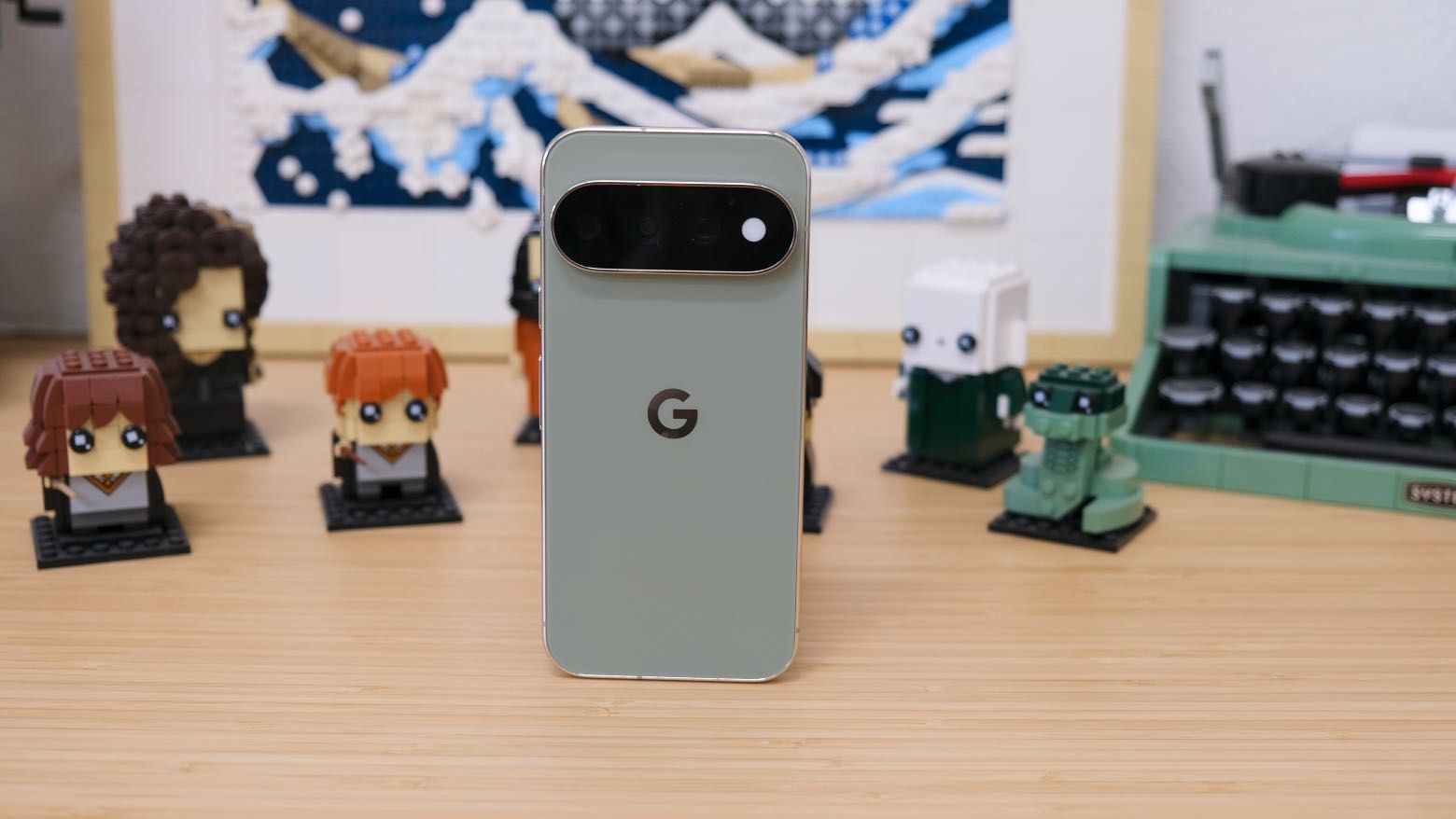
Rank 260We're seeing the first round of 'early' Black Friday deals this week as retailers look to ease into the end-of-year madness. Both Amazon and Best Buy have some genuinely worthwhile listings right now, but a real highlight is the Google Pixel 11 for $699 (was $899).This is a record-low price for Google's latest flagship, which is only a few months of as of writing. Up until now, we've seen $100 discounts and the usual trade-in rebates, but today's discount is arguably a Black Friday-quality deal if you're looking for a cheap(er) unlocked device.I would be surprised if the device got any cheaper than this over November too, considering the Pixel 11 range came out back in late August this year. The Pixel 11 is definitely a real bargain at this price, considering it's packing the latest Tensor chipset, more RAM, and a few new eye-catching shades. If you'd prefer a higher-end device, then you can also get the Pixel 11 Pro for $799 (was $1,099) and the Pixel 11 Pro XL for $949 (was $1,299), which are again record-low prices for either device. All these deals are also available at Best Buy today for the same price.New record-low Google Pixel 11 deal at AmazonWe've been waiting for a decent price cut on the Google Pixel 11 — and here it is, finally. Available right now is a healthy $200 price cut across all color variations, which is a fantastic discount on this expensive device. The higher price was one of our main complaints about the Pixel 11, so this makes it an easy recommendation, considering you get the very latest chipset in this device, plus the interesting new HiLight feature. View DealSee more: check out all of today's phone deals at AmazonWhat's new with the Google Pixel 11 series?(Image credit: Future/Jason Cipriani)The Google Pixel 11 is definitely more of an iterative upgrade than some previous generations, but it's still an excellent option if you're looking for a flagship device that doesn't break the bank.All devices in the range feature the Tensor G6 chip, plus 12GB of RAM, which should aid with both performance and efficiency. The standard Pixel 11 gets a larger 48MP main camera sensor, while the Pro devices get a 50MP main, 48MP ultrawide and 48MP telephoto cameras, with zoom extending to an ambitious 120x, assisted by AI processing. The Pro devices also get the new HiLight feature, which is an LED array around the flash that can glow in different colours.If you'd like to read more about the Pixel 11 series, I'd recommend checking out our Google Pixel 11 Pro review and Google Pixel 11 Pro XL review pages.
-
Picture from cdn.mos.cms.futurecdn.net
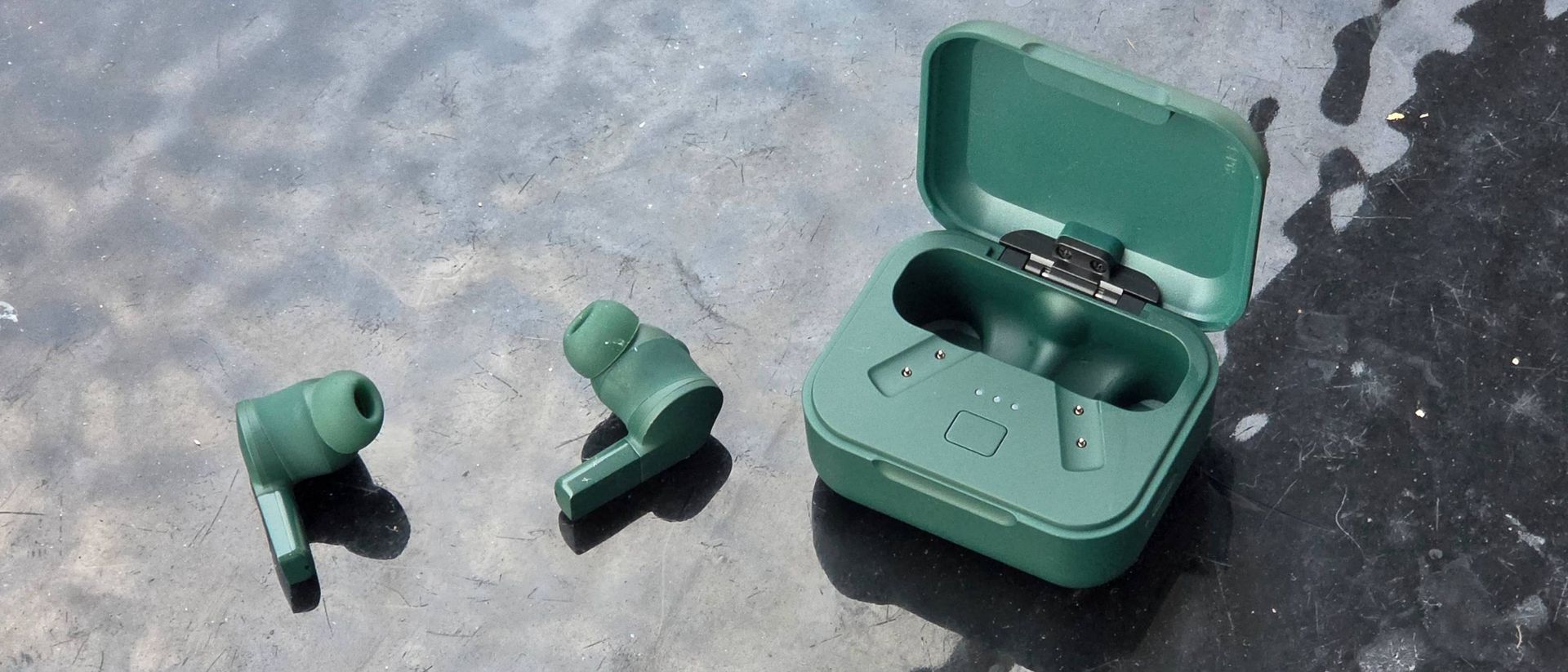
Rank 261Fairphone Fairbuds 2: Two-minute reviewI don’t like Fairphone’s products because they’re more environmentally-friendly and repairable than anything else on the market (though they’re all definitely perks). I like them because they always offer something a little different to make them recommendable as some of the best wireless headphones by their own merits.Last year’s Fairbuds XL 2025 over-ears, for example, had the best controls I’ve used on a pair of headphones before or since (and remain the best-looking cans I’ve reviewed too). And now the Fairphone Fairbuds 2 are here, with a little design decision I didn’t know I wanted so much. Fairphone is best known for its mobiles, like the recent Fairphone 6 Plus; its whole modus operandi is making green tech (eco-friendly, not colored, although they’re usually also colored green). The brand dabbles in audio too, though, alternating between releasing new earbuds or headphones every other year, and after the original Fairbuds launched in 2024, a new pair are here.Like the last pair, these are relatively affordable earbuds — 'expensive budget' or 'cheap mid-range' might suffice as definitions — which are great for eco-friendly buyers. They let you enjoy your listening safe in the knowledge that your buying choice was made from renewable energy, using plentiful recycled parts, and won’t impose planet-unfriendly, water usurping AI features on your device.And then there’s the unexpected bonus. Earlier this year, a fairly shocking study revealed that basically all headphones are coated in PFAS, or forever chemicals, which had people wondering whether they're rubbing toxins on their ears and head. As someone who uses these products for a living, I was a little alarmed to read this, and I’ve been pretty conscious of my listening since then, usually opting for speakers over headphones when I can help it.It won’t surprise you to learn that the Fairbuds 2 have none of these ‘forever chemicals’, and I could listen for as long as I wanted without worrying about the effects of doing so. It’s hard to put a price on peace of mind, but for music listening, the Fairbuds 2 provide just that.But I’ve beaten about the bush long enough: beyond health and eco concerns, just how good are these things? Well, the reason I’ve beaten about the bush so much is that “yeah, they’re just fine,” isn't engaging copy.Design-wise, these are pretty simple buds, with a hardy and light carry case, and pretty feature-light design. There’s little to distinguish them from other buds however, beyond their lack of discernible features. Being pretty plain isn’t the end of the world, and they fit fine.They’re not the best-sounding earbuds I’ve tested by any stretch of the imagination, but they’re fine for the price if you can look past some rough edges.I found the ANC pretty good, though it takes its toll on a battery life which roughly matches their price-competitive AirPods rivals (that is to say, it’s not very long). An app brings some extra features, including some of the most effective audio EQ presets I’ve heard from earbuds — if you like customizing your music but aren’t familiar with equalizers, it’s a great option.If it wasn’t for the Fairphone touch, these would just be middling wireless earbuds that’d disappear behind the competition. But the eco-friendly appeal, their repairability plus the absence of toxic chemicals, all make them far easier to recommend.Fairphone Fairbuds 2 review: Price and release date(Image credit: Future)Released in October in Europe, November USSells for $119 / £99 (about AU$200)Cheaper than AirPods 5, which is all that mattersFairphone unveiled the Fairbuds 2 on October 14, 2026, roughly two years after the release of the original pair and a year after the reimagined Fairbuds XL 2025 over-ears. They went on sale immediately in Europe, but US buyers had to wait until November 2.You can buy the Fairbuds 2 for $119 / £99 (about AU$200) — Fairphone doesn’t sell its tech in Australia. The brand is increasing its presence in the US; while the original buds did sell there, it only began selling phones earlier this year with the Fairphone 6 Plus.That phone makes the Fairbuds 2 slightly pricier than their predecessors in the US, but cheaper in the UK; the original Fairbuds went for $99 / £129. Despite this reshuffle, they’re still more affordable than the cheapest version of AirPods 5 (which will set you back $129 / £129 / AU$219), and the Fairphone option actually has ear tips.Fairphone Fairbuds 2 review: SpecsDrivers11mmActive noise cancellationYesBattery life6 hours (ANC on), 8 hours (ANC off)Weight5.8g (buds) 64g (case)ConnectivityBluetooth 6.0Frequency response20-20kHzWaterproofingIP54Fairphone Fairbuds 2 review: Features(Image credit: Future)6-hour battery life isn't amazingANC is surprisingly solidApp has EQ including useful presetsAccording to Fairphone, the earbuds last for 6 hours of listening with ANC on, or 8 hours off; that’s not a very competitive spec, all things considered. In my own testing, I’d say I got a little extra time on those figures, but not enough that I can call the battery life ‘good’. Apple's base model AirPods 5 only last for 4 hours with ANC; the step-up model with wireless charging support last 5 with ANC (or 7 without it) so it's a little better than that, but not by much. The case provides up to 40 hours of battery life, which is a little better (Apple's step-up model only offers 22), but that spec is for ANC-off listening. An ANC-on figure isn’t provided, but I’d estimate it’s about 32 hours.The ANC is more impressive — I’ll confess, I wasn’t expecting Fairphone to have created top-of-the-class noise cancellation. While this doesn’t match the likes of Soundcore or Bose, the Fairbuds 2 were surprisingly effective at stripping out noisy backgrounds or the kinds of sporadic sounds that other buds struggle with.(Image credit: Future)The Fairbuds app is pretty basic, but it’s not strictly necessary; I’d used the buds for two whole weeks before I decided to download it to my phone.The app lets you toggle between ANC modes (on, off, or transparency), see the charge levels, play with an EQ and presets, and set up multipoint connectivity, although I couldn’t find the option to do so myself. There’s also a Find My Earbuds tool which lets you summon both the left or right bud, and this is a feature you don’t always see in earbuds.The equalizer is a simple five-band one, but I was surprised how effective the five presets are: Balanced, Bass Boost, Treble Boost and Voice all had significant impacts on the sound profile, in a way that I see being really useful for those who like their audio a certain way and don’t want to play with the custom EQ mode. I found Voice useful for spoken-word content, as it did a great job at maintaining the reader’s voice while dampening other sounds.Features score: 4 / 5(Image credit: Future)Fairphone Fairbuds 2 review: DesignSmall, hardy carry caseSimplistic buds which fit wellEco-friendly, chemical-free designIn one way, the Fairphone Fairbuds 2 are some of the most basic-looking buds there can be, but modest looks hide the real selling point of these options. But we’ll get to that later.Firstly, the case: it’s a small cylinder, weighing 64g (when the buds are inside) and opening in a clam-shell form. You get the basics: a pairing button, a USB-C port, plus a handy three-LED strip to show you how charged your buds are. Handy! The case is made of plastic that’s so solid that I initially thought it was metal, and it feels more robust than most at protecting your buds.Next, the buds: unlike the first-gen models, these are stem-toting options, and they look far too simplistic to be confused with AirPods: there’s the in-ear bud, a straight and flat stem, and nothing much else (well, other than some lovely responsive touch controls). They weigh 5.8g each.When I first started testing them, the Fairbuds 2 felt a little loose in the ear; I thought I had another Samsung Galaxy Buds 4 Pro situation going on. But quite quickly they took to my ear, and after the second day they fit perfectly. So if you've just bought a pair, and are having problems, just give them time.(Image credit: Future)Now for the whole point of the Fairbuds: Fairphone’s eco credentials. The brand is at the forefront of eco-friendly tech, using eco-friendly materials and processes when possible, and in the buds that means the speaker magnets and solder is all recycled material, while the cobalt, copper, gold and silver are all fairly mined or sourced. The eco-friendly-ness doesn’t just keep your conscience clean, though, because it manifests in a few great ways.Firstly, these things are completely repairable, so if they break you can buy and replace one part instead of needing new buds. There are seven parts in all, all of which can be replaced using a simple screwdriver. Also in the Fairbuds 2, the earbuds don’t use PFAS, or forever chemicals – you can listen for as long as you want without any fear of the chemicals and their as-yet-unknown effects on the human body.You can buy the FairBuds 2 in green or black, but if you’re going for green tech, I don’t see why you shouldn’t also be buying green-colored tech. The buds themselves have an IP54 protection against dust and splashes, but the case doesn’t have an official rating.Design score: 4.5 / 5(Image credit: Future)Fairphone Fairbuds 2 review: Sound quality11mm driver per budProminent bass downs out trebleSupports LDAC playback on supported phonesThe Fairphone Fairbuds 2 come with 11mm dynamic drivers, working as jacks of all trades to cover the audio spectrum. As fairly affordable earbuds go, the Fairbuds 2 are just fine — you’re not getting any obvious issues like tinny audio, overblown bass or a lackluster sound profile, and so I can’t give them a bad sound score. But there are a few audible issues which it’s worth flagging.I’d call these buds bass-first, because low-end has more heft than high-end, and it does mean that sometimes vocals can lack the sparkle they deserve. In something like Red Hot Chili Peppers’ Factory of Faith or Dispatch’s May We All, the singers sound like they’ve lost an argument with their bassists and rhythm guitarists, and in Macklemore’s Hind’s Hall the drums and bass keep distracting you from the lyrics.Bass, while prominent, is perhaps not especially refined; the lack of a bespoke low-end-focused driver here is noticeable. Low-end has power prominence but less direction or distinction than you’d hope. It results in a low-end that sometimes sounds just fine, other times a little rumbly. (Image credit: Future)In Tom Petty’s Supernatural Radio, for example, the bass riff sounds meaty until the other instruments come in, making it sound indistinct. However with the later guitar and piano solo, the bass drowns out the higher-pitched parts. These are the first buds I’ve tested in about a month in which I can really hear a song’s mids, though, so props go to Fairphone for not leaning too hard into popular sound profiles. However I did notice peaking in certain songs around the high-end.It’s easy to point out the issues in the Fairbuds 2, because some rivals at this price point are putting out frankly incredible options, but I should clarify that the buds are still pretty good, and most people will be perfectly happy with them. For some technical specs, the buds support LDAC if you’re using a compatible Android phone, and use the Bluetooth 6.0 standard.Sound quality: 3.5 / 5(Image credit: Future)Fairphone Fairbuds 2 review: ValueYou get what you pay for: solid, reasonably-priced earbudsHowever, there are some fantastic alternatives at the priceThe Fairbuds 2 straddle the border between affordable and mid-range earbuds, but given that the brand's tech generally comes with a green premium, I'm happy to consider these a more affordable option.If I were to close my eyes, and picture buds at this price, I'd basically envision the Fairphones; they audio quality, feature set and design all roughly match what you'd expect from the price. Fine value for money...... if it wasn't for the fact that it's a really competitive market segment, with some stellar alternatives. Value: 4 / 5(Image credit: Future)Should I buy the Fairphone Fairbuds 2?Fairphone Fairbuds 2 score cardAttributesNotesRatingFeaturesThe ANC and app presets work well, though the battery life isn't great.4/5DesignThe eco-friendly and chemical-free build wins all the points, though the simple carry case and buds are charming in their own way.4.5/5Sound qualityAudio is perfectly serviceable, though a few quirks will put off audiophiles.3.5/5ValueThey're fine value for money, though not the best in their market segment.4/5Buy them if…You want eco-friendly techFairphone is second-to-none with its green materials, production and sourcing.You'll repair your earbuds if they breakRepairable tech is all the rage, and if you think you'd be up to fix broken buds, these are the ones to buy.You like svelte carry casesThe Fairbuds 2 have one of the smallest carry cases I've seen in ages, and it's pretty protective too.View DealDon’t buy them if…You're a staunch audiophileIf all you care about is the sound, I think you'll find the Fairbuds 2 a little disappointing.You'd like something long-lastingThe Fairbuds are long-lasting in terms of the product life span, but the actual battery life isn't that great.Fairphone Fairbuds 2 review: Also considerLooking for alternative in-ears? Here are a few alternatives at the same price point.Fairphone Fairbuds 2Soundpeats H3Huawei FreeBuds NeoDrivers11mm12mm + dual balanced armatures11mmActive noise cancellationYesYesYesBattery life (ANC on)6 hours (buds) 32 hours (case)7 hours (buds) 37 hours (case)6 hours (buds) / 22 hours (case)Weight5.8g (buds) 64g (case)6g (buds) 53g (case)4.8g (bud) 31.4g (case)ConnectivityBluetooth 6.0Bluetooth 5.4Bluetooth 6.0WaterproofingIP54IPX5IP55Soundpeats H3For a tiny amount more, you can buy arguably the best-sounding earbuds at this price point. The H3 look funky, fit well and sound incredibly, but don't have the eco appeal of the Fairbuds.Read our full Soundpeats H3 reviewHuawei FreeBuds NeoA Fairbuds 2 contemporary with pretty similar specs, the Neo sound better and are lovely and small, but the app barely works and the ANC isn't as good.Read our full Huawei FreeBuds Neo reviewHow I tested the Fairphone Faurbuds 2Tested for three weeksPaired with Android phone for Bluetooth playbackUsed on holiday as well as use at home and around neighborhood.I used the Fairphone Fairbuds 2 for about three weeks before writing this review; I used them back-to-back with the Huawei FreeBuds Neo, generally bringing them both with me on trips.In this testing time I went on holiday, so they got time on flights, train and coach trips, and I also used them at the gym, at home and on walks around my local area. For the entirety of the testing time, the buds were connected to my Samsung phone. I listened to Spotify, played from my high-res collection, played games, conducted video calls and watched videos to test them out.I've tested most of Fairphone's gadgets since I joined TechRadar in 2019, including the Fairbuds XL 2025 last year, and also have experience reviewing plenty of other earbuds from a range of brands (including almost every other pair mentioned in the review)>First reviewed in October 2026Read TechRadar's reviews guarantee
-

Picture from cdn.mos.cms.futurecdn.net
Rank 262Google's subsidiary Tuike Finland cleared and drained 330 hectares of forest at Muhos for a data center siteThe company failed to get the necessary environmental impact assessments completed before carrying out the fellingA preliminary police investigation is now taking place, based on 'ambiguities and shortcomings in the drainage and water management', although the results of this won't be known until 2027A preliminary police investigation is now underway into Google's clearing of a forest in Finland to make space for an AI data center.As The Guardian reports, the allegation is that Google's subsidiary Tuike Finland cleared and drained 330 hectares of forest at the site in Muhos before it had ensured the necessary environmental impact assessments were completed.Yle (Finland's public broadcasting company) further reports that the police have said that the investigation is into suspected environmental damage, but the other possible charges could be added depending on its ongoing findings.Finnish police said: "Based on preliminary information, there have been ambiguities and shortcomings in the drainage and water management at the construction site of Tuike Finland Oy's datacentre project."The investigation will be far from a short process, though, and won't be completed until some point in 2027.Construction work was stopped on the data center in Muhos, and also at a second data center site at Kajaani-Otanmäki, on October 14. In both cases, the environmental assessments were apparently incomplete.Antti Järvinen, who heads up Google Finland as country manager, apologized for the forest clearances, but said that Google had acted according to the "best understanding we had of the legislation at the time."Analysis: the rush for AI data centers(Image credit: Microsoft)Some 400,000 trees have reportedly been felled across both sites (250,000 of those at Muhos). As The Guardian makes clear in a separate report from last week (via Tom's Hardware), there are a lot of very unhappy Finnish people, as you might imagine.Many of them question the building of data centers at all, and the AI gold rush that's the driving force behind this activity. There's apparently little direct benefit for the people of the country where these projects are underway, with only a small number of local jobs created. As a professor of computer science at the University of Helsinki, Jussi Kangasharju points out, "Really, for Finland, there are no benefits. They are international companies serving international customers. Datacentres ultimately have little benefit for others except the datacentre operator."Others obviously worry about the impact on wildlife. Finnish conservationists inform us that the three-toed woodpeckers in the forest have been displaced, and The Guardian highlighted that in Otanmäki, wolves that had nowhere to go when the trees were felled ended up coming into a local village.It will be some time before the criminal investigation is completed, as noted, but you can bet that the results are going to be closely watched.
-
Picture from cdn.mos.cms.futurecdn.net
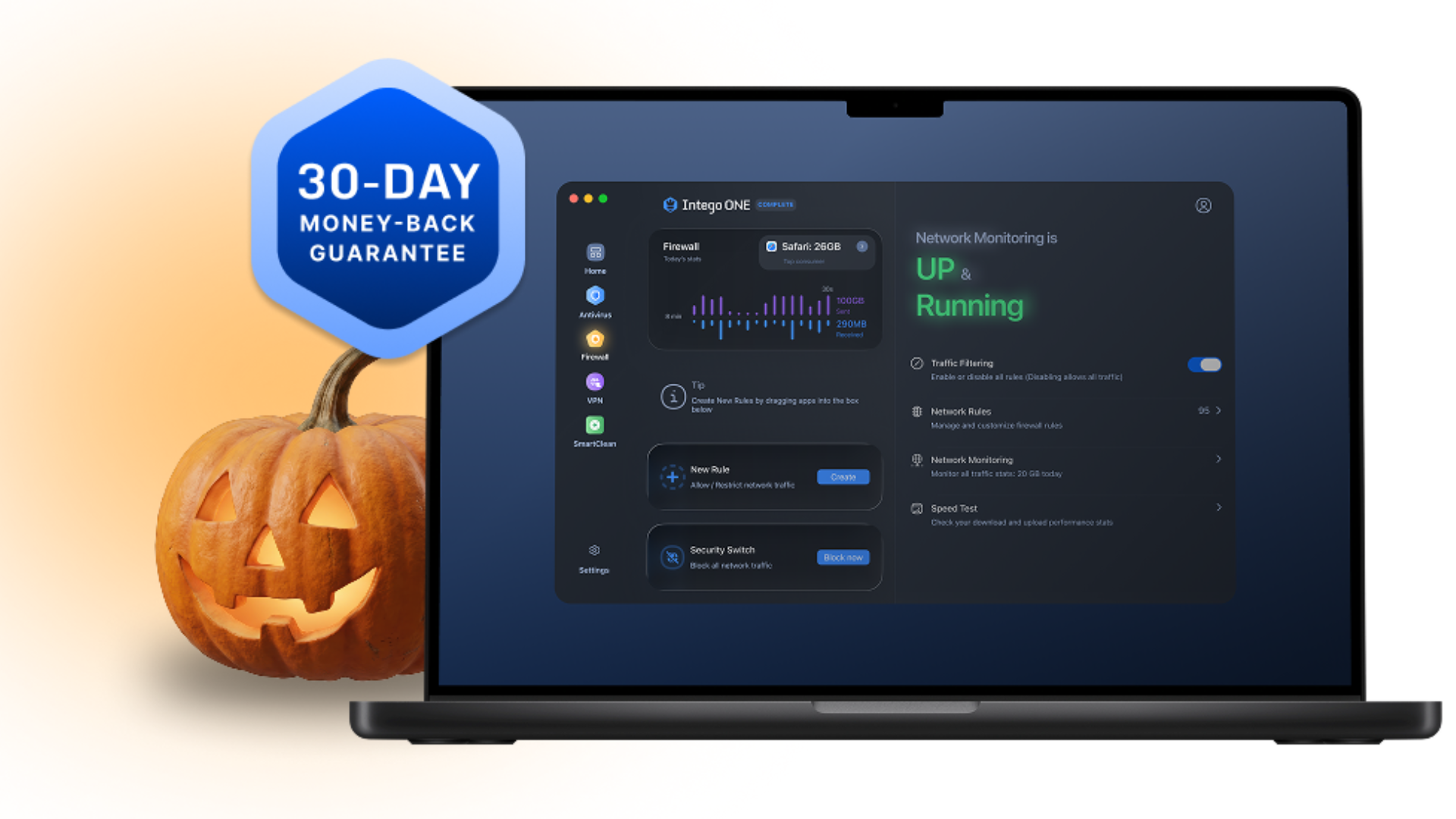
Rank 263Intego is one of our favorite Mac antivirus tools. When we tested it out earlier in the year, it easily delivered software that was "powerful enough to offer you peace of mind," while still being very easy to use. With the company promising to scare off cyberthreats this Halloween, the Intego One Advanced two-year plan is now $78 (was $130). With 40% off, that works out at $3.25 a month. In the UK, the software is down to £60 (was £100), which is £2.50 a month. • Best for: Apple users looking to boost security across macOS devices. • Why we like it: With Intego One Advanced, it's not just antivirus software you're getting. The plan also includes firewall management and SmartClean to keep your devices working smoothly. • What you need to know: This deal, with 40% off, covers one Mac for two years. However, you can boost that to three or five devices, and a one-year plan is also available. One Advanced 2-year plan: was $130 now $78The Advanced plan from Intego bundles together a Mac antivirus, a firewall that lets you manage network connections, and SmartClean - a service that sweeps away unwanted apps that refused to be removed, free up space, and improve overall performance.UK price: now £60 (was £100)View DealWhy we recommend itWe tested out the full Intego suite, which includes the antivirus you get here, and we were really impressed. Scoring it 4 stars, we found it offers well-implemented and regularly updated antivirus. And the firewall adds an additional layer of security, letting you monitor and control all app connections. For that feature alone, we rated Intego as the best Mac antivirus with a firewall in our guide. Price Context & Historical ValueThis is the lowest price for the plan in 30 days - the company openly displays the last deal price, which is $91 / £70. So, a good time to buy. Should you buy it?✅ Buy the Intego One Advanced plan if... You want full Mac protection with a firewall, and no monthly subscription charges. ❌ Skip the Intego One Advanced plan if... You need to protection more than five macOS devices or you're a Windows user - this software is Mac-first.
-

Picture from techcrunch.com
Rank 264 -

Picture from cdn.mos.cms.futurecdn.net
Rank 265AI-generated code security improved for the first time in a year, with vulnerability rates dropping from 44% to 38%Top models performed better at preventing common flaws like XSS, but still struggled with complex security reasoningResearchers stress AI-generated code still requires independent security testing and verification before deploymentComputer code generated by frontier AI models has gotten more secure and consequently - contains fewer vulnerabilities. This is according to a new report by Veracode, which claims this is the first significant improvement in a year.In July 2025, Veracode started releasing its GenAI Code Security Report, which analyzed code generated by LLMs for vulnerabilities and security risks. Since then, the company’s researchers noticed a trend - the code was functioning almost perfect, but on the security side it left much to be desired. Are XSS flaws worth the trouble?“We’ve been analyzing code generated by multiple LLMs for more than a year. Until now, we have not seen a marked improvement in AI code security, despite consistently near-perfect functionality,” said Chris Wysopal, Co-founder & Chief Security Evangelist at Veracode. “This is the first time since running our study that we’ve been able to report a meaningful move on the security dial.” That meaningful move is a jump from 56% to 62% in overall AI-generated code security. At the same time, there’s been a drop in vulnerabilities from 44% to 38%, Veracode added, saying this was the most significant improvement since the reports started coming out. Anthropic's Claude Opus 5.5 and OpenAI's GPT-6-Sol co-lead the rankings at 73%, surpassing the previous high of 68% set by GPT-5.5 in July 2026. “Ten models now clear 60%, up from four in the last report, and the overall average has jumped six percentage points,” Wysopal said. “With around half of code now generated by AI, today’s results are truly encouraging.” To draft the report, Veracode tested 18 models across four languages (Python, C#, JavaScript, and Java), and four Common Weakness Enumeration (CWE) categories (CWE-89, CWE-327, CWE-80, CWE-117). Claude Opus 5.5 and GPT-6-Sol claimed the top spot with 73% followed by GPT-5.5 which holds 68%. In July, six of 11 models scored between 50 and 53, while today only two remain in that band, while 10 scored at least 60%. The bottom is still at 44% - 50% percent.While the results are definitely commendable, there is a caveat. Apparently, the main driver of the overall gain was on cross-site scripting (XSS), which is arguably one of the weakest categories. XSS rose to 18% which is also the single biggest change in the dataset. According to Veracode, XSS is the “easiest vulnerability to fix through pattern recognition”, which is exactly how LLMs improve. In cases where data-flow reasoning across multiple functions is required (such as, in log injection cases, for example), LLMs continue to stall.Low-hanging fruitIn other words, AI has just picked low-hanging fruit and called it a day. We’re not sure if we should be disappointed with this, since XSS attacks are common and the vulnerability is still present across the web.In the report, Veracode also said that water was wet and the sky is mostly blue: it found that top-performing models cost more. However, they said throwing money at the problem most likely isn’t the best solution: “The models that produce the most secure code are the ones that cost the most to run at scale, yet they still fail on more than one in four security tasks,” Wysopal said. “The answer should never be to use the most expensive model and hope for the best. A mid-tier model at a 60% pass rate plus Veracode scanning is more accurate, more cost-effective, and more scalable than a frontier model at 73% with no verification.”In conclusion, the improvement is there, but “mends a small part of a larger wound”, Veracode said. Organizations should make sure they combine AI code with continuous and independent security verification that can catch what the models miss.
-

Picture from www.engadget.com
Rank 266 -
Picture from cdn.mos.cms.futurecdn.net
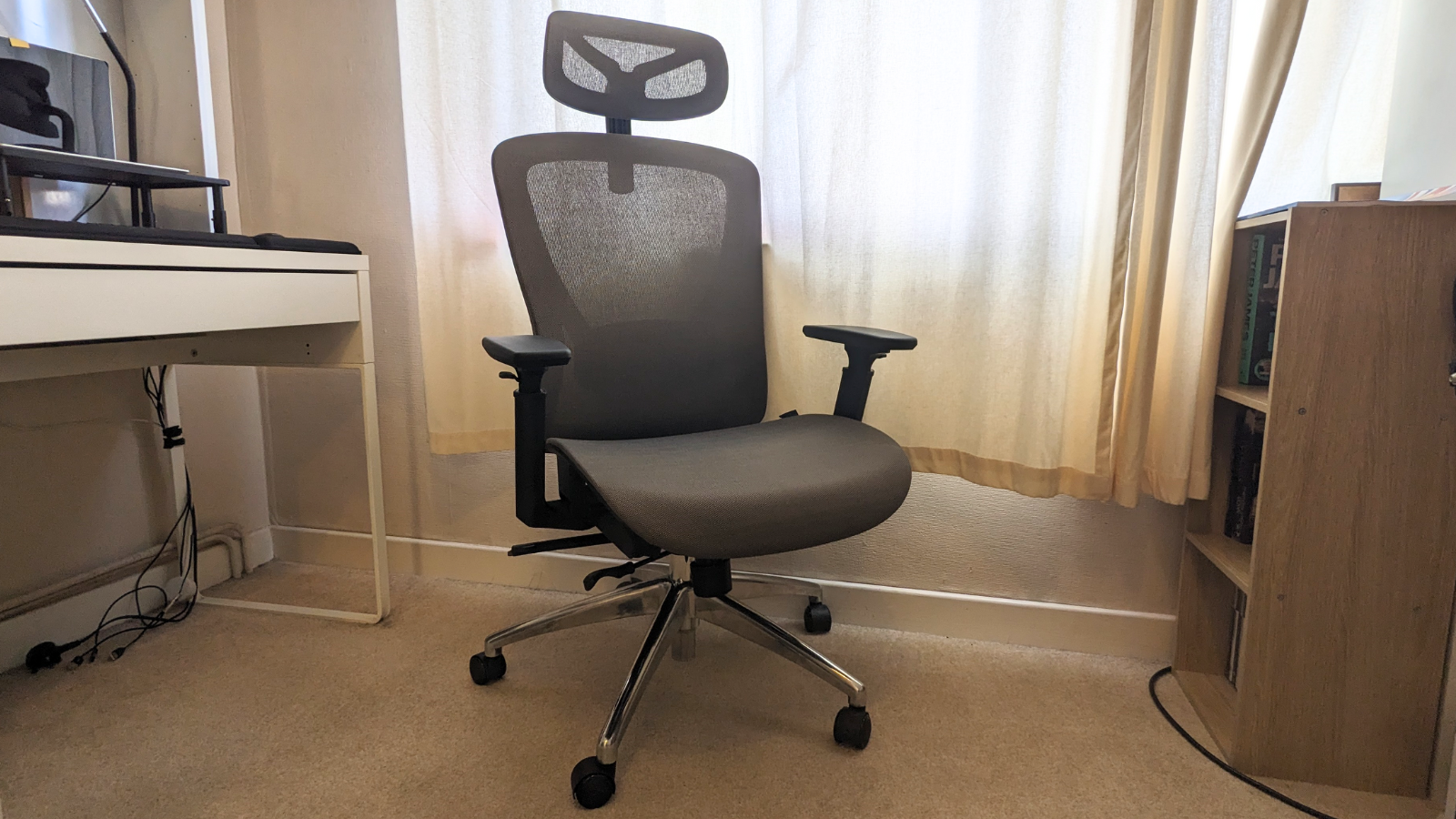
Rank 267The Boulies EP200 isn't the fanciest office chair to ever pass through our testing grounds. But it is one of the most reliable value picks you can get - far superior. It's been our office furniture editor's daily driver for home-working for since February 2025, and it's as good as the day he got it. It is, he said "the archetypal office chair for most people."Now, as part of the company's early Black Friday sale, the Boulies EP200 is down to $220 (was $310) in the US, while the UK sees the chair discounted to £210 (was £280). If your home office chair leaves your back aching by mid-afternoon, the Boulies EP200 offers proper ergonomic support without the premium price tag.• Best for: home and office workers who want a comfortable, supportive mesh chair for long days at the desk on a modest budget.• Why we like it: an airy mesh back that keeps you cool, adjustable lumbar support and headrest, adjustable seat depth and armrests, and a sturdy, professional-looking build.EP200: was $309.99 now $219.99A mesh office chair with adjustable lumbar support, a removable adjustable headrest, four-level seat-depth adjustment, 3D padded armrests, a multi-tilt mechanism with recline up to 120 degrees, a Class 4 gas lift, and a five-star base. It comes in black or green, ships free in the US, and includes a two-year limited warranty and a 14-day return window.UK price: now £210 (was £280)View DealWhy it's worth a lookIn our Boulies EP200 review, our office furniture editor Steve found it supremely comfortable and breathable, and said he felt no fatigue even after long sessions in it. He also praised its sturdy, stable build and clean, professional look, and his one-year follow-up confirmed it has held up well. His main complaints were that adjustability is more limited than on pricier chairs, which is to be expected, while the mesh back won’t suit anyone who prefers padding.For more picks, including the Boulies EP200, see our guide to the best office chairs.Price & Value ContextThis is $90, or 29%, off the $309.99 list price. The EP200 dropped to about $200 around the time of our review, so this isn’t a record low, but it’s close. At this price, it’s an easy recommendation for anyone who wants a quality mesh chair without spending $300 or more.Should you buy it?✅ Buy the Boulies EP200 if... you want a comfortable, breathable mesh chair for long workdays, you need adjustable lumbar support and a headrest, or you’re after quality ergonomics without a premium price.❌ Skip the Boulies EP200 if... you need the fine-tuned adjustability of a high-end ergonomic chair, or you prefer a padded backrest to mesh. See other chairs at Boulies.
-
Picture from cdn.mos.cms.futurecdn.net
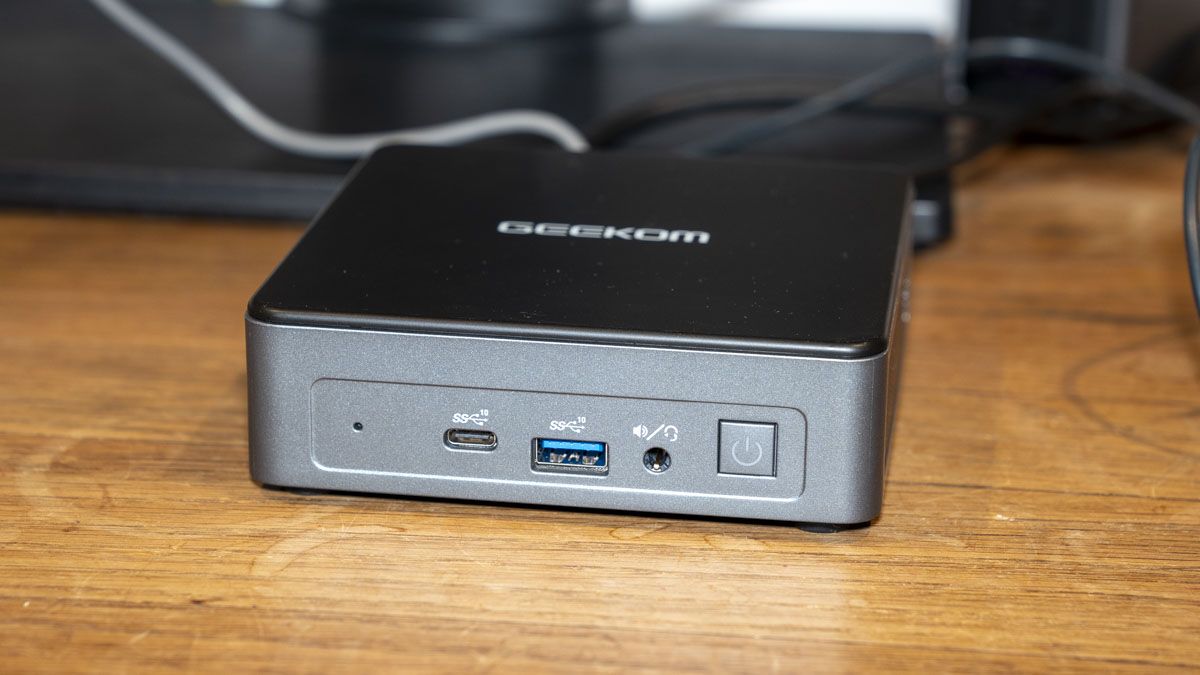
Rank 268When it comes to our testing, Geekom has a strong track record in mini PCs. The range runs from high-performance machines for content creation and heavy workloads to compact machines built for general office duty, browsing, streaming, and other undemanding tasks.The Geekom Air12 Lite, currently $269 (was $599) at Best Buy, falls into the latter camp. If you need a small, cheap PC for a kitchen counter, a kid’s homework desk, or a living room TV, the Air12 Lite covers the basics without taking up any space. • Best for: anyone who needs a simple, compact computer for web browsing, email, documents, and streaming video.• Why we like it: a tiny, quiet design, a quad-core Intel N95 processor that handles everyday tasks, a 256GB SSD, and Windows 11 Pro preinstalled.• What you need to know: The Intel N95 is a low-power chip that’s built for browsing, email, office documents, and streaming, but it will feel sluggish with lots of tabs open or more demanding software.Air12 Lite: was $599 now $269A compact mini PC with a quad-core, four-thread Intel Processor N95 boosting to 3.4GHz, integrated Intel UHD graphics, 8GB of DDR4 memory, a 256GB SSD, and Windows 11 Pro. Sold and shipped by Geekom through Best Buy’s marketplace.View DealWhy we recommend itGeekom has built a solid reputation for well-made mini PCs, and the Air12 Lite is its entry-level model, designed for light everyday tasks rather than heavy workloads. We haven’t tested it ourselves, so this pick rests on Geekom’s track record and the specs. We have, however, tested the improved Air12, which features DDR5 RAM and Wi-Fi 6 connectivity. We scored that machine 4 stars in our review, and for general office tasks, expect performance to be about the same. Price Context & Historical ValueIgnore the $599 comparison price, since that’s far more than an N95 mini PC with 8GB of RAM has ever been worth, and budget machines with this chip have typically sold for well under $300. Rising memory prices have pushed up the cost of mini PCs this year, so $269 is a reasonable price today rather than a steal. Buy it if you need a basic PC now, but don’t expect much more than browsing and email from it.Should you buy it?✅ Buy the Geekom Air12 Lite if... you need an inexpensive, compact PC for browsing, email, documents, and streaming, you want Windows 11 Pro preinstalled, or you’re setting up a simple machine for a family member.❌ Skip the Geekom Air12 Lite if... you plan to multitask heavily or run demanding apps, since 8GB of RAM and the N95 chip will feel limited; you want to play games; or you’d rather spend a bit more for a mini PC with a faster processor.See other mini PC deals at Best Buy
-

Picture from cdn.mos.cms.futurecdn.net
Rank 269I don't know about you, but I'm sort of the gadget-man of the family. The tech-head. The makeshift IT consultant that gets called upon whenever there's an issue with technology. If you fall into the same category (or you never want to call on your family IT support again), I'd definitely recommend checking out the Google Nest Wifi Pro 6e Wi-Fi mesh router for $100 (was $200) at Best Buy. The half-price deal makes it incredibly tempting. It's ridiculously simple to set up and manage, making it the ideal no-fuss mesh router pick if you or your family need better connections while working from home. If your home Wi-Fi is spotty and you don’t want to wrestle with complicated router settings, Nest Wifi Pro delivers fast, reliable coverage with minimal setup.• Best for: home workers and families in small to midsize homes needing fast, easy-to-manage Wi-Fi with the option to add more units later.• Why we like it: tri-band Wi-Fi 6E with a 6GHz band for less congestion, up to 2,200 square feet of coverage from one unit, effortless setup through the Google Home app, and support for adding more units to build a mesh.Nest WiFi Pro: was $199 now $99A single tri-band Wi-Fi 6E (AXE5400) mesh router covering 2.4GHz, 5GHz, and 6GHz bands, with up to 2,200 square feet of coverage, support for up to 100 connected devices, WPA3 security, parental controls, and two Gigabit Ethernet ports. It’s managed through the Google Home app and also works as a Thread border router and Matter controller for smart home devices. Sold by Best Buy.View DealWhy We Recommend ItGoogle built the Nest Wifi Pro for people who want Wi-Fi to simply work, and its app-based setup and automatic updates make it one of the least intimidating routers to own. We haven’t reviewed the Nest Wifi Pro, so this pick rests on Google’s track record with mesh networking and the router’s specs. Its 6GHz band is a real plus if you have newer phones and laptops that support Wi-Fi 6E, since it’s far less crowded than the older bands.Price Context & Historical ValueHalf off its $199.99 launch price is a strong deal, and $99.99 puts a Wi-Fi 6E mesh router within reach of almost any budget. Keep in mind that it launched in 2022, so it lacks the newer Wi-Fi 7 standard and multi-gig Ethernet found on pricier routers. For most homes with internet plans under 1Gbps, though, it’s a great buy at this price.Should you buy it?✅ Buy the Google Nest Wifi Pro if... you want fast Wi-Fi that’s easy to set up and manage, your home is under about 2,200 square feet or you plan to add more units, or you use Google Home and want a router that doubles as a smart home hub.❌ Skip the Google Nest Wifi Pro if... you want Wi-Fi 7 or multi-gig Ethernet ports for a very fast internet plan, you need lots of wired ports, or you already own older Google Wifi or Nest Wifi units, which can’t join a Nest Wifi Pro mesh.See more router deals at Best Buy.
-
Picture from cdn.mos.cms.futurecdn.net
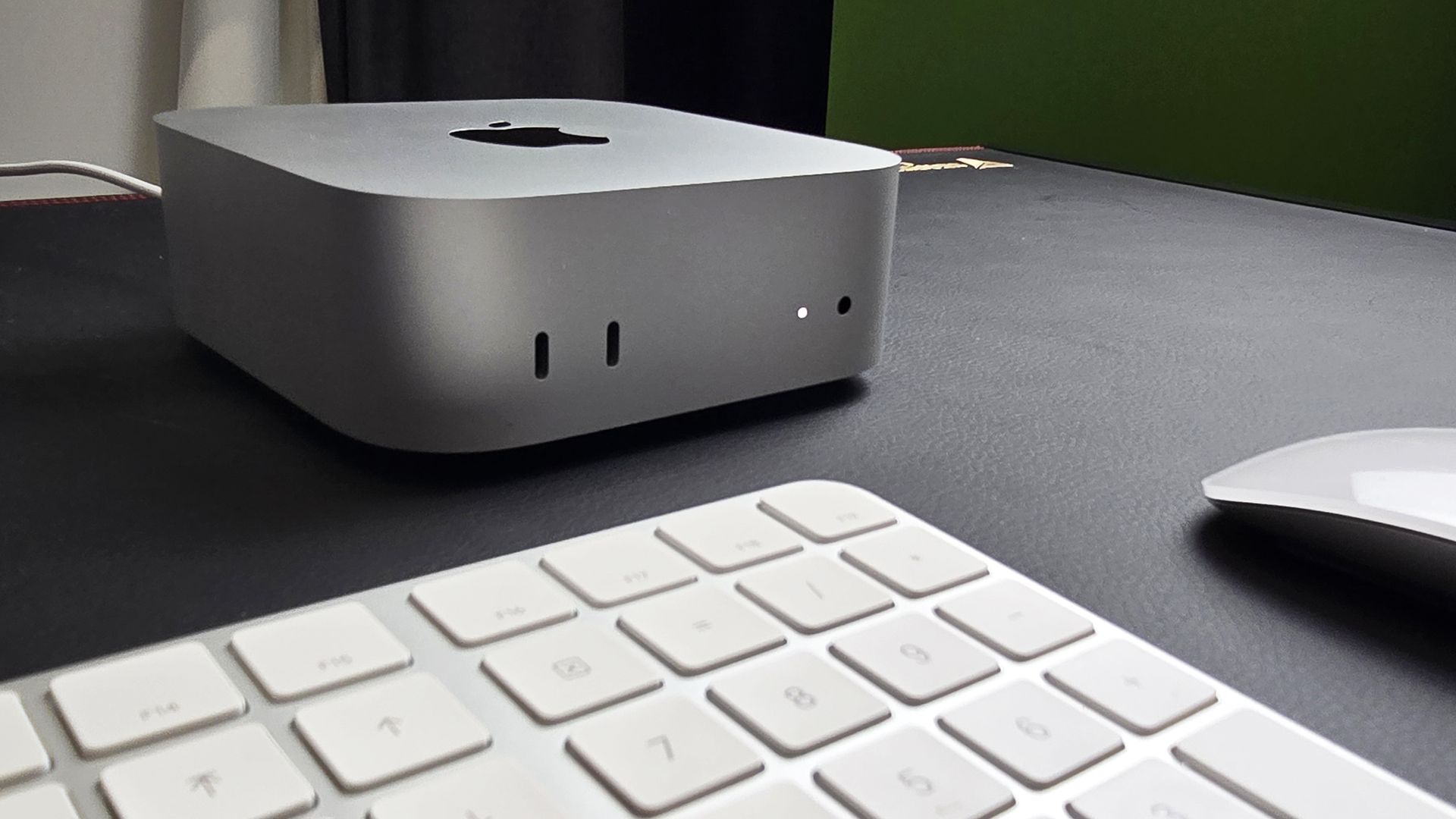
Rank 270The Apple Mac mini M6 may be catching all the headlines right now, but I still think for most people looking for a stylish and powerful mini PC, the Mac mini M4 is the optimal choice. It might lack the extra oomph of the M6, but for daily office tasks and content creation, it's way better value. Case in point. The Apple Mac mini M4 is currently $650 (was $799) at Best Buy. If you want a fast, compact desktop for work, photo editing, or everyday use, and you already own a monitor and keyboard, the Mac mini M4 is the best-value Mac you can buy. Meanwhile, Best Buy has the Mac mini M6 for $799 (was $899).• Best for: Professionals and creators upgrading an older Mac or Windows mini PC to a powerful, near-silent desktop without paying M6 prices. .• Why we like it: We scored this machine 5 stars in our review, and wondered if it might actually be the best Mac ever. For most people, it will be. Apple’s speedy M4 chip, 16GB of unified memory for smooth multitasking and Apple Intelligence, a tiny five-inch-square design, and handy front-facing USB-C ports and a headphone jack.Mac mini M4: was $799 now $649A compact desktop with Apple’s M4 chip, 16GB of unified memory, and a 256GB SSD, with front USB-C ports and a headphone jack, plus Thunderbolt, HDMI, and Ethernet on the back. It supports Apple Intelligence and comes in silver.View DealWhy we recommend itIn our Mac mini M4 review, our expert Matt awarded it an Editor’s Choice badge and full marks for value, praising its strong performance, much smaller design, and convenient front ports. He called it the cheapest way into the Mac ecosystem, though he noted it struggles with modern games and that its power button sits awkwardly on the underside. Our review unit had a 512GB SSD rather than this model’s 256GB, but it used the same M4 chip and 16GB of memory.Price Context & Historical ValueApple raised the Mac mini’s starting price to $799 earlier this year as memory costs surged, so this $150 discount is measured against Apple’s real current price rather than an inflated list price. It’s still more than the $599 the M4 Mac mini launched at, and well above the sub-$500 deals we saw before the price hike. Given today’s pricing, though, $649 is a strong deal and a good time to buy. For comparison, the Mac mini M6 is currently down to $799 at Best Buy. For some workloads, it may be better. For general office tasks, the M4 is still worth considering for its value.Should you buy it?✅ Buy the Apple Mac mini M4 if... you want an affordable, powerful Mac desktop, you already have a monitor, keyboard, and mouse, or you want a near-silent machine for work, photo editing, or music production.❌ Skip the Apple Mac mini M4 if... you need lots of local storage, since 256GB fills quickly; you want to play the latest PC games; or you don’t already own a monitor and accessories, which add to the total cost.See all Apple deals at Best Buy.
-

Picture from www.engadget.com
Rank 271 -

Picture from cdn.mos.cms.futurecdn.net
Rank 272Speaking on-stage at the company's recent AI World conference, Oracle co-founder Larry Ellison declared AI could eventually make everyone "healthier and wealthier".Apparently unfazed by the technology's impacts on humanity, Ellison does acknowledge that governments need to have a shift in mindset to adapt to this new future.In a Q&A during the conference's hotly anticipated final keynote, Ellison outlined a future where AI systems and robots could dramatically reduce the cost of goods and services. But rather than accepting the suggestion that AI would end up replacing us all, he argued that the technology would ultimately serve to make us more productive, allowing workers to achieve things that simply weren't possible before.AI won't replace us, but it will change the economics of work in a lasting way"I think that's kind of nonsensical," Ellison said about predictions that AI will eventually replace everyone.The multi-billionaire accepted AI and automation will inevitably displace some jobs, pointing toward rideshare services in a hint to ongoing approval of driverless cars in Las Vegas and other cities.But he also stressed not all jobs would be impacted equally, revealing his pilot qualifications on-stage and stressing that autopilot hasn't replaced human pilots despite being a decades-old technology.Although humans will continue to play supervisory roles in many industries (we're already seeing human knowledge worker roles evolve into AI agent managers in some cases), Ellison argued that the overall benefits would be positive, providing governments get involved to support the humans they represent.Painting a picture of what he meant, he described a hypothetical house being constructed entirely by robots in a scenario where automation had replaced human labor. Whereas human labor would have accounted for, say, 80% of the cost of a house before, four-fifths of the house instantly becomes cheaper because of the impact of automation.He used this example to set the foundation for the idea of 'universal high income' – a concept already floated by other tech billionaires, including Elon Musk.Taxation needs to change to enable the provision of a universal income"We need to change from taxing human labor to taxing value added," he said. "So when the robots add value, all that value that the robots add is taxed, and we could have universal high income."Universal high income is an evolution of the universal basic income concept, which provides citizens with a regular payment that covers essential living costs. Instead, he suggested that the enormous productivity gains that AI could eventually unlock could create enough wealth to support much higher incomes, despite declining human work activity.He referenced economist Milton Friedman's negative income tax proposal, describing it as a "reverse income tax" that could help distribute some of the wealth generated by AI."The robots are adding value. The government's taxing the value... We all become wealthy as a result."However, Ellison's vision is a wildly ambitious one that would require a colossal change to today's systems. It would take more than a decade, he admitted. While a future of AI-induced human wealth with less work might sound far-fetched at best in today's economy, Ellison's optimism remains on track. "All of that is doable," he concluded.layoffs.fyi has tracked over 135,000 layoffs in the tech sector alone in 2026 to date, including around 21,000 Oracle workers in the 12 months between June 2025 and June 2026, and likely thousands more in September 2026.
-

Picture from cdn.mos.cms.futurecdn.net
Rank 273If you want a laptop that doubles as a tablet for notes, streaming, and sketching without paying premium prices, the OmniBook X Flip delivers a lot for the money. The 2K touchscreen laptop comes equipped with a Core Ultra 5 226V chip that supports up to 40 NPU TOPS for general AI tasks. The 16GB LPDDR5 RAM, and 512GB SSD that makes it ideal for work, study, and downtime. Now, as part of Best Buy's Halloween Doorbuster sale, the HP OmniBook X Flip 14 is $649.99 (was $999.99). Considering I see sluggish 8GB laptops selling for that price (and I urge you not to buy them), this is an easy recommendation. • Best for: students and professionals who want a stylish, versatile 2-in-1 for work, note-taking, and entertainment. • Why we like it: a sturdy all-metal 2-in-1 design, a high-resolution 14-inch touchscreen, efficient Intel Core Ultra 5 performance with Copilot+ AI features, and battery life that comfortably lasts a workday.OmniBook X Flip 4: was $999.99 now $649.99A 14-inch 2-in-1 convertible with a 1920 x 1200 IPS touchscreen, an Intel Core Ultra 5 226V processor, 16GB of memory, a 512GB SSD, and Copilot+ PC features, finished in Atmospheric Blue. View DealWhy we recommend itWhile we haven't reviewed this specification, our sister site Tom’s Guide tested the exact configuration and found it a premium, durable 2-in-1 with a solid display, strong mid-range performance, and more than eight and a half hours of battery life. He did note that it comes loaded with bloatware you’ll want to remove, that the gapless keyboard takes some getting used to, and that the chassis warms up under heavy loads. Those are small trade-offs for a laptop that looks and feels far pricier than it is.Price Context & Historical ValueThis is $350, or 35%, off the $999.99 list price, but the OmniBook X Flip regularly sells well below that, and Tom’s Guide reviewed it when it was going for $599. That means $649.99 is a good price but not the lowest we’ve seen, and a newer Core Series 3 version is also listed alongside it. Buy now if you need a 2-in-1 today, but it may drop lower over Black Friday next month. Should You Buy It?✅ Buy the HP OmniBook X Flip 14 if... you want a laptop that converts into a tablet for notes and streaming, you value a sturdy, premium-looking metal design, or you need battery life that lasts a full workday.❌ Skip the HP OmniBook X Flip 14 if... you’d rather not spend time removing preinstalled bloatware, you prefer a traditional keyboard layout, or you’re willing to wait in case it drops back to $599 for Black Friday.Check out all laptop deals at Best Buy.
-
Picture from cdn.mos.cms.futurecdn.net
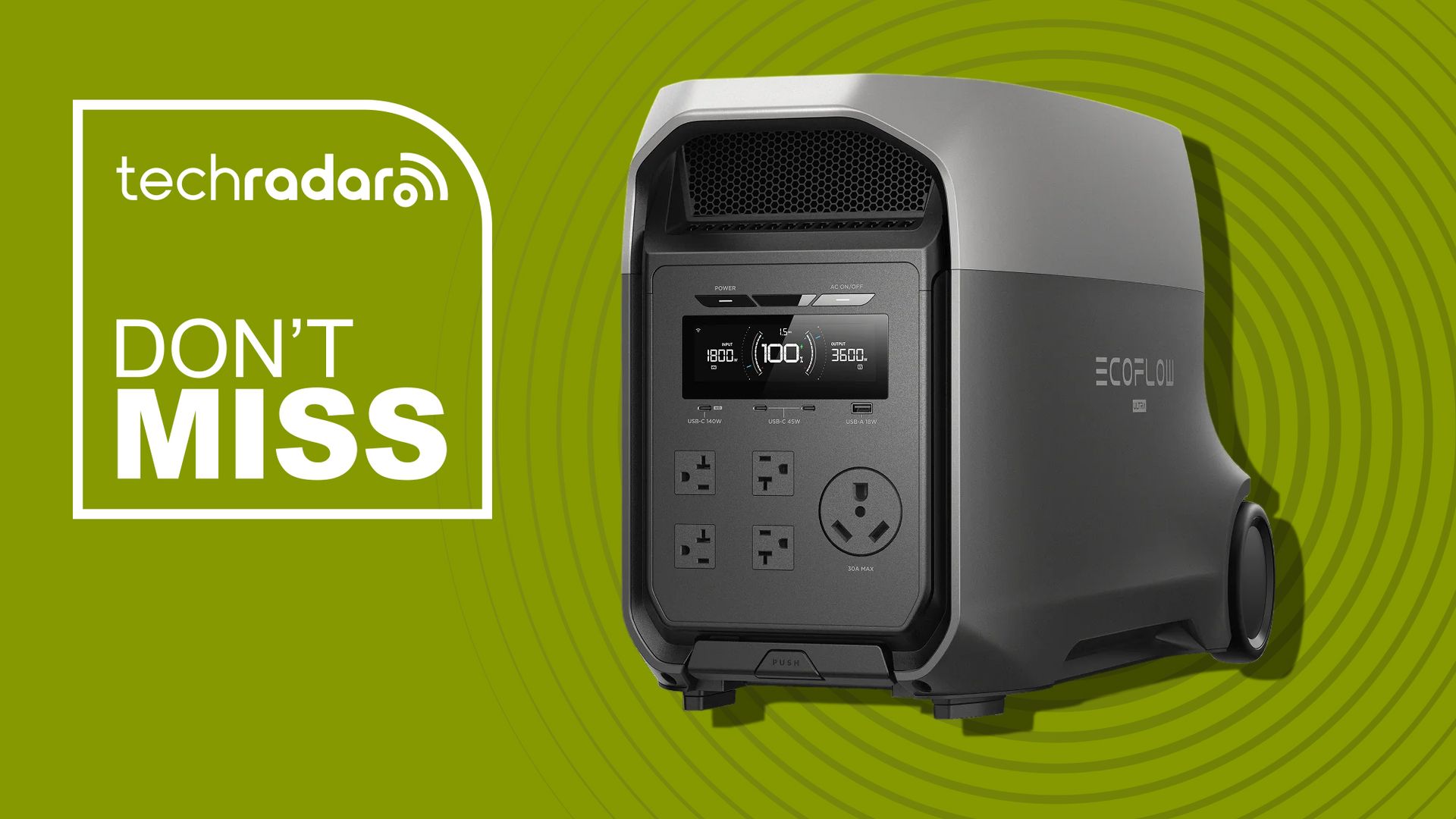
Rank 274EcoFlow has been a consistent top-performer in our tests, with one model earning the top spot in our guide to portable power stations. High-capacity, durable build, and reliable output are all strong with this line. So, the EcoFlow Delta 3 Classic with 45W solar panel for $479 (was $598) at Best Buy is an easy recommendation. If a power outage leaves you without heat controls, internet, or a working fridge, the Delta 3 Classic gives you a quiet, fume-free backup you can keep indoors.• Best for: Professionals, campers, and RV owners who want dependable backup power for outages or portable power on the go.• Why we like it: Beyond the strong performance in our tests, this EcoFlow model features 1,024Wh of long-life LFP battery capacity, 1,800W of continuous AC output to run big appliances, 3,000 charge cycles, and a five-year warranty. The solar panels for off-grid use sweeten this one considerably for us. • What you need to know: At $479 it’s good value for the battery alone, though the small panel is more of a bonus for added energy security rather than a serious charging option.Delta 3 Classic: was $598 now $479A 1,024Wh portable power station with a lithium iron phosphate (LFP) battery rated for 3,000 cycles, 1,800W of continuous AC output with a 3,600W peak, and a weight of 26.7 pounds. This bundle includes a 45W solar panel and a protective bag, and it comes with a five-year warranty. EcoFlow sells and ships it through Best Buy’s marketplace.View DealWhy We Recommend ItEcoFlow is one of the biggest names in portable power, and the Delta 3 Classic is a pared-back version of its Delta 3 that keeps the essentials: a large, long-lasting LFP battery and enough output to run a full-size fridge or a space heater for a while. We haven’t tested this model ourselves, so this pick rests on EcoFlow’s track record and our experience testing other models. Expect fast charging, easy of use, and total dependability if you need additional or on-the-move power supply. The five-year warranty adds welcome peace of mind for a product you may rely on in an emergency.For more top picks, see our guide to the best portable power stations. Price Context & Historical ValueThis is $119, or 20%, off the bundle’s $598 list price, which is a solid discount on a 1kWh power station with a five-year warranty. Keep in mind that the included 45W panel would take more than a full day of ideal sunlight to refill the battery, so think of it as a top-up tool rather than a full-blown charging solution. If you want backup power in place before winter, this is a good time to buy.Should you buy it?✅ Buy the EcoFlow Delta 3 Classic bundle if... you want reliable backup power for outages, you need enough output to run a fridge, router, or CPAP machine, or you value a long-life LFP battery with a five-year warranty. ❌ Skip the EcoFlow Delta 3 Classic bundle if... you plan to rely on solar charging, since a 45W panel is far too small to refill this battery quickly, you need a power station that’s easy to carry long distances at 26.7 pounds, or you’d prefer to buy directly from Best Buy rather than a marketplace seller.See all power stations and generators at Best Buy
-

Picture from cdn.mos.cms.futurecdn.net
Rank 275In our experience, when it comes to business laptops you can't really go wrong with a Dell. But while the likes of the XPS dominate the high-end, I'm not convinced most professionals need a machine like that. For remote and hybrid workers the Dell 15 laptop for $900 (was $1200) at Best Buy, is an easy pick for productivity that doesn't compromise on power for general office work, emails, video calls, and - of course - streaming movies in your downtime. For me, laptop checks every box and gives you plenty of room for files.• Best for: students, families, and home workers who want a dependable, big-screen everyday laptop with lots of storage.• Why we like it: a 15.3-inch touchscreen with 400 nits of brightness, a generous 1TB SSD, 16GB of memory for smooth multitasking, a backlit keyboard, and a light 3.34-pound design.15 (Core 7 350): was $1199.99 now $899.99A 15.3-inch laptop with a 1920 x 1200 IPS touchscreen rated at 400 nits, Intel’s Core 7 350 processor from its new Core Series 3 lineup, integrated Intel graphics, 16GB of memory, a 1TB SSD, a backlit keyboard, HDMI 2.1, Wi-Fi, Bluetooth, and Windows 11. It weighs 3.34 pounds and comes in Celestial Blue. View DealWhy we recommend itDell’s mainstream laptops have long been a safe pick for anyone who wants a reliable machine without paying for premium extras, and the 2026 Dell 15 brings a thinner, lighter design and Intel’s new Core Series 3 chips. We haven’t tested it yet, although we've reviewed plenty of similar models from Dell, and have a couple in use at home precisely as WFH machines. The specs are great here, and the 1TB SSD stands out, since most laptops at this price still ship with 512GB.Price Context & Historical ValueThis is $300, or 25%, off Best Buy’s $1,199.99 comparison price, but since this model just launched, there’s little price history to compare it to. Personally, I think the $1,199.99 list price flatters the discount.Still, $899.99 for 16GB of RAM, 1TB of storage, and a touchscreen is a fair price given how much memory costs have climbed this year. It’s a sensible buy if you need a laptop, but it may well get cheaper as Black Friday nears.Should You Buy It?✅ Buy the Dell 15 (2026) if... you want a reliable office laptop with a big touchscreen, need plenty of storage for photos and files, or want a light machine that’s easy to carry around the home office, into work, or to class. ❌ Skip the Dell 15 (2026) if... you need a laptop capable of graphics-intensive workloads, as that's beyond what this Dell machine can handle. Check out all laptop deals at Best Buy.
-

Picture from techcrunch.com
Rank 276 -
Picture from www.engadget.com
Rank 277 -

Picture from www.engadget.com
Rank 278 -
Picture from cdn.mos.cms.futurecdn.net
Rank 279DT Research unveils the LT365PA, a 15.6-inch rugged laptop offering Nvidia RTX A2000 or RTX 5000 Ada graphicsIt targets crime scene, crash reconstruction, and command post work, and reaches resellers worldwide in Q1 2027 but has no published price yetMuch of the design carries over from 2023's LT355, and PNY lists an end-of-life window for RTX A2000 modules in that same quarterPolice crash investigators could soon be processing 3D scans and drone footage at the roadside instead of back at the station, if DT Research gets its way.The California company has unveiled the LT365PA, a 15.6-inch rugged laptop with optional discrete Nvidia graphics, aimed at crime scene investigators, crash reconstruction teams, and military command posts.The pitch for potential customers is simple enough: the ability to crunch video, drone imagery, 3D scans, and sensor feeds where the data is collected, rather than waiting on a network connection or a distant data center.A workstation GPU in a rugged shellThe official DT Research's product page says the LT365PA runs on an Intel Core Ultra 5 225H or Core Ultra 7 255H with 16GB to 32GB of LPDDR5 memory, up to 2TB of storage, and Windows 11 IoT Enterprise.The 15.6-inch touchscreen is rated at 1,200 nits, with a 4K panel and two MIL-STD-3009 Class B night-vision displays (one for naked-eye use, one for night-vision goggles) available as options. The chassis is IP65 rated and MIL-STD-810H certified, and a CAC reader, RFID and NFC readers, GPS, 4G LTE, and a NIST-compliant BIOS round out the extras public-sector buyers often tend to prefer.DT Research offers an Nvidia RTX A2000 or what it calls an "RTX 5000A," which appears to be the Ada Lovelace-based RTX 5000 Ada Generation. The gap between the two is large: PNY's embedded MXM line card lists the A2000 module with 2,560 CUDA cores and 8GB of memory, while the RTX 5000 Ada has 9,728 CUDA cores and 16GB at a 115W power rating, giving it more than four times the peak FP32 throughput.That GPU does most of the AI processing in DT Research's pitch; the NPU inside Intel's Arrow Lake-H chips is rated at just 13 TOPS, as we noted when Intel announced the family, so the heavy video analytics and 3D work DT Research describes will fall to the Nvidia silicon.Same premise, a different model number and upgrades under the hoodAgencies with long memories may recognize the LT365PA. DT Research's LT355, launched in 2023, was also a 15.6-inch rugged laptop with a 1,200-nit screen and embedded Nvidia RTX A1000 or A2000 graphics, and it too was pitched to law enforcement and the military. At the time, Tsai said DT Research had listened to customers and "developed the next version of our rugged laptop to include an NVIDIA graphics card."Compare the two spec sheets side by side, and a lot carries over: display brightness, the night-vision options, the operating temperature range, the enclosure materials, and the ratings of the hot-swappable battery packs are identical, and the GPU version still ships with a 230W power adapter. What has changed is the newer Intel platform, the RTX 5000 Ada option, a 1.1lb (0.5kg) weight saving, and 4K and IR camera options. There is a step back, too, at least on paper: the LT355's two memory slots supported up to 64GB, while the LT365PA tops out at 32GB of LPDDR5."Today's field teams need the same high-performance AI computing capabilities at the edge," DT Research president Daw Tsai said in the company's announcement, which says the LT365PA will reach authorized partners and resellers worldwide in the first quarter of 2027. Pricing has not been disclosed.A crash investigation pitch is arguably the most persuasive part of DT Research's launch. According to the Federal Highway Administration, "every minute of incident delay multiplies traffic queues by a factor of four," and the likelihood of a secondary crash climbs 2.8% for each minute the original incident remains a hazard. Anything that lets investigators confirm their scans and photos are complete before a road reopens has real value.Despite leaning on such a specific example, the laptop itself doesn't capture anything. Laser scanners and drones do that, and DT Research names no software partners or processing-time figures to show how much faster the LT365PA makes the job.There are practical trade-offs as well. At 8.6lb (3.9kg), the LT365PA is heavier than our top-rated rugged laptop, the Panasonic Toughbook 40, at 7.4lb, and its IP65 rating is a notch below the IP66 rating of the Toughbook 40 and Getac's B360X lineup. DT Research cites MIL-STD-810H for shock and vibration but publishes no drop height or a fuller list of test methods, whereas Durabook itemizes a long list of 810H tests behind the Z14I-DX3, from altitude to explosive atmosphere.DT Research also publishes no battery life figure. The two standard packs work out to roughly 123Wh combined, and the GPU model ships with a 230W adapter, nearly double the 120W unit supplied with the standard version, which suggests those hot-swappable batteries will earn their keep under sustained GPU load.Whether US police forces actually get this upgrade is a separate question. As MIT Technology Review's James O'Donnell has written, "police departments in the US have extraordinary independence," with more than 18,000 of them each deciding what technology to buy, so there is no single customer to win here.The AI angle deserves a bit of pushback: DT Research pitches on-device video analytics without saying which applications it has validated or tested against, and that is where police technology matters most. The same MIT Technology Review reporting covered an AI tool that tracks people by clothing and body attributes in a way that sidesteps local facial recognition bans. The LT365PA is only hardware, but what agencies run on it will determine how welcome it is.For crash and forensic teams still working on 2023-era gear, an LT365PA with the RTX 5000 Ada would be a genuine step up. The RTX A2000 version is a far more modest refresh, however, and with shipments not starting until 2027 and procurement cycles to follow, most investigators will not be unpacking one for a while yet.
-
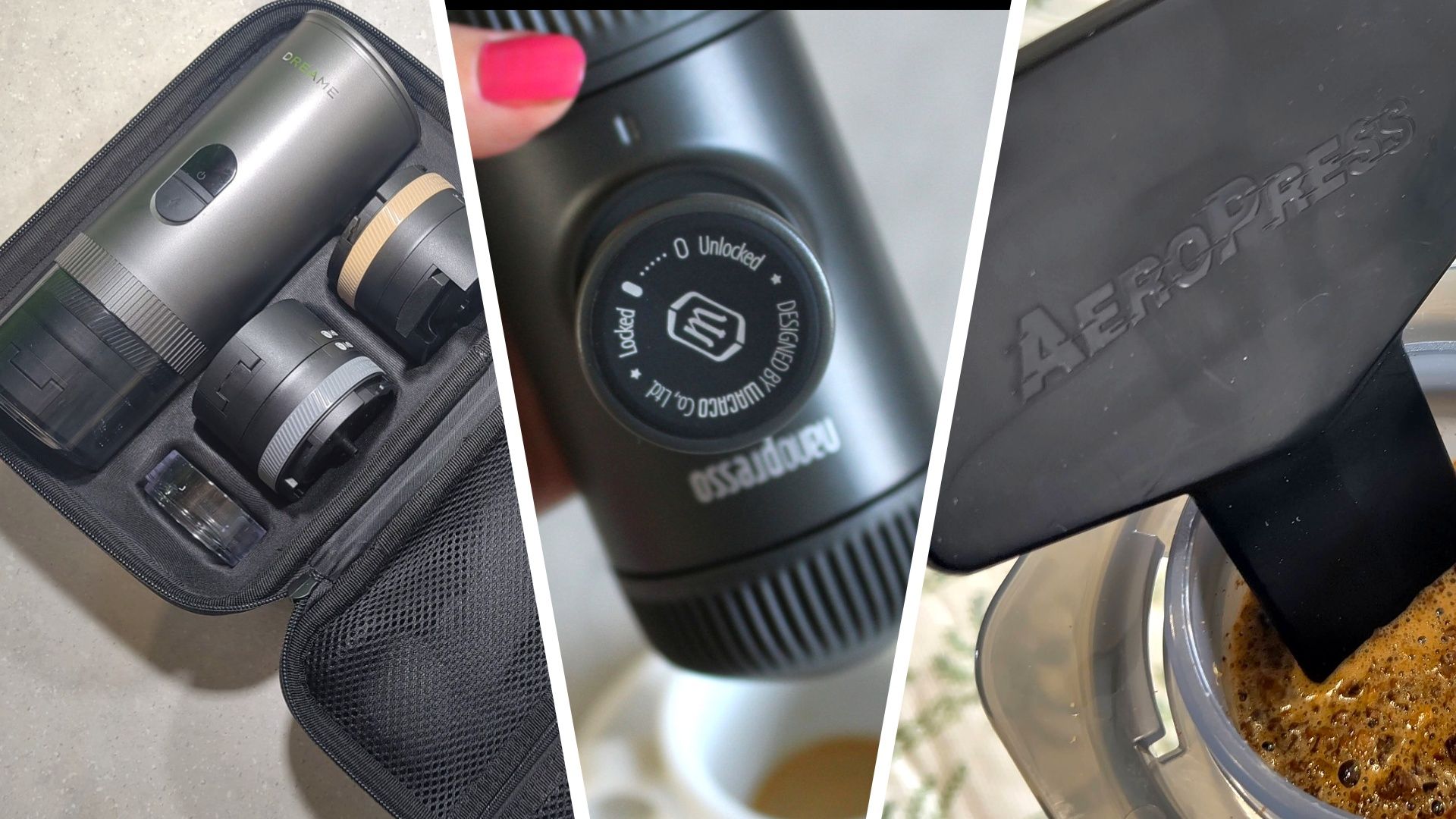
Picture from cdn.mos.cms.futurecdn.net
Rank 280So you've got your water, cash, canned food, and a wind-up radio, but something is missing from your prepping supplies. If the power goes out and your water supply is cut, how will you make your morning coffee? Put down that jar of instant granules — basic services might have failed, but your tastebuds haven't.Drip coffee is an easy way to perk yourself up and boost your morale in a crisis (just pick up a ChemEx brewer or a simple dripper with some filter papers), but if you're aiming to conserve water then a shot of espresso is a better way to get your caffeine fix, so here I've focused on brewers for preparing shorter drinks.Consider how you're going to store your emergency coffee supply, too. Whole beans will hold their flavor better than ground, and I recommend keeping them in an opaque, airtight container in a cool place (light, heat, air, and moisture are the enemies of aroma compounds). You'll need a grinder, too — look for one with burrs rather than blades so your coffee isn't chopped up in rough pieces.If all that sounds like too much hassle in a crisis, opt for foil-sealed coffee pods instead. Both the Nanopresso and Dreame Ecceluxe Go below have adapters for brewing with single-serve capsules.The Ecceluxe Go heats its own water, but if you pick a more basic brewer then you'll need a different way to get it up to temperature. As the former editor of an outdoor gear website, I recommend a simple gas camping stove like the MSR Pocket Rocket 2, which will get your water up to around 203F / 95C in approximately 3.5 minutes. Now, onto the brewers...Wacaco NanoPressoFutureFutureWacaco NanopressoFutureWacaco NanopressoNo power? No problem. The Wacaco Nanopresso generates up to 18 bars of pressure using nothing but elbow grease. It's small enough to tuck inside a pocket, and is hand-powered, so all you need is a source of hot water to create properly extracted espresso with thick crema (even if you have to use a flashlight to see what you're doing).The standard Nanopresso uses ground coffee, which you can tamp down using the scoop (the brewer has a valve to release pressure if you accidentally tamp it too hard), but if you'd rather use pods then the NS adaptor allows you to use Nespresso Original style capsules instead.It feels robust and solid in the hand, and is packed with thoughtful little features like an insulated water tank and cup to protect your hands from heat, and an easy-clean portafilter that needs minimal maintenance.Dreame Ecceluxe GoFutureFutureFutureFutureFutureFutureThe Dreame Ecceluxe Go is a battery-powered brewer with a miniature boiler built-in. Just pour room-temperature water into the reservoir on top (measuring lines engraved inside will prevent you overfilling it and wasting precious resources), then pick the right adapter — Nespresso Original, Nestlé Dolce Gusto, ESE (Easy Serve Espresso), or fresh grounds — and you're ready to brew.Preparing an espresso with room temperature water takes about six minutes from start to finish, and you can prepare two or three drinks before the Ecceluxe Go needs recharging (from a portable battery or solar generator during a power outage). The brew unit itself is smaller than a thermos flask, and comes in a compact carry case that you can tuck away with the rest of your emergency supplies.The Dreame Ecceluxe Go is due to go on sale in Spain and Portugal very soon, with the US following shortly after. There's no plan for a UK launch yet, but it charges via USB-C, so there's no reason British preppers can't import one.AeroPress and Manual Coffee GrinderFutureFutureFutureFutureFutureIf you're planning to keep whole coffee beans in your emergency supplies, you need the AeroPress Manual Coffee Grinder. I've tested a lot of manual grinders in my time, and this is easily the best. It has proper burrs rather than cheap blades so coffee is ground rather than shredded, and they're adjustable so you can optimize the grind size to suit your brewing method.The default setting is optimized for the AeroPress brewer, which you can use to make a short, strong shot of coffee to keep you awake, or a longer, smoother drink if you have water to spare. I have a plastic AeroPress in my locker at work (you never know what might happen), but if you want something extra tough then take a look at the rugged AeroPress Steel. If you're part of a whole family of coffee-lovers there's also the king-sized AeroPress XL, and if you need something you can also use on the road, the bijou AeroPress Go packs down into a compact travel cup.
-

Picture from techcrunch.com
Rank 281 -

Picture from techcrunch.com
Rank 282 -

Picture from techcrunch.com
Rank 283 -

Picture from techcrunch.com
Rank 284 -

Picture from techcrunch.com
Rank 285 -

Picture from cdn.mos.cms.futurecdn.net
Rank 286There are only so many ways I can say how good the SteelSeries Arctis Nova Elite is, but perhaps the simplest way is the best: it is the greatest gaming headset I have ever tested and reviewed. Yup, it still looks very familiar, and very SteelSeries Arctis on the outside, but this headset is like no other in the brand's lineup, or the wider market. Everything, every minute detail, has had time and consideration poured into it, and it really is the fullest realization of what a gaming headset can be, and a natural winner at the TechRadar Product of the Year Awards 2026.First and foremost, as I laid out in my full SteelSeries Arctis Nova Elite review, it's got that brilliant out-of-the-box SteelSeries audio — but not quite as we all know it. The brand-new custom-made carbon fiber audio driver, held in place by a brass surround ring, makes for a different, but still breathtaking, flavor.Combine that SteelSeries Arctis tuning with the new hardware combination, and you get unbelievable immersion, supremely accurate sound reproduction of anything and everything, and excellently rich and detailed certified Hi-Res Audio for a wireless gaming headset.(Image credit: Future/Rob Dwiar)While I could talk about the audio alone for ages, the Elite backs up its brilliant sound with a faultless feature set.Firstly, building on the brilliant DAC unit the Arctis Nova Pro headsets introduced, the Elite's GameHub with OmniPlay means you can be connected to every platform type, basically simultaneously. It's fabulous. Utilizing this, as well as the headset's Bluetooth connection, you can actually connect to up to four different sources, and mix and listen to them altogether. You might never need four, but being connected to my console and PC, and having Bluetooth on to take phone calls, has been really useful for me.You've got two different microphone modes (a retractable boom, which is fantastic quality, and built-in ones for convenience), the 'infinite' battery supply due to a spare being charged in the GameHub all the time, and a host of EQ and other controls in the GameHub.The Nova Elite feels fantastically premium, and joyous to wear and use. The cold-rolled steel and aluminum materials are superb, the leatherette cushions are sublime, the metallic volume wheel is a tiny but glorious touch, and every button and material finish feels worthy of the headset's lofty price tag.Other headsets might tickle different fancies, or appeal to different priorities that folks might have; but for anyone looking for a premium, do-it-all headset for all of their devices that excels in every way, it has to be the SteelSeries Arctis Nova Elite. You simply will not find a better headset offering the same combination of design, features and audio quality. Buy it, and you will never look back.
-

Picture from cdn.mos.cms.futurecdn.net
Rank 287Fujifilm plans to multiply magnetic tape production fivefold by fiscal 2028The company is committing ¥10 billion ($63.3 million) to its Odawara plant expansionOffline tape copies can reduce exposure to remote cyberattacks on networked systemsFujifilm has revealed plans to increase its magnetic tape production capacity fivefold by fiscal 2028 in response to rising data storage demands driven by AI.The Japanese company has allocated ¥10 billion ($63.3 million) to expand its Odawara plant near Tokyo, marking its largest investment in tape production for approximately 20 years.The project will concentrate on advanced cartridges capable of retaining up to 100TB, although Fujifilm has not disclosed its expected annual output following expansion.Magnetic tape finds renewed purpose as AI data volumes surgeMagnetic tape remains commercially useful because organisations can store enormous quantities of information without keeping the medium continuously connected to computer networks.Data centres, financial institutions and research organisations use it to preserve backups, particularly when information must remain available for years rather than immediate retrieval.The technology dates back decades, with Fujifilm beginning development in 1954 for television broadcasting equipment before expanding into audio and video recording applications.A 2026 IDC survey found that 94.7% of organisations reported storing larger volumes of information after adopting artificial intelligence technologies across their operations.It also estimates that global data generation could reach 718 zettabytes by 2030, approximately four times the 2024 volume.Each zettabyte represents one billion terabytes, indicating the scale of storage capacity potentially required as digital activity expands.Magnetic tape can help accommodate this growth by providing a relatively inexpensive way to retain large volumes of data offline for extended periods, without occupying costly high-speed storage.Tape also offers protection against certain cybersecurity incidents because stored cartridges can remain disconnected from operational systems.Keeping copies offline can reduce their exposure to remote attacks, although physical damage, mishandling and other risks remain possible.Rising drive prices improve magnetic tape's cost advantageThe economics of competing storage technologies have strengthened tape's appeal as semiconductor shortages push up SSD prices and data centre demand increases pressure on hard-disk drive supplies.According to Fujifilm’s analysis with Brad Johns Consulting, tape storage costs about 1 cent per GB, compared with 3–3.5 cents per GB for raw HDD storage.This implies that storing 100 TB of data on magnetic tape costs approximately $1,000, compared with $3,000 to $3,500 using HDDs, potential savings of about 67–71%. Japanese companies are now investing across several storage technologies, suggesting that they expect continued demand for different capacities, speed, and cost.Kioxia plans to invest ¥5 trillion (~$37 billion) alongside American partner Sandisk over six years, to expand semiconductor memory production.Toshiba intends to spend approximately ¥60 billion (~$380 million) enlarging its Philippine hard-drive factory, to double manufacturing capacity.Hoya plans a ¥50 billion (~$317 million) investment in Vietnam for glass substrates used in hard drives, while NHK Spring has outlined an additional ¥35 billion (~$222 million) in production spending.These investments indicate that magnetic tape's renewed appeal coincides with expansion elsewhere in the storage market, rather than a retreat from SSDs or HDDs.Via Nikkei Asia
-

Picture from techcrunch.com
Rank 288 -

Picture from cdn.mos.cms.futurecdn.net
Rank 289San Francisco lab Radical Numerics says its Omnii-1 model designed bacteriophages that were given to a patient with a drug-resistant infection, a world firstThe phages were built by rewriting the gene for T7's tail fiber, the protein the virus uses to latch onto bacteriaNobody outside the company knows whether it worked, because the results have not been published, peer-reviewed, or disclosed yetRadical Numerics has announced its AI-designed viruses (bacteriophages) were given to a sick person, but has not provided much further insight about what happened next.The San Francisco AI lab announced in October 2026 that bacteriophages designed by its new genome model had been administered to a human patient with an antibiotic-resistant bacterial infection, under a physician-led compassionate-use pathway authorized by the FDA.If the claim holds, it is the first time an AI-designed organism of any kind has been put into a person as medicine.Not a new phenomenon, but one that could do with AI assistanceBacteriophages are viruses that infect bacteria and ignore human cells entirely. They have been used as therapy for more than a century, predating penicillin, and have enjoyed a quiet revival as antibiotics have begun to fail.The World Health Organization considers phage therapy broadly safe, and unlike broad-spectrum antibiotics, a phage can target one bacterial strain while leaving the rest of your microbiome alone.That precision is also the problem: each phage recognizes a narrow set of bacterial surface receptors, so treating a patient means finding one that matches their specific infection. Clinicians screen existing phage libraries, then environmental samples, then give up and try engineering as a last resort. For someone with sepsis, that search is not an academic exercise but an important life-or-death situation.The scale of the underlying problem is not in dispute. The Global Burden of Disease project estimated that antimicrobial resistance was associated with roughly 4.7 million deaths in 2021, with projections indicating that between 2025 and 2050, close to 40 million deaths could be attributable to it.Radical Numerics was founded by members of the team behind Evo and Evo 2, the Arc Institute genome models that generated the first entirely AI-written phage genomes. That earlier work produced 700,000 candidate genomes; 285 were synthesized, and 16 produced viable viruses. It was a proof of concept with a punishing, yet promising hit rate.Omnii-1 is the follow-up, and the company's technical write-up describes a narrower, more surgical approach. Rather than inventing whole genomes, the model edits the targeting component. The team worked with T7, a well-characterized 40-kilobase E. coli phage, and rewrote gp17, the receptor-binding tail fiber.The numbers the company is willing to share are genuinely interesting. At 11 to 15 amino acid changes from wild type, 69.9% of designed variants were recovered as viable phages, against 4.8% for random controls. Of 6,694 variants with measurable activity, 2,161 beat the original, including some carrying 28 amino acid substitutions.A promising, but unproven and unpublished playThe company tested its designed cocktail against bacteria isolated from a real patient's infection, confirmed it eliminated that isolate in vitro, and then administered it. The patient reportedly had an E. coli infection that had resisted not only antibiotics but every available phage, which is effectively the worst position one can be in when it comes to infectious diseases.Radical Numerics has since declined to describe the patient's clinical course, outcome, hospital, or physicians, citing patient privacy and the fact that even limited clinical detail could identify the patient. The company self-published the technical report on its website and has not had it peer-reviewed, but has separately indicated the treatment is proprietary and something it hopes to commercialize.That silence held as of October 29, nine days after the announcement, when trade coverage for infectious disease clinicians still reported no disclosed clinical course, no outcome, and no peer-reviewed publication. The technical write-up remains the only account of the case.In fairness to Radical Numerics, its own write-up states plainly that single-patient observations cannot establish safety or efficacy, which is more cautionary than most product launches manage. CEO Eric Nguyen has also said the company intends to publish through peer review.Outside experts have landed somewhere between intrigued and unconvinced, which is the correct place to land. Harvard microbiologist Michael Baym, who was not involved, said the result would be incredible if it works, but added that his instinct is skepticism until the treatment finishes and the viruses' novelty can actually be examined.The commercial logic is much easier to establish; phage hunting is slow, and Radical Numerics believes it can compress design to days rather than months. Ottawa Hospital infectious disease clinician Marisa Azad, who is collaborating with the company, has described the conventional search as remarkably time-consuming, and she is not wrong. If AI can reliably shorten that loop, it changes who gets treated in time, allowing for a more cost-effective and broader audience for said treatments.There is cause for some concern too: a model that can design viruses to order is, structurally, a model that can design viruses to order. Radical Numerics acknowledges this directly by committing to biosafety, containment, and data-sharing measures scaled to the model's capability.It is the same dual-use problem that has dogged every capable biological design tool, and one that AI labs have been publicly wrestling with as their systems get better at biology.Engineered phages have reached patients before, most famously a 2019 case in which modified phages treated a disseminated drug-resistant Mycobacterium abscessus infection. What is new here is not the therapeutic concept but the design process, and the governance questions attach to the AI-driven process, not the concept itself.AI has moved from reading biology to writing it and handing the result to a doctor. That is a different category of claim than an AI model proposing a cancer hypothesis or outperforming specialists on rare-disease diagnosis, both of which keep a human firmly in the loop before anything enters a bloodstream.For now, however, a very clever experiment was run on a very sick person, and we still don't know how it went or when somebody decides to tell us. If it does pan out however, it will have massive rammifications for an industry that is only expected to grow across the next few decades.
-

Picture from cdn.mos.cms.futurecdn.net
Rank 290LG Display is investing heavily in OLED production up to 111 inchesCurrent LG OLEDs top out at 97 inchesToday's 97-inch panel is much older tech than smaller panelsIf you're looking for home theater-size OLED TVs, you'll soon encounter two hard limits: availability and affordability. You can't currently buy an OLED larger than 97 inches because nobody makes them. And you probably can't afford a 97-inch OLED TV because it's terrifyingly expensive: today LG is listing its 97-inch OLED for $19,999 (reduced from $24,999) / £15,999. But it looks like both of those things are about to change.LG Display is reportedly investing big money in big OLED, though: it and its partner Guangzhou Development Zone Holding Group are reportedly investing an extra 1 billion yuan to upgrade its production facilities for giant OLED displays.As FlatpanelsHD reports, the market analysis company TrendForce says that the announced upgrades mainly target "large-size OLED module manufacturing, with products covering 77-inch, 83-inch, 97-inch, and 111-inch," with the ability to debut a 111-inch panel being a "major highlight of the project."Bigger and potentially more affordable TVs are always welcome. But we do have some questions.Hisense's massive mini-LED TVs are spectacular, and the 98-inch costs a fraction of what you'd pay for a same-sized OLED (Image credit: Future)What panel is LG intending to use?The big question for us is whether the investment will mean improvements to the existing 97-inch panel's technology.The 2026 version of LG's 97-inch OLED TV is a 4K native panel with a native refresh rate of 120Hz, but while the model is the LG G6, its panel is not the same as its smaller siblings: they all get LG's Primary RGB Tandem 2.0 panel, but the 97-inch is an older, non-Tandem panel — in fact it dates back to the LG G2 from 2022, so it's several generations behind. That means it isn't as bright and doesn't have the same color accuracy as the other models.That difference is important, because these large OLEDs are up against some of the best mini-LED and increasingly, RGB mini-LED TVs — and those TVs are exceptionally bright and accurate as well as increasingly affordable. It's possible to buy high-quality 98-inch Hisense TV for just $3,999, which is a lot for a TV but not a lot for a 98-inch one — and is obvious just a fraction of the 97-inch OLED price.We're keeping our fingers crossed here: if LG Display breaks the size barrier and makes ultra-large Tandem RGB TVs that are less expensive to manufacture, that'd be great. The worst case scenario is that we get the same kind of panel that's currently in the 97-incher, but a bit bigger — but it seems like that the aim is to upgrade the technology, given that production of smaller sizes was mentioned as a goal as well.And that might be the bigger win from the project for most of us: if the project succeeds in making producing 111-inch OLED viable, and therefore improves the process and lowers the cost of 77-inch and 83-inch models too, that's probably the real benefit.Thinking of buying a new TV?Try our TV size and model finder! You tell it how far you sit from your TV, we'll tell you what size to buy based on viewing angle advice from image quality experts, and we'll recommend our three top TVs at that size for different prices.
-

Picture from techcrunch.com
Rank 291 -
Picture from cdn.mos.cms.futurecdn.net
Rank 292Looking for a different day?A new NYT Strands puzzle appears at midnight each day for your time zone – which means that some people are always playing 'today's game' while others are playing 'yesterday's'. If you're looking for Friday's puzzle instead then click here: NYT Strands hints and answers for Friday, October 30 (game #971).Strands is the NYT's latest word game after the likes of Wordle, Spelling Bee and Connections – and it's great fun. It can be difficult, though, so read on for my Strands hints.Want more word-based fun? Then check out my NYT Connections today and Quordle today pages for hints and answers for those games, and Marc's Wordle today page for the original viral word game.SPOILER WARNING: Information about NYT Strands today is below, so don't read on if you don't want to know the answers.NYT Strands today (game #972) - hint #1 - today's themeWhat is the theme of today's NYT Strands?• Today's NYT Strands theme is… It’s in the bagNYT Strands today (game #972) - hint #2 - clue wordsPlay any of these words to unlock the in-game hints system.STEAKFISHCITYSANDYPLAICETRICKRICENYT Strands today (game #972) - hint #3 - spangram lettersHow many letters are in today's spangram?• Spangram has 12 lettersNYT Strands today (game #972) - hint #4 - spangram positionWhat are two sides of the board that today's spangram touches?• First side: left, 3rd row• Last side: right, 4th rowRight, the answers are below, so DO NOT SCROLL ANY FURTHER IF YOU DON'T WANT TO SEE THEM.NYT Strands today (game #972) - the answers(Image credit: New York Times)The answers to today's Strands, game #972, are…TOOTHBRUSHFANGSRINGCANDYAPPLESTICKERSPANGRAM: TRICKORTREATMy rating: EasyMy score: PerfectWithout meaning to I collected the top three treats and then the bottom three treats — all neatly divided by the spangram.The first word I spotted was TOOTHBRUSH, so I momentarily thought we could be looking for items that might make their way into a wash bag; my second word, FANGS, soon stopped that theory (as did today’s date!)Here’s hoping you have a spooktacular Halloween.Yesterday's NYT Strands answers (Friday, October 30, game #971)JUICEELECTRICITYPOWERENERGYSPARKCURRENTSPANGRAM: PLUGGEDINWhat is NYT Strands?Strands is the NYT's not-so-new-any-more word game, following Wordle and Connections. It's now a fully fledged member of the NYT's games stable that has been running for a year and which can be played on the NYT Games site on desktop or mobile.I've got a full guide to how to play NYT Strands, complete with tips for solving it, so check that out if you're struggling to beat it each day.
-
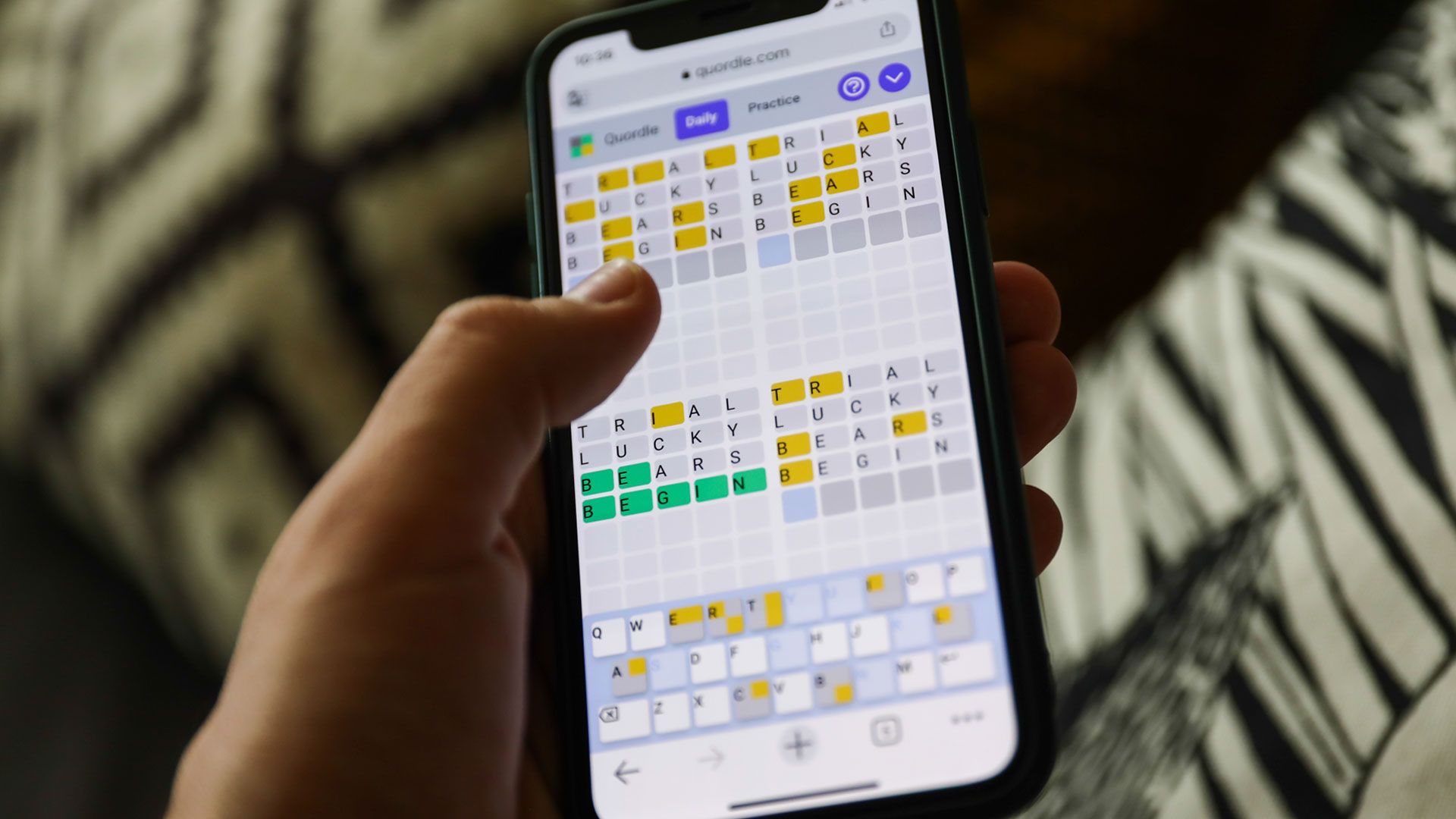
Picture from cdn.mos.cms.futurecdn.net
Rank 293Looking for a different day?A new Quordle puzzle appears at midnight each day for your time zone – which means that some people are always playing 'today's game' while others are playing 'yesterday's'. If you're looking for Friday's puzzle instead then click here: Quordle hints and answers for Friday, October 30 (game #1740).Quordle was one of the original Wordle alternatives and is still going strong now more than 1,500 games later. It offers a genuine challenge, though, so read on if you need some Quordle hints today — or scroll down further for the answers.Enjoy playing word games? You can also check out my NYT Connections today and NYT Strands today pages for hints and answers for those puzzles, while Marc's Wordle today column covers the original viral word game.SPOILER WARNING: Information about Quordle today is below, so don't read on if you don't want to know the answers.Quordle today (game #1741) — hint #1 — VowelsHow many different vowels are in Quordle today?• The number of different vowels in Quordle today is 3*.* Note that by vowel we mean the five standard vowels (A, E, I, O, U), not Y (which is sometimes counted as a vowel too). Quordle today (game #1741) — hint #2 — repeated lettersDo any of today's Quordle answers contain repeated letters?• The number of Quordle answers containing a repeated letter today is 1.Quordle today (game #1741) — hint #3 — uncommon lettersDo the letters Q, Z, X or J appear in Quordle today?• Yes. One of Q, Z, X or J appears among today's Quordle answers.Quordle today (game #1741) — hint #4 — starting letters (1)Do any of today's Quordle puzzles start with the same letter?• The number of today's Quordle answers starting with the same letter is 0.If you just want to know the answers at this stage, simply scroll down. If you're not ready yet then here's one more clue to make things a lot easier:Quordle today (game #1741) — hint #5 — starting letters (2)What letters do today's Quordle answers start with?• A• S• C• RRight, the answers are below, so DO NOT SCROLL ANY FURTHER IF YOU DON'T WANT TO SEE THEM.Quordle today (game #1741) — the answers(Image credit: Merriam-Webster)The answers to today's Quordle, game #1741, are…ANIMESWARMCHALKRAJAHA very rare appearance from the letter J in the middle of a word, today.If it wasn’t for the letter H, I probably would have guessed “ragga” first but although it felt risky I couldn’t think of anything other than RAJAH.Daily Sequence today (game #1741) — the answers(Image credit: Merriam-Webster)The answers to today's Quordle Daily Sequence, game #1741, are…WARTYCASTESUGARFLUNKQuordle answers: The past 20Quordle #1740, Friday, 30 October: ULCER, DIMLY, BRAIN, BEGUNQuordle #1739, Thursday, 29 October: PRUDE, MINUS, SAVOY, USHERQuordle #1738, Wednesday, 28 October: DEALT, FLUME, SLEEK, RELICQuordle #1737, Tuesday, 27 October: ANKLE, HAVOC, SULKY, WHITEQuordle #1736, Monday, 26 October: ASSAY, GLEAM, MUCUS, WRINGQuordle #1735, Sunday, 25 October: RAINY, BUSED, PROXY, UNDIDQuordle #1734, Saturday, 24 October: TOXIN, SMART, MOUSE, STYLEQuordle #1733, Friday, 23 October: BLIMP, HOIST, FRIED, LURIDQuordle #1732, Thursday, 22 October: DECAL, WIDTH, WOKEN, LEVERQuordle #1731, Wednesday, 21 October: MOIST, VALVE, VERSE, NORTHQuordle #1730, Tuesday, 20 October: COYLY, SAUNA, TRIAL, RASPYQuordle #1729, Monday, 19 October: EXIST, DECOY, HITCH, FLUIDQuordle #1728, Sunday, 18 October: FLINT, FUROR, WEDGE, RODEOQuordle #1727, Saturday, 17 October: QUARK, ENEMY, SPASM, BLOCKQuordle #1726, Friday, 16 October: SHORT, WORTH, JOIST, SLUNKQuordle #1725, Thursday, 15 October: STALE, EPOCH, PIANO, CORNYQuordle #1724, Wednesday, 14 October: TIMID, GROUP, GRILL, EVERYQuordle #1723, Tuesday, 13 October: FLUFF, DEBUT, TEETH, STEINQuordle #1722, Monday, 12 October: HELLO, BELOW, RIGHT, SLANTQuordle #1721, Sunday, 11 October: LILAC, INLET, TRIAD, SHAPE
-

Picture from cdn.mos.cms.futurecdn.net
Rank 294Looking for a different day?A new NYT Connections puzzle appears at midnight each day for your time zone – which means that some people are always playing 'today's game' while others are playing 'yesterday's'. If you're looking for Friday's puzzle instead then click here: NYT Connections hints and answers for Friday, October 30 (game #1237).Good morning! Let's play Connections, the NYT's clever word game that challenges you to group answers in various categories. It can be tough, so read on if you need Connections hints. What should you do once you've finished? Why, play some more word games of course. I've also got daily Strands hints and answers and Quordle hints and answers articles if you need help for those too, while Marc's Wordle today page covers the original viral word game.SPOILER WARNING: Information about NYT Connections today is below, so don't read on if you don't want to know the answers.NYT Connections today (game #1238) - today's words(Image credit: New York Times)Today's NYT Connections words are… STAYCATIONGUITARDIRTYKILLERSICKDOWNFALLSHAKENUPTENNIS RACKETSHAKESPEAREWICKEDTASSELSITCOMMARIONETTEDRYGNARLYNYT Connections today (game #1238) - hint #1 - group hintsWhat are some clues for today's NYT Connections groups?YELLOW: Confusing slangGREEN: Instructions for James Bond’s favorite cocktailBLUE: A twine in commonPURPLE: Begin with canine controlNeed more clues? We're firmly in spoiler territory now, but read on if you want to know what the four theme answers are for today's NYT Connections puzzles…NYT Connections today (game #1238) - hint #2 - group answersWhat are the answers for today's NYT Connections groups?YELLOW: WORDS MEANING GOOD THAT SOUND BADGREEN: MARTINI SPECIFICATIONSBLUE: THINGS WITH STRINGSPURPLE: STARTING WITH DOG COMMANDSRight, the answers are below, so DO NOT SCROLL ANY FURTHER IF YOU DON'T WANT TO SEE THEM.NYT Connections today (game #1238) - the answers(Image credit: New York Times)The answers to today's Connections, game #1238, are…YELLOW: WORDS MEANING GOOD THAT SOUND BAD: GNARLY, KILLER, SICK, WICKEDGREEN: MARTINI SPECIFICATIONS: DIRTY, DRY, SHAKEN, UPBLUE: THINGS WITH STRINGS: GUITAR, MARIONETTE, TASSEL, TENNIS RACKETPURPLE: STARTING WITH DOG COMMANDS: DOWNFALL, SHAKESPEARE, SITCOM, STAYCATIONMy rating: HardMy score: 2 mistakesI was on the right track with STARTING WITH DOG COMMANDS, as I saw the link between DOWNFALL, SITCOM and STAYCATION — but I thought KILLER was the fourth; something, in hindsight, that would take canine training to a whole new (and wrong) level.After winning a Purple First for connecting the hardest group of the game, I made another error putting together the easiest/yellow group, including DIRTY among the WORDS MEANING GOOD THAT SOUND BAD.After switching with GNARLY, another meaning for DIRTY came to mind and I was able to cobble together MARTINI SPECIFICATIONS.Yesterday's NYT Connections answers (Friday, October 30, 2026, game #1237)YELLOW: PARTS OF A CAMERA: FLASH, LENS, SHUTTER, VIEWFINDERGREEN: AROUND A THEATER STAGE: BACKDROP, CURTAIN, PIT, WINGSBLUE: THROW____: HANDS, PILLOW, RUG, SHADEPURPLE: FRUIT WITH FIRST LETTER CHANGED: DEMON, DRAPE, GLUM, GRANGEWhat is NYT Connections?NYT Connections is one of several increasingly popular word games made by the New York Times. It challenges you to find groups of four items that share something in common, and each group has a different difficulty level: green is easy, yellow a little harder, blue often quite tough and purple usually very difficult.On the plus side, you don't technically need to solve the final one, as you'll be able to answer that one by a process of elimination. What's more, you can make up to four mistakes, which gives you a little bit of breathing room.It's a little more involved than something like Wordle, however, and there are plenty of opportunities for the game to trip you up with tricks. For instance, watch out for homophones and other word games that could disguise the answers.It's playable for free via the NYT Games site on desktop or mobile.
-

Picture from cdn.mos.cms.futurecdn.net
Rank 295Berkeley professor Richard Borcherds says he no longer grades homeworkThe renowned mathematician stated that it is amost impossible to spot a human written submission among those created with AIGrading in Borcherds’ classes are now conducted with in-person exams, completed without resorting to electronic devicesProfessor Richard Borcherds of the University of California, Berkeley, has revealed he has abandoned grading homework for his math students. The decision appears to have been made following an improvement in AI-produced homework, which has left educators unable to spot human-penned submissions from those completed using AI.British-born Borcherds – whose award-winning work includes infinite-dimensional algebras and is currently researching quantum field theory – has determined that his students will be assessed using traditional exams, without reliance on electronic devices.The decision follows Berkeley’s previous evaluation of AI detection software that it found was unreliable, and prompted the university to allow professors to formulate their own AI policies within the course syllabus. "Grading for correctness"AI has changed the game as far as educators are concerned. While some appear content to let students submit work produced however they see fit, others are taking a more determined approach. Professor Borcherds has clearly seen a change in scores as the use of AI among his math students has increased.“Online exams are now a waste of time as several students just use AI to answer the questions. I cannot tell which students are using AI, but I notice the average score increases a lot in online exams.”Borcherds explained that what he calls “grading for correctness” essentially pushes students towards using AI. They’re employing a tool that can be guaranteed to produce the correct answer.“Grading for correctness just adds a huge incentive for them to use AI for homework instead of doing it themselves and penalizes students for honesty. And paying to grade AI generated answers is a waste of time and money.”Difficult assessmentsOther educators have expressed similar concerns about AI, although to date none seem to have taken Borcherds more traditional stance on the technology. Some have found, however, that giving students the time and space to use AI has skewed their results, and limiting access to the technology provides more realistic grades.Berkeley has previous explored the use of AI detection and found it lacking. By putting its professors in charge of determining departmental expectations of AI use in students, the university has given its educators the power to expect better from their students.Professor Borcherds could be set to lead the way on this, and perhaps once this story attracts attention, more educators will take a stronger view of AI assistance in homework and assessments. Via New York Post
-

Picture from cdn.mos.cms.futurecdn.net
Rank 296OpenAI will keep pushing AI’s scientific discoveries, Sam Altman saysSome researchers are excited by the ‘fantastic’ breakthroughsBut others warn that the pace of change is ‘psychologically taxing’One of the promises that huge AI companies like OpenAI and Anthropic have made is that their machine learning models will help to solve some of the oldest problems in math and science. The pace of their discoveries has left many experts struggling to keep up, but OpenAI’s Sam Altman just has just said there’s much more in store — and not everyone is happy about that. Speaking on the Cheeky Pint podcast, Altman outlined his belief that “Humanity deserves fundamental knowledge, and we should not be sitting on a major fundamental science discovery.” That rationale is why OpenAI has published breakthrough after breakthrough in these fields, knocking down some of the oldest and toughest problems that have troubled great thinkers for years. But the way in which the company has set out its results has drawn criticism for often inadequate attributions and questionable verification processes. While Altman acknowledged that, saying on the podcast that “I do have empathy for the method” and saying OpenAI’s quest for mathematical challenges did “get out of control” at times, he suggested that there’s much more to come. Asked if the firm has anymore unpublished breakthroughs in its vaults, he replied “We do. Of course.” That’s led to accusations that, far from giving people “fundamental knowledge,” OpenAI is gatekeeping important discoveries. And there’s another problem: the sheer scale of the new research is swamping academics. For instance, Wired has noted that the company recently “dumped 722 manuscripts on 400 problems on GitHub,” leaving the scientific community to pick through the enormous mass of information. And the impact of having the most important work in your life suddenly undercut by a machine is “psychologically taxing for many people,” said Thore Husfeldt of the IT University of Copenhagen. Husfeldt added that there is “a lot of doom and gloom, because every week, or every second week, the results announced by AI just annihilate the ongoing research projects of many people.”Obliterating entire fields of research(Image credit: Shutterstock)AI models’ ability to solve thorny problems was keenly demonstrated when it apparently disproved the exponential time hypothesis (ETH), which argued that the effort needed to solve a problem increases with its complexity. That’s upended countless theories that assumed that ETH was correct and left many experts scrambling to catch up. As Linköping University professor Peter Jonsson told Wired, although AI’s tendency to undermine years-long research can be irksome, “at the same time, we learn a lot from it. And this is what science is about.”UC Santa Barbara professor Daniel Lokshtanov aptly described the mood among many scientists and mathematicians, saying “It’s just a giant bomb dropped into the middle of the field,” he says. “It’s really cool and terrible at the same time.” For Husfeldt, meanwhile, the discovery is “fantastic.” He added: “Being a mathematician is a lot like stumbling about in a completely dark room. It’s like somebody just illuminated an entire subfield in floodlights of knowledge, and now we just run around like overexcited bunnies and look at all the nooks and crannies that we can suddenly explore. So it’s a super exciting time.” In the case of the ETH theory, OpenAI’s work has not been peer reviewed or independently verified. But it’s clear that AI research is creating generational changes in many areas — and overturning entire fields of study in an instant, with all the excitement and chaos that comes with that. Jonsson fittingly summed the situation up, saying: “I don’t care if it’s a human-written proof, or it’s written by AI, or if an alien transmitted this proof to us. If it’s true, then we must simply use it in the future.”
-

Picture from techcrunch.com
Rank 297 -
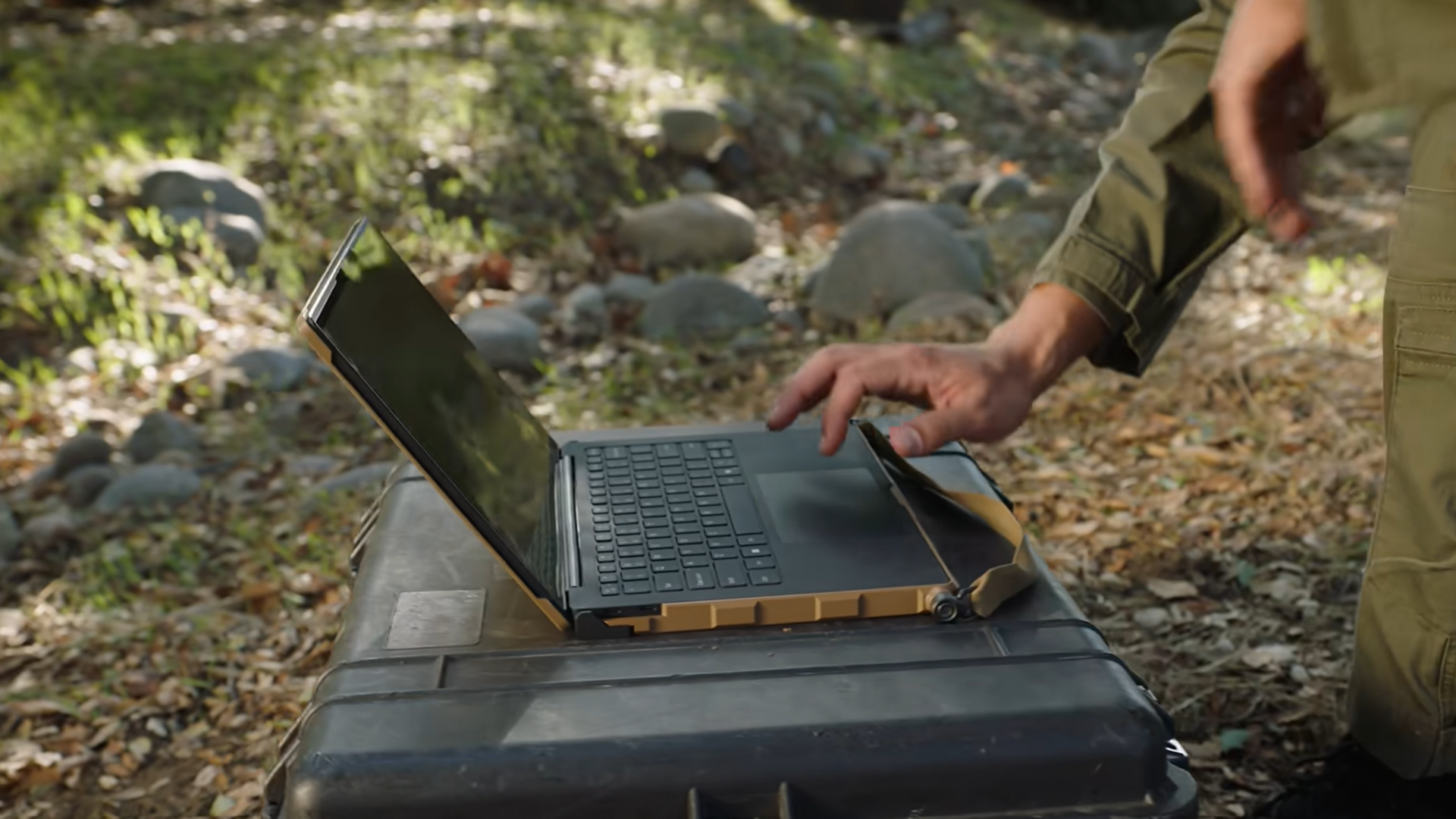
Picture from cdn.mos.cms.futurecdn.net
Rank 298Anduril plans to open BlueChip laptop orders in 2027 with QualcommBlueChip prototypes source 90% of component procurement costs from American and allied suppliersAnduril expects its laptops to cost 20% more than comparable devicesAnduril Industries has revealed plans to enter the laptop market through a partnership with Qualcomm, with plans to begin accepting orders for its BlueChip computers in 2027.The defense technology company, best known for its military drones, intends to reduce reliance on overseas suppliers as it develops the new laptop line.However, its current sourcing figures show that eliminating foreign suppliers remains a future objective rather than an existing achievement.BlueChip begins with American manufacturingThe company has developed working prototypes featuring Qualcomm Snapdragon X Series processors, which will power the laptops.Anduril says suppliers in the United States and allied countries account for 90% of the procurement cost of the components used in its prototypes.The company already sources several parts locally, including batteries, computer enclosures and display glass.Its strategy also involves using metals that American industries can extract, refine and process at commercial scale.“Other companies might design their computers in the U.S., Anduril makes them here,” said Palmer Luckey, founder of Anduril Industries, in a company video.“We’re making parts out of metals that the U.S. knows how to extract, knows how to refine, knows how to process, and knows how to mill at scale at a reasonable price; and that goes for the entire laptop. The same thing goes for the battery technology.”The company says the laptop is designed to withstand demanding environments, with replaceable upper and lower shells that allow users to customize its configuration.These interchangeable panels could accommodate additions such as solar panels, specialised fabric materials and service insignia, according to Anduril’s video.The design also allows flat phased-array antennas to be integrated directly into the laptop’s chassis, potentially supporting specialised applications in demanding operating environments.Anduril estimates that producing a fully American-made laptop could cost 20% more than a comparable device, potentially limiting its appeal to ordinary consumers. Therefore, it appears to be focused on customers with specific security requirements, including government agencies, military organizations, emergency responders, and public safety departments.These buyers may accept higher prices to address concerns about hardware security and supply chain reliability.A domestic supply chain remains difficultAnduril acknowledges that producing complete laptops requires more than processors and selected parts.Circuit boards, displays, batteries, and other essential components remain heavily dependent on foreign suppliers, complicating efforts to eliminate reliance on these suppliers.“BlueChip will take a phased approach, beginning with expanding domestic sourcing and manufacturing, progressing toward eliminating reliance on foreign suppliers, and ultimately establishing an end-to-end American supply chain,” the company said in its announcement.The project comes as semiconductor investment grows in the United States, including TSMC’s facilities in Arizona and Samsung’s site in Taylor, Texas.These projects could improve access to locally fabricated chips, but they do not guarantee a domestic source for every part needed to assemble a laptop.Taiwan has also planned support for smaller companies supplying TSMC through industrial parks in the United States.Such initiatives could give BlueChip access to additional suppliers, although their eventual contribution to the laptop’s production remains unclear.Via Tom's Hardware
-

Picture from cdn.mos.cms.futurecdn.net
Rank 299Watch New Zealand vs Fiji in a make-or-break Rugby League World Cup 2026 Pool A clash at Cbus Super Stadium, Robina, as the two countries battle for a place in the semi-finals. The equation is simple: the winner goes through to the last four, while the loser goes home.New Zealand bounced back from their 24-22 defeat by Australia in the tournament opener with an 82-16 rout of the Cook Islands last time out, but they had to fight back after falling 16-12 behind. They soon made their class tell, though, with Jamayne Isaako racking up 38 points – comprising three tries and 13 conversions – to break the record for the most points by a Kiwi player in a single match. They will have to be on their game against a Fiji side who ran Australia close in their second pool match, as Stacey Jones' team look to move one step closer to lifting the World Cup for just the second time.Fiji may feel that they missed an opportunity to seal their place in the last four, having seen their game against Australia turn on a disallowed second-half try that would have put them 20-12 ahead. They ultimately lost 36-22 in Brisbane but will take plenty of confidence from their performance, especially given the way they dominated the Aussies' pack. The Fijians are aiming to reach the semi-finals for the fourth time in their history but they face an uphill battle, with second-place New Zealand sitting five positions above them in the world rankings.Here's how to watch New Zealand vs Fiji from anywhere in the world – with FREE Rugby League World Cup 2026 streams explained.Watch New Zealand vs Fiji for FREENew Zealand vs Fiji is free on 7plus in Australia and ThreeNow in New Zealand.Outside either Australia or New Zealand today? NordVPN can help you unlock your free stream from anywhere in the world — find out more below.Use a VPN to watch New Zealand vs Fiji live streams A VPN is a handy piece of software that can make your device appear as if it's back in your home country, so you can unlock your usual New Zealand vs Fiji stream. The best VPN right now? We recommend NordVPN – it does everything and comes with up to 75% off.Editors Choice🟩 NordVPN – get the world's best VPNNot having a VPN is like leaving your front door wide open in a busy city – anyone can walk right in and take a peek.TechRadar regularly reviews all the biggest and best VPN providers and NordVPN is our #1 choice.✅ Up to 75% off today✅ 3 extra months free✅ Unlocks 7plusGet NordVPN and stream New Zealand vs Fiji live from anywhere.VIEW DEAL ON How to watch New Zealand vs Fiji live streams in the USViewers in the US can watch New Zealand vs Fiji live on Premier Sports, which is showing all 18 games of the men's Rugby League World Cup 2026.A full tournament pass is available for just $25.Abroad today? Use a VPN whilst you're traveling away from home to unlock your stream.How to watch New Zealand vs Fiji live streams in AustraliaNew Zealand vs Fiji is live on free-to-air 7mate in Australia, while you can stream the match via 7plus.Just create an account using a valid Australia postcode (e.g. 2042).Not in Australia right now? You can use a VPN like NordVPN to watch New Zealand vs Fiji as if you were back home. How to watch New Zealand vs Fiji live streams in New ZealandFans in New Zealand can watch New Zealand vs Fiji for free on ThreeNow or on Sky Sport NZ, with live coverage on Sky Sport 1.You can access Sky Sport through satellite TV or get a live stream, with the Sky Sport Now subscription service starting at NZ$29.99 per day or NZ$59.99 per month.Those outside of New Zealand can use NordVPN to gain access to their home streaming service.How to watch New Zealand vs Fiji live streams in the UKUK-based fans can watch New Zealand vs Fiji on Premier Sports 2.Premier Sports costs £18.99 on a rolling monthly basis, or £150 for a year if you pay upfront. Alternatively, you can add it to an existing Sky TV, Virgin Media or Prime Video plan.Away from home? Unlock your New Zealand vs Fiji stream with NordVPN.How to watch New Zealand vs Fiji live streams in CanadaNew Zealand vs Fiji is available to watch on Premier Sports in Canada.Premier Sports costs CA$29.99 on a rolling monthly basis, with savings available for longer-term plans.If you're out of Canada but still want to tune in, explore the VPN route set out above, which will help you access your accounts from anywhere.What is the New Zealand vs Fiji start time?The New Zealand vs Fiji kick-off time is at 2.45pm AEST local time in Robina, Australia on Saturday, October 31. That's 12.45am ET in the US, 4.45am GMT in the UK and 3.45pm AEDT in Sydney.What is the New Zealand vs Fiji head-to-head?New Zealand and Fiji have met at the quarter-final stage of the past two Rugby League World Cups, winning one game apiece.The Fijians triumphed 4-2 in 2017, while the Kiwis claimed a 24-18 victory in 2022.Can I watch New Zealand vs Fiji on my mobile?Of course, most broadcasters, like Seven Network, have streaming platforms that you can access through mobile apps or via your phone's browser.You can also stay up-to-date with the latest Rugby League World Cup news and plays on the official social media channels on Instagram (@RugbyLeagueWorldCup) and Facebook (@RugbyLeagueWorldCup).What are the New Zealand vs Fiji teams?New Zealand: 1 Keano Kini, 2 Jamayne Isaako, 3 Dane Gagai, 4 Casey McLean, 5 Ronaldo Mulitalo, 6 Kodi Nikorima, 7 Jahrome Hughes, 8 James Fisher-Harris, (c), 9 Jeremy Marshall-King, 10 Moses Leota, 11 Isaiah Papali’i, 12 Briton Nikora, 13 Joseph Tapine. Reserves: 14 Te Maire Martin, 15 Naufahu Whyte, 16 Erin Clark, 17 Xavier Willison, 18 Charnze Nicoll-Klokstad, 19 Scott Sorensen, 20 Leo Thompson.Fiji: 1 Sunia Turuva, 2 Ronald Philitoga, 3 Waqa Blake, 4 Solomone Saukuru, 5 Semi Valemei, 6 Kurt Donoghoe, 7 Brandon Wakeham, 8 Jacob Saifiti, 9 Apisai Koroisau (c), 10 Emosi Ravosai, 11 Taane Milne, 12 Kitione Kautoga, 13 Caleb Navale.Reserves: 14 Josese Lanyon, 15 Elijah Keung, 16 Jordan Miller, 17 Joseph Litidamu, 18 Jordin Leiu, 19 Apenisa Driti, 20 Zion Johnson.We test and review VPN services in the context of legal recreational uses. For example:1. Accessing a service from another country (subject to the terms and conditions of that service).2. Protecting your online security and strengthening your online privacy when abroad.We do not support or condone the illegal or malicious use of VPN services. Consuming pirated content that is paid-for is neither endorsed nor approved by Future Publishing.
-

Picture from cdn.mos.cms.futurecdn.net
Rank 300Back when Apple announced watchOS 27 back in June earlier this year, there was one new feature that piqued my interest more than the promise of a smarter version of Siri or a Workout Buddy that now operated more standalone. Apple revealed that it was delivering more accurate distance tracking during walks and treadmill runs. It’s primarily doing that by making improvements to the algorithms that help to calculate the distance covered when you step onto that belt. It's website states that 'improved motion tracking algorithms help measure the distance of your treadmill runs and walks more precisely straight from your wrist.'As a runner that does his fair share of runs on a treadmill (and not just because it’s got cold outside — treadmill running is great for specific pacing and incline drills), I liked the prospect that the best smartwatch’s indoor activity credentials could now match its very solid outdoor performance — which I tested on the London marathon course’s infamous GPS black spots.So, has Apple actually managed to deliver more accurate distance tracking for indoor runners? I’ve been spending the last couple of months testing the feature across the best Apple Watches — including the Apple Watch Series 12 and Apple Watch Ultra 4 — to find out.How I tested(Image credit: Getty Images)I began my testing using the beta versions of watchOS 27 running on the Apple Watch Ultra 3 and the Apple Watch Series 11. When watchOS 27 was given a public release, I also strapped on the Apple Watch Ultra 4 and the Watch Series 12 to see how Apple’s latest smartwatches fared indoors.I didn’t have my own treadmill (or indeed, have the room to house one), so I relied on the treadmill at my gym. While I did my best to stick to the same treadmill for these test runs, that wasn’t always possible. That did mean I’d be stepping onto treadmills of various conditions and belt wear, which does have an impact on the reliability and accuracy of the treadmill distance tracking feature.With the Apple Watch strapped alone to one wrist, I had a Coros watch on the other paired to the Coros Pod 2. This foot-worn pod is designed to track distance, among other metrics, and was an additional source of data that could offer a more reliable picture of my running distance than the motion sensors that usually do that from the wrist. I used the foot-worn pod as a control device, the same way we use the best heart rate monitors to test the readings from smartwatches.With watches on wrists and the pod on my feet, I captured a range of runs covering different paces and distances. That included short one-mile test runs, steady hour-long runs and interval runs during which I mixed up my pace.I stuck to the same incline for all runs and used Apple’s own Workout app to track the workout. Apple suggests tracking an outdoor run of at least 20 minutes to calibrate the watch and help those algorithms do a better job of understanding your stride length, and in turn, deliver more accurate distance tracking. I did that with each Watch I tested.The results(Image credit: Ljupco Smokovski / Shutterstock)On the early runs in my testing using the Apple Watch Ultra 3 and the Series 11, I found a difference of about 300 metres (0.3km) from the distances the treadmill and Coros Pod 2 reported. If I’m looking at that difference in terms of a longer distance race such as a marathon, that’s quite a small difference. If we’re looking at that difference over a shorter distance race such as a 5km, then it might be the kind of difference that mattered.When I switched to testing with the publicly available version of watchOS 27 with the Apple Watch Ultra 4 and the Series 12, there tended to be a difference between the treadmill and watches of roughly 200 metres. Again, that’s a very good performance and a small difference when you’re banking a longer run.Sample runApple Watch Series 12 distanceCoros Pod distanceTreadmill distance1 mile test1.2 miles1.01 miles1 mileInterval run4.2 miles4.4 miles4.5 milesSteady 5 mile run4.8 miles5.02 miles5 milesThe improvement in distance tracking should, in theory, have a positive impact on capturing your running pace. While I found the pacing data to in general be similar to the Coros Pod 2 and the treadmill, there were times I felt the Apple Watches struggled to register faster sections of certain running sessions and typically was more noticeable during interval-style sessions. This is generally where treadmills can struggle too, and I’m not convinced the various Apple Watches always got a good grip of my real-time pacing.Is the Apple Watch fit for the indoor run tracking job?After hitting double-digit treadmill runs across a series of Apple Watches that promise more accurate distance tracking for indoor runs, I can say that I never saw the Watch and treadmill entirely match up. What I did see was that those Watches weren’t far off. reporting similar distances to the kilometers listed both on the treadmill and on the Coros Pod, especially on steady or easier paced runs. However, they were never exact.Like most watches and badly-calibrated treadmills for that matter, the pacing during those runs did feel off and made using the Apple Watch for faster runs more problematic. I do feel that those algorithm tweaks will be more appreciated by those choosing to do their walking indoors, and are mainly focused on the distance they cover during that inside walking time.If I was choosing to track my runs indoors, I’d still make sure I was performing that 20-minute outdoor run calibration to get the most reliable data. I’d also say that having a footpod sensor like the Coros Pod 2 or a Stryd that captures your stride data closer to the point of the body that’s actually doing the moving will get you a better level of accuracy. While the Coros Pod 2 is tied to Coros watches, the Stryd does work with the Apple Watch.What it really showed is that if you care about accurate distance and pace data, getting outside and putting the onboard GPS sensor will still be the best way to get you that. It will also give that indoor running time a boost as well — while the Apple Watch has improved, it’s not pinpoint-accurate and you should take indoor running metrics as a generally accurate guideline, giving or taking a couple of hundred meters. For most exercisers, that will be enough.