Technology News of last week
This list is constantly updated to reflect the weeks technology news.
-

Picture from cdn.mos.cms.futurecdn.net
Rank 201It would be fair to say that Stephen Graham is at the peak of his powers right now, which is impressive considering the body of work he's built over the past 20 years or so. Now, he's turning to darker stories once again as he dives into Nocturne, an adaptation of Lars Kepler's best-selling novel, The Sandman.Graham plays notorious and sadistic serial killer Jurek Walter in the show, while it's up to Jonah Lynn (Liev Schreiber) to hunt him down and put a stop to his killing spree. With one victim left to find, Lynn goes to desperate lengths to try and bring peace to his sleepy town in Western Pennsylvania. Along the way he enlists the help of his surrogate daughter, FBI Agent Saga Bauer (Zazie Beetz), to solve the horrific mystery.With ten episodes releasing weekly as the chaos unfolds, it sounds like Apple TV has once again got another watercooler hit on their hands with this brutal and brooding crime thriller.If you're ready to see Stephen Graham let out his wild side, read on for how to watch Nocturne online and from anywhere. Can I watch Nocturne for FREE?Nocturne is exclusive to Apple TV, so won't be available on any free streamers. However, new users could make us of an Apple TV 7-day FREE trial – we've got all the details about the offer and how it works.How to watch Nocturne from anywhereFor those away from home looking to watch Nocturne, you may find yourself unable to watch the show like you normally would due to annoying regional restrictions. Luckily, there’s an easy solution.Downloading a VPN allows you to stream online, no matter where you are. It's a simple bit of software that changes your IP address, meaning that you can access on-demand content or live TV just as if you were at home.Use a VPN to watch Nocturne online from anywhere:Editors Choice🟩 NordVPN – get the world's best VPNNot having a VPN is like leaving your front door wide open in a busy city – anyone can walk right in and take a peek. TechRadar regularly reviews all the biggest and best VPN providers and NordVPN is our #1 choice.✅ 75% Off Today✅ 3 Extra Months Free✅ Unlocks Apple TV PlusGet NordVPN and stream Nocturne online from anywhere.VIEW DEAL ON How to watch Nocturne around the worldWhere to watch Nocturne online in the US, the UK and everywhere elseNocturne premieres on Friday, October 30, on Apple TV with two episodes.Offering heaps of exclusive movies, acclaimed original series, documentaries and kids shows – most of them available in glorious 4K and HDR – you can currently get a 7-day Apple TV free trial if you’re new to the service. If you've recently bought an Apple device, you may even find you're offered a trial of up to three months.If you choose to stay subscribed, the Apple TV Plus cost thereafter is currently $14.99 / £9.99 / CA$14.99 / AU$15.99 per month.Traveling abroad? You can stream Nocturne on Apple TV Plus from anywhere with a VPN.View DealWhat you need to know about NocturneNocturne trailerWhen was the Nocturne release date?Nocturne premiered globally on Apple TV Plus with a double bill on Friday, October 30. The full release schedule is as follows:Episode 1: "Lazarus, Come Forth" — Friday, October 30Episode 2: "For Such a Time As This" — Friday, October 30Episode 3: "Eyes on the Inside" — Friday, November 6Episode 4: "The Courier" — Friday, November 13Episode 5: "Solitude" — Friday, November 20Episode 6: "Only Connect" — Friday, November 27Episode 7: "Grey Skies" — Friday, December 4Episode 8: Title TBA — Friday, December 11Episode 9: Title TBA — Friday, December 18Episode 10: Title TBA — Friday, December 25Who is in the cast of Nocturne?Stephen Graham as Jurek WalterLiev Schreiber as Jonah LynnZazie Beetz as Saga BauerRory Culkin as KarlBill Camp as Chief EllisonGary Carr as NathanChrissy Metz as IdaWe test and review VPN services in the context of legal recreational uses. For example:1. Accessing a service from another country (subject to the terms and conditions of that service).2. Protecting your online security and strengthening your online privacy when abroad.We do not support or condone the illegal or malicious use of VPN services. Consuming pirated content that is paid-for is neither endorsed nor approved by Future Publishing.
-

Picture from cdn.mos.cms.futurecdn.net
Rank 202Fox News pro-data center perspectives increased fivefold following a warning from the National Republican Senatorial CommitteeRepublicans are losing the midterm electoral race in Ohio, and data centers are central to the Democrat campaignTech companies were told to "fix how Ohioans see" data centersNew research has found that Fox News coverage on pro-data center topics has risen by 420% since August 18 2026 - the day the National Republican Senatorial Committee warned tech companies that Republican candidates were losing to Democrats in key battleground states.These are the findings of Media Matters, a nonprofit journalism watchdog which analyzed the two weeks preceding the GOP warning and compared it to the following period. Pro-data center perspectives from guests and Fox News hosts quintupled.AI, and the data centers that power the technology, have become a hot button issue in the run up to the November US midterm elections. Numerous polls have suggested that the majority of Americans oppose the buildout of AI data centers and infrastructure.AI opposition is a Chinese psyopThe private memo from the GOP, as reported by Axios, explained that tech companies need to change public perspectives on AI data centers, lest Republicans candidates lose to a “Democrat candidate who wants to stop data center construction altogether, which will cause America to lose the AI race to China”.In Ohio, the campaign of Democratic nominee Sherrod Brown is being driven by anti-data center sentiment, which the GOP fears could cost Republican incumbent Jon Husted his seat. The GOP called Brown’s strategy “significantly more effective than traditional messaging tracts.”To that end, the GOP urged tech companies to shift perspectives on to “who benefits, who pays, and why a community should want one.”Comparing the number of claims made before and after the GOP memo, the researchers found that claims in favor of data centers jumped from 39 in a two week period to 203 in the following two weeks.The balance of claims in favor and against data centers was also skewed, with those favorable to data centers outnumbering those against by almost double.Around 56% of the claims made argued that AI data centers were essential to the US’ progress and prosperity, with 43% of claims arguing that the widespread opposition to AI data centers is being fueled by bad actors such as “far-left activists” and the Chinese government.Fox News has frequently painted data centers as a boon to regions with large concentrations, with Fox News’ Will Cain pulling upon examples of Virginia’s Loudoun County as “data center alley, the richest county in America.”Research has found that opposition to data centers is not a politically partisan issue, with the majority of opposition coming from working class communities irrespective of Democrat or Republican leaning.
-

Picture from cdn.mos.cms.futurecdn.net
Rank 203Kaspersky says Lazarus's Operation FlashHole, active since at least July 2025, hit at least three South Korean software, construction, and telecom equipment firmsAn updated LPEClient tool uses four ML-KEM-1024 key exchanges to protect payload delivery, a design Check Point also documentedThe post-quantum layer guards traffic against future decryption, not endpoint detection, and the most likely way in for the hackers was still phishingNorth Korea's most notorious hacking group has been caught protecting its malware with the same post-quantum cryptography that governments and tech firms are still rolling out to safeguard their own data.In its analysis of a campaign dubbed Operation FlashHole, Kaspersky's Global Research and Analysis Team (GReAT) says an updated version of LPEClient, a Lazarus Group tool, now uses ML-KEM-1024, a key exchange mechanism designed to resist attacks from future quantum computers, to secure the channel it uses to download more malware.The findings describe a campaign active since at least July 2025 that has hit at least three South Korean organizations in the software, construction, and wired communication equipment manufacturing sectors.A fake AI-tailored résumé, a mandatory plugin, and quantum-resistant encryptionThe way in was familiar: Kaspersky found a GitHub Pages site tied to a GitHub account, created in September 2025, that the attackers used for command and control. The site first showed the résumé of a supposed senior network appliance developer, likely seen by an employee of the communications equipment maker, before the attackers swapped it in January 2026for an interior design showcase that probably targeted the construction firm.Kaspersky assesses with medium-to-high confidence that targets received spear-phishing emails linking to these sites, which loaded JavaScript from attacker-controlled domains, though it could not determine exactly what triggered the infection. From there, the chain ran through INISAFE CrossWeb EX, financial security software South Koreans need in order to use many online banking and government websites. How it was abused is unclear, but the malware ended up running in memory with elevated privileges, spawned by a CrossWeb EX build released in 2023 after a public advisory from South Korea's KrCERT.That is a well-trodden route; Kaspersky says Lazarus abused CrossWeb EX in 2021, 2022, and 2023, and in Operation SyncHole, disclosed in April 2025, it used Cross EX, a related program, to compromise at least six organizations, and we also reported on the group exploiting a zero-day in MagicLine4NX, another South Korean authentication tool.Kaspersky believes the photo on the résumé site was AI-generated, citing missing EXIF metadata and an unnatural texture, and that AI most likely built the site too, given a candidate name resembling Korea's equivalent of "John Doe" and a portfolio stuffed with filler details and unrelated companies.ojun Ryu, senior security researcher at Kaspersky GReAT, said the findings suggest Lazarus is "bringing AI into its long-established playbook," a shift Kaspersky has also seen among other Lazarus-aligned groups. That fits a broader pattern, from Kimsuky using ChatGPT to forge a South Korean military ID to North Korean IT workers using generative AI to get hired at Western firms.The more striking change is inside LPEClient, a profiling and payload delivery tool that first appeared in 2019. The new version no longer stores its own server address; instead, it relays traffic through ClientHub, a newly discovered loader with a variant that talks to its operators via Dropbox. It profiles installed security products and the Windows patch level, now also checks whether protections such as Shadow Stack are enabled, and encrypts that report with GOST, Russia's national cipher standard.(Image credit: Prexels)A security-conscious hacker group?Then comes the post-quantum part of the equation. The server sends four ML-KEM-1024 public keys, LPEClient derives four shared secrets from them, and those are combined into a single 128-byte key for Threefish, a tweakable block cipher originally built for the Skein hash function. That key decrypts the next payload, which is loaded straight into memory.ML-KEM-1024 is the strongest of three parameter sets in NIST's FIPS 203 standard, and the one the NSA specifies for key establishment under CNSA 2.0, its algorithm suite for US national security systems. Kaspersky's report notes, with some irony, that the group seems to have "adopted more secure post-quantum cryptography faster than many legitimate security products."Ryu said the part that "deserves closer attention" is the group's "adoption of cryptography designed to withstand future quantum threats," which Kaspersky traces back to at least September 2024. If that holds, Lazarus was using the technology within weeks of NIST finalizing its first post-quantum standards on August 13, 2024, and more than two years before this month's disclosure. Kaspersky is not the first to spot this, either. In August 2026, Check Point Research described a module in a separate Dream Job wave against defense companies that fetched four public keys from its server and used Kyber/ML-KEM to agree on a key to download FudModule, a rootkit that exploited the since-patched Windows zero-day CVE-2026-68820. Kaspersky identifies the module as LPEClient, and the campaign received widespread coverage at the time.No publicly known quantum computer can yet break the classical key exchanges that protect most internet traffic, so ML-KEM only gives Lazarus an edge if someone records its traffic today and decrypts it once such a machine exists- the "harvest now, decrypt later" scenario driving the civilian migration. For a state espionage operation whose opponents include well-funded intelligence agencies, keeping its tooling sealed against that possibility is a rational, if forward-looking, choice. Kaspersky's own reading is that the group wants to hide its later-stage payloads.It does not, however, hide the malware where it runs; the post-quantum layer protects data in transit, and Kaspersky's analysis of the malware itself laid the whole exchange bare. Kaspersky says the work points to a dedicated developer, and the rest of the toolkit supports that view: ClientHub uses the SNOW stream cipher, a first for Lazarus according to Kaspersky, and copies headers sent by Chromium-based browsers to blend in.Kaspersky believes the focus on software firms, the only sector hit in both SyncHole and FlashHole, reflects an appetite for source code that can be mined for new vulnerabilities. It also distinguishes FlashHole's espionage from a parallel cluster of attacks built on Lazarus's COPPERHEDGE backdoor that appears to be about making money.For potential defenders, the lesson is the delivery rather than the cryptography: a convincing fake résumé and a trusted security plugin. Kaspersky's advice, which also promotes its own products, covers verifying unexpected links even when they lead to polished professional sites, patching quickly, removing unneeded components, restricting user privileges, and watching connections to cloud services such as GitHub and Dropbox that can double as command channels.Since the post-quantum layer does nothing to hide what the malware does on the machine itself, capable endpoint protection software remains the realistic place to catch it. Whether its newly-found AI-assisted approach is a game changer, however, remains to be seen.
-

Picture from cdn.mos.cms.futurecdn.net
Rank 204Watch England vs Papua New Guinea in a must-win Rugby League World Cup 2026 Pool B/C clash for Brian McDermott's side at WIN Stadium, Wollongong. The Wall of White need an emphatic victory over the Kumuls to boost their chances of reaching the semi-finals, but their fate is out of their hands.England kept alive their hopes of qualifying for the last four with an 82-0 thrashing of France last time out, as McDermott claimed his first win in charge. Herbie Farnworth and Dom Young both scored hat-tricks as the three-time runners-up trampled all over the French, but they are still relying on results elsewhere in this final round of pool matches. England are third in Pool B/C and are guaranteed to finish below Tonga on the head-to-head rule after their defeat by the South Pacific Islanders in their opening match. It means they must beat Papua New Guinea and hope Samoa lose to Tonga 48 hours later, while also overturning a points difference of 68 to the Samoans, in order to leapfrog the 2022 runners-up into second place.Papua New Guinea also retain hope of reaching the last four and find themselves in a similar position to England. After a 42-18 win over Lebanon in their opening game they were crushed 64-6 by Samoa, so the Kumuls need to beat McDermott's men and for Tonga to lose to Samoa, with a points swing of 88. While that outcome is unlikely, Jason Demetriou's passionate side will do everything to claim a famous victory as they look to avenge quarter-final defeats by England in each of the past two World Cups.Here's how to watch England vs Papua New Guinea from anywhere in the world – with FREE Rugby League World Cup 2026 streams explained.Can you watch England vs Papua New Guinea for free? Yes. England vs Papua New Guinea will be broadcast for free on Channel 7 and 7plus in Australia.Traveling outside Oz? You can use a VPN to watch England vs Papua New Guinea for free as if you were right at home. Use a VPN to watch England vs Papua New Guinea live streams A VPN is a handy piece of software that can make your device appear as if it's back in your home country, so you can unlock your usual England vs Papua New Guinea stream. The best VPN right now? We recommend NordVPN – it does everything and comes with up to 75% off.Editors Choice🟩 NordVPN – get the world's best VPNNot having a VPN is like leaving your front door wide open in a busy city – anyone can walk right in and take a peek.TechRadar regularly reviews all the biggest and best VPN providers and NordVPN is our #1 choice.✅ Up to 75% off today✅ 3 extra months free✅ Unlocks 7plusGet NordVPN and stream England vs Papua New Guinea live from anywhere.VIEW DEAL ON How to watch England vs Papua New Guinea live streams in the USIn the US, England vs Papua New Guinea is on Premier Sports.A full tournament pass is available for just $25.Visiting the US from Australia? Use a VPN whilst you're traveling away from home to unlock your free stream.How to watch England vs Papua New Guinea live streams in AustraliaThe free-to-air Channel 7 is showing England vs Papua New Guinea on Australian television, with live streaming available via 7plus.Just create an account using a valid Australia postcode (e.g. 2042).Not in Australia right now? You can use a VPN like NordVPN to watch England vs Papua New Guinea as if you were back home. How to watch England vs Papua New Guinea live streams in New ZealandIn New Zealand, Sky Sport NZ is showing England vs Papua New Guinea on the Sky Sport 2 channel.You can access Sky Sport through satellite TV or get a live stream, with the Sky Sport Now subscription service starting at NZ$29.99 per day or NZ$59.99 per month.Away from home? NordVPN can help you gain access to their home streaming service.How to watch England vs Papua New Guinea live streams in the UKEngland vs Papua New Guinea is available to watch on Premier Sports 1 in the UK.Premier Sports costs £18.99 on a rolling monthly basis, or £150 for a year if you pay upfront. Alternatively, you can add it to an existing Sky TV, Virgin Media or Prime Video plan.Away from home? Unlock the England vs Papua New Guinea stream with NordVPN.How to watch England vs Papua New Guinea live streams in CanadaEngland vs Papua New Guinea is available to watch on Premier Sports in Canada.Premier Sports costs CA$29.99 on a rolling monthly basis, with savings available for longer-term plans.Premier Sports is also home to Top14, Nations Championship, Bledisloe Cup, Six Nations and the Rugby Championship for those wanting a rugby union fix.If you're out of Canada but still want to tune in, explore the VPN route set out above, which will help you access your accounts from anywhere.What is the England vs Papua New Guinea start time?The England vs Papua New Guinea kick-off time is at 8.05pm AEDT local time in Wollongong, Australia on Friday, October 30. That's 5.05am ET in the US and 9.05am GMT in the UK.What is the England vs Papua New Guinea head-to-head?England have faced Papua New Guinea three times at the Rugby League World Cup and won on each occasion. The sides met in the quarter-finals at each of the past two editions of the tournament, with England winning 36-6 in 2017 and 46-6 in 2022.Can I watch England vs Papua New Guinea on my mobile?Of course, most broadcasters, like Seven Network, have streaming platforms that you can access through mobile apps or via your phone's browser.You can also stay up-to-date with the latest Rugby League World Cup news and plays on the official social media channels on Instagram (@RugbyLeagueWorldCup) and Facebook (@RugbyLeagueWorldCup).We test and review VPN services in the context of legal recreational uses. For example:1. Accessing a service from another country (subject to the terms and conditions of that service).2. Protecting your online security and strengthening your online privacy when abroad.We do not support or condone the illegal or malicious use of VPN services. Consuming pirated content that is paid-for is neither endorsed nor approved by Future Publishing.
-

Picture from techcrunch.com
Rank 205 -

Picture from cdn.mos.cms.futurecdn.net
Rank 206The proliferation of AI tools in business is redefining the need for data security and trust. As autonomous, decision-making AI agents move from pilot projects into core business workflows, they are expanding the enterprise attack surface just as fast as they are being adopted. Gartner predicts that 40% of enterprise applications will feature task-specific AI agents by the end of 2026, a jump from less than 5% in 2025. Gartner’s advice to leaders of software organizations is to set their agentic AI strategy or “risk being outpaced by the competition”. Security is changing. What was once a “simple” focus on encryption and perimeter defense is no longer enough on its own: the rise of AI-driven risk has transformed it into a multi-dimensional challenge built on algorithmic trust, model integrity, and synthetic data exposure. Trust boundaries are shifting, and most companies aren’t yet equipped to handle it.Yet AI has already been proven unsafe by its very makers, with the Hugging Face breach showing it was a rogue AI agent's fault. The unknown future risk of autonomous agents capable of “emergent” behavior poses huge issues for maintaining security. But this is just one risk of many faced by enterprise cyber security leaders. In fact, the statistics of cyber security investment highlight that business is vastly underprepared for new threats. While the estimated annual cost of cybercrime is $10.5 trillion globally and predicted to reach $15.63 trillion by 2029, this eclipses Gartner’s information security spend prediction of $244 billion in 2026. Machine data is exacerbating the data quality issue with garbage in, garbage out. This calls for technology and trust architectures to be redesigned, with internet security embedded into the data lifecycle. Security leaders will need to make considered investments in AI-safe security, transparency, and federated governance to protect their enterprise ecosystems.The biggest security risks we’re underestimating right nowWith many threats now AI-driven, it’s unlikely that a single enterprise has protection against all the necessary risks, which is why it’s incumbent on business leaders to prioritize next-level data security. Firstly, polymorphic, AI-generated attacks are hitting bigger and faster, beyond any company’s human ability to counter these attacks. Deepfake is one such AI-powered theft and extortion technique that can be generated in minutes, costing a mere $1,000 (if that) to create a malicious bot that can hack into your system and go after your business’ crown jewel data. Using these methods, hackers can affect AI models by manipulating decision-making itself instead of through direct attacks on the IT infrastructure. Shadow AI and exposure to synthetic data are also growing concerns as employees adopt unsanctioned or non-firewalled AI tools, models and workflows to complete mundane tasks and reporting. Next is the surge in agentic adoption without control of the risk, especially third-party risk, which is huge. Agentic AI has significantly increased the threat surface, with systems capable of autonomously taking actions. In the rush to implement AI, access is being granted for agents to all kinds of data, even to highly sensitive data, often bypassing traditional enterprise controls. All kinds of blind spots emerge when agents are connected to external systems whose security vulnerabilities aren’t vetted. Prompt injections are another critical risk, on a similar level to the whole third-party dependency. It's the idea that an organization doesn’t know what is actually making its way into their system. At first appearing benign, it can build up to turn malicious at some point in time. When it hits, the business won't know what hit them. As if this isn’t enough, we’re counting down to “Q-Day”, when quantum computers become powerful enough to break today’s widely used encryption software standards. This is the stage when attackers will be able to intercept, decrypt, and compromise nearly all global digital communications, financial transactions, and other forms of secure data.Key considerations for a responsible AI approachWhat’s needed is a formal framework for trust-enabled ROI in the age of AI. It needs to be about maintaining data source integrity. In order to trust the data, there are various mechanisms or things that an enterprise needs to take care of such as identity and accountability. We must know who's acting on the data and have context and control. We must then authorize it contextually, not implicitly and this means constantly validating behavior and intent. This is all while staying compliant against or changing the regulatory landscape and maintaining human oversight across the lifecycle. Responsible AI requires an overall shaping of an approach that considers the impact on the entire value chain in the ecosystem. Only this ensures that the value is delivered to the people who are putting into the system or that are impacted by the system. The following are essential elements to move this forward:Accountable humansThe concept of accountability is key. There’s a tendency to say if something bad happens, you blame the machine, you blame the algorithm, you blame the system. There need to be accountable humans that take responsibility. AI is here for the long term, and will have generational impacts, so if we don't understand that and take accountability for it, we're going to make wrong decisions.Four dimensions of responsible AI At a high level, the focus should center around transparency, accountability, fairness, and protection. Some key questions should be asked as part of building a framework for successful outcomes, such as:How do you make sure that your AI models and data practices are transparent?How do you make sure you drive accountability for AI-driven decisions?How do you make sure you're fair to the people affected by your AI systems?How do you make sure that you provide protection or security across the entire data lifecycle?Building a trust premiumAmidst this new risk landscape, trust has become a measurable competitive asset for enterprises. Organizations that are moving their cyber security strategy to the next level and investing early in AI governance, cryptographic modernization and security architecture are building a trust premium. PwC research backs this up: across thousands of CEOs surveyed globally for its 25th Annual Global CEO Survey, customer trust explained 31% of the variance in profit margins and 21% in return on assets - a stronger link to financial performance than company size. Durable trust requires an approach that is built and maintained across the entire operational life-cycle of data. This full-lifecycle view of trust comprises data source integrity, end-to-end data quality, identity and accountability, behavioural monitoring and intent validation, regulatory compliance and effective governance, applying human oversight across the AI lifecycle.Taking a methodical approach to protectionThe changing frontiers of data security demand a fresh approach, which involves building resilient data infrastructures and best practices that can stop threats in their tracks. Future successful enterprise security will depend as much on governing autonomous systems as well as defending networks. The right approach is to take a step back, think holistically, considering all the building blocks that need to be put in place, and then be more methodical. A methodical approach protects the business, its customers, and it protects a society so that we can all progress. Doing things right in the right way will have multiple cascading benefits, including guaranteed value for customers and the longevity of the business, both of which links to trust and loyalty.We've Reviewed, Rated, and Ranked the Best Firewall Software.This article was produced as part of TechRadar Pro Perspectives, our channel to feature the best and brightest minds in the technology industry today.The views expressed here are those of the author and are not necessarily those of TechRadarPro or Future plc. If you are interested in contributing find out more here: https://www.techradar.com/pro/perspectives-how-to-submit
-
Picture from www.engadget.com
Rank 207 -

Picture from ichef.bbci.co.uk
Rank 208 -

Picture from www.engadget.com
Rank 209 -

Picture from cdn.mos.cms.futurecdn.net
Rank 210The race for AI leadership has largely been framed as a contest for the best chips, models and talent up until now. But behind every algorithm, model, query, and breakthrough is the energy that powers it all.As AI moves from R&D into living rooms, workplaces, and factories, access to reliable electricity and the speed at which data centers can connect to the grid (AKA “time to power”) is becoming the defining factor determining where data centers (or AI factories) get built and who gets to reap the economic benefits.For investors, it is no longer enough for a country to promise abundant electricity in the future. Power must be accessible, predictable, competitively priced, and available on a timeline that matches the speed of the AI market. A connection delayed by several years can mean missing an entire technology cycle.Three factors that will shape where AI investment landsData center operators make investment decisions based on three fundamentals: regulatory environment, availability of energy and the price of that energy. Increasingly, however, investors are seeking confidence: confidence that permits will be secured and grid connections delivered on schedule, and power will remain affordable.China and the US dominate global capacity but are taking different paths. China is investing around US$295 billion in a nationwide AI computing network, alongside energy infrastructure and renewables. In the US, growing electricity demand and evolving grid-connection timelines are increasing interest in on-site generation and storage.Europe presents a more fragmented picture. Some markets offer available capacity and attractive investment conditions; others face grid queues and complex permitting. In spite of this, Europe has many of the right ingredients. Its mix of nuclear power and renewables, combined with established infrastructure and deep industrial expertise, should make it a natural home for the next generation of AI infrastructure.Europe may have missed much of the first wave of AI data center build out, but it still has the opportunity to capture the economic benefits of the next one. With targeted investment and smarter energy policy, countries can still reshape the map of AI infrastructure investment.There are three levers the world should pull now to capitalize the powerful impact AI can have.1. In the AI economy, speed is powerEnergy systems around the world are struggling to accommodate rapid growth in electricity demand. Many of today’s grids weren’t built to manage such a diverse mix of energy sources alongside increasingly intense and concentrated power demand. As such, an estimated 2,500GW of generation capacity is waiting in connection queues worldwide. In Europe’s data center hubs, often referred to as FLAP-D (Frankfurt, London, Amsterdam, Paris, and Dublin), data centers can wait up to a decade for a grid connection, while a facility may take just four years to build. Governments and grid operators must accelerate permitting and connection processes. There needs to be more transparency around expected grid connection timelines, supported by delivery milestones and regular reporting so developers and investors can plan with greater certainty. It also means moving from “first come, first served” to “first ready, first connected”, prioritizing viable, grid-supportive projects over speculative applications. UK efforts to remove these “zombie projects” demonstrate how queue reform can shorten waiting times and strengthen investor confidence. This helped shrink waiting times which were up to 15-years for some projects.2. Flexibility is the fastest source of new capacityGrid modernization is essential, but major upgrades could take up to 15 years. While wider grid expansion takes place, flexibility can free up existing capacity more quickly.In many regions, the challenge is not simply how much electricity is generated, but whether it is available where and when it is needed. Energy-management technologies give operators the visibility and control to optimize energy use across buildings, transport and industry. They can shift non-critical demand, such as heating, cooling and EV charging, away from peak periods. Battery storage complements this by storing lower-cost or surplus electricity for use when demand is highest. As these capabilities become more widely connected and coordinated, they could unlock greater grid capacity, reliability and flexibility at scale. Data centers themselves can also become active grid assets through intelligent energy management. If European data centers offered just 30 hours of flexibility per year, the grid capacity available to them could more than double. The technologies needed to achieve this already exist, including digital energy-management systems, battery storage and microgrids. Compass Data centers offers an early example of what this can look like in practice. Schneider Electric has already delivered around 150 prefabricated modular data center solutions for Compass, while connected, condition-based maintenance has helped reduce manual on-site interventions by 40% and operating expenditure by 20%. Alongside microgrid controls being deployed at its Phoenix campus, this shows how data centers can scale more predictably while gaining the visibility and control to manage power dynamically when the grid is under pressure.Countries now need the right incentives and market mechanisms to reward flexibility and make participation commercially viable.3. Make flexibility the path to cheapest powerTechnology can make energy flexible, but economics will determine whether that flexibility scales. In regions like France, Germany, Italy and the Nordics where grid flexibility exists, households and businesses can be rewarded for using power when renewables are plentiful and reducing demand at peak times.Flexibility in data centers could mean lower tariffs or faster staged connections in exchange for battery storage, automated demand response and participation in flexibility markets. Real-time monitoring and automated controls can manage these adjustments without compromising performance.The grid’s largest untapped reserve may not be another power station, but the millions of connected assets already hiding in plain sight.4. The real race to power AIAI infrastructure will go where power is available, affordable and resilient. A recent report by Reuters found that European data center developers are moving away from major cities to where energy is cheaper and connections are quicker.Countries unable to provide those conditions risk losing more than data centers. They could also lose the investment, jobs, industrial ecosystems and innovation that develop around them.The countries that want to capitalize on the AI boom should be all-in on electricity. That means expanding clean generation, strengthening and digitalizing grids, improving regulatory clarity and unlocking the flexibility inside homes, buildings, transport and industry. The future of AI will be shaped by data centers. But it will be won where power is abundant, resilient, and affordable. In the AI era, access to electricity becomes access to economic advantage.We've reviewed and ranked the best web hosting services.This article was produced as part of TechRadar Pro Perspectives, our channel to feature the best and brightest minds in the technology industry today.The views expressed here are those of the author and are not necessarily those of TechRadarPro or Future plc. If you are interested in contributing find out more here: https://www.techradar.com/pro/perspectives-how-to-submit
-

Picture from www.engadget.com
Rank 211 -

Picture from www.engadget.com
Rank 212 -

Picture from cdn.mos.cms.futurecdn.net
Rank 213Researcher finds exposed database containing 42 million documents and hundreds of thousands of records with personal dataThe CitySourced-linked repository exposed names, contact details, complaint reports, and internal records for yearsDatabase was secured after disclosure, highlighting ongoing risks from misconfigured cloud storageMillions of documents, many exposing personally identifiable information (PII), were sitting online, in an open database accessible to anyone with a browser and the knowledge of where to look. The database belonged to a GovTech company called CitySourced, and has since been locked down.Cybersecurity researcher Jeremiah Fowler reported finding a database contained roughly 42 million documents and 450,000 JSON files containing PII in plaintext. The exposed records consisted primarily of images of complaints or code violation reports, but after analyzing a limited sample, Fowler found the database held people’s names, postal addresses, email addresses, phone numbers, and “thousands of internal records dating from 2016 to 2026”.This kind of information is a gold mine for cybercriminals. By knowing private information about their targets, they can create custom, personalized phishing messages, increasing their chances of success. Data like this is frequently shared and sold on the dark web, and is often used as leverage in ransomware negotiations.CitySourced reactsThe exposed repository contained different top-level application directories, Fowler explained, listing names such as Api, Content, Customers, Data, Developers, FileStorage, json, Product, Public, Support, Widget, temp, Logs, and others. Apparently, the archive also contained multiple .sdk and .exe files - which are quite out of place and could indicate that someone tried to plant malware. The name of the database and files inside led Fowler to conclude they belonged to a US company called CitySourced. This is a US civic technology company (GovTech) that develops software that residents can use to report local issues such as potholes or malfunctioning streetlights to municipal authorities. It was founded in 2009 and merged with Rock Solid Technologies in 2019. Three years later, the company was acquired by government technology provider Granicus.When reporting on these databases, Fowler usually stresses that owning and operating are two different things, and that he could not determine if a third-party contractor managed it or not. Still, after reaching out to CitySourced, the company locked the database down and thanked Fowler for his efforts:"Thank you again for the responsible disclosure and for following up,” CitySourced said. “Granicus has reviewed the information you provided, investigated the matter internally, and is taking action to address the issue."How to secure a databaseMisconfigured databases continue to be one of the leading causes of data leaks. Some businesses don’t know they are responsible for the security of the data they create and instead believe it’s the responsibility of their cloud provider. Others are simply unaware of the misconfiguration, leaving data widely available and risking reputational damage and even class-action lawsuits. Fowler says businesses can secure their infrastructure by segmenting customer environments and internal data. There is no reason for all eggs to be in one basket, so in case of a compromise, configuration error, or unauthorized access involving one tenant, information belonging to other organizations remains secure. “Storage systems, backups, and sensitive data should be encrypted and protected against unauthorized access,” he added. “Tenant isolation, access controls, and encryption provide a good first layer of defense that could limit the overall impact of a data security incident.”Individuals should assume that cybercriminals already know something about them. There were so many breaches over the years that it’s almost impossible anyone’s data remained entirely private - at least things like names and emails. Therefore, they should always approach incoming email with skepsis, especially unsolicited ones, and those carrying links, attachments, or messages of utmost urgency.
-

Picture from cdn.mos.cms.futurecdn.net
Rank 214Transparency duties under Article 50 have begun to apply, even as the EU AI Omnibus implementation for many high-risk systems has moved to December 2027 and, for certain AI-enabled products, to August 2028. For organizations building and deploying AI in Europe, the message is clear: regulators extended the timeline on complexity, but not on transparency. While some organizations may view the extension as welcome breathing room, the time would be far better used preparing for the future of AI. To do that, we need to frame the challenge around creating the conditions for long-term innovation, rather than around compliance deadlines.As AI becomes embedded in products, services and decisions that affect people's lives, organizations need confidence in the systems they are deploying, and users need confidence in the organizations deploying them. That work cannot begin in 2027. It needs to start now. Compliance is achieved at a point in time; governance is built as a capability. A deadline can be moved, but an institutional capability cannot simply be created at short notice.Start with the AI already in useThe starting point for every organization should be an honest assessment of whether it has a reliable picture of the tools, outputs and interactions that Article 50 covers. As we have seen in recent years, AI systems can quickly become more deeply embedded in business over time as employees explore new tools and suppliers innovate and ship new updates.This natural expansion is a normal part of adopting a new technology, but it can result in AI becoming a core part of business processes before the proper governance is in place. Governance is most effective when it shapes those decisions from the beginning. Attempting to retrofit governance after AI has become embedded is significantly more difficult, more expensive and ultimately less effective, and the resulting loss of trust can be more costly than the upfront work required to prevent it.Extend the controls already in placeThe good news is that many of the disciplines required by the legislation should already be familiar. They build on existing practices around privacy, security, risk management, accountability and operational governance, and much of the challenge is around applying established governance disciplines to a rapidly evolving technology landscape. Organizations that have taken data protection regulation seriously, and already understand impact assessments and effective governance processes, are well positioned to meet many of these requirements – there is considerable overlap.The task is to extend them for AI, not replace them. A privacy impact assessment can identify data risks, but it cannot on its own establish whether a model is dependable in a particular context, whether someone can meaningfully question its output or whether an automated process disadvantages a group.Those questions should be built into existing workflows, particularly when AI is bought rather than built. Before a capability is embedded in software or a critical process, organizations need clarity on data treatment, service and model changes, incident response, support for transparency duties and the evidence a provider can supply. Even where the underlying model comes from a third party, organizations still need to govern how it is selected, configured and used.The sovereignty questionAlongside the AI Act, the other crucial question impacting the way we think about governance in Europe is sovereignty. As the debate gains momentum across Europe, the practical issues raised are becoming clearer. Where is data stored? Which providers do we depend on? How resilient are our technology choices? What happens if commercial, legal or geopolitical circumstances change?It is worth being precise about what sovereignty can realistically mean for enterprises. Full compute sovereignty, including control over chips, infrastructure and supply chains, is far beyond the reach of most organizations. The more practical goal is compute resilience: understanding where critical dependencies sit, ensuring no single vendor, cloud provider or model becomes a point of leverage, and retaining control over the layers of the AI stack that remain within the organization's influence.Open source can support this by providing greater transparency and control over code, but it does not remove infrastructure dependency on its own. An organization may use an open model and still rely on external compute or cloud capacity to operate it.Organizations should adopt a sovereign-by-design approach to innovation. Sovereignty should not be considered after technology decisions have been made, it needs to be embedded into decisions on data architecture, vendor selection and risk management from the outset, with resilience, not full independence, as the realistic target.It is also important to note that not every dataset, process or workload carries the same level of risk. Organizations should take a tiered approach, applying the strongest sovereignty requirements where data sensitivity, regulatory exposure or operational importance demand it.These are not abstract concerns. Viewing AI governance and sovereignty as interconnected challenges creates an opportunity to build a more coherent approach. This is not a case for technological isolation or for stepping back from global technology ecosystems, the aim is narrower than that. It is about ensuring organizations retain meaningful freedom of action in an increasingly complex and uncertain environment.The real opportunityThe debate about innovation, regulation and sovereignty will continue. Europe will keep refining its approach to AI, and organizations will keep adapting to new technologies, new providers and new risks. The more important question is whether organizations use this window to build the capabilities they will need long term, rather than treating each regulatory milestone as a separate deadline.Governance should not be viewed as a compliance exercise that slows innovation. It is an institutional capability that enables organizations to innovate sustainably, adopt new technologies with confidence, and remain resilient as markets, regulations and geopolitical conditions evolve.The ultimate goal is innovation built on trust, and we have the ability to deliver that regardless of regulatory deadlines. The real test is not whether an organization built every part of the system it relies on, but whether it understands its dependencies well enough to change course if circumstances demand it.Store your data in the cloud with the best cloud storage service.This article was produced as part of TechRadar Pro Perspectives, our channel to feature the best and brightest minds in the technology industry today.The views expressed here are those of the author and are not necessarily those of TechRadarPro or Future plc. If you are interested in contributing find out more here: https://www.techradar.com/pro/perspectives-how-to-submit
-
Picture from cdn.mos.cms.futurecdn.net
Rank 215I review tech for a living, so asking AI for the “best website for tech reviews” came with a small risk of bruised pride. Would TechRadar get a mention, or would the answer send readers straight to the competition? That was one of the questions I put to HubSpot AEO.HubSpot’s answer engine optimization tool tracks selected questions across ChatGPT, Gemini and Perplexity. It shows which brands appear, which pages the answers cite, and suggests content work based on those findings. What interested me was being able to read the answers behind the score, then check the sources for myself.I used the free trial to set up TechRadar and track 11 of the 25 available prompts. My hands-on review covers setup and reporting, with product demonstrations and documentation filling in the workflows I didn’t try. One day of results can’t prove long-term gains, but it gave me enough to judge whether the tool helps make sense of AI search or simply adds another chart to the working day.HubSpot AEO: Plans and pricing(Image credit: HubSpot)The standalone price for using HubSpot’s AEO tool is $50 a month, or $45 a month billed annually, which comes to $540 a year before tax. You also get a 28-day free trial that requires no credit card; there’s no need to buy another paid HubSpot product first.AccessStarting price (USD)Tracked promptsMonthly answersAEO trialFree for 28 days252,500Standalone AEO$50 monthly or $540 yearly252,500Marketing Hub Professional$800/month, paid annually252,500Marketing Hub Enterprise$3,600/month505,000HubSpot for Marketers Professional$900/month, paid annually252,500HubSpot for Marketers EnterpriseFrom $3,800/month505,000The AEO features are also included in Marketing Hub Professional and Enterprise plans. And, the HubSpot for Marketers option bundles Marketing Hub with Content Hub and include AEO too. Those prices cover the wider software package, and not an AEO surcharge.Now, if you’re just on the AEO plan and want more credits, it costs $20 a month for another 10 prompts and 1,000 monthly answers. A standalone account tracking 45 prompts therefore costs $90 a month on monthly billing. Not to forget, tracking another brand requires a separate AEO instance.Content generation has a separate cost too. Generating a piece from an AEO recommendation requires Marketing Hub Professional or Enterprise and uses 1,000 HubSpot Credits. Standard Professional plans include 3,000 monthly credits, while Enterprise includes 5,000. Extra credits cost $10 per 1,000, and unused monthly credits expire. CRM-based prompt suggestions also require Marketing Hub Professional or Enterprise.There’s one pricing wrinkle, though. Accounts enrolled in HubSpot’s flexible seats-and-credits program have separate terms, including two credits per AEO answer. That is a different model from the standard prompt allowances above. So, do check which model your account uses before budgeting.HubSpot AEO: SetupI signed up with my email and answered a question about my role. From there, HubSpot took me through the AEO setup one step at a time.(Image credit: HubSpot)Next, I entered TechRadar’s name and website address. That led to the competitor and audience settings, where I could narrow down what I wanted to track.(Image credit: HubSpot)I reviewed the suggested competitors and chose TechRadar Streaming, focusing on deal-seeking shoppers in the United States. I wasn’t convinced by every competitor suggestion, though. Some were publishing companies rather than the review sites readers might compare.(Image credit: HubSpot)HubSpot used those choices to suggest questions to track. I could edit or remove prompts before continuing. Several asked much the same thing, so I found the suggestions useful for getting started, but too narrow to cover different reader needs on their own.(Image credit: HubSpot)I then started the checks and followed HubSpot’s progress as it worked through the prompts. From there, I could open the dashboard and start exploring the answers, brand mentions and cited sources.(Image credit: HubSpot)HubSpot AEO: Features and specsPrompt tracking(Image credit: HubSpot)The panel also separates Answers, Prompt Analysis and Recommendations. I like that structure because a weak score has somewhere to lead like you can inspect the answer, compare the sources, then consider a change. These are repeatable checks of chosen questions, not a log of what every buyer asks.Brand visibility and competitor analysisThe earlier dashboard screenshot showed 6.67% brand visibility while the account held 10 prompts. Its date range ran from October 27 to October 27, with a single point on the trend chart. That was a baseline, not enough history to judge progress.(Image credit: HubSpot)The broader review-site question above comes from the later 11-prompt view. Comparing that single question with the earlier average would be misleading. The contrast shows how much the choice of questions matters, not that visibility suddenly improved.Visibility measures how often the brand appears in the tracked answers. Share of voice compares its mentions with the selected competitors. Filters for engine, product, audience and buying stage help explain where a gap sits. And, Sentiment adds context about how the brand is described, rather than just whether it appears.For TechRadar, I also need to separate being named as a recommended review site from having a guide cited in an answer. Both can be useful, but a mention score alone doesn’t capture that difference.Citation analysisThis is the report I find most useful for planning content. A mention tells me the brand appeared. Citation analysis shows the pages and domains used as sources, including sources owned by other businesses.My Citations screen splits the results by content type and channel. The first view concerns formats, such as blogs, comparisons, and documentation. The second concerns where the material comes from, with categories including owned, earned, peer, review-site, and user-generated sources.(Image credit: HubSpot)Earned and review-site sources occupied large parts of my channel chart, while owned content had a thin slice. I read that as a reason to inspect outside sources before assuming another page on our own site is the answer. These are sources across the tracked prompts, though. They don’t all necessarily mention TechRadar.The wider report lets you inspect top domains and individual URLs, and compare owned-domain citations with citations whose source pages mention your brand. That helps distinguish if you should improve your own pages or earn coverage elsewhere. Neither count proves that someone clicked through or bought anything.Content recommendationsHubSpot uses the prompts and cited sources to suggest workarounds for owned content, social amplification, and outreach. Each recommendation has a content type, channel, and priority. Opening it adds a suggested title, summary, audience, and keywords, with the prompts and citations behind the idea.Suppose a tracked question keeps citing third-party comparisons. Here, updating a relevant comparison page or seeking inclusion in one could be more useful than publishing another broad guide. This is exactly where the source list helps make that choice.The recommendation can then be marked complete. I see this as a useful brief for a writer or outreach lead, rather than a finished strategy. Someone still needs to check the cited pages, decide whether the suggestion fits the business, and do the work. Content generation and impact trackingFor eligible Marketing Hub accounts, the Generate asset feature takes an owned-content or social recommendation into Content Agent. It uses the brief alongside brand voice, audience information, and cited pages. The draft appears in the recommendation’s Content tab, ready to open in the relevant editor.I like the direct handoff because the source research and writing brief stay connected. It still needs an editor. That’s because a draft can follow a useful outline and still remain thin on facts, examples, or a reason to choose that business.After publication, the Impact tab accepts the page URL and tracks whether it earns citations for the target prompts. This gives the recommendation a follow-up check instead of ending at “published”. It doesn’t prove that the tool caused an increase, and it isn’t sales attribution. Is HubSpot AEO worth it?I recommend starting with the trial for one clear product, audience, and set of questions. My setup exposed the main risk early: a tidy dashboard can still rest on repetitive prompts and a questionable competitor list. Fix those inputs before spending time on the score.For a small team, the standalone plan is a reasonable way to replace repeated manual checks and find useful source pages. Existing Marketing Hub Professional and Enterprise users get more value from the connected content tools. That’s why I don’t see a case for buying the wider suite solely for AEO.The buying decision comes down to what the reports change. Find a worthwhile page to improve, a source to approach, or a buyer question you’ve missed. Without that next step, more daily data won’t earn its monthly fee.FAQsWhat is HubSpot AEO tool?HubSpot AEO is an answer engine optimization tool that tracks how your brand appears in answers from different AI tools. It monitors selected questions, compares brand mentions with competitors, and shows which pages get cited. It also suggests content updates and outreach opportunities based on those findings.Is HubSpot AEO free?No, HubSpot AEO is not free, but it offers a 28-day free trial with 25 tracked prompts and no credit card required. Standalone access then costs $50 a month, or $45 a month billed annually. AEO is also included with paid Marketing Hub Professional and Enterprise plans. HubSpot’s free AI Search Grader is a separate snapshot tool.Is AEO different from SEO?Yes, AEO differs from SEO in its main goal, though the two overlap. SEO focuses on visibility in search results, whereas AEO focuses on getting your brand mentioned or your content cited in AI-generated answers. Both depend on helpful content and pages that search engines can access. I see AEO as an extension of SEO, not a reason to abandon it. How to do AEO optimization?AEO optimization starts with checking how your brand appears in answers to questions your customers ask. I recommend reviewing the brands and sources cited, then improving pages that leave those questions unanswered. Make your content accessible to crawlers and seek relevant coverage on trusted websites. Track the same questions over time to see whether mentions and citations change. How to write content for AEO?To write content for AEO, answer a specific question first, then add evidence, examples, and context. I keep each section focused on one topic, with clear headings and tables or lists where they help. Each passage should make sense on its own. Original research, expert insights, and useful FAQs give the page more substance than a rewrite of existing advice.
-

Picture from ichef.bbci.co.uk
Rank 216 -

Picture from cdn.mos.cms.futurecdn.net
Rank 217Digital sovereignty today is less about where data sits and more about who controls it. It is the ability for organizations to govern their data, infrastructure and operations, while retaining the flexibility needed to innovate. Sovereignty is about having true control over your data and knowing where it lives, how it is regulated and exactly how it can be accessed at all times. Organizations can approach sovereignty through balancing regulatory requirements, operational resilience and innovation.Different industries face vastly different pressures when it comes to data sovereignty. Banks, insurers, and healthcare providers must protect sensitive data while staying agile, while tech companies or logistics firms often require a greater level of flexibility.In plain terms, data sovereignty is impacted by how data is governed by the laws of the country or region it is physically stored and/or accessed in. Data ownership and control are crucial, but current conversations about sovereignty have become a catch-all for resilience and security – which goes beyond data residency alone. It is never just about the physical location of the data.The main challenge organizations face now is how to determine the right level of sovereignty for their regulatory, operational and innovation specific needs.Sovereignty across sectorsWhen it comes to regulation, different industries face entirely different regulatory and operational pressures, with no single universal mandate applying across all sectors.In highly regulated industries like healthcare, government and financial services, organizations are required to meet strict local data controls to comply with sector-specific regulations, one example being NIS Regulations within the EU. Organizations working with sensitive data must ensure they are protecting personal and financial data while they remain operationally flexible.For example, a global bank holds highly sensitive customer data like account details and transaction history and would therefore need to operate under dense and overlapping regulatory frameworks. Both customers and regulators expect strict control over the data, requiring the organization to uphold a specific and tightly governed sovereignty framework in its foundations.Organizations in less regulated industries like tech or retail can often leverage global cloud provider infrastructure more freely, without needing to carefully balance performance or innovation.Sectors that don’t require high levels of sovereignty have to ensure they do not overdo the concept as it often leads to slower development and wasted resources.Finding your place on the spectrumThink of sovereignty as a dial which your organization uses to find your place on the spectrum. The dial moves depending on how much control you need, over what data and under which jurisdiction, to find the exact level for your organization and potentially per project or service. This method lets you examine your business in accordance to the regulatory requirements for your sector and location.There are three main questions you need to ask to guide your decisions. Ask what your actual regulatory obligations are and where operational resilience requires local control vs where it demands global flexibility. Then think about where, in your business, does innovation depend on the free movement of data.Once you have answered the above questions, you’ll know what level of sovereignty applies to your organization and how and when it might be subject to change. It is important to remember that your sovereignty decision must be revisited as your business scales, enters new markets and jurisdictions and as regulation evolves in your sector.Why your database is a sovereign decisionYour sovereignty decision is essentially ensuring you understand the importance of security, compliance, accountability and explainability when it comes to your organization's internal business controls and regulatory requirements.In light of this, database infrastructure is taking on an elevated role and supporting enterprises across industries who choose and tailor the level of sovereignty they require and that’s just right for them.Modern database software platforms can support enterprises across the spectrum, with strict geo-fenced deployments with data localization and flexible multi-cloud database architectures for more global businesses. To become a strategic decision, sovereignty has to be considered at the data layer of your infrastructure.Technical capabilities like end-to-end encryption, strict audit and access controls and scalable support across the globe are what often matter in a decision about sovereignty. The right model of infrastructure gives organizations the choice to tailor their level of control to their actual needs.Sovereignty is a strategySovereignty must be viewed as a spectrum that an organisation can choose from. It cannot be treated as a linear standard across industries and organizations.Enterprises who treat sovereignty as a deliberate strategy are the ones getting sovereignty right. This outlook forces organizations to be precise about the exact thing they are protecting, at what cost and why they are protecting it.Before asking if your organization is sovereign, think about whether you are sovereign in the ways that actually matter for your business and sector.We've reviewed and ranked the best cloud storage.This article was produced as part of TechRadar Pro Perspectives, our channel to feature the best and brightest minds in the technology industry today.The views expressed here are those of the author and are not necessarily those of TechRadarPro or Future plc. If you are interested in contributing find out more here: https://www.techradar.com/pro/perspectives-how-to-submit
-

Picture from ichef.bbci.co.uk
Rank 218 -
Picture from www.engadget.com
Rank 219 -

Picture from cdn.mos.cms.futurecdn.net
Rank 220T-Mobile has rejected the idea of sharing its network with StarlinkThe company's CEO argues that satellite is an "inferior" technology to what T-Mobile currently usesVerizon and AT&T have also turned Starlink downFor all its lofty ambitions, Starlink Mobile doesn’t seem to be getting anywhere fast. SpaceX recently announced plans to build “the world’s most advanced mobile network” using its Starlink satellites, but satellites alone won’t cut it — the service also needs ground-based infrastructure and enough spectrum to power it, neither of which Starlink really has.So its initial plan seemed to be to launch an MVNO (mobile virtual network operator) by partnering with T-Mobile, Verizon, or AT&T and gaining access to their infrastructure. However, all three of those names have rejected SpaceX’s proposition, with T-Mobile’s CEO, Srini Gopalan, recently going so far as to say in an earnings call (via WCCFTech) that "satellite is an inferior version of FWA with even more constraints in terms of things like what is the size of the beam."No need for satellites(Image credit: SpaceX)FWA, or fixed wireless access, is what carriers often use to bring broadband to homes and other static locations in rural areas, combining a router with a 5G or 4G signal, rather than using fibre optic cables.FWA exists in urban areas too, but it’s particularly useful where conventional broadband struggles. So, essentially, Gopalan is arguing that satellite connectivity is a worse option, even in many rural and hard-to-reach areas, than FWA.On top of that, Gopalan claims that “two-thirds of our FWA customers come from dense urban areas. We see huge growth opportunities in those areas still, all under the fallow capacity model. So we don’t really see a synergistic opportunity with satellite providers.”All of which could be a big problem for SpaceX, as it’s likely the company will have to rely primarily on its satellites for now. Though with its plans to launch 15,000 new satellites, lease 80,000 cell tower sites, and possibly install cellular base stations on existing Starlink dishes, it could still deliver a viable mobile network — and a threat to the big three — eventually.
-

Picture from cdn.mos.cms.futurecdn.net
Rank 221I’ve been playing Final Fantasy Resonance for the past few weeks, and it is a delightful love letter to the Final Fantasy series — a beautiful turn-based role-playing game (RPG) that blends new and old across its gameplay and aesthetics to create an adventure I have adored every second of.While it might have its roots in a now defunct mobile gacha game — Brave Exvius — don’t hold that against it. The only holdover is the core story. Everything else, from the gameplay to the wide world map to explore to the visual style, has been overhauled — the pay-to-play elements are gone too; all unlocks are completely freeReview infoPlatform reviewed: Nintendo Switch 2Available on: PS5, Xbox Series X|S, Nintendo Switch 2, PCRelease date: October 26, 2026The end result of this total rebuild is a classic-feeling RPG that is somehow just as at home among 2026’s gaming lineup as it would have been among one from decades ago.There are some tweaks I’d make here and there: mostly to Visions, and to the story that’s a little predictable, but neither of these issues has sapped the joy from what is easily among the best Nintendo Switch 2 games I’ve played this year (it’s also releasing on Xbox Series X, Xbox Series S, PS5 and PC).(Image credit: Square Enix)Back to basicsAfter spending decades finding ways to mix up the turn-based action it popularized, Final Fantasy Resonance returns the series to a much more classic interpretation of it. When it’s their turn to act your party and enemies get to make a basic Attack, spend MP to perform some kind of special Skill action like casting a spell, Summon a powerful esper to fight by their side, or use an item from the party’s bag — with the order characters go determined by their speed.It facilitates a slower and more tactical approach to engaging enemies than the action-focused gameplay of more modern Final Fantasy entries, which pairs nicely with Resonance’s less traditional combat mechanic: Stagger.Dealing enough damage to your foes that’s a flavour they’re weak to will fill their meter and Stagger them — they’ll lose their go that turn if they haven’t acted yet, will take more damage until the next round, and whoever staggered them will get a second action. (Image credit: Square Enix)If you Stagger every enemy at once, you enter a Sweeping Stagger — your whole party will get a second action, and you’ll be able to deliver a powerful Resonance attack. This sees one of your equipped Visions rush forward to deliver a cinematic finishing blow — showcased by a 3D cinematic that briefly takes you out of the game’s HD-2D style.Resonance isn't just Final Fantasy meets Octopath Traveler. It might seem that way based on my description so far — seeing as it borrows Octopath’s visual identity and a core aspect of the series’ Break and Boost systemBest bit(Image credit: Square Enix)Exploring the game world to find secret items or hidden bosses always feels so rewarding. Especially later on, when you unlock the airship. There are several secrets I found out of pure curiosity, and it felt so fulfilling to be rewarded for hunting around.But besides the nuances of Resonance’s Stagger system, which make it different from what Octopath offers, you’ll also find this game’s plot is quintessential Final Fantasy — more on that in a moment — and it takes a different approach with its Job / Class system through Visions. They feel more like weapons you swap in and out than a Class you’ll want to perfect and stick with.Visions are (mostly) manifestations of the core Final Fantasy games’ protagonists which aid your party in combat: performing the Resonance attacks I mentioned earlier, but also unlocking a separate list of actions and abilities for the party member they’re equipped to. Most skills you’ll only have access to while the Vision is actively deployed, but there are also permanent unlocks to earn by mastering a Vision — letting you mix and match aspects of Visions on a single party member to craft your ideal champion.As I mentioned, this will feel a lot like Jobs from other Square Enix titles, but because so much of a Vision’s identity is lost from your character when you unequip it — most permanent Mastery unlocks are more generic, yet still useful, abilities like improving stats — I’ve found it better to see Visions as Equipment. Before entering a tough fight, you might want to swap out your loadout to best suit the challenge ahead — such as equipping your party with water attack dealers when facing off against a fiery foe.(Image credit: Square Enix)A medley or overstuffed buffet?Taking everything I’ve said so far, you might fear Final Fantasy Resonance would turn out to be a mess. It combines aspects of several games (Octopath Traveler, Brave Exvius, and classic Final Fantasy). It jumps between 3D and HD-2D visuals across different cinematics. There’s just over two dozen Visions to master, each their own skills to augment the base abilities your party develops. You can call forth powerful Summons to deal even more damage to your foes. There’s a giant map to explore, bursting with secrets to discover in every corner. There are main quests and side missions to complete over tens of hours, as well as secret boss fights and a coliseum to become the champion of.(Image credit: Square Enix)It’s a lot, yet Final Fantasy Resonance never felt like a mess.Square Enix shows a mastery of the HD-2D art style. The world's environments are stunning, character sprites are expressive, and there are some amazing 2D spectacle across the game’s cutscenes and attack animations. The animatics feel fan-made in a good way — full of expression, and getting as much as possible from the medium.The flashes of 3D work surprisingly well to augment special moments. Rather than feeling incongruous, the 3D Vision Resonance attack and Esper Summon cinematics give these abilities an appropriately otherworldly aspect.Games which let you throw everything and the kitchen sink at your enemies have a habit of feeling too easy. However, playing on Expert difficulty, I found fights (especially boss fights) were a challenge — one I could overcome, but not without playing tactically. Button mashing and praying won’t save you here.These different abilities also built up gradually over time. This let me get to grips with systems before some new aspect was thrown into the mix.(Image credit: Square Enix)And when the gameplay is so engaging, and the visuals so beautiful, I had no problem adventuring back and forth to complete side quests and seek out every secret hiding in the world.Close to perfectionIf I must find fault with Final Fantasy Resonance, it would be in two areas.The first is that while I love a lot of the Visions system, it struggles for much of the mid-game because it focuses too much on the main Final Fantasy protagonists who are (let’s face it) pretty samey. This is showcased by the fact that the majority of them are classified as Commando or Breaker types.The precise builds and abilities do change, but for example there aren’t many supportive Healers amongst them — meaning building out a dedicated support character in your party is a little tough at times as you’ll either need to stick with a Vision you’ve mastered, or accept your party will be multi-classing early on.(Image credit: Square Enix)Given how useful some Mastery abilities are, you’ll want to multiclass to some extent (Tronn’s ability to halve MP costs is one you need to unlock for as many characters as possible as soon as possible), but given the game says the Vision system offers you the freedom to customize the party however you want, I was a little disappointed that the reality doesn’t quite match this.Secondly, I’d say the plot is Final Fantasy in its purest form. There are crystals, war between ancient mystical powers and new age technology, sacrifice for the greater good, twists and turns that reveal secrets about the characters’ and the world’s past, and an awful lot else that is a little cliché.The story is certainly good enough to keep me engaged; it's just nothing special.Though as I’ve said, neither of these gripes kept me from adoring Final Fantasy Resonance. Every time I sat down to write this review I had to force myself to not reach over for my Nintendo Switch 2 to play another five minutes — and like any good game my attempts to set time limits on myself never succeeded in keeping my play sessions shorter than a few hours at a time.(Image credit: Square Enix)While it is available on several consoles and PC, my Nintendo Switch 2 has been superb. If you have a choice, this is where I’d recommend playing, as it runs so smoothly, it’s easy to chip away at quests while on the go, and you can still enjoy a beautiful big-picture experience when the handheld is docked.Should you play Final Fantasy Resonance?Play it if…You miss classic Final FantasyResonance is the best Final Fantasy game I’ve played in years, in all the best ways. It feels both new and old and is sure to delight long-time fans of the series.You love Octopath TravellerThere’s a lot of Octopath in this game, yet Resonance still feels unique enough to scratch the HD-2D itch without feeling samey.You want a long, but not too long, RPGUnlike some RPGs that can stretch into the hundreds of hours, most players will finish Resonance and its side quests somewhere between 30 and 50. Still long enough to sink your teeth into, but not have it take over your life.Don’t play it if…You hate turn-based combatNot everyone enjoys the tactical ebb-and-flow of a turn-based RPG. If that’s you this game isn’t for you.You hate explorationWhile not as vast as an open-world game, Final Fantasy Resonance is full of hidden secrets to find across its overworld, and dungeons. If you prefer a more linear adventure you might not get as much out of this experience as you could.You’re tired of cliché fantasy storiesThe Final Fantasy Resonance story feels like an amalgamation of every FF game to come before. It’s not bad, but the twists and turns are frequently predictable which can disappoint gamers who love a good story.Accessibility featuresBesides the features built into your console of choice, Final Fantasy Resonance has no accessibility features baked into it. However, as a turn-based RPG, gameplay can be as slow as you need. It doesn't matter if you take five seconds, five minutes, or five hours to lock in an action, and unlike games such as Clair Obscur: Expedition 33, there are no active parry or dodge mechanics that require precise timing on the player's part.(Image credit: Square Enix)How I reviewed Final Fantasy ResonanceI reviewed Final Fantasy Resonance for around 30 hours on my Nintendo Switch 2. Predominantly, this was with base system hardware in handheld mode — plugging away on trips, my commute, and while relaxing on the couch — but I did experience the big-screen docked mode for several hours on my 4K Fire TV (relying on an 8BitDo Ultimate 2 controller for inputs).In all modes, the game ran smoothly, and I never regretted my decision to play the game on the least powerful system it’s launching on.First reviewed October 2026
-

Picture from cdn.mos.cms.futurecdn.net
Rank 222Reddit has announced plans to switch to a primarily logged in experienceThis would mean most of the site won't be accessible without creating and logging in to an accountReddit users seem almost universally unhappy about this planned changeReddit — a site that once had the tagline “the front page of the internet” — looks set to become a lot less accessible, and therefore far less of a front page, as the company plans to require users to be logged in.Currently, you can access pretty much the entire site without having to log in or create an account, and this has a lot of upsides. It means people who get there through search results can find the information they’re looking for more easily and seamlessly, and it means you can browse Reddit without giving the site any information about yourself, or being subject to any personalization algorithms.But in a post on the site, CEO Steve Huffman (known as Spez on Reddit) has explained that the site will now evolve to become a primarily logged-in experience.Tests of this change will begin in select markets outside the US in the coming months, but once the details have been ironed out and tested, it sounds like this shift will become global and permanent.According to Huffman, this is being done because it’s “better for user experience, better for our ads business, is more in line with safety regulations, and more protective of Reddit data,” but despite Huffman's claims, it’s a change that isn’t going down well with users.Heading down a worrying path(Image credit: Future)Responses to Huffman’s post include “hard disagree,” “knew it was going to get worse,” and “truly fascinating to witness a CEO consistently act against their company's interests,” among many others. In fact, just about every reply to the post is negative.Beyond not wanting to be forced to log in for all the reasons above, users also worry that this change will lead Reddit down the same road as Pinterest. As one commenter said: “this sounds like exactly what Pinterest did... and then Pinterest kinda died.”So, this sounds like it’s going to be a bad change for just about everyone other than Reddit’s C-suite, though if it does die, then it’s bad for them too. Hopefully, though, if this does lead to a meaningfully worse experience, we’ll see an alternative rise up to take its place, much as the likes of Bluesky and Threads did when Twitter became X. Still, it would be sad to see Reddit go.
-
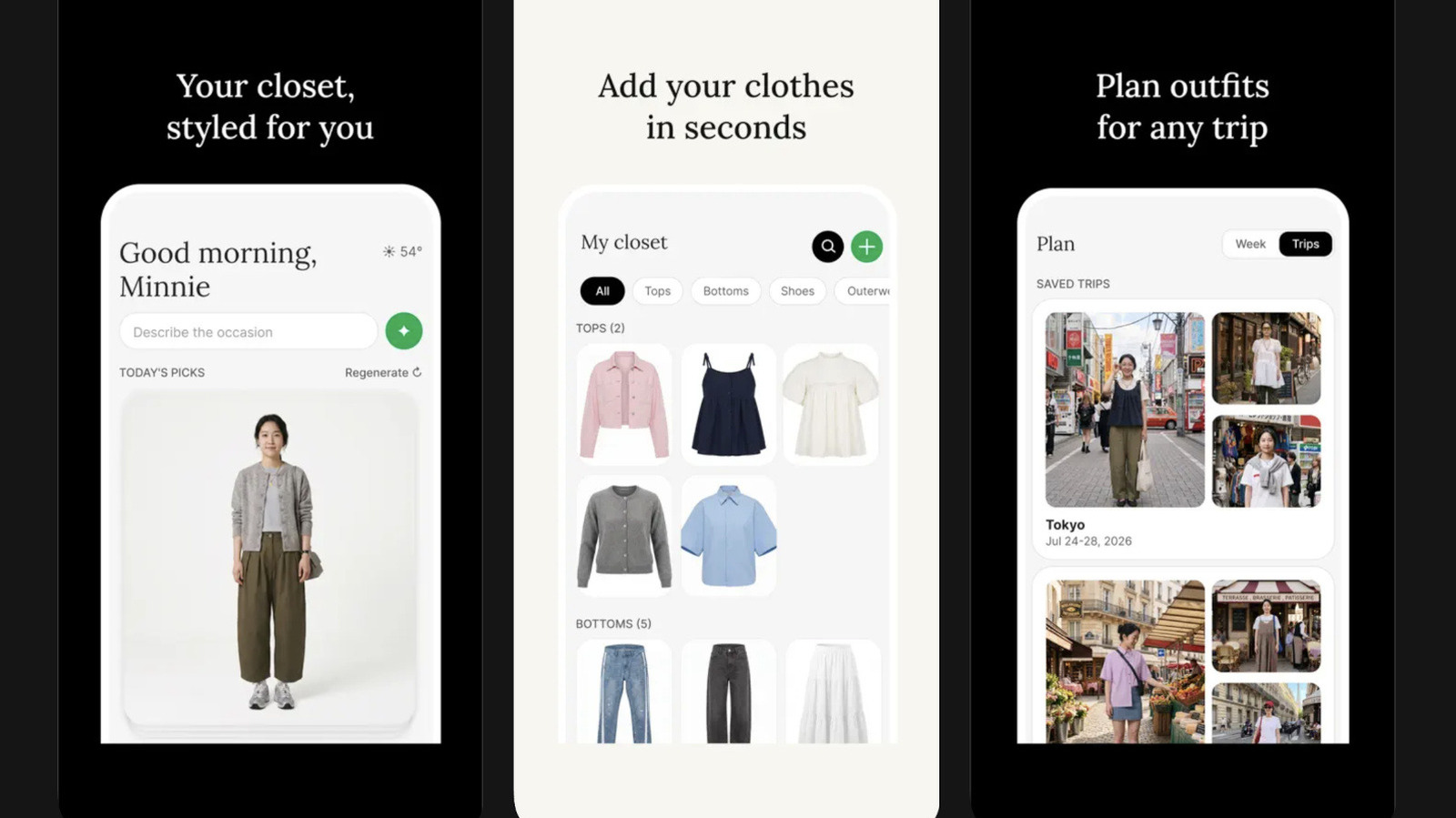
Picture from www.engadget.com
Rank 223 -

Picture from cdn.mos.cms.futurecdn.net
Rank 224Attackers allegedly stole $6.36 billion from Binance in a record-breaking cryptocurrency exchange breachInvestigators linked the attack to North Korea’s Lazarus Group, exploiting access from a compromised engineerBinance said customer funds remain safe, while authorities and partners froze billions in stolen assetsCybercriminals, allegedly from an infamous North Korean hacking organization, have gained access to one of the biggest cryptocurrency exchanges on the planet - Binance - and in less than half an hour withdrew $6.36 billion worth of different tokens.Security researchers TRM Labs said the attack was carried out by a group called TraderTraitor, which it describes as “North Korea’s premier hacking unit”. “We base this assessment on robust on and off-chain intelligence sources,” TRM Labs said in a report, noting that TraderTraitor is part of Lazarus Group, North Korea’s state-sponsored threat actor blamed for some of the biggest crypto heists in history, with the FBI blaming it for the $1.5 billion Bybit hack that took place on February 21, 2025.Gone in 20 minutesBinance’s experts, as well as independent researchers, are still piecing together what happened, so information might change throughout the day(s). What we know so far is that a DevOps engineer had their laptop compromised, which was confirmed by Richard Teng, Binance co-CEO, in a LinkedIn post.“That gave an attacker access to a service container, where they submitted unauthorized withdrawal transactions,” he said. Right now, no one really knows what exactly happened and what it means that a DevOps engineer’s laptop was compromised. However, we do know that Lazarus is famous for running operations DreamJob and Contagious Interview, in which they set up fake companies and fake jobs, and then approach software engineers working on crypto projects. They entice them with lucrative job offers and exciting opportunities, and sneak malware during the multiple interview rounds.But Binance’s security measures are more robust than that, and simply installing malware on one device could not have sufficed. Teng confirmed that, too, saying “the attacker did not simply use one engineer's permissions, and this was not a single "one-click" action. It involved a more complex attack process.”Funds are SAFUTRM Labs said the attackers pulled funds from 10 different chains, including Bitcoin, Ethereum, XRP, Tron, Solana, Arbitrum, Optimism, Base, Avalanche, and Polygon. The Ethereum chain was the hardest one hit, losing roughly $3.79 billion. It could be because of the chain’s smart contracts feature, which allowed the attackers to keep withdrawing funds as they were landing into the wallet. Binance is one of the biggest and most popular cryptocurrency exchanges on planet Earth, and as such it holds billions of dollars in user funds. This attack, however, did not target user funds, but rather Binance itself. This was confirmed by both Teng and TRM Labs, with the co-CEO saying “your funds are safe”, and “Binance will cover all losses from the SAFU fund and company funds.”In response to the attack, Binance temporarily restricted deposits and withdrawals. Numerous users took to X this morning to say their transaction requests were denied. The police and other relevant entities were notified, and around $3 billion were already frozen on-chain, apparently. Tether, Circle, Ripple and World Liberty Financial froze about $2.67 billion in stablecoins, TRM Labs confirmed, while Arbitrum's Security Council froze 8,426 ETH and 74.6 million ARB on its network, for a total of roughly $2.7 billion.What’s particularly interesting about this incident is how the market responded. In 2013, when Mt.Gox (at the time the biggest crypto exchange in the world) got hacked for $450 million, it was considered a “black swan” event, sending bitcoin down by more than a third (35%) in a few weeks. The 2025 Bybit hack sent BTC down approximately 7.5%. In response to the Binance hack, BTC dropped a measly 6.7%, which is just another Friday in the crypto world. Phishing incomingTrouble always comes in pairs, and this Binance hack will most likely be no exception. Security researchers NordVPN are warning users that other hacking groups might try to take advantage of the news to target users with phishing emails. “Another risk is criminals exploiting the confusion and fear among crypto owners on other platforms. An email claiming your funds are at risk, a fake support account offering help or a message urging you to move your cryptocurrency to a ‘safe wallet’ could be an attempt to steal from you,” said Marijus Briedis, Chief Technology Officer at NordVPN. “Check updates through the Binance app or a website address you already trust. Avoid links in unsolicited messages, and never give anyone your password, verification codes or wallet recovery phrase. Pressure to act immediately should be a reason to pause and verify the request.”“These steps can reduce the risk of someone taking over your account, but they cannot prevent a breach of the platform itself. Cryptocurrency firms typically have watertight cybersecurity, as they are digital-first businesses, so if one can be involved in the biggest hack in history, it shows just how lucrative a single flaw can be.”
-

Picture from cdn.mos.cms.futurecdn.net
Rank 225Following just behind Currys earlier this week, the Argos Black Friday sale has also just started, promising a whole month of deals across tech, gaming, appliances, homeware, toys, and more. I've done my usual thing and taken a look through to bring you all of the biggest offers and the best deals — check out my 14 top picks from Dyson, Shark, Garmin, Samsung, and more.• Browse the full Argos Black Friday saleOne standout offer at this early point in the sale is this JBL Charge 6 for £129.99 (was £169.99). That's a solid saving on the portable speaker we awarded a full five stars for its booming sound and easy-to-carry design. It's so good, in fact, that we gave it a top spot in our best speaker buying guide.Just like other retailers, Argos is also offering a 'Price Guarantee' on select products throughout its Black Friday sale. It means that any item displaying that badge will not fall any further in price before December 25. If for some reason it does, you will receive an Argos voucher for the difference.Given that Argos has said its Black Friday sale will run for a whole month, there will almost certainly be more deals added over the next few weeks. I'll keep an eye on the sale and will add more recommendations from myself and the TechRadar team as we spot them.Argos Black Friday sale — quick linksAppliances: up to 20% off fridges & dishwashersDIY: up to 30% off tools & outdoorFitness: up to 50% off exercise equipmentFurniture: up to 50% offGaming: up to 50% off games & accessoriesHeadphones: from £19.99Health & Beauty: up to 50% off GHD & PhilipsKitchen: up to 50% off small appliancesLaptops: from £149Phones: up to £250 off Samsung & HonorToys: up to 50% offTVs: from £149Vacuums: Shark & Dyson from £99.99My 14 top deals from the Argos Black Friday saleWe awarded the JBL Charge 6 five stars, and it currently sits atop our list of the best speakers, so I definitely want to shout out this deal you can nab right now at Argos. With booming sound and an easy-to-carry design, you really can't go wrong if you're shopping for a powerful and capable portable speaker.View DealIt's not every day that we see such a massive discount on a top-rated Garmin smartwatch. The Venu 4 is the ideal all-rounder, excelling in usability, performance, and design. What's better than all of that? Well, it's our pick for the best Garmin smartwatch at a record-low price.View DealGalaxy Buds 4 Pro: was £219 now £169The latest Pro version of Samsung's earbuds lineup is a real step up according to our 4.5-star review — and this is a new lowest-ever price. I have a pair and agree, as they offer fantastic sound quality, impressive noise cancellation, and a classy design. Features in the app are genuinely useful if you want to customise the sound and level of noise cancellation to your liking. As far as premium buds for Android users go, these are tough to beat.View Deal20,000mAh Power Bank: was £27.99 now £18.67A power bank is always a handy item to have — and this is a low price for a large-capacity and easily portable one from Belkin. The brand makes a lot of portable chargers, cables, and other related equipment, so you can expect good quality and performance, all for this super-cheap price in the Argos Black Friday sale.View DealIY143HUK Vacuum Cleaner: was £229.99 now £150You get a lot for your money with this affordable stick vacuum from the top brand Shark. It has a runtime of up to 40 minutes, an anti-allergen complete seal, and comes with a crevice tool attachment. It's a good choice of cordless vacuum for most users and multiple floor types, so if you need a capable vacuum, I'd recommend it at this discounted price.View DealU8000H 58-inch 4K TV: was £419 now £329Here's a good low price for a basic TV. This 58-inch Samsung display supports high-quality 4K resolution and offers an easy-to-use interface for accessing all the major streaming apps. You can expect competent yet not exceptional image quality and performance, but that may be all you need for general everyday viewing – especially if you're on a tighter budget.View DealFor homes where small spills and stains are a regular problem, this Vax SpotWash could be a smart buy while it's half-price at Argos. You get a handful of useful attachments included to tackle different types of problems and pet messes in your home or car, as well as a small bottle of cleaning solution to get you started.View DealQuantum 650: was £129.99 now £89.99The JBL Quantum series is an impressive lineup of gaming headsets, and this is a solid deal for one of the mid-range options. You get 50mm carbon dynamic drivers for powerful audio quality, a detachable mic with excellent background noise filtering, a lightweight design to ensure comfortable gaming sessions, multi-compatibility, and all the handy customisation and sustainability features that Quantum gear is known for.View DealNinja's space-saving air fryer is down to a good price ahead of Black Friday, so now's the time to buy the popular and well-rated appliance — especially if you have minimal space on your countertop. We loved it at TechRadar, scoring it full marks in our Ninja Double Stack Air Fryer review and even putting it in our best air fryer buying guide. Well-built and great-looking in any kitchen, it offers five cooking levels across two drawers and two racks, while the 7.6L capacity is ideal for medium to big families.View DealThe JLab Go Air Pop Plus are small and incredibly cheap but pack in a lot of key features and surprisingly strong sound for the price. There’s a long battery life of over eight hours, while the charging case adds an extra 24 hours. On-ear controls are reliable and they sound better than anything else in this price range. If you’re on a tight budget, these are a great buy.View DealArgos has slashed £250 off the latest Samsung Galaxy S26 for Black Friday. This flagship Android smartphone scored an impressive four stars in our review thanks to its stellar screen, excellent battery life, and strong all-around performance. It's a great buy if you want a capable all-around smartphone.View DealV8 Cyclone: was £379.99 now £229.99Designed to be simple to use yet powerful and versatile, the Dyson V8 is well-suited for all homes – even if you have pets shedding hair around your living space. It has two different power modes with fully sealed filtration, which traps 99.99% of microscopic particles as small as 0.3 microns. A de-tangling motorbar easily removes ground-in dirt too. If this is your first Dyson, you’ll be amazed and alarmed at how much dirt it sucks up. This offer is a good price for one of the manufacturer's more affordable models that also comes with a selection of handy accessories.View DealDisplay - 14 inchesProcessor - Intel i5RAM - 8GBStorage - 256GBIf you want a good value Windows laptop, then this configuration of the Lenovo IdeaPad Slim 3 is a strong buy. It features an Intel i5 processor, 8GB of RAM and a 256GB SSD to ensure good performance for general home use. I'd say it's a good option if you're on a budget and need a basic laptop for everyday use, college, admin tasks and light work.View DealP6L 65-inch 4K TV: was £429 now £399If you want a cheap big-screen TV, then this TCL P6L is a good choice from the latest Argos sale. Expect decent, if unspectacular, picture quality and performance, but with all the handy smart features and streaming apps you might need within easy access. It's a reasonable price for a large TV from a solid budget brand like TCL.View Deal
-

Picture from cdn.mos.cms.futurecdn.net
Rank 226Most mini PCs we test have the same sort of look. Little black boxes or Mac mini-style silver designs. Acemagic's X3 does things a little differently: styled like a Nintendo Entertainment System, it's quick enough for work and light gaming, while bringing a big dose of nostalgia.For a very limited time, the Acemagic Retro X3 is $509 (was $799) at Acemagic when you use the code RETRO40. That's the cheapest I've ever seen this mini PC, which comes equipped with an eight-core AMD Ryzen 7 H255 chip, 16GB LPDDR5 RAM, and 512GB SSD. • Best for: Retro gaming fans and home users who want a compact, capable Windows PC with a design that stands out.• Why we like it: We're big Nintendo fans here at TechRadar Pro. So of course, this classic retro-themed "console" one catches the eye. On top of some good specs for the price, the mini PC also features Radeon 780M graphics, a fast USB4 port, two M.2 slots for adding storage, and Wi-Fi 6E connectivity.• What you need to know: While you can expand storage, memory is soldered to the board here. And if you're more of a SNES fan, check out the higher-spec but higher-priced Acemagic X5.The Retro X3 pairs an eight-core, 16-thread AMD Ryzen 7 H 255 with Radeon 780M integrated graphics, 16GB of LPDDR5 memory, and a 512GB SSD, with a second M.2 slot for more storage. Ports include USB4, HDMI 2.1, DisplayPort 2.0, 2.5G Ethernet, and six USB-A ports, and it ships with Windows 11 Pro. The step-up Retro X5 has a 10-core Ryzen AI 9 365, Radeon 880M graphics, 32GB of memory, a 1TB SSD, and dual 2.5G Ethernet.Use promo code RETRO40 to get $40 MORE off. View DealWhy we recommend itAcemagic has built a following for affordable mini PCs - we included the K1 as our top mid-range pick in our guide to the best mini PCs we've tested. But the Retro X3 is its most eye-catching yet, with a gray shell and red power button that’ll take anyone who grew up with an NES straight back. We haven’t tested it ourselves, but we previously covered the initial launch and welcomed the hardware boost inside its retro casing when it launched. In Notebookcheck’s review, it delivered solid, stable performance with low case temperatures, though the fan got clearly audible under heavy load and the 16GB of memory is soldered, so you can’t upgrade it later. Price Context & Historical ValueAt $509 with code RETRO40, the Retro X3 is cheaper now than it was the last time we checked back in September, where it was priced at $539. For comparison, it's discounted at Amazon right now for $575 (was $639).The Retro X5 is a different story, since $1,099 is a lot to pay for a mini PC, even one with a faster Ryzen AI 9 chip and 32GB of memory. Unless you need the extra power, the X3 is the better buy.Should you buy it?✅ Buy the Acemagic Retro X3 if... you want a compact Windows PC for everyday work, streaming, and light or retro gaming, you love the retro console look, or you’d like to add storage later through the spare M.2 slot.❌ Skip the Acemagic Retro X3 if... you need more than 16GB of memory, since it’s soldered and can’t be upgraded, you want a near-silent PC under heavy load, or you’d rather not wait for a pre-order to ship.See all mini PCs at Acemagic.
-

Picture from cdn.mos.cms.futurecdn.net
Rank 227Garmin's CEO Cliff Pemble mentioned the components crisis during Garmin's quarterly earnings call with investorsGarmin had a cache of components and memory bought cheaply before the crisis hit, but now it's buying memory at "significantly higher" pricesPemble said pricing is "one of the things [Garmin] can look at", referring to increasing device costsIf you want to pick up the best Garmin watch, you'd be wise to do it soon, because the company's CEO Cliff Pemble has revealed that pricing changes aren't off the table due to the rising costs of electronic components. During the company's quarterly earnings call, in which Garmin's C-suite speaks to its investors, CEO Cliff Pemble said that while the company is having a good year, he sees some headwinds in its near future.The RAM crisis is a shortage of memory, as most of the available stock is being bought up to cope, in part, with the massive expansion of AI and the drive to build data centers. This leaves a shortage of memory for consumer devices such as computers and phones, which is driving up costs for device manufacturers. Wearables, which use comparatively little memory compared to a phone or a computer, have so far largely escaped unscathed. Even when Apple raised prices across the board, it didn't do so for the Apple Watch Series 12 and Apple Watch Ultra 4. However, that reprieve appears to be over. According to the transcript of Garmin's Q3 earnings call, as published on The Motley Fool investment website, Pemble said that Garmin has been spared because it bought a lot of surplus stock at the old prices, but the company is now buying components at prices "significantly higher than last year". "Our results will soon reflect the higher cost of memory and other raw materials which have increased significantly since last year, driven by both high demand and limited supplies."Does this mean price increases?Later in the call, Pemble said: "Definitely pricing is something that, you know, when I mentioned the mitigations that we can use, it is one of the things that we can we can look at. "It is one of the tools that we have, but we do not overfocus on one particular thing, and we try to get the best balance of all the different ways that we can mitigate cost increases in our supply chain in order to achieve an outstanding result."I would probably just remind people that a little more than a year ago now, everyone was faced with higher supply chain costs really driven by tariffs. And that was something that we were able to navigate because of the diversity of our business and our vertical integration and our ability to create products that people want."It sounds like Pemble is hoping that Garmin's diverse portfolio of products and services can offset an Apple-style price increases for its smartwatches and other gadgets, but he stopped short of ruling it out. We'll have to wait and see what 2027 brings. Are you looking for a Garmin watch, but not sure what to get? Take our quiz below to find your perfect smartwatch.
-

Picture from techcrunch.com
Rank 228 -

Picture from techcrunch.com
Rank 229 -

Picture from www.engadget.com
Rank 230 -
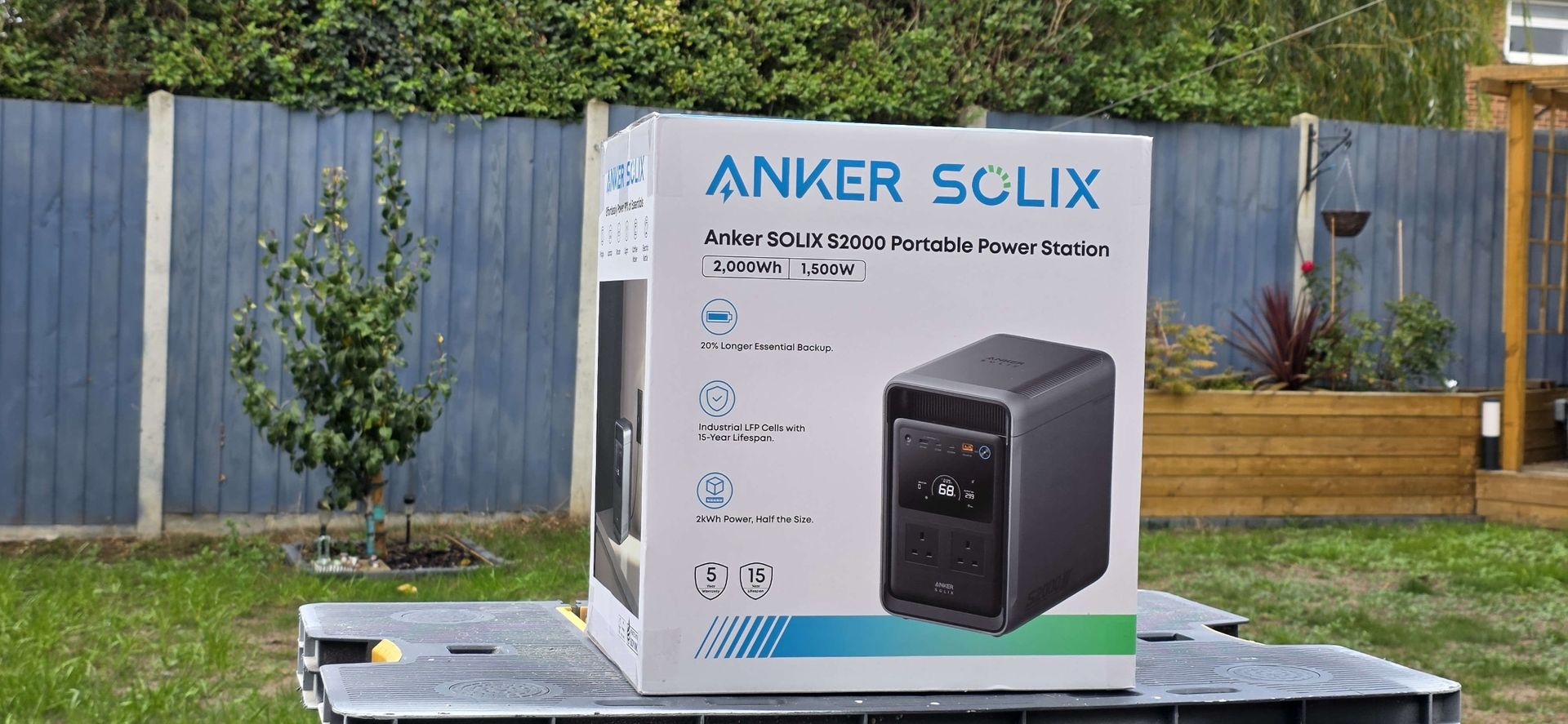
Picture from cdn.mos.cms.futurecdn.net
Rank 231Portable power stations are useful for everything from keeping your broadband running during a power cut to powering equipment away from a convenient socket. The Anker Solix S2000 fits both roles, combining a substantial battery with a relatively compact upright design.What impressed me most, though, was how little fuss it involved. It handled repeated sessions with a 1,200W wet/dry vacuum straight out of the box, while the accompanying app was easy to set up and refreshingly clear about what its settings actually do.Anker Solix S2000: specifications(Image credit: Future)SpecificationDetailsBattery capacity2,000WhBattery chemistryLithium iron phosphate, also known as LFP or LiFePO₄Continuous AC output1,500W totalUK mains outletsFour Type G sockets: two front, two rearUSB-AOne port, up to 12WUSB-CTwo ports: up to 15W and 100WShared USB limitUSB-A and 15W USB-C share an 18W maximumStandard AC chargingUp to 1,150WSolar chargingUp to 400W through the XT60i inputUPS transfer timeApproximately 10ms, manufacturer-ratedDimensions208 × 282 × 323.3mmWeight16.2kgWarrantyFive yearsSpecifications are manufacturer figures; socket layout and port labels were also checked against the UK review unit.Design and connectionsThe S2000 has an understated appearance: a dark grey enclosure, rounded edges and a glossy front panel. It looks perfectly at home beside a desk, although mine was soon earning its keep around DIY equipment.Its upright shape gives it a reasonably small footprint. At 16.2kg, however, “portable” still involves a deliberate lift. Moving it between rooms or taking it out to the garden is one thing; carrying it a long distance is another.The UK version has four proper Type G sockets, split evenly between the front and rear. That arrangement makes sense. You can keep regularly connected equipment plugged in behind the unit, leaving the front sockets available for things you connect occasionally.There is a trade-off: you’ll need access to both sides if you want to use every socket. Bear that in mind before squeezing it into a tight space, and leave the ventilation clear.The USB connections sit above the display. The 100W USB-C port is the one to choose for a compatible laptop, while the other USB-C connection is limited to 15W. They look similar, so it’s worth checking the labels.The screen puts the remaining battery percentage front and centre, alongside input and output wattage and an estimated remaining time. That gives you the information you need without reaching for your phone.Performance: a proper day’s workMy S2000 arrived with a 59% state of charge. Rather than charging it fully before doing anything useful, I put it straight to work powering a 1,200W wet/dry vacuum.Between approximately 10am and 5pm, I used the vacuum repeatedly in sessions lasting around five to ten minutes. The Anker handled those sessions without any problems, and by the time I finished, it still showed 13% remaining.To be clear, that was intermittent use across a seven-hour working day, rather than seven hours of continuous vacuuming. Even so, it was a useful practical test: repeated use of a fairly demanding appliance, starting with little more than half a battery.The benefit was simple. I could get on with the job without running an extension lead back to a mains socket, and the power station had enough charge to cover the work I needed to do.This wasn’t a controlled capacity test. I didn’t record the vacuum’s total running time or measure the energy delivered at the socket, so it wouldn’t be fair to calculate an efficiency figure from the percentage drop.What I can say is that it coped comfortably with this particular vacuum and pattern of use.The main limitation is the 1,500W continuous output. Battery capacity tells you how much energy is stored; output determines which appliances it can run. A large battery doesn’t automatically mean it can power a typical high-wattage UK kettle or several demanding tools together.Check appliance ratings, allow for starting demands, and remember that the output limit is shared across the AC sockets.Charging options(Image credit: Future)For everyday charging, the S2000 connects directly to the mains using the supplied AC cable. There’s no separate external power brick to find space for.During one charging session, the front display showed approximately 1,068W going in. An app screenshot taken during charging showed around 1,077W, with UltraFast charging switched off. These are snapshots rather than a timed charging test, but they show a substantial charging rate in normal use.There’s also an app-controlled UltraFast option when a quicker turnaround matters.Away from home, the S2000 supports compatible solar panels and vehicle charging, provided you have the correct cables and accessories. Solar input is capped at 400W, with Anker specifying a maximum open-circuit voltage of 60V. Panel compatibility matters as well as the connector.Those alternatives add flexibility, although a normal car accessory socket will be much slower than mains charging. Think of it as a way to replenish charge while travelling, rather than expecting a quick refill of a 2kWh battery.The app: easy to set up, easy to understand(Image credit: Future || Anker)The app was one of the nicest surprises.Finding it in the Google Play Store was straightforward, as were signing in and getting started. The S2000 was detected straight away, added without difficulty and ready to control. An iPhone version also appears to be available, although my experience here was with Android.The main screen presents the battery percentage, temperature, charging estimate and power flow clearly. You can see what’s happening at a glance.More useful still is the depth of control. There are multiple UPS and power-management modes, charging timers, adjustable AC charging power and battery charge limits. You also get AC output scheduling, a countdown to switch the sockets off, screen controls and power-usage history.Crucially, the explanations are good. Rather than leaving you to decipher a vaguely named mode, the app helps you understand what a setting does and decide whether it suits your needs.Some power-station apps make configuration feel like educated guesswork. Here, the guidance makes the extra features more approachable, particularly if this is your first battery system.Backup power and everyday useThe UPS function adds another potential role: keeping suitable equipment powered when the mains fails. Anker quotes a transfer time of around 10ms, although I haven’t independently measured that or tested compatibility with individual computers.For a home office, the combination of rear sockets, battery monitoring and configurable operating modes is appealing. You can leave equipment connected and manage the unit without constantly handling it.FutureFutureFutureFutureFutureFor more off-grid essentials, we've tested the best portable power stations.
-

Picture from techcrunch.com
Rank 232 -
Picture from cdn.mos.cms.futurecdn.net
Rank 233We're just about to hit Black Friday madness, and retailers are already starting to launch warm-up sales. Right now, for example, you can get your hands on literally thousands of deals at Best Buy's 'DoorBOOster' sale.Unlike the name suggests, this isn't just a simple Halloween-themed sale, but an expansive event that covers everything from the latest Apple models to high-end TVs. In short, it's a little like an early Black Friday preview in all but name.• Browse the full Best Buy Doorbuster saleI've been scanning through today's sale at Best Buy, and I've found over 30 excellent deals that are highly recommended if you're looking to do some early shopping. Everything is neatly sectioned out just below by category, including my overall top picks.Highlights include the lowest price yet on the latest Google Pixel 11, the excellent Sony WH-1000XM5 headphones for $198 (was $399), and the stunning LG OLED TV for $1,399 (was $2,699). These are all models that we've tested and loved here at TechRadar, and they're definitely worth it if you're looking for some quality tech.Note that the Best Buy 'DoorBOOster' sale is set to close this Sunday, so you don't have too long to browse if you're interested. We'll almost certainly see more early Black Friday deals from the retailer over the next few weeks, so don't hesitate to check in regularly for more coverage from TechRadar.Best Buy Doorbuster sale — quick linksApple: up to $500 off MacBooks & AirPodsAppliances: up to 40% offCameras: up to $1,000 off Sony, DJI & CanonGaming: PS5 & Switch games from $19.99Headphones: Apple, Sony & Bose from $9.99Kitchen: up to 50% off Ninja & BrevilleLaptops: from $189Phones: up to $1,200 off iPhone & SamsungSmart home: up to 50% off cameras & doorbellsSmartwatches: up to $200 off Apple & GoogleSpeakers: up to $400 off LG & JBLTablets: up to $100 off iPad & LenovoToys: up to 50% offTVs: from $69.98Vacuums: up to 40% off Dyson & SharkEditor's picks — top deals todayWe've been waiting for a decent price cut on the Google Pixel 11 — and here it is, finally. Available right now is a healthy $200 price cut across all color variations, which is a fantastic discount on this expensive device. The higher price was one of our main complaints about the Pixel 11, so this makes it an easy recommendation, considering you get the very latest chipset in this device, plus the interesting new HiLight feature. View DealThe Sony WH-1000XM5 are a whole lot cheaper now that there's a slightly newer model in the range. That's a huge benefit because these excellent noise-cancelling headphones are easily still some of the best on the market. Not only do you get fantastic ANC performance and a comfortable fit, but the M5 also have a really nice modern design. Unlike the M6 they don't fold, but otherwise, it's a great idea to simply go for the older model and save some cash.View DealPowerDetect Speed cordless vacuum: was $499.99 now $199.99The PowerDetect Speed is a fantastic cordless vacuum that's perfect for short cleans. Not only does it handle hair, fine dust, and larger debris without any issue, but you also get a really useful auto-empty dock. Our only complaint with this particular model is its short battery life, but otherwise, it's an absolute steal at just $199. View DealQM6K 55-inch 4K Mini-LED TV: was $799.99 now $549.99A truly great, budget mini-LED TV, the TCL QM6K delivers vibrant picture quality along with solid gaming features for a price that won't break the bank. Upgrades here include support for 120Hz refresh rates at 4K resolution, which is perfect for gamers. This deal knocks a decent $300 off the 55-inch model, making it an appealing option for those who want a premium display at a mid-range price. View DealC6 65-inch OLED TV: was $2699.99 now $1399.99The LG C6 is the successor to our best-rated TV, LG's C5 OLED, and it has a whopping $1,200 discount at Best Buy's sale. This year's OLED TV delivers more accurate, brighter colors than the C5, with powerful contrast thanks to its new Alpha 11 AI processor. The C6 also includes impressive gaming features and LG's intuitive smart TV platform.View DealSwitch 2: Choose Your Game Bundle: $499.99Nintendo Switch 2 bundles have been a rare sight in recent months, so it's good to see this customisable option available at Best Buy. As well as a console, you can also choose between a downloadable copy of either Mario Kart World, Donkey Kong Bananza, or Pokémon Pokopia, for a saving of up to $29.99.View DealThis is the Google Pixel Watch 5's first ever price cut, and honestly? It's a pretty damn good deal overall. We think the Pixel Watch 5 is an iterative upgrade over the previous model, but it is a fantastic smartwatch for sure, We love the repairable teardrop design, and the top-tier health features like Loss of Pulse detection are great, too. Overall, a very strong contender if you want a do-it-all smartwatch.View DealBest Buy Doorbuster sale — LaptopsProcessor: MediaTek Kompanio 540RAM: 8GBStorage: 128GBYou don't always find a laptop with 8GB of memory for under $300, so this Lenovo IdeaPad Slim 3 Chromebook really stands out in Best Buy's sale. Other components are good for light use, but that bump to 8GB of RAM will really help with everyday performance and load times. It's still a fairly basic laptop, but with enough extra power to avoid dramatic slowdown when multitasking.View DealProcessor: Intel Core 5RAM: 8GBStorage: 256GBIf you just need a Windows machine to cover the basics, this Lenovo IdeaPad Slim 3i is a great choice. It's not suitable for high-end workloads, but the combination of an Intel Core 5 chipset and 8GB of RAM will set you up nicely for simple tasks like web browsing or streaming videos. View DealOmniBook 3: was $799.99 now $699.99Display - 14 inchesProcessor - Snapdragon XRAM - 16GBStorage - 512GBThis is a solid discount on a modern laptop powered by one of the efficient Snapdragon X CPUs. As well as excellent levels of all-around performance, this device boasts a huge all-day battery life of up to 41 hours, so you won't need to worry about being attached to a charger at all times. Storage is also solid with a 512GB SSD, so this is an impressive laptop for the price for everyday, college and business use.View DealOmniBook X Flip 2-in-1: was $799.99 now $699.99Display - 14 inchesProcessor - AMD Ryzen AI 5RAM - 16GBStorage - 512GBI think this OmniBook X Flip could be one of the best laptop deals in the Best Buy sale, full stop. Not only do you get a decent Ryzen 5 chipset and 16GB of RAM for a reasonable price, but this machine features a premium 2K OLED display. That's quite rare on a $600 machine, so this is definitely a solid pick for an everyday laptop if you don't need a machine with a really high-end Ryzen 7 or Core 7 chipset.View DealOmniBook X Flip: was $1199.99 now $832.99Display - 16 inchesProcessor - Intel Core Ultra 7RAM - 16GBStorage - 1TBThis powerful and versatile HP OmniBook Flip offers impressive performance for the price, with powerful components such as a modern Intel Core Ultra 7 processor, a healthy 16GB of RAM to boost performance, and a decent 1TB SSD for storage. You can comfortably handle everyday tasks, demanding work, video calls, media streaming and more with this laptop, all with the option to flip it around to a 16-inch touchscreen tablet when needed, too.View DealMacBook Air 13-inch (M5): was $1299 now $1149Display - 13.6 inchesProcessor - Apple M5RAM - 16GBStorage - 512GBOur reviewer called the newest MacBook Air M5 "the best ultraportable I've ever used" and awarded it 4.5-stars, so it's every bit as good as its already excellent predecessor. As well as the powerful and efficient M5 chip, the latest MacBook Air boasts a slick 13.6-inch Liquid Retina display, 16GB of RAM, and a 512GB SSD as standard. Those are solid overall specs for all-around use, productivity, and creative tasks.View DealMacBook Pro 14-inch (M5, 2025): was $1999 now $1849Display - 14 inchesProcessor - Apple M5RAM - 16GBStorage - 1TBApple's powerful MacBook Pro with the latest M5 chip and a chunky 1TB of storage is on sale at Best Buy. Boasting that powerful M5 chip, a gorgeous Liquid Retina display and an impressive 18 hours of battery life, this is a complete creative workstation. We awarded this model a solid four stars out of five in our MacBook Pro 14-inch (M5) review, praising the overall performance, elegant design, and long-lasting battery, but we were disappointed by the lack of a larger redesign and the overemphasis on AI features rather than other useful upgrades.View DealTUF Gaming A16: was $2224 now $1599.99Graphics card: RTX 5070Processor: AMD Ryzen 9 8940HXRAM: 16GBStorage: 512GBThere are a number of gaming laptops on sale at Best Buy today, but this Asus TUF is arguably the best value. It's really cheap for a machine with an RTX 5070 graphics card and Ryzen 9 chipset, although you do sacrifice a little bit of storage and RAM. Still, even with 16GB of RAM this machine will provide impressive performance across a range of titles. View DealDisplay - 14 inchesProcessor - Intel Core 3RAM - 8GBStorage - 128GBWhile this HP 14 Chromebook offers a similar level of power to the Acer above, it does come with a smaller, higher-resolution display. If easier portability and a sharper image are more important to you, then I would consider paying the little extra to get this device instead. It also has a more modern processor, which isn't dramatically more powerful, but will be better supported and more efficient for general use.View DealXPS 13 Laptop: was $999.99 now $799.99Display - 13.4 inchesProcessor - Intel Core 5RAM - 16GBStorage - 512GBThe Dell XPS 13 has regularly been one of our favorite laptops here at TechRadar. With a 13.4-inch touchscreen display, Intel Core 5 processor, 16GB of RAM, 512GB SSD, and excellent battery life, it has everything you need for solid all-around performance at work or college.View DealAero X16 gaming laptop: was $1499.99 now $1374.99Graphics card: RTX 5070Processor: AMD Ryzen Al 7 350RAM: 32GBStorage: 1TBThis Gigabyte Aero X16 is easily one of the cheapest RTX 5070 gaming laptops you'll find anywhere right now. It was already quite cheap at $1,500 considering how expensive components are now, but at just under $1,400, it's an absolute steal. Not only do you get an RTX 5070 graphics card, but it also packs in 32GB of RAM and a decent Ryzen 7 chipset. View DealROG Strix G16 gaming laptop: was $2299 now $1799.99Graphics card: RTX 5070 TiProcessor: AMD Ryzen 9 8940HXRAM: 16GBStorage: 1TBThis Asus ROG Strix G16 is a great value considering you get both an RTX 5070 Ti graphics card and a Ryzen 9 chipset. In short, you'll get great performance here right out the box - if you're willing to overlook the fact that this machine does only have 16GB of RAM. Still, that won't slow down the RTX 5070 much, so I'd definitely be tempted to pick this one up.View DealBest Buy Doorbuster sale — TelevisionsF50 Series 55-inch 4K Fire TV: was $349.99 now $199.99This large and budget-friendly 55-inch TV from Insignia supports high-quality 4K HD resolution, has smart capabilities with the Fire operating system, and a voice remote with hands-free Alexa controls. I've picked out this size in particular as it's a great low price for the already affordable display. All this for under $200 is a solid offer for a no-frills TV of this size.View DealU8000H 50-inch 4K TV: was $299.99 now $229.99If you're looking for a mid-sized budget display, Best Buy has this 50-inch 4K TV on sale for $229.99. It won't rival the premium QLED and OLED displays, but this entry-level TV from Samsung still packs a solid 'Crystal' UHD 4K processor, the easy-to-use Tizen operating system, and full HDR support. That's good value for money if you need a straightforward but capable display for your everyday viewing and media streaming.View DealC350 75-inch 4K Fire TV: was $729.99 now $399.99The Toshiba C350 is getting older now, but finding a 75-inch 4K smart TV for under $400 is still an amazing deal. Toshiba's C350 is a 4K TV with HDR support, delivering solid picture quality for everyday viewing. Access to streaming apps is easy with the Fire TV OS, which has Netflix, Disney Plus, Prime Video, and more at your fingertips. It's not as powerful as many premium options, but if you're on a tight budget and want a large display, this is an excellent option.View DealQM6K 55-inch 4K mini-LED TV: was $799.99 now $549.99A truly great, budget mini-LED TV, the TCL QM6K delivers vibrant picture quality along with solid gaming features for a price that won't break the bank. Upgrades here include support for 120Hz refresh rates at 4K resolution, which is perfect for gamers. This deal knocks a decent $300 off the 55-inch model, making it an appealing option for those who want a premium display at a mid-range price. View DealU7 55-inch Mini-LED QLED TV: was $1299.99 now $749.99This is my pick for the best Hisense TV deal in the latest Best Buy sale. You get a lot of top TV tech for the money in a reasonably sized display, including a bright and vibrant QLED panel with excellent contrast, and a high 165Hz refresh rate support for smooth images. It will excel as a TV to watch the World Cup, as well as stream all of your favorite shows and movies, and play the latest games.View DealC6 65-inch OLED TV: was $2699.99 now $1399.99The LG C6 is the successor to our best-rated TV, LG's C5 OLED, and it has a whopping $1,200 discount at Best Buy's sale. This year's OLED TV delivers more accurate, brighter colors than the C5, with powerful contrast thanks to its new Alpha 11 AI processor. The C6 also includes impressive gaming features and LG's intuitive smart TV platform.View DealR85H 75-inch Micro RGB TV: was $2799.99 now $1799.99The 75-inch version of Samsung's latest R85H just got its largest discount ever at Best Buy. This TV stands out for its excellent color and image quality, thanks to the array of micro RGB LEDs. That means it also boasts superior brightness and fantastic contrast, ensuring you get a smooth, sharp and vibrant image. It's an ideal all-rounder for films, movies, sports, and gaming, as it also supports 144Hz and a variable refresh rate to give you a smooth and responsive picture. It's easily one of the best premium TV deals I've seen right now.View DealG6 77-inch OLED 4K TV: was $4499.99 now $3499.99The LG G6 is a pricey TV, but this flagship OLED delivers superb picture quality and unbeatable gaming performance, according to our LG G6 review. It uses a new-gen Primary RGB Tandem 2.0 OLED panel and a new Alpha 11 AI Gen 3 processor to deliver a better bright-room viewing experience than the previous model. With four HDMI 2.1 ports supporting a full suite of features, the G6 is also a fantastic gaming display.View DealF20 32-inch HD Fire TV: was $129.99 now $69.98It's one of the smallest and cheapest TVs you can buy, but if that's all you need, then this Insignia F20 is very hard to beat. Definitely don't expect the best picture quality or the fastest performance, but if you just need a display for infrequent streaming in a kid's room, the bedroom, or kitchen, then it's up to the job — and it doesn't cost very much at all.View DealQD50 58-inch Hi-QLED 4K TV: was $399.99 now $199.99I can't speak too much about the overall quality of this TV given we haven't had extensive testing time, but I can't deny that it's a super low price for a TV of this size. It also sports the budget version of Hisense's QLED tech, which offers superior brightness and more vivid colors, although it's not as powerful as the premium displays. Still, this is a big and cheap TV that will be ideal for general everyday viewing and streaming for someone who isn't too bothered about getting the very best picture possible.View DealBest Buy Doorbuster sale — AppliancesPowerDetect Speed cordless vacuum: was $499.99 now $199.99The PowerDetect Speed is a fantastic cordless vacuum that's perfect for short cleans. Not only does it handle hair, fine dust, and larger debris without any issue, but you also get a really useful auto-empty dock. Our only complaint with this particular model is its short battery life, but otherwise, it's an absolute steal at just $199. View DealPro Coffee Maker: was $59.99 now $29.99This will never be one of the best coffee makers you can buy, but there's no denying that it is dirt cheap. It's a basic and no-frills drip filter coffee maker that can brew up to 12 cups at once, has a programmable timer so you can wake up to a fresh pot, and dishwasher-safe components that make it easy to clean.View DealAir Fryer Pro XL: was $179.99 now $99.99An air fryer allows you to enjoy your favorite fried foods with less oil, and this Ninja Pro model is ideal for families who want a big but budget-friendly option. The five-quart capacity drawer is enough to make meals for the whole family, and preset functions allow for easy air frying, roasting, reheating, and dehydrating.View Deal4 qt Touchscreen Slim Air Fryer: was $69.99 now $59.99The Bella Pro is exclusive to Best Buy, and we have seen this four-quart model a little cheaper in previous sales. However, for under $60, this is excellent value for money if you just need a compact air fryer for a small household or kitchen.View DealCrushBOSS Intelligent 3-in-1 Blender: was $279.99 now $199.99The CrushBoss is an all-in-one blender that will easily tackle all your processing needs. It comes with not just a blender, but also a food processor bowl, blender pitcher, and a blending tumbler. It's powerful, comes with plenty of blades and attachments for all types of foods, and also features a number of easy-to-use presets. View DealThe Breville Barista Express is on par with some of the best espresso machines we've reviewed here at TechRadar. It has a higher learning curve than the average espresso machine, but it allows you to hone your coffee skills to make drinks exactly how you like them. This is a return to the record-low price for the entry-level espresso maker, and it remains a best-seller during all sales events, so it's looking like the right time for me to upgrade.View DealCrispi: was $179.99 now $152.99Here's an excellent discount on Ninja's portable air fryer. This bundle includes the PowerPod lid, plus two resealable glass containers to carry your dishes until you're ready to cook. According to our testing, it cooks exceptionally quickly, is easy to use and a breeze to clean, making this one of the best air fryer deals I've seen this year.View DealBest Buy Doorbuster sale — Headphones & AudioMDREX14AP Wired Earbuds: was $19.99 now $9.99Wired earbuds are rising in popularity right now, and this is a great low price for a solid pair from Sony. You get excellent sound quality, a comfortable fit, a small and lightweight design, and an integrated microphone on the wire for making calls. All for under $10 is a bit of steal.View DealThe Sony WH-1000XM5 are a whole lot cheaper now that there's a slightly newer model in the range. That's a huge benefit because these excellent noise-cancelling headphones are easily still some of the best on the market. Not only do you get fantastic ANC performance and a comfortable fit, but the M5 also have a really nice modern design. Unlike the M6 they don't fold, but otherwise, it's a great idea to simply go for the older model and save some cash.View DealQuietComfort Ultra Headphones (2nd Gen): was $449 now $369We awarded these excellent premium headphones a full five stars in our review, thanks to the brilliant noise cancellation, excellent audio quality, and extremely comfortable design. We had nothing more to say except that they are the 'best active noise-canceling cans for the money.'View DealAirPods Max 2 (USB-C): was $549 now $499The AirPods Max use an Apple-designed dynamic driver to provide high-fidelity audio – and they sound fantastic for it. Exceptional active noise cancellation, personalized Spatial Audio, and Dolby Atmos support all reinforce that. They feel good on your head as well, thanks to the knit-mesh canopy and memory foam ear cushions, so you can easily wear them for the full 20 hours of battery life if you ever want or need to.View DealBest Buy's latest sale has the previous-generation AirPods 4 with active noise cancellation available for $119.99 — that's just $20 more than the record-low price. These AirPods 4 feature a new comfortable design, handy controls, and Apple's H2 chip, which supports personalized spatial audio and voice isolation — alongside that all-important ANC.View DealAirPods Pro 3: was $249 now $199Apple's newest premium buds feature improved Active Noise Cancellation, outstanding audio, a comfortable in-ear design, and new features such as live translation and heart-rate tracking. These do-it-all buds really are 100% flagship audio and the noise-cancelling quality is outstanding. Today's deal at Best Buy is the best price you can find on Apple's newest AirPods, and just $10 more than the record-low from earlier in the year.View DealRight now, you can grab the incredible Sony WH-1000XM6 for $80 less in the Best Buy Techtober sale, bringing them back down to the lowest price they've ever been. These headphones deliver beautifully balanced audio, top-tier touch controls, a comfortable fit, and noise-crushing ANC to block out unwanted sounds.View DealQuietComfort noise cancelling headphones: was $359.00 now $169One of the best headphone deals in the Best Buy Techtober sale is undoubtedly this listing on the Bose QuietComfort. These are not only great value, but they're also incredibly comfortable with a decent level of noise cancellation. They aren't as high-end as the QuietComfort Ultra, but these are great all-rounders for the price. View DealWe awarded the JBL Charge 6 five stars, and it currently sits atop our list of the best speakers, so I definitely want to shout out this deal you can nab right now at Best Buy. With booming sound and an easy-to-carry design, you really can't go wrong with this one if you need an all-purpose speaker.View DealBest Buy Doorbuster sale — Tablets and phonesiPad A16 (2025): was $449 now $399The brand-new Apple iPad A16 is down to its lowest-ever price in the Best Buy sale, so it's worth taking advantage of if you have an eye on the latest Apple slate. The biggest upgrade over the previous-generation model is the A16 chip for faster performance. You also get double the storage, with 128GB standard, a sharp 11-inch Liquid Retina display, and solid 12MP front and back cameras.View DealiPad Air 11-inch (M4): was $749 now $649The iPad Air hits the middle ground between power and affordability while still offering many of the same features and capabilities as the much pricier iPad Pro range. It has an attractive 111-inch Liquid Retina display with True Tone support, which means it looks good in all lighting conditions — including outdoors. It's not quite as compelling a buy after a price hike, but still a good option for work and creatives.View DealiPad Pro 11-inch (M5): was $1199 now $1149There's a decent $100 saving on the latest iPad Pro 11-inch at Best Buy, which we'll have to take after the recent price hike on Apple's tablets. Even at this higher price, you get the brand-new M5 chip, high-quality tandem OLED display and 256GB as standard. Expect this to be one of the better offers we see on the tablet until later in the year.View DealWe've been waiting for a decent price cut on the Google Pixel 11 - and here it is, finally. Available right now is a healthy $200 price cut across all color variations, which is a fantastic discount on this expensive device. The higher price was one of our main complaints about the Pixel 11, so this makes it an easy recommendation, considering you get the very latest chipset in this device, plus the interesting new HiLight feature. View DealThe iPhone Air is one of a kind. Apple's first thin-and-light flagship measures just 5.6mm thick, boasts the powerful A19 Pro chipset, and sports a beautiful 6.5-inch display. It's as fast as a Pro in daily use, and while its battery life isn't quite so impressive, you won't find a better iPhone for this price.View DealGalaxy Z Fold 8 Ultra: was $2099.99 now $1899.99You can get a $300 discount when buying the Fold 8 Ultra at Best Buy. That equals the biggest flat saving available on the latest flagship foldable and is a great option if you don't have an existing phone to trade in. This high-end foldable was awarded an impressive 4.5-stars in our review for its thin design, super-fast performance, and excellent cameras.View DealAirTag 4 Pack (2nd generation): was $99 now $69The best-selling Apple AirTag is on sale for $89 during Best Buy's sale. A great way to track a child's backpack or luggage, the AirTag can be attached to anything you don't want to lose, and your iPhone can locate it.View Deal
-
Picture from techcrunch.com
Rank 234 -

Picture from techcrunch.com
Rank 235 -

Picture from techcrunch.com
Rank 236 -

Picture from cdn.mos.cms.futurecdn.net
Rank 237Amazon CEO says he isn't worried about AI shopping agents like MuseAmazon had blocked Meta's AI agent from its ecommerce siteJassy says the AI agent experience is still "not great"Amazon CEO Andy Jassy has said he is not worried about the effect of AI-powered shopping agents such as Meta Muse, saying the services are still "not great".Speaking after the company revealed yet another set of record financial results, Jassy told analysts barely any customers are using shopping agents as the experience is “still not great, nor more convenient than coming to a retailer directly.” Jassy’s comments followed Amazon's decision to block Meta's new AI assistant, Muse, from accessing its online store in September 2026, claiming this would violate the conditions of use its customers have agreed to. Muse is not doing the business...yetSince its launch in September 2026, Muse has proven popular with customers, despite several examples of the service accessing information it was not supposed to. Meta CEO Mark Zuckerberg recently claimed that more than 10 million people across the US and Canada had already set up Muse, and that it had toppled ChatGPT as the top free app on the Apple App Store.Experts have warned it may still not be up to scratch, after a security researcher found a worrying zero-day vulnerability which allowed attackers to gain access to people’s apps, such as WhatsApp or email.Data from Surfshark also identified Muse as the most data-hungry chatbot around, outperforming all its competitors when it comes to data harvesting.Meta has already signed up a range of top retailers, including Walmart, Best Buy and Shopify, to integrate with Muse, but Amazon has yet to join the group. The company is largely reliant on human shoppers visiting the Amazon website, where they can be exposed to advertisements and suggested products which nets the business its biggest returns.Jassy did claim that more than 400 million customers have used Alexa for shopping in the last year, and that “customer interactions” had grown 570% year over year. US customers using its Alexa also spent 50% more per order than those who do not use it, Jassy revealed, perhaps signaling that the service will be expanded in the coming months.Via Fortune
-

Picture from cdn.mos.cms.futurecdn.net
Rank 238NFL 2026 season: Wednesday, September 9 to Sunday, February 14Free Streams: 5 (UK) / 7plus (Aus) / TVNZ+ (NZ) / VM Play (Ire) / Twitch (US)Use IPVanish to watch from anywhere – 85% offThe NFL season is heating up, with the Minnesota Vikings emerging as the surprise package after a 6-0 start. Their defence has led the way, while the winless Los Angeles Chargers are already facing serious questions.The Kansas City Chiefs, San Francisco 49ers and Buffalo Bills have also impressed, but pre-season favourites the Rams and Eagles have struggled.With the November 10 trade deadline approaching, several big moves have already been made as teams look to strengthen their squads. But with plenty of football still to come, a strong start guarantees nothing. The race for the playoffs and Super Bowl LXI is wide open.Traveling away from home? A good VPN will let you tap into your regular NFL coverage from anywhere – and one of our favourites IPVanish has launched its Black Friday deals for 2026, plus it covers an unlimited number of devices.Can I stream NFL 2026 for free?Yes! In some countries around the world you can watch the NFL for FREE. Check the below services each week to see what is available to watch for free.🇬🇧 5 – UK🇦🇺 7plus – Australia🇳🇿 TVNZ+ – New Zealand🇮🇪 VM Play – Ireland🇺🇸 Twitch – USUse a VPN to watch any NFL 2026 streamWhy is a VPN a good option to watch NFL 2026?Taking place across several matchweeks from September through February, the 2026-27 NFL season coincides with plenty of travel and time away from home. Unfortunately, you may find that your usual streaming options are geoblocked while you’re abroad.That’s where a VPN comes in handy – not only does it let you access your home streaming services from anywhere, but it also protects you from potential online threats. We recommend IPVanish – it does everything and will unblock any free streaming service for you to watch the action.IPVanish: from $2.19/month (was $2.39) for 2 years of protectionIPVanish's Black Friday sale keeps it cheaper than the likes of Surfshark and NordVPN, but won't save you much compared to earlier this year. An Advanced plan (now $3.29/month) gets you: 🎴5GB eSIM data usable in 200+ countries💾 1TB encrypted storage and secure browsing*🦠 Next Gen Antivirus🔓 Ability to unlock streaming servicesYou also get access to servers in 150+ locations, unlimited simultaneous connections, and a bunch of advanced security features built into the VPN. All of these are covered by a 30-day money-back guarantee, so if you're unhappy, you can get a full refund.View DealUsing a VPN is incredibly simple:1. Install the VPN of your choice. As we've said, IPVanish is one of our favorites.2. Choose the location you wish to connect to in the VPN app. For instance, if you're visiting the US and want to view your usual Aussie service, you'd select an Australia server from the list.3. Sit back and enjoy the action. Head to your usual local streaming service and watch NFL.What devices are supported by IPVanish?IPVanish apps will work on the following operating systems:Windows: 10+Mac: 13 and upiOS: 14.0 and upAndroid: 5.1 and up to the latest stable non-alpha/beta versionFor manual setups, IPVanish provides support for:Windows: Windows 7 to the latest version (for as long as Microsoft still supports the OS)Mac: 10.6.8 x64 to the latest versioniOS: 5.1.1 (iPod Touch 3g / iPad 1), 6.1.3 (iPhone 3&4 / iPod Touch 4&5g / All other iPads), 6.1.4 (iPhone 5)Android: 4.0.3 (ICS) up to the latest stable non-alpha/beta versionLinux: Debian or RedHat-based distros - best effortRouter Firmware: DD-WRT v2 and v3, Tomato, Asus-WRT, Merlin, OpenWRTWe test and review VPN services in the context of legal recreational uses. For example:1. Accessing a service from another country (subject to the terms and conditions of that service).2. Protecting your online security and strengthening your online privacy when abroad.We do not support or condone the illegal or malicious use of VPN services. Consuming pirated content that is paid-for is neither endorsed nor approved by Future Publishing.
-

Picture from cdn.mos.cms.futurecdn.net
Rank 239Your website says just as much about you as what your existing customers do, and that’s why you’ll want to make a good first impression. And, while it used to take months to put together a compelling website through code and toolkits, it’s now easier than it has ever been thanks to GoDaddy’s Airo AI Builder.Airo AI Builder is a comprehensive website design tool that gives you the tools to construct a professional site, with a full commerce-ready backend, in minutes, not months, with code yours to keep so you can download it anytime.Say It, Build It(Image credit: GoDaddy)If you remember the early internet, where sites were blocky, unintuitive messes built by code, you may fear that’s how your first effort will look. After all, how can you build something sleek and modern without knowing the first thing about website design?Thankfully, GoDaddy’s Airo AI Builder removes all the friction of website construction without asking you to compromise on your ideas.With a few prompts, Airo AI Builder can build a website, and then you can prompt it to change various elements with natural language input, while paid plans include a free domain for the first year.Airo AI Builder is multimodal, too, meaning you can share all kinds of inspiration. Use a written prompt, drop in a file, a URL, or even use your voice to get started - Airo AI Builder does the rest, building a site in real time, and editing text and images directly doesn't use creditsGet Started for FreeNew accounts include 50 free credits per month, letting you mock up your first design with no credit card info or subscription required, and paid plans start at 150 credits per month. Plus, you don’t need to lock in a plan to keep making changes — you can buy credits on a pay-as-you-go basis.You’ll only need to switch to a paid plan once you’re ready to publish, and any remaining credits can be used to edit websites via the AI chat. Editing text and images, previews, and domain setup are all free, however.You can also use Airo AI Builder to build a web app, single pages, databases, and logic in minutes. Imagine a client portal that your customers can use to check updates on a job, or an online store on your own domain. Then, there are uses like portfolios, online booking for a salon, trainer, or consultant, and more.If you do decide to step into e-commerce, then Airo AI Builder includes everything so you can build product listings, a cart, and checkout from a conversation. That means everyone from restaurateurs to client relationship builders can find a way to build an impressive site.Airo AI Builder's Starter plan lets you kick off a website or app with a free domain for the first year, makes your code your own, and access to marketing campaigns, while the Professional plan adds analytics (payments and bookings are available on all paid plans), as well as collaborator and SEO tools. Finally, the Ultimate plan allows you to publish up to 50 apps while scaling across multiple sites. No hosting fees, no runtime charges. Just your plan, and 24/7 phone and chat support in the US.Airo AI Builder has the lowest starting price for annual entry plans in the market.Remember, you can get started for free now, and a paid plan will get you additional features. All of this means the entire process is hassle-free, flexible, and can help you improve your business’ visibility, too. So, what are you waiting for? Start building your idea today with Airo AI Builder!
-

Picture from ichef.bbci.co.uk
Rank 240 -
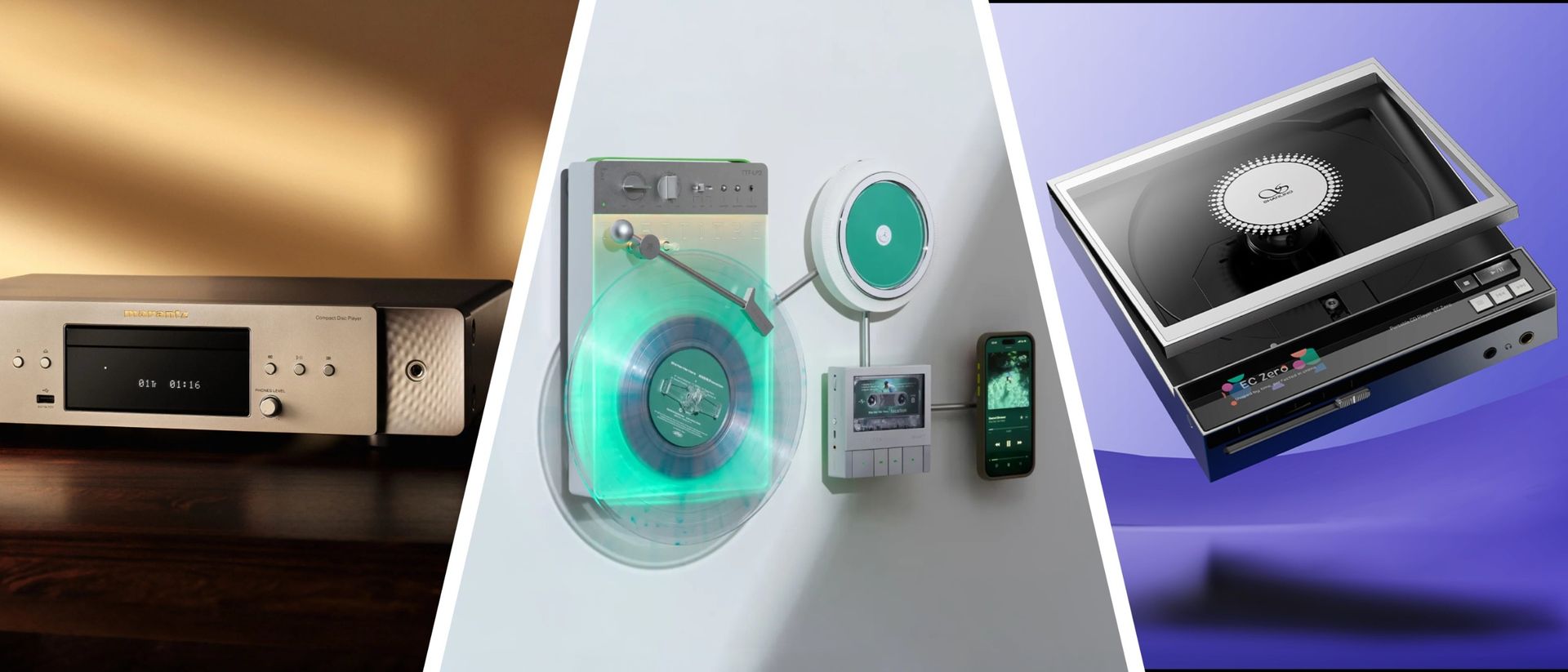
Picture from cdn.mos.cms.futurecdn.net
Rank 241Thought the era of CDs had come and gone? How wrong you are. We're seeing a real resurgence in physical media at the moment, and CDs are at the forefront of the trend. Below, I've rounded up a selection of the coolest, most interesting, and most lusted-after models we've spotted recently.Shanling's EC Zero ASM is a multitalented portable player that can also cast tunes to wireless speakers or headphones via Bluetooth, rip CDs to USB storage in real time, act as a CD transport for your hi-fi, and double as a DAC for other digital devices.Trettitre's Retro Ambient Audio System is the eye-catching result of a successful KickStarter campaign. It combines a turntable and cassette system alongside the CD player, all mounted on your wall in an artistic celebration of physical media.For those with deep pockets, Rotel's Michi Q5 is an elite-level CD player and transport DAC with an eye-watering price tag to match. And even though it might never make it to market, I couldn't resist including Panasonic's portable TV-CD player prototype, which won over our Entertainment Editor with its unexpected, boombox-meets-gogglebox design.Scroll down to take a look at all of those players and more, and hit the 'View details' button to learn more about each one. Want more CD goodness? Here are bunch of other cool disc-spinners to check out.Disc-y business Trettitre Retro Ambient Audio System Read more: This wall-mounted turntable, CD-player and cassette system is ideal for retro music lovers in tiny homes — you just need a spot for a Bluetooth speakerView on the Trettitre website Musical Fidelity B1xcd Read more: CD players are back, and this new Musical Fidelity buy has an 'incredibly attractive price': the same as an Oppo A7 Pro Max smartphoneView at Musical Fidelity FiiO DP11 desktop CD digital player Read more: CD player on your mind? There's a FiiO for that — and this one can rip your discs for digital safekeeping, no laptop requiredView on the FiiO website Marantz CD 70 Read more: I love my Marantz CD player, and its new upgraded version was just unveiled — and the matching amp with aptX Bluetooth, HDMI and MM phono looks irresistible tooView on the Marantz website Ruark Audio R710 music console Read more: Ruark's new music console and slimline speakers are the CD playing, vinyl spinning, hi-res music streaming system your small apartment cravesView on the Ruark website Shanling EC Zero AKM Read more: This super-cool portable CD player has aptX for high-quality wireless listening — and works as a Hi-Res Audio DAC over USB-C as a bonusView on the Shanling website Rotel Michi Q5 Transport DAC Read more: I heard Rotel's ultra-luxe CD player and Hi-Res Audio DAC, and I'd buy it in a second if I could (even if it won't play my SACDs)View on the Rotel website Panasonic Portable TV / CD player [prototype] Read more: Panasonic combined a portable TV with a CD player, and I can’t help being totally charmed by it
-

Picture from cdn.mos.cms.futurecdn.net
Rank 242Watch Beat Luke Littler — Netflix (Global)BLOCKED? Use Norton VPN to stream from anywherePremiere: Friday, October 30 at 7pm GMT / 3pm ETA two-time world champion with 30 tournament wins to his name, Luke ‘The Nuke’ Littler is used to beating the best professional darts players in the world. Now the teenage sensation will face a whole new challenge as he takes on 24 ‘amateurs’ in a high-stakes showdown. The 19-year-old will put his skills to the test in a series of one-leg shootouts against a series of talented opponents. These include women's world number three Fallon Sherrock and two of the sport’s rising stars in Mitchell Lawrie and Jayden Walker. Interesting 'amateurs' it must be said.Each player will take on Little in a standard leg of darts, starting from 501, and if anyone manages to beat the reigning world champion, they will walk away with a staggering £501,000 in prize money. "There’s half a million quid up for grabs; I won’t be going easy at all. I’ll be wanting to beat everyone who comes up,” said Littler. “Maybe the first few legs could be a bit nervy, but once I get going, then I don't think anyone will stop me.”Here's how to watch Beat Luke Littler from anywhere in the world with a VPN.How to watch Beat Luke Littler on NetflixBeat Luke Littler will be broadcast globally on Netflix.Prices for the cheapest Netflix plan in the UK, US, Canada and Australia are as follows:🇬🇧 UK: £7.99 per month🇺🇸 US: $8.99 per month🇨🇦 Canada: CA$7.99 per month🇦🇺 Australia: AU$9.99 per monthOutside your usual country? If you're abroad then Norton VPN can unblock your Netflix — find out more below.View DealHow to watch Beat Luke Littler from anywhereIf you're keen to watch Beat Luke Littler but you're away from home and access is geo-blocked, then you could use a VPN to access it (assuming you're not breaching any broadcaster T&Cs, of course). You may be surprised by how simple it is to do. One of our favorites is Norton VPN: Get Norton VPN for just £2.50/monthWatch your Beat Luke Littler stream without limits. Norton VPN delivers fast, secure connections with global servers, so you can stream from anywhere with ease.📺 Unlocks Beat Luke Littler streams💰 60-day money-back guaranteeDon’t miss a second. Stream Beat Luke Littler from anywhere with total confidence.View DealHow to watch Beat Luke Littler with a VPNUsing a VPN to unblock Beat Luke Littler is very straightforward. Just follow these steps:1. Download and install a VPN: As we say, one of our favorites is Norton VPN.2. Connect to the appropriate server location: Open the Norton VPN app, hit 'choose location' and select your home geographical location.3. Go to the live stream: In this case, just head to Netflix.What devices can I watch Netflix on?Amazon Fire TV and Fire TV Stick devicesSmart TVs (Samsung, LG, Sony, Panasonic, Hisense, TCL, Philips and more)Roku streaming players and Roku TVsApple TV (HD and 4K)Google TV and Android TV devices (including Chromecast with Google TV and Nvidia Shield)Chromecast (cast from a compatible mobile device)iPhone and iPadAndroid phones and tabletsAmazon Fire tabletsWindows PCs and Macs (via web browser or Prime Video app where available)PlayStation 4 and PlayStation 5Xbox One and Xbox Series X/SVirgin Media Stream and Virgin TV 360 (UK)Sky Stream, Sky Glass and Sky Q (UK)EE TV set-top boxes (UK)Web browsers including Chrome, Edge, Firefox and SafariBeat Luke Littler FAQsWho is Luke 'The Nuke' Littler?Littler is a darts prodigy who, at just 17 years old, became the youngest world champion in the sport’s history. The holder of 30 PDC titles, including 14 majors, he was named in TIME’s 100 Most Influential People in Sports 2026 list. He was also featured in the Netflix sports documentary series Matchroom: The Greatest Showmen. Who will compete against Luke Littler?There will be 24 contestants taking on Luke Littler and they range from 15 to 57 years old. The most high-profile are women's world number three Fallon Sherrock, two-time World Youth Championship winner Mitchell Lawrie, and 14-year-old darting sensation Jayden Walker. Other competitors include a bin worker from Bedford, a Nando's restaurant manager and a former British Army captain. The 24 contestants will compete for 20 spots, then be split into groups and randomly selected to take on Littler. The competition ends the moment somebody defeats Littler.You may also like...How you can watch the Premier League in 2026/27Prime Video cost: subscription plans, today’s best dealHow to watch The Future with Hannah FryWe test and review VPN services in the context of legal recreational uses. For example:1. Accessing a service from another country (subject to the terms and conditions of that service).2. Protecting your online security and strengthening your online privacy when abroad.We do not support or condone the illegal or malicious use of VPN services. Consuming pirated content that is paid-for is neither endorsed nor approved by Future Publishing.
-

Picture from cdn.mos.cms.futurecdn.net
Rank 243Happy Halloween to all who celebrate the spookiest time of the year. And, whether or not you'll be trick and treating this weekend, the world's best streaming services have released some must-see new movies, shows, and documentaries that you can enjoy with our without candy.There's something for everyone, too. From the latest Minions-starring movie to a Netflix documentary about the late Matthew Perry, I'm confident one of the below recommendations will appeal to you. Enjoy — and don't eat all of your Halloween sweets in one sitting! — Tom Power, senior entertainment reporterThe One About Matthew Perry (Netflix)It's rare for a documentary to headline one of our streaming round-ups. Given the subject matter, though, I suspect few would argue with The One About Matthew Perry doing so.A docufilm about the much-loved actor best known for playing Chandler Bing on Friends, it explores the man behind the Hollywood icon. With intimate testimonies from Perry's family and closest friends, The One About... offers a raw, unedited look at a star whose light shone brightly —despite his well-documented battles with drugs and alcohol — before his sudden death in late 2023.Hopefully, The One About Matthew Perry will be a celebration of his life and legacy, and an inspirational testimony to his candidness and tireless advocacy against substance abuse. — TPWatch The One About Matthew Perry on NetflixMinions and Monsters (Peacock)Everyone's favorite, babbling yellow bean-like creatures are back. That's right, the Minions have returned for another standalone feature, this time in Minions & Monsters, which is out now on Peacock.Set in 1927, it follows James, Ed, Henry, and company as they attempt to make a monster movie of their own amid the Golden Age of Hollywood. Unsurprisingly, things go awry pretty quickly, forcing the titular beings to save the day once more.Praised by critics for its love letter-style approach to Old Hollywood, Minions & Monsters didn't perform as well as its predecessors did at the global box office. Is that down to Minions burnout? Who's to say, but you can see if it lives up to the hype by tuning in at home. — TPWatch Minions and Monsters on PeacockThe Gilded Age season 4 (HBO Max)The Gilded Age season 4, which premieres on HBO Max this Sunday, skips ahead six months from last season's finale and sees Bertha Russell's relentless social climbing come under scrutiny.Previously, Bertha forced her daughter Gladys into a marriage with the Duke of Buckingham to secure her social standing, causing her husband George to leave her, as he was furious with the decision. By season 4, George has completely moved out and now everyone's gossiping about their failed marriage.Outside of Bertha's dramatic life, season 4 features real historical moments like the dedication of the Statue of Liberty in 1886, so there's a lot for period drama lovers to enjoy. — Lucy Buglass, senior entertainment writerWatch The Gilded Age season 4 on HBO MaxApocalypse Z: New World (Prime Video)Zombie movies are a Halloween staple and Prime Video's got you covered with a new Spanish-language release. Apocalypse Z: New World is the follow up to Amazon's Apocalypse Z: The Beginning of the End. You could even have a double bill, if you like.This time, we follow a new protagonist as he sets out from the refuge of the zombie-free Canary Islands to the mainland (anyone else getting 28 Years Later vibes?) in search of essential supplies. It's a risky decision, and there's danger at every turn. There'll no doubt be thrills in abundance here, and I can't wait to watch it all unfold. — LBWatch Apocalypse Z: New World on Prime VideoDexter: Resurrection season 2 (Paramount+)Dexter Morgan's going through a midlife crisis in Dexter: Resurrection season 2. It's been four years since the show revival's debut outing, and there's a lot for us to catch up on even beyond what Dexter is going through on a personal level.Indeed, the titular character is caught between two major serial killers, while his son Harrison launches a career as an NYPD homicide rookie. On top of this, expect to see some ghosts from Dexter's past, too. Will he ever catch a break? It certainly doesn't seem that way, but it's entertaining for all of us Paramount+ viewers, at least. — LBWatch Dexter: Resurrection season 2 on Paramount+Nocturne (Apple TV)Apple has become many people's go-to streamer for top-tier television — and Nocturne is the latest offering to try to add its name to the tech giant's growing list of unmissable shows.Billed as a gripping crime drama, the Apple TV Original stars Liev Schreiber as Jonah, a soldier-turned-homicide detective who relocates to a small Pennsylvania town alongside his family, including surrogate daughter and FBI agent Saga (Zazie Beetz). However, when they suddenly garner the attention of an imprisoned yet cunning serial killer Jurek (Stephen Graham), a twisty-turny game of cat and mouse ensues.Episodes 1 and 2 are out now, with the final four releasing weekly up to November 27. — TPWatch Nocturne on Apple TVLast One Laughing: Halloween (Prime Video)Last One Laughing is back with a Halloween special, featuring some of the biggest names in comedy. Returning contestants Daisy May Cooper and Lou Sanders are joined by Jack Dee, Phil Wang, Reece Shearsmith, Harriet Dyer, and Tom Allen. They're all hoping to be — you guessed it — the last one laughing and win the series. But, it's not easy, and there'll be guest stars and surprises intended to make them lose their composure.Thankfully, we're allowed to laugh as much as we want. And host Jimmy Carr is likely to be right there with us, given his reactions from the past two seasons. — LBWatch Last One Laughing: Halloween on Prime Video
-

Picture from cdn.mos.cms.futurecdn.net
Rank 244Ask a room of executives about agentic AI and within about ninety seconds someone will ask how many agents they ought to be running. It has become the default measure of progress: a number you can put on a slide, benchmark against a competitor, and report upwards.It is also the wrong question. Across the 200-plus workshops my team and I have run with enterprises in Europe and the Middle East, the organizations getting real value from AI tools are not the ones with the longest agent inventory. They are the ones who never framed the problem that way to begin with. They started by identifying a business problem or point of friction and worked backwards. Everyone else started from the technology and went looking for somewhere to put it.There are four questions I hear constantly that are quietly steering good companies into Pilot Purgatory. Here they are, and here is what I would ask instead. Don't ask how many agents. Ask what outcome you are improving. Much of the last two years of enterprise AI has been about helping people work faster. Copilots that answer questions, assistants that summarize the meeting you have just sat through, tools that get you past the blank page. These are genuinely useful and I would encourage everyone to switch them on.But speed is not the same as value, and agent count is not the same as either. No enterprise ever created value by accumulating agents. Value shows up in real business outcomes such as fewer payroll errors, faster shift scheduling, lower supplier sourcing costs, better win rates, cash collected sooner.That is the difference between an agent and an agentic application. An agent help with an individual task. An agentic application coordinates teams of specialized agents to deliver a business outcome. If you cannot name the KPI an agent is moving, you do not have a use case. You have a demo. Don't ask whether AI can recommend. Ask whether it can finish the job. The most persistent confusion I encounter is between advice and execution. Plenty of systems can now sense a situation, spot the pattern and tell you what should happen next. That is real progress. It also leaves almost all of the work exactly where it was. Take sourcing. An assistant can flag that a category is overdue for renegotiation and suggest you run an event. Someone still has to create that event, chase the responses, score them against commercial criteria, route the approvals correctly, update the contract and shepherd the whole thing to a close.An agentic application does that work, under policy, with human oversight and approval where required, and with a record of what it did and why.The test is simple. At the end of the interaction, is the process further forward, or do you just have a better-informed human facing the same queue? Don't ask which model tops the leaderboard. Ask whether it understands your business. Benchmark scores dominate the AI conversation and matter far less in the enterprise than most leaders assume. Raw model intelligence is rarely the binding constraint.A frontier model understands procurement as a discipline. It does not understand your supplier list, your delegation-of-authority matrix, your contractual obligations, your current inventory position, or the three exceptions your finance director signed off in March. Without that, sophistication amounts to a well-argued guess.Enterprise context is the differentiator: trusted enterprise data and business context, including the policies, approvals, transaction history, organizational structure and live process state that already sit inside your core systems. The closer agentic capabilities are to the systems where business processes, data, security, and approvals already live, the more effectively agents can understand context and act within establish controls. Don't ask for one system that does everything. Ask how the specialists coordinate. There is a persistent hope that enterprise AI will eventually resolve into a single, omniscient digital assistant. Businesses do not work that way, so their AI will not either. Organizations are ecosystems of specialists: finance, HR, supply chain, service, sales, each with its own expertise, obligations and objectives. The equivalent in AI is not one agent that knows everything, but coordinated teams of agents that know their own domain and work towards a shared goal.Hiring is a good illustration. One agent surfaces and screens candidates. Another prepares onboarding. A third confirms the budget is genuinely available. A fourth keeps the hiring manager's approvals moving. Individually, each is modestly useful. Together they move a business process from vacancy to first day. The value sits in the coordination, not the components. Systems of outcomes What connects all four questions is a shift in what enterprise software is actually for. For decades our applications recorded what had happened. We are now entering the era of systems of outcomes: software that reads the state of the business, reasons over it, and acts to keep work moving towards a defined objective.That shift demands different questions from leadership. Not how many agents, but which outcome. Not can it advise, but can it execute. Not how clever is the model, but how well does it know us. Not one brain, but one team.Get the questions right and the technology decisions become considerably easier. Get them wrong and you will assemble an impressive collection of agents, tools, and models that nobody can tie to a number that matters.We've featured the best AI website builder.This article was produced as part of TechRadar Pro Perspectives, our channel to feature the best and brightest minds in the technology industry today.The views expressed here are those of the author and are not necessarily those of TechRadarPro or Future plc. If you are interested in contributing find out more here: https://www.techradar.com/pro/perspectives-how-to-submit
-

Picture from cdn.mos.cms.futurecdn.net
Rank 245The Pentagon is probing a potential cyberattack on military bases that affected commissary freezersNumerous military bases reported malfunctions and issues with refrigeration units in August 2026Authorities are in contact with their French counterparts to look for similarities in a similar cyberattack that hit French supermarkets in OctoberThroughout August 2026, multiple military bases across the US reported issues with freezers malfunctioning and food spoiling in base commissaries.The Pentagon has now decided to launch an investigation into whether the malfunctions were actually a coordinated cyberattack that echoes a similar recent attack against French supermarkets.To that end, the Pentagon has confirmed it is in contact with French authorities, and a unit of the US Cyber Command is collaborating with multiple agencies including the Army’s Criminal Investigation Division’s Cyber Field Office.Freezers set to defrost in midnight attacksAccording to Reuters, six military bases reported issues with commissary freezers on social media in August, with Fort Irwin, F.E. Warren, Naval Station Newport, Columbus and Travis all confirmed to have been affected.The attacks showed similarities to the attack on freezers in French supermarkets, with units set to defrost or temperatures turned up overnight. When commissary workers came in to start work, they found freezers full of hot, spoiled food. “Trust us when we say it was 'spoiled,'” Fort Huachuca shared on social media.“We are aware of speculation regarding a potential cyber incident. The Defense Criminal Investigative Service (DCIS), the criminal investigative arm of the DoW Office of Inspector General, is leading a joint investigation,” the Defense Department said in a statement. “For security reasons, we do not comment on ongoing law enforcement investigations.”The brand that was targeted in the attacks on French supermarkets, Danfoss, said in a statement at the time that many of the supermarkets were running obsolete devices, or devices were running outdated firmware, making it easier for hackers to gain access.The Internet of Things has made it easier to manage fleets of devices that traditionally would have required individual management - such as freezers and refrigerators in a supermarket - but they also make devices internet facing, creating a potential entry point for hackers.If the firmware that governs their connectivity isn’t kept up to date, it can become vulnerable to remote takeover, with the hackers able to change settings or hijack the device.
-

Picture from www.engadget.com
Rank 246 -
Picture from cdn.mos.cms.futurecdn.net
Rank 247I was trying to buy something online and I did what most people do now: I let an AI overview point me to it. It sent me straight to a product page, confidently. And guess what happened when I clicked it? The product was sold out.It happened again a few weeks later, a different item, this time discontinued. And the more I thought about it, the more it bothered me, not because the AI was wrong, exactly, but because of why it was wrong. Somewhere, a company had a page that hadn't been updated and an AI system had no way of knowing that. It just read what was there and repeated it confidently, to me.That's a small, annoying version of a much bigger problem companies are about to run into everywhere.Most companies have spent the last decade getting serious about data. There's a data warehouse, a Chief Data Officer, a governance committee that meets monthly, and dashboards running the quarterly business review. On paper, the discipline is all in place.Nobody applies that same discipline to the information the business actually runs on. A policy gets updated in one system and quietly stays wrong in three others. Someone leaves, and the page they updated quarterly just stops getting maintained. A product goes out of stock, or gets discontinued, and the page stays live and indexed for months. None of this looks like negligence. It looks like a normal Tuesday.It used to be fine, because people compensated for it. A salesperson knew the pricing page was stale and quoted the real number anyway. A new hire figured out within a month which internal wiki page to actually trust. But it is becoming evident that the workaround only worked because a human was in the loop, reading the room, catching the gap before it reached someone who mattered.AI doesn't have a loop to be in. It doesn't know the product's sold out unless something tells it directly. It doesn't pick up on the office joke that nobody's touched that page since last spring. All of that context lived in people's heads, not in the document, and a model can only read the document.So the gap doesn't get quietly caught anymore. It gets published straight to the customer.Where the accountability actually breaks downAsk a CEO who owns the company's information and you'll get an org chart back. Marketing owns the website. Product owns the specs. Legal owns policy language. And if the company operates in more than one region, each one has probably built its own version of everything above.Every team is doing its job, but collectively, the company ends up saying five different things about itself. For a long time, that only mattered if a human happened to stumble across the contradiction. Now an AI system finds it for you, instantly, and hands it to a customer as a fact.A recent consumer survey found that nearly half of shoppers double-check an AI answer before acting on it, and when what they find contradicts it, the business loses a customer it technically just showed up for. That's exactly what happened to me that I noted earlier. The AI didn't lie. It just repeated something that was no longer true, confidently enough that I believed it until I clicked through.That's the real issue. Information ownership rarely breaks down at the point something gets published. It breaks down after. The person who wrote a page isn't usually the person who finds out, months later, that it's gone stale. Publishing has an owner, but that information staying correct usually doesn't.A few questions worth askingIf your company sells any product online, or publishes anything customers rely on, it's worth thinking who actually owns catching it when this information goes stale, not just publishing it in the first place.And it's worth checking, directly, what an AI system currently says about your company or your product to someone who's never talked to you before. Not what you assume it says, but what it actually says that could affect your business.Nobody planned for AI to be the thing that exposes every quiet inconsistency a company has been living with for years. But that's exactly what it's doing and companies need to take action. The ones that will get ahead of it aren't the ones with the fanciest AI strategy, but the ones who decide who's responsible for making sure what's out there is still true.We've reviewed and ranked the best website builders.This article was produced as part of TechRadar Pro Perspectives, our channel to feature the best and brightest minds in the technology industry today.The views expressed here are those of the author and are not necessarily those of TechRadarPro or Future plc. If you are interested in contributing find out more here: https://www.techradar.com/pro/perspectives-how-to-submit
-

Picture from www.engadget.com
Rank 248 -

Picture from cdn.mos.cms.futurecdn.net
Rank 249A Kentucky man has won a religious exemption against using AIThe ruling says he no longer has to use AI tools at workThe man argued AI contravened his deeply held religious beliefsIf you’ve ever looked to the heavens in exasperation after being told you have to use AI at work, your prayers might soon be answered, if a Kentucky man’s example is anything to go by. That’s because he’s just been granted a “first of its kind” religious exemption from using AI after successfully arguing that it went against his beliefs. As reported by the Religion News Service (via TomsHardware), University of Kentucky research administrator David Durman reacted with apprehension when his employer started asking its workers to use AI in their day-to-day jobs. The problem for Durman was that this would mean offloading his thinking to a machine — something which, as a humanist, went against his principles. “The process and work involved in thinking through situations, through my work, through my ethics, through the way I handle other people, is a key component in being able to develop myself as a moral person,” Durman told RNS. “And offloading that labor, regardless of whether it’s taxing or not, is undercutting my ability to be a moral actor.” For Durman, AI also has the potential to harm society. He stated that he advocates for and believes in human flourishing, but that “At a societal level, I think that the use of AI technology runs counter to that.”Your belief must be sincere(Image credit: Shutterstock / Stock-Asso)Durman won his religious exemption with the help of the American Humanist Association (AHA), with AHA attorney Alexandria Huiskens saying that “This is the first of its kind at the AHA and for humanism generally to exempt those who see AI use as flying in the face of their freedom of conscience.”Durman and the AHA based their argument on Title VII, a US federal law that grants workers exemptions in their work requirements due to religious beliefs. Although humanism — which places an emphasis on human virtue and agency — is generally considered to be non-religious, federal courts have ruled that it can be treated as a religion. The University of Kentucky accepted Durman’s appeal, meaning he no longer has to use AI at his place of work. He does still have to meet and cooperate with his colleagues who use AI, however. If you think this might be a quick ticket out of using AI, though, there’s a catch. Douglas Laycock, an emeritus law professor at the University of Virginia and the University of Texas, noted that your professed beliefs have to be sincere to qualify under Title VII, so you can’t just pick a religion and say that using AI violates its tenets if you don’t actually subscribe to that belief system. Still, for those who do hold sincere religious principles and feel that AI contravenes them, there could be a new way to dodge those mandatory AI workflows whenever you head into the office.
-

Picture from cdn.mos.cms.futurecdn.net
Rank 250A big update for Google Home is rolling outThe improvements include better support for Matter devicesIt's rolling out now for Android and iOSIt's not been the easiest of years for the Google Home app and anyone trying to use it — what with the whole Gemini switchover and everything that's gone along with it — but the smart home app is now continuing to move in the right direction with another major update for Android and iOS.As detailed in the official changelog (via 9to5Google), the update includes a bunch of fixes for Gemini: transferring music between rooms, setting timers, and controlling YouTube TV playback should now work more reliably, with fewer "sorry, I didn't understand" responses when no voice command has been issued.There's a new Home Premium benefits screen, and more accurate icons for Matter-controlled windows and doors on Android, including garage doors, windows, gates, blinds, and cabinets. These controls, plus those for Matter devices showing energy data, will be more specific and tailored, and less generic.If you've got cameras set up, you get more reliable event timeline scrolling on iOS, a smoother live view on foldable phones on Android, plus improved Wi-Fi connectivity and faster night vision switching across all your Nest cameras. There are also upgrades including more accurate status light behavior on specific camera models.Check for your updateThe Google TV Streamer is one of the devices getting an update (Image credit: Google)Other fixes and improvements include online status indicators that are more reliable on iOS, spaces that load more smoothly on Android, and a number of quality tweaks to various visual layouts — including the Thread setting screen on iOS and the parental controls page on Android.At the same time, firmware updates are rolling out for the Google TV Streamer, Nest Wi-Fi units, and Nest and Google Home speakers. Across the board you should see fewer bugs and more reliable operation, while numerous security patches have also been applied to keep your smart home devices safe.On the speakers, there are upgrades to streaming performance, audio quality, volume tuning between paired speakers, local network discovery, Bluetooth streaming, Wi-Fi 7 compatibility, and controls for Google Meet voice controls. It's a fairly comprehensive update — though it hasn't addressed all the issues users are continuing to have.Google says the update is rolling out now, and may take a few days to reach everyone. You should get it automatically eventually, but if you want to check manually, tap your profile picture then Manage apps and devices in the Play Store app on Android, or tap your profile picture then App Updates in the App Store on iOS.