news,technology
news,technology
-

Picture from cdn.mos.cms.futurecdn.net
Rank 1501Android 15 – or Vanilla Ice Cream as it was codenamed – is finally here, as following multiple developer previews and public betas, the finished version has now been rolled out, albeit only on select handsets so far.Below, you’ll find all the news and details about Android 15, including its features, plus when you can expect to see it on your handset and the phones that are set to support it.Check back here soon too, because we’ll be updating this article whenever there’s new information about Android 15.
Latest newsAndroid 15 has started rolling out to the Galaxy S24 series, the Galaxy Z Fold 6, and the Galaxy Z Flip 6, but a bug has caused a delay.
Cut to the chase
What is it? The next major version of AndroidWhen is it out? Now on Pixel and OnePlus, coming soon to other devicesHow much will it cost? This will be a free update
Android 15: release date
Android 15 is out now (Image credit: Google)
Android 15 rolled out in mid-October, though initially only to Pixel devices.This timing wasn't too surprising, since Android 14 launched properly on October 4, 2023 (as did Android 12 in 2021), though Android 13 landed on August 15, 2022.Since the initial launch, the OnePlus 12 and OnePlus 12R got Android 15, and Samsung has started rolling Android 15 out to its phones too, beginning with the Samsung Galaxy S24 series, the Samsung Galaxy Z Fold 6, and the Samsung Galaxy Z Flip 6. However, a bug has halted Samsung's rollout at the time of writing.
Android 15: compatibility
Google Pixel phones – specifically the Pixel 6, Pixel 6 Pro, Pixel 6a, Pixel 7, Pixel 7 Pro, Pixel 7a, Pixel Fold, Pixel 8, Pixel 8 Pro, Pixel 8a, Pixel 9, Pixel 9 Pro, Pixel 9 Pro XL, and Pixel 9 Pro Fold – were unsurprisingly the first phones to get Android 15. So if you have one of these, you can update to Android 15 now.Since then, the OnePlus 12 and OnePlus 12R have also been updated to Android 15, and Samsung has started rolling out Android 15 to its phones too.But Android 15 is likely to launch on many more devices soon (more on these below).
The Samsung Galaxy S21 Ultra should get Android 15 (Image credit: Aakash Jhaveri)
For Samsung, the Samsung Galaxy S24, Samsung Galaxy S24 Plus, Samsung Galaxy S24 Ultra, Galaxy S23 line, Galaxy S22 line, and Galaxy S21 line should all get Android 15. As should Samsung’s foldable phones from the Galaxy Z Fold 3 and Z Flip 3 onwards, including the yet-to-be-released Samsung Galaxy Z Fold 6 and Samsung Galaxy Z Flip 6.Many Galaxy A models will also get Android 15, such as the Galaxy A24, A33, A34, A53 5G, A54 5G, and A73, among others.Numerous phones from other brands should also get Android 15, with highlights including the Sony Xperia 1 V, Sony Xperia 5 V, Xiaomi 13, and Motorola Razr Plus 2023. Motorola has also now rolled a beta version out to select Edge 50 devices, so the Motorola Edge 50 series should soon get the finished version of Android 15 too.That’s by no means all the phones that we expect to get Android 15. As a general rule, if your phone is mid-range or above, and will be no more than two years old at the launch of Android 15, it will probably get the update. Many older and cheaper phones will too, though.You can also expect to see Android 15 on many Android tablets, such as the Pixel Tablet (which already has it) and the Samsung Galaxy Tab S9 series.
Android 15: features
Android 15 won't be the same on every device, as different manufacturers will put their own twist on it. Plus, Google is sure to keep adding to Android 15 with smaller updates ahead of Android 16. But below, you'll find the key features that have already launched for it or that we expect.
Private Space
(Image credit: Android Police / Google)
Android 15 also includes a native version of Samsung’s Secure Folder feature, giving non-Samsung phones the ability to hide sensitive apps in a separate, hidden area called Private Space.Private Space requires a PIN, pattern, password, or biometrics to access, and contains its own instance of the Google Play Store, which you can use to download apps you don’t want anyone else using your phone to know you have or be able to open.These apps will appear only within the Private Space, making this a handy feature if you ever pass your phone to someone else.
Theft Detection Lock
Android 15 also ups your phone's security with a 'Theft Detection Lock', which uses AI to detect whether the phone has been grabbed out of your hands by a thief. If it suspects this has happened, it will automatically lock the handset.
Saved app pairs
(Image credit: Android Police / Google)
If you make much use of split-screen modes on your Android device, you probably have certain pairs of apps that you tend to use together, such as YouTube and Chrome. And with Android 15, you can save these pairs, so you can automatically launch the two side-by-side.
App archiving
(Image credit: Android Authority / Google)
Android 14 already had an app archiving feature, in which the Google Play Store will automatically archive apps you don’t often use, in order to claw back storage space. But this version of it only works within the Play Store, and you can’t manually choose to archive an app.With Android 15, you can choose which apps to archive – a process which removes part of the app without fully uninstalling it, so you don’t lose the icon on your home screen, and nor do you have to fully set it up again next time you launch it, but you can still get some storage space back.
Battery health percentage
The battery health screen hidden in Android 14 QPR2 beta 2 (Image credit: Android Authority / Mishaal Rahman)
One small but extremely useful new feature we might see in Android 15 is a battery health percentage. This would allow you to see the estimated percentage of charge the battery can currently hold compared to when it was new, so you’d have a clear indication of how worn out your phone’s battery is.That can be beneficial in particular when trying to diagnose whether increased battery drain is due to a worn-out battery of some misbehaving software.It’s a feature you’ll already find in iOS, and an inactive version of it has been found hidden in an Android 14 update by Android Authority and Nail Sadykov (the editor of the Google News Telegram group). So, it’s definitely a feature Google is working on, and it's a likely candidate for Android 15.That said, it wasn't available on day one, so it could arrive as a future update to Android 15.
An 80% charge limit
(Image credit: Mishaal Rahman / Android Authority)
Also on the battery front, Android 15 comes with the ability to set an 80% charge limit. This can help maintain the health of your phone's battery, as overcharging is bad for a battery's longevity.
Partial screen recording
With Android 15, you can choose to only record certain apps when using the native screen recording feature. That means if you swipe away from the app, then whatever else you do on the phone won't be recorded.
Predictive Back
The Predictive Back interface on a Pixel phone (Image credit: Google / Future)
Another Android 15 feature is Predictive Back, which lets you preview the results of a gesture navigation before committing to them.This feature technically already existed in Android 14, but it was an optional developer feature there. Now, gesture previews will occur by default in compatible apps.
Lock screen widgets
The in-progress Communal Space (Image credit: Android Authority / Mishaal Rahman)
Android hasn’t natively supported lock screen widgets since Android 4.2, but they might be coming back with Android 15, as while it isn't available in the initial Android 15 release, a hidden ‘Communal Space’ feature has been found in an Android beta. Spotted by Android Authority, this unfinished feature would let you add widgets to a Communal Space on the lock screen.However, there are a couple of big caveats here. First, there’s currently only support for Google Calendar, Google Clock, and the Google app, though it’s likely more apps would be supported in time for launch.Second, this appears to currently only be designed for devices with Hub mode, which right now means just the Pixel Tablet. So it could be quite limited.
Bluetooth Auracast
The Pixel Buds Pro don't support Auracast – but the next ones might (Image credit: TechRadar)
A recent Android 14 update has lots of code mentioning Bluetooth audio sharing hidden in it, which strongly suggests that Bluetooth Auracast support is in the works.This is a feature that lets you share the audio you’re listening to on your phone – be it music, a podcast, or whatever else – with other people around you over Bluetooth. It allows multiple Bluetooth headphones or earphones to tune into the same audio stream, so you could for example listen to an album in sync with a friend.The code that’s been spotted mentions the use of QR codes to let other people tune into what you’re listening to, so they wouldn’t have to go through the usual Bluetooth pairing process either.
Easy mode
(Image credit: Android Authority / Google)
If you’re reading this then you probably don’t need Android to be any simpler, but some less tech savvy people in your life might, and Google is seemingly working on a feature to help with that.A hidden settings page for a new feature called 'easy pre-set' has been spotted by Android Authority in a recent Android beta, and code strings explain that this feature would optimize the Android UI for “improved readability and ease of navigation,” by “enlarging icons and text, adding contrast and bold, and adding navigation buttons to the bottom of the screen.”So, this would likely benefit not just those who are less comfortable with tech, but also people with impaired vision or dexterity. The feature doesn’t work yet, but it may well land as part of a future Android update.
A DeX-like desktop mode
We're not so sure we'll see this feature, but Android Authority reports that Google is working on a polished desktop mode that can be shown on an external display when you plug your phone in with a USB-C cable, and the site has also spotted that display output via USB-C has been activated on the Pixel 8 in a recent Android 14 beta.This doesn't provide the rumored polished desktop experience, but it could be a step towards delivering that with a future Android update, be that an Android 15 feature drop or Android 16.
The ability to find lost offline devices
While Android already lets you track phones and other devices when they're online, we might finally be able to track offline devices with a future version of Android, going by some code spotted by Android Police.This would work by keeping Bluetooth beacon signaling active, even when the phone is switched off.
Screen recorder alerts
Android 15 includes tools that let apps tell if the screen is being recorded, so you could potentially get alerted when your screen is being recorded, to ensure no one is invading your privacy. That said, it seems this relies on developers baking the feature into their apps.
Consistent volume
Another tweak in an Android 15 developer preview improves volume control, to help users "avoid audio loudness inconsistencies" across apps. So, in other words, the volumes of your various apps should be more consistent and need less adjustment.This has since rolled out as a developer tool, so it requires developers to enable it in their apps.
Bug fixes
Android 15 of course also has plenty of bug fixes. In its release on Pixels, this includes a fix for an issue causing devices to reboot, a fix for an issue preventing connection with Bluetooth devices, and loads of other bug fixes.
You might also like
iOS 18: latest news, rumors and predicted release dateSamsung Galaxy S25: what we want to seeGoogle Pixel 9: price, camera, and everything you need to know
-

Picture from cdn.mos.cms.futurecdn.net
Rank 1502Every week, there's a new AI trend, but this viral ChatGPT image-generation prompt might be a step too far - turning our beloved pets into humans.As a dog dad who treats my French Bulldog, Kermit, like an absolute prince, the idea of seeing him as a human made me feel uneasy. My focus at work, however, is creating good content, and if that means I need to see my dog as a human, then I'll suck it up and take one for the team.If you want to cut to the chase, here's the prompt: "Can you create an image of this dog/cat as a human?" You'll need to upload an image of your pet, and ChatGPT may ask follow-up questions to get a better idea for the image generation.Once you've uploaded your image and asked your prompt, it's time to wait for the result...
I don't want to see this
(Image credit: Future / ChatGPT)
I uploaded a photo of Kermit to ChatGPT, and after a considerable wait (please make the image generation quicker, OpenAI), I got to see my furry friend as a human. I wasn't quite prepared to see a grown man sitting on the yellow armchair Kermit likes to frequent, and I immediately felt a sense of uncanny valley.Sat on Kermit's throne was what appeared to be a happy-go-lucky man in his early 20s, wearing a yellow t-shirt with a frog on it. Kermit is three years old, which would line up with the age of ChatGPT's image, but apart from that, I'm not really convinced AI has captured him in human form.Just to see what another dog would look like, I asked TechRadar's Editor-In-Chief, Marc Mclaren, to do the same for his black Labrador, Rigby. Weirdly, Rigby as a human looks fairly similar to Kermit, despite being a completely different breed. Marc's response to the ChatGPT image was, "Pretty spot on to be honest. The son I never had."You know, the more I think about the concept of seeing your pet as a human, the more it makes me feel uneasy. Last year, I got to see Shazam's AI-powered collar in action, and while I'm now convinced that product might be vaporware, I left the impressive demo questioning what it means to be a pet owner.You see, you get a connection with your dog that's completely different from any human relationship you have in your life. A dog is your best friend; it revolves its whole life around your existence, and it understands despite the inability to verbally communicate.Shazam's idea of adding a voice to man's best friend completely overlooks the emotional connection you have with your animal, instead introducing technology to attempt to vocalize feelings.Now, why am I talking about an AI voice collar? Well, I feel like even the concept of imagining a dog as a human overlooks what a dog is in the first place. I get this is just a fun trend, but I have a feeling I'll struggle to look at Kermit in the same way for the next few days, as he sleeps on my lap, sleeps in my bed, and cries for food at dinner time.
What about a human as a dog?
(Image credit: Future / ChatGPT)
After feeling a bit revolted by the human version of my little pup, I decided to creep myself out some more by asking ChatGPT to turn a photo of me into a dog.You can do the same by asking, "Can you create an image of this human as a dog?" Again, ChatGPT may ask for extra context to determine the breed, etc.At first, ChatGPT took a while to determine what a bald man with a beard would look like in dog form. It took so long, in fact, that the image generation tool completely failed altogether.I tried again, and after a considerable amount of time, ChatGPT showed me an image of what appeared to be a Labrador or a Golden Retriever with a human beard. I looked at the image, shrieked, and decided that was enough ChatGPT image generation for the day.I think imagining an animal as a human or vice versa might be my least favorite ChatGPT trend yet, although I fully expect to see another even creepier trend appear on social media by the end of the week.
You might also like
Will Adobe's AI agents cause the death of creativity?I refuse to jump on ChatGPT’s Studio Ghibli image generator bandwagon because it goes against everything I love about those moviesSpotify is about to be flooded with AI-made ads, and I wonder if it will make much of a difference to businesses
-

Picture from cdn.mos.cms.futurecdn.net
Rank 1503Mythic Quest has ended after four seasons at Apple TV+Season 4's finale episode will premiere next week with a new ending The executive producers have thanked Apple TV+ in a statement
I bring disappointing news, because Mythic Quest season 4 is the end of the road for the hit comedy series. It's one of the best Apple TV+ shows for a reason, and we're all sad to see it go.TechRadar contributor Samuel Roberts called it a "masterpiece", and it's one of the many reasons we crowned Apple TV+ as Streaming Service of the Year in 2024.According to exclusive reports from Variety, Mythic Quest has not been renewed beyond its fourth season and a statement has been released thanking Apple TV+ as well as the cast, crew and fans.“Endings are hard. But after four incredible seasons, ‘Mythic Quest’ is coming to a close,” series executive producers Megan Ganz, David Hornsby and Rob McElhenney said. “We’re so proud of the show and the world we got to build – and deeply grateful to every cast and crew member who poured their heart into it.They added: "To all our fans, thank you for playing with us. To our partners at Apple, thank you for believing in the vision from the very beginning. Because endings are hard, with Apple’s blessing we made one final update to our last episode – so we could say goodbye, instead of just game over.”
What do we know about the final episode of Mythic Quest season 4?
(Image credit: Apple)
Unlike regular TV shows which only get one ending, Mythic Quest has been allowed to respawn and try again, very reminiscent of video games and a fitting send off.According to Variety, an updated finale episode with a brand new ending will premiere next week on Apple TV+. This might provide some sort of relief for disappointed fans, considering the season finale did end on a cliffhanger.So, we might be getting a satisfying end. Or, an even more frustrating one, depending on how benevolent the creators were feeling. You'll have to wait and see for yourself when the new episode drops.An air date for the new episode hasn't been confirmed beyond "next week", frustratingly, but if it's following in the footsteps of Mythic Quest's previous release schedule, it may arrive on Wednesday, April 23.
You might also like
Apple TV+ unveils the trailer for a new comedic sci-fi series that sees Alexander Skarsgård as a sentient AI cyborgSlow Horses season 5: everything we know so far about the popular Apple TV+ show's returnEverything new on Apple TV+ in April 2025: The Studio, Your Friends and Neighbors, Government Cheese, and more
-
Picture from cdn.mos.cms.futurecdn.net
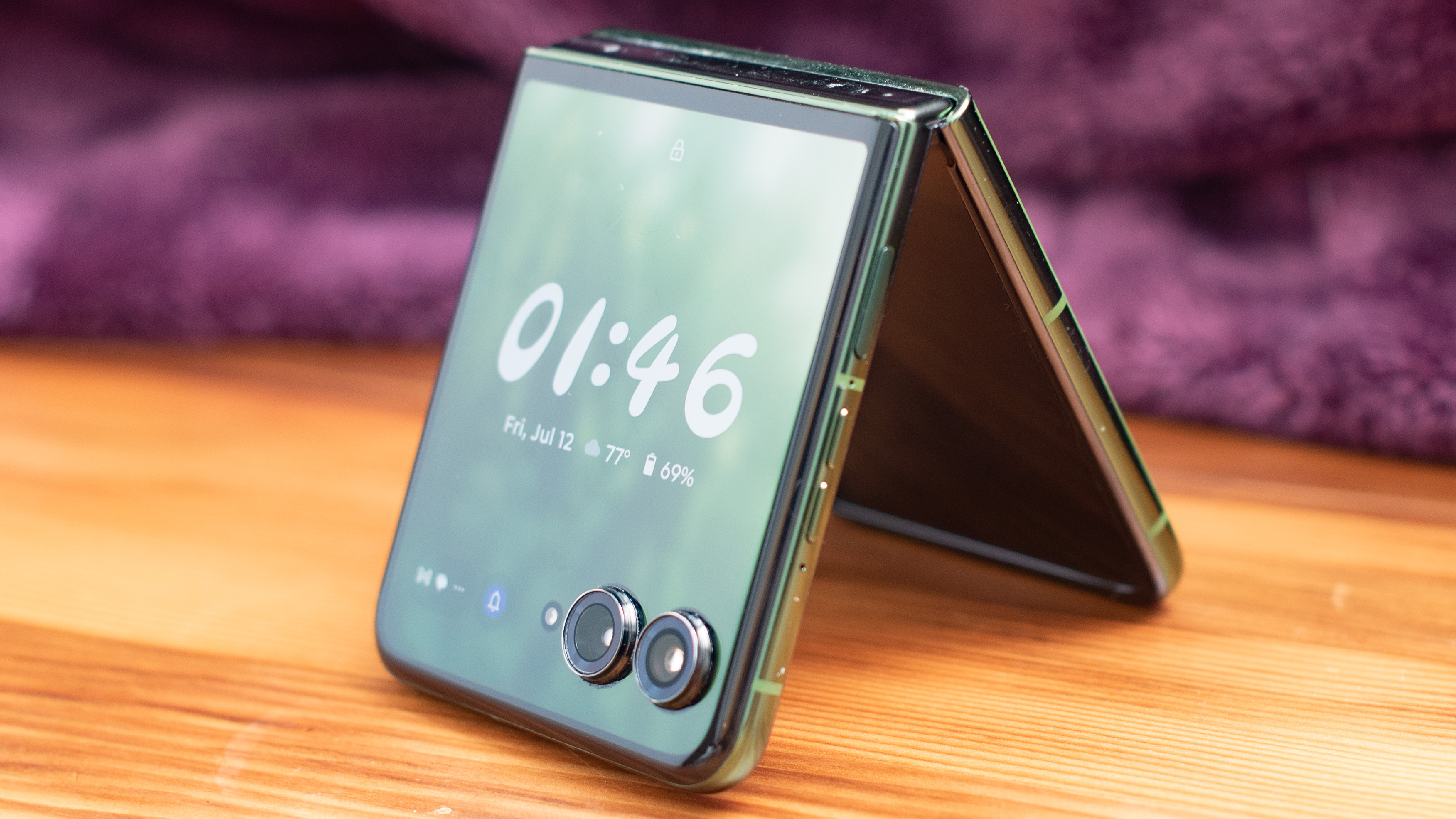
Rank 1504Newly uncovered Geekbench benchmarks suggest the rumored Motorola Razr Plus could best the Galaxy Z Flip 7 specs-wise The new Razr Plus could sport the Snapdragon 8 Elite chipset and 16GB of RAMThe Galaxy Z Flip 7 in turn may only get 12GB of RAM, and either the Snapdragon 8 Elite or Exynos 2500 chipset.
The Samsung Galaxy Z Flip 7 hasn’t even been confirmed by Samsung yet, but it already seems like a powerful rival is on the way in the form of the rumored 2025 Motorola Razr Plus.According to newly uncovered Geekbench benchmark reports, this year’s rumored Motorola Razr Plus model comes equipped with a Qualcomm Snapdragon 8 Elite chipset, the Adreno 830 GPU, and an impressive 16GB of RAM.The Geekbench report – spotted by Xpertpick – also suggests the phone will run an Android 15-based operating system, most likely a version of Motorola’s Hello UI Android wrapper.Those specs – while still unconfirmed – could give the also unannounced Samsung Galaxy Z Flip 7 a run for its money. As we previously reported, the Galaxy Z Flip 7 could come with either a Snapdragon 8 Elite or Samsung’s own Exynos 2500 chipset.
The Samsung Galaxy Z Flip 6 is our pick for the best flip phone currently available (Image credit: Samsung)
The Snapdragon 8 Elite would be a safe bet to match or exceed the same chipset found in the Razr Plus – it’s typical for Samsung phones to come with special “for Galaxy” versions of Qualcomm chipsets.However, a Galaxy Z Flip 7 equipped with the Exynos 2500 chipset wouldn’t have such a certain edge over the Razr Plus – issues with Samsung’s Exynos chipset platform are well documented, and have prevented the tech giant from fitting its flagship phones with its own chipsets for the past few years.That’s not to mention that the Galaxy Z Flip 7 is expected to launch with 12GB of RAM to the Razr Plus’ rumored 16GB – that difference could give the Razr Plus an edge for multitasking and on-device AI processing.Additionally, the current gen Motorola Razr Plus starts at $1,000 / £1,000 / AU$1,700, while the Samsung Galaxy Z Flip 6 starts at $1,099 / £1,049 / AU$1,799. Assuming neither phone sees a price hike with their next iteration, that’ll be another win for the Razr Plus.As PhoneArena notes, Motorola is expected to release the new Razr lineup, which will launch as the Razr 60 lineup outside of the US, on April 24 – so we don’t have too long to wait to find out the actual specs of this new foldable.Until then, the above is effectively entirely based on rumors – still, it’s always nice to hear of phone makers challenging Samsung in the foldable space. Let us know if you’re looking forward to either of these phones in the comments below.
You might also like
Samsung’s One UI 7 update reportedly delayed due to a serious bug, extending the wait for Android 15‘It will take time for foldables to become mainstream’: OnePlus defends decision to delay the OnePlus Open 2 and bow out of the foldable phones race in 2025Google's new Android update will give your devices a battery boost – plus a helpful new feature for Google Wallet
-
Picture from o.aolcdn.com
Rank 1505For anyone who misses the way smartphones used to work, Samsung has announced two new "rugged" Galaxy devices, the Galaxy XCover 7 Pro and the Galaxy Tab Active 5 Pro, that feature removable backplates and user-replaceable batteries.
The Galaxy XCover 7 Pro is designed for enterprise customers, but it comes packed with some of the same Galaxy AI features Samsung has been pushing on its flagship smartphones, including Google's Circle to Search and Object Eraser. The phone uses a Snapdragon 7s Gen 3 chip, has a brighter screen and comes with a 4,350mAh battery, but the reason to buy it are all the ways Samsung's made it tougher and more customizable than the average phone. That includes IP68 water and dust resistance, MIL-STD-810H certification for drops, programmable buttons, built-in pogo pins as another charging option and a battery you can replace yourself just by popping off the back of the phone.
Samsung
The Galaxy Tab Active 5 Pro has a 10.1-inch screen and uses the same Snapdragon chip as the XCover 7 Pro, but the tablet offers even more options when it comes to charging. Samsung says the Galaxy Tab Active 5 Pro can be used without a battery inside if it's connected to a dock and you can also hot-swap batteries on the tablet without turning it off. You'll get to enjoy many of the same durability benefits as the XCover 7 Pro, and the IP68 water and dust resistance extends to the Galaxy Tab Active 5 Pro's S-Pen stylus, too.
Samsung
Neither of these devices are for normal people by any means, but they are good illustration of how formerly common-sense features like batteries you can replace yourself have become niche. We got lighter and sleeker flagship phones in the process, but one has to wonder whether XCover owners are the ones actually living the good life.
The Galaxy XCover 7 Pro will be available to order on May 8, 2025. The Galaxy Tab Active 5 Pro is schedule to be released in "early June," according to Samsung.
This article originally appeared on Engadget at https://www.engadget.com/mobile/smartphones/samsungs-latest-rugged-devices-are-keeping-old-school-mobile-traditions-alive-120056640.html?src=rss
-
Picture from o.aolcdn.com
Rank 1506Potential PS5 buyers in Europe, the UK, Australia and more will now need to fork over up to 100 more AUD, EUR and other local currencies for a console. Sony has announced a series of price hikes for the PS5, blaming "a backdrop of a challenging economic environment, including high inflation and fluctuating exchange rates." The company last raised PS5 prices across these markets in 2022.
Only the PS5 Digital Edition's cost changes in Europe and the UK. It will increase to €500 ($570) from €450 ($513) in Europe and to £430 ($567) from £390 ($514) in the UK.
Prices for the Digital Edition and PS5 with disc drive are rising significantly across the board. The Digital Edition is increasing to AUD $750 (USD $475) from AUD $650 (USD $412) in Australia. Meanwhile, in New Zealand, the PS5 with disc drive is now NZD $950 (USD $558), up from NZD $900. Those new prices go into effect immediately, so hopefully, you did some shopping over the weekend if you wanted a new PS5.
In contrast, Sony is reducing the cost of purchasing the add-on disc drive. Buyers will pay €80 in Europe (down from €120) and £70 in the UK, down from £100.This article originally appeared on Engadget at https://www.engadget.com/gaming/playstation/ps5-prices-are-increasing-across-europe-uk-and-australia-123025793.html?src=rss
-

Picture from techcrunch.com
Rank 1507 -

Picture from cdn.mos.cms.futurecdn.net
Rank 1508Laboratory Services Cooperative confirmed suffering a data breach in October 2024An investigation uncovered that the crooks stole sensitive dataThe information has not yet surfaced on the dark web
Laboratory Services Cooperative (LSC), a significant US-based laboratory for healthcare providers, has revealed it suffered a data breach and lost some member information.In a press release published on its, LSC said it identified “suspicious activity” within its network on October 27, 2024. It notified the police and brought in third-party cybersecurity experts to analyze the incident and assess its effects.The investigation concluded in February 2025, and showed that “certain LSC patient and worker-related data might be affected.”
Monitor your credit score with TransUnion starting at $29.95/monthTransUnion is a credit monitoring service that helps you stay on top of your financial health. With real-time alerts, credit score tracking, and identity theft protection, it ensures you never miss important changes. You'll benefit from a customizable online interface with clear insights into your credit profile. Businesses also benefit from TransUnion’s advanced risk assessment tools.Preferred partner (What does this mean?)View Deal
Payment info stolen
According to BleepingComputer, roughly 1.6 million people are affected. The stolen data has not yet leaked online, and no one claimed responsibility just yet.The data stolen varies from case to case, LSC says, adding that it may include contact details (names, addresses, phone numbers, emails), as well as medical and clinical information (date(s) of service, diagnoses, treatment, medical record number, lab results, patient/accession number, provider name, treatment location, and related-care details), health insurance information (plan name, plan type, insurance companies, and member/group ID numbers), and most worrisome - billing claims and payment data.The data could also include claim numbers, billing details, bank account details (bank name, account number, routing number), billing codes, payment card details, balance details, and similar banking and financial information.Furthermore, crooks may have taken people’s Social Security numbers, driver’s license or state ID numbers, passport numbers, dates of birth, demographic data, student ID numbers, and other forms of government identifiers.“For LSC workers, the information involved may also include details about their dependents or beneficiaries if that information was provided to LSC,” the press release reads.LSC acts as a cooperative, meaning it's owned and governed by its member physicians and clinics. The breach mostly affects people who did tests through some Planned Parenthood centers that use LSC for their testing, it was said.
You might also like
Thousands of healthcare records exposed online, including private patient informationTake a look at our guide to the best authenticator appWe've rounded up the best password managers
-

Picture from cdn.mos.cms.futurecdn.net
Rank 1509The Wheel of Time's cast hope that they'll return for a fourth seasonAmazon hasn't renewed the high fantasy series for another installment yetThe Prime Video show's best-rated season indicates that it should be, though
The Wheel of Time's cast aren't sure if Amazon will continue to weave its incredibly dense source material into a fourth season.Speaking to TechRadar before the show's third season began airing in mid-March, Josha Stradowski and Daniel Henney revealed they hadn't heard if the high fantasy series would be renewed again. It's possible, then, that The Wheel of Time's third season could mark the end of the road for Prime Video's TV adaptation.However, Stradowski and Henney, who play Rand al'Thor and Lan Mandragoran, are holding out hope for some good news once the Amazon TV Original's latest chapter ends. And, with season 3's final episode due to be released this Thursday (April 17), there's a chance that a season 4 announcement could be made in the hours or days after its arrival on one of the world's best streaming services."We don't know much," Henney told me when I asked if anyone had informed them about the show's renewal. We're just hopeful and have all of our fingers crossed.
Season 3's trippy fourth episode was the Prime Video Original's best entry yet (Image credit: Amazon MGM Studios)
"Season three is something we're incredibly proud of," Henney continued. "Watching it back, I couldn't be happier with how it turned out. I'm sure Josha will agree that this is The Wheel of Time we set out to make.""Yeah, we're confident [that a fourth season will be greenlit]," Stradowski added."When I was reading the book series, it wasn't until book four [The Shadow Rising, which season three is based on] that I thought 'Wow, okay, now I understand why so many copies have been sold'. I feel like season three is where we found our form, so we've all got our fingers firmly crossed."
May the Light protect you
Poring over the viewership data for season 3 like... (Image credit: Amazon MGM Studios)
It's hard to determine if one of the best Prime Video shows (in my view, anyway) will get a fourth outing.For starters, Amazon rarely reveals official viewing figures for any of its new movies or shows. On the off-chance that it does, it's usually to boast about the millions of people who tuned in to watch the premiere of a new TV Original or the debut of any of the new Prime Video movies it develops in-house.The best information we have from a viewership perspective, then, is from third-party sources, such as audience engagement experts Nielsen. Companies like this are our best bet at understanding how The Wheel of Time season 3 performed, albeit with a couple of caveats.Indeed, Nielsen's weekly viewing figures only take a project's US audience into consideration. Additionally, their data is based around the number of minutes viewed, which can somewhat skew the figures when trying to work out how many people actually watched the show.
The tapestry of Episode 7. pic.twitter.com/g8UBcloijWApril 13, 2025
All of that said, Nielsen hasn't released any numbers for season 3 yet. The audience aggregation firm releases figures one month behind where we're at in the calendar. For example, the latest weekly Top 10 information comprises viewership data for the week running March 10 to 16. At the time of publication (April 14), that's around 30 days ago.With The Wheel of Time's third season not debuting until March 13, it'll be a few more days before we find out how well its three-episode premiere performed. That'll give a clearer picture as to whether a fourth season will be greenlit.There is hope that Amazon's TV retelling of Robert Jordan's best-selling novels will get another installment, though. Based on its Rotten Tomatoes score, season 3 is the highest-rated entry yet, with general audiences (82%) and critics (97%) loving what they've seen. Compared to season 2 (80% and 86%) and season 1 (61% and 81%), this season is by far the best since the show made its debut in August 2021.I was similarly effusive in my praise for this chapter, too. In my review of The Wheel of Time season 3, I called it "a spellbinding return to form for Prime Video's fantasy TV underdog". Based on this season's seven episodes to date, which I really enjoyed, I'd be gutted if it's canceled just as it's starting to get really interesting, too.
You might also like
'There's a reason why we do it': The Wheel of Time showrunner responds to fans who are still upset over the Prime Video show's plot alterationsLearn more about The Rings of Power season 3Or get the lowdown on Invincible season 4
-

Picture from cdn.mos.cms.futurecdn.net
Rank 1510Garmin begins its beta update cycle for the Garmin Instinct 3 Among 30 updates are eight new featuresThose features include rucking, Passcodes, and Garmin Connect+
Garmin is beginning to roll out updates for the new Garmin Instinct 3. The updates, currently in beta, include 22 minor changes, fixes, updates, and eight new features, including support for the new Garmin Connect+ premium service.The Garmin Instinct 3's new features, currently only available to members of Garmin's public beta program as Beta Version 9.07, will roll out to all watches once testing is complete. While there are 30 updates in total, the eight significant new features are listed below:
Garmin Connect+ supportRucking workout profilePack weight option added to the Rucking profilePasscode supportBreathing VariationsDaily Suggested Workouts added to Workout app for Solar/Instinct EMorning report animationsExtra locations in Weather widget
The rest of the changes are fixes to various bugs and preventing potential crashes. Of the eight significant changes above, Passcode is a big one, allowing you to lock your watch for added security, and Rucking is a great workout profile for those looking to make their hikes more challenging by adding a weighted backpack. The Pack Weight functionality is a nice touch, allowing you to granularly track your improvements by weight in addition to distance.We previously reported on Garmin adding Rucking, and were mildly surprised it didn't come as part of the Instinct 3 at launch, as this chunky watch is tailor-made for rough trails. However, it may simply not have been ready, or the Pack Weight functionality may have created additional complications when designing the workout profile.
(Image credit: Garmin)
However, support for Garmin Connect+, Garmin's new premium subscription service, is likely to have a somewhat mixed reception, to say the least, while the other features are expected to be welcome changes for Instinct 3 owners. If you were following the premium tier's launch, you'll know Garmin Connect+ was met with enormous backlash, as we reported after spending two days fielding reader comments and emails.Users' main concerns are with the relatively basic and unhelpful AI advisor service, Active Intelligence, and the risk of future new features being placed behind the GC+ paywall. Users feel strongly about having to fork over additional monthly charges to get the most from Garmin, even after buying an expensive watch.However, fortunately, there has been no mention of any of the new features listed above being locked behind Garmin Connect+, which is great news for ruckers and those interested in protecting their watches with a passcode.
You might also like...
Garmin has just crossed a powerful bike light with a 4K dash cam – and as a cyclist, I’m all in5 fitness apps that can help you build muscle in the gymHot on the heels of Garmin's controversial subscription plan, Polar's just unveiled its own
-

Picture from techcrunch.com
Rank 1511 -

Picture from techcrunch.com
Rank 1512 -
Picture from cdn.mos.cms.futurecdn.net
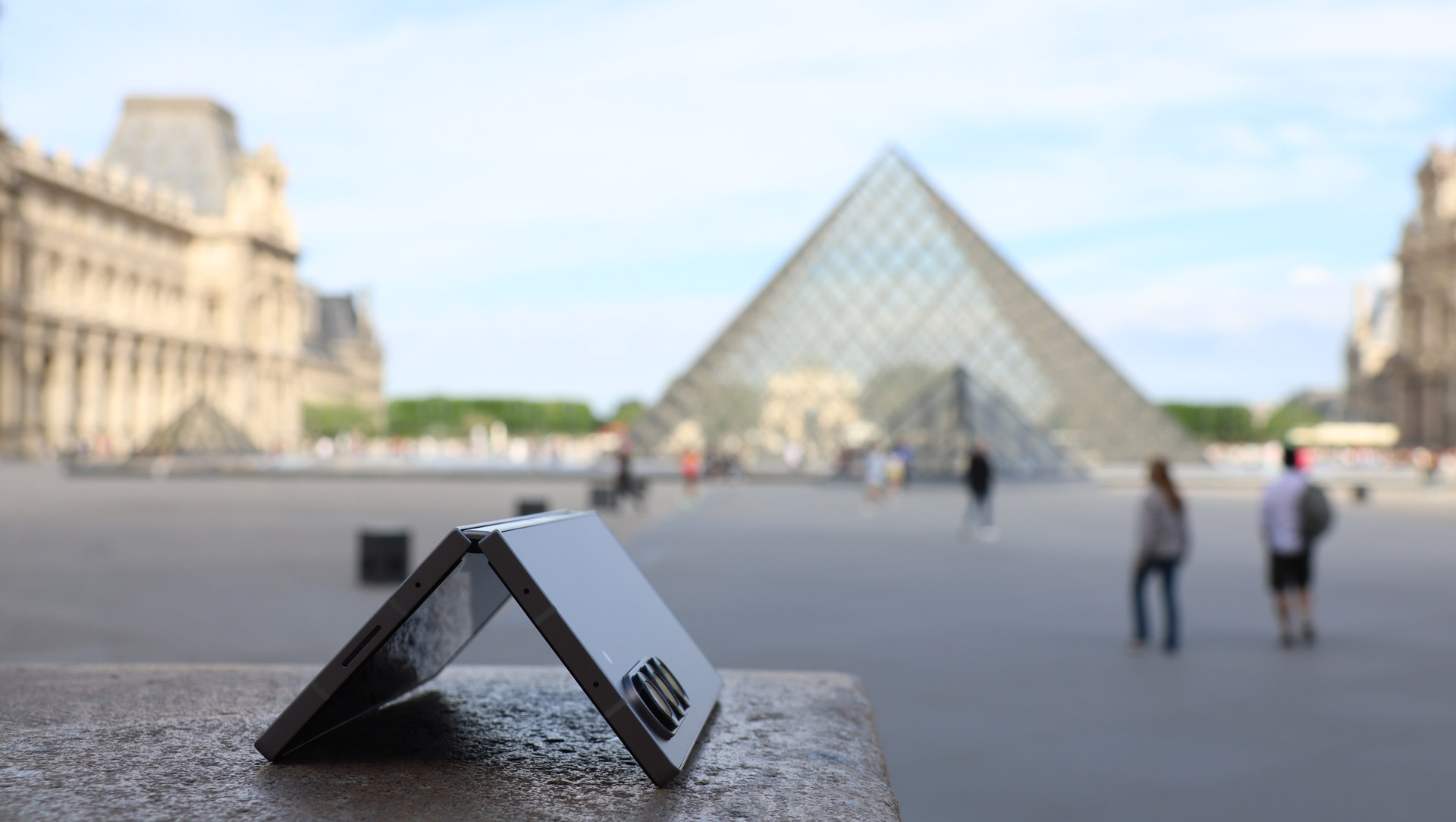
Rank 1513The Samsung Galaxy Z Fold 7 has been spotted on GeekbenchThe listing reveals Android 16, which could make this one of the first phones with that softwareThere's also mention of 12GB of RAM and a Snapdragon 8 Elite chipset
The Samsung Galaxy Z Fold 7 will probably launch in July, and one sign that it’s approaching is that it has been spotted on a benchmarking site – revealing some details about the phone in the process.Leaker Tarun Vats (via Phone Arena) has found a Geekbench listing for the Samsung Galaxy Z Fold 7, and it mentions Android 16 – which, if the phone does launch in July, would mean it’s likely to be one of the first handsets running Android 16.That’s pretty speedy for Samsung, considering the company still hasn’t got Android 15 running on most of its phones, but it’s something we’ve heard about more than once, so there’s a good chance Android 16 (with Samsung’s One UI 8 overlay) really will be available on the Galaxy Z Fold 7 at launch.
Galaxy Z Fold7 spotted running Android 16 with One UI 8 on GeekBench!!OpenCL-Score: 18143Build Version: F966USQUOAYD7 pic.twitter.com/2QGU1udttxApril 12, 2025
A faster chipset but no increase in RAM
This benchmark also mentions 12GB of RAM, which is the same amount as you’ll find in the Samsung Galaxy Z Fold 6. So it would be nice to see Samsung increase this, but given that the Samsung Galaxy S25 Ultra also has 12GB we didn’t really expect to see more than that here.Finally, it has a motherboard that’s listed as “sun”, which is the codename for the Snapdragon 8 Elite, so that’s probably the chipset this phone will use.That’s good but unsurprising news – good because that’s the most powerful chipset currently available to Android phones. Unsurprising because the Samsung Galaxy Z Fold 6 used the previous generation of this chipset (the Snapdragon 8 Gen 3).Both that RAM amount and chipset have also previously been leaked, so there aren’t really any surprises here, but this is just one more piece of evidence suggesting that these are the specs we’ll get.We’ll probably find out for sure in July, but stay tuned to TechRadar in the meantime for any additional leaks and rumors.
You might also like
Samsung’s One UI 7 update reportedly delayed due to a serious bug, extending the wait for Android 15Samsung Galaxy S25 Edge: latest news, rumors, and everything we know so farSamsung Galaxy Z Flip 7: latest news, rumors, and everything we’ve heard so far
-
Picture from cdn.mos.cms.futurecdn.net
Rank 1514Google revealed prototype AR glasses at TEDThose glasses are apparently being made by Samsung under Android XRThe AR glasses are reportedly set to release in 2026
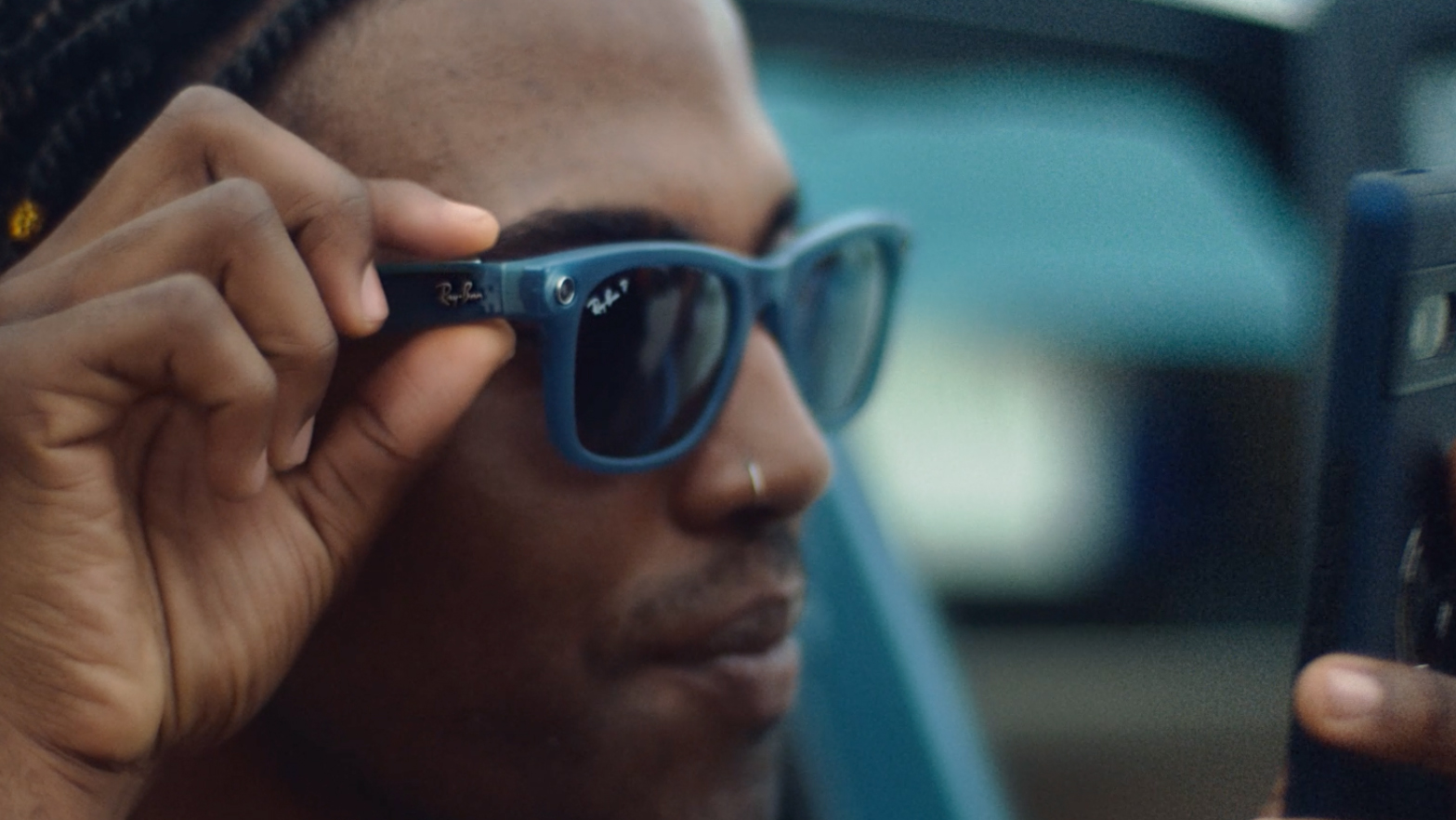
The Ray-Ban Meta smart glasses have been a wild success for Meta, and it appears that Samsung and Apple have taken notice as the duo plans to launch their own Android XR and Apple XR glasses.We got our first peek at the Android XR glasses last week during a TED talk hosted by Google's head of augmented reality and extended reality, Shahram Izadi.The specs are a significantly smaller package than the Project Moohan Android XR headset Google and Samsung are collaborating on (via Axios) – and you can see the headset behind him on a shelf to get some sense of the size difference.In the surprise demo, Izadi used the glasses to perform a few tasks including live translation from Farsi to English, scanning a book using its in-built cameras, and helping them find their keys using a feature called ‘Memory.’ They also pack in a display so the wearer can receive information visually, not just via audio cues.
(Image credit: Jason Redmond / TED)
Now The Korea Economic Daily is claiming this prototype is Samsung-made under the duo’s existing Android XR partnership – and it’s slated to launch next year.While leaks should be taken with a pinch of salt we’ve heard plenty of reports that Meta plans to launch its Ray-Ban Meta smart glasses with a display later this year, so it’s not out of the question that an Android XR device could follow soon after.What’s more, given how impressive the prototype seems to be already – being able to perform a slew of tasks in a sleek package – it again seems likely that Google and Samsung aren’t far from having a consumer-ready product. I just hope they aren’t as pricey as Meta’s glasses are rumored to be.
What's Apple up to?
(Image credit: Apple)
Apple is also keen to create lightweight AR specs, according to Bloomberg's Mark Gurman (behind a paywall). According to people familiar with Apple's AR plans "It’s the only thing he’s really spending his time on from a product development standpoint.”Though according to Gurman, Apple’s glasses might still be a few years away.Because true AR glasses aren't yet achievable in Apple's mind (according to people in the know) it apparently first wants to focus on equipping its Apple Watch and AirPods with AI cameras to achieve some of the functionality of the Ray-Ban Meta AI glasses we have today.Given Apple’s struggles with AI on the iPhone 16 it makes sense that it wouldn’t currently want to focus on AI smart glasses, though it does feel it could be late to the glasses party considering how soon Samsung, Google and Meta are expected to be launching specs.As with all leaks and speculation we’ll have to wait and see what Apple has up its sleeve, but it could benefit from the same advantage Google will – one that Meta lacks.
The smartphone synergy strategy
The most striking part of Google’s prototype is the XR device looks an awful lot slimmer than other prototype AR glasses we’ve seen – such as the Meta Orion AR specs and Snap’s 5th-gen Spectacles developer kit. That’s because it is apparently leveraging Google’s biggest advantage: an Android phone according to Izadi.He explained, "These glasses work with your phone, streaming back and forth, allowing the glasses to be very lightweight and access all of your phone apps."Because they lack their own phone brands to rely on, Meta and Snap would ideally want users to rely solely on their own standalone platform – one which they have complete control over to introduce the apps and experiences they most want to build. Control they don’t have when merely piggybacking off Android via phone apps.Google, seeing as it runs the Android ecosystem, likely isn’t keen for people to abandon its phones quite yet.
Snap's spectacles are cool, but bulky (Image credit: Future)
So its glasses are instead designed to leverage the processors in your phone rather than a sophisticated chipset built into the glasses themselves (though we suspect they still have a little onboard processing power for simple display and camera operations).This allows Google to remove some of the bulk a beefy chipset requires – such as sophisticated cooling and a bigger battery – to create a slimmer end product without sacrificing overall performance (at least in theory).Apple could leverage a similar smartphone-to-glasses relationship with its own AR specs, though Meta and Snap’s third-party approach has one advantage in that they are system agnostic. You can use which smartphone you want, or you might not even need a smartphone at all.Hopefully Google’s symbiotic relationship between its glasses and phones results in smart specs that aren’t as pricey as its competitors, as they don’t need to pack in as many components. For example, Meta’s rumored upcoming XR glasses with a screen are expected to cost as much as $1,400 (£1,100 / AU$2,200).
You might also like...
Pico 4 Ultra VS Meta Quest 3: the battle of the best mid-range VR headsetsThis beginner-friendly train-driving simulator is the chillest Meta Quest 3 game I've played – but it's not for everyoneYou might get a free Meta Quest 3 to use on your next flight, but I'm not keen on the advertising it'll serve you
-
Picture from cdn.mos.cms.futurecdn.net
Rank 1515Security researcher finds more than 30 unlisted Google Chrome extensionsCumulatively they have more than four million usersThey are potentially hazardous, with a variety of security risks
A cybersecurity researcher from Secure Annex recently discovered more than 30 unlisted browser extensions that put more than four million of its users at different security risks.In a detailed analysis, researcher John Tuckner explained software developers will sometimes unlist their extensions if they’re not operating properly.However, he also suggested that malicious actors might unlist them to make it harder for security teams to detect and flag them. After all, these hidden tools cannot easily be found via search engines, or public directories.
Monitor your credit score with TransUnion starting at $29.95/monthTransUnion is a credit monitoring service that helps you stay on top of your financial health. With real-time alerts, credit score tracking, and identity theft protection, it ensures you never miss important changes. You'll benefit from a customizable online interface with clear insights into your credit profile. Businesses also benefit from TransUnion’s advanced risk assessment tools.Preferred partner (What does this mean?)View Deal
Flagging for malicious behavior
“Many companies provide their software through unlisted extensions because it makes it harder for any normal user to find the extension and then hit a wall when it isn’t functional,” he said. “It has also been known as a way to target users to install a malicious extension while being really hard to detect by security teams.”Some of the extensions Tuckner found, like "Fire Shield Extension Protection," request excessively broad permissions. These permissions include access to users' web traffic, stored cookies, and even browser tabs, which opens the doors to the misuse of potentially sensitive data.“While the management API is requested, so is access to many more permissions that provide the ability to interact with web traffic on all URLs, access cookie storage, manage browser tabs, and execute scripts!,” Tuckner explained.Secure Annex's analysis flagged these extensions for potentially malicious behavior, such as accessing stored cookies, or matching signatures associated with known malware. The researcher suggested users remove these unlisted extensions, since their hidden and overly intrusive nature creates unnecessary vulnerabilities.Fortunately, Tuckner did not find any extensions stealing login credentials or payment information.However, he stressed that this level of obfuscation for software that can be remotely controlled could mean it can be used as an infostealer. “That is ultimately the problem and threat these extensions pose when they can be controlled remotely.”We have reached out to Google for comment.Via Ars Technica
You might also like
Malicious "polymorphic" Chrome extensions can mimic other tools to trick victimsTake a look at our guide to the best authenticator appWe've rounded up the best password managers
-

Picture from techcrunch.com
Rank 1516 -

Picture from cdn.mos.cms.futurecdn.net
Rank 1517Windows 11 24H2’s April patch is causing some odd bugsThere are multiple problems with Windows Hello loginsThe update is also completely failing to install for some people
Windows 11 24H2’s latest patch is causing some trouble with failures to install (once again) and also Windows Hello is ending up broken in some cases.Let’s start with the bug in Windows Hello, which is the feature that allows for secure logins to your PC (via facial recognition using a webcam, or other methods besides).Windows Latest reports that some users have found that the cumulative update for April 2025 (known as KB5055523) is affecting those who use Windows Hello for facial recognition with a privacy shutter over the webcam.How does a facial login even work with a privacy shutter obscuring the camera? Well, it works just fine because the tech leverages an infrared sensor on the camera which can function through a physical shutter (a plastic slider that more privacy conscious folks use to rule out any danger of them being spied on through the webcam).The problem is that the April update appears to mess with the infrared sensor so login no longer works unless you open that privacy shutter – which is hardly ideal.Windows Latest found the issue present on an HP Spectre laptop, also highlighting a report from a Windows 11 user who has been affected by this bug and tells us: “I’ve reproduced the issue several times, with several clean installs. The webcam we’re using is the Logitech Brio 4k, with the latest firmware and drivers, which is compatible with Windows Hello.”There are other reports on Reddit, too, such as this one: “Just wanted to see if anyone else is experiencing issues with Windows Hello face recognition since the latest update (KB5055523). Before, I had the camera (Brio 4K) covered and it would work fine. Now, I have to remove the privacy cover for it to recognize me. It doesn’t seem to be able to unlock with the infrared camera alone now.”There are a number of replies from folks echoing that they have the same bug affecting their logins. The only solution is seemingly to uninstall the April update (which strongly suggests this is a problem caused by this latest patch from Microsoft).That said, Windows Latest does offer a possible solution, which is achieved by heading into Device Manager (just type that in the Windows search box, and click on it). In there, you need to click on the little arrow next to where it says ‘Cameras’ and then you might see two cameras listed – the IR (infrared) camera and RGB/color (normal) camera. Right click on the latter and disable it, but leave the infrared camera on. Now, if you go and set up Windows Hello again, it may work correctly.Windows Latest doesn’t guarantee this, though, and says this will only do the trick for some Windows 11 users. If you’re desperate for a fix, you can give this a whirl, as you could be waiting a while for the official solution from Microsoft. Just don’t forget that you will, of course, have to reenable the main (RGB) camera after any fix is applied.Interestingly, in the official patch notes for the April update, Microsoft does flag a problem with Windows Hello – but not this one. Rather, this is a separate issue, albeit one that shouldn’t affect those running Windows 11 Home.Microsoft explains: “We’re aware of an edge case of Windows Hello issue affecting devices with specific security features enabled … Users might observe a Windows Hello Message saying ‘Something happened and your PIN isn't available. Click to set up your PIN again’ or ‘Sorry something went wrong with face setup.’”Microsoft provides instructions on what to do if you encounter this particular problem via its April patch notes (under known issues).However, this bug only affects those using System Guard Secure Launch (or Dynamic Root of Trust for Measurement), which is only supported on Windows 11 Pro (or enterprise editions). So as noted, if you’re on Windows 11 Home, you shouldn’t run into this hiccup.
(Image credit: Shutterstock / Khosro)
Installation blues
Windows Latest also picked up a second major problem, namely installation failures (which are nothing new). These seem to be happening again with the April 2025 update, with the usual meaningless error messages accompanying an unsuccessful attempt (hexadecimal stop errors such as ‘0x80070306’).The tech site notes that it has verified reports of the update failing to install in this way, or its progress getting stuck at either 20% or 70% in some cases, never actually completing. Windows Latest informs us that Microsoft is seemingly investigating these installation failures.There are other reports of this kind of problem on Microsoft’s Answers.com help forum (and some possible suggestions of solutions from a customer service rep, some of which have reportedly worked for some, but not for others). In the case of the original poster of this thread, the update was repeatedly failing to install and showing as ‘pending restart’ which is an odd twist in the tale.Overall, then, there’s some degree of weirdness going on here, as the Windows Hello failures are rather odd, as are some of these installation glitches. Am I surprised at that, though? No, because Windows 11 24H2 has produced some very off-the-wall bugs (and general bizarreness besides) since it first came into being late last year.If you’re in the mood for some highlights of the more extreme oddities that have been inflicted on us by version 24H2, read on…
(Image credit: Microsoft)
3 of the weirdest Windows 11 bugs
1. Language swap goes completely off the railsSome of the most peculiar bugs I’ve ever seen have surfaced in Windows 11, and particularly in the 24H2 update.One of my favorites – if that’s the right word (it probably isn’t if you were affected by this problem) – is the spanner in the works somewhere deep in Windows 11 that caused the operating system to be displayed as a mix of two different languages. This happened when some users changed the language in Windows 11 from one choice to another, after which a good deal of the operating system’s menus and text remained in the original language. Confusing? No doubt. How did it even happen? I haven’t got a clue.2. Baffling deletion of CopilotLast month, Microsoft managed a real doozy by allowing a bug through that actually ditched Copilot. Yes, in a time where the software giant is trying desperately to promote its AI assistant and rally support, last month’s patch uninstalled the Copilot app for some Windows 11 users. That was highly embarrassing for Microsoft, especially as some folks felt it was the first Windows bug they were pleased to be hit with.3. See more – or less – of File ExplorerA really memorable one for me was late last year when Windows 11 24H2 was beset by a problem whereby a menu in File Explorer (the folders on your desktop) flew off the top of the screen. Yes, the ‘See more’ menu offering more options to interact with files went past the border of the screen, so most of it wasn’t visible – you saw less of it, ironically. And that meant you couldn’t use those non-visible options.Again, how did Microsoft break a major part of the Windows 11 interface in such a fundamentally crude way? Your guess is as good as mine, but I suspect the transition to a new underlying platform for Windows 11 24H2 had something to do with it. (This bug has only just been fixed, by the way, and that happened with this most recent April update).
You may also like...
Microsoft is digging its own grave with Windows 11, and it has to stopWindows 11 is getting a very handy change to the taskbar, as Microsoft takes a leaf from Apple’s Mac playbookMicrosoft looks to be making a big change to how you install and log in to Windows 11 – and I’m not happy about it at all
-
Picture from o.aolcdn.com
Rank 1518Apple TV+ has a ton of popular originals like Ted Lasso, Severance, Slow Horses, For All Mankind, Foundation and Silo. If you've been meaning to check them out, you can do so for less right now. Apple TV+ is on sale right now for $3 per month for the first three months, bringing the total cost to just $9 for the entire period. That saves you a total of $21 off the standard $10 monthly cost of the subscription that we consider to be one of our favorite streaming services.
Apple's shows won 10 Emmy Awards in 2024, including a Slow Horses victory for outstanding writing in a drama series. Although its films weren't up for anything at this year's Oscars, it received 13 nominations in 2024, including Best Picture nods for Killers of the Flower Moon and Napoleon.
Three months of Apple TV+ for $9 is available through April 24. Both new and qualified returning subscribers (those who haven't been subscribed for the past 30 days) are eligible. You also must sign up via Apple directly and not through a third-party provider or your mobile wireless provider. If you don't want to pay full price after three months, just remember to cancel before the renewal date.
Check out our coverage of the best streaming deals for more discounts, and follow @EngadgetDeals on X for the latest tech deals and buying advice.This article originally appeared on Engadget at https://www.engadget.com/deals/three-months-of-apple-tv-drops-to-only-9-193009187.html?src=rss
-
Picture from o.aolcdn.com
Rank 1519There are some great keyboard attachments for Apple's iPad but, sometimes, you just want to physically write things down with a "pencil." While the Apple Pencil lineup can be confusing (see our helpful guide here), there are two great options currently on sale.
Take the 23 percent discount on the Apple Pencil Pro, for instance. The markdown drops its cost to $99 from $129, only $10 more than its all-time low price. Apple released this top-end model last year and it's certainly the best of the bunch.
It offers features such as squeeze gesture to see menu options and a built-in gyroscope that improves the process of changing your pen's orientation and brush tools. Plus, it works with Apple's Find My network, so you can easily locate the tool at any time. However, it's only compatible with select iPads, including the iPad Pro with an M4 chip, iPad Air with M2 or M3 chips and the iPad mini with A17 Pro.
If you don't want to spend close to $100, the Apple Pencil with a USB-C port is also on sale. The 2023 model is available for $66, down from $79 — a 16 percent sale. The big benefit (other than the reduced price) is that it works with a lot more iPads than the Pencil Pro. The Apple Pencil with a USB-C port also has all the basics, like tilt sensitivity, magnetic attachment and supporting Apple Pencil hover when using an iPad Pro.
Follow @EngadgetDeals on X for the latest tech deals and buying advice.This article originally appeared on Engadget at https://www.engadget.com/deals/the-apple-pencil-pro-drops-back-down-to-99-134027919.html?src=rss
-

Picture from techcrunch.com
Rank 1520 -
Picture from cdn.mos.cms.futurecdn.net
Rank 1521Another week, another OpenAI announcement. Just last week the company announced ChatGPT would get a major memory upgrade, and now CEO, Sam Altman, is hinting at more upgrades coming this week.On X (formerly Twitter), Altman wrote last night, "We've got a lot of good stuff for you this coming week! Kicking it off tomorrow."Well, tomorrow has arrived, and we're very excited to see what the world's leading AI company has up its sleeve.We're not sure when to expect the first announcement, but we'll be live blogging throughout the next week as OpenAI showcases what it's been working on. Could we finally see the next major ChatGPT AI model?
Good afternoon everyone, TechRadar's Senior AI Writer, John-Anthony Disotto, here to take you through the next few hours in the lead up to OpenAI's first announcement of the week.Will we see something exciting today? Time will tell.
-

Picture from cdn.mos.cms.futurecdn.net
Rank 1522Cyberattacks on public institutions are becoming more frequent and sophisticated, and with our reliance on technology, the stakes have never been higher. According to the UK Government’s Cyber Security Breaches Survey 2024, half of businesses (50%) and around a third of charities (32%) experienced cyber breaches or attacks last year. Given the scale of these attacks, it is no surprise that government bodies, which hold vast amounts of highly sensitive data, are also attractive targets.Cybercriminals can exploit vulnerabilities in public sector IT systems and processes to target them with phishing scams, distributed denial of service (DDoS) attacks, ransomware and more. Sensitive data including personal records, financial details, and classified intelligence are valuable to cybercriminals, making public institutions prime targets for data theft and ransomware.In addition to this, geopolitical tensions mean that attacks aimed at disrupting the availability of critical systems are also commonplace. For instance, the attack on the British Library in October 2023, which impacted digital services for months and had an estimated direct cost of £600,000 is just one example of how damaging these incidents can be.
The true cost of cyberattacks: more than just money
The financial impact of cyberattacks on government bodies can be staggering. In 2023, UK organizations spent an average of £1,100 per cyberattack, but for public institutions, the costs can be far greater. The 2025 NAO report on Government Cyber Resilience highlights how these attacks not only disrupt essential services but also lead to huge multifaceted costs including initial response, regulatory fines, recovery, litigation, and in some cases, ransom payments.The financial impact isn’t the only problem. Cyberattacks also erode public trust which can prove to also be costly, especially in today's volatile political climate. When government agencies fail to protect personal data or ensure services continue running smoothly, confidence in public institutions undoubtedly takes a hit.Rebuilding that trust can take years, and in the meantime, the British public may become wary of engaging with digital government services. This would ultimately make public services less efficient and more costly to run.
Outdated systems, outdated defenses and the cyber skills gap
One of the biggest challenges in tackling cyber threats in the UK is the cybersecurity skills shortage. The UK Government’s Cyber Security Skills in the UK Labour Market 2024 report found that nearly half (44%) of businesses have skills gaps in basic technical areas. Public institutions, which often work within tight budgets, can struggle to attract and retain cybersecurity professionals, leaving them vulnerable to attacks.At the same time, many government bodies are still relying on outdated IT systems. The same 2025 NAO report found that 228 legacy systems that lack security patches are still in use across government agencies, with 53% (120 systems) having no fully funded plan for replacement or upgrades.Many of these systems operate on outdated software that no longer receives security updates, making them easy targets for hackers. While replacing these systems is costly and complex, failing to do so only increases the risk of future cyber incidents.
Bridging the gap
Tackling these cybersecurity challenges requires investment, but being proactive is far more cost-effective long-term than constantly firefighting cyber breaches. Another key priority is improving incident response capabilities.Cyberattacks are not just a possibility but an inevitability, and government agencies must be equipped to detect and rapidly respond to threats. Investing in advanced monitoring systems, real-time threat intelligence sharing, and dedicated incident response teams can significantly reduce the impact of cyberattacks, ensuring that disruptions are minimized, and services can quickly recover.Increasing government funding and strategic planning for cybersecurity is also crucial. Cybersecurity cannot be treated as an afterthought, it must be a core component of government budgets and long-term strategy. Allocating sufficient resources for risk assessments, cybersecurity training, and continuous upgrades to IT infrastructure will ensure that public services remain secure and resilient against evolving threats.Addressing the cyber skills gap is another fundamental aspect of strengthening the cybersecurity of UK Public Services. The shortage of skilled professionals means many public sector organizations lack the expertise needed to defend against and recover from cyberattacks.The government must take action to attract and retain cybersecurity professionals by offering competitive salaries, investing in robust training programs, and promoting cybersecurity careers within the public sector. Additionally, upskilling existing employees with cybersecurity training can help build a more resilient internal security workforce, reducing the reliance on external expertise.
Securing the UK’s public services
The increasing threat of cyberattacks on UK public services cannot be ignored. With financial losses increasing, public trust on the line, and outdated IT systems creating massive vulnerabilities, there is an urgent need for action. By modernizing IT infrastructure, strengthening incident response, increasing funding, and addressing the cyber skills gap, the UK government can safeguard public services against cyber threats.Failing to act now will only lead to greater costs, more disruptions, and an even more vulnerable public sector. Therefore, cybersecurity must be a top priority to protect public services, data, and finances from an ever-growing digital threat.
We've featured the best encryption software.
This article was produced as part of TechRadarPro's Expert Insights channel where we feature the best and brightest minds in the technology industry today. The views expressed here are those of the author and are not necessarily those of TechRadarPro or Future plc. If you are interested in contributing find out more here: https://www.techradar.com/news/submit-your-story-to-techradar-pro
-

Picture from cdn.mos.cms.futurecdn.net
Rank 1523The evolution of artificial intelligence (AI) continues to push boundaries, captivating the collective imagination of industries and societies alike. Today, the conversation is expanding beyond generative AI (Gen AI) into agentic AI and artificial general intelligence (AGI).These advancements promise significant yet complex shifts in business dynamics, organizational structures, innovation processes, and workforce management. As we stand at the threshold of these transformative changes, our focus must remain clear: responsible and human-centered progress.
Reimagining organizational structures
The implications of agentic AI and AGI for organizations are profound. The rise of AI agents will disrupt hierarchical workflows, paving the way for more dynamic and decentralized operational models. In this new paradigm, Chief Knowledge Officers (CKOs) and other roles central to knowledge engineering will become pivotal. These roles ensure that knowledge, not just data, is used effectively, aligning the capabilities of intelligent systems with business strategy.EY teams have embraced this shift, leveraging AI as a catalyst for redefining how work is structured and executed. The aim has been to develop a flexible, multi-model approach that exemplifies AI’s potential to create positive outcomes when adapted to a variety of business functions. This is not a one-size-fits-all journey; it is an ongoing process of refining options through real-world applications, where EY is often ‘Client Zero’, and learnings from our internal use cases help set the standard for client transformations.
The transformational promise of AGI
Unlike task-specific AI, AGI aspires to surpass human cognitive abilities across a variety of functions. It represents a leap from automated assistance to deep, strategic collaboration. While today’s AI can parse complex data sets and generate creative solutions, AGI could operate as a strategic partner, driving decisions and sparking innovation in ways that exceed the human thought process.This advancement will challenge traditional enterprise models, shifting from workflow-driven operations to goal-oriented strategies. The essence of business will no longer be confined to what processes can achieve but will be reframed around outcomes that align with strategic objectives. Such transformation requires robust ethical frameworks and adaptive governance that keep human oversight at its core.
Innovation and workforce adaptation
The workforce of the future will need to evolve alongside these technological advances. We have already seen a shift from traditional data science roles to knowledge engineers, AI governance experts, and AI ethics specialists. These roles are becoming essential as AI evolves from a support tool to an integral component of strategic business planning.Upskilling and reskilling initiatives are more important than ever. AI’s integration into the workplace should not be seen in isolation but as a catalyst for broader workforce transformation. The shift to objective-driven technology requires that businesses equip their employees with new capabilities and build their confidence. At EY, research and experience have shown that embedding human-centric support systems and properly prioritizing human factors can significantly raise the success rate of transformation programs.Gen AI has already started democratizing skillsets, enabling more individuals to access roles that were previously restricted to highly specialized workers. For instance, AI can simplify complex programming tasks, opening pathways for mid-skilled professionals to contribute at a higher level. This democratization fosters inclusivity and helps bridge the productivity gap across various sectors.
Aligning AGI with societal and ethical values
One fundamental principle I champion at EY is that AI must enhance human capabilities. This belief extends to AGI. While the promise of AGI brings excitement, it also raises valid concerns around confidence, transparency, and control. The lessons learned from current AI deployments underline the importance of robust ethical frameworks, regulatory compliance, and proactive dialogue among industry, governments, and technology developers.The EU AI Act exemplifies the kind of forward-thinking regulation needed to ensure these technologies develop in a way that aligns with societal values. At EY, a commitment to aligning AI deployment with stringent ethical and operational standards has set a precedent for responsible AI use. As AGI approaches, maintaining these guardrails becomes even more critical. AI must operate with transparency and accountability, building and reinforcing the confidence human beings feel toward the technology we use.
Preparing for AGI’s disruptive potential
If we manage AGI’s development responsibly, it has the potential to revolutionize the enterprise, not as a mere tool but as a collaborative partner. The strategic potential of AGI lies in its capability to autonomously achieve business outcomes, shifting the enterprise focus from process optimization to holistic, outcome-driven strategies. However, this transformation will only be as successful as our commitment to embedding human-centric, ethical practices into the core of AGI’s deployment.I believe AGI’s introduction will also drive the creation of new roles, including those focused on AI governance, policy, and ethics. The current wave of regulatory discussions is a positive indicator that we are moving toward a global standard for safe and effective AI governance. This evolution, coupled with the emergence of specialized roles and innovative approaches, will help organizations navigate the complexities of integrating AGI while maintaining ethical and operational integrity.
The future is collaborative
In the grand scheme of technological evolution, we are on the brink of an era that promises to redefine industries and reshape society. Agentic AI and AGI will play transformative roles, and their impact on businesses and the workforce will be monumental. Yet, the focus must always return to ensuring that these technologies serve to elevate human potential and align with our shared values.Our guiding principle is surely clear: AI must be human-centered, and this philosophy will be the cornerstone as we step into the AGI future. This approach is not just ethically sound—it’s essential for building confidence, driving innovation, and ensuring that AI’s profound capabilities are harnessed to benefit businesses and societies alike.The views reflected in this article are the views of the author and do not necessarily reflect the views of the global EY organization or its member firms.
We've featured the best online collaboration tool.
This article was produced as part of TechRadarPro's Expert Insights channel where we feature the best and brightest minds in the technology industry today. The views expressed here are those of the author and are not necessarily those of TechRadarPro or Future plc. If you are interested in contributing find out more here: https://www.techradar.com/news/submit-your-story-to-techradar-pro
-

Picture from cdn.mos.cms.futurecdn.net
Rank 1524Defense Secretary Pete Hegseth has confirmed $5.1 billion in IT savingsThey will be realized by terminating contracts with Accenture and othersDOGE has now enabled the DOD to save nearly $6 billion, Hegseth says`
$5.1 billion in IT contracts have been canceled by the Department of Defense (DOD) under the guidance of Elon Musk’s Department of Government Efficiency (DOGE), new evidence has shown.Defense Secretary Pete Hegseth signed a memorandum detailing the cancellations, which mostly consisted of “consulting and other non-essential services.”As Musk’s unit suggests, the DOD also claims to have enhanced efficiency by removing unnecessary steps and duplication, allowing it to allocate cash to other core areas of the agency’s scope, such as “better health care for our warfighters and their families.”
DOD terminates $5.1 billion in IT contracts
The terminated contracts include “$1.8 billion in consulting contracts the Defense Health Agency awarded to various private sector firms, a $1.4 billion enterprise cloud IT services contract awarded to a software reseller, and a $500 million Navy contract for business process consulting.”Affected companies include Accenture, Deloitte, and Booz Allen.Hegseth also noted a $500 million contract awarded to the Defense Advanced Research Projects Agency for IT help desk services was "completely duplicative" of services the Defense Information Systems Agency already provides.The DOD also terminated 11 contracts related to diversity, equity and inclusion, climate change, and COVID-19.Although the savings only account for a touch over half a percent of the DOD’s $883.7 billion budget, Musk’s goal to iron out unnecessary spending is at least commendable.However critics have argued there are more factors to consider than simply how much a contract is costing, urging the government to agree on contracts that meet its requirements with more efficiency and to implement performance metrics.More broadly for the DOD, this latest announcement follows from the recently confirmed $580 million cut to certain programs, contracts and grants, bringing the running total to nearly $6 billion in savings enabled by the DOGE.
You might also like
Cut the costs with the best free office softwareGoogle Workspace is offering huge discounts for the US governmentWe’ve rounded up a list of the best productivity tools and best online collaboration apps
-

Picture from techcrunch.com
Rank 1525 -
Picture from cdn.mos.cms.futurecdn.net
Rank 1526Experts warn Tycoon2FA has gotten new obfuscation and evasion upgradesThe platform is used to bypass MFA on Google and Microsoft accountsIt is hugely popular among cybercriminals
Tycoon2FA, an infamous phishing-as-a-service (PhaaS) platform, has been greatly improved, becoming even more difficult to spot and eliminate, experts have warned.Cybersecurity researchers Trustwave said they have spotted three new upgrades to the PhaaS platform, best known for its ability to bypass multi-factor protection (MFA) on Microsoft and Google accounts.It operates as an adversary-in-the-middle (AiTM) attack, intercepting login credentials and session cookies to gain unauthorized access to user accounts, even those secured with MFA. It was also upgraded numerous times in the past, with its operators being mostly focused on obfuscation and evasion.
Monitor your credit score with TransUnion starting at $29.95/monthTransUnion is a credit monitoring service that helps you stay on top of your financial health. With real-time alerts, credit score tracking, and identity theft protection, it ensures you never miss important changes. You'll benefit from a customizable online interface with clear insights into your credit profile. Businesses also benefit from TransUnion’s advanced risk assessment tools.Preferred partner (What does this mean?)View Deal
(R)evolution
Now, Trustwave says Tycoon2FA uses invisible Unicode characters to hide binary data within JavaScript from human eyes, evading manual and static pattern-matching analysis.Then, it switched from Cloudflare Turnstile to a self-hosted CAPTCHA rendered via HTML canvas with randomized elements, reportedly to bypass fingerprinting and flagging by domain reputation systems.Finally, it now includes anti-debugging JavaScript code that detects browser automation tools and blocks some analytics tools.These changes aren’t revolutionary, or particularly new in the PhaaS ecosystem, Trustwave stresses. However, when combined, they make detection and analysis a lot more difficult.Tycoon 2FA was first spotted in mid-2023, but with the start of 2024, it’s gotten a major upgrade, with the tool using roughly 1,100 domains, and is being used in “thousands” of phishing attacks.The platform is sold on underground forums, with prices starting at $120 for 10 days of access, making it accessible to a wide range of cybercriminals.Some researchers claim the platform is very popular in the underground community. Apparently, between August 2023 (when it first launched) and March 2024, the Bitcoin wallet linked to the operation raked in more than $400,000 worth of cryptos at the time.Via BleepingComputer
You might also like
A new phishing kit is targeting Gmail and Microsoft email accounts — and it can even bypass 2FATake a look at our guide to the best authenticator appWe've rounded up the best password managers
-

Picture from techcrunch.com
Rank 1527 -

Picture from techcrunch.com
Rank 1528 -

Picture from techcrunch.com
Rank 1529 -

Picture from cdn.mos.cms.futurecdn.net
Rank 1530Fan-powered electric hypercar proves it is the king of downforce Record-shattering EV eats F1 cars for breakfastIt costs $1million if you fancy racing once yourself
The McMurtry Spéirling might not be on your automotive radar, and that’s perfectly fine. It’s a very odd name for an electric hypercar, for starters, and it also costs around / $1million / £1million if you want to privately own one.But the name is very much worth remembering, because the McMurtry Spéirling Pure has become the first vehicle to prove it can drive upside-down. That's thanks to its gravity-defying fan technology, which creates enough downforce to not only obliterate various racing circuit records, but also dance on the ceiling... well, drive on the ceiling.In a video released by the company, badass co-founder and Managing Director of McMurtry Automotive, Thomas Yates, took to the wheel of a Spéirling Pure, casually drove it onto a specially-designed rig and then set the ‘Downforce-on-Demand” system to its most ferocious setting.In this mode, the numerous fans mounted underneath the diminutive Batmobile-a-like spin at 23,000 rpm, creating a vacuum and the equivalent of 2,000kg of downforce, effectively glueing the vehicle to whatever surface it is standing on.
The clever rig then slowly rotates 180-degrees so the featherweight vehicle effortlessly hangs upside down, before Yates – clearly showing off a bit – drives forward a couple of feet at slow speed.Although a clever party trick to spread the Spéirling name virally around the world, this potent fan technology has real-world benefits in creating ludicrous amounts of downforce that keep the vehicle positively glue to any circuit brave enough to host it.So far, the 1,000hp, 1.2-tonne electric racer has smashed the closed-wheel track record at the Hockenheim circuit in Germany, a staggering 14.1 seconds faster than the Mercedes-AMG One, despite running at 75% power and 75% downforce.It also set a record time up the famous hill at Goodwood in 2022, as well as beating the record set by Fernando Alonso’s 2004 Renault F1 Car around Top Gear’s test circuit – a record that stood for 21 years.
An impressive toy or a serious science lesson?
(Image credit: McMurtry)
As you have probably guessed, the McMurtry Spéirling isn’t currently road legal and most officially sanctioned racing bodies won’t allow it to compete, seeing as it is more ground-level jet fighter than it is racing car.However, progress is all about coming at problems from a different angle, and this fan-based road rocket does just that – embarrassing all modern supercars with its unrelenting downforce and even challenging the F1 technology we deem to be the absolute cutting-edge in terms of performance.But perhaps more importantly, it is the ultimate halo vehicle for electric propulsion, making an old-school fire-spitting petrol engine look decidedly dinosaur age by comparison.Ground-breaking cars like this, the Hyundai Ioniq 5 N, which showcased synthesized hot hatch thrills, as well as vehicles like the upcoming Renault 5 Turbo 3E, are important for a collective rewiring of our brains and push the notion that EVs don’t have to be boring to even greater levels.
you might also like
These are the top four electric sports cars I’ve driven – and they show electrification doesn’t mean boringBYD is on a relentless EV rise – and is now bringing its premium Denza brand to the EUThe ultra-fast EV charging revolution could still be a way off, according to these early megawatt experiences
-

Picture from cdn.mos.cms.futurecdn.net
Rank 1531It's almost time to bid farewell to the first season of Daredevil: Born Again. The Marvel TV show's ninth and final episode will be released on Disney+ later this week and, after what happened in last week's entry, I'm sure you're keen to know when you can stream it.Below, I'll tell you when Daredevil: Born Again season 1's next episode will be released in the US, UK, and Australia. Indeed, you'll learn about the launch date and release time for these nations in individual sections.Unlike previous articles of this nature, you won't find a full release schedule for the series. As I stated earlier, this is the last installment of season 1 of The Man Without Fear's standalone adventure. But, fret not, because Daredevil: Born Again season 2 is already in production – hopefully, it'll be out sometime in 2026.For now, here's when you can catch Born Again episode 9 on one of the world's best streaming services.
When is Daredevil: Born Again episode 9 going to be released in the US?
"I know when my show's ninth episode will be out on Disney+, Dex" (Image credit: Marvel Studios/Disney+)
The season 1 finale of Daredevil: Born Again will debut on Disney+ in the US on Tuesday, April 15 at 6pm PT / 9pm ET.Every episode of the Marvel Phase 5 TV series has been released at this time on Tuesday evenings stateside. So, it's no great surprise that the ninth and final entry of this season will do so as well.
What time can I watch the season 1 finale of Daredevil: Born Again in the UK?
Vanessa and Wilson Fisk will be waltzing their way into season 2 after this season's finale (Image credit: Marvel Studios/Disney+)
Marvel fans on the other side of the Atlantic can stream Daredevil: Born Again episode 9 on Disney+ UK on Wednesday, April 16 at 2am BST.Unlike your US counterparts, one of the best Disney+ shows' last few installments have aired at a different time than before. That's because the clocks went forward on March 30. So, just as you did with episodes 7 and 8, you'll have to wait an extra hour to catch season 1's last entry.
When can I stream Daredevil: Born Again season 1's final episode in Australia?
Will Heather and Matt still be together after this week's chapter? (Image credit: Marvel Studios/Disney+)
The season 1 finale on Daredevil's standalone Marvel Cinematic Universe (MCU) show will premiere on Disney+ in Australia on Wednesday, April 16 at 11am AEST.Until the series' eighth episode aired last week (April 9), new chapters had been available at 12pm AEDT. With the clocks going back on April 6, though, fans Down Under have been able to watch new installments 60 minutes earlier than before.
You might also like
Daredevil: Born Again episode 8 has sparked 3 big debates among Marvel fans, and one is proving to be particularly fierceGet the lowdown on Marvel's Thunderbolts movieOr learn more about The Fantastic Four: First Steps
Marvel Unlimited monthly subscription: was $9.99 per month now $4.99 at MarvelThe ultimate digital comics subscription for Marvel fans is offering new and returning customers 50% off their first month, which is much cheaper than a streaming subscription to watch all the best superhero movies. To gain access to a library of more than 30,000 comics, use the code 'SPIDEY50' at checkout. You're able to use the Marvel Unlimited app on all iOS and Android devices, including the web, too. But, be quick – the deal expires on May 5!View Deal
-
Picture from o.aolcdn.com
Rank 1532If you somehow haven't already heard, Switch 2 pre-orders remain indefinitely delayed in the U.S. While folks in the UK are able to pre-order the new console now (while stock lasts, of course), Americans will have to wait for their time to shine. In response to new tariffs announced by President Donald Trump shortly after the last Nintendo Direct presentation, the company delayed Switch 2 pre-orders in the U.S. Canadians will also have to wait as Nintendo has also delayed pre-orders in that country as well, according to a report from MobileSyrup and confirmed by Walmart of Canada via a post on X.
According a statement Nintendo provided to Engadget: "Pre-orders for Nintendo Switch 2 in the U.S. will not start April 9, 2025 in order to assess the potential impact of tariffs and evolving market conditions. Nintendo will update timing at a later date. The launch date of June 5, 2025 is unchanged."
President Trump recently announced a 90-day pause on steep “reciprocal” tariffs affecting 75 countries, but also announced that the tariff imposed on China will go up to 125 percent (we now know it's up to 145 percent for that country).
It’s still unclear what this could mean for Switch 2 pre-orders and pricing, but we do know this: Nintendo started moving some of its Switch console manufacturing to Vietnam in 2019. The reciprocal tariff for Vietnam was set to be 46 percent, but with this latest announcement, that appears to be on hold for now in favor of a 10 percent reciprocal tariff that’s now in effect for the 90-day pause period.
The latest speculation is that Nintendo will ramp up production of Switch 2 units in Vietnam so it can ship them to the U.S. on schedule, and possibly even selling them at a loss in the short term.
Nintendo had previously announced the April 9 pre-order date for North America, along with the June 5 date for wider availability. The starting price was to be $450, but that could change now in response to the proposed tariffs. Participating retailers will also be selling the Switch 2 when it eventually makes its way to the U.S. We expect those to include Amazon, Best Buy, GameStop, Walmart and others.
There's some fine-print attached to pre-ordering directly from Nintendo. According to the pre-order page on Nintendo's site, you must be 18 years or older, sign in with your Nintendo account and register your interest in pre-ordering. Then, you'll be sent an invitation email when it's time to play your pre-order, and the invitation will be valid for 72 hours. And then there's this bit of info: "Invitation emails will be prioritized on a first-come, first-served basis to registrants who have purchased a Nintendo Switch Online membership with a minimum of 12 months of paid membership and a minimum of 50 total gameplay hours, as of April 2, 2025."
That seems to mean those who have paid for Switch Online in the recent past and those who have spent a good amount of time playing Switch games as of late will get first pick at buying a Switch 2. There's no telling if these same restrictions will apply if you want to pre-order from third-party retailers.
We knew from the teaser trailer for the Switch 2 that Nintendo's new hardware would be bigger and would have a new approach to the detachable Joy-Cons. The new Joy-Con 2 have a new C button, mouse controls and a built in gyroscope for tilt control. The console has a built-in mic to support a new feature called Game Chat that will let you communicate with friends in-game. The device is indeed a bit larger, with a 7.9-inch LCD screen that supports a 120Hz refresh rate, HDR and a 1080p resolution.
When docked, you'll be able to play at up to 4K on your TV, and Nintendo says it improved the consoles internal speakers as well. The new dock also has a built-in fan to keep the console cool and help maintain performance during long play sessions. The Switch 2 has dual USB-C ports for charging, and the base storage amount has increased to 256GB. The Switch 2's storage can be expanded like the previous model, but it will only work with newer microSD Express cards.
The Switch 2 has a number of accessories that you'll be able to purchase separately as well, including the new Switch 2 camera for $50, a new Switch 2 Pro controller for $80, an extra pair of Joy-Con 2 controllers for $90, a Joy-Con 2 charging grip for $35 and more. However, considering the new question of tariffs, it's unclear if those accessory prices will change before customers can actually order the gear.
Pre-order the Nintendo Switch 2 from:
Nintendo
Amazon
Walmart
GameStop
Best Buy
Target
This article originally appeared on Engadget at https://www.engadget.com/gaming/nintendo/nintendo-switch-2-pre-orders-delays-prices-release-date-and-everything-else-you-need-to-know-140931105.html?src=rss
-
Picture from o.aolcdn.com
Rank 1533Whether you’re into shooters, fighting games or immersive RPGs, there’s something for every Xbox owner out there. While Microsoft’s first-party output has been a bit slim lately, the company has been on a tear acquiring the likes of Bethesda and Activision Blizzard, as well as pumping up the amount of worthwhile titles in its Game Pass subscription service. The result is a plethora of games to choose from, which can be either a blessing or a curse for the indecisive gamer.To make life a bit easier, we’ve highlighted some of the best titles available on the Xbox Series X and S (some of which are also playable on older Xbox One systems). We’ve chosen a mix of old and new titles, but given the hundreds of hours we’ve put into these games, we can guarantee they’re well worth your time.
Check out our entire Best Games series including the best Nintendo Switch games, the best PS5 games, the best Xbox games, the best PC games and the best free games you can play today. This article originally appeared on Engadget at https://www.engadget.com/gaming/xbox/best-xbox-games-140022399.html?src=rss
-

Picture from cdn.mos.cms.futurecdn.net
Rank 1534Toshiba has unveiled a new portable turntable for vinyl recordsSimilar to the iconic Audio-Technica Sound Burger, it has a 10-hour battery Despite its portable design, we'd think twice about taking it to the beach
Bluetooth speakers are pretty much a necessity when it comes to a beach day or a summer day at the park, but have you ever wanted to flaunt your vinyl record collection in public? Well, Toshiba’s new portable turntable aims to answer that question.Toshiba, though not renowned for producing the best turntables, has announced the Aurex AX-RP10, a new wireless vinyl record player expected to be released later this month designed for analog music fans who want to take advantage of their collection outside of their usual home audio set up. Pricing hasn’t been unveiled yet, though we can’t imagine it'll be long before that's out in the open too.
Toshiba's portable turntable comes with an arm lifter, making it easy to raise and lower the needle. There's also an auto-stop function for when the record finishes playing. (Image credit: Toshiba )
Though the Aurex AX-RP10 isn’t quite as pocket-friendly as other music playback devices (it's a lot bigger than the best digital audio players), it still packs a compact size of 160mm x 300mm that can be transported around in its dedicated storage bag. But how does it run you may ask? It’s quite simple; a built-in chargeable battery with a 10-hour battery life.Let's be honest: Toshiba’s new portable turntable is strikingly similar to the iconic and re-released Audio Technica Sound Burger, which is a minor red flag in itself, given the original 1983 Sound Burger’s reported tendency to gradually scratch vinyl records over time (possibly not the Sound Burger's fault because I mean, if they're coming on road-trips with you, it's going to happen at some point). If this is the case for the Aurex AX-RP10 though, I worry for its longevity, and its audio quality likely won’t be enough to sway audiophiles.Since the Aurex-RP10 lacks its own inbuilt speakers, there's a stereo mini audio jack for plugging in the best wired headphones or your more traditional sound system, but if you're out and about, the turntable’s Bluetooth connectivity means you can also hook it up to Bluetooth speakers or headphones (and invite a bit of compression).
I’m not saying ‘never’ when it comes to Toshiba’s answer to portable tangible music – I still think it would look great as part of a minimal audio setup, especially if you’re limited for space. Or perhaps you want to replicate a Pinterest-perfect image in your living space, something I’d be guilty of and I'm not sorry. But as far as its portability goes, the beach is the last place I’d take it; my vinyl collection is far too precious for sand.
You might also like
Want to get into vinyl? 3 great beginner turntable systems to get you startedPro-Ject's new fully-automatic turntable could be the buy of Record Store Day 2025This budget turntable and wireless stereo speakers combo looks like a vinyl beginner's dream
-

Picture from techcrunch.com
Rank 1535 -

Picture from techcrunch.com
Rank 1536 -

Picture from cdn.mos.cms.futurecdn.net
Rank 1537After months of speculation, HBO has officially announced the first cast members for Max’s Harry Potter TV series, and while a few faces have been rumoured for a while, there’s definitely some surprises.Set to stream on Max and air on Warner’s flagship network HBO, the new series aims to reinvent the Harry Potter saga for a whole new generation. “Exploring every corner of the wizarding world, each season will bring Harry Potter and its incredible adventures to new and existing audiences” says HBO of the new show, while promising a faithful adaptation of the global smash-hit book series.While some have argued against the necessity for a new adaptation of the books, it’s fair to say that the increasing length of the latter novels meant there was a lot omitted from the original movies.While those films continue to be passed down the generations – attractions such as Universal’s Wizarding World and London’s WB Studio Tour continue to thrive – a long form adaptation would certainly allow for the story to expand, bringing in subplots and excised material that goes a long way in building the rich world and characters presented in the books.
Who are the new cast members?
(Image credit: HBO)
One of the things making existing fans most nervous is new actors stepping into the shoes of characters so iconically brought to life already, but judging by the first casting announcement, there’s nothing to fear, with six key roles looking to be in very safe hands.Of those announced in the latest press release, three were already all but official. John Lightgow, starring as Hogwarts headteacher Albus Dumbledore was leaked a few months back, but confirmed today as part of the announcement.As was Gang’s of London’s Paapa Essiedu, playing complicated Potions Professor Severus Snape, and Cornetto Trilogy star Nick Frost as loveable oversized groundskeeper Rubeus Hagrid.More surprising were three further announcements, the most intriguing of which is Janet McTeer (currently starring in Paramount+ hit MobLand) as Professor Minerva McGonagall, a role made iconic by the late Dame Maggie Smith. Also announced were relative newcomer Luke Thallon as Professor Quirinus Quirell and comedy legend Paul Whitehouse as cantankerous caretaker Argus Filch.Yet to be announced are the young actors who will portray the central trio of Harry, Ron and Hermione, but with 30,000 submissions to sift through as a result of an open casting call last year, it could be a while until HBO finds their new stars.In the meantime, even the most skeptical Potter-head will struggle to disagree that the first official cast members are reason to start getting excited for the franchise’s small screen reboot on one of the best streaming services.
You might also like
Max has been adding a load of better upgrades to its streaming appPeacemaker season 2 release date finally confirmed in Max sizzle reel trailerEverything new on Max in April 2025, including A24's Babygirl and...
-

Picture from techcrunch.com
Rank 1538 -

Picture from techcrunch.com
Rank 1539 -

Picture from ichef.bbci.co.uk
Rank 1540 -

Picture from ichef.bbci.co.uk
Rank 1541 -
Picture from cdn.mos.cms.futurecdn.net
Rank 1542The Audio-Technica Hotaru is a limited-edition turntableMagnetically suspended floating platter that lights up$9,999 (about £7,582 / AU$15,762), only 1,000 made
If you loved the idea of Brian Eno's neon turntable but couldn't quite stretch to the £20,000 / $20,000 price tag, Audio-Technica has some good news for you. Its magnetically levitating, music-sensing, illuminated Hotaru turntable is half the price.If you want one you'll need to be quick: the reservation period runs until 30 May 2025 and there are just 1,000 turntables planned for production. You'll be expected to pay in August for an October delivery.If you'd like to see the Hotaru in all its illuminated glory, there's a fun video on Audio-Technica's website here.
Hotaru has 20 different color options that react to the music (Image credit: Audio-Technica)
Audio-Technica Hotaru: key features
The Hotaru – it translates as "firefly" – has a magnetically suspended acrylic turntable whose floating structure isolates it from both internal and internal vibration.And if it weren't visually striking enough, it also has built-in illumination with 20 different color effects and a choice of smooth gradients or more dynamic reactions to the music.Audio-Technica promises that you'll love to listen to the Hotaru as well as look at it. It claims "shimmering highs and mids interwoven with deep, resonant bass" – as you'd hope, for $10k.I'm not expecting us to get this in for review or for it to hit our best turntables guide, much as I'd love to test it myself; this will surely have sold out before it ever hits the streets. I certainly wouldn't blame anyone who wants to grab this cool slice of Audio-Technica history as part of they audio collection.If you do fancy getting your hands on one, you'll need to register your interest on the Hotaru website. But if your budget is more modest, Lenco in the UK will happily sell you a light-up turntable for £169 (about $223 / AU$351).
You might also like
The best turntables you can buy todayPro-Ject's new fully automatic turntable could be a great buyVertere's DG X is sonically gifted
-
Picture from cdn.mos.cms.futurecdn.net
Rank 1543Google is testing even more new features in its Messages beta app These include an expanded 14-line message view and new RCS message labels While these are still in beta testing, they could start rolling out to users this month
Over the past couple of months, Google has been doubling down on eradicating all traces of Google Assistant to make Gemini its flagship voice assistant, but amidst the organized Gemini chaos, Google has been paying a lot of attention to improving its Messages app, giving it some much-needed TLC.It’s safe to say that the new revisions to the Google Messages app have significantly improved its UI. Its new snooze function for group chats also comes to mind, but Google is still in its beta testing era. For a while, Google was experimenting with an easier way to join group chats, following WhatsApp’s footsteps. Now, it’s testing five more features that could make up the next wave of Google Messages upgrades this month.Although these features are in beta, there’s been no comment on whether they’ll be officially rolling out to users. With that said, we’ll be keeping an eye out for any further updates.
Google expands its 4-line text field limit
(Image credit: 9to5Google)
Just a few weeks ago, we reported on a new upgrade found in Google Messages beta indicating that Google would get better at handling lengthy text messages.For a while, Google Messages users have been restricted to a four-line view limit when sending texts, meaning that you would need to scroll to review your entire message before sending. This is particularly frustrating when sending long URL links.But that could soon be a thing of the past, as 9to5Google has picked up a new beta code that reveals an expanded message composition field on the Pixel 9a that now reaches up to 14 lines.
New RCS labels
Recently, Google has been testing new in-app labels that could distinguish whether you’re sending an SMS or RCS message.Thanks to an APK teardown from Android Authority, the labels found in beta suggest that soon you’ll be able to see which of your contacts are using RCS in Messages, adding a new RCS label to the right side of a contact’s name or number.
Unsubscribe from automated texts
This is a feature we’re quite excited to see, and we’re hoping for a wider rollout this month. A few weeks ago, an unsubscribe button was spotted at the bottom of some messages, which could give users an easier way of unsubscribing to automated texts and even the option to report spam.When you tap this, a list of options will appear asking you for your reasons for unsubscribing, which include ‘not signed up’, ‘too many messages’, and ‘no longer interested’ as well as an option for ‘spam’. If you select one of the first three, a message reading ‘STOP’ will be sent automatically, and you’ll be successfully unsubscribed.
Read receipts gets a new look
(Image credit: 9to5Google)
Google could introduce another revamp of how you can view read receipts in the Messages app. In November 2024, Google tested a redesign of its read receipts that placed the checkmark symbols inside the message bubbles, which used to appear underneath sent messages.In January, Google tested another small redesign introducing a new white background, which could roll out soon, and while this isn’t a major redesign, it’s effective enough to make read receipts stand out more.
Camera and gallery redesign, and sending ‘original quality’ media
We first noticed that Google Messages was prepping a new photo and video quality upgrade. In March, more users started to notice a wider availability, but it’s still not yet fully rolled out, meaning it could be one of the next new updates in the coming weeks.Essentially, Google could be rolling out a new option that allows you to send media, such as photos and videos, in their original quality. This will give you the choice of the following two options:‘Optimize for chat’ - sends photos and videos at a faster speed, compromising quality.‘Original quality’ - sends photos and videos as they appear in your phone’s built-in storage.
You might also like
Google Messages emoji reaction 'bug' is actually just a test for beta users, Google confirmsGoogle Messages finally reverses an annoying change, making it easier to organize your contactsGoogle Messages could soon tell you which group chat members have read your messages - and I'm ready to snoop like never before
-
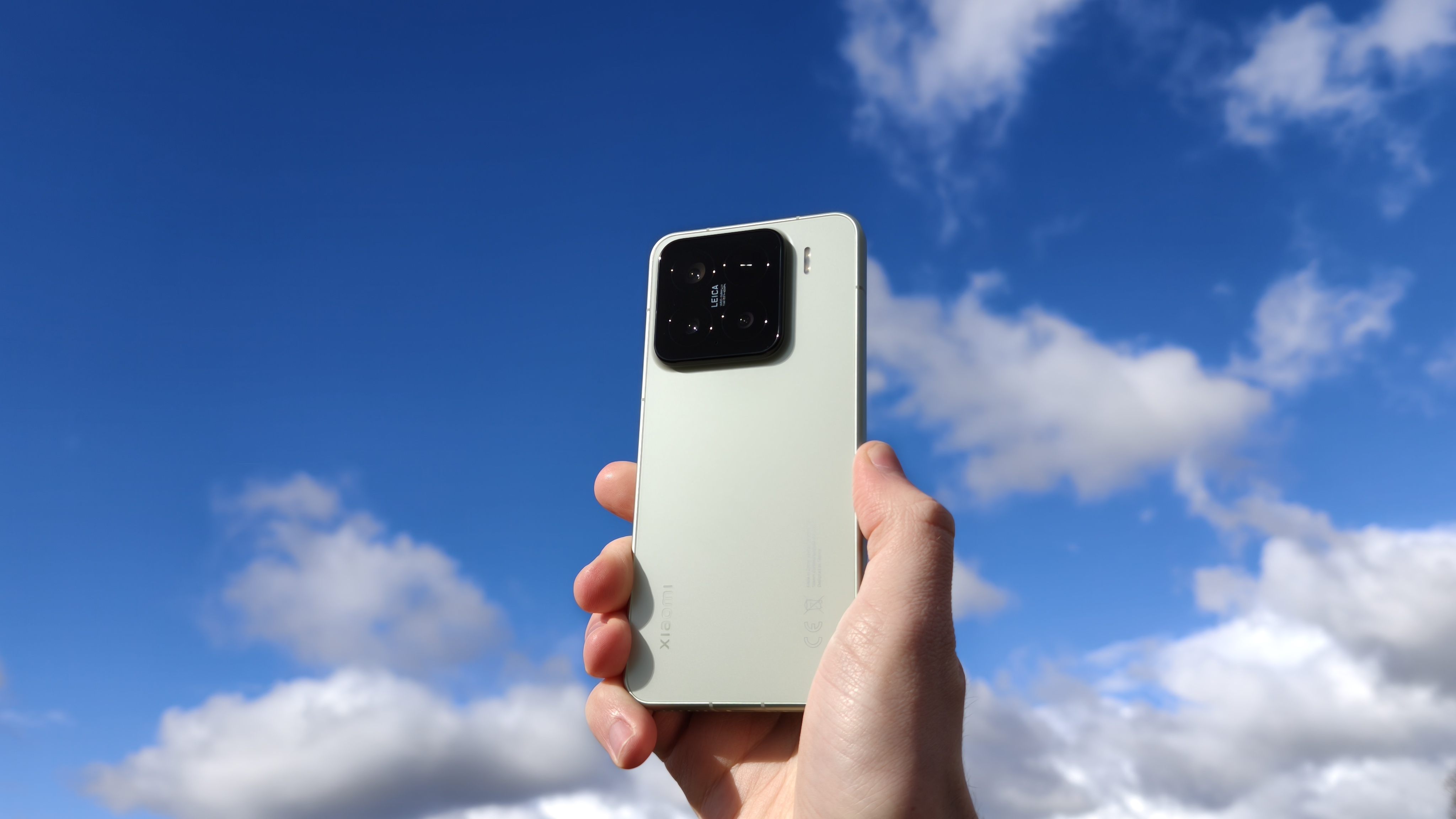
Picture from cdn.mos.cms.futurecdn.net
Rank 1544A new rumor suggests that Xiaomi's next flagship phone could sport a 7,000mAh batteryThat could see Xiaomi almost double the battery capacity of the current-gen iPhone 16The Xiaomi 16 is extremely unlikely to come to the US
Another day, another futuristic specs rumor concerning a Chinese phone maker – this time, we’ve heard about a major step forward in mobile battery capacity from tech giant Xiaomi.The folks over at Phonearena spotted a Weibo post by notable tipster Smart Pikachu, who claims the Xiaomi 16 could come equipped with a massive 7,000mAh battery, which would make the Xiaomi 16 the first phone with a battery of this capacity.Before I dig into that, let me caveat the tip by noting this post was translated from Chinese using the translation option in Google Chrome, so this information isn't crystal clear. But the hashtag Smart Pikachu is using appears to be in reference to the Xiaomi 16, and Phonearea believes the '7' in the translated post (which I've screenshotted and posted below) references the battery size.
(Image credit: Weibo / Smart Pikachu)
We’ve only recently seen phones approach and cross the 6,000mAh mark, and the current-generation Xiaomi 15 sports a 5,240mAh battery – so 7,000mAh seems like a very ambitious target.The Xiaomi 15 launched this year, so we’d expect the Xiaomi 16 to launch at some time in 2026 – as PhoneArena highlights, that’s the same year we expect to see the iPhone 18, Samsung Galaxy S26, and Google Pixel 11 series launching.In fact, a 7,000mAh battery would put the Xiaomi 16 at the cutting edge of what’s even possible for a flagship smartphone – there are phones on the market with larger cells, but these are typically bulky and hefty rugged phones.Our in-depth Xiaomi 15 review found the phone’s battery life impressive, especially for a compact-frame phone – it’s easy to see that a 33% increase up to 7,000mAh could take Xiaomi’s flagship into the highest echelons of mobile battery champs.And though I still think 7,000mAh is a lofty target, it’s true that Android phone makers – particularly Chinese companies – have been pushing ahead at pace when it comes to battery hardware. It’s got me thinking about whether a certain Cupertino-based tech giant will be looking to catch up any time soon.
Capacity opacity
The iPhone 16 (pictured) has a smaller battery capacity than some of its rivals (Image credit: Future)
Apple is famously shy with its mobile battery capacities, instead opting to list the practical battery life of an iPhone in hours of video playback.That’s probably for the best, as the exact figures recovered from teardowns and deconstructions after release show that iPhones rarely have batteries as large as their Android counterparts.For example, the iPhone 16 sports a 3,561mAh battery – less than the 4,000mAh cell found in the Samsung Galaxy S25. The Google Pixel 9 is well ahead, at 4,700mAh – which is closer to the enlarged iPhone 16 Plus’ 4,674mAh cell (which is itself undersized compared to the 5,000-6,000mAh cells found in larger phones from Oppo, Samsung, and Xiaomi).That’s not to say that iPhones don’t offer good battery life – in recent years especially Apple seems to have upped its game with software optimization and power efficiency – but iPhones are rarely considered battery beasts in the way the best Android phones are.I’m wondering if the arrival of an Android phone – the Xiaomi 16 or indeed another model – with a 7,000mAh battery could change that. For reference, that’s almost double the capacity of the iPhone 16, a feat enabled by space-saving and efficiency-boosting silicon-carbon battery technology.Apple has always been content to do its own thing when it comes to hardware, but I’m not sure that it would be happy to have the iPhone quite so obviously lapped by Xiaomi.Optimistically, I’d like to see Apple a little spooked by this Xiaomi rumor – as mentioned, the iPhone 16 already gets a lot from its relatively small battery thanks to Apple’s efficient chipsets and tight software integration.A 4,000mAh battery, or even larger, could see the iPhone living up to its strong processing performance, cameras, and software experience in the battery department.However, with Xiaomi showing no signs of entering the US market any time soon, it’s possible Apple won’t even consider this latest rumor in its planning. Still, I’m hopeful that Apple can give the best iPhones a little more juice in generations to come.Let us know what you think of this new Xiaomi 16 rumor, and whether you’re counting on Apple to respond with its future phones, in the comments below.
You might also like
The Motorola Razr Plus could beat the Samsung Galaxy Z Flip 7 in 3 key ways, according to new benchmarks‘The key is to build a bridge with iOS’: OnePlus has a plan to tackle Apple's smartphone industry dominance‘It will take time for foldables to become mainstream’: OnePlus defends decision to delay the OnePlus Open 2 and bow out of the foldable phones race in 2025
-
Picture from o.aolcdn.com
Rank 1545Mobile gamers can now dive into Prince of Persia: The Lost Crown, which has arrived on iOS and Android. The action platformer is a paid game, but you can get a taste of it for free thanks to a trial. If you buy the full game before May 5, you'll be able to take advantage of a promotional price drop and snap it up for $10.
Ubisoft says that no internet connection is required to play the game. You can use either touchscreen controls or an external controller. The Lost Crown will also run at up to 60 fps on certain phones and tablets.
There are some features that are unique to the mobile versions, including automatic parrying and healing potion use, as well as the option to slow down time. There are other quality-of-life improvements for the iOS and Android ports, Ubisoft says.
Prince of Persia: The Lost Crown debuted to widespread acclaim on PC and consoles in early 2024. However, the critical praise seemingly did not convert into broader success for the game. Sales failed to meet Ubisoft's expectations, according to reports. The company disbanded the team that was behind the project at its Montpelier studio, redirecting most of its developers to "other projects that will benefit from their expertise."
As such, Ubisoft Da Nang handled the mobile ports of the game. That same team brought the game to Mac in December.This article originally appeared on Engadget at https://www.engadget.com/gaming/prince-of-persia-the-lost-crown-hits-ios-and-android-171626438.html?src=rss
-

Picture from cdn.mos.cms.futurecdn.net
Rank 1546Microsoft will purchase 3.685 million tons of carbon removal credits over 12 yearsCarbon will be captured from pulp and paper milling stationsIt will be stored permanently in saline aquifers
Microsoft has confirmed plans to buy 3.685 million metric tons of carbon removal credits from CO280 as part of an agreement that will last 12 years.Expected to start in 2028, the project will be located at Gulf Coast pulp and paper mills and will cover emissions from CO280’s first carbon capture project.Likely to be one of the largest engineered carbon removal purchases to date, it will both help Microsoft to become carbon negative by 2030 and continue its onward journey in the years that follow.
Microsoft signs 12-year deal for carbon removal
Microsoft already uses a mix of renewable energy and carbon removal credits to reach its climate goals, however a lot has changed in recent years with a surge in demand for artificial intelligence, which is built on the power- and resource-hungry foundation of huge data centers.The company has been candid about these challenges, noting that greenhouse gas emissions have been rising. In 2023, Microsoft produced 17.2 million metric tons of Scope 1, 2 and 3 greenhouse gases, up from 16.5 million, 14.4 million and 12.3 million metric tons in the three preceding years.It’s hard to say whether the company is on track to meet its 2030 deadline given the rapidly advancing rate of technology, however its longer-term plans are to remove all historic emissions since its founding in 1975.CO280’s strategy involves retrofitting pulp and paper mills with carbon capture systems based on amine-based capture tech, permanently storing carbon underground in saline aquifers.“The CO280 strategy of adding carbon removal to existing paper mills is an efficient way to quickly scale carbon removal and bolster investment and jobs into timberland communities across the United States,” Microsoft Senior Director of Energy & Carbon Removal Brian Marrs commented.More broadly, Microsoft has other sustainability plans to minimize its footprint globally, including purchasing 1.5 million tons in credits via an afforestation project in India, 1.6 million tons in credits over 30 years in Panama and over seven million tons in credits over 25 years with New York-based Chestnut Carbon.
You might also like
We’ve listed the best green web hosting providersCheck out the best AI tools and best AI writers you can use todayMicrosoft reveals major rise in carbon emissions as AI work hits green push
-

Picture from cdn.mos.cms.futurecdn.net
Rank 1547Notorious Apple leaker Mark Gurman has reported that Apple is planning a major overhaul of iPadOS (the operating system iPads use) to make it work a lot like macOS – and I think this could be a great move, though one that also comes with plenty of danger.Gurman is very well respected when it comes to Apple leaks, so while we probably won’t get any official idea of how iPadOS 19 is shaping up until Apple’s WWDC event in June, this could still be a big hint at the direction Apple is planning to take its tablet operating system.In his weekly Power On newsletter for Bloomberg, Gurman claims that “this year’s upgrade will focus on productivity, multitasking and app window management — with an eye on the device operating more like a Mac,” and that Apple is keen to make its operating systems (macOS, iPadOS, iOS and visionOS primarily) more consistent.As someone who uses the M4-powered iPad Pro, this is music to my ears. Ever since I reviewed it last year, I’ve been confused by the iPad Pro. It was Apple’s first product to come with the M4 chip, a powerful bit of hardware that is now more commonly found in Macs and MacBooks (previous M-class chips were only used in Apple’s Mac computers, rather than iPad tablets).
However, despite offering the kind of performance you’d expect from a MacBook, I found the power of the M4 chip largely went to waste with the iPad Pro due to it still using iPadOS, and was confined to running simplified iPad apps, rather than full desktop applications.Even if this move still means you can’t run macOS apps on the iPad Pro, it could still make a massive difference, especially when it comes to multitasking (running multiple apps at the same time and switching between them). If Apple nails this, it would go a long way to making the iPad Pro a true MacBook alternative.But, making iPadOS more like macOS could bring downsides as well, so I’ve listed five reasons why this could be a great move – and three reasons why it could all go wrong.
5 reasons why making iPadOS more like macOS is a great idea
1. It means the iPad Pro makes more sense
(Image credit: Future)
The biggest win when it comes to making iPadOS more like macOS is with the powerful iPad Pro. Hardware-wise, the iPad Pro is hard to fault, with a stunning screen, thin and light design, and powerful components.However, despite its cutting-edge hardware, it can only run iPad apps. These are generally simple and straightforward apps that have been designed to be used with a touchscreen. These apps also need to be able to be run on less powerful iPads as well.This means advanced features are often left for the desktop version of the app, and any performance improvement owners of the iPad Pro get over people using, say, the iPad mini will be modest. Certainly, when I use the iPad Pro, it feels like a lot of its power and potential is limited by this – so a lot of the expensive hardware is going to waste.Making iPadOS more like macOS could – in an ideal world – lead to the ability to run Mac applications on the iPad Pro. At the very least, it could mean some app designers make their iPad apps come with a Mac-like option.If it means multitasking is easier, then that will be welcome as well. One of the things I struggled with when I tried using the iPad Pro for work instead of my MacBook was having multiple apps open at once and quickly moving between them. Cutting and pasting content between apps was particularly cumbersome, not helped by the web browser I was using (Chrome) being the mobile version that doesn’t support extensions.It made tasks that would take seconds on a MacBook a lot more hassle – a critical problem that meant I swiftly moved back to my MacBook Pro for work.
2. It could be just in time for M5-powered iPad Pros
(Image credit: Shutterstock / Prathankarnpap)
If, as rumored, this major change to iPadOS will be announced at Apple’s WWDC 2025 event, then it could nicely coincide with the rumored reveal of a new iPad Pro powered by the M5 chip.While I’m not 100% convinced about an M5 iPad Pro, seeing as Apple is still releasing M4 devices, the timing would make sense. If Apple does indeed announce an even more powerful iPad Pro, then iPadOS, in its current form, would feel even more limiting.However, if Apple announces both a new M5 iPad Pro and an overhaul of iPadOS to make use of this power, then that could be very exciting indeed. And, with WWDC being an event primarily aimed at developers, it could be a great opportunity for Apple to show off the new-look iPadOS and encourage those developers to start making apps that take full advantage of the new and improved operating system.
3. It makes it easier for Mac owners to get into iPad ecosystem
(Image credit: Future)
Gurman’s mention of Apple wanting to make its operating systems more consistent is very interesting. One of Apple’s great strengths is in its ecosystem. If you have an iPhone, it’s more likely that you’ll get an Apple Watch over a different smartwatch, and it means you might also have an Apple Music subscription and AirPods as well.Making iPadOS more like macOS (and iOS and other Apple operating systems) can benefit both Apple and its customers.If a MacBook owner decides to buy an iPad (Apple’s dream scenario) and the software looks and works in a similar way, then they’ll likely be very happy as it means their new device is familiar and easy to use. And that could mean they buy even more products, which will again be just what Apple wants.
4. It would give iPadOS more of an identity
(Image credit: Apple)
I don’t know about you, but I just think of iPadOS as just iOS (the operating system for iPhones) with larger icons. Maybe that’s unfair, but when the iPad first launched, it was running iOS, and even with the launch of iPadOS in 2019, there are only a handful of features and apps that don’t work on both operating systems.By making iPadOS a combination of iOS and macOS, it would ironically mean that iPadOS would feel like a more unique operating system, and it could finally step out of the shadow cast by iOS while still benefitting from being able to run almost all apps found in the iPhone’s massive app library.
5. It could mean macOS becomes a bit more like iPadOS
(Image credit: Kaspars Grinvalds / Apple)
iPadOS getting macOS features could work both ways – so could we get some iPad-like features on a Mac or MacBook? There are things that iPadOS does better, such as being more user-friendly for beginners and turning an iPad into a second display for a nearby MacBook. All this would be great to see in macOS.Having the choice of a larger interface that works well with touchscreens could even pave the way for one of the devices people most request from Apple: a touchscreen MacBook.
3 reasons why making iPadOS more like macOS is a bad idea
1 . It could overcomplicate things
(Image credit: TechRadar)
One of iPadOS’ best features is its simplicity, and while I feel that simplicity holds back a device like the iPad Pro, for more casual users on their iPad, iPad mini, or iPad Air, that ease-of-use is a huge bonus.If iPadOS were to become more like macOS, that could delight iPad Pro owners, but let’s not lose sight of the fact that the iPad Pro is a niche device that’s too expensive for most people. macOS-like features on an iPad mini, for example, just doesn’t make sense, and Apple would be silly to make a major change that annoys the majority of its customers to please just a few.
2. It could cause a divergence with iOS – and lead to fewer apps
(Image credit: Apple)
The iPad initially launching with iOS was an excellent decision by Apple, as it meant that people who had bought the new product had instant access to thousands of iPhone apps.While it wasn’t perfect at first – some apps didn’t work well with the iPad’s larger screen- it was likely much easier than if the iPad had launched with a completely new operating system that then needed developers to create bespoke applications for it.Think of it this way: if you were an app developer with limited resources (both time and money), would you make an app for a system that already had millions of users or risk making an app for a new product with a tiny user base? The answer is simple – you’d go for the large user base (almost) every time, so if it hadn’t launched with iOS and access to the App Store, then the original iPad could have been a flop. Just look at Microsoft’s attempts with the Windows Phone – it needed developers to create a third version of their apps, alongside iOS and Android versions. Very few developers wanted to do that, which meant Windows Phone devices launched with far fewer apps than Android and iPhone rivals.If iPadOS moves closer to macOS, could we see fewer apps make it to iPad? While iPads are incredibly popular, they are still nowhere near as popular as iPhones, so if devs have to choose between which audience to make an app for, you can bet it’ll be for the iPhone.However, if future iPadOS apps will remain essentially iOS apps but with an optional macOS-like interface, that could still mean the new look is dead on arrival, as developers will prefer to concentrate on the interface that can be used by the widest audience rather than just iPad Pro users.
3. You’ll probably need expensive peripherals to make the most of it
(Image credit: Future)
iPadOS works so well because it’s been designed from the ground up to be used on a touchscreen device. You can buy a new iPad, and all you need to do is jab the screen to get going.However, macOS is designed for keyboard and mouse/trackpad, so if you want to make the most out of a future version of iPadOS that works like macOS, you’re going to need to invest in peripherals – and some of them can be very expensive.The Magic Keyboard for iPad Pro is a brilliant bit of kit that quickly attaches to the iPad and turns it into a laptop-like device with a physical keyboard and touchpad, but it also costs $299 / £299 / AU$499 – a hefty additional expense, and I can almost guarantee that to use any macOS-like features in iPadOS, you’ll really need some sort of peripherals. This will either make things too expensive for a lot of people, or if you choose a cheaper alternative such as a Bluetooth keyboard and mouse, it then takes away from the simplicity of using an iPad.
This could mean fewer people actually use the macOS-like elements, which in turn would mean there’s less incentive for app developers to implement features and designs that only a small proportion of iPad users will use.So, I’m all for more macOS features for my iPad Pro – but I am also very aware that I am in the minority when it comes to iPad owners, and Apple needs to be careful not to lose what made the iPad so successful in the first place just to placate people (like me) who moan about iPads being too much like iPads. Maybe it would just be better if I stuck with my MacBook instead.
You might also like
Apple officially delays the AI-infused Siri and admits, ‘It’s going to take us longer than we thought’These are the best iPadsInstagram could finally get an iPad app soon – but here’s a workaround while you wait
-

Picture from cdn.mos.cms.futurecdn.net
Rank 1548Fujifilm may have asked retailers to suspend orders of three camerasRumors suggest the X100VI, GFX100RF and X-M5 are affectedThe move could be tariff-related – we've asked Fujifilm for a response
The Fujifilm X100VI hasn't been easy to find at the best of times since it launched just over a year ago – but the compact camera could soon become genuinely impossible to buy new in the US, according to new rumors.An anonymous source has apparently told Fuji Rumors that Fujifilm recently "contacted retailers about the suspension of orders" for the X100VI, alongside the new Fujifilm GFX100RF and the black version of the Fujifilm X-M5.If that's true, it means backorders for the Fujifilm X100VI may now be suspended in the US, which means not being able to join the queue of people waiting for one. It'd also mean that pre-orders for the GFX100RF, which was announced less than a month ago, may be suspended in the US before it's even got started.The little Fujifilm X-M5 seemingly hasn't been as badly affected, with the suspension of pre-orders apparently only affecting the black version. But it's possible that stock of the silver version, which is already shipping, could also run dry. We've contacted Fujifilm for a response to these rumors and will update this story if we hear back.The problem is that seemingly that, as Fuji Rumors claims, the X100VI and X-M5 are both made in China, which the US has subjected to a 145% tariff. The GFX100RF is made in Japan, so the reasons for its apparent issues in the US are less obvious.Something that also isn't clear is whether or not the knock-on effect could be the greater availability of these three cameras in other regions.In the UK, for example, the Fujifilm X100VI is still largely on backorder, but it may also not be possible to divert stock to different regions due to variations in accessories and warranties.
What should you get instead?
(Image credit: Future | Tim Coleman)
We don't yet know how accurate these reports of Fujifilm suspending retailer orders for the X100VI in the US are. But either way, it's already very difficult to buy the camera new, with the X100VI listed as 'out of stock' on Fujifilm's store and backordered at retailers. The trade war certainly isn't going to ease that situation.Fortunately, the X100VI isn't your only option. I've previously written about how that camera has helped raise second-hand compact camera prices due to its popularity, but that effect started to wane in early 2025 as the stock issues eased slightly.If you want a powerful compact camera that's genuinely pocketable (and smaller than the X100VI), then the Ricoh GR III and GR IIIx (which I'd go for due to its 40mm lens) both remain good options.We've also recently noted the availability of the Leica D-Lux 8, while other solid second-hand options include the Panasonic Lumix LX100 II and Fujifilm X-Pro 2. But my choice would be either the Fujifilm X-T30 II or X-T50 – in fact, I bought the latter when it dropped to a new record-low price recently.Neither X-T models are as small or as desirable as the rangefinder-style X100VI, but they do come with the considerable benefit of being able to change lenses. That makes them potentially better long-term buys, and certainly superior short-term ones – given they're actually available to buy both new and used.
You might also like
The Fujifilm X100VI effect – how it's sparked a compact camera price boom and what I'd buy insteadStill can't get a Fujifilm X100VI? This premium Leica compact costs less, and it's in stockFujifilm X100VI review: everyday delight
-
Picture from o.aolcdn.com
Rank 1549Meta plans to start using data collected from its users in the European Union to train its AI systems, the company announced today. Starting this week, the tech giant will begin notifying Europeans through email and its family of apps of the fact, with the message set to include an explanation of the kind of data it plans to use as part of the training. Additionally, the notification will link out to a form users can complete to opt out of the process. "We have made this objection form easy to find, read, and use, and we’ll honor all objection forms we have already received, as well as newly submitted ones," says Meta.
The company notes it will only use data it collects from public posts and Meta AI interactions for training purposes. It won't use private messages in its training sets, nor any interactions, public or otherwise, made by users under the age of 18. As for why the company wants to start using EU data now, it claims the information will allow it to fine tune its future models to better serve Europeans.
"We believe we have a responsibility to build AI that’s not just available to Europeans, but is actually built for them. That’s why it’s so important for our generative AI models to be trained on a variety of data so they can understand the incredible and diverse nuances and complexities that make up European communities," Meta states.
"That means everything from dialects and colloquialisms, to hyper-local knowledge and the distinct ways different countries use humor and sarcasm on our products. This is particularly important as AI models become more advanced with multi-modal functionality, which spans text, voice, video, and imagery."
Meta notes other AI companies, including Google and OpenAI, have similarly used data from European users to fine tune their own systems. Today's announcement follows the initial release of Meta's new Llama 4 models. After some early hype, Meta was accused of gaming LMArena, a website where humans compare the outputs of different AI models to rank them. Researchers noticed the company had provided an experimental version of Llama 4 to the site "optimized for conversationality.”This article originally appeared on Engadget at https://www.engadget.com/ai/meta-will-start-using-data-from-eu-users-to-train-its-ai-models-175307338.html?src=rss
-
Picture from o.aolcdn.com
Rank 1550The Meta Quest 3S is on sale for $269 via Amazon. This is a record-low price for the 128GB VR headset, as it typically costs $300. It comes with a download code for Batman: Arkham Shadow and a three-month trial for Meta Quest+. This is the platform’s version of Game Pass or PS Plus, with an extensive catalog of playable titles.
The Quest 3S made our list of the best VR headsets, and for good reason. It offers a similar experience to the standard Quest 3, with just a couple of cut corners. This means that the graphics fidelity is a bit lower with the 3S, as it doesn’t have those sweet pancake lenses.
However, it does have the exact same Qualcomm Snapdragon XR2 Gen 2 chip as the Quest 3 and uses the same Touch Plus controllers. They offer decent motion controls and responsive joysticks and buttons. There’s no headphone jack, but we found the speakers to be adequate in most cases. Plus, you can always insert a USB-C to 3.5mm adapter or just pair wireless headphones.
Just like the original Quest 3, this one can connect to gaming PCs over USB-C or wirelessly. This allows folks to play AAA titles intended for power-hungry computers and not standalone VR headsets. It can also wirelessly stream gameplay to Chromecast devices or to AirPlay devices by mirroring the Quest app from an iPhone.
We called it "impressive VR for $300" in our official review. This is even more true with today’s sale. The only caveat here is this is the 128GB version, which could fill up pretty fast. Batman: Arkham Shadow, for instance, is around 20GB. The 256GB model is on sale for $369 instead of $400.
Follow @EngadgetDeals on X for the latest tech deals and buying advice.This article originally appeared on Engadget at https://www.engadget.com/deals/the-meta-quest-3s-is-on-sale-for-a-record-low-price-174954820.html?src=rss


