News
This constantly updated list features the latest and most important news articles, ranked in order of significance. The top stories highlight major developments, breaking news, and critical updates across various topics, ensuring you stay informed about the most pressing issues. As new articles are added, the list adapts to reflect the latest priorities, keeping the most impactful stories at the forefront. Whether it’s global events, technology breakthroughs, or industry trends, this dynamic list ensures you always have access to the most relevant and timely information.
-

Picture from assets3.cbsnewsstatic.com
Rank 43751 -

Picture from assets1.cbsnewsstatic.com
Rank 43752 -

Picture from assets2.cbsnewsstatic.com
Rank 43753 -

Picture from assets2.cbsnewsstatic.com
Rank 43754 -

Picture from assets1.cbsnewsstatic.com
Rank 43755 -

Picture from assets2.cbsnewsstatic.com
Rank 43756 -

Picture from assets1.cbsnewsstatic.com
Rank 43757 -

Picture from assets1.cbsnewsstatic.com
Rank 43758 -

Picture from assets3.cbsnewsstatic.com
Rank 43759 -

Picture from assets2.cbsnewsstatic.com
Rank 43760 -

Picture from assets1.cbsnewsstatic.com
Rank 43761 -

Picture from assets2.cbsnewsstatic.com
Rank 43762 -

Picture from assets2.cbsnewsstatic.com
Rank 43763 -

Picture from assets1.cbsnewsstatic.com
Rank 43764 -

Picture from assets1.cbsnewsstatic.com
Rank 43765 -

Picture from assets3.cbsnewsstatic.com
Rank 43766 -
Picture from o.aolcdn.com
Rank 43767Proton VPN stands out for two main reasons: it's one of the only virtual private networks (VPNs) to include a free plan with no data limits, and it's one of the few services majority-owned by a nonprofit. It's the best VPN in both of those categories, and it makes a strong case for being the best overall.
Even if you don't care about the work of the Proton Foundation, Proton VPN is a service worth using. It's easy to install and manage, runs like the wind and meets high standards for security and privacy. It has more IP locations in Africa than any of its competitors. It's even looking toward the future by working toward full IPv6 support.
In short, Proton VPN gets our enthusiastic recommendation, especially for torrenting (which it supports on almost every server). It's not perfect — the apps for Apple systems lag behind their Windows and Android counterparts, and the free servers can be noticeably sluggish — but the cons pale in comparison to the pros. We'll get into it all below.
Table of contents
Findings at a glance
Installing, configuring and using Proton VPN
Proton VPN speed test: Impacts of VPN Accelerator
Proton VPN security test: Watertight protocols
How much does Proton VPN cost?
Proton VPN side apps and bundles
Close-reading Proton VPN's privacy policy
Can Proton VPN change your virtual location?
Investigating Proton VPN's server network
Features of Proton VPN
Proton VPN customer support options
Proton VPN background check: The CERN origins of Proton AG
Final verdict
Findings at a glance
The table summarizes what we found while reviewing Proton VPN, both good and bad. Keep it open in a tab while you comparison shop for a VPN.
Category
Notes
Installation and UI
Windows has the best interface, but all apps are smooth Android users get unique preset protocols Browser extensions for Chrome and Firefox can be used for split tunneling on Mac and iOS
Speed
Retains 88 percent of download speeds and 98 percent of upload speeds Global latency average stays under 300 ms, with 52 ms on the fastest server
Security
No DNS leaks or WebRTC leaks on any servers Full IPv6 support is available on Android, Linux and browser extensions; Mac, Windows and iOS still block IPv6 to prevent leaks WireShark test showed active packet encryption
Pricing
Best plan costs $81.36 for two years ($3.39 per month) Free plan includes unlimited data and critical security features, but you can't choose your server
Bundles
Proton Unlimited saves money if you want two or more Proton products
Privacy policy
General Proton policy prevents collection of IP addresses unless a user has violated the terms of service (such as by using a Proton VPN server to abuse another site) No third parties are allowed to handle personally identifiable information Confirmed by Securitum audit in 2024
Virtual location change
Unblocked Netflix repeatedly in all five testing locations, with new content proving a successful location change A free server in Romania got into Netflix but had trouble loading the library
Server network
154 locations in 117 countries More servers in Africa than any other VPN, plus many others across the globe About two-thirds of server locations are virtual
Features
NetShield can block just malware, or all malware, ads and trackers Kill switch on all platformsSplit tunneling on Windows, Android and browser extensions only Secure Core servers route VPN through two locations, one of which is physically secured in Iceland, Sweden or Switzerland Almost all paid servers are P2P-enabled Tor over VPN servers in six countries let you access dark web sites from any browser Profiles saves time when you repeatedly need specific connection settings
Customer support
Most articles in the online help center, while well-written, are invisible unless you use the search function Live chat is only for paying customers, and is unavailable from midnight to 9 AM CET
Background check
Launched in 2017 by the same company that developed ProtonMail Majority owned by the Proton Foundation, whose board includes the company founders and can resist takeover attempts While ProtonMail has worked with Swiss authorities in the past, Proton VPN is not governed by the same laws that compelled this Claims of a vulnerability in WireGuard's memory don't hold water
Installing, configuring and using Proton VPN
This section explains how it feels to run Proton VPN on the various platforms it supports. As a rule, it's not difficult. Proton VPN has more features than ExpressVPN, and a couple of them might trip up new users, but you'd have to really scrounge to find an actual inconvenience to complain about.
Windows
Proton VPN installs easily on Windows — you'll need to grant it permission to make changes, but that's it. Once you've signed in on the app, you'll reach one of the best interfaces we've tried on a VPN. The server network is immediately visible as both a list and map, and the location search bar, connect button and major features are all laid out around the same window.
Proton VPN's app for Windows.
Sam Chapman for Engadget
It's honestly amazing how much you can reach from the launch window without anything feeling cluttered. They even squeezed in keyboard shortcuts for the search field. We also love that settings open in the same window, since dealing with both the main VPN app and a separate preferences panel can get annoying. Our only real gripe is that there should be an easier way to adjust the size of the map.
Mac
The desktop app for Mac isn't quite as deftly laid out as the Windows app. You can reach most of the important features from the main window, including Profiles, NetShield, Secure Core servers and the kill switch. However, there's no longer a way to filter out a list of the P2P or Tor servers, except by digging through the Profile controls. On the plus side, you can adjust the size of the map, so it's now a viable alternative to the server list.
Proton VPN's dark mode interface on macOS.
Sam Chapman for Engadget
The other preferences are hidden in the menu bar — go to Proton VPN > Settings to reach them. They're laid out in four tabs, and shouldn't take more than a minute to go through at setup.
Android
The Android app takes the same design cues as the Windows app, and works as well. Four tabs along the bottom switch between the home screen, the country list, Profiles and all other settings. You can search the list of countries by tapping the magnifying glass at the top-right. In another nice touch, tapping the dots by any virtual location will tell you where the server is physically located.
Proton VPN's Android client.
Sam Chapman for Engadget
Android users get some nifty exclusive Profiles, including "anti-censorship," which automatically connects to the fastest country except for the one you're in. The Settings tab is a single menu with subheadings and no unnecessary complication.
iOS
Proton VPN for iPhone and iPad looks almost the same as it does on Windows and Android, but with some of the same drawbacks found on Mac. The server list is more cluttered, and once again there's no easy way to sift out the P2P and Tor locations.
Proton VPN's app for iPhone and iPad.
Sam Chapman for Engadget
The Settings tab puts all the feature descriptions in the open, which makes it look denser than it is. But these are minor quibbles — this is still a VPN that's very easy to activate and forget about.
Browser extensions
Proton VPN has browser extensions for Chrome and Firefox. These serve as de facto split tunneling, as connecting through the extension protects only browser traffic; everything else goes unprotected. You can split the tunnel further by setting the VPN to not work on certain URLs (unlike the other apps, you don't need to know the IPs of those sites).
Proton VPN speed test: Impacts of VPN Accelerator
We used Ookla's Speedtest app to determine how much Proton VPN drags on a user's latency, measured in milliseconds (ms), and download and upload speeds, measured in megabits per second (Mbps). Together, these three stats show whether a VPN will noticeably slow down your internet, especially during demanding tasks.
We had high hopes for Proton here because of its VPN Accelerator technology, which runs VPN communications across several parallel tracks to process everything faster. It didn't disappoint — for the most part. Although download speeds didn't reach the heights we saw from ExpressVPN, Proton VPN's browsing performance still looks excellent nearly across the board.
Proton VPN barely makes a dent in your download speeds.
Sam Chapman for Engadget
To choose our locations for the test, we checked Proton VPN's list of smart routing servers, which use servers in one country to simulate IP addresses in another. Almost all the smart routing servers are based in five cities: Miami, London, Marseille, Bucharest and Singapore. We ran these tests on a Mac using the automatic protocol setting.
Server Location
Latency (ms)
Increase factor
Download speed (Mbps)
Percentage drop
Upload speed (Mbps)
Percentage drop
Portland, OR, USA (unprotected)
16
--
58.93
--
5.82
--
San Jose, CA, USA (best server)
52
3.3x
55.82
5
5.58
4
Miami, FL, USA
160
10x
54.33
8
5.49
6
London, UK
332
20.8x
52.55
11
5.72
2
Marseille, France
309
19.3x
45.42
23
5.59
4
Bucharest, Romania
408
25.5x
52.51
11
5.57
4
Singapore, Singapore
394
24.6x
52.26
11
5.50
5
Average
276
17.3x
52.15
12
5.58
4
Proton VPN looks very good in that table. Its average download speed was 88 percent of our unprotected speeds. To put that in perspective, if you started with 30 Mbps down (about half what we get) and connected to any Proton VPN server, you'd almost certainly still have a fast enough connection to stream in 4K.
Note the "almost" — Proton VPN did drop noticeably on its French server in Marseille. It's not uncommon for one of a VPN's data centers to have trouble while the others work fine, and you can usually fix the problem by just disconnecting and reconnecting. Just note that while drops to about 75 percent of your download speed are rare, they're not inconceivable.
Proton VPN security test: Watertight protocols
When we talk about VPN security, we're really talking about reliability. Can this VPN establish an encrypted tunnel and transmit all your information through it, every time, without leaks or failures? With Proton VPN, we're happy to say the answer is yes; we probed its security and found no cracks to speak of. Read the section below for specifics.
Proton VPN protocols: WireGuard, OpenVPN, IKEv2 and Stealth
Proton VPN uses four VPN protocols to communicate between your devices, its servers and the internet. Three of them (WireGuard, OpenVPN and IKEv2) are common choices with no serious flaws as long as they're implemented thoughtfully. The fourth, Stealth, is an obfuscation protocol you should only use if the other three are blocked.
The protocol selection screen on Proton VPN's Android app.
Sam Chapman for Engadget
OpenVPN is the most secure option. Without getting too technical, OpenVPN encrypts its backend functions as well as the data itself, which leaves it with no obvious vulnerabilities. It can also communicate using the same ports as common HTTPS traffic, so it's hard to block.
WireGuard is more efficient than OpenVPN, both in its source code and the cryptography it uses. It normally requires an exchange of fixed IP addresses, but the Proton VPN implementation overwrites those IPs with randomized addresses, cutting the security risk.
IKEv2 is a safe choice that's occasionally faster than either OpenVPN or WireGuard. You probably won't use it unless it happens to come up while you've set the protocol to Smart. As such, it's on the way to being phased out of Proton VPN.
Stealth is unique to Proton VPN, though its function is not. It's got the same architecture as WireGuard, but adds another TLS tunnel to evade network blocks that catch VPN traffic. That extra encryption slows it down, so we don't recommend using it unless the other three protocols don't work.
The first option on the app, called "Smart," is not a protocol — it means your VPN client selects the protocol that will give you the best speeds on your current server. Since all four protocols are safe, there's no downside to using the Smart setting most of the time.
Leak test
We used AirVPN's IP leak tool to check all four of Proton VPN's protocols for DNS and WebRTC leaks. Proton VPN uses its own DNS servers to reduce the risk of sending unencrypted requests, but since leaks are still possible, we tested using a simple method: checking our visible IP address before and after connecting to the VPN.
Despite testing several locations over three days, we never saw our real IP address show up on the tool. This held true even outside the Secure Core server list, where data centers might have been managed by third parties. It's not perfect proof, but it's a very good sign that Proton VPN enforces a consistent security regime on all its servers.
Proton VPN successfully masked our real IP address, even on a virtual location in Angola.
Sam Chapman for Engadget
We also used BrowserLeaks to check for WebRTC leaks. These are mainly an issue on the browser side, but a VPN is doubly important if your browser happens to be leaking. We enabled WebRTC on our browser and tested the same set of Proton VPN servers without springing any WebRTC leaks.
Proton VPN and IPv6
Proton is working on making its entire VPN compatible with IPv6 addresses. If a VPN that's only configured for IPv4 has to resolve an IPv6 address, it can cause a leak — that's why most VPNs, even the best ones, block IPv6 altogether. That said, the whole internet will run on IPv6 one day, so it's nice to see Proton VPN leading the pack.
So far, IPv6 is automatically enabled on Proton VPN's Linux apps and browser extensions, and can be optionally activated on its Android app. The Proton VPN apps for all other platforms still block IPv6 traffic, but this should hopefully change soon.
Encryption test
Even if a VPN's protocol choices are solid, it's possible for individual implementations of those protocols to fail. We used WireShark, a packet inspector app, to test whether Proton VPN's encryption worked no matter what settings were in place. We're happy to say we never saw plaintext once.
How much does Proton VPN cost?
To get full access to Proton VPN, you'll need a Plus subscription, which costs $9.99 per month. You can knock off half that price by subscribing for a full year and paying a lump sum of $59.88, working out to $4.99 per month. A Plus account with Proton VPN also gives you free access to every other Proton app.
You can also pay $107.76 in advance to subscribe for two years, an average of $4.49 per month — perhaps more convenient, but it doesn't save you much. The one-year plan is the best value, though it's also nice that you don't have to pay through the nose for only one month. There's a 30-day, money-back guarantee on all plans.
Proton VPN is currently offering Engadget readers an exclusive deal that offers a 12-month plan for $47.88 ($3.99 per month) and a 24-month plan for $81.36 ($3.39 per month). Learn more about it here. One final option is the Proton Unlimited subscription, discussed in the "side apps and bundles" section below."
The Proton VPN free plan
Proton VPN is one of the best free VPNs on the market right now. No other VPN backed by as much experience and good judgment has a free plan with no data limits. Instead of capping how much data you can use per month, Proton VPN restricts which servers free users can access, limiting them to five countries: the United States, Japan, the Netherlands, Poland and Romania.
The frustrating part is that you can't choose which of these servers you use; Proton VPN just auto-connects to whichever one is the least burdened. A Proton representative told us that this change goes along with improvements to the selection algorithm, better load balancing and the addition of the Poland and Romania locations. It is also possible to try for a better connection by clicking "change server."
The fact remains, though, that a free Proton VPN plan is useless for unblocking content in specific locations — but this may be by design. The free plan seems more aimed toward privacy and anonymity than streaming, and the placement of the free locations near Russia and China reflects that. Free Proton VPN plans don't sacrifice any essential security features.
Proton VPN side apps and bundles
Proton VPN's main bundle is Proton Unlimited, which gets you all six Proton products in one package: VPN, Mail, Drive, Calendar, Wallet and Pass. This costs $12.99 for a month, $119.88 for a year ($9.99 per month) and $191.76 for two years ($7.99 per month). We won't be going in-depth on any of them in this review, but here's a quick rundown of each.
Proton Mail: An end-to-end encrypted email service. Proton can still see a Mail user's real IP address, but can't read any of their messages.
Proton Drive: Encrypted cloud storage. As with Mail, Proton can identify users, but can't read any of the content they store.
Proton Calendar: An encrypted scheduling app with events and reminders.
Proton Wallet: A self-custody wallet for storing Bitcoin unconnected to any exchange.
Proton Pass: A password manager that generates, stores and autofills passwords for online accounts.
Even if you only need two of the six, Proton Unlimited saves you money. Separate monthly subscriptions to Proton VPN and Proton Mail would cost a total of $14.98, so you've already knocked off $2 per month. That increases if you're able to commit to a year in advance.
Close-reading Proton VPN's privacy policy
Proton's privacy policy comes in two parts: the general Proton policy and the shorter policy specific to Proton VPN. We'll cover them in that order.
General Proton privacy policy
Proton tracks user activity on its product websites using its own marketing tools; the data set collected does not include IP addresses. It retains an email address connected to each user's account, but it's not allowed to connect IP addresses (and thus identities and locations) to those emails unless the user breaches the terms of service.
You may rightly ask how Proton would know a user is abusing one of their services if they don't keep activity logs. The answer is that logs aren't needed; most forms of abuse can be detected in other ways and observed in real time. For example, if someone used a Proton VPN server to launch a DDoS attack, the team could inspect that server and find the hacker while the attack was still ongoing.
The policy goes on to list the five third-party data processors Proton uses (Zendesk, PayPal, Chargebee, Atlassian and Stripe), none of whom are allowed to store customer activity data. Proton cautions that it will share what data it does have in response to unblockable requests from the Swiss government, but not "until all legal or other remedies have been exhausted." This is standard for a VPN that wants to remain in business, and the transparency report shows the company does indeed fight court orders when it can.
Proton VPN privacy policy
Proton's VPN-specific privacy policy is quite short. It states that Proton cannot log user activities or identifiable characteristics of devices connected to the VPN, cannot throttle internet connections and must extend full privacy and security to free users.
In one sense, a privacy policy requires you to take the VPN provider at their word, but it's dangerous for a company to make promises they don't intend to keep. The policy is legally binding, and breaking it is grounds for a lawsuit. Proton VPN's succinct no-logs policy is therefore a great sign. It's also been confirmed several times by a third-party audit, most recently in July 2024.
Can Proton VPN change your virtual location?
Testing a VPN's ability to mask a user's location isn't complex — all you need is a streaming subscription. We connected to five test locations and tried to unblock Netflix with each one. If we managed to access the site, and saw different shows than those on the American library, we concluded that the location had masked us successfully.
Server location
Unblocked Netflix?
Library changed?
Canada
Y
Y
Romania
Y
Y
Ghana
Y
Y
Japan
Y
Y
New Zealand
Y
Y
Proton VPN passed the test every time in all five locations. The only hiccup came in Romania, which we chose because it's one of the free locations. The app connected us to a free server, which was too slow to load Netflix; when we chose a paid server, the problem disappeared.
Proton VPN changed our virtual location so we saw the Japanese Netflix library.
Sam Chapman for Engadget
Investigating Proton VPN's server network
Proton VPN's free plan includes servers in five locations: the Netherlands, Poland, Romania, the United States and Japan. When you connect as a free user, you'll be automatically connected to whichever location is fastest.
A paid plan opens up the full network of 154 servers in 117 countries and territories. The menu includes a huge selection of African locations, more than any VPN we've tested in some time. The Middle East, along with central and southern Asia, are also well represented, and U.S. users will find 20 different locations to choose from.
Proton VPN lets you know which of its locations are virtual.
Sam Chapman for Engadget
Keep in mind that about two-thirds of these server locations are virtual, meaning they're not physically located where they claim to be. This includes all the African servers except South Africa and Nigeria; all the South American servers except Brazil, Colombia and Argentina; and all the Middle Eastern servers except Turkey, Israel and the UAE. A majority of the locations in Asia are also virtual, including South Korea, India, Thailand, Indonesia and the Philippines.
To be clear, virtual locations can hide your IP address just as well as physical ones. It's only a problem if you're expecting the kind of performance, particularly in terms of latency, that you get from a nearby server. Luckily, Proton VPN gives you fast enough download and upload speeds that distance shouldn't be a problem.
None
Countries
Virtual Locations
Cities
North America
6
3
25
South America
7
4
7
Europe
42
6
51
Africa
25
23
26
Middle East
13
10
14
Asia
22
16
25
Oceania
2
0
6
TOTAL
117
62
154
Features of Proton VPN
Proton VPN has a number of extra features that go beyond standard VPN functionality. We've already mentioned the Stealth protocol and IPv6 support. In this section, we'll cover an additional five features that might be of interest.
NetShield ad blocker
Proton VPN's built-in ad blocker is known as NetShield. It's available on the main UI page, and has two settings: one that blocks only malware sites, and one that blocks sites connected with malware, ads and trackers. The stronger feature is on by default.
The Netshield page on Proton VPN's iOS app.
Sam Chapman for Engadget
NetShield works by checking any DNS requests against a database of web servers known to host malware, inject ads or attach cross-site trackers to your browsing session. The DNS-blocking approach means it's not capable of blocking ads served from the same domain that hosts them — so no blocking YouTube video ads. On the positive side, it means NetShield works across your entire device, not just on your browser.
NetShield also displays a running total of how many of each form of interference it's blocked. It catches most banner ads, but since you can't customize the blocklist in any way, it's best when combined with another browser-level ad blocker.
Secure Core servers
Here's an interesting one. Secure Core is a form of a common feature known as double VPN or multi-hop VPN, in which a connection runs through two VPN servers before being decrypted. If one server fails or gets compromised, the other server keeps your connection private.
Secure Core servers add a second node to your VPN connection.
Sam Chapman for Engadget
Proton VPN takes this a step further. When you activate Secure Core, your connection will still end at your chosen server location — but before that, it will travel through a designated server in Iceland, Sweden or Switzerland. A few touches make Secure Core servers more reliable than the average VPN node:
All three countries are safe jurisdictions, with consumer-friendly privacy laws and courts sympathetic to privacy claims.
Secure Core data centers are locked down physically; for example, the Iceland location is a refitted military base, and the Sweden location is literally underground.
Proton owns and operates all Secure Core locations itself, with no rentals or third-party managers.
Almost no other VPNs pay as much attention to physical security as Proton VPN does with this feature. The second hop makes Secure Core connections slower on average, but it's worth it if you have something especially sensitive to do online.
Kill switch
Proton VPN includes a kill switch, a standard feature. When active, a kill switch cuts off your internet whenever your connection to the VPN drops. This means you're never in danger of leaking your real identity or location, even for a second. It also protects you against the TunnelVision exploit, which requires the hacker to make a fake VPN server.
Split tunneling
Split tunneling is included on the Windows and Android apps, but users on other devices can access it through the browser extension. With split tunneling, some apps or websites get online through the VPN, while others stay unprotected.
Split tunneling with Proton VPN on Android.
Sam Chapman for Engadget
Proton VPN allows split tunneling by both app and IP address. This grants you a precise level of control over your split, as long as you know the IP of each website you're placing on the list (you can find that out using DNS checker).
Torrenting servers and port forwarding
Proton VPN is one of the best VPNs for torrenting. It restricts torrenting to P2P servers, but nearly every server on the list is a P2P server — only Secure Core servers and some free servers don't permit torrenting. Combine that with the fact that it maintains 96 percent of your upload speeds on average, and you should have few problems using a torrenting client.
Proton VPN's list of P2P servers.
Sam Chapman for Engadget
It also has some support for port forwarding, which can improve torrenting speed. Windows and Linux users can enable it with a simple toggle, which provides an active port number for configuring private servers. Mac users can set up port forwarding through manual OpenVPN or WireGuard configurations.
Tor over VPN
A handful of Proton VPN servers route you directly to the Tor network after encrypting your connection. While connected to one of these Tor over VPN servers, which are marked with TOR in their names and an onion symbol, you'll be able to open .onion links on a normal browser.
This is more than just convenient — Tor over VPN is the safest way to access the dark web. With the VPN as an intermediary, you're never connecting to Tor with your own IP address, so malicious node operators can't see your real identity. For maximum privacy, use Tor Browser to create your Proton VPN account, so you're never exposed at any point in the process.
Proton VPN has Tor servers in six countries (the U.S., France, Switzerland, Sweden, Germany and Hong Kong). Each just has one Tor server, except the United States, which gets two. Tor over VPN is supported on all platforms, but it won't work on Mac or iOS unless you have the kill switch enabled.
Profiles
A "profile" on Proton VPN is a group of pre-established settings you can use to quickly configure the VPN for a particular task. Two profiles are available from the start: Fastest, which connects to the fastest server, and Random, which always connects to a different server. You can create more profiles by toggling four settings:
Feature: The type of server used. Choose from Standard, Secure Core, P2P or Tor over VPN.
Country: The country to which the profile connects.
Server: A server within that country. You can also select "fastest" or "random."
Protocol: Which VPN protocol the profile will use. "Smart" can be selected.
As an example, say you want to watch a TV series that's only available on Netflix in Canada. You could create a profile called "Netflix Canada" that connects to the fastest Canadian server with just one click. We'd call profiles situationally useful, but they can save a lot of time if you regularly perform the same action on your VPN.
Proton VPN customer support options
We went to Proton VPN's FAQ pages with two questions that came up while researching other sections: which of Proton VPN's servers are managed by third parties, and why do certain server locations (like Marseilles) run slow despite the app showing a light load?
You can access the help center through any of Proton VPN's apps, or by going directly to the website. Articles appear to be organized into six categories. Oddly, clicking any category button only shows you a handful of the articles in that section — for example, the Troubleshooting category looks like it only has five articles. If you type "troubleshooting" into the search bar, though, you'll see dozens pop up. There are even some sections, like Billing, that don't appear on the main page at all.
It has the feel of a website update that wasn't adequately brought in line with the bulk of the support content. Until Proton fixes it, just use the search bar for everything. The articles themselves are well-written, give or take some stilted English.
Getting quick help
We couldn't find written answers to our questions about ownership and server load, so we turned to live chat. Free users should keep in mind that live chat support is only available on paid accounts, but there's a fairly active subreddit at r/protonvpn where Proton staff frequently post.
Live chat is not intuitively located on protonvpn.com. We finally found it by scrolling all the way to the bottom of the main page, only to be told nobody was online to help at the moment — live chat is only accessible from 9 AM to midnight Central European Time (CET). We submitted our question about the Marseille servers as an email ticket instead.
Sam Chapman for Engadget
This part was easy, at least, as the form helpfully populated our system information. We also got a prompt response within 24 hours. We ended the interaction there, as we weren't able to reproduce the sluggish behavior on the French server locations, but it's nice to know the team will answer quickly.
Proton VPN background check: The CERN origins of Proton AG
Proton VPN launched in 2017, but its team's experience goes back much farther. The founders of its parent company, Proton AG, met while working at CERN in Switzerland, and the company remains under Swiss jurisdiction.
Their first product, Proton Mail, went live in 2014 after a successful crowdfunding campaign, and claims to have 100 million users today. Proton VPN was Proton AG's second project. Like Proton Mail, it consists of a free plan supplemented by paid upgrades.
Since then, Proton has introduced several more products: Proton Calendar in 2020, Proton Drive cloud storage in 2022 and the Proton Pass password manager in 2023, each designed around using end-to-end encryption to make user data inaccessible.
The Proton Foundation
Proton announced in 2024 that the majority of its shares had been acquired by the Proton Foundation, a nonprofit whose only purpose is to control Proton stock. Among other benefits, this prevents it from being purchased by anyone who disagrees with its mission. To sell to an objectionable parent company, the entire board of trustees would have to agree, which feels unlikely based on Proton's track record.
Throughout Proton's history, we only found two incidents serious enough to comment on, and only one of them concerned Proton VPN. We'll cover them both below.
ProtonMail law enforcement collaboration allegations
On the page that hosts its annual transparency report, Proton states openly that it "may be legally compelled to disclose certain user information to Swiss authorities" (see the Privacy Policy section of this article for more on precisely what information that describes). In 2021, the company admitted it had given Swiss police (acting on a French warrant) a ProtonMail user's IP address and device logs. The police arrested the user, a French environmental activist.
While that's unnerving for privacy-minded users, there are some important contextual issues to consider. Most importantly, ProtonMail is not governed by the same policy as Proton VPN. At the time the case unfolded, Swiss law obliged all email companies to comply with court orders from Swiss authorities to hand over data. VPNs aren't subject to those retention requirements.
Today, Swiss email companies have been reclassified so they're also exempt from data retention requirements, thanks in part to a policy change Proton fought for. A representative from Proton confirmed that "under Swiss law, we are not obligated to save any user connection logs." It's also reassuring that, despite complying with the subpoena, Proton wasn't able to turn over the contents of any emails.
Alleged WireGuard memory vulnerability
In January 2025, researchers at Venak Security alleged that Proton VPN lacks memory protection for keys generated under the WireGuard protocol, which might let hackers scrape the keys and decrypt intercepted communications. Proton responded to Venak in a blog post, which a Proton representative confirmed remains their official response to the allegations.
In short: the Venak article only demonstrates that it's possible to view public keys, not private ones. This isn't much of a bombshell, given that "public" is right there in the name. But asymmetric encryption — the kind used by VPN protocols like WireGuard — requires both keys to decrypt any messages. Even if a hacker were able to get ahold of a private key, they likely wouldn't be able to use it for anything. WireGuard incorporates perfect forward secrecy by default, changing session keys often enough that any given key is obsolete by the time it's stolen.
Final verdict
In short, we're prepared to recommend Proton VPN to almost anybody. Whether you're mainly concerned with security, streaming or something else, chances are good that you'll be satisfied. The only serious downsides are that the long-term plans are overpriced and that it's hard to get live tech support if you live outside of Europe.
It's also our unqualified pick for the best free VPN, but with the caveat that it's a bad choice for anyone who needs to choose specific server locations. If all you care about is staying hidden from your ISP and advertisers, Proton should be your first choice.This article originally appeared on Engadget at https://www.engadget.com/cybersecurity/vpn/proton-vpn-review-2025-a-nonprofit-service-with-premium-performance-153046073.html?src=rss
-

Picture from static.independent.co.uk
Rank 43768 -

Picture from static.independent.co.uk
Rank 43769 -

Picture from assets1.cbsnewsstatic.com
Rank 43770 -

Picture from assets3.cbsnewsstatic.com
Rank 43771 -

Picture from assets1.cbsnewsstatic.com
Rank 43772 -

Picture from assets3.cbsnewsstatic.com
Rank 43773 -

Picture from assets1.cbsnewsstatic.com
Rank 43774At the Akal Travel Center truck stop in Laramie, Wyoming, the Indian food that Mintu Pandher and his staff are cooking up in a small kitchen attracts truckers and locals from miles around, with food they can't find anywhere else along Interstate 80. Turns out there's money in all those smells of turmeric, coriander, and other spices rarely used in truck stop cuisine: his café is a hit, especially given the changing face of trucking, since nearly 19% of long-haul truck drivers in America are now immigrants. Jim Axelrod reports.
-

Picture from assets3.cbsnewsstatic.com
Rank 43775 -

Picture from assets1.cbsnewsstatic.com
Rank 43776A key element in brain health is nutrition, say researchers who believe the number one factor that you have control over in terms of your mental health is at the end of your fork. Susan Spencer talks with Dr. Drew Ramsey, a psychiatrist who in his book "Eat Complete" prescribes a healthier diet in order to combat depression; Samantha Elkrief, a trained chef and wellness coach; and neuroscientist Lisa Mosconi (author of "Brain Food"), for whom brain scans reveal the differences in brain structure between those who eat a Mediterranean diet and those who consume standard Western fare.
-

Picture from assets2.cbsnewsstatic.com
Rank 43777 -

Picture from assets2.cbsnewsstatic.com
Rank 43778Typically green and scaly on the outside, white and smooth like squash on the inside, breadfruit is a starchy member of the fig family that's similar in taste to a potato, and smells like fresh baked bread when cooked. But you're not likely to come across it in most American grocery stores. Conor Knighton explores the history of breadfruit, a "canoe plant" first brought to Hawaii centuries ago by Polynesian explorers, and which today is used in everything from tacos and stews, to pizza, bagels, and even vodka.
-

Picture from assets2.cbsnewsstatic.com
Rank 43779 -
Picture from cdn.mos.cms.futurecdn.net
Rank 43780Get ChatGPT Plus for 3 months at a discounted 50% off rateThis easy trick is accessible via ChatGPT's official websiteChatGPT Plus gives you access to OpenAI's best models and all the latest features such as SoraChatGPT is free to use, but if you want access to OpenAI's latest AI models and tools like the video generation platform Sora, you'll need a ChatGPT Plus account.Normally, ChatGPT Plus costs $20 (£20 / AU$30 a month), but one Reddit user (u/PrettyRevolution1842) has shared an excellent and easy trick to get 3 months of the service for half price.With this quick trick, you'll get ChatGPT Plus for $10 (£10 / AU$15 a month) for 3 months, although in order to be able to get this discounted rate, you'll need to be subscribed already to ChatGPT Plus.That said, even if you subscribe to ChatGPT Plus at the full price rate for 1 month before following the steps below, you'd still be getting four months of Plus for $50 (£50 / AU$75) instead of $80 (£80 / AU$120).How to get 3 months of ChatGPT Plus for half priceOn desktop, go to ChatGPT SettingsClick Manage My SubscriptionsSelect Cancel PlanAccept the 50% off for the next 3 months offerIt's as easy as that, you'll now have a discounted rate of ChatGPT Plus for the next three months. Just remember to cancel auto-renewal so you aren't caught with some hefty fees after the promotional period ends.ChatGPT Plus offers extended limits on messaging, access to OpenAI's best research and reasoning models like OpenAI o3, OpenAI o4-mini, and OpenAI o4-mini-high, access to new features before free users, and more.If you're still unsure, read our guide: Is ChatGPT Plus actually worth it?You might also likeThis is what really happened with Siri and Apple Intelligence, according to AppleWhy don’t AI companies talk about energy usage?Sam Altman thinks superintelligence is within our grasp and makes 3 bold predictions for the future of AI and robotics
-
Picture from cdn.mos.cms.futurecdn.net
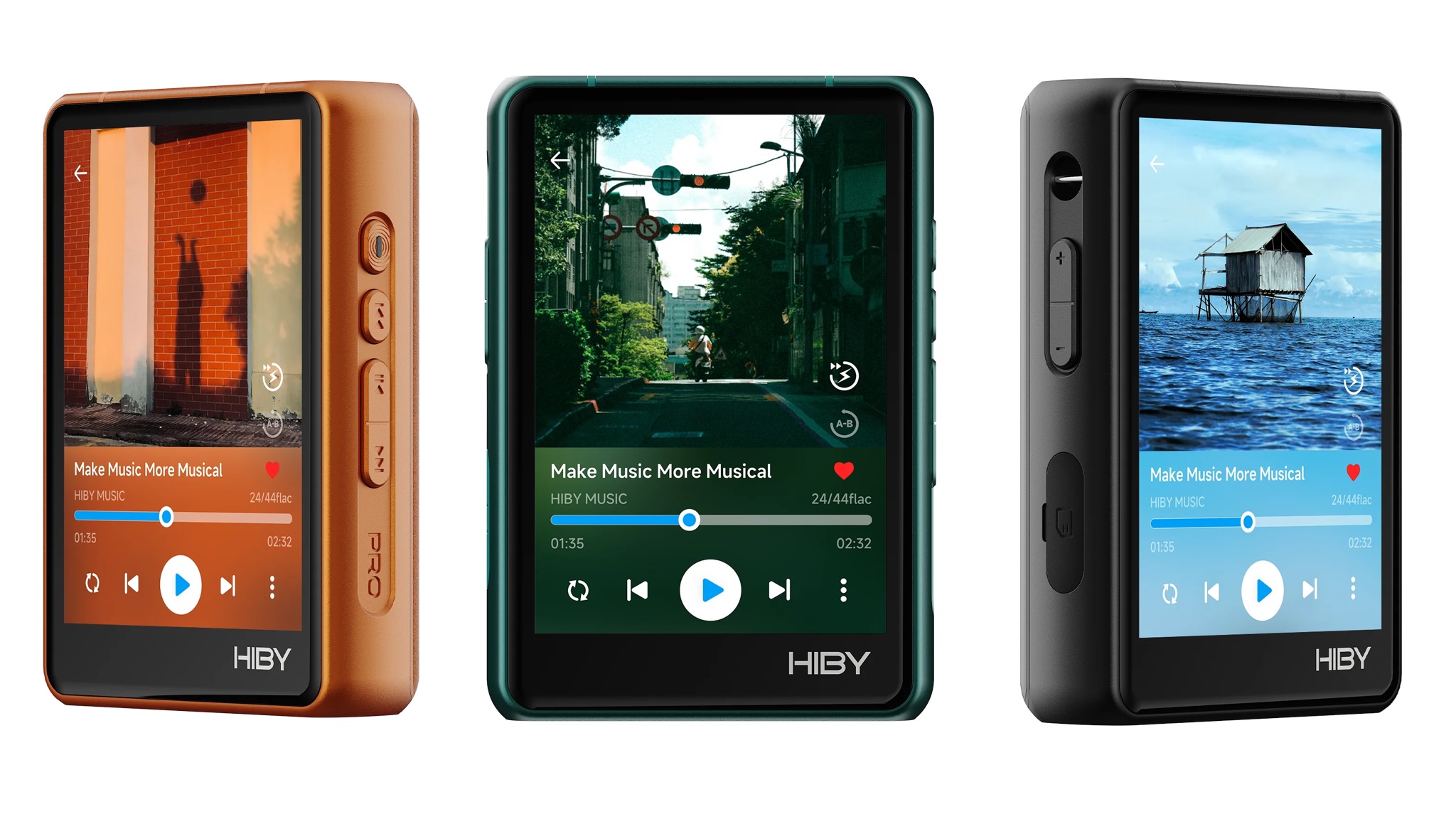
Rank 43781The HiBy R3Pro II is certified for wired and wireless Hi-Res AudioThe music player has double DACs and quad amplificationAmazingly affordable at just $199If like me you miss the days of cute portable music players like the iPod mini, HiBy has just the thing: a super-cute and very small double-DAC audio player called the R3Pro II.The R3Pro II comes in a choice of orange, silver, black or green; the orange one really reminds me of my much-missed Sony Ericsson Walkman phone with its orange highlights, while the others conjure up memories of multiple iPods.Don't let the cute design fool you, though: the specs here are serious. According to HiBy you're looking at a "quality pocket cannon, performance monster". And the specs back that up.Inside there are dual Cirrus Logic CS43198 DACs and quad OPA1622 headphone amps capable of driving high-impedance headphones through either the 4.4mm balanced or 3.5mm stereo jacks.The green and orange models come with an Ultrasuede fabric back; other colors have a matte finish (Image credit: HiBy)HiBy R3ProII: key features and pricingThose amps and DACs are powered by a 4,000mAh battery with PD2.0 fast charging, and put out up to 480mW of power.You're not limited to listening on the best wired headphones, though. The player is certified for both wired and wireless Hi-Res Audio and supports DSD256, PCM at up to 32-bit/384kHz and MQA 8X. Bluetooth is 5.1 and there's Wi-Fi too; you can have up to 2TB of storage via microSD.You've got aptX and LDAC to beam high-quality sound to the best wireless headphones, and the R3Pro II also works with AirPlay and DLNA for Wi-Fi streaming. It has USB-C audio, USB to S/PDIF, and line outputs for connections to other audio equipment.There are slightly different materials depending on your color choice: the green and orange ones have an Ultrasuede back, while silver and black are matte.The specs suggest a fairly expensive device, but no: the R3Pro II is just $199. I'd expect it to cost around £199 or just under if it comes to the UK, and the US price converts to around AU$300 in Australia – though we don't have confirmation of an international release yet. Hopefully it'll come, because we could be looking at a new budget winner for our list of the best hi-res audio players.You might also likeBest MP3 player 2025: top portable hi-res music players for everyoneThis portable Hi-Res Audio music player has a tube amp and AndroidThe FiiO JM21 is amazing and affordable
-

Picture from techcrunch.com
Rank 43782 -

Picture from techcrunch.com
Rank 43783 -

Picture from ichef.bbci.co.uk
Rank 43784 -

Picture from static.independent.co.uk
Rank 43785 -

Picture from image.cnbcfm.com
Rank 43786 -

Picture from cdn.mos.cms.futurecdn.net
Rank 43787Security researchers Aim Labs discovered an LLM Scope Violation flaw in Microsoft 365 CopilotThe critical-severity bug allows threat actors to exfiltrate sensitive corporate data by sending an emailMicrosoft says it has fixed the issue server-side, but users should be on guardMicrosoft has fixed a dangerous zero-click attack in its Generative Artificial Intelligence (GenAI) model which could have allowed threat actors to silently exfiltrate sensitive corporate data without (almost) any user interaction.Cybersecurity researchers Aim Labs, who found the flaw, known as an “LLM Scope Violation”, and dubbed it EchoLeak.Here is how it works: A threat actor sends a seemingly innocuous email message to the target, which contains a hidden prompt that instructs Copilot to exfiltrate sensitive data to an attacker-controlled server. Since Copilot is integrated into Microsoft 365, that data can include anything from intellectual property files, to business contracts and legal documents, or from internal communications, to financial data.Critical vulnerabilityThe researchers note the prompt needs to be phrased like speaking to a human, so that it bypasses Microsoft’s XPIA (cross-prompt injection attack) defenses.Later, when the victim interacts with Copilot and asks a business-related question, the LLM will pull all of the relevant data (including the attackers’ email message) and will end up executing it. The files are stored in a crafted link or an image.The bug was assigned the CVE-2025-32711 identifier, and was given a severity score of 9.3/10 (critical). It was fixed server-side in May, meaning users don’t need to do anything. Microsoft also said that there is no evidence that the flaw had been exploited in the past, and none of its customers were impacted.Microsoft 365 is one of the most popular cloud-based communications and online collaboration tools, combining office apps (Word, Excel, and others), cloud storage (OneDrive and SharePoint), email and calendar (Outlook, Exchange), and communications tools (Teams).Recently, Microsoft integrated its Generative AI model, Copilot, into Microsoft 365, allowing users to draft and summarize emails, generate and edit documents, create data visualizations and analyze trends, and more.Via BleepingComputerYou might also likeClaude AI and other systems could be vulnerable to worrying command prompt injection attacksTake a look at our guide to the best authenticator appWe've rounded up the best password managers
-
Picture from cdn.mos.cms.futurecdn.net
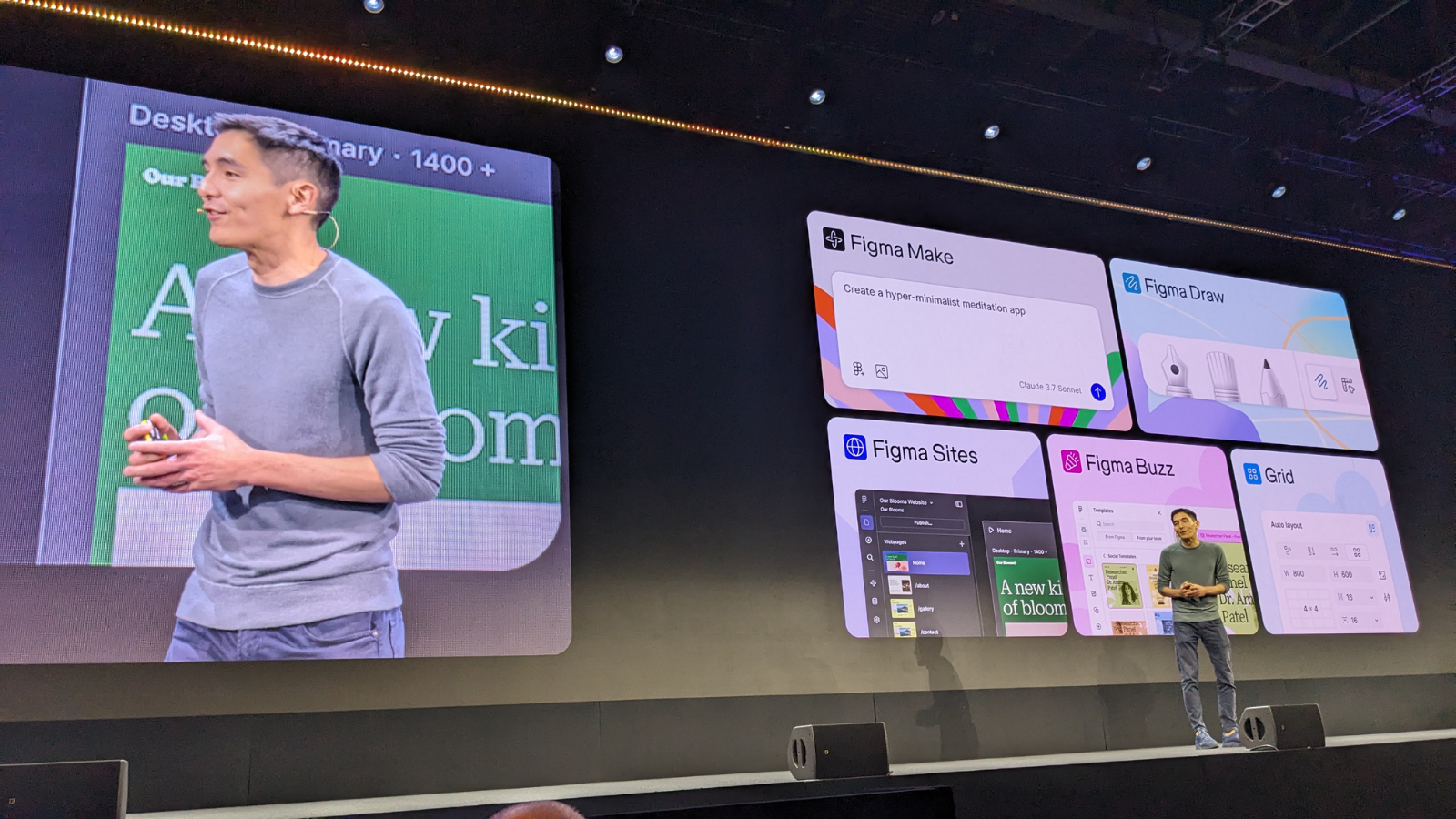
Rank 43788Figma unveils new AI tools for developers and designersFigma Make finally rolls out to all users with Full SeatCode layers comes to Figma SitesOver the past week, Figma has made good on its many promises revealed at its Config 2025 event.After announcing the release of four new products - Figma Make, Figma Sites, Figma Buzz, and Figma Draw - the company has now launched a few new updates for developers and designers, alongside the full rollout of its big content ideation tool Figma Make.According to Figma, these updates are all about “bridging the gap between design and code” with the help of new AI tools. So, what can users expect now?What’s new in Figma?For me, the most exciting new release is Figma Make. Finally out of beta, it’s available now to those with a Full Seat.Figma Make is effectively an overarching design tool that spans the entire platform, and a massive leap for content ideation, where users can start with a blank canvas or copy and paste from Figma Designs, collaborate on new ideas, and then bring those designs over to other Figma tools like Sites to refine the concepts.According to the company, Figma Make is fully capable of helping users create “an agentic AI interface, a business newsletter, and even games.”When I attended a press briefing at Config London, I was struck by how Yuhki Yamashita, Figma’s Chief Product Officer, repeatedly mentioned how the premise here is being able to quickly conjure up ideas, throw them out if they don’t work, then start anew.At the time, he said, “Our thought experiment was, how can we make it so easy for you to go from the idea into your head to something that is actually you can put in front of users and validate really quickly. And if it doesn't work, that's great. You can then move on to the next idea, or you can keep iterating from there.”But it’s not the only big rollout users can now try. Figma has also released a new Dev Mode MCP Server, which is currently in beta.Eagle-eyed Figma-watchers will have clocked an early demo of this during Microsoft Build’s opening keynote.The company describes the MCP Server as a way to deliver design context from Figma - think variables and styles, that sort of thing - into their preferred LLM, IDE, or agentic coding tool, making sure that AI-generated code aligns with the users’ codebase.And finally, code layers are now rolling out across Figma Sites, the AI-powered website builder. Here, users with pretty much any technical ability can customize websites and build site interactions and animations using AI prompts, presets, or raw code.I was pretty impressed when I saw Figma Sites in action at Config, where AI prompts were used to transform static text into animated text that reacted to cursor movements. It’s designed in such a way that even a non-designer can easily edit content.At Config, Yamashita promised bigger things were afoot, saying, “we wanted to make sure that we could support scaled use cases, too. With these kinds of content, it's much easier if we have a CMS, so that a non-designer can come in and comfortably edit that content in a way that's familiar to them. And this is something that's coming soon.” Looks like it’s finally arrived.You can check out the newest tools from Figma by clicking here and navigating to the Products section. You might also likeWe've rounded up the best AI website builders aroundAdobe launches new Express tool for small businesses - and I spoke exclusively to its chief to find out the top 5 things you need to knowFreepik launches new enterprise AI plan - but is it enough to tackle Adobe’s dominance in the field?
-
Picture from o.aolcdn.com
Rank 43789Apple's WWDC 2025 keynote gave fans a good look into what their iPhones, iPads and Mac computers will look like come this fall when the new software updates come out. Key to the changes is Apple's new Liquid Glass design language, which will bring UI tweaks to all of its operating systems later this year. The redesign focuses on streamlining things and boosting productivity while giving most elements a semi-translucent look. As to be expected Apple Intelligence features are baked into all of the forthcoming software updates, and users can expect to see updated widgets, a few overhauled apps and more. Here's everything Apple announced at WWDC 2025 this year.
Liquid Glass design and new software names
Apple
As was expected, Apple revealed a new visual design language coming to all of its operating systems dubbed Liquid Glass. It called this new system its "broadest" design update yet, and it features semi-translucent features like redesigned widgets, notifications and more. Apple is billing it as more dynamic than the previous design language, and a way to bring even more consistency across all operating systems including iOS, iPadOS and macOS.
In addition to the redesign, Apple is revamping the names of all of its operating systems. Instead of iOS 19, for example, we’ll have iOS 26 coming out this fall. iPadOS 26, watchOS 26 and others will follow suit, marking the first time Apple has given its software updates year identifiers instead of arbitrary generation numbers.
iOS 26
Apple
The changes coming to iOS 26 are subtle, but they give it a clean look and feel, with lots of overlapping elements, rounded corners and more. Apple said the design is inspired by visionOS, the operating system that powers Vision Pro headsets. App icons have a slightly different look, while toolbars and text inputs have see-through appearances. Folks will be happy to know that things are largely the same — you shouldn't have an issue identifying key apps like the Phone, Messages or FaceTime.
Phone app
Speaking of the Phone app, it's getting the biggest redesign since its launch with the original iPhone all those years ago. It puts scrolling front and center, allowing you to scroll through key contacts, recent calls and voicemail messages all on one screen. A translucent bar at the bottom of the screen gives you quick access to additional contacts and the keypad. Hold Assist, a new feature, will mute hold music but keep you on a call until someone picks up on the other line.
Apple
Messages
Messages is getting a few new features as well, including the ability to change the entire message background color for group messages and polls among group chat members. New screening features includes "unknown senders," which sequesters those pesky spam messages to a separate space in Messages, so you can keep your most important conversations in the forefront and ignore those that don't matter.
Apple Intelligence features are spread throughout all of the software updates, and in Messages, there are some related to Genmoji. In iOS 26, you'll be able to combine two existing emoji to create an entirely new, custom Genmoji, and you can even use ChatGPT to create Genmoji as well.
Live translate is coming to Messages, too, automatically translating messages as you type and delivering them to the receiver in their preferred language. Similarly functioning live captions will be available in FaceTime, and Apple Music will get live translation and live pronunciation features to help listeners enjoy music in other languages. The Call Translation API will be available to third-party developers to use in their communication apps as well.
Maps and Wallet
Apple Maps will gain the ability to learn your routine and suggest alternative routes based on traffic. It will also log your "visited places": cities, landmarks and business that you've been to, making it easier for you to find places you want to revisit again.
Separately, the Wallet app will support Digital ID, which lets you create a digital ID that's different from your driver's license and passport and can be used to verify your identity in some locations. You'll also be able to add updated boarding passes to Wallet when you're flying.
Games app
iOS 26 will feature a dedicated Games app as well. It will feature a Library tab, where you can find all of the games you've ever downloaded for iOS, and a dedicated Apple Arcade tab for all of the titles included in that service. Challenges is a new feature will let you compete against friends in supported games, including supported single-player games that developers.
Visual Intelligence
Visual Intelligence is getting baked into iOS 26's interface a bit more, allowing you to visually search for anything that pops up on your iPhone screen. For example, if there's an image of a jacket you like on your social media feed, you can take a screenshot and use the new Visual Intelligence image search feature to search for similar jackets across the web and other apps. You can highlight certain areas of your screenshot to refine the search further.
watchOS 26
Apple
In addition to the Liquid-Glass visual overhaul, watchOS 26 will bring Workout Buddy to your wrist. The new feature will analyze your fitness history and identify insights in real time as you're working out. It takes shape as a sort of audio coach that can inform you of things like the distance you've run, average pacing and those compares to previous runs you've completed. New Apple Music integration can choose playlists for you as well, based on the type of workout you're doing.
Smart Stack on Apple Watch is getting an update as well, prioritizing the information that matters most to you depending on your routine. For example, when you walk into your gym, a Smart Stack hint will appear on your watch that will quickly take you to the workout app so you can dive right into your training session.
macOS Tahoe
Apple
The next version of Apple's desktop operating system is dubbed macOS Tahoe, keeping the classic California naming scheme the company has been using for a long time. Liquid Glass design language is at the forefront here, but long-time Mac users will find most things look quite familiar, just with a semi-translucent, rounded edge now. Users will have the option to make custom backgrounds, change the color of their desktop folders and even add emoji to them.
iOS' Phone app will be available on macOS Tahoe, improving the calling capabilities of Mac computers. With it, you can more easily access your contacts and voicemail messages, and it will support all of the new features the new Phone app in iOS 26 will, including things like Hold Assist.
Intelligent actions are coming to the Shortcuts app, which integrates Apple Intelligence into the existing Shortcuts program. This lets you access Apple Intelligence models on-device, creating your own Shortcuts with AI capabilities. In a similar vein, Spotlight will be more powerful in macOS Tahoe, allowing you to call upon and execute multi-step Shortcuts and actions directly from Spotlight search, without navigating to other apps. You can also use Spotlight to access your clipboard history in the latest software update, too.
iPadOS 26
iPadOS 26 will feature a Liquid Glass redesign along with most of the new features detailed for iOS 26, including the revamped Phone and Games apps. Unique for the iPad, though, is a new menu bar and windowing feature that makes the tablet's UI look and feel a lot more like macOS. That means it should improve multitasking, something iPad power-users have wanted for a long time. You can resize windows, snap them to different corners or swipe them away temporarily to get a glimpse of your home screen. Apple claims the window system is designed to work just as well with touch input (either via fingers or a stylus) or trackpads on compatible accessories.
The Files app on iPad will feature an updated list view and the same custom color options you'll find on the new macOS Tahoe. You'll also be able to choose which programs or apps you want to open certain files, so for example, you can opt to open an image in Photoshop rather than the default option. Speaking of, a new Preview app is coming to iPads in the new software update. A mainstay on macOS, this app will bring native PDF management, annotation and editing to Apple's tablets.
iPadOS 26 will bring a number of new features for podcasters and the like, including the ability to record "studio quality" vocals with AirPods. Users will also be able to press and hold their AirPods to start and stop the recordings they're making on their iPads. In addition, a new local capture feature will integrate with video conferencing apps to let users record their video on iPads for things like remote group podcasts.
visionOS 26
Apple
The next software update coming to Vision Pro systems will include new Apple Intelligence features, spatial experiences and more. Spatial widgets are coming to visionOS 26, allowing you to put, say, a calendar widget somewhere in your Vision Pro field of view and it will stay in that place even as you move around. Native and third-party apps can support spatial widgets, and they'll all be available in the new Widgets visionOS app.
Spatial scenes is a new feature that uses AI to bring your photos to life in front of your eyes while using Vision Pro. Spatial scenes also extend to photos you'll see while browsing, so for example, those travel photos you see while researching your next vacation will look even more lifelike using spatial scenes.
Arguably the most exciting visionOS news is that it will allow the Vision Pro headset to be used with PlayStation VR2 Sense controllers. This will make Vision Pro more of a contender in the gaming space, since lack of compatible controllers was a big factor holding it back. In addition, the new software update will bring eye-scrolling to the Vision Pro, which will allow users to scroll documents, apps, webpages and more just by using their eyes.
tvOS 26
Apple
The new Liquid Glass design language brings more cinematic film and TV art to the Apple TV app in tvOS 26. A new Profiles feature in Apple TV+ lets you customize your viewing experience with your own tastes, and each member of your household can have their own profile. Elsewhere, Apple Music on Apple TV is getting a karaoke-esque feature that lets you sing along to your favorite songs using your iPhone as the microphone.This article originally appeared on Engadget at https://www.engadget.com/big-tech/wwdc-2025-ios-26-new-liquid-glass-design-and-everything-else-apple-announced-171718769.html?src=rss
-
Picture from o.aolcdn.com
Rank 43790Microsoft has begun rolling out a major update for Copilot. Starting today, Windows 10 and 11 users in the US can try out the assistant's Vision feature. The tool allows you to share up to two apps with Copilot, so that you can then chat about what it sees. "[Copilot Vision] acts as your second set of eyes, able to analyze content, help when you’re lost, provide insights, and answer your questions as you go," Microsoft says.
Additionally, with its new Highlights functionality, Copilot can even show you how to complete a specific task within an app. To try out Copilot Vision, open the Copilot app on your computer, click the glasses icon in the composer window and then select the browser or apps you want to share. You can stop sharing at any time by pressing "Stop" or "X" within the prompt dialogue. Microsoft says Windows users in non-European countries can look forward to the feature rolling out to their computers soon.
Microsoft began testing Copilot Vision with Copilot Pro subscribers in October. Following the contentious launch of Copilot's Recall feature, the company took a more careful approach with Vision by making it something testers had to manually activate and limited to a select list of websites. Now the company is expanding the available functionality before rolling it out to other markets. This article originally appeared on Engadget at https://www.engadget.com/ai/microsofts-copilot-vision-ai-helper-is-now-available-on-windows-in-the-us-160034369.html?src=rss
-
Picture from o.aolcdn.com
Rank 43791You don't have to make a huge effort planning Instagram posts anymore so that your profile takes on a certain aesthetic or so that your grid reads or looks a certain way. Instagram will soon (and finally) let you re-order the posts already on your grid. Alessandro Paluzzi, who reverse engineered apps and posted upcoming features online, found an "edit grid" option within Instagram way back in 2022. Instagram didn't say when exactly the feature will be available, but when you do get the edit grid option, tapping it will take you to a screen where you can rearrange your posts in the way you want them to appear on your profile.
In the post announcement from Instagram head Adam Mosseri, he also revealed that Instagram is "exploring a way" that will allow you to post to your account without broadcasting it to your followers' feeds. The idea is to make posting less intimidating and to allow you to keep your account active without the pressure. Mosseri also didn't say when the feature is rolling out, but take note that his post is about Instagram's investments in creativity for this year.
Finally, the Instagram head announced that trial Reels are now available to everyone. Trial Reels will allow you to publish Reels that bypass your followers' feeds. Those Reels are then recommended to non-followers instead, since the feature's original purpose was to give creators a way to experiment with new types of content that could alienate their current audience. Mosseri said that the hope is for trial Reels to "give everyone greater freedom to explore their creativity in a low-pressure way."This article originally appeared on Engadget at https://www.engadget.com/apps/instagram-will-soon-let-you-re-arrange-your-grid-160011925.html?src=rss
-

Picture from assets1.cbsnewsstatic.com
Rank 43792 -

Picture from assets1.cbsnewsstatic.com
Rank 43793 -

Picture from assets3.cbsnewsstatic.com
Rank 43794 -

Picture from assets3.cbsnewsstatic.com
Rank 43795 -

Picture from assets1.cbsnewsstatic.com
Rank 43796 -

Picture from assets1.cbsnewsstatic.com
Rank 43797 -

Picture from assets1.cbsnewsstatic.com
Rank 43798 -

Picture from assets3.cbsnewsstatic.com
Rank 43799 -

Picture from assets2.cbsnewsstatic.com
Rank 43800


