News
This constantly updated list features the latest and most important news articles, ranked in order of significance. The top stories highlight major developments, breaking news, and critical updates across various topics, ensuring you stay informed about the most pressing issues. As new articles are added, the list adapts to reflect the latest priorities, keeping the most impactful stories at the forefront. Whether it’s global events, technology breakthroughs, or industry trends, this dynamic list ensures you always have access to the most relevant and timely information.
-

Picture from ichef.bbci.co.uk
Rank 16951 -
Picture from o.aolcdn.com
Rank 16952A group of GeoGuessr map creators have pulled their contributions from the game to protest its participation in the Esports World Cup 2025, calling the tournament "a sportswashing tool used by the government of Saudi Arabia to distract from and conceal its horrific human rights record." The protestors say the blackout will hold until the game's publisher, GeoGuessr AB, cancels its planned Last Chance Wildcard tournament at the EWC in Riyadh, Saudi Arabia, from July 21 to 27.
GeoGuessr is a browser game where players try to pinpoint locations using only Google Street View images, and it relies on community mapmakers to stay relevant. The blackout, which began on May 21, includes "dozens of creators and their maps, including a supermajority of the most popular competitively relevant world maps," according to a statement the group shared on Reddit. The removed maps have been played tens of millions of times.
One of the largest GeoGuessr communities, Plonk It, has also removed its Map Directory and shared the mapping community's open letter. That statement reads in full as follows:
We, the creators of a considerable share of GeoGuessr’s most popular maps, have decided to make our maps unplayable in protest of GeoGuessr AB’s decision to host a World Championship wildcard tourney at the Esports World Cup (EWC) in Riyadh.
The EWC is a sportswashing tool used by the government of Saudi Arabia to distract from and conceal its horrific human rights record.
Groups targeted by the government include women, LGBTQ people, apostates and atheists, political dissenters, migrant workers in the Kafala system, religious minorities, and many others. The subjugation of these groups is extensive and pervasive. Members of these groups are routinely subjected to discrimination, imprisonment, torture, and even public executions. These severe human rights violations are well-documented and indisputable.
By participating in the EWC, GeoGuessr is contributing to that sportswashing agenda, which is designed to take attention away from Saudi Arabia's human rights violations.
The GeoGuessr community is diverse and includes many members of groups that would be harshly persecuted were they to live in Saudi Arabia. In solidarity with those currently residing in Saudi Arabia while being subject to oppression, as well as members of the community who would feel and be unsafe attending the tournament in Riyadh, we have decided to black out our maps by replacing all their previous locations with random garbage locations, rendering them unplayable.
This blackout includes dozens of creators and their maps, including a supermajority of the most popular competitively relevant world maps. It will continue until we see action from GeoGuessr; specifically, we demand that GeoGuessr cancels its wildcard event in Saudi Arabia and commits to not hosting any events there as long as it continues its oppressive regime.
You don't play games with human rights.
Thank you for reading.
The GeoGuessr mapping community
We've hit up GeoGuessr AB for a comment on the blackout and will update this story as we hear back.
The EWC is a huge, multi-game event owned and operated by the Saudi government and held in the country's capital city. It's an evolution of the Gamers8 tournament and this year marks the second EWC-branded competition; it's due to take place in July and August with a total prize pool of $38 million, split among 24 games. Franchises participating in the 2025 event include Rocket League, Apex Legends, Call of Duty, League of Legends, Counter-Strike, Overwatch, Dota 2, Valorant, Street Fighter 6, EA Sports FC and PUBG.
It's difficult to compete in esports without running into Savvy Games Group, the video game arm of Saudi Arabia's Public Investment Fund. Alongside hosting the EWC, Savvy has financial stakes in Nexon (10.2 percent ownership), Electronic Arts (9 percent), Embracer Group (8.3 percent), Nintendo (7.5 percent), Capcom (5 percent) and Take-Two Interactive (6.8 percent as of 2023). Savvy also runs ESL FACEIT Group, which contains the Electronic Sports League, a longstanding and significant esports event company. The New York Times reported last year that the Saudi government plans to invest $38 billion in the video game industry by 2030.
Human rights groups including Amnesty International and Human Rights Watch have long documented the abuses of the Saudi government. HRW describes Saudi Arabia's human rights record as "abysmal," and specifically calls out the PIF as a reputational whitewashing tool. Saudi authorities have been accused of sportswashing in traditional sports as well, specifically through the country's ownership of LIV Golf and Newcastle United FC.
In February, Riot Games — the operator of League of Legends, Valorant and Teamfight Tactics, and arguably the largest name in esports — signed a three-year deal with the Esports World Cup Foundation for an undisclosed sum. Riot defended the partnership, arguing that the resulting financial boon for players and the esports industry outweighed other concerns.
"We know some of you may not feel great about our decision to partner with the EWC in this way, and we respect that," Riot's statement read.
Though corporate support for the EWC remains strong, the GeoGuessr mapping community isn't alone in rejecting this year's tournament. Street Fighter 6 player Christopher Hancock, who plays as ChrisCCH for FlyQuest, recently declined his spot at EWC 2025. In a social media statement, Hancock said, "I gave this decision a lot of thought and ultimately decided that, due to the nature in which the event is funded and managed, I do not feel comfortable participating in it." He added that the partnership between the Capcom Pro Tour and the EWC effectively forced him to work with the Saudi-backed group.
"Choosing to not participate in any EWC qualifiers would effectively mean retirement from competing," Hancock said. "I find it regrettable that this event has become so deeply embedded in the [fighting game community], but I have not yet made a decision on whether I will stop competing in events associated to it altogether."
Alongside the GeoGuessr map blackout, the community protest added one new, short challenge to the game called How to Run A Dictatorship. It takes players through five locations around Riyadh, documenting the alleged government-sanctioned torture, kidnapping, imprisonment and oppression of women, LGBTQ people, religious minorities and political dissenters occurring in these places. The challenge takes just a few minutes, so feel free to experience it yourself.This article originally appeared on Engadget at https://www.engadget.com/gaming/geoguessr-community-maps-go-dark-in-protest-of-ewc-ties-to-human-rights-abuses-221037118.html?src=rss
-
Picture from o.aolcdn.com
Rank 16953The News/Media Alliance took aim at Google today after the tech company's announcement at its I/O showcase that AI Mode will be rolling out to all US search users. This feature more closely integrates an AI chatbot into Google search. Ostensibly, AI Mode can help people get better answers to their queries, but it also serves to keep users on a Google property rather than clicking through to get information from other publications.
"Links were the last redeeming quality of search that gave publishers traffic and revenue. Now Google just takes content by force and uses it with no return, the definition of theft," said News/Media Alliance President and CEO Danielle Coffey. "The DOJ remedies must address this to prevent continued domination of the internet by one company."
This isn't the first time the organization has fired shots at Google; it filed an amicus brief earlier this month looking for remedy in the antitrust case about Google's monopoly control over search. The group argued that publishers should be able to opt out of letting search engines use their content for retrieval augmented generation.
Google has also taken an aggressive stance toward publishers as it develops more AI-driven services. The company's recent attitude can be seen in Bloomberg's discovery of an internal document showing that the company decided not to give publishers a choice to opt out of AI training if they wanted their material to appear in search results.This article originally appeared on Engadget at https://www.engadget.com/big-tech/newsmedia-alliance-calls-googles-ai-mode-theft-223128521.html?src=rss
-

Picture from ichef.bbci.co.uk
Rank 16954 -

Picture from techcrunch.com
Rank 16955 -

Picture from ichef.bbci.co.uk
Rank 16956 -

Picture from cdn.mos.cms.futurecdn.net
Rank 16957Dell CEO lays out view of the future of AIAI will never replace human workers, but will aid them instead, Michael Dell saysCompanies should see AI as a great way to reinvent themselves tooThe CEO of Dell Technologies has told TechRadar Pro AI offers a great opportunity for organizations to re-evaluate themselves to positive effectSpeaking at a media Q&A session at Dell Technologies World 2025, Michael Dell looked to reassure us that AI will never fully replace human workers, and in fact may offer them a whole new outlook.In a wide-ranging discussion, Dell also laid out his views on political instability affecting the technology industry, and some of his key leadership principles."Always some change"“The way I think about this is that if you look at every progress, that’s for any technology, you always have some change that goes on,” Dell said in response to our question about AI affecting or even replacing human workers.“My way of thinking is there’s probably a 10 percent effect for that - but I think 90 percent of that is actually growth and expansion and opportunity, and ultimately what I think you’re going to see is more opportunities, more economic growth.”“There are a lot of things that we don’t do, that we used to do, because we have the tools, and we’re more effective as a species because of that - (using AI) is just another example of that.”“One of the keys beyond productivity and efficiency I think for organizations, is to reimagine themselves, and say, alright, what is the trajectory of these capabilities, where is it going, and what should our activity look like in three years, five years time, given this capability.”“You know, a lot of roles today just didn’t exist 10, 20, 30 years ago - and no-one was forecasting that.”(Image credit: Future / Mike Moore)Having spoken with Nvidia CEO Jensen Huang in his opening keynote, Dell was also asked if the two shared any overarching leadership principles.“I think anytime there’s a new technology, you have to leap ahead (and think), what is the likely impact of this, and how do we need to change? And if we don’t have a passion around that, or there isn’t a crisis in your organization - make one! We think it can make us a better company.”Dell was also asked about how changing global economic and political situations might affect the company’s future outlook“We agree that those are issues and challenges,” he said, “in my general view, the importance of this technology is greater than all those problems - and I heard somebody say recently, tokens are bigger than tariffs - and that would sort of summarize our view of it.”“Are all those things helpful to our business? No, they’re not - but there’s a limit of what we can do about that, right? We can certainly do the things we’re supposed to do, and focus on the things we can control - we’re seeing plenty of companies that are dealing with all those challenges just as we are, and powering ahead in any case.”You might also likeDell CEO on why your next laptop will probably be an AI PCGen AI spending now higher than security investment for many businesses"The real danger is staying still” - Dell CEO Michael Dell claims AI is "the new electricity"
-

Picture from cdn.mos.cms.futurecdn.net
Rank 16958Google has rolled out a new AI-powered shopping feature to help you figure out what the clothes you are interested in buying might look like when you wear them. It's dubbed "try it on" and it's available right now in the US through Google Search Labs.To get started, you just need to switch it on in the lab. Then, you upload a full-length photo of yourself and start looking for clothes in the Google Shopping tab.When you click on an image of some outfit from the search results, you'll see a little "try it on" button in the middle of the enlarged version of the outfit in the right-hand panel. One click and about ten seconds later, you'll see yourself wearing the outfit. It may not always be a perfect illusion, but you'll at least get a sense of what it would look like on you.Google claims the whole thing runs on a model trained to see the relationship between your body and clothing. The AI can, therefore, realistically drape, stretch, and bunch material across a variety of body types.The feature doesn't work with every piece of clothing you might see, or even every type of outfit. The clothing retailer has to opt into the program, and Google said it only works for shirts, pants, dresses, and skirts.I did notice that costumes and swimwear both had no usable images, but I could put shorts on myself, and costumes that looked enough like regular clothes were usable. The AI also didn't seem to have an issue with jackets and coats as categories.Elvis looks(Image credit: Photo/Google AI)For instance, on Google Shopping, I found replicas of the outfits Elvis wore for his 1966 comeback and one of his jumpsuits from the 1970s. With a couple of clicks, I could imagine myself dressed as the King in different eras.It even changed my shoes in the all-black suit. I'd always wondered if I could pull off either look. The images are shareable, and you can save or send them to others from the Google mobile app and see how much of an Elvis your friends think you are.Super summer(Image credit: Photo/Google AI)The details that the AI changes to make the photos work are impressive. I used the AI to try on a fun summer look and the closest to a superhero costume I could try. The original photo is me in a suit and jacket with a bowtie and black dress shoes. But the shoes and socks on both AI-generated images not only match what was in the search result, but they're shaped to my stance and size.Plus, despite wearing long sleeves and pants, the AI found a way to show some of my arms and legs. The color matches reality, but its imperfections are noticeable to me. My legs look too skinny in both, like the AI thinks I skipped leg day, and my legs in the shorts have not been that hairless since I turned 13.Imperfections aside, it does feel like this will be a major part of the next era of e-commerce. The awkward guessing of whether a color or cut works for your skin tone and build might be easier to resolve.I wouldn't say it can make up for trying them on in real life, especially when it comes to sizing and comfort, but as a digital version of holding an outfit up against you while you look in a mirror, it's pretty good.Ending unnecessary returns(Image credit: Photo/Google AI)Uncanny as some of the resulting images are, I think this will be a popular feature for Google Shopping. I'd expect it to be heavily imitated by rivals in AI development and online retail, where it isn't already.I particularly like how the AI lets you see how you'd look in more outlandish or bold looks you might hesitate to try on at a store. For example, the paisley jacket and striped pants on the left or the swallowtail jacket and waistcoat with Victorian trousers on the right. I'd hesitate to order either look and would almost certainly plan on returning one or both of them even before they arrive.Returns are a plague on online retailers and waste tons of packaging and other resources. But if Google shows us how we’d look in clothes before we buy them, it could chip away at return rates; retailers will race to sign up for the program.It could also open the door to more personalized style advice from AI. You could soon have an AI personal dresser, ready to give you a virtual fit check and suggest your next look, even if it isn't something Elvis would have worn.You might also likeI've been using Google's new AI mode for Search – here's how to master itI tried Google's new AI mode powered by Gemini, and it might be the end of Search as we know itGoogle’s AI Mode can explain what you’re seeing even if you can’t
-
Picture from o.aolcdn.com
Rank 16959Encrypted messaging platform Signal is rolling out a feature called Screen Security to its Windows app. It's broadly a way to prevent a computer from logging screenshots of your messages when the app is open, but in a blog post, the company directly called out the Recall feature in Windows 11 as the reason for this new capability.
Signal explained that what it essentially did was to flag its application as protected by Digital Rights Management (DRM), because content under that umbrella will not be recorded in a screenshot on a Windows device. It's the same reason that a movie streaming from Netflix will appear in screenshots as a black box. Screen Security will be on by default, but this setting can be easily disabled for cases where a user does need to be able to access the application, such as when using a screen reader.
"We hope that the AI teams building systems like Recall will think through these implications more carefully in the future," the company said. "Apps like Signal shouldn’t have to implement 'one weird trick' in order to maintain the privacy and integrity of their services without proper developer tools."
The Recall feature in Windows 11 has had a difficult and well-delayed development process. While the AI-powered tool to record everything on a PC's screen has some potential benefits for user productivity, it's also raised a lot of concerns about privacy and security. Although Microsoft has started rolling out Recall to Copilot+ PCs, not everyone is convinced that it's ready for prime time.This article originally appeared on Engadget at https://www.engadget.com/computing/signal-will-block-microsoft-recall-from-snooping-on-your-texts-225853193.html?src=rss
-

Picture from ichef.bbci.co.uk
Rank 16960 -

Picture from ichef.bbci.co.uk
Rank 16961 -

Picture from ichef.bbci.co.uk
Rank 16962 -

Picture from techcrunch.com
Rank 16963 -

Picture from ichef.bbci.co.uk
Rank 16964 -

Picture from ichef.bbci.co.uk
Rank 16965 -

Picture from ichef.bbci.co.uk
Rank 16966 -
Picture from cdn.mos.cms.futurecdn.net
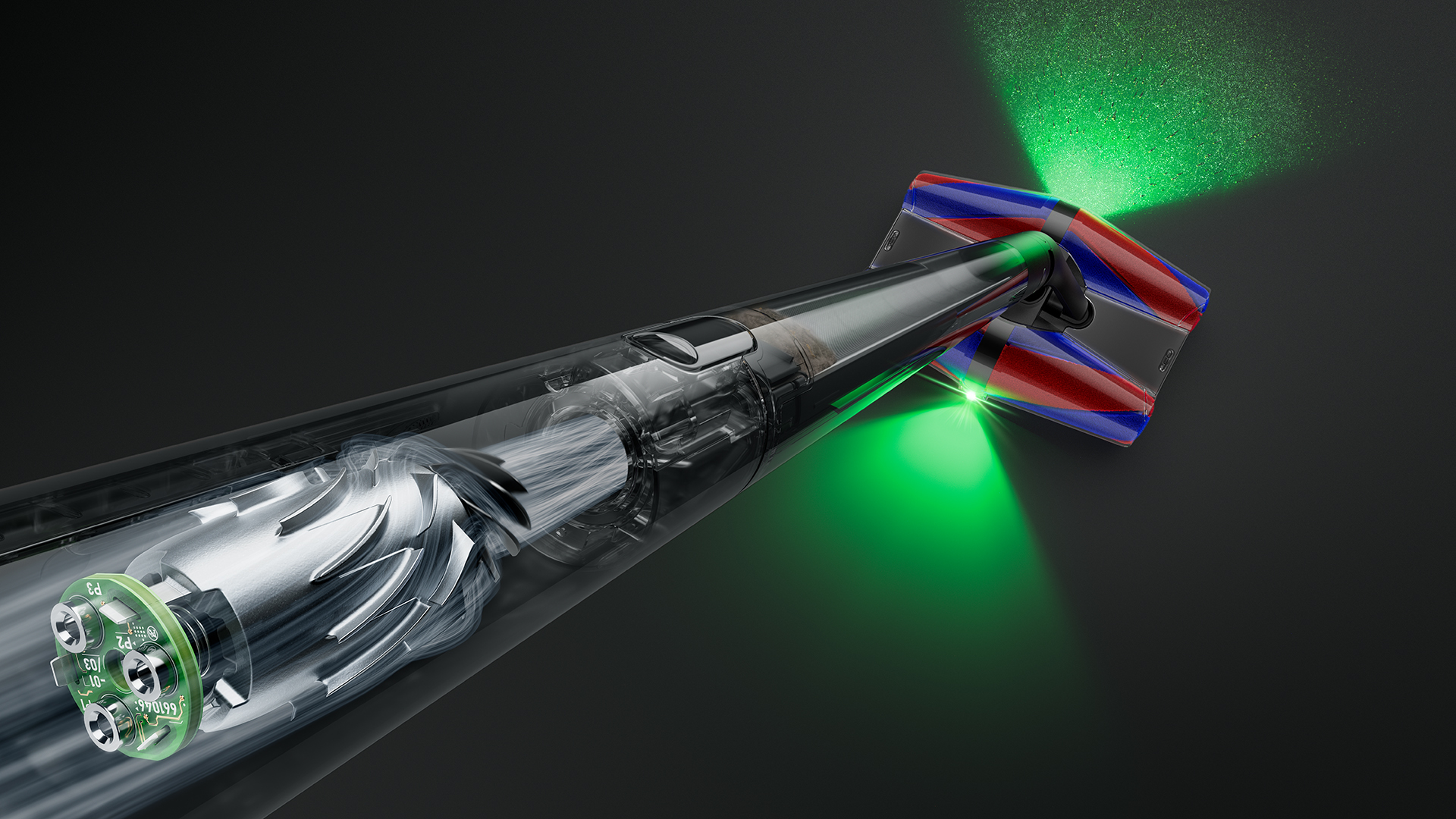
Rank 16967Dyson has announced the new ultra-thin, ultra-light PencilVacIts new Fluffycones floorhead is designed to avoid hair tanglingIt looks like a specialist model for hard floorsI write about vacuum cleaners for a living, and while performance varies, most new models these days tend to look roughly the same.So when news of a new addition to the Dyson vacuum lineup landed in my inbox, I expected to see something similar to its existing models: slick and high-quality, but not especially distinctive or surprising.How wrong I was.The newly unveiled Dyson PencilVac doesn't just have an unusual name, it's all-round one of the most unique vacuums I've seen. This brand knows what it's doing in this marketplace – it makes some of the best cordless vacuums you can buy, and today's very best Dyson vacuums include features you still can't find anywhere else.So while the PencilVac strays a long way from the tried-and-tested formula of what works for vacuum cleaners, I'm very optimistic about its performance. Here's a rundown of the most intriguing features in this new launch...1. It's ridiculously thinThe most immediately noticeable thing about the PencilVac is that it's incredibly streamlined. Without the floorhead, the whole thing is 1.5 inches / 3.8cm in diameter. To make that possible, the brand had to develop a tiny new motor – the Dyson Hyperdymium 140k motor is just 1.1 inches / 2.8cm wide, and hidden entirely within the handle.The PencilVac is also impressively lightweight, clocking in at 4lbs / 1.8kg. For context, the lightest option in our best cordless vacuum roundup right now is 5.7lbs / 2.6kg, and there are a number of models that weigh over 6.6lbs / 3kg.All the PencilVac's mechanics are shrunk down and fitted inside the handle (Image credit: Dyson)Generally, when you shrink down a vacuum, you sacrifice power. That's why handheld vacuums tend to be much less 'sucky' than full-sized options. That holds true for the PencilVac – there's 55AW of suction, compared to 115AW for the V8 (the oldest Dyson stick vacuum in the current range) and a massive 280AW for the latest-and-greatest Gen5detect. However, while it's unlikely to be suitable for a truly deep clean, that's still a decent amount of suction for the size and weight.As a side note, the 1.5-inch / 3.8cm diameter isn't incidental. Brand founder James Dyson says, "I have long wanted to make a vacuum of only 38mm diameter (the same as my latest hair dryer, the Supersonic r)". The Dyson Supersonic r is the pipe-shaped dryer that was originally released for professionals only, but recently joined the main consumer range.2. There are cones instead of rollersMoving down to the business end, and you'll find the new 'Fluffycones' floorhead. It sounds like a Pokémon, but it's actually a reimagined cleaner head. Vacuums traditionally have one brush roll, maximum two, and they're tube-shaped. The Dyson PencilVac has four brushrolls, and they're all conical.There's logic to the tapering shape: it helps direct long hair along the roll and into the dust cup, whereas with parallel rollers the hair tends to just wrap around and stay there, until your rip it off or attack it with scissors. Dyson's hair screw tool also has a conical brush roll, and works exactly as it's meant to when it comes to tackling long hair.Rather than one parallel brushroll, the PencilVac has four tapering rollers (Image credit: Dyson)The cones project out at the sides so they can clean right to the edges of rooms, and the whole thing can lie flat to the ground, with a clearance of just 9.5cm / 3.75 inches off the floor.I'm interested in Dyson's description of the rollers as 'fluffy', because in the brand's vocabulary that usually indicates a soft roller for use on hard floors only. In fact, the more I look at this vacuum, the more I'm convinced it's a specialist model just for use on hard floor. It's not specified in the press material I have so far, but it would make sense with the lower suction and smaller dust capacity.3. There's no visible dust cupOne of the most baffling things about the PencilVac is that it doesn't appear to have a dust cup. Of course, there is one – like the motor, it's hidden away inside the handle.The capacity is next-to-nothing: just 0.08L. However, Dyson has introduced a dust compression system, which uses air to squish down the particles so they take up as little room as possible. Dyson claims that means it can hold five times the physical volume.The dust cup is also hidden within the handle (Image credit: Dyson)The emptying process has also been reimagined, with a push-lever system replaced by an exciting-sounding "syringe, no-touch bin ejection mechanism".As it pushes out dust and debris, the mechanism simultaneously wipes the 'shroud'. I'm not totally clear what the 'shroud' is in this context, but I do know that keeping the internal mechanisms clean is key to efficient vacuum performance, so this seems like a good thing.4. The floorhead glows and appears to floatAs well as siphoning off hair as you clean, the floorhead cones have another trick up their sleeve. The cones rotate in opposite directions, the aim being that this vacuum cleans just as well when it's pushed forward as when it's pulled back. This is a bit of a weak spot on the regular Fluffy floorhead – it has no trouble sucking things up when moving forwards, but pull it back and debris will pool behind it.I'm intrigued to see how this new approach works in practice – especially because Dyson describes it as "floating" across the floor. I wonder, too, if it might make this vacuum reversible altogether, given the fact that the handle section looks very symmetrical.(Image credit: Dyson)Dyson has also added "laser-like" illumination to both the front and back of the floorhead. This is another feature borrowed from the exsiting Fluffy floorhead, and helps create big shadows on the tiniest bits of dust, which otherwise might go missed. It only works on hard floors, which is another indication this vac is likely not for carpet.5. There's a tool that looks like a chimney brushThere's an intriguing addition to the tool lineup in the form of a 'Rotating combi-crevice tool', designed for cleaning in awkward gaps. This seems especially geared towards cleaning high-up, where it can be tricky to get your angles correct. It makes particular sense for an ultra-light vacuum like this one, which is far easier to lift above your head than your average stick vacuum.As an aside, it looks like the PencilVac is button- rather than trigger-operated. That's dictated by the streamlined shape, but it's also great news for maneuverability and easy of use – the fact that many Dyson vacs still use a trigger to turn on is a perpetual bugbear of mine.You'll also get a Conical hair screw tool, similar to the one included with the newest Dyson stick vacuums, for tackling long hair on furniture. Both can be stored on the magnetic charging dock.The Rotating combi-crevice tool looks perfect for cleaning up high (Image credit: Dyson )6. It's app-connectedI'm much less excited about this feature, but it feel like I should point out that this is the first Dyson cordless vacuum to connect to the MyDyson app. The app will provide more information about battery life and also report on filter status. However, there's also a screen on the vacuum itself showing remaining battery, so I'm hoping the app connection is an optional extra rather than an essential.There's a companion app, but key information is also shown on the vac's screen (Image credit: Dyson)Price & availabilityThe PencilVac will arrive in Australia first, with launch scheduled for August 2025. It's due to go on sale in the UK sometime in 2026, and I'm awaiting info as to if/when it will come to the US. As of yet I don't have any pricing info at all – I'll update this article with more details when I have them.You might also like...Browse the best vacuum cleaners for pet hairI tested Dyson and Shark's most expensive vacuums side-by-side: here's how they matched upWhich type of vacuum cleaner should I buy?
-
Picture from o.aolcdn.com
Rank 16968It's been almost ten years since Dyson first unveiled its Supersonic hair dryer, which put its signature bladeless fan technology into a styling product. For a company that was known primarily for its vacuums at the time, this was a surprising move. Since then, Dyson has released several beauty tools like its Airwrap curling iron that have spawned countless imitations. The company also expanded into other categories like audio with its OnTrac headphones and the controversial Zone headphones-with-built-in-purifying-mask while continuing to make some of our favorite cordless vacuums.
Today, Dyson is going full circle by announcing the PencilVac, which it says is the "world's slimmest vacuum cleaner." The twist? It achieves that thinness by using a motor that's basically the same as the one in the Supersonic hair dryer.
What makes the PencilVac different from existing vacuum cleaners is the fact that it's basically all shaft, with some attachment options for the head. That means there is no bulge unless you use the included conical brush bar cleaner head. All the parts that would normally take up space on a conventional vacuum (like a bin, filter and motor) all fit inside the long cylinder. At the very bottom, you can attach a variety of heads designed specifically for the PencilVac, including the main one that Dyson is calling a "Fluffycones" cleaner head.
The company said it has four cones in two brush bars that rotate in opposite directions, and they were designed to "strip and eject even long hair, preventing hair tangling around the brush bar." The laser-like lights at both ends of this head also help illuminate where dust particles might be so you can better see what spots you missed.
Dyson
Altogether, the PencilVac weighs about 3.96 pounds (1.8kg) and is meant to be easy to use in all kinds of hard-to-reach areas. Since it's got the same roughly 1.5-inch (38mm) diameter throughout, you can grip it fairly easily along its body, wherever you choose to place your hands. This should make it easier to pick up for overhead cleaning.
To get the entire PencilVac to look like, well, a pencil, Dyson had to redesign quite a lot of components. This includes the new Hyperdymium 140k motor, which the company says is its "smallest (at 28mm) and fastest vacuum motor. " There's also a new dust compressing system to "maximize the bin capacity." Speaking of, the bin fits inside the cylinder itself, and it has a transparent window that allows you to not only see how full it is but also watch as debris gets sucked up. In fact, at a recent demo, I watched with a mixture of satisfaction and sadness as bits of crushed up Lotus Biscoff cookies flew to the top of the bin.
Despite its small size, the Hypderdymium 140k motor seemed plenty powerful in my brief time with it, as it sucked up Cheerios, cookies and other detritus with ease. I also found the entire device mostly easy to maneuver — it didn't feel too heavy and coasted over the bumpy food waste with ease. I was slightly confused by the locking system as I had to make sure to hold it precisely straight up (and wait for a click) after I was done to make sure the stick didn't just fall to the ground.
Dyson also designed a new filtration system that the company said "effectively separates dust and debris from the airflow without causing filters to clog or cleaning performance to decline." It also made a new "two-stage linear dust separation system, which captures 99.99 percent of particles down to 0.3 microns so only cleaner air is expelled back into the home."
More interestingly, the PencilVac has an "air-compressing bin design" that allows the bin to contain "five times more dust and debris than its 0.08L capacity." In the few rounds of cleaning that I witnessed, the PencilVac certainly appeared to be packing in the garbage quite tightly, though whether it can actually hold 0.4L of stuff is something I didn't get to measure.
Dyson
When it comes time to empty the container, you can use what Dyson calls its "new hygienic syringe bin ejection system" to empty it. I didn't try this out myself, but it basically involves removing the cleaner head, aiming the bottom of the PencilVac at your trash receptacle and sort of shucking the transparent housing up and down to get the debris out. I watched a Dyson engineer do this and the process seemed straightforward, though it did look like parts of the housing trapped some crumbs. The good news is, you can detach the shell and filters to more thoroughly clean them.
The PencilVac also has a swappable battery pack that can last up to 60 minutes of suction, and you can charge the machine on its magnetic charging dock. This is also Dyson's first connected cordless vacuum, meaning it works with the MyDyson app so you can see battery levels, access more settings and get maintenance alerts (like when and how to clean the filter). There's also an LCD screen at the top of the handle that shows the selected power mode as well as remaining run time (while you're cleaning). You'll largely interact with the controls via the two physical buttons here, too.
Dyson hasn't shared pricing details on the PencilVac, but there's plenty of time for the company to figure that out, since it's only going to be available in the US next year. That's 2026. Meanwhile, the device will retail in other regions.
This article originally appeared on Engadget at https://www.engadget.com/home/the-dyson-pencilvac-is-the-most-stick-like-stick-vacuum-ever-020109491.html?src=rss
-

Picture from ichef.bbci.co.uk
Rank 16969 -

Picture from ichef.bbci.co.uk
Rank 16970 -

Picture from techcrunch.com
Rank 16971 -

Picture from ichef.bbci.co.uk
Rank 16972 -

Picture from ichef.bbci.co.uk
Rank 16973 -

Picture from ichef.bbci.co.uk
Rank 16974 -

Picture from techcrunch.com
Rank 16975 -

Picture from ichef.bbci.co.uk
Rank 16976 -

Picture from ichef.bbci.co.uk
Rank 16977 -

Picture from ichef.bbci.co.uk
Rank 16978 -

Picture from cdn.mos.cms.futurecdn.net
Rank 16979Retro compact with unique vertical sensor and LCD screenIt reimagines the half-frame film camera experienceIt's available globally from June 12 in three colors, priced $849 / £699 / AU$1,349Fujifilm has outdone itself with the new X half – a retro compact camera that packs some of its wackiest and outright funnest ideas yet, all inspired by film photography.There’s a clue to the X half’s inspiration in the name – it’s a digital reimagining of half-frame film cameras like the Pentax 17. I've already tried the X half, and it was a much needed dose of fun – check out my X half hands-on review.To facilitate half frame, the X half's 18MP JPEG photos are taken in 3 x 4 vertical format, recorded onto a vertical 1-inch sensor, and composed using the unique vertical LCD. Alongside that fixed screen is a secondary screen that mimics the film canister window you see on many film cameras, and there's a fun surprise here – it’s touch sensitive, and allows you to swipe up or down to select one of Fujifilm’s Film Simulations. If this charming feature doesn't make its way into future Fujifilm cameras, I'd be shocked.Film Simulation color effects are well known – they're inspired by Fujifilm film stock, and have helped to cement Fujifilm’s popularity over the last 10 years through cameras like the X100VI. The X half offers a stripped-back selection of 13 popular Film Simulations, including Provia and Astia.You'd think all of the above would be enough to secure the X half's unique status, but Fujifilm has really let loose, with even more features for film photography fans to enjoy.The LCD emulating a film cannister window with Velvia Film Simulation, and the vertical LCD (Image credit: Tim Coleman)Simulating film to another levelGoing one step further from that twin-screen combo and vertical shooting, there’s a Film Camera mode. This locks in your chosen Film Simulation and camera settings such as ISO, and disables the screen preview, leaving you to compose your shots via the optical viewfinder instead, as if you're shooting with film.Once your ‘film’ is used up – either 36, 54 or 72 shots – you can exit the mode and view the screen once more, and make changes to settings again.Film Camera mode is such a fun feature, and for me is the closest experience to film photography that I've had using a digital camera – and it's optional.The film wind lever tucked in with the camera off. In the on position, the lever sticks out for an easy reach. (Image credit: Tim Coleman)Then there's what is in effect a film wind lever, which in this case, through 'cranking', is used to create diptychs – that’s two vertical shots side by side. These are recorded individually through the vertical 1-inch sensor, but then composited afterwards and displayed just like you'd get with a half-frame film camera on a roll of 35mm film.Again, you can take or leave the diptych feature. I reckon it's a nice to have – working out how image pairs complement each other stretches your creative muscles.We also get some completely new picture effects, almost all of which are film photography-inspired and include light leak, expired film and halation.Full HD video capture is also possible, and the diptych effect can be applied to both photos and videos, which is really neat.This is all packaged in a palm-sized, premium-feel compact that features a fixed 32mm f/2.8 lens with a mechanical aperture, plus the same battery as used in cameras like the X100VI for an 880-shot life, and which weighs just 240g.Fujifilm X half in charcoal (left), silver (middle) and black (right). (Image credit: Tim Coleman)Fujifilm has created a dedicated app for the X half, which can be used to make diptychs, and upload and view images, plus the camera can connect wirelessly to one of Fujifilm’s Instax printers for on-the-go printing.The app wasn't available when I tested the camera, but will be downloadable from early June. Meanwhile, the Fujifilm X half itself will be available globally from June 12 in silver, charcoal and black, and costs $849 / £699 / AU$1,349.I’ve been reviewing digital cameras for 15 years, and the Fujifilm X half has to be one of the funnest yet – a compact camera with a difference. You can configure it in a way that’s as close to a film camera as you’re going to get with digital, plus it packs the retro look and feel that we’ve come to expect from Fujifilm.What do you think of the Fujifilm X half? Let us know in the comments below.You might also likePentax 17 review: a modern analog charmerThis unique Fujifilm GFX100RF feature is changing the way I see photos, and I wish my camera had itFujifilm’s affordable Instax Mini 41 impressed me with its elegant design and simple operation
-

Picture from ichef.bbci.co.uk
Rank 16980 -

Picture from ichef.bbci.co.uk
Rank 16981 -

Picture from ichef.bbci.co.uk
Rank 16982 -

Picture from ichef.bbci.co.uk
Rank 16983 -

Picture from ichef.bbci.co.uk
Rank 16984 -

Picture from ichef.bbci.co.uk
Rank 16985 -

Picture from cdn.mos.cms.futurecdn.net
Rank 16986In March, AWS announced the general availability of its new multi-agent capabilities, bringing the technology into the hands of businesses across almost every industry. Until now, organizations have mostly relied on single-agent AI systems, which handle individual tasks but often struggle with complex workflows.These systems can also break down when businesses encounter unexpected scenarios outside their traditional data pipelines. Google also recently announced ADK (Agent Development Kit) for developing multi-agent systems and A2A (Agent to Agent) protocol for agents to communicate with each other, signaling a broader industry shift toward collaborative AI frameworks.The general availability of multi-agent systems changes the game for startups. Instead of a single AI managing tasks in isolation, these systems feature robust and manageable networks of independent agents working collaboratively to divide skills, optimize workflows and adapt to shifting challenges. Unlike single-agent models, multi-agent systems operate with a division of labor, assigning specialized roles to each agent for greater efficiency.They can process dynamic and unseen scenarios without requiring pre-coded instructions, and since the systems exist in software, they can be easily developed and continuously improved.Let's explore how startups can leverage multi-agent systems and ensure seamless integration alongside human teams.Unlocking value for startupsStartups can leverage multi-agent systems across several critical business functions, beginning with research and analysis. These systems excel at data gathering, web searches, and report generation through the process of retrieving, organizing and dynamically refining information.This allows systems to streamline complex research workflows, enabling startups to operate more efficiently and make informed decisions at scale. Meanwhile, in sales processes, multi-agent systems improve efficiency by automating lead qualification, outreach and follow-ups. AI-driven sales development representatives (AI SDRs) can automate these repetitive tasks, reducing the need for manual intervention while enabling teams to focus on strategic engagement.Many startups may also need to extract structured data from unstructured sources. For example, multi-agent systems automate web scraping and adjust to website format changes in real time, eliminating the need for continuous manual maintenance.Unlike traditional data pipelines that require constant debugging, multi-agent systems autonomously manage tasks, reducing the need for large development teams. This is particularly useful for startups as they can ensure up-to-date data without expanding technical teams too quickly.How businesses can implement multi-agent systemsStartups seeking to gain outsized results by leveraging these systems can do so through two impactful approaches.One option is purchasing existing solutions to replace complex data flows and human-driven processes. This is the most cost-effective choice for many startups, as they can automate and replace complex sales pipelines and make data workflows more robust, reducing reliance on humans for repetitive tasks.But for startups with unique operational needs, developing a multi-agent system in-house is ideal. Traditional systems require coding for every possible scenario – a rigid and time-consuming approach that is prone to human error. Multi-agent systems, in contrast, are tailored for all possible scenarios and dynamically adapt to complexities, making them a more flexible and scalable alternative.Regardless of whether startups buy or build, multi-agent systems provide a game-changing opportunity to streamline operations, reduce manual workloads and improve scalability.Overcoming challenges in AI integrationDespite its advantages, integrating multi-agent systems comes with certain challenges. Decision-making by agents within the multi-agent system isn’t always transparent since the systems often rely on large language models (LLMs) that have billions of parameters. This makes it challenging to diagnose failures, especially when a system works in one case but fails in another.Additionally, multi-agent systems deal with dynamic, unstructured data, meaning they must validate AI-generated outputs across various input sources - from websites to documents, scanned documents and chat and meeting transcripts. This makes it a greater challenge to balance robustness to changes and accuracy. Beyond this, multi-agent systems face difficulties in maintaining effectiveness and require monitoring and updates in response to input source changes, which often break traditional scraping methods.Startups can overcome these challenges by embracing new tools, such as LangFuse, LangSmith, HoneyHive and Phoenix, which are designed to enhance monitoring, debugging, and testing in multi-agent environments. Equally important is fostering a workplace culture that embraces AI agents as collaborators, not replacements. Startups should ensure buy-in across stakeholders and educate employees on the value of AI augmentation to allow a smooth adoption.Transparency is also key. Founders must be open with staff about how multi-agent systems will be used to ensure a smooth collaboration between human and AI coworkers.Achieving outsized resultsThe AI field is moving fast, making it difficult for experts, let alone everyday users, to keep up to date with each new model or tool that is released. Some small teams may therefore see multi-agent systems as unattainable.However, the startups that successfully implement them into their workstreams – whether by purchasing or building custom solutions – will gain a competitive edge. Multi-agent systems bridge the gap between AI and human collaboration that can’t be achieved with traditional single-agent systems.For startups focused on growth, multi-agent systems are the best tool in their arsenal to compete with incumbents who might be stuck with an outdated tech stack. The ability to streamline operations, reduce manual workload, and scale intelligently makes multi-agent systems an invaluable tool in achieving outsized results.We've compiled a list of the best landing page creators.This article was produced as part of TechRadarPro's Expert Insights channel where we feature the best and brightest minds in the technology industry today. The views expressed here are those of the author and are not necessarily those of TechRadarPro or Future plc. If you are interested in contributing find out more here: https://www.techradar.com/news/submit-your-story-to-techradar-pro
-

Picture from ichef.bbci.co.uk
Rank 16987 -

Picture from techcrunch.com
Rank 16988 -

Picture from ichef.bbci.co.uk
Rank 16989 -

Picture from ichef.bbci.co.uk
Rank 16990 -

Picture from ichef.bbci.co.uk
Rank 16991 -

Picture from ichef.bbci.co.uk
Rank 16992 -

Picture from ichef.bbci.co.uk
Rank 16993 -

Picture from cdn.mos.cms.futurecdn.net
Rank 16994The Samsung Galaxy S26 could have a new main cameraHowever, it might still be 50MPIt's possible the Galaxy S26 Edge and Plus will also get new camera sensorsThe Samsung Galaxy S25 has the same main camera sensor as the Samsung Galaxy S24, so while this camera performs reasonably well, it’s really due an upgrade with the Samsung Galaxy S26. Thankfully, an upgrade is what we might get.According to GalaxyClub, the Samsung Galaxy S26 will have a new 50MP sensor. Now, that’s no change in megapixels, but the site claims that “as far as we understand” it will be a new model in Samsung’s ISOCELL GN series, and possibly one that hasn’t been announced yet. That would be in place of the 50MP ISOCELL GN3 in the Samsung Galaxy S25.While there’s no mention here of the Samsung Galaxy S26 Plus, we’d expect that would also have this new sensor since the Samsung Galaxy S25 Plus has the same sensor as the base S25. That’s assuming there is a Galaxy S26 Plus at all, as some reports claim Samsung is considering ditching this model in favor of a Samsung Galaxy S26 Edge.Samsung or Sony?Speaking of the S26 Edge, leaker @Jukanlosreve has claimed that both this and the base Samsung Galaxy S26 will use a 50MP Sony sensor. So that’s slightly at odds with the claim above, as while both leaks point to a new 50MP sensor for the Galaxy S26, there’s disagreement on the brand.BIG: * NEXT YEAR'S S26 VANILLA AND EDGE MODELS WILL FEATURE A 50MP 1.0UM SENSOR FROM SONY.May 22, 2025Still, it seems likely then that the sensor will be changing, even if we’re not sure what to. Equipping the Samsung Galaxy S26 Edge with a 50MP sensor would seem an odd choice though, since the Samsung Galaxy S25 Edge has a 200MP one. Fewer megapixels doesn’t necessarily mean a reduction in quality, but it might not look great from a marketing perspective.We’d take all of this with a pinch of salt anyway, as the Samsung Galaxy S26 series probably won’t land until early 2026.We have started hearing quite a few things about these phones though, with earlier leaks pointing to bigger batteries across the whole S26 series, while the base model could have an Exynos 2600 chipset in some regions, and the Samsung Galaxy S26 Ultra could get a new lens and a variable aperture.So it sounds like there could be quite a lot of upgrades coming to Samsung’s flagship phone series.You might also likeThe Samsung Galaxy S25 FE cameras have leaked, and they’re utterly underwhelmingBest Samsung phones: top Galaxy handsets rankedSamsung Galaxy Z Flip 7: latest news, rumors, and everything we’ve heard so far
-

Picture from cdn.mos.cms.futurecdn.net
Rank 16995Speed is no longer a luxury for businesses, it's a necessity. Whether shopping online, streaming content or using business apps, users expect instant and seamless experiences. Simultaneously, companies face increasing pressures to innovate, scale, and remain secure against ever-intelligent threats, all without breaking the bank.As the internet and technology stacks evolve and grow increasingly complex, legacy IT infrastructures have struggled to keep up, resulting in poor user experience, security vulnerabilities and runaway spending. Many businesses are now turning to a modern edge architecture that seamlessly integrates in their stack and way of working, allowing for faster innovation, easier pivots and instant deployments. Here are four reasons why modern production systems need an edge architecture to match.Being slow is unacceptableToday’s audiences expect engaging and immersive content, and are more impatient than ever with low tolerance for low quality resolution. Viewers expect content to play instantly, every time.Adding to the challenge of making your experiences instant every time, content is rarely consumed where it’s created, and geographical distances will introduce unavoidable latency. The more popular you are, the broader your geographical reach and the more global demand for instant playback.Without a proper architectural strategy, a system broadcasting breaking news, viral content, or a game-winning moment in the United Kingdom will have Australian viewers waiting for data – an issue compounded by network congestion, routing inefficiencies, and the occasional ship’s anchor.While the issue is as old as the Internet, edge computing solves the inherent delay using points of presence (POPs) placed strategically across the globe. At any given time, POPs can cache and deliver content from the server nearest the consumer, ensuring they receive content with the smallest possible delay. Latency is drastically reduced, page load times are accelerated, and consumers will experience improved performance for applications, streaming services, and websites.Success shouldn’t break your budgetOn the surface, using two or more hyperscaler zones as a way to build a geographically distributed application seems straightforward – and this is valuable for disaster recovery purposes. However, to do this in a way that simulates a true edge system with dozens of locations is not feasible when you consider cloud costs and engineering resources. Moreover, it distracts from your innovation efforts with your core business.Modern distributed edge systems are more capable, flexible, and affordable than ever. They provide proven, robust performance with global coverage, enabling fast, personalized, and secure computing. Equipped to give developers the tools they need for instant scale and custom computing, these systems have evolved from traditional CDN use cases into highly customizable, API-friendly platforms that can integrate with a wide range of demanding applications. And you won’t need to spend tens of millions on physical infrastructure and operational talent to leverage them.By using distributed datacenters, content owners and online businesses can optimize performance without extensive hyperscaler investments. Edge systems also help reduce cloud bandwidth costs by caching frequently accessed content closer to end users, minimizing egress traffic. This not only lowers operational expenses but also ensures an infrastructure that can deliver at scale when your business has the most successful days of its existence.Your users require privacy and securityUsers today are savvier than ever regarding their data privacy and security. With a new paradigm of regulatory requirements like GDPR, businesses must be prepared to simultaneously meet these requirements while also delivering the experience their customers expect within budget.It is essential for companies that deal with sensitive data to leverage modern architectural design to separate public and private information without interrupting the user experience. One possible way to do this is to organize the data into separate API responses or services into static, cacheable data (financial market trends, news, product information) and personalized, non-cacheable data (account balances, user-specific notifications).This way, public data can be cached while private data is kept secure and private. It also conforms to the trends in mobile app development, where API-first architectures naturally separate user-specific calls from general data. All of this is instantly configurable and programmable with a modern edge partner.Beyond privacy expectations, for industries facing piracy threats and account takeover risks, edge computing systems offer distributed and high-performance countermeasures. A modern threat model requires a security portfolio that is intelligent, adaptable and cost-effective. An edge-based solution localizes enforcement so that platforms can detect and prevent unauthorized access in real-time. And since performance is optimized, users benefit.Decoupling data, taking advantage of edge programmability, and incorporating dynamic caching mechanisms allow businesses to increase security, improve performance, and lighten the load on their infrastructure without affecting the user experience. Your architecture strategy should tightly integrate each of these perspectives.Focus on reliabilityEven if your site or applications are fast, within budget, and manage your user’s privacy and security perfectly, it’s all for nothing if your uptime flakes or your team is constantly paged out of bed to fight midnight incidents. Thankfully, the same edge strategies can give your business layers of resiliency through intelligent caching, layered origin protection, and instant system scalability.Don’t let the biggest and most successful days for your business turn into catastrophes due to a lack of architectural planning and the wrong edge partner. Plan ahead and choose the most flexible, cost-effective, secure, and resilient partner to plan for your long-term success.We've compiled a list of the best business smartphones.This article was produced as part of TechRadarPro's Expert Insights channel where we feature the best and brightest minds in the technology industry today. The views expressed here are those of the author and are not necessarily those of TechRadarPro or Future plc. If you are interested in contributing find out more here: https://www.techradar.com/news/submit-your-story-to-techradar-pro
-

Picture from cdn.mos.cms.futurecdn.net
Rank 16996The Retro Classics collection is now available on Xbox, PC, and supported smart TVsIt's come by way of a partnership between Xbox, Antstream Arcade, and ActivisionOver 50 games are available now, with more than 100 expected to arrive eventuallyXbox has partnered with classic game service Antstream Arcade to bring Xbox Game Pass subscribers the new Retro Classics collection.Microsoft announced the partnership via an official Xbox Wire post, which is described as "a collaboration between Xbox and Antstream Arcade, available to play for Game Pass members globally."The service is available now and only requires the standard Xbox Game Pass subscription - Ultimate is not necessary. The Retro Classics collection is a separate app, available on Xbox Series X|S, PC, and can also be streamed via supported Samsung and LG smart TVs, Amazon Fire TV devices and Meta Quest VR headsets.Initially, the Retro Classics library houses over 50 retro Activision games. These include Pitfall, Dragster, Grand Prix, Kaboom!, Enduro and many more. Games also have their own sets of achievements, leaderboard challenges, and save state support - not unlike the main Antstream Arcade service."This initiative is a step in our commitment to game preservation and backwards compatibility, allowing players to experience many timeless games on modern devices," the Xbox Wire post reads.Furthermore, the Retro Classics collection is set to expand over time. The post claims that the launch "is just the beginning." Eventually, the service is set to grow to well over 100 playable titles. If you don't have the cash for some of the best retro games consoles, then this could be a more affordable solution.It's a pretty smart way to leverage a suite of classic games now made available to Microsoft via its Activision Blizzard buyout, and one I didn't really see coming. The Antstream Arcade service itself is something I've personally gotten some enjoyment out of, and it's cool to see a similar service make its way to Xbox Game Pass members on both console and PC.You might also like...Lies of P is getting a massive free update, adding difficulty options as well as an extremely welcome boss rushSenua's Saga: Hellblade 2, one of my favorite games of 2024, is finally getting its long rumored PS5 release this summerAfter five long years, Fortnite has finally returned to the iOS App Store - but it's not available everywhere yet
-

Picture from ichef.bbci.co.uk
Rank 16997 -

Picture from ichef.bbci.co.uk
Rank 16998 -
Picture from o.aolcdn.com
Rank 16999If you’ve picked up an AirTag, you already know how handy it is for keeping track of your stuff — but finding the best Apple AirTag accessories can make it even more useful. With the right gear, you can clip, stick or stash your AirTag just about anywhere, making it easier to keep tabs on everything from keys and wallets to purses and backpacks.An AirTag keychain holder is one of the simplest and most popular ways to keep your tracker attached to everyday essentials like your car fob, while rugged cases and mounts help expand where you can place an AirTag without worrying about damage. Of course, it’s also important to double-check compatibility when you're shopping around, especially if you want something slim, stylish or built for heavy-duty adventures.Whether you're looking for a sleek leather holder, a waterproof case or something designed specifically for bikes or luggage, there’s an AirTag accessory out there that can make your life a little less stressful — and your valuables a lot easier to find.
Best AirTag holders for 2025
AirTag holder FAQs
Why do AirTags need a holder?
AirTags need a holder because they do not have built-in keyring holes like Tile, Chipolo and other Bluetooth trackers do.
How do you attach an AirTag to things?
You'll need a holder or case to attach an AirTag to your stuff. If you're comfortable slipping an AirTag into an interior pocket of a bag or coat, you can do so without an extra accessory. But if you want to use one to keep track of your keys, wallet, backpack or even your pet on their collar, you'll need an accessory that can accommodate that use case.This article originally appeared on Engadget at https://www.engadget.com/computing/accessories/best-apple-airtag-cases-holders-accessories-123036404.html?src=rss
-

Picture from ichef.bbci.co.uk
Rank 17000