News
This constantly updated list features the latest and most important news articles, ranked in order of significance. The top stories highlight major developments, breaking news, and critical updates across various topics, ensuring you stay informed about the most pressing issues. As new articles are added, the list adapts to reflect the latest priorities, keeping the most impactful stories at the forefront. Whether it’s global events, technology breakthroughs, or industry trends, this dynamic list ensures you always have access to the most relevant and timely information.
-
Picture from o.aolcdn.com
Rank 16901Sony is opting out of its PlayStation Stars loyalty program. Starting today, you can no longer sign up for the program. If you're a member and cancel your membership, you won't be able to sign up again.
Current members can still earn points and digital collectibles and level up their status until July 23 at 9:59 PM ET. After that, all campaigns and rewards will be kaput. The program will be entirely discontinued on November 2. But if you keep your membership until then, you can still redeem your points after that, provided they haven't expired.
Sony launched PlayStation Stars in 2022. The company's first loyalty program lets you earn points by playing games and making purchases on the PlayStation Store. You can redeem points for items like PSN wallet funds and select store products.
The company will now "refocus" its approach to rewards. (How, we don't know.) "We want to thank all of our players for supporting PlayStation Stars since the launch in 2022," Sony wrote on the PlayStation Blog. "As we explore new ways to evolve our loyalty program efforts for the future, we'll continue to celebrate all of our players through the various community activities we have planned."This article originally appeared on Engadget at https://www.engadget.com/gaming/playstation/sony-is-ending-its-playstation-stars-loyalty-program-164514310.html?src=rss
-

Picture from techcrunch.com
Rank 16902 -
Picture from cdn.mos.cms.futurecdn.net
Rank 16903I've never owned another smartphone apart from an iPhone up until this year. However, as AI makes its way onto every tech product on the planet, I needed to try Android to understand the differences between artificial intelligence in the two ecosystems.After using a Samsung Galaxy S25 for a few weeks, I returned to my iPhone 16 Pro Max. Not because it was better, but because the ecosystem you've built your life in equates to the deciding factor when it comes to choosing between flagship smartphones.Once back on iOS, I found myself missing one specific AI feature more than others, and without access on iPhone, I quickly defaulted back to living with an Android device.That AI feature I'm talking about is Gemini Live, and while you could access it on iOS, the experience was dumbed down. That was until yesterday, at Google I/O 2025, when Google announced that all of Gemini Live's capabilities are rolling out on iPhone, and at no cost.Here's why Gemini Live is the best AI tool I've ever used, and how adding all of its capabilities to iPhone means I'm ready to jump back to Apple.What Visual Intelligence wanted to be(Image credit: Apple)Gemini Live already existed in the Gemini app on iOS, but it lacked two crucial elements that make the Android version that much better. Firstly, Gemini Live on iOS was unable to access your iPhone's camera, and secondly, it couldn't see what you were doing on your screen. I/O 2025 changed all that.Now, iPhone users can give Gemini Live access to their camera and screen, allowing for new ways to interact with AI that we've not really seen on iOS before.Gemini's camera ability is single-handedly one of, if not the, best AI tool I've used to date, and I'm thrilled iPhone users can now experience it.What is Gemini Live's camera feature? Well, imagine a better version of what Apple wanted Visual Intelligence to be. You can simply show Gemini whatever you're looking at and ask questions without needing to describe the subject.I've found Gemini Live's camera functionality thrives in situations like cooking. I used it last week to make Birria Tacos, and not only was I given advice every step of the way, but it was also able to see everything I was doing and help direct me towards a delicious dinner.Not only did propping my S25 on a stand give Gemini Live the perfect angle, but because it can connect to Google apps, I could ask it to get information on a recipe directly from the content creator's video. No need to constantly touch your phone with dirty hands in the kitchen, and no need to even check a recipe anymore. Gemini Live can do it all.An AI companion every step of the wayScreen sharing allows Gemini Live to see what's on your display at any time, allowing you to ask questions related to imagery, something you're working on, or even how to complete a puzzle in a game. It's seriously cool, similar to Apple Intelligence-powered Siri we were promised but never received back at WWDC 2024.Gemini Live's full free rollout has just started, so we're yet to see how this functionality will work on iOS. That said, if it works half as well as it does on Android, this will be a feature I could see a lot of people falling in love with.Gemini Live and its multiple ways of interacting with the world completely unlock AI on a smartphone, and now that iPhone users can access it too, I have no reason not to return to the Apple ecosystem. @techradar ♬ original sound - TechRadar You might also likeGoogle I/O will be a major event for Android XR glasses and headsets – here are 3 announcements I'm expecting to seeGoogle I/O: 7 things we expect to see at the eventI compared Google Gemini's image generation to ChatGPT's
-
Picture from ichef.bbci.co.uk
Rank 16904 -

Picture from ichef.bbci.co.uk
Rank 16905 -

Picture from ichef.bbci.co.uk
Rank 16906 -

Picture from static.files.bbci.co.uk
Rank 16907 -

Picture from techcrunch.com
Rank 16908 -

Picture from ichef.bbci.co.uk
Rank 16909 -

Picture from techcrunch.com
Rank 16910 -
Picture from cdn.mos.cms.futurecdn.net
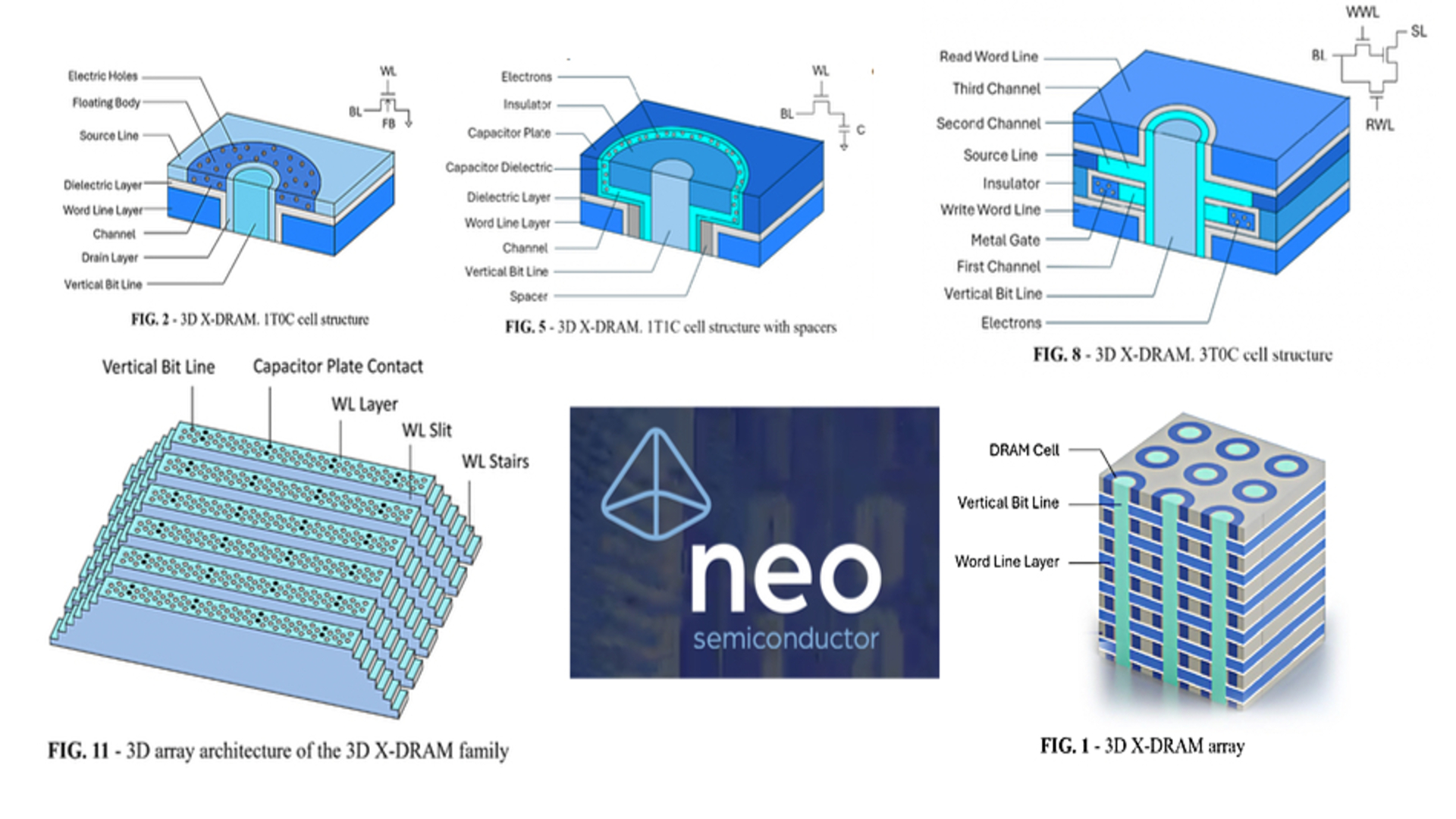
Rank 16911512GB DRAM sounds huge, but don’t hold your breath for consumer availabilityNEO’s 3D X-DRAM stacks layers sky-high, but price and practicality remain unclearAI and enterprise systems will get the speed, regular users probably won’tNEO Semiconductor’s push into 3D X-DRAM memory marks an ambitious attempt to rethink DRAM design for the AI and high-performance computing era.While the promises - stacked layers, enhanced bandwidth, and reduced power consumption - are impressive, the practicality and consumer accessibility of these technologies remain open to scrutiny.With the company projecting that its most advanced modules could reach densities of up to 512GB, it’s hard not to ask: who is this memory really for?Complex architectures with limited consumer impactAt the core of NEO’s approach is a vertically stacked architecture that mimics the structure of 3D NAND.In NEO’s own words, the array is “segmented into multiple sectors by vertical slits,” with “word line layers connected through staircase structures.”The company compares its 3D X-DRAM density to the current 0a-node planar DRAM’s 48GB and claims to reach 512GB, but the implication that such capacities will trickle down into mainstream consumer products seems tenuous at best.The proof-of-concept chips are still in the early stages. NEO is currently developing a test version of the simpler 1T0C architecture, with the more complex, and more promising, 1T1C version planned for 2026.The 1T1C variant utilizes IGZO transistors paired with a cylindrical high-k dielectric capacitor. It promises improved retention time, reportedly beyond 450 seconds, and supports stacking up to 128 layers.With further refinements, including the addition of 5nm-thick spacers to reduce parasitic capacitance, NEO claims stacking could exceed 512 layers.The 3T0C design, which incorporates dual IGZO layers, is geared toward in-memory computing and AI applications.Still, NEO’s statements about eliminating the need for TSV and enabling up to 32K-bit bus widths raise eyebrows.Such bandwidth sounds transformative, especially compared to the projected 2K-bit bus width of HBM4, but scaling this level of performance in real-world systems is a non-trivial task.From a broader perspective, the DRAM market hasn’t shifted significantly in terms of cost-per-GB over the past decade. Despite some fluctuations, the downward trend slowed considerably after 2012.One might expect the MacBook Pro, for instance, to ship with far more RAM by default today than it did a decade ago, but that hasn’t happened.Even with some price drops - DDR3 vs. DDR5 comparisons show modest improvement - the advances haven’t been revolutionary.Commodity pricing may fluctuate, but the overall curve has flattened. Forecasts suggest we may be near a low point before another upswing.So while 3D X-DRAM may indeed deliver bigger, faster memory by 2026, it’s unlikely these 512GB modules will be available to consumers anytime soon.More likely, such capacity and speed will be reserved for AI servers and enterprise systems, rather than everyday desktops or laptops.You might also likeThese are the best mobile workstations you can buy right nowWe've also listed the best mini PCs for every budgetNearly 90% of businesses that switched from WordPress are content with their new CMS, survey finds
-

Picture from cdn.mos.cms.futurecdn.net
Rank 16912Linus Tech Tips and Kioxia have smashed the Pi calculation world record300 trillion digits of Pi were calculated using Kioxia NVMe SSD clusterThe seven-month compute effort ended with Guinness recognitionAfter StorageReview previously claimed the Pi calculation world record with over 202 Trillion Digits, now Linus Media Group, the creators of the Linus Tech Tips YouTube channel, has taken it even further.Working with Kioxia, LMG officially set a new Guinness World Record for the "Most Accurate Value of Pi", reaching an incredible 300 trillion digits.This milestone was achieved using a high-performance storage setup featuring 2.2PB of Kioxia’s CM Series 30.72TB and CD Series 15.36TB PCIe NVMe SSDs.(Image credit: Kioxia)Seven months and no SSD failuresThe drives were organized in a NAS system connected to a dual-CPU compute server. The entire operation ran continuously for nearly seven and a half months.“We knew breaking the Pi record with distributed network storage was going to be difficult - no one had really done it before due to the performance challenges associated with remote storage," said Jake Tivy, Writer & Host, Linus Media Group."Fortunately for us, the reliability and performance of Kioxia's NVMe SSDs enabled us to run continuous, intensive compute operations at speeds up to 100+ GB/s for nearly seven months straight, without a single SSD failure."The project not only broke the previous record but did so by a wide margin. StorageReview’s 202 trillion digit milestone was huge, but it wasn’t officially verified by Guinness World Records.The last recognized benchmark from Guinness was 62 trillion digits, so this new effort pushed that number nearly five times higher."Attaining a Guinness World Records title for the most accurate value of Pi is a tremendous achievement, emphasizing the courage of taking on a challenge and the power of great cooperation and teamwork," said Axel Stoermann, Vice President and CTO for Embedded Memory and SSD at Kioxia Europe."Kioxia America's successful collaboration with Linus Media Group enabled the demonstration of the robust capabilities of our NVMe SSDs under the most demanding of workloads. We will continue to advance the capabilities of our flash memory and SSD technology to support supercomputing applications," he added.The Linus Tech Tips channel released a video documenting the effort which you can watch below. It also revealed the final digit of the record-breaking result. (Spoiler alert, the 300 trillionth digit of Pi is 5.)You might also likeThese are the fastest SSDs you can buy right nowAnd these are the largest HDDs and SSDs on the market at the momentTech publisher breaks Pi calculation world record, hitting over 202 trillion digits
-
Picture from o.aolcdn.com
Rank 16913OpenAI is buying Jony Ive's startup, io, for $6.5 billion, as first reported by The New York Times. The company confirmed the news in a blog post on its website headlined by the photo you see above, which is apparently real and not AI generated. As part of the deal, Ive and his design studio, LoveForm, will continue to work independently of OpenAI. However, Scott Cannon, Evans Hankey and Tang Tan, who co-founded io with Ive, will become OpenAI employees.
OpenAI has not disclosed whether the deal would be paid for in cash or stock. The company has yet to turn a profit. According to reporting from The Information, OpenAI has agreed to share 20 percent of its revenue with Microsoft until 2030 in return for the more than $13 billion the tech giant has invested into it.
Developing...This article originally appeared on Engadget at https://www.engadget.com/ai/openai-buys-jony-ives-design-startup-for-65-billion-173356962.html?src=rss
-

Picture from ichef.bbci.co.uk
Rank 16914 -

Picture from ichef.bbci.co.uk
Rank 16915 -

Picture from ichef.bbci.co.uk
Rank 16916 -
Picture from o.aolcdn.com
Rank 16917The upcoming Switch 2 launch title Mario Kart World was originally intended for the OG Switch console, according to an interview with the game's developers. This was the goal until the dev team realized that the console couldn't handle it.
"It was difficult for us to incorporate everything we wanted, so we were always conscious of what we were giving up in return,” said programming director Kenta Sato. A big sticking point seemed to be that the original Switch would have had to run the game at 30FPS. Mario Kart games have always run at 60FPS, for obvious reasons. You can't simulate speed without, uh, simulating speed.
Developers pecked away at the "tough situation" until finally deciding to create more DLC for Mario Kart 8 Deluxe as a way to bide time as the team figured out what to do.
"As we’d decided to release Mario Kart 8 Deluxe — Booster Course Pass, we thought that would give us a bit more time to continue development," said producer Kosuke Yabuki. "That’s when the conversation of moving it to the Nintendo Switch 2 system came up, and this suddenly opened up a bunch of possibilities on what we could do. It was truly a ray of hope.”
This interview also revealed that the game has been in development since 2017, which is a heck of a long time. However, it makes a certain amount of sense given that the original Mario Kart 8 came out in 2014.
The upcoming racer was always set in an open world and it was never going to be called Mario Kart 9. The developers wanted to "take the series to the next level." The big, connected world seems to do just that.
"I felt that in Mario Kart 8 Deluxe, we were able to perfect the formula that we’d been following in the series up to that point, where players race on individual courses," Yabuki continued. "That’s why, this time, we wanted the gameplay to involve players driving around a large world, and we began creating a world map like this.”
I personally think the company made the right call by delaying this game until the Switch 2. Recent first-party Switch titles have experienced massive framerate issues, and there's no way the console could have handled races with 24 participants. In any event, we only have a couple of weeks until we get to play Mario Kart World, if you've successfully reserved the Switch 2 for the June 5 launch.This article originally appeared on Engadget at https://www.engadget.com/gaming/nintendo/mario-kart-world-was-initially-planned-for-the-original-switch-174704456.html?src=rss
-

Picture from techcrunch.com
Rank 16918 -
Picture from techcrunch.com
Rank 16919 -
Picture from cdn.mos.cms.futurecdn.net
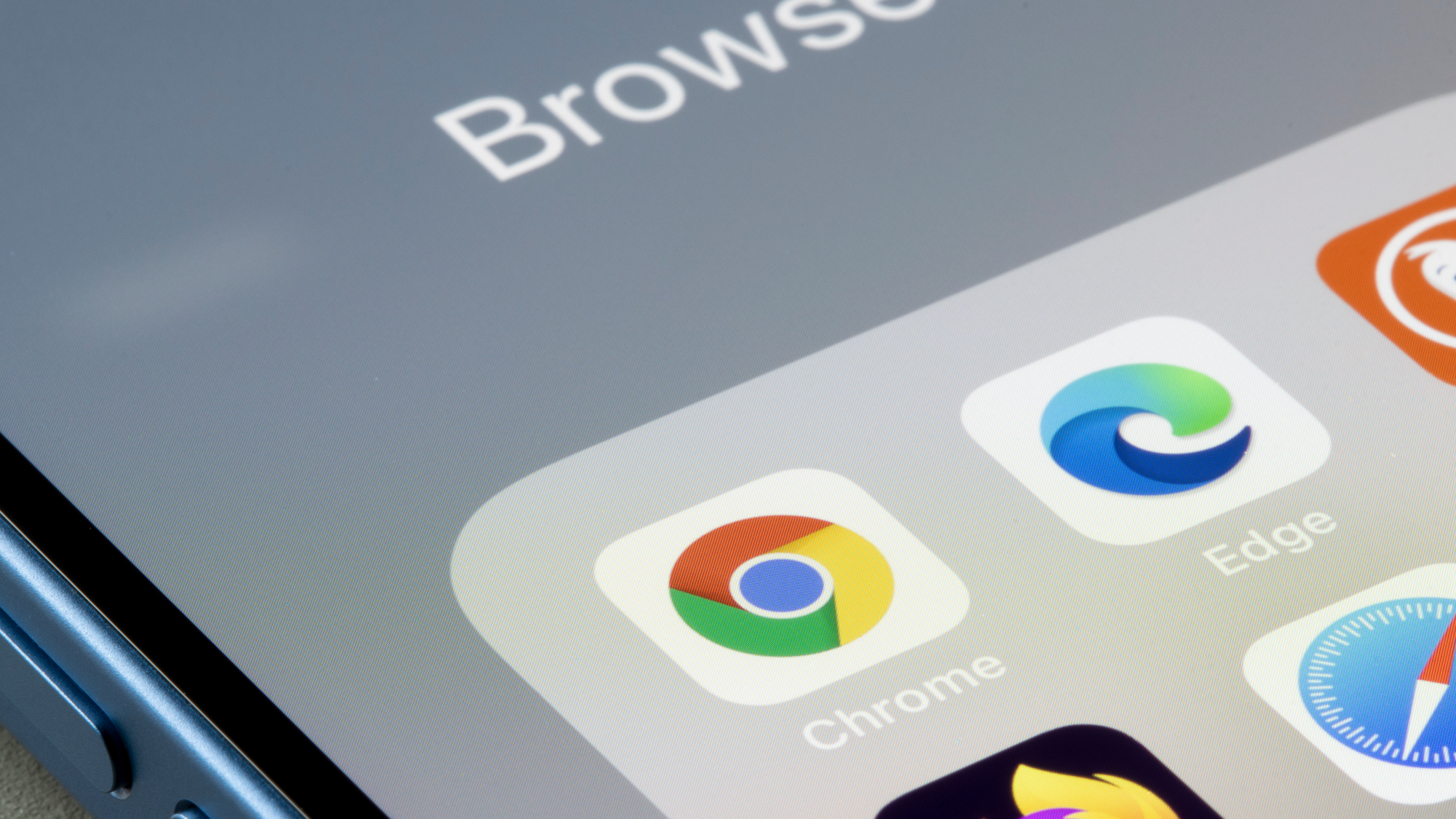
Rank 16920Chrome's password manager will now allow for automated password changeThe new feature helps reduce friction, Google saysPasswords remain the number one authentication methodUsers can now change compromised passwords directly in their Chrome browser, in just a few clicks. This is the promise given in a new Google blog discussing the extensive changes the company is bringing to user authentication and identity verification.Most browsers already come with a (rudimentary form of) password manager, allowing users to generate strong passwords, store their credentials, and auto-fill them for speed and convenience.Now, Google’s Chrome devs, Ashima Arora, Chirag Desai, and Eiji Kitamura, said the company is building on that foundation to “fix compromised passwords in one click”.TechRadar Pro readers can get 60% off Premium Plans at RoboForm now!New users can take advantage of RoboForm’s exclusive deal and get 60% off the Premium Plan. With this deal, you can get unlimited password storage, one-click login & autofill, password sharing, two-factor authentication for added protection, cloud backup, and emergency access for trusted contacts. To claim this deal, visit this link and sign up for the Premium Plan to lock in this huge discount.Preferred partner (What does this mean?)View DealChanging passwords“Automated password change makes it easier for users to respond when their credentials are at risk,” the blog reads. “When Chrome detects a compromised password during sign in, Google Password Manager prompts the user with an option to fix it automatically. On supported websites, Chrome can generate a strong replacement and update the password for the user automatically. This reduces friction and helps users to keep their account secure, without hunting through account settings or abandoning the process partway.”Passwords are still, by far, the most common and popular form of authentication. They are also the least secure form, as people tend to create weak, easy-to-guess passwords, tend to share them with friends, family and coworkers, or store them in insecure locations that hackers can easily access.The community has rallied behind alternatives such as passkeys, biometric authentication, or physical security keys. Google is also working on all of these (and then some), but stressed that passwords were “still the world’s most common authentication method,” suggesting that it’s not abandoning the practice any time soon.The full blog is a rather interesting read, discussing a unified sign-in experience, improved identity verification, and enhanced session security. You can read it in more detail on this link.You might also likeHackers are distributing a cracked password manager that steals data, deploys ransomwareTake a look at our guide to the best authenticator appWe've rounded up the best password managers
-

Picture from techcrunch.com
Rank 16921 -

Picture from ichef.bbci.co.uk
Rank 16922 -
Picture from o.aolcdn.com
Rank 16923Game Pass members can now play over 50 old-school games for free. Microsoft's Retro Classics is a library of old-school Activision and Blizzard games from the '80s and '90s, like Pitfall! and MechWarrior 2. You can play on Xbox consoles, PCs and supported cloud gaming devices.
Like Nintendo's Switch Online classics, the Game Pass version includes save states. That should come in handy for some of the excruciatingly difficult ones. Although there's no online multiplayer, you can play against friends locally in titles that support it.
Police QuestSierra / Microsoft
Retro Classics includes Atari-era games like the pioneering platformer Pitfall! and its sequel Pitfall II: Lost Caverns, the bomb-catching game Kaboom! and the shoot-'em-up River Raid. Fans of early adventure games also have plenty to chew on. There's the groundbreaking text adventure Zork, as well as the Sierra classics Space Quest II and Police Quest. Just remember to connect a keyboard (or play on PC) for the latter three, or you won't get far.
Microsoft says it will expand the collection over time, planning to eventually pass 100 games. GameSpot published a complete list of the 58 titles available at launch.
Retro Classics is available today for all Game Pass tiers. You can find the collection here or by searching for and installing it on your Xbox console or in the Xbox on PC app.This article originally appeared on Engadget at https://www.engadget.com/gaming/xbox/xbox-game-pass-retro-classics-has-over-50-old-school-games-for-people-over-50-181453629.html?src=rss
-

Picture from ichef.bbci.co.uk
Rank 16924 -

Picture from ichef.bbci.co.uk
Rank 16925 -

Picture from cdn.mos.cms.futurecdn.net
Rank 16926The Bear season 4 trailer has been releasedThe timer suggests it could be the final challenge for the stressful cooking dramaSeason 4 arrives on Hulu and Disney+ on June 25The Bear season 4 has an intense trailer ahead of its Hulu (US) and Disney+ (international) release on June 25.Maybe I'm reading too much into things, but deciding to include the ever-stressful clock could indicate we're counting down to the finale.There are also moments of Carmy (Jeremy Allen White) trying to remember why he loves what he does and approaching a meeting with his mother (Jamie Lee Curtis), so even if it isn't the final season, there's still plenty of drama ahead, and it seems to be building to something big.Previously, I noted that The Bear made Emmys history for most comedy wins, but it's still the most stressful Hulu show on TV, and I'm sure season 4 will be no different.Check out the new trailer below.What is The Bear season 4 about?(Image credit: Hulu)An official plot for The Bear season 4 reveals: "Carmen 'Carmy' Berzatto (Jeremy Allen White), Sydney Adamu (Ayo Edebiri), and Richard 'Richie' Jerimovich (Ebon Moss-Bachrach) push forward, determined not only to survive, but also to take The Bear to the next level. With new challenges around every corner, the team must adapt, adjust and overcome."There's still quite a lot to speculate on regarding one of the best Hulu shows, so we'll have to wait patiently to find out more about season 4. It won't be long, though, and much like the clock in the trailer, I'm counting down the hours.Until then, why not check out the biggest Hulu movies to stream in May 2025 or 5 new Hulu movies with over 91% on Rotten Tomatoes to tide you over.You might also likeBest streaming deals: current savings for Disney+, Hulu, Sling TV and moreEverything new on Hulu in May 2025 – stream my favorite Pamela Anderson movie, celebrate Star Wars Day with the original trilogy and more7 of the biggest Disney+ and Hulu TV show announcements from Disney Upfront 2025
-

Picture from cdn.mos.cms.futurecdn.net
Rank 16927Jony Ive, who famously designed the iPhone (among other iconic Apple devices), is about to become the design lead for OpenAI, the chatCPT AI giant that, for now, does not make a single hardware device.The Wall Street Journal on Wednesday reported the impending deal, which sees OpenAI acquire Ive's io company in a deal valued at $6.5 billion. As part of that, Ive becomes the design lead for OpenAI, a role he's been slowly-stepping into for some time.Ive, who famously led Apple's design for decades, left the company in 2019 and, in recent months, has expressed some misgivings about the possible negative impact of the previous products he's worked on (which might include the iPhone)."I think when you’re innovating, of course, there will be unintended consequences, You hope that the majority will be pleasant surprises. Certain products that I’ve been very, very involved with, I think there were some unintended consequences that were far from pleasant,” said Ive earlier this month, according to the Verge.While reports indicate that Ive and OpenAI CEO Sam Altman are interested in building AI-capable consumer hardware, a smartphone is probably not on that menu.Instead, most expect the duo to focus on wearables like earbuds and smartwatches that could be enhanced with, for instance, cameras that could see your surroundings and use onboard AI to help you act on and react to them.A soft approachIve's focus will also apparently be on upgrading OpenAI software's visual appeal. So expect an infusion of Ive-ness on ChatGPT on mobile and the desktop (where it has a particularly techy or dev-friendly look), as well as on Sora and Dall-E interfaces.In the latter part of his career at Apple, Ive was most responsible for stripping away skeuomorphism – making digital icons look like their real-world counterparts – across Apple's platforms. OpenAI's software doesn't suffer from the skeuomorphic scourge, but some could argue its overall look is less than elegant.If you're curious if Ive's design skills are still up to snuff, just take a look at the updated Airbnb, which Ive's Loveform firm redesigned. Loveform, by the way, is set to remain a stand-alone company and will, according to The Wall Street Journal, work with OpenAI as a client.The news must sting Apple a little bit. The company, which partnered with OpenAI to include ChatGPT access in Apple Intelligence, has not only failed to deliver its own generative AI, but is falling behind the industry in delivering a true, combined hardware/software AI experience.Open AI CEO Sam Altman (Image credit: Getty Images / Tomohiro Ohsumi / Stringer)Hints of hardware to comeIt'll be fascinating to see what Altman and Ive cook up, and we already have some hints.Altman announced the deal by tweeting that he's "excited to try to create a new generation of AI-powered computers." Taken literally, we might expect an AI PC from the team, but I think here Altman means "computers writ large" in that most intelligent consumer electronics could be considered computing devices.The tweet was accompanied by a video featuring a conversation between Ive and Altman, in which Altman described developing "a family of devices that would let people use AI to create all sorts of different things."Without disclosing the product, Ive revealed that "the first one we've been working on has almost completely captured our imagination." Further, Altman added that Ive handed him the device to take home. "I've been able to live with it and I think it's the coolest piece of technology that the world will have ever seen."No matter what they're building, it's worth remembering that the road to AI hardware success is already littered with the rotting carcasses of failed ventures like Human AI. Regular people have not shown great interest in wearing AI hardware that doesn't align with their current fashion choices.thrilled to be partnering with jony, imo the greatest designer in the world.excited to try to create a new generation of AI-powered computers. pic.twitter.com/IPZBNrz1jQMay 21, 2025That said, there may be an opportunity for OpenAI, Ive, and Altman in the smart glasses space. It's the one AI-connected device area that appears to be showing some real signs of life. That's mostly down to Meta's efforts with Ray Ban Meta Smart Glasses, but also evidenced by the upcoming influx of Android XR competitors from Google partners Samsung, Warby Parker, and others. Some were announced this week at Google I/O 2025, and all of them will feature Gemini at their core.OpenAI and ChatGPT may be leading in the generative AI space, but Google Gemini is close behind. And if Android XR partners can deliver stylish Gemini Smart Glasses this year, it could quickly vault Gemini into the lead. At the very least, this puts pressure on OpenAI to deliver something.Is Jony Ive the secret sauce that will make ChatGPT AI glasses, earbuds, smart watches, and other consumer hardware possible and desirable? Maybe. OpenAI says we'll see their work next year. Just don't expect a ChatGPT Phone.You might also likeWhat is ChatGPT: everything you should know about the AI ...I pitched the new Google Gemini against ChatGPT for AI ...I asked ChatGPT, Gemini, and other AIs how to combat ...
-

Picture from techcrunch.com
Rank 16928 -

Picture from techcrunch.com
Rank 16929 -

Picture from ichef.bbci.co.uk
Rank 16930 -
Picture from o.aolcdn.com
Rank 16931Sonos' speakers are known for their premium price tags, but if you're looking for a more affordable entry-point to the ecosystem, you can get up to 25 percent off some of the company's portable speakers and speaker bundles for Memorial Day. That includes $113 off the Sonos Move 2, which brings the speaker's price down from $449 to $336.
The Sonos Move 2 was introduced in 2023 as the more expensive follow-up to the original Move, Sonos' first "portable" speaker. You can argue over it's portability — the Move 2 makes more sense as something your carry to your backyard than take on a hike — but the speaker packs a punch and lets you play music over both Bluetooth and Wi-Fi. We liked the Sonos Move 2 when we originally reviewed it, but took issue with how expensive it was, so this sale helps make splurging on it more palatable.
If you're looking for something even more portable and affordable, the Sonos Roam 2 is also on sale for $45 off. Like the Move 2, the speaker has the ability to connect to a smartphone over Bluetooth outside while still being able to hook into your larger Sonos sound system over Wi-Fi at home. The Sonos Roam 2 offers some key improvements to the original Roam's design, too, like new colors and easier to understand buttons, while still providing the company's signature sound profile and 10 hours of battery life.
On top of the two speakers, you could also buy a bundle of a speaker and an accessory, like the Sonos Roam 2 and an OtterBox case, or a bundle of multiple speakers. You can get two Roam 2's for $268 or a Sonos Roam 2 and Sonos Move 2 for $479, for example.
Sonos has faced issues in the last year ironing out software problems — the bugs and missing features were so bad the company's CEO stepped down — but the fundamentals of how the company's speakers sound have remained great. With the ship mostly righted on the software side of things, a sale is a great time to see what all of the fuss is about.
Follow @EngadgetDeals on X for the latest tech deals and buying advice.This article originally appeared on Engadget at https://www.engadget.com/audio/speakers/sonos-portable-speakers-are-25-percent-off-for-memorial-day-185627228.html?src=rss
-

Picture from ichef.bbci.co.uk
Rank 16932 -

Picture from techcrunch.com
Rank 16933 -
Picture from cdn.mos.cms.futurecdn.net
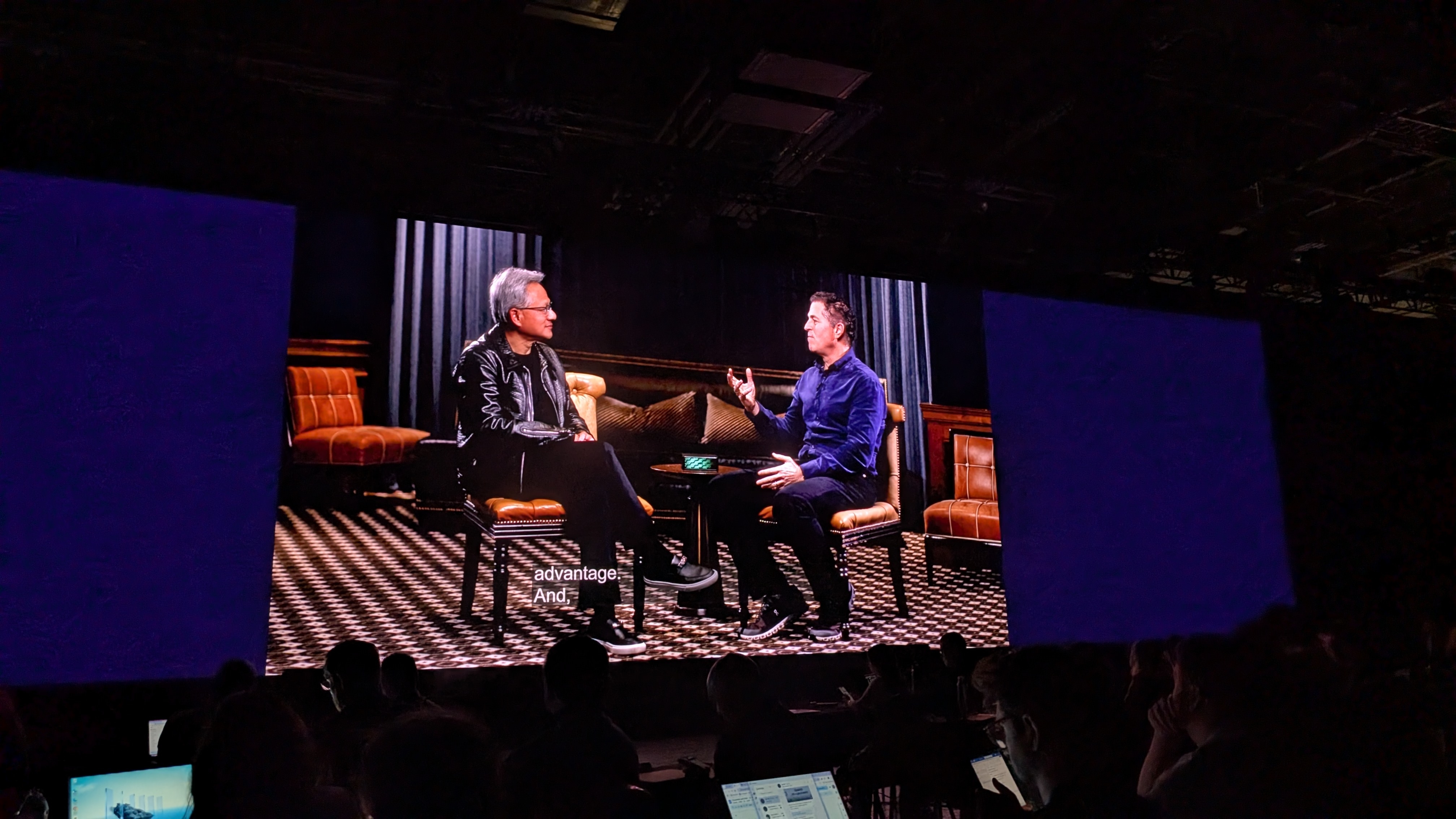
Rank 16934"AI is here", Jensen Huang tells Dell Technologies World 2025Speaking to Michael Dell, Huang once again extols virtue of AI techNvidia and Dell combine to launch "AI Factory 2.0"Nvidia CEO Jensen Huang has once again looked to highlight the huge potential AI can offer companies of all sizes in the coming months and years.Speaking at the recent Dell Technologies World 2025 event, Huang noted “AI is here - this is unquestionably the single biggest platform shift.”In conversation with Dell Technologies CEO Michael Dell, Huang added how, “from a technology perspective…we’re now in perception to generative to now reasoning AI models, and that’s at the raw technology level.”"The biggest reinvention"Huang highlighted how Nvidia and Dell are teaming for enterprise AI, which he called, “one of the largest opportunities ahead of us”.“These are companies that are essentially building a digital workforce of AI agents, which can be working in cybersecurity, software engineering, marketing and sales operations, and forecasting, and supply chain management - all these different AI agents are being created now, that can augment our human workforce with a digital workforce.”(Image credit: Dell Technologies)One of the biggest announcements at Dell Technologies World 2025 concerned the expansion of Dell’s AI Factory platform, which has received some significant updates thanks to Nvidia.Initially launched at DTW 2024, the next iteration of the Dell AI Factory, unsurprisingly called Dell AI Factory with Nvidia 2.0, encompasses client devices, servers, storage, data protection and networkingThe new iteration includes six new servers, including the air-cooled PowerEdge XE9780 and XE9785, and the liquid-cooled XE9780L and XE9785L, all of which support up to 192 Nvidia Blackwell Ultra GPUs with direct to chip cooling.These new releases can also be customized with up to 256 Nvidia Blackwell Ultra GPUs per Dell IR7000 rack, which Dell claims can deliver up to four-times faster large language model training than its predecessor.The two companies also announced Dell Managed Services for the Dell AI Factory with Nvidia, which looks to simplify AI operations with the management of the full Nvidia AI stack, and 100-times faster token generation per second for distributed AI inferencing, with more than 80% reduction in latency, to help support the growth of agentic AI.(Image credit: Future / Mike Moore)Noting that he and Huang had known each other “for some 30 plus years”, Dell asked the Nvidia CEO if he wanted to give any advice to the Dell Technologies World audience."This is a once in a lifetime opportunity - in the last 60 years, this is the biggest reinvention that you and I have seen,” Huang noted.“This is incredibly exciting technology - you want to engage it. The impact to your company is incredible. And you want to be an early adopter.”“This is the beginning of a decade of transformation. But you don't want to be second - this is the time, and you want to be first.”You might also likeDell CEO tells us how AI can make us “more effective as a species”Nvidia CEO - AI could be the largest technological leap we’ve ever seen"The real danger is staying still” - Dell CEO Michael Dell claims AI is "the new electricity"
-

Picture from ichef.bbci.co.uk
Rank 16935 -

Picture from ichef.bbci.co.uk
Rank 16936 -

Picture from ichef.bbci.co.uk
Rank 16937 -

Picture from ichef.bbci.co.uk
Rank 16938 -

Picture from ichef.bbci.co.uk
Rank 16939 -

Picture from ichef.bbci.co.uk
Rank 16940 -
Picture from o.aolcdn.com
Rank 16941Devices running Android 16 will pick up a new trick when the software update rolls out later this year: The ability to run a desktop-style interface while connected to an external display. An early version of the idea was spotted for phones in betas of Android 16, but as 9to5Google noticed, Google made the feature official during its developer keynote.
According to the presentation, the new windowing and external display feature was created in collaboration with Samsung, "building on the foundation of Samsung DeX, to bring enhanced desktop windowing capabilities in Android 16." Prior to this official support, Samsung DeX was a custom feature Samsung built into One UI that allowed certain Samsung phones and tablets to display a desktop-style interface while connected to a display.
Google's implementation seems to be aiming for the same thing, with resizable windows and a dock for your most used apps. The company also appears open to the feature working on tablets and phones, too. In a blog post touting the advantages of developing adaptive apps, Google says that Android 16 offers "a true desktop-like experience on large screens and when devices are connected to external displays." While Google's language leaves things open-ended, support for this desktop experience could still hinge on phone makers enabling it and app developers making sure their apps play nice with resizable windows.
A developer beta of Android 16 is available to download on select phones and tablets right now. Assuming desktop windowing and support for external displays isn't dropping in a later update, you'll be able to try the new features for yourself when Android 16 launches in June.This article originally appeared on Engadget at https://www.engadget.com/mobile/smartphones/android-16-includes-a-desktop-interface-google-built-from-samsung-dex-213611668.html?src=rss
-

Picture from ichef.bbci.co.uk
Rank 16942 -

Picture from ichef.bbci.co.uk
Rank 16943 -

Picture from ichef.bbci.co.uk
Rank 16944 -

Picture from ichef.bbci.co.uk
Rank 16945 -
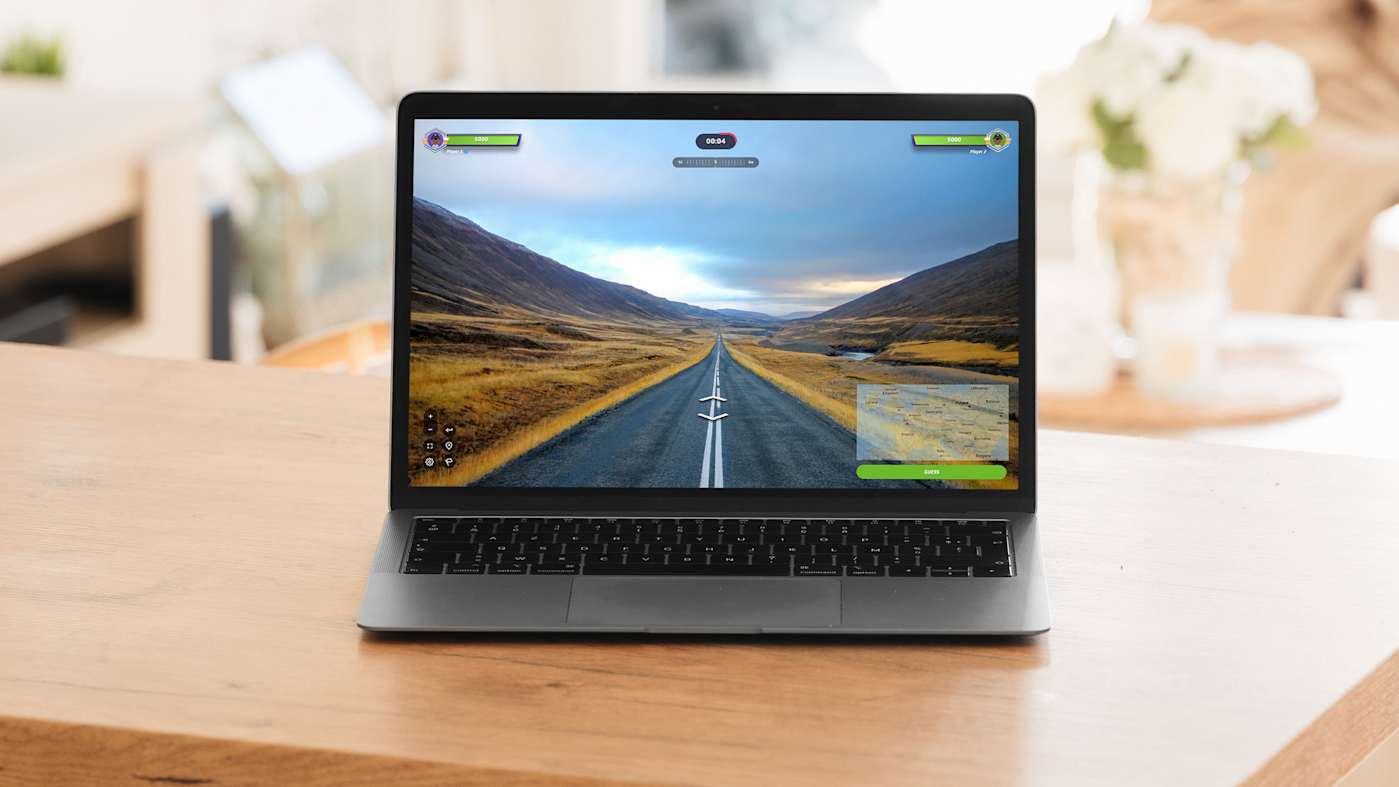
Picture from o.aolcdn.com
Rank 16946A group of GeoGuessr map creators have pulled their contributions from the game to protest its participation in the Esports World Cup 2025, calling the tournament "a sportswashing tool used by the government of Saudi Arabia to distract from and conceal its horrific human rights record." The protestors say the blackout will hold until the game's publisher, GeoGuessr AB, cancels its planned Last Chance Wildcard tournament at the EWC in Riyadh, Saudi Arabia, from July 21 to 27.
GeoGuessr is a browser game where players try to pinpoint locations using only Google Street View images, and it relies on community mapmakers to stay relevant. The blackout, which began on May 21, includes "dozens of creators and their maps, including a supermajority of the most popular competitively relevant world maps," according to a statement the group shared on Reddit. The removed maps have been played tens of millions of times.
One of the largest GeoGuessr communities, Plonk It, has also removed its Map Directory and shared the mapping community's open letter. That statement reads in full as follows:
We, the creators of a considerable share of GeoGuessr’s most popular maps, have decided to make our maps unplayable in protest of GeoGuessr AB’s decision to host a World Championship wildcard tourney at the Esports World Cup (EWC) in Riyadh.
The EWC is a sportswashing tool used by the government of Saudi Arabia to distract from and conceal its horrific human rights record.
Groups targeted by the government include women, LGBTQ people, apostates and atheists, political dissenters, migrant workers in the Kafala system, religious minorities, and many others. The subjugation of these groups is extensive and pervasive. Members of these groups are routinely subjected to discrimination, imprisonment, torture, and even public executions. These severe human rights violations are well-documented and indisputable.
By participating in the EWC, GeoGuessr is contributing to that sportswashing agenda, which is designed to take attention away from Saudi Arabia's human rights violations.
The GeoGuessr community is diverse and includes many members of groups that would be harshly persecuted were they to live in Saudi Arabia. In solidarity with those currently residing in Saudi Arabia while being subject to oppression, as well as members of the community who would feel and be unsafe attending the tournament in Riyadh, we have decided to black out our maps by replacing all their previous locations with random garbage locations, rendering them unplayable.
This blackout includes dozens of creators and their maps, including a supermajority of the most popular competitively relevant world maps. It will continue until we see action from GeoGuessr; specifically, we demand that GeoGuessr cancels its wildcard event in Saudi Arabia and commits to not hosting any events there as long as it continues its oppressive regime.
You don't play games with human rights.
Thank you for reading.
The GeoGuessr mapping community
We've hit up GeoGuessr AB for a comment on the blackout and will update this story as we hear back.
The EWC is a huge, multi-game event owned and operated by the Saudi government and held in the country's capital city. It's an evolution of the Gamers8 tournament and this year marks the second EWC-branded competition; it's due to take place in July and August with a total prize pool of $38 million, split among 24 games. Franchises participating in the 2025 event include Rocket League, Apex Legends, Call of Duty, League of Legends, Counter-Strike, Overwatch, Dota 2, Valorant, Street Fighter 6, EA Sports FC and PUBG.
It's difficult to compete in esports without running into Savvy Games Group, the video game arm of Saudi Arabia's Public Investment Fund. Alongside hosting the EWC, Savvy has financial stakes in Nexon (10.2 percent ownership), Electronic Arts (9 percent), Embracer Group (8.3 percent), Nintendo (7.5 percent), Capcom (5 percent) and Take-Two Interactive (6.8 percent as of 2023). Savvy also runs ESL FACEIT Group, which contains the Electronic Sports League, a longstanding and significant esports event company. The New York Times reported last year that the Saudi government plans to invest $38 billion in the video game industry by 2030.
Human rights groups including Amnesty International and Human Rights Watch have long documented the abuses of the Saudi government. HRW describes Saudi Arabia's human rights record as "abysmal," and specifically calls out the PIF as a reputational whitewashing tool. Saudi authorities have been accused of sportswashing in traditional sports as well, specifically through the country's ownership of LIV Golf and Newcastle United FC.
In February, Riot Games — the operator of League of Legends, Valorant and Teamfight Tactics, and arguably the largest name in esports — signed a three-year deal with the Esports World Cup Foundation for an undisclosed sum. Riot defended the partnership, arguing that the resulting financial boon for players and the esports industry outweighed other concerns.
"We know some of you may not feel great about our decision to partner with the EWC in this way, and we respect that," Riot's statement read.
Though corporate support for the EWC remains strong, the GeoGuessr mapping community isn't alone in rejecting this year's tournament. Street Fighter 6 player Christopher Hancock, who plays as ChrisCCH for FlyQuest, recently declined his spot at EWC 2025. In a social media statement, Hancock said, "I gave this decision a lot of thought and ultimately decided that, due to the nature in which the event is funded and managed, I do not feel comfortable participating in it." He added that the partnership between the Capcom Pro Tour and the EWC effectively forced him to work with the Saudi-backed group.
"Choosing to not participate in any EWC qualifiers would effectively mean retirement from competing," Hancock said. "I find it regrettable that this event has become so deeply embedded in the [fighting game community], but I have not yet made a decision on whether I will stop competing in events associated to it altogether."
Alongside the GeoGuessr map blackout, the community protest added one new, short challenge to the game called How to Run A Dictatorship. It takes players through five locations around Riyadh, documenting the alleged government-sanctioned torture, kidnapping, imprisonment and oppression of women, LGBTQ people, religious minorities and political dissenters occurring in these places. The challenge takes just a few minutes, so feel free to experience it yourself.This article originally appeared on Engadget at https://www.engadget.com/gaming/geoguessr-community-maps-go-dark-in-protest-of-ewc-ties-to-human-rights-abuses-221037118.html?src=rss
-
Picture from o.aolcdn.com
Rank 16947The News/Media Alliance took aim at Google today after the tech company's announcement at its I/O showcase that AI Mode will be rolling out to all US search users. This feature more closely integrates an AI chatbot into Google search. Ostensibly, AI Mode can help people get better answers to their queries, but it also serves to keep users on a Google property rather than clicking through to get information from other publications.
"Links were the last redeeming quality of search that gave publishers traffic and revenue. Now Google just takes content by force and uses it with no return, the definition of theft," said News/Media Alliance President and CEO Danielle Coffey. "The DOJ remedies must address this to prevent continued domination of the internet by one company."
This isn't the first time the organization has fired shots at Google; it filed an amicus brief earlier this month looking for remedy in the antitrust case about Google's monopoly control over search. The group argued that publishers should be able to opt out of letting search engines use their content for retrieval augmented generation.
Google has also taken an aggressive stance toward publishers as it develops more AI-driven services. The company's recent attitude can be seen in Bloomberg's discovery of an internal document showing that the company decided not to give publishers a choice to opt out of AI training if they wanted their material to appear in search results.This article originally appeared on Engadget at https://www.engadget.com/big-tech/newsmedia-alliance-calls-googles-ai-mode-theft-223128521.html?src=rss
-

Picture from ichef.bbci.co.uk
Rank 16948 -

Picture from techcrunch.com
Rank 16949 -

Picture from ichef.bbci.co.uk
Rank 16950