News
This constantly updated list features the latest and most important news articles, ranked in order of significance. The top stories highlight major developments, breaking news, and critical updates across various topics, ensuring you stay informed about the most pressing issues. As new articles are added, the list adapts to reflect the latest priorities, keeping the most impactful stories at the forefront. Whether it’s global events, technology breakthroughs, or industry trends, this dynamic list ensures you always have access to the most relevant and timely information.
-

Picture from techcrunch.com
Rank 16701 -
Picture from o.aolcdn.com
Rank 16702Whether you're traveling for a vacation or just relaxing in the sunshine, a tablet is one of the easiest ways for you and your family to stay entertained while out and about during the summer. If you're looking for a new tablet, Amazon is selling the most recent Apple iPad (A16) for $50 off. It's an 11-inch model powered by the A16 chip. You can buy the 128GB tablet in any of the four available colors — silver, blue, pink or yellow — of the tablet for $299. If you need more storage, you can opt for the 256GB model for $399 or the 512GB version for $595. All of these discounts are for the WiFi only models and do not include any time under the Apple Care protection plan.
Apple has a bunch of different iPads for sale these days, and the A16 one is our favorite budget option for this brand. That's because although the A16 chip is notably less powerful than the M3 or M4 you'll find in higher-end tablets, this model still performs well on the basic tasks that you'd use an iPad for. This iPad has a liquid Retina display with a resolution of 2360x1640. Again, it's not flashy, but plenty serviceable.
One additional caveat for the A16 is that it can't run Apple Intelligence, so this isn't the iPad for you if you're looking to experiment with lots of AI tools. But for about $300, it's a great starter option if you want to have an easy way to play games, watch shows or read on a larger screen.
Follow @EngadgetDeals on X for the latest tech deals and buying advice.This article originally appeared on Engadget at https://www.engadget.com/deals/apples-latest-ipad-is-on-sale-for-50-off-ahead-of-memorial-day-195749473.html?src=rss
-
Picture from cdn.mos.cms.futurecdn.net
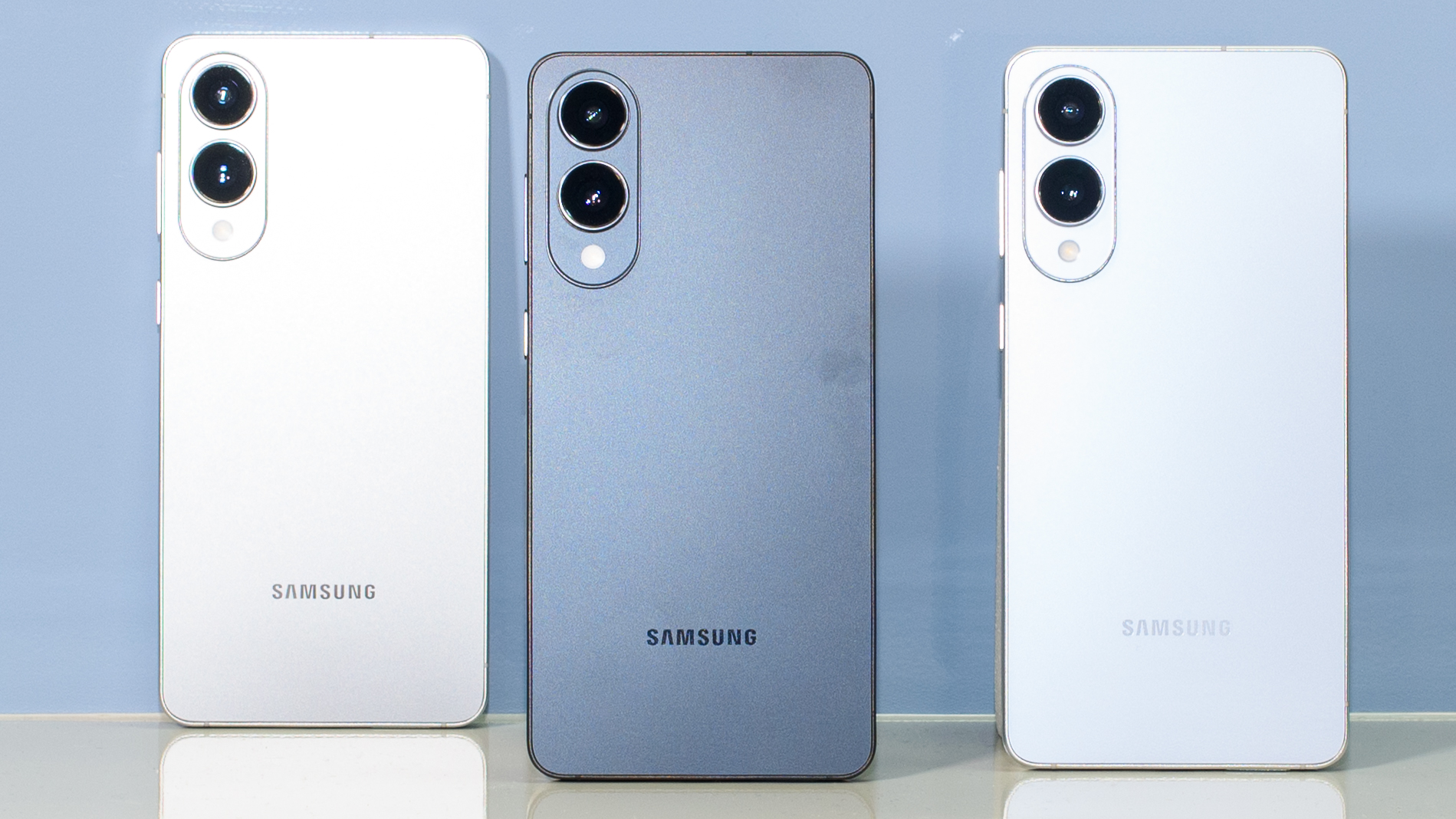
Rank 16703The Samsung Galaxy S25 Edge is earning plaudits aplenty for its stunning titanium design and improbable thinness (not least from us here at TechRadar), but the phone’s smaller-than-hoped-for battery continues to raise eyebrows.At 3,900mAh, the cell in the Galaxy S25 Edge is only a smidgen smaller than the one in the standard Galaxy S25, but in Samsung’s new phone, that same battery has to power a much larger 6.7-inch display.Understandably, that’s led to question marks over the Edge’s endurance, but Samsung is confident that its new handset will provide more than enough battery life for all but the most hardcore users.In an exclusive interview with TechRadar, Kadesh Beckford, Smartphone Product Specialist at Samsung MX, played down the idea that the Galaxy S25 Edge compromises on battery life to deliver a more aesthetically pleasing design.“Even though we’ve made this device incredibly thin, we’ve tried to ensure that customers have [suitable] battery life available to them based upon their needs,” Beckford explained. “With 24 hours of video playback time and an all-day battery, [the Edge] is going to last you literally from the moment you wake up to the moment you go to bed. So, we're actually giving [consumers] what they need [in terms of battery life].“And also,” Beckford continued, “with the lithium graphite technology and the thermal interface material in there, it keeps the device cool, so pretty much no matter what you're doing on your phone, [it’ll] last all day long and then some.”
(Image credit: Future)
‘All day long and then some’ is a bold claim for a 6.7-inch handset with a 3,900mAh cell – and it’s one we’re currently putting to the test for our full Samsung Galaxy S25 Edge review – but Beckford says his enthusiasm for the phone’s endurance is based on his own real-world experience with the device ahead of its official launch.“I’ve played Genshin Impact on the Galaxy S25 Edge, I’ve played PUBG,” he explained. “It moves so smoothly, it’s unbelievable, and the phone has lasted me all day – sometimes into the following day as well. I’ve seen those elements [in action].“Do also remember that, traditionally, phones at this level of thinness don’t support wireless charging. With the custom Snapdragon 8 Elite chipset, we’ve still been able to include a thermal interface and wireless charging, with wireless power share as well, so I can even charge up my Galaxy Buds [using the Galaxy S25 Edge]. That there is real innovation.”
Traditionally, phones at this level of thinness don’t support wireless charging.Kadesh Beckford
Beckford concluded: “You’ve also got the ability to add a Qi2 case [to the Galaxy S25 Edge] for convenience at home or in your car. So, you can easily connect it up, and your device will last all day.”Of course, being compatible with convenient charging methods isn’t the same as offering good battery life outright, but Beckford’s point around real-world practicality stands. For the majority of users, the Galaxy S25 Edge will deliver all-day battery life, and the phone’s wireless charging and Qi2 compatibility should ensure that it can be charged anytime, anywhere if you do find yourself wanting for juice.
The Galaxy S25 Edge supports 25W wired, 15W wireless, and 4.5W reverse wireless charging (Image credit: Future)
Just how quickly the Galaxy S25 Edge can be charged to 100% is another matter entirely. The phone supports 25W wired, 15W wireless, and 4.5W reverse wireless charging – that’s comparable to the standard Galaxy S25 but a way off the Galaxy S25 Plus and S25 Ultra, which both support 45W wired charging.Whichever way you look at it, then, you will be sacrificing some endurance by choosing the Galaxy S25 Edge over one of the best Samsung phones. But, as Samsung suggests, that downgrade isn’t likely to feel dramatic for those who already charge their smartphone on a daily basis. Check out our soon-to-be-published Galaxy S25 Edge review for our own verdict on the matter.
You might also like
Best Samsung phones: top Galaxy handsets ranked‘I don't see a space where the S Pen is not a key part of our portfolio’: Samsung executive defends the S Pen amid cancellation rumorsSamsung says ‘millions’ are using Galaxy AI regularly, despite surprising survey results
-
Picture from cdn.mos.cms.futurecdn.net
Rank 16704Android XR has been showcased by Google at I/O 2025It relies heavily on AI to deliver many of its features, like live translationThe headset looks interesting, but the glasses are the true star
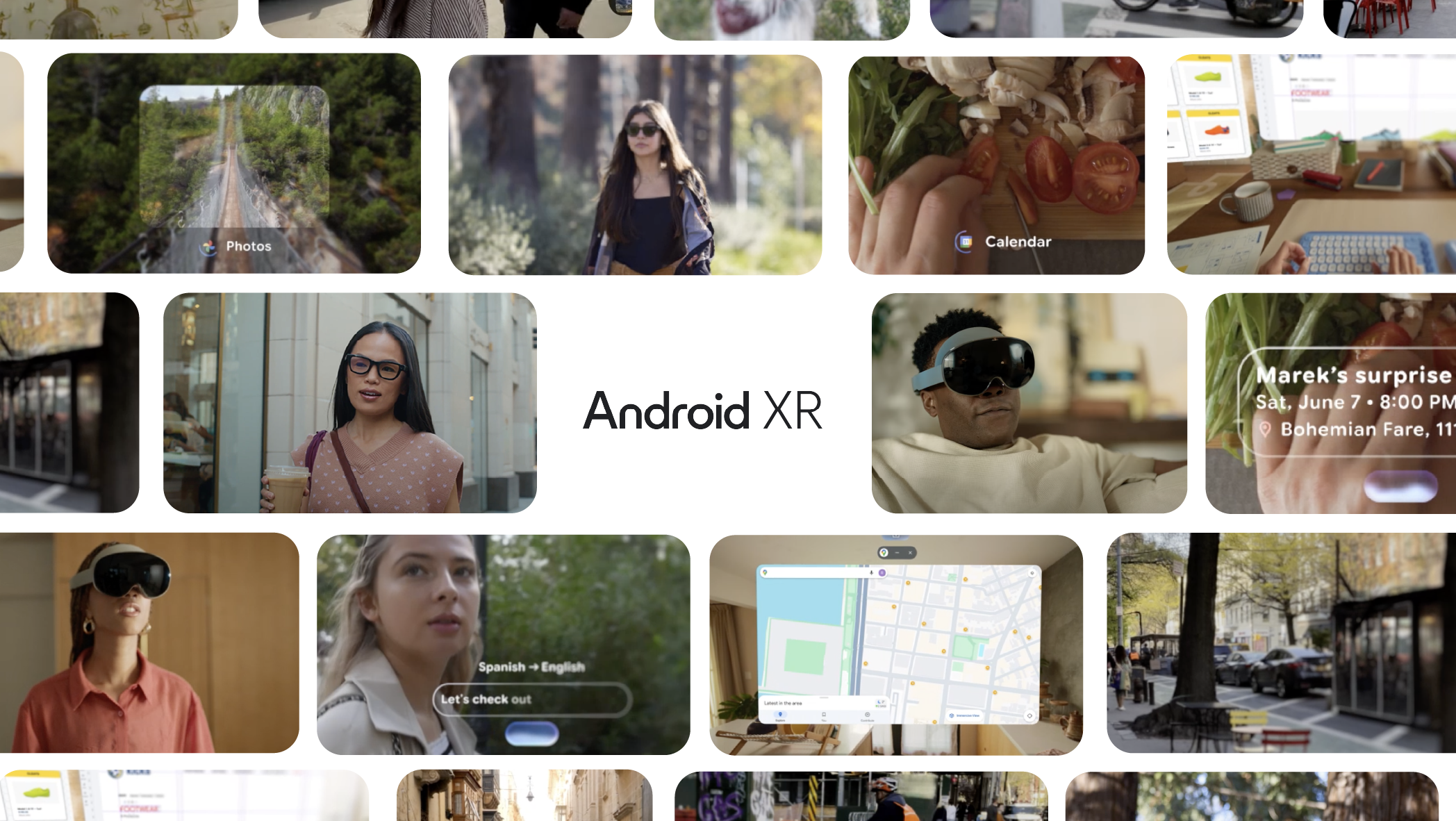
Google has finally taken the lid off Android XR at Google I/O 2025 to show us what the operating system will be capable of when it launches on Android XR headsets and glasses later this year.We didn’t see quite everything I was hoping we would, but we did learn what Google’s silver bullet in XR will be: Google Gemini. Its AI-centric approach was demoed across both hardware types – AR glasses and mixed-reality headsets.Starting with the latter, Google gave a public version of Project Moohan headset demonstrations it has been running privately for media and tech experts. It highlights some standard headset advantages, like the benefits of an immersive screen for multi-tasking – we were shown a user accessing YouTube, Google Maps, and a travel blog as they research a location they’re planning to visit.Then, in one impressive moment, that user asks Gemini if it can “take me to Florence.” Gemini obliges by opening Google’s immersive 3D map and gives them a birds-eye view of the city and some landmarks (including the iconic Cathedral of Santa Maria del Fiore, which Assassin’s Creed 2 players will be very familiar with).
(Image credit: Lance Ulanoff / Future)
Then there’s the glasses. Across a few different scenarios Google highlighted how Android XR specs can make your life easier with hands-free controls and a head-up display.You can draft and send messages to your contacts, access live translation with on-screen subtitles, search for Google Maps recommendations and then get directions to a location, and take pictures using the glasses’ camera and see a preview of the shot right away.It’s reminiscent of what Meta’s Ray-Ban glasses are capable of, and it’s exactly what we've been expecting Meta’s rumored smart glasses with a display will be capable of if (read: when) they’re showcased later this year.
(Image credit: Google)
I was expecting more from Google in the headset department, frankly.Android XR certainly seems neat, but I’ve yet to see a reason why it’s better than – or, to an extent, on a par with – with the competition (*cough* Meta Quest 3 *cough*). However, I’m at least a little hopeful that by the time Project Moohan is ready to launch for consumers (with it again only being teased for release “later this year”) some of Android XR’s letdowns will be addressed.For now, the headset certainly seems like it’s playing second fiddle to the true Android XR star: the glasses.
(Image credit: Google)
Not only are most of the showcased Android XR features (which look very useful) made for a device you’d wear all the time, I’m surprised by how much choice Google is already offering us in terms of hardware.Samsung is working on Android XR tech but so is Xreal with its Project Aura, and stylish eyewear brands Gentle Monster and Warby Parker. And Google’s promise of it “starting with” these brands suggests more partners are on the way.This abundance of choice is fantastic for two key reasons.First up, with more choice prices will have to remain competitive. Meta’s display-equipped smart glasses are reportedly set to cost over $1,000 with insiders expecting a cost in the $1,300-$1,400 range (which would be around £1,000-£1,100 or AU$2,050-AU$2,200).
Meta's glasses are cool, but don't offer Android XR's variety yet (Image credit: Meta)
With more glasses options to choose from we may see prices drop to more affordable levels more quickly than if there were just one or two players in the game.Second, glasses, like other fashion accessories, need to prioritize style to some degree. Utility is important, but if we’re expected to wear smart glasses all day everyday then just like any other accessory they need to suit our identity.By partnering with a range of different brands out the gate – the aesthetics of Gentle Monster and Warby Parker are almost polar opposites to one another – Android XR tech should appeal to a wider audience than the Meta’s Ray-Ban-only approach, because it will boast glasses designed to suit a wider range of fashion niches.
(Image credit: Google)
It’s still early days for Android XR, and there are crucial details we’re still missing, but Google has certainly come out swinging with its latest operating systemI’ll be paying close attention to Google’s Android XR demos, and looking for more concrete information on the upcoming hardware. For now, though, Google certainly has me on the hook.
You might also like
Forget Android XR, I've got my eyes on Vivo's new Meta Quest 3 competitorGoogle’s surprise Android XR glasses tipped to land in 2026 – and my only complaint is they aren’t launching soonerValve deckard VR headset described as ‘quite amazing’ but there’s still no word on its launch
-

Picture from cdn.mos.cms.futurecdn.net
Rank 16705Huawei unveiled its new MateBook Fold Ultimate Design laptop during Computex 2025It features an 18-inch OLED display, and a new foldable mechanism to rival competitorsIt's only available in China now, but could come to global markets soon
Computex 2025 is here, and it was only a matter of time until one of the huge tech companies during the expo revealed a new device that takes laptop design to the next level – and this one may be worth keeping tabs on.On its website (translated from Chinese), Huawei announced the new MateBook Fold Ultimate Design laptop, featuring an 18-inch (when expanded) 3K OLED display running on Harmony OS 5. Notably, unlike other foldable laptops like the Asus Zenbook Duo, the MateBook Fold Ultimate Design unfolds into an entire single screen.Essentially, this means that instead of what would be two screens connected via regular laptop hinges, it's a 'water-drop hinge' that allows it to open and close smoothly, and lay completely flat for an 18-inch screen experience. This mechanism is arguably a step up above Microsoft's new Surface Pro, which acts as a tablet but is also a 2-in-1 when you use its keyboard (which is sold separately).When in its laptop form, you'll have a 13-inch OLED screen at your disposal using its touchscreen keyboard (or the keyboard that's included in the package). However, the MateBook Fold Ultimate Design looks like more than just a 2-in-1 laptop; you'll be able to transform it from a regular laptop into a portable 18-inch display for casual viewing on the device in a matter of seconds.Closing the laptop entirely gives it a classy and thin notebook or diary-style design, as if it's built as a disguise, further setting it apart in terms of its design from competitors. To add a cherry on top, it has 1,600 nits of peak brightness, and a 74.69WHr battery – and both features could easily stand alone as major selling points.
If I didn't know what it really was, you could easily tell me it's just a notepad... (Image credit: Huawei)
According to a reliable tech analyst, Ming-Chi Kuo, Huawei is planning a production target for the MateBook Fold of between 180,000 and 200,000 units, and its life cycle will primarily depend on user feedback regarding the software functionality.It's an important factor to note, since the MateBook Fold is by no means an inexpensive laptop. It's currently only available in China, starting at ¥23,999, which converts to around $3,330 / £2,490 / AU$5,200, but its new features will be hard to turn down if you can afford it.
Analysis: If this is the future of laptop design, I'm here for it
(Image credit: Huawei)
I've played plenty of futuristic games like Cyberpunk 2077 and seen enough movies like Mission Impossible to suggest that Huawei's new laptop could be a game-changer. It isn't like other companies, such as Asus, haven't introduced similar devices – the difference is, none of them utilize the 'water-drop hinge' mechanism Huawei has introduced.It simply makes the Asus Zenbook Duo and the Lenovo Yoga Book 9i look like clumsy setups, that require a stand to stay upright and hinges for both screens. The MateBook Fold is the first laptop foldable laptop I've seen that has caught my eye – if only I could afford it.The only drawback here is that it will likely set you back thousands of dollars if it eventually launches globally. However, if it sells well enough and gains the traction that I anticipate, we could easily see Huawei's competitors and others follow suit soon – and that's exactly what I'm hoping for.
You may also like...
MSI's new Nintendo Switch 2 rival is official – here are 3 reasons why I'm excited about the AMD-powered Claw A8HP is changing the game with its new laptops – the OmniBook 5 Series combines OLED displays, big battery claims, and temptingly affordable price tagsAcer announces new Swift and Aspire laptop line-ups – here are 4 big things you need to know about them
-

Picture from cdn.mos.cms.futurecdn.net
Rank 16706Want proof that Google really has gone all-in on AI? Then look no further than today's Google I/O 2025 keynote.Forget Android, Pixel devices, Google Photos, Maps and all the other Google staples – none were anywhere to be seen. Instead, the full two-hour keynote spent its entire time taking us through Gemini, Veo, Flow, Beam, Astra, Imagen and a bunch of other tools to help you navigate the new AI landscape.There was a lot to take in, but don't worry – we're here to give you the essential round-up of everything that got announced at Google's big party. Read on for the highlights.
1. Google Search got its biggest AI upgrade yet
(Image credit: Google)
‘Googling’ is no longer the default in the ChatGPT era, so Google has responded. It’s launched its AI Mode for Search (previously just an experiment) to everyone in the US, and that’s just the start of its plans.Within that new AI Mode tab, Google has built several new Labs tools that it hopes will stop us from jumping ship to ChatGPT and others.A ‘Deep Search’ mode lets you set it working on longer research projects, while a new ticket-buying assistant (powered by Project Mariner) will help you score entry to your favourite events.Unfortunately, the less popular AI Overviews is also getting a wider rollout, but one thing’s for sure: Google Search is going to look and feel very different from now on.
Read more: Google Search just got its biggest-ever upgrade to lure you away from ChatGPT – here are 7 new things to try
2. Google just made shopping more fun
@techradar
♬ original sound - TechRadar
Shopping online can go from easy to chaotic in moments, given the huge amount of brands, retailers, sellers and more – but Google is aiming to use AI to streamline the process.That's because the aforementioned AI Mode for Search now offers a mode that will react to shopping-based prompts, such as ‘I’m looking for a cute purse’ and serve up products and images for inspiration and allow users to narrow down large ranges of products; that is if you live in the US as the mode is rolling out there first.The key new feature in the AI-powered shopping experience is a try-on mode that lets you upload a single image of yourself, from which Google’s combination of its Shopping Graph and Gemini AI models will then enable you to virtually try on clothes.The only caveat here is the try-on feature is still in the experimental stage and you need to opt-in to the ‘Search Labs’ program to give it a go.Once you have the product or outfit in mind, Google’s agentic checkout feature will basically buy the product on your behalf, using the payment and delivery details stored in Google Pay; that is, if the price meets your approval – as you can set the AI tech to track the cost of a particular product and only have it buy it if the price is right. Neat.
3. Beam could reinvent video calls
(Image credit: Google)
Video calls are the bane of many people's lives, particularly if you work in an office and spend 60% of your time in such calls. But Google's new Beam could make them a lot more interesting.The idea here is to present calls in 3D, as if you're in the same room as someone when you're on a call with them; a bit like with VR. However, there's no need for a VR headset or glasses here, with Beam instead using cameras, mics, and – of course – AI to work its magic.If that all sounds rather familiar, it's because Google has teased this before, under the name Project Starline. But this is no longer a far away concept as it's here, and almost ready for people to use.The caveat is that both callers will need to sit in a custom-made booth that can generate the 3D renders that are needed. But it's all pretty impressive nonetheless, and the first business customers will be able to get the kit from HP later in 2025.
Read more: Google Beam could change your video calls forever with glasses-free 3D and near real-time translation
4. Veo 3 just changed the game for AI video
AI video generation tools are already incredibly impressive, given they didn't even exist a year or two ago, but Google new Veo 3 model looks like taking things to the next level.As with the likes of Sora and Pika, the tool's third-generation version can create video clips and then tie them together to make longer films. But unlike those other tools, it can also generate audio at the same time – and expertly sync sound and vision together.Nor is this capability limited to sound effects and background noises, because it can even handle dialogue – as demonstrated in the clip above, which Google demoed in its I/O 2025 keynote."We’re emerging from the silent era of video generation," said Google DeepMind CEO Demis Hassabis – and we're not going to argue with that.
Read more: Google's Veo 3 marks the end of AI video's 'silent era'
5. Gemini Live is here – and it's free
(Image credit: Future)
Google Gemini Live, the search giant’s AI-powered voice assistant, is now available for free on both Android and iOS. Previously a paid-for option, this move opens up the AI to a wealth of users.With Gemini Live, you can talk to the generative AI assistant using natural language, as well as use your phone camera to show it things from which it’ll extract information to serve up related data. Plus, the ability to share one’s phone screen and camera with other Android users via Gemini Live has now been extended to compatible iPhones.Google will start rolling out Gemini Live for free from today, with iOS users being able to access the AI and its screen sharing features in the coming weeks.
Read more: Gemini Live is now free for everyone on Android and iOS, and you can finally share your screen and camera on iPhone - here's how to try it
6. Flow is an awesome new AI filmmaking tool
(Image credit: Google)
Here's one for all the budding movie directors out there: at I/O 2025, Google took the covers off Flow, an AI-powered tool for filmmakers that can create scenes, characters and other movie assets from a natural language text prompt.Let’s say you want to see doctors perform an operation in the back of a 1070s taxi; well, pop that into Flow and it’ll generate the scene for you, using the Veo 3 model, with surprising realism.Effectively an extension of the experimental Google Labs VideoFX tool launched last year, Flow will be available for subscribers to Google Al Pro and Google Al Ultra plans in the US, with more countries to come.And it could be a tool that’ll let budding directors and cinematic video makers more effectively test scenes and storytelling, without needing to shoot a lot of clips.Whether this will enhance filmmaking planning or yield a whole new era of cinema, where most scenes are created using generative AI rather than making use of sets and traditional CGI, has yet to be seen. But it looks like Flow could open up movie making to more than just keen amateurs and Hollywood directors.
Read more: Want to be the next Spielberg? Google’s AI-powered Flow could bring your movie ideas to life
7. Gemini's artistic abilities are now even more impressive
(Image credit: Google)
Gemini is already a pretty good choice for AI image generation; depending on who you ask, it's either slightly better or slightly worse than ChatGPT, but essentially in the same ballpark.Well, now it might have moved ahead of its rival, thanks to a big upgrade to its Imagen model.For starters, Imagen 4 brings with it a resolution boost, to 2K – meaning you'll be better able to zoom into and crop its images, or even print them out.What's more, it'll also have "remarkable clarity in fine details like intricate fabrics, water droplets and animal fur, and excels in both photorealistic and abstract styles”, Google says – and judging by the image above, that looks pretty spot on.Finally, Imagen 4 will give Gemini improved abilities at spelling and typography, which has bizarrely remained one of the hardest puzzles for AI image generators to solve so far. It's available from today, so expect even more AI-generated memes in the very near future.
Read more: Gemini’s AI images have been updated to Imagen 4 with a ‘huge step forward in quality’ – here’s what you need to know
8. Gemini 2.5 Pro just got a ‘groundbreaking new ‘Deep Think’ upgrade
(Image credit: Shutterstock/JLStock)
Enhanced image capabilities aren't the only upgrades coming to Gemini, either – it's also got a dose of extra brainpower with the addition of a new Deep Think Mode.This basically augments Gemini 2.5 Pro with a function that means it’ll effectively think harder about queries posed at it, rather than trying to kick out an answer as quickly as possible.This means the latest pro version of Gemini will run multiple possible lines of reasoning in parallel, before deciding on how to respond to a query. You could think of it as the AI looking deeper into an encyclopaedia, rather than winging it when coming up with information.There is a catch here, in that Google is only rolling out Deep Think Mode to trusted testers for now – but we wouldn't be surprised if it got a much wider release soon.
Read more: Google Gemini 2.5 just got a new 'Deep Think' mode – and 6 other upgrades
9. Gemini AI Ultra is Google’s new ‘VIP’ plan for AI obsessives
(Image credit: Shutterstock/Sadi Santos)
Would you spend $3,000 a year on a Gemini subscription? Google thinks some people will, because it's rolled out a new Gemini AI Ultra plan in the US that costs a whopping $250 a month.The plan isn't aimed at casual AI users, obviously; Google says it offers "the highest usage limits and access to our most capable models and premium features" and that it'll be a must if "you're a filmmaker, developer, creative professional or simply demand the absolute best of Google Al with the highest level of access."On the plus side, there's a 50% discount for the first three months, while the previoiusly available Premium plan also sticks around for $19.99 a month, but now renamed to AI Pro. If you like the sound of AI Ultra, it will be available in more countries soon.
Read more: Gemini AI Ultra is Google's new ultimate 'VIP' plan for AI obsessives – here's what you get for its staggering price tag
10. Google just showed us the future of smart glasses
(Image credit: Google)
Google finally gave us the Android XR showcase it has been teasing for years.At its core is Google Gemini – on-glasses-Gemini can find and direct you towards cafes based on your food preferences, it can perform live translation, and find answers to questions about things you can see. On a headset, it can use Google Maps to transport you all over the world.Android XR is coming to devices from Samsung, Xreal, Warby Parker, and Gentle Monster, though there’s no word yet on when they’ll be in our hands.
Read more: Google finally gave us a closer look at Android XR – here are 4 new things we've learned
11. Project Astra also got an upgrade
(Image credit: Future)
Project Astra is Google’s powerful mobile AI assistant that can react and respond to the user’s visual surroundings, and this year’s Google I/O has given it some serious upgrades.We watched as Astra gave a user real-time advice to help him fix his bike, speaking in natural language. We also saw Astra argue against incorrect information as a user walked down the street mislabeling the things around her.Project Astra is coming to both Android and iOS today, and its visual recognition function is also making its way to AI Mode in Google Search.
12. …As did Chrome
(Image credit: Future)
Is there anything that hasn’t been given an injection of Gemini’s AI smarts? Google’s Chrome browser was one of the few tools that hadn’t it seems, but that’s now changed.Gemini is now rolling out in Chrome for desktop from tomorrow to Google AI Pro and AI Ultra subscribers in the US.What does that mean? You’ll apparently now be able to ask Gemini to clarify any complex information that you’re researching, or get it to summarize web pages. If that doesn’t sound too exciting, Google also promised that Gemini will eventually work across multiple tabs and also navigate websites “on your behalf”.That gives us slight HAL vibes (“I’m sorry, Dave, I’m afraid I can’t do that”), but for now it seems Chrome will remain dumb enough for us to be considered worthy of operating it.
13. …And so did Gemini Canvas
As part of Gemini 2.5, Canvas – the so-called ’creative space inside the Gemini app – has got a boost via the new upgraded AI models in this new version of Gemini.This means Canvas is more capable and intuitive, with the tool able to take data and prompts and turn them into infographics, games, quizzes, web pages and more within minutes.But the real kicker here is that Canvas can now take complex ideas and turn them into working code at speed and without the user needing to know specific coding languages; all they need to do is describe what they want in the text prompt.Such capabilities open up the world of ‘vibe coding’, where one can create software without needing to know any programming languages, and it also has the capability of prototyping new ideas for apps at speed and just through prompts.
You might also like
Google I/O 2025 as it happened: AI Search, Veo, Flow, Gemini, Android XR and all the big announcementsGoogle Search just got its biggest-ever upgrade to lure you away from ChatGPT – here are 7 new things to tryGoogle's Veo 3 marks the end of AI video's 'silent era'
-

Picture from ichef.bbci.co.uk
Rank 16707 -

Picture from ichef.bbci.co.uk
Rank 16708 -
Picture from o.aolcdn.com
Rank 16709Today is one of the most important days on the tech calendar as Google kicked off its I/O developer event with its annual keynote. As ever, the company had many updates for a wide range of products to talk about.
The bulk of the Android news was revealed last week, during a special edition of The Android Show. However, Tuesday's keynote still included a ton of stuff including, of course, a pile of AI-related news. We covered the event in real-time in our live blog, which includes expert commentary (and even some jokes!) from our team.
If you're on the hunt for a breakdown of everything Google announced at the I/O keynote, though, look no further. Here are all the juicy details worth knowing about:
AI Mode chatbot is coming to Search for all US users
Quelle surprise, Google is continuing to shove more generative AI features into its core products. AI Mode, which is what the company is calling a new chatbot, will soon be live in Search for all US users.
AI Mode is in a separate tab and it's designed to handle more complex queries than people have historically used Search for. You might use it to compare different fitness trackers or find the most affordable tickets for an upcoming event. AI Mode will soon be able to whip up custom charts and graphics related to your specific queries too. It can also handle follow-up questions.
The chatbot now runs on Gemini 2.5. Google plans to bring some of its features into the core Search experience by injecting them into AI Overviews. Labs users will be the first to get access to the new features before Google rolls them out more broadly.
Meanwhile, AI Mode is powering some new shopping features. You'll soon be able to upload a single picture of yourself to see what a piece of clothing might look like on a virtual version of you.
Also, similar to the way in which Google Flights keeps an eye out for price drops, Google will be able to let you know when an item you want (in its specific size and color) is on sale for a price you're willing to pay. It can even complete the purchase on your behalf if you want.
1.5 billion people see AI Overviews each month
AI Overviews, the Gemini-powered summaries that appear at the top of search results and have been buggy to say the least, are seen by more than 1.5 billion folks every month, according to Google. The "overwhelming majority" of people interact with these in a meaningful way, the company said — this could mean clicking on something in an overview or keeping it on their screen for a while (presumably to read through it).
Still, not everyone likes the AI Overviews and would rather just have a list of links to the information they're looking for. You know, like Search used to be. As it happens, there are some easy ways to declutter the results.
Another look at Google's universal AI assistant
We got our first peek at Project Astra, Google's vision for a universal AI assistant, at I/O last year and the company provided more details this time around. A demo showed Astra carrying out a number of actions to help fix a mountain bike, including diving into your emails to find out the bike's specs, researching information on the web and calling a local shop to ask about a replacement part.
It already feels like a culmination of Google's work in the AI assistant and agent space, though elements of Astra (such as granting it access to Gmail) might feel too intrusive for some. In any case, Google aims to transform Gemini into a universal AI assistant that can handle everyday tasks. The Astra demo is our clearest look yet at what that might look like in action.
AI updates
Gemini 2.5 is here with (according to Google) improved functionality, upgraded security and transparency, extra control and better cost efficiency. Gemini 2.5 Pro is bolstered by a new enhanced reasoning mode called Deep Think. The model can do things like turn a grid of photos into a 3D sphere of pictures, then add narration for each image. Gemini 2.5's text-to-speech feature can also change up languages on the fly. There's much more to it than that, of course, and we've got more details in our Gemini 2.5 story.
You know those smart replies in Gmail that let you quickly respond to an email with an acknowledgement? Google is now going to offer personalized versions of those so that they better match your writing style. For this to work, Gemini looks at your emails and Drive documents. Gemini will need your permission before it plunders your personal information. Subscribers will be able to use this feature in Gmail starting this summer.
Google Meet is getting a real-time translation option, which should come in very useful for some folks. A demo showed Meet being able to match the speaker's tone and cadence while translating from Spanish to English.
Subscribers on the Google AI Pro and Ultra (more on that momentarily) plans will be able to try out real-time translations between Spanish and English in beta starting this week. This feature will soon be available for other languages.
Google
Gemini Live, a tool Google brought to Pixel phones last month, is coming to all compatible Android and iOS devices in the Gemini app (which already has more than 400 million monthly active users). This allows you to ask Gemini questions about screenshots, as well as live video that your phone's camera is capturing. Google is rolling out Gemini Live to the Gemini iOS and Android app starting today.
Google Search Live is a similar-sounding feature. You'll be able to have a "conversation" with Search about what your phone's camera can see. This will be accessible through Google Lens and AI Mode.
A new filmmaking app called Flow, which builds on VideoFX, includes features such as camera movement and perspective controls; options to edit and extend existing shots; and a way to fold AI video content generated with Google's Veo model into projects. Flow is available to Google AI Pro and Ultra subscribers in the US starting today. Google will expand availability to other markets soon.
Speaking of Veo, that's getting an update. The latest version, Veo 3, is the first iteration that can generate videos with sound (it probably can't add any soul or actual meaning to the footage, though). The company also suggests that its Imagen 4 model is better at generating photorealistic images and handling fine details like fabrics and fur than earlier versions.
Handily, Google has a tool it designed to help you determine if a piece of content was generated using its AI tools. It's called SynthID Detector — naturally, it's named after the tool that applies digital watermarks to AI-generated material.
According to Google, SynthID Detector can scan an image, piece of audio, video or text for the SynthID watermark and let you know which parts are likely to have a watermark. Early testers will be able to to try this out starting today. Google has opened up a waitlist for researchers and media professionals. (Gen AI companies should offer educators a version of this tech ASAP.)
The new AI Ultra plan costs $250 per month
Google
To get access to all of its AI features, Google wants you to pay 250 American dollars every month for its new AI Ultra plan. There's really no other way to react to this other than "LOL. LMAO." I rarely use either of those acronyms, which highlights just how absurd this is. What are we even doing here? That's obscenely expensive.
Anyway, this plan includes early access to the company's latest tools and unlimited use of features that are costly for Google to run, such as Deep Research. It comes with 30TB of storage across Google Photos, Drive and Gmail. You'll get YouTube Premium as well — arguably the Google product that's most worth paying for.
Google is offering new subscribers 50 percent off an AI Ultra subscription for the first three months. Woohoo. In addition, the AI Premium plan is now known as Google AI Pro.
A second Android XR device has been announced
As promised during last week's edition of The Android Show, Google offered another look at Android XR. This is the platform that the company is working on in the hope of doing for augmented reality, mixed reality and virtual reality what Android did for smartphones. After the company's previous efforts in those spaces, it's now playing catchup to the likes of Meta and Apple.
The initial Android XR demo at I/O didn't offer much to get too excited about for now. It showed off features like a mini Google Map that you can access on a built-in display and a way to view 360-degree immersive videos. We're still waiting for actual hardware that can run this stuff.
Xreal
As it happens, Google revealed the second Android XR device. Xreal is working on Project Aura, a pair of tethered smart glasses. We'll have to wait a bit longer for more details on Google's own Android XR headset, which it's collaborating with Samsung on. That's slated to arrive later this year.
A second demo of Android XR was much more interesting. Google showed off a live translation feature for Android XR with a smart glasses prototype that the company built with Samsung. That seems genuinely useful, as do many of the accessibility-minded applications of AI. Gentle Monster and Warby Parker are making smart glasses with Android XR too. Just don't call it Google Glass (or do, I'm not your dad).
Chrome's password manager is getting an upgrade
Google is giving the Chrome password manager a very useful weapon against hackers. It will be able to automatically change passwords on accounts that have been compromised in data breaches. So if a website, app or company is infiltrated, user data is leaked and Google detects the breach, the password manager will let you generate a new password and update a compatible account with a single click.
The main sticking point here is that it only works with websites that are participating in the program. Google's working with developers to add support for this feature. Still, making it easier for people to lock down their accounts is a definite plus. (And you should absolutely be using a password manager if you aren't already.)
On the subject of Chrome, Google is stuffing Gemini into the browser as well. The AI assistant will be able to answer questions about the tabs you have open. You'll be able to access it from the taskbar and a new menu at the top of the browser window.
Beam is the new name of Google's 3D video conferencing booths
It's been a few years since we first heard about Project Starline, a 3D video conferencing project. We tried this tech out at I/O 2023 and found it to be an enjoyable experience.
Now, Google is starting to sell this tech, but only to enterprise customers (i.e. big companies) for now. It's got a new name for all of this too: Google Beam. And it's probably not going to be cheap. HP will reveal more details in a few weeks.This article originally appeared on Engadget at https://www.engadget.com/ai/google-io-2025-recap-ai-updates-android-xr-google-beam-and-everything-else-announced-at-the-annual-keynote-175900229.html?src=rss
-

Picture from ichef.bbci.co.uk
Rank 16710 -
Picture from o.aolcdn.com
Rank 16711The latest video game to be getting the TV show treatment is a pair of hugely popular mobile titles. Developer Supercell is partnering with Netflix for an animated series based on the world of its games Clash of Clans and Clash Royale. Fletcher Moules, who directed the original Clash of Clans animated videos on YouTube, will be the showrunner for the Netflix project and Ron Weiner, who has worked on Silicon Valley, 30 Rock, Futurama and Arrested Development, will be the head writer.
Clash of Clans debuted in 2012 and the casual strategy game got a deck battler sequel in Clash Royale, which launched in 2016. According to the show announcement, the pair of games have more than 4 billion downloads and more than 180 billion gameplay hours logged by players. The Netflix show will center on the Barbarian character from this game universe as he tries to "rally a band of misfits to defend their village and navigate the comically absurd politics of war." The series is in pre-production, and no additional casting or release info has been shared at this stage.
Netflix has hosted several animated shows based on video games, from Arcane to Devil May Cry. This article originally appeared on Engadget at https://www.engadget.com/entertainment/tv-movies/an-animated-clash-of-clans-series-is-coming-to-netflix-204104822.html?src=rss
-
Picture from o.aolcdn.com
Rank 16712In the latest episode of How to Dismantle Public Services in 12 Easy Steps, a Trump executive order targeting libraries has real-world consequences. The AP reported over the weekend that libraries across the country are cutting programs that offer ebooks, audiobooks and other loan programs. These initiatives exploded in popularity following the pandemic, with over 660 million people globally borrowing them in 2023 — a 19 percent annual increase.
The cuts and slashing of grants followed a Trump executive order issued on March 14 targeting the Institute of Museum and Library Services (IMLS). His appointee to helm the agency, Keith E. Sonderling, quickly signaled that he was there to do the president's bidding. He placed the IMLS's entire staff on administrative leave, sent termination notices to most of them, canceled grants and contracts and fired everyone on the National Museum and Library Services Board.
Federal judges have temporarily blocked the administration from further gutting the IMLS. But while lawsuits from 21 states and the American Library Association make their way through the courts, the agency's federal funding remains frozen. And libraries are scrambling to adjust.
If you've ever used your library to borrow an ebook or audiobook through an app like Libby or Hoopla, there's a good chance federal funding made that possible. Libraries purchase digital leases for ebooks and audiobooks from publishers, enabling them to lend titles to patrons. The leases typically cost much more than physical copies and must be renewed after a set period or number of checkouts.
With library digital borrowing surging, those federal funds went a long way toward keeping the programs afloat. Mississippi has indefinitely suspended its Hoopla-based lending program.
The IMLS was created in 1996 by a Republican-controlled US Congress. The agency has an annual budget of under $300 million, with nearly half of that amount allocated to state libraries, which, in turn, help fund local libraries' digital lending programs. "The small library systems are not able to pay for the ebooks themselves," Rebecca Wendt, California's state library director, told the AP.This article originally appeared on Engadget at https://www.engadget.com/mobile/us-libraries-cut-ebook-and-audiobook-lending-programs-following-trump-executive-order-205113868.html?src=rss
-
Picture from o.aolcdn.com
Rank 16713The French government has forbidden Telegram CEO Pavel Durov from leaving the country without official authorization, according to a report from Politico. Durov was arrested in France in August 2024 and later indicted for being complicit in illegal activity that occurrs on Telegram, like money laundering and the distribution of CSAM (child sexual abuse material).
Durov was attempting to travel to the US for "negotiations with investment funds," Politico writes, something that French officials decided "did not appear imperative or justified." In March, Durov received permission to travel to the United Arab Emirates, where he maintains citizenship.
Following Durov's arrest, Telegram shared that it abided by EU laws, including the Digital Services Act, and that "its moderation is within industry standards and constantly improving." As evidence of that constant improvement, Telegram decided it would provide user IP addresses and phone numbers in response to legal requests in September 2024, something it originally made a point of avoiding. The messaging platform later partnered with the International Watch Foundation in December 2024 to use the organization's tools to block links to CSAM in Telegram. Both moves could be seen as attempts to appease authorities who might want the messaging platform to answer for the criminal activity it's seemingly enabled. This article originally appeared on Engadget at https://www.engadget.com/apps/telegram-ceo-pavel-durov-is-banned-from-leaving-france-without-permission-following-his-arrest-210401130.html?src=rss
-

Picture from ichef.bbci.co.uk
Rank 16714 -

Picture from techcrunch.com
Rank 16715 -

Picture from techcrunch.com
Rank 16716 -

Picture from ichef.bbci.co.uk
Rank 16717 -

Picture from ichef.bbci.co.uk
Rank 16718 -
Picture from ichef.bbci.co.uk
Rank 16719 -

Picture from techcrunch.com
Rank 16720 -

Picture from ichef.bbci.co.uk
Rank 16721 -
Picture from o.aolcdn.com
Rank 16722One of the biggest reveals of Google I/O was that the company is officially back in the mixed reality game with its own prototype XR smart glasses. It's been years since we've seen anything substantial from the search giant on the AR/VR/XR front, but with a swath of hardware partners to go with its XR platform it seems that's finally changing.
Following the keynote, Google showed off a very short demo of the prototype device we saw onstage. I only got a few minutes with the device so my impressions are unfortunately very limited, but I was immediately impressed with how light the glasses were compared with Meta's Orion prototype and Snap's augmented reality Spectacles. While both of those are quite chunky, Google's prototype device was lightweight and felt much more like a normal pair of glasses. The frames were a bit thicker than what I typically wear, but not by a whole lot.
Karissa Bell for Engadget
At the same time, there are some notable differences between Google's XR glasses and what we've seen from Meta and Snap. Google's device only has a display on one side — the right lens, you can see it in the image at the top of this article — so the visuals are more "glanceable" than fully immersive. I noted during Google's demo onstage at I/O that the field of view looked narrow and I can confirm that it feels much more limited than even Snap's 46-degree field of view (Google declined to share specifics on how wide the field of view is on its prototype.)
Instead, the display felt a bit similar to how you might use the front display of a foldable phone. You can get a quick look at the time and notifications and small snippets of info from your apps, like what music you're listening to.
Obviously, Gemini is meant to play a major role in the Android XR ecosystem and Google walked me through a few demos of the assistant working on the smart glasses. I could look at a display of books or some art on the wall and ask Gemini questions about what I was looking at. It felt very similar to multimodal capabilities we've seen with Project Astra and elsewhere.
There were some bugs, though, even in the carefully orchestrated demo. Gemini started to tell me about what I was looking at before I had even finished my question to it, which was followed by an awkward moment where we both paused and interrupted each other.
One of the more interesting use cases Google was showing was Google Maps in the glasses. You can get a heads-up view of your next turn, much like Google augmented reality walking directions, and look down to see a little section of map on the floor. However, when I asked Gemini how long it would take to drive to San Francisco from my location it wasn't able to provide an answer. (It actually said something like "tool output," and my demo ended very quickly after.)
As with so many other mixed reality demos I've seen, it's obviously still very early days. Google was careful to emphasize that this is prototype hardware meant to show off what Android XR is capable of, not a device it's planning on selling anytime soon. So any eventual smart glasses we get from Google or the company's hardware partners could look very different. What my few minutes with Android XR was able to show, though, was how Google is thinking about bringing AI and mixed reality together. It's not so different from Meta, which sees smart glasses as key to long-term adoption of its AI assistant too. But now that Gemini is coming to just about every Google product that exists, the company has a very solid foundation to actually accomplish this.
Developing..This article originally appeared on Engadget at https://www.engadget.com/ar-vr/google-xr-glasses-hands-on-lightweight-but-with-a-limited-field-of-view-213940554.html?src=rss
-

Picture from cdn.mos.cms.futurecdn.net
Rank 16723Dell CEO lays out view of the future of AIAI will never replace human workers, but will aid them instead, Michael Dell saysCompanies should see AI as a great way to reinvent themselves too
The CEO of Dell Technologies has told TechRadar Pro that AI offers a great opportunity for organizations to re-evaluate themselves to positive effectSpeaking at a media Q&A session at Dell Technologies World 2025, Michael Dell looked to reassure us that AI will never fully replace human workers, and in fact may offer them a whole new outlook.In a wide-ranging discussion, Dell also laid out his views on political instability affecting the technology industry, and some of his key leadership principles.
"Always some change"
“The way I think about this is that if you look at every progress, that’s for any technology, you always have some change that goes on,” Dell said in response to our question about AI affecting or even replacing human workers.“My way of thinking is there’s probably a 10 percent effect for that - but I think 90 percent of that is actually growth and expansion and opportunity, and ultimately what I think you’re going to see is more opportunities, more economic growth.”“There are a lot of things that we don’t do, that we used to do, because we have the tools, and we’re more effective as a species because of that - (using AI) is just another example of that.”“One of the keys beyond productivity and efficiency I think for organizations, is to reimagine themselves, and say, alright, what is the trajectory of these capabilities, where is it going, and what should our activity look like in three years, five years time, given this capability.”“You know, a lot of roles today just didn’t exist 10, 20, 30 years ago - and no-one was forecasting that.”
(Image credit: Future / Mike Moore)
Having spoken with Nvidia CEO Jensen Huang in his opening keynote, Dell was also asked if the two shared any overarching leadership principles.“I think anytime there’s a new technology, you have to leap ahead (and think), what is the likely impact of this, and how do we need to change? And if we don’t have a passion around that, or there isn’t a crisis in your organization - make one! We think it can make us a better company.”Dell was also asked about how changing global economic and political situations might affect the company’s future outlook“We agree that those are issues and challenges,” he said, “in my general view, the importance of this technology is greater than all those problems - and I heard somebody say recently, tokens are bigger than tariffs - and that would sort of summarize our view of it.”“Are all those things helpful to our business? No, they’re not - but there’s a limit of what we can do about that, right? We can certainly do the things we’re supposed to do, and focus on the things we can control - we’re seeing plenty of companies that are dealing with all those challenges just as we are, and powering ahead in any case.”
You might also like
Dell CEO on why your next laptop will probably be an AI PCGen AI spending now higher than security investment for many businesses"The real danger is staying still” - Dell CEO Michael Dell claims AI is "the new electricity"
-
Picture from o.aolcdn.com
Rank 16724The Solar Energy Industries Association released an assessment of how the budget reconciliation bill currently under review in Congress would have a negative impact on the economy. The legislation cuts incentives around solar power investment and adoption, such as the Section 25D residential tax credit.
The group's analysis found that the bill, as it stands, would lead to the loss of nearly 300,000 current and future jobs in the US. It also said removal of incentives could mean a loss of $220 billion in investment in the sector by 2030. It also pointed to a future energy shortage, claiming that solar was on course to be responsible for about 73 percent of the 206.5 GW of new energy capacity needed in the country by 2030.
“Passing this bill would create a catastrophic energy shortfall, cede AI and tech leadership to China, and damage some of the most vital sectors of the U.S. economy,” SEIA President and CEO Abigail Ross Hopper said.
It's the type of reaction we expect to see when an industry is under threat from federal action. It's also the type of researched data that doesn't seem to have much influence on the current administration, particularly when it comes to the environment and sustainability.This article originally appeared on Engadget at https://www.engadget.com/science/solar-trade-association-warns-of-devastating-energy-shortages-if-incentives-are-cut-214607526.html?src=rss
-

Picture from ichef.bbci.co.uk
Rank 16725 -

Picture from ichef.bbci.co.uk
Rank 16726 -

Picture from ichef.bbci.co.uk
Rank 16727 -

Picture from ichef.bbci.co.uk
Rank 16728 -
Picture from o.aolcdn.com
Rank 16729Fortnite is back in the US App Store. Epic CEO Tim Sweeney announced that he intended to relaunch the game in late April, following a court order that demanded Apple stop collecting a 27 percent fee on app transactions that happen outside of its in-app purchase system. The company finally amending its rules to remove that additional commission is why Epic moved forward with the relaunch.
The origins of this conflict can be traced all the way back to 2020, when Epic added its own method for collecting payments for in-game items in Fortnite and encouraged players to circumvent Apple's system. Fortnite was removed from the App Store (and the Google Play Store for that matter), Epic sued and the rest is history.
Epic didn't win its entire case against Apple, but it did secure a permanent injunction allowing developers to include in-app text that makes users aware of payment options other than the App Store. According to the latest court order, Apple allowed that text, but was still demanding developers pay it a fee for those non-App Store transactions. That prompted the judge overseeing the companies' case to demand Apple stop and remove even more obstacles from the payment process.
Fortnite is BACK on the App Store in the U.S. on iPhones and iPads... and on the Epic Games Store and AltStore in the E.U! It’ll show up in Search soon! Get Fortnite on the App Store in the U.S. ➡️ https://t.co/HQu3pYCXFm pic.twitter.com/w74QPFFkOS— Fortnite (@Fortnite) May 20, 2025
Fortnite has technically been available on Apple devices in other ways for a while now, whether its through the Epic Game Store in the European Union, or game streaming services like Xbox Cloud Gaming and NVIDIA GeForce Now in the US. Returning to the App Store is a symbolic victory. The real prize are the court orders that came from Epic v. Apple.
Assuming they survive Apple's appeal, they could dramatically reshape Apple's business and the way apps work on the iPhone. Companies like Spotify have already updated their apps to take advantage of Apple's rule change, and they likely won't be the last.This article originally appeared on Engadget at https://www.engadget.com/mobile/fortnite-is-finally-back-in-the-us-app-store-222946133.html?src=rss
-

Picture from ichef.bbci.co.uk
Rank 16730 -

Picture from ichef.bbci.co.uk
Rank 16731 -

Picture from cdn.mos.cms.futurecdn.net
Rank 16732Chuwi GameBook promises elite performance at a price lower than premium gaming laptopsRyzen 9 9955HX with 32 threads powers this gaming and creator machineRTX 5070 Ti with 12GB GDDR7 makes this a serious contender for 4K gaming
Chuwi, a company better known for budget devices than flagship powerhouses, has unveiled its latest effort to break into the high-performance segment: the GameBook 9955HX.Promoted as a laptop for coders, gamers, and professional creators, this new model is powered by the AMD Ryzen 9 9955HX processor, a Zen 5-based chip featuring 16 cores and 32 threads, with a boost frequency of up to 5.4GHz. It also includes a large 64MB L3 cache and a configurable TDP that can peak around 55W.As of the time of writing, the device's price remains undisclosed - however, given Chuwi’s history of undercutting bigger brands, it’s reasonable to expect this model to be priced lower than similar offerings from MSI or Asus.
Chuwi GameBook 9955HX
For graphics, the GameBook 9955HX integrates the Nvidia GeForce RTX 5070 Ti Laptop GPU, based on the latest Blackwell RTX architecture, making it well-suited for video editing and graphics-intensive tasks.The GPU offers 12GB of GDDR7 VRAM, a 140W TGP, and supports features such as full ray tracing, DLSS 4, and Multi Frame Generation.Chuwi says this setup can deliver up to 191 FPS in 1440p gaming with ray tracing enabled, and 149 FPS at 4K, placing it firmly in the performance laptop category.For creators working with AI-accelerated tools, advanced 3D rendering, or video post-production, this could prove to be a top contender, provided its cooling system and thermal management are up to the task.The display is a 16-inch 2.5K IPS panel with a 300Hz refresh rate, 100% sRGB color coverage, and a 16:10 aspect ratio. Peak brightness reaches 500 nits, though claims regarding color accuracy have yet to be verified through independent calibration tests.Internally, the GameBook comes equipped with 32GB of DDR5 RAM at 5600MHz, upgradeable to 64GB, and a 1TB PCIe 4.0 SSD. Storage expansion is supported via two M.2 slots, one of which supports PCIe 5.0, offering a level of future-proofing not typically seen in Chuwi’s lineup.Connectivity includes Wi-Fi 6E, Bluetooth 5.2, a 2.5Gb Ethernet port, two USB-C ports (supporting 100W and 140W power delivery), three USB-A 3.2 Gen 1 ports, HDMI 2.1, and Mini DisplayPort 2.1a. There's also a 3.5mm audio jack, DC-in, and a Kensington lock slot.Other features include a full-sized RGB-backlit keyboard, a 2MP IR webcam with a privacy shutter, a 77.77Wh battery, and stereo speakers. The laptop measures just over 21mm thick and weighs 2.3kg.
You might also like
These are the best laptops for gaming and work you can buy right nowWe've also listed the best monitors for every budget and resolution22-inch foldable 3K portable monitor will cost $2,500 when it launches in 2026
-

Picture from ichef.bbci.co.uk
Rank 16733 -

Picture from ichef.bbci.co.uk
Rank 16734 -

Picture from techcrunch.com
Rank 16735 -

Picture from ichef.bbci.co.uk
Rank 16736 -

Picture from techcrunch.com
Rank 16737 -

Picture from ichef.bbci.co.uk
Rank 16738 -

Picture from ichef.bbci.co.uk
Rank 16739 -

Picture from ichef.bbci.co.uk
Rank 16740 -

Picture from ichef.bbci.co.uk
Rank 16741 -

Picture from ichef.bbci.co.uk
Rank 16742 -
Picture from cdn.mos.cms.futurecdn.net
Rank 16743Headphone maker Skullcandy holds a soft spot in my heart. It was my go-to brand for wired earbuds when I was a teenager (this was long before the best wireless earbuds dominated the audio market) because they were affordable, available in a range of funky colors and, at the time at least, I thought they sounded great.When I entered the world of tech journalism in my early 20s, I was exposed to a plethora of new brands and I started earning adult money. This meant I found myself drifting away from the company that I’d long considered ‘budget’ and ‘the headphones to get if you don’t mind them getting damaged’ – instead investing in more premium offerings from the likes of Sennheiser and Bose.So when Skullcandy came back onto my radar with the announcement of the Method 360 ANC earbuds, proudly stating they’d been designed and tuned in collaboration with none other than Bose, I was hit with a wave of nostalgia – a 20-year gap can count as nostalgic, right?Not only that, but I also wondered if the maker of my first go-to headphones could reclaim its title and knock my current favorite LG ToneFree T90S – which themselves replaced the Apple AirPods Pro 2 – out of my ears.The quick answer? They’ve come awfully close, but their large charging case has made my final decision much trickier than I expected.
Sounding sweet
From a sound quality and ANC perspective, Skullcandy’s collaboration with Bose is an absolute hit. Bose has long been a front runner when it comes to audio performance, but is arguably best known for making some of the best noise-cancelling headphones in recent memory.I’m inclined to believe that Bose has had free reign with the audio and ANC smarts for the Method 360 ANC because from the moment I put the buds into my ears in the office, everything around me was silenced. Colleagues talking to each other near my desk, the office speaker blaring out questionable songs, it all disappeared.
(Image credit: Future)
My trusted LG earbuds perform similarly, but they require the volume to be increased a little further for similar noise-cancelling effects. And when nothing is playing, the Skullcandy earbuds do a better job of keeping external sounds to a minimum.It took me a little longer to formulate a definitive opinion on the sound quality, partly because of the design (more on that later) and partly because I’d become so accustomed to the sound of the LG ToneFree T90S.After inserting and removing both pairs from my ears more times than I can remember, I settled on the notion that Skullcandy’s latest effort sounds more engaging, a little clearer on the vocals and just simply fun.The increasing intensity of the violins at the start of Massive Attack’s Unfinished Sympathy reveal them to be dynamically adept, and they show off their rhythmic talents when playing the deliciously upbeat Bread by Sofi Tukker.Plus, despite not supporting spatial audio (I have to agree with my colleague Matt Bolton when he says the company “blew the perfectly good name it could've given the next-gen version where it did add this feature”), the earbuds do give songs some sense of space. I was able to confidently place the hi-hat sounds, hums and drum beats in the opening of Hayley Williams’ Simmer around my head, for example.Overall, I’m very impressed with the sound performance of the Skullcandy buds, especially considering their $129.99 / £99 / AU$189.99 price tag, which places them firmly in affordable territory.It’s not unjust to expect limitations where sound or features are concerned at certain price points, but I think the Method 360 ANC delivers a sound that belies their price tag.You'll be able to read our full thoughts on the Skullcandy Method 360 ANC in our full review, which is on its way.
The peculiar case of the peculiar case
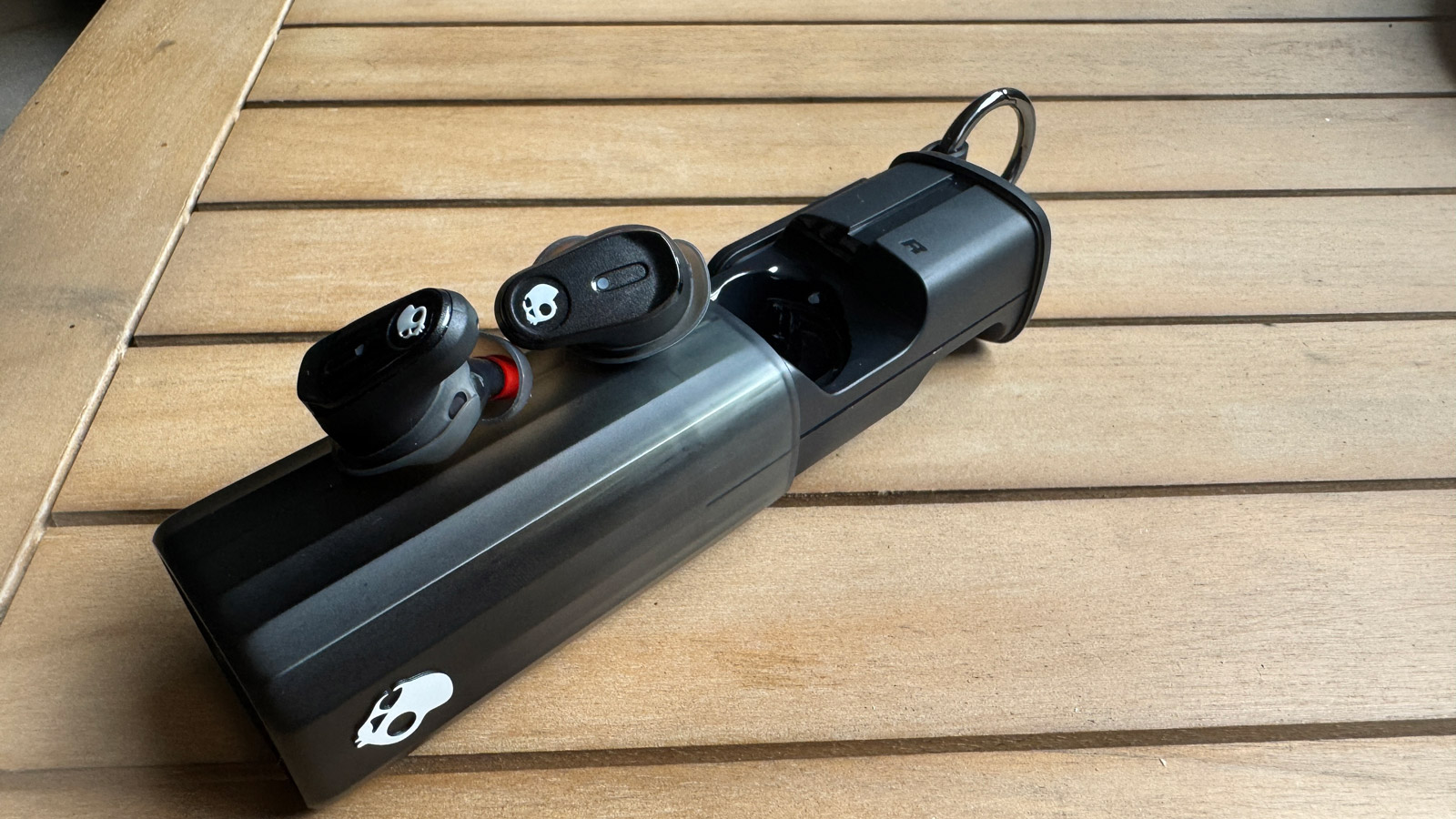
“If you like how they sound, how come the Skullcandy Method 360 ANC aren’t your new daily pair of earbuds?” I hear you ask. Well, it’s predominantly because of their case, but also a little to do with a design choice inherited from Bose.When I first saw images of the case following their announcement, I was a little perplexed. All of the wireless earbuds I’m aware of come with a case that can easily be slipped into a pocket – apart from the Beats Powerbeats Pro 2 that is – yet the one supplied by Skullcandy looked enormous.
(Image credit: Future)
Now I’ve unboxed my own pair, I can confirm the case is pretty damn big. Not heavy, just big.It’s an interesting choice, especially since the earbuds themselves don’t take up that much space. I’m also not sold on the fact you have to slide the internal section of the case out to access the buds.What’s more, I feel the most logical way to hold the case is horizontally when sliding the earbuds out, with the carabiner clip on the right as it feels more weighted and natural in my right hand.Doing so reveals the earbud for the right ear, with the left earbud on the other side. That means I have to pick out the right earbud with my left hand, then flip the case over and do the opposite for the left bud.And what’s even more confusing is the earbuds appear to fit into their charging spots upside down. So not only do I have to pass each bud from the ‘wrong’ hand to the right one, but I also have to flip them around the right way. There are just too many steps involved for what has always been a seamless and convenient process with other earbuds.What’s also interesting is that, since the Method’s launch, I’ve noticed a second, more affordable pair of earbuds appear on Skullcandy’s website called the Dime Evo. They employ a similar sliding-case design, but both earbuds are on the same side, which I can only assume will make the removal process that little bit easier.
(Image credit: Future)
Based on Skullcandy’s imagery for the Method 360 ANC, it’s targeting a young, cool demographic who walk around with sling bags over their shoulder, upon which they can attach the earbuds via the integrated carabiner clip.As much as I would love to say I fall into that group, the fact is I don’t – well, not anymore. And because I’m not someone who wants to clip their headphones onto even the belt loop of my pants, the case design is completely lost on me.I would further argue that the target audience is a little niche, too, which is a shame considering how good I think the earbuds sound. I’m saddened for Skullcandy that not enough pairs of ears are going to get to hear them.Hey, I did say it was predominantly the case I had issues with.
(Image credit: Future)
As for the aforementioned inherited design trait – that would be the Stability Bands found on the Bose QuietComfort Ultra Earbuds and QuietComfort Earbuds II.Despite their intention to provide a more stable and secure fit, I initially had a lack of confidence in their ability. I often found myself wanting to readjust them in my ears to make sure they were locked in, which also meant I pressed the on-ear controls at the same time and paused my music.It’s not just me who’s had an issue with them – my colleague and self-confessed Bose fangirl, Sharmishta Sarkar, has previously written about her shortcomings with the design too.I eventually settled on the largest size of Stability Band (which I could only determine by sight, as there’s no indication of which size is which on the included book of spares) and so far, so good. They definitely feel more secure in my ears compared to when I tried other sizes and passive noise cancelation has also been improved.However, the design choice has confirmed I get along best with earbud designs that insert further into my ear canal.
Awarding cool points
(Image credit: Future)
I like the Skullcandy Method 360 ANC earbuds. I can’t say I like the design of the case, nor do I like their mouthful of a name (Skullcandy Method would have been just fine in my opinion), but considering the biggest selling point for a pair of earbuds is how they sound, I can find little to fault.I will most likely use them whenever I’m in the office, as I can leave the case on the desk with the skull logo facing me directly. While I might not feel cool enough to clip the case to my person, that logo alone takes me back to my teenage years. For me, that’s cool enough.
You might also like
View more of the best earbudsThe Sony XM6 are an accomplished set of cans, but they’re not replacing my Sonos Ace anytime soonNew report says AirPods Pro 3 won't launch this year, and that a real AirPods Max upgrade is finally on the way
-

Picture from ichef.bbci.co.uk
Rank 16744 -

Picture from ichef.bbci.co.uk
Rank 16745 -

Picture from ichef.bbci.co.uk
Rank 16746 -

Picture from ichef.bbci.co.uk
Rank 16747 -

Picture from ichef.bbci.co.uk
Rank 16748 -
Picture from o.aolcdn.com
Rank 16749AMD has unveiled its 9060 XT GPU at Computex 2025. The midrange GPU will be the clear competitor to Nvidia’s 5060 Ti and goes toe-to-toe with it on almost every spec. Built on AMD’s 4-nanometer RDNA 4 silicon, the 9060 XT will pack 32 compute units, along with 64 dedicated AI accelerators and 32 ray-tracing cores.
AMD
Notably, the RX 9060 XT will ship in 8GB and 16GB GDDR6 versions, whereas Nvidia’s RTX 5060 Ti uses faster 28 Gb/s GDDR7, delivering roughly 40 percent more bandwidth (448 GB/s vs. approximately 322 GB/s) on the same 128-bit bus. We’ll have to wait for some side-by-side performance comparisons before drawing any strong conclusions from those specs.
AMD has listed the 9060 XT’s boost clock at speeds up to 3.13 GHz. The GPU boasts 821 TOPS for AI workloads and will draw a modest 150 to 182 watts from the board. The card will connect via PCIe 5.0 x16 and supports the now-standard DisplayPort 2.1a and HDMI 2.1b. Based on these initial specs, the 9060 XT should be a solid entry for games running at 1080p and a decent option for those at 1440p. Those wishing to play at 4K should still opt for the Radeon RX 9070 or 9070 XT.
Pricing and exact release timelines have not yet been announced.This article originally appeared on Engadget at https://www.engadget.com/gaming/pc/amd-unveils-radeon-rx-9060-xt-at-computex-2025-030021776.html?src=rss
-
Picture from o.aolcdn.com
Rank 16750Not many people need a 96-core processor. But for creative professionals, engineers and AI developers who do, AMD has a new batch of chips on display at Computex 2025. The company announced its new Ryzen Threadripper 9000 series on Tuesday, with bonkers specs to power pro-level workstations and ultra-high-end prosumer desktops.
At the top of the line in the series is the AMD Threadripper Pro 9995WX. This chip has a staggering 96 cores and 192 threads, matching the highest-end model from 2023's Threadripper Pro 7000 line. But the new 9000 series tops out with a higher maximum boost speed of 5.4GHz. That's up from 5.1GHz in the premiere 7000 Pro chip.
AMD's new batch includes six processors in the Threadripper Pro WX series, designed for pro-level workstations. (In addition to the 96-core 9995WX, options include 12-, 16-, 24-, 32- and 64-core models.) Moving past the Pro series, the standard Threadripper 9000 line for high-end desktops maxes out with the 64-core, 128-thread 9980X.
AMD hasn't yet announced pricing or specific retail models carrying the chips. But the 7000 Pro series offers a hint. The top-shelf model from that line costs a cool $10,000. (Yep, that's for the processor alone.) So, unless your work involves extremely demanding AI development, 3D modeling or ultra-high-res video editing, you can slowly step away and make your way back to the consumer aisle.This article originally appeared on Engadget at https://www.engadget.com/computing/amds-ryzen-threadripper-9000-chips-have-up-to-96-cores-just-like-the-last-bunch-030003537.html?src=rss


