News
This constantly updated list features the latest and most important news articles, ranked in order of significance. The top stories highlight major developments, breaking news, and critical updates across various topics, ensuring you stay informed about the most pressing issues. As new articles are added, the list adapts to reflect the latest priorities, keeping the most impactful stories at the forefront. Whether it’s global events, technology breakthroughs, or industry trends, this dynamic list ensures you always have access to the most relevant and timely information.
-

Picture from cdn.mos.cms.futurecdn.net
Rank 16751Beaten and restrained by Taitra security guards, I'm hauled back to the MSI booth from whence I came, the laptop I'd tried to spirit away handed back to MSI while members of the North American PR team look at me in stony silence. I lift up my head and meet their eyes, one by one."It belongs in a museum!" I yell over the clamor and din of the Computex 2025 showfloor.One of the reps that I've known for years shouts to be heard: "John, what the hell, man? Have you lost your mind?""It belongs in a museum!"
(Image credit: Future / John Loeffler)
OK, so that scene didn't play out anything like that yesterday when I first set eyes on the MSI Prestige 13+ AI Ukiyo-e Edition laptop, but it damn well could have. All that I needed was a means of escape through the packed crowd at the MSI booth, all of whom gawked along with me at what is undoubtedly the most beautiful laptop any of us has ever seen.The MSI Prestige 13+ AI is already one of the best laptops MSI's put out in recent years, but the one on display at Computex was something entirely different. Splashed across the lid is a hand-laquered reproduction of The Great Wave off Kanagawa by the Japanese artist and printmaker Hokusai, a master of the ukiyo-e art style that dominated Japan from the 17th to 19th centuries.
(Image credit: Future / John Loeffler)
I'm not as into Japanese art and culture as many of my friends are, a few of whom speak varying degrees of Japanese as a second language and all of whom own pretty much every Manga that has been released in the United States (as well as many that they've had to pay extra to order directly from Japanese shops), but I do love ukiyo-e..I grew up in New York City and spent a lot of time going to the Metropolitan Museum of Art throughout my childhood, and the Met has a rather impressive collection of ukiyo-e prints, including an original print of The Great Wave, first produced in 1831.Something about the bourgeois market scenes, manor intrigues, and quaint personal moments between friends and lovers that defined the ukiyo-e style resonates with me to this day.But it was always the depictions of vulnerable humanity in the presence of unassailable natural forces that spoke most strongly to me. And no work of art captures that as well as The Great Wave, with its unstoppable water cresting over a pair of fishing boats, the owners of which are nowhere to be seen. The only proof of their existence is the boats left behind, pilotless and at the mercy of nature.
Image 1 of 4(Image credit: Future / John Loeffler)Image 2 of 4(Image credit: Future / John Loeffler)Image 3 of 4(Image credit: Future / John Loeffler)Image 4 of 4(Image credit: Future / John Loeffler)
The Prestige 13+ AI Ukiyo-e Edition reproduces this masterful scene thanks to the work of OKADAYA, a Japanese company renowned for its lacquerwork on fine chinaware and pottery.Similar to how ukiyo-e prints were made in steps and layers back in the day, OKADAYA's process for creating The Great Wave on the Prestige 13+ AI lid involves applying eight thin layers of lacquer by hand, incrementally building up the coloring and texture of the scene before polishing it to a smooth, resilient finish.
Image 1 of 3(Image credit: Future / John Loeffler)Image 2 of 3(Image credit: Future / John Loeffler)Image 3 of 3(Image credit: Future / John Loeffler)
The process isn't limited to just the lid, either. The keys of the keyboard have also been stepped up to a polished, piano-key-like finish with gold-colored key labels to match the MSI logo on the inside of the device and on the lid, as well as the labels for the device's ports.
(Image credit: Future / John Loeffler)
While the artwork on the device steals the show (and by show, I mean Computex, as the Prestige 13+ AI Ukiyo-e Edition won Computex's Best Choice Award this year), the underlying laptop is still impressive as well, with up to an Intel Lunar Lake SoC, up to 32GB LPDDR5x memory, 1TB PCIe 4.0 SSD storage, and a 13.3-inch 2.8K OLED display.
(Image credit: Future / John Loeffler)
As an Artisan Collection product, the new laptop will have a limited run of 1,000 units, with each getting its production number laser-etched onto the bottom of the device. Given the handscrafting that's gone into these laptops, you can imagine that they won't be cheap, and I wouldn't be surprised if the majority of them have already been purchased before they even made their debut at this year's show.Still, even if it's not possible to own one yourself (unless you get very lucky), maybe one of the buyers could do their good deed for the year and donate one of these masterpieces to a museum somewhere so we can all enjoy the artistry that's gone into this device.Having seen it up close and held it myself, I can tell you it wouldn't be out of place among the finest ukiyo-e prints on display at the Met, and it's something I'd happily take the time to go see whenever I'm there.
You might also like...
Next-gen laptops, bonkers PCs, and too much AI: here's what I expect to see at Computex 2025Best laptops of Computex 2025 - meet the future of notebooks from HP, Asus, and moreMSI's new AI-infused QD-OLED monitor and improved MEG Vision X AI gaming PC make AI a bit more practical for gamers
-

Picture from ichef.bbci.co.uk
Rank 16752 -

Picture from techcrunch.com
Rank 16753 -

Picture from ichef.bbci.co.uk
Rank 16754 -

Picture from ichef.bbci.co.uk
Rank 16755 -
Picture from cdn.mos.cms.futurecdn.net
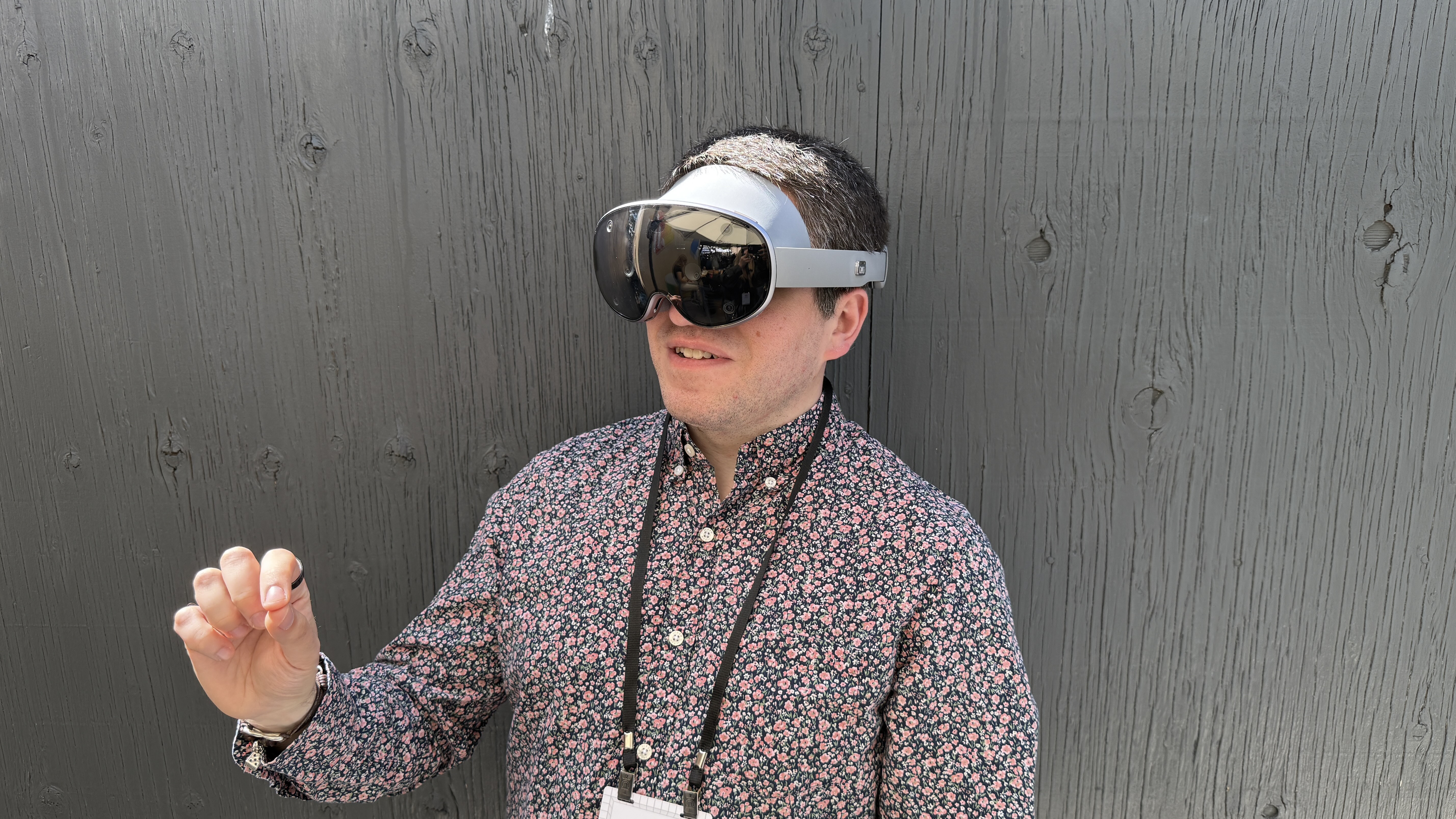
Rank 16756Google and Samsung’s Project Moohan Android XR headset isn’t entirely new – my colleague Lance Ulanoff already broke down what we knew about it back in December 2024. But until now, no one at TechRadar had the chance to try it out.That changed shortly after Sundar Pichai stepped off the Google I/O 2025 stage. I had a brief but revealing seven-minute demo with the headset.After scanning my prescription lenses and matching them with a compatible set from Google, they were inserted into the Project Moohan headset, and I was quickly immersed in a fast-paced demonstration.It wasn’t a full experience – more a quick taste of what Google’s Android XR platform is shaping up to be, and very much on the opposite end of the spectrum compared to the polished demo of the Apple Vision Pro I experienced at WWDC 2023.Project Moohan itself feels similar to the Vision Pro in many ways, though it’s clearly a bit less premium. But one aspect stood out above all: the integration of Google Gemini.
“Hey Gemini, what tree am I looking at?”
(Image credit: Future)
Just like Gemini Live on an Android like the Pixel 9 – Google’s AI assistant takes center stage in Project Moohan. The launcher includes two rows of core Google apps – Photos, Chrome, YouTube, Maps, Gmail, and more—with a dedicated icon for Gemini at the top.You select icons by pressing your thumb and forefinger together, mimicking the Apple Vision Pro’s main control. Once activated, the familiar Gemini Live bottom bar appears. Thanks to the headset’s built-in cameras, Gemini can see what you’re seeing.In the press lounge at the Shoreline Amphitheater, I looked at a nearby tree and asked, “Hey Gemini, what tree is this?” It quickly identified a type of sycamore and provided a few facts. The whole interaction felt smooth and surprisingly natural.You can also grant Gemini access to what’s on your screen, turning it into a hands-free controller for the XR experience. I asked it to pull up a map of Asbury Park, New Jersey, then launched into immersive view – effectively dropping into a full 3D rendering akin to Google Earth. Lowering my head gave me a clear view below, and pinching and dragging helped me navigate around.I jumped to a restaurant in Manhattan, asked Gemini to show interior photos, and followed up by requesting reviews. Gemini responded with relevant YouTube videos of the eatery. It was a compelling multi-step AI demo – and it worked impressively well.That’s not to say everything was flawless. There were a few slowdowns, but Gemini was easily the highlight of the experience. I came away wanting more time with it.
Hardware impressions
(Image credit: Google)
Though I only wore the headset briefly, it was evident that while it shares some design cues with the Vision Pro, Project Moohan is noticeably lighter – though not as high-end in feel.After inserting the lenses, I put the headset on like a visor—the screen in front, and the back strap over my head. A dial at the rear let me tighten the fit easily. Pressing the power button on top adjusted the lenses to my eyes automatically, with an internal mechanism that subtly repositioned them within seconds.From there, I used the main control gesture – rotating my hand and tapping thumb to forefinger – to bring up the launcher. That gesture seems to be the primary interface for now.Google mentioned eye tracking will be supported, but I didn’t get to try it during this demo. Instead, I used hand tracking to navigate, which, as someone familiar with the Vision Pro, felt slightly unintuitive. I’m glad eye tracking is on the roadmap.Google also showed off a depth effect for YouTube videos that gave motion elements—like camels running or grass blowing in the wind – a slight 3D feel. However, some visual layering (like mountain peaks floating oddly ahead of clouds) didn’t quite land. The same effect was applied to still images in Google Photos, but these lacked emotional weight unless the photos were personal.
Where Project Moohan stands out
@techradar
♬ original sound - TechRadar
The standout feature so far is the tight Gemini integration. It’s not just a tool for control – it’s an AI-powered lens on the world around you, which makes the device feel genuinely useful and exciting.Importantly, Project Moohan didn’t feel burdensome to wear. While neither Google nor Samsung has confirmed its weight – and yes, there’s a corded power pack I slipped into my coat pocket – it remained comfortable during my short time with it.There’s still a lot we need to learn about the final headset. Project Moohan is expected to launch by the end of 2025, but for now, it remains a prototype. Still, if Google gets the pricing right and ensures a strong lineup of apps, games, and content, this could be a compelling debut in the XR space.Unlike Google’s earlier Android XR glasses prototype, Project Moohan feels far more tangible, with an actual launch window in sight.I briefly tried those earlier glasses, but they were more like Gemini-on-your-face in a prototype form. Project Moohan feels like it has legs. Let’s just hope it lands at the right price point.
You might also like
The 13 biggest announcements from Google I/O 2025Google Gemini 2.5 just got a new 'Deep Think' mode – and 6 other upgradesGoogle Beam could change your video calls forever with glasses-free 3D and near real-time translation
-

Picture from ichef.bbci.co.uk
Rank 16757 -

Picture from ichef.bbci.co.uk
Rank 16758 -

Picture from ichef.bbci.co.uk
Rank 16759 -

Picture from ichef.bbci.co.uk
Rank 16760 -

Picture from ichef.bbci.co.uk
Rank 16761 -

Picture from ichef.bbci.co.uk
Rank 16762 -

Picture from ichef.bbci.co.uk
Rank 16763 -

Picture from ichef.bbci.co.uk
Rank 16764 -

Picture from ichef.bbci.co.uk
Rank 16765 -

Picture from cdn.mos.cms.futurecdn.net
Rank 16766The seven-year wait for fans of The Librarians franchise is finally over, as The Librarians: The Next Chapter starts a new page. Originally intended to be shown on The CW, US viewers can tune into The Librarians: The Next Chapter on TNT or via Sling TV. Read on for how to watch The Librarians: The Next Chapter online from anywhere with a VPN.
Premiere date: Sunday, May 25US TV channel: TNTStream: Sling TV (US) | CTV (CA) | Foxtel (AU)Use NordVPN to watch any stream
21 years after the first The Librarian film hit the small screen, this latest spin off series sees a new time traveling addition to the popular franchise. Callum McGowan (Marie Antoinette) leads the fantasy fun as a historical librarian who finds himself in the modern day.As Vikram Chamberlain, TNT says that 'he inadvertently releases magic across the continent' before being given a new team to help him 'clean up the mess he made'. As the official trailer suggests (which you can watch further down this page), his team of Librarians will be challenged by a plague of lost souls, demons and other evil forces as Chamberlain seeks a way back to his own time.We’ve got all the info on where to watch The Librarians: The Next Chapter online and stream episodes from anywhere.
How to watch The Librarians: The Next Chapter online in the US
US viewers can watch The Librarians: The Next Chapter on TNT. It kicks off with a '2 Night Series Premiere' on Sunday 25 and Monday 26 of May — both at 11.30pm ET / 8.30pm PT. After that, the remainder of the 12-episode run will go out weekly on Mondays at 9pm ET/PT. You can see a full schedule at the bottom of this article.Don’t have cable? You can also watch TNT via Sling TV via your choice of its Blue or Orange plans. Both cost from $46/month, with your first month half price.Away from the US? Use a VPN to watch The Librarians: The Next Chapter on Hulu from abroad.
How to watch The Librarians: The Next Chapter online anywhere
If you’re traveling abroad when The Librarians: The Next Chapter airs, you’ll be unable to watch the show like you normally would due to annoying regional restrictions. Luckily, there’s an easy solution.Downloading a VPN will allow you to stream online, no matter where you are. It's a simple bit of software that changes your IP address, meaning that you can access on-demand content or live TV just as if you were at home.Use a VPN to watch The Librarians: The Next Chapter from anywhere.
Editors ChoiceNordVPN – get the world's best VPNWe regularly review all the biggest and best VPN providers and NordVPN is our #1 choice. It unblocked every streaming service in testing and it's very straightforward to use. Speed, security and 24/7 support available if you need – it's got it all.The best value plan is the two-year deal which sets the price at $3.09 per month, and includes an extra 3 months absolutely FREE. There's also an all-important 30-day no-quibble refund if you decide it's not for you.- Try NordVPN 100% risk-free for 30 daysVIEW DEAL ON
How to watch The Librarians: The Next Chapter online in Canada
Canadian viewers can watch The Librarians: The Next Chapter on CTV's Sci-Fi channel on Mondays at 9pm ET/PT.Rather stream the show? Use the CTV.ca website or app. You'll need to enter your cable provider details.US viewer currently traveling in Canada? Download a VPN to connect to your streaming service back home and watch The Librarians: The Next Chapter no matter where you are.
Can I watch The Librarians: The Next Chapter in the UK?
At the time of writing, no broadcaster has been announced for The Librarians: The Next Chapter in the UK.If you're a resident of somewhere that does have The Librarians: The Next Chapter streaming but are currently in the UK, you can use a VPN to watch your regular service.
How to watch The Librarians: The Next Chapter online in Australia
Foxtel subscribers can watch The Librarians: The Next Chapter on FOX8 in Australia. Episodes will go out on Thursdays at 9pm AEST from May, 29.Foxtel Now's pricing begins from AU$35 per month.Foxtel shows usually land on the Binge streaming service as well. However, at the time of writing, this has not been confirmed for The Librarians: The Next ChapterIf you’re visiting Australia from abroad and want to watch on your home service, simply download a VPN to stream The Librarians: The Next Chapter just as you would back home.
What you need to know about The Librarians: The Next Chapter
The Librarians: The Next Chapter trailer
Can I watch The Librarians: The Next Chapter for free?The Librarians: The Next Chapter isn't listed to watch on any free-to-air channels or streaming services.
The Librarians: The Next Chapter cast
Callum McGowan as Vikram ChamberlainJessica Green as Charlie CornwallOlivia Morris as Lysa PascalBluey Robinson as Connor GreenCaroline Loncq as Elaine AstalotChristian Kane as Jacob Stone
The Librarians: The Next Chapter episode guide
The Librarians: The Next Chapter is set for a 12-episode run from Sunday, May 25 to Monday, August 4.
Episode 1 – "And the Deadly Drekavac"": Sunday, May 25Episode 2 – "And the Dance of Doom!": Monday, May 26Episode 3 – "And the Ghost Train": Monday, June 2Episode 4 – "And the Thief of Love": Monday, June 9Episode 5 – "And the Memory Crystal": Monday, June 16Episode 6 – "And the House of Cards": Monday, June 23Episode 7 – "And the Con-Con": Monday, June 30Episode 8 – "And the Hangover from Hell": Monday, July 7Episode 9 – "And the Feast of the Vampire": Monday, July 14Episode 10 – "And Going Medieval": Monday, July 21Episode 11 – "And the Graffiti of the Gods": Monday, July 28Episode 12 – "And the Unfinished Business": Monday, August 4
-

Picture from cdn.mos.cms.futurecdn.net
Rank 16767While hybrid work models have helped teams collaborate across locations, persistent challenges remain with teams still wrestling with misalignment and communication gaps that slow progress and delay achieving notable outcomes.To build more adaptive, high-performing teams—regardless of where they work—organizations are turning to Agile practices. Agile's emphasis on continuous feedback, quick adjustments, and strong collaboration makes it an ideal framework for bridging the gaps that often arise in hybrid work environments.But embracing Agile isn’t a one-and-done fix. As work evolves, so should the way we apply these methods. The real opportunity isn’t just about keeping up, it’s about using these changes as a launchpad for better ways of working.
Breaking free from inefficiencies
According to a recent survey by Lucid Software, nearly half of UK businesses report that teams can take up to three hours to decide on how to move forward on business goals, highlighting that meetings may drag on and clear next steps often don’t follow.The survey also revealed miscommunication and poor planning are significant barriers to productivity, with 41% of respondents citing unclear project requirements, scope changes and miscommunication with colleagues as the top reasons for redoing work. These issues not only demand extra time and effort but also leave 1 in 5 of workers feeling that their team’s plans rarely align with the company’s strategic goals.While 45% of workers believe that adopting new collaboration tools could significantly cut decision-making time, tools alone won’t solve the problem. To truly address communication challenges, a shift in mindset is crucial.Agile frameworks offer exactly that. By breaking work into smaller, manageable increments and fostering regular feedback cycles, Agile enables teams to adapt quickly to change, clarify goals, and align efforts more effectively across stakeholders. This approach reduces wasted time, minimizes costly misalignments, and accelerates progress towards strategic objectives.
Agile in motion
Agile practices have been gaining popularity, with 51% of respondents indicating their organizations actively use Agile to organize and deliver work. Yet, despite its growing presence, only 49% of UK businesses have adopted Agile and even among those that have, the benefits of Agile aren’t consistently felt across teams. One big reason? Resistance to change.Much of that resistance often stems from middle management. Middle managers are often caught between evolving expectations from leadership and long-standing habits rooted in traditional management practices. The shift to Agile requires more than just new skills, it’s about evolving how we perceive, interpret, and respond to the complexities of work and leadership.This resistance is often driven by fear of losing control or uncertainty about how to navigate this shift, making it crucial to provide middle managers with the right tools and support to embrace the new Agile mindset.This is where mindset matters. Adopting agility requires both horizontal development (e.g. learning a new topic or tool) and vertical development (e.g. holding a new perspective). The concept of vertical development, popularized by researchers like Robert Kegan and Lisa Lahey, expands a person’s ability to lead amidst complexity. It enables them to interpret shifting conditions, not just follow a fixed playbook. For agile to stick, organizations must invest in both forms of development for those involved.To enhance the effectiveness of Agile, leaders should work to create buy-in from all team members and ensure that Agile practices are consistently applied across the organization with meaningful training and solutions that facilitate successful implementation. This can start by identifying key change agents within teams who can help model and reinforce Agile principles, while also setting up regular feedback loops to accelerate progress and address any obstacles. When done right, Agile isn’t just a framework—it’s a foundation for better, faster, more human ways of working.
The power of a common visual framework
Too often, traditional methods persist simply because ‘it’s the way it’s always been done.’ But as work grows more complex and distributed, those default approaches, especially meetings, aren’t enough to keep everyone aligned.Team meetings remain the go-to methods for tracking progress, with 74% of respondents relying on them. However, this approach doesn’t work equally for all roles. Only 53% of entry-level employees report having high visibility into their work, indicating that even regular stand-ups may not provide everyone with the clarity they need. This highlights a critical need for more effective approaches to decision-making and alignment — ones that don’t depend on everyone being in the same room.That’s where visual collaboration solutions come in. Agile teams are already ahead of the curve here — 69% report using visual tools as opposed to only 41% of general knowledge workers. Visual collaboration supports Agile by providing a shared, always-on workspace that enables teams to track tasks in real-time, visualize workflows and adjust priorities as needed.What excites me most is seeing how these tools are transforming team dynamics. Team members who might stay quiet during video conferencing calls now actively shape ideas and decisions through visual contributions, creating a stronger sense of ownership and alignment. This visual engagement fosters a more collaborative and responsive environment, key principles of Agile practices.
Forging ahead with a united workforce
Even if teams interpret and apply Agile practices differently, the underlying principles can still guide better ways of working. Leaders may feel confident in their team’s direction, but when newer employees don’t understand the direction or feel misaligned with the company’s values, that misalignment can ripple across the organization. In fact, what those employees experience often reveals how well Agile is truly being lived—not just implemented.For example, if a team struggles to prioritize or frequently misses deadlines, it may signal that Agile practices aren’t being fully integrated, even if they’re technically in place. For any organization, bridging these gaps is essential. Leaders should lean on shared tools and frameworks that promote clarity, build skills and foster better communication. A visual roadmap, for instance, can make abstract goals clearer by laying out specific, achievable steps, showing progress, and aligning team efforts.Addressing these challenges early helps prevent problems like misalignment and employee burnout, ultimately enabling teams to accelerate work and drive efficient outcomes.
Start here: a low-barrier entry point to agility
Not every organization is ready for a full agile transformation. That’s okay. You don’t have to adopt every practice to benefit from agile thinking. Start small by using a shared visual board to clarify weekly priorities. You can also replace a long meeting with asynchronous feedback using sticky notes or comments. Most importantly, ask your team what’s blocking progress and listen.Agility isn’t the goal. Value is. But agility is how you get there, consistently, sustainably, and together. Instead of trying to replicate the office in a hybrid model, it’s time to rethink how work can happen more intentionally and effectively. The future belongs to those who can align quickly, learn continuously, and move forward with shared purpose. That’s how agile teams stay aligned, fast, and focused.
We compiled a list of the best Microsoft Teams alternatives.
This article was produced as part of TechRadarPro's Expert Insights channel where we feature the best and brightest minds in the technology industry today. The views expressed here are those of the author and are not necessarily those of TechRadarPro or Future plc. If you are interested in contributing find out more here: https://www.techradar.com/news/submit-your-story-to-techradar-pro
-
Picture from cdn.mos.cms.futurecdn.net
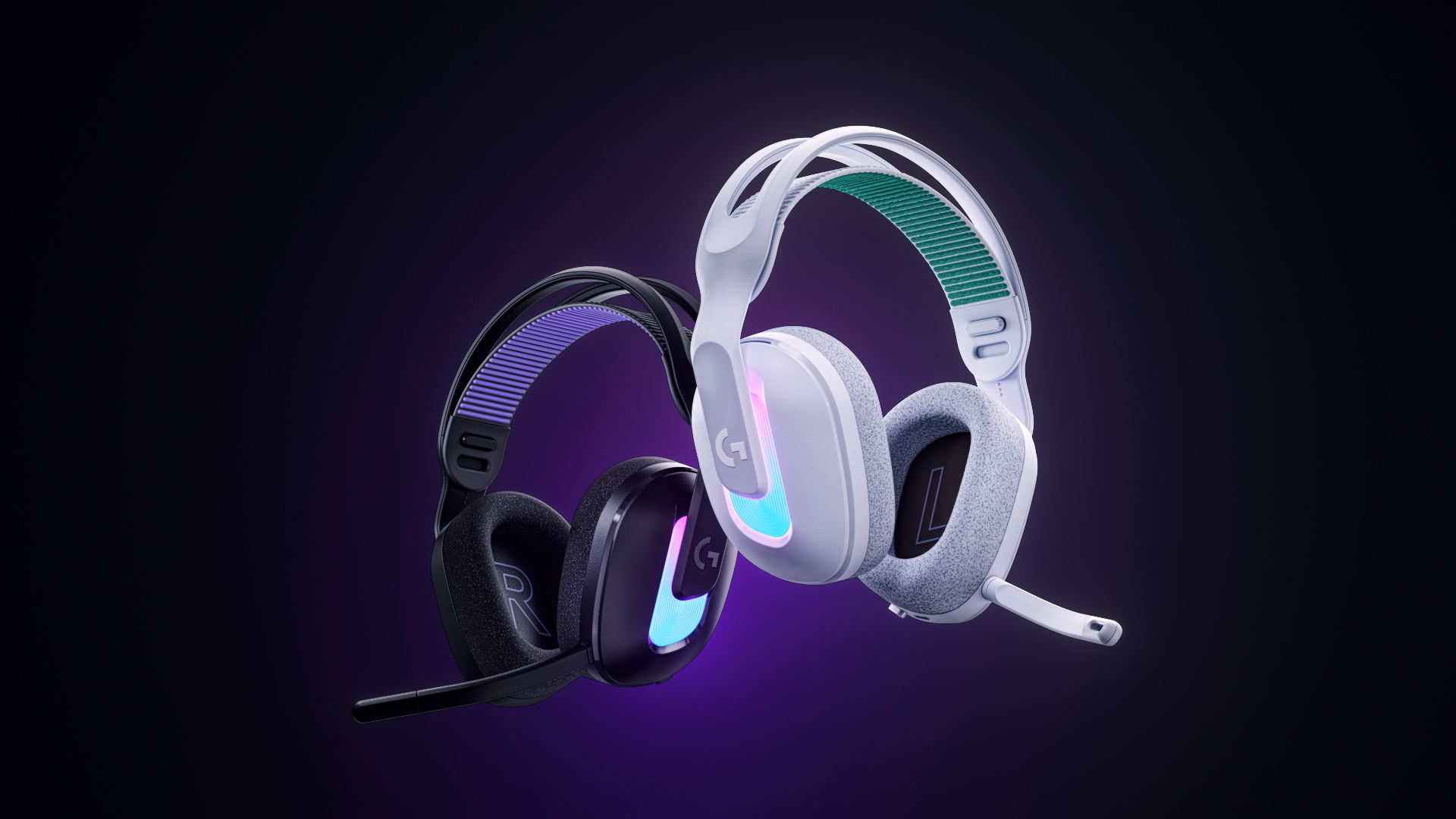
Rank 16768Logitech G has revealed the Logitech G522 LightspeedThis wireless gaming headset boasts an impressive feature set and a great microphoneIt hits shelves on June 16 for $179 / £139.99 / AU$299.95
Gaming accessory brand Logitech G has announced the Logitech G522 Lightspeed, a new wireless gaming headset intended to supersede the popular Logitech G733 Lightspeed.The G522 Lightspeed features redesigned earcups, with a wider shape and an added layer of memory foam for enhanced comfort. It has a lightweight, adjustable fabric headband, which now rests flatter than its predecessor and has built-in ridges for better cooling.The exterior of each ear cup features four eye-catching customizable RGB lighting zones, which can be tweaked to the color of your choice in the Logitech G Hub desktop software. It's also compatible with the Logitech G mobile app.Under the hood, the headset is packing Logitech G's highest-fidelity 40mm Pro-G drivers with 24-bit / 48kHz signal processing for enhanced audio clarity and detail.The headset comes bundled with a removable omnidirectional microphone, which offers an impressive 16-bit / 48kHz bandwidth. It's the same microphone found in the excellent, but much more expensive, Astro A50 X, which impressed with its crystal clear recordings in my hands-on testing.On the Logitech G522 Lightspeed, the microphone has the added benefit of a built-in red LED indicator that illuminates when it's muted.As its name would suggest, the headset can connect to PC or PlayStation 5 via Logitech's Lightspeed wireless dongle (which is included in the box), but also supports traditional Bluetooth for the aforementioned platforms in addition to Nintendo Switch and mobile. There's also the option for wired play via its USB Type-C connector.Logitech claims up to 40 hours of battery life with the default lighting on, or up to 90 hours with it disabled, which is a pretty impressive figure. It's not quite the up to 200 hours promised by the competing HyperX Cloud III S, but it's still more than enough juice for a few weeks' worth of intense gaming sessions.The Logitech G522 Lightspeed hits shelves on June 16 in white or black colorways. It costs $179 / £139.99 / AU$299.95, putting it in the midrange price bracket.Its expansive feature set seems very promising, but only time will tell whether it becomes one of the best PC gaming headsets or best PS5 headsets around.
You might also like...
Backbone CEO details the 'Apple Watch level engineering' behind the company's new Pro mobile controllerI’ve tested two of GameSir’s best controllers, and, for me, there’s one clear winnerBloober Team breaks down upcoming survival horror game Cronos: The New Dawn, 'this will be farther away from Silent Hill 2 or anything we did before'
-
Picture from o.aolcdn.com
Rank 16769Following the announcement that Gemini is coming to cars, Volvo is using I/O 2025 to announce a new expanded partnership with Google. The companies' new deal makes Volvo's cars reference hardware for future Android Automotive OS development, and means Volvo drivers will be "among the first to benefit" when Gemini fully replaces Google Assistant in cars.
Volvo describes itself as Google's "lead development partner for new features and updates," making the company's cars the first to receive new updates to the Android Automotive OS. Google offers Android Auto as its CarPlay-like solution for beaming a software interface from your phone to in-car displays, but its Automotive OS is more complete, running on your vehicle locally and connected to car controls for A/C and more. You can already experience Android Automotive OS in Volvo's EX90, for example.
Google's current vision for Android in cars is, perhaps unsurprisingly, focused on getting drivers to talk to Gemini. In a car with the assistant, you'll be able to ask Gemini to send a message, pull up directions, or answer the more open-ended, natural language questions that Gemini Live is designed to handle. If it works as advertised, it seems better than pecking at a screen, and Volvo notes it could "help reduce your cognitive load so that you can stay focused on driving."
There's no release date for when you can expect Gemini to show up as your driving copilot, but at the very least this new partnership means it'll be in Volvos first.This article originally appeared on Engadget at https://www.engadget.com/transportation/volvo-expands-its-google-partnership-to-bring-new-features-like-gemini-to-cars-sooner-070020853.html?src=rss
-

Picture from ichef.bbci.co.uk
Rank 16770 -

Picture from ichef.bbci.co.uk
Rank 16771 -

Picture from ichef.bbci.co.uk
Rank 16772 -

Picture from ichef.bbci.co.uk
Rank 16773 -

Picture from ichef.bbci.co.uk
Rank 16774 -

Picture from ichef.bbci.co.uk
Rank 16775 -

Picture from ichef.bbci.co.uk
Rank 16776 -

Picture from ichef.bbci.co.uk
Rank 16777 -

Picture from cdn.mos.cms.futurecdn.net
Rank 16778In the ever-evolving landscape of financial markets, the introduction of artificial intelligence (AI) has been a game-changer in the fight against market manipulation. As stock trading practices diversify, globalization expands and competition intensifies with the daily addition of modern businesses, the complexity of monitoring and maintaining fair play across markets has increased exponentially.However, as global exchanges have invested in adopting and developing AI tools, so too have their criminal counterparts. Market manipulators have become more sophisticated in their tactics, employing highly advanced pump and dump and spoof trading strategies to influence market conditions to their advantage.To get ahead of illicit activity, the human immune system has emerged as an unlikely source of inspiration for enhancing AI powered detection tools.
Detecting and Preventing Market Manipulation
AI's role in financial markets is akin to a vigilant sentinel, tirelessly scanning vast amounts of data for signs of manipulation. By leveraging machine learning algorithms and complex pattern recognition, AI systems can identify irregularities and potential manipulative behaviors that would be nearly impossible for humans to spot due to the sheer volume and speed of high frequency stock market trading.These AI systems are trained on historical data, learning from past instances of market manipulation to recognize the subtle signals that may indicate foul play. They can monitor multiple markets simultaneously, track the behavior of individual traders, and correlate seemingly unrelated events to uncover hidden patterns. This comprehensive monitoring capability is crucial in a landscape where a single manipulated trade can have far-reaching consequences.Despite its potential, applying AI to market surveillance has many challenges. Financial markets are complex, dynamic systems with a multitude of variables at play. The bespoke nature of AI models required for each unique scenario means that there is no one-size-fits-all solution. AI systems must be tailored to the specific characteristics of each market and the types of manipulation that may occur within them.Moreover, the AI must be capable of adapting to new strategies employed by market manipulators. Just as viruses evolve to bypass the immune system, so do manipulative tactics to evade detection. This necessitates AI systems that can learn and adapt in real-time, a feat that requires significant computational power and advanced algorithms.
Learning from the Human Immune System
The human immune system is a marvel of natural engineering, capable of identifying and neutralizing a vast array of pathogens. It is this remarkable adaptability that has inspired the development of AI systems for market surveillance. The immune system's ability to remember past infections and recognize new ones that share similar characteristics is mirrored in the way AI can learn from historical market data and adjust to new forms of manipulation.Just as the immune system has different mechanisms to deal with various threats, AI systems can employ a range of strategies to tackle different types of market manipulation. The abstract term used for such mechanisms is Artificial Immune Systems (AIS), and are computational intelligence methods modelled after the immune system. These systems develop a set of pattern detectors by learning from normal data, incorporating an inductive bias that applies exclusively to this baseline data, which may shift over time (due to its non-stationary nature).The Dendritic Cell Algorithm (DCA), a biologically inspired subset of AIS, mirrors the human immune response by monitoring, adapting, and identifying potential threats. From statistical analysis to behavioral analytics, AI leverages this adaptive framework to help preserve the integrity of financial markets.In recently published research, we explored how DCA can identify market manipulation patters. The model performs anomaly detection for a selective set of outputs obtained from DCA while examining multiple types of manipulative patterns. The uniqueness of this approach is in reducing the dimensions of the input dataset and avoiding the inconsistency in selecting the thresholds for the parameters involved.It is also unbiased towards specific types of manipulation, as any knowledge about the anomalies injected is not provided to the model a priori. The distinctiveness of the results is visible when compared with existing models, for a variety of evaluation metrics from area under the ROC curve to false alarm rate.
The Balance Between Human Oversight and AI Empowerment
While AI can process and analyze data at speeds and volumes beyond human capability, it is not infallible as it lacks the human ability to understand nuances. The balance between human oversight and AI empowerment is critical in stock exchange surveillance. Human expertise is essential for interpreting the findings of AI, providing context, and making judgement calls on whether identified patterns truly constitute manipulation.Humans can also provide the ethical and regulatory framework within which AI operates, ensuring that surveillance practices remain fair and just. As financial markets continue to grow in complexity, the need for sophisticated surveillance tools becomes ever more pressing.AI, with its ability to learn from the past and adapt to new threats, offers a powerful solution to this challenge. However, it is the combination of AI's analytical prowess and human expertise that will ultimately ensure the fairness and integrity of financial markets. As technology continues to advance, this partnership will only become stronger, safeguarding the financial ecosystem against those who seek to undermine it.
We list the best monitors for trading.
This article was produced as part of TechRadarPro's Expert Insights channel where we feature the best and brightest minds in the technology industry today. The views expressed here are those of the author and are not necessarily those of TechRadarPro or Future plc. If you are interested in contributing find out more here: https://www.techradar.com/news/submit-your-story-to-techradar-pro
-

Picture from ichef.bbci.co.uk
Rank 16779 -

Picture from ichef.bbci.co.uk
Rank 16780 -

Picture from ichef.bbci.co.uk
Rank 16781 -
Picture from o.aolcdn.com
Rank 16782There are just two models of Apple laptops: the MacBook Air and the MacBook Pro. In a nutshell, those who need a computer for productivity, work and everyday use — in other words, most people — will be happy with a MacBook Air. People who do intense video and audio editing and other high-demand tasks may want to spring for a Pro model. Within the Air and Pro categories, there are a few other choices to make, including screen size, chip type and memory capacity. This guide recaps our reviews and explains the specs to help pick the best MacBook for you.
Table of contents
Best MacBooks for 2025
Factors to consider when buying a MacBook
Best MacBook FAQs
Best MacBooks for 2025
Factors to consider when buying a MacBook
Compared to PCs, Apple computers tend to have more streamlined specifications. The company has long been known for this simplicity, and the M-series “system-on-a-chip” condenses things even further. Prior to the M1 chip, Apple used Intel chips in its laptop and desktop computers. The M2 and M3 generations followed that first chip and currently sells MacBooks equipped with M4-series chips. You’ll find the standard M4 processor in the Air and the base-model Pro and the upgraded M4 Max and M4 Pro chips as options for the MacBook Pro (currently there is no M4 Ultra chip, as there was with the M3 series in the Mac Studio). All M-series chips combine, among other technologies, the CPU, graphics card and unified memory (RAM). Apple’s Neural Engine is included too, which is a specialized group of processor cores that handles machine learning tasks such as image analysis and voice recognition.
While a unified chip means you have fewer decisions to make when picking a MacBook, there are still a few factors to consider, including specs like the number of CPU cores, amount of RAM, storage capacity, screen size, and, obviously, price. The finish color may be a minor consideration, but it's worth pointing out that the Pro comes in just two colors (Silver or Space Black) but the Air comes in four hues (Midnight, Starlight, Sky Blue and Silver).
CPU cores
Currently the lowest-specced chip in a MacBook is the M4, which comes in all models of the MacBook Air and the base model, MacBook Pro 14-inch. That chip houses a 10-core CPU and either an 8- or 10-core GPU. The burliest chip, the M4 Max is built with either a 14- or 16-core CPU and a 32- or 40-core GPU. Cores are, in essence, smaller processing units that can handle different tasks simultaneously. Having more of them translates to the computer being able to run multiple programs and applications at once, while also smoothly processing demanding tasks like video editing and high-level gaming. In short, more cores allow for more advanced computing and better performance. But if your processing power needs fall below professional-level gaming and cinematic video and audio editing, getting the highest number of cores is likely overkill — and after all, more cores equals higher cost and more power usage.
Photo by Devindra Hardawar/Engadget
RAM
Your options for RAM, or in Apple’s terminology, unified memory, varies, but with the switch to the M4 chip in all laptops, the lowest amount of RAM you can get is now 16GB. That’s a necessary spec-bump to accommodate the tech world’s favorite feature of the moment: AI or, in this case, Apple Intelligence (still AI, but Cupertino’s version). The M4 Pro chip has 24 or 48GB memory options, while the M4 Max chip supports 48, 64 or a whopping 128GB of RAM.
You’ve likely heard the analogy comparing memory to the amount of workspace available on a literal desktop surface, whereas storage is the amount of drawers you have to store projects to work on later. The larger the worktop surface, the more projects you can work on at once. The bigger the drawers, the more you can save for later.
In addition to supporting Apple Intelligence, more RAM is ideal for people who plan to work in multiple apps at once. And the more demanding each program is, the more RAM will be required. Extra memory can also come in handy if you’re the type who likes to have infinite numbers of tabs open on your browser. If your daily workflow doesn’t involve simultaneously using a vast number of memory-intensive programs, you can save yourself money and buy the RAM configuration that you’re most likely to actually use.
For a long time, Apple continued to offer MacBooks with just 8GB of RAM, and we recommended upgrading to at least 16GB of RAM. With this being the standard today, grabbing a base model should be fine for most non-pro-level users. One thing to note is that, unlike most PCs, the RAM in a MacBook is not user-upgradable since it’s tied into the system-on-a-chip. If you think you might end up needing more memory, you should go for the spec upgrade up front.
Storage capacity (SSD)
Storage options range from 256GB of SSD for the base-model MacBook Air and 8TB of storage for the MacBook Pros with the M4 Max chip. If you want to rotate between a long roster of game titles or keep lots of high-res videos on hand, you’ll want more storage. If you’re mostly working with browser- and cloud-based applications, you can get away with a smaller-capacity configuration. That said, we recommend springing for 512GB of storage or more, if it’s within your budget. You’ll quickly feel the limits of a 256GB machine as it ages since the operating system alone takes up a good portion of that space. Having 1TB will feel even roomier and allow for more data storage over the life of your laptop.
When Apple announced the iPhone 15, the company also announced new iCloud+ storage storage plans, with subscriptions that allow up to 12TB of storage shared among your iOS and MacOS devices. You could also transfer files to an external storage device. But if you don’t want to pay for a monthly subscription and prefer the convenience of having immediate access to your files, it’s best to get the highest amount of storage space your budget allows for at the outset.
Screen size
The MacBook Air comes in 13- or 15-inch sizes. Pro models have either 14- or 16-inch screens. A two-inch delta may not seem like much but, as Engadget’s Nathan Ingraham noted when he reviewed the then-new 15-inch M2-powered MacBook Air, a larger screen "makes a surprising difference.” That’s especially true if you plan to use your laptop as an all-day productivity machine and won’t be using an external monitor. More space means you can more clearly view side-by-side windows and have a more immersive experience when watching shows or gaming.
But screen size is one of the main factors influencing weight. The 13-inch MacBook Air M4 weighs 2.7 pounds, whereas the top-end 16-inch MacBook Pro with the Max chip weighs 4.7 pounds. If you plan to travel a lot or swap your work locations regularly, a smaller screen will make life easier in the long run.
All MacBooks feature IPS LCD panels (in-plane switching, liquid crystal display), which Apple markets as Retina displays. The MacBook Air M4 has a Liquid Retina display and the Pro models have Liquid Retina XDR displays. “Liquid” refers to the way the lighted portion of the display “flows” within the contours of the screen, filling the rounded corners and curving around the camera notch. “XDR” is what Apple calls HDR (high dynamic range).
You also get the option of a standard or nano-texture display on the MacBook Pro. The glass, which reduces glare and is also available on the Studio Display, iMac and iPad Pro, comes with a $150 price increase, but if you really don’t like reflections on your screen, it could be worth it.
Compared to most other laptops, MacBook displays are notably bright, sharp and lush. But one feature worth pointing out is another Apple marketing term: ProMotion. It’s the company’s term to describe a screen with a higher, 120Hz refresh rate, which results in smoother scrolling and more fluid-looking graphics. Only MacBook Pros offer ProMotion; the Air maxes out at 60Hz, which is perfectly fine for everyday browsing and typical workdays. But if you want buttery-smooth motion from your display, you’ll have to shell out more money for an upgrade.
Price
When Apple announced the MacBook Air M4, it also delivered a bit of refreshing news: The latest model would start $100 cheaper than the previous generation. So now, the least expensive MacBook is the 13-inch, M4-powered Air with 16GB of RAM and 256GB of storage for $999. Alternatively, you can spend up to $7,349 for the 16-inch MacBook Pro M4 Max with the nano-texture glass, 128GB of RAM and 8TB of storage. Chip type, screen size, memory and storage capacity all influence the final price, which is why guides like this can help you determine just what you need (and what you don’t) so you can get the most cost-effective machine for you.
We recommend the MacBook Air M4 for most people, the MacBook Air M3 for students and those on a budget, and the 14- or 16-inch MacBook Pros for professionals. If you have extra money to spare once you’ve picked your machine, we recommend upgrading to at least 512GB of storage to make your machine as future-proof as possible.
Best MacBook FAQs
What's the difference between MacBook Air and Pro?
Both the MacBook Air and Pro models come with the M4 chip. MacBook Pro models have the option of more powerful M4 Pro or M4 Max chips. The Pro has a higher resolution screen with a higher peak brightness that supports up to 120Hz adaptive refresh rates and XDR (extreme dynamic range). The battery life on most Pro models is longer than on the Air models as well. Pro models also have more ports and more speakers. In short, the MacBook Air is aimed at everyday users looking for good productivity and entertainment capabilities, while Pro models are aimed at professionals who need a high-performance computer.
What's the difference between macOS and Windows?
MacOS is the operating system developed by Apple and used in all of its desktop and laptop computers. It can only be found in hardware made by Apple including MacBooks and iMacs. Microsoft’s Windows operating system can be found in the company’s own Surface laptops as well as computers made by a wide array of manufacturers, like Acer, Asus, Dell and Razer.This article originally appeared on Engadget at https://www.engadget.com/computing/laptops/best-macbook-140032524.html?src=rss
-
Picture from cdn.mos.cms.futurecdn.net
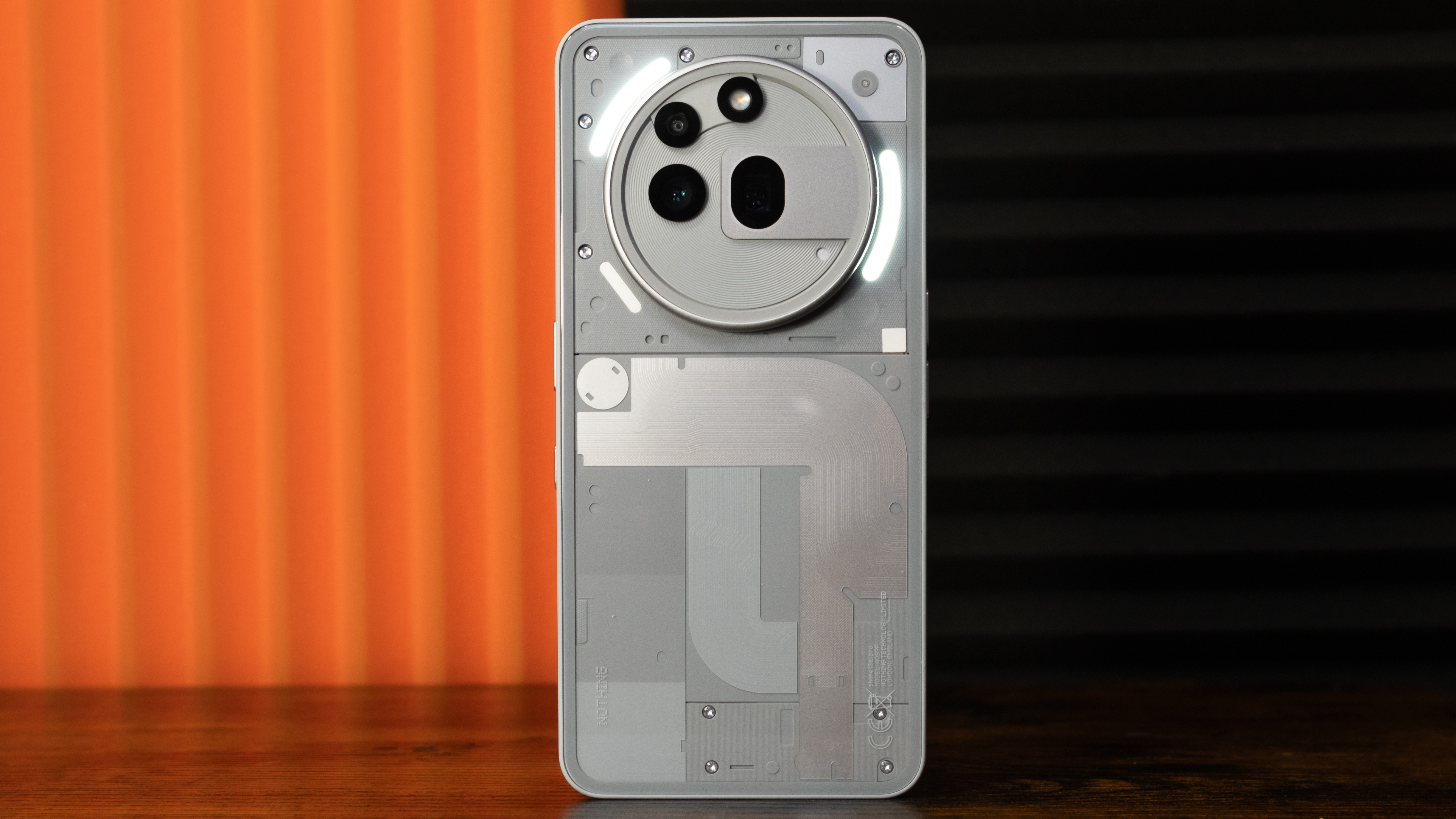
Rank 16783Nothing has confirmed that the Nothing Phone 3 will land in JulyThe company's teaser doesn't reveal much elsePrevious teasers and leaks point to this being a true flagship
We knew the Nothing Phone 3 was coming sometime this ‘summer’, but now the makers have got a bit more specific, saying that the phone will land in July.This was revealed in a teaser on Nothing’s X account, which… doesn’t tell us much else. Below text with the July launch window the number ‘3’ simply flashes on the screen several times, followed by text saying “it’s a magic number”.That ‘3’ is created from a series of white blocks that are reminiscent of the glyph lighting system on the back of Nothing’s phones, so that will probably be making a return here, but that was always expected.
Phone (3). It's a magic number. Coming July 2025. pic.twitter.com/WEQ7Vcf72HMay 20, 2025
A top-end chipset and a reworked camera
Still, while this teaser doesn’t tell us much else, previous teasers and leaks do give us some idea of what to expect.Nothing itself has previously said that the Nothing Phone 3 will be the company’s “first true flagship”, and that it will have a price to match, coming in at around £800 (roughly $1,060 / AU$1,640). That price will apparently be justified through “premium materials, major performance upgrades, and software that really levels things up.”Beyond that, a recent rumor pointed to the Nothing Phone 3 having a “flagship Snapdragon chipset”, which might mean the Snapdragon 8 Elite, also found in the likes of the Samsung Galaxy S25 series.The same tip also pointed to a significantly reworked triple-lens camera, complete with a larger primary sensor than the Nothing Phone 2 and a periscope telephoto lens, suggesting this phone could offer long-distance optical zoom.The battery could be in for a boost too, with this said to possibly exceed 5,000mAh – up from 4,700mAh in the Nothing Phone 2.So, the Nothing Phone 3 could be quite an exciting handset, and if you’ve liked the look of Nothing’s phones but wanted something higher end, this could finally be the device for you. We’ll find out in July.
You might also like
The latest Nothing Phone 3 leak hints at chipset, camera, and battery specificationsLeaked Nothing Phone 3 memo teases lots of AIThese are the best phones you can buy right now
-

Picture from ichef.bbci.co.uk
Rank 16784 -

Picture from ichef.bbci.co.uk
Rank 16785 -

Picture from ichef.bbci.co.uk
Rank 16786 -

Picture from ichef.bbci.co.uk
Rank 16787 -

Picture from cdn.mos.cms.futurecdn.net
Rank 16788PNY has revealed microSD Express cards compatible with Nintendo Switch 2They're available now in 128GB and 256GB capacitiesExpect to pay $44.99 for the 128GB card and $55.99 for the 256GB option
Now that the Nintendo Switch 2 is just a couple of weeks away from launch on June 5 (no, we can hardly believe it, either), you may already be looking at storage options if you've managed to successfully place a pre-order.Manufacturer PNY might just have you covered there, as it has just announced and released its new lineup of microSD Express cards. Compatible with Nintendo Switch 2 (and replacing the previous microSD format), PNY's memory cards can be purchased from the brand's website now or at participating retailers soon.PNY's microSD Express options come in two sizes. The 128GB card is available to buy for $44.99 (around £39.99), while the 256GB card - which matches the size of Switch 2's internal storage - can be picked up for $55.99 (around £49.99).Furthermore, the 128GB card has read and write speeds of 890MB/s and 550MB/s, respectively. Meanwhile, the 256GB card has the same read speed but an improved write speed of 750MB/s, making it the faster of the two.So, why would you want to buy a microSD Express card at or around the launch of Nintendo Switch 2? After all, the system itself boasts 256GB, which is a huge improvement over the original Nintendo Switch's 32GB (or 64GB on Nintendo Switch OLED).Well, when you factor in that Switch games are compatible with Switch 2, you may want that extra peace of mind if you're transferring your library and saves over to your new console. Especially as your old microSD cards won't be compatible with Switch 2. If you want to carry the whole lot over without issue, having a microSD Express card ready to go will save you the headache of picking and choosing which games you want to carry over.That said, if you're just planning on getting stuck in with one or two games at launch, such as Mario Kart World or Street Fighter 6, you can afford to hold off picking up a microSD Express card until the Switch 2's library grows over the next couple of years.
You might also like...
The newly revealed Logitech G522 Lightspeed could become the new mid-range wireless gaming headset to beatNew Nintendo Switch 2 Cyberpunk 2077 gameplay has been revealed – say what you like, but I'm still not impressedNintendo has partnered with Samsung to increase Switch 2 chip production
-

Picture from ichef.bbci.co.uk
Rank 16789 -

Picture from ichef.bbci.co.uk
Rank 16790 -
Picture from cdn.mos.cms.futurecdn.net
Rank 16791AMD has officially unveiled the RX 9060 XT graphics cardIt comes in 8GB and 16GB versions priced at $299 and $349That pricing, and a peppy spec, outguns Nvidia’s rival RTX 5060 Ti
AMD has revealed its latest RDNA 4 graphics card over at Computex 2025, with the RX 9060 XT coming in both 8GB and 16GB flavors, as has been rumored for a while now.The RX 9060 XT has 32 compute units (CUs) – compared to 56 CUs in the RX 9070 – as we also heard via the grapevine, and in fact, the rumor mill was pretty spot on about the specs here.The main piece of key info we were lacking was the price, and we now have that: the 8GB model will sell at $299, and if you want the 16GB version of this graphics card, that’ll run to $349.Other specs include the 9060 XT using GDDR6 VRAM and having a boost clock of 3.1GHz, with a TDP of 180W.AMD provided some early performance teasers, and apparently, the RX 9060 XT is going to edge out Nvidia’s RTX 5060 Ti in gaming when not using frame generation.As VideoCardz reports, AMD let us know that the new graphics card will go on sale come June 5 (which was again predicted via rumors).
(Image credit: Future / John Loeffler)
Analysis: A value-packed GPU with a lot of promise
AMD’s benchmarks must be taken with some caution – as with any marketing materials, some cherry-picking can be involved – but the RX 9060 XT is looking sharp going by this testing. It’s shown as 6% faster than the RTX 5060 Ti in a suite of 40 games at 1440p resolution with ‘ultra’ graphics details.Coupled with that competitive pricing, the RX 9060 XT is a very welcome addition to the lower-mid-range of the GPU market. Indeed, AMD also showed a presentation slide declaring that the RX 9060 XT gives buyers 15% more performance-per-dollar than the RTX 5060 Ti (working with that same battery of tests over 40 games).I should note that AMD is comparing the 8GB version of Nvidia’s RTX 5060 Ti to the 16GB flavor of the 9060 XT, which does cast something of a different light on those performance metrics – but the relative pricing still looks good value from Team Red here.It’s also worth bearing in mind that if you do go with the 9060 XT 8GB, this uses the full complement of PCIe lanes, whereas that’s cut in half with the 5060 Ti 8GB – and that can be important for older PCs that don’t have PCIe 5.0. Mainly because (last-gen) PCIe 4.0 proves a bottleneck on the bandwidth available to the GPU with only half of those lanes active (but not with the full set of 16 lanes, as per AMD’s design choice).So, that’s another win for AMD, and it has a strong offering on the table with the RX 9060 XT. The remaining question is, with no reference boards from Team Red, and the company relying entirely on third-party graphics card makers, are we going to see the MSRP adhered to? Or, if the RX 9060 XT models turn out popular, will pricing be inflated by those board-making partners?A lot of the answer to that may be tied up in stock levels, which is another variable here: how robust will initial supply levels be? The good news is that rumor has it that AMD won’t leave us in the lurch for stock, and much of the speculation around these new RDNA 4 models has proved correct, so hopefully that assertion will pan out, too.We won’t know for a couple of weeks yet, though, and real pricing on the shelves, as opposed to target MSRPs set by AMD, will still be a critical part of the equation here with the initial launch of the RX 9060 XT.
You might also like...
I tested the RTX 5060 - is 8GB of VRAM really enough in 2025?AMD Radeon RX 9070 review: a great choice if the RX 9070 XT and RTX 5070 are out of reachMicrosoft is digging its own grave with Windows 11, and it has to stop
-

Picture from cdn.mos.cms.futurecdn.net
Rank 16792What's new in Helldivers 2?(Image credit: Arrowhead)Helldivers 2's just dropped an update to weapon customization, allowing players to tweak guns with bespoke attachments. You can swap out the underbarrel, muzzle, and magazine, changing the way a gun works. This adds a huge layer of customization, so get in there and experiment with your favorite setups.
Helldivers 2 is set to add new major updates throughout 2025, in the form of new Warbonds for players to work through. The next one has now been detailed. Here's when it's coming, and what's included.Since its launch, Helldivers 2 has proven itself to be one of the best PS5 games to come out on the console. It's also a blast to play with pals, earning it a spot amongst our picks for the best co-op games to play with friends, Now, we get to look ahead to our second big content drop.Here's when to expect the next major Helldivers 2 update. We'll detail what's being added, and keep this page updated regarding future major updates. For now, here's what's being added.
When is the next Helldivers 2 update?
(Image credit: Arrowhead)
The next Helldivers 2 update just landed (May 21, 2025). It's a major update called Heart of Democracy, and sees a full-scale invasion of Super Earth. There's NPC squads to recruit, and a sprawling city to fight across. Push back the squids by activating planetary defenses, all while slaying Illuminate enemies in droves. You can read the highlights in the list below, or head to the PS Blog for the full details.
The urban sprawl of Super Earth is the site of the conflict. Fight among the towering skyscrapers and crowded streets of our home turf as the Illuminate rain down destruction all around you.The Helldivers are tasked with a new objective: to repel the Illuminate invasion by gaining ground over the squids as they fight to control areas where the fleet is landing.Encounter SEAF troops who will help join the fight to defend our Freedom. These small squads will fight enemies on their own, or they can be ordered to follow Helldivers and provide temporary backup as you navigate toward objectivesPrimary weapon customization system and expanded surplus options to fight against the Illuminate as they emerged from the singularity.
What was added in the last update?
(Image credit: Arrowhead)
Helldivers 2 Masters of Ceremony launched May 15, 2025, adding in a bunch of new weapons and items as part of a Warbond:
New weapons: R-2 Amendment, CQC-2 Saber, G-142 Pyrotech GrenadeBooster: Sample ScannerStratagem: CQC-1 One True FlagNew Armor: Parade Commander, Honorary GuardEmote: Lockstep
Helldivers 2 had been releasing a new Warbond every second Thursday, each month. Now, things have changed, with the studio focusing on larger updates. As revealed in the Tweet below, there's a new timeline for major updates. Arrowhead is yet to detail what it is, so stay tuned for more info.
Finally, we wanted to share that that, based on your feedback, we’re changing our approach to Warbonds.Firstly, we’re slowing the pace that we release Warbonds to allow a little more time to polish them. (We'll confirm what that new timeframe will be in the future)[5/6]June 6, 2024
When is the next Helldivers 2 update? FAQs
What is a Warbond in Helldivers 2?A Warbond is essentially a Battle Pass. There's one in the base game, as well as a premium one called Steeled Veterans. Cutting Edge will add another Premium Battle Pass, allowing players to use Medals to unlock new rewards.
Are Helldivers 2 Warbonds free?No, the upcoming Warbonds will require Super Credits to purchase. While these can be found in-game, and unlocked via the base Battle Pass, you may need to spend real money to get enough to unlock the next Warbond. Generally, these cost 1000 Super Credits.
How do you unlock the new weapons and armor from Warbonds?New Warbond will function the same as the others currently in the game. You'll earn Medals in missions, and then use them to slowly work your way through the Battle Pass rewards. You will not have access to everything immediately after buying the Warbond.
You Might Also Like...
Helldivers 2 reviewOur picks for the best PS5 exclusives in 2025The best multiplayer PC games
-

Picture from cdn.mos.cms.futurecdn.net
Rank 16793Every pool owner knows that there’s nothing better than a cool dip on a hot day – and nothing more dull than the chore of cleaning your pool. Wouldn’t it be great if you could relax while a robot quietly cleans from the floor to the waterline to make your pool crystal-clear and debris-free? That’s exactly what the Dreame Z1 Pro delivers. It takes care of the cleaning so you can enjoy your pool even more.
AI power for incredible cleaning
(Image credit: Dreame)
Dreame are experts in making robots that make humans' lives easier, and the Dreame Z1 Series brings the power of AI to efficiently and quietly clean pools of any kind. It's been designed for above ground and recessed pools, saltwater and freshwater pools, and pools of every shape and size.The Z1 Series comes with Advance PoolSense, powered by AI. It's the world's first robotic pool cleaner with a Triple Surround Fusion Perception System – and that means intelligent navigation and path planning, optimal zoning and adaptive cleaning routes, specially created S-shaped and Z-shaped routes for floor and wall cleaning respectively, and smart obstacle avoidance to steer clear of pool noodles and other obstacles – even really small ones.It's clever stuff, combining ultrasound, 3D structured light and time-of-flight (TOF) sensing to deliver exceptional environmental awareness: the Z1 Pro knows where to go and what path to take to deliver the best results each and every time. It automatically detects the shape of the pool and intelligently creates cleaning zones for targeted cleaning.
Serious suction and brilliant brushing
(Image credit: Dreame)
The Z1 Pro's AI smarts are teamed up with a really powerful cleaning system with a whopping 8,000GPH of suction power, dual brushless pump motors, active dual brushing and horizontal waterline cleaning. That system effortlessly eliminates leaves, dirt, algae and other debris, creating a cleaner, safer swimming environment all year long – including the icky bits along the waterline.The Dreame Z1 Pro is packed with clever technology, but it's been designed with ease of use in mind. It's the world's first pool cleaner with a poolside-operable remote, and it comes with a smart app that makes it easy to control and to choose cleaning modes. There are four cleaning modes, enabling you to choose between deep cleans and targeted cleaning for your pool floor, walls and waterlines.
Quiet, clever and incredibly easy to live with
(Image credit: Dreame)
The Z1 Pro is also extremely easy to live with. Its advanced filtration means there's minimal debris, because it can capture even very small items such as small stones, leaves, sand, gravel and hair. It even filters particles as small as 180 micrometers, ensuring your pool stays crystal clear and impeccably clean. Those filters are also really easy to clean, as they live in a filter basket that can be removed with a single click.The Z1 Pro's powerful battery delivers cordless convenience with long-lasting power, with a working time of up to 4 hours from a single charge. And when it's done, its auto poolside parking means it even tidies itself away when the pool is back to its sparkling best.That makes the Dreame Z1 Pro the perfect present for any pool owner – including you! Click here to find out more about the smartest and easiest way to keep any pool crystal clear.
-

Picture from ichef.bbci.co.uk
Rank 16794 -

Picture from ichef.bbci.co.uk
Rank 16795 -

Picture from cdn.mos.cms.futurecdn.net
Rank 16796Video and browser apps are "coming soon" to Android AutoThe apps will only be available when you're parkedWe should also now see more weather apps for the platform
The Google news just keeps on coming: as we enter the second day of Google I/O 2025, Google has flagged up "new in-car app experiences" for Android Auto, which will include video players and browser apps for the first time.As per the official blog post, support for both video and browsers is "coming soon" to Android Auto. However, like games on Android Auto, these apps will only work when your vehicle is parked to prevent them from distracting you on the road.For video players, the roll-out will initially be for Android 16 devices and "select compatible cars", so it sounds as though this might depend a little bit on the hardware you're using and the dashboard you're connecting up to.Google does mention being able to listen to the audio from videos while you're driving, but this is still at the "early access" stage for now, and there's more work to do here for Google, car makers, and app developers.
Take the weather with you
The current state of play with Android Auto apps (Image credit: Google)
In the same blog post, Google says the weather app category has now graduated from beta, which means they don't need specific approval to run on Android Auto – look for more weather apps appearing soon.For cars with Google dashboards already built in (which isn't many, at the moment), the development is even further ahead: the video app category is now open for submissions, while the browser category is currently in beta.The blog post also mentions that the Gemini assistant will be coming to Android Auto in the "coming months", which is something we'd already seen signs of. Eventually, it'll take over all voice control duties on the dashboard.Being able to sit and watch a video with passengers on Android Auto would be a very welcome upgrade. For me, web browsing on a car dashboard is less appealing, but it's good to see the platform being upgraded and expanded over time.
You might also like
Google Search just got its biggest-ever AI upgradeI finally tried Samsung's Project Moohan Android XR headsetGemini Live is now free for everyone on Android and iOS
-

Picture from ichef.bbci.co.uk
Rank 16797 -

Picture from cdn.mos.cms.futurecdn.net
Rank 16798Nvidia lost around $5.5 billion in costs and $15 billion in revenue due to H20 export bansCEO Jensen Huang celebrates Trump's decision to reverse some restrictionsThe AI market in China could reach $50 billion this year
Nvidia CEO Jensen Huang has criticized the US AI chip export controls to China, calling them a "failure" that ultimately ended up costing American businesses billions.Speaking at this year's Computex event, the leader praised Trump's move to modify the Biden-era export curbs (via Reuters), stating that "President Trump realizes it's exactly the wrong goal."In April, the world's most valuable chipmaker declared it would accrue an estimated $5.5 billion in costs solely relating to the export of H20 chips to China and other restricted nations.
Nvidia praises chip export ban reversal
Huang said the original export assumptions were flawed, and didn't stop AI research in China, which continues with heavy local investment. However, while the country continues virtually unaffected, Nvidia's market share in China dropped from 95% to 50% in the period after Biden's export restrictions were introduced.Intense competition from domestic firms, like Huawei, has already filled the gaps left by US suppliers.The CEO explained that China's AI market could reach a staggering $50 billion this year, marking a major opportunity for Nvidia if access to the nation is restored via lifted restrictions. Apart from the $5.5 billion in estimated costs, Nvidia expected $15 billion in lost revenues due to export restrictions on its H20 chips.Nvidia is also developing a compliant version of its Blackwell AI chip with downgraded memory to meet US restrictions.Despite reversing some Biden-era bans, the Trump administration is considering replacing the tiered export system with a global licensing regime for better leverage in trade talks. Earlier this week, China responded to US actions by demanding an end to "discriminatory" policies."AI is advancing at light speed as agentic AI and physical AI set the stage for the next wave of AI to revolutionize the largest industries," Huang said in the company's most recent earnings report, when it revealed a 78% year-over-year increase in quarterly revenue.
You might also like
These are the best AI tools and best AI writersAccess powerful AI chips with the best cloud computing servicesChinese tech companies want to enter the US market despite trade and tariff war
-

Picture from cdn.mos.cms.futurecdn.net
Rank 16799I spent yesterday walking the floor of Computex 2025, checking out the latest and greatest computing tech of the year, and I got to spend a lot of time at the MSI booth.As one of the biggest PC component makers in the world, MSI had a lot to show off on the components front, from cases to power supplies to graphics cards to motherboards, and all of it was either what I expected from MSI (their components are great), or even better, some limited edition and concept products that anyone would want to include in their own PC build.
Image 1 of 3(Image credit: Future / John Loeffler)Image 2 of 3(Image credit: Future / John Loeffler)Image 3 of 3(Image credit: Future / John Loeffler)
Starting on the premium build side of things, the MSI MEG Maestro 900L is a real showpiece of a PC case with a three-sided curved glass enclosure with diamond chamfer edges and support for a custom liquid cooling loop. It's more or less a perfect case for a high-end build that isn't a completely custom design.
Image 1 of 4(Image credit: Future / John Loeffler)Image 2 of 4(Image credit: Future / John Loeffler)Image 3 of 4(Image credit: Future / John Loeffler)Image 4 of 4(Image credit: Future / John Loeffler)
Next, the IRONMOUSE VTuber-themed PC build with IRONMOUSE-branded components looked fantastic, and is the kind of build and component design that should inspire a lot of builders out there to go for a similar look.
(Image credit: Future / John Loeffler)
Obviously, graphics cards were a big part of MSI's booth this year, and that makes sense, seeing as it consistently makes some of the best graphics cards on the market, especially on the higher end of the stack, like the MSI GeForce RTX 5090 Suprim Liquid SOC, but also smaller form factor cards on the lower end of the stack like the new MSI GeForce RTX 5060 Ti Inspire 2X OC.
(Image credit: Future / John Loeffler)
Of course, with so many components, you could build a whole PC out of just MSI parts, and MSI went out of its way to showcase some of its DIY innovations that aim to make PC building easier and less intimidating for first-time builders.
(Image credit: Future / John Loeffler)
In addition to its mainstream graphics card lineup, MSI also showed off new MSI GeForce RTX 5080 Expert OC and RTX 4080 Super Expert OC cards with a cool-looking grill design built into their shrouds.
Image 1 of 4(Image credit: Future / John Loeffler)Image 2 of 4(Image credit: Future / John Loeffler)Image 3 of 4(Image credit: Future / John Loeffler)Image 4 of 4(Image credit: Future / John Loeffler)
There were also some awesome special edition cards being shown off, like the MSI GeForce RTX 5070 Cyclone Visual OC, which is a single, large-fan design that has an LCD display in the center.
(Image credit: Future / John Loeffler)
Of course, there was also the MSI GeForce RTX 5090 Suprim Titanium Edition SOC card with a lux golden-colored finish. How much this card would set you back I can't say, but I can't imagine it's cheap even by RTX 5090 standards.
(Image credit: Future / John Loeffler)
But the component that really stole my heart at the MSI booth yesterday was a simple bracket, one that I'm not even sure you'd be able to buy on its own, but which would come with the MSI MPG Coreliquid P13 360 AIO cooler.
(Image credit: Future / John Loeffler)
See, here's the thing. I test a lot of processors for my reviews and features, and this often involves me swapping out motherboards with different chipsets. But in order to keep results comparable between Intel and AMD processors, I really need everything else on the testbench to stay the same, including the AIO cooler.The problem, though, is that the mounting for CPU coolers between AMD and Intel isn't standardized. Instead, both chipmakers have their mounting screws oriented differently. Intel's CPU cooler mountings form a square, while AMD's form a rectangle with uneven length and height.This means that I have to swap out the mounting bracket for the AIO cooler every time I switch between the two chip brands, and losing one of those brackets is an absolute nightmare that could wreck days of testing. I know this because it's happened to me more than once.
(Image credit: Future / John Loeffler)
Enter the MSI Unibracket. A single bracket that works with both Intel LGA 1700/1851 and AMD AM4/AM5 motherboard mountings.As soon as I saw the Unibracket, I wanted to scream, because the solution to the problem is so blindingly obvious, I don't understand how this part isn't standardized across every CPU cooler manufacturer.Their loss is MSI's gain, however, as once I get a Coreliquid P13 360 AIO cooler in the lab, it's all but guaranteed to be my go-to CPU cooler for the testbench for the foreseeable future.
You might also like...
The MSI Prestige 13+ AI Ukiyo-e Edition is nothing short of a work of art, and my only complaint is that so few people will get to see it in personBest laptops of Computex 2025 - meet the future of notebooks from HP, Asus, and moreMSI's new AI-infused QD-OLED monitor and improved MEG Vision X AI gaming PC make AI a bit more practical for gamers
-

Picture from ichef.bbci.co.uk
Rank 16800

