News
This constantly updated list features the latest and most important news articles, ranked in order of significance. The top stories highlight major developments, breaking news, and critical updates across various topics, ensuring you stay informed about the most pressing issues. As new articles are added, the list adapts to reflect the latest priorities, keeping the most impactful stories at the forefront. Whether it’s global events, technology breakthroughs, or industry trends, this dynamic list ensures you always have access to the most relevant and timely information.
-
Picture from techcrunch.com
Rank 16651 -

Picture from techcrunch.com
Rank 16652 -

Picture from techcrunch.com
Rank 16653 -
Picture from techcrunch.com
Rank 16654 -

Picture from techcrunch.com
Rank 16655 -

Picture from techcrunch.com
Rank 16656 -

Picture from techcrunch.com
Rank 16657 -

Picture from techcrunch.com
Rank 16658 -

Picture from techcrunch.com
Rank 16659 -

Picture from techcrunch.com
Rank 16660 -

Picture from techcrunch.com
Rank 16661 -

Picture from techcrunch.com
Rank 16662 -

Picture from techcrunch.com
Rank 16663 -

Picture from techcrunch.com
Rank 16664 -

Picture from techcrunch.com
Rank 16665 -

Picture from techcrunch.com
Rank 16666 -

Picture from techcrunch.com
Rank 16667 -
Picture from techcrunch.com
Rank 16668 -
Picture from o.aolcdn.com
Rank 16669At I/O today, Google pitched creators on a new app for "AI filmmaking": Flow. Combining all of Google’s recent announcements and developments across AI-powered services, including Veo (video), Imagen (images) and Gemini, the company bills Flow as a storytelling aid ‘built with creatives.” If it sounds familiar, this is the advanced version of VideoFX, previously a Google Labs experiment.
It says it’s aimed at helping storytellers to explore ideas and create clips and scenes, almost like storyboards and sketches in motion. Google’s generally impressive Veo 2 model seems to form the core of Flow, able to extend footage and create video that “excel(s) at physics and realism”, although I’m not sure many agree with that..
You can use Gemini’s natural language skills to construct and tweak the video output, and creatives can pull in their own assets or create things with Imagen through simple text input. What’s notable is the ability to integrate your creations and scenes into different clips and scenes with consistency. While the early demo footage we saw was impressive, it still had a not-so-faint AI-slop aroma.
There are further film-making tools, too. Flow will also feature direct control over the movement of your ‘camera’, and even choose camera angles. You can also edit and extend shots, adding different transitions between AI-generated videos. Creating video with Veo is often a piecemeal process, but Flow will have its own asset management system to organize assets and even your prompts. These richer controls and editing abilities could make for more compelling creations in time. Let’s not forget: It’s been less than a year since that very weird Toys R’Us ad.
Google buddied up with several notable filmmakers to attempt to legitimize collaborate on these still-early steps into AI video creation, including Dave Clark, Henry Daubrez and Junie Lau. It says it offered creatives early access to the tools, and folded in their insights and feedback into what is now called Flow.
Flow is now available to AI Pro and AI Ultra subscribers in the US, and will roll out to other countries soon. Pro users will get Flow tools outlined so far and 100 generations each month. With the Ultra sub, you’ll get unlimited generation and early access to Veo 3, with native audio generation.This article originally appeared on Engadget at https://www.engadget.com/ai/google-filmmaking-tool-flow-ai-generated-video-175212520.html?src=rss
-
Picture from o.aolcdn.com
Rank 16670Chrome's built-in password manager will soon be able to instantly change compromised passwords whenever you use them to log into anything.Google (Screenshot)
Google Chrome has announced a feature for its built-in password manager that it claims will let users instantly change passwords compromised in data breaches. Google Password Manager already alerts you when your credentials have appeared in a data breach, and partially automates the process of changing your password, but — until now — you still had to go through the steps manually for each of your online accounts.
The Automated Password Change feature, announced at today's Google I/O keynote presentation, goes a step farther. It will apparently let you generate a new password and substitute it for the old one with a single click, without ever seeing a "Create New Password" page. The feature only works on participating websites. Google is currently in talks with developers to expand the range of sites that will support one-click password changes, with plans for a full rollout later in 2025.
Automated Password Change was discovered as far back as February by eagle-eyed software diggers, but was limited to the early developer-only builds made public as Chrome Canary. At that time, it was located in the "AI Innovations" settings menu, though it's not yet clear how AI figures in the process.
This feature builds on password health functionality that Google has been steadily incorporating into Chrome since it released the Password Checkup extension in 2019, recognizing that compromised credentials are a common vector for cybercrime. People often reuse the same short, memorable password on multiple websites. If hackers steal a credential database from one weakly defended site and dump it on the dark web, other cybercriminals can try the leaked usernames and passwords on more secure sites — like online banks and cash apps — until one fits.
The best way to prevent this is to use a password manager to generate and save a different strong password for every account you make, even ones you don't think will handle sensitive information. If you haven't done this, the second-best prevention is to monitor password data breaches and immediately change any password that gets leaked. If Automated Password Change works as advertised, it'll make that crisis response a lot more convenient.
This article originally appeared on Engadget at https://www.engadget.com/cybersecurity/google-chrome-previews-feature-to-instantly-change-compromised-passwords-175051933.html?src=rss
-

Picture from cdn.mos.cms.futurecdn.net
Rank 16671Three spouseware apps have disappeared, journalists have foundAll three were leaking sensitive dataIt's not uncommon for spouseware apps to disappear and rebrand after a security mishap
Three spouseware apps - Cocospy, Spyic, and Spyzie, have gone dark. The apps, which are all basically clones of one another, are no longer working. Their websites are gone, and their cloud storage, hosted on Amazon, is deleted.The news was broken by TechCrunch earlier this week, who said that the reason behind the disappearance is not blatantly obvious, but it could be linked to data breaches that happened earlier this year.“Consumer-grade phone surveillance operations are known to shut down (or rebrand entirely) following a hack or data breach, typically in an effort to escape legal and reputational fallout,” the publication wrote.
60% off for Techradar readersWith Aura's parental control software, you can filter, block, and monitor websites and apps, set screen time limits. Parents will also receive breach alerts, Dark Web monitoring, VPN protection, and antivirus.Preferred partner (What does this mean?)View Deal
The grey zone
“LetMeSpy, a spyware developed out of Poland, confirmed its “permanent shutdown” in August 2023 after a data breach wiped out the developer’s servers. U.S.-based spyware maker pcTattletale went out of business and shut down in May 2024 following a hack and website defacement.”Spouseware, or spyware, is a type of application that operates in the grey zone. It is advertised as a legitimate software, used to keep track of minors, people with special needs, and similar. However, most of the time it is just a cover for illegal activities, such as spying on other members of the household, love interests, and similar.Given its nature, the development team and key people are usually hidden, which makes it difficult for members of the media to get a comment or a statement.In late February this year, two of the apps - Cocospy and Spyic - were found exposing sensitive user data: email addresses, text messages, call logs, photographs, and other sensitive information. Furthermore, researchers were able to exfiltrate 1.81 million of email addresses used to register with Cocospy, and roughly 880,000 addresses used for Spyic. Besides email addresses, the researcher managed to access most of the data harvested by the apps, including pictures, messages, and call logs.Just a week later, similar news broke for Spyzie. The app was found leaking email addresses, text messages, call logs, photographs, and other sensitive data, belonging to millions of people who, without their knowledge or consent, have had these apps installed on their devices. The people who installed those apps, in most cases partners, parents, significant others, have also had their email addresses exposed in the same manner.Via TechCrunch
You might also like
Security flaw in popular stalkerware apps is exposing phone data of millionsTake a look at our guide to the best authenticator appWe've rounded up the best password managers
-
Picture from o.aolcdn.com
Rank 16672Google has just announced a new $250 per month AI Ultra plan for people who want unlimited access to its most advanced machine learning features. Yes, you read that right. It means the new subscription is $50 more expensive than the already pricey ChatGPT Pro and Claude Max plans from OpenAI and Anthropic.
For $250, you're getting early access to new models like Veo 3, and unlimited usage when it comes to features like Flow, the new AI film-making app the company announced today, and the compute-intensive Deep Research. In the coming weeks, Google will also roll out Deep Think to AI Ultra users, which is the new enhanced reasoning mode that is part of its Gemini 2.5 Pro model. Subscribers can also look forward to access to Project Mariner, Google's web-surfing agent, and Gemini within Chrome, plus all the usual places where you can find the chatbot like Gmail and Docs.
Google is partly justifying the high cost of AI Ultra by touting the inclusion of YouTube Premium and 30TB of cloud storage across Google Photos, Drive and Gmail. On its own, a YouTube Premium subscription would cost you $14 per month, and Google doesn't offer 30TB of cloud storage separately. The closest comparison would be Google One, which includes a Premium tier that comes with 2TB of storage for $10 per month. As another incentive to sign up for AI Ultra, Google is giving new subscribers 50 percent off their first three months.
As of today, Google is also revamping its existing AI Premium plan. The subscription, which will be known as Google AI Pro moving forward, now includes the Flow app and early access to Gemini in Chrome. Google says the new benefits will come to US subscribers first, with availability in other countries to follow.This article originally appeared on Engadget at https://www.engadget.com/ai/google-wants-250-per-month-in-return-for-its-new-ai-ultra-plan-180248513.html?src=rss
-

Picture from techcrunch.com
Rank 16673 -

Picture from ichef.bbci.co.uk
Rank 16674 -

Picture from ichef.bbci.co.uk
Rank 16675 -

Picture from ichef.bbci.co.uk
Rank 16676 -

Picture from ichef.bbci.co.uk
Rank 16677 -

Picture from ichef.bbci.co.uk
Rank 16678 -

Picture from techcrunch.com
Rank 16679 -

Picture from cdn.mos.cms.futurecdn.net
Rank 16680Netflix has released a trailer for the new crime movie, A Widow's GameThe plot is based on a case called "the black widow of Patraix"It's released on the streamer on May 30
A Widow's Game is a gripping new Netflix movie which is giving serious Gone Girl vibes, and I'm so excited to watch when it arrives on one of the best streaming services.Arriving on May 30, it definitely has the potential to be one of the best Netflix movies, as it's inspired by a very interesting case I hadn't heard of before known as "the black widow of Patraix."The Spanish-language movie is directed by Carlos Sedes and written by the team that brought us the Netflix drama series The Asunta Case. That series follows a couple who reported their daughter missing, which unravels the truth about a seemingly picture-perfect family.Check out the new trailer below.
What is the plot of A Widow's Game?
(Image credit: Netflix)
Set in 2017, the body of a man is found in a parking lot. He's been stabbed seven times and the authorities believe all signs point to a crime of passion. With a veteran inspector heading up the crime, she's soon led to a suspect no one expected: Maje, the young widow who had been married to the victim for less than a year.The cast is led by Pan's Labyrinth star Ivana Baquero, who plays Maje, and Criminal's Carmen Machi, who is Eva, the case inspector. The cast also includes Tristán Ulloa, Joel Sánchez, Álex Gadea, Pablo Molinero, Pepe Ocio, Ramón Ródenas, Amparo Fernández and Miquel Mars.I love a good crime drama and I'm very excited to see this one unfold and how the titular widow is brought to justice. If she is, of course!
You might also like
5 Netflix thriller movies with 100% on Rotten Tomatoes to watch right nowNetflix is picking up Sesame Street and doing something HBO should've done all alongThink ads are bad now? Netflix and YouTube just revealed AI-powered commercials that could make cheap tiers unbearable
-
Picture from o.aolcdn.com
Rank 16681Google has begun rolling out AI Mode to every Search user in the US. The company announced the expansion during its I/O 2025 conference. Google first began previewing AI Mode with testers in its Labs program at the start of March. Since then, it has been gradually rolling out the feature to more people, including in recent weeks regular Search users. At its keynote today, Google shared a number of updates coming to AI Mode as well, including some new tools for shopping, as well as the ability to compare ticket prices for you and create custom charts and graphs for queries on finance and sports.
For the uninitiated, AI Mode is a chatbot built directly into Google Search. It lives in a separate tab, and was designed by the company to tackle more complicated queries than people have historically used its search engine to answer. For instance, you can use AI Mode to generate a comparison between different fitness trackers. Before today, the chatbot was powered by Gemini 2.0. Now it's running a custom version of Gemini 2.5. What's more, Google plans to bring many of AI Mode's capabilities to other parts of the Search experience.
"AI Mode is where we'll first bring Gemini's frontier capabilities, and it's also a glimpse of what's to come," the company wrote in a blog post published during the event. "As we get feedback, we'll graduate many features and capabilities from AI Mode right into the core search experience in AI Overviews."
Looking to the future, Google plans to bring Deep Search, an offshoot of its Deep Research mode, to AI Mode. Google was among the first companies to debut the tool in December. Since then, most AI companies, including OpenAI, have gone on to offer their take on Deep Research, which you can use to prompt Gemini and other chatbots to take extra time to create a comprehensive report on a subject. With today's announcement, Google is making the tool available in a place where more of its users are likely to encounter it.
Another new feature that's coming to AI Mode builds on the work Google did with Project Mariner, the web-surfing AI agent the company began previewing with "trusted testers" at the end of last year. This addition gives AI Mode the ability to complete tasks for you on the web. For example, you can ask it to find two affordable tickets for the next MLB game in your city. AI Mode will compare "hundreds of potential" tickets for you and return with a few of the best options. From there, you can complete a purchase without having done the comparison work yourself.
"This will start with event tickets, restaurant reservations and local appointments," says Google. "And we'll be working with companies like Ticketmaster, StubHub, Resy and Vagaro to create a seamless and helpful experience."
AI Mode will also soon include the ability to generate custom charts and graphics tailored to your specific queries. At the same time, AI Mode will be more personalized in the near future, with Google introducing an optional feature allowing the tool to draw their past searches. The company will also give people the option to connect their other Google apps to AI Mode, starting with Gmail, for even more granular recommendations.
As mentioned above, Google is adding a suite of shopping features to AI Mode. Engadget has a separate post dedicated to the Shopping features Google announced today, but the short of it is that AI Mode will be able to narrow down products for you and complete purchases on your behalf – with your permission, of course.
All of the new AI Mode features Google previewed today will be available to Labs users first before they roll out more broadly.
Update, May 20 2025, 2:45PM ET: This story has been updated to preview in the intro some of the updates coming to AI Mode.This article originally appeared on Engadget at https://www.engadget.com/ai/google-is-rolling-out-ai-mode-to-everyone-in-the-us-174917628.html?src=rss
-

Picture from techcrunch.com
Rank 16682 -
Picture from o.aolcdn.com
Rank 16683The popular Amazon Fire Stick HD is on sale for $20 as part of a Memorial Day promotion. This is a discount of 43 percent, as the usual price is $35.
This particular stick made our list of the best streaming devices, and we particularly recommend it for the budget-conscious. The Fire Stick HD supports 1080p streaming at 60 FPS and includes an Amazon remote that can control the power and volume on the actual TV. This is something the previous iteration, the Fire TV Stick Lite, couldn't do. The days of having to navigate multiple remotes are over.
The remote also integrates with Alexa for voice control. Amazon's Fire TV interface supports all of the major streaming services, including Netflix, HBO Max, Hulu and all the rest. The Fire TV Stick HD ships with the updated interface that includes user profiles and a simpler UI.
On the downside, this is a streaming stick for HD content. It cannot stream stuff in 4K. Also, Amazon's interface is heavy on the ads, especially when compared to rival platforms. Still, the price is right. We enjoyed this streaming stick at the original cost, so we definitely recommend it at $20. Amazon's Fire TV Stick 4K Max is also on sale for $40, which is a discount of 33 percent.
Follow @EngadgetDeals on X for the latest tech deals and buying advice.This article originally appeared on Engadget at https://www.engadget.com/deals/our-favorite-budget-streaming-stick-drops-to-only-20-for-memorial-day-185649504.html?src=rss
-
Picture from o.aolcdn.com
Rank 16684Google has dug back into its past and introduced its latest take on smart glasses during I/O 2025. Glasses with Android XR brings Gemini AI to smart glasses thanks to an expanded partnership between Google and Samsung. These smart glasses can sync with a smartphone to access apps, and they're equipped with speakers and an optional in-lens display for privately viewing information.
And for those that remember the less-than-stylish old Google Glass frames, this iteration seems more focused on real world wearability and style. Google is also working with Gentle Monster and Warby Parker as inaugural partners for providing the frames.
The highlight of the I/O presentation of the glasses attempted to do a live translation. Shahram Izadi and Nishtha Bhatia spoke Farsi and Hindi to each other as the XR frames provided real-time translation into English. The demo fell victim to the curse of AI misbehaving during a live show, but there was a brief moment where each of their glasses did successfully work as hoped.
In addition to that demo, Bhatia also showcased how the Gemini assistant could work with the XR glasses, asking it questions about images she was seeing backstage at the theater and calling up information about the cafe where she got coffee before the show.This article originally appeared on Engadget at https://www.engadget.com/wearables/google-demos-android-xr-glasses-at-io-including-translation-191510501.html?src=rss
-

Picture from ichef.bbci.co.uk
Rank 16685 -

Picture from ichef.bbci.co.uk
Rank 16686 -
Picture from o.aolcdn.com
Rank 16687Google has dug back into its past and introduced its latest take on smart glasses during I/O 2025. Glasses with Android XR brings Gemini AI to smart glasses thanks to an expanded partnership between Google and Samsung. These smart glasses can sync with a smartphone to access apps, and they're equipped with speakers and an optional in-lens display for privately viewing information.
And for those that remember the less-than-stylish old Google Glass frames, this iteration seems more focused on real world wearability and style. Google is also working with Gentle Monster and Warby Parker as inaugural partners for providing the frames.
The highlight of the I/O presentation of the glasses attempted to do a live translation. Shahram Izadi and Nishtha Bhatia spoke Farsi and Hindi to each other as the XR frames provided real-time translation into English. The demo fell victim to the curse of AI misbehaving during a live show, but there was a brief moment where each of their glasses did successfully work as hoped.
In addition to that demo, Bhatia also showcased how the Gemini assistant could work with the XR glasses, asking it questions about images she was seeing backstage at the theater and calling up information about the cafe where she got coffee before the show.This article originally appeared on Engadget at https://www.engadget.com/wearables/google-demos-android-xr-glasses-at-io-live-translation-191510280.html?src=rss
-

Picture from ichef.bbci.co.uk
Rank 16688 -

Picture from techcrunch.com
Rank 16689 -

Picture from ichef.bbci.co.uk
Rank 16690 -

Picture from ichef.bbci.co.uk
Rank 16691 -
Picture from o.aolcdn.com
Rank 16692Google originally launched SynthID, its digital watermark for AI-generated content, as a way to detect whether an image was created using the company's Imagen model in 2023. Now, at Google I/O 2025, the company is introducing a public-facing tool called SynthID Detector that claims to detect those watermarks in just about anything you upload.
SynthID Detector will be available as a web portal where you can upload images, video, audio and text to be scanned. Once uploaded, SynthID Detector Google claims the portal can tell you whether your upload contains AI-generated material and even "highlight specific portions of the content most likely to be watermarked." For audio, the tool is supposed to be able to identify a specific portion of a track that contains the watermark, too.
Google
SynthID was designed to mark content from Google's models but Google hopes other companies will adopt the watermark for their own AI output. An open source version of SynthID is already available for text watermarking, and as part of the rollout of SynthID Detector, Google is partnering with NVIDIA to mark media its NVIDIA Cosmos model generates. SynthID Detector won't be the only tool that can spot Google's watermark, either. The company says GetReal Security will also be able to verify if media contains SynthID.
Considering the sheer number of ways Google hopes people will using AI to create images, video, text and audio, from the Audio Overviews in NotebookLM to short films made with its new Flow tool, it makes sense that it would offer a way to know if any of those things are real. Until models from one company produces the vast majority of content or a digital watermark reaches widespread adoption, though, a tool like SynthID Detector can only be so useful.
Journalists, researchers and developers can join a waitlist to try SynthID Detector through Google's online form.This article originally appeared on Engadget at https://www.engadget.com/ai/synthid-detector-can-check-media-to-see-if-it-was-generated-with-googles-ai-tools-194002070.html?src=rss
-

Picture from ichef.bbci.co.uk
Rank 16693 -

Picture from cdn.mos.cms.futurecdn.net
Rank 16694CD Projekt Red's Cyberpunk 2077 has been showcased on the Nintendo Switch 2Comparisons between it and other consoles like the Steam Deck and PS5 have been madeDLSS appears to be at the forefront of the handheld's performance and visual capabilities
The launch of the Nintendo Switch 2 is almost here, and it'll come with a handful of titles ready for gamers to dive into from day one. Luckily, we now have an early look at one in particular, from game developer CD Projekt Red.In a YouTube video by Nintendo Life, CD Projekt Red's Cyberpunk 2077 is revealed running on the Nintendo Switch 2, with visual quality that rivals other PC handhelds like the Steam Deck. This is thanks to Nvidia's custom T239 chip, which allows the new handheld to take advantage of DLSS upscaling, for better-than-native performance while upscaling from a lower internal resolution.Considering earlier expectations that were based on the hardware rumors (which turned out to be legitimate), Cyberpunk 2077 has impressed many gamers with its lighting and environment details. However, it's worth noting that Nvidia's DLSS upscaling is rumored to be used quite aggressively, which is clear to see in some of the blurry sequences in the gameplay showcase.This is to be expected as the Switch 2 is already pushing above its weight in running a game like Cyberpunk 2077. But there are still very evident performance dips, particularly during vehicle traversal, which highlights the potential issue – if DLSS is indeed used aggressively and performance is not up to par, seeing dips into what looks like the upper end of 20fps, then is it really impressive after all?
PlayStation 5 on the left, Nintendo Switch 2 on the right... (Image credit: Nintendo Life)
It's worth noting that it isn't exactly clear which segments of the gameplay below are either docked or handheld (it's likely the former considering the 4K video quality), and there will be a choice between quality and performance modes.This is also still a work in progress and will likely be drastically different from the launch version, but it will be interesting to see how this fares against the MSI Claw 8 AI+ – which delivers great visuals and performance playing Cyberpunk 2077 – along with other upcoming handhelds like the recently-announced MSI Claw A8 using AMD's Ryzen Z2 Extreme.
Analysis: It's better than I expected, but doesn't warrant the Switch 2's cost
Now, before you say I have a Nintendo Switch 2 agenda, I do think games like Cyberpunk 2077 have the potential to further exceed their performance and visual expectations on the device. Despite that, the handheld's $449.99 / £395.99 / AU$699.95 price has me asking a basic question – wouldn't it be better to buy a PS5, Xbox Series X at around the same price, for a better experience?I could go into the handheld PC comparisons, and the Claw 8 AI+'s processing power, but I'd hate to sound like a broken record. Spoiler alert; it's purported to be the better and more powerful device.However, the simple fact here is that the Switch 2's Cyberpunk 2077 isn't in the same ballpark visually and performance-wise as either of Sony's or Microsoft's consoles. In that sense, the Switch 2's value as a gaming console rival is lost if it costs nearly the same and yet provides a worse experience.Before you point out that the MSI Claw 8 AI+ costs more than the PS5 and Xbox Series X, it's not in the category of game console (it also doesn't come with a dock for extra performance), and its price compared to the Switch 2 is still warranted considering the power packed in such a compact device. If the Switch 2's price were much lower, I'd be far more impressed with Cyberpunk 2077's performance, but tariffs or not, that's not the case.DLSS seems to be the one factor that will do the heavy lifting with the Switch 2, and I'd argue it's the one reason why its version of Cyberpunk 2077 can be compared to other handhelds using either XeSS or FSR (neither of which are on the level of Nvidia's DLSS). Even then, without tools like Frame Generation, it still leaves me unimpressed with the Switch 2, but I'll happily eat my words if I'm proven wrong with its capabilities.
You might also like...
The Nintendo Switch 2 version of Cyberpunk 2077 will address PS4 and Xbox One launch issues like texture pop-inCyberpunk 2077: Phantom Liberty is a DLC masterclassNintendo Switch 2 pre-orders live: UK stock is live at multiple retailers, plus all the best US retailers to check
-

Picture from techcrunch.com
Rank 16695 -
Picture from o.aolcdn.com
Rank 16696Whether you're traveling for a vacation or just relaxing in the sunshine, a tablet is one of the easiest ways for you and your family to stay entertained while out and about during the summer. If you're looking for a new tablet, Amazon is selling the most recent Apple iPad (A16) for $50 off. It's an 11-inch model powered by the A16 chip. You can buy the 128GB tablet in any of the four available colors — silver, blue, pink or yellow — of the tablet for $299. If you need more storage, you can opt for the 256GB model for $399 or the 512GB version for $595. All of these discounts are for the WiFi only models and do not include any time under the Apple Care protection plan.
Apple has a bunch of different iPads for sale these days, and the A16 one is our favorite budget option for this brand. That's because although the A16 chip is notably less powerful than the M3 or M4 you'll find in higher-end tablets, this model still performs well on the basic tasks that you'd use an iPad for. This iPad has a liquid Retina display with a resolution of 2360x1640. Again, it's not flashy, but plenty serviceable.
One additional caveat for the A16 is that it can't run Apple Intelligence, so this isn't the iPad for you if you're looking to experiment with lots of AI tools. But for about $300, it's a great starter option if you want to have an easy way to play games, watch shows or read on a larger screen.
Follow @EngadgetDeals on X for the latest tech deals and buying advice.This article originally appeared on Engadget at https://www.engadget.com/deals/apples-latest-ipad-is-on-sale-for-50-off-ahead-of-memorial-day-195749473.html?src=rss
-
Picture from cdn.mos.cms.futurecdn.net
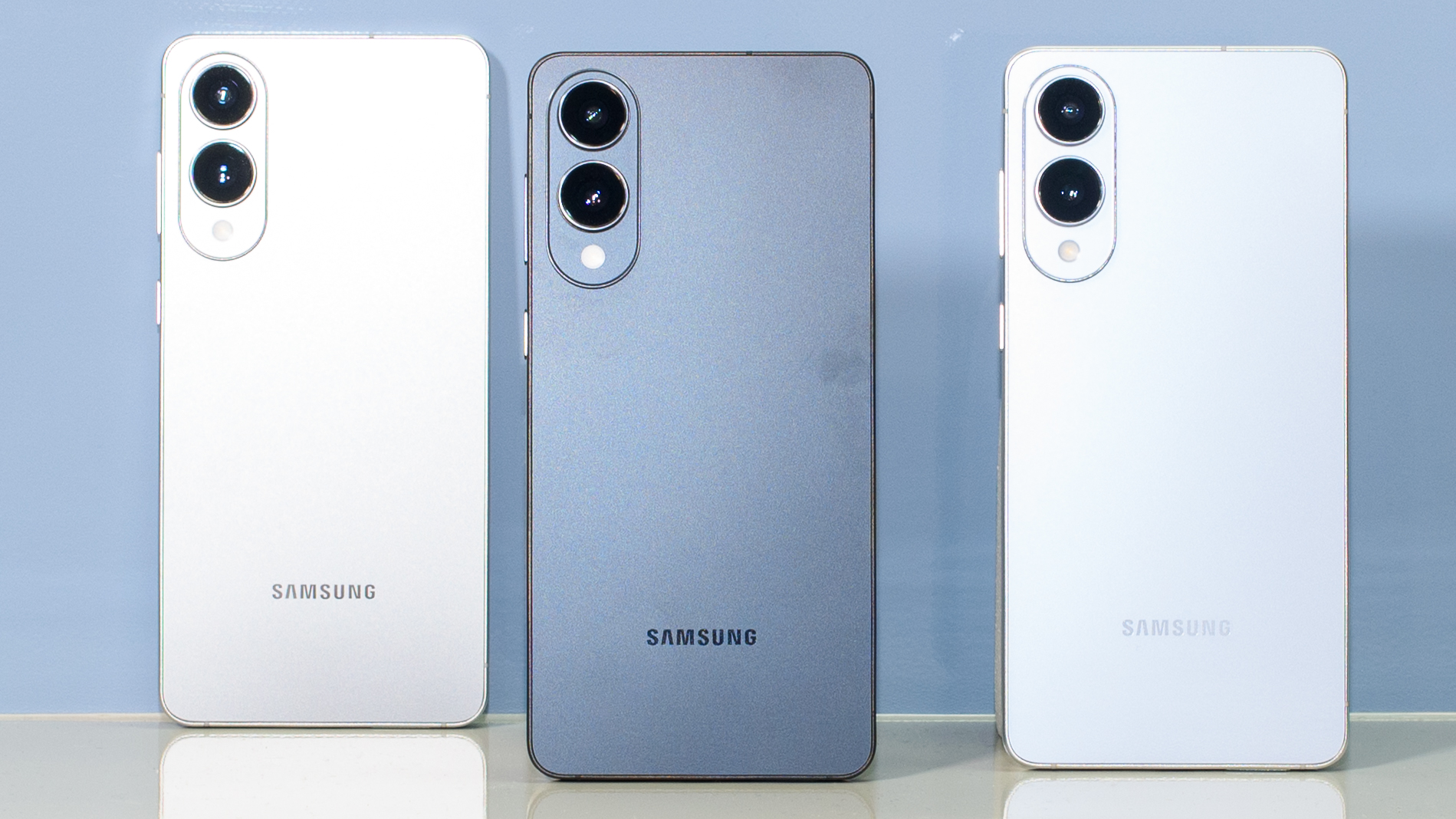
Rank 16697The Samsung Galaxy S25 Edge is earning plaudits aplenty for its stunning titanium design and improbable thinness (not least from us here at TechRadar), but the phone’s smaller-than-hoped-for battery continues to raise eyebrows.At 3,900mAh, the cell in the Galaxy S25 Edge is only a smidgen smaller than the one in the standard Galaxy S25, but in Samsung’s new phone, that same battery has to power a much larger 6.7-inch display.Understandably, that’s led to question marks over the Edge’s endurance, but Samsung is confident that its new handset will provide more than enough battery life for all but the most hardcore users.In an exclusive interview with TechRadar, Kadesh Beckford, Smartphone Product Specialist at Samsung MX, played down the idea that the Galaxy S25 Edge compromises on battery life to deliver a more aesthetically pleasing design.“Even though we’ve made this device incredibly thin, we’ve tried to ensure that customers have [suitable] battery life available to them based upon their needs,” Beckford explained. “With 24 hours of video playback time and an all-day battery, [the Edge] is going to last you literally from the moment you wake up to the moment you go to bed. So, we're actually giving [consumers] what they need [in terms of battery life].“And also,” Beckford continued, “with the lithium graphite technology and the thermal interface material in there, it keeps the device cool, so pretty much no matter what you're doing on your phone, [it’ll] last all day long and then some.”
(Image credit: Future)
‘All day long and then some’ is a bold claim for a 6.7-inch handset with a 3,900mAh cell – and it’s one we’re currently putting to the test for our full Samsung Galaxy S25 Edge review – but Beckford says his enthusiasm for the phone’s endurance is based on his own real-world experience with the device ahead of its official launch.“I’ve played Genshin Impact on the Galaxy S25 Edge, I’ve played PUBG,” he explained. “It moves so smoothly, it’s unbelievable, and the phone has lasted me all day – sometimes into the following day as well. I’ve seen those elements [in action].“Do also remember that, traditionally, phones at this level of thinness don’t support wireless charging. With the custom Snapdragon 8 Elite chipset, we’ve still been able to include a thermal interface and wireless charging, with wireless power share as well, so I can even charge up my Galaxy Buds [using the Galaxy S25 Edge]. That there is real innovation.”
Traditionally, phones at this level of thinness don’t support wireless charging.Kadesh Beckford
Beckford concluded: “You’ve also got the ability to add a Qi2 case [to the Galaxy S25 Edge] for convenience at home or in your car. So, you can easily connect it up, and your device will last all day.”Of course, being compatible with convenient charging methods isn’t the same as offering good battery life outright, but Beckford’s point around real-world practicality stands. For the majority of users, the Galaxy S25 Edge will deliver all-day battery life, and the phone’s wireless charging and Qi2 compatibility should ensure that it can be charged anytime, anywhere if you do find yourself wanting for juice.
The Galaxy S25 Edge supports 25W wired, 15W wireless, and 4.5W reverse wireless charging (Image credit: Future)
Just how quickly the Galaxy S25 Edge can be charged to 100% is another matter entirely. The phone supports 25W wired, 15W wireless, and 4.5W reverse wireless charging – that’s comparable to the standard Galaxy S25 but a way off the Galaxy S25 Plus and S25 Ultra, which both support 45W wired charging.Whichever way you look at it, then, you will be sacrificing some endurance by choosing the Galaxy S25 Edge over one of the best Samsung phones. But, as Samsung suggests, that downgrade isn’t likely to feel dramatic for those who already charge their smartphone on a daily basis. Check out our soon-to-be-published Galaxy S25 Edge review for our own verdict on the matter.
You might also like
Best Samsung phones: top Galaxy handsets ranked‘I don't see a space where the S Pen is not a key part of our portfolio’: Samsung executive defends the S Pen amid cancellation rumorsSamsung says ‘millions’ are using Galaxy AI regularly, despite surprising survey results
-
Picture from cdn.mos.cms.futurecdn.net
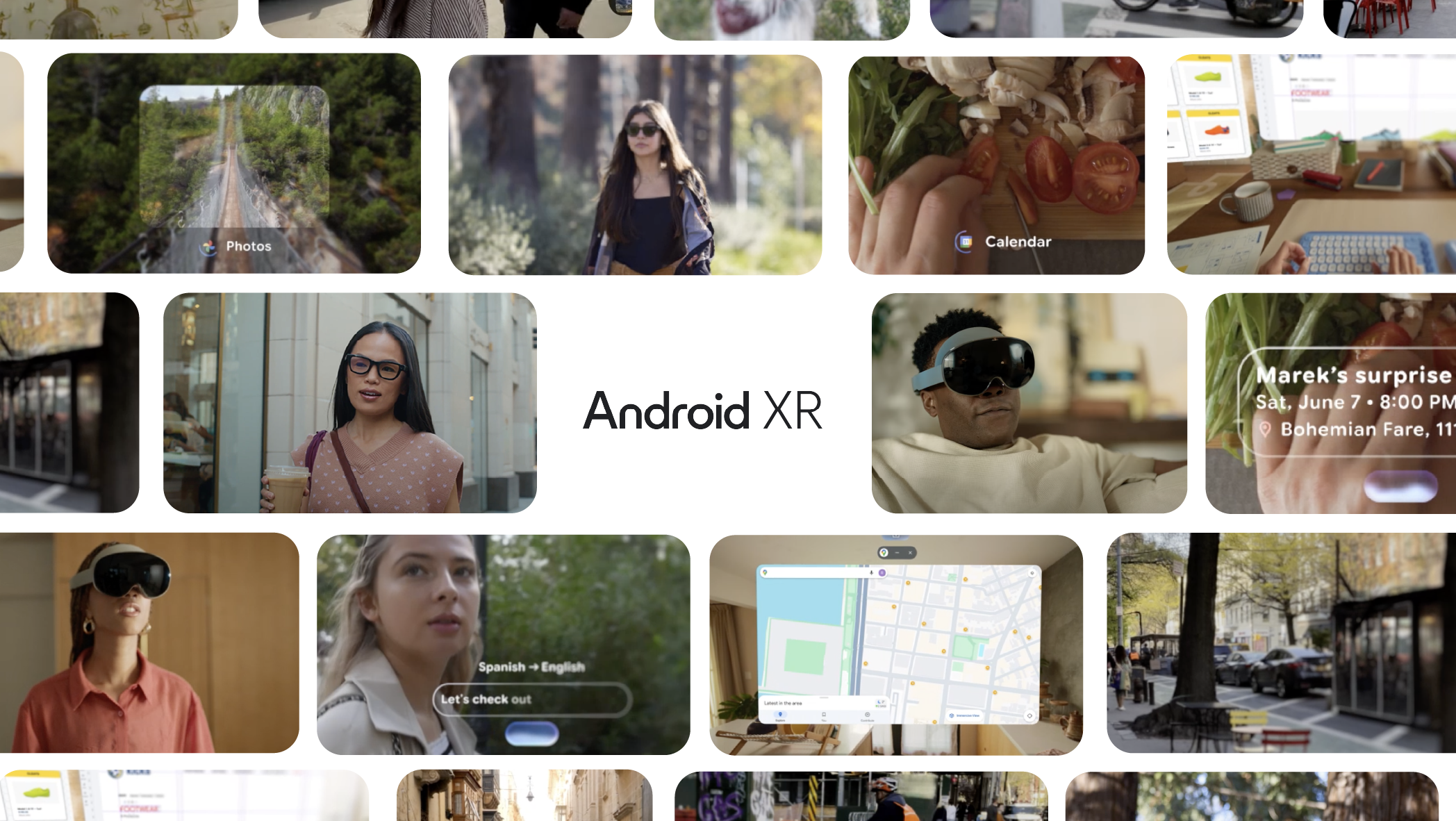
Rank 16698Android XR has been showcased by Google at I/O 2025It relies heavily on AI to deliver many of its features, like live translationThe headset looks interesting, but the glasses are the true star
Google has finally taken the lid off Android XR at Google I/O 2025 to show us what the operating system will be capable of when it launches on Android XR headsets and glasses later this year.We didn’t see quite everything I was hoping we would, but we did learn what Google’s silver bullet in XR will be: Google Gemini. Its AI-centric approach was demoed across both hardware types – AR glasses and mixed-reality headsets.Starting with the latter, Google gave a public version of Project Moohan headset demonstrations it has been running privately for media and tech experts. It highlights some standard headset advantages, like the benefits of an immersive screen for multi-tasking – we were shown a user accessing YouTube, Google Maps, and a travel blog as they research a location they’re planning to visit.Then, in one impressive moment, that user asks Gemini if it can “take me to Florence.” Gemini obliges by opening Google’s immersive 3D map and gives them a birds-eye view of the city and some landmarks (including the iconic Cathedral of Santa Maria del Fiore, which Assassin’s Creed 2 players will be very familiar with).
(Image credit: Lance Ulanoff / Future)
Then there’s the glasses. Across a few different scenarios Google highlighted how Android XR specs can make your life easier with hands-free controls and a head-up display.You can draft and send messages to your contacts, access live translation with on-screen subtitles, search for Google Maps recommendations and then get directions to a location, and take pictures using the glasses’ camera and see a preview of the shot right away.It’s reminiscent of what Meta’s Ray-Ban glasses are capable of, and it’s exactly what we've been expecting Meta’s rumored smart glasses with a display will be capable of if (read: when) they’re showcased later this year.
(Image credit: Google)
I was expecting more from Google in the headset department, frankly.Android XR certainly seems neat, but I’ve yet to see a reason why it’s better than – or, to an extent, on a par with – with the competition (*cough* Meta Quest 3 *cough*). However, I’m at least a little hopeful that by the time Project Moohan is ready to launch for consumers (with it again only being teased for release “later this year”) some of Android XR’s letdowns will be addressed.For now, the headset certainly seems like it’s playing second fiddle to the true Android XR star: the glasses.
(Image credit: Google)
Not only are most of the showcased Android XR features (which look very useful) made for a device you’d wear all the time, I’m surprised by how much choice Google is already offering us in terms of hardware.Samsung is working on Android XR tech but so is Xreal with its Project Aura, and stylish eyewear brands Gentle Monster and Warby Parker. And Google’s promise of it “starting with” these brands suggests more partners are on the way.This abundance of choice is fantastic for two key reasons.First up, with more choice prices will have to remain competitive. Meta’s display-equipped smart glasses are reportedly set to cost over $1,000 with insiders expecting a cost in the $1,300-$1,400 range (which would be around £1,000-£1,100 or AU$2,050-AU$2,200).
Meta's glasses are cool, but don't offer Android XR's variety yet (Image credit: Meta)
With more glasses options to choose from we may see prices drop to more affordable levels more quickly than if there were just one or two players in the game.Second, glasses, like other fashion accessories, need to prioritize style to some degree. Utility is important, but if we’re expected to wear smart glasses all day everyday then just like any other accessory they need to suit our identity.By partnering with a range of different brands out the gate – the aesthetics of Gentle Monster and Warby Parker are almost polar opposites to one another – Android XR tech should appeal to a wider audience than the Meta’s Ray-Ban-only approach, because it will boast glasses designed to suit a wider range of fashion niches.
(Image credit: Google)
It’s still early days for Android XR, and there are crucial details we’re still missing, but Google has certainly come out swinging with its latest operating systemI’ll be paying close attention to Google’s Android XR demos, and looking for more concrete information on the upcoming hardware. For now, though, Google certainly has me on the hook.
You might also like
Forget Android XR, I've got my eyes on Vivo's new Meta Quest 3 competitorGoogle’s surprise Android XR glasses tipped to land in 2026 – and my only complaint is they aren’t launching soonerValve deckard VR headset described as ‘quite amazing’ but there’s still no word on its launch
-

Picture from cdn.mos.cms.futurecdn.net
Rank 16699Huawei unveiled its new MateBook Fold Ultimate Design laptop during Computex 2025It features an 18-inch OLED display, and a new foldable mechanism to rival competitorsIt's only available in China now, but could come to global markets soon
Computex 2025 is here, and it was only a matter of time until one of the huge tech companies during the expo revealed a new device that takes laptop design to the next level – and this one may be worth keeping tabs on.On its website (translated from Chinese), Huawei announced the new MateBook Fold Ultimate Design laptop, featuring an 18-inch (when expanded) 3K OLED display running on Harmony OS 5. Notably, unlike other foldable laptops like the Asus Zenbook Duo, the MateBook Fold Ultimate Design unfolds into an entire single screen.Essentially, this means that instead of what would be two screens connected via regular laptop hinges, it's a 'water-drop hinge' that allows it to open and close smoothly, and lay completely flat for an 18-inch screen experience. This mechanism is arguably a step up above Microsoft's new Surface Pro, which acts as a tablet but is also a 2-in-1 when you use its keyboard (which is sold separately).When in its laptop form, you'll have a 13-inch OLED screen at your disposal using its touchscreen keyboard (or the keyboard that's included in the package). However, the MateBook Fold Ultimate Design looks like more than just a 2-in-1 laptop; you'll be able to transform it from a regular laptop into a portable 18-inch display for casual viewing on the device in a matter of seconds.Closing the laptop entirely gives it a classy and thin notebook or diary-style design, as if it's built as a disguise, further setting it apart in terms of its design from competitors. To add a cherry on top, it has 1,600 nits of peak brightness, and a 74.69WHr battery – and both features could easily stand alone as major selling points.
If I didn't know what it really was, you could easily tell me it's just a notepad... (Image credit: Huawei)
According to a reliable tech analyst, Ming-Chi Kuo, Huawei is planning a production target for the MateBook Fold of between 180,000 and 200,000 units, and its life cycle will primarily depend on user feedback regarding the software functionality.It's an important factor to note, since the MateBook Fold is by no means an inexpensive laptop. It's currently only available in China, starting at ¥23,999, which converts to around $3,330 / £2,490 / AU$5,200, but its new features will be hard to turn down if you can afford it.
Analysis: If this is the future of laptop design, I'm here for it
(Image credit: Huawei)
I've played plenty of futuristic games like Cyberpunk 2077 and seen enough movies like Mission Impossible to suggest that Huawei's new laptop could be a game-changer. It isn't like other companies, such as Asus, haven't introduced similar devices – the difference is, none of them utilize the 'water-drop hinge' mechanism Huawei has introduced.It simply makes the Asus Zenbook Duo and the Lenovo Yoga Book 9i look like clumsy setups, that require a stand to stay upright and hinges for both screens. The MateBook Fold is the first laptop foldable laptop I've seen that has caught my eye – if only I could afford it.The only drawback here is that it will likely set you back thousands of dollars if it eventually launches globally. However, if it sells well enough and gains the traction that I anticipate, we could easily see Huawei's competitors and others follow suit soon – and that's exactly what I'm hoping for.
You may also like...
MSI's new Nintendo Switch 2 rival is official – here are 3 reasons why I'm excited about the AMD-powered Claw A8HP is changing the game with its new laptops – the OmniBook 5 Series combines OLED displays, big battery claims, and temptingly affordable price tagsAcer announces new Swift and Aspire laptop line-ups – here are 4 big things you need to know about them
-

Picture from cdn.mos.cms.futurecdn.net
Rank 16700Want proof that Google really has gone all-in on AI? Then look no further than today's Google I/O 2025 keynote.Forget Android, Pixel devices, Google Photos, Maps and all the other Google staples – none were anywhere to be seen. Instead, the full two-hour keynote spent its entire time taking us through Gemini, Veo, Flow, Beam, Astra, Imagen and a bunch of other tools to help you navigate the new AI landscape.There was a lot to take in, but don't worry – we're here to give you the essential round-up of everything that got announced at Google's big party. Read on for the highlights.
1. Google Search got its biggest AI upgrade yet
(Image credit: Google)
‘Googling’ is no longer the default in the ChatGPT era, so Google has responded. It’s launched its AI Mode for Search (previously just an experiment) to everyone in the US, and that’s just the start of its plans.Within that new AI Mode tab, Google has built several new Labs tools that it hopes will stop us from jumping ship to ChatGPT and others.A ‘Deep Search’ mode lets you set it working on longer research projects, while a new ticket-buying assistant (powered by Project Mariner) will help you score entry to your favourite events.Unfortunately, the less popular AI Overviews is also getting a wider rollout, but one thing’s for sure: Google Search is going to look and feel very different from now on.
Read more: Google Search just got its biggest-ever upgrade to lure you away from ChatGPT – here are 7 new things to try
2. Google just made shopping more fun
@techradar
♬ original sound - TechRadar
Shopping online can go from easy to chaotic in moments, given the huge amount of brands, retailers, sellers and more – but Google is aiming to use AI to streamline the process.That's because the aforementioned AI Mode for Search now offers a mode that will react to shopping-based prompts, such as ‘I’m looking for a cute purse’ and serve up products and images for inspiration and allow users to narrow down large ranges of products; that is if you live in the US as the mode is rolling out there first.The key new feature in the AI-powered shopping experience is a try-on mode that lets you upload a single image of yourself, from which Google’s combination of its Shopping Graph and Gemini AI models will then enable you to virtually try on clothes.The only caveat here is the try-on feature is still in the experimental stage and you need to opt-in to the ‘Search Labs’ program to give it a go.Once you have the product or outfit in mind, Google’s agentic checkout feature will basically buy the product on your behalf, using the payment and delivery details stored in Google Pay; that is, if the price meets your approval – as you can set the AI tech to track the cost of a particular product and only have it buy it if the price is right. Neat.
3. Beam could reinvent video calls
(Image credit: Google)
Video calls are the bane of many people's lives, particularly if you work in an office and spend 60% of your time in such calls. But Google's new Beam could make them a lot more interesting.The idea here is to present calls in 3D, as if you're in the same room as someone when you're on a call with them; a bit like with VR. However, there's no need for a VR headset or glasses here, with Beam instead using cameras, mics, and – of course – AI to work its magic.If that all sounds rather familiar, it's because Google has teased this before, under the name Project Starline. But this is no longer a far away concept as it's here, and almost ready for people to use.The caveat is that both callers will need to sit in a custom-made booth that can generate the 3D renders that are needed. But it's all pretty impressive nonetheless, and the first business customers will be able to get the kit from HP later in 2025.
Read more: Google Beam could change your video calls forever with glasses-free 3D and near real-time translation
4. Veo 3 just changed the game for AI video
AI video generation tools are already incredibly impressive, given they didn't even exist a year or two ago, but Google new Veo 3 model looks like taking things to the next level.As with the likes of Sora and Pika, the tool's third-generation version can create video clips and then tie them together to make longer films. But unlike those other tools, it can also generate audio at the same time – and expertly sync sound and vision together.Nor is this capability limited to sound effects and background noises, because it can even handle dialogue – as demonstrated in the clip above, which Google demoed in its I/O 2025 keynote."We’re emerging from the silent era of video generation," said Google DeepMind CEO Demis Hassabis – and we're not going to argue with that.
Read more: Google's Veo 3 marks the end of AI video's 'silent era'
5. Gemini Live is here – and it's free
(Image credit: Future)
Google Gemini Live, the search giant’s AI-powered voice assistant, is now available for free on both Android and iOS. Previously a paid-for option, this move opens up the AI to a wealth of users.With Gemini Live, you can talk to the generative AI assistant using natural language, as well as use your phone camera to show it things from which it’ll extract information to serve up related data. Plus, the ability to share one’s phone screen and camera with other Android users via Gemini Live has now been extended to compatible iPhones.Google will start rolling out Gemini Live for free from today, with iOS users being able to access the AI and its screen sharing features in the coming weeks.
Read more: Gemini Live is now free for everyone on Android and iOS, and you can finally share your screen and camera on iPhone - here's how to try it
6. Flow is an awesome new AI filmmaking tool
(Image credit: Google)
Here's one for all the budding movie directors out there: at I/O 2025, Google took the covers off Flow, an AI-powered tool for filmmakers that can create scenes, characters and other movie assets from a natural language text prompt.Let’s say you want to see doctors perform an operation in the back of a 1070s taxi; well, pop that into Flow and it’ll generate the scene for you, using the Veo 3 model, with surprising realism.Effectively an extension of the experimental Google Labs VideoFX tool launched last year, Flow will be available for subscribers to Google Al Pro and Google Al Ultra plans in the US, with more countries to come.And it could be a tool that’ll let budding directors and cinematic video makers more effectively test scenes and storytelling, without needing to shoot a lot of clips.Whether this will enhance filmmaking planning or yield a whole new era of cinema, where most scenes are created using generative AI rather than making use of sets and traditional CGI, has yet to be seen. But it looks like Flow could open up movie making to more than just keen amateurs and Hollywood directors.
Read more: Want to be the next Spielberg? Google’s AI-powered Flow could bring your movie ideas to life
7. Gemini's artistic abilities are now even more impressive
(Image credit: Google)
Gemini is already a pretty good choice for AI image generation; depending on who you ask, it's either slightly better or slightly worse than ChatGPT, but essentially in the same ballpark.Well, now it might have moved ahead of its rival, thanks to a big upgrade to its Imagen model.For starters, Imagen 4 brings with it a resolution boost, to 2K – meaning you'll be better able to zoom into and crop its images, or even print them out.What's more, it'll also have "remarkable clarity in fine details like intricate fabrics, water droplets and animal fur, and excels in both photorealistic and abstract styles”, Google says – and judging by the image above, that looks pretty spot on.Finally, Imagen 4 will give Gemini improved abilities at spelling and typography, which has bizarrely remained one of the hardest puzzles for AI image generators to solve so far. It's available from today, so expect even more AI-generated memes in the very near future.
Read more: Gemini’s AI images have been updated to Imagen 4 with a ‘huge step forward in quality’ – here’s what you need to know
8. Gemini 2.5 Pro just got a ‘groundbreaking new ‘Deep Think’ upgrade
(Image credit: Shutterstock/JLStock)
Enhanced image capabilities aren't the only upgrades coming to Gemini, either – it's also got a dose of extra brainpower with the addition of a new Deep Think Mode.This basically augments Gemini 2.5 Pro with a function that means it’ll effectively think harder about queries posed at it, rather than trying to kick out an answer as quickly as possible.This means the latest pro version of Gemini will run multiple possible lines of reasoning in parallel, before deciding on how to respond to a query. You could think of it as the AI looking deeper into an encyclopaedia, rather than winging it when coming up with information.There is a catch here, in that Google is only rolling out Deep Think Mode to trusted testers for now – but we wouldn't be surprised if it got a much wider release soon.
Read more: Google Gemini 2.5 just got a new 'Deep Think' mode – and 6 other upgrades
9. Gemini AI Ultra is Google’s new ‘VIP’ plan for AI obsessives
(Image credit: Shutterstock/Sadi Santos)
Would you spend $3,000 a year on a Gemini subscription? Google thinks some people will, because it's rolled out a new Gemini AI Ultra plan in the US that costs a whopping $250 a month.The plan isn't aimed at casual AI users, obviously; Google says it offers "the highest usage limits and access to our most capable models and premium features" and that it'll be a must if "you're a filmmaker, developer, creative professional or simply demand the absolute best of Google Al with the highest level of access."On the plus side, there's a 50% discount for the first three months, while the previoiusly available Premium plan also sticks around for $19.99 a month, but now renamed to AI Pro. If you like the sound of AI Ultra, it will be available in more countries soon.
Read more: Gemini AI Ultra is Google's new ultimate 'VIP' plan for AI obsessives – here's what you get for its staggering price tag
10. Google just showed us the future of smart glasses
(Image credit: Google)
Google finally gave us the Android XR showcase it has been teasing for years.At its core is Google Gemini – on-glasses-Gemini can find and direct you towards cafes based on your food preferences, it can perform live translation, and find answers to questions about things you can see. On a headset, it can use Google Maps to transport you all over the world.Android XR is coming to devices from Samsung, Xreal, Warby Parker, and Gentle Monster, though there’s no word yet on when they’ll be in our hands.
Read more: Google finally gave us a closer look at Android XR – here are 4 new things we've learned
11. Project Astra also got an upgrade
(Image credit: Future)
Project Astra is Google’s powerful mobile AI assistant that can react and respond to the user’s visual surroundings, and this year’s Google I/O has given it some serious upgrades.We watched as Astra gave a user real-time advice to help him fix his bike, speaking in natural language. We also saw Astra argue against incorrect information as a user walked down the street mislabeling the things around her.Project Astra is coming to both Android and iOS today, and its visual recognition function is also making its way to AI Mode in Google Search.
12. …As did Chrome
(Image credit: Future)
Is there anything that hasn’t been given an injection of Gemini’s AI smarts? Google’s Chrome browser was one of the few tools that hadn’t it seems, but that’s now changed.Gemini is now rolling out in Chrome for desktop from tomorrow to Google AI Pro and AI Ultra subscribers in the US.What does that mean? You’ll apparently now be able to ask Gemini to clarify any complex information that you’re researching, or get it to summarize web pages. If that doesn’t sound too exciting, Google also promised that Gemini will eventually work across multiple tabs and also navigate websites “on your behalf”.That gives us slight HAL vibes (“I’m sorry, Dave, I’m afraid I can’t do that”), but for now it seems Chrome will remain dumb enough for us to be considered worthy of operating it.
13. …And so did Gemini Canvas
As part of Gemini 2.5, Canvas – the so-called ’creative space inside the Gemini app – has got a boost via the new upgraded AI models in this new version of Gemini.This means Canvas is more capable and intuitive, with the tool able to take data and prompts and turn them into infographics, games, quizzes, web pages and more within minutes.But the real kicker here is that Canvas can now take complex ideas and turn them into working code at speed and without the user needing to know specific coding languages; all they need to do is describe what they want in the text prompt.Such capabilities open up the world of ‘vibe coding’, where one can create software without needing to know any programming languages, and it also has the capability of prototyping new ideas for apps at speed and just through prompts.
You might also like
Google I/O 2025 as it happened: AI Search, Veo, Flow, Gemini, Android XR and all the big announcementsGoogle Search just got its biggest-ever upgrade to lure you away from ChatGPT – here are 7 new things to tryGoogle's Veo 3 marks the end of AI video's 'silent era'


