News
This constantly updated list features the latest and most important news articles, ranked in order of significance. The top stories highlight major developments, breaking news, and critical updates across various topics, ensuring you stay informed about the most pressing issues. As new articles are added, the list adapts to reflect the latest priorities, keeping the most impactful stories at the forefront. Whether it’s global events, technology breakthroughs, or industry trends, this dynamic list ensures you always have access to the most relevant and timely information.
-

Picture from ichef.bbci.co.uk
Rank 16601 -

Picture from ichef.bbci.co.uk
Rank 16602 -

Picture from cdn.mos.cms.futurecdn.net
Rank 16603Hideo Kojima has said he'd like to make a film after Death Stranding 2: On the Beach and Physint are completeHe says Physint is at least five or six years away from being releasedThe game director is also working on a horror game for Microsoft called oD
Death Stranding 2: On the Beach director Hideo Kojima has said that his next game, Physint, is still at least five to six years away from release.In a new interview with French magazine Le Film Français(via VGC), ahead of the launch of Death Stranding 2, Kojima was asked whether he would ever consider directing a film in the future.The game director said he would, and that he "received many offers after leaving Konami."Besides the Death Stranding sequel, Kojima is currently working on his action espionage game Physint, which he said will take another five to six years to finish before he can consider moving into filmmaking.“Besides Death Stranding 2, there is Physint in development," Kojima said. "That will take me another five or six years. Maybe after that, I could finally decide to tackle a film. I grew up with cinema. Directing would be a kind of homage to it. Besides, I’m getting older, and I would prefer to do it while still young.”Phyisint is a brand new "original IP" that was announced during the PlayStation State of Play in January 2024 and will be Kojima Productions' third major game.Kojima is also developing OD, his horror project for Microsoft that was revealed back in 2023. The director didn't mention anything new about OD during his interview, but it's said to be a "totally new style of game" being developed alongside Xbox Game Studios and will star actors Sophia Lillis, Udo Kier, and Hunter Schaffer.For now, Kojima fans can look forward to Death Stranding 2: On the Beach, which is set to launch on June 26, 2025, for PS5.
You might also like...
Upcoming games 2025 for console and PCDeath Stranding 2: On the Beach will offer players 'more choice and freedom'Ghost of Yotei pre-orders live: Collector's Edition up in the US, Standard Edition retailers, and where to buy in the UK
-
Picture from cdn.mos.cms.futurecdn.net
Rank 16604Apple's next WWDC Keynote is official, with Apple CEO Tim Cook set to take the stage at Apple Park at 10AM PT / 1PM ET / 6PM UK on June 9, 2025.Invites to the event, which will cover all of Apple's major platforms and may include some surprises, went out on May 20 (yes, on Google I/O keynote day 🤦♂️). TechRadar received invites, and we'll cover it from the ground.What, though, should you expect from one of Apple's biggest events of the year? While product launches are unusual and unexpected, but not unheard of, at the event, this is the keynote that sets the tone for Apple's entire year. In particular, by showing us what the next version of iOS will look like, it sets the stage for the release of the iPhone 17 lineup, which most expect to happen in September.WWDC 2025 will also mark the first anniversary of the introduction of Apple Intelligence. Considering that Apple only managed to deliver a portion of what was promised in June 2024, it's unclear how Apple will approach this AI conundrum.There are numerous reports of turmoil behind the scenes as Apple reshuffles its Apple Intelligence team and tries to revive efforts to deliver a transformed Siri that can compete with Gemini and ChatGPT.Some believe Apple won't mention Siri, but will focus on Apple Intelligence as it is, and mention some feature enhancements. It's unlikely they will promise any eye-opening generative features, especially after over-promising a year ago.Let's take a look at what we do expect Tim Cook and company to reveal.
iOS 19
(Image credit: Future / Lance Ulanoff)
Even though Apple might not commit at WWDC 2025 to an all-new Siri, we might get a hint at what's coming. After all, how can Apple deliver iOS 19 without a fresh Apple Intelligence-filled Siri experience?Expect Apple to walk us through a long list of iOS 19 design changes, including a new Camera app and more powerful and fresh-looking widgets.The biggest reveal might be a new home screen that aligns a bit more with how the Vision Pro looks. Why Apple would use its faltering mixed reality headset platform as a base look is a conundrum to be solved on June 9.There may be numerous communication updates, such end-to-end RCS messaging encryption and the ability to sync public Wi-Fi registrations across devices.
iPadOS 19
(Image credit: Future)
It'll be fascinating to hear how Apple execs explain what we assume will be a deeper merge between the functionality of iPadOS and macOS in iPadOS 19.Apple might do this because there has long been a demand to make the iPad match Macs in desktop capabilities. Yes, we know it's a tablet, but many are now using iPads with a physical keyboard and treating them like lightweight laptops. However, the inability to support more than, say, four windows open at once and interface customization that matches a Mac is a frustration.The messaging here, though, will be critical. Apple has to inspire new iPad converts while satisfying and not scaring away iPad stalwarts who've been using the tablet since its inception in 2010.
macOS 16
(Image credit: Future/Jacob Krol)
Most expect Apple Software Lead Craig Federighi to unveil a major macOS redesign, one that, as with iOS 19, is expected to borrow from the Vision Pro interface. While the gaze and gesture-based interface of the headset is well-regarded, it's hard to understand exactly how this will work on Mac. Certainly, Federighi will have some exciting demos to share.There is a thought that this could be the moment Apple finally unveils a touch-friendly macOS. After all, we do expect Apple to push iPadOS and macOS closer together (see above).Other areas of focus for the macOS 16 portion of the keynote are said to be better Wi-Fi management, new battery controls, Google Gemini integration, and, of course, the reveal of the all-important name. We're currently on 'Sequoia'.
watchOS 12
(Image credit: Future/Jacob Krol)
This could be an exciting moment for Apple Watch fans with watchOS 12 possibly delivering blood pressure measurement support and a new AI health coach (no word on if it'll be an "Apple Intelligence Health Coach" or just "AI Health Coach").Health and Fitness Editor Matt Evans added some color, "Blood pressure via LED remains the holy grail of watches, but the Whoop MG gets around this by using a cuff to measure BP as a baseline, then estimates fluctuations based on other vital signs like heart health."Evans also noted that Apple Intelligence for control of basic functions may be coming to Apple Watch. Again, this is unlikely to be a major update of Apple Intelligence functionality but rather a port of what you can do in iOS, but with a wearable flavor.
tvOS and AirPods
(Image credit: Future)
I asked Matt Bolton, our Managing Editor, Entertainment, about what might be announced for the next version of tvOS, the platform running inside your Apple TV streaming box. He told me we should expect some intelligence in tvOS and AirPods."In tvOS, you'll probably be able to ask for movies and shows more organically, even if you don’t know the name – or ask for recommendations based on what you like. This is really common in other AI-touting smart streaming devices."On AirPods, Bolton expects "AI-based live translation and generally a smarter Siri conversationalist," depending on how far Apple Intelligence goes in Siri.That's what's most likely to happen. What Bolton is hoping is announced is "Bluetooth LE Audio and Auracast support built into iOS, with matching AirPods support. This would allow higher-quality wireless music quality and better accessibility."
One more thing
When it comes to an Apple keynote, never rule out a surprise. In the past, we've gotten glimpses of a new Mac Pro, new MacBooks, and the Vision Pro.This year, new Macs are a possibility, as is mixed reality and AR headgear, like a Vision Pro Lite and Apple Glasses, respectively.There's also the tiniest chance that Tim Cook could tease Apple's first folding iPhone or even the ultra-thin iPhone 17 Air.Let's face it, Apple needs some razzle-dazzle this year to distract from what's been a somewhat bumpy 12-month ride.Stick with TechRadar.com for all the latest news from the developer event.
You might also like
iOS 19 tipped to bring big Wi-Fi convenience upgrade ...iOS 19: new features, a new design, and everything you ...Best business Mac and MacBook of 2025: Apple desktops ...
-
Picture from o.aolcdn.com
Rank 16605Amazon will now deliver a bunch of new products via drone, as mentioned in a company blog post. This includes stuff like smartphones, video doorbells and food thermometers. This is thanks to the Federal Aviation Administration (FAA) giving approval to several new item categories.
Newly-available items include Apple iPhones, AirTags and AirPods, in addition to Samsung Galaxy smartphones, Ring doorbells and Alpha Grillers Instant Read Food Thermometers. All told, customers can now choose from more than 60,000 items for drone delivery.
Exciting update in drone delivery from Amazon: Prime Air is now expanding its selection to include popular electronics with lithium-ion batteries, like phones, AirTags, and even grilling thermometers.Customers who are in eligible areas for drone delivery in Texas and Arizona… pic.twitter.com/wQSpUTE4tu— Amazon (@amazon) May 20, 2025
These deliveries will typically arrive within an hour, assuming the package is under five pounds and the customer lives in a drone service area. Unfortunately, these areas are extremely limited. As of this writing, Amazon only offers drone deliveries to parts of Texas and Arizona. The company plans on expanding to the UK and Italy in the near future.
Weather also plays a part when determining the availability of a drone delivery. Amazon won't offer the service “during heavy winds, or during heavy rain,” the company wrote in another blog post. It isn't being overly cautious here. The drones can get into serious trouble when trying to navigate foul weather, as shown by recent crashes that forced the company to put the platform on hold for a while.
Last year, the FAA gave Amazon permission for its drones to fly beyond the visual line of sight (BVLOS). This has allowed the company to use its newest MK30 model to make deliveries within an hour.This article originally appeared on Engadget at https://www.engadget.com/transportation/amazon-drones-can-now-deliver-smartphones-airtags-and-more-164413100.html?src=rss
-

Picture from techcrunch.com
Rank 16606 -

Picture from cdn.mos.cms.futurecdn.net
Rank 16607A new Marvel leak has reportedly revealed which villains will appear in Spider-Man 4Three members of the webhead's rogues gallery could appear in the MCU filmIt's unclear if there's any truth to this particular Marvel Phase 6 movie rumor
Here we go again. Just days after numerous X-Men movie reboot casting rumors appeared online, speculation concerning which villains will appear in Spider-Man: Brand New Day has begun circulating the *ahem* web.The superhero film, which is slated to be released in July 2026, is expected to start shooting sometime in August. It's not entirely unexpected, then, that rumors about which members of the webhead's rogues gallery will show up in the co-developed Marvel and Sony Pictures flick.However, what is surprising is the source who's leaked which villains will appear in the Marvel Phase 6 movie. Yes, there'll reportedly be multiple bad guys for Tom Holland's Peter Parker to face off against.Before I dive into said leak, though, it's worth bearing a couple of things in mind.One, take these rumors with a huge pinch of salt – until Marvel and/or Sony say otherwise, or a world-famous trade publication with solid contacts within the industry, such as Deadline or The Hollywood Reporter, suggests this is true, it's best to treat this as conjecture. The other thing? Potentially big spoilers immediately follow for Spider-Man's next big-screen adventure, so proceed with extreme caution.
One of the three villains reportedly set to appear in Brand New Day was first teased in Spider-Man: Homecoming (Image credit: Sony Pictures/Marvel Entertainment)
Alright, let's get down to business. Earlier today (May 20), Instagram user trusthigashi took to the social media platform to reveal they'd attended the 2025 edition of Disney's Consumer Products event. This year's presentation took place in Las Vegas, and included the announcement of a deal between Disney and F1, as well as the casting of Conan O'Brien as a new character called Smarty Pants in Toy Story 5.But back to Brand New Day. As part of said presentation, trusthigashi claims that Disney confirmed three villains would appear in Spider-Man 4. Scorpion, whose Marvel Cinematic Universe (MCU) debut was teased in 2017's Spider-Man: Homecoming – aka the 15th entry on our best Marvel movies list – is among that trio. Joining Mack Gargan on villain duties are, according to trusthigashi, are Lonnie Lincoln/Tombstone and Frederick Meyers/Boomerang.
A post shared by Chris Higashi (@trusthigashi)A photo posted by on
Interestingly enough, Steven Yeun (The Walking Dead, Invincible), who was originally hired to play Sentry in Marvel's Thunderbolts* movie before scheduling conflicts forced him to drop out, was linked (per industry insider MyTimeToShineHello, whose track record is best described as mixed), with playing a villain in Spider-Man 4 on May 19.However, while some observers assumed he'd been chosen to portray Martin Li/Mister Negative in the comic book flick, others Marvel fans took to Reddit to point out that hiring a Korean actor in Yeun to play a Chinese character would be a controversial move on Marvel and Sony's part. So, many suspect that, if Yeun is in talks to appear in Brand New Day, it won't be as one of the wallcrawler's most recently created villains.So, what are the odds that trusthigashi's leak has more than an air of legitimacy to it?That's hard to say. On the one hand, the image caption section of their Instagram post contains proof that they were present at Disney's Consumer Products 2025 presentation. It would be very surprising, then, if they fabricated the stuff about Brand New Day's villains.
Zendaya (left) is expected to reprise her role as MJ alongside Tom Holland's Spider-Man in Brand New Day (Image credit: Sony Pictures/Marvel Entertainment)
However, it would be odd for Disney to reveal which of the webslinger's most notorious antagonists would appear in Spider-Man 4. Sony owns the live-action rights to the character so, unless Disney got the greenlight from its fellow studio to drop this information at the event, I doubt Sony would be happy to learn that a rival revealed this key storytelling detail before it could.That said, Marvel (and, by proxy, Disney) owns the rights to Spider-Man's merchandising deals. Given this presentation took place during a three-day event dedicated to consumer products – of which merchandising is one such arm – Disney appears to have the right to discuss all things Spider-Man as it sees fit.Regardless of whether you believe trushigashi's leak, with principal photography set to start on Brand New Day soon, it won't be long until we get official confirmation on who'll actually appear in one of 2026's most anticipated new movies. That includes the apparent role that Sadie Sink has in Spider-Man 4, with the Stranger Things star supposedly tapped to co-star alongside Holland and Zendaya, who's also expected to return as MJ.Spider-Man: Brand New Day is currently set to arrive in theaters on July 31, 2026.
You might also like
Find out how to watch the Spider-Man movies in orderOr see if you agree with our ranking of the best Spider-Man moviesAlternatively, get the lowdown on how to watch the Marvel movies in order
-

Picture from techcrunch.com
Rank 16608 -

Picture from ichef.bbci.co.uk
Rank 16609 -

Picture from cdn.mos.cms.futurecdn.net
Rank 16610AMD drops quad-core chips making 8-core EPYC the new standardZen 5 EPYC 4005 series targets small businesses and IT providers Upgraded memory speed I/O lanes and security features across all SKUs
AMD has launched its EPYC 4005 Series processors, a new lineup aimed at small and medium businesses and hosted IT service providers.These processors are designed to deliver advanced features in affordable, easy-to-use systems that meet the needs of modern infrastructure.With this launch, AMD has banished quad-core server CPUs from the EPYC range. In making the 8-core 4345P its new baseline, the chip giant is signalling that it sees higher core counts as the new normal for even entry-level deployments.
Performance, simplicity, and affordability
The move follows AMD’s broader effort to bring more capable silicon to the entry-level segment.Built on Zen 5 architecture, the EPYC 4005 Series remains compatible with existing AM5 platforms while offering upgrades in performance, memory speed, and connectivity.The chips support up to 192GB of DDR5 memory at speeds of up to 5600MT/s, with two memory channels and ECC support. PCIe Gen 5 is included with up to 28 lanes, offering 40% more I/O lanes than comparable Xeon chips.The EPYC 4565P leads the stack with 16 cores, 32 threads, a 170W TDP, and a base frequency of 4.3GHz. According to AMD’s testing, this chip outperforms the Intel Xeon 6369P by a factor of 1.83x in the Phoronix Test Suite.Compared to Intel’s E-2400 and Xeon 6300P series, AMD claims lower cost per core, up to five times the cache (128MB L3 vs 24MB), and full AVX-512 support across the range.“Growing businesses and dedicated hosters often face significant constraints around budget, complexity, and deployment timelines,” said Derek Dicker, corporate vice president, Enterprise and HPC Business Group, AMD.“With the latest AMD EPYC 4005 Series CPUs, we are delivering the right balance of performance, simplicity, and affordability, giving our customers and system partners the ability to deploy enterprise-class solutions that solve everyday business challenges.”The chips are also equipped with the AMD Secure Processor, offering features like TPM 2.0, Secure Boot, and memory encryption. SMT is supported across all SKUs.With quad-core models absent and six-core options potentially set to be sidelined, AMD is sending a clear message with its new EPYC 4005 Series processors that it expects even basic servers to deliver more.
You may also like
PC vendor hints at EPYC 4005 mini PC being used in huge 35-units 42U racksAMD outlines the challenges for data centers, and offers the ideal end to end solutionAMD signs huge multi-billion dollar MI355X AI accelerator deal with Oracle
-
Picture from o.aolcdn.com
Rank 16611If you find Google's live translation tools useful, you'll soon be able to use them more naturally during video calls and meetings. The company announced today that it's bringing the feature to Google Meet. Starting this week, AI-powered, real-time Spanish translation will be available in the app. Google says more languages are on the way and that the technology is "very, very close to having a natural and free-flowing conversation."
During a brief demo, live translation in Meet matched the speaker's tone and cadence, and was even able to channel expressions. There's no doubt this will be useful for many people, especially on work calls with colleagues in other countries. Live translation will allow everyone to speak in the language they're most comfortable with, and the technology will do the heavy lifting. Before now, you had to rely on live captions in Google Meet to do any translation, so not having to read those will allow users to be more in-tune with the conversation.
Starting today, live translation in Google Meet will be available to Google AI Pro and Ultra plans in beta. The company says the new features will be available for enterprise users later this year as part of an "early testing" phase. This article originally appeared on Engadget at https://www.engadget.com/apps/google-brings-live-translation-to-meet-starting-with-spanish-174549788.html?src=rss
-
Picture from o.aolcdn.com
Rank 16612Google first teased Project Starline in 2021, billing it at the time as a "magic window" that uses special hardware, computer vision and machine learning to create an almost holographic video call experience. Since then, we've checked out an early version of the experiment for ourselves and learned last year that the company is teaming up with HP to bring a scaled-down version of the product to enterprise clients. At I/O 2025 today, Google announced that Project Starline "is evolving into an AI-first 3D video communication platform" called Beam. CEO Sundar Pichai said onstage that the first devices will be available later this year to "select customers," though there's no word on pricing just yet.
Adding to the computer vision and machine learning that already go into Project Starline (now Beam), Google says the platform will "use AI to enable a new generation of devices that help people make meaningful connections, no matter where they are."
Part of this is a "state-of-the-art AI volumetric video model" and that, plus some power via Google Cloud, combined with the light field display from before, is what makes the calls "appear fully 3D from any perspective." There are six cameras built into the Beam system to capture you from various angles, and the system uses AI to merge the streams and render you and your caller on the light field display. It'll track your head movement to make sure it's delivering the data to your eyes at the right angles, and do so at 60 frames per second.
Though we don't know yet how much a unit of Google Beam might cost, it might be worth pointing out that Logitech made a different version called Project Ghost, and estimated that it will cost between $15,000 and $20,000 per booth depending on the configuration. To be clear, though, Project Ghost is not holographic or rendering 3D, it's just a large TV streaming 2D video that's so big it makes your callers seem life-sized.
This article originally appeared on Engadget at https://www.engadget.com/ai/goodbye-project-starline-hello-google-beam-3d-video-conferencing-171056302.html?src=rss
-

Picture from techcrunch.com
Rank 16613 -

Picture from ichef.bbci.co.uk
Rank 16614 -

Picture from ichef.bbci.co.uk
Rank 16615 -
Picture from o.aolcdn.com
Rank 16616Last month, Gemini Live camera and screen sharing became available on Pixel phones as part of Google's April feature drop. But today, at Google I/O 2025, the company announced that it's bringing that capability to all compatible Android and iOS devices as part of a free update.
Available inside the Gemini app, the ability to share your phone's camera or content from your screen with Google's AI is meant to make it easier and more natural to get answers about complex topics. For example, instead of describing a situation only using your voice, you could simply point your handset's camera at something while Gemini uses object recognition to analyze the scene and do things like identify a particular species of animal or tell you want kind of screw or bolt you might need to perform a repair.
With Google's continued push into AI and the expansion of Gemini's abilities, it was only a matter of time before camera and screen sharing arrived on non-Pixel devices. That said, with the feature having just become available on first-party phones last month, it's nice to see that there won't be a huge wait for more folks to get access to these features.This article originally appeared on Engadget at https://www.engadget.com/ai/screen-and-camera-sharing-in-gemini-live-is-heading-to-all-android-and-ios-devices-174547592.html?src=rss
-
Picture from o.aolcdn.com
Rank 16617Today is one of the most important days on the tech calendar as Google kicked off its I/O developer event with its annual keynote. As ever, the company had many updates for a wide range of products to talk about.
The bulk of the Android news was revealed last week, during a special edition of The Android Show. However, Tuesday's keynote still included a ton of stuff including, of course, a pile of AI-related news. We covered the event in real-time in our live blog, which includes expert commentary (and even some jokes!) from our team.
If you're on the hunt for a breakdown of everything Google announced at the I/O keynote, though, look no further. Here are all the juicy details worth knowing about:
Beam is the new name of Google's 3D video conferencing booths
It's been a few years since we first heard about Project Starline, a 3D video conferencing project. We tried this tech out at I/O 2023 and found it to be an enjoyable experience.
Now, Google is starting to sell this tech, but only to enterprise customers (i.e. big companies) for now. It's got a new name for all of this too: Google Beam. And it's probably not going to be cheap. HP will reveal more details in a few weeks.
AI updates
Google Meet is getting a real-time translation option, which should come in very useful for some folks. A demo showed Meet being able to match the speaker's tone and cadence while translating from Spanish.
Subscribers will be able to try out real-time translations between Spanish and English in beta starting this week. This feature will soon be available for other languages.
Gemini Live, a tool Google brought to Pixel phones last month, is coming to all compatible Android and iOS devices in the Gemini app (which already has more than 400 million monthly active users). This allows you to ask Gemini questions about screenshots as well as live video that your phone's camera is capturing. Google is rolling out Gemini Live to the iOS and Android app starting today.
This story is developing...This article originally appeared on Engadget at https://www.engadget.com/ai/everything-announced-at-the-google-io-2025-keynote-171514495.html?src=rss
-

Picture from ichef.bbci.co.uk
Rank 16618 -
Picture from o.aolcdn.com
Rank 16619Like it or not, Google's Gemini AI is worming its way into more of your Workspace apps. At I/O 2025, CEO Sundar Pichai announced that its upcoming Gmail app will have a new feature called Personalized Smart Replies. The idea is that with your permission, Gemini can examine your past emails and Google docs, then help you craft responses to personal- or business-oriented emails.
In an example onstage at I/O, Pichai used the example of a friend taking a road trip through Colorado to Utah, a trip the friend knew Pichai had taken before. Gemini is able to look through all the notes in Drive, looking through email for related reservations and finding an itinerary in Google Docs. It'll pull all that stuff together and then draft an email that matches the typical tone, style and even words that Pichai commonly uses.
All these new features are coming to Google's Workspace subscribers starting this summer. Though they may prove useful to many users, some have found Google's addition of recent Gemini features to be intrusive and unwelcome. This article originally appeared on Engadget at https://www.engadget.com/apps/personalized-ai-powered-smart-replies-are-coming-to-gmail-172422777.html?src=rss
-

Picture from ichef.bbci.co.uk
Rank 16620 -

Picture from cdn.mos.cms.futurecdn.net
Rank 16621MSI showed off its latest gaming hardware at Computex 2025, and the MPG 272QR QD-OLED X50 gaming monitor and the MEG Vision X AI gaming desktop stole much of the show among attendees, thanks to their artificial intelligence integration that promises a more responsive, user-aware gaming experience.Starting with the MSI MPG 271QR QD-OLED X50, MSI’s latest 1440p gaming monitor combines a 500Hz refresh rate, 0.03ms pixel response time, 99% DCI-P3 color gamut coverage, VESA ClearMR 21000 and DisplayHDR True Black 50 certification, and new AI-driven enhancements.At the center is the display’s AI Care Sensor, a system that uses a dedicated neural processing unit (NPU) and CMOS sensor to detect human presence every 0.2 seconds.
(Image credit: Future / John Loeffler)
This hardware allows the monitor to dynamically adjust brightness and activate OLED protection features based on user activity, rather than interrupting the user experience with necessary OLED panel maintenance.In practice, this means that when no human presence is detected, the system powers down the display or enables OLED Care when necessary, helping to conserve energy and prevent burn-in.Complementing this is MSI’s AI Navigator, a unified interface that centralizes control of all AI-driven settings. It streamlines adjustments for optimal performance, ensuring users get the most out of their hardware with minimal manual tuning.
(Image credit: Future / John Loeffler)
Alongside the monitor, MSI also introduced the second generation MSI MEG Vision X AI, a powerful gaming desktop first introduced at Computex 2024 that is engineered with AI-enhanced performance tuning and a full human-machine interface (HMI) touch display.Some of the AI features incorporated into the PC is a system that automatically manages fan speeds, power settings, and cooling based on real-time usage data, with the goal of delivering both responsiveness and efficiency.The HMI has been given a new, simplified interface that MSI calls EZ Mode which makes the HMI system more intuitive for users, especially those who might not be the kind of power users used to outfitting their PCs with various hardware monitoring tools and utilities.In addition, the MEG Vision X AI has the ability to connect to select MSI monitors and control a monitor's OSD menu, letting you adjust things like brightness, color presets, and more, right from the 13-inch display on the front of the PC.The Vision X AI's HMI can also detect when you are using certain kinds of apps and adjust settings, backgrounds, and HMI widgets accordingly, such as turning up performance mode when you are playing a game and displaying performance metrics like FPS and GPU load. While the mode switching is done automatically by default, you are also able to switch between them manually if you want, and even assign certain apps to the different modes
You may also like...
Next-gen laptops, bonkers PCs, and too much AI: here's what I expect to see at Computex 2025Best laptops of Computex 2025 - meet the future of notebooks from HP, Asus, and moreAcer announces new Swift and Aspire laptop line-ups – here are 4 big things you need to know about them
-

Picture from ichef.bbci.co.uk
Rank 16622 -

Picture from ichef.bbci.co.uk
Rank 16623 -
Picture from o.aolcdn.com
Rank 16624Last year at Google I/O, one of the most interesting demos was Project Astra, an early version of a multimodal AI that could recognize your surroundings in real-time and answer questions about them conversationally. While the demo offered a glimpse into Google's plans for more powerful AI assistants, the company was careful to note that what we saw was a "research preview."
One year later though, Google is laying out its vision for Project Astra to one day power a version of Gemini that can act as a "universal AI assistant." And Project Astra has gotten some important upgrades to help the company accomplish this. Google has been working on upgrading Astra's memory — the version we saw last year could only "remember" for 30 seconds at a time — and added computer control so Astra can now take on more complex tasks.
In its latest video showcasing Astra, Google shows the assistant browsing the web and pulling out specific pieces of information necessary to complete a task (in this example, fixing a mountain bike). Astra is also able to look through past emails to find specific specs of the bike in question and call a local bike shop to inquire about a replacement part.
This story is developing, please refresh for updates. This article originally appeared on Engadget at https://www.engadget.com/ai/project-astra-googles-vision-for-a-universal-ai-assistant-is-pulling-into-focus-174539875.html?src=rss
-

Picture from ichef.bbci.co.uk
Rank 16625 -
Picture from cdn.mos.cms.futurecdn.net
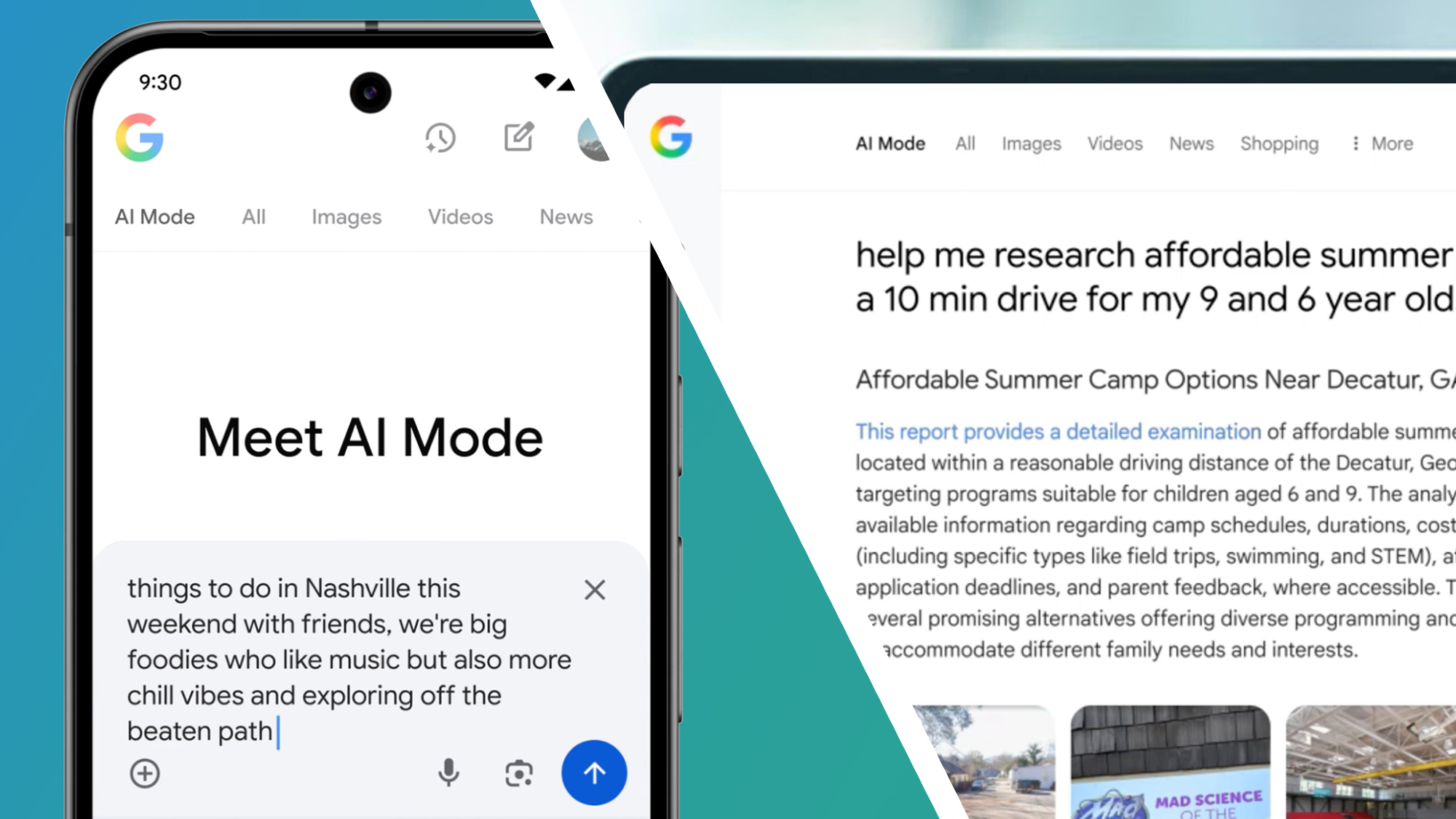
Rank 16626Google Search is under pressure – not only are many of us replacing it with the likes of ChatGPT Search, Google's attempts to stave off competition with the features like AI Overviews have also backfired due to some worrying inaccuracies.That's why Google has just given Search its biggest overhaul for over 25 years at Google I/O 2025. The era of the 'ten blue links' is coming to close, with Google now giving its AI Mode (previously stashed away in its Labs experiments) a wider rollout in the US.AI Mode was far from the only Search news at this year's I/O – so if you been wondering what the next 25 years of 'Googling' looks like, here are all of the new Search features Google's just announced.A word of warning: beyond AI Mode, many of the features will only be available to Labs testers in the US – so if you want to be among the first to try them "in the coming weeks", turn on the AI Mode experiment in Labs.
1. AI Mode in Search is rolling out to everyone in the US
(Image credit: Google)
Yes, Google has just taken off the stabilizers off its AI Mode for Search – which was previously only available in Labs to early testers – and rolled it out to everyone in the US. There's no word yet on when it's coming to other regions.Google says that "over the coming weeks" (which sounds worryingly vague) you'll see AI Mode appear as a new tab in Google Search on the web (and in the search bar in the Google app).We've already tried out AI Mode and concluded that "it might be the end of Search as we know it", and Google says it's been refining it since then – the new version is apparently powered by a custom version of Gemini 2.5.
2. Google also has a new 'Deep Search' AI Mode
(Image credit: Google)
A lot of AI chatbots – including ChatGPT and Perplexity – now offer a Deep Research mode for longer research projects that require a bit more than a quick Google. Well, now Google has its own equivalent for Search called, yes, 'Deep Search'.Available in Labs "in the coming months" (always the vaguest of release windows), Deep Search is a feature within AI Mode that's based on the same "query fan-out" technique as that broader mode, but according to Google takes it to the "next level".In reality, that should mean an "expert-level, fully-cited report" (Google says) in only a few minutes, which sounds like a big time-saver – as long as the accuracy is a bit better than Google's AI Overviews.
3. Search Live lets you quiz Google with your camera
(Image credit: Google)
Google already lets you ask questions about the world with Google Lens, and demoed its Project Astra universal assistant at Google I/O 2024. Well, now it's folding Astra into Google Search so you can ask questions in real-time using your smartphone's camera.'Search Live' is another Labs feature and will be marked by a 'Live' icon in Google's AI Mode or in Google Lens. Tap it and you'll be able to point your camera and have a back-and-forth chat with Google about what's in front of you, while getting links sent to you with more info.The idea sounds good in theory, but we're still yet to try it out beyond its prototype incarnation last year and the multimodal AI project is cloud-based, so your mileage may vary depending on where you're using it. But we're excited to see how far it's come in the last year or so with this new Labs version in Search.
4. AI Overviews are going global
(Image credit: Future)
We're not exactly wild about AI Overviews, which are the little AI-generated paragraphs you often see at the top of your search results. They're sometimes inaccurate and have resulted in some infamous clangers, like recommending that people add glue to their pizzas. But Google is ploughing ahead with them and announced that AI Overviews are getting wider rollout.The new expansion means the feature will be available in more than 200 countries and territories and more than 40 languages worldwide. In other words, this is the new normal for Google Search, so we'd better get used to it.Google's Liz Reid (VP, Head of Search) acknowledged in a press briefing before Google I/O 2025 that AI Overviews have been a learning experience, but claims they've improved since those early incidents."Many of you may have seen that a set of issues came up last year, although they were very much education and quite rare, we also still took them very, very seriously and made a lot of improvements since then", she said.
5. Google Search will soon be your ticket-buying agent
(Image credit: Google)
Finding and and buying tickets and still something of painful experience in Google Search. Fortunately, Google is promising a new mode that's powered by Project Mariner, which is an AI agent that can surf the web just like a human and complete tasks.Rather than a separate feature, this will apparently live within AI Mode and kick in when you ask questions like "Find two affordable tickets for this Saturday's Reds game in the lower level".This will see it scurry off and analyze hundreds of ticket options with real-time pricing. It can also fill in forms, leaving you with the simple task of hitting the 'purchase' button (in theory, at least).The only downside is that this is another of Google's Lab projects that will launch "in the coming months", so who knows when we'll actually see it in action.
6. Google Shopping is getting an AI makeover
(Image credit: Google)
Google gave its Shopping tab within Google Search a big refresh back in October 2024, and now many of those features are getting another boost thanks to some new integration with AI Mode.The 'virtual try-on' feature (which lets you upload a photo of yourself to see how new clothing might look on you) is back again, but the biggest new feature is an AI-powered checkout feature that tracks prices for you, then buys things on your behalf using Google Pay when the price is right (with your confirmation, of course).We're not sure this is going to help cure our gear-acquisition syndrome, but it it does also have some time-saving (and savings-wrecking) potential.
7. Google Search is getting even more personalized (if you want it to)
Like traditional Search, Google's new AI Mode will offer suggestions based on your previous searches, but you can also make it a lot more personalized. Google says you'll be able to connect it to some of its other services, most notably Gmail, to help its answer your queries with a more tailored, personal touch.One example Google gave was asking AI Mode for "things to do in Nashville this weekend with friends". If you've plugged it into other Google services, it could use your previous restaurant bookings and searches to lean the results towards restaurants with outdoor seating.There are obvious issues here – for many, this may be a privacy invasion too far, so they'll likely not opt into connecting it to other services. Also, these 'personal context' powers sound like they have the 'echo chamber' problem of assuming you always want to repeat your previous preferences.Still, it could be another handy evolution of Search for some, and Google says you can always manage your personalization settings at any time.
You might also like
Google's free NotebookLM AI app is out now for Android and iOS – here's why it's a day-one download for meGoogle's AI Overviews are often so confidently wrong that I’ve lost all trust in themI tried Google's new AI mode powered by Gemini, and it might be the end of Search as we know it
-

Picture from cdn.mos.cms.futurecdn.net
Rank 16627Google Flow is a new tool for filmmakers to tap into the power of generative AIFlow uses multiple Google AI models to create cinematic scenes and characters from text prompts This could open up more creative movie-making for people without Hollywood budgets
Google clearly wants to inject artificial intelligence into more creative tools, as evidenced by the introduction of Flow at today’s Google I/O 2025.Flow is the search giant’s new ‘AI filmmaking tool’ that uses Google’s AI models, such as Veo, Imagen, and Gemini to help creative types explore storytelling ideas in movies and videos without needing to go out and film clips and cinematic scenes or sketch out a lot of storyboard scenes by hand.Effectively an extension of the experimental Google Labs VideoFX tool launched last year, Flow lets users add in text prompts in natural, everyday language to create scenes, such as "astronauts walk out of the museum on a bridge,” and the AI tech behind Flow will create such a scene.Flow lets filmmakers bring their own assets into it, from which characters and other images can be created. Once a subject or scene is created, it can be integrated into clips and scenes in a fashion that’s consistent with the video or film as a whole.There are other controls beyond the creation of assets and scenes, with Flow offering direct manipulation of camera angles, perspectives and motion, easy editing of scene to hone in on features or widen up a shot to include more action - this appears to work as easily as a cropping tool - and offers the ability to manage all the ‘ingredients’ and prompt for Flow.Flow will be available for subscribers of Google Al Pro and Google Al Ultra plans in the US, with more countries slated to get access to the filmmaking AI soon.
AI-made movies?
Image 1 of 8Google Flow in action (Image credit: Google Flow)Image 2 of 8(Image credit: Google Flow)Image 3 of 8(Image credit: Google Flow)Image 4 of 8(Image credit: Google Flow)Image 5 of 8(Image credit: Google)Image 6 of 8(Image credit: Google)Image 7 of 8(Image credit: Google Flow)Image 8 of 8(Image credit: Google)
From seeing videos of Flow in action, it appears to be a powerful tool that brings an idea into a visual form, and with surprising realism. Powered by natural language prompts means budding filmmakers can create shots and science that would in the past have required dedicated sets or at least some deft CGI work.In effect, Flow could be one of those AI tools that opens up the world of cinema to a wider range of creatives, or at least gives amateurs more powerful creative tools to bring their ideas to life.However, this does raise the question of whether Flow would be used to create ideas for storytelling that would then be brought into silver screen life via physical sets, actors, and dedicated cinema CGI. Or if Flow will be used to create whole movies with AI, effectively letting directors be the sole producers of films, and bypass the need for actors, camera people, and the wealth of crew that are integral to traditional movie making.As such, AI-powered tools like Flow could breathe new life into the world of cinema that one might argue has got a little stale, at least on the big production commercial side, and at the same time disrupt the roles and work required in the movie-making industry.
You might also like
I tried the trend of using ChatGPT to turn photos into Renaissance paintings: here’s how to do itI’m a photographer, and this Leica-style smartphone is the closest thing I’ve seen to a classic compact with physical controls‘This is a crisis’: New Apple report claims we’ll get no Siri upgrades at WWDC 2025 due to AI turmoil
-

Picture from cdn.mos.cms.futurecdn.net
Rank 16628Google's video generation model got a major upgradeAnnounced at Google I/O, Veo 3 can combine audio and video in its outputIt's an Ultra and US-only feature for now
AI video generation tools such as Sora and Pika can create alarmingly realistic bits of video, and with enough effort, you can tie those clips together to create a short film. One thing they can't do, though, is simultaneously generate audio. Google's new Veo 3 model can, and that could be a game changer.Announced on Tuesday at Google I/O 2025, Veo 3 is the third generation of the powerful Gemini video generation model. With the right prompt, it can produce videos that include sound effects, background noises, and, yes, dialogue.Google briefly demonstrated this capability for the video model. The clip was a CGI-grade animation of some animals talking in a forest. The sound and video were in perfect sync.If the demo can be converted into real-world use, this represents a remarkable tipping point in the AI content generation space."We’re emerging from the silent era of video generation," said Google DeepMind CEO Demis Hassabis in a press call.
Lights, camera, audio
He isn't wrong. Thus far, no other AI video generation model can simultaneously deliver synchronized audio, or audio of any kind, to accompany video output.It's still not clear if Veo 3, which, like its predecessor, Veo 2, should be able to output 4K video, surpasses current video generation leader OpenAI Sora in the video quality department. Google has, in the past, claimed that Veo 2 is adept at producing realistic and consistent movement.Regardless, outputting what appears to be fully produced video clips (video and audio) may instantly make Veo a more attractive platform.It's not just that Veo 3 can handle dialogue. In the world of film and TV, background noises and sound effects are often the work of Foley artists. Now, imagine if all you need to do is describe to Veo the sounds you want behind and attached to the action, and it outputs it all, including the video and dialogue. This is work that takes animators weeks or months to do.In a release on the new model, Google suggests you tell the AI "a short story in your prompt, and the model gives you back a clip that brings it to life."If Veo 3 can follow prompts and output minutes or, ultimately, hours of consistent video and audio, it won't be long before we're viewing the first animated feature generated entirely through Veo.Veo is live today and available in the US as part of the new Ultra tier ($249.99 a month) in the Gemini App and also as part of the new Flow tool.Google also announced a few updates to its Veo 2 video generation model, including the ability to generate video based on reference objects you provide, camera controls, outpainting to convert from portrait to landscape, and object add and erase.
You might also like
Google I/O will be a major event for Android XR glasses and headsets – here are 3 announcements I'm expecting to seeWhat is OpenAI's Sora? The text-to-video tool explained ...Sora needs to up its game to match the new Runway AI ...
-
Picture from cdn.mos.cms.futurecdn.net
Rank 16629Google's Gemini Live is now free for all Android and iOS usersiOS users can now share their screen and camera with Gemini Live (previously only available on Android)Expect more integration with Google apps in the coming weeks
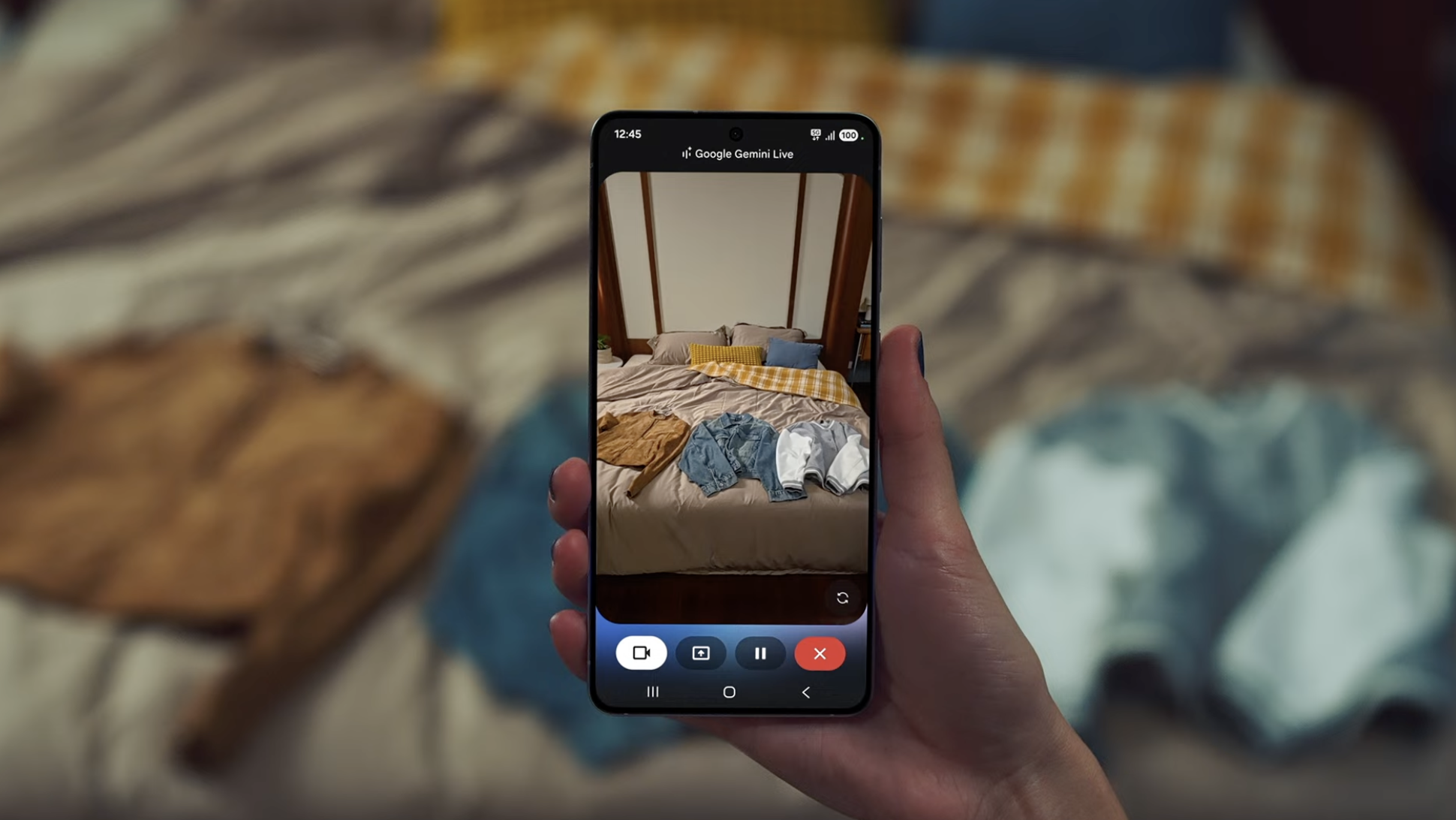
Google just announced that its AI voice assistant, Gemini Live, is now available for free on iOS and Android.Gemini Live has been available to paid subscribers for a while now, but you can now chat with AI, use your smartphone's camera to show it things, and even screen share without spending any money.The major announcement happened at Google I/O, the company's flagship software event. This year, Google I/O has focused heavily on Gemini and the announcement of AI Mode rolling out to all US Google Search users.Gemini Live is one of the best AI tools on the market, competing with ChatGPT Advanced Voice Mode. Where Gemini Live thrives is in its ability to interact with what you see on screen and in real life.Before today, you needed an Android device to access Live's camera, but now that has all changed, and iPhone users can experience the best that Gemini has to offer.Google says the rollout will begin today, with all iOS users being able to access Gemini Live and screen sharing over the following weeks.
More Gemini Live integration in your daily life
Free access and iOS rollout weren't the only Gemini Live features announced at Google I/O. In fact, new functionality for the voice assistant could be a headline new addition.Over the coming weeks, Google says Gemini Live will "integrate more deeply into your daily life. " Whether that's by adding events to your Google Calendar, accessing Google Maps, or interacting with more of the Google ecosystem, Gemini Live is going to become an essential part of how AI interacts with your device.While Google didn't say if this functionality will be available on iOS, it's safe to assume that, for now, increased system integration will be limited to Android.Gemini Live's free rollout, along with its upgrades, is one of, if not the, best announcements of Google I/O, and I can't wait to see how it improves over the next few months.
How to use Gemini Live
(Image credit: Google)
Accessing Gemini Live is simple, you just need access to the Gemini app on iOS or Android.
Open the Gemini appTap the Gemini live icon (found at the far right of the text input box)Start chatting with Gemini Live
You might also like
Google I/O will be a major event for Android XR glasses and headsets – here are 3 announcements I'm expecting to seeGoogle I/O: 7 things we expect to see at the eventI compared Google Gemini's image generation to ChatGPT's
-
Picture from cdn.mos.cms.futurecdn.net
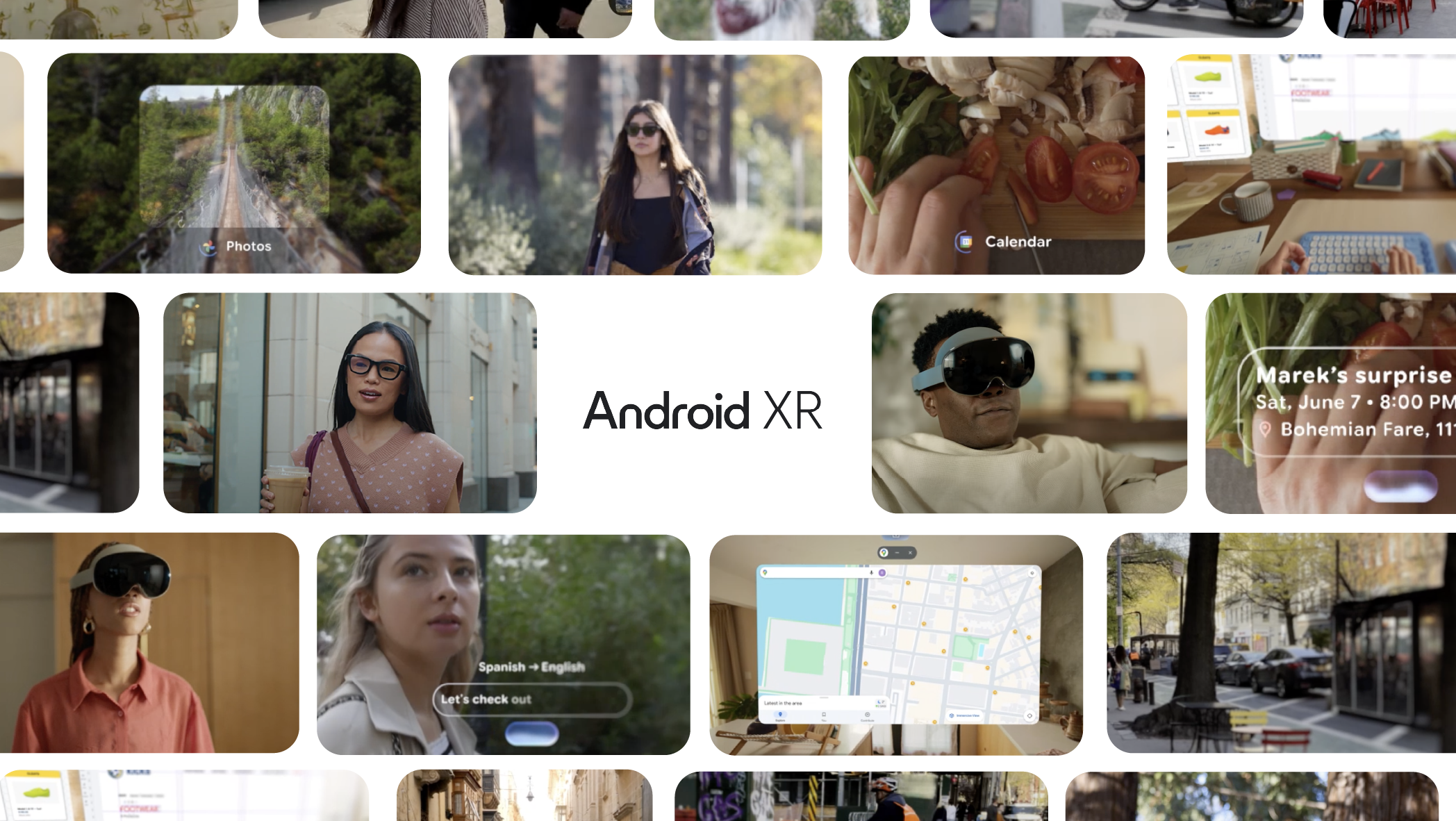
Rank 16630Android XR has been showcased by Google at I/O 2025It relies heavily on AI to deliver many of its features like live translationSeveral different glasses brands will deliver Android XR features
At Google I/O 2025 Google finally gave us what we’ve all been waiting for (well, what I’ve been waiting for): a proper Android XR showcase.The new Google operating system made for Android headsets and Android glasses has been teased as the next big rival to Meta’s Horizon OS – the software that powers the Meta Quest 3 and Quest 3S – and we finally have a better picture of how it stacks up.Admittedly the showcase was a little short, but we do know several new details about Android XR, and here are four you need to know.
1. Android XR has Gemini at its core
(Image credit: Future)
While I’d argue Google’s Android XR showcase wasn’t as in-depth as I wanted, it did show us what the operating system has running at its core: Google Gemini.Google’s advanced AI is the OS’ defining feature (at least that’s how Google is positing it).On-glasses-Gemini can recommend you a place to eat ramen then offer you on-screen directions to where to find it, it can perform live-translation, and on a headset it can use Google Maps' immersive view to virtually transport you to any destination you request.Particularly on the glasses this completely hands-free approach – combined with cameras and a head-up display – looks to be Google Gemini in its most useful form. You can get the assistant’s help as quickly as you can ask for it, no fumbling to get your phone out required.I want to see more but this certainly looks like a solid upgrade on the similar Meta AI feature the Ray-Ban Meta smart glasses offer.
2. Android XR is for more than Samsung
(Image credit: Xreal)
Ahead of Google I/O we knew Samsung was going to be a key Android XR partner – alongside Qualcomm, who’s providing all the necessary Snapdragon chipsets to power the Android XR hardware.But we now know several other companies are collaborating with Google.Xreal has showcased Project Aura, which will bring Android XR to an upgraded version of its tethered glasses that we’re familiar with (like the Xreal One) – with Aura being complete with a camera and Snapdragon processor.Then Google also teased glasses from Gentle Monster and Warby Parker, implying it is taking Meta’s approach of partnering with fashion brands, rather than just traditional tech brands.Plus, given that Gentle Monster and Warby Parker offer very different design aesthetics, this will be good news for people who want varied fashion choices for their new smart glasses accessories.
3. Project Moohan is still coming ‘later this year’
(Image credit: Google)
The Android XR headset Project Moohan is still set to launch in 2025, but Google and Samsung have yet to confirm a specific release date.I was hoping we’d get something more concrete, but continued confirmation that Moohan will be landing in 2025 is better than it being delayed.Google and its partners weren’t keen to give us any firm dates, in fact. Xreal calling its Project Aura the second official Android XR glasses suggests it’ll land sometime after Moohan, but before anything else – however, we’ll have to wait and see what plays out.
4. Meta should be worried, but not terrified
(Image credit: Google)
Google certainly dealt XR’s biggest player – Meta, with its hugely popular Quest headset hardware – a few blows and gave its rival something to be worried about.However, this showcase is far from a finisher, especially not in the headset department.Meta’s Connect 2025 showcase in September is expected to show us similar glasses tech and features, and depending on release dates Meta might beat Android XR to the punch.That said, competition is only going to be a good thing for us consumers, as these rivals battle over price and features to entice us to one side or the other. Unlike previous battles in the XR space this certainly seems like a balanced fight and I’m excited to see what happens next.
You might also like
Forget Android XR, I've got my eyes on Vivo's new Meta Quest 3 competitorGoogle’s surprise Android XR glasses tipped to land in 2026 – and my only complaint is they aren’t launching soonerValve deckard VR headset described as ‘quite amazing’ but there’s still no word on its launch
-

Picture from cdn.mos.cms.futurecdn.net
Rank 16631Xreal is working on Android XR glassesThey're codenamed Project Aura (the same name Google's rumored Glass 2 apparently had)The glasses are a collab between Xreal, Google and Qualcomm
Google and Samsung's Android XR collab has been a major focus, but at Google I/O 2025 a new (yet familiar) partner emerged to showcase the second official Android XR device: Xreal with Project Aura.Xreal and its Xreal One glasses currently top our list for the best smart glasses thanks to their impressive audio and visual quality.However, while they include AR elements – they make your connected device (a phone, laptop, or console, among other options) float in front of you like you’re in a private movie theatre, which is fantastic by the way – they aren’t yet as versatile as other smart glasses propositions we’re being promised by Google, Meta, Snap and others.Xreal Project Aura – a pair of XR glasses officially referred to as an optical see-through (OST) XR device – should shift Xreal’s range towards that of its rivals thanks to its advanced Qualcomm chipset, Xreal’s visual system expertise, and Google’s Android XR software. The combination of which should (hopefully) form a more fully realized spatial computing device than we’ve seen from Xreal before.
Samsung aren't the only Android XR glasses (Image credit: Google)
As exciting as this announcement is – I’ll explain more below in a moment – we should keep our emotions in check until further details on Project Aura are revealed at the Augmented World Expo (AWE) in June, and in other announcements set to be made “later this year” (according to Xreal).Simply because beyond its existence and its general design we know very little about Aura.We can see it has in-built cameras, have been promised Qualcomm processors, and it appears to use the same dual-eye display technology exhibited by Xreal’s other glasses. Plus it'll tethered rather than fully wireless, though it should still offer all of the Android XR abilities Google has showcased.But important questions like its cost and release date haven’t yet been detailed.I’m hoping it’ll offer us a more cost-effective entry point to this new era of XR glasses, but we’ll have to wait and see before we know for certain if this is “a breakthrough moment for real-world XR” as Chi Xu, Co-founder and CEO of Xreal promises.Still, even before knowing its specs and other key factors I’m leaning towards agreeing with Xreal’s CEO.
I love my Xreal One glasses (Image credit: Future / Hamish Hector)
Meta should be worried
So why is this Xreal Android XR reveal potentially so important in my eyes?Because while Meta has promised its Horizon OS will appear on non-Meta headsets – from Asus, Lenovo, and Xbox – since that announcement we’ve seen nothing of these other headsets in over a year. That is, beyond a whisper on winds (read: a small leak) about Asus’ Project Tarius.Android XR on the other hand has, before launch, not only confirmed collaborations between Google and other companies (Xreal and Samsung) but shown those devices in action.They aren’t just promises, they’re real.
A threat to the Meta Quest 3? (Image credit: Meta)
Now the key deciding factor will be if Android XR can prove itself as an operating system that rivals Horizon OS in terms of the breadth and quality of its XR apps. With Google, Samsung, Xreal, and more behind it, I’m feeling confident that it will.If it lives up to my expectations, Android XR could seriously shake up Meta’s XR dominance thanks to the varied XR hardware options under its umbrella out the gate – that should lead to competition resulting in better devices and prices for us consumers as an end result.We’ll have to continue to watch how Android XR develops, but it looks like Google is off to a very strong start. For the first time in a while Meta might finally be on the back foot in the XR space, and the ball is in its court to respond.
You might also like
Meta Quest 4: 5 things I want to see from Meta's next VR headsetI took my Meta Quest 3 on a 3,000-mile flight so you don’t have toForget Android XR, I've got my eyes on Vivo's new Meta Quest 3 competitor as it could be the most important VR headset of 2025
-

Picture from cdn.mos.cms.futurecdn.net
Rank 16632Google became a verb for search long before AI chatbots arrived to answer their first prompt, but now those two trends are merging as Google solidified AI's position in search with the full rollout of AI Mode for all US Google Search users. Google made the announcement as part of Google I/O, which is underway in California.Finding results from a generative model that often gives you everything you need on the Google result page is a fundamental shift in traditional web search paradigms.For over 25 years now, we've traditionally searched on a term, phrase, or even complete thought and found pages and pages of links. The first page is the links that matter most in that they'll mostly closely align with your query. It's no secret that companies, including the one I work at, fight tooth and nail to create content that lives on the first page of those results.Things began to change in the realm of Google Search when Google introduced AI Overviews in 2023. As of this week, they're used by 1.5 billion monthly users, according to Google.Where AI Overview was a light-touch approach to introducing generative AI to search, AI Mode goes deeper and further. The latest version of AI Mode, introduced at Google I/O 2025, adds more advanced reasoning and can handle even longer and more complex queries.Suffice it to say, your Google Search experience may never be the same.
View from the top
Google CEO Sundar Pichai (Image credit: Bloomberg/Getty Images)
Google CEO Sundar Pichai, though, has a different view. In a conversation with reporters before Google I/O and in answer to a question about the rise of AI chatbots like Gemini and the role of search, Pichai said, "It's been a pretty exciting moment for search."He said that engagement with AI Overviews and even the limited AI Modes tests has shown increased engagement, with people spending more time in search and inputting longer and longer queries.No one asked if the rise of chatbots could mean the end of search as we know it, but perhaps Pichai inferred the subtext, adding, "It's very far from a zero-sum moment."If anything, Pichai noted, "People, I think, are just getting more curious; people are using a lot of this a lot more. "While AI Overview is often accused of having some factual issues, Google is promising that AI mode, which uses more powerful models than AI Overview, will be more accurate. "AI Mode uses more powerful models and uses more reasoning across – sort of doing more work– ...and so it reaches an even higher bar," said Google Search Head Liz Reid.As for where search is going, Pichai sees features like AI Mode "expanding use cases". He also thinks that agentic AI is "giving people glimpses of a proactive world."I think, by this, Pichai means that AI-powered search will eventually learn your needs and do your bidding, even if your query or prompt doesn't fully describe your need.What that means in practice is still up for debate, but for Google and Picahi, the advent of AI in search is all upside."I do think it's made the Web itself more exciting. People are engaging a lot more across the board, and so it's a very positive moment for us."
You might also like
Google's AI Overviews are often so confidently wrong that I' ...Google's AI Overviews goes global, hopefully without the ...Google I/O 2025 live: all the latest news and rumors for Android XR, Gemini, Project Astra, and more
-
Picture from cdn.mos.cms.futurecdn.net
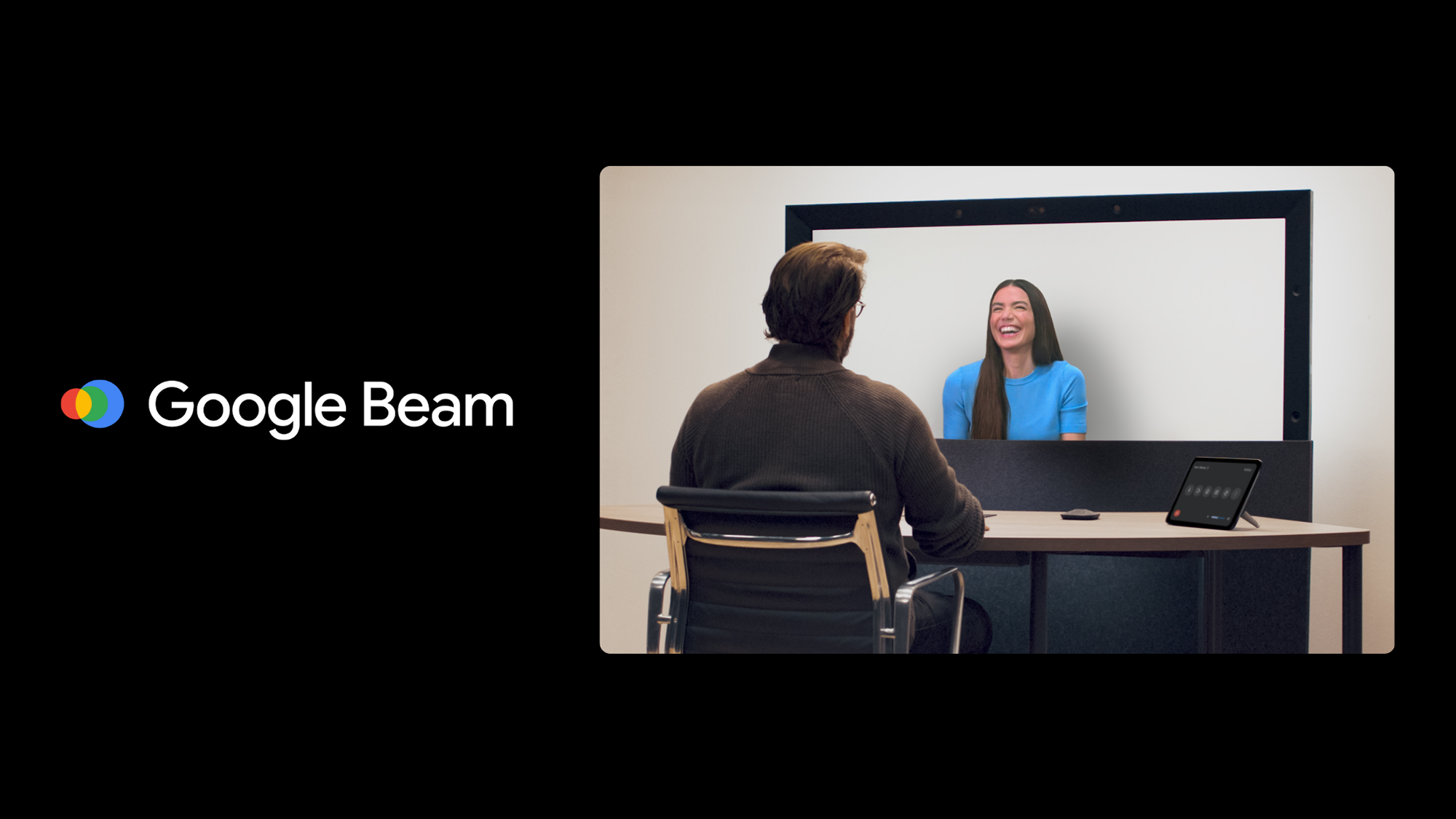
Rank 16633Project Starline launched in 2021 and is now Google BeamIt's rolling out this year, adding 3D to video callsThere's also a real-time translation component to the tech
You may have already seen Google's Project Starline tech, which reimagines video calls in full 3D. It was first teased over four years ago, and at Google I/O 2025 we got the news that it's rolling out in full with a new name: Google Beam.Since its inception, the idea of Google Beam has been to make it feel like you're in the same room as someone when you're on a video call with them. Rather than using headsets or glasses though, it relies on cameras, mics, and AI technology."The combination of our AI video model and our light field display creates a profound sense of dimensionality and depth," says Google. "This is what allows you to make eye contact, read subtle cues, and build understanding and trust as if you were face-to-face."Beam participants need to sit in a custom-made booth, with a large, curved screen that's able to generate a partly three-dimensional rendering of the person they're speaking to. The first business customers will get the equipment from HP later this year.
Real-time translation
Google Beam in action (Image credit: Google)
There's another element of Google Beam that's been announced today, and that's real-time translation. As you might expect, this is driven by AI technology, and makes it easier to converse with someone else in a different language.As per the demo that Google has shown off, the translation is just a second or two behind the speech, and it works in the same way that a translation might be added afterwards on top of someone speaking in a video recording.It's another impressive part of the Google Beam experience, and offers another benefit for organizations with teams and clients all across the world. According to Google, it can preserve voice, tone, and expression, while changing the language the audio is spoken in.This part of the experience won't only be available in Google Beam though: it's rolling out now inside Google Meet now for consumers, though you are going to need either the Google AI Pro or the Google AI Ultra plan to access it.
You might also like
NotebookLM rolls out for Android and iOSPreviously, in Project Starline newsAll the news so far from Google I/O 2025
-
Picture from cdn.mos.cms.futurecdn.net
Rank 16634Google just launched a new ultra premium AI subscription serviceTitled Google AI Ultra, this new subscription is available in the US and costs $250 a monthComing to more countries soon, you can sign up today in the US and receive 50% off your first three months
Google has just announced a new premium AI subscription plan called Google AI Ultra in the US, and it costs a staggering $250 a month.Announced at Google I/O 2025, Google says AI Ultra is a subscription plan with "the highest usage limits and access to our most capable models and premium features.""If you're a filmmaker, developer, creative professional or simply demand the absolute best of Google Al with the highest level of access, the Google Al Ultra plan is built for you - think of it as your VIP pass to Google Al."Google is launching the new subscription with a special introductory offer that gets you a 50% discount for the first three months. AI Ultra will be available in more countries soon.Google has also renamed its existing premium plan to Google AI Pro.
(Image credit: Google)
What do you get for $250
Google AI Ultra is expensive, there's no denying it. That said, it's a premium plan for those who need access to some of the best AI tools on the planet.Here's a list of everything Google says you'll get with Google AI Ultra and that incredible price tag.
'Gemini: Experience the absolute best version of our Gemini app. This plan offers the highest usage limits across Deep Research, cutting-edge video generation with Veo 2 and early access to our groundbreaking Veo 3 model. It's designed for coding, academic research and complex creative endeavors. In the coming weeks, Ultra subscribers will also get access to Deep Think in 2.5 Pro, our new enhanced reasoning mode.''Flow: This new Al filmmaking tool is custom-designed for Google DeepMind's most advanced models (Veo, Imagen and Gemini). It enables the crafting of cinematic clips, scenes and cohesive narratives with intuitive prompting. Google Al Ultra unlocks the highest limits in Flow with 1080p video generation, advanced camera controls and early access to Veo 3.''Whisk: Whisk helps you quickly explore and visualize new ideas using both text and image prompts. With Google Al Ultra, get the highest limits for Whisk Animate, which turns your images into vivid eight-second videos with Veo 2.''NotebookLM: Get access to the highest usage limits and enhanced model capabilities later this year, whether you're using NotebookLM for studying, teaching or working on your projects.''Gemini in Gmail, Docs, Vids and more: Make everyday tasks easier with access to Gemini directly in your favorite Google apps like Gmail, Docs, Vids and more.''Gemini in Chrome: Starting tomorrow, get early access to Gemini directly within the Chrome browser. This feature allows you to effortlessly understand complex information and complete tasks on the web by using the context of the current page.''Project Mariner: This agentic research prototype can assist you in managing up to 10 tasks simultaneously - from research to bookings and purchases - all from a single dashboard.''YouTube Premium: An individual YouTube Premium plan lets you watch YouTube and listen to YouTube Music ad-free, offline and in the background.''30 TB of storage: Offers massive storage capacity across Google Photos, Drive and Gmail to keep your creations and important files secure.'
As you can see, Google AI Ultra is for a niche audience, but arguably could be worth its high price tag if you're a heavy AI user.Stay tuned to TechRadar for more Google Gemini news and watch out for our thorough testing of all the new AI features announced during Google I/O 2025.
You might also like
Google I/O will be a major event for Android XR glasses and headsets – here are 3 announcements I'm expecting to seeWhat is OpenAI's Sora? The text-to-video tool explained ...Sora needs to up its game to match the new Runway AI ...
-

Picture from cdn.mos.cms.futurecdn.net
Rank 16635Imagen 4 is now available to all Gemini users2K images with more detail and better typographyGoogle claims you can now use it to create greetings cards
Google's AI image generation just levelled up, with a new version of Imagen 4 bringing with it a bunch of big upgrades including a higher resolution and better text handling.The upgrade was announced at Google I/O 2025 today, and should noticeably improve Gemini’s image capabilities, which were already rivalling those of ChatGPT.Taking over from the previous version 3, Imagen 4 has "remarkable clarity in fine details like intricate fabrics, water droplets and animal fur, and excels in both photorealistic and abstract styles”, according to Google. You can see the new level of detail in the preview images above and below.Imagen 4 is also the first version of Google’s AI image generator that can go up to 2K resolution, meaning you’ll be able to make larger images for presentations and pictures that will look even better when printed out.
The detail on the water droplets in this image generated by Imagen 4 is quite impressive. (Image credit: Google)
A real challenge for AI image generators in the past (apart from creating realistic fingers) has been representing text in a way that makes sense and is readable.While Imagen 3 did make significant inroads into presenting typography in a better way, Imagen 4 promises to take text to the next level.Google claims Imagen 4 will be “significantly better at spelling and typography, making it easier to create your own greeting cards, posters and even comics”.
Usage limits
When it comes to the usage limits on Imagen 4, we don’t expect the situation to be radically different from those with Imagen 3, but will update this post if we hear anything different.Currently, if you are using Imagen 3 through the Gemini chatbot, daily limits vary depending on whether you’re a free Gemini user or a Gemini Advanced subscriber.Free users can expect around 10-20 image generations per day, depending on how heavily the service is being used. Gemini Advanced subscribers can expect higher limits of up to 100-150 daily image generations.As with Imagen 3, there are content restrictions on Imagen 4, especially around generating images of real individuals. However, Imagen 4 has no problems generating images of generic people.
Available today across Google apps
Imagen 4 isn’t only available in Gemini, either; from today you’ll be able to use it across Whisk, Vertex AI, Slides, Vids, Docs and more in Workspace.And there’s more to come, too. Google says that it will “soon” be launching a super-fast variant of Imagen 4 that’s up to 10x faster than Imagen 3 at generating images.
You may also like
Google's free NotebookLM AI app is out now for Android and iOS – here's why it's a day-one download for meI tried the trend of using ChatGPT to turn photos into Renaissance paintings: here’s how to do itI tried Manus AI's impressive new image generation and ChatGPT should watch out
-
Picture from cdn.mos.cms.futurecdn.net
Rank 16636Google Gemini 2.5 Pro is getting a new Deep Think modelDeep Think allows Gemini to consider multiple reasoning paths before respondingDeep Think will improve Gemini's accuracy on complex math and code
Google is adding some extra brainpower to Gemini with a new Deep Think Mode. The company unveiled the latest option for Google Gemini 2.5 Pro at Google I/O 2025, showing off just what its AI can do with extra depth.Deep Think basically augments Gemini's AI 'mind' with additional brains. Gemini in Deep Think mode won't just spit out an answer to a query as fast as possible. Instead, it runs multiple possible lines of reasoning in parallel before deciding how to respond. It’s like the AI equivalent of looking both ways, or rereading the instructions before building a piece of furniture.And if Google's tests are anything to go by, Deep Think's brainpower is working. It’s performing at a top-tier level on the 2025 U.S. math olympiad, coming out on top in the LiveCodeBench competitive programming test, scoring an amazingly high 84% on the popular MMMU, a sort of decathlon of multimodal reasoning tasks. Deep Think isn’t widely available just yet. Google is rolling it out to trusted testers only for now. But, presumably, once all the kinks are ironed out, everyone will have access to the deepest of Gemini's thoughts.
Gemini shines on
Deep Think fits right into the rest of Gemini 2.5’s growing lineup and the new features arriving for its various models in the API used by developers to embed Gemini in their software.For instance, Gemini 2.5 Pro now supports native audio generation out. That means it can talk back to you. The speech has an “affective dialogue” feature, which detects emotional shifts in your tone and adjusts accordingly. If you sound stressed, Gemini might stop talking like a patient customer service agent and respond more like an empathetic and thoughtful friend (or at least how the AI interprets such a response). And it will be better at knowing when to talk at all thanks to the new Proactive Audio feature, which filters out background noise so Gemini only chimes in when it’s sure you’re talking to it.Paired with new security safeguards and the upcoming Project Mariner computer-use features, Gemini 2.5 is trying very hard to be the AI you trust not just with your calendar or code, but with your book narration or entire operating system.Another element expanding across Gemini 2.5 is what Google calls a 'thinking budget.' Previously unique to Gemini 2.5 Flash, the thinking budget lets developers decide just how deeply the model should think before responding. It's a good way to ensure you get a full answer without spending too much. Otherwise, Deep Think could give you just a taste of its reasoning, or give you the whole thing and make it too expensive for any follow-ups.In case it's not clear what those thoughts involve, Gemini 2.5 Pro and Flash will offer 'thought summaries' for developers, a document showing the exact details of what the AI was doing in terms of applying information through its reasoning process, so you can actually look inside the AI brain.All of this signals a pivot from models that just talk fast to emphasizing ones that can reason deeper, if slower. Deep Think is part of that shift toward deliberate, layered reasoning. It’s not just trying to predict the next word anymore, it's applying that logic to ideas and the very process of coming up with answers to your questions. Google seems keen to make Gemini not only able to fetch answers, but to understand the shape of the question itself.Of course, AI reasoning still exists in a space where a perfectly logical answer might come with a random side of nonsense, no matter how impressive the benchmark scores. But you can start to see the shape of what’s coming, where the promise of an actual 'co-pilot' AI comes to fruition.
You might also like
I tried Google's new AI mode powered by Gemini, and it might be the end of Search as we know itGoogle’s AI Mode can explain what you’re seeing even if you can’tGoogle Gemini could soon get a super-useful 'Power up' button – here's what it does
-
Picture from o.aolcdn.com
Rank 16637Google has begun rolling out AI Mode to every Search user in the US. The company announced the expansion during its I/O 2025 conference. Google first began previewing AI Mode with testers in its Labs program at the start of March. Since then, it has been gradually rolling out the feature to more people, including in recent weeks regular Search users.
For the uninitiated, AI Mode is a chatbot built directly into Google Search. It lives in a separate tab, and was designed by the company to tackle more complicated queries than people have historically used its search engine to answer. For instance, you can use AI Mode to generate a comparison between different fitness trackers. Before today, the chatbot was powered by Gemini 2.0. Now it's running a custom version of Gemini 2.5. What's more, Google plans to bring many of AI Mode's capabilities to other parts of the Search experience.
Developing...
This article originally appeared on Engadget at https://www.engadget.com/ai/ai-mode-is-now-rolling-out-to-everyone-in-the-us-174917212.html?src=rss
-
Picture from o.aolcdn.com
Rank 16638Google's Chrome browser is the latest major product from the company to get its own built-in Gemini features. Today at Google I/O, the company detailed its plans to bring its AI assistant to Chrome.
While Gemini can already distill information from websites, having the assistant baked into Chrome allows it to provide insights and answer questions about your open tabs without ever having to move to a different window or application. Instead, Gemini lives in a new menu at the top of your browser window as well as in the taskbar.
The company envisions its assistant as being able to help out with tasks that may normally require switching between several open tabs or scrolling around to different parts of a web page. For example, Google showed off how Gemini can give advice about potential modifications for dietary restrictions while looking at a recipe blog. Gemini in the browser could also come in handy while shopping as it can answer specific questions about products or even summarize reviews.
To start, Gemini will only be able to answer queries about a single open tab, but the company plans to add multi-tab capabilities in a future update. This would allow the assistant to synthesize info across multiple open tabs and answer even more complex questions. Gemini in Chrome will also have Gemini Live capabilities, for anyone more comfortable conversing with the assistant using their voice. The company also teased a future update that will allow Gemini to actually scroll through web pages on your behalf, like asking it to jump to a specific step in a recipe. (Notably, all this is separate from Google's other web-browsing AI, Project Mariner, which is still a research prototype.)
Gemini is starting to roll out to Chrome users on Mac and Windows today, beginning with AI Pro and AI Ultra subscribers in the United States. The company hasn't indicated whether it plans to bring similar features to Chromebooks or Chrome's mobile app.This article originally appeared on Engadget at https://www.engadget.com/ai/google-is-bringing-gemini-to-chrome-so-it-can-answer-questions-about-your-open-tabs-174903787.html?src=rss
-
Picture from o.aolcdn.com
Rank 16639As part of its announcements for I/O 2025 today, Google shared details on some new features that would make shopping in AI Mode more novel. It's describing the three new tools as being part of its new shopping experience in AI Mode, and they cover the discovery, trying on and checkout parts of the process. These will be available "in the coming months" for online shoppers in the US.
The first update is when you're looking for a specific thing to buy. The examples Google shared were searches for travel bags or a rug that matches the other furniture in a room. By combining Gemini's reasoning capabilities with its shopping graph database of products, Google AI will determine from your query that you'd like lots of pictures to look at and pull up a new image-laden panel.
It's somewhat reminiscent of Image search results, except these photos take up the right half or so of the page and are laid out vertically in four columns, according to the screenshots the company shared. Of course, some of the best spots in this grid can be paid for by companies looking for better placement for their products.
As you continue to refine your search results with Gemini, the "new righthand panel dynamically updates with relevant products and images," the company said. If you specify that the travel bag you're looking for should withstand a trip to Oregon, for example, the AI can prioritize weatherproof products and show you those images in this panel.
The second, and more intriguing part of the shopping updates in AI Mode, is a change coming to the company's virtual try-on tool. Since its launch in 2023, this feature has gotten more sophisticated, letting you pick specific models that most closely match your body type and then virtually reimagine the outfit you've found on them. At Google I/O today, the company shared that it will soon allow users to upload a single picture of themselves and its new image generation model that has been designed for fashion will overlay articles of clothing on your AI-imagined self.
According to Google, the custom image generation model "understands the human body and nuances of clothing — like how different materials fold, stretch and drape on different bodies." It added that the software will "preserve these subtleties when applied to poses in your photos." The company said this is "the first of its kind working at this scale, allowing shoppers to try on billions of items of clothing from our Shopping Graph." The Try It On with an upload of your photo is rolling out in Search Labs in the US today, and when you're testing it, you'll need to look for the "try it on" icon on compatible product listings.
Google
Finally, when you've found what you want, you might not want to purchase it immediately. Many of us know the feeling of having online shopping carts packed and ready for the next upcoming sale (Memorial Day in the US is this weekend, by the way). Google's new "agentic checkout feature" can keep an eye on price drops on your behalf. You'll soon see a "track price" option on product listings similar to those already available on Google Flights, and after selecting it you'll be able to set your desired price, size, color and other options. The tracker will alert you when those parameters are met, and if you're ready to hand over your money, the agentic checkout tool can also simplify that process if you tap "buy for me."
According to Google, "behind the scenes, we'll add the item to your cart on the merchant's site and securely complete the checkout on your behalf with Google Pay." The agentic checkout feature will be available "in the coming months" for product listings in the US. This article originally appeared on Engadget at https://www.engadget.com/ai/googles-ai-mode-lets-you-virtually-try-clothes-on-by-uploading-a-single-photo-174820693.html?src=rss
-
Picture from o.aolcdn.com
Rank 16640As part of this year's announcements at its I/O developer conference, Google has revealed its latest media generation models. Most notable, perhaps, is the Veo 3, which is the first iteration of the model that can generate videos with sounds. It can, for instance, create a video of birds with an audio of their singing, or a city street with the sounds of traffic in the background. Google says Veo 3 also excels in real-world physics and in lip syncing. At the moment, the model is only available for Gemini Ultra subscribers in the US within the Gemini app and for enterprise users on Vertex AI. It's also available in Flow, Google's new AI filmmaking tool.
Flow brings Veo, Imagen and Gemini together to create cinematic clips and scenes. Users can describe the final output they want in natural language, and Flow will go to work making it for them. The new tool will only be available to Google AI Pro and Ultra subscribers in the US for now, but Google says it will roll out to more countries soon.
While the company has released a brand new video-generating model, it hasn't abandoned Veo 2 just yet. Users will be able to give Veo 2 images of people, scenes, styles and objects to use as reference for their desired output in Flow. They'll have access to camera controls that will allow them to rotate scenes and zoom into specific objects for Flow, as well. Plus, they'll be able to broaden their frames from portrait to landscape if they want to and add or remove objects from their videos.
Google has also introduced its latest image-generating model, Imagen 4, at the event. The company said Imagen 4 does fine details like intricate fabrics and animal fur with "remarkable clarity" and excels at generating both photorealistic and abstract images. It's also significantly better at rendering typography than its predecessors and can create images in various aspect ratios with resolutions of up to 2K. Imagen 4 is now available via the Gemini app, Vertex AI and in Workspace apps, including Docs and Slides. Google said it's also releasing a version of Imagen 4 that's 10 times faster than Imagen 3 "soon."
Finally, to help people identify AI-generated content, which is becoming more and more difficult these days, Google has launched SynthID Detector. It's a portal where users can upload a piece of media they think could be AI-generated, and Google will determine if it contains SynthID, its watermarking and identification tool for AI art. Google had open sourced its watermarking tool, but not all image generators use it, so the portal still won't be able to identify all AI-generated images. This article originally appeared on Engadget at https://www.engadget.com/ai/googles-veo-3-ai-model-can-generate-videos-with-sound-174541183.html?src=rss
-
Picture from o.aolcdn.com
Rank 16641One of the new AI features that Google has announced for Search at I/O 2025 will let you discuss what it's seeing through your camera in real time. Google says more than 1.5 billion people use visual search on Google Lens, and it's now taking the next step in multimodality by bringing Project Astra's live capabilities into Search. With the new feature called Search Live, you can have a back-and-forth conversation with Search about what's in front of you. For instance, you can simply point your camera at a difficult math problem and ask it to help you solve it or to explain a concept you're having difficulty grasping.
Search will also give you links to more resources you can explore. To be able to access Search Live, you'll have to tap the Live icon in Google Lens or in AI Mode, which the company has just rolled out in the US after making it available to Labs users earlier this month. AI Mode is a new chatbot Google built directly into Search that can break down your query into subtopics so it can serve you more thorough results with "hyper-relevant content." The new AI Mode tab will show up in Search and in the Google app in the coming weeks.
AI Mode will be able to help you analyze and visualize numbers and data, as well, by generating interactive graphics for you. If you want to compare two different sports teams, for instance, Google will be able to generate a graph showing their performance using its own real-time sports information. The company will also be able to create real-time graphs for finance queries.
Soon, AI Mode will be able to give you personalized responses based on your past activities. If you ask it where you can eat while visiting a specific city, for example, it can name restaurants with outdoor seating if you've booked an outdoor table in the past. It can also give you suggestions based on your hotel and flight bookings. In addition, AI Mode will come with a Shopping experience that will let you try on clothes virtually by uploading a photo of yourself. When you're done, Google's new checkout feature will be able to buy the clothes you want in your stead from their respective websites with Google Pay. This article originally appeared on Engadget at https://www.engadget.com/ai/google-search-live-will-let-you-ask-questions-about-what-your-camera-sees-174532593.html?src=rss
-
Picture from o.aolcdn.com
Rank 16642Google has started testing a reasoning model called Deep Think for Gemini 2.5 Pro, the company has revealed at its I/O developer conference. According to DeepMind CEO Demis Hassabis, Gemini's Deep Think uses "the latest cutting-edge research" that gives the model the capability to consider multiple hypotheses before responding to queries. Google says it got an "impressive score" when evaluated using questions from the 2025 United States of America Mathematical Olympiad competition. However, Google wants to take more time to conduct safety evaluations and get further input from safety experts before releasing it widely. That's why it's making Deep Think initially available to trusted testers via the Gemini API first in order to get their feedback first.
The company has also introduced a better Gemini 2.5 Flash model, which is optimized for speed and efficiency. It's now more efficient than before, uses fewer tokens and has scored higher in benchmarks for reasoning, multimodality, code and long context than its predecessor. It will be generally available in early June. For now, the improved Gemini 2.5 Flash is available as a preview via Google AI Studio for developers, via Vertex AI for enterprise customers and via the Gemini app for other users.
While most of the efficiency gains covered on the I/O stage were focused on 2.5 Flash, Google did announce that it's bringing the 2.5 Flash concept of "Thinking Budgets" to its more advanced 2.5 Pro model. This feature will let you balance tokens spent vs. accuracy and speed of output.
Separately, Google is bringing Project Mariner into the Gemini API and Vertex AI, as well. Project Mariner is Google's Gemini-powered AI agents that can navigate pages on the web browser to complete tasks for users. The company will roll the agents out more broadly this summer so that developers can experiment with them. In addition, the company is releasing new previews for text-to-speech on both 2.5 Pro and 2.5 Flash models via the Gemini API, with support for two voices in 24 languages. This article originally appeared on Engadget at https://www.engadget.com/ai/google-introduces-the-deep-think-reasoning-model-for-gemini-25-pro-and-a-better-25-flash-174531020.html?src=rss
-
Picture from o.aolcdn.com
Rank 16643When Google unveiled Android XR last year, it seemed like a clear response to Apple's Vision Pro: It was a plan for a true mixed reality platform that could easily hop between AR, VR and smart glasses like Meta's Ray-Bans. At Google I/O 2025 today, Google announced the second developer preview for Android XR, and it also showed off a bit more about how it could work in headsets and smart glasses. It'll likely be a while before we see Android XR devices in action, though, as Google also revealed Samsung's Project Moohan headset will arrive later this year. Additionally, Xreal is also building Project Aura, a pair of tethered smart glasses powered by the platform.
Basically, there really isn't much to get excited about just yet. It's clear that Google is working hard to catch up with both Apple and Meta, which actually have XR products on the shelves already. Given that Google tends to kill its ambitious projects with a swiftness — just take a look at Google Glass, Cardboard and Daydream, which were all early stabs at AR and VR — it's hard to put much faith in the future of Android XR. Is the availability of much better XR hardware enough to make the platform a success? At this point, it's just too tough to tell.
For now, though, it looks like Google is aiming to deliver all of the features you'd expect with Android XR. Its second developer preview adds the ability to play 180-degree and 360-degree immersive videos, bring hand-tracking into apps and support dynamic refresh rates (which could seriously help battery life). As expected, Google is also making it easier to integrate its Gemini AI into Android XR apps, something the company promised when it first announced the platform last year.
Google
In a series of pre-rendered videos, Google showed off the ideal ways to use Gemini in smart glasses and headsets. If your glasses have a built-in display (something Meta's Ray-Bans don't offer yet), you could see a small Google Map to give you directions, message friends while you're prepping dinner or take a picture while dancing with your partner at sunset (seriously). All I can say is: "Cool demo, bro." Get back to us when this is all working in headsets and glasses we can actually wear.This article originally appeared on Engadget at https://www.engadget.com/ar-vr/google-still-doesnt-have-much-to-show-for-android-xr-174529434.html?src=rss
-
Picture from o.aolcdn.com
Rank 16644Google is enhancing Gemini's text-to-speech (TTS). On Tuesday at Google I/O 2025, the company previewed a new TTS feature, built on native audio output, that can "converse in more expressive ways."
Google’s Tulsee Doshi showed a quick demo of the Gemini 2.5 TTS models onstage in Mountain View. It showed an AI-powered voice that sounds more natural and less robotic, with subtler nuances.
The TTS can converse in over 24 languages, switching between them seamlessly. The demo showed the model beginning in English, shifting to Hindi, and then circling back to English. They all used the same voice, helping create the illusion that it’s the same “person.” The TTS can also switch to a whisper (which sounded a little creepy) on the fly.
The new text-to-speech is available starting today in the Gemini API. Also on Tuesday, the Gemini Live API will have a 2.5 Flash preview of native audio dialog.This article originally appeared on Engadget at https://www.engadget.com/ai/googles-new-text-to-speech-can-switch-languages-on-the-fly-174528459.html?src=rss
-
Picture from o.aolcdn.com
Rank 16645Google just touted some big numbers regarding its AI Overviews feature during its I/O conference. On the stage, company CEO Sundar Pichai said that the service has 1.5 billion monthly users. That's around 18 percent of the total human population of planet Earth, give or take.
For the remaining 82 percent of humanity, AI Overviews are those little recaps that appear at the top of Google queries. These primarily appear when the search engine is asked a question, with the company saying they only show up for more complex questions, where the systems recognize that they're helpful beyond what the rest of the results page offers.
Google
We asked the company what that 1.5 billion number actually means, being how the recaps spawn automatically. Google responded by saying the number is a measure of people who have seen AI Overviews in their results. It also noted that the overwhelming majority of these users engage with the service in some meaningful way. The company continued by saying that users are interacting with it, which leads them to "search more often."
Google says that Overviews are driving a 10 percent increase in search engine usage, with regard to the types of queries that show AI-generated results. The biggest markets for this feature are the US and India. Back in October, Google pledged to bring the platform to 100 new countries and hoped to one-day reach one billion users per month. It looks like the company has sailed past that.
The company has also been busy bringing it to even more regions. All told, Overviews is available in more than 200 countries and in 40 languages. It's even been testing a similar service for YouTube.
Engadget
Of course, this is AI. The Overviews feature may be inching toward omnipresence, but that doesn't mean it's always correct. The service has been known to make stuff up, get things wrong or just act plain goofy.This article originally appeared on Engadget at https://www.engadget.com/ai/15-billion-people-see-googles-ai-overviews-each-month-174526822.html?src=rss
-
Picture from o.aolcdn.com
Rank 16646Late last year Google announced its new extended reality ecosystem, Android XR, designed to go up against Meta Quest and Apple's Vision Pro. Along with that it introduced the first device, Samsung's Project Moohan, a virtual reality-style headset.
Now as part of Google I/O, Xreal has unveiled Project Aura, the second official Android XR device. Rather than being a full headset, it's a pair of lightweight see-through "tethered" glasses powered by a Qualcomm Snapdragon processor. It incorporates Google's Gemini AI and will deliver both optical see-through (OST) and virtual see-through (VST) cinematic experiences, according to Google and Xreal.
The new XR glasses are a "call to action" for developers, the companies said. They invited that community to "begin envisioning new applications and use cases for this next generation of XR," adding that developers already building for headsets on the platform will be able to easily bring their apps to Project Aura.
Xreal and Google didn't release any other details. Previous Xreal headsets like the Air 2 Ultra offer 6DoF (six degree of freedom) tracking so you can physically walk around a virtual space, along with hand tracking for interacting with objects virtually. The fact that the glasses are tethered (despite having their own processor) means you'll likely need to carry an Android device as well.
Google's past dalliances with VR and AR (Cardboard, Daydream and Google Glass) all finished in the Google Graveyard. However, the company recently said that the underlying technology is finally good enough to tap extended reality's full potential. And while lightweight, see-through augmented reality glasses have never lived up to their potential, Xreal has perhaps made the best progress with models like the One Pro. Google and Xreal are set to reveal more information about Project Aura at Augmented World Expo (AWE) in June 2025. This article originally appeared on Engadget at https://www.engadget.com/ar-vr/xreals-project-aura-is-the-second-official-android-xr-headset-174526481.html?src=rss
-

Picture from techcrunch.com
Rank 16647 -

Picture from techcrunch.com
Rank 16648 -

Picture from techcrunch.com
Rank 16649 -

Picture from techcrunch.com
Rank 16650


