News
This constantly updated list features the latest and most important news articles, ranked in order of significance. The top stories highlight major developments, breaking news, and critical updates across various topics, ensuring you stay informed about the most pressing issues. As new articles are added, the list adapts to reflect the latest priorities, keeping the most impactful stories at the forefront. Whether it’s global events, technology breakthroughs, or industry trends, this dynamic list ensures you always have access to the most relevant and timely information.
-
Picture from cdn.mos.cms.futurecdn.net
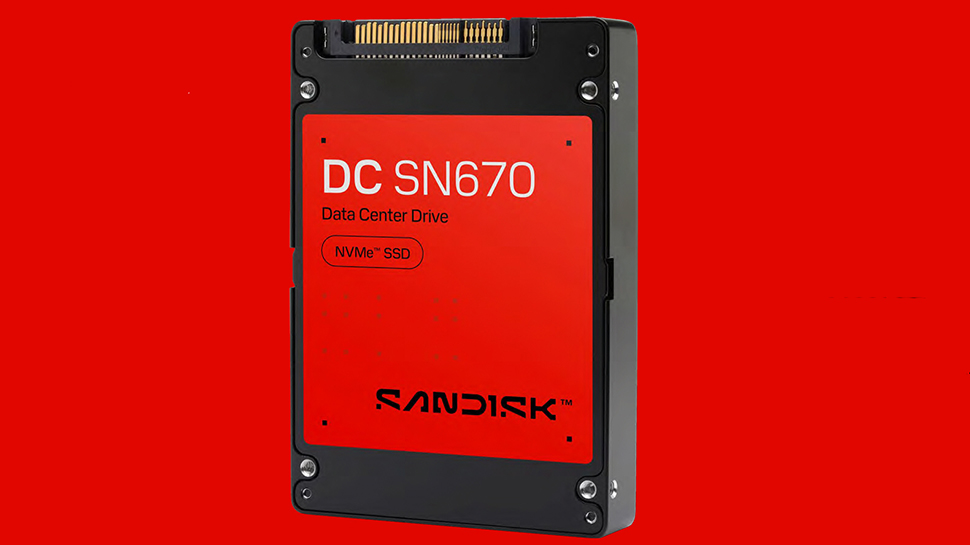
Rank 15751SanDisk plans 256TB and 512TB SSDs using new Stargate controllerStargate will debut in enterprise drives launching in late 2025 Company revenue down after WD split but roadmap remains highly ambitious
SanDisk, now operating independently as an SSD and NAND flash manufacturer following its split from Western Digital last year, has teased a new SSD controller called “Stargate,” designed to support extremely high-capacity enterprise drives.Stargate, which confusingly shares its name with OpenAI’s Stargate project but obviously has nothing whatsoever to do with it, is part of SanDisk’s “Ultra QLC” platform, which aims to scale SSD capacities in the coming years.During its earnings call, SanDisk CEO David Goeckeler said: “We have a new architecture coming out in the next couple of quarters that we call Stargate, new ASIC, clean sheet design, and then with BiCS 8 QLC… we just think that’s going to be a dynamite project.”
1PB SSD incoming
Goeckeler didn’t share further technical details, but Stargate is expected to debut in enterprise drives such as the DC SN670 series.That line is scheduled for release in the third quarter of 2025 with 64TB and 128TB capacities, BiCS8 QLC (2Tbit/256GB per die), and PCIe 5.0 support.Future versions may include PCIe 6.0 as capacity targets rise. SanDisk’s roadmap shows 256TB for 2026, followed by 512TB in 2027, with a 1PB target further out. Stargate is likely to play a central role in enabling those jumps.The third quarter of SanDisk’s 2025 fiscal year was also its first as a standalone company. It reported $1.695 billion in revenue, a 10 percent decline from the prior quarter, and a $1.881 billion net loss, largely due to a $1.83 billion goodwill impairment.SanDisk’s strongest segment was client SSDs, bringing in $927 million, followed by $571 million from consumer products and $197 million from the cloud division.Source: ComputerBase.de
(Image credit: Sandisk)
You might also like
These are the fastest SSDs you can buy right nowAnd these are the largest HDDs and SSDs on the market at the momentSandisk takes over SSD, memory cards and USB drives from Western Digital
-
Picture from cdn.mos.cms.futurecdn.net
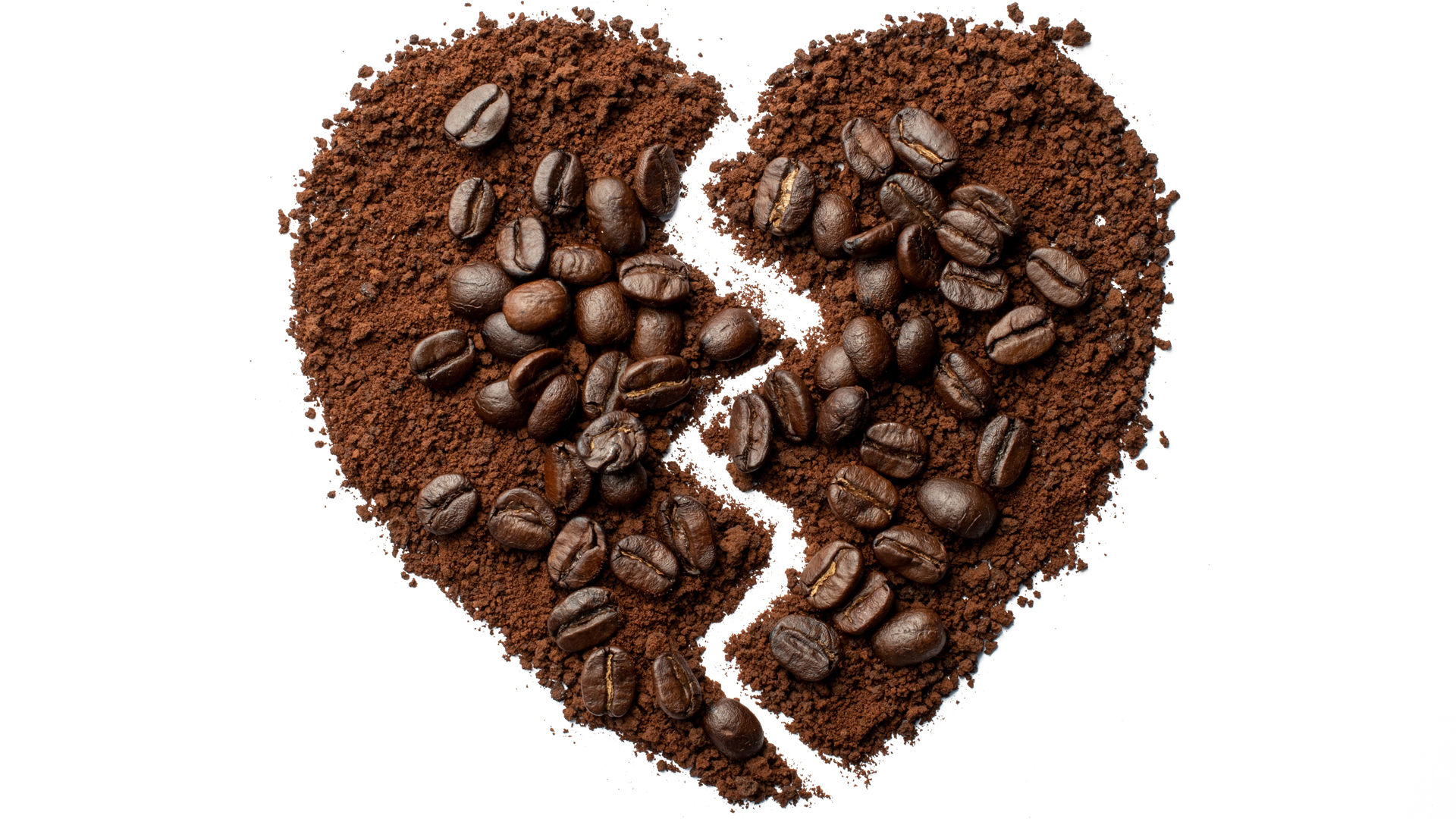
Rank 15752A Greek couple thought it would be fun to use ChatGPT as a fortune-teller and have it "read" coffee grounds in their cupsChatGPT claimed the husband was cheating with someone whose name starts with EThe wife is now filing for divorce over the AI tasseography response
A woman in Greece is divorcing her husband after ChatGPT played fortune teller and claimed her husband was cheating on her. According to a Greek City Times report, the couple asked the AI chatbot to look at a photo of the grounds left behind in her husband's cup of Greek coffee and practice tasseography, the ancient art of divining present secrets or future fates based on patterns left behind in tea leaves or coffee.After looking at the residue at the bottom of their cups, ChatGPT had some shockingly specific things to say. According to the report, the AI claimed to see that the husband was secretly fantasizing about a woman whose name started with an “E” and was fated to begin an affair with her. In case that wasn't enough, ChatGPT's response to the woman’s own cup was to claim that the affair had already started.Some people take fortune-telling seriously, but usually only from humans practicing divination. But what the husband saw as a quirky, funny moment, his wife saw as a serious and accurate description of reality. She told her husband to leave, announced to her children that she was ending her marriage, and served him with legal papers three days later.
Oracular AI
As a legal matter, it's hard to say how a judge will view this. There's no real precedent for citing a “robot oracle” as evidence of infidelity in a court of law anywhere (though there is one about declaring a house is haunted before you sell it in New York State). But what’s fascinating isn’t the legalities so much as what it says about culture.Tasseography isn’t some novelty party trick; it's thousands of years old and practiced across coffee and tea-drinking cultures from Turkey to China and beyond. The idea that symbols and swirls in a cup could reveal your fate is a perfect example of how people see stories in randomness, whether a constellation or coffee residue.That some people want to outsource mystic rituals to AI feels almost predetermined. This reported Greek marital strife is arguably a good reason not to do so, or at least not to call it wisdom. And it's not like ChatGPT actually knows how to read coffee grounds. It wasn’t trained on tasseography. What it can do is make educated guesses based on the patterns it sees in an image and what people have said about similar shapes or symbols on the internet. In other words, making stuff up in a convincing tone, just like a human would.It turns out that a convincing tone is all it takes for some people. And it's not like this is the first instance. Tarot card reading with ChatGPT was an early demonstration of how flexible the AI could be in its activities. The same goes for making astrology charts and palm reading. But if you stop treating it like entertainment and like a real psychic answer, it can cause real emotional damage.Then again, if your spouse is willing to believe an AI chatbot claiming psychic powers over your own contradictions, the issue might not be about the technology. So go ahead and ask ChatGPT to read your coffee grounds if you want a laugh. But maybe don't act like you're in a mashup of Black Mirror meets My Big Fat Greek Wedding and run out the door. Sometimes, your coffee is just coffee. And the swirl at the bottom of the cup is not the ghost of a digital Cassandra.
You might also like
ChatGPT crosses a new AI threshold by beating the Turing testAI took a huge leap in IQ, and now a quarter of Gen Z thinks AI is consciousChatGPT model matchup - I pitted OpenAI's o3, o4-mini, GPT-4o, and GPT-4.5 AI models against each other and the results surprised me
-

Picture from ichef.bbci.co.uk
Rank 15753 -

Picture from ichef.bbci.co.uk
Rank 15754 -

Picture from techcrunch.com
Rank 15755 -

Picture from ichef.bbci.co.uk
Rank 15756 -
Picture from techcrunch.com
Rank 15757 -

Picture from ichef.bbci.co.uk
Rank 15758 -

Picture from ichef.bbci.co.uk
Rank 15759 -

Picture from ichef.bbci.co.uk
Rank 15760 -
Picture from ichef.bbci.co.uk
Rank 15761 -

Picture from ichef.bbci.co.uk
Rank 15762 -

Picture from techcrunch.com
Rank 15763 -
Picture from o.aolcdn.com
Rank 15764Last month, Meta hosted LlamaCon, its first ever generative AI conference. But while the event delivered some notable improvements for developers, it also felt a bit underwhelming considering how important AI is to the company. Now, we know a bit more about why, thanks to a new report in The Wall Street Journal.
According to the report, Meta had originally intended to release its "Behemoth" Llama 4 model at the April developer event, but later delayed its release to June. Now, it's apparently been pushed back again, potentially until "fall or later." Meta engineers are reportedly "struggling to significantly improve the capabilities" of the model that Mark Zuckerberg has called “the highest performing base model in the world.”
Meta has already released two smaller Llama 4 models, Scout and Maverick, and has also teased a fourth lightweight model that's apparently nicknamed "Little Llama." Meanwhile, the "Behemoth" model will have 288 billion active parameters and "outperforms GPT-4.5, Claude Sonnet 3.7, and Gemini 2.0 Pro on several STEM benchmarks," the company said last month.
Meta has never given a firm timeline of when to expect the model. The company said last month that it was "still training." And while Behemoth got a few nods during the LlamaCon keynote, there were no updates on when it might actually be ready. That's probably because it could still be several months. Inside Meta there are apparently questions "about whether improvements over prior versions are significant enough to justify public release."
Meta didn't immediately respond to a request for comment. As the report notes, it wouldn't be the first company to run into snags as it races to release new models and outpace competitors. But the delay is still notable given the Meta's lofty ambitions when it comes to AI. Zuckerberg has made AI a top priority with Meta planning to spend as much as $72 billion on its AI infrastructure this year.This article originally appeared on Engadget at https://www.engadget.com/ai/metas-behemoth-llama-4-model-might-still-be-months-away-221240585.html?src=rss
-

Picture from ichef.bbci.co.uk
Rank 15765 -

Picture from ichef.bbci.co.uk
Rank 15766 -

Picture from ichef.bbci.co.uk
Rank 15767 -

Picture from ichef.bbci.co.uk
Rank 15768 -

Picture from ichef.bbci.co.uk
Rank 15769 -

Picture from ichef.bbci.co.uk
Rank 15770 -

Picture from ichef.bbci.co.uk
Rank 15771 -

Picture from techcrunch.com
Rank 15772 -

Picture from ichef.bbci.co.uk
Rank 15773 -
Picture from o.aolcdn.com
Rank 15774TikTok recently began experimenting with an in-app meditation feature that encouraged teens to "wind down" after 10PM. Now, the company is making the feature official for all users and turning it on by default for all teens under the age of 18.
With the change, teens will hit a full-screen "guided meditation exercise" when attempting to scroll after 10PM. The prompt is apparently something you can opt to ignore, but teens who do will encounter a second "harder to dismiss" prompt. TikTok's adult users will also be able to access the in-app meditations via the app's screen time controls (the feature will not be on by default for adults).
The company notes that its initial tests of "Sleep Hours" were successful, with 98 percent of teens opting to keep the late-night meditation settings on. Previous attempts by TikTok to limit screen time have a somewhat different track record. Documents that surfaced as part of a lawsuit against the company showed that teens were spending about 107 minutes a day in the app even when screen time was set to a 60-minute limit.
Since then, TikTok has beefed up some of its safety features, including its parental controls, amid increasing scrutiny of the company. TikTok's fate in the US is still, officially, in limbo as President Donald Trump signed off on another extension of a deadline to ban the app last month. Terms of a final deal that will allow it to remain in the country permanently have yet to be announced, though there are a number of interested buyers.This article originally appeared on Engadget at https://www.engadget.com/social-media/tiktok-will-try-to-force-teens-to-meditate-after-10pm-231118942.html?src=rss
-
Picture from ichef.bbci.co.uk
Rank 15775 -

Picture from ichef.bbci.co.uk
Rank 15776 -

Picture from ichef.bbci.co.uk
Rank 15777 -
Picture from ichef.bbci.co.uk
Rank 15778 -

Picture from ichef.bbci.co.uk
Rank 15779 -
Picture from ichef.bbci.co.uk
Rank 15780 -
Picture from ichef.bbci.co.uk
Rank 15781 -

Picture from ichef.bbci.co.uk
Rank 15782 -

Picture from ichef.bbci.co.uk
Rank 15783 -

Picture from ichef.bbci.co.uk
Rank 15784 -

Picture from ichef.bbci.co.uk
Rank 15785 -

Picture from ichef.bbci.co.uk
Rank 15786 -
Picture from ichef.bbci.co.uk
Rank 15787 -
Picture from techcrunch.com
Rank 15788 -
Picture from ichef.bbci.co.uk
Rank 15789 -
Picture from ichef.bbci.co.uk
Rank 15790 -
Picture from ichef.bbci.co.uk
Rank 15791 -
Picture from ichef.bbci.co.uk
Rank 15792 -

Picture from ichef.bbci.co.uk
Rank 15793 -

Picture from ichef.bbci.co.uk
Rank 15794 -

Picture from ichef.bbci.co.uk
Rank 15795 -

Picture from ichef.bbci.co.uk
Rank 15796 -
Picture from ichef.bbci.co.uk
Rank 15797 -
Picture from ichef.bbci.co.uk
Rank 15798 -
Picture from ichef.bbci.co.uk
Rank 15799 -

Picture from ichef.bbci.co.uk
Rank 15800

