News
This constantly updated list features the latest and most important news articles, ranked in order of significance. The top stories highlight major developments, breaking news, and critical updates across various topics, ensuring you stay informed about the most pressing issues. As new articles are added, the list adapts to reflect the latest priorities, keeping the most impactful stories at the forefront. Whether it’s global events, technology breakthroughs, or industry trends, this dynamic list ensures you always have access to the most relevant and timely information.
-

Picture from ichef.bbci.co.uk
Rank 15001 -

Picture from ichef.bbci.co.uk
Rank 15002 -

Picture from ichef.bbci.co.uk
Rank 15003 -

Picture from ichef.bbci.co.uk
Rank 15004 -

Picture from ichef.bbci.co.uk
Rank 15005 -

Picture from ichef.bbci.co.uk
Rank 15006 -

Picture from techcrunch.com
Rank 15007 -

Picture from ichef.bbci.co.uk
Rank 15008 -

Picture from ichef.bbci.co.uk
Rank 15009 -

Picture from cdn.mos.cms.futurecdn.net
Rank 15010Friendships are a vital part of most people's lives. They can be complicated and messy, but a good friendship is worth it, since, as Aristotle said, "without friends no one would choose to live, though he had all other goods."Mark Zuckerberg has a potential solution for those seeking to build new friendships: building new friends using AI. That’s only a slight rewording of the viewpoint the Meta CEO is famous for, among other things, popularizing the term "friending" as a verb. With caveats about the ways human friendships offer things no AI currently can, Zuckerberg explained on a podcast hosted by Dwarkesh Patel that people like to engage with AI chatbots like Meta AI about their personal lives.And since most Americans have far fewer friends than they'd like, there's space for AI as an alternative. "As the personalization loop kicks in and the AI starts to get to know you better and better, that will just be really compelling," Zuckerberg said.But compelling conversation doesn't mean real friendship. AI isn’t your friend. It can’t be. And the more we try to make it one, the more we end up misunderstanding both AI and actual friendship. AI is a tool. An amazing, occasionally dazzling, often frustrating tool, but a tool no different than your text message autocomplete or your handy Swiss Army knife. It's designed to assist you and make your life easier.It’s not a being. It has no inner monologue. It’s all surface and syntax. A robotic parrot that reads the internet instead of mimicking your catchphrases. Mimicry and scripted empathy are not real connections. They're just performance without sentience.Real friendship is not just about someone helping you all the time, selflessly, without ever asking for something in return. If you text your friend and they respond based on a probability matrix, they're not really being your friend. While I love a clean UI as much as the next person, I don’t confuse it with love.At best, an AI friend is a pet. But not even a warm, wiggly dog or a judgmental cat. More like a beta fish or a Tamagotchi. A reactive presence you can project feelings onto. It’s always there, sure. But it doesn’t care about you. And deep down, you know it.
AI Therapy
Meanwhile, on another podcast with Ben Thompson, Zuckerberg suggested that even if you don’t have a human therapist, you should at least have an AI. Therapy is expensive, and there’s a mental health crisis with more demand than supply. If an AI chatbot can step in and offer comfort to someone who’s struggling, it's hard to argue that's a bad thing. And it's not a bad idea in isolation, but the details can be tricky.While some chatbot-based wellness apps have shown promise, they’re only necessary because of the enormous resource gap in providing mental health services. After all, a trained therapist does more than rely on your words or big, obvious emotional tone. They pick up on the unsaid. They recognize when a smile hides your spiral. They make judgment calls that algorithms can’t.Most importantly, they’re bound by ethics in a way no program can match. They’re licensed. No matter how stringent an AI's rules are now, all it takes is a change in programming for them to upload your emotional baggage to a server farm. That's before mentioning the irony of a social media company wanting to offer mental health services when their products are often linked to worsening teen mental health and a digital addiction that can isolate people from actual friends.I talk to AI tools every day. I think AI can be very useful. I think my automatic coffeemaker can be very useful too, even if I'm more likely to be yelling at it to go faster than to bare my soul to it. And AI can support therapists, enhance education, and offer customer service at 3 a.m. without the usual hold music. But it’s not a surrogate for human connection.We're not at a point where I fear everyone will retreat from messy, inconvenient, flawed human relationships and opt for the sanitized, low-stakes comfort of a chatbot who always agrees with us. But that doesn't mean it's something to look forward to. You can't scale friendship, and you shouldn't encourage people to choose software over doing the work of real friendship. An AI will treat you just like it treats everyone, and, as Aristotle also said, "A friend to all is a friend to none."
You might also like...
SocialAI makes you the most important – and only – person on social mediaMeta wants to fill your social media feeds with bots – here's why I think it's wrongI tried the new Meta AI app and it's like ChatGPT for people who like to overshare
-

Picture from ichef.bbci.co.uk
Rank 15011 -

Picture from ichef.bbci.co.uk
Rank 15012 -

Picture from ichef.bbci.co.uk
Rank 15013 -

Picture from ichef.bbci.co.uk
Rank 15014 -

Picture from ichef.bbci.co.uk
Rank 15015 -

Picture from ichef.bbci.co.uk
Rank 15016 -

Picture from ichef.bbci.co.uk
Rank 15017 -

Picture from ichef.bbci.co.uk
Rank 15018 -

Picture from ichef.bbci.co.uk
Rank 15019 -

Picture from ichef.bbci.co.uk
Rank 15020 -

Picture from ichef.bbci.co.uk
Rank 15021 -

Picture from ichef.bbci.co.uk
Rank 15022 -

Picture from ichef.bbci.co.uk
Rank 15023 -

Picture from ichef.bbci.co.uk
Rank 15024 -

Picture from ichef.bbci.co.uk
Rank 15025 -

Picture from ichef.bbci.co.uk
Rank 15026 -

Picture from ichef.bbci.co.uk
Rank 15027 -

Picture from cdn.mos.cms.futurecdn.net
Rank 15028As industries continue to evolve in an increasingly digital world, the convergence of Information Technologies (IT) and Operational Technologies (OT) is becoming a key driver of innovation and efficiency. The concept of IT/OT convergence has long been recognized, but for many companies, it has remained more of a vision than a reality, with many companies facing obstacles in realizing its potential.Several challenges have contributed to this state of untapped potential over the years. These have included a need for clarity in who has responsibility for the separate systems, a lack of the necessary skills to make projects a success, and struggles to secure the investment needed to power IT/OT transformation. However, a shift is underway.New research commissioned by us, and conducted by Omdia has found that IT/OT convergence is accelerating across manufacturers. According to the study, 70% of OT systems will be connected to IT networks next year, up from 50% today, with 86% of manufacturers expecting business benefits from IT/OT convergence.
What are the drivers?
This is a significant leap forward, and at the forefront is Industry 4.0. Nearly half (47%) of respondents highlighted it as one of the top three factors accelerating IT/OT convergence in the past two years. Business benefits manufacturers are targeting from Industry 4.0 include innovation (39%), reliability (38%) and profitability (34%).Industry 4.0 too has been discussed for a number of years, yet many projects fail to get off the ground: the World Economic Forum found that more than 70% of companies investing in Industry 4.0 technologies fail to move beyond the pilot phase of development.That could well be changing. Industry 4.0 needs critical enabling technologies such as cloud services, Industrial Internet of Things (IIoT), security platforms, and edge computing to work. These are now well embedded into enterprise IT stacks; this maturity and the attendant knowledge companies acquire increase the chances of successfully delivering complex projects.After Industry 4.0, cybersecurity maturity (38%) and increasing resilience and availability (34%) were the next most important drivers. Four-fifths of manufacturing firms experienced a significant increase in overall security incidents or breaches last year, with attacks that targeted IT and impacted OT or operations more likely than vice versa.What the results highlight is that an increase in digitalization brings with it an increase in cyber risks. Manufacturers need to digitally transform, and they know that requires IT/OT convergence, but they also need to reduce the risks of successful, disruptive attacks.
The use cases catching the eye in IT/OT
Interestingly, many manufacturers see IT/OT not just as a security concern but as a way of improving security. Nearly half (49%) of respondents ranked improved cyber and physical security as a top three use case for IT/OT in manufacturing, along with data sharing for deeper analytics (44%) and better integration of supply chain with manufacturing (36%).How does IT/OT help improve security, if it’s also a potential source of threats? In many instances, it provides an opportunity to adopt a strategic security posture; rather than simply connecting bits of IT and OT, security can be integrated as part of a full process of IT/OT transformation.It’s unsurprising to see data sharing for deeper analytics as a key use case; after all, one of the initial drivers of the IT/OT convergence movement was the realization that OT could be generating data that has wider business implications. Connecting the two types of technology is a way of getting data out of silos and into analytics that can turn it into actionable insights.For example, sharing the energy consumption data of a specific type of machinery could provide the sort of granularity that helps a procurement team negotiate more relevant energy contracts, rather than receiving an overall figure from the operations department.Plus, there’s the holy grail of efficiency: connecting manufacturing with supply chains. Continued disruption, whether political, economic, weather, or health, makes it increasingly hard to operate both resilient and lean supply chains. Problems affecting key transportation points, such as the Suez and Panama Canals, can blow holes in ‘Just In Time’ strategies, while ‘Just In Case’ approaches require stockpiling, which can be expensive.Better integration between manufacturing and supply chains allows faster, more accurate decision-making; if a supply chain is suffering from disruption, a business can adjust manufacturing accordingly and attempt to mitigate any impact.
Steps to develop a sustainable and secure IT/OT strategy
To start off, manufacturers looking at accelerating their convergence efforts should consider the following:1. Planning for integration: IT/OT convergence is not simply a case of adding a network to a factory and connecting it to corporate systems; it needs a strategic business plan that aligns objectives with intended actions.2. Embedding security: a successful project will necessarily expand the attack surface, so security needs to be embedded throughout IT/OT transitions, not added as an afterthought.3. Invest in capabilities: Like any transformation project, IT/OT convergence needs the right teams, the right tools, and the appropriate level of resources.4. Define accountability: One of the stumbling blocks historically has been a lack of accountability and who is responsible for what. Decide where IT’s remit ends and OT’s remit begins, with any necessary overlap managed.5. Establish standards: IT and OT are guided by different governance, risk, and compliance requirements. Establish the standards expected and deploy continual assessments to ensure they are met.The future of manufacturing belongs to those who master secure, strategic IT/OT convergence. It’s not just a technical upgrade—it’s a competitive imperative that will define who leads, and who gets left behind.
We've compiled a list of the best Enterprise Resource Planning (ERP) software.
This article was produced as part of TechRadarPro's Expert Insights channel where we feature the best and brightest minds in the technology industry today. The views expressed here are those of the author and are not necessarily those of TechRadarPro or Future plc. If you are interested in contributing find out more here: https://www.techradar.com/news/submit-your-story-to-techradar-pro
-
Picture from o.aolcdn.com
Rank 15029Computing power is reaching dizzying new heights, but if your laptop doesn’t have all the ports you need to wield that power, you may want to consider a docking station. These are a little different from USB-C hubs, which tend to be smaller and don’t require power. Docking stations typically offer between seven and 12 ports, require a DC power supply and cost between $100 and $400. They allow you to connect monitors, cameras, mics, wired mice and keyboards, storage devices and more — all through a single USB-C port on your laptop. We tested more than a dozen highly regarded models to help you pick the best docking station for your needs. This guide also breaks down the various cable standards and port types to help you make an informed purchase..
Table of contents
Best docking stations
What to look for in a docking station
How we tested docking stations
Other laptop docking stations we tested
Docking station FAQs
Best docking stations
Back to top
Back to top
Back to top
Back to top
What to look for in a docking station
First and foremost, consider what you need to plug in. This will likely be the deciding factor when you go to actually buy a docking station. Do you need three screens for an expanded work view? A quick way to upload photos from an SD card? Are you looking to plug in a webcam, mic and streaming light, while simultaneously taking advantage of faster Ethernet connections? Are you hooking up a gaming laptop to multiple displays and peripherals? Once you’ve settled on the type of ports you need, you may also want to consider the generation of those ports as well; even ports with the same shape can have different capabilities. Here’s a brief overview of the connectivity different docking stations offer.
Monitor ports
External monitors typically need one of three ports to connect to a PC: HDMI, DisplayPort or USB-C. HDMI connections are more common than DisplayPort and the cables and devices that use them are sometimes more affordable. The most popular version of the DisplayPort interface (v1.4) can handle higher resolutions and refresh rates than the most common HDMI version (2.0). All of the display docking stations with HDMI ports that we recommend here use version 2.0, which can handle 4K resolution at 60Hz or 1080p up to 240Hz. The DisplayPort-enabled docks support either version 1.2, which allows for 4K resolution at 60Hz, or version 1.4, which can handle 8K at 60Hz or 4K at 120Hz.
You can also use your dock’s downstream (non-host) Thunderbolt ports to hook up your monitors. If your external display has a USB-C socket, you can connect directly. If you have an HDMI display or DisplayPort-only monitor, you can use an adapter or a conversion cable.
Of course, the number of monitors you can connect and the resolutions/rates they’ll achieve depend on both your computer’s GPU and your monitors — and the more monitors you plug in can bring down those numbers as well. Be sure to also use cables that support the bandwidth you’re hoping for. MacOS users should keep in mind that MacBooks with the standard M1 or M2 chips support just one external monitor natively and require DisplayLink hardware and software to support two external displays. MacBook Pros with M1 Pro, M2 Pro or M2 Max chips can run multiple monitors from a single port, as can MacBook Air and Pro models with M3 or M4 chips.
USB ports
Most docking stations offer a few USB Type-A ports, which are great for peripherals like wired mice and keyboards, bus-powered ring lights and flash drives. For faster data transfer speeds to your flash drive, go for USB-A sockets labeled 3.1 or 3.2 — or better yet, use a USB-C Thunderbolt port.
Type-C USB ports come in many different flavors. While they’re all the same shape, different standards and terms mean different abilities. A USB-C port (or cable) that meets the 3.2 gen 2 specification can handle data at 10Gbps, which can support 4K video at 60 fps. If it’s also a PD (power delivery) port, it can, well, deliver power too. Thunderbolt is Intel’s implementation of the USB4 standard and the Thunderbolt 3, 4 and, since 2023, Thunderbolt 5 protocols all support power (from 15W to 140W), video (up to 8K on multiple screens) and data (from 16Gbps to 120Gbps). Since a similarly shaped port can vary widely on what it can do, it’s worth figuring out what you need those ports to do when you’re assessing your needs — all USB4 ports are USB-C, but not all USB-C ports support USB4. (Don’t worry, it confuses us, too.)
Another thing to keep in mind is that achieving the fastest speeds will depend on factors like the cables you use — a $4 USB-C charging cable won’t transmit data at Thunderbolt speeds, no matter what port you plug it into. The devices on either end of the dock must support those speeds as well.
Nearly every dock available today is a USB-C docking station, connecting to a computer via USB-C, often Thunderbolt, and those host ports are nearly always labeled with a laptop icon. Host ports also allow power delivery to your laptop: available wattage varies, but most docks are rated between 85 and 140 watts. That should be enough to keep most computers powered — it also means you won’t have to take up an extra laptop connector for charging.
Other ports
None of our currently recommended laptops include an Ethernet jack; a docking station can help get that connection back. Whether you need a wired internet connection is dependent on a few factors. Wi-Fi 6 connections can deliver theoretical data rates of 9Gbps, but in practice those numbers are between 800 and 1200Mbps. The Ethernet ports on some routers and gateways top out at 1Gbps, so your Wi-Fi connection could actually be faster. It might be worth testing your speeds and checking your router’s specs to see whether Ethernet is better for your needs.
Just two of our favorite laptops have SD card readers, and if you need a quick way to upload files from cameras or audio recorders, you may want to get a dock with one of those slots. Of the docks we tested, about half had SD readers. For now, most (but not all) laptops still include a 3.5mm audio jack, but if you prefer wired headphones and want a more accessible place to plug them in, many docking stations will provide.
When you’re counting up the ports for your new dock, remember that most companies include the host port (the one that connects to your computer) in the total number. So if you’re looking for a dock with three Thunderbolt connections, be sure to check whether one of them will be used to plug in your laptop.
Design
Most docking stations have either a lay-flat or upright design. Most docks put the more “permanent” connections in back — such as Ethernet, DC power, monitor connections and a few USBs. Up-front USB ports can be used for flash drive transfers, or even acting as a charger for your phone (just make sure the port can deliver the power you need). USBs in the rear are best for keyboards, mice, webcams and other things you’re likely to always use. Some docks position the host port up front, which might make it easier to plug in your laptop when you return to your desk, but a host port in back may look neater overall.
Back to top
How we tested docking stations
We started out by looking at online reviews, spec sheets from various brands and docking stations that our fellow tech sites have covered. We considered brands we’ve tested before and have liked, and weeded out anything that didn’t have what we consider a modern suite of connections (such as a dock with no downstream USB-C ports). We narrowed it down to 12 contenders and I tested each dock in a home office, using an M1 MacBook Pro, a Dell XPS 13 Plus and an Acer Chromebook Spin 514.
I plugged in and evaluated the quality of the connections for 12 different peripherals including a 4K and an HD monitor, a 4K and an HD webcam, plus USB devices like a mouse, keyboard, streaming light and mic. I plugged in wired earbuds, and transferred data to a USB-C flash drive and an external SSD. I ran basic speed tests on the Ethernet connections as well as the file transfers. I judged how easy the docks were to use as well as the various design factors I described earlier. I made spreadsheets and had enough wires snaking around my work area that my cat stayed off my desk for three weeks (a new record).
As new docking stations come out and we find models worthy of testing, (there are a couple from Ugreen we have our eye on), we'll update this guide accordingly.
Back to top
Other laptop docking stations we tested
Plugable USB4 and Thunderbolt 4 Hub
I was hoping the Plugable USB4 and Thunderbolt 4 Hub would make a good budget pick. Its small size makes it seem more like a hub than a dock, but it requires power from the included DC adapter, so I tested it as a dock. I liked how little space it took up, but it was almost too small — it was too lightweight to lay flat on my desk when all the cables were plugged in. It has just three Thunderbolt 4 ports. That’s not a ton, but TB4 ports are certainly versatile, handling monitors and other higher-specced peripherals. It’s only $100 (Plugable even includes an HDMI to USB-C adapter) which is a pretty great price for multiple Thunderbolt connections. I experienced some display lags in my tests, so I hesitate to give it a full recommendation.
Plugable TBT4-UDZ
When I pulled the Plugable TBT4-UDZ Thunderbolt 4 out of the box, I was convinced it would make the cut: It has a practical upright design, an attractive metal finish, and the host connection is TB4. While there are plenty of USB-A and monitor ports, there’s just one downstream USB-C. A modern dock, particularly one that costs $300, should let you run, say, a USB-C cam and mic at the same time. Otherwise, it’s pretty limiting.
Anker 575 USB-C
At $250 (and more often $235), the Anker 575 USB-C could make for a good budget pick for Windows. It performed well with the Dell XPS 13 Plus, but had trouble with the third screen, the 4K webcam and headphone jack when connected to the MacBook Pro. It’s quite compact, which means it can get wobbly when a bunch of cables are plugged in, but it has a good selection of ports and was able to handle my basic setup well.
Belkin Connect Pro Thunderbolt 4
Belkin’s Connect Pro Thunderbolt 4 Dock is a contender for a Thunderbolt 4 alternative. It has nearly the same ports as the AD2010 (minus the microSD slot) and an attractive rounded design — but it’s $90 more, so I’d only recommend getting it if you find it on sale.
Acer USB Type-C Dock
Acer’s USB Type-C Dock D501 costs $10 more than our Kensington pick for Chromebooks, but it performs similarly and is worth a mention. It has nearly the same ports (including the rather limiting single downstream USB-C) but both the Ethernet and data transfer speeds were faster.
Back to top
Docking station FAQs
Are docking stations worth it?
Docking stations are worth it if you have more accessories to plug in than your laptop permits. Say you have a USB-C camera and mic, plus a USB-A mouse, keyboard and streaming light; very few modern laptops have enough connections to support all of that at once. A docking station can make that setup feasible while also giving you extra ports like a gigabit Ethernet connection, and supplying power to your laptop. However, if you just need a few extra USB sockets, you might be better off going with a hub, as those tend to be cheaper.
How much does a laptop dock cost?
Laptop docking stations tend to be bigger and more expensive than simple USB-A or USB-C hubs, thanks to the wider array of connections. You can find them as low as $50 and they can get as expensive as $450. A reasonable price for a dock with a good selection of ports from a reputable brand will average around $200.
How do I set up my laptop dock?
Most docking stations are plug and play. First, connect the DC power cable to the dock and a wall outlet. Then look for the “host” or upstream port on the dock — it’s almost always a USB-C/Thunderbolt port and often branded with an icon of a laptop. Use the provided cable to connect to your computer. After that, you can connect your peripherals to the dock and they should be ready to use with your laptop. A few docking stations, particularly those that handle more complex monitor setups, require a driver. The instructions that come with your dock will point you to a website where you can download that companion software.
Does a laptop charge on a docking station?
Nearly all docking stations allow you to charge your laptop through the host connection (the cable running from the dock to your computer). That capability, plus the higher number of ports is what separates a docking station from a hub. Docks can pass on between 65W and 100W of power to laptops, and nearly all include a DC adapter.
Are all docking stations compatible with all laptops?
No, not all docking stations are compatible with every laptop. In our tests, the Chromebook had the biggest compatibility issues, the Dell PC had the least, and the MacBook fell somewhere in between. All docks will list which brands and models they work with on the online product page — be sure to also check the generation of your laptop as some docks can’t support certain chips.
What are some popular docking station brands?
Kensington, Anker, Pluggable and Belkin are reputable and well-known brands making docking stations for all laptops. Lenovo, Dell and HP all make docks that will work with their own computers as well as other brands.This article originally appeared on Engadget at https://www.engadget.com/computing/accessories/best-docking-station-160041863.html?src=rss
-

Picture from ichef.bbci.co.uk
Rank 15030 -

Picture from techcrunch.com
Rank 15031 -

Picture from ichef.bbci.co.uk
Rank 15032 -

Picture from ichef.bbci.co.uk
Rank 15033 -

Picture from ichef.bbci.co.uk
Rank 15034 -

Picture from ichef.bbci.co.uk
Rank 15035 -

Picture from ichef.bbci.co.uk
Rank 15036 -

Picture from ichef.bbci.co.uk
Rank 15037 -

Picture from ichef.bbci.co.uk
Rank 15038 -

Picture from ichef.bbci.co.uk
Rank 15039 -

Picture from ichef.bbci.co.uk
Rank 15040 -

Picture from cdn.mos.cms.futurecdn.net
Rank 15041AI adoption has soared 107% since 2022, with 58% of employees now using AI tools in their daily work, according to ActivTrak's 2025 State of the Workplace report. Yet, many organizations struggle to move beyond personal productivity improvements to achieve meaningful enterprise-wide gains. The question isn't whether your team should use AI — it's how to implement it strategically for maximum impact.
The AI Adoption Paradox
According to ActivTrak's 2025 State of the Workplace report, the average workday is now 36 mins (7%) shorter but 2% more productive compared to previous years. Employees are ending their workday at 4:39 p.m. rather than 5:21 p.m. two years ago, while maintaining higher efficiency.What's revealing is the AI usage pattern: 58% of employees now use AI tools, a 107% increase in adoption. Surprisingly, AI users aren't working less — they actually show longer workdays (+8 mins) and more collaboration time (+17 mins), but significantly reduced focus time (-27 mins). This suggests AI is changing work patterns rather than simply reducing workloads.While 70% of employees maintain healthy work patterns (the highest level in three years), many organizations lack a structured approach that balances people, processes and technology when implementing AI tools.
Moving Beyond Personal Productivity
Most teams get stuck at basic implementation levels. They use AI for individual tasks like document creation or research but miss opportunities for deeper transformation.To maximize AI's impact, organizations should target four progressive levels:Individual Efficiency: completing routine tasks like document creation and editing,New Capabilities: enabling previously impossible tasks like personalized content at scale,Workflow Automation: streamlining connected processes with integrated AI tools,Cross-Functional Transformation: breaking down departmental silos to improve collaboration.The real productivity gains happen at levels 3 and 4, but most teams never get past level 1.
The People-Process-Technology Framework
Successful AI implementation requires alignment across three dimensions:PeopleTraining isn't enough. Identify skilled early adopters to coach others and focus on targeted use cases rather than unstructured exploration. Break down resistance by showing immediate value in existing workflows.A product marketing team might start with AI for competitive analysis — a task everyone understands that delivers clear value.ProcessToo many organizations focus on the AI tools themselves without redesigning the processes around them. Break complex AI workflows into simple steps with clear instructions.For example, instead of asking AI to "write an email about our security incident," provide context from internal communications, outline key points to include, and specify the tone and urgency level.TechnologySelect tools that integrate with existing systems and provide appropriate guardrails. Different AI models are suited to different tasks — one size doesn’t fit all.Smart teams organize their data up front ensuring proper structure, security and alignment with the right tools.
Measuring Real Impact
The productivity gains from effective AI implementation are measurable and significant. For a 1,000-employee company, just 8 extra mins of productive time per person each day adds up to 133 hrs daily. That equals 33,333 hrs across a standard 250-day work year — or 16 full-time employees. At an average salary of $60,000, this represents nearly $1 million in added workforce capacity annually.When measuring AI's impact, connect team-level improvements to tangible business outcomes:Reduction in project completion time: faster time-to-market and increased revenue opportunities,Increased output quality: higher customer satisfaction scores and reduced rework costs,Improved team collaboration: better sales win rates and cross-functional innovation,Enhanced decision-making speed: reduced support costs and improved resource allocation.Organizations implementing AI effectively report concrete benefits like 40% faster development cycles, 25-30% reduction in customer support tickets, 15-20% higher sales conversion rates and significant improvements in employee retention due to more engaging work.
Practical Implementation Steps
Start small but think big. Here's how product teams can implement AI effectively:Identify high-value use cases first: Focus on repetitive, time-consuming tasks like competitive analysis, customer feedback processing or content creation.Provide clear guidance: Don't just tell teams to "use AI" — show them exactly how with role-specific examples and templates.Establish verification processes: AI makes mistakes. Build quality checks into your workflows, especially for customer-facing content.Create feedback loops: Document what works and what doesn't. Then share those learnings across teams.Set realistic expectations: AI won't replace human creativity or judgment, but it can handle routine tasks so your team can focus on higher-value work.
The Future of Work
Organizations that thoughtfully integrate AI into their workflows will gain significant competitive advantages. McKinsey research sizes the long-term AI opportunity at $4.4 trillion in added productivity growth potential from corporate use cases.Achieving this potential requires moving beyond viewing AI as just another productivity tool. The real transformation happens when teams redesign their processes around AI capabilities and use them to break down organizational silos.The companies that thrive won't be those with the most advanced AI tools — they'll be the ones that implement them most effectively.
We've rated the best talent management software.
This article was produced as part of TechRadarPro's Expert Insights channel where we feature the best and brightest minds in the technology industry today. The views expressed here are those of the author and are not necessarily those of TechRadarPro or Future plc. If you are interested in contributing find out more here: https://www.techradar.com/news/submit-your-story-to-techradar-pro
-
Picture from o.aolcdn.com
Rank 15042Whether you just got a new iPad or you love the one you’ve had for years, it’s a good idea to stick it in a case. The best iPad case for you might be a simple one that protects the body of the tablet and the screen, or maybe it’s a full keyboard case that lets you use your slab like a laptop. Either way, the best iPad cases keep your pricey piece of technology protected from the accidental hazards of daily life and make it easier to bring the device with you wherever you go. Engadget editors have tested numerous iPad cases over the years and use some of them on our own gear; these are our current favorites.
Best iPad cases for 2025
Why do I need an iPad case?
It’s almost always a good idea to keep your iPad in a case so it’s protected against hazards and accidents. The best iPads are expensive — even the most affordable model will set you back at least $300 — so you’ll want to safeguard your gear as much as possible.
iPad case FAQs
What is the difference between an iPad case and an iPad cover?
All iPad covers are cases, but not all iPad cases are covers — yes, it’s a bit confusing, but allow us to explain. Most iPad covers are cases that surround the back of your tablet and have a flap that covers the screen, so it provides protection for the body as well as its display. Plenty of iPad cases also have screen covers, but you don’t have to get one with that feature. Instead, you could just get a case that hugs the back of the tablet and nothing else. Those accessories will be marginally thinner and lighter than their cover-toting counterparts, and give your iPad a more svelte profile.
How often should I charge my iPad?
How often you charge your iPad will depend on how often you use it. Most iPads will last at least a regular work day with frequent usage, which is one of the reasons why many have opted to use their iPads as laptop replacements. But with heavy usage, like constant video streaming or gaming, will come more rapid battery drain. A good rule of thumb is to charge your iPad when you go to sleep each night, that way you’ll have a topped-up device waiting for you in the morning.This article originally appeared on Engadget at https://www.engadget.com/computing/accessories/best-ipad-cases-to-protect-your-tablet-130033533.html?src=rss
-
Picture from cdn.mos.cms.futurecdn.net
Rank 15043Note: No part of this or any article published by TechRadar should be considered financial advice.
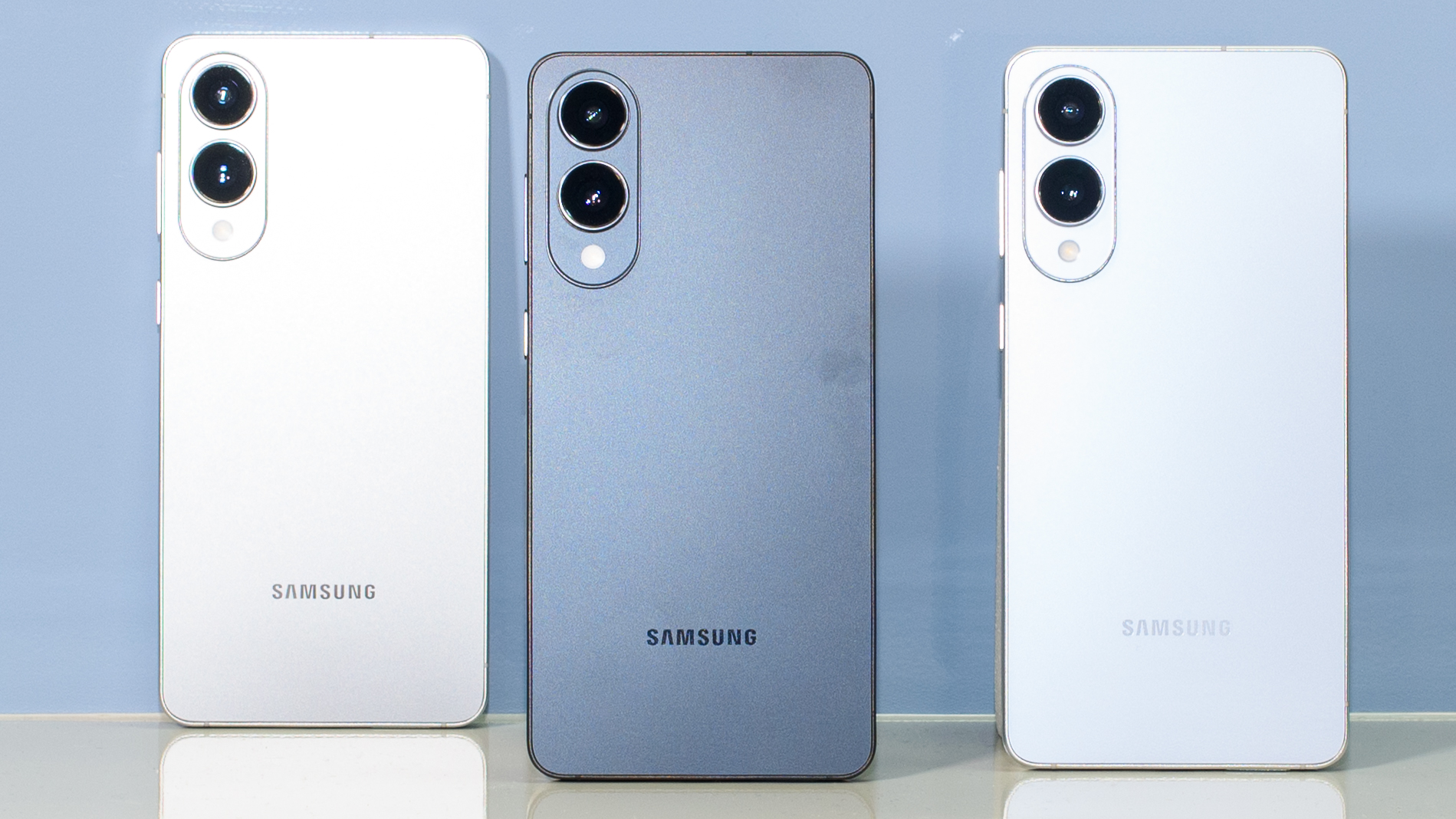
Samsung has launched the New Galaxy Club plan, which allows users to claim back some of the cost of a new phone for a potential future upgrade The program varies by region, with the US version presenting as an additional monthly charge while the UK version includes finance for the cost of the phone Potential customers should carefully read the terms and conditions before opting in
Samsung has announced the Samsung Galaxy S25 Edge, the new thin and light version of its flagship Galaxy S25 smartphone.As our hands-on Samsung Galaxy S25 Edge review details, we’ve been getting to grips with this exciting new handset, months after it was first teased at the January 2025 Samsung Galaxy Unpacked event.However, the reveal of the Galaxy S25 Edge is only one side of the story – alongside the new phone, Samsung unveiled the New Galaxy Club, which, despite its name, is not anything exclusive, but rather a new way to pay for Galaxy handsets.The New Galaxy Club offer varies depending on whether you’re in the US or UK. At the time of writing, I can’t see an equivalent offer available in Australia.
New Galaxy Club: US version
The launch of the Samsung Galaxy S25 Edge coincides with the hard launch of New Galaxy Club (Image credit: TechRadar)
In the US, New Galaxy Club is a subscription fee charged in addition to the full or financed price of the phone. This subscription includes Samsung Care+ protection and the option to get up to 50% of the price of your phone returned as credit if you choose to upgrade after 12 successful monthly payments.The subscription costs $6.20 per month for the Galaxy S25, and $8.33 per month for the Galaxy S25 Plus, Galaxy S25 Ultra, and new Galaxy S25 Edge. It is not available on other models.If, after 12 months, you choose to upgrade, Samsung will offer some form of credit based on how you paid for the phone. If you paid for your phone with Samsung Financing, Samsung will pay off the remaining balance, with no credit towards your next phone. If you paid in full or via Pay In 4 installments, Samsung will offer you trade-in credit worth 50% of your original device.It’s worth noting that your Samsung Care+ package will continue at full price after the 12-month period is up. At checkout, this plan is listed as including theft and loss coverage, but the terms and conditions for New Galaxy Club suggest theft and loss coverage is not included – we’ve reached out to Samsung to clear this up.
New Galaxy Club: UK version
The Samsung Galaxy S25 Ultra is the priciest model covered by New Galaxy Club (Image credit: Zachariah Kelly / TechRadar)
In the UK, New Galaxy Club has a very different structure, rolling the financing of a new phone with the opportunity to save on an upgrade into one package.The UK version of the scheme offers a no-interest 24-month loan, with a 10% deposit paid up front and the rest in monthly instalments. Between 12 and 15 months following the commencement of the loan, customers can choose to upgrade to a new Galaxy handset, with at least 50% of the price of the original device returned as a combination of loan settlement and trade-in credit.If you’re the type of person who upgrades their Samsung Galaxy phone every year, these programs could be of some benefit – just keep in mind that the offer isn’t a conventional subscription in the US, and the UK version is a loan you are liable to pay back. Read the terms and conditions carefully before signing up.
Is New Galaxy Club worth signing up for?
New Galaxy Club is only available for the Galaxy S25 series (Image credit: Peter Hoffmann)
The New Galaxy Club program actually soft-launched on May 6, but Samsung has seemingly saved its big push to coincide with the launch of the Galaxy S25 Edge.Not all reactions have been positive – as criticism from Android Police and annoyed Redditors suggests, these plans may not offer the best value long-term, especially considering that Samsung tends to offer excellent trade-in deals and promotions whenever a new Galaxy phone releases.However, as 9to5Google notes, there’s still some value there for users who may want to pay monthly for a phone and would typically spring for Samsung Care+ coverage anyway.Personally, I think each user should consider their needs carefully before opting into New Galaxy Club, with my main concern being that it could make it harder or more expensive to switch to another brand of phone in the future.Still, if you’re a diehard fan of the best Samsung phones, New Galaxy Club could be worth considering. Let us know what you think of this relaunched Samsung scheme in the comments below.
You might also like
A big Bluetooth upgrade will soon boost your privacy and battery life on iPhone or Android – here's what's comingiOS 19: new features, a new design, and everything you need to knowThe iPhone 16 Pro Max has changed the way I think about fast charging
-

Picture from ichef.bbci.co.uk
Rank 15044 -

Picture from cdn.mos.cms.futurecdn.net
Rank 15045A man was arrested in MoldovaHe is suspected of mounting multiple cyberattacksOne of the attacks caused roughly €4.5 million in damages
Moldovan authorities have arrested a 45-year-old foreign national suspected of mounting multiple cyberattacks, including a ransomware attack with multimillion-dollar damages.In a press release published on the website of the Moldova police, it was said that multiple national law enforcement agencies participated, together with the Dutch police. The person’s identity was not disclosed, it was only said that he was temporarily in Moldova, and not a Moldovan national.“He is announced as an international wanted for committing several cybercrimes (ransomware attacks, blackmail and money laundering) on companies based in the Netherlands,” the machine-translated press release says.
60% off for Techradar readers!With Aura's parental control software, you can filter, block, and monitor websites and apps, set screen time limits. Parents will also receive breach alerts, Dark Web monitoring, VPN protection, and antivirus.Preferred partner (What does this mean?)View Deal
Outdated software
The Moldovan police said the person is suspected of organizing a ransomware attack on the Dutch Scientific Research Organization (NWO), causing material damage of €4.5 million. They seem to be referring to the February 2021 attack, when a group known as DoppelPaymer struck NWO and, when a ransom payment wasn’t met, released stolen sensitive files on the net.According to Science.org, the attack began on 8 February and “completely knocked out the agency's grant application and review process and cut off NWO's communication with applicants, grantees, and universities”. The organization disclosed the attack a few days later, on February 14, and said that it was no longer able to use email, apps, or phones. It was also forced to cancel meetings until at least March 15, and said it was unable to receive or pay its bills.During the arrest, the police also searched the suspect’s home and car, and seized €84,000 in cash, an electronic wallet, two laptops, a mobile phone, a tablet, six bank cards, two portable data storage devices, and six memory cards.The suspect is currently under arrest and is awaiting extradition. Although the announcement doesn’t state which nationality the suspect is, or where he’ll be extradited, it’s safe to assume that he will be sent to the Netherlands.Via The Hacker News
You might also like
Ransomware hackers target a new Windows security flaw to hit businessesTake a look at our guide to the best authenticator appWe've rounded up the best password managers
-

Picture from cdn.mos.cms.futurecdn.net
Rank 15046Amazon has confirmed Fallout season 2 will arrive before the end of 2025The hugely popular show's second season recently wrapped filmingPrime Video's TV adaptation of Bethesda's game series is coming back for a third season, too
It's official: Fallout season 2 will set the world on fire in December 2025.Announced yesterday (May 12) during Amazon MGM Studios' Upfront 2025 presentation, Fallout's TV adaptation will return sooner than any of us expected. Indeed, the incredibly popular Prime Video show's second chapter will air before the year is over, so we don't have long to wait to return to the Wasteland.
A post shared by Walton Goggins (@waltongogginsbonafide)A photo posted by on
The earlier than expected return of Amazon's Fallout TV show is all the more remarkable given that filming has only just wrapped on season 2. Amazon confirmed principal photography had been completed on May 8 – a wrap date that came almost seven months to the day since one of the series' leads Ella Purnell revealed she hadn't even seen a season 2 script.All of that taken into account, I certainly didn't predict Fallout season 2 would be released before early 2026. Nonetheless, the return of one of Prime Video's biggest TV Originals will be a wonderful festive gift for us to enjoy in and around the 2025 holiday season.Understandably, Amazon is keeping a tight lid on season 2's plot. Speaking to TechRadar in April 2024, executive producer Jonathan Nolan would only tease that the show's creators had "really cool" plans for a second outing, too.In an Amazon MGM Studios press release, though, the company's entertainment division confirmed viewers will join Purnell's Lucy and Walton Goggins' The Ghoul in journeying to the post-apocalyptic city known as New Vegas. Fans of Bethesda's long-running game series namesake will know all about this location, one which was teased at the end of Fallout season 1, but I'll refrain from spoiling anything about it for those who haven't played the games.
Fallout season 3 is a-go at Prime Video
Fallout actor Aaron Moten (right) has suggested it'll run for five or six seasons (Image credit: Amazon Studios)
Season 2's December 2025 launch wasn't the only good news to greet fans of one of the best Prime Video shows. Taking to the stage at Upfront 2025, Amazon executives also announced Fallout had been renewed for a third season.Unlike season 2's earlier than anticipated release month reveal, confirmation that Fallout season 3 has been greenlit isn't a huge surprise.As I mentioned earlier, the dystopian drama is one of Amazon's most successful TV Originals of all-time. Add in comments made by Fallout actor Aaron Moten – at Liverpool Comic-Con last Saturday (May 10) – that Fallout's chief creative team have a five- to six-season plan in mind (as reported by The Gamer), and a third season announcement was always a case of when, not if.
Kyle MacLachlan's Hank will be back in season 2 (Image credit: JoJo Whilden/Prime Video)
"The holidays came a little early this year [and] we are thrilled to be ending the world all over again for a third season of Fallout," executive producers Jonathan Nolan and Lisa Joy said in a statement. "On behalf of our brilliant cast and crew, our showrunners Geneva [Dworet-Robertson] and Graham [Wagner], and our partners at Bethesda, we’re grateful to our incredible collaborators at Amazon MGM Studios and to the amazing fans as we continue our adventures in the wasteland together.""We are absolutely thrilled that our global Prime Video customers will be able to delve deeper into the wonderfully surreal and captivating world of Fallout,” Amazon's Global Head of TV Vernon Sanders added. "Jonah, Lisa, Geneva, and Graham have done an exceptional job bringing this beloved video game franchise to vivid life on Prime Video. Together with our amazing partners at Bethesda Games and Bethesda Softworks, we are delighted to announce a third season of Fallout, well ahead of the much-anticipated debut of season 2."
You might also like
'Forever changed': Amazon's Fallout cast discuss their characters' 'violent' season 1 voyages across the Wasteland'Not your average day at the office': Fallout's cast reveal the hardest scenes they filmed for the Prime Video show'You're asking them to surrender that': Fallout's Jonathan Nolan wasn't sure if fans would like the Prime Video show's biggest changes
-

Picture from ichef.bbci.co.uk
Rank 15047 -

Picture from cdn.mos.cms.futurecdn.net
Rank 15048Apple is reportedly considering a price rise for the iPhone 17 seriesThis would apparently be at least in part due to "new features and design changes"The company is said to be reluctant to blame any increase on tariffs
We haven’t heard much about iPhone 17 series pricing yet, but a new report suggests there could be bad news on that front, with a price rise supposedly being considered.This comes from a paywalled Wall Street Journal article (via Pocket Lint), which states that Apple is considering a price increase due to "new features and design changes".It seems likely that any price rise would at least be in part due to the tariffs the US is currently imposing on the rest of the world, but according to this report Apple doesn’t want to be seen as blaming the tariffs, so as not to get on the wrong side of the Trump administration. So any increase would instead be attributed to the aforementioned new features and design changes.That said, it’s likely that the changes to the line would, at least in part, genuinely lead to some increase in price, especially as leaks point to quite a dramatic design overhaul, along with the launch of a new iPhone 17 Air model.
The iPhone 16 Plus (Image credit: Future)
Price predictions
In any case, going by this report Apple hasn’t yet made any final decisions on pricing, and the report doesn’t speculate how much prices might increase by if they are indeed higher.For reference, the iPhone 16 starts at $799 / £799 / AU$1,399, the iPhone 16 Pro starts at $999 / £999 / AU$1,849, and the iPhone 16 Pro Max starts at $1,199 / £1,199 / AU$2,149. We’d be surprised if Apple raised those prices by more than about $100 / £100 / AU$150, but at this stage we really can’t be sure.We should find out the actual prices in September, as that’s when the iPhone 17, the iPhone 17 Pro, the iPhone 17 Pro Max, and likely the rumored iPhone 17 Air are all likely to launch.
You might also like
Apple’s foldable iPhone tipped to have world-first display that eclipses the Galaxy Z FoldThe iPhone 17 could miss out on a long-awaited display upgrade – here's why Apple fans are upsetThe iPhone 17 Pro looks chunky in the latest leak, but it could still sell better than the sleek iPhone 17 Air
-

Picture from cdn.mos.cms.futurecdn.net
Rank 15049Apple is expected to reveal a new AI-powered battery tool as part of iOS 19The Apple Intelligence-branded tool could extend battery life on all iPhones running iOS 19The new software tool has been built with the upcoming iPhone 17 Air in mind
Apple is expected to unveil a new AI-powered battery tool that will increase your iPhone's battery life in iOS 19.According to Mark Gurman at Bloomberg, Apple is expected to reveal an "AI-powered battery management mode for iOS 19." iOS 19 will likely be unveiled at WWDC 2025 in June and launch in September alongside the iPhone 17.Gurman's sources state, "The enhancement will analyze how a person uses their device and make adjustments to conserve energy." Apple will likely bring this AI tool to market as part of Apple Intelligence, which ties back to code in iOS 18.2 referencing Battery Intelligence.While the iPhone already has some machine-learning capabilities that help improve battery life, such as low-power mode and optimized charging, this new AI feature is expected to continuously analyze how a device is used and make on-the-fly decisions to improve battery.Gurman says, "The company is using battery data it has collected from users’ devices to understand trends and make predictions for when it should lower the power draw of certain applications or features."
NEW: Apple prepares a new Apple Intelligence feature for iOS 19 coming this fall — an AI-powered battery optimization mode to extend battery life. This will be particularly aimed at the iPhone 17 Air, which will use the feature to offset a smaller battery. https://t.co/tWDZlUClbdMay 12, 2025
Why now?
According to the report, Apple is planning to bring these Apple Intelligence-powered battery features into the fray in order to boost the run time of the rumored iPhone 17 Air.According to reports, the iPhone 17 Air is expected to be impressively thin, yet due to its thinner design will lack battery capacity. By adding an AI-powered battery tool Apple will be able to offset some of the drawbacks of the thinner design, allowing for extended performance despite a thinner chassis.Gurman states that the Apple Intelligence tool will be available for "all iPhones that have iOS 19," meaning owners of the iPhone 16 series of devices, as well as some older iPhones will also reap the benefits.While Gurman has an excellent track record in revealing new Apple products and software early, we'll need to wait until next month at WWDC to get a true representation of iOS 19 and everything it has to offer, including this AI-powered battery tool as well as a complete redesign.
You may also like
Free Gemini Live update brings better conversation skills and understanding of accentsYou only need to see this screenshot once to realize why Gemini needs to follow ChatGPT in making its AI products less confusingI installed iOS 18.4 dev beta and the big Siri intelligence update is nowhere to be found
-

Picture from cdn.mos.cms.futurecdn.net
Rank 15050M&S confirms customer information has been taken following a cyberattackThe attack has caused significant disruptionOnline orders are still affected weeks later
In a letter to customers, retail giant Marks and Spencer has revealed that personally identifiable information (PII) has been stolen by cybercriminals. This follows the cyberattack that hit M&S which forced the firm to disable online shopping orders, click and collect, and contactless payments in some stores.A statement, posted on LinkedIn, confirms that “unfortunately, some personal customer information has been taken,” but that "importantly, there is no evidence that the information has been shared and it does not include usable card or payment details, or account passwords, so there is no need for customers to take any action.”Online orders are still suspended for the shopping site, and some product availability has been affected. The incident, which seems to have been a ransomware attack, took systems offline and caused undeniable disruption to the retailer’s operation.
Save up to 68% on identity theft protection for TechRadar readers! TechRadar editors praise Aura's upfront pricing and simplicity. Aura also includes a password manager, VPN, and antivirus to make its security solution an even more compelling deal.Preferred partner (What does this mean?)View Deal
Continued disruption
Returning customers will be prompted to reset their passwords on the M&S online site next time they visit “to give customers an extra piece of mind,” and the firm has assured customers it is “working around the clock to get things back to normal” for its customers.“The attack on M&S is another stark reminder that ransomware gangs are evolving faster than traditional defences can cope,” says Camellia Chan, CEO and co-founder of AI cybersecurity firm X-PHY.“Prevention must be built in from the ground up. Businesses need a multi-layered approach that combines hardware-level security to detect and block attacks early. This should be combined with an AI-driven threat detection layer that automate detection and enforce policies in real time. With human-error contributing to 95% of data breaches, this removes the burden of constant vigilance from employees and constant resilience testing.“If anyone is concerned their data may have been taken, we recommend using a dark web monitoring service, or using a breach monitor such as Have I Been Pwned to check for potential exposures.
You might also like
Take a look at our picks for the best malware removal software aroundCheck out our choice for best antivirus softwarePowerSchool hit by cyberattack which saw student and teacher data stolen

