News
This constantly updated list features the latest and most important news articles, ranked in order of significance. The top stories highlight major developments, breaking news, and critical updates across various topics, ensuring you stay informed about the most pressing issues. As new articles are added, the list adapts to reflect the latest priorities, keeping the most impactful stories at the forefront. Whether it’s global events, technology breakthroughs, or industry trends, this dynamic list ensures you always have access to the most relevant and timely information.
-
Picture from o.aolcdn.com
Rank 14451Like untold millions of smartphone users, I have a bit of a problem. I’ve been trying, with middling success, to be more mindful about how I use my phone. I’ll often uninstall various social media apps (but reinstall them later), and I’ve disconnected all my work tools unless I’m traveling specifically for the job. I don’t play games without intention or doomscroll very much. But I still find myself mindlessly reaching for it when there’s a moment to fill, and I don’t love that habit. I don’t think I’m completely addicted to my iPhone; my Screen Time stats put daily usage around two to three hours. That’s less than I’ve seen a lot of people post on social media, but it’s still significant.
I’ve been intrigued by the Light Phone III since I first saw some previews for it last year. As the name suggests, it’s the third phone by Brooklyn-based startup Light, and the ethos remains the same. It has no "infinite scroll” apps like email, social media, a web browser or most everything else that defines a modern smartphone. It’s designed for quick interactions so you can pick it up, respond to a call or message, maybe get directions or put on a song and then get back to life. However, there are a lot of improvements compared to prior Light Phones that made it feel a lot more viable to me. Specifically, there’s a camera, the screen is OLED instead of E Ink and the wider, more responsive display is better suited to text input. It also looks cool in a minimalist way, and has some nicely responsive physical buttons in a world when those are becoming increasingly rare.
I’ve been using the $599 Light Phone III since late March, and my plan was to fully commit to it — but the practicality of doing so was surprisingly difficult. Based on my experience, it’s going to be a tough sell for a lot of people who use a smartphone for basics or things only specific apps can deliver. The Light Phone III isn’t quite ready to be most people’s only device, but I wish it could be.
The Light philosophy
In general, the Light Phone III reminds me a little bit of the very first iPhone — a device with maybe 16 built-in apps and nothing else. Of course, the iPhone had time-wasters like YouTube, an email client and a web browser, but that device was not nearly the attention-hog that modern smartphones are. In the same way, Light picked specific tools that it feels most people will need while keeping everything as simple and bare-bones as possible. The idea is that instead of a device filled with apps constantly notifying you and trying to grab your attention, the Light Phone is focused on intentional use so you aren’t constantly picking up your phone.
That shows up in a variety of ways, from the basic block form factor to the fact that LightOS (based on Android, but you’d never know it) is literally white text on a black background. The only time you see color is if you open the camera or look at photos. But the most important thing is the extremely basic set of tools you can install on the device. Here’s a full list in addition to the settings and phone / text messages apps:
Alarm
Album
Calculator
Calendar
Camera
Directions
Directory
Hotspot
Music
Notes
Podcasts
Timer
If you want, you can literally just have the phone app, which also includes your contacts list and text messages. In 2025, that’s wildly sparse. And you can see by the above list that none of these are things you’re going to lose lots of time using. The austere approach doesn’t just apply to the limited set of tools, either — it shows up in how each one is designed. For example, the Alarm tool doesn’t have a snooze button. If you’re using it as a wake up call, you had better get up when it goes off.
Hardware
Nathan Ingraham for Engadget
Before digging into what using this odd little device is like, let’s run through its minimalist hardware. The Light Phone III is a chunky rectangle of a phone that’s significantly shorter and thicker than what I’m used to. It’s 12mm thick, compared to 7.8mm for the iPhone 16e or about 10mm for the Pixel 9a. But while the Light Phone III is about the same width as a modern iPhone, it’s only 106mm tall, which is shorter than, say, the iPhone 16e (147mm). That makes the phone look a lot larger in images than it is in reality, because we’re used to assuming a phone includes a 6-ish inch display. That’s not the case here.
The front is dominated by the screen, but I haven’t used a phone with a display this small in years. It’s a 3.92-inch AMOLED panel with matte glass and 1,080 x 1,240 resolution, and the rest of the front is filled out by two large bezels. The top one houses an earpiece and selfie camera, while the bottom has a surprisingly solid-sounding speaker. On the back, you’ll find the modest 5-megapixel camera with a flash; the bottom 60 percent is where the user-replaceable battery lives.
Another thing that makes the Light Phone stand out is its plethora of buttons, which is a rarity in the modern era. There’s a power button with a fingerprint sensor on the top right corner, but unfortunately that sensor hasn’t yet been activated in LightOS. The right side has a home button, with circular volume up and down keys surrounding it. Near the bottom right edge is a two-stage camera button, which is a rather surprising inclusion. Pressing it opens the camera app no matter what you’re doing, and you can push it halfway down to activate the center focus point before depressing it all the way to take your picture. Finally, on the upper left corner is a button that turns on the flashlight; it’s surrounded by a dial you can turn to adjust screen brightness. I have never felt like I needed my phone’s flashlight enough for it to have a dedicated button, and of all the buttons this is the one I accidentally activated the most. But, the dial for screen brightness is pretty handy.
The Light Phone is powered by Qualcomm’s SM 4450 processor with 6GB of RAM and 128GB of internal storage. It also supports 5G networks in addition to LTE, and the phone is rounded out with the usual array of sensors: GPS, Bluetooth 5.0 and NFC. And, of course, there’s a USB-C port at the bottom for charging and limited connectivity with a computer.
Since the Light Phone’s battery is removable, it’s not nearly as large as the ones you’ll find in most modern smartphones. You’ll naturally be doing a lot less with this phone, though, so it’s not a huge problem. I easily got multiple days of use from the Light Phone unless I was using navigation a lot. That drained the battery pretty quickly, so if you intend on using it for your GPS on a longer car trip, make sure you have a charging port for it while you drive.
Going Light
Nathan Ingraham for Engadget
Setting up a Light Phone III involves going to an online dashboard where you’ll activate your phone. Once that’s done, this is also where you can configure various tools and do things like add music and podcasts. There are minimal settings to fiddle with on the phone itself — you can adjust volume for various notifications like the phone ringer, alarms or media, or turn the hotspot on or off. There are the usual options for managing Wi-Fi and Bluetooth connections or updating the software, but it’s a far slimmer menu than you’ll find on an iPhone or Android device.
From the dashboard, I added all of the Light Phone’s available tools and dug into the process of moving contacts and music over. I was hoping that the phone would just show up as a USB device when I plugged it into my computer so I could drag some MP3s over, but, alas, that’s not the case. Managing content on the Light Phone requires using the dashboard; it shows every tool you have installed and clicking on them lets you upload songs or import contacts.
This was where I hit my first major friction point. I love music and am a bit obsessive over it, so being able to play songs on the go is absolutely crucial to me. I still buy music on Bandcamp sometimes and also have a big library of MP3s from the pre-streaming days, so I had plenty of tunes to add to my Light Phone. Sure, it wouldn’t be the same as having access to the millions of songs on Apple Music or Spotify, but I was okay with a bit of a philosophical switch. After all, how many songs do you really need at a time?
Turns out the big issue isn’t having fewer songs — it’s how minimal both the music player and song uploader are. On the dashboard, you can add songs from your computer, but they all get dumped in one giant playlist. You can re-order things there, but that’s the only semblance of organization. I had hoped that the Light Phone’s music player would have an iPod sort of interface so you could use tags to dig into artists and albums, but no such luck. You can search for a song, and if you tap it to play it’ll play everything following — that was the only way I could approximate the experience of listening to an album.
Nathan Ingraham for Engadget
Making things even more challenging is the fact that songs aren’t necessarily uploaded to the phone in any semblance of order. So even if your files are properly named, that ordering isn’t always reflected in the final upload. I resorted to adding an album and then using the web dashboard interface to make sure the songs were in the proper order. That’s worse than the experience I had using an iPod in 2003. To have to do this in 2025 is wild.
To be fair, the Light Phone creators told me that this software is a holdover from the Light Phone II, which could only hold 1GB of music, like an old iPod Shuffle. It wasn’t really meant for browsing a large library, but instead was just meant to give you a quick selection of tunes in a pinch. And the company is actively working on a new player with artist/album sorting, custom playlists and letting you load files via USB-C. That would go a long way towards making it more useful. The good news is that sound quality was great and I could pair my AirPods Pro with zero issues.
Another worry I had was how the Light Phone’s mapping and navigation tools would hold up. I am perpetually lost and also recently moved, so I often rely on turn-by-turn to figure out where I’m going. While the Directions tool is quite basic, it’s enough to get the job done. Opening it up simply shows two fields to enter where you are and where you’re going (it can also pull your current location via GPS). There’s also a selector for whether you’re driving, walking or using public transportation. While the latter two options basically just return a list of directions, driving gives you a proper map view and navigation alerts. When I used it while driving around, the map view was mostly clear and the directions were accurate enough to get me to my destination. It’s all powered by Here location services, which have been around for ages and seem pretty good in my corner of the US.
Light pairs the Directions tool with a Directory that is its one concession to the search-powered world we live in. You can search for general terms (coffee) or specifics (Starbucks) and get a spread of results. Tapping on them shows some basic info like the address, hours, phone number and a basic description, and you can tap the map icon to send that place into the Directions app. It all works better than I expected for getting around, though both Google and Apple Maps are better at giving you real-time updates on public transit. I rely on real-time data for city buses, which makes the simple transit options on the Light Phone a bit hard to adjust to.
Nathan Ingraham for Engadget
This ethos unsurprisingly permeates every tool on the phone. As I mentioned earlier, the Alarm has no snooze button, but you can set multiple alarms. You can sync your Google calendar to the phone. But if you have a few calendars in your account (work, family, etc.), you can only see the default one. There’s a basic Notes app, but you can’t do things like attach photos to entries. I can’t say I have a problem with any of this, because that’s the whole point of the Light Phone — you know limitations are part of the equation going in.
There are two crucial features I haven’t gotten to yet: the camera and the phone. This is the first Light Phone with a camera; there’s a 50-megapixel one on the back (images are binned and output at 12 megapixels) and an 8-megapixel one on the front for selfies. The company’s blog shows off a bunch of samples and talks about the process they’ve used to tune the camera’s output. Suffice it to say that these images are wildly different from the heavily processed results you’ll get from most modern smartphones. In good light, the Light Phone’s photos look decent enough but clearly lack the fine detail we’re used to these days. It’s the kind of camera that you can use in a pinch, but you’ll find it lacking if you’re at all serious about photography.
For me the issue is less about the image quality, which has its own lo-fi charm, and more about the camera’s responsiveness. Light included a dedicated camera button, making it exceedingly simple to quickly shoot an image. But, once you have your scene framed up and press the shutter button, it takes between one and three seconds for the camera to actually take the photo. That’s an eternity and it makes the camera impossible to use for anything where movement is involved. I’m glad the Light Phone III has a camera. But it brings me back to a time when phone cameras were useful but filled with compromises. I could live with the aesthetics of the images if the camera was more responsive, but the lag just kills it. If I used the Light Phone full time, I’d probably use my proper camera way more often — which might be a good thing! But I’d definitely miss the convenience of taking quality photos in a pinch from my phone.
Using the Light Phone as a phone
Nathan Ingraham for Engadget
Some 15 or 20 years ago, cell phones were mostly meant for talking and texting, remember? The Light Phone III is a great device for phone calls, and a mediocre one for texting. In my testing, calls were clear and easy to hear on both ends, and the built-in speaker is surprisingly usable when you don’t feel like holding something up (please, stop using speaker phone so much in public, people!). The contacts section of the app is, of course, minimal: just names and phone numbers. As such, this cannot replace an address book or modern contact list. For most people I care about, I need to store at least a phone number, address and email. There’s of course no need for an email address on the Light Phone, but an address field would be great so you can quickly pull up directions to a friend’s house.
If the Light Phone’s music player was a letdown, trying to text was the fatal flaw that killed my dream of using this device full time. Compared to the Light Phone II, this new model is significantly easier to text with. The more responsive and wider OLED screen means the keyboard is similar in size to the ones you’ll find on an iPhone or Android device. The messaging app also does some smart things, like automatically sending links and photos people share to your email address so you can engage with them on your computer.
But there’s no autocorrect. And if you haven’t tried to text on a phone without autocorrect lately, let me tell you — it sucks.
Nathan Ingraham for Engadget
The internet is full of people complaining about bizarre autocorrect mistakes, but what goes unnoticed is how it hangs out in the background actually makes the majority of our messages far clearer. If I try to text at a speed similar to that on my iPhone, my messages are riddled with typos. Even when I slow down it’s still very easy to misfire, necessitating frustrating edits to fix things. There’s a spell-check feature built in, so words that I biffed were at least underlined. A long press on them gave me a few options to correct things, but the time it took me to compose and send messages was significantly longer than on a modern device. The keyboard layout itself is fine and took little time to adjust to, but I never felt comfortable because I was always making and fixing mistakes.
The other half of this issue is more philosophical. Back in the day, we used texts to send quick updates to people; having lengthy conversations was not the norm. That changed even before the advent of smartphones and I have friends whose speed at texting using T9 was impressive. But still, phones just weren’t meant for that. At this point, though, whether it's in WhatsApp or Telegram or Signal or your phone’s built-in messaging system, we have ongoing conversations that go with us everywhere.
The Light Phone is a return towards using messaging for quick check-ins and updates, perhaps as precursors to an actual phone (or in-person!) conversation. But trust me when I say that keeping up with a group conversation will be an exercise in frustration with the Light Phone. I can live with the minimalist interface, limited emoji selection and inability to send anything besides plain text and photos if I could type faster — but I can’t. You’ll need to fundamentally re-think your relationship with how you use messaging on a phone.
Which is kind of the point of this whole exercise.
Breaking an addiction
I can blame the music player or lack of autocorrect, but ultimately I was not ready for how radically different the Light Phone III experience is. There were a host of practical considerations that kept me from fully buying in. I need two-factor authentication apps for a lot of services I use. If I wanted to go to a concert, I’d need a smartphone for tickets. I don’t deal with checks often, but I can’t remember the last time I deposited one at a bank instead of on my phone. I’m going on vacation soon and want to be able to take good photos without dragging my camera around.
I could figure out the necessary work-arounds for almost all of these things. Maybe the updated music player Light is working on would be enough for me when it comes out. I’d probably get used to the keyboard eventually, to some degree. I could use my “real” camera more, probably leading to better and more thoughtful photos. I could get a work phone through our parent company to use for authentication.
The point is that while there are ways around these things, implementing them involves a ton of work. And unfortunately, now that eSIM has taken over, it’s not as simple as just popping a SIM card into my iPhone if I needed it for some of these things and then dropping it back in the Light Phone for day-to-day life. And because I wasn’t able to fully give myself over to the Light lifestyle, I didn’t really get to experience its benefits in a major way.
But, for a few weeks, I left my iPhone at home when I left the house as much as possible and there was something freeing about the complete lack of notifications and general siren-call for attention that I usually deal with. It’s something that has stuck with me even as I shifted back to my iPhone for daily use. I might not be ready to fully break my addiction to my smartphone, but as they say, the first step is admitting you have a problem.
This article originally appeared on Engadget at https://www.engadget.com/mobile/smartphones/light-phone-iii-review-minimalism-stretched-to-the-point-of-frustration-141559294.html?src=rss
-

Picture from cdn.mos.cms.futurecdn.net
Rank 14452Despite this enthusiasm, hurdles such as unstructured data, uncertain model accuracy, and gaps in governance are preventing many organizations from getting the full benefit of AI tools.Firms that rely on large-scale, around-the-clock operations know the stakes are high. A system outage or an unforeseen failure can cost millions, disrupt the supply chain, and harm overall competitiveness. A study by Aberdeen Research found unplanned downtime in manufacturing can cost up to US$260,000 per hour.Against this backdrop, AI can predict issues before they occur, helping companies repair equipment proactively and keep downtime to a minimum. Yet concerns linger around data reliability, potential algorithmic bias, and whether AI’s recommendations are truly explainable and safe. A carefully planned approach is key to overcoming these challenges, so that AI becomes a true value driver.
Identifying key risks and overcoming them
When setting up a new asset to work in the field, organizations will necessarily have no data to draw on. That’s where they can access learning from first principles models, coupled with simulation models to ensure a balanced set of data, availability of unlikely scenarios, and therefore enable extrapolation to new regimes of operation.Data from the field can then be used to refine the model (close the simulation reality gap), or to predict future outcomes based on historical observations. With predictive maintenance technology, it is also possible to identify abnormalities by building models from normal modes of operation.To enable this, companies need strong governance policies, as well as processes for labelling, storing, and updating data. While a sizable upfront investment may be needed, the payoff is significant: well-organized data fuels accurate models that deliver meaningful results.Another challenge involves explainability. Some AI-generated recommendations can seem like a “black box” e.g., when models rely on complex neural networks. For day-to-day industrial operations, trust is crucial, as operators must be able to understand how and why decisions are made.Including interpretable features and highlighting key decision drivers helps build that trust. When people know the rationale behind AI findings, they become more willing to follow them, improving adoption rates.Well-designed dashboards that map input factors to recommend outputs have their part to play here. However, they will be not sufficient in themselves in achieving trust. Organizations should ensure that they select the right tool for the job in hand.A complex model can be necessary for complex nonlinear behavior. However, while a complex model can address simple use cases, this comes at a cost, for example explainability, challenges with extrapolation, risk of overfitting, large data requirements etc. It is therefore important to select the right tool for the job. Generally, the simplest approach that solves the problem is preferable.Trust can be further assured by the use of first principles guardrails that provide peace of mind and highlight that a provider has a thoughtful approach to AI.In addition, there is the question of bias. Historical data sometimes reflects outdated practices or inconsistent recording methods, and if this data is used without scrutiny, algorithms may carry forward biases into their predictions.Regular auditing of model performance, along with diverse data sets and ongoing feedback from subject matter experts, can mitigate these risks. Proactively revisiting the data strategy and staying aware of evolving regulations also helps organizations stay one step ahead.Finally, AI’s integration with existing workflows demands attention. Even the most advanced algorithms will struggle if they fail to mesh with established processes. For instance, if plant operators need to switch between multiple tools or can’t easily act on an AI-driven alert, the system’s value quickly diminishes. Seamless product integration, visualizing AI insights, training operators on new procedures, and ensuring IT infrastructure can handle added data loads are often a make-or-break factor for success.
Practical steps to harness industrial AI
A strategic roadmap for AI adoption starts with identifying use cases that promise strong returns. Many companies find early success in areas like predictive maintenance, where AI models spot signals of potential future breakdowns and enable timely fixes. Another example are hybrid models that allow the creation and sustainment of models from data in the field.This accelerates the model building for complex processes and improves the representation for design optimization or control, thus supporting efficiency and sustainability improvements. Another best practice is merging automation with human expertise. While AI excels at e.g., sorting through large data sets to pinpoint trends or anomalies, seasoned operators understand the practical nuances of running a plant.Collaboration between people and technology ensures that strategic decisions blend intuitive knowledge with data-driven recommendations. By keeping humans in the loop, organizations lessen the odds of unexpected failures and maintain trust among the workforce.To secure buy-in across management levels, pilot programs need to show quick, tangible benefits. If a narrow project using AI for quality checks significantly reduces scrap in a factory, the cost savings and improved customer satisfaction help support broader initiatives. Documenting these early gains and calculating the return on investment helps justify scaling AI across multiple sites, which often involves more complex budgeting and approvals.As expansion proceeds, robust model governance becomes essential. Models must be monitored for “drift,” when real-world conditions change. Deploying self-adapting AI technology or regular checkpoints with engineering and data science teams helps ensure the technology performs as expected.Enterprises can also set up review boards or specialized groups to vet new AI solutions, confirm compliance with regulations, and measure alignment with corporate targets such as safety or sustainability.Lastly, organizations should build long-term expertise within their teams. Successful AI adoption isn’t a one-time event; it’s a continuous journey of refinement, learning, and adaptation. Training employees to understand AI fundamentals, interpret analytics, and collaborate with data scientists goes a long way toward embedding AI into the corporate culture. This level of internal capability also positions companies to pivot faster as new technologies emerge.
We've featured the best AI chatbot for business.
This article was produced as part of TechRadarPro's Expert Insights channel where we feature the best and brightest minds in the technology industry today. The views expressed here are those of the author and are not necessarily those of TechRadarPro or Future plc. If you are interested in contributing find out more here: https://www.techradar.com/news/submit-your-story-to-techradar-pro
-

Picture from ichef.bbci.co.uk
Rank 14453 -

Picture from cdn.mos.cms.futurecdn.net
Rank 14454Cisco has patched a 10/10 flaw in IOS XE Software for Wireless LAN ControllersThe flaw was due to hardcoded tokensThere is no evidence of abuse in the wild (yet)
Cisco has released a patch for a maximum-severity flaw found in its IOS XE Software for Wireless LAN Controllers which could have allowed threat actors to take over vulnerable endpoints.The flaw is yet another case of hardcoded credentials, this time in the form of a JSON Web Token (JWT). “An attacker could exploit this vulnerability by sending crafted HTTPS requests to the AP image download interface,” it is explained in the NVD website. “A successful exploit could allow the attacker to upload files, perform path traversal, and execute arbitrary commands with root privileges.”The vulnerability is now tracked as CVE-2025-20188, and has the maximum security score - 10/10 (critical).
No mitigations
It was also noted that the vulnerability can only be exploited on devices that have the Out-of-Band Image Download feature enabled which, on default settings, is not the case.According to BleepingComputer, this is a feature that allows access points to download OS images via HTTPS instead of CAPWAP, which is a somewhat more flexible and direct way of getting firmware onto access points.The publication says that while it’s off by default, some large-scale or automated enterprise deployments have turned it on.Unfortunately, there are no mitigations for the flaw. The best way to minimize the risk of exposure is to deploy the patch. A possible workaround is to disable the Out-of-Band Image Download feature, which could work well if the enterprise isn’t actually using it.Cisco said it hasn’t seen evidence of in-the-wild abuse just yet, but users should still be on their guard.Here is a list of vulnerable devices:Catalyst 9800-CL Wireless Controllers for CloudCatalyst 9800 Embedded Wireless Controller for Catalyst 9300, 9400, and 9500 Series SwitchesCatalyst 9800 Series Wireless ControllersEmbedded Wireless Controller on Catalyst APsAnd here is a list of devices that are safe to use:Cisco IOS (non-XE) Cisco IOS XRCisco Meraki productsCisco NX-OSCisco AireOS-based WLCs
You might also like
Millions of online shoppers could be at risk from hardcoded Shopify tokensTake a look at our guide to the best authenticator appWe've rounded up the best password managers
-

Picture from ichef.bbci.co.uk
Rank 14455 -

Picture from cdn.mos.cms.futurecdn.net
Rank 14456Take-Two Interactive and 2K Games have announced a $49.99 price tag and August release date for Mafia: The Old Country It comes amid Nintendo and Microsoft's moves towards $80 gamesThis raises questions over Grand Theft Auto 6's price when it launches in 2026
While Rockstar Games' highly anticipated title, Grand Theft Auto 6, is on the radar of most gamers with its recent delay announcement and trailer release, another title that is also under Take-Two Interactive's umbrella finally has a release date - and its more affordable price tag may come as a surprise.It has been revealed that Mafia: The Old Country will launch on August 8, 2025, and is coming to PlayStation 5, Xbox Series X and Series S, and PC. It will launch with a Standard Edition that comes in at $49.99 and a Deluxe Edition for $59.99, both of which are available for pre-order now.This comes after Nintendo and Microsoft began raising the prices of some games to the $80 mark. It's worth noting that the new game prices for Microsoft won't come into effect until the start of this Holiday season, and we're still waiting to see whether Sony follows suit.However, the $49.99 price tag for Mafia: The Old Country appears to be much less about Take-Two Interactive and 2K Games not following the $80 trend, and more about the game's shorter length and linear presentation. 2K president David Ismailer, said: "We think there's a large audience for compelling stories that don't require massive time commitments," which hints at The Old Country having a short runtime.Borderlands 4 also launches a month after, on September 12, but there isn't any pre-order or price information on that title yet. There's no doubt that the upcoming Mafia game's price will have gamers wondering what this means for the looter-shooter and GTA 6.
(Image credit: 2K Games)
Take-Two Interactive has the opportunity to embarass Nintendo, Microsoft, and any other company charging $80, but I don't think it will...
To say I detest $80, even $70 game prices, is an understatement and it's been sad to see Nintendo and Microsoft kickstart the trend. It's only a matter of time until Sony joins the party and for the large majority of game publishers to follow.I'm desperately hoping Take-Two Interactive don't budge but it seems unlikely. Gamers have been waiting for GTA 6 for twelve years, going on thirteen now due to its 2026 delay - and it's safe to say that a large majority of gamers are willing to pay over $80 for it.Considering the rumors of the game's $2 billion budget, a higher price tag might be justified but if Take-Two Interactive were to Charge $70 (or even lower) for the highly anticipated title, it would reflect poorly on Microsoft and Nintendo and help it fly off the shelves and smash even more records than it already likely will.The reasoning is simple - it's GTA 6, arguably the most anticipated game of all-time. Rockstar Games is in a league of its own when it comes to size, scope, and attention to detail and if I were going to choose between Mario Kart World at $80 and GTA 6 with the latter being cheaper, it's an easy decision.
You may also like...
Five things we learned from the latest Grand Theft Auto 6 trailerGrand Theft Auto 6 looks mind-blowingly beautiful in latest screenshotsSpotify streams of the latest Grand Theft Auto 6 trailer song increased by 182,000% just two hours after the trailer dropped
-

Picture from cdn.mos.cms.futurecdn.net
Rank 14457A hack on school software provider PowerSchool has put staff and students at riskIndividual schools are now being targeted using the same dataPowerSchool did pay the ransom, but the data was not wiped
The hackers which struck PowerSchool in 2024 are now reportedly targeting individual schools and extorting them for ransom, threatening to release previously stolen student and staff information.“PowerSchool is aware that a threat actor has reached out to multiple school district customers in an attempt to extort them using data from the previously reported December 2024 incident,” the organization confirmed.PowerSchool is a top education software platform with over 17,000 customers spanning 90 countries, and supporting over 50 million students. A cyberattack in December of 2024 led to the personal data of 62 million students and 9 million teachers exfiltrated by attackers, with over 6,500 school districts in the US and Canada affected.
Save up to 68% for TechRadar readers! TechRadar editors praise Aura's upfront pricing and simplicity. Aura also includes a password manager, VPN, and antivirus to make its security solution an even more compelling deal.Preferred partner (What does this mean?)View Deal
Students at risk
PowerSchool paid the ransom to the cybercriminals in hopes they would wipe the data stolen, but since these recent incidents are using information matching that which was stolen in the December hack, it seems quite clear that this was not the case.“It was a difficult decision, and one which our leadership team did not make lightly," the company said."But we thought it was the best option for preventing the data from being made public, and we felt it was our duty to take that action. As is always the case with these situations, there was a risk that the bad actors would not delete the data they stole, despite assurances and evidence that were provided to us.”The exfiltrated data includes personally identifiable information like Social Security Numbers, names, addresses, and even medical information.As such, the firm recommends anyone affected take advantage of the two years of free credit monitoring and identity theft protection software to mitigate the risks posed by the stolen information.PowerSchool apologized for the threats posed by the breach, and has confirmed it will continue to work with law enforcement agencies to mitigate the damages and respond to the extortion attempts.Via BleepingComputer
You might also like
Take a look at our picks for the best malware removal software aroundCheck out our choice for best antivirus softwarePowerSchool hit by cyberattack which saw student and teacher data stolen
-
Picture from o.aolcdn.com
Rank 14458Panasonic is cutting 10,000 jobs globally in an effort to boost efficiency. Citing slowdown in EV growth and deteriorating profits in the air-conditioning sector as two of the challenges it is currently facing, the Japanese company will make the staff cuts in the current financial year, which ends in March 2026.
In a statement released today, it was revealed that the structural reform will target 5,000 employees in Panasonic’s native country and 5,000 overseas. The company says it expects to incur costs of 130 billion yen (around $900 million) as a consequence of the cuts. Panasonic said it will “thoroughly review operational efficiency at each Group company, mainly in sales and indirect departments, and reevaluate the numbers of organizations and personnel actually needed.”
As a result of the shrinking its workforce and revamping its consumer electronics business, Panasonic aims to achieve an adjusted operating profit of at least 600 billion yen ($4 billion) in the financial year ending March 31 2027, but that doesn’t take into consideration any potential impact from the Trump tariffs.
Panasonic makes a variety of products, from EV batteries it supplies to Tesla, to its consumer-focused cameras and TVs. Panasonic TVs made a return to the US last year after a 10-year absence, but the company has reportedly indicated that it would be willing to leave the sector altogether if it continues to underperform.This article originally appeared on Engadget at https://www.engadget.com/big-tech/panasonic-will-slash-its-global-workforce-by-10000-151746678.html?src=rss
-

Picture from ichef.bbci.co.uk
Rank 14459 -

Picture from techcrunch.com
Rank 14460 -

Picture from ichef.bbci.co.uk
Rank 14461 -

Picture from ichef.bbci.co.uk
Rank 14462 -

Picture from ichef.bbci.co.uk
Rank 14463 -

Picture from techcrunch.com
Rank 14464 -

Picture from ichef.bbci.co.uk
Rank 14465 -

Picture from ichef.bbci.co.uk
Rank 14466 -

Picture from ichef.bbci.co.uk
Rank 14467 -

Picture from ichef.bbci.co.uk
Rank 14468 -
Picture from cdn.mos.cms.futurecdn.net
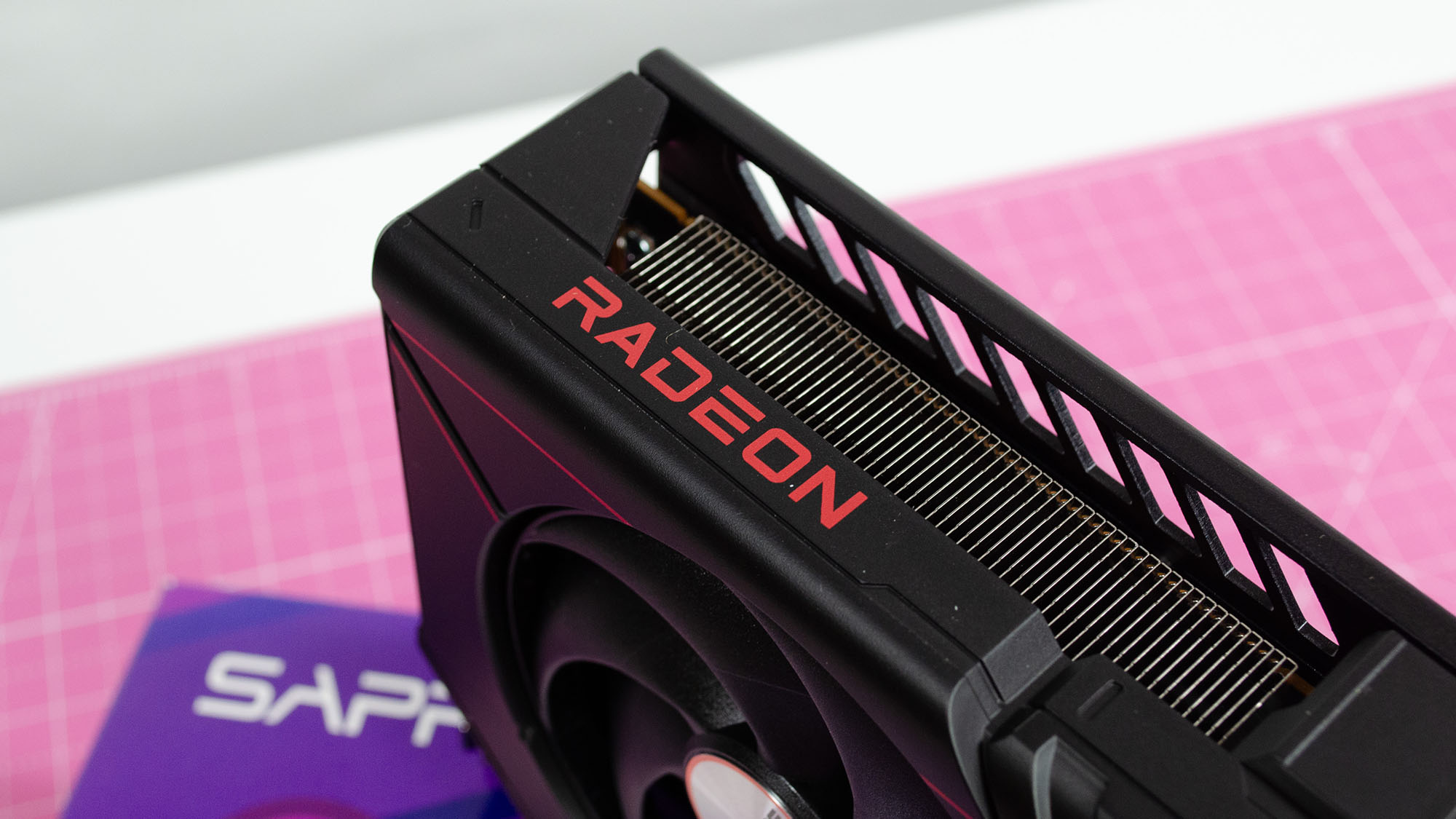
Rank 14469AMD’s RX 9060 XT is rumored to launch mid-May, although the GPU may not go on sale until JuneA well-known YouTube leaker believes the 9060 XT will be well-stocked when it does arriveExpect similar quantities to the RX 9070 XT launch, and that could be a problem for Nvidia, which is struggling to get RTX 5060 Ti models out there
AMD’s RX 9060 XT graphics card – which is still only rumored to be next in line for the RDNA 4 family – is supposedly going to have healthy stock levels when it arrives.That’s the conclusion of Moore’s Law is Dead (MLID), a leaker on YouTube who regularly provides GPU and CPU-related chatter.MLID cites multiple sources, the first of which is based outside of the US and reckons there will be a ‘pretty good supply’ of RX 9060 XT GPUs, albeit no firm numbers are given (by any of these sources, I should add).A second source at a major online retailer in the US claims that launch stock for this AMD graphics card is feeling "very optimistic" and another source (also in the US) backs that up.This feels somewhat more vague than the YouTuber normally is, but nonetheless, there’s clearly a positive vibe around how much stock AMD is likely to muster for the RX 9060 XT. Indeed, MLID underlines that this should be a similar launch to the RX 9070 XT, which arrived in decent numbers as you might recall. (Although due to demand, the GPU still sold through very quickly, or at least models at or near MSRP did).The caveat MLID adds is that the US may be slightly less well-supplied for the 9060 XT than other countries, or at least that’s a possibility.Another point addressed here is that the 9060 XT won’t likely affect the stock of AMD’s 9070 XT in the near future, according to the YouTuber’s best guess.
Analysis: Should Nvidia be worried? It looks that way
It certainly makes sense to me that RX 9070 XT (or vanilla 9070) stock wouldn’t suffer due to the launch of this third RDNA 4 GPU (not counting the GRE, which is Asia-only, for now anyway). That’s because the two existing graphics cards use the Navi 48 chip, whereas the 9060 XT is built around a different engine, the Navi 44 GPU.So, the latter chip won’t cannibalize the former (not directly, anyway). And also because there’s more profit to be made on the pricier 9070 models – the XT in particular – it doesn’t make sense that AMD would want to miss out on that (by sacrificing any 9070 production in favor of the 9060 XT).If AMD can indeed supply the RX 9060 XT in a decent quantity, as suggested here, that’s going to be trouble for Nvidia, which is struggling to get its RTX 5060 Ti graphics cards – which Team Red’s inbound RDNA 4 GPU should rival – onto shelves in any real number.Yes, you can find RTX 5060 Ti models on sale, and there are a couple of flavors of the 8GB version around in the US currently. However, that’s more a reflection of the general unpopularity of this GPU – and even then, the cheapest you’ll get is still 10% over the MSRP. With the better-received RTX 5060 Ti 16GB, I could only spot one in the US (all of this is at the time of writing), but this time it’s 15% over the recommended price, so you’re paying a premium.What we still don’t know is the MSRP of the RX 9060 XT, of course. Indeed, as noted at the outset, this GPU isn’t even officially confirmed yet, let alone the price. All we know is that there’s some kind of new RDNA 4 graphics card coming this quarter, though with the weight of the rumors at this point, it’s pretty certain to be the 9060 XT.Pricing will be key, of course, and MLID believes that AMD is going to pitch the RX 9060 XT somewhere between $329 to $379 in the US (and in line elsewhere). That’s for the rumored 16GB version of the graphics card, too, not the 8GB variant (which will be launched alongside it, at least according to some speculation). At the lower end of that pricing scale, this could be a killer blow to Nvidia in the lower-mid-range space (again, depending on exactly how performance pans out).There are too many unknowns to get overly excited yet, and looking at the overall picture – and where Nvidia is with its RTX 5060 models – I worry there’s not much of a driving force for AMD to have to pitch its new entrant to the GPU scene towards the more compelling end of the rumored range.What Nvidia has in its favor right now is that while the grapevine expects AMD to launch the RX 9060 XT very soon – on May 21, in fact – these graphics cards may not actually be on shelves before June. As ever, load up the seasoning with all this. What we do know is that Nvidia’s RTX 5060 (non-Ti) goes on sale come May 19, though again, its 8GB of VRAM loadout (across the board) is proving controversial, just as with that version of the RTX 5060 Ti currently.
You might also like...
AMD Radeon RX 9070 review: a great choice if the RX 9070 XT and RTX 5070 are out of reachMicrosoft is digging its own grave with Windows 11, and it has to stopI've reviewed three generations of 3D V-cache processors, and the AMD Ryzen 9 9950X3D is the best there is
-

Picture from techcrunch.com
Rank 14470 -

Picture from ichef.bbci.co.uk
Rank 14471 -

Picture from ichef.bbci.co.uk
Rank 14472 -

Picture from ichef.bbci.co.uk
Rank 14473 -

Picture from ichef.bbci.co.uk
Rank 14474 -

Picture from cdn.mos.cms.futurecdn.net
Rank 14475The Last of Us season 2 is shuffling towards its endgame, and it won't be long before the hugely successful HBO TV Original leaves our screens once more.But there are still three more episodes to gorge yourself on before this season ends, and that includes this season's fifth entry, which will be out in the US, UK, and Australia in a few days' time.Below, I've outlined when and where you can watch The Last of Us TV show's latest installment. I've included a full episode release schedule for the remaining episodes, too, so be sure to check that out before you close this article.
What time does The Last of Us season 2 episode 5 come out in the US?
Ellie and Dina got themselves into a real mess in this season's fourth episode (Image credit: Liane Hentscher/HBO)
The Last of Us' next episode will make its streaming debut at 6pm PT / 9pm ET on Sunday, May 11.Like every installment before it, you've got two places you can watch it. If you're a Max subscriber, you can tune into that platform to stream it. Alternatively, if you have access to US cable network HBO, you can watch it on that channel.
When will The Last of Us season 2's fifth episode launch in the UK?
Washington Liberation Front chief Isaac, reporting for duty (Image credit: Liane Hentscher/HBO)
The Bella Ramsey-starring dystopian survival drama will return to UK screens on Monday, May 12 at 2am BST.There are two options available to British fans of the hit TV series. You can watch this season's fifth entry on Sky Atlantic or Now TV.
Where can I watch episode 5 of The Last of Us season 2 in Australia?
How will Dina view Ellie from now on after that big reveal? (Image credit: Liane Hentscher/HBO)
Aussie fans can stream episode 5 in one of two places: Max, aka one of the world's best streaming services, and Foxtel.As for when it'll be released Down Under, this season's next chapter will debut on both services on Monday, May 12 at 11am AEST.
When do new episodes of The Last of Us season 2 come out?
Stop hiding, Ellie – episode 5 will be out soon! (Image credit: Liane Hentscher/HBO)
One of the best Max shows (in nations where Warner Bros Discovery's super streamer is available, anyway) will be back on small screens globally for two more weeks after this one. Here's when you can catch new episodes:
Episode 1 – out nowEpisode 2 – out nowEpisode 3 – out nowEpisode 4 – out nowEpisode 5 – May 11 (US); May 12 (UK and Australia)Episode 6 – May 18 (US); May 19 (UK and Australia)Episode 7 – May 25 (US); May 26 (UK and Australia)
You might also like
Get the lowdown on everything to do with Peacemaker season 2Or learn more about House of the Dragon season 3Alternatively, read up on what we know about Creature Commandos season 2
-
Picture from o.aolcdn.com
Rank 14476The pink and yellow models of Apple's latest entry-level iPad with the A16 chip have just hit a new low of $278 at Amazon, down from the retail price of $349. Walmart is currently matching that discount for the tablet in pink. The other colors are still on sale, but for a lesser discount at $299. That's still $50 off and is available from Amazon, Best Buy, Target and Walmart. All discounts apply to the base configuration, which includes 128GB of storage and 6GB of RAM.
Apple released the iPad A16 back in March, and we've since named it the budget pick in our iPad buying guide. It's not quite as refined or powerful as the iPad Air, as it's a bit slower for more involved tasks, and its non-laminated display has a harder time fending off glare. That said, it costs significantly less, and it's still more than enough tablet for the things most people do with an iPad. We gave it a score of 84 in our review.
Apple didn't increase the price of this latest base iPad compared to the previous model, but it added 2GB of RAM, doubled the storage space and slotted in a more powerful chipset that's fast enough for most common tasks, including moderate gaming and lighter media editing. However, the iPad doesn't support Apple Intelligence — which may be a positive or negative, depending on your feelings about generative AI.
The build quality is still as solid as ever, while the battery lasts around 10 hours on a charge, depending on the tasks you carry out with it. On the downside, the accessory situation isn't ideal. It only supports the more basic USB-C and first-gen Apple Pencils, neither of which can charge wirelessly when you magnetically attach them to the tablet's side — instead, you'll need a USB-C cable and/or USB-C to Lightning adapter to juice those up. The Magic Keyboard support isn't great either, as the model that works with this base iPad is tough to stabilize on your lap.
Now, it's worth noting that the current iPad Air M3 is on sale for $100 off right now, too. That model is nearly identical in terms of size and weight, but adds the better antireflective screen, Apple Intelligence compatibility and support for the more robust Magic Keyboard add-on. But if those step-ups don't appeal to you — or, at least, aren't worth another $200 — the iPad A16 is still an ideal way to watch some movies while you're flying or to read the news without breaking the bank.
Check out our coverage of the best Apple deals for more discounts, and follow @EngadgetDeals on X for the latest tech deals and buying advice.This article originally appeared on Engadget at https://www.engadget.com/deals/the-new-apple-ipad-a16-has-dropped-to-a-new-low-of-278-143619852.html?src=rss
-

Picture from techcrunch.com
Rank 14477 -

Picture from ichef.bbci.co.uk
Rank 14478 -

Picture from ichef.bbci.co.uk
Rank 14479 -

Picture from ichef.bbci.co.uk
Rank 14480 -
Picture from o.aolcdn.com
Rank 14481The AI-generated deepfake of a deceased road rage victim gave his own impact statement in court at the sentencing hearing of the defendent, as reported by NBC News. This is likely the first time the technology has been used in this way.
The idea of using an AI version of the victim, Christopher Pelkey, came from his family, according to a Maricopa County Attorney's Office spokesperson. Pelkey’s sister said she had been writing the impact statement for two years but found that what she had to say "did not seem like it would do justice" to his memory. Pelkey was shot and killed in 2021 during a road rage incident.
So the idea of bringing in a deepfake avatar was born. Pelkey's sister wrote the script, telling CNN that she was sure "it's what he would think." Maricopa County Superior Court Judge Todd Lang approved the idea and the family played a video of the AI-generated Pelkey in court. In the video, the avatar actually seemed to ask for leniency when sentencing his killer. The defendant was convicted of manslaughter and endangerment earlier this year.
"To Gabriel Horcasitas, the man who shot me: It is a shame we encountered each other that day in those circumstances," the artificial version of Pelkey said. "In another life, we probably could have been friends. I believe in forgiveness."
However, the judge issued the maximum sentence of over 10 years in prison. "I heard the forgiveness," he said about the AI-generated avatar. "I feel like that was genuine, that his obvious forgiveness of Mr. Horcasitas reflects the character I heard about [Pelkey] today."
The defense has stated that the AI presentation creates a strong issue for appeal. "While judges certainly have latitude as to what to hear, particularly from victims, an appellate court will have to decide if this was error," defense lawyer Jason Lamm said. The case has already been retried for procedural issues.
Arizona State University law professor Gary Marchant, who specializes in ethics and emerging technologies, is worried about the legal precedent set here.
"You see that person in the courtroom actually speaking, and in reality, they're dead and they're not speaking," he told NBC News. "So this is an extra jump that I feel is going to get us into dangerous grounds."This article originally appeared on Engadget at https://www.engadget.com/ai/deepfake-of-deceased-man-gives-his-own-impact-statement-in-court-161138506.html?src=rss
-

Picture from cdn.mos.cms.futurecdn.net
Rank 14482Hackers are using backdoors to drop Kickidler, a legitimate employee monitoring toolThe tool is used to obtain login credentials and deploy an encryptorVMwaare's ESXi servers are being targeted
Kickidler, a popular employee monitoring tool, is being abused in ransomware attacks, multiple security researchers have warned.The software was designed for businesses, allowing them to oversee their employees’ productivity, ensure compliance, and detect insider threats. Some of its key features are real-time screen viewing, keystroke logging, and time tracking, with the former two being particularly interesting to cybercriminals.Researchers from Varonis and Synacktiv, who claim to have seen the attacks in the wild, say it all starts with a poisoned ad purchased on the Google Ads network. The ad is displayed to people searching for RVTools, a free Windows-based utility that connects to VMware vCenter or ESXi hosts. The ad leads to a trojanized version of the program, which deploys a backdoor called SMOKEDHAM.
Cloud backups in the crosshairs
With the help of the backdoor, threat actors deploy Kickidler, specifically targeting enterprise administrators and many of the login credentials they use every day. The goal is to infiltrate into every corner of the network and ultimately deploy the encryptor.The two groups seen using Kickidler are Qilin and Hunters International, which seem focused on cloud backups, but seem to have hit a roadblock, Varonis said."Given the increased targeting of backup solutions by attackers in recent years, defenders are decoupling backup system authentication from Windows domains. This measure prevents attackers from accessing backups even if they gain high-level Windows credentials," Varonis told BleepingComputer."Kickidler addresses this issue by capturing keystrokes and web pages from an administrator's workstation. This enables attackers to identify off-site cloud backups and obtain the necessary passwords to access them. This is done without dumping memory or other high-risk tactics that are more likely to be detected."The payloads targeted VMware ESXi infrastructure, the researchers added, encrypting VMDK virtual hard drives. Hunters International used VMware PowerCLI and WinSCP Automation to enable SSH, drop the ransomware, and run it on ESXi servers.
You might also like
Immutable backup storage is the best protection against ransomware, but many businesses don’t have itTake a look at our guide to the best authenticator appWe've rounded up the best password managers
-
Picture from o.aolcdn.com
Rank 14483If you sent something you regret in a Google Messages RCS group chat, it looks like you'll soon be able to delete it for everyone, not just yourself. On Thursday, a Reddit user posted (via 9to5Google) a screenshot of the option in a public beta for Android's messaging app.
The image from u/seeareeff shows a pop-up menu asking if they want to "Delete for everyone" or "Delete for me." Until now, the latter has been the app's only deletion option.
The delete for everyone feature aligns with the RCS's Universal Profile v2.7. The GSMA finalized that update in June 2024, but it takes time for RCS-enabled apps like Google's to implement it. In February, a Messages app teardown from 9to5Google showed the change was in the pipeline for Android users.
There are some caveats. First, not everyone using the public beta has seen the option. In addition, the Reddit user who spotted it only saw it in a group chat with 12 people; it wasn't yet in their one-on-one threads. Finally, 9to5Google's app sleuthing from February revealed a limitation you'll want to remember: Deleted messages "may still be seen by others on older app versions."This article originally appeared on Engadget at https://www.engadget.com/mobile/smartphones/delete-for-everyone-appears-in-the-google-messages-beta-161920211.html?src=rss
-

Picture from ichef.bbci.co.uk
Rank 14484 -

Picture from ichef.bbci.co.uk
Rank 14485 -

Picture from cdn.mos.cms.futurecdn.net
Rank 14486The IRS plans to use AI to supplement its workforceThe organization has laid off 25% of its staffMore cuts are likely to follow, report claim
The US Internal Revenue Service (IRS) plans to use AI to replace workers having made extensive cuts to its workforce.US Treasury Secretary Scott Bessent discussed the budget proposal in a House Appropriations Committee hearing, with reports confirming the IRS has lost almost a third of its tax auditors since the start of the second Trump administration - with Elon Musk’s Department of Government Efficiency (DOGE) trimming the workforce through layoffs and ‘deferred resignations’.Bessent argued further proposed reductions and plans to push further layoffs would not affect the agency’s tax collection abilities thanks to the “current AI boom” - although he didn’t explain exactly how the agency will be deploying the tech.
Slash and burn
The ramifications of personnel reductions will not result in a loss of capability, despite the majority of those fired being revenue agents, with 31% of the IRS’s revenue agent workforce laid off."I believe through smarter IT, through this AI boom, that we can use that to enhance collections and I would expect that collections would continue to be very robust as they were this year," Besset said.The 25% reduction in workforce for the IRS could lead to potential delays in tax refunds for American taxpayers, but it seems the cuts are likely to continue.Musk’s DOGE department has also cancelled multiple government contracts in the name of cost-cutting, including with IBM, Deloitte, and Gartner - to name just a few.Over half of UK businesses who replaced workers with AI now report regretting their decision, and there’s huge amounts of uncertainty - with 38% of leaders not fully understanding AI’s impact in their business, and 25% unsure of which roles are most at risk.Tech giants including IBM, CrowdStrike, and, most recently Google, have been cutting staff in recent months, with many are planning to replace these jobs with AI.Via The Register
You might also like
Take a look at our picks for the best AI tools aroundCheck out our choice for best antivirus softwareGenerative AI isn't biting into wages, replacing workers, and isn't saving time, economists say
-

Picture from cdn.mos.cms.futurecdn.net
Rank 14487Insight Partners confirms effects of January 2025 breachVC firm reveals some sensitive data was stolenNo one has yet claimed responsibility for the attack
Insight Partners, a major venture capital organization that invested in some of the biggest tech organizations around today, has confirmed suffering a cyberattack in which it lost sensitive data on employees and some of its partners.In mid-February 2025, the company released a statement, informing that it suffered a cyberattack a month earlier.“On January 16, 2025, Insight Partners detected that an unauthorized third-party accessed certain Insight information systems through a sophisticated social engineering attack,” the announcement reads. “As soon as this incident was detected, we moved quickly to contain, remediate, and start an investigation within a matter of hours. We notified stakeholders connected to Insight in January to alert them and encourage vigilance and tightened security protocols irrespective of having shared data compromised. We also notified law enforcement in relevant jurisdictions.”
Investor details compromised
The company said it didn’t find evidence of intrusions after January 16, and added that, since the attack was contained to a single day, it did not disrupt its day-to-day operations.It recently updated the announcement, saying the breach was verified and confirming that some sensitive data was indeed lost, including fund information, management company information, portfolio company information, banking information, tax information, personal information of current and former employees, and information related to limited partners.The company doesn’t know how many victims there are just yet, but said it would be notifying affected entities over the coming days. Finally, it urged everyone to keep a close eye on financial statements and credit reports.No one has yet claimed responsibility for the breach.Insight Partners is a global venture capital and private equity firm that invests in high-growth technology, software, and Internet businesses.The firm manages more than $90 billion in assets and has invested in more than 800 companies worldwide. Some of its more notable investments include cybersecurity firms like Armis and Wiz, as well as public-facing platforms such as monday.com and Wix.Via BleepingComputer
You might also like
Top venture capital firm Insight Partners confirms it was hit by cyberattackTake a look at our guide to the best authenticator appWe've rounded up the best password managers
-

Picture from techcrunch.com
Rank 14488 -
Picture from o.aolcdn.com
Rank 14489Fitness tech company Whoop has announced a pair of new wearables, four years since its last product launch. The devices in question are the Whoop 5.0 and the Whoop MG, both of which require you to take up a subscription when you purchase. For those not aware, Whoop bands aren’t available as standalone devices. A membership unlocks their features.
Both new products are screenless, no-nonsense wearables with an estimated 14-day battery life and 10 times the power efficiency of their predecessor, the Whoop 4.0. The new devices are smaller than the 4.0 too, and both are designed to be worn 24/7 thanks to always-on sensors. The main difference between the Whoop 5.0 and the MG is the latter’s medical-grade ECG capabilities (hence the "MG" in the name) and daily blood pressure readings.
How much functionality you get from your Whoop wearable depends not only on the model you choose, but the membership plan you take up with it. The entry level $199-per-year "One" tier will provide "professional-grade fitness insights" that include the fitness tracker fundamentals, like sleep tracking, step count, heart rate zones and hormonal insights for women. With this plan you get the Whoop 5.0 and a basic charger, as well as a CoreKnit band.
Stepping up to the $239 "Peak" tier nets you everything on Whoop One, as well as real-time stress monitoring and the new Healthspan metric, which assesses your long-term health prospects by measuring your Whoop Age and Pace of Aging, and offers "guided insights and actionable recommendations" accordingly.
The premium tier is called "Life" and is exclusive to Whoop MG users and costs $359 a year. With this you can expect daily blood pressure insights, ECG readings and irregular heart rhythm notifications. Life members also receive a SuperKnit Luxe band and a waterproof wireless charger.
Whoop offers a one-month free trial of its previous Whoop 4.0 membership. You can then choose between the three new membership tiers and the devices attached to them after or before your trial ends. Current members can also choose to upgrade from today.This article originally appeared on Engadget at https://www.engadget.com/wearables/whoops-latest-wearables-are-smaller-and-offer-14-day-battery-life-170525375.html?src=rss
-

Picture from techcrunch.com
Rank 14490 -

Picture from techcrunch.com
Rank 14491 -

Picture from ichef.bbci.co.uk
Rank 14492 -

Picture from techcrunch.com
Rank 14493 -

Picture from techcrunch.com
Rank 14494 -
Picture from o.aolcdn.com
Rank 14495If you've ever taken a wrong turn at the Sea of Tranquility and ended up lost in the Ocean of Storms, then you're in luck, because the Moon is getting GPS, sort of. GMV, a Spanish capital business group with extensive experience in the space sector, has announced a navigation system for the Moon akin to GPS.
The ambitious project, dubbed LUPIN, aims to help astronauts, industrialists and even future settlers navigate more easily across the lunar surface. In a press release for LUPIN, GMV explains part of the problem with current navigation systems on the Moon. "Existing communications also depend upon direct visibility with the Earth, or on the use of relay satellites in lunar orbit. These factors generate communication shadow zones and lag times, and this makes it harder to make immediate decisions," the company said.
GMV is developing LUPIN together with the European Space Agency, a working partnership that goes back to GMV's first government contract in 1984. The technology leverages existing Moon-orbiting satellites and signals similar to GPS to help rovers and astronauts find their real-time exact location on the Moon's surface.
"These are satellite signals that will be used in the same way as GPS signals are used on Earth, although in this case the satellites will be in orbit around the Moon. This system will also be adapted to particular areas of interest (for example, the lunar south pole, the far side of the moon, and permanently shadowed regions)," the company adds.
In a statement to Reuters, the project's director, Steven Kay, said, "With this software, we bring Europe closer to establishing a presence of humans on the Moon and, potentially, this would be a stepping stone towards Mars exploration or human presence on Mars."
Engadget has reached out to GMV with questions about LUPIN's accuracy, underlying technology, and deployment roadmap. We'll update this article when we hear back.This article originally appeared on Engadget at https://www.engadget.com/science/space/spanish-company-gmv-is-bringing-gps-to-the-moon-172005577.html?src=rss
-

Picture from ichef.bbci.co.uk
Rank 14496 -
Picture from cdn.mos.cms.futurecdn.net
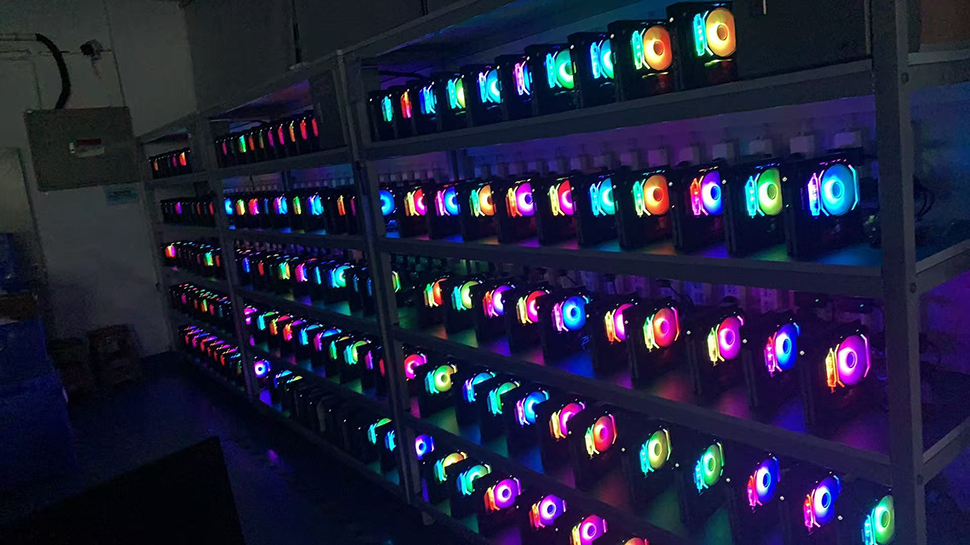
Rank 14497GMKtec's EVO-X2 launch reportedly saw hundreds of units sold on day oneThe devices are powered by AMD Ryzen AI Max+ 395 with 50 TOPS AI performance Racks of the RGB-lit mini PCs were shown during aging tests for quality assurance
GMKtec, a mini PC manufacturer based in Shenzhen, China, has launched its new flagship device, the EVO-X2.The company says the debut of the product, which had the first unit personally signed by Lisa Su, the CEO of AMD, drew strong interest, with hundreds of units sold through its official website on the first day.In response, GMKtec has shifted into high gear, triggering what it calls “emergency production protocols” to meet this early demand.
(Image credit: GMKtec)
First come, first served
GMKtec shared a rare photo from inside its factory (see header image) showing rows of the AMD Ryzen AI Max+ 395 powered units undergoing final aging tests, each equipped with RGB cooling fans.This testing stage helps verify system stability under continuous operation before shipping and is part of its standard quality control process, designed to ensure the mini PCs hold up under real-world workloads.The EVO-X2 is built around the AMD Ryzen AI Max+ 395 processor, which is manufactured on TSMC’s 4nm FinFET process. It features 16 cores and 32 threads and can reach speeds up to 5.1GHz.This high-performance processor includes an AI engine based on AMD’s XDNA 2 architecture, capable of delivering up to 50 TOPS from the NPU alone. GMKtec claims the chip achieves up to 2.2 times the AI performance of an Nvidia RTX 4090 in LM Studio, while consuming less power.The mini PC is targeted at creators, hybrid professionals, and gamers. Memory options include 64GB or 128GB LPDDR5X, and storage options scale up to 16TB with dual M.2 slots. Video output supports resolutions up to 7680×4320 at 60Hz.EVO-X2 offers a wide range of ports, including HDMI, DisplayPort, USB4, multiple USB-A connections, a 2.5G Ethernet jack, and both front and rear 3.5mm audio jacks. It supports Wi-Fi 7 and Bluetooth 5.4.The EVO-X2 is available to buy on GMKtec’s official website. Two configurations are being offered, and a limited-time code (X2PR30) gives a $30 discount if purchased from here. Shipments are going out on a first-come, first-served basis.
You may also like
Check out our list of the best mobile workstations for any budgetAnd these are the best workstations you can buy right nowChinese brand’s $2,000 Ryzen AI Max+ mini PC set to go on sale
-
Picture from o.aolcdn.com
Rank 14498Nintendo Switch 2 pre-orders are officially live at Nintendo's online store — but only if you've received an invite. As advertised, the My Nintendo Store began sending out Switch 2 pre-order invites on Thursday to those who previously registered their interest and meet the company's "priority criteria."
If you've been chosen, congratulations! You have 72 hours from the time your email was sent to complete your purchase. If you previously signed up but haven't received a notice, well, we'll have to see when exactly it'll arrive. Nintendo has been accepting registrations since April 2, and it's sending invites to past Switch players and Switch Online subscribers before anyone else.
If you meet the priority requirements and signed up on the earlier side, you should (hopefully) get your invite before most others. If you signed up later, don't be surprised if it takes awhile for Nintendo to grace your inbox. The company warned last month that it may not be able to send all invites — or even deliver all orders that do get placed — before the Switch 2's June 5 release date.
Beyond Nintendo, the song sadly remains the same. As of our latest check, the device remains fully sold out at Walmart, GameStop, Best Buy, Target and other retailers. This has mostly been the case in the US since the Switch 2 first went up for sale on April 24, and it remains unclear when it'll change.
That said, we're keeping an eye out for any surprise restocks that pop up. If you're still hoping to get your hands on the device early, we've rounded up all the Switch 2 pre-order listings we could find for easy access and broken down what to know about buying the console.
How to pre-order the Nintendo Switch 2 at the My Nintendo Store
As noted above, Nintendo is only selling the Switch 2 through an invite system, which began on April 2. While it seems unlikely you'll receive your console before launch day if you sign up with Nintendo now, we still recommend doing so in case stock remains low at other stores. Registration is free, and you'll receive your invite eventually, even if it takes some time.
On that point, Nintendo says it is prioritizing invites "on a first-come, first-served basis" to registrants who meet the following criteria:
You must have purchased a Switch Online membership as of April 2, 2025. If you've only ever been part of a family plan and weren't the paying account, that's a no-go.
You must have been a paid Switch Online subscriber for at least 12 months as of April 2, 2025.
You must have logged at least 50 hours of total Switch gameplay time as of April 2, 2025.
You must have opted into sharing gameplay data with Nintendo as of April 2, 2025. You can confirm this in your account's privacy settings.
You must be a Nintendo account holder who is at least 18 years old.
If you fulfill those requirements, you'll be ahead in Nintendo's invite queue. If not, you'll have to wait until after the priority registrants receive their emails. Once they do, the remaining invites will go out on a first-come, first-served basis. Whenever you get your email, you'll have a 72-hour window to buy.
As with other stores, you have two models to pick from: the base Switch 2 console for $450, and a bundle with Mario Kart World for $500. Note that you can only purchase one console per invite. You'll also be able to pick up certain accessories when it's your time to shop.
Pre-order Nintendo Switch 2
Nintendo
Pre-order Nintendo Switch 2 + Mario Kart World bundle
Nintendo
We received our invite late Thursday evening after signing up about an hour after the registration window first opened. We've posted screenshots of what the official invite email and buying process looks like below. (A previous version of this guide linked to screenshots from Reddit and the gaming forum ResetEra, but one ResetEra user appears to have shared a fake invite, so we've removed that.) Broadly speaking, the experience is far less chaotic than it's been at other stores. Our confirmation email says that our console will ship by June 4.
How to pre-order the Nintendo Switch 2 at other retailers
Unfortunately, the Switch 2 remains sold out everywhere else as of this writing. To recap the situation: After a two-week delay, Nintendo finally kicked off Switch 2 pre-orders at third-party retailers in the US and Canada at midnight ET on April 24. A couple of (headache-inducing) hours later, stock at Walmart, Target and Best Buy had sold out. GameStop began taking pre-orders later that morning but quickly met the same fate. Some eagle-eyed buyers were reportedly able to pre-order through Walmart as late as April 26, but things have dried up since.
Other membership-based retailers like Costco and Sam's Club have Switch 2 listings as well, but we haven't seen anything to suggest they will accept pre-orders. Newegg also has a Switch 2 page but hasn't provided an option to buy just yet. As for Amazon, we assume the Switch 2 will eventually be available there, but it's not today, and there's been no indication as to when that might change. (Even before the Switch 2 was unveiled, stock of the original Switch and first-party Switch games had been limited at Amazon US for several months.)
If you're desperate to catch a restock, it's a good idea to create a free account with the retailers above and ensure all of your shipping and billing info is up to date with each. Downloading each store's mobile app and signing up for notifications may help too, though that could get annoying fairly quickly.
Pre-order Nintendo Switch 2
Walmart
GameStop
Best Buy
Target
Amazon*
Pre-order Nintendo Switch 2 + Mario Kart World bundle
Walmart
GameStop
Best Buy
Target
Amazon*
*As of 1:15pm ET on Friday, May 9, Amazon has not listed either Switch 2 console package for sale. We will update this article with direct links if they arrive; until then, we're linking to the site's Nintendo-focused hub.
How to pre-order Switch 2 accessories and games
Naturally, there are numerous accessories and games up for pre-order alongside the Switch 2 itself. While Nintendo hasn't changed the console's price since delaying its initial pre-order date, it has hiked the cost of several accessories due to "changes in market conditions" (read: tariffs). The new Switch 2 camera, for instance, now costs $55 instead of its original $50, while the Switch 2 Pro Controller leapt from $80 to $85. An extra set of Joy-Con 2 controllers is up to $95 from $90, and the official Joy-Con Charging Grip costs $40 instead of $35.
Most (but not all) of Nintendo's official Switch 2 accessories are still up for grabs at one or two retailers at a minimum, but stock has become spottier since they first went up for sale. Upcoming Switch 2 games like Mario Kart World and Donkey Kong Bananza, meanwhile, remain widely available.
Mario Kart World for $80
Nintendo
Walmart
GameStop
Best Buy
Target
Amazon*
Donkey Kong Bananza for $70
Nintendo
Walmart
GameStop
Best Buy
Target
Amazon*
Additional Switch 2 games
Nintendo
Walmart
GameStop
Best Buy
Target
Amazon
Samsung microSD Express Card (256GB) for Nintendo Switch 2 for $60
Nintendo
Walmart
GameStop
Best Buy
Target
Amazon
Joy-Con 2 bundle for $95
Nintendo
Walmart
GameStop
Best Buy
Target
Amazon*
Switch 2 Pro Controller for $85
Nintendo
Walmart
GameStop
Best Buy
Target
Amazon*
Switch 2 Camera for $55
Nintendo
Walmart
GameStop
Best Buy
Target
Amazon*
Hori Nintendo Switch 2 Piranha Plant Camera for $60
Best Buy
Target
Amazon
Joy-Con 2 Charging Grip for $40
Nintendo
Walmart
GameStop
Best Buy
Target
Amazon*
Joy-Con 2 Wheels (set of 2) for $25
Nintendo
Walmart
GameStop
Best Buy
Target
Amazon*
Switch 2 All-in-One Carrying Case for $85
Nintendo
Walmart
GameStop
Best Buy
Target
Amazon*
Switch 2 Carrying Case and Screen Protector for $40
Nintendo
Walmart
GameStop
Best Buy
Target
Amazon*
*As of 1:15pm ET on Friday, May 9, Amazon has not listed any first-party Switch 2 accessories or games for sale. (Some third-party devices and games are listed, however.) We'll update this article with direct links if they arrive; until then, we're linking to the site's Nintendo-focused hub.
More Switch 2 details
The Nintendo Switch 2.
Sam Rutherford for Engadget
We knew from its initial teaser trailer that the Switch 2 would be bigger than its predecessor and take a new approach to its detachable Joy-Cons. The Joy-Con 2s, as they're called, now attach magnetically and include a C button, mouse controls and a built-in gyroscope for tilt control. The console itself is indeed larger, with a 7.9-inch LCD screen that supports a 1080p resolution, a variable refresh rate up to 120Hz and HDR10. The hardware also has a built-in mic to support a new feature called GameChat that'll let you communicate with friends in-game. (This is what that C button is for.) Nintendo says this service will be free to all Switch 2 users until March 31, 2026, at which point it'll require a Switch Online membership.
When docked, you'll be able to play up to 4K on your TV. Nintendo says it's improved the consoles internal speakers as well. The updated dock has a built-in fan to keep the console cool and help maintain performance during long play sessions. Though we won't know exactly how much of a power upgrade the Switch 2 is over to the first Switch until it's released, it looks to be fairly significant leap, given that it'll have ports of relatively demanding games like Elden Ring and Cyberpunk 2077.
Elsewhere, the Switch 2 has dual USB-C ports for charging, while the internal storage amount has jumped from 32GB to 256GB. That storage is still expandable, but the device will only work with newer (and more expensive) microSD Express cards. As seen in the recent 20.0.0 update for the original Switch, the upcoming console will also utilize Nintendo's new Virtual Game Card system for lending digital games across systems, as well as a GameShare feature that lets you share select titles locally with just one copy of a game.
Tariffs and the Nintendo Switch 2
The Nintendo Switch 2's Joy-Con 2 controllers.
Sam Rutherford for Engadget
During its most recent Direct presentation at the start of April, Nintendo showed off more of the Switch 2 than it ever had before. That included the reveal of its original April 9 pre-order date, in addition to its $450 starting price. Shortly after, President Trump announced sweeping tariffs on China and other countries, prompting Nintendo to delay pre-orders in the US and Canada.
In a reversal, President Trump later announced a 90-day pause on steep tariffs affecting 75 countries, but also announced that the tariff imposed on China will go up even further (right now, it sits at 145 percent).
We now know that the original $450 price for the Switch 2 will remain the same in the US and Canada, but based on its official statement, it appears Nintendo is leaving the door open for potential future price increases.
We also know that Nintendo started moving some of its Switch console manufacturing to Vietnam in 2019. The increased tariff for Vietnam was set to be 46 percent, but that's temporarily on hold in favor of a 10 percent tariff that’s in effect for the 90-day pause period.
It has been speculated that Nintendo will boost production of Switch 2 consoles in Vietnam so it can stay on schedule, even if it sells the console at a loss in the short term. It appears the company will have to seriously ramp up production to keep up with Switch 2 demand: According to Nintendo, 2.2 million people entered the pre-order lottery in Japan alone, which is far more devices than it is expected to deliver in that region on launch day. In total, the company projects it will sell 15 million Switch 2 units through March 2026.
This article originally appeared on Engadget at https://www.engadget.com/gaming/nintendo/nintendo-switch-2-pre-order-updates-the-latest-on-restocks-my-nintendo-store-invites-and-more-140931152.html?src=rss
-

Picture from techcrunch.com
Rank 14499 -

Picture from techcrunch.com
Rank 14500