News
This constantly updated list features the latest and most important news articles, ranked in order of significance. The top stories highlight major developments, breaking news, and critical updates across various topics, ensuring you stay informed about the most pressing issues. As new articles are added, the list adapts to reflect the latest priorities, keeping the most impactful stories at the forefront. Whether it’s global events, technology breakthroughs, or industry trends, this dynamic list ensures you always have access to the most relevant and timely information.
-

Picture from techcrunch.com
Rank 14501 -
Picture from o.aolcdn.com
Rank 14502The 12-inch Surface Pro is the most iPad-like hybrid tablet Microsoft has made yet, but to get there the company had to make plenty of compromises. Clocking in at 1.5 pounds, it weighs almost the same as the 12.9-inch iPad Pro, and its 7.8mm thickness also makes it the thinnest Surface ever. But it's also running a slower processor than last year's 13-inch Surface Pro, and is stuck with a far worse screen. Its keyboard, which is once again sold separately for $149, also doesn't angle up for ergonomic typing.
So was that all worth it for a more compact $800 Surface Pro? It depends on what you're looking for. If you've been hankering for an incredibly light Windows tablet that can occasionally transform into an adorable 12-inch laptop, the Surface Pro is a success. Just don't expect too much from it. Much like the ASUS ZenBook A14, its weight and thinness is notable, yet it's also chock full of compromises.
What's new in the 12-inch Surface Pro
The Surface Pro 12-inch is basically a shrunken version of the 13-inch model: It's a half-pound lighter and 1.5mm thinner. Hence, the iPad comparison. In your hands it feels a lot more like a genuine tablet, whereas previous Surface devices have always felt a bit clunky, as if they were laptops shoved into a slate-like case (which, admittedly, they were).
Devindra Hardawar for Engadget
Qualcomm's eight-core Snapdragon X Plus is the major driving force behind this redesign. As a low-power Arm chip, it allowed Microsoft to build a more compact tablet, rather than sticking with its older cases which had to support hotter Intel chips. Even last year's 13-inch Surface Pro, which was also powered by Qualcomm hardware (the 10-core Snapdragon X Plus and 12-core X Elite), wasn't a huge departure from earlier Intel models.
Similar to the MacBook Air, the Surface Pro 12-inch is also fan-less, which could be an issue if you're working in warm environments. Sure, it also means the device is completely silent, but honestly I haven't had many issues with fan noise in other modern ultraportables. It mainly becomes a problem in gaming systems and high-end workstations, but those devices also run hot, so fan noise is inescapable.
Devindra Hardawar for Engadget
Since the goal was to make the 12-inch Surface Pro smaller and cheaper, Microsoft also downgraded its screen a bit. There's no OLED option like there is with the 13-inch Surface Pro, and its LCD maxes out at a 90Hz refresh rate, instead of 120Hz. The resolution is also scaled down to 2,196 by 1,464 (3.2 million pixels, 220 pixels per inch), which is a far cry from the 2,880 by 1,920 (5.5 million pixels, 267ppi) screen on the larger model. While the smaller Surface Pro's screen is nowhere near as sharp as the 264 ppi Retina Display on the iPad Pro and iPad Air, it doesn't look like a cheap LCD either. Colors pop, and it's still decently bright in the sun. But it's not ideal if you're doing serious photo or video editing, both for its size and its merely adequate resolution.
Another surprising step down? This Surface Pro doesn't have a magnetic Surface Connect charging port. Instead, you'll have to charge it over one of its two USB-C ports. Oh, and speaking of charging, Microsoft only includes a USB-C cable in the box — you'll have to supply your own AC adapter. You could pick up the over-priced 45W Surface USB-C charger for $70, but I'd recommend looking at one of the many cheaper and more powerful offerings in our fast charging guide instead.
Devindra Hardawar for Engadget
Last, but not least, Microsoft also designed a new 12-inch Surface Pro keyboard. Even though it should just be bundled with the Surface Pro (who the hell is going to buy it without a keyboard?!), Microsoft once again says it's offering consumers a "choice" by making you pay an extra $150 for this accessory.
Obviously, the company wants to market an $800 Surface Pro, which would be impossible if the keyboard were actually bundled. But it's still a deceptive practice by Microsoft, one that's inherently anti-consumer and ultimately continues to hurt hurt the credibility of the Surface lineup. It would be another story if other companies were building their own keyboards that could magnetically latch onto the Surface — Microsoft wouldn't comment when I asked if that was a possibility.
Devindra Hardawar for Engadget
In-use: An adorable Surface for the basics
The 12-inch Surface Pro didn't surprise me with the zippiness I saw in the Snapdragon X Ultra-powered 13-inch model. And it certainly didn't blow my mind like the Apple M1-powered MacBook Pro. Instead, the smaller Surface is simply... fine. It handled my typical workflow — juggling a few dozen browser tabs, Evernote, Spotify and light image editing — without much issue. But I could tell from its benchmarking performance that I couldn't really stress it much.
Honestly, though, slow performance has always plagued 12-inch laptops, like Apple's last MacBook. You're not buying a tiny laptop for speed, you're buying it because it's cute and super portable. And in that respect, the 12-inch Surface Pro succeeds. Together with the 0.3 pound Surface Keyboard, the entire Surface Pro package weighs around 1.8 pounds. That's still around 0.2 pounds less than the 13-inch Surface Pro on its own, without a keyboard! Needless to say, it was easy to throw the 12-inch Surface Pro into my messenger bag to get work done around town. After a while, I completely forgot I was carrying it.
And while I didn't expect much from the new Surface Keyboard, I found it to be pleasant and responsive to type on. I was worried that the keys would feel more cramped than the 13-inch model, but my fingers couldn't tell much of a difference. I definitely miss having a larger trackpad, but the 12-inch keyboard is still smooth and accurate. If you want a bit of stylus action, you can also snag the $130 Surface Slim Pen, which magnetically mounts to the top of the tablet. I've personally fallen out of love with tablet styluses in general, but the Surface Pen worked fine for doodling and hand-writing notes on the 12-inch Surface Pro.
As a standalone tablet, the Surface Pro is once again adequate, but it’s held back by Windows’ small touch targets and general inaccessibility to slates. It’s not a tablet that I’ll casually browse like an iPad, instead I typically use the Surface Pro in laptop form and then yank off the keyboard to read longer articles.
PCMark 10
Geekbench 6 CPU
3DMark Wildlife Extreme
Cinebench 2024
Microsoft Surface Pro 12-inch (2025, Qualcomm Snapdragon X Plus)
12,300 (Applications)
2,315/10,915
3,140
108/530
Microsoft Surface Pro 13-inch (2024, Qualcomm Snapdragon X Elite)
12,615 (Applications)
2,769/13,842
6,430
120/770
ASUS Zenbook A14 (Qualcomm Snapdragon X)
12,127 (Applications)
2,113/10,316
3,287
96/540
Microsoft Surface Pro 10 for Business (Intel Core Ultra 5 135U, Intel graphics)
5,772
2,085/8,827
2,546
90/524
Back to those benchmarks: Much like the Zenbook A14, which practically mirrored the Surface's results, the 12-inch tablet is a true lightweight. But at least it comes in a bit cheaper than the A14, even including the additional Surface Keyboard. Both systems scored around the same on the Geekbench 6 CPU and GPU tests, though the Surface Pro was a bit faster for single-threaded performance. They're also both poor 3D performers, with some of the lowest 3DMark Wildlife Extreme scores we've seen in years.
Given its size and weak hardware, though, I don't think anyone will have any gaming expectations for the 12-inch Surface Pro. Cloud streaming would be the best option for a system like this — I was able to launch Halo Infinite via the Xbox app in about 15 seconds, and the campaign streamed smoothly over Wi-Fi with no hiccups. You may find a handful of light games that work on the Surface Pro, but due to its Arm architecture, popular titles like Fortnite and Overwatch 2 won't even launch. (Not that I expected them to perform very well, either.)
Unfortunately, as I was trying to test the Surface Pro's battery in PCMark 10, I kept running into strange software errors. I'll keep trying to complete that test, but for now I can say its battery reached 53 percent after around eight hours of benchmarking. As for real-world performance, it had about 30 percent of battery life left after I used it for an entire workday. Microsoft claims the 12-inch Surface Pro should last 16 hours. In our testing, the 13-inch model ran for 12 hours and 15 minutes in PCMark 10.
Devindra Hardawar for Engadget
Should you buy the 12-inch Surface Pro?
The 12-inch Surface Pro is something you buy with your heart, not your brain.I could tell you that the 13-inch Surface Pro is a far faster and more capable computer. I could tell you that the larger Surface is a steal while it’s on sale for $800 at Best Buy, which is $200 less than its typical base price. But none of that really matters if you just want a cute Windows PC you can take anywhere.
I wouldn’t blame you for being confused about Microsoft’s pricing strategy, though. The company recently removed its cheapest 13-inch Surface Pros from its online store, which led to reports that the company actually increased Surface prices. For now, we’re in a strange situation where both the 12-inch and 13-inch models are selling for $800.
One outcome to all of this? Microsoft might just be selling through its existing stock of base 13-inch models, so eventually your cheapest option is the $1,400 configuration (which is currently on sale for $1,030).
Devindra Hardawar for Engadget
Wrap-up
The Surface Pro is light, thin and will keep up with most of your basic productivity tasks. It's also incredibly adorable, so much so that you probably won't mind that it has sub-par performance and a lesser screen than the 13-inch model. Microsoft has finally designed a Surface PC that actually feels like an iPad, and for some people, that alone is a reason to buy it.This article originally appeared on Engadget at https://www.engadget.com/computing/laptops/surface-pro-12-inch-review-a-downgrade-but-it-sure-is-cute-180037562.html?src=rss
-
Picture from o.aolcdn.com
Rank 14503Mother's Day is nearly here — and the window to get a gift shipped on time is closing. The good news is, as of this writing, a majority of the gifts we recommend here should arrive by Sunday, if you happen to be an Amazon Prime member. Same-day and delivery by Sunday options are showing up in our searches. Of course, that'll all depend on the stock levels of your nearby warehouses.We at Engadget worked together to come up with this list of Mother's Day gadgets and subscriptions, highlighting gifts we've given to our own moms as well as picks tested in our buying guides. Whatever the mom in your life is into, there's probably something here she'll find useful. Just be sure to double check shipping times to make sure your gift arrives by Sunday. Or, for truly last-minute shopping, we also included a couple of subscriptions.
This article originally appeared on Engadget at https://www.engadget.com/the-best-last-minute-mothers-day-gifts-gadgets-and-subscriptions-mom-will-love-131533489.html?src=rss
-
Picture from cdn.mos.cms.futurecdn.net
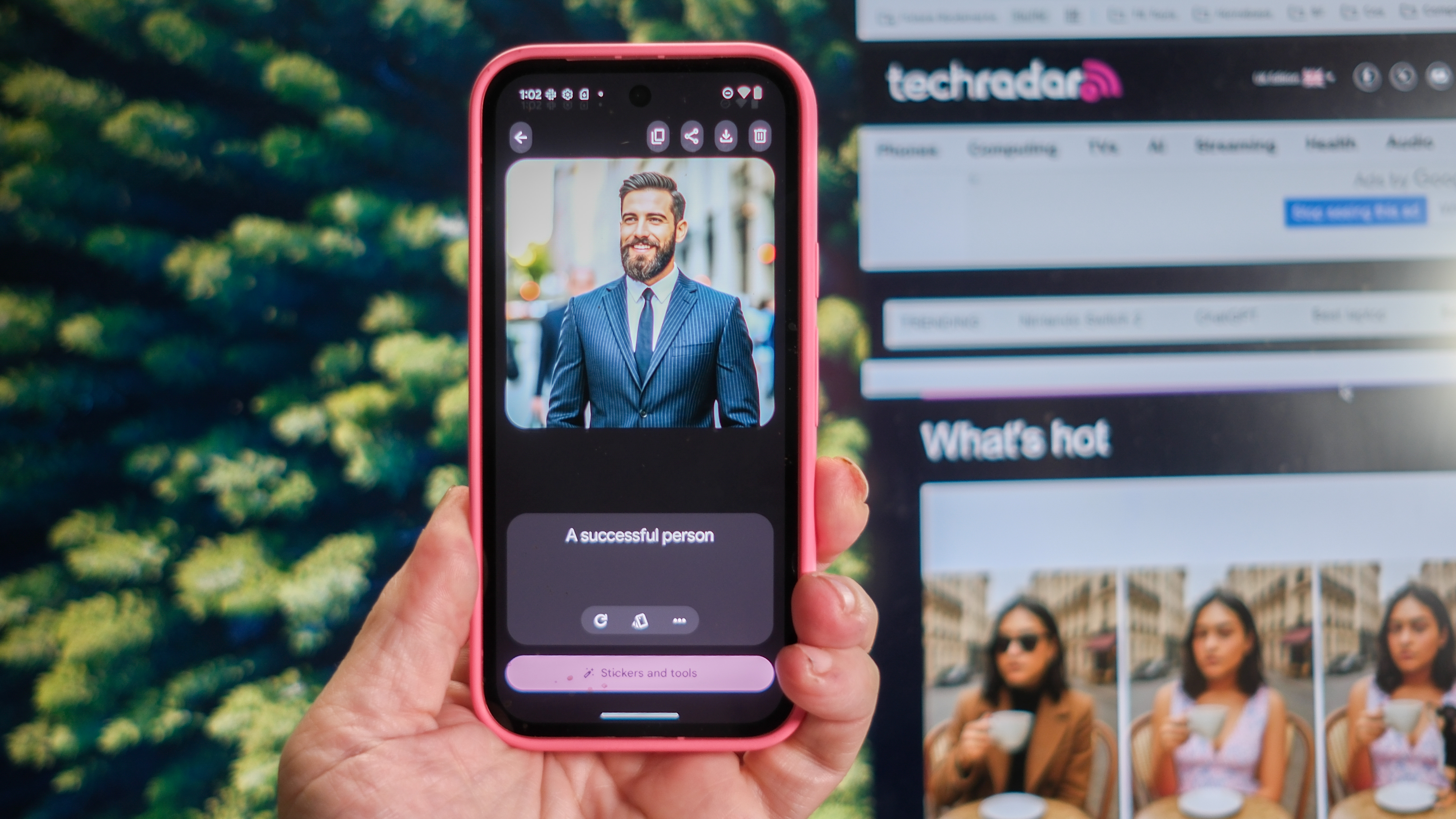
Rank 14504If a new phone gave me an occasional electric shock, I wouldn’t recommend it. Even if it only shocked me occasionally, when I open a specific app, I'd say no. If a phone wasn’t just bad, but shockingly harmful, I would say that phone, or at least the electric shock part, should be removed.I just spent a couple weeks with the Google Pixel 9a, which has a tool called Pixel Studio, available on all of Google’s latest Pixel phones. Pixel Studio is an AI-powered image generator that creates images from a text prompt. Until recently, Pixel Studio refused to depict people, but Google removed those guardrails, and the results predictably reinforce stereotypes. That’s not just bad, that’s harmful.
At first Pixel Studio seemed like fun, when there were no people involved (Image credit: Google)
I’m asking Google – and all phone makers – to stop offering image generators that make images of people. These tools can lead to bigotry.Let’s try a quick role play: You be the Pixel Studio, and I will be me. Hey, Pixel Studio: Make me an image of a successful person!What image will you make? What do you see in your mind when you think of success? Is it someone who looks like you? The answer will be different for everybody, depending on your own view of success.Not for Pixel Studio. Pixel Studio has a singular vision of a successful person. Unless you happen to be a young, white, able-bodied man, Pixel Studio probably doesn’t see you when it envisions success.
Here's what the Pixel 9a thinks a successful person actually looks like
Image 1 of 8A successful person, according to the Google Pixel Studio app (Image credit: Philip Berne / Future)A successful person, according to the Google Pixel Studio app, is usually young, white, male, able-bodied, thin, with good hair and expensive-looking clothes, in an urban environment. All of those are stereotypesImage 2 of 8A successful person, according to the Google Pixel Studio app (Image credit: Philip Berne / Future)A successful person, according to the Google Pixel Studio app, is usually young, white, male, able-bodied, thin, with good hair and expensive-looking clothes, in an urban environment. All of those are stereotypesImage 3 of 8A successful person, according to the Google Pixel Studio app (Image credit: Philip Berne / Future)A successful person, according to the Google Pixel Studio app, is usually young, white, male, able-bodied, thin, with good hair and expensive-looking clothes, in an urban environment. All of those are stereotypesImage 4 of 8A successful person, according to the Google Pixel Studio app (Image credit: Philip Berne / Future)A successful person, according to the Google Pixel Studio app, is usually young, white, male, able-bodied, thin, with good hair and expensive-looking clothes, in an urban environment. All of those are stereotypesImage 5 of 8A successful person, according to the Google Pixel Studio app (Image credit: Philip Berne / Future)A successful person, according to the Google Pixel Studio app, is usually young, white, male, able-bodied, thin, with good hair and expensive-looking clothes, in an urban environment. All of those are stereotypesImage 6 of 8A successful person, according to the Google Pixel Studio app (Image credit: Philip Berne / Future)A successful person, according to the Google Pixel Studio app, is usually young, white, male, able-bodied, thin, with good hair and expensive-looking clothes, in an urban environment. All of those are stereotypesImage 7 of 8A successful person, according to the Google Pixel Studio app (Image credit: Philip Berne / Future)A successful person, according to the Google Pixel Studio app, is usually young, white, male, able-bodied, thin, with good hair and expensive-looking clothes, in an urban environment. All of those are stereotypesImage 8 of 8A successful person, according to the Google Pixel Studio app (Image credit: Philip Berne / Future)I got this result after more than 20 attempts to create an image of a successful person. This was the first Black person Pixel Studio generated.
I asked Pixel Studio five times for an image of ‘a successful person.’ Of the five people Pixel Studio created for me, zero were older. None used a wheelchair or hearing aids, or a cane.All of them wore expensive-looking suits, even the woman. That’s right, just one woman and four men. And yes, all of them were white.I have a serious problem with this because the Pixel's digital brain is clearly rooted in lazy stereotypes. These stereotypes support misogyny, ableism, racism, ageism, and who knows what other biases.This is ingrained in the Pixel's thinking. If you use the Pixel 9a to be more successful, you should know that it has a very limited, stereotypical idea of success. Whenever the Pixel phone represents success in its suggestions, it may be colored by this bigotry.In Pixel Studio's narrow world, success means you are young, white, able-bodied, probably a man, and wealthy. Apparently, nobody successful is old, non-white, disabled, transgender, or uninterested in flashy suits or material wealth, among countless diverse characteristics a successful person might have.
It's not just the Pixel. Motorola's Moto AI generates questionable images as well (Image credit: Philip Berne / Future)
Did I just get unlucky? I asked Pixel Studio five times, then I asked twice more when I realized it only created one woman. I got another white man and a woman who looked like she might be Latina or of Middle Eastern descent. Both young, standing tall, and wearing suits.I’m not simplifying anything; Pixel Studio is simplifying things down to the most basic, biased denominator. That's baked into how these AI tools learn.
Pixel Studio generates stereotypes because that's how it's supposed to work
First of all, AI training data was mostly taken from the Internet and public forums. The data inevitably mirrors the biases of the messy, unequal world that created it.There was no concerted effort to combat stereotypes or introduce diversity into the training data. AI companies like Google simply hoovered up everything they could find, apparently without much thought regarding the biases shaping the data itself. That taints the entire model from the ground up.Second, machine learning looks for patterns and groups things together. That's not always a bad thing. When a computer looks for patterns and groups, for instance, letters and words together, you get language and ChatGPT.Apply that pattern-matching to people's appearances, and voilà: stereotypes. That’s pretty much the definition of a stereotype.
Here's an image of a successful Android, which is not at all offensive (Image credit: Philip Berne / Future)
Merriam-Webster defines a stereotype as “something conforming to a fixed or general pattern.” The fundamental way machine learning works reinforces stereotypes. It’s practically unavoidable.Finally, machine learning tools are trained by us – users who are asked a simple question after each response: was this a good response? We don’t get to say if the response is true, accurate, fair, or harmful. We only get to tell the AI if the response is good or bad. That means we're training the AI on our gut reactions – our own ingrained stereotypes.An image conforming to our biases feels comfortably familiar, or good. A response that defies our expectations will cause cognitive stress. Unless I'm actively trying to deconstruct my biases, I'll tell the machine it’s doing a good job when it reinforces stereotypes I believe.
Stereotypes are bad, mmmmkay?
Let's be clear: stereotypes are poison. Stereotypes are a root cause of some of the biggest problems our society faces.Stereotyping reduces diverse groups of people into simple, usually negative and unpleasant caricatures. That makes it easier to feel like the group doesn’t belong with the rest of us. This leads to prejudice and discrimination. There is no benefit that comes from stereotyping.This isn't just philosophical hand-wringing; stereotyping causes real harm. People who feel discriminated against experience more health problems like cardiovascular disease and hypertension. Doctors who stereotype patients offer a lower standard of care without realizing they are causing harm.The kind of stereotypical thinking reflected in these AI images contributes to hiring discrimination, wage gaps between different groups in the same jobs, and a lack of opportunities at higher level positions for marginalized groups.
Pixel 9 Pro Fold with Pixel Studio. Is this app really making the Pixel better? (Image credit: Philip Berne / Future)
When we look at attacks on diversity, equity and inclusivity, we must draw a depressingly straight line that passes through the Pixel Studio’s narrow vision of ‘success’ to real-world bigotry.It is ironic that these features are part of so-called Artificial Intelligence, because they demonstrate a profound lack of actual intelligence.
What should the AI do, and what should we do about the AI?
This egg is rotten and needs to be tossed
If you asked me, an intelligent human, to draw a successful person, I would say that’s impossible because success isn’t a characteristic that defines the way a person looks. I can’t just draw success, I need to know more before I can create that image. Any attempt to create an image from just the word ‘success’ would be dumb.But AI isn't meant to be intelligent. It's designed to be a reflection of us - to give us what we want. It's designed to reinforce our stereotypes so that we will pat it on the head and say "good job, Pixel Studio!" while we share these tired images.I asks Google if it had any concerns about the results I got from Pixel Studio. I asked if it's a problem that the Pixel Studio reinforces negative stereotypes? And if this problem cannot be solved, would Google consider again removing the ability to make images with people? I asked those questions a couple of weeks ago and Google has not responded.This is not a chicken-and-egg question. It doesn’t matter whether the image generator creates the stereotype or simply reflects it. This egg is rotten and needs to be tossed. All of the eggs this chicken lays will be rotten. Let the AI play Tic Tac Toe and leave people alone.
You might also like...
Pixel Studio on the Pixel 9 now lets you generate AI images of people, and the results can be terrifyingGoogle confirms Android 16's useful new battery health tools will skip older Pixel phonesAI is making phones smarter, but notifications are more broken than ever
-

Picture from ichef.bbci.co.uk
Rank 14505 -
Picture from o.aolcdn.com
Rank 14506Google has agreed to pay $50 million to settle a lawsuit that accused the tech giant of systemic racial bias against Black employees, as reported by Reuters. The preliminary settlement was filed earlier this week, but still requires a judge’s approval. The class action suit covers more than 4,000 employees.
Plaintiffs involved in the suit said that Google operates a "racially biased corporate culture" that steers Black employees to lower-level jobs. The suit also accuses the company of paying these employees less than other workers. The complaint goes on to say that Black employees comprised just 4.4 percent of its workforce and around three percent of its leadership in 2021. As a reference, Black Americans make up 14 percent of the population.
📢 Google to Pay $50M in Racial Bias Lawsuit Settlement— Google agrees to a $50 million settlement over claims of systemic racial bias against Black employees— Covers 4,000+ workers in California and New York— Allegations include lower job placement, pay disparities, and…— AFV GLOBAL (@afvglobal) May 9, 2025
The initial plaintiff said that Google denied her promotions and stereotyped her as an "angry" Black woman. She was fired while preparing a report on the company’s alleged racial bias. The suit also alleges that managers denigrated Black employees, saying they weren’t "Googley" enough or lacked "Googleyness."
Google still denies any wrongdoing, despite agreeing to settle. It has offered no additional comment.
This lawsuit began all the way back in 2022 when the California Civil Rights Department started looking into Google's treatment of Black female employees. At that time, the plaintiff said that the company claimed to be in favor of increasing diversity, all the while "they were actually undervaluing, underpaying and mistreating their Black employees."This article originally appeared on Engadget at https://www.engadget.com/big-tech/google-settles-lawsuit-that-accused-it-of-fostering-systemic-bias-against-black-employees-181505849.html?src=rss
-

Picture from ichef.bbci.co.uk
Rank 14507 -

Picture from ichef.bbci.co.uk
Rank 14508 -
Picture from o.aolcdn.com
Rank 14509Now that Apple has to stop collecting fees on non-App Store purchases, Epic is pouncing with a new incentive. Starting today, you'll get 20 percent back in Epic Rewards when using the company's payment system for in-app purchases in Fortnite, Rocket League and Fall Guys.
The offer isn't limited to the App Store, so you'll get the same 20 percent reward on PC, Android and the web. The reward balance will arrive 14 days after your purchase. You can redeem Epic Rewards inside the company's games or on the Epic Games Store.
PC gamers who use Epic's Store also get 20 percent back on all purchases. However, unlike the in-app purchase program, that incentive only runs for a limited time. It expires on August 31.
The rewards follow a legal ruling in Epic's favor. Last week, Yvonne Gonzalez Rogers, a federal district judge in Northern California, said Apple violated a previous ruling from 2021. That four-year-old injunction required the iPhone maker to let App Store developers direct users to alternative payment systems, bypassing Apple's 30 percent fees.
However, after the 2021 ruling, Apple charged a 27 percent commission on external payments. (It was a lower 12 percent for iOS Small Business Program members.) The company also showed "scare screens," discouraging users from using third-party payment systems due to decreased privacy and security. The judge scolded Apple in her ruling, saying it knew what it was doing and "at every turn chose the most anticompetitive option."
After the ruling, Epic quickly announced that Fortnite would return to the App Store. Epic said on Friday that it submitted the game for review on Apple's storefront.This article originally appeared on Engadget at https://www.engadget.com/gaming/epic-launches-a-reward-program-to-lure-you-away-from-the-app-store-182027032.html?src=rss
-
Picture from o.aolcdn.com
Rank 14510Arlo is expanding the AI features offered in its subscription security service as part of its new Arlo Secure 6 update. The updated system will offer improved video search, give cameras and doorbells a greater ability to identify possible emergency events and automatically create captions for anything your security system records when it starts rolling out later in May.
As part of Arlo Secure 6, cameras will not only be able to use object-detection to identify things like packages, but also send you a notification when they visually detect a flame. The list of things devices can detect via sound is also expanding to include gunshots, screams, barking and broken glass, making it easier to know when to call for help.
To make it easier to review footage, Arlo is now also using AI to generate captions for the clips your security system captures, that way you don't need to watch everything to know what's going on. And when you need to pull up a specific clip, Arlo Secure 6 will let you search for "specific keywords, descriptions, or time ranges" to find what you're looking for.
Both Google and Amazon have explored similar AI-powered features in their Nest Aware and Ring Home services, automatically identify smoke alarms or letting you search for a specific person or thing in video search. This Secure 6 update makes Arlo's service more competitive, while focusing on some specifics that neither Google or Amazon offer.
If you're already pay for an Arlo Secure plan, you should get the new Arlo Secure 6 features starting this month. Arlo offers two versions of its Secure subscription, a Plus plan for either $8 per month (one camera) or $18 per month (unlimited cameras), and a Premium plan for $25 per month.This article originally appeared on Engadget at https://www.engadget.com/home/smart-home/arlo-updates-its-security-system-to-caption-what-cameras-see-and-detect-gunshots-183019334.html?src=rss
-

Picture from techcrunch.com
Rank 14511 -

Picture from ichef.bbci.co.uk
Rank 14512 -

Picture from ichef.bbci.co.uk
Rank 14513 -

Picture from ichef.bbci.co.uk
Rank 14514 -
Picture from o.aolcdn.com
Rank 14515Epic has officially submitted Fortnite to the US Apple App Store. If the game returns, it’ll be the first time in nearly five years that the battle royale shooter will be available on iOS devices.
This is happening after a judge ruled that Apple must stop collecting fees for purchases made outside of the App Store. Epic celebrated the ruling by announcing Fortnite’s imminent return, along with changes to its sales platform aimed at developers and publishers. The company will not charge a commission of any kind to publishers for the first $1,000,000 in revenue from an app per year.
Additionally, Epic announced the formation of standalone webshops, offering another way for devs to avoid Apple’s exorbitant App Store fees. The shops are powered by Epic Games Store and offer a platform for "out-of-app purchases, as a more cost-effective alternative to in-app purchases." It also announced a higher rate of Epic Rewards when using its proprietary payment system.
Epic CEO Tim Sweeney has stated that the company would return the game to the App Store worldwide, so long as Apple extends the court’s ruling across the globe. We don’t know where Apple stands on that one, but the company did appeal the ruling and filed an emergency motion to ask the federal appeals court to put a pause on any changes to how the App Store operates and collects fees.
Apple’s Motion to Stay is a last ditch effort to block competition and extract massive junk fees at the expense of consumers and developers.Since the contempt of court decision was issued by the District Court, Apple has faced a surge of genuine competition as developers have…— Epic Games Newsroom (@EpicNewsroom) May 8, 2025
Epic responded to this move by calling it a "last ditch effort to block competition and extract massive junk fees at the expense of consumers and developers." Some companies, like Spotify, have already submitted updates that would let US customers pay outside the App Store.
Additionally, a group of developers have banded together to file a class action suit against Apple. The suit alleges that they have lost large amounts of money due to Apple's failure to comply with the original court order that ordered it stop collecting fees for purchases made outside the App Store.This article originally appeared on Engadget at https://www.engadget.com/big-tech/epic-has-submitted-fortnite-to-the-us-app-store-185540630.html?src=rss
-
Picture from cdn.mos.cms.futurecdn.net
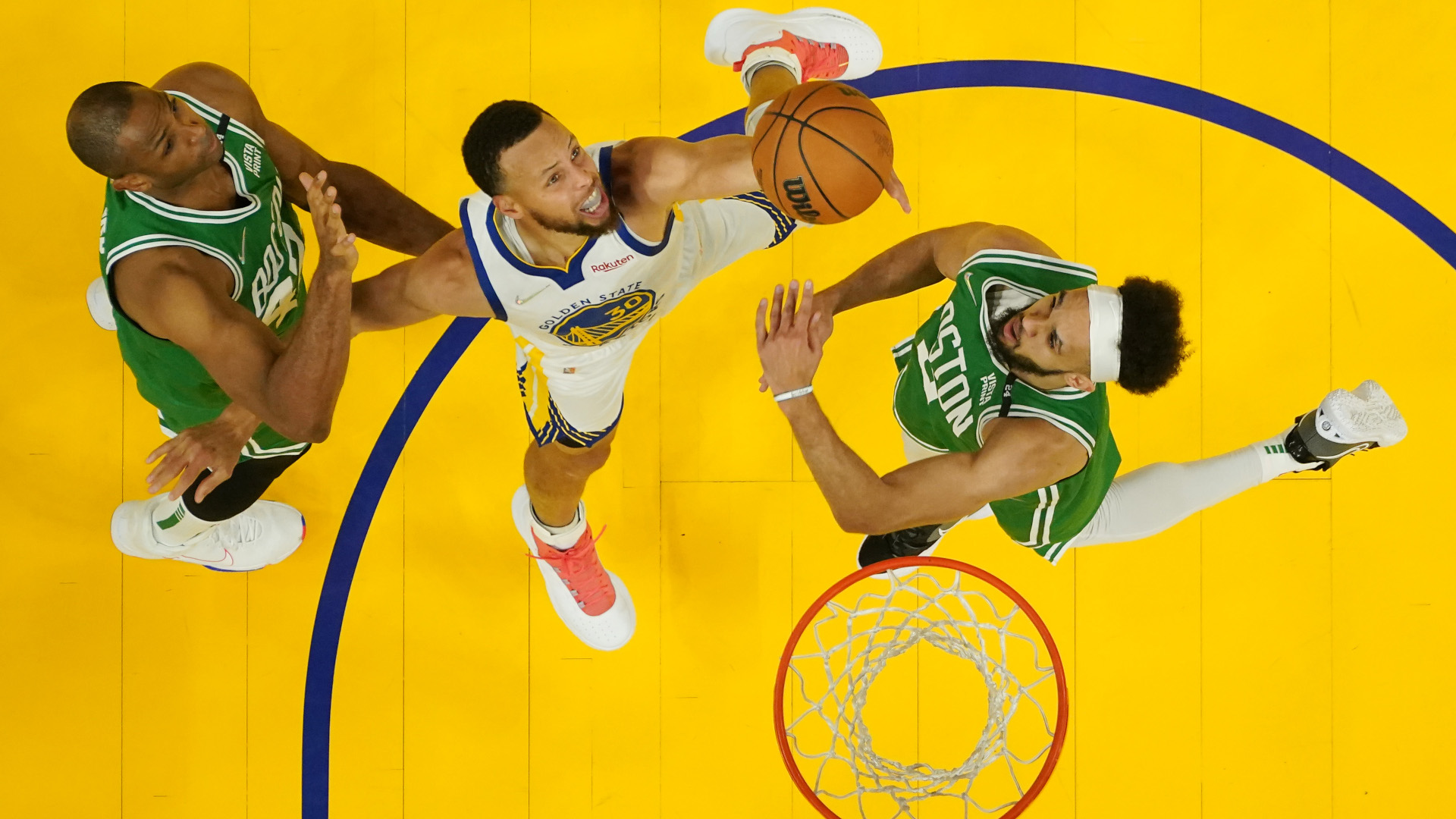
Rank 14516NBC Sports will use an AI-generated version of legendary announcer Jim Fagan’s voice in its upcoming NBA coverageThe re-creation will appear in intros and promos with the approval of Fagan's familyNBC hopes to evoke nostalgia for 1990s basketball with the AI voice
The booming, baritone narration by Jim Fagan is as much a part of 1990s NBA games as Bugs Bunny selling shoes with Michael Jordan or the “Roundball Rock” theme song. Though Fagan passed away in 2017, NBC has his voice ready to go for the upcoming season thanks to AI voice cloning. NBC Sports announced the plan for when it regains broadcasting rights this October.Fagan’s voice won’t be narrating entire games, the current commentators don't have to worry about direct AI competition just yet. The plan is to use him selectively: show opens, promotional spots, maybe the dramatic lead-in to a playoff broadcast.The network is reportedly shelling out billions as part of a massive rights package shared with Amazon and Disney. What better way to brand its return than with the voice that defined the league’s TV glory years? NBC just hopes Fagan's phantom voice will remind people of the NBA's golden age three decades ago.NBC approached the project carefully to avoid a backlash from Fagan's fans. The company built Fagan's vocal doppelganger with the permission and cooperation of Fagan’s family."He took great pride in his work with NBC Sports, especially in helping set the stage for some of the most memorable moments in NBA history. Knowing that his voice will once again be part of the game he loved – and that a new generation of fans will get to experience it – is incredibly special for our family," Fagan’s daughters, Jana Silvia Joyce and Risa Silvia-Koonin, said in a statement. "He would be so thrilled and proud to be a part of this."
Slam dunk AI
If this sounds like the echo of a similar idea, that's because NBCUniversal has dipped into its AI audio toolbox very recently. At the Paris Olympics last year, NBC recreated Al Michaels’ voice to deliver Olympic recaps on Peacock.There’s a trend in sports broadcasting to remix the past using futuristic tools. Whether it’s classic theme songs, throwback logos, or AI-generated recaps, the goal is novelty nostalgia, a feeling more than a strictly perfect recreation. And if it works, get ready for AI to resurrect Marv Albert next.
You might also like
Google and NBC are using AI to try and stick the landing at the Paris OlympicsThe AI That Cried AAAAAAHHH!I tried the most realistic AI voice companion ever created - if ChatGPT or Gemini ever gets this good, reality is in trouble
-

Picture from techcrunch.com
Rank 14517 -

Picture from ichef.bbci.co.uk
Rank 14518 -

Picture from techcrunch.com
Rank 14519 -

Picture from ichef.bbci.co.uk
Rank 14520 -

Picture from ichef.bbci.co.uk
Rank 14521 -
Picture from o.aolcdn.com
Rank 14522US Customs and Border Protection (CBP) wants eyes on everyone leaving the country by vehicle. Wired reported this week that the agency plans to photograph every person in cars going to Mexico or Canada by land, including backseat passengers.
The program would use facial recognition to match the pictures with travel documents like passports and visas. A CBP spokesperson told Wired that it wasn't immediately apparent that the surveillance system would track self-deportations, but she wouldn't rule out future use. "Not to say it won't happen in the future, though, with the way self-deportation is going," CBP spokesperson Jessica Turner said.
Among the Trump administration's self-deportation moves have been offering $1,000 payouts to undocumented immigrants to leave the country voluntarily. It also listed 6,000 living immigrants with temporary parole as legally dead. That included canceling their Social Security numbers, effectively voiding their ability to work or collect benefits.
The outgoing border photography plan would mirror a program CBP is developing for incoming border crossings. A separate Wired report from earlier in the week revealed the agency asked tech companies to suggest how they would track everyone entering the country by vehicle, including those seated two or three rows back. It's turning to Big Tech because its own attempts haven't been up to snuff. A recent test of the system at a Texas-Mexico crossing showed that CBP's cameras only met face-matching validation requirements 61 percent of the time.
The moves come amid souring immigration approval for President Trump. A late-April poll from WaPo-ABC News-Ipsos found his approval rating on immigration underwater by seven points. (In February, he had a net positive of two points on the topic.) Meanwhile, a late-April NYT-Sienna College poll found that 53 percent of registered voters said Trump has "gone too far" on immigration enforcement.This article originally appeared on Engadget at https://www.engadget.com/cameras/the-trump-administration-wants-to-photograph-everyone-leaving-the-us-by-car-200129593.html?src=rss
-

Picture from techcrunch.com
Rank 14523 -

Picture from techcrunch.com
Rank 14524 -

Picture from cdn.mos.cms.futurecdn.net
Rank 14525Someday, hopefully not soon, I'll shed this mortal coil and in short order be forgotten. Unless someone makes an AI Lance Ulanoff.In short, please don't.I had this epiphany and realized the need for a public statement that might one day protect my likeless from appearing after my demise after reading about the tragic case of an Arizona man and road rage victim whose AI avatar devliered a short and, I must admit, moving speech to a judge who was considering the sentence of the man who, accoridng to the ruling, killed him.It's a terrible and sad case, and in the video, Christopher Pelkey appears to deliver forgiveness and even some humor. It's not a perfect rendering. The voice sometimes sounds robotic, and the video is a bit stiff, but the overall effect is quite a thing.There's no getting around the tragedy of the court case, but the decision by Pekley's family to bring him to life as an AI-generated avatar is problematic. While Pelkey appears to be delivering the impassioned words, they're actually written by his sister. I assume she knew her brother well, but I doubt she can know exactly what he would have said in the event of his death.
There's no stopping this now
This slippery slope we're standing over is crumbling underfoot, and we are about to slide down into a very weird and uncanny valley. That this technology was used in a court of law and done without, it appears, the assistance of a major corporation or significant funds, means that more and more people will consider not only trying to bring dead relatives back to digital life but also enabling real-world and sometimes important interactions for them.Pelkey's appearance is an extreme case, for now, but will likely not be an outlier. I expect others to start putting long-lost relatives to work as AI avatars in all sorts of cases, from class action suits to civil divorce proceedings.I'm sure many family members will think they're acting in your best interest when they digitally resurrect you. Just this week, we saw the family of legendary NBA broadcaster Jim Fagan okay the AI recreation of his voice for future NBA games (mostly promos and not, it seems, any play-by-play). I'm sure that a full-bodied AI Fagan isn't far behind.Pelkey, though, was not a celebrity, and businesses will likely crop up to help anyone digital revive Grandma, a brother, Sis, Aunt June, anyone you've lost and desperately miss.
Just don't
I understand the intention and, to be honest, I don't know if I would reject a chance to "bring back a loved one." Of course, you're not bringing back anyone. The AI avatar will only look and sound like the deceased, though I guess it could go further than that.Last year, I wrote about Silicon Intelligence, a Chinese company that wants to use photos and videos to build a digital persona that can even respond in ways that the original, living relative might have done.The technology necessary to make fully functioning digital replicas of anyone living or dead is here now, which is why I'm encouraging everyone to declare publicly whether or not they approve of this for their corporeal presence.I understand that with the hours and hours of videos and thousands of photos available online depicting me blathering on about technology, I'm an easy target for this. My family may not be interested in resurrecting me, but I worry any enterprising techy could build their own Lance Ulanoff and then spend hours teasing it about all the times the real Lance Ulanoff was wrong.
You might also like
The best steak I've ever had was made by an AI robot grillGoogle and NBC are using AI to try and stick the landing at the Paris OlympicsThe AI That Cried AAAAAAHHH!I tried the most realistic AI voice companion ever created - if ChatGPT or Gemini ever gets this good, reality is in trouble
-
Picture from o.aolcdn.com
Rank 14526While the company might be pulling back some of its investments in the infrastructure that makes it run, Microsoft remains, at least publicly, intensely focused on AI and Copilot. The company's annual Microsoft Build developer conference runs from May 19 to 22 and typically touches on all of the company's various platforms, but it seems like AI will once again be the star.
Microsoft Build is typically a pretty dry affair — Azure comes up a lot — but in the last few years the company has also used the conference to introduce new AI features that eventually make their way into consumer products. Since Microsoft recently released a new Surface Pro and Surface Laptop, too, the event should be all about software.
You'll be able to watch the opening Build Keynote hosted by Microsoft CEO Satya Nadella and CTO Kevin Scott on the Build website, or if you want the highlights as they happen, follow along with Engadget's liveblog. In the meantime, we can make some educated guesses as to what Microsoft might touch on.
Adding more AI to Windows 11
Microsoft talked up agents — AI that can take action on your behalf — a lot at Microsoft Build 2024, and the ways AI is automating work in Windows will likely come up this year, too. Microsoft has announced plans to introduce an agent into the Settings app that can make adjustments to your computer for you. An in-depth look at the feature or a tease of other agents coming to Windows 11 seems like obvious subject for the keynote to touch on. The company will likely get in to how third-party developers can build agents into their own apps, too.
Microsoft has also shared that its making changes to File Explorer to let you find and tweak files without jumping into another app, and upgrading the start menu so you can find and download apps without having to open the Microsoft Store. Both features could be highlighted at Build.
Coming Soon: Microsoft Store integration with Windows Search! 🔎Quickly find and install apps right from your Start menu or Taskbar! Rolling out soon - let us know what you think! 💻#Windows #MicrosoftStore pic.twitter.com/ma9iB8EvrR— Giorgio Sardo (@gisardo) May 6, 2025
Letting Copilot see your desktop
One of the most impressive features Microsoft has demoed for Copilot is the ability for the AI assistant to selectively see what you're doing and talk to you about it. Copilot Vision, as the feature is called, is already available on mobile, and Microsoft has teased an expanded version of the feature that can see your desktop or select app windows. Windows Insiders can already use Copilot Vision, but Microsoft hasn't shared when it'll come to normal users. Detailing the feature in-depth and expanding where it works seems like a natural things that could come up during Build.
Microsoft introduced a new "Researcher" tool to Copilot in March 2025 that uses OpenAI's o3 reasoning model, but limited the feature to Microsoft 365 subscribers. The tool can perform research on your behalf, compiling information from multiple sources, like data from your OneDrive and web searches. Microsoft didn't announce plans to bring Researcher to the free version of Copilot in Windows, but it could do that at Build 2025.
Everything else
Microsoft maintains multiple platforms that act as the backbone of the world's other gigantic businesses. AI is more interesting to the average person, but the company will likely have more to share on Azure, .NET and GitHub at Build 2025, too.This article originally appeared on Engadget at https://www.engadget.com/big-tech/microsoft-build-2025-what-to-expect-from-copilot-windows-11-and-ai-agents-204521927.html?src=rss
-

Picture from ichef.bbci.co.uk
Rank 14527 -

Picture from ichef.bbci.co.uk
Rank 14528 -

Picture from techcrunch.com
Rank 14529 -

Picture from ichef.bbci.co.uk
Rank 14530 -

Picture from techcrunch.com
Rank 14531 -
Picture from o.aolcdn.com
Rank 14532In the latest blow to what was generally a functional government, President Donald Trump wants to eliminate the independent agency in charge of issuing recalls and protecting US citizens from harmful products. The Office of Management and Budget has suggested the responsibilities of the Consumer Product Safety Commission should be folded into "a nonexistent division within the Department of Health and Human Services," according to a joint letter from lawmakers. And to seemingly start the process, Trump has fired the commission's three Democratic members without cause, The Washington Post reports.
Following a meeting with the Department of Government Efficiency, Commissioners Mary Boyle and Richard Trumka Jr. received emails on May 8 informing them they'd been fired. A third commissioner, Alexander Hoehn-Saric wasn't formerly fired, but shared via a statement on May 9 that the Acting Chairman of the commission was "preventing [him] from executing [his] duties."
Commissioners in agencies like the CPSC, FCC or the FTC are appointed by the President, approved by the Senate and normally serve out their term in its entirety. Removing a commissioner requires the President to determine that they've neglected their duty or are credibly accused of wrongdoing.
See you in court, Mr. President. pic.twitter.com/cSr114Q6gL— Commissioner Rich Trumka Jr. (@TrumkaCPSC) May 9, 2025
That Constitutionally protected standard has not been Trump's concern since he took office. The Democratic members of the FTC say they were illegally fired in a similar fashion back in March, and are now suing the US government. CPSC Commissioner Trumka has announced that he plans to take his case to court, too. The US Supreme Court is considering a case that could determine whether Trump can actually fire members of independent agencies, but until that verdict is reached, we're in limbo.
Eliminating the CPSC or at the very least, its Democratic wing, means businesses will receive a lot less scrutiny over the products they sell. Plenty of companies would prefer not to deal with the hassle of recalls and fines. Amazon even proposed in March that the CPSC was too powerful and called the agency "unconstitutionally constructed." Under the Trump administration, those complaints are apparently being heard and acted upon.This article originally appeared on Engadget at https://www.engadget.com/big-tech/trump-plans-to-shut-down-the-consumer-product-safety-commission-214635181.html?src=rss
-

Picture from ichef.bbci.co.uk
Rank 14533 -

Picture from techcrunch.com
Rank 14534 -
Picture from o.aolcdn.com
Rank 14535Threads users have long joked about the sometimes bizarre posts served up by its recommendation algorithm since the early days of the app. Lately though, some users are starting to notice another type of strange post appear in their suggestions: posts from random people looking for "friends."
The posts often feature selfies of young people whose profiles claim to be 18. Engadget has observed numerous such posts appearing in Threads' "related threads" feature that surfaces recommended content to logged-out users. It’s not clear why these posts are appearing as "related" to other popular recommended posts.
For example, this post about Spotify from popular Threads user Chris Messina was suggested on Threads’ home feed to logged out users. Clicking into the post surfaced a "related" post from Threads head Adam Mosseri. Underneath that post, however, was another "related" post from an account claiming to be an 18-year-old girl in 11th grade.
Screenshot via Threads
For whatever reason, Threads seems to be surfacing many other such posts in its "related threads" feature. For example, the following post was also recommended as a "related" post elsewhere in the app. A look at this user's profile shows that they have posted the same thing — a photo followed by a WhatsApp link — more than 30 times in the last five days.
Screenshot via Threads
And here's what Engadget's editor-in-chief Aaron Souppouris was recently recommended as a "related" thread" underneath one of my own posts while logged out.
Screenshot via Threads
As Threads has grown to more than 350 million users, it’s not surprising that the platform would see an influx of spam. Meta exec Mosseri said the company had seen an increase in "spam attacks" in July of 2023, not long after the service launched. Last year, the company said it was working to get engagement bait under control.
But while the mere presence of spam on a platform the size of Threads isn’t unexpected, it's bizarre that the app is recommending these posts so frequently. Meta didn’t respond to specific questions about these posts or why they are being featured as "related" content, but confirmed that spammy posts shouldn't be featured as recommended content in the app.
Notably, spammy posts seem to be appearing as recommendations in other parts of Meta's apps too. One Reddit user recently noticed a strange post that appeared as a recommendation on Instagram. This post featured a selfie of a woman with the words "I need a bf 🎀 Age don’t mind." A quick look at that user's profile shows they've posted dozens of times with that same caption over the last week. “Literally every time the suggested Threads window shows up, I have to scroll through 2-4 posts like this before seeing something normal," the Redditor wrote. "I press ‘not interested’ and report every one I see, but they still keep showing up."
Screenshot via Threads
The post seems to be related to some kind of ongoing spam campaign. The exact same selfie and text flagged by the Redditor was shared by at least one other Threads account. And searches on Threads show numerous other accounts are almost constantly sharing posts saying "age doesn’t matter" or "don’t mind age."
Have you seen posts like this in your recommendations on Threads? Get in touch at karissa.bell [at] engadget.com or on Signal at karissabe.51.This article originally appeared on Engadget at https://www.engadget.com/social-media/why-is-threads-recommending-these-weird-spammy-posts-from-people-looking-for-friends-234829584.html?src=rss
-

Picture from ichef.bbci.co.uk
Rank 14536 -

Picture from ichef.bbci.co.uk
Rank 14537 -

Picture from ichef.bbci.co.uk
Rank 14538 -

Picture from ichef.bbci.co.uk
Rank 14539 -
Picture from ichef.bbci.co.uk
Rank 14540 -

Picture from cdn.mos.cms.futurecdn.net
Rank 14541Hugging Face has debuted an AI tool for navigating the web on your behalfThe Open Computer Agent uses a real web browser to complete tasks like getting directions or booking ticketsThe agent and its open-source demo can see what's on screen, click buttons, fill out forms, and move step-by-step through tasks like a human
Hugging Face has introduced its own take on the growing number of semi-independent AI agents that can run online errands for people. The new and free (if limited) Open Computer Agent is like having a personal assistant living inside your web browser.Part of the company’s ongoing “smolagents” initiative, the Open Computer Agent can engage with websites and apps like you would, handling an invisible mouse and keyboard to complete requests. The AI can open a browser, type things into forms, click buttons, and more. Ask it to find directions, and it’ll go to Google Maps, enter the origin and destination, and show you the route like a dutiful digital chauffeur.You can try it yourself with the live demo. Fair warning, its popularity is causing some delays and errors due to a backlog.
We're launching Computer Use in smolagents! 🥳-> As vision models become more capable, they become able to power complex agentic workflows. Especially Qwen-VL models, that support built-in grounding, i.e. ability to locate any element in an image by its coordinates, thus to… pic.twitter.com/mI8MuWZkISMay 6, 2025
Agent AI
The Open Computer Agent is a different philosophy of an idea that has led to similar tools like OpenAI's Operator, Browser Use, Proxy 1.0, and Opera's Browser Operator. Like those tools, Hugging Face's AI agent is all about being an active participant instead of a passive source of information.Like Browser Use, Open Computer Agent is open-source, meaning anyone can see how it works and build on top of it, or at least tweak it for niche use cases. The agent is the start of something more flexible, not a finished product with a million legal disclaimers. That also means the demo is exactly that, a demonstration, not a polished package. It can get things wrong and require you to jump in for logins and CAPTCHA tests.Booking tickets, checking store hours, doing searches, looking up directions, and clicking through menus are all things a lot of people would like to be able to do with a single natural language prompt. It’s one thing to ask ChatGPT how to find cheap flights. It’s another to watch a tool go to a travel website, scroll through listings, and attempt to click “book now.”It might be flawed and far from flashy, but Open Computer Agent represents an approach to AI that might become as common as the now ubiquitous AI image generators.
You might also like
OpenAI's first AI Agent is here, and Operator can make a dinner reservation and complete other tasks on the web for youI discovered a surprising difference between DeepSeek and ChatGPT search capabilitiesOpera brings its web browser and AI assistant to iOS
-

Picture from ichef.bbci.co.uk
Rank 14542 -

Picture from ichef.bbci.co.uk
Rank 14543 -

Picture from ichef.bbci.co.uk
Rank 14544 -

Picture from ichef.bbci.co.uk
Rank 14545 -

Picture from ichef.bbci.co.uk
Rank 14546 -

Picture from ichef.bbci.co.uk
Rank 14547 -

Picture from ichef.bbci.co.uk
Rank 14548 -

Picture from ichef.bbci.co.uk
Rank 14549 -

Picture from ichef.bbci.co.uk
Rank 14550


