News
This constantly updated list features the latest and most important news articles, ranked in order of significance. The top stories highlight major developments, breaking news, and critical updates across various topics, ensuring you stay informed about the most pressing issues. As new articles are added, the list adapts to reflect the latest priorities, keeping the most impactful stories at the forefront. Whether it’s global events, technology breakthroughs, or industry trends, this dynamic list ensures you always have access to the most relevant and timely information.
-

Picture from techcrunch.com
Rank 8401 -

Picture from cdn.mos.cms.futurecdn.net
Rank 8402Malicious apps are being disguised to gather data for ChinaUighur, Tibetan and Taiwanese communities are being targetedThe apps look like religious and cultural applications
The UKs National Cyber Security Center, alongside compatriots in Australia, Canada, Germany, New Zealand and the US, are warning apps loaded with spyware are being used to target Uighur, Tibetan and Taiwanese communities.The spyware, named BADBAZAAR and MOONSHINE, is likely being used to gather information “of use to China” on individuals who could pose a threat to China’s security.Many of the apps loaded with spyware are designed to mimic religious or cultural applications.
Monitor your credit score with TransUnion starting at $29.95/monthTransUnion is a credit monitoring service that helps you stay on top of your financial health. With real-time alerts, credit score tracking, and identity theft protection, it ensures you never miss important changes. You'll benefit from a customizable online interface with clear insights into your credit profile. Businesses also benefit from TransUnion’s advanced risk assessment tools.Preferred partner (What does this mean?)View Deal
Gathering location, audio and photo data
The apps in question include “Audio Quran”, a religious app used to target Uighur communities, and “TibetOne” which appears at first glance to be an application used to share images, videos, music, and articles celebrating Tibetan culture.There have been attempts to share the applications through legitimate channels such as the Google Play Store, but these attempts have largely been unsuccessful thanks to the security controls in place on the Play Store.As a result, the apps were instead shared on forums frequented by the target communities, and relied on users installing the apps through .apk files.According to the NCSC report [PDF], the apps aren’t just being used to target individuals, but are also being used to monitor civil society groups to track their activities.The BADBAZAAR and MOONSHINE spyware would be able to access real time location and gps data, live audio and video capture, files stored on the device, SMS and call logs, and device information, as well as being able to play audio through the device.The joint statement says, “Although BADBAZAAR and MOONSHINE have been observed targeting Uighur, Tibetan and Taiwanese individuals, there are other malware that target other minority groups in China. Citizens from co-sealing nations, in China and abroad, who are perceived to be supporting causes that threaten regime stability are almost certainly under threat from mobile malware such as BADBAZAAR and MOONSHINE.”“The capability to capture location, audio and photo data almost certainly provides the opportunity to inform future surveillance and harassment operations by providing real-time information on the target’s activity.”
You might also like
Take a look at the best antivirusThese are the best endpoint protection servicesTVT DVRs become prime target for Mirai botnet
-

Picture from cdn.mos.cms.futurecdn.net
Rank 8403Disneyland is prepping for its 70th anniversaryFor the first time, park guests will be able to vote for which characters appear in a showWorld of Color Happiness! features fountains, lighting, lasers, fogs, mist sprays, and flame effects
Disneyland Resort is getting ready to celebrate a big anniversary – more specifically, its 70th anniversary. And, Disney is looking to pull out all the stops, including rolling out new and enhanced experiences at theme parks Disneyland Resort and Disney California Adventure.While I hope that includes some new dance moves for the delightful BDX Droids, the upgrades and entirely new immersive experiences extend beyond Galaxy’s Edge at the park.We already knew that Disney was prepping a new World of Color evening show – aka a ‘night-time spectacular’ – at Disney California Adventure dubbed ‘World of Color Happiness!'. It’ll still feature an impressive water show with jets, fountains, and mist sprays that turn into a screen on projections, lasers, and even flames that tell a story on. It looks very impressive, and the new show is promised to evoke ‘happiness’ and will be hosted by Joy from Inside Out and Inside Out 2.
(Image credit: Disney Parks/Future)
It’ll no doubt be an impressive event – but, even neater is the level of interactivity that Disney has announced for the show. Via the Disneyland app for Android or iOS, park guests can vote for which emotion from Inside Out will be featured in scenes. This means that each showing of ‘World of Color Happiness!’ could be different from the previous night in that you’ll be able to vote to see Sadness, Anger, Disgust, or Envy featured throughout.You’ll likely need to have a park ticket registered to your Disneyland account to take part, and location services are required – this way, you can vote if you’re in the park. As Disney does and how Moritz Bächer, the Associate Lab Director of Disney’s Zurich-based robotics team previously told TechRadar, this is a case of technology being used for storytelling.
(Image credit: Disney/Pixar)
Disney has previously allowed MagicBand+ – a wearable bracelet that acts as your ticket for park entry and to ride well rides – to glow and vibrate for different experiences. In fact, with ‘World of Color’ at Disney California Adventure and fireworks shows at Disney Parks around the globe, we have been able to interact before.But now, the Disneyland app, which is used for countless other things like ordering food, viewing photos, or making reservations, can let you have a say in the night-time spectacular. This is the first time Disney has used this interactive feature of voting for what character will be featured in a show.It also comes at a time when Disney Parks is ushering in more immersive visuals. As part of Season of the Force at Galaxy’s Edge at Disneyland, you’ll see scenes from the Star Wars projected on the spires of Batuu at the park. It looks incredibly impressive and is a perfect use of the park's land.No one’s seen ‘World of Color Happiness!’ just yet, but from the teaser image, it’s set to offer an immersive, happiness-inducing journey with some Disney characters, and you might just be pulled more into it thanks if you opt to vote.Of course, it’ll also be neat to see a movie screen made of water with lasers for color, jets, and even flames in a lake.
You might also like
The adorable BDX Droids are coming to more Disney Parks around the world, including Disney WorldThis full-color E-Ink display could give your IKEA frame a huge upgradeDisney’s giving a classic Buzz Lightyear ride a tech overhaul – here's everything you need to know
-
Picture from o.aolcdn.com
Rank 8404Samsung has finally detailed the prices of the new TVs it announced at CES 2025. The company is selling updated version of The Frame TV, multiple ranges of OLED TVs with faster processors and The Frame Pro, a high-end version of its popular TV / digital picture frame.
The major upgrade The Frame Pro offers over the original The Frame is a 4K Neo QLED display and the Wireless One Connect Box. Samsung's Neo QLED displays use MiniLEDs to offer improved brightness and local dimming. To better sell the illusion that The Frame Pro is a picture frame, the Wireless One Connect Box lets you hide the cables you'd normally plug into your TV in a cabinet, and wirelessly transmit their inputs directly to your display. For those upgrades, plus the included NQ4 AI Gen3 Processor, The Frame Pro is $2,199 for a 65-inch model, $3,199 for a 75-inch model and $4,299 for the 85-inch model. Samsung says an 83-inch model will be available at a later date.
Samsung
The changes to The Frame are more modest. The TV now sports a refresh rate of up to 144Hz and also comes with the NQ4 AI Gen3 processor. The chip powers video upscaling on top of AI-powered features like "Click to Search," the ability to look up an actor's bio while watching something, and "Live Translate," the ability to generate real-time captions of whatever you're watching in another language. If you want The Frame, you'll pay $899 for the 43-inch model, $1,099 for the 50-inch model, $1,299 for the 55-inch model and $1,799 for the 65-inch model.
The updates to Samsung's more traditional OLED TVs vary depending on the series and size you purchase, but all of the new TVs support Samsung's AI-powered features. The S95F comes with the NQ4 AI Gen3, a new glare-free display, Samsung's "brightest-ever OLED screen" and the Motion Xcelerator 165Hz feature for smooth gameplay during demanding video games. The S90F gets the same chip and Motion Xcelerator 144Hz (for a slightly lower refresh rate) and the S85F uses the NQ4 AI Gen2 processor and Motion Xcelerator 120Hz. The S95F starts at $2,299, with sizes that range from 55 inches to 75 inches. The S90F starts at $1,299 for the 42-inch model and can go up to 83 inches. The S85F, meanwhile, starts at $1,499 for the 55-inch model and also goes up to 83 inches.
All of Samsung's new TVs are available to order today, and the company is guaranteeing seven years of software updates to the TVs' One UI Tizen operating system when you purchase.This article originally appeared on Engadget at https://www.engadget.com/home/home-theater/samsung-is-not-selling-the-frame-pro-for-cheap-185607096.html?src=rss
-

Picture from ichef.bbci.co.uk
Rank 8405 -
Picture from cdn.mos.cms.futurecdn.net
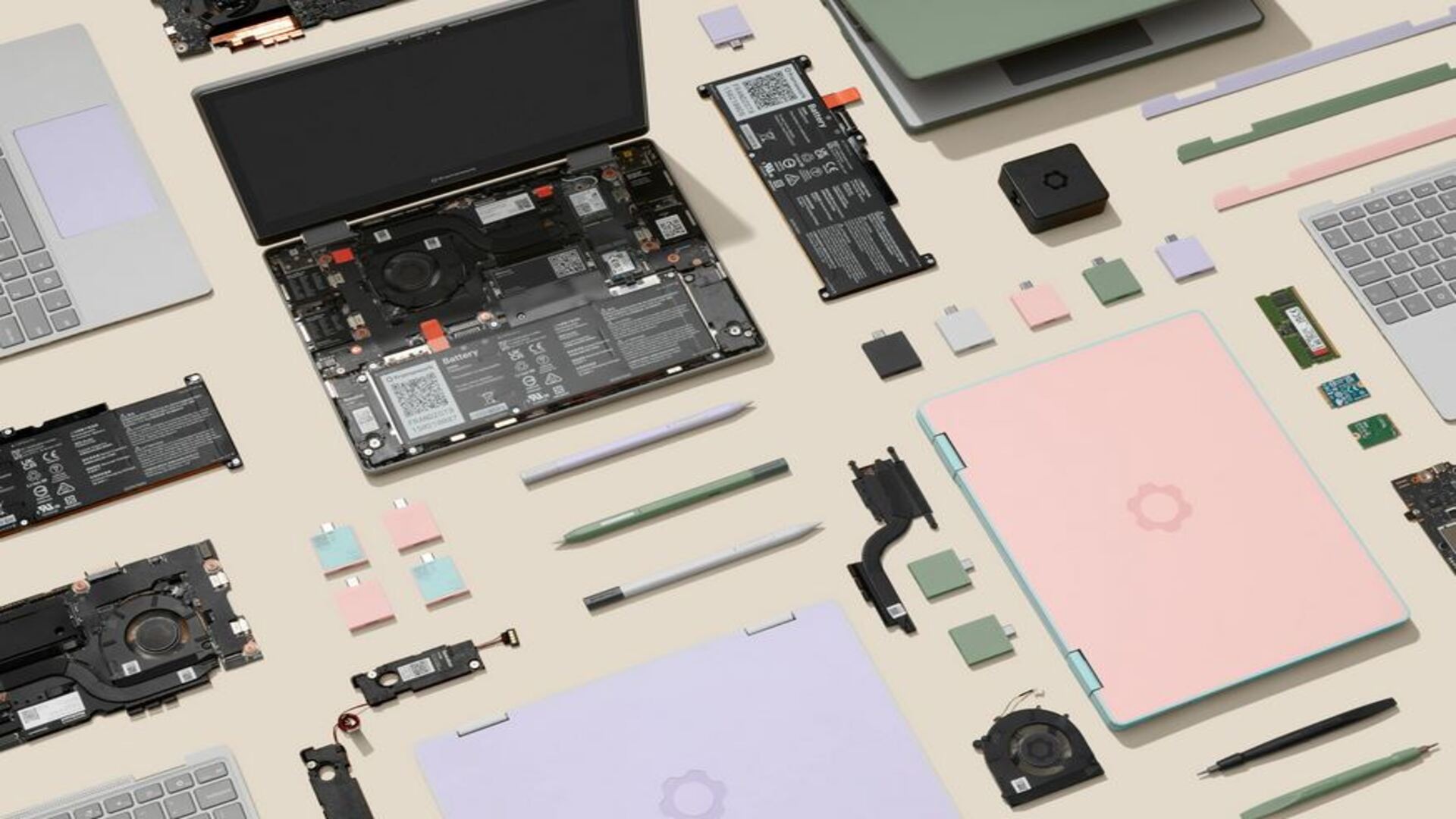
Rank 8406Framework Laptop 12’s upgradable storage and modular design make it perfect for tech enthusiastsOffers a fully upgradeable device, a practical option for long-term useOriginally designed for students, but every adult wants one
Framework Laptop 12 pre-orders are now live, and while originally designed for students, the company claims every adult who tried the device has shown interest in owning one.This business laptop features a 12-inch touchscreen with a 1920x1200 resolution, over 400 nits of brightness, and both touch and stylus input capabilities.Unlike most budget-friendly notebooks, the Framework Laptop 12 is powered by a 13th Gen Intel Core i5 CPU, coupled with up to 48GB of DDR5-5200 RAM and 2TB of NVMe storage. It exceeds expectations given its size, making it a good laptop for programming.
A practical solution for long-term use
The device is easily repairable and upgradeable. Its metal structure is wrapped with an overmolded, shock-absorbing TPU over rigid PC/ABS plastic.You don’t have to worry about breaking it, as every component, from the battery to the display, is easily replaceable, with QR codes linking to repair guides.Framework’s founder and CEO, Nirav Patel, said that the Framework Laptop 12 is, “the purest manifestation of our vision and product philosophy at Framework, and is in many ways the product I started the company to create.”The Laptop 12 comes in five pastel color options with a color-matched stylus, supports Wi-Fi 6E, and includes four modular expansion slots, including USB, DisplayPort, and HDMI, all of which are user-upgradeable.Taking cues from modular concepts like Lego, the Laptop 12 replaces internal cables with POGO pin connectors, simplifying repairs. The 360-degree hinge prioritizes laptop mode for everyday use, while enabling tablet functionality for note-taking.This is likely to be a good laptop for engineering students or anyone who enjoys disassembling and reassembling devices, as the Framework Laptop 12 offers plenty of room for hands-on tinkering.
You may also like
These are the best budget laptops availableWe've listed the best NAS devices aroundCheck out our list of the best firewall software
-

Picture from ichef.bbci.co.uk
Rank 8407 -
Picture from cdn.mos.cms.futurecdn.net
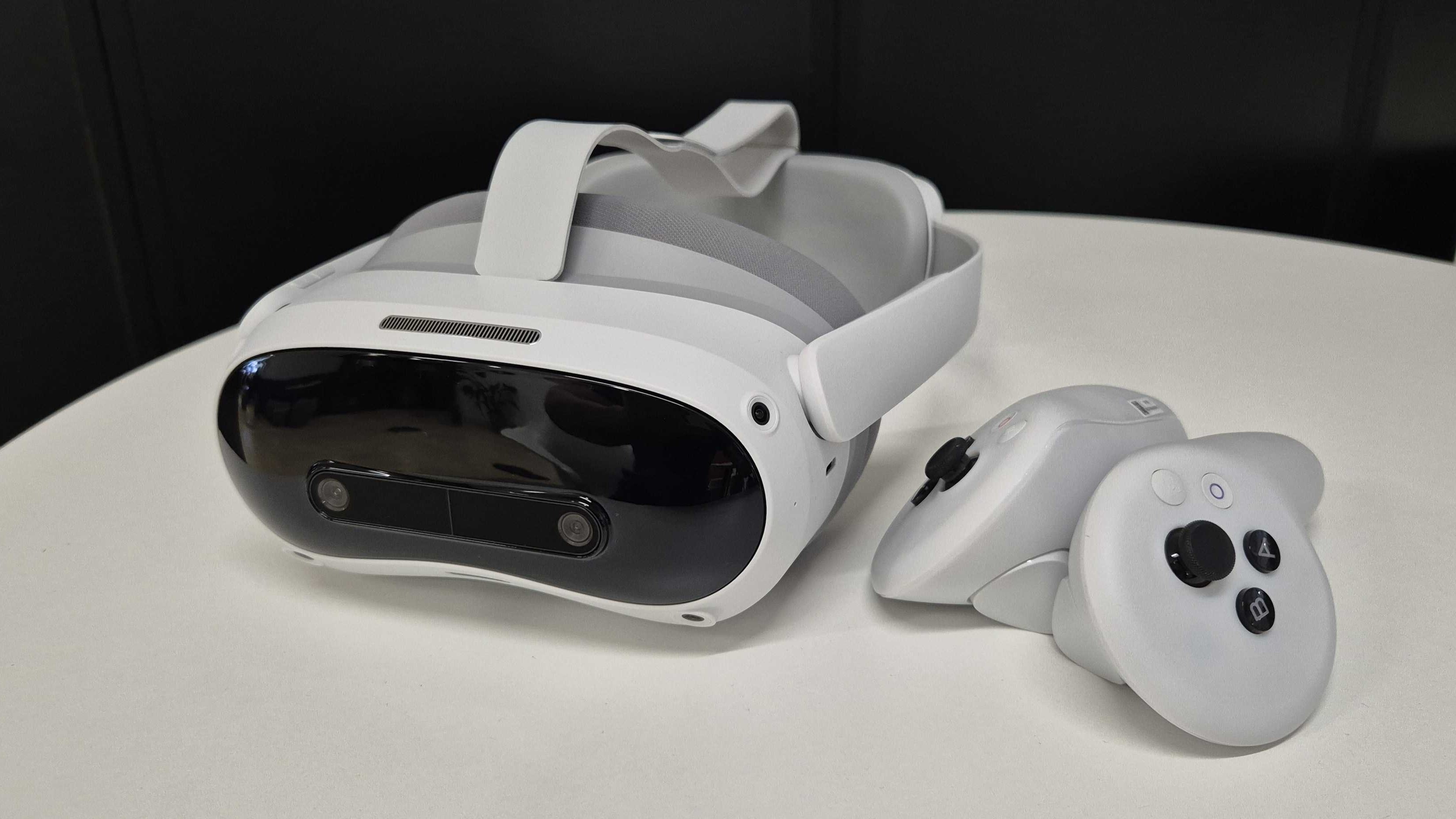
Rank 8408Pico just debuted waist trackers that work just like its feet trackersIt's out now for £39.99 (around $50 / AU$85)When we reviewed the Pico 4 Ultra, its motion trackers were the headset's best feature
Pico has just announced an upgrade to its best VR headset feature: a new motion tracker for your waist, and yet again, I’m left wishing my Meta Quest 3 could get this upgrade, too.When I tested the Pico 4 Ultra last year, its best feature was the pair of motion trackers you could buy as an add-on. These often came included for free as part of a bundle during sales of the VR headset.You’d attach them to your feet, and you could bring surprisingly accurate foot tracking to supported games. Combined with hand tracking, this led to supremely immersive experiences, as you could interact with your whole body as if you were really in virtual space.
(Image credit: Pico)
Now, that simple yet effective solution is coming to a brand new Pico Motion Tracker for your waist. In fact, the device is launching today (April 9, 2025) for £39.99 (around $50 / AU$85).We haven’t been able to test the tracker for ourselves, but given how impressive the foot trackers are, we expect Pico’s new waist trackers will be solid, too, when used in supported titles such as VRChat and compatible PCVR titles through the Pico Connect feature.I can see this waist tracker being perfect for VR exercising, dancing games, and allowing players to use new VR props like a hula hoop, but we’ll have to wait and see how it’s implemented.
(Image credit: Pico)
Meta needs better body tracking
Meta does offer its own basic body tracking via your headset’s downward-facing cameras but it’s not the most robust solution. The AI it relies on is fairly good at predicting where your legs and body should be, but it isn’t always perfect. Further, it hasn’t been implemented into many VR apps in the way that Pico’s sophisticated solution has been.While Pico’s motion tracking is superb, I’m still not convinced it’s the best headset option for most people.It doesn’t have the same impressive software catalog you’ll find on Meta’s Quests, and it’s pricier than the Meta Quest 3S and Meta Quest 3 without offering a significant performance bump.That coupled with it not being available to buy in every region the Meta Quest 3 is including the United States, and that it's a device that has struggled to build a name for itself except amongst VR enthusiasts who are staunchly anti-Meta.Meta has yet to announce physical motion trackers for Quest – with its CTO shooting the idea down last year (via UplaodVR) – but I seriously hope that changes. They’re easily the best Pico feature, and the Meta Quest 3 would be much more versatile if it had access to the same tools.
You might also like
Pico 4 Ultra VS Meta Quest 3: the battle of the best mid-range VR headsetsThis beginner-friendly train-driving simulator is the chillest Meta Quest 3 game I've played – but it's not for everyoneYou might get a free Meta Quest 3 to use on your next flight, but I'm not keen on the advertising it'll serve you
-
Picture from o.aolcdn.com
Rank 8409Google has used AI to revamp one of the most beloved films of all time for a 360-degree Sin City screen with the highest resolution in the world. The rerolled version of The Wizard of Oz will debut this August at The Sphere, the Las Vegas entertainment venue with a famously globular LED screen. Whether a technical marvel, dystopian nightmare fuel or some combination, the project will surely continue The Sphere's penchant for extravagant spectacles that persuade tourists to plunk down hundreds of dollars to sit for a few hours in one of its 17,600 seats.
Sphere Entertainment, the company behind the venue, worked on the project with Google, Magnopus and Warner Bros. Discovery, which owns The Wizard of Oz rights. Google describes it as an "epic undertaking of creativity and technology," humbly likening it to the cinematic boundaries broken by the acclaimed Technicolor original. "We're taking a beloved movie, but we are re-creating it," Google Cloud CEO Thomas Kurian told The Wall Street Journal. "The only other way you could do it is to go back [in time] and film it with the cameras that the Sphere uses."
The 1939 original.Warner Bros. Discovery
Google used generative AI models from its Gemini family on the project, most notably Veo 2 and Imagen 3. The company not only had to magnify the original 35mm film for a 160,000-square-foot screen composed of 16,000 LEDs but also had to account for camera cuts that removed characters from the frame. For example, in a Kansas scene between Dorothy, Auntie Em and Miss Gulch, Uncle Henry (who was also in the room but off-camera) will be visible on the much wider screen.
It did so primarily through an AI super-resolution tool (generating new pixels to fit the much higher-res screen), AI outpainting (generating new parts of a scene stretching beyond the original celluloid) and performance generation (incorporating composites of the actors into these expanded environments).
To help fine-tune the AI models, Google didn't limit the models' training to the original footage. It also fed them supplementary material like the shooting script, production illustrations, photographs, set plans and scores — teaching them about characters' and environmental details and production elements like camera focal lengths. The company also consulted with professional filmmakers for character actions, expressions and performance.
"Now, Dorothy's freckles snap into focus, and Toto can scamper more seamlessly through more scenes," Google claimed.
The companies behind the project (perhaps contradictorily) claim that, despite AI touching "over 90 percent of the movie," it "respects the original in every way." Google says no new dialogue lines were added, and there isn't a note of new music sung.
If the glimpse shown in the preview below (via tabGeeks) is any indication, Dorothy has all the overly smoothed-out hallmarks we've come to expect from AI-upscaled faces. But we'll leave final judgment for the sun-drenched Sin City tourists who spend their hard-earned (or hard-won) cash on following the Gemini-infused road beginning on August 28.
This article originally appeared on Engadget at https://www.engadget.com/entertainment/google-used-ai-to-reconceptualize-the-wizard-of-oz-for-the-las-vegas-sphere-194504769.html?src=rss
-

Picture from ichef.bbci.co.uk
Rank 8410 -

Picture from ichef.bbci.co.uk
Rank 8411 -
Picture from cdn.mos.cms.futurecdn.net
Rank 8412Google is testing a new “Power Up” button in its Gemini app that upgrades your typed promptThe button will produce a clearer, more detailed prompt without multiple attemptsThe aim is to get better responses from Gemini immediately without needing to write perfect prompts
If you've ever used an AI chatbot, you know that figuring out how to phrase your prompts can make all the difference in getting a useful answer or gibberish. You can spend a long time fiddling with phrasing, word order, and detail level before stumbling upon the right way to ask the AI a question. Google is testing a new button for its Gemini AI assistant to help you get to that ideal prompt immediately. The upcoming “Power Up” button, found by Android Authority, gives your first attempt at a prompt a glow-up before you submit it to Gemini.The idea is that instead of sweating over how to phrase your prompt to Gemini perfectly, you tap this button and let Gemini polish or 'power up' your initial attempt into something more detailed, more specific, and more likely to convey what you want to the AI model.
Gemini power
This matters a lot when you think about how much of the AI experience hinges on you and your ability to craft a prompt. You have to be specific but not too detailed, thorough but not so much as to distract from your main point. Sometimes, you even have to psychoanalyze the AI, figuring out weird quirks that may affect the result, like being polite or telling the AI not to be lazy.I've often found it helpful to straight-up ask an AI chatbot for help crafting a prompt if I'm not sure what the best phrasing is to coax the information I want from the model. There are also some cases where the AI will automatically, but invisibly, reshape your prompt before answering. That can be helpful, but it might also be the culprit behind some of the more erratic responses you have seen.The Power Up button would make it faster to get the right prompt and more transparent than just doing a behind-the-scenes polish. You write your prompt as usual, even if it's only half-formed, then hit Power Up and let Gemini heat up your scattered thoughts into a sharp inquiry worth submitting to the AI. The improved prompt then gets sent, and voilà, your AI assistant has a much better idea of how to help.In some ways, this just expands on the suggestions for prompts you see from Gemini when you first open the chatbot. Those are much more generic than what the Power Up button might produce. It would also fit well into the other features providing variations on Gemini's output, like Deep Research, Canvas, and image creation with Imagen 3.The Power Up button would be a relatively quiet kind of upgrade, but one that might serve Google's interests in preventing frustration among Google Gemini users who feel like they can't get the AI to fulfill their requests properly. It might also encourage those using other AI chatbots facing similar annoyances to come check out Gemini and its powered-up prompts.
You might also like
I tried Google's new AI mode powered by Gemini, and it might be the end of Search as we know itOne of my favorite AI tools is getting an iPhone app, and here's why you should install itGoogle’s AI Mode can explain what you’re seeing even if you can’t
-
Picture from o.aolcdn.com
Rank 8413President Donald Trump has announced a 90-day pause on the sweeping tariff plan that went into effect on Wednesday, April 9, and an increase to 125 percent on the tariff on imports from China. Even with the 90-day pause, there's still also a 10 percent tariff on all other imports to the US.
"Based on the lack of respect that China has shown to the World’s Markets, I am hereby raising the Tariff charged to China by the United States of America to 125 percent, effective immediately, " Trump posted on Truth Social. For not retaliating, and attempting to "negotiate a solution," the president says he also "authorized a 90 day PAUSE, and a substantially lowered Reciprocal Tariff during this period, of 10 percent" on trade with countries other than China.
China originally announced its own 50 percent tariff on US imports on April 8, The New York Times reports, before raising the tariff to 84 percent when Trump's plan went into effect. The European Union recently approved its own set of tariffs to go into effect on April 15.
Besides negatively impacting global trade, Trump's tariffs have already had an immediate effect on companies offering consumer products partially or completely manufactured outside of the US. Many companies can no longer afford to pay the tariff to get their products to US customers, or are considering raising prices to account for their losses.
For example, Nintendo attributed the pause on Switch 2 pre-orders in the US and Canada to the tariffs. The new import restrictions have also temporarily limited the sales of some products: Both Razer and Framework are no longer selling certain laptops in the US. Framework also delayed pre-orders on its new 2-in-1 convertible laptop and announced that it would be raising prices by 10 percent on the devices that remain for sale.This article originally appeared on Engadget at https://www.engadget.com/big-tech/trump-announces-90-day-pause-on-tariffs-excluding-china-195630212.html?src=rss
-
Picture from cdn.mos.cms.futurecdn.net
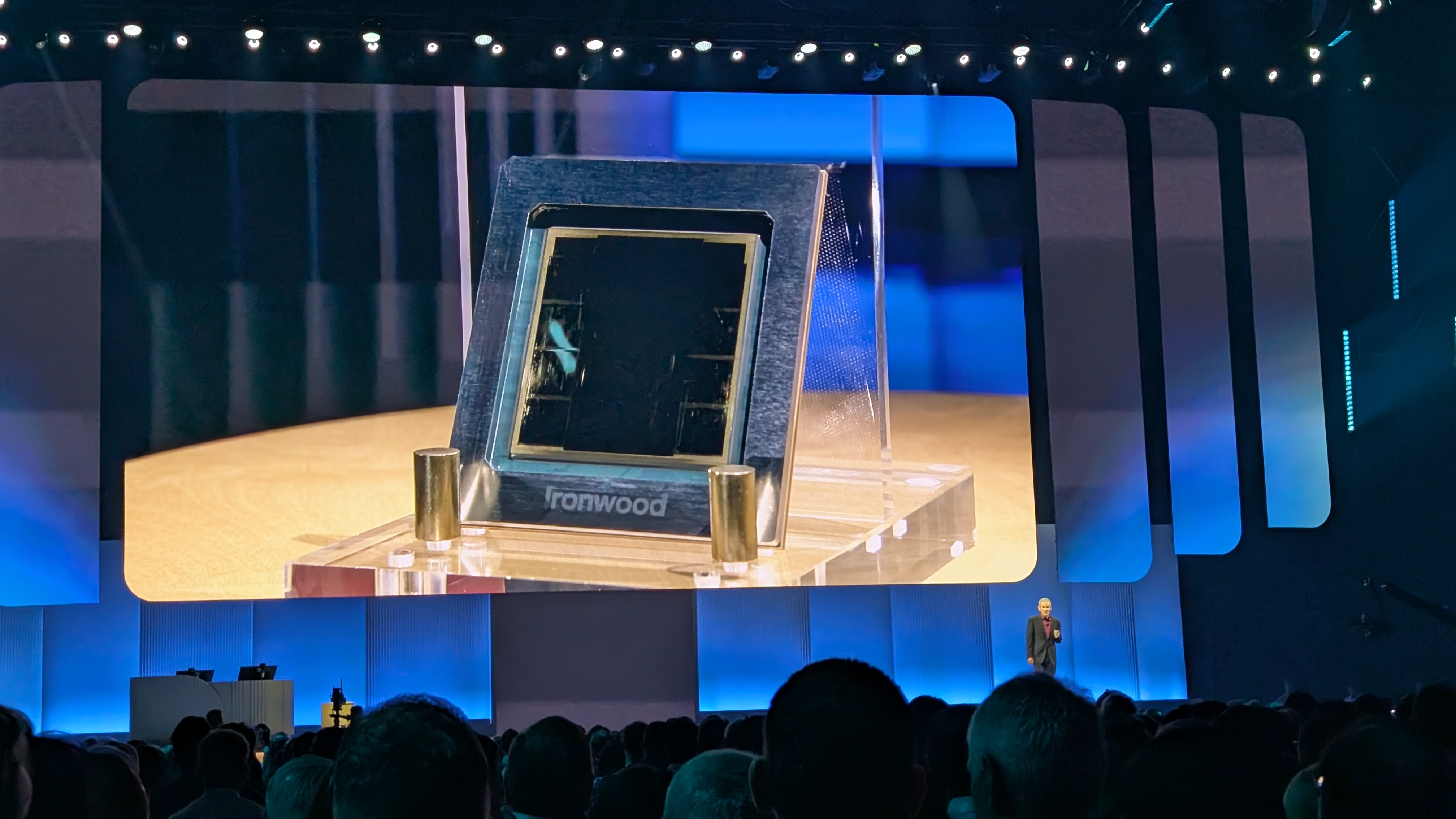
Rank 8414Google unveils Ironwood, its 7th-generation TPUIronwood is designed for inference, the new big challenge for AIIt offers huge advances in power and efficiency, and even outperforms El Capitain supercomputer
Google has revealed its most powerful AI training hardware to date as it looks to take another major step forward in inference.Ironwood is the company's 7th-generation Tensor Processing Unit (TPU) - the hardware powering both Google Cloud and its customers AI training and workload handling.The hardware was revealed at the company's Google Cloud Next 25 event in Las Vegas, where it was keen to highlight the great strides forward in efficiency which should also mean workloads can run more cost-effectively.
Google Ironwood TPU
The company says Ironwood marks "a significant shift" in the development of AI, making part of the move from responsive AI models which simply present real-time information for the users to process, towards proactive models which can interpret and infer by themselves.This is essentially the next generation of AI computing, Google Cloud believes, allowing its most demanding customers to set up and establish ever greater workloads.At its top-end Ironwood can scale up to 9,216 chips per pod, for a total of 42.5 exaflops - more than 24x the compute power of El Capitan, the world's current largest supercomputer.Each individual chip offers peak compute of 4,614 TFLOPs, what the company says is a huge leap forward in capacity and capability - even at its slightly less grand configuration of "only" 256 chips.However the scale can get even greater, as Ironwood allows developers to utilize the company's DeepMind-designed Pathways software stack to harness the combined computing power of tens of thousands of Ironwood TPUs.Ironwood also offers a major increase in high bandwidth memory capacity (192GB per chip, up to 6x greater than the previous Trillium sixth-generation TPU) and bandwidth - able to reach 7.2TBps, 4.5x greater than Trillium."For more than a decade, TPUs have powered Google’s most demanding AI training and serving workloads, and have enabled our Cloud customers to do the same," noted Amin Vahdat, VP/GM, ML, Systems & Cloud AI."Ironwood is our most powerful, capable and energy efficient TPU yet. And it's purpose-built to power thinking, inferential AI models at scale."
You might also like
New Blackwell Ultra GPU series is the most powerful Nvidia AI hardware yetWe've rounded up the best workstations around for your biggest tasksOn the move? These are the best mobile workstations on offer
-

Picture from ichef.bbci.co.uk
Rank 8415 -

Picture from ichef.bbci.co.uk
Rank 8416 -
Picture from o.aolcdn.com
Rank 8417The National Recording Registry announced its 2025 inductees, and there are some geeky sounds that will be immortalized in the Library of Congress. The Microsoft Windows 95 reboot chime was selected to be a part of the registry, as was the Minecraft soundtrack.
"These are the sounds of America – our wide-ranging history and culture. The National Recording Registry is our evolving nation’s playlist," Librarian of Congress Carla Hayden said. "The Library of Congress is proud and honored to select these audio treasures worthy of preservation, including iconic music across a variety of genres, field recordings, sports history and even the sounds of our daily lives with technology."
The Windows 95 start-up audio was composed by ambient music pioneer Brian Eno. According to the blurb from the Library of Congress, the final sound clip was twice as long as Microsoft's engineers had requested of the composer. But they went ahead with the chime because they felt it "conveyed the sense of welcome, hopefulness and progress that they envisioned" for this era of personal computing.
The Volume Alpha soundtrack to Minecraft is only the second piece of gaming music to be added to the registry. It joins the iconic theme for Super Mario Bros, which was inducted in 2023. The launch audio for the popular sandbox game (which just got its own movie) was composed and performed by Daniel Rosenfeld under stage name C418.
The 2025 inductees include music from across the genre spectrum. Some of the other selections include the original Broadway cast recording of Hamilton, Miles Davis album Bitches Brew, and Celine Dion's single "My Heart Will Go On."This article originally appeared on Engadget at https://www.engadget.com/entertainment/music/the-windows-95-start-up-chime-has-been-added-to-the-library-of-congress-203909673.html?src=rss
-

Picture from ichef.bbci.co.uk
Rank 8418 -

Picture from ichef.bbci.co.uk
Rank 8419 -

Picture from techcrunch.com
Rank 8420 -
Picture from techcrunch.com
Rank 8421 -

Picture from ichef.bbci.co.uk
Rank 8422 -

Picture from ichef.bbci.co.uk
Rank 8423 -

Picture from ichef.bbci.co.uk
Rank 8424 -

Picture from ichef.bbci.co.uk
Rank 8425 -
Picture from o.aolcdn.com
Rank 8426A group of organizations, including nonprofits like LatinoProsperity and labor groups like the California Teamsters, are petitioning California Attorney General Rob Bonta to stop OpenAI from becoming a for-profit entity, The Los Angeles Times reports. OpenAI announced plans to transition to a public-benefit corporation in 2024, and reportedly has two years to pull it off or risk a large portion of the money its raised become debt.
The group's primary concerns are that OpenAI "failed to protect its charitable assets" and is actively "subverting its charitable mission to advance safe artificial intelligence." OpenAI started as a nonprofit research organization studying AI, but transitioned to a for-profit company that's overseen and run by a nonprofit in 2019.
That structure is legally allowed in the state of California, but the group's petition claims that OpenAI's decision to pursue a new structure is driven by a desire not to further its mission, but to provide "AI’s benefits — the potential for untold profits and control over what may become powerful world-altering technologies — to a handful of corporate investors and high-level employees."
Engadget has reached to OpenAI and AG Bonta for comment on the petition and will update this article if we hear back.
OpenAI's primary justification for going for-profit is to raise more money. Currently, there's nothing stopping OpenAI from convincing more people to invest, but as Engadget reported in February, it is limited in the returns it can offer investors. It wouldn't have those limitations as a for-profit company, nor would it have to heed the demands of a nonprofit board focused on the risks of the company's breakthroughs, rather than their utility as consumer products.
OpenAI's board has attempted to reign in the for-profit side over the years, like pushing out Sam Altman in 2023, before he was rehired and the board was filled with new members more friendly to OpenAI's for-profit goals. The organizations behind the petition believe that moves like that are enough justification for the AG to step in to protect the public's interest.
The petition joins other attempts to stop OpenAI's conversion, like Meta's letter to Bonta claiming that OpenAI's transition to a for-profit would "flout the law," and Elon Musk's attempt to buy the company.This article originally appeared on Engadget at https://www.engadget.com/ai/labor-and-nonprofit-coalition-calls-on-california-ag-to-stop-openai-from-going-for-profit-212548103.html?src=rss
-

Picture from techcrunch.com
Rank 8427 -

Picture from techcrunch.com
Rank 8428 -

Picture from ichef.bbci.co.uk
Rank 8429 -

Picture from techcrunch.com
Rank 8430 -

Picture from ichef.bbci.co.uk
Rank 8431 -

Picture from techcrunch.com
Rank 8432 -
Picture from techcrunch.com
Rank 8433 -

Picture from ichef.bbci.co.uk
Rank 8434 -
Picture from o.aolcdn.com
Rank 8435Horror entertainment specialist Blumhouse is running special screenings of its movie M3GAN where audiences will be encouraged to use their smartphones. Yes, flying in the face of all the warnings and announcements to not interrupt the experience for other viewers, Blumhouse is partnering with Meta to deliver special content during screenings of M3GAN. During these one-night engagements, viewers can use Meta's Movie Mate service to access second screen content, such as a chatbot version of the M3GAN doll, film trivia and behind-the-scenes details. Blumhouse movies Annabelle and Ma are also getting one-night engagements this spring, but those seem to be standard showings where people will get annoyed if you bust out your phone.
To take advantage of this tie-in, theater-goers start by sending a DM to the movie's Instagram account. It will also only work for people inside participating theaters, meaning Instagram will likely require access to viewers' location data.
"The M3GAN in-theater Movie Mate is a first-to-market moviegoer experience," said Omar Zayat, group lead entertainment, tech, travel, gaming and auto at Meta. "We are happy to introduce filmgoers to it by way of Instagram Direct and Click-to-Messenger Ads. We are thrilled to be working with Universal Pictures and Blumhouse to deliver rich experiences designed to get audiences back into theaters."
Buried in all that corporate jargon is an acknowledgement that movie theaters were hit hard by the COVID-19 pandemic. Possibly in an effort to encourage more business, there has been a wave of cinemas allowing or encouraging activities that would normally get you booted from the theater. AMC started hosting special sing-along showings of Wicked because some audience members apparently couldn't stop themselves from doing their best Cynthia Erivo and Ariana Grande impressions. A Minecraft Movie has also seen disruptive behavior, thanks to fan reactions and the filming of fan reactions hoping to go viral.This article originally appeared on Engadget at https://www.engadget.com/entertainment/tv-movies/meta-wants-you-to-be-on-your-phone-during-special-showings-of-m3gan-220411260.html?src=rss
-

Picture from ichef.bbci.co.uk
Rank 8436 -

Picture from techcrunch.com
Rank 8437 -
Picture from cdn.mos.cms.futurecdn.net
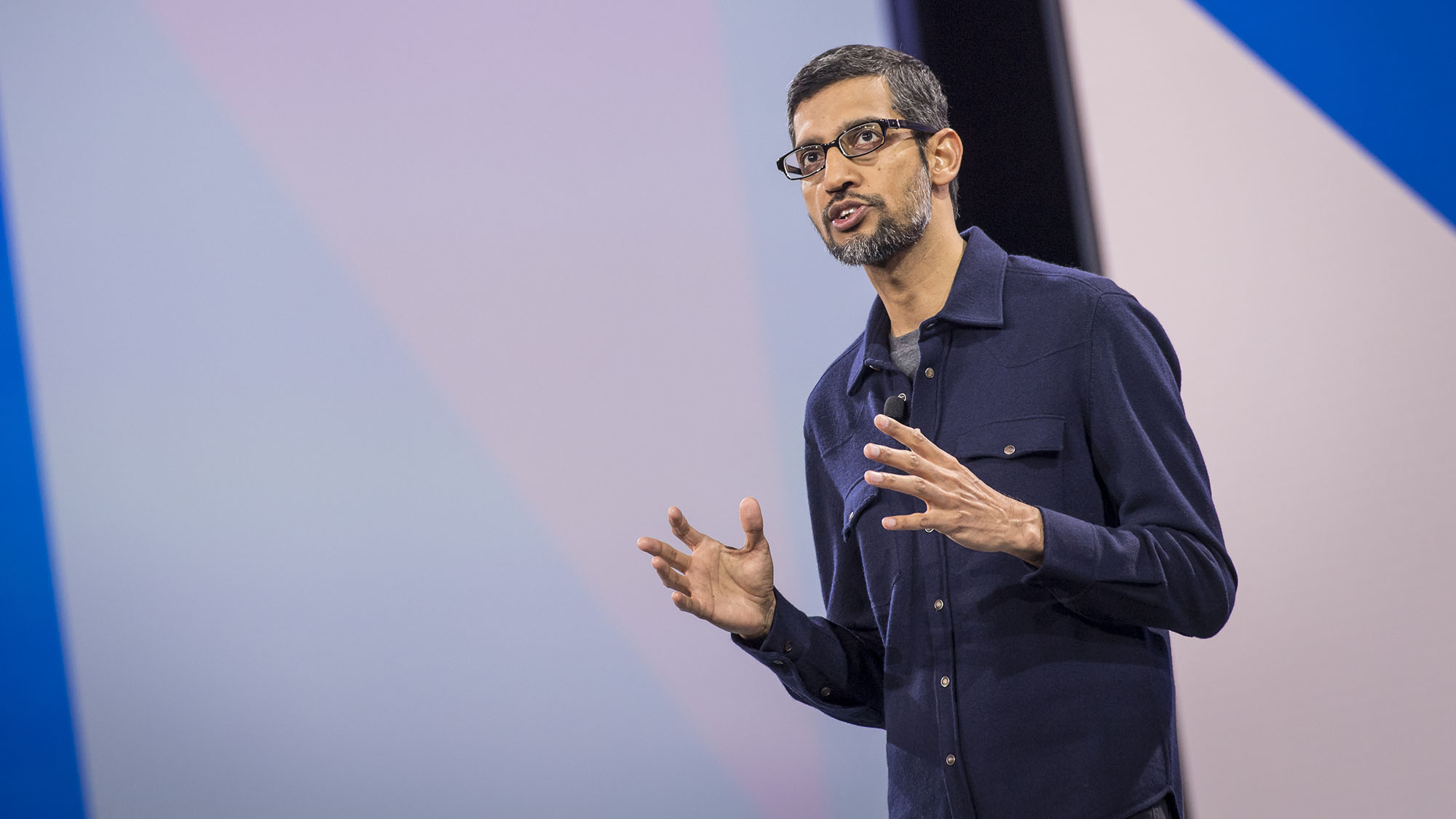
Rank 8438Alphabet and Google CEO pledges major spending spreeSundar Pichai reaffirms plans for $75 billion investment"We are excited about the possibilities, and we can't wait to see what you'll build," Pichai says
Google's parent company Alphabet has reaffirmed its plans to spend billions on infrastructure capacity to boost the capabilities of AI and cloud computing.Sundar Pichai, CEO of Alphabet, took to the stage at Google Cloud Next 25 in Las Vegas to praise the company's work in the space, and double down on its plans to spend big in the future.The company is set to spend around $75 billion in 2025 alone to keep pushing the boundaries of what is possible with AI, despite worldwide concerns over the global economy.
Alphabet AI investment
"The chance to improve lives and reimagine things is why Google has been investing in AI for more than a decade," Pichai declared."We see it as the most important way we can advance our mission to organize the world's information, make it universally accessible and useful with Google Cloud...the opportunity with AI is as big as it gets," he notes."That's why we are investing in the full stack of AI innovation."This includes the infrastructure powering AI, Pichai added, unveiling plans to spend $75 billion, covering servers and data centers, including powering its AI computer cloud business."We need our infrastructure to move at Google speed," he added, "with near zero latency, supporting services like search, Gmail and (Google) Photos) for billions of users worldwide."Pichai revealed Google's network now spans more than 200 countries and territories, powered by over two million miles of fiber - and to boost that even further, he revealed Google is making its Cloud Wide Area Network open to businesses which are Google Cloud customers across the globe."We are excited about the possibilities, and we can't wait to see what you'll build," Pichai concluded."Our goal is to always bring out latest AI advances into the full layer of our stack, across products and platforms...getting advances into the hands of both consumers and enterprises is something we are really focused on - this is why we are able to innovate at the cutting edge and push the boundaries of what's possible for us and for you - the result: better, faster, and more innovation for everyone."
You might also like
Cloud and AI demand push Alphabet and Microsoft earnings to new highAlphabet CEO says more than a quarter of new code at Google is AI-generatedCheck out the best AI writers around today
-
Picture from ichef.bbci.co.uk
Rank 8439 -

Picture from ichef.bbci.co.uk
Rank 8440 -

Picture from ichef.bbci.co.uk
Rank 8441 -

Picture from ichef.bbci.co.uk
Rank 8442 -

Picture from techcrunch.com
Rank 8443 -

Picture from ichef.bbci.co.uk
Rank 8444 -

Picture from ichef.bbci.co.uk
Rank 8445 -

Picture from ichef.bbci.co.uk
Rank 8446 -
Picture from ichef.bbci.co.uk
Rank 8447 -

Picture from techcrunch.com
Rank 8448 -

Picture from techcrunch.com
Rank 8449 -

Picture from ichef.bbci.co.uk
Rank 8450


