Technology News of last week
This list is constantly updated to reflect the weeks technology news.
-
Picture from www.engadget.com
Rank 351 -
Picture from cdn.mos.cms.futurecdn.net
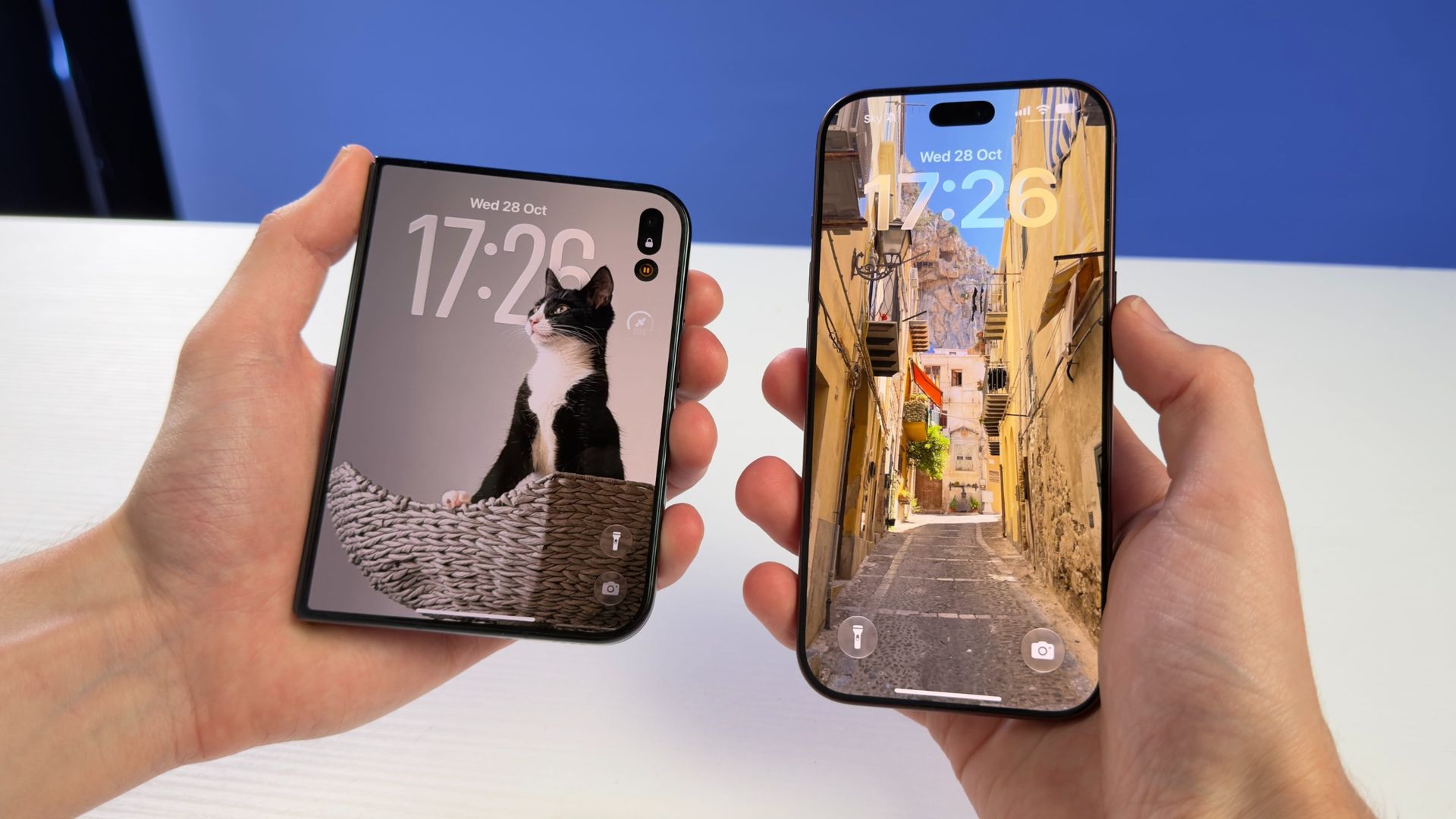
Rank 352Apple iPhone Duo The iPhone Duo is a phone-and-tablet all-in-one, offering an extra screen at a much higher price than the iPhone 18 Pro. It also loses some key Pro features. ProsExcellent designTwo screensStylus supportConsVery expensiveWorse camerasNo Face ID Apple iPhone 18 Pro The iPhone 18 Pro is a much cheaper phone than the iPhone Duo, with better cameras to boot. But its single screen makes it far less versatile. ProsSuperb camerasMuch lower priceHas Face IDConsJust one screenNo stylus supportSmaller battery The iPhone Duo has been a long time coming, but is Apple’s first foldable a home run? And even if it is, do you even really need a dual-screen device?Those are questions you might be asking yourself if you're in the market for a new iPhone — especially when the iPhone 18 Pro is also available, which only has one display but is a better device in various other ways.So, to help you decide which of these two models is best for you, we’ve compared the iPhone Duo and iPhone 18 Pro across various categories, including price, display, and design. Happy decision-making!iPhone Duo vs iPhone 18 Pro: specs comparisonBefore we look in depth at the key elements of the iPhone Duo and iPhone 18 Pro, the specs table below provides an overview of their similarities and differences.iPhone DuoiPhone 18 ProDimensions:117.8 x 84.1 x 11.3mm (folded) / 117.8 x 164.6 x 5.2mm (unfolded)150 x 71.9 x 8.8mmWeight:254g211gDisplay:7.6-inch Super Retina XDR OLED (foldable) / 5.4-inch Super Retina XDR OLED (cover)6.3-inch Super Retina XDR OLEDRefresh rate:1Hz–120Hz1Hz–120HzPeak brightness:3,000 nits3,000 nitsChipset:A20 ProA20 ProRAM:12GB12GBRear cameras:48MP main, 48MP ultra-wide48MP main, 48MP ultra-wide, 48MP telephotoFront camera:12MP cover, 4MP under-display18MPBattery:4,883mAh4,288mAh (eSIM-only) / 4,056mAh (physical SIM)Charging:50% in 20 minutes50% in 15 minutesStorage:256GB / 512GB / 1TB / 2TB256GB / 512GB / 1TB / 2TBiPhone Duo vs iPhone 18 Pro: price and availabilityThe iPhone DuoLance Ulanoff / FutureThe iPhone 18 ProFuture/Jacob KrolThe iPhone Duo and iPhone 18 Pro were both announced in September 2026. But while the iPhone 18 Pro shipped shortly after its announcement, the iPhone Duo wasn’t available until October 23. Both phones are available now, though, across much of the world.The iPhone Duo starts at $1,999 / £1,999 / AU$3,499, for which you’ll get 256GB of storage. There’s also a 512GB model for $2,199 / £2,199 / AU$3,899, a 1TB version for $2,599 / £2,599 / AU$4,699, and a 2TB model for $3,199 / £3,199 / AU$5,899.The iPhone 18 Pro is a lot more affordable (relatively speaking), while still being expensive. This device starts at $1,199 / £1,199 / AU$2,099 for 256GB of storage, rising to $1,399 / £1,399 / AU$2,499 for 512GB, $1,799 / £1,799 / AU$3,299 for 1TB, and $2,399 / £2,399 / AU$4,499 for 2TB.So, the iPhone Duo’s starting price is some $800 / £800 / AU$1,400 higher than the iPhone 18 Pro's; that difference is the price of a high-end phone (or indeed the new iPad mini) all on its own. So while you’re essentially getting a phone and tablet all in one with the Duo, you’re also paying handsomely for that privilege.Apple iPhone Duo pricingStorageUS priceUK priceAU price256GB$1,999.99£1,999AU$3,499512GB$2,199£2,199AU$3,8991TB$2,599£2,599AU$4,6992TB$3,199£3,199AU$5,899Apple iPhone 18 Pro pricingStorageUS priceUK priceAU price256GB$1,199£1,199AU$2,099512GB$1,399£1,399AU$2,4991TB$1,799£1,799AU$3,2992TB$2,399£2,399AU$4,499iPhone Duo vs iPhone 18 Pro: designThe iPhone DuoLance Ulanoff / FutureThe iPhone 18 ProFuture/Jacob KrolThe iPhone Duo doesn’t really look like any other iPhone, and not just because it folds. When folded shut, you might expect it to look like the iPhone 18 Pro, but you’d be wrong, as it has a much shorter, passport-shaped footprint, coming in at 117.8 x 84.1 x 11.3mm compared to the iPhone 18 Pro’s 150 x 71.9 x 8.8.mm size.Of course, the iPhone Duo is substantially larger when unfolded, opening out to 117.8 x 164.6 x 5.2mm (we'll touch on their displays in the next section).Other differences include the phones' respective camera arrangements. The iPhone Duo has a punch-hole camera in the top right corner of its cover display, and an under-screen camera in its foldable display. The iPhone 18 Pro, meanwhile, has a much larger cut-out for its Dynamic Island, but this larger opening also allows for Face ID, which the iPhone Duo lacks.On the back, the iPhone Duo has a horizontally arranged dual-lens camera, while the iPhone 18 Pro has a larger triple-lens camera block (which Apple describes as the 'camera plateau').The Duo is also unsurprisingly heavier at 254g to the iPhone 18 Pro’s 211g, and their colors differ, with the iPhone Duo being sold in Night Sky and Star White shades, while the iPhone 18 Pro is available in Black, Silver, Glacier, and Burgundy options.The iPhone Duo (folded) and iPhone 18 ProFutureThe iPhone Duo (unfolded) and iPhone 18 ProFutureTheir materials differ a bit too, with the iPhone Duo having a titanium frame and a glass back (not unlike the iPhone Air), while the iPhone 18 Pro has an aluminum frame and uses a mix of metal and glass on the back.However, both phones have an IP68 rating for dust and water resistance, and both use Ceramic Shield 2 on the front and Ceramic Shield on the back — so they should be similarly durable, aside from the inherent fragility that comes with a second screen and a hinge mechanism (Apple has confirmed to TechRadar that the Duo's viral screen-cracking issue only affected a "small number of units" at launch, so you shouldn't worry about experiencing that level of vulnerability).Ultimately, we praised the designs of both these phones, with our iPhone Duo review describing it as “beautifully designed and engineered,” while our iPhone 18 Pro review highlighted its “fantastic” new shades.There's certainly a learning curve to be experienced with the iPhone Duo's folding form factor — its volume buttons, for instance, are positioned on the top, not the side — while the iPhone 18 Pro feels extremely familiar in the hand. But we'd urge you to try the Duo out for yourself in a store before dismissing its design as a reason not to buy it. In essence, both of these devices are a treat to use.iPhone Duo vs iPhone 18 Pro: display(Image credit: Future)If you’re considering the iPhone Duo, then its screen is probably the most important factor for you, since it has two of them. The Duo's main display is a 7.6-inch 1878 x 2670 foldable LTPO Super Retina XDR OLED panel, with a 120Hz refresh rate, 430 pixels per inch, and a peak brightness of 3,000 nits.The aspect ratio of this inner display is a content-friendly 1.4:1, giving you room to run two full apps side-by-side, play games on a larger canvas, or watch wide-format media (note, though, that most YouTube and Netflix content is still displayed in 16:9).Crucially, this inner screen also features a nano-texture coating to reduce glare and make the Duo's crease appear invisible face-on. Sure, you can see this crease when looking at an angle, but nano-texture really does work for making you forget about the crease during general use.Being a foldable phone, the iPhone Duo also has a 5.4-inch 1398 x 2034 LTPO Super Retina XDR OLED cover screen, which likewise has a 120Hz refresh rate, a peak brightness of 3,000 nits, and around 460 pixels per inch.The iPhone DuoLance Ulanoff / FutureThe iPhone 18 ProFuture/Jacob KrolThe iPhone 18 Pro just has one screen, but it’s a good one. It's a 6.3-inch 1206 x 2622 LTPO Super Retina XDR OLED panel with a 120Hz refresh rate, a peak brightness of 3,000 nits, and around 460 pixels per inch.On paper, then, the iPhone Duo’s screen specs are very similar to those of the iPhone 18 Pro — except you get both a bigger and a smaller screen here than the Pro’s mid-size display. But the Duo has an extra trick up its sleeve, as its foldable screen also supports the Apple Pencil, which the iPhone 18 Pro doesn’t.As far as screen quality goes, though, there’s not much to choose between these two devices, with our iPhone Duo review praising its “bright, sharp, fluid screens” along with a surprisingly well-hidden crease, and our iPhone 18 Pro review calling its display “punchy, sharp, and smooth.”iPhone Duo vs iPhone 18 Pro: camerasThe iPhone DuoLance Ulanoff / FutureThe iPhone 18 ProFuture/Jacob KrolWhile the iPhone Duo arguably has the edge where screens are concerned, it’s the iPhone 18 Pro that takes the win for photography.The Duo has two rear cameras: a 48MP f/1.6 wide snapper and a 48MP f/2.2 ultra-wide with a 120-degree field of view. It also has a decent 12MP f/2.2 camera on the cover screen, and a paltry 4MP f/1.8 under-display camera on the foldable screen.The iPhone 18 Pro, on the other hand, has a triple-lens camera setup on the back, with the same ultra-wide snapper as the Duo, but a superior 48MP variable aperture wide camera that can move between f/1.5 and f/4.0. It also has a 48MP f/2.8 telephoto camera capable of 4x optical zoom.The selfie camera on the iPhone 18 Pro is also slightly higher spec than that of the Duo, being an 18MP f/1.9 one.So, if you buy the Duo, you’ll be getting a less versatile wide camera and no telephoto camera, along with fewer megapixels for its front-facing cameras.Of course, the Duo is far from a bad camera phone, with our review praising its “two strong 48MP lenses and an above-average Center Stage selfie camera.” You can absolutely take great shots with either of these phones.But when it comes to photography, Apple's first foldable is simply no match for the iPhone 18 Pro, which we summed up as offering “better detail” than its predecessor, along with “strong low-light performance, and excellent 4x and 8x zoom.”The iPhone 18 Pro is one of the best camera phones you can buy; the Duo is good, but not great.iPhone Duo camera samplesLance Ulanoff / FutureLance Ulanoff / FutureLance Ulanoff/ FutureLance Ulanoff/ FutureLance Ulanoff/ FutureLance Ulanoff/ FutureLance Ulanoff/ FutureLance Ulanoff/ FutureLance Ulanoff/ FutureLance Ulanoff / FutureLance Ulanoff / FutureLance Ulanoff / FutureLance Ulanoff / FutureLance Ulanoff / FutureLance Ulanoff / FutureLance Ulanoff / FutureLance Ulanoff / FutureLance Ulanoff / FutureLance Ulanoff / FutureLance Ulanoff / FutureLance Ulanoff / FutureLance Ulanoff / FutureLance Ulanoff / FutureiPhone 18 Pro camera samplesJacob Krol/FutureJacob Krol/FutureJacob Krol/FutureJacob Krol/FutureJacob Krol/FutureJacob Krol/FutureJacob Krol/FutureJacob Krol/FutureJacob Krol/FutureJacob Krol/FutureJacob Krol/FutureJacob Krol/FutureJacob Krol/FutureJacob Krol/FutureJacob Krol/FutureJacob Krol/FutureJacob Krol/FutureJacob Krol/FutureJacob Krol/FutureJacob Krol/FutureJacob Krol/FutureJacob Krol/FutureJacob Krol/FutureJacob Krol/FutureJacob Krol/FutureJacob Krol/FutureiPhone Duo vs iPhone 18 Pro: performance and softwareThe iPhone DuoLance Ulanoff / FutureThe iPhone 18 ProFuture/Jacob KrolThe iPhone Duo and iPhone 18 Pro should offer comparable performance, as both phones have an A20 Pro chipset, 12GB of RAM, and a vapor chamber. That’s a capable combination, with our iPhone Duo review mentioning “smooth performance across the board,” while our iPhone 18 Pro review highlighted that it’s “fast, efficient, and ready for whatever comes next.”Obviously, the iPhone Duo may be a more enjoyable phone to play mobile games on (given its larger inner screen), but it's not an inherently better or more powerful gaming phone than the iPhone 18 Pro.The same applies to productivity, since you can split the Duo's display in two by swiping up from the bottom and slowly dragging an app left or right. For obvious reasons, you can't do any such multitasking magic on the iPhone 18 Pro.The software on both phones is similar, with the iPhone Duo running iOS 27.1 out of the box and the iPhone 18 Pro running iOS 27. At the time of writing, both phones can be updated to iOS 27.2, and it’s likely they’ll be supported for the same amount of time.There are, however, some software differences to be aware of, with Apple taking advantage of the Duo's dual-screen nature to add and change some features.(Image credit: Lance Ulanoff / Future)While using its cover screen, for instance, you'll notice a status bar and side-positioned dock that's easier to reach with your thumb, but sometimes cuts into the Duo's screen real estate.Several apps, too, are not yet optimized for the Duo's unusual screen sizes — first-party apps like Mail and Safari look great, but others (like LinkedIn and Instagram) are a little clunky at the time of writing.These optimization issues will almost certainly be resolved quickly as app developers release Duo-specific updates, but they're worth bearing in mind nonetheless.iPhone Duo vs iPhone 18 Pro: batteryThe iPhone DuoLance Ulanoff / FutureThe iPhone 18 ProFuture/Jacob KrolThe iPhone Duo has a 4,883mAh battery, while the iPhone 18 Pro has either a 4,288mAh cell (if you’re getting an eSIM-only model like those sold in the US) or a 4,056mAh cell.So in either case, the iPhone Duo has a higher-capacity battery, but it won’t necessarily last longer, with Apple claiming it can manage an impressive 44 hours of video playback if you're only using the outer display, but just 31 hours if you're mostly using the larger foldable screen.The iPhone 18 Pro, meanwhile, splits the difference at 34 hours. For ‘typical use,’ they’re similar, with the iPhone Duo listed at 24 hours and the iPhone 18 Pro at 23.In our own tests, we found that the iPhone Duo had “solid all-day battery life,” while the iPhone 18 Pro offered “outstanding endurance.” So neither phone should run low on battery too fast.When they do need charging, the iPhone Duo can be juiced to 50% in around 20 minutes with a 60W or higher charger, or it can reach 50% in 30 minutes with a 35W or higher MagSafe charger.The iPhone 18 Pro is slightly faster here, with Apple claiming it can reach 50% in just 15 minutes with a 60W wired charger, and the same 50% in 30 minutes with a 35W MagSafe charger. Those speeds proved accurate in our testing.iPhone Duo vs iPhone 18 Pro: verdict(Image credit: Future)The iPhone Duo and iPhone 18 Pro are refreshingly different product offerings from Apple. They're similar in some ways, but very distinct in others.The Duo gives you both phone- and tablet-sized screens, along with a higher-capacity battery and stylus support, at a much, much higher price than the iPhone 18 Pro — which itself has better cameras, Face ID, and a slightly faster-charging battery.In other areas, they’re largely similar devices, offering comparable power and software (despite some early teething issues for the Duo), plus similar-quality outer screens.The Duo gets a beautiful nano-texture inner display, though by virtue of it being a foldable phone, it's also heavier than the iPhone 18 Pro, and when folded shut, it’s also thicker.So you’ve really got to think about what factors are most important to you and whether the benefits of the iPhone Duo outweigh its enormous price. Indeed, at such a high cost, you might want to consider buying both the iPhone 18 Pro and an iPad mini instead.Still, the Duo is more pocketable than an iPad (crucially, you're getting two device experiences in one), and it’s an undeniably great phone, scoring 4.5 stars in our review. So if it suits your needs, you’re unlikely to regret buying it. Just be aware of the learning curve.
-
Picture from www.engadget.com
Rank 353 -
Picture from www.engadget.com
Rank 354 -
Picture from www.engadget.com
Rank 355 -
Picture from cdn.mos.cms.futurecdn.net
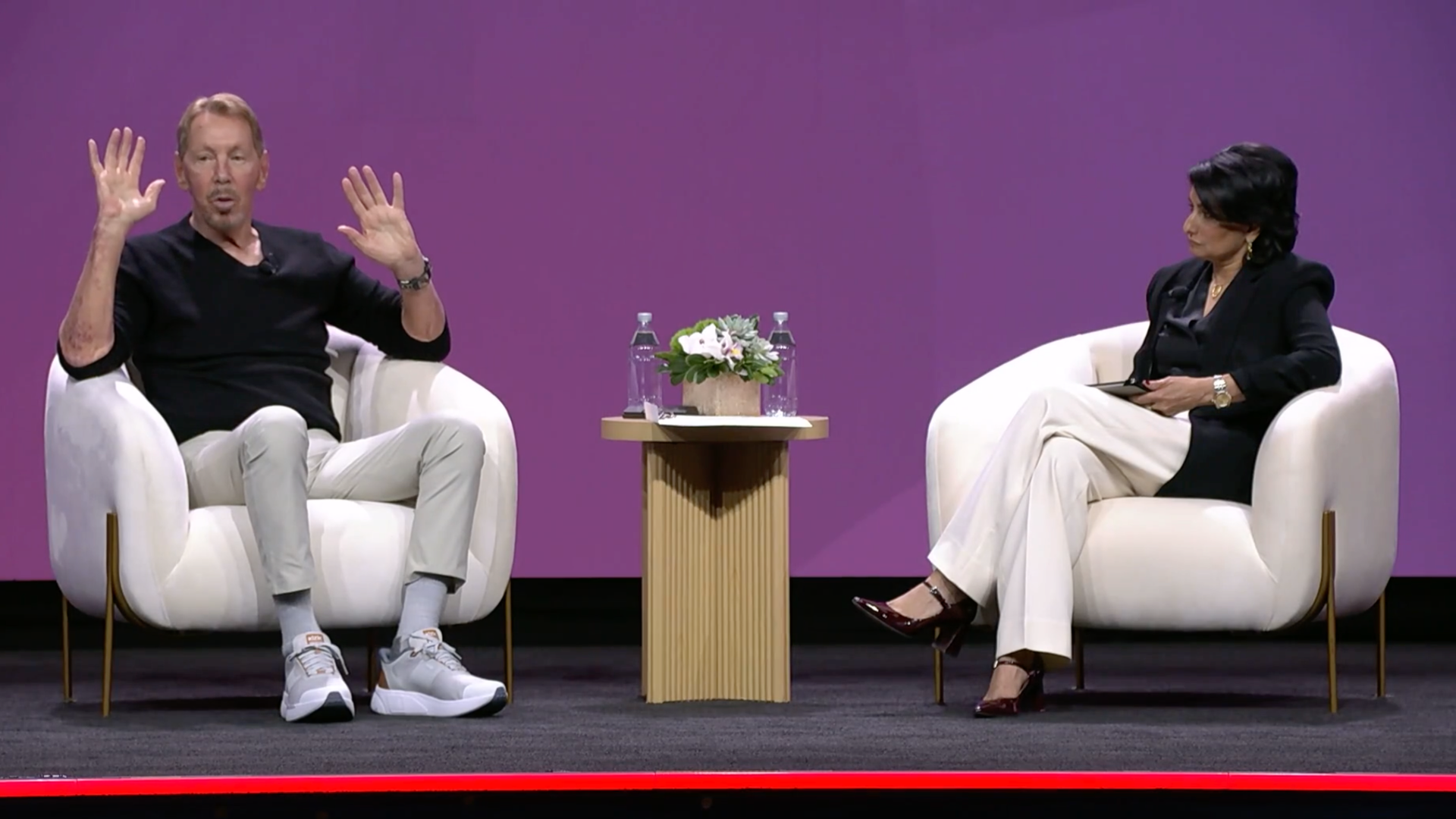
Rank 356Oracle co-founder Larry Ellison has pushed back at the suggestion that artificial intelligence could end software and SaaS businesses like his, arguing that AI will actually just make enterprise applications even more capable than they ever have been.Speaking during his keynote at the company's annual AI World conference, Ellison directly addressed ongoing concerns that businesses could use AI to build their own software – we've already seen many popular apps and suites like Adobe's Creative Cloud be imitated by AI, for example."There's been some talk about there's going to be a SaaSpocalypse because everyone's going to use AI to build their own applications," he said. "I don't think that's quite true. I think companies will continue to build applications, but they will be quite different because of AI."Future apps will be fully tailored to geographies and industriesRather than making today's software redundant, Ellison believes AI will allow developers to make their apps far more comprehensive, capable of handling entire business processes and fine-tuned for every type of sector and business need.He argued that even the most established enterprise applications today are only so good, automating just a proportion of the processes businesses actually need."They may be the best things that are commercially available... [but] they're not done," he revealed, acknowledging that many sectors still need to build their own extensions and buy other third-party apps and connectors."For the first time... [the] software industry can actually finish the applications if we start doing them industry by industry."Oracle's biggest clear push is in the healthcare sector currently, with Ellison speaking on stage about the notoriously complex and highly regulated nature of this industry – immense challenges for one global software company when navigating endless geographical variabilities is a must.SaaSpocalypse doesn't kill off apps – but it certainly shifts the focus from interface to functionalityEllison also believes that AI could fundamentally change how workers interact with applications, replacing complicated menus, dashboards and multi-step processes with smoother, natural language interaction."If you can ask a question describing what you want to see, you should then immediately see it. Any other user interface is nonsense.""There should be no training required to use any of these applications," he added.While Ellison remains confident about the future of commercial software, that doesn't necessarily mean businesses will continue to interact with apps in the same way, and it seems that a company as big as Oracle is singing from the same hymn sheet.In two separate interviews with TechRadar Pro, company execs pointed toward the same trend. Brian Chess, NetSuite's Chief Operating Officer, implied that the underlying business software could eventually become invisible to users.Discussing customers who might prefer to access NetSuite through AI assistants like ChatGPT or other platforms like Slack, Chess said "If they never log in, that's ok with us." Oracle knows that as long as it can still serve as a company's system of record, adapting to new ways of access is a must.But what this means is that, for software vendors, the value of their products will likely come more from the data, logic and processes they manage, rather than the polished interface they've been used to building for potentially decades.Ultimately, earlier SaaSpocalypse concerns remain valid, but it's not so much about AI wiping software from the world entirely. It just marks the next chapter in software, where interfaces become less critical and functionality becomes the biggest USP.Shares in Oracle rose around 14% to $144.14 in the couple of days that Oracle AI World took place, likely partly in thanks to Ellison's thoughts on the future of software as well as the company's whole suite of product announcements, but share prices are still down markedly on their late 2025 high of $330.34.
-
Picture from cdn.mos.cms.futurecdn.net
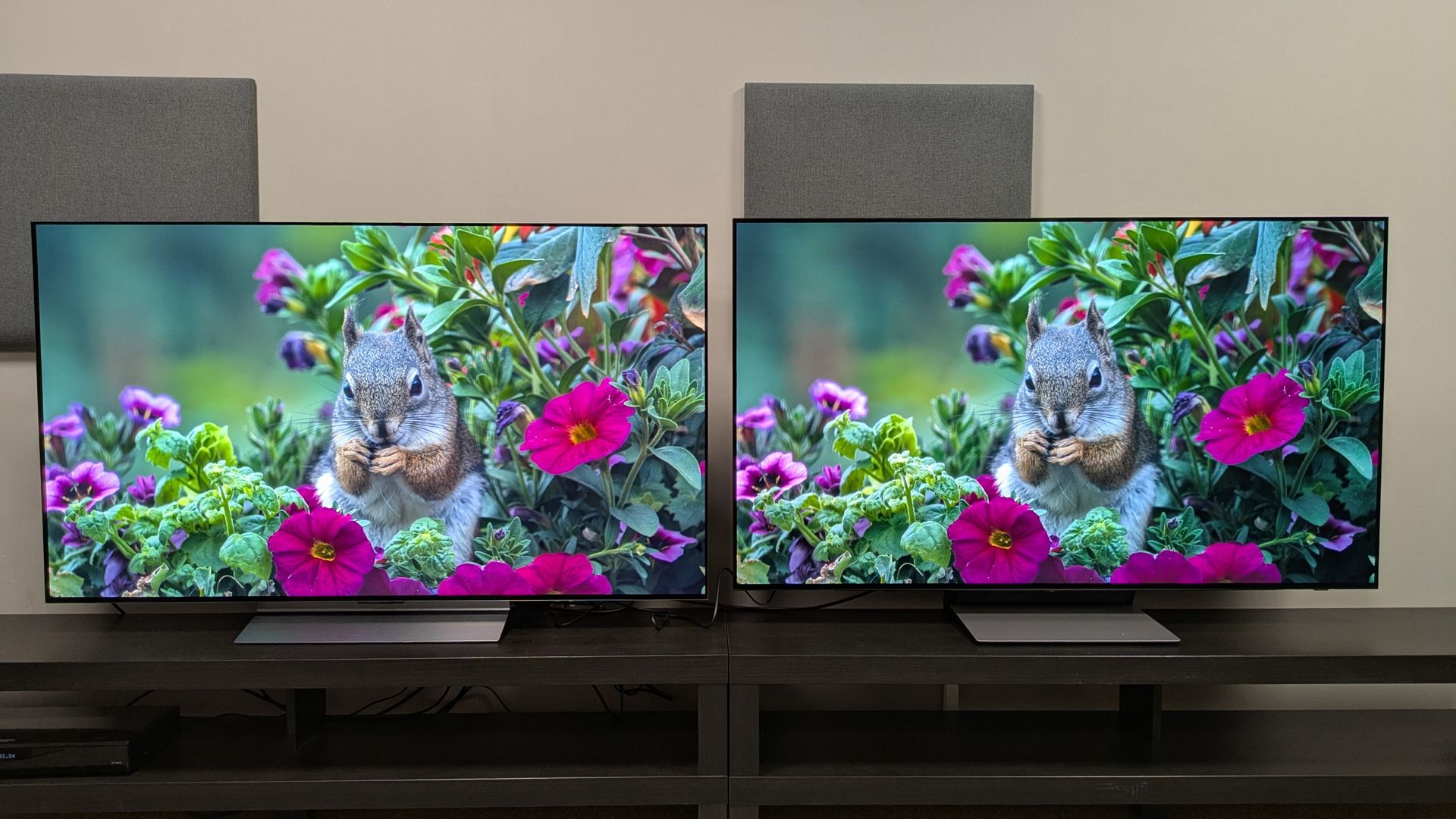
Rank 357The LG C6 is easily one of the best TVs I’ve tested this year, showing a significant upgrade over its predecessor, the LG C5. The new model has faster performance, a real step-up in brightness (nearly 300 nits peak HDR and 50 fullscreen HDR) and a more accurate picture, especially with its color temperature, mitigating some of the green tint I saw in the LG C5 when I compared the C6 and C5 side-by-side. While the LG C6 does currently sit at the top of the TV food chain for me, in terms of performance vs price, there are some rivals I’ve been intrigued to test alongside it. One of those has just landed in our testing lab: the Samsung S90H, Samsung’s own mid-range OLED and direct rival to the C6. I decided to compare the two side-by-side using reference 4K Blu-ray scenes I use to test TVs. Can the S90H cement itself as one of the best OLED TVs and de-throne the LG C6?Brightness and bright room viewingDespite the S90H (right) having higher measured brightness, this scene from Lawrence of Arabia looked brighter on the C6 (left) (Image credit: Sony Picture Entertainment / Future )In terms of brightness measurements, the C6 registered 1,427 nits peak HDR brightness in Filmmaker Mode, which is a nice result for a mid-range OLED. Surprisingly, the S90H measured 1,689 nits peak HDR brightness in its own Filmmaker Mode, which is 18% higher than the C6. Samsung’s OLED TVs are brighter than LG’s, with the Samsung S95H/S99H flagship OLED registering 10% higher brightness than the LG G6 in HDR Filmmaker Mode (2,739 nits for the S95H/S99H vs 2,475 nits for the G6). The S90H’s fullscreen HDR brightness was also higher, measuring 310 nits to the C6’s 247 nits, both of which were measured in Filmmaker Mode. So, with measurements, the S90H is brighter. But, did this translate across to real-world viewing?Firing up Lawrence of Arabia, focusing on a bright, daytime desert scene early in the movie, the C6 actually showed higher luminance. The white sands appeared punchier and brighter on the C6 compared to the S90H. This was the case with both TVs in Filmmaker Mode and even in the brighter Movie mode (called Cinema Home on the C6). In fact, the perceived brightness gap was even wider when set to their movie modes, with the C6 rendering the white sands and blue skies even brighter. When it comes to bright room viewing, the S90H (right) is the obvious choice, thanks to its glare free screen (Image credit: Warner Bros / Future )This could be a result of the C6’s new Alpha 11 AI Gen 3 processor, the same used in the flagship G6, which does feature an impressive brightness booster and 13-bit color processing (12-bit with 1 bit of added brightness), as well as the C6’s glossy screen vs the S90H’s matte screen. It wasn’t all cut-and-dry, as in some scenes, particularly colorful ones, the S90H looked punchier at times (I’ll get onto that in the below Color section). One thing is for sure though: for bright room viewing, the S90H is the clear victor. The C6’s reflective screen was one of its negatives in my C6 review, often showing mirror-like reflections during darker scenes. The S90H features Samsung’s OLED Glare Free screen and as expected, it’s super effective at eliminating these reflections. I used dark scenes from movies like The Batman and Project Hail Mary to really test it out, and I was surprised by how well the S90H displayed these scenes in our bright testing lab. If you have a bright room, the S90H is the better choice. ColorsColors are excellent on both TVs, but they often trade off whose is punchier. In The Super Mario Galaxy Movie, it's the C6 (left)...Nintendo / Universal Pictures / Future ...But in Speed Racer, it's the S90H (right) Warner Bros / Future Color is probably the toughest battle fought between these two TVs. Watching The Super Mario Galaxy Movie, both TVs did a great job faithfully recreating the movie’s bright and vivid colors. In a scene where the Lumas gather for story time at the start of the movie, their multi-colored bodies looked richer and deeper on the C6, but appeared more natural on the S90H. The same is true with the red and green of Mario and Luigi’s overalls respectively, and I found myself leaning towards the C6’s more saturated color profile. Switching to Speed Racer however, the S90H delivers more vibrant colors. The decor of the Racer family kitchen, which features pink walls and green and orange details, seemed to pop more on the S90H. While they were still very rich on the C6, they didn’t quite have the same eye-catching hues to them as on the S90H. Throughout the movie, the S90H did a better job rendering the cartoon style colors of the movie, with pleasing richness, depth and vibrancy. La La Land was one movie where colors were extremely close, though the C6 (left) has slightly more vibrancy (Image credit: Lionsgate / Future )Finally, I loaded up La La Land. In the Spring pool party scene, both TVs did a great job reproducing the colorful outfits of the partygoers, as well as keeping things natural with the surrounding skies and green bushes. However, the C6 had the punchier colors again here. Mia’s yellow dress seemed to have more pop on the C6 compared to the S90H, again regardless of picture mode. Both TVs did a very good job showing balanced color profiles, with nothing looking too oversaturated (the green bushes have sometimes looked too neon on some TVs I’ve tested it on), but again, the C6 had the more engaging colors. With HDR color gamut measurements, there was nothing to call between them. The C6 measured 99.7% of the UHDA-P3 color space and 75.9% of the BT.2020 color space, with the S90H registering 99.3% and 76.5% of the same respective color spaces. This did inform me that the 55-inch S90H I was testing was a W-OLED panel and not a QD-OLED, as a QD-OLED would have registered higher on the BT.2020 color space. One final observation I had was that watching the subway fight scene from The Batman, the S90H showed some green tint in comparison to the C6, something I’d noticed on previous OLEDs like the C5. The C6 didn’t show any sign of this, and it was one of main plus points of the C6 during its testing. Contrast and dark scenesIn The Batman, I noticed the S90H (right) had crushed some black tones, losing shadow detail, with both TVs set to Filmmaker ModeWarner Bros / Future Switching the S90H (right) to Movie mode removed some of this black crush, but the C6 (left) still had a more faithful look, even still set to Filmmaker ModeWarner Bros / Future The Batman has proven to be a challenge for some TVs in the past and it proved to be a bit of a test for one TV in particular here: the S90H. Watching any of the movie’s opening scenes, where there are plenty of dark areas on screen, the S90H very clearly crushed blacks, which resulted in loss of shadow detail. As Batman stands in a subway post fight, the texture of the rear wall and in Batman’s armour was much harder to see on the S90H, while being legible on the C6. In fact, most scenes from The Batman looked better on the C6, with both TVs set to Filmmaker Mode. I found during viewing that the S90H’s default Filmmaker Mode was very dim, even in darker, ambient conditions. Bumping up the Shadow Detail setting from 0 to 5 did help bring back some detail, but blacks were still crushed. Setting its Tone Mapping from Static to Active (which isn’t in the spirit of Filmmaker Mode but helped here) did alleviate some of these issues, but again, the C6’s picture, in its out-of-the-box Filmmaker Mode settings, was more faithful to the movie. Both TVs deliver deep, inky blacks in Project Hail Mary and despite its black crush, the S90H's (right) black tones actually were richer at times (Image credit: Amazon / Future )Aside from these crushed black tones, both TVs did demonstrate strong contrast. As Bruce works at a desk in the Batcave, the bright tones from the monitors and desk lamp were well balanced with the dark tones surrounding them, and while they looked more natural on the C6, they were impressive on the S90H. Switching to Project Hail Mary, the S90H’s blacks were inkier and deeper, and actually suited the scenes in space well. However, it was still prone to crushing blacks in some scenes, resulting in detail loss. Watching this movie revealed that the C6 could sometimes overexert its brightness and black tones actually looked lifted compared to the S90H in some shots. Despite this, both TVs did a very good job rendering Project Hail Mary, and it still showcased how effective OLED was with these high contrast scenes. A battle for the ages The battle between the C6 (left) and S90H (right) is a very closely fought one and really comes down to preference, price and your room, but the C6 is my personal pick (Image credit: Future)Putting the C6 and S90H side-by-side proved that both of them were overall excellent mid-range OLEDs, and despite their own picture oddities from time to time, deliver superb picture quality. Both could be counted among the best gaming TVs thanks to their extensive features and both are available in size 42-83 inches. For price, the 55-inch C6 costs $999 / £1,199 / AU$2,995, while the 55-inch S90H costs $1,299 / £1,199 / AU$2,995. While the S90H’s price is higher in the US right now, I don’t expect that to last, so really these two TVs are priced the same as well. It comes down to your circumstances. If you have a bright room, the S90H is a no-brainer and if you’re in more ambient conditions, the C6 is the better pick. If I had to pick one right now, it would be the C6 as I found the C6’s picture to be more consistent on the scenes I tested, but this was a really close fight and if you can get the S90H for cheaper than the C6, then you won’t be disappointed with it.
-
Picture from cdn.mos.cms.futurecdn.net
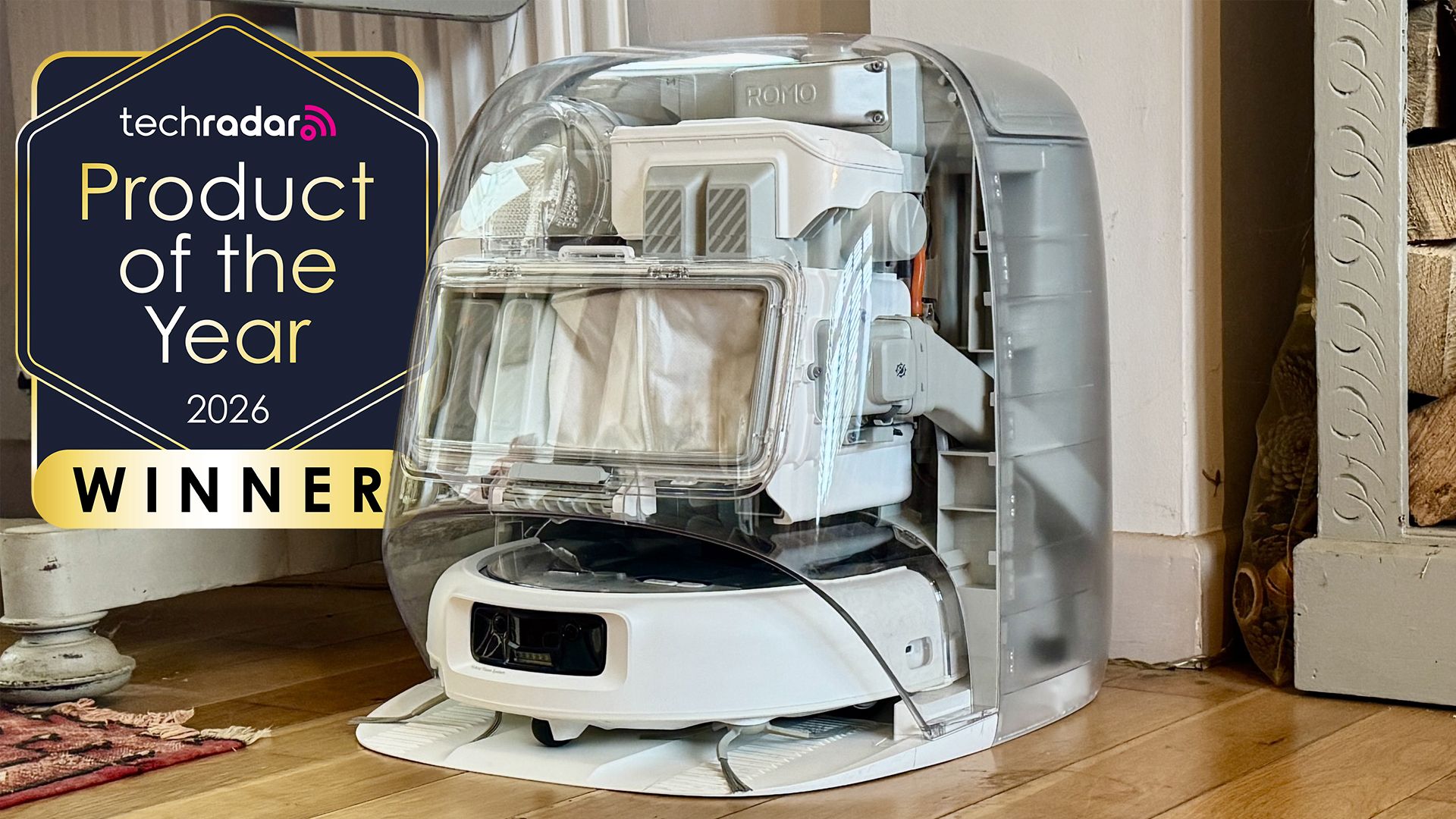
Rank 358The Romo P is DJI’s first foray into the world of floor-cleaning, and the company's years of expertise in navigation and obstacle-detection have translated flawlessly from the sky to your floor.The most important aspect of a robot vacuum, though, is its cleaning ability, and in our tests the Romo P more than holds its own against established leaders like Roborock and Dreame — read our in-depth DJI Romo P review for more. It’s a hugely impressive package all-round, and my choice for Home Device of the Year in TechRadar's Product of the Year Awards 2026.DJI’s drones have offered autonomous navigation since 2016, and it's that expertise that gives the Romo P the edge when it comes to pathfinding. It combines dual fisheye cameras with LiDAR to detect objects as small as 2mm thick (that's less than an eighth of an inch), so there’s no need to worry about cables or shoelaces getting wrapped around the brushroll.The Romo P packs serious cleaning power inside its space-age chassis too, tackling dirt, dust and pet hair across all floor types. With 25,000Pa suction and extendable cleaning brushes, it’s particularly well suited to wood, tiles and other hard surfaces, and it’s no slouch on carpet either, easily keeping up with rival robovacs.(Image credit: Future)Wet cleaning is especially impressive; the Romo P’s dual mop heads are noticeably more plush and absorbent than those of other robovacs we’ve tested, and the right-hand head articulates out slightly to clean all the way to the edge of furniture and baseboards without leaving dust lines (a common issue with round robovacs). When it needs to move onto carpet, the mop heads raise automatically to keep the floor dry. Once the Romo P has finished cleaning, its automated charging and self-cleaning dock takes over. This surprisingly compact unit sucks dirt from the romovac’s bin into a sealed dust bag to keep dirt and allergens safely contained, then washes the mop pads and dries them to prevent mold and odors. The process is so effective that you might only need to intervene a few times a year.The Romo P is controlled via DJI’s Home app, which lets you customize its automated functions to suit your floors and lifestyle. For example, you can set up custom cleaning schedules, and adjust the Romo P’s suction and mopping-water levels on a room-by-room basis. Like any good robovac app, DJI Home also allows you to set no-go zones, and monitor cleaning progress in real time.(Image credit: Future)That’s not all — the app also gives you a ground-level view of your room via the robot’s two fish-eye camera lenses, so you can, for example, check on your pets while you’re away. There's full voice control too.The Romo P is even a cut above other robot vacuums when it comes to aesthetics, with its transparent top panel and matching see-through dock letting you see exactly what’s happening while the duo keep your home spotless with little-and-often cleaning. They’re a far cry from the usual black or white pucks and chunky docks of most robovacs.DJI has launched itself into your home in style, with a robot vacuum that can literally run rings around its competitors, and its Romo P is a thoroughly worthy winner of our Home Device of the Year award.
-
Picture from www.engadget.com
Rank 359 -
Picture from cdn.mos.cms.futurecdn.net
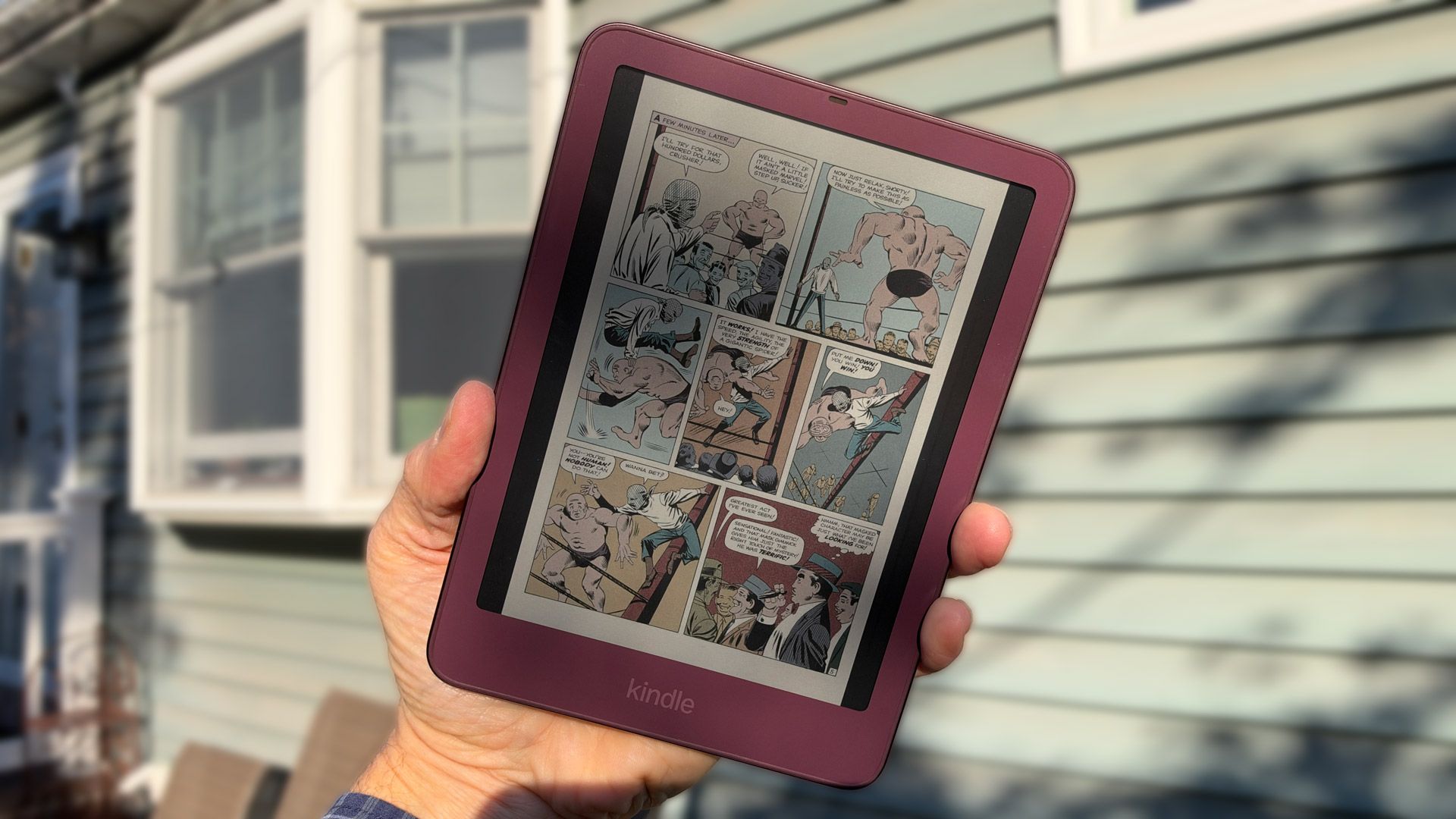
Rank 360On my recent unboxing of the brand-new Kindle Colorsoft Signature Edition (the one with the brushed aluminum back), I noticed someone asking about the quality of colors in dark mode, and I realized I didn't have a good answer.Dark Mode, which became popular on modern screens over the past 15 years or so — a throwback to the original CRT displays — has never been my thing. As a result, I don't use it on phones, browsers, or Kindle e-readers. Still, the more I thought about this question (below). The more I wondered about it."This might be a dumb question," started one TikTok commenter, "but do the colors still show when in Dark Mode? I've only seen photos in light mode."I instantly tried to imagine what a comic or graphic novel might look like in Dark Mode and realized I'd never seen it that way either.Let's try the Colorsoft Dark modeThe Kindle Colorsoft shares a menu system with the rest of the monochrome Kindles, with the Dark Mode option sitting right up top. You access the quick menu with a swipe down from the top of the display. You can also dig into settings to turn on the control from there.I turned on Dark Mode on the Kindle Colorsoft Signature Edition and noticed that my library immediately reversed, turning all the white borders black, but the book, magazine, and graphic novel covers remained untouched. If I opened a book, I saw white text on black pages.The other thing I noticed is that the screen looked a lot dimmer. Basically, Dark Mode automatically lowers the screen brightness by half. I opened a graphic novel. As with the rest of the Colosoft interface, the borders around each graphic novel page were black. However, each page was still white, with the untouched color panels inside. Honestly, this makes sense, since I can't imagine any artist would want dark mode reversing their work. It would probably look terrible.Lance Ulanoff / FutureLance Ulanoff / FutureLance Ulanoff / FutureLance Ulanoff / FutureI could see all the colors, but the pages looked too dim. Fortunately, I could still push the front-lit LEDs brighter (I turned them up to max) to return some of that vibrancy, though I'm not sure if that defeats the purpose of Dark Mode.The other option is to take advantage of the Kindle Colorsoft's reflective display (unlike an LCD, there are no traditional backlights). If you have a good external light or even sunlight, the page looks great with or without dark mode, which can reduce eye-straining screen glare and save some battery life (not much of an issue with Kindles).Here's what I learned: Yes, you can still see colors in Dark Mode, but as Amazon confirmed to me, "When setting Colorsoft devices to dark mode, the screen may appear dimmer overall due to the color E-Ink layer."If the screen looks too dim, adjust the brightness or find a good light source and enjoy your colorful graphic novels.
-
Picture from cdn.mos.cms.futurecdn.net
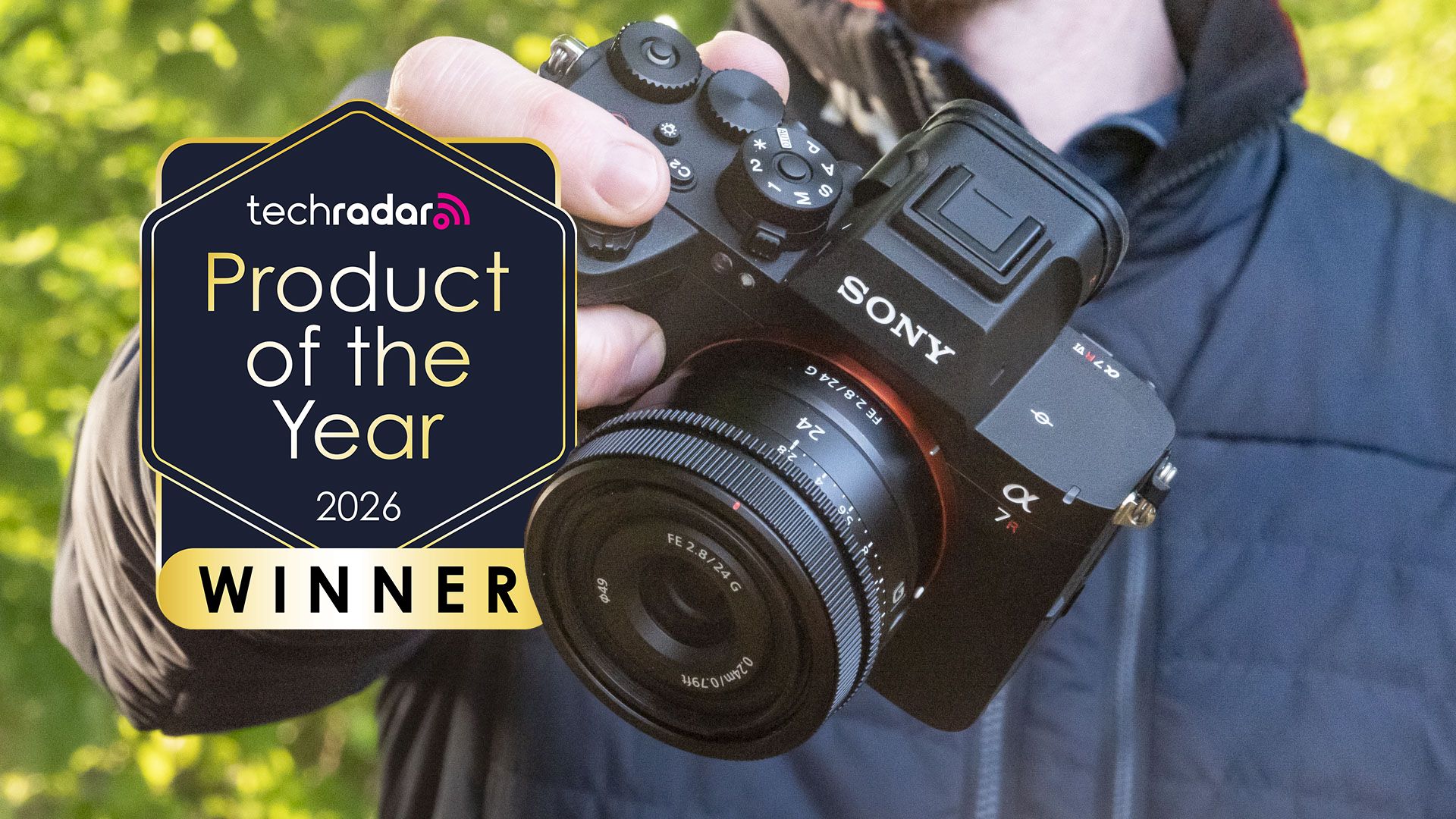
Rank 361Against a backdrop of component shortages and price hikes, 2026 has been a challenging year for camera companies, and it's been a quieter year for new gear as a result. That being said, we were still treated to some cracking cameras — but standing tall above them all was the Sony A7R VI, with a new 66.8MP full-frame stacked sensor, Bionz XR 2 processor, Sony's latest subject-detection autofocus, and its first new battery for 10 years.It's a formidable camera whatever your genre of photography, and won both our Best Professional Camera and overall Camera of the Year awards for 2026 at the TechRadar Product of the Year Awards 2026. Here's what makes the A7R VI so special, in my opinion.Bird photography with the 400-800mm lens was one of the many occasions I made good use of the Sony A7R VI (Image credit: Tim Coleman)Can a camera really be ‘perfect’?It's possible that I got carried away slightly when I said the A7R VI “had no weaknesses”, but after weeks testing the full-frame mirrorless camera across landscape, portrait and wildlife photography, I had no doubt in my mind that it deserved a perfect 5-star rating. I’ve been reviewing cameras for almost two decades, and the A7R VI genuinely feels like peak camera. In my A7R VI review, I was even compelled to say “Sony can stop making cameras now.”The A7R VI is a powerful all-rounder, as opposed to a pure pixel monsterFirst up, I must point to the new sensor, which had an admittedly modest bump in pixels from the already class-leading A7R V’s 61MP sensor, to 66.8MP. But that’s not the exciting part about this sensor — it’s also a ‘stacked’ type with a faster read-out speed. Faster read-out speeds can improve a camera’s performance in multiple ways, not least by reducing rolling shutter (an ugly distortion effect that appears when recording video and taking photos of high-speed subjects). For me, I preferred having the smaller bump in resolution and a greater emphasis on speed, as opposed to an even bigger bump in resolution but no speed improvement. The A7R VI is a powerful all-rounder, as opposed to a pure pixel monster.The camera packs Sony’s Bionz XR 2 processor, which combines two chips, including one that’s tasked with subject-detection autofocus. Whether I was photographing small birds or large mammals in a nature reserve, or taking portraits, the A7R VI never skipped a beat. The versatile multi-axis screen can tilt, pull out, and flip out to the side (Image credit: Future / Tim Coleman)Then there’s the camera’s handling. Historically, for me Sony's design and user experience haven't matched those of other leading mirrorless camera brands — I’m a sucker for Nikon in particular. But the A7R VI is spectacularly well designed. There’s a tilt-and-flip touchscreen, meaning the screen can be pulled out and used as a tilt screen for waist-level shooting, or flipped out and rotated for selfies — traditionally you’d have to pick either / or (or have neither). It’s the most versatile design on the market, and one which you can also find on the latest Lumix S1 II cameras. If I had one wish, it would be that Sony increased the size of its 3-inch display in the future, even if only to 3.2-inches like Nikon. The viewfinder is big, bright and highly detailed class-leading 9.36m-dot display, while the button layout makes perfect sense, and the camera’s grip is nice and deep and comfortable to hold.Housed inside the grip is an all-new battery — Sony’s first for 10 years since the legendary NP-FZ100. The new unit has a higher capacity, and increases shot life by 20%; not bad, considering the previous battery already delivered class-leading power. The downside to the new battery is that it’s not forwards / backwards compatible with the NP-FZ100, so upgraders are going to have to splash out on additional batteries should they need them. Sony's new high-capacity battery debuted in the A7R VI (Image credit: Future / Tim Coleman)Video specs are decent, though arguably not as strong as those of some lower-resolution rival cameras. For example, Sony again omitted open-gate recording (this would finally appear later in the yet-to-go-on-sale FX5 cinema camera). But if photography is your beat, and you need a high-resolution sensor with huge scope for cropping — the A7R VI’s Super 35 (APS-C / 1.5x crop) mode is still a healthy 28MP — and don’t need the absolute top speed and buffer performance of cameras like the A9 III and A1 II, there really is no better camera. The A7R VI was so good, in fact, that it put the (much) pricier A1 II’s position in doubt, given that it can do 90% of what that camera can, while boasting a higher-resolution sensor. I reviewed some fabulous cameras in 2026, but my absolute favorite was without doubt the A7R VI — it’s the camera I wish I owned, along with some of Sony’s spectacular recent pro GM lenses. It was the crowning achievement for Sony in a year in which it also scooped our Brand of the Year award, and comfortably maintained its #2 market position behind Canon. Sony A7R VI image galleryTim ColemanFuture / Tim ColemanFuture / Tim ColemanFuture / Tim ColemanFuture / Tim Coleman
-
Picture from cdn.mos.cms.futurecdn.net
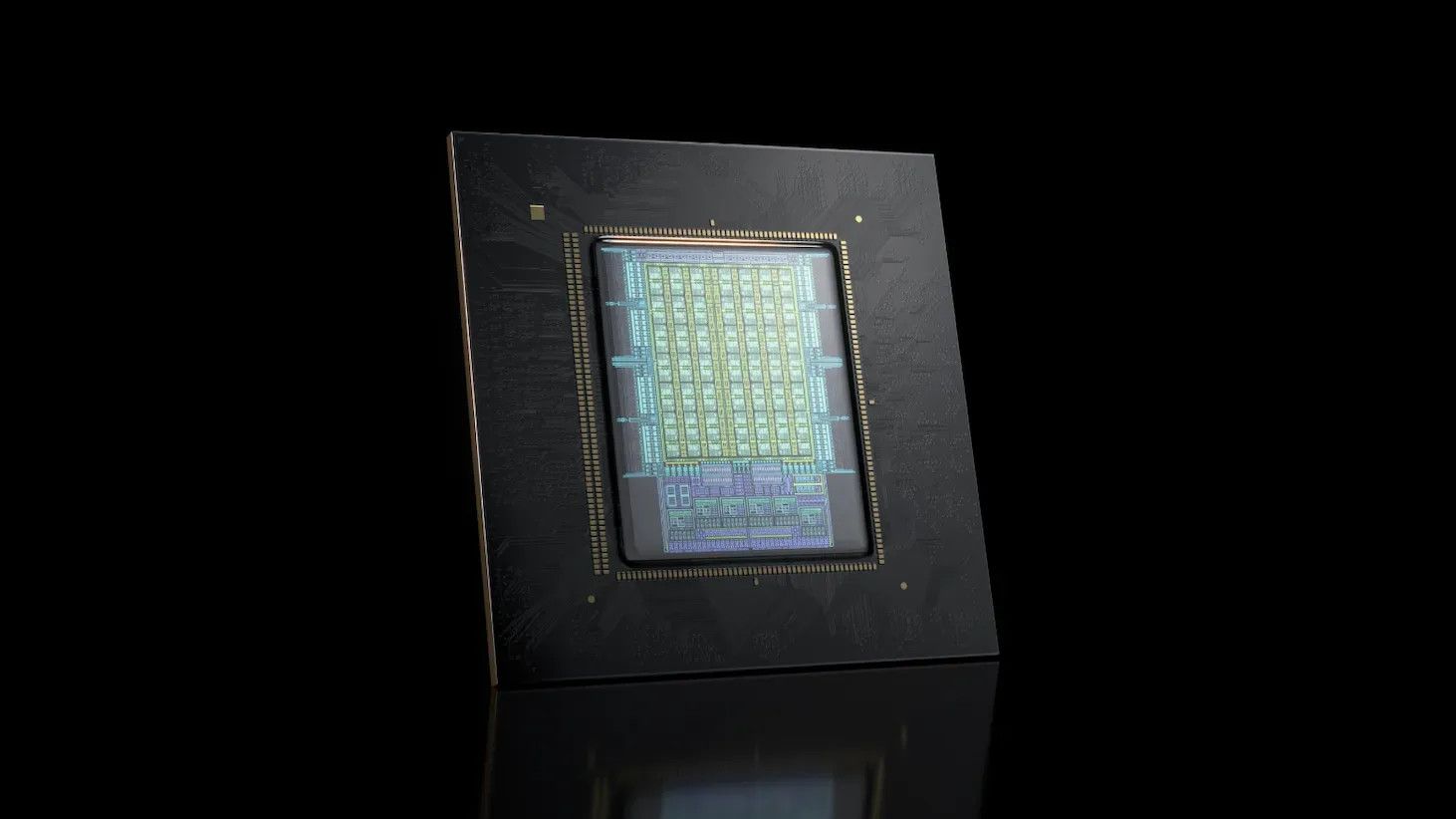
Rank 362Nvidia has quietly cut Rubin's listed HBM4 bandwidth from 22 TB/s to 19.2 TB/s per GPU and NVLink 6 from 3.6 TB/s to 3 TB/sThe eight-GPU HGX Rubin NVL8 fares worst, losing 26% of its memory bandwidth and dropping from 2.3 TB to 2 TB of HBM4 capacityOn paper, AMD's MI455X now leads on per-GPU memory bandwidth and Helios on scale-up bandwidth, though neither side's figures are benchmarkedNvidia has quietly lowered the memory and interconnect bandwidth it publishes for Vera Rubin, cutting per-GPU HBM4 bandwidth by about 13% and NVLink bandwidth by about 17%, without a press release or explanation.The Vera Rubin NVL72 product page now rates each Rubin GPU at 19.2 TB/s of HBM4 bandwidth, down from 22 TB/s, and 3 TB/s of NVLink 6 bandwidth, down from 3.6 TB/s.Memory capacity holds at 288 GB, and the headline 50 PFLOPS of sparse NVFP4 inference remains unchanged; however, at rack scale, aggregate memory bandwidth slips from 1,580 TB/s to 1,400 TB/s and the NVLink total from 260 TB/s to 216 TB/s, while the two-GPU Vera Rubin Superchip drops from 44 TB/s to 38.5 TB/s.An edit without an announcement?The revision surfaced in a report from IT Home, which compared Nvidia's October documentation with a copy saved in June 2026. Wccftech then narrowed the window with Wayback Machine snapshots, placing the edit between September 1 and September 11. Nvidia, as Hardware Busters observed, went "the quiet way: by editing the product pages."The timing matters here: the change landed shortly after Nvidia's August second-quarter results said Vera Rubin racks were already running at partners including CoreWeave, Google Cloud and Microsoft Azure, months after early systems began reaching select customers, and just as the fall production shipments Nvidia promised in May 2026 were due to begin.This suggests the new figures describe hardware going out the door rather than a distant goal, and the nerfed figures sat on Nvidia's site for at least six weeks before anyone reported them.The downgrade wasn't completely proportional, though, with some configurations taking a bigger hit. Most noticeably, the HGX Rubin NVL8, Nvidia's standard eight-GPU server board, fares worst. The HGX page now lists 2 TB of HBM4 at 130 TB/s for the whole system, down from 2.3 TB and 176 TB/s, a 26% bandwidth cut.NVLink Switch bandwidth falls from 28.8 TB/s to 24 TB/s, and dense training figures slip from 280 to 270 PFLOPS of NVFP4 and from 140 to 130 PFLOPS of FP8. Scale-out networking is the only line that rises, by 12.5% in most configurations, and Nvidia hasn't said why.Scaling back to ensure delivery?Interestingly, the math does not hold completely anymore: its per-GPU table still advertises 288 GB at 22 TB/s with 3.6 TB/s of NVLink, figures that no longer add up to the system totals printed beside them, and Nvidia's July Rubin architecture deep dive still promises 22 TB/s. Split across eight GPUs, the new totals come to about 16.25 TB/s and roughly 250 GB each.This fits two potential readings: eight smaller HBM4 stacks running at just under 8 Gbps per pin, the industry baseline, or one of the usual eight stacks disabled per GPU, a trick Nvidia used on the 80 GB H100, but Nvidia hasn't said which approach it took.The retreat makes more sense given the history here: JEDEC's HBM4 standard, published in April 2025, specifies up to 8 Gb/s per pin across a 2,048-bit interface, or 2 TB/s per stack. Nvidia wanted far more, but it might have had to settle for less.According to a TechPowerUp report from March, Rubin's per-GPU target climbed from 13 TB/s at GTC 2025 to 20.5 TB/s by that September and 22 TB/s at CES 2026, and a SemiAnalysis note it relayed said SK hynix and Samsung were struggling to reach the final figure, with early shipments expected to be nearer 20 TB/s.TrendForce reported in September 2025 that Nvidia was pressing suppliers for 10 Gbps per pin as AMD readied Helios, and warned that if volumes fell short or costs ballooned, Nvidia "may abandon the upgrade or segment its platform products."By January, TrendForce said the request had passed 11 Gbps and sent all three HBM makers back to redesign, though an Nvidia spokesperson told Tom's Hardware that "our HBM4 memory partners remain on track for production shipments." SK hynix finished HBM4 development first, and Samsung began shipping in February at 11.7 Gbps, above Nvidia's stated requirement. More than a year after TrendForce's warning, the revised sheet reads like its fallback scenario: a lower overall ceiling, plus a further-reduced HGX tier, and this seems to be because Nvidia needs to deliver solutions to its customers as a higher priority than chasing an elusive memory bandwidth goal.Team Red for the win?Because of the retreat, perceived or otherwise, the competitive picture shifts considerably, at least on paper. AMD's Instinct MI455X spreads 432 GB across 12 HBM4 stacks for 23.3 TB/s, which needs only about 7.6 Gbps per pin, below the JEDEC baseline. AMD bought its bandwidth with width rather than speed, so it never needed above-standard memory.When it launched Helios in July 2026, AMD claimed 6% more HBM bandwidth than Vera Rubin NVL72's published figure; against the revised 1,400 TB/s, Helios' 1.67 PB/s is roughly 19% ahead. Scale-up bandwidth, Nvidia's traditional stronghold, was level at 260 TB/s per rack and now favors AMD by about a fifth, while the scale-out increase trims AMD's claimed 50% lead there to about a third.For buyers running inference, the bandwidth line matters more than the FLOPS line. Nvidia's engineers write in that July deep dive that decode is bound by the memory subsystem, though they argue that what counts is how efficiently kernels use it, and that it is "not about peak bandwidth specs."The marketing hasn't moved, however: the NVL72 page still promises up to 10x more tokens per megawatt and one-tenth the cost per million tokens versus GB200 NVL72, footnoted as subject to change, and Nvidia hasn't said whether it reran those projections on the lower figures.None of this makes Rubin slow. At 19.2 TB/s, it still offers about 2.4 times a Blackwell GPU's 8 TB/s, rather than the 2.8x Nvidia's blog still claims. Jensen Huang said in August that "Vera Rubin, now in full production, was built to power exactly this moment." The moment, it turns out, arrived with a little less bandwidth than advertised.
-
Picture from www.engadget.com
Rank 363 -

Picture from cdn.mos.cms.futurecdn.net
Rank 364ICE has requested numerous social media platforms to hand over data on users who are critical of its agents and operationsTech companies have complied, but are now expecting Democrat-led investigations into their compliance following the midterm electionsExecutives want to shield themselves from Congressional inquiries into their conductThe US midterm elections are just days away, and big tech companies such as Google and Meta are already quietly defying Trump’s orders to hand over data on users who have criticized his stance on immigration.The incumbent party usually loses seats in the midterm elections, and with a wave of Democratic governors potentially on the horizon tech companies are attempting to stave off future scrutiny.“They need to be prepared to say, under oath, why they did what they did,” Rep. Shri Thanedar (D., Mich.) said, referring to an investigation into companies who have complied with Trump administration subpoenas.T&C update: your data may be handed to the authoritiesNumerous tech companies with platforms upon which people have voiced critical views of Trump’s handling of immigration policy have begun updating their terms of use to include transparency on how user data could be handed over to the authorities.Much of the criticism has centered around how Immigration and Customs Enforcement (ICE) have conducted operations investigating illegal immigrants. As a recent Department of Homeland Security breach exposed, ICE agents have conducted undercover surveillance operations of protestors, critics, and journalists using wiretaps.The DHS has also expanded its definition of doxing - the revealing of personal information such as a home address for malicious purposes - to include names and titles. Social media platforms and search engines such as Google, Facebook, Instagram, Reddit, TikTok and X have then been scoured by ICE to identify anything it deems a threat to its agents or operations.Many of these platforms have been handed administrative subpoenas that do not require approval from a judge. Citizen journalists with channels on YouTube have also been targeted by ICE, with requests to hand over customers’ personal information.“Violence, threats, and conspiracies to impede law enforcement operations are not protected by the First Amendment,” said White House spokeswoman Lauren Bis.People familiar with the matter told the Wall Street Journal that the DHS has increased the number of grand jury subpoenas submitted to platforms that handle user data, which carry heavy consequences for noncompliance.In order to prepare for potential Democrat inquiries into how tech companies have conducted themselves in line with such subpoenas, some companies have delayed or pushed back on some requests to help insulate themselves from investigations.A letter from Sen. Ron Wyden (D., Ore.) and Rep. Pramila Jayapal (D., Wash.) to the chief justice of the Supreme Court and the acting head of the Government Accountability Office accused ICE of using subpoenas to “surveil, intimidate, and suppress the free speech of ordinary citizens and even the free press.”An ICE spokesperson told the WSJ that all of its operations are “conducted in accordance with applicable law and policy.”
-

Picture from techcrunch.com
Rank 365 -

Picture from techcrunch.com
Rank 366 -

Picture from techcrunch.com
Rank 367 -

Picture from www.engadget.com
Rank 368 -
Picture from www.engadget.com
Rank 369 -
Picture from www.engadget.com
Rank 370 -

Picture from cdn.mos.cms.futurecdn.net
Rank 371It's time to travel back to the 1880s once more, and we join the Russell family at a tough time in season 4 of The Gilded Age. Having reversed the ban on divorced women last time out, Bertha and her clan are under intense scrutiny.Meanwhile, Agnes spots a golden opportunity to climb the social ladder thanks to a presidential dinner, Marian is going out on her own and looking for some independence, and Peggy is trying to settle in with her new family.If all that wasn't enough to pack into the eight episodes of the fourth season, we will also see George go toe-to-toe with a new rival: John D Rockefeller!Here's how you can watch The Gilded Age season 4 online from anywhere with a VPN.Can I watch The Gilded Age season 4 for free?Yes. YouTube TV offers new subscribers a 5-day FREE trial, and all of their current plans allow you to add the HBO Max streaming service.That means you can watch at least the first few episodes of The Gilded Age season 4 completely free.Traveling abroad right now? You can use a VPN to access your YouTube TV account as if you were right at home. Use a VPN to watch The Gilded Age season 4 from anywhereA VPN is a handy piece of software that can make your device appear as if it's back in your home country and unlock your usual streaming services. The best VPN right now? We recommend NordVPN – it does everything and comes with up to 75% off.Editors Choice🟩 NordVPN – get the world's best VPNNot having a VPN is like leaving your front door wide open in a busy city – anyone can walk right in and take a peek.TechRadar regularly reviews all the biggest and best VPN providers and NordVPN is our #1 choice.✅ Up to 75% Off Today✅ 3 Extra Months Free✅ Unlocks HBO MaxGet NordVPN and stream The Gilded Age season 4 from anywhere.VIEW DEAL ON How to watch The Gilded Age season 4 in the USThe Gilded Age season 4 premieres on HBO at 9pm ET/PT on Sunday, November 1. Further episodes will go out one at a time in the same slot weekly.If you don't already have access to HBO, you can still watch The Gilded Age season 4 and all of its programming online thanks to the HBO Max streaming platform. Plans start from $10.99 per month, or you can pay more to add live sports and bundle in other streaming services like Disney Plus and Hulu.HBO is also available with different OTT cord cutting services, often as an added extra. YouTube TV, for example, lets you add HBO Max and is available to try before you buy thanks to its free trial.Have one of these subscriptions but away when The Gilded Age season 4 is on? You can still access your usual streaming services from anywhere by using a VPN.How to watch The Gilded Age season 4 in the UKThe Gilded Age season 4 will go out on Sky Atlantic in the UK. Note that episodes in the UK will air a day after their US release, at 9pm on Mondays, from November 2.Episodes will also be available on catchup on Sky, as well as on the recently launched HBO Max service. It comes free with Sky TV plans, or you can get a standalone subscription from just £5.99 a month.A further way to watch The Gilded Age season 4 in the UK is with a NOW Entertainment Membership from £6.99 a month.Away from home? You can still connect to your usual streaming services by downloading a VPN and pointing your location back to the UK.How to watch The Gilded Age season 4 in CanadaCrave is home to The Gilded Age season 4 in Canada, and follows the same weekly schedule as the US, with new episodes released every Sunday from November 1. Prices start at CA$11.99/month and CA$119.99/year. Away from home? You can access your subscriptions by downloading a VPN and pointing your location back to the UK.How to watch The Gilded Age season 4 in AustraliaIf you're living Down Under, you will need Paramount+ to tune in to episodes of The Gilded Age season 4, with prices starting from $11.99 a month and episodes landing weekly from Monday, November 2.Outside Australia? Aussies away from home can use a VPN to unblock Paramount+ and watch The Gilded Age season 4 as they would at home. The Gilded Age season 4 – Need to KnowThe Gilded Age season 4 official trailerWhen is the The Gilded Age season 4 release date?The Gilded Age season 4 will premiere on Sunday, November 1 in the US, before landing in the UK and Australia a day later.New episodes will arrive weekly thereafter across the next seven weeks, until the finale on December 20/21.The Gilded Age season 4 castCarrie Coon as Bertha RussellMorgan Spector as George RussellLouisa Jacobson as Marian BrookCynthia Nixon as Ada ForteChristine Baranski as Agnes van RhijnDenée Benton as Peggy ScottTaissa Farmiga as Gladys, Duchess of BuckinghamHarry Richardson as Larry RussellBlake Ritson as Oscar van RhijnJordan Donica as Dr William KirklandSimon Jones as Mr BannisterJack Gilpin as Mr ChurchBen Ahlers as John ‘Jack’ TrotterCelia Keenan-Bolger as Mrs BruceDebra Monk as Mrs ArmstrongDonna Murphy as Caroline Schermerhorn AstorKristine Nielsen as Mrs BauerKelli O’Hara as Aurora FaneTaylor Richardson as BridgetDouglas Sills as Josh BordenJohn Douglas Thompson as Arthur ScottErin Wilhelmi as Adelheid WeberKelley Curran as Enid WintertonAudra McDonald as Dorothy ScottAshlie Atkinson as Mamie FishBen Lamb as Hector, Duke of BuckinghamPhylicia Rashad as Elizabeth KirklandBrian Stokes Mitchell as Frederick KirklandJessica Frances Dukes as Athena TrumboHattie Morahan as Lady Sarah VereVictoria Clark as Joan CarltonWe test and review VPN services in the context of legal recreational uses. For example:1. Accessing a service from another country (subject to the terms and conditions of that service).2. Protecting your online security and strengthening your online privacy when abroad.We do not support or condone the illegal or malicious use of VPN services. Consuming pirated content that is paid-for is neither endorsed nor approved by Future Publishing.
-
Picture from www.engadget.com
Rank 372 -
Picture from cdn.mos.cms.futurecdn.net
Rank 373Anthropic hiring manager Felix Rieseberg reveals that coding interviews are overIn a blog post, the engineering manager explains that Claude codes better, making coding tasks obsoleteRieseberg encourages junior engineers to approach their work with a new attitude, while he examines a way to interview people who are good at AI codingThe end is nigh for coding tasks in interviews, certainly as far as Anthropic is concerned. The AI company’s engineering manager Felix Rieseberg has published a blog post explaining how junior engineers should approach jobs and their current roles, after announcing the abandonment of coding interviews.His rationale for the decision is straightforward: AI codes better than humans, making the assessment pretty pointless. At a time when Claude can demonstrate a superior grasp of coding, putting job candidates through the process no longer reveals anything “meaningful about the candidates,” according to Rieseberg.Instead, he advises that junior engineers should focus instead on making an impact, while taking the time to understand the company and the people working within it.No code candidatesRieseberg is quick to the point: “This month, I laid the traditional coding interview to rest. As a hiring manager at Anthropic, I stopped asking candidates to do them.” He explains that while coding challenges in interviews were once useful, that is no longer the past. “There’s no more point in giving you a little React challenge than there is in quizzing people about assembly; Claude is now better at both.”Instead, Rieseberg offers some anecdotes of people who were active agents of change when joining new companies, and suggests making an impact is the answer. Radical ideas and a weekend coding a prototype with AI are the new coding interview, essentially, approaching being hired with a demonstration of the project they prompted and finessed, and its outcome.“Sheer ignorance”Rieseberg’s decision may have come out of the blue, but his rationale seems to make some sort of sense. He quotes actor and director Orson Welles, who responded to a question about his confidence to try new things with “Ignorance, sheer ignorance — you know there’s no confidence to equal it. It’s only when you know something about a profession, I think, that you’re timid or careful.”With that as context, Rieseberg’s conclusion that coding interviews are not the answer when the company product already codes better than anyone it can hire has legs. Perhaps it was inevitable that the day would come, but crucially, Rieseberg isn’t giving up on hiring. Instead, he’s looking for a new way to do it, a route to finding new junior engineers without them needing a coding assessment.“I’m probably not the only manager trying to figure out how to interview for people who build well with AI. I haven’t quite gotten there yet — but I’m scanning resumes and portfolios for little prototypes that exhibit taste, empathy, and principled thinking.”
-
Picture from www.engadget.com
Rank 374 -

Picture from www.engadget.com
Rank 375 -
Picture from cdn.mos.cms.futurecdn.net
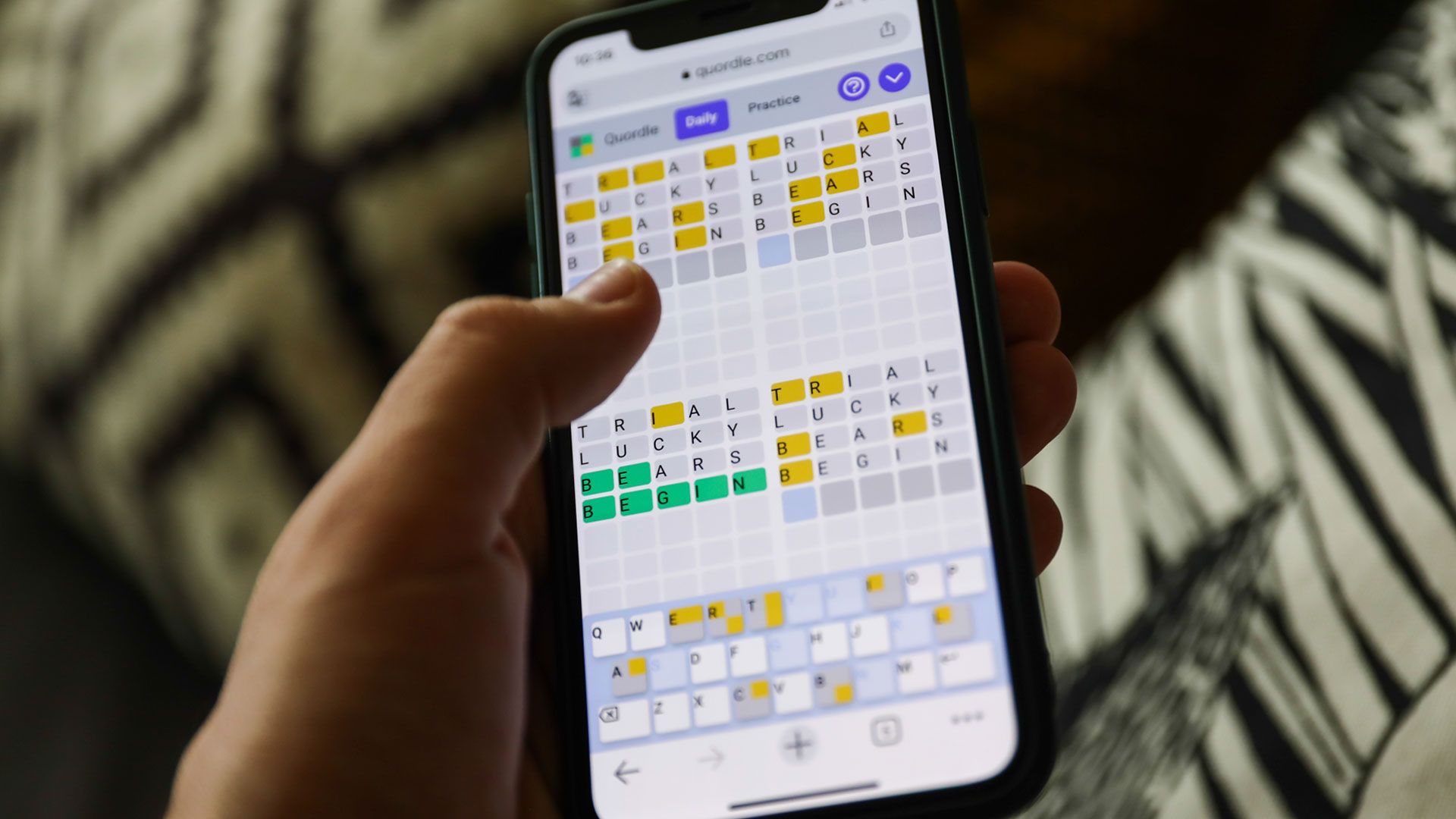
Rank 376Looking for a different day?A new Quordle puzzle appears at midnight each day for your time zone – which means that some people are always playing 'today's game' while others are playing 'yesterday's'. If you're looking for Saturday's puzzle instead then click here: Quordle hints and answers for Saturday, October 31 (game #1741).Quordle was one of the original Wordle alternatives and is still going strong now more than 1,500 games later. It offers a genuine challenge, though, so read on if you need some Quordle hints today — or scroll down further for the answers.Enjoy playing word games? You can also check out my NYT Connections today and NYT Strands today pages for hints and answers for those puzzles, while Marc's Wordle today column covers the original viral word game.SPOILER WARNING: Information about Quordle today is below, so don't read on if you don't want to know the answers.Quordle today (game #1742) — hint #1 — VowelsHow many different vowels are in Quordle today?• The number of different vowels in Quordle today is 3*.* Note that by vowel we mean the five standard vowels (A, E, I, O, U), not Y (which is sometimes counted as a vowel too). Quordle today (game #1742) — hint #2 — repeated lettersDo any of today's Quordle answers contain repeated letters?• The number of Quordle answers containing a repeated letter today is 1.Quordle today (game #1742) — hint #3 — uncommon lettersDo the letters Q, Z, X or J appear in Quordle today?• No. None of Q, Z, X or J appear among today's Quordle answers.Quordle today (game #1742) — hint #4 — starting letters (1)Do any of today's Quordle puzzles start with the same letter?• The number of today's Quordle answers starting with the same letter is 0.If you just want to know the answers at this stage, simply scroll down. If you're not ready yet then here's one more clue to make things a lot easier:Quordle today (game #1742) — hint #5 — starting letters (2)What letters do today's Quordle answers start with?• D• P• S• BRight, the answers are below, so DO NOT SCROLL ANY FURTHER IF YOU DON'T WANT TO SEE THEM.Quordle today (game #1742) — the answers(Image credit: Merriam-Webster)The answers to today's Quordle, game #1742, are…DROVEPRIEDSHELLBEGINI’m glad I didn’t have many letters left after my wrong guess of “fried”.Fortunately PRIED was the only option left — ironic considering that I almost entered the homophone pride, before realizing we had already ruled out a word ending in E after DROVE.Daily Sequence today (game #1742) — the answers(Image credit: Merriam-Webster)The answers to today's Quordle Daily Sequence, game #1742, are…SHARDGECKODRESSTWEEDQuordle answers: The past 20Quordle #1741, Saturday, 31 October: ANIME, SWARM, CHALK, RAJAHQuordle #1740, Friday, 30 October: ULCER, DIMLY, BRAIN, BEGUNQuordle #1739, Thursday, 29 October: PRUDE, MINUS, SAVOY, USHERQuordle #1738, Wednesday, 28 October: DEALT, FLUME, SLEEK, RELICQuordle #1737, Tuesday, 27 October: ANKLE, HAVOC, SULKY, WHITEQuordle #1736, Monday, 26 October: ASSAY, GLEAM, MUCUS, WRINGQuordle #1735, Sunday, 25 October: RAINY, BUSED, PROXY, UNDIDQuordle #1734, Saturday, 24 October: TOXIN, SMART, MOUSE, STYLEQuordle #1733, Friday, 23 October: BLIMP, HOIST, FRIED, LURIDQuordle #1732, Thursday, 22 October: DECAL, WIDTH, WOKEN, LEVERQuordle #1731, Wednesday, 21 October: MOIST, VALVE, VERSE, NORTHQuordle #1730, Tuesday, 20 October: COYLY, SAUNA, TRIAL, RASPYQuordle #1729, Monday, 19 October: EXIST, DECOY, HITCH, FLUIDQuordle #1728, Sunday, 18 October: FLINT, FUROR, WEDGE, RODEOQuordle #1727, Saturday, 17 October: QUARK, ENEMY, SPASM, BLOCKQuordle #1726, Friday, 16 October: SHORT, WORTH, JOIST, SLUNKQuordle #1725, Thursday, 15 October: STALE, EPOCH, PIANO, CORNYQuordle #1724, Wednesday, 14 October: TIMID, GROUP, GRILL, EVERYQuordle #1723, Tuesday, 13 October: FLUFF, DEBUT, TEETH, STEINQuordle #1722, Monday, 12 October: HELLO, BELOW, RIGHT, SLANT
-
Picture from cdn.mos.cms.futurecdn.net
Rank 377Looking for a different day?A new NYT Connections puzzle appears at midnight each day for your time zone – which means that some people are always playing 'today's game' while others are playing 'yesterday's'. If you're looking for Saturday's puzzle instead then click here: NYT Connections hints and answers for Saturday, October 31 (game #1238).Good morning! Let's play Connections, the NYT's clever word game that challenges you to group answers in various categories. It can be tough, so read on if you need Connections hints. What should you do once you've finished? Why, play some more word games of course. I've also got daily Strands hints and answers and Quordle hints and answers articles if you need help for those too, while Marc's Wordle today page covers the original viral word game.SPOILER WARNING: Information about NYT Connections today is below, so don't read on if you don't want to know the answers.NYT Connections today (game #1239) - today's words(Image credit: New York Times)Today's NYT Connections words are… HEADTRIPPINGCANINELOVERDOGGYSELFMATURATEDPUPPYHOUNDINCISORBROTHERLYBICUSPIDUNREQUITEDTRENCHEDMOLARFIENDNYT Connections today (game #1239) - hint #1 - group hintsWhat are some clues for today's NYT Connections groups?YELLOW: DentalGREEN: RomanceBLUE: Keen on thingsPURPLE: Sodden with something missingNeed more clues? We're firmly in spoiler territory now, but read on if you want to know what the four theme answers are for today's NYT Connections puzzles…NYT Connections today (game #1239) - hint #2 - group answersWhat are the answers for today's NYT Connections groups?YELLOW: KINDS OF TEETHGREEN: KINDS OF LOVEBLUE: ENTHUSIASTPURPLE: SYNONYMS FOR "SOAKED" WITH FIRST LETTER CHANGEDRight, the answers are below, so DO NOT SCROLL ANY FURTHER IF YOU DON'T WANT TO SEE THEM.NYT Connections today (game #1239) - the answers(Image credit: New York Times)The answers to today's Connections, game #1239, are…YELLOW: KINDS OF TEETH: BICUSPID, CANINE, INCISOR, MOLARGREEN: KINDS OF LOVE: BROTHERLY, PUPPY, SELF, UNREQUITEDBLUE: ENTHUSIAST: FIEND, HEAD, HOUND, LOVERPURPLE: SYNONYMS FOR "SOAKED" WITH FIRST LETTER CHANGED: DOGGY, MATURATED, TRENCHED, TRIPPINGMy rating: HardMy score: 1 mistakeCongratulations if you saw SYNONYMS FOR "SOAKED" WITH FIRST LETTER CHANGED and scored yourself a Purple First. Of all the different types of wordplay deployed in this game I find letters changing the hardest to spot.Having said that, I struggle with basic groups too. Today I included HOUND in the collection of KINDS OF TEETH — I was thinking of the houndstooth checked pattern, obviously.Thankfully, I redeemed myself after this minor slip up and collected the four synonyms for ENTHUSIST, of which HEAD is my favorite because you can stick it after anything to turn them into a hippy obsessive: "Yeah man, he was a real Connections head."Yesterday's NYT Connections answers (Saturday, October 31, 2026, game #1238)YELLOW: WORDS MEANING GOOD THAT SOUND BAD: GNARLY, KILLER, SICK, WICKEDGREEN: MARTINI SPECIFICATIONS: DIRTY, DRY, SHAKEN, UPBLUE: THINGS WITH STRINGS: GUITAR, MARIONETTE, TASSEL, TENNIS RACKETPURPLE: STARTING WITH DOG COMMANDS: DOWNFALL, SHAKESPEARE, SITCOM, STAYCATIONWhat is NYT Connections?NYT Connections is one of several increasingly popular word games made by the New York Times. It challenges you to find groups of four items that share something in common, and each group has a different difficulty level: green is easy, yellow a little harder, blue often quite tough and purple usually very difficult.On the plus side, you don't technically need to solve the final one, as you'll be able to answer that one by a process of elimination. What's more, you can make up to four mistakes, which gives you a little bit of breathing room.It's a little more involved than something like Wordle, however, and there are plenty of opportunities for the game to trip you up with tricks. For instance, watch out for homophones and other word games that could disguise the answers.It's playable for free via the NYT Games site on desktop or mobile.
-
Picture from cdn.mos.cms.futurecdn.net
Rank 378Looking for a different day?A new NYT Strands puzzle appears at midnight each day for your time zone – which means that some people are always playing 'today's game' while others are playing 'yesterday's'. If you're looking for Saturday's puzzle instead then click here: NYT Strands hints and answers for Saturday, October 31 (game #972).Strands is the NYT's latest word game after the likes of Wordle, Spelling Bee and Connections – and it's great fun. It can be difficult, though, so read on for my Strands hints.Want more word-based fun? Then check out my NYT Connections today and Quordle today pages for hints and answers for those games, and Marc's Wordle today page for the original viral word game.SPOILER WARNING: Information about NYT Strands today is below, so don't read on if you don't want to know the answers.NYT Strands today (game #973) - hint #1 - today's themeWhat is the theme of today's NYT Strands?• Today's NYT Strands theme is… For the rest of the dayNYT Strands today (game #973) - hint #2 - clue wordsPlay any of these words to unlock the in-game hints system.PEELCASERESETPAINTBREDSWORDNYT Strands today (game #973) - hint #3 - spangram lettersHow many letters are in today's spangram?• Spangram has 8 lettersNYT Strands today (game #973) - hint #4 - spangram positionWhat are two sides of the board that today's spangram touches?• First side: top, 2nd column• Last side: bottom, 3rd columnRight, the answers are below, so DO NOT SCROLL ANY FURTHER IF YOU DON'T WANT TO SEE THEM.NYT Strands today (game #973) - the answers(Image credit: New York Times)The answers to today's Strands, game #973, are…SNOOZESLEEPCATNAPDOZESLUMBERDROWSESPANGRAM: ZZZZZZZZMy rating: EasyMy score: PerfectHas there ever been a spangram made up of the same letter before?I am annoyed because I didn’t immediately spot it and score a Spangram First, although I did have the fleeting thought “there are a lot of Zs in today’s game” without realizing why.The words of this puzzle remind me of Morrissey’s under-appreciated 2017 song Spent The Day In Bed, a jaunty anthem in celebration of skiving while others are striving that includes the typical Morrissey line “I'm not my type, but I love my bed”.Yesterday's NYT Strands answers (Saturday, October 31, game #972)TOOTHBRUSHFANGSRINGCANDYAPPLESTICKERSPANGRAM: TRICKORTREATWhat is NYT Strands?Strands is the NYT's not-so-new-any-more word game, following Wordle and Connections. It's now a fully fledged member of the NYT's games stable that has been running for a year and which can be played on the NYT Games site on desktop or mobile.I've got a full guide to how to play NYT Strands, complete with tips for solving it, so check that out if you're struggling to beat it each day.
-
Picture from www.engadget.com
Rank 379 -
Picture from www.engadget.com
Rank 380 -
Picture from cdn.mos.cms.futurecdn.net
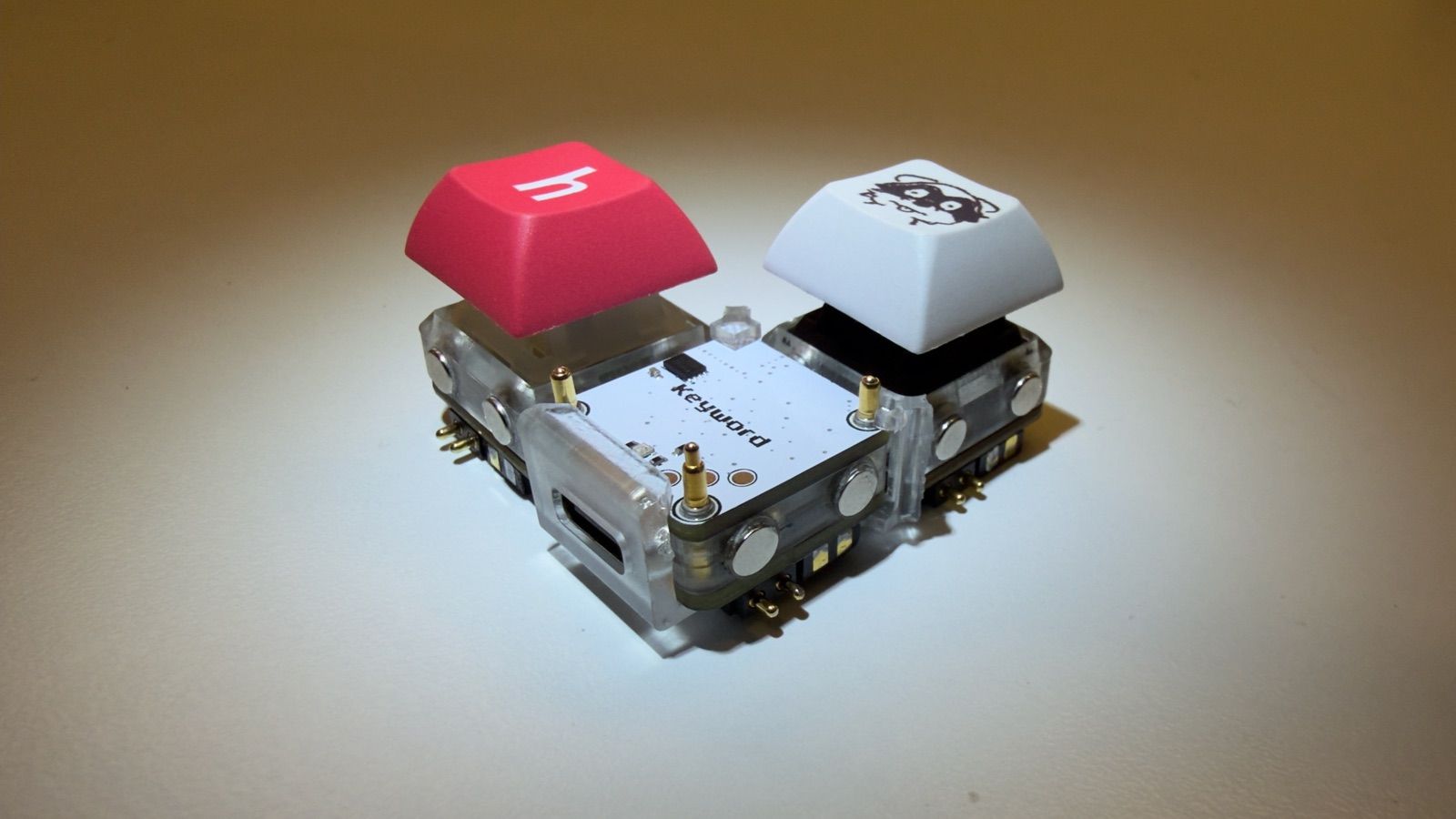
Rank 381Keybytes lets users assemble custom keyboards from magnetically connected individual keysEvery Keybit contains its own RISC-V microcontroller for individual key operationA full-size Keybytes configuration could cost approximately $900 to assembleMIT student Nathan Alspaugh has developed Keybytes, an open source keyboard project that lets users create custom layouts by connecting individual keys to a central controller.The design uses magnetic connections and dedicated microcontrollers to support flexible arrangements.Keybytes consists of two main elements: the Keyword controller and individual Keybit modules, which connect magnetically to form a personalised keyboard.Magnetic keys allow custom layoutsEach Keybit contains a RISC-V microcontroller, allowing individual keys to operate independently rather than relying entirely on one central processor.Every Keybit measures 19.05 x 19.05mm, corresponding to a standard 1U keyboard unit.Its four-sided pogo pin connections carry power and I2C communications, allowing modules to connect through different edges and accommodate varied arrangements.The central Keyword module contains two stacked circuit boards, with an Arm Cortex M4 microcontroller.The Keyword controller contains two stacked circuit boards, with its upper board housing an Arm Cortex-M4 microcontroller, a Bluetooth antenna and flash memory.Its lower board provides USB-C connectivity, charging functions and a buck-boost converter for power management.Each Keybit accommodates a Cherry MX mechanical switch, giving builders the option of selecting compatible switches for their preferred typing experience.The magnetic connections allow keys to attach around the Keyword controller or alongside other modules, removing the fixed layout restrictions found in conventional keyboards.Alspaugh has published the project files, design assets and construction details on GitHub under the permissive MIT licence.This allows others to examine the design, build their own units and modify the hardware according to their requirements.Building a full keyboard could cost $900Despite its flexibility, Keybytes remains an early-stage project, with Alspaugh reporting that the basic system had only recently reached a working state.Publicly available project documentation currently shows limited combinations of modules rather than a completed, full-size keyboard layout.The developer estimated that assembling a full-size version using approximately 2 Keyword controllers and 110 Keybits would cost around $900.That figure indicates how quickly expenses could accumulate when each additional key requires its own circuit board, microcontroller, and other electronic components.Builders must also account for printed circuit board production, component purchases, soldering, and custom 3D-printed enclosures.These requirements could make large layouts considerably more demanding than smaller configurations designed around a handful of shortcuts.The current design also has limitations in its lighting options, since the Keyword includes a status indicator while individual Keybits lack dedicated illumination.Future versions could add features such as customisable RGB lighting, rotary controls, fingerprint recognition modules or a compatible touchpad. These remain proposed additions rather than confirmed developments.
-

Picture from ichef.bbci.co.uk
Rank 382 -

Picture from techcrunch.com
Rank 383 -

Picture from cdn.mos.cms.futurecdn.net
Rank 384Watch Tonga vs Samoa in the final game of the Rugby League World Cup 2026 Pools B & C, at Western Sydney Stadium, as two fierce rivals seek to reach the semi-finals. With Tonga already qualified, any victory is enough for Samoa, who will also qualify if they avoid defeat by 46 points or fewer. Tonga have been in the box seat since beating England 30-12 in their opening game of the pool, the Pacific Islanders' subsequent 36-0 victory over Lebanon guaranteeing a spot in the semi-finals. Halfback Isaiya Katoa was superb against England and the 22-year-old returns today after missing the at-times clunky win against Lebanon. Mate Ma'a Tonga will be determined to record a third pool victory here to guarantee they avoid tournament favorites Australia in the last four, while also ensuring vital bragging rights over their fierce rivals. They lost the 2021 quarter-final and want revenge.To join their fellow Pacific Islanders in the semi-finals, Samoa have to win or avoid defeat by 46 points or fewer. Toa Samoa's 78-4 walloping of France in their opening fixture, followed by a no less impressive 64-6 victory over co-hosts Papua New Guinea, means they have a healthy points difference lead over rivals England to take the second spot in the combined Pools B & C. England only beating Papua New Guinea 34-12 helped their cause, too. Francis Manuleleua featured in the NRL Grand Final a few weeks ago for Newcastle but the second-row will see this as arguably the bigger game – a viral flag-waving video of the 22-year-old celebrating victory over Tonga at the last World Cup proves as much.Here's how to watch Tonga vs Samoa from anywhere in the world – with FREE Rugby League World Cup 2026 streams explained.Watch Tonga vs Samoa for FREETonga vs Samoa is free on 7plus in Australia. 7plus requires an account with a valid Australia postcode (e.g. 2006)Outside Australia today? NordVPN can help you unlock your free stream from anywhere in the world — find out more below.Use a VPN to watch Tonga vs Samoa live streams A VPN is a handy piece of software that can make your device appear as if it's back in your home country, so you can unlock your usual Tonga vs Samoa stream. The best VPN right now? We recommend NordVPN – it does everything and comes with up to 75% off.Editors Choice🟩 NordVPN – get the world's best VPNNot having a VPN is like leaving your front door wide open in a busy city – anyone can walk right in and take a peek.TechRadar regularly reviews all the biggest and best VPN providers and NordVPN is our #1 choice.✅ Up to 75% off today✅ 3 extra months free✅ Unlocks 7plusGet NordVPN and stream Tonga vs Samoa live from anywhere.VIEW DEAL ON How to watch Tonga vs Samoa live streams in the USViewers in the US can watch Tonga vs Samoa live on Premier Sports, which is showing all 18 games of the men's Rugby League World Cup 2026.A full tournament pass is available for just $25.Abroad today? Use a VPN whilst you're traveling away from home to unlock your stream.How to watch Tonga vs Samoa live streams in AustraliaTonga vs Samoa is live on free-to-air Channel 7 in Australia, while you can stream the match via 7plus.Just create an account using a valid Australia postcode (e.g. 2042).Not in Australia right now? You can use a VPN like NordVPN to watch Tonga vs Samoa as if you were back home. How to watch Tonga vs Samoa live streams in New ZealandFans in New Zealand can watch Tonga vs Samoa for free on Sky Sport NZ, with live coverage on Sky Sport 1.You can access Sky Sport through satellite TV or get a live stream, with the Sky Sport Now subscription service starting at NZ$29.99 per day or NZ$59.99 per month.Those outside of New Zealand can use NordVPN to gain access to their home streaming service.How to watch Tonga vs Samoa live streams in the UKUK-based fans can watch Tonga vs Samoa on Premier Sports 2.Premier Sports costs £18.99 on a rolling monthly basis, or £150 for a year if you pay upfront. Alternatively, you can add it to an existing Sky TV, Virgin Media or Prime Video plan.Away from home? Unlock your Tonga vs Samoa stream with NordVPN.How to watch Tonga vs Samoa live streams in CanadaTonga vs Samoa is available to watch on Premier Sports in Canada.Premier Sports costs CA$29.99 on a rolling monthly basis, with savings available for longer-term plans.If you're out of Canada but still want to tune in, explore the VPN route set out above, which will help you access your accounts from anywhere.What is the Tonga vs Samoa start time?The Tonga vs Samoa kick-off time is at 8.05pm AEDT local time in Sydney, Australia on Sunday, November 1. That's 4.05am ET in the US, 9.05am GMT in the UK.What is the Tonga vs Samoa head-to-head?Tonga and Samoa have met on 22 previous occasions. Tonga have won 10 to Samoa's 11, with one draw. The teams met at the quarter-final stage of the last Rugby League World Cup, with Samoa winning a 20-18 classic. They also won in October 2025, 34-6 at the Pacific Cup.Can I watch Tonga vs Samoa on my mobile?Of course, most broadcasters, like Seven Network, have streaming platforms that you can access through mobile apps or via your phone's browser.You can also stay up-to-date with the latest Rugby League World Cup news and plays on the official social media channels on Instagram (@RugbyLeagueWorldCup) and Facebook (@RugbyLeagueWorldCup).What are the Tonga vs Samoa teams?Tonga: 1. Lehi Hopoate 2. Dallin Watene-Zelezniak 3. Tolutau Koula 4. Robert Toia 5. Jojo Fifita 6. Tuimoala Lolohea 7. Isaiya Katoa 8. Addin Fonua-Blake 9. Salesi Foketi 10. Jason Taumalolo (c) 11. Haumole Olakau'atu 12. Siua Wong 13. Tyson Frizell Interchange: 14. Soni Luke 15. Stefano Utoikamanu 16. Demitric Vaimauga 17. Taniela Paseka 18. Leka Halasima 19. Latu Fainu Reserves: 20. Paul Alamoti 21. Kulikefu Finefeuiaki 22. Sione KatoaSamoa: 1. Hamiso Tabuai-Fidow 2. Brian To'o 3. Izack Tago 4. Stephen Crichton 5. Sualauvi Faalogo 6. Chanel Harris-Tavita 7. Jarome Luai (c) 8. Francis Molo 9. Benaiah Ioelu 10. Junior Paulo (c) 11. Connelly Lemuelu 12. Jermaine McEwen 13. Francis Manuleleua Interchange: 14. Jazz Tevaga 15. Spencer Leniu 16. Shawn Blore 17. Ata Mariota 18. Clayton Faulalo 19. Ronald Volkman Reserves: 20. Pasami Saulo 21. Enari Tuala 22. Deine MarinerWe test and review VPN services in the context of legal recreational uses. For example:1. Accessing a service from another country (subject to the terms and conditions of that service).2. Protecting your online security and strengthening your online privacy when abroad.We do not support or condone the illegal or malicious use of VPN services. Consuming pirated content that is paid-for is neither endorsed nor approved by Future Publishing.
-

Picture from cdn.mos.cms.futurecdn.net
Rank 385Gen Z jobseekers are rewriting job applications to pass AI detectionApplying for a new job is increasingly difficult, as applicants navigate AI screening while trying to sound human and "hireable"AI can streamline the applications process, but it is also increasingly trivializing itAI is becoming increasingly prominent in both job applications and hiring, with a new survey highlighting how Gen Z applicants are handling the challenge of appearing both human and attractive to an AI screening system.Research by hiring platform Greenhouse of over 1,100 job seekers in the UK and Ireland has found that younger applicants are more aware of the challenges of AI job screening than those over 60.The survey, which appears in the 2026 Greenhouse Future of Hiring Report, also reveals that 81% of applicants are rejected without speaking to anyone at the company they’re applying for. Could it be time for the whole hiring market to change, and offer applicants a new way to demonstrate who they are and what they can bring to a potential employer?Interviewed by computerThe challenge with finding a job in 2026 is getting your application in front of a human. Doing so means it has to be impressive enough to be flagged by an AI system, typically an agent configured to evaluate CVs and applications and highlight the strongest candidates. Greenhouse’s research found that 97% of job seekers wish they could showcase something that cannot be included in their application, which may point to a new way of doing things. But it is the challenge of passing AI screening – whether by a written application or through an AI interview – that is most concerning. 42% of candidates have sat through an AI interview in the past 12 months, with 57% stating that it let them demonstrate their skills.AI is changing the gameAs anyone who has applied for a job in the past couple of years knows, AI plays a huge part in polishing a CV. But employers are finding that there is little to choose between applicants as the souped up resumes lack individuality.“For the first time I can remember, neither side thinks hiring is working," noted Sharawn Tipton, Chief People Officer at Greenhouse."Candidates send applications into a black hole, while employers sift through AI-polished CVs that all look the same.”The situation now is that applying for a job needs more than just a piece of paper to say what you’re done. As Tipton adds: “The application used to be a front door. Now, too often, it’s a dead end. Candidates need a system that actually works and gives them a fair shot. Bolting bad AI on top only hurts them and employers.”It seems a large problem to solve, but Greenhouse's Ophir Samson has a suggestion: "Trust must be built into the process from the start." Samson implies that applicants need to understand how they are being screened before they send their CV.
-
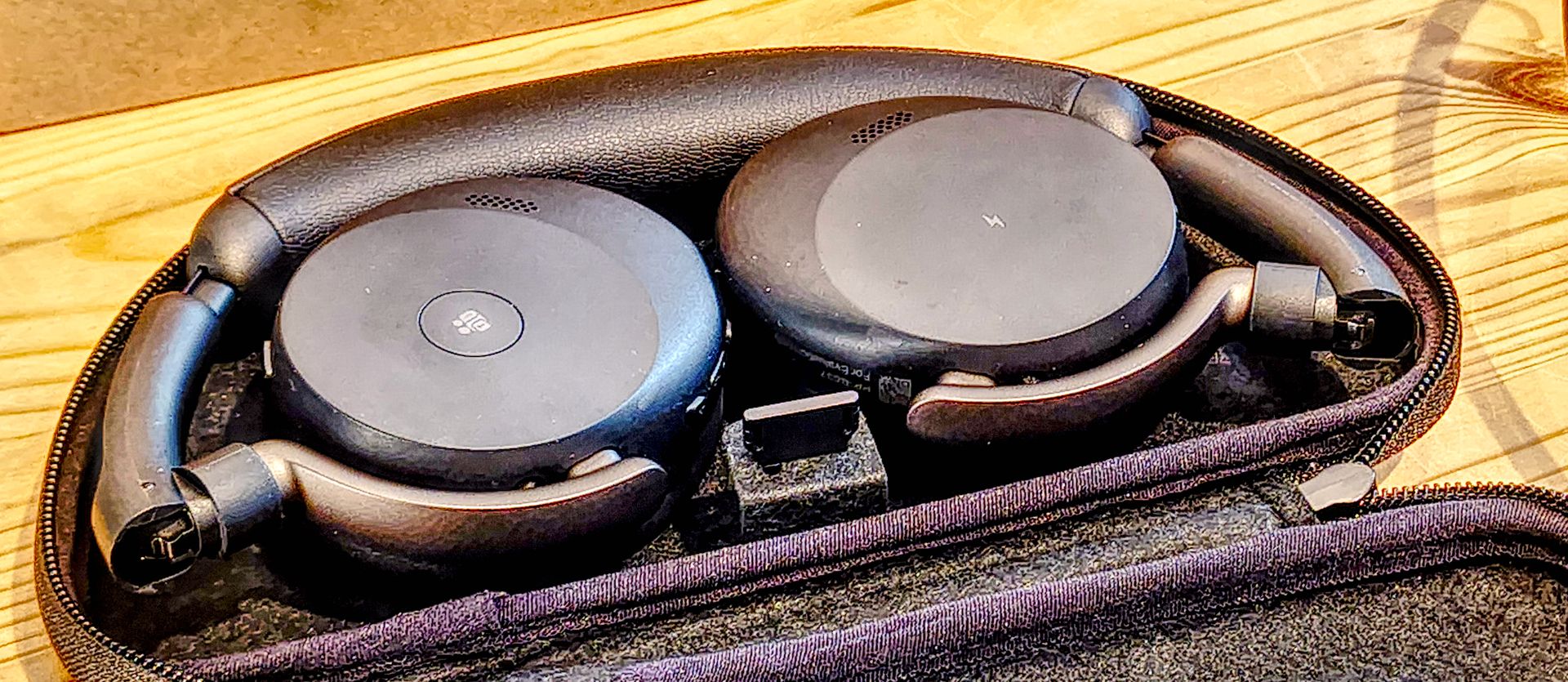
Picture from cdn.mos.cms.futurecdn.net
Rank 386Jabra Evolve3 65 Flex: 30-second reviewBusiness headsets have long had something of an image problem. The boom arm shouts “call centre” long before you have said a word. Jabra's answer, with the Evolve3 range, is to remove it entirely.The Evolve3 65 Flex follows the same recipe as the Evolve3 85, but the emphasis shifts from luxury to portability. It is a foldable, on-ear design that Jabra says slips into the slimmest laptop bag.The headline technology is Jabra ClearVoice, which uses a deep learning system trained on 60 million sentences. It separates your voice from background noise without any visible microphone. Jabra also claims over 95 per cent voice pickup accuracy outdoors, and over 99 per cent in open offices.The adaptive ANC uses four microphones and adjusts to both your surroundings and your fit. Like the Evolve3 85, it keeps working while you are on a call, which remains rare in this class. A 360 degree busylight tells colleagues when to leave you alone.Battery life is where the Flex gives ground. Jabra quotes up to 16.5 hours of call time and 80 hours of music with ANC off. Fast charging adds up to four hours of music from ten minutes on the cable.The price is lower than the flagship models, but this is still business kit. If your employer is paying, it makes a good case. If you are, you will want to think carefully. [MP: adjust once testing is complete.]The Evolve3 65 Flex makes a compelling case on every front except price. But even at this cost, these will most likely be considered for our best Bluetooth headset guide.Jabra Evolve3 65 Flex: price and availabilityHow much does it cost? From $285/£260/€299When is it out? Available nowWhere can you get it? Direct from Jabra and online retailersJabra announced the Evolve3 65 Flex alongside the Evolve3 65 and Evolve3 45 as a cheaper step-down from the Evolve3 85 and Evolve3 75. The recommended price is $389 in the US and €299 in Europe, but the USB-C model for Teams is now $285 directly from Jabra. For comparison, the Evolve3 65 is $300, and the Evolve3 45 is only $199.My review model is part number 36699 999 899, a Microsoft Teams variant with a USB-C Bluetooth adapter. A Teams-certified button sits on the headset, and the box includes a USB-C cable and a carry case, but no Link 390 adapter. The packaging is a plain cardboard box, and the standard package includes no wireless charging pad.Street pricing is already lower than the launch MSRP. Some US resellers list this exact model at the same price as Jabra, and that includes Amazon. European business resellers list the Teams USB-C variant at roughly €190 to €235 before VAT. The review model is £260 from Jabra in the UK, but you can find it on Amazon.co.uk for £219.99 with next-day delivery.Jabra also offers UC variants for those who don’t use Teams, as well as models with USB-A adapters. Versions bundled with a wireless charging pad cost more.One lure is that Jabra offers free trials to companies with 500 or more employees that are replacing existing devices. The Jabra Plus Management platform handles remote configuration and firmware updates for larger deployments.Individual buyers are less well served. But this headset is aimed at the corporate ear, like the Evolve3 85 before it.(Image credit: Mark Pickavance)Value score: 3.5/5Jabra Evolve3 65 Flex: SpecsModelJabra Evolve3 65 FlexWeight220gForm factorOn ear, foldable headbandMicrophoneSix in total, boomless (Jabra ClearVoice, deep learning)ANCAdaptive, four microphone, active during calls, with HearThroughBattery life (calls)Up to 16.5 hours with ANC and busylight off, 14.5 hours with both onBattery life (music)Up to 80 hours with ANC off, 35 hours with ANC onFast chargingUp to four hours of music from a ten minute chargeWireless chargingYes (flat exterior surface supports Qi pads)ConnectivityBluetooth 5.3 with LE Audio, Link 390 USB C adapter, USB C cableCodecsLC3, AAC, SBCDual connectivityTwo simultaneous connections, eight paired devicesRange30mUC certificationMicrosoft Teams, Zoom, Google MeetSoftwareJabra Plus mobile app, Jabra Direct and Xpress, desktop Jabra Plus app in 2027Replaceable partsBattery, ear cushionsSustainabilityLeatherette cushions, recycled stainless steel headband, 37 per cent recycled or biocircular contentWarranty2-yearsColoursBlackJabra Evolve3 65 Flex: designNo boom armElegant constructionEasier to carry than the Evolve3 85Like the Evolve3 85, this headset has no boom arm. Therefore, nothing sticks out towards your mouth, and nobody will assume you work on a helpdesk while wearing them.Instead, you get a slim, minimal headset with angled oval ear cushions. They are covered in leatherette over soft acoustic foam. The headband is recycled stainless steel, wrapped in more foam and leatherette.But where this design diverges from the previous Evolve3 concept is how lightweight these are, making them ideal for anyone travelling for business. At 143g, it is notably lighter than the over-ear Evolve3 85, which I measured at 220g in a previous review. Jabra calls its cushion design Air Comfort, which is corporate speak for being smaller. The Flex part of the name refers to the folding design. The earcups rotate, and the headband collapses, so it sits in the supplied case without taking up much space.But the supplied case is about 60% of the size of the Evolve3 85 case, and neither of these has a pocket, or the room, for even the charging cable. The case holds the headset and a Bluetooth dongle only.(Image credit: Mark Pickavance)On a more positive note, Jabra has also kept the replaceable battery and ear cushions from its bigger models. That matters for longevity, and it sits well with current repair legislation across Europe. Finding it in a headset at this price is still less common than it should be, so keeping the hardware going longer matters.The 360-degree busy light is here too, and it works from every angle, as it saves you from having to announce, loudly, that you are on a call.My review sample was the Teams model, so there is also a specific Teams button on the headset. How headphones have ended up with these opposing standards is a rant for another day, but for those who still think Microsoft has something to offer business, Jabra has you covered.As with the 85 model, these designs seem biased toward right-handed use, but I’m sure left-handers will cope with the four buttons on the right side.The materials are also allegedly more planet-friendly. Jabra says 37 per cent of the headset by weight is recycled or biocircular, and the packaging is FSC certified.It’s interesting how Jabra have managed to take its earlier Evolve3 designs and then make them smaller and lighter, without making them impractical to use.From my perspective, the smaller cushions aren’t as comfortable for long sessions as the larger ones on the Evolve3 85, but they’re fine for shorter periods. That fits well with the smaller battery capacity and reduced running time.Design score: 4.5/5Jabra Evolve3 65 Flex: HardwareBluetooth 5.2Microsoft Teams vs UNCClearVoiceBluetooth 5.3 with LE Audio forms the wireless backbone of this equipment. It supports the LC3 codec, along with AAC, SBC and Jabra also lists Auracast support. Not sure why it doesn’t use the 5.4 version of Bluetooth like its predecessors, but Bluetooth 5.2 is fine for this use case.The Link 390 adapter in the box gives a secure, low-latency connection to a PC. Or, you can also connect directly over Bluetooth if you prefer. Critically, dual connectivity lets you stay attached to a computer and a phone simultaneously. Jabra says the range is 30m, so wandering off for a coffee mid-call is possible if you don’t hide behind too many walls.Pairing is easy on most platforms. Microsoft Swift Pair and Google Fast Pair are both supported, and Apple Find My and Android Find Hub are also covered. I even used this headset with an old Parrot-branded Bluetooth adapter, and it connected easily.UC certification covers Microsoft Teams, Zoom and Google Meet, which is the set most UK and European businesses rely on. Jabra also claims a Premium Microphone for Open Office certification, for those who like to be understood.The Jabra Plus mobile app provides equaliser controls, firmware updates and settings. A desktop version is promised for 2027, which is odd. I say that because when I covered the Evolve3 85, the same app was promised then for 2026. Jabra needs to pull their finger out and build that app before someone sets an AI to reverse-engineer it in an afternoon and then releases it.IT teams get Jabra Plus Management for fleet control, plus Xpress and Direct.(Image credit: Mark Pickavance)What makes this design so useful in an office environment is the ClearVoice functionality. It replaces the boom arm with a multi-microphone array and a neural network trained on over 60 million sentences. I do wonder where they found all those sentences to train their model, but Jabra undoubtedly draws on the hearing expertise of its parent company GN here.The end result of ClearVoice is that callers should not notice the missing boom. Jabra claims over 95 per cent voice pickup accuracy outdoors and over 99 per cent in open offices, as measured with AI assistants. That is a very specific claim, and worth testing, but I got bored after twenty sentences. What I can say is that omitting a boom doesn’t seem to affect audio pickup much, and it also avoids those annoying crunch sounds that happen when the boom is touched.Wind noise reduction is also a configurable option, which shows Jabra expects these to leave the office and jog to the nearest sandwich shop, presumably. The hearing protection features include Intellitone and PeakStop, if you like trademarked features.The Evolve 65 Flex delivers most of the critical aspects of the Evolve3 85 without treading on that product’s toes, demonstrating the product agility Jabra is rightly known for. (Image credit: Jabra GN)Hardware: 4/5Jabra Evolve3 65 Flex: PerformanceEffective ANCExcellent charging optionsThe Flex works as a call headset first and a music headphone second, making it a flexible solution. Jabra supplies 28mm drivers, spatial sound, and an equaliser, which suggests it expects you to listen as well as talk.Spatial Sound is intended to place voices in front of you rather than inside your head. That should make long calls less tiring, and less like a disturbing mental condition. The adaptive ANC adjusts to the environment and to the quality of the seal around your ears, which, given the size of these cushions, is critical.Most ANC systems apply a fixed profile, which either works or it doesn’t. This one recalibrates as the headset moves, making it more likely to be useful. This technology, termed HearThrough, also stays active during calls, where most business headsets switch it off.The main caveat is reduced battery life, especially compared with the Evolve3 85.Battery life is more modest than on the Evolve3 85. Jabra quotes up to 16.5 hours of calls with ANC and the busylight off, or 14.5 hours with both on. That is still two working days of calls, just about, but that’s a day less than the 85.What seems slightly curious is the quoted music playback timescale, which is more heavily impacted by leaving ANC on. Without ANC, Jabra quotes 80 hours, but you can reduce that to only 35 hours if you leave the ANC on. It was expected that it takes more power to run ANC than to drive the sound, since the Evolve3 85 was 120 hours with ANC off and 55 hours with it on. That is worth noting, since most people will leave ANC running.(Image credit: Jabra GN)Fast charging is generous and has your back if you leave work without remembering to put them on charge. Ten minutes on the cable gives up to four hours of music. Jabra quotes 35 per cent arrives in 30 minutes and 65 per cent in an hour. A full charge takes up to three hours, but you should be able to get through a working day with only 90 minutes total charging. You can use them while they charge; just don’t forget you are connected by the USB-C cable.Wireless charging is supported, so the headset can sit on a Qi pad on your desk. My model did not include a charging pad, and it arrived in a simple cardboard box. Jabra has a SKU with the charger that’s another £45, which seems steep for such simple technology.The battery is user-replaceable, which is a real benefit for long-term ownership. It beats binning a serviceable headset because the cell has faded.I am not an audiophile, so I will not pretend to review the music quality in depth, but the smaller drivers on these seemed less inclined to bass than the Evolve3 85, and those weren’t strong on bass either. Mid-range and higher frequencies are better represented, but these aren’t something that audiophiles would realistically use. Using the Jabra+ app, you can boost bass and treble, but these settings have limits with 28mm speakers.Performance: 4/5Jabra Evolve3 65 Flex: Final verdictThe Evolve3 65 Flex does what the Evolve3 range does best, but in a more travel-friendly package. It is light, it looks sensible, and it keeps ANC running during calls.The trade-offs are shorter battery life, a less isolating on-ear fit, and a price firmly aimed at budget holders rather than typical home users. The missing desktop app is a minor irritation, since most users will install the Jabra+ app on their phones. But missing a release by a year is poor effort on Jabra’s part, however you look at it. If you split your time between desk, home and train carriage, these make perfect sense. If you only ever work at one desk, the Evolve3 85 is probably the better headset, if you can stretch to the cost of those.Should I buy a Jabra Evolve3 85?Jabra Evolve3 65 Flex Score CardAttributesNotesRatingValueNot cheap, but less than the flagship options3.5/5DesignLight, foldable and discreet 4/5HardwareGreat for office use and fleet controls4/5PerformanceANC and ClearVoice, but limited by 28mm speakers4/5OverallLightweight business headset for those on the move4/5Buy it if...You travel between workspacesThe folding design and 143g weight make it easy to carry, and the case protects it in a bag. If you need headphones away from the office, these are a solid choice.Your business wants managed devicesUC certification and Jabra Plus Management will suit IT teams that need central control. And, you can choose between different SKUs if you need Teams or even USB-A connectivity.Don't buy it if...You are working within a budgetThe price is hard to justify for personal use when consumer headphones offer more sound for less cash. But even for business use, there are cheaper options. You want maximum battery lifeThe Evolve3 85 lasts much longer, 21 hours to be direct, and manages that with ANC running. Whereas the Evolve3 65 Flex delivers only 14.5 hours with the ANC/busylight on. And, when the battery gets low, Flex also doesn’t charge as quickly as its bigger brother. For more business audio solutions, we've reviewed the best headsets for working from home.
-

Picture from cdn.mos.cms.futurecdn.net
Rank 387With AI now an integral part of everyday working life for most large businesses, the focus has now switched to ensuring your organization is getting the most from its AI investment.Snowflake has long been at the forefront of the AI coalface, and recently launched new capabilities to help its customers automatically select the best model based on quality, speed, preferences - all while tracking AI spend with greater control, hopefully solving this issue at a time when budgets are tighter than ever.We spoke to Grace Adamson, AI Product Marketing Manager at Snowflake, to find out more.For the past two years, much of the conversation has focused on finding the most powerful AI model. Is the next phase of enterprise AI actually about selecting the right model for each task - one which balances quality, latency, cost and business value?During the first wave of generative AI, the focus was significantly on model power. The AI race was more experimental, largely trying to achieve the highest quality outputs or solving the most complex tasks.Fast forward to today, and organizations are shifting from AI experimentation to driving real business outcomes with AI. As such, businesses are now focused on understanding how they can generate the greatest return from every AI interaction. The reality is that not every task requires the most advanced or expensive model available. Some workloads demand sophisticated reasoning, while others involve repetitive classification, summarization, or extraction tasks that can be handled effectively by more efficient models, including the latest generation of open source models, at a fraction of the cost.This new paradigm is what we call intelligence efficiency, essentially how effectively organisations turn models, data, and compute into measurable outcomes and value. That’s possible through dynamic model routing, native governance, and having AI built directly alongside an organization’s trusted data, so it understands the business context behind every request. This means organizations can execute their AI workloads on the most suitable model, all while better managing AI costs. Snowflake has talked about “dynamic model routing” as a way of automatically matching workloads to different models. What problem does this solve for customers in practical terms, and how does it help turn AI experimentation into measurable business impact? Can companies really stop thinking about model selection and focus instead on outcomes?One of the biggest challenges enterprises face today isn't a lack of models, it's an excess of them. New models are appearing weekly, each with different strengths, pricing structures, and performance characteristics. Deciding which model should handle which task can quickly become an operational burden.Dynamic model routing in Cortex AI Gateway addresses that by automatically directing workloads to the model that best balances quality, speed, and cost for a particular use case. For example, a simple task may be routed to a highly efficient open-source model, while a more complex request that requires deeper reasoning can be directed to a frontier model. This is the new reality of AI economics. Organizations achieve the level of performance they need, without paying premium costs for every interaction.This should all happen inside the governance boundary. The same governance policies and controls, including masking, apply to any model that handles a request, open or proprietary, so choosing a more efficient model never means compromising on security. Customers also control which models and providers are available to their users, which really matters for global organizations that have to navigate regional availability or regulated industries with specific compliance requirements. For those end users, model choice should be seamless and invisible, while for builders and admins it should be simple to set up and manage.Business leaders can now be measured on whether their AI applications succeed in improving productivity or accelerating decision-making. While model selection will always matter at a governance level, it shouldn’t be something every employee or user has to constantly manage. The most successful enterprises are already optimizing their model usage based on performance, cost, and which model will generate the business outcomes that matter most. Many organizations are discovering that the most capable model is not always the most economical model. How should businesses think about the trade-off between intelligence, speed and cost when deploying AI at scale?A common mistake business leaders make is assuming that the highest-performing model should be used everywhere. Many enterprise workloads don't require frontier-level reasoning. If you're processing large volumes of documents, such as extracting information from contracts, a highly efficient model may deliver almost identical outcomes to a frontier model, at a significantly lower cost.At scale, those savings become substantial. In our internal testing, agents using dynamic model routing built a dbt pipeline with up to three times greater token efficiency than a frontier model only approach, while maintaining the same quality. Even small differences in token consumption or inference costs can compound rapidly when organizations are processing millions of requests per month. That's why leading enterprises are increasingly evaluating AI systems based on business economics rather than benchmark scores alone. The best decisions weigh model capability, speed, and cost together, not in isolation. How does Snowflake help customers decide when a simple, lower-cost model is sufficient and when a more advanced frontier model is justified? Is there a risk that businesses are overpaying for AI because they’re applying the same model to every use case?Standardizing workflows on a single model carries a real risk of overpaying. It’s like using one Formula One car for every journey, whether you're racing around a track or merely driving to the supermarket. The performance doesn’t always fit the need, and neither does the cost. Snowflake helps customers establish policies around quality, performance, and cost, then uses dynamic model routing to make intelligent decisions within those parameters. This means that teams don’t have to manually evaluate every new model or rebuild applications each time the market changes. Organizations can focus on defining and setting business objectives, and the platform handles the model selection behind the scenes.This matters more as the gap between frontier and open models continues to narrow for common enterprise tasks. Open models are improving rapidly and, for well-defined workflows, often make more commercial sense. However, the most effective AI strategy preserves flexibility. Snowflake has always been cloud agnostic, and we’re applying the same principle to models. Our model agnostic platform gives organizations the full breadth of choice, so they can select the right model for each task, maximizing AI efficiencies. One of the biggest concerns for executives is AI spend becoming unpredictable. How important is observability, whether that's tracking usage, performance, latency and cost, in making AI a manageable business investment rather than an open-ended expense?Observability is fundamental, both to us and our customers. Business leaders are often comfortable with investing in AI, but hesitant to make investments they can’t monitor.Observability now needs to extend beyond technical monitoring into whether the implementation is working at every level of the enterprise. Organizations need visibility into usage patterns, model performance, latency, consumption, and cost allocation to understand which teams are driving value and whether outcomes justify the investment. That’s why we’ve built visibility and cost controls directly into the platform, bringing token usage and costs across AI apps and agents into one place, including any third-party agents connected through Cortex AI Gateway. Organizations can also set spending limits and quotas, and even attribute costs to specific teams.This is particularly important as organizations move towards agentic systems and AI-powered workflows. The more autonomous these systems become, the more important it is to have governance and economic controls in place. Observability isn’t just useful at that point, it’s essential. AI has often been described as a productivity technology, but boards increasingly want evidence of ROI. What metrics should companies use to judge whether their AI investments are actually delivering business impact?I’d first advise that usage alone is not ROI. Organizations often mistake high adoption rates for meaningful and measurable business outcomes.They should start by identifying the objective of a particular AI initiative, and measure the impact against that goal. It helps to think about AI ROI in two buckets. General productivity gains are harder to measure directly, so organizations often rely on proxies such as time to value, faster project completion or employee satisfaction scores. Specific business use cases, such as fraud detection, risk reduction or revenue upsell, can be tied directly to hard numbers. Financial measures can be equally as important. Boards increasingly want to understand whether AI is creating revenue opportunities and improving margins. Those metrics are often more persuasive than purely technical measures, because they connect directly to business performance.A final, but significant, metric we’d measure is around intelligence efficiency, as this is how effectively an organization can convert AI resources into business value. That means looking at outcomes relative to the cost, because a solution that delivers similar results at half the cost may ultimately provide greater value.Do you think enterprises are moving from a world of “model-first” AI strategies to “workload-first” strategies - in other words, starting with the business task and then dynamically selecting the most appropriate model behind the scenes?Enterprises are starting to move in this direction, which is a natural sign of market maturity. We're seeing growing interest in workload-first approaches where organizations define their desired outcomes; establish guardrails around cost, quality, and governance; and then allow platforms to dynamically match workloads to the most appropriate model. In many ways, this represents the evolution of enterprise AI from experimentation to optimization.This is in part because organisations are feeling the pressure of rising model costs and looking for smarter ways to get the same outcomes. The growing focus on minimizing token consumption shows that organisations are becoming more cost-aware. I’m confident that as enterprises become increasingly agentic, they’ll start having the right “workload-first” conversations, starting with desired outcomes and drawing the best path to action from there.Snowflake’s approach seems to suggest that AI infrastructure should become increasingly invisible to end users. Is the long-term goal that employees simply ask a question or initiate a task, while the platform automatically handles model choice, governance and cost optimisation?That goal is already happening. Organizations are focused on outcomes, and the most effective platforms are quietly managing the complexity underneath. The reason is pretty simple, as most organizations don't want to become AI infrastructure experts. They don’t want to evaluate model benchmarks, compare token pricing, or decide which model should handle a particular task. Employees want reliable, trustworthy tools that help them do their jobs more effectively. That’s precisely what they should get.The barrier for most organisations isn’t actually capability. You still hear stories of organizations focused on adoption metrics, measuring AI by how many people are using it rather than what it’s delivering. That gap is closing quickly, but it remains a key obstacle for firms wanting to demonstrate real value. Importantly, invisible doesn't mean uncontrolled. If anything, governance and observability become more critical as AI becomes more deeply embedded across the organisation. With open and proprietary models running side by side on the same platform, the same governance applies to whichever model is used, data stays where it is, and teams can switch models without new contracts, security reviews or being locked into a single provider.If you were advising a CEO on how to turn AI investment into business value over the next two years, what would your priorities be? Would you focus first on governance, cost visibility and identifying high-value use cases before scaling AI more broadly?I would first advise CEOs to resist the temptation to start with technology and instead start with outcomes. The “winners” of today’s AI race typically have a clear understanding of the problems they're trying to solve, and build the infrastructure anchored in these outcomes. In practice, that means business owners and data and AI teams working in tandem, starting from business priorities. At the same time, they should be building an open architecture that can adapt, because no one knows exactly how the technology landscape will develop.From there, governance and visibility become essential foundations. Leaders need confidence in how their AI is being used, what it costs, and what data it can access. That foundation of trust is what drives genuine adoption across the business. As a next priority, I would identify a small number of high-value use cases that can demonstrate tangible impact. Successful pilots create organizational confidence and provide the evidence needed to scale investment more broadly.Finally, I would focus on people and process transformation. AI requires organizations to rethink workflows entirely, meaning the people and process side of transformation deserves as much attention as the technology itself.
-
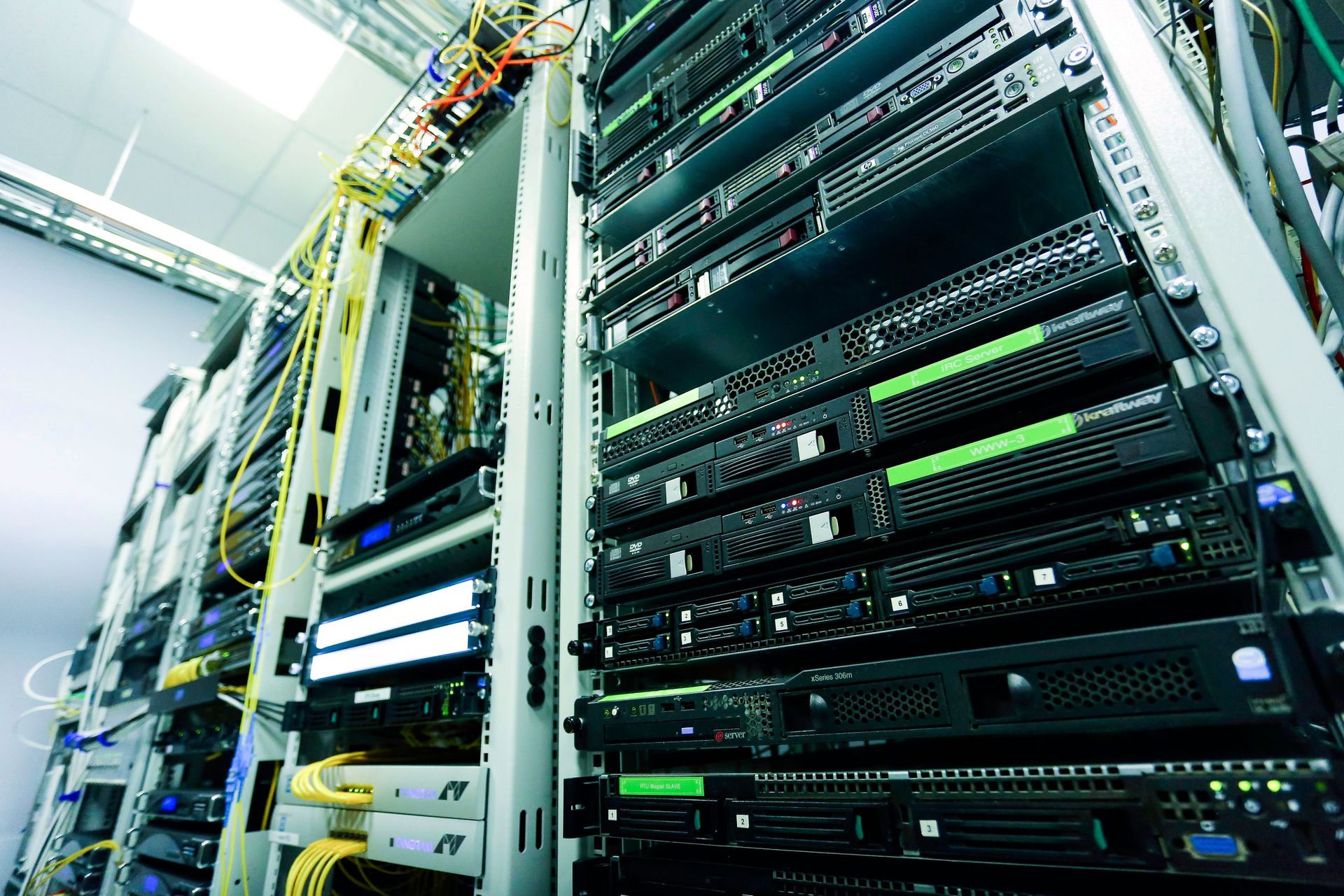
Picture from cdn.mos.cms.futurecdn.net
Rank 388AI models are hitting a bottleneck, where raw parameter scaling to improve their performance no longer cuts it. Performance improvements per doubling of AI model parameters are gradually diminishing, leaving multi-agent coordination as the next option. Multi-agent coordination implies two or more AI models working together and sharing data to handle workflows. Instead of relying on one model to handle everything, tasks are divided between different agents, e.g., one writing code and another validating the code.Coordination involves breaking AI tasks into smaller pieces, assigning each piece to the best-suited agent, and controlling how the agents interact with each other to achieve a common goal. However, this coordination is facing its own bottlenecks. Moving from one AI agent to two, three, or five multiplies potential state synchronization errors and causes token bloat and high latency. Error loops can consume unnecessary tokens, and hallucinations can pass from one agent to another, causing cascading errors.AI model developers have to innovate their way out of the architectural bottlenecks of multi-agent orchestration, and they’re largely doing so. From validating incoming data against individual agent knowledge bases to enforcing strict hop limits on agent handoffs and sticking to the smallest possible number of agents required to execute a task, developers are implementing various solutions to enable hitch-free multi-agent coordination. Let’s dive into the bottlenecks and solutions in more detail.Centralized Orchestrator LimitationsDuring multi-agent orchestration, a single agent acts like the air traffic controller managing the breakdown of tasks into smaller pieces, assigning different tasks to individual agents, and maintaining coherent context across every step. This structure enables easier coordination but creates the risk of having a single point of failure. If the central hub crashes or experiences a temporary disruption, the whole multi-agent workflow gets disrupted. All routing and communication pass through this central orchestrator, so just a little disruption can create a ‘traffic jam’ of AI tasks to be handled. When the central hub eventually gets fixed, this jam causes delays in executing the tasks. Even without errors, routing everything through a central orchestrator workflow adds processing delays. Traffic jams can still pile up when there isn’t enough processing power, delaying responses to users’ queries. Users are impatient for their responses, so even the slightest delay is a major competitive disadvantage.Sometimes, the manager agent treats individual agents like mere task executors, not autonomous AI models, each with its distinct abilities. This limits flexibility when AI agents need to solve edge cases. Cost is also an issue, as central manager agents consume tokens to break down instructions into different pieces, assign pieces to each agent, and retransmit context back and forth to agents. We’ll dive more into the issue of excess token consumption below.Token bloatMulti-agent orchestration depends on passing a lot of raw, unsummarized conversation histories between different agents, and this can make token consumption grow exponentially. AI token costs can get unpredictable, with numerous stories of companies racking up unexpectedly big AI bills. For example, a single software development team at Amazon, the e-commerce giant, unexpectedly racked up $1.8 million in token costs for a project to automate the mapping of author data to online book listings. Some Amazon engineers conceded that “it's very difficult to understand how much anything related to artificial intelligence costs,” and that’s telling coming from the world’s largest cloud computing provider. You don’t want to face token bloat because of multi-agent orchestration and spend much more than you expected. Coordination complexityMoving from 1 to 5 agents introduces a high level of coordination complexity. Think of the possible state errors, race conditions, and failure points for an AI model and multiply that by the number of models raised to the power of 2. That’s what developers face. For example, moving to 3 agents increases complexity by 9, and moving to 5 agents increases it by 25. Research indicates that 36.9% of multi-agent system failures are due to coordination misalignment. Agents sharing the same memory may read outdated data from cached layers. Unlike standalone AI models with strict API limits, multi-agent systems can loop infinitely and misinterpret context. Inter-agent handoffs and context repetition lead to these systems consuming many more tokens than standalone counterparts.To work around this problem, developers use a central coordinator to break down user queries into various parts, assign parts dynamically or sequentially to different agents, and aggregate results. Yet, earlier on, we described the limitations of this centralized orchestration approach.(Image credit: Microsoft)For more cost-effective coordination, choose code-driven state machines over open-ended, model-driven runtimes where the agents freely choose which of them gets to speak next. Think of it like saying “If X, then agent A speaks” and “If Y, then agent B speaks.” Forcing deterministic, code-driven state machines prevents multi-agent systems from consuming tokens just to decide who talks, and this adds up to significant savings. Developers can also create strict token caps and timeout circuits to avoid runaway costs. You don’t want to be that Amazon team we cited earlier that incurred $1.8 million in unexpected costs, or that (unnamed) large enterprise rumored to have racked up a $500 million bill on Claude AI in a month because a token cap wasn’t set. You can also implement rigid, sequential agent handoffs to limit free-form chat between agents that consume a lot of tokens.Cascading errors and hallucinationsCascading errors occur when a hallucination generated by one agent passes to other agents and is treated as fact. It flows from upstream AI agents to downstream agents because, in multi-agent chains, each handoff adds a layer of authority, making the final output feel like a fact. This issue often occurs when one agent writes hallucinated data back to a shared database, and other agents pull that data and compound the error. As multiple downstream agents compound the error, it becomes even more difficult to trace which agent introduced the hallucinated data. These compounding errors reduce the multi-agent system's overall reliability.To mitigate this bottleneck, developers use frameworks like the Model Context Protocol (MCP) and LangGraph to set strict execution paths instead of relying on unrestricted loops. Roles are clearly separated between agents, such as one for retrieving raw data, another for reasoning, and a designated data generator optimized to avoid creating unreferenced facts, otherwise known as ‘hallucinations’. Developers can also insert an impartial verifier into the process to challenge claims before they're aggregated by LLMs, or run parallel independent agents dedicated to this task. Likewise, they can set strict JSON schemas, retry budgets, and API type-checking to prevent unnecessary loops that can potentially create hallucinated input. It's also advisable for developers to log every user prompt, agent call, and handoff so that, if cascading errors occur, they can trace the source and make corrections.Shared state & cache invalidationShared state refers to the (shared) data that multiple AI agents access when orchestrated under one system. It allows every agent to access data quickly and sync real-time data updates easily. However, it comes with its risks. Two agents may modify the same data simultaneously, causing unpredictable outputs. A modification by one agent can disrupt another agent’s workflow. (Image credit: Salesforce)Above, we described the problems of downstream agents treating hallucinated data from upstream agents as fact, outputting wrong answers and reducing the multi-agent system’s reliability. But it doesn’t have to be hallucinated data to cause this problem. Outdated data can also cause issues, often data cached by agents that is no longer current.When building AI agents, developers usually implement caching to control costs and enhance performance. Caching involves storing prompt prefixes (e.g., simple definitions and answers to routine questions like "How do I process a refund for my order?"). If stored, agents don't have to re-process tokens to answer every routine question. Rather, it responds with the cached data.However, caching becomes much more difficult when running multi-agent systems. A small audit to a shared system prompt can invalidate the cache for all agents simultaneously, causing them to re-process tokens. Passing context between agents via state serialization also wipes caches if prompt orders are modified. Then, there’s the fact that caches can also hold outdated data, requiring intentional deletion to avoid giving outdated results.Developers address this bottleneck with several methods. They can put static content at the beginning of a prompt and dynamic content at the very end, preventing cases where a token changing at the beginning invalidates the whole cached result. They also use an Agent Step Graph to track prompt execution orders and evict cache states based on temporary proximity to future agent activations. Sometimes, it's better to skip rigid caches altogether for exploratory user prompts, where every prompt is unique, and focus caching on routine user queries. Human supervision overloadThe bottlenecks aren’t purely software-based. They also affect the developers overseeing the multi-agent orchestration. Multi-agent systems generate a lot of prompts, permission requests, and error flags that get developers mentally fatigued. It doesn't help that developers often struggle to see what multiple agents are writing to shared memory simultaneously, so errors become hard to spot early. For example, agents can edit the same file simultaneously and generate conflicting user outputs, requiring developers to manually intervene to correct the file. Fortunately, there are effective ways to mitigate human supervision overload when dealing with multi-agent systems. Developers can create a hierarchical structure where a central agent aggregates all logs and summarizes status, then focus on monitoring this central agent. Monitoring becomes much easier when it revolves mostly around one agent, instead of monitoring 2 to 5 agents simultaneously. All agents still get monitored, but the central agent gets much more attention.Earlier, while discussing cascading errors, we mentioned developers creating separate roles for each agent (e.g., one for retrieving raw data, another for reasoning, and another for generating data) as a way to prevent cascading errors. This also helps mitigate human supervision challenges. Agents with clearly separate roles are less likely to overlap, or, in more casual words, step on each other’s toes. They avoid solving the same problem simultaneously, meaning fewer coordination failures for human supervisors to deal with.Also, developers can set strict action limits between agents, preventing unnecessary loops that’ll need human intervention. However, if doing so, be careful not to impose limits so strict that they affect the whole multi-agent system’s reliability. General mitigation strategiesWe’ve looked at various bottlenecks and how LLM developers are innovating around them. But there are some generalized mitigation strategies that help improve multi-agent orchestration overall, not necessarily applying to a specific bottleneck. They includeKeeping the agent count minimalSticking to the smallest number of agents reduces the number of potential issues developers face later and also lessens human supervision needs. Why use eight agents when five can do the job, or six if three can do it? If building a multi-agent system, choose the minimal number of agents that can provide reliable performance.Isolating tasks and file accessRestricting each agent to specific tasks and files lessens coordination difficulty. It means fewer chances of multiple agents editing a file at the same time and mixing things up, or an issue affecting one agent compromising the whole multi-agent system.For example, an agent allowed to read customer emails won't have the ability to modify database schemas, and vice versa. Instead of agents deciding which other agents to call, you'll specify that with a central, code-based orchestrator. You can issue short-lived tokens for each task, and when an agent completes its task, the token credentials expire so it can't consume more on further actions.You can also require a human in the loop for high-risk agent actions like deleting files, external API calls, and data transfers. This ensures agents don’t go ‘rogue,’ which we’ve seen a lot lately. AI agents can act unpredictably if left to their devices, so human supervision remains essential to multi-agent orchestration.
-

Picture from cdn.mos.cms.futurecdn.net
Rank 389Dreame Ecceluxe Go review: a pocket-sized espresso maker with its own boiler for easy coffee at campDreame Ecceluxe Go: 30-second reviewThe Dreame Ecceluxe Go is a compact, cordless espresso machine that’s ideal for camping trips, hikes, and any excursions where you don’t have ready access to a stove or kettle. That’s because, unlike most portable coffee makers, the Ecceluxe Go heats the water itself, after which its small but powerful pump extracts your shot of espresso.The brewer itself is smaller than most travel mugs, and comes in a smart carry case with a set of adapters that are compatible with three different types of coffee capsules, plus loose grounds. For the easiest brewing, just insert a Nespresso Original, Nestlé Dolce Gusto, or ESE (Easy Serve Espresso) pod into the appropriate adapter and you’re ready to begin.Brewing with cold water takes about six minutes, and you can brew two or three times on a single charge. If you do have access to hot water, however, you can switch to direct brewing mode, which uses water directly from the water tank, and brews much faster.It’s an excellent and very thoughtfully designed little brewer that’s much more versatile than other portable espresso machines I’ve tested. My only real complaint is that it’s easy to accidentally hit the touch-sensitive control button when handling and setting it up. Dreame has yet to announce a price for the Ecceluxe Go, so I have rated the device based solely on design and performance. I will update this review with a value score when the price is published.(Image credit: Future)Dreame Ecceluxe Go: price and availabilityLaunching in Spain and Portugal first, followed by the USNo UK launch planned at presentPrice to be announcedThe Dreame Ecceluxe Go is expected to launch in Spain and Portugal by the end of 2026, although the exact date has yet to be confirmed. It should launch in the US shortly after, but there's no UK or Australian launch planned at the moment. No pricing details are available yet.Dreame Ecceluxe Go: specificationsNameDreame Ecceluxe Go PX10TypePortable espresso makerCoffee maker dimensions (height x diameter, without attachments)2.7 x 2.4 inches / 7 x 6cmCase dimensions (width x height x depth)3.5 x 2.8 x 1.8 inches / 9 x 7 x 4.5cmCoffee maker weight (without attachments)19.9oz / 564gCase weight (with all attachments)3.55lbs / 1.61kgMilk frotherNoBars of pressureNot statedUser profilesNoneDreame Ecceluxe Go: designSuper-compact design, with carry case for attachmentsCharged via USB-COne control button, which cannot be lockedThe Dreame Ecceluxe Go is roughly the size of a soda can, and comes in a smart cushioned carry case together with a collection of attachments. These include three adapters that allow you to brew using Nespresso Original pods, Nestlé Dolce Gusto capsules, ESE (Easy Serve Espresso) pouches, or ground coffee. There’s also a ring to help reduce mess when adding a dose of ground coffee, and a cup for your brewed espresso.The Ecceluxe Go is charged using a covered USB-C port on the front, and is controlled via a small touch-sensitive LED display that lets you power the machine on, and switch between programs. It’s responsive, and shows all the information you need: battery charge level, brewing program, and temperature.My only criticism is that it’s easy to accidentally press this screen when holding the coffee maker, and there’s no way to lock it to prevent that happening accidentally. A physical power button, or a locking switch would make it perfect.(Image credit: Future)Design score: 4.5/5PerformanceTwo brewing modes: self-heating and directAccepts three types of coffee pods, or ground coffeeExtremely simple to useThe Dreame Ecceluxe Go is refreshingly simple to use. First, choose the right adapter (they're color-coded, but each one also has a small illustration to make life easier), insert your coffee capsule or grounds, and screw it shut. Then just twist the adapter onto the base of the brewing unit, unfold its two support legs, place it on the plastic coffee cup, and you’re ready to begin.The Ecceluxe Go has two brewing modes: P1, which heats water from room temperature before brewing your coffee, and P2 (direct extraction), which uses water already heated to the correct temperature.FutureFutureBrewing using P1 isn’t quick — it takes six minutes for the Ecceluxe Go to reach its brewing temperature of 203F / 95C, then extract a shot of espresso — but that’s understandable. A machine this compact has a tiny heating element and small battery, and since you’ll be using this mode on the move, you can carry on with other camping or work tasks while it’s working. A loud beep will let you know when your drink is ready, and the Ecceluxe Go will turn itself off automatically when it’s finished.P1 also uses a lot of power, and the battery will be completely drained of charge after two or three brews. Thankfully, the USB-C connector means it’s easy to change indoors or in a car, so it will be ready the next time you need a pick-me-up.(Image credit: Future)If you have access to a kettle, P2 takes a fraction of the time and power, and still yields a nicely extracted shot with a respectable layer of crema. In fact, the Ecceluxe Go would make a great single-serve coffee maker for small apartment or van living. It’s much more compact and versatile than even the smallest Nespresso or Keurig coffee maker, and practically mess-free. The adapters and coffee cup can all be cleaned by hand using warm water, and will air-dry in only a few minutes.I test a lot of coffee makers here at TechRadar, and I’ve become particularly fond of the Ecceluxe Go. It takes all the hassle out of brewing delicious espresso at camp, or even on a break mid-hike. The days of drinking lukewarm coffee from a flask at lunchtime are over.Performance score: 4.5/5Should you buy the Dreame Ecceluxe Pro?Dreame Ecceluxe Pro score cardAttributeNotesScoreDesignSuper compact and cleverly designed — I only wish the control button could be locked to avoid accidental presses.4.5/5PerformanceIncredibly easy to use with fresh coffee or pods. Direct and self-heating brewing modes produce delicious coffee, although bear in mind that self-heating takes six minutes and uses a lot of charge.4.5/5Buy it ifYou love camping or hikingThis is the perfect brewer for off-grid adventures. Charge it up, pack a couple of coffee pods, and you can brew up anywhere using water from your drinking bottle.You have a tiny homeNo space for an extra appliance on your counter? The Ecceluxe Go is ideal, particularly if you use its fast direct brewing mode.Don’t buy it ifYou’re making coffee for a groupThe Dreame Ecceluxe Go can only hold enough charge to make two or three drinks at a time in its self-heating mode. If you want to prepare drinks for more than a couple of people, you’d be better off with a large camping kettle and an AeroPress XL.Dreame Ecceluxe Go: also considerAeroPress GoThe classic AeroPress in a super-portable format that all packs down into a travel cup. You'll need a way to heat your water, and it doesn't accept coffee capsules, but it's a great-quality, affordable way to brew on the move.Wacaco NanopressoThe Nanopresso is a hand-pumped espresso machine, so there's no need to worry about charging or batteries. There's even an adapter available for Nespresso Original pods, but it can't heat its own water.How I tested the Dreame Ecceluxe GoI used the Dreame Ecceluxe Go for two weeks instead of my usual espresso machine. I tested it with Nespresso Original style capsules (from a local coffee roaster), Nestlé Dolce Gusto pods, Illy ESE pods, and freshly ground coffee beans.I tested the Ecceluxe Go's self-heating and direct extraction modes, timing how long it took to extract a shot of coffee, and monitoring how far the battery charge level dropped after each brew.First reviewed October 2026
-
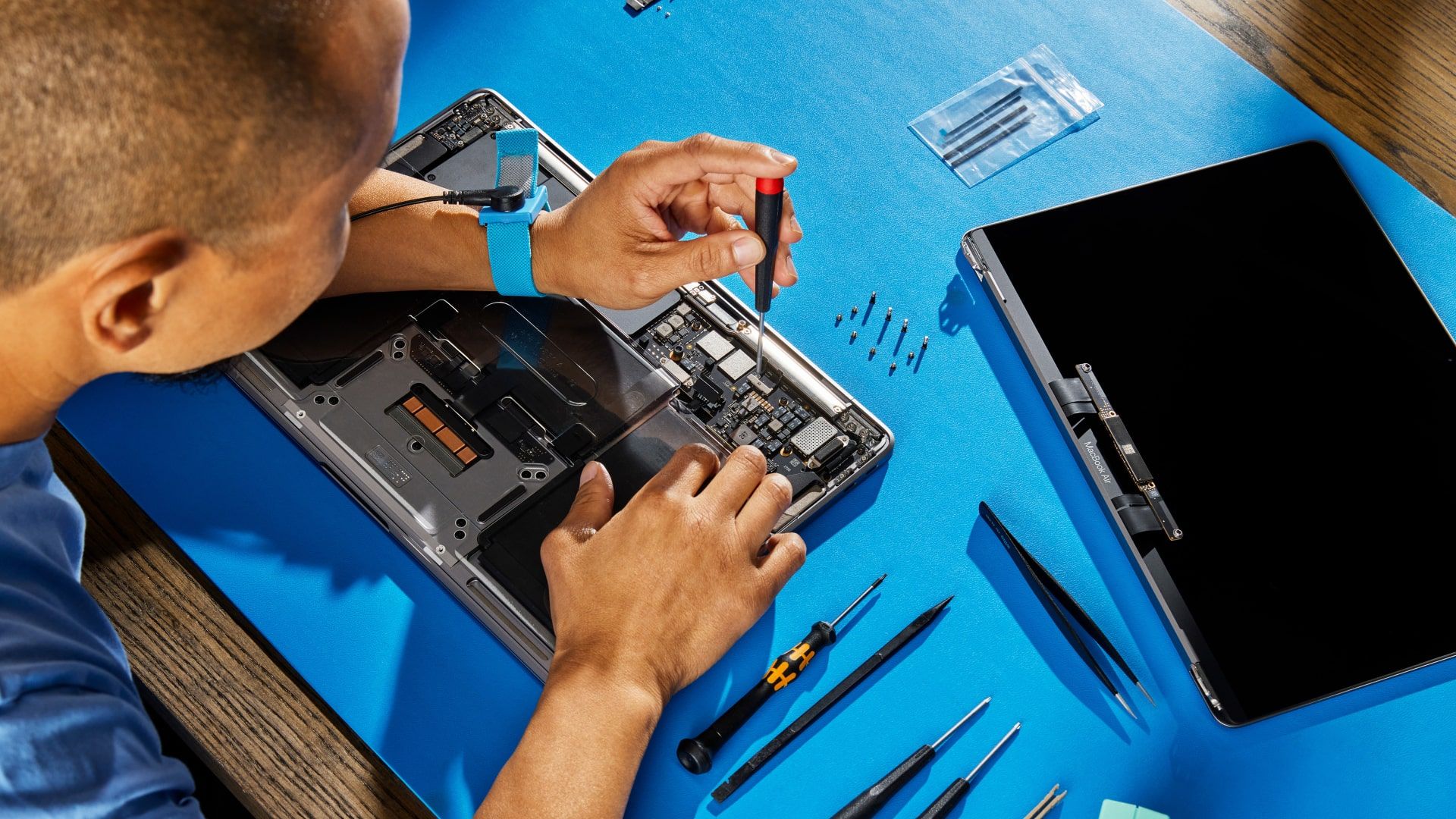
Picture from cdn.mos.cms.futurecdn.net
Rank 390Making it easier to repair an old smartphone or laptop, rather than buying a new one, has long been a goal of tech enthusiasts, and the EU took a big step towards making that a reality in June 2025 with the introduction of its "Ecodesign" requirements. The European Commission's rules require manufacturers of smartphones and certain tablets to meet new obligations covering spare parts, repair information, and the fundamental design of their devices. Laptops aren't covered by these particular rules, although other EU regulations apply to them.More than a year later, there are some real signs of improvement – but also lingering questions about the difficulty and cost of repairs.So, how much has actually changed? Are smartphones easier to repair, and are laptops heading in the same direction? To make sense of the EU's repairability push, TechRadar spoke to three experts.(Image credit: Shutterstock)Europe's repair revolutionThe EU's rules stop short of mandating anything too drastic. Apple does not have to make the iPhone a 10/10 on iFixit's repairability scale, or turn it into something resembling a Fairphone.Instead, much of the focus is on spare parts: manufacturers must make specified replacement components, including screens and batteries, available for at least seven years after a model stops being available on the EU market.Manufacturers must also deliver parts within five working days for the first five years, rising to 10 days for the remaining two, while providing repair documentation and access to necessary software tools. Batteries must meet minimum durability standards, too.For consumers, perhaps the most visible change is an A–E repairability rating on the EU's new energy labels, based on factors such as disassembly difficulty and replacement parts.The EU has also introduced a separate Right to Repair Directive, which member states had to implement by July 2026, adding protections for certain products, although laptops aren't yet covered. The changes could have implications beyond Europe, too. "The regulation clearly influenced products sold outside Europe, because few vendors engineer a separate phone for one region," says IDC's Francisco Jeronimo.(Image credit: Peter Hoffmann)Cracking the repair problemIn June 2026, the European Consumer Organisation (BEUC) carried out an investigation into the availability of spare parts and repair instructions across Europe, comparing smartphones with battery-powered vacuum cleaners."The new Ecodesign rules for smartphones have improved consumers’ access to spare parts and repair instructions," says Silvia Barlassina, the group's ecodesign project coordinator. "However, as the rules have been in force for only a year and a half, it is too early to assess whether they have led to an increase in consumer repairs."Of course, getting hold of replacement parts is only half the battle. Thomas Opsomer, an EU policy specialist at repair advocacy group iFixit, is less convinced that the rules have changed how smartphones are actually repaired."As a result, the regulation did not really change the current mainstream smartphone design, which is one that requires heating to release the screen adhesive in order to get access to the inside of the phone for any type of repair – a procedure that is quite daunting to most users."A recent iFixit teardown of the iPhone 18 Pro shows that, despite a screwed-in battery tray and modular cameras, accessing the battery still requires removing the glued-down display. In fact, iFixit says it damaged the plastic display frame in three of the four phones it opened, although it cautioned that further testing was needed to establish whether this was a widespread problem.Physical repairs aren't the only problem. In a separate September 2026 investigation, Right to Repair Europe and iFixit examined 2,334 smartphone-model records in the EU's official product database, finding widespread gaps in the availability of repair instructions and spare-part prices."We found 80% of models on the market to be non-compliant, which is not the same as 80% of units sold," says Opsomer. "We have seen dramatic improvements in the availability of instructions for self-repair from the leading manufacturers, who were previously quite reluctant to share those."Many of the shortcomings are instead concentrated among cheaper, lesser-known smartphone brands, Opsomer adds, potentially leaving budget-conscious consumers particularly exposed.There has also been progress on parts pairing, the software checks that can restrict the use of replacement components. Manufacturers such as Apple must now allow users and independent repairers to restore the functionality of replacement parts, "removing a significant barrier to self-repair and independent repair," says Opsomer.(Image credit: Apple)The €400 question New smartphones are expensive – and prices are being pushed even higher as demand from AI data centres drives up the cost of components like memory chips, even for giants like Apple. With replacement parts becoming easier to find, you might expect repairing a smartphone to be substantially cheaper than buying a new one. Unfortunately, the reality isn't quite so straightforward."For one high end device we examined in our recent market check, the cost of replacing the display exceeds €400," says Barlassina. "When compared to the average original retail price of the device, this represents roughly 30% of the total cost."Research cited in the European Commission's impact assessment suggests consumers are typically willing to spend around 20% of a product's purchase price on repairs. Damningly, BEUC's €400-plus figure, meanwhile, only covers the replacement component, before labour and other expenses.The EU's new A–E repairability labels account for factors like disassembly difficulty and the tools required, but crucially not the cost of replacement parts or repair services. This, Barlassina says, "can give an incomplete picture to consumers."The cost of fixing individual devices illustrates the problem. Samsung's Irish repair pricing page lists a recommended €267 for an out-of-warranty screen repair on the Galaxy S26 Ultra, including a replacement battery, although additional work could increase the charge.Meanwhile, Fairphone's replacement display for the Fairphone 6 costs just €89.95, while a replacement battery costs €39.95. Both are parts-only prices, with Fairphone designing them to be replaced at home."The economics of repair are key," says Opsomer. "When their phone breaks, users consciously or unconsciously make a tradeoff between the repair costs and the perceived residual value of their phone, which is lowered by incessant messaging extolling the virtues of the latest and greatest model."(Image credit: Samsung)Laptops are opening upLaptops weren't covered by the EU's June 2025 smartphone Ecodesign rules, but some manufacturers have made substantial improvements anyway.Notably, iFixit gave the Lenovo ThinkPad T14 Gen 7 a provisional 10/10 repairability score, praising its accessible battery, replaceable USB-C ports, keyboard, RAM, and storage. iFixit had also consulted with Lenovo on its design.Even Apple is leaning into repairability with the MacBook Neo, which got a 6/10 score from iFixit, the highest MacBook score in around 14 years. The Neo uses a screwed-in battery rather than a glued-down one, although its RAM and storage remain soldered.But are these examples part of an industry-wide shift, or still the exceptions?"We see a shift towards repairability in smartphones and laptops, but not to the extent that I would call it a broader industry shift," says Jeronimo. "There are clear signs of movement, and Apple and Lenovo are two good examples."There's a commercial argument for repairability, too. Jeronimo points out that consumers paying more for their devices increasingly expect them to last longer, giving manufacturers another reason to make repairs easier."A repairable device tends to hold its value for longer, which means a higher residual value when the consumer trades it in for a new one," he says. (Image credit: iFixit)Still some fixing to doMore replacement parts and better repair manuals are all well and good, but are consumers actually making repairability a priority?According to IDC's research, consumers are now keeping smartphones for around 3.5 to 4.5 years on average. "Consumers are keeping phones longer, but repairability is not what drives it," says Jeronimo. "In a 2025 IDC consumer survey, battery life, connectivity, price and build quality ranked highest among the purchase criteria."Governments are also looking at ways to make repairs more attractive. Under the EU's Right to Repair Directive, member states must introduce at least one measure encouraging repairs, potentially including financial incentives such as repair vouchers.Member states have until July 2029 to notify the Commission of the measures they've taken, although they can introduce them sooner. "Among these options, financial incentives would be by far the most effective," says Opsomer.More than a year after the EU's repairability rules came into force, things are slowly improving. Enthusiasts who want to keep their smartphones and laptops forever – or at least several more years – have more options than before. The challenge now is making repair a realistic choice for everyone else.
-
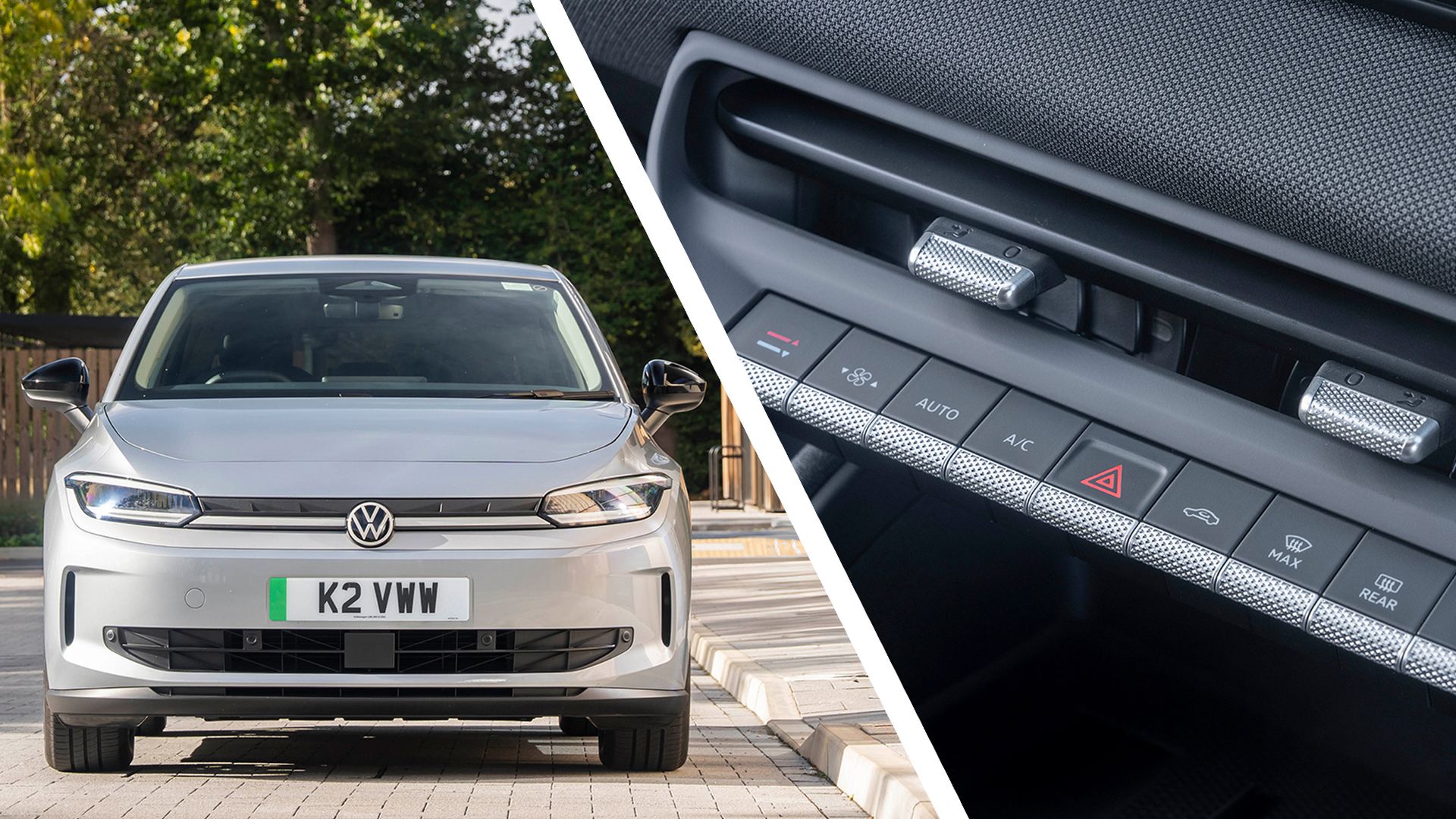
Picture from cdn.mos.cms.futurecdn.net
Rank 391It is not cruel to say that Volkswagen hasn’t had the smoothest journey towards electrification. Models like the ID 4 and ID 5 were met with a lukewarm reaction from both customers and journalists, thanks in part to their forgettable exteriors and almost surgical cabins, while the internet lost its mind at the frustrating lack of physical buttons and infuriating infotainment systems.Pile all this on top of a mediocre electric range and rivals that were just more exciting in pretty much every area, and you can understand why Volkswagen has decided to go back to the drawing board and update the majority of its electrified models.Originally teased as the ID 2 or ID 2 All (awful names, we know), the latest ID model sensibly adopts the badge of one its best-selling models in history, as well as riding on an updated MEB+ platform that brings with it improved range, faster charging speeds and, perhaps more importantly, more enticing prices.(Image credit: Volkswagen)With a cavernous rear trunk, plenty of room inside for actual-size human beings and a top-quality cabin, the new ID Polo is here to prove that VW can still mix it with the latest batch of Supermini rivals, while at the same time making the experience feel a little more premium without blowing the budget.To further ram home that point, the car starts at around £24,000 (around $32,000 / AU$45,000) in the UK — although VW hopes it will be eligible for the £3,750 Electric Car Grant), making it a keen rival to the excellent Renault 5 and the excellent Hyundai Ioniq 3.Playing it safe (Image credit: Volkswagen)Since honesty is a core theme of this review, it's also fair to say the internal combustion Polo was never styled to stop traffic, but that hasn’t prevented it from selling over 20 million units since it entered production over half a century ago. It is, hands-down, one of Europe’s most successful small cars.Unlike the rather bland blobs that first appeared wearing ID badges, the new electric Polo is proudly a VW product. It’s actually a tiny bit shorter than its combustion engine counterpart, but the electric platform has allowed engineers to push all four wheels as far into the corners as possible to maximize space and give it a more purposeful stance on the road.(Image credit: Volkswagen)Drumroll please… physical buttons also make a welcome returnIt sports VW’s ‘signature smile’ and glass-covered LED horizontal light bar at the rear, while the interior is festooned with premium-feeling, hard-wearing surfaces that look nice but also feel like they will stand the test of time.Drumroll please… physical buttons also make a welcome return, with four switches to operate all four electric windows (no more juggling just two with a fiddly button to switch between the front and the rear) and a neat row of hard keys under the infotainment touchscreen for the most important controls — including heating, hazards and windscreen defrosters.The diminutive Polo’s interior is generally a really lovely place to sit and everything has clearly been considered by the designers and engineers, as all controls are easy to reach and everything feels familiar within minutes behind the wheel.(Image credit: Volkswagen)A 13-inch infotainment touchscreen is extremely easy to navigate and logically laid out, even offering ChatGPT integration for answering those burning road trip questions. Plus, there’s a 10-inch digital driver’s display that can be customized, including an option to have it replicate the analogue dials of the first-generation Golf.Predictably, this was probably my favorite feature, as it has been executed so well. Designers have even go so far as to add old-school LCD ‘ghosting’ around the digits to make it look and feel more realistic.(Image credit: Volkswagen)It’s the sort of character that was missing from earlier ID models, yet Volkswagen has stopped short of going all-out with the chintzy digital tricks. As a result, the ID Polo feels like the more ‘grown-up’ choice, compared to something like the Renault 5 E-Tech, what with the enormous 441-liters of rear trunk space — 25 per cent larger than its combustion sibling — and sensible, hard-wearing materials used throughout the cabin. Big car energy(Image credit: Volkswagen)From launch, the ID Polo will be offered with the choice of a 37kWh lithium-iron-phosphate battery with a 208-mile range, or a larger 52kWh nickel-manganese-cobalt variant that delivers a claimed 278 miles of range.There is also the choice of three power outputs (depending on the battery size), with the line-up starting with 116hp and increasing to 211hp in the most potent cars — that’s 'warm hatch' territory.Naturally, Volkswagen was keen to showcase the most powerful versions, which can accelerate from 0-62mph in 7.1 seconds. It’s certainly not mind-bindingly fast in today’s EV terms, but the little supermini certainly feels brisk on real roads.It comes across as a lot more ‘driver focussed’ than other small EV rivalsThe steering is excellent and offers a good level of feedback, while the brakes are well-judged. It comes across as a lot more ‘driver focussed’ than other small EV rivals, including Hyundai's budget Ioniq 3. Although it’s not quite as thrilling as the Cupra Raval, which shares similar underpinnings.Plus, despite its small size, it does what all good VW’s do and handles the boring grown-up drives as well as the more spirited urban dashes and country lane blasts. Its footprint might be small, but it doesn’t feel out-gunned at highway speeds. In fact, it eats up motorway miles comfortably. There’s even the option to add massaging seats to the car as an optional extra — arguably a feature that just isn’t found in the supermini class… until now. (Image credit: Volkswagen)Max charging rate of the larger battery is 105kW from DC outlets (90kW for the smaller battery), which doesn’t sound like much but due to the relatively limited battery capacity, the fastest pit stops take around 25 minutes for a 10-80 per cent top-up. Not bad at all VW.Ushering in a new era(Image credit: Volkswagen)We’ve got a lot more to look forward to from the German marque, which has been in the news lately for cutting jobs and generally stripping back its model line-up to improve efficiencies.Part of the plan is to update most of its electrified range, as well as introducing models like the rough-and-ready ID Cross, the larger ID Tiguan and, of course, full-fat GTI versions of both the Polo and the ID 3. As a car to welcome in this new era, the electrified Polo is a great example. VW has clearly listened to feedback and answered criticism with a real consumer-focussed EV.It represents excellent value for money, will be cheap to insure and delivers that premium VW feel without forgetting all of the important practical stuff. In short, it does everything the best-selling Polo has done for more than half a century, yet future-proofs the formula so it can be successful for half a century more.
-
Picture from cdn.mos.cms.futurecdn.net
Rank 392As the 2026 Formula 1 season draws to a close, Mercedes-AMG Petronas F1 is cruising to glory in both the driver's and constructor's world championships.But behind its quest for pure speed is a tech stack which constantly evolves throughout the year, with the team supported by a host of partners to make sure it stays ahead of the competition.SAP is one of the team's key providers, and following a key upgrade, we spoke to Dean Corcoran, Head of ERP, IT at Mercedes-AMG F1 Team, to find out more about how it is helping get the title push over the line.It’s obviously been a hugely successful season for Mercedes F1 so far. What role has your tech stack and partners such as SAP played in that?On-track success is ultimately delivered by the collective capability of the Mercedes-AMG PETRONAS F1 Team to design, build, operate and develop the car. Underpinning all of that is the technology stack that enables our people to do their jobs effectively.SAP is a key enabler of Team performance. It is the system of record across our cost, procurement, manufacturing and operational processes, providing the foundational data that supports many of the decisions we make across the organisation.What can you tell us about the upgrade? What benefits will it bring to the team for the rest of the season?The RISE implementation and upgrade to the latest release of S/4HANA was fundamentally about strengthening the Team’s core enterprise platform, making it more resilient, more performant and allowing us to take advantage of the latest functionality available to us.Importantly, it also creates the foundation for our future roadmap. It gives us the platform from which we can make greater use of new analytics capabilities and begin paving the way for future AI use cases.What challenges are involved in upgrading your ERP platform in the middle of the season? How much preparation was involved to ensure it didn’t disrupt your charge for the championships?Our S/4HANA platform is a business-critical application that touches all aspects of the Team’s operations, so a migration of this scale has to be meticulously planned and executed. Any disruption to the business could have significant consequences, particularly in the middle of a championship campaign.Our first phase was therefore about understanding exactly where we would see the impact of the migration and upgrade. The second was developing a comprehensive implementation and testing plan, with precise timings and staffing requirements. The final phase was about executing that plan with excellence.We were extremely well supported by SAP throughout the migration, and that preparation paid off. We were able to move seamlessly onto the new platform with no disruption to the business ahead of the first weekend of racing.With regards to software updates, how do you ensure your upgrades are processed and programmed effectively?Within the Team’s IT organisation, we follow a rigorous portfolio, project and change-management approach. That means understanding and evaluating the impact of any change well ahead of implementation.From there, we develop tailored implementation and testing plans, with clear exit criteria for each phase. Ultimately, disciplined governance matters just as much as technical capability and speed when you are making changes to business-critical systems.We hear a lot about mid-season upgrades being a huge boost for any team when it comes to new parts, but how much of an impact can software upgrades bring?A well-planned and well-executed software upgrade should improve an organisation’s ability to deliver value through the processes that software supports.In the case of an ERP platform, that means being able to execute processes faster without compromising quality, while making more data available more quickly to support decision-making. In an environment like the Team, where speed and quality matter enormously, those improvements can be valuable.With more attention being paid to data controls than ever before, what impact will the new upgrade have on the Team’s compliance goals?A modern ERP solution such as SAP RISE PCE needs to support and supplement the controls built into the Team’s business processes, rather than existing separately from them.With the upgrade to S/4HANA 2025, we are leveraging the latest SAP functionality to provide the best possible insight to the right people at the right time. That helps us make informed decisions while maintaining the robust controls required across the organisation.Looking forward to the rest of the season, how big an effect can upgrades such as the new SAP delivery give to the Team as you chase both championships?Marginal gains and reliability matter everywhere when you are trying to win both championships, and our move to RISE and upgrade to S/4HANA 2025 are focused on delivering both.We are already seeing improved transactional performance on the new platform, giving valuable time back to users across the Team. Alongside that, we are adopting and leveraging some of SAP’s latest functionality across Fiori and analytics, with further capabilities on our roadmap that we believe can deliver additional performance improvements in the future.
-
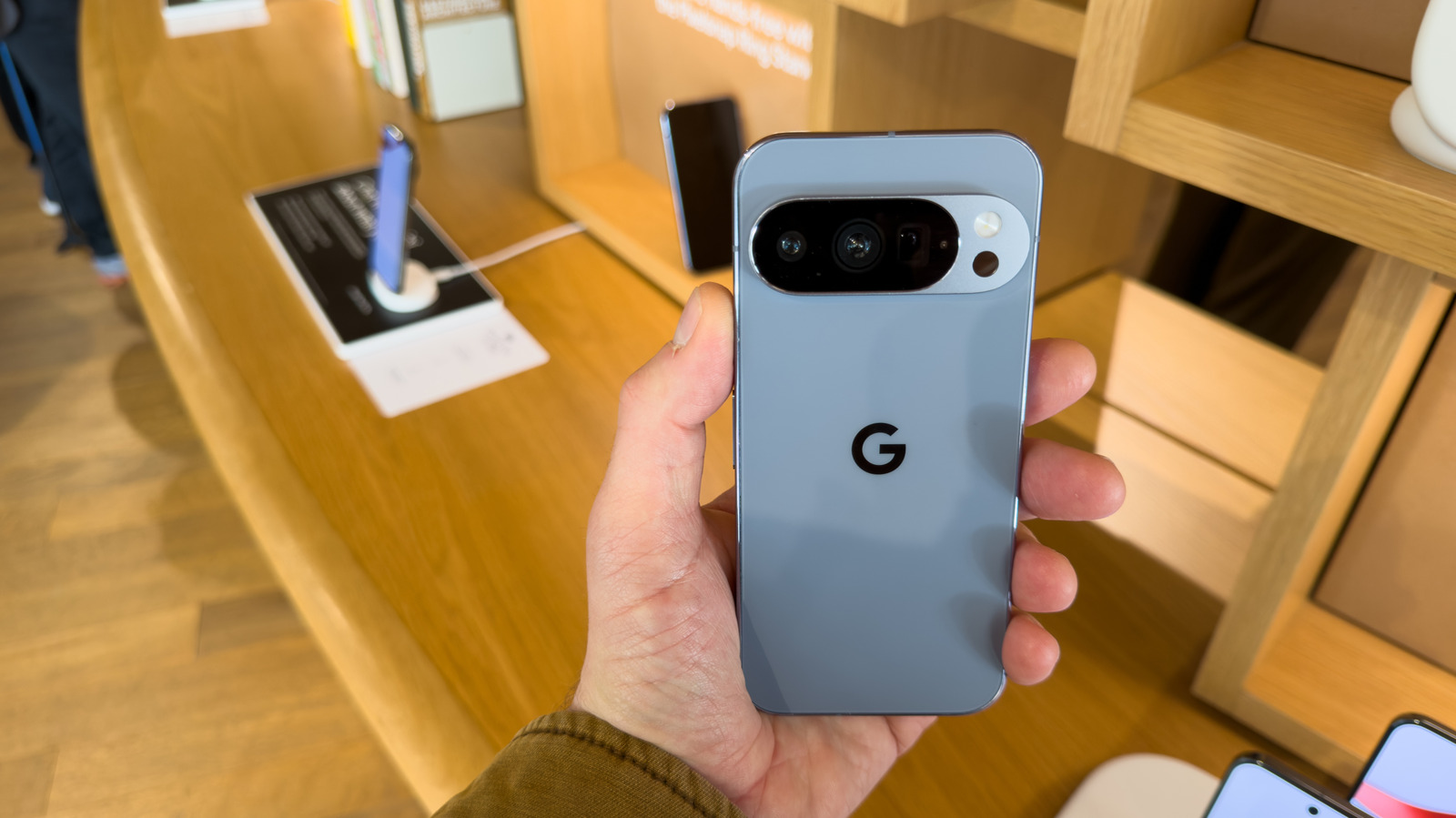
Picture from www.engadget.com
Rank 393 -
Picture from www.engadget.com
Rank 394 -
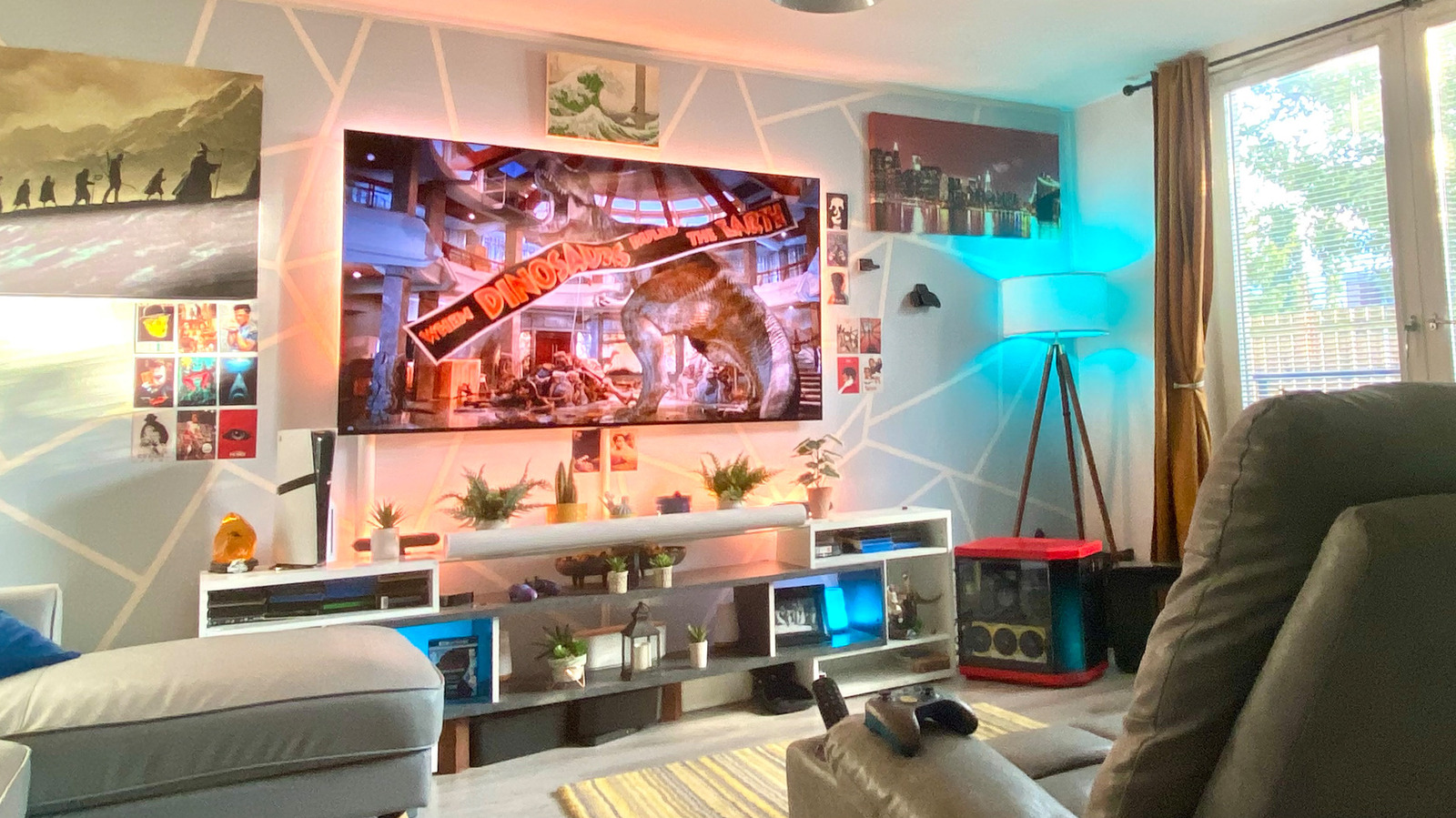
Picture from www.engadget.com
Rank 395 -

Picture from cdn.mos.cms.futurecdn.net
Rank 396Meaco Sefte Tower Fan 19-inch reviewIn 2026, we experienced a record-hot summer in the UK, as did a lot of other countries around the world. As a result, people were rushing online to pick up a new fan to prevent themselves from struggling with the intense heat. But for many, their efforts were in vain: mass shortages shocked the nation, leaving many struggling to cool down. As a result, it may be well worth grabbing a fan sooner rather than later, in order to avoid potential shortages that could hit consumers in 2027. And I’ve just tested a new fan that I consider to be a top option for dealing with scorching temperatures, the Meaco Sefte Tower Fan 19-inch.Like a lot of the best fans, this Meaco model offers a wide variety of power modes that can suit any situation. There are 12 power levels to be exact, with the lowest providing a subtle yet satisfying breeze, and the highest delivering a mighty, ultra-cool blast. I found performance to be consistently strong across all power levels, with strong coverage from the top to the base of the model.What’s more, this tower fan is a fairly quiet operator. While not quite silent at lower levels, you’ll only hear a very light whirring noise, which is ideal if you like to keep the fan on while falling asleep. It has to be said, though, that as you ascend into the upper tiers of power, the fan does make a fair bit of noise. There’s a slight hissing sound, and the gust of wind naturally comes through with considerable impact. This is understandable, however, at the top level, and the fan is otherwise softly spoken.(Image credit: Future)Something that I really liked about the Meaco Sefte Tower Fan is its wide coverage. It can oscillate 180 degrees horizontally, making it a great choice if you want to cool everyone on your couch, for instance. It doesn’t oscillate up and down, but as a tower fan it already offers plenty of vertical coverage.One more thing that makes this fan a hit is its excellent ease-of-use. It comes with a remote, but also has built-in touch controls that were perfectly responsive for me when testing. You can use the touch controls to turn the fan on or off, adjust power levels, control oscillation, and set a timer. There’s also a button that enables you to switch modes between Standard, Night (which mutes interface audio and gradually brings the fan’s speed down), and Eco (which automatically adjusts fan speed depending on room temperature).The only thing that potentially holds the user experience back is the lack of a companion app. This fan has no Wi-Fi capabilities or companion software, meaning that you’ll have to stick with the remote or touch controls. Given this model’s relatively modest price, this sacrifice is understandable, but I would’ve liked the option to control the fan from my phone.You won’t have to make too many sacrifices with this fan overall, though. Yes, its plasticky build doesn’t exactly scream premium, but it’s slim, meaning it won’t take up too much space on your table or desk, and feels relatively durable too. It’s also easy to take apart for cleaning or maintenance, and I liked the display on the fan that shows room temperature.So, is the Meaco Sefte Tower Fan 19-inch worth the money? At £69.99 (about $90 / AU$130), I think the answer is yes. You’re not getting premium features like misting and app support but, for the price, you get adaptable and impressive performance, strong coverage, and tight touch controls, which make it ideal for using on a hot summer’s day. If you need misting, or just want to check out some strong alternatives, though, make sure to head down to the ‘also consider’ section.(Image credit: Future)Meaco Sefte Tower Fan 19-inch review: price & release datePriced at £69.99 (about $90 / AU$130)Released in August 2026The Meaco Sefte Tower Fan 19-inch was released in August 2026 alongside the larger Meaco Sefte Tower Fan 36-inch. It can be purchased in the UK and select European markets, but is not directly solid in the US or Australia. This tower fan will set you back £69.99 (about $90 / AU$130), making it a relatively budget-friendly option for its size, coverage, and quality.Meaco Sefte Tower Fan 19-inch review: specsSpeeds12Oscillation180 degrees horizontalWeight5.5lbs / 2.5kgDimensions19.3 x 6.5 x 7.1 inches / 490 x 165 x 180mmControlTouchTimerYesModesNormal, Night, Eco(Image credit: Future)Should I buy the Meaco Sefte Tower Fan 19-inch?AttributeNotesScoreFeatures12 speeds, a handful of modes, no app control or fancy features like misting.3.5/5PerformancePowerful performance, wide oscillation, generally quiet outside of top speed levels.4/5DesignA bit plasticky, but slim, great controls and ease of use.4/5ValueA good quality fan that’s available at a tempting, modest price-point.4.5/5Buy it if…You’re looking for a quiet operatorWhen using a fan at night, the last thing you want to be subjected to is a loud whirring noise. But luckily, this Meaco fan is a quiet operator, and will keep you chilled without making a racket — so long as you’re not using it at the top power levels. You need wide coverageIf you want to keep the whole family cool, this fan is a top option. It can oscillate 180 degrees horizontally, meaning everyone on the couch will get some of that sweet cold air.Don’t buy it if…You need mistingThis model doesn’t have any misting capabilities, so you won’t get that extra chill when using it. If you want mess-free misting, be sure to check out some of my recommendations in the ‘also consider’ section.You’d like app controlsAs one of the more budget-friendly options in its size-class, the Meaco Sefte Tower Fan cuts back in a few areas here and there. One of those is the lack of Wi-Fi and app support, so if you’re looking for smart-home integrations, it may be better to look elsewhere.Meaco Sefte Tower Fan 19-inch review: also considerDreo Smart Misting Fan 516SThis is the fan I use at home and I absolutely love it. It produces fine, mess-free mist with ultra-cool winds, the water tank depletes fairly slowly, and it can be controlled via an easy-to-use app. It’s not quite as big as this Meaco fan, and doesn’t have quite as wide a range of horizontal oscillation, but it’s a great option for cooling yourself down in the warmer months. Read my full Dreo Smart Misting Fan 516S review.Shark FlexBreeze HydroGoThis one also has misting capabilities, but can be used cordless, and is satisfyingly lightweight, making it a spectacular all-round option. It doesn’t oscillate and there’s no remote control included, but we’re big… ahem... fans of this personal cooling solution. Read our full Shark FlexBreeze HydroGo review.How I tested the Meaco Sefte Tower Fan 19-inch(Image credit: Future)Tested across a two-week periodMade use of all settings and featuresUsed in a controlled environment at Future LabsI spent two weeks with the Meaco Sefte Tower Fan 19-inch, using it in a controlled environment here at Future Labs.Across this period, I tested all of the fan’s features, and made sure to try the fan in Night and Eco mode, as well as its standard setting. In addition, I tested all 12 of the power settings in order to assess noise levels and overall performance.More generally, I’ve tested tons of gadgets here at TechRadar, where I serve as a Senior Reviews Writer. I’ve covered home and lifestyle products including fans like the Dreo Smart Misting Fan 516S, as well as audio gear, video games, and more.Read TechRadar’s reviews guaranteeFirst reviewed: October 2026
-

Picture from cdn.mos.cms.futurecdn.net
Rank 397Liverpool vs Arsenal: Today (Sun, Nov. 1) — 4.30pm GMT / 11.30am ETStream: Sky Sports (UK) / Peacock TV (US) / Stan Sport (AUS)Unlock your stream with Proton VPN (up to 75% off)Watch Liverpool vs Arsenal live streams in a potential Premier League 2026/27 classic at Anfield. Respectively led by Andoni Iraola and Mikel Arteta, two managers from the small Basque province of Gipuzkoa in northern Spain, the Reds and Gunners share a special rivalry and will want to establish early dominance.The Merseysiders scraped past Chelsea in a midweek Carabao Cup penalty shootout but will need to put in a better performance to cut the gap to the reigning champions to three points. The Reds have won four of their past five outings in all competitions – the aforementioned EFL Cup 'win' technically a draw – since a 3-0 defeat by Man City as Iraola's methods begin to take root. Alexander Isak has six Premier League goals to his name already this season, while even Florian Wirtz has begun to resemble the player Liverpool thought they were buying from Bayern Leverkusen in the summer of 2025. Ronald Araujo impressed in last weekend's 2-0 win against Brentford.No-one saw Arsenal's shootout defeat by Fleetwood – 18th in League Two – in the Carabao Cup coming and Arteta will be determined his side prove that result was an anomaly. Second on goal difference to City, the Gunners have won three league games in a row since a 3-0 walloping at Brighton and looked at their controlled, relentless best in swatting aside Everton last weekend. Declan Rice and Noni Madueke should return after missing Fleetwood, but Bukayo Saka will be absent for at least a month. Arsenal haven't tasted victory at Anfield in 13 attempts dating back to the 2012/13 season – can they invoke the spirit of 1989, Michael Thomas and all that to keep their title defense on track?Here's how to watch Liverpool vs Arsenal in the Premier League 2026/27 from anywhere in the world.Can I watch Liverpool vs Arsenal for free?Unfortunately not —there are no dedicated free streams we can find for Liverpool vs Arsenal.However, if you're a US resident, you can watch the Premier League game for just $1 if you take out a 30-day trial to Walmart+ and select Peacock TV as a member benefit. Read below for more information.Away from the US on vacation or business? You'll need a VPN to watch your regular stream as if you're back home — we recommend Proton VPN.Use a VPN to watch Liverpool vs Arsenal from anywhereA VPN is a handy piece of software that can make your device appear as if it's back in your home country, so you can unlock your usual streaming services. One of our favorites is Proton VPN – it does everything and comes with up to 75% off.Editors Choice🟩 Proton VPN – Just $2.49/monthProton VPN offers top-notch security and privacy and super fast connection speeds, and comes with a 30-day money-back guarantee.✅ Save up to 75% off✅ Just $2.49/month✅ Unlocks PeacockGet Proton VPN and stream Liverpool vs Arsenal from anywhere.VIEW DEAL ON It's really straightforward to use a VPN to watch Liverpool vs Arsenal.1. Install the VPN of your choice. As we've said, Proton VPN is one of our favorites.2. Choose the location you wish to connect to in the VPN app. For example, if you want to watch the Peacock stream, select 'United States' from the listed countries.3. Sit back and enjoy the action. Head to Peacock and tune into Liverpool vs Arsenal.How to watch Liverpool vs Arsenal live streams in the USLiverpool vs Arsenal will be shown on Peacock TV in the US.To access Peacock TV, you'll need a Premium subscription, which costs $12.99 per month. You can access Peacock Premium with a 30-day trial to Walmart+ for $1. The streaming service is a member benefit.Alternatively, if you want to enjoy live sports for longer, then get 12 months for the price of 10 with an annual subscription for $129.99/year.Outside the US for this EPL clash? Use Proton VPN to unlock your stream of Liverpool vs Arsenal.How to watch Liverpool vs Arsenal live streams in the UKSky Sports is broadcasting Liverpool vs Arsenal in the UK on its Premier League and Main Event channels.Packages cost £35 per month for new customers, or £22 per month if you already have a Sky TV contract. The Sky Go app lets you watch on your laptop, mobile or tablet.Fans can also tune in using a NOW Sports Membership, with 24-hour passes costing £14.99. Not in the UK for Liverpool vs Arsenal? Use Proton VPN to access your usual Premier League streams.How to watch Liverpool vs Arsenal live streams in CanadaFubo are broadcasting Liverpool vs Arsenal in Canada.Prices start from CA$31.49 per month for Fubo's flexible Sports Monthly package. Although the best option right now is the Quarterly Package, with it costing just CA$27.99 CA$14.99 for each of the first three months. You can also watch Fubo's content if you have a selected DAZN subscription in Canada.Not in Canada? Use Proton VPN to access your Premier League live streams from anywhere in the world.How to watch Liverpool vs Arsenal live streams in AustraliaLiverpool vs Arsenal will be broadcast on Stan Sport in Australia.Stan Sport subscriptions start at AU$29.99 per month, which includes the base plan (from AU$9.99) with the sport add-on (AU$20).Outside Australia? Proton VPN can hel you login to your Stan Sport account.What is the Liverpool vs Arsenal start time?Liverpool vs Arsenal kicks off at 4.30pm GMT / 11.30am ET / 8.30am PT on Sunday, November 1.If you are in Australia, the game will be broadcast at 3.30am AEDT on Monday, November 2.What is the Liverpool vs Arsenal head-to-head?Liverpool have played Arsenal on 246 occasions. The Reds have won 96 games to the Gunners' 83 and there have been 67 draws.Liverpool picked up four points last season from the fixture, winning 1-0 in August 2025 thanks to a superb Dominik Szoboszlai free-kick. A goalless draw followed in January this year.We test and review VPN services in the context of legal recreational uses. For example:1. Accessing a service from another country (subject to the terms and conditions of that service).2. Protecting your online security and strengthening your online privacy when abroad.We do not support or condone the illegal or malicious use of VPN services. Consuming pirated content that is paid-for is neither endorsed nor approved by Future Publishing.
-
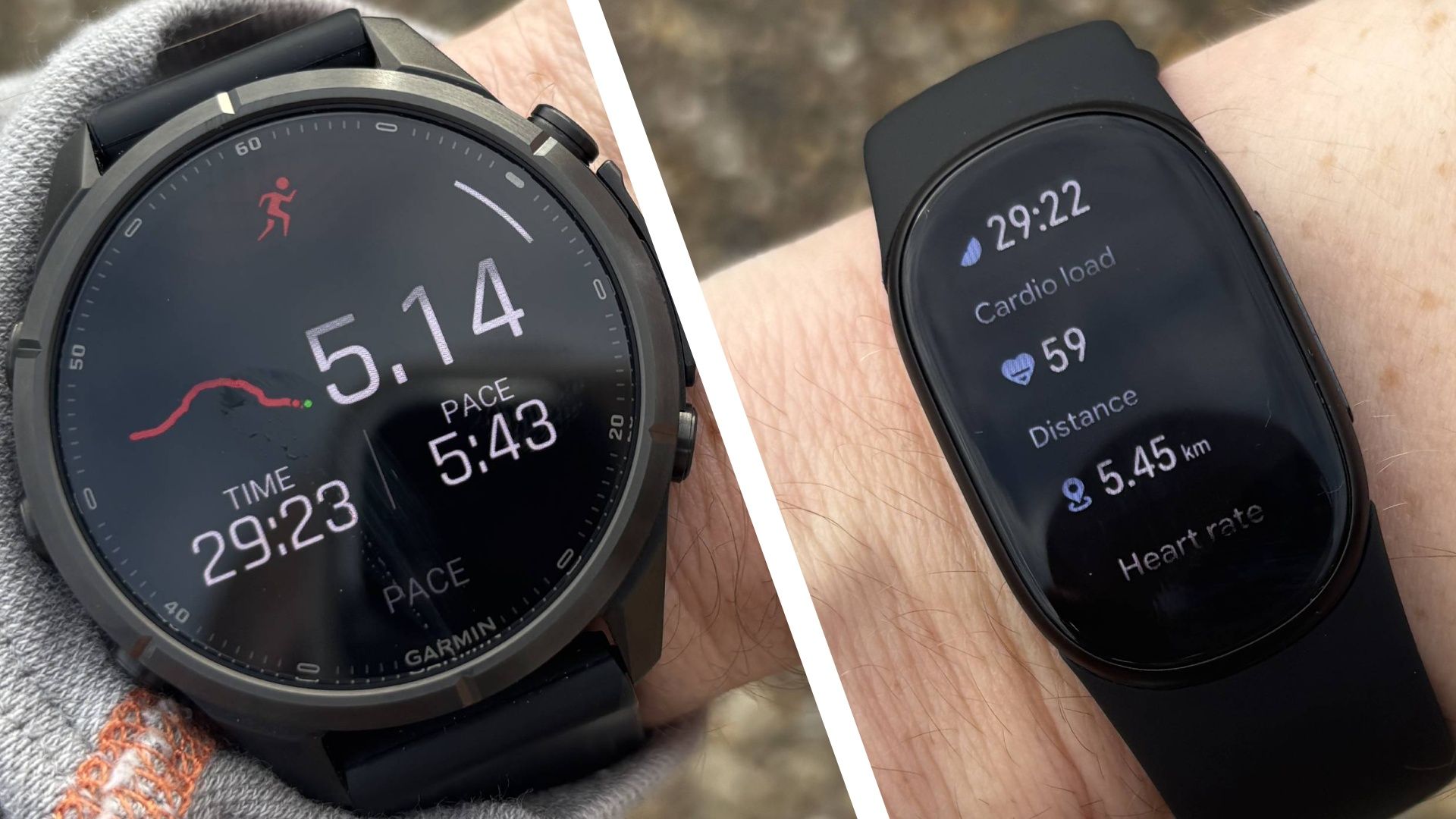
Picture from cdn.mos.cms.futurecdn.net
Rank 398The Google Fitbit Edge is Google's latest fitness tracker, and it's designed as a halfway house between the screenless, super-cheap Google Fitbit Air and the full-fat Google Pixel Watch 5 smartwatch. Costing $179.99 / £159.99 / AU$269, it's packing GPS (which the Air doesn't) and Fitbit's improved automatic activity detection, alongside the usual metrics like heart rate, sleep tracking, and estimated calories burned. But is it accurate? That's the big question. While we found the Google Fitbit Air accurate compared to the Apple Watch Ultra 3 and a heart rate monitor, we've been burned by Fitbit in the past, with some accuracy issues plaguing this device's spiritual predecessor, the Fitbit Charge 6.I've only been testing the Edge for a couple of days, but I wanted to test its mettle straight away. On my first 5km run with the new Fitbit, I compared its stats on one wrist against another wearable, the high-end Garmin Fenix 9 Pro. The 9 Pro costs around five times as much as the Google Fitbit Edge, and has been tested against chest-mounted heart rate monitors and other premium wearables like the Apple Watch Ultra 4 to determine accuracy. It's worth noting that devices normally take a few days to learn your movement patterns and baseline metrics, so I was expecting some deviation in metrics such as heart rate. However, I was hoping the Google Fitbit Edge's distance and pace information, calculated via GPS, would cleave closely to the Fenix 9 Pro's metrics, as that would indicate the little fitness tracker is almost as accurate as the powerful Fenix 9, making it good value for money. The results(Image credit: Future)When I compare wearables during workouts, I use the average heart rate metric as a good indication of wearable accuracy. Heart rate, measured by LED-based PPG sensor arrays, is the cornerstone of wearable health tracking and a core basis of everything from estimations in sleep quality to calorie burn. Average heart rate, which all wearables provide during a workout, is a great way to compare. While different devices use different algorithms and so forth, resulting in fluctuations in graphs, if two or more wearables show a similar average heart rate, it's a good indication that these devices are broadly accurate. Fortunately, the cheaper Google Fitbit Edge does cleave very closely to the Garmin Fenix 9 Pro, which I know is accurate thanks to past tests against the Frontier X2 heart rate monitor and Apple Watch Ultra 4. The Google Fitbit Edge showed an average heart rate of 156 bpm, while the Garmin Fenix 9 Pro showed an average heart rate of 153 bpm. That's a great result for the Fitbit. Unfortunately, the same can't be said for the distance metric, which calculates how far I ran. During the run, while glancing at my Google Fitbit Edge, it was consistently overestimating my running speed, often showing 30 seconds or more ahead of my Fenix, and that was reflected in the final distance result. While the Google Fitbit Edge said I ran 5.45 km, the Garmin Fenix 9 Pro measured just 5.15 km — a distance of around 300 meters.That's acceptable over a longer race, like a marathon (there was a similar discrepancy when I ran London with an Apple Watch and a Garmin), but that's 300 meters over 42 kilometers, not five. 300 meters on this run equates to an overestimation of around 6%, and I trust the thousand-dollar Garmin's multi-band SatIQ GPS more than the sub-200-dollar Fitbit's. I will repeat the experiment with longer runs — with fewer trees — to see if I get a smaller deviation. It's not a dealbreaker for casual exercisers, but over 5% is enough for a keen runner to choose another device. Stay tuned for more testing and a full review of the Google Fitbit Edge very soon.
-

Picture from www.engadget.com
Rank 399 -

Picture from techcrunch.com
Rank 400