Technology News of last week
This list is constantly updated to reflect the weeks technology news.
-
Picture from cdn.mos.cms.futurecdn.net
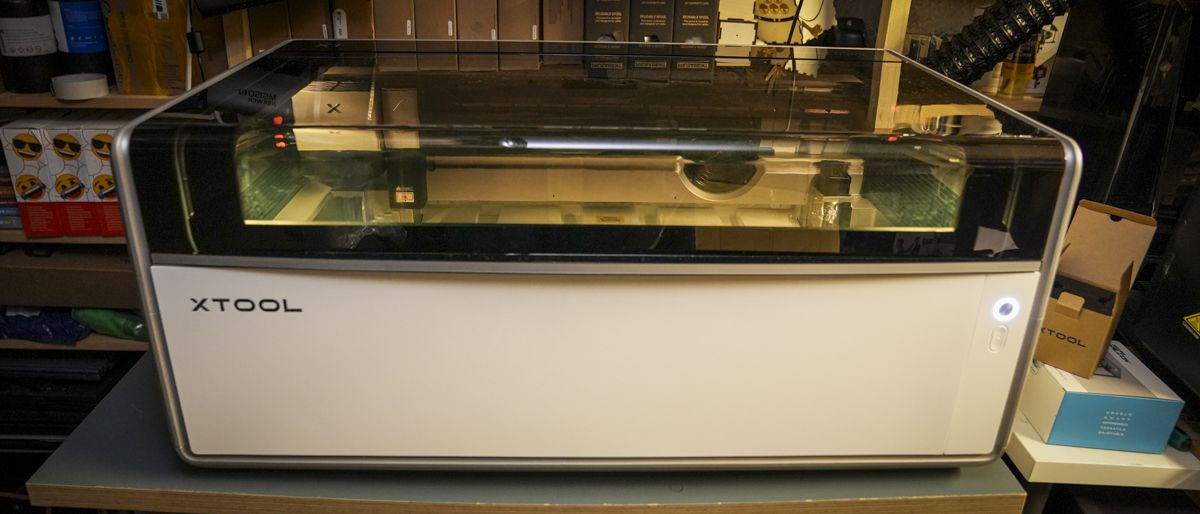
Rank 101The xTool X1 might initially look like another large, enclosed laser engraver, but it wasn't long into my months-long test of the X1, to realise it's something far more ambitious. Essentially, xTool has brought years of laser engraving development together into a single, expandable manufacturing platform, making the X1 one of the most versatile machines I’ve ever reviewed. This is not the first machine that I’ve looked at recently to do the modular laser approach, with the superb Creality Falcon T1 doing something similar on a far smaller scale.At the X1’s heart is a 55W CO₂ laser, similar to that seen in the excellent Bambu Lab R1 although now the larger X1 has arrived at the same price and with far more potential it will be interesting to see how the R1 fares. Once again, the 55W CO₂ laser proves to be a powerful option for cutting and engraving wood, acrylic, and a wide variety of other materials. On its own, this one laser option would already make the X1 a superb option for anyone looking for a professional laser cutter. But then again, xTool already has the xTool P2. To differentiate this as something new, xTool has thrown all their technologies at the design and added an optional 20W diode galvo module, which sits alongside the CO₂ head inside the machine, and this forms the foundation of what this machine then develops into.One of the key features to the dual head system is that rather than relying on a conventional moving-head laser for every cut, engrave, and score, the X1 can use the galvo system for intricate, high-speed engraving before switching to the CO₂ laser for cutting. What I like is that both are controlled through xTool Studio, and switching between the installed lasers just takes a selection option in the software.Throughout testing, this combination of laser options with backpack modules also highlighted the potential and the direction these laser machines are moving. Multiple laser options mean projects like wooden placemats and detailed pencil boxes, which would ordinarily take considerable time to engrave and cut, can be completed much faster, with the galvo speeding through the detail while the CO₂ handles the cutting. In one test, a placemat project that took the xTool S1 around two hours was completed on the X1 in approximately half an hour.One of the X1's big features is its support for additional laser-source modules mounted on the rear of the machine. For this review, I used the 5W UV and 60W MOPA modules, which enabled me to engrave glass and emboss brass coins. I also used the MOPA for its accuracy to create precision apertures in thin metal for pinhole cameras.Having previously used dedicated MOPA machines such as the xTool F2 Ultra, I was interested to see how a machine this size could perform similar metal engraving. The results were impressive, but as I found at every step of this review, there were a series of considerations due to the size, weight and complexity of the machine.That first consideration is size. The X1 arrived in a substantial crate, and as it was dropped off in the driveway, I had to call on assistance from a neighbour to lift and manoeuvre it into position. Although the main machine can sit on a conventional workshop bench, the additional modules, extraction systems and accessories quickly highlighted that the space I had allocated was about half of what it should have been.(Image credit: Alastair Jennings)The second point to make is the modular system. While the additional laser sources proved excellent, swapping them isn't quick, unlike some of the small multi-laser modular systems I have looked at recently. With the X1 positioned against a wall, accessing the rear of the machine, changing the hardware, and recalibrating could take about an hour. Some of this was down to the restricted space in my workshop, but the swap of modules required the recalibration of the lasers, it’s worth considering if you intend to switch between different laser technologies regularly.Price is another consideration although I'm actually surprised how cheap it is on balance. The base machine is listed at $3,699 / £2554, but adding the diode laser, specialist modules and accessories can take the complete system well beyond $10,000, depending on configuration. Even so, there’s no getting away from how capable this machine is, and if you were looking for the equivalent in separate machines, say the P2 and F2 Ultra, you’d be looking at much the same costs. For general cutting, detailed engraving and small-batch production, the X1 is one of the most refined laser engravers I’ve used.If you have an established workshop or small business handling a wide range of materials, the X1 offers huge potential. Just make sure you have the space, budget and patience to make the most of it.xTool X1: Price & availabilityThe xTool X1 starts at $3,699 / £2,553 and includes the 55W CO₂ laser. The base price is in line with other machines that I have looked at recently. It's worth knowing that the costs rise quickly with optional modules. The 20W diode galvo at $899 / approx. £674 is an optional, but essential upgrade, as it first enables faster engraving but is also needed to support the installation of the additional UV, fibre and MOPA lasers.A fully equipped system comes in at just under $10,000 if you buy the components separately as upgrades, however, the bundle offer prices bring the cost right down. The X1’s integrated workflow, versatility and all-in-one design do keep things neat. You can find out more at xTool. X1 Single CO2 (55W CO2): $3,399 / £2,554X1 CO2 + Diode Galvo (55W CO2 + 20W Diode Galvo Module): $3,999 / £3,005X1 CO2 + Diode Galvo + Fiber (Includes 30W Fiber Laser Source): $5,799 / £4,358X1 CO2 + Diode Galvo + UV (Includes 5W UV Laser Source): $6,499 / £4,884X1 CO2 + Diode Galvo + MOPA (Includes 60W MOPA Laser Source): $6,679 / £5,019xTool X1: DesignSpecsMachine type: Modular laser cutting and engraving platformPrimary laser: 55W CO₂, 10,600nmOptional lasers: 20W diode galvo, 5W UV, 30W fibre, 60W MOPALaser technologies: Hybrid Motion and Laser SwapWorking area: 615 × 320 mm x 150 maximumDimensions: Weight: Camera and focusing: Dual cameras with image stitching, automatic focusing and height-adjustable bedConnectivity: USB and Wi-FiSoftware: xTool StudioThere’s nothing particularly small or understated about the xTool X1. In fact, the first indication of what I was dealing with came when the machine arrived in a substantial wooden crate. I can usually handle these large machines with the help of a sack trolley and boxes. However, this time I called on the help of a neighbor. It’s not quite the size of the P3, but you will still need two people to lift the X1 free of its packaging and to get it into position in the workshop. By the time we stripped away the protective materials and set it onto the work surface, it was obvious this wasn’t a typical desktop laser engraver.The machine itself follows the same design direction as xTool’s recent P2S and P3 models, with a fully enclosed chassis and a level of refinement that feels far removed from the open-frame laser engravers that dominated the enthusiast market only a few years ago. When it comes to the size, it measures 1000×580×420 mm.Having tested numerous xTool machines, I’ve consistently been impressed by the company’s build quality. While xTool and GlowForge used to be the two major players in this part of the market, rivals such as Bambu Lab, LaserPecker, and WeCreat have recently upped the game as well.Everything from the large hinged lid to the internal processing bed feels solid and is exactly as I’d want in the workshop. The lid opens easily and is supported by pneumatic arms; on some machines of this size that I’ve looked at in the past, this can be a weak point, but here it all feels good and solid.Compared with other machines of this type and size, the height of the machine is considerably taller; this is due to the adjustable bed inside that rises and lowers to position materials correctly beneath the laser. This is a far more sophisticated setup than the fixed-height beds on many smaller machines that require risers for larger objects. On the front of the machine, there are a couple of buttons that enable you to raise and lower the bed manually if needed.Testing showed the bed adjustment was essentially fully automated, with the software handling most positioning. The work area is big, with a maximum of 615 × 320 mm, and offers plenty of room to lay out multiple parts, which is especially useful for small batches of products such as placemats. What I quickly realised is that depending on the laser and type of work you’re doing, those work area dimensions change. For instance, with the CO2 laser the max height of anything placed into the machine is 150mm; however, with the other lasers that reduces to 140mm. Essentially, as you lay out your designs and select the lasers, the on-screen layout changes so visually that from the outset you know exactly where you are. Inside, the materials are supported on the supplied slats, though as with other manufacturers, I would have liked a few more. I also had the optional honeycomb panel, which, as ever, became my preferred choice for almost everything I processed. A honeycomb just provides a decent surface for supporting materials and makes it easier to remove completed work, and while small pieces of debris from the cuts will still fall through to the base, there’s less chance of scorching of cut pieces falling and accidentally getting re-lasered.Unfortunately, one surprise was that there isn’t a simple removable waste tray at the base, so cleaning out smaller pieces requires a little more effort. I have a handheld Dyson for this exact job, and with the depth and space, it’s easy enough to get that into cleanup quickly after a few cuts. In this review, alongside the 55W CO2, I have also installed the 20W diode galvo module. This sits alongside the CO₂ laser inside the main enclosure and takes a couple of minutes to fit; once installed, it can stay as a permanent part of the machine. After installation, the rest of the setup is completed in xTool Studio.The software walks you through the calibration process, although some manual adjustment is needed to ensure that the laser paths are correctly aligned. I’ve encountered this with previous xTool machines, including the P2 and P3, and while it can take a little time to understand, the process is reasonably straightforward once you’ve done it a few times.My first test didn’t produce the result I expected because the alignment wasn’t quite right, mainly due to me rushing part of the process. After repeating the calibration more carefully, the results vastly improved, and once everything was configured, the two installed laser systems are remarkably easy to use.To switch between the two in the xTool Studio software, you simply assign the right laser to the right operation, and the machine handles the transition. There’s no need to remove one laser head and install another manually as you would have had to do with multi-laser machines in the past.For everyday cutting and engraving, this combination of lasers works incredibly well and vastly speeds up the process of engraving and cutting, which is the bulk of what I personally do with these machines. However, these two lasers are just the start of the story, and things do become a little more complicated when I started to install and use the rear-mounted laser-source modules.xTool supplied the 5W UV and 60W MOPA modules; these are relatively compact, just larger than a shoebox and are solidly built. Before use, they need to be installed into the back of the X1, which takes time, especially when I needed two people to move the machine into the initial position. Essentially, I should have left a little more space to access the rear.Installation of the modules involves removing covers, connecting power and communication cables, securing the module and checking the optical path. Depending on the configuration, you’ll also need to install the appropriate optics before calibrating the system.I installed the combined UV/Fiber/MOPA field lens, which supports the different laser sources, and found that straightforward, it essentially just screwed in. The more involved part was mounting the modules and completing the optical alignment. Initially, I was probably a little too enthusiastic with the manual adjustments, but thankfully xTool provide a small alignment target and tape which makes the entire process relatively easy. Once I realised that small adjustments were all that was needed, the process became much easier.The software guides you through calibration using the supplied cards, and once the source has been registered, the machine recognises it automatically. My main issue here was the physical access to the back of the machine due to space.My workshop already has several 3D printers, laser engravers, and other equipment, so I’d originally positioned the X1 against a wall on a fixed workbench. Every time I wanted to change the rear-mounted module, I needed to move other equipment, pull out the workbench and get behind the machine. Given the X1’s size and weight, I didn’t want to attempt this alone.As a result, what might eventually become a 15 or 20-minute module change took me closer to an hour, including moving the machine, changing the source and checking calibration, the calibration is the part that takes the time. This issue would explain why xTool also provided the optional mobile work stand, which is where this machine will be moved to once I have had a bit of a reorganisation of the space.Being able to wheel the machine away from the wall would make installation, maintenance and module changes substantially easier. I’d also recommend planning considerably more space than the official machine footprint suggests. In my workshop, allowing roughly half a machine depth more provided the clearance needed to work comfortably behind it, mainly due to the length of the tool you need to use to screw in the bolts through each of the modules.As I got into using the machine, a few of the safety design features are also worth noting. First, as ever, the machine came with the Air extraction unit and, in addition, the fire safety 2 unit, which was attached, but again space was limited, so it sat on a lower shelf behind the machine.The X1 is serious workshop equipment, though far nicer-looking than the machines from a few years ago. Its size and weight are balanced by its features, and after a month of use, I highly recommend the optional workbench, which, while not essential, it will ensure you can make full use of this machine's potential. (Image credit: Alastair Jennings)xTool X1: FeaturesThe xTool X1 is unusual because many of its headline features aren’t immediately obvious. At its core, it’s a powerful 55w CO₂ laser cutter, but its modular design means that it has far more potential, and that potential can only be fully unlocked with the investment in the other modules and accessories, of which there are quite a few. In total, the X1 supports five laser technologies, with the 55w CO2 being the only one that is provided wth the base machine. The 55W CO₂ laser can be used for cutting and engraving materials such as wood, acrylic, leather, cardboard and fabric.Alongside the CO₂ laser, there’s the 20W diode galvo laser, which adds high-speed engraving and surface marking, particularly on wood and many other compatible materials. This module sits inside the machine alongside the CO₂ and is quick to fit; it’s also essential if you want to use any of the other three backpack laser modules. These other models include the 5W UV laser, which can be used for engraving on glass, crystal and other delicate materials. Then there’s the 30W fibre and 60W MOPA options, which enable you to mark and engrave into metal. The MOPA adds the ability to use colour effects and deep engraving and is similar to the fibre option, but is more expensive. In this review, I’ve been supplied with four of the five available laser technologies: CO₂, diode, UV, and MOPA.As I started the testing, the instant highlight of the features was the Hybrid Motion, as this is the one feature alongside the dual mount lasers that will make a noticeable difference to everyday project work. Essentially, what this looks like with the lasers is that alongside the traditional gantry-based laser toolheads that move physically through the X and Y across the material, you also have the Galvo, which uses rapidly moving mirrors to direct the beam across the surface.This means that for larger designs, Hybrid Motion moves the galvo system between regions, enabling detailed engraving over a much wider area than a conventional fixed galvo arrangement, as I tested in the F2 Ultra. When combined, you not only cover a far larger area, but the Glavo focuses on detailed engraving while the CO₂ does the cutting.The dual tool head laser system inside is just the start of the multi-laser set, and a Laser Swap system is used to enable different styles of laser to be fitted for different projects and materials. These Laser Swap modules fit to the back with the UV, Fibre and MOPA options.The idea here is that instead of buying additional machines, you just buy the module and fit it, cutting down on the space needed and ideally cost. Although looking at the cost of the modules, they’re almost as much as the dedicated machines. The process of swapping the modules isn’t tool-free, and it requires access to the rear of the machine, alongside physical hardware changes and calibration checks. I personally think that this is a great feature. However, I would have liked to see a faster change system. In this review, for instance, I swapped the modules multiple times, and it was a hassle. But then most people will inevitably settle on their laser selection rather than approaching the machine in the way that I have in this review. Some of the other features that really impressed during use were the close-up cameras that just help position artwork against materials, with the image appearing in the XTool software. Compared with the laser outline that we used for the full image, this is such an improvement; however, you can still click the framing preview if you prefer that way of working. The camera system is really quite advanced, and you have the option through the xTool Studio software to change from capturing one wide-angle image, to capturing multiple sections of the workspace which are then stitched together, which helps with the accuracy of the positioning. Although the software documentation describes automatic image capture when closing the lid, I generally triggered the capture manually during testing. Image quality from the cameras was excellent overall, although some reflective materials and darker areas could still make positioning slightly more difficult; a boost in the workshop's lighting also helped with these previews. Another of the big features that really stood out through the use of the machine was the automated bed adjustment. Rather than requiring constant manual focusing, the machine measures the material and adjusts the bed height as needed. Through the test, I added a range of material thicknesses and found the process just worked; compared with the often convoluted focusing process of some other machines and the physical effort of adding a riser base, this system is just simple. Even with slightly irregular or curved materials, the positioning system generally handled setup well, and I didn’t need to override the measurements manually.(Image credit: Alastair Jennings)Alongside the core accessories and in line with the xTools other machines, the X1 supports a wide range of accessories, including an automatic conveyor feeder, RA3 rotary attachment, honeycomb panel, mobile work stand, filtration, and fire safety equipment.Throughout testing, I used xTool’s extraction and filtration setup, which is a little on the noisy side but does the job. For jobs that produce more smoke, particularly when cutting wood, I increased the extraction setting to keep the working chamber clear.The optional Fire Safety Set Pro adds another level of protection. Installation was more involved than I’d expected, requiring the CO₂ cylinder, tubing and communication connections to be fitted before enabling the system in the software. Once configured, however, it didn’t actually require me to do anything else other than find somewhere for it to sit.As a final point on the features, and an essential for any professional workshop, is that the machine also has an emergency stop button for quickly shutting down if needed.xTool X1: PerformanceAfter a month testing the xTool X1, what I realised was, that the way that I work with laser engravers normally would change with this dual laser setup. The mix of laser technologies in one machine isn’t just convenient; it means that you can select the laser technology that is best suited for the job, and often two lasers will enable a better and faster result. Most notably for me, that was the combination of the 55W CO₂ and 20W diode galvo lasers.For most of my work, producing models, wooden components, boxes, camera accessories, and other workshop projects, these two laser systems provide an ideal combination.The X1’s 55W CO₂ laser is excellent for all-round cutting, while the 20 diode galvo is better for detail. To start the test, I ran through the supplied test projects before moving on to my own designs, including wooden boxes, placemats and model-making components.Most of my work involved 3mm basswood plywood, although I also tested thicker materials up to 10mm. Across these tests, the CO₂ laser produced exceptionally clean cuts, with minimal scorching and very little need for additional finishing. The air-assist system kept the cutting path clear, while the extraction system removed smoke.One of the most useful tests involved creating a series of 3mm plywood boxes. The accuracy was excellent, with the individual pieces fitting together cleanly without sanding or manual adjustment to the size. I could simply assemble and glue the components.This accuracy and repeatability is something that is so important when producing models or small-batch products, where even small dimensional errors create extra work; even sanding takes time when it comes to getting the right fit. As this is a pre-production model, the usually excellent xTool Studio seemed to take most laser options down to 1, so initial models showed some scorching, howeverI also tested acrylic sheets up to 10mm thick, including cutting a 3D-scanning calibration cube in half. Again, the results were impressive, with clean cuts and accurate positioning.The machine also handled lighter materials such as paper, card, fabric, and leather without difficulty, though these need careful securing to prevent movement from airflow of the air assist and extractor.For general cutting work, along the lines of what I use laser cutters for, the X1 matched the abilities that I have seen from other recent releases; the one point that made this slightly more exciting is that added height, which gives out-of-the-box flexibility without the need for a riser base. The CO₂ laser provides the X1’s cutting power; the addition of the 20W diode galvo by its side for detailed engraving and speed is definitely an interesting development in the technology. Essentially, rather than watching a conventional laser head mechanically move across every section of an image, the galvo rapidly sweeps the beam over the surface, completing relatively intricate artwork in a fraction of the time.I tested it on wood, plywood, bamboo, acrylic, and coated metal samples, essentially everything in the samples box. Fine lettering was sharp and well-defined, intricate designs retained plenty of detail, and scorching was generally minimal, unless the piece that I was working on fell through the slats. Initially, I worried the edges of the engraving might lose definition, or designs wouldn't join up perfectly as the galvo system moved from one area to another, however the meeting of the design and the quality remained consistent.This, however, wasn’t quite the case at the outset, and initial testing showed a few issues, but after software updates and far more accurate calibration on my part, the joins between engraving regions became almost seamless.Photographic engraving onto wood was also impressive, although as with most laser engravers, image selection makes the biggest difference to the success.High-contrast photographs generally produced better results than flat, low-contrast images, and I used xTool Studio’s editing tools to adjust backgrounds and improve the final output.Personally, I still prefer the look of detailed illustrations, lettering and line-based graphics when engraved into wood rather than photo imagery.Taking a look at one of the main test projects highlights the workflow and speed. Normally, when creating a wooden box or placemat with decorative engraving, I’ll use a single laser head that handles both engraving and cutting.The problem is that detailed engraving can take considerably longer than cutting the outline. With the X1, I was able to assign the intricate engraving to the 20W galvo and the cutting operations to the 55W CO₂ laser.Once configured, the software handled the transition between the installed lasers without requiring me to reposition the material or swap heads; this made a dramatic difference to processing time.For example, I created a series of wooden placemats with detailed artwork. A comparable project on the xTool S1 took around two hours, while the X1 completed it in half an hour.That’s an enormous improvement in speed, particularly for small businesses producing multiple products. The same was true when creating detailed pencil boxes.Projects that would normally take 20 to 30 minutes could be completed in minutes, with the galvo handling the engraving before the CO₂ laser cut the components.Having both lasers permanently installed makes everyday projects straightforward, and once you’ve experienced the speed of the combined workflow, returning to a conventional single-head engraver feels a little archaic.Hybrid Motion also changes what’s practical for larger designs. In the past, I’ve avoided elaborate engraving projects at scale because the processing time was too long and I’m hopeless at lining up materials when sheets need to be matched.With the X1, I was able to start thinking about this type of project, as the speed of the galvo would vastly reduce the time involved, especially when used alongside the conveyor accessory.After carrying out the majority of the review using the 55W CO₂ and 20W diode galvo lasers, I then moved on to the 5w UV and 60W MOPA.The 5W UV module opens up a very different range of possibilities, particularly for glass, crystal and delicate materials. I ran a few tests on the glass samples, along with experiments on plastic components produced on a 3D printer.The ability to add fine surface texture to printed plastic objects is interesting, as it creates new opportunities for finishing functional parts and decorative products. I’ll admit I’m still on the experimental side of this, but will update in the near future. The glass side of the engraving process is also something that I have struggled with in the past, and again, I wasn’t entirely successful in achieving the results I wanted.Based on the partial results, I suspect this was more about my initial setup and approach than a fundamental limitation of the machine. Still, it’s an area that needs further investigation.The UV module adds even more felxibility, although I’ll explore its more advanced functions in a separate addition to th ereview once I’ve reorganised my workshop to give the interchangeable modules better access.Of the two rear-mounted laser modules, I found the 60W MOPA the most interesting. I’ve previously used MOPA machines, including the xTool F2 Ultra, so I’m familiar with their capabilities for metal engraving, embossing and colour marking.What makes the X1 different is the ability to use similar technology within a much larger enclosed working area. I tested the MOPA on brass, stainless steel and aluminium, producing detailed markings and experimenting with relief engraving.One of the most interesting applications involved creating apertures in thin brass sheet for pinhole cameras. I produced holes ranging from approximately 0.25mm to 0.5mm with exceptionally good results.This is the sort of precision work I’ve previously done with dedicated MOPA systems, and it was great to see the X1 handle it so well, as it’s such a large machine I did wonder if it could handle the intricate work that I have used the F2 Ultra for.I also experimented with engraving the aperture dimensions into the metal and cutting individual pieces from the sheet, although these more complicated processes still need further refinement.Another highlight was engraving brass coins. While the F2 Ultra can do similar work, the X1’s larger processing area let me arrange several coins for engraving in one batch. Again, this is not a quick process; think days rather than hours.Colour marking is another capability of the MOPA laser, though I’ve consistently found it requires considerable experimentation to get reliable results. The X1 was no exception.I could create colour effects, but producing exactly the result I wanted across more complicated designs wasn’t always straightforward. The take-home from the modules is that they expand the use of the machine, but those more specialist lasers require practice and experience to get the results that you would expect. The other major part of the machine is the xTool Studio software. I’ve used the software across several generations of machines, and it's improved substantially over time and has really become the benchmark for all others to follow.That said if you're new to the software then working out what type of cut and what laser is being used on what path can still be a little confusing, even with the colour coding. A text summery would be a nice quick reference before cutting. (Image credit: Alastair Jennings)The latest workflow is much the same as I looked at with the superb xTool M2 recently, and once you’ve completed calibration and connected the machine, preparing a project is straightforward.Import or create the design, select the material, assign the appropriate processing operation and laser source, then send the job to the machine; after that, you generally just press the start button and wait.As ever, the xTool Studio software offers a huge range of material presets, and unusually the material presets for the CO2 and 20w diode were way off. Especially the power and air assist, which the software set to 1 for both, easy to rectify, but possibly something to do with the pre-release software as ususally the material presets from xTool are spot on.Adding custom materials and modifying processing parameters is also relatively straightforward once you’re familiar with the interface.USB and Wi-Fi connectivity were both simple to set up and reliable throughout testing. Despite using pre-release software, I didn’t experience any major crashes or application-caused job failures other than a little tweaking of presets, and it all seemed pretty final, really a reflection of what I have experienced before with the addition of being able to select the laser sources.xTool X1: Final verdictAfter a month of testing, the xTool X1 is one of the most versatile laser engravers I’ve ever used, but it isn’t without its faults, although those are mostly overcome by being organised and having plenty of space. Essentially, the base machine is an impressive 55W CO₂ laser engraver and cutter, and once you invest in the 20W diode galvo laser, you have one of the most competent machines for any small to medium-sized business on the market. The point is that with these two lasers you have the base machine that you can then build on depending on what you need to do. Through the test, I found that that simple combination was all I really needed, and the fact that I could then attach the UV and MOPA for more specialised work all added to the versatility. However, with the 55W CO₂ and 20W diode galvo lasers installed, the machine was able to sit on the workbench without issue; it’s large but containable. (Image credit: Alastair Jennings)As soon as I installed the MOPA, I not only needed the additional space to mount the laser module, but it also added to the depth of the machine and for me, having the F2 for the more intricate work still made sense. While I could do the work on the X1, it didn’t necessarily mean that I would. That aside, the pure build quality, size of the work area and depth, along with all the upgrade options, all make this one of the most substantial and complete laser engravers on the market. It is expensive, but it’s been designed in such a way that you can upgrade as and when you need. Should you buy the xTool X1?Value:The base 55W CO₂ machine is well priced, specialist laser modules and accessories raise the total cost5Design:Exceptional build quality for a machine of this size. Rear-mounted module changes could be easier.4.5FeaturesSupport for five laser technologies, the new Hybrid Motion system offer one of the most feature packed lasers on the market5PerformanceThe combination of galvo engraving and CO₂ cutting give it an edge even before adding the other laser options5TotalThe X1 is the most capable laser platforms I’ve reviewed, even considering its size and modular upgrade costs it's exceptionally well balanced.5Buy it if...You need versatilityThe X1 combines cutting, engraving and specialist material processing within one platform, making it ideal for workshops handling varied projects.You produce productsIts powerful CO₂ laser and fast galvo engraving system can dramatically reduce production times for personalised products and small-batch manufacturing.View DealDon't buy it if...You lack spaceThe substantial machine, rear-mounted laser modules and optional accessories require significantly more workshop room than the main unit’s dimensions suggest.You need affordabilityAlthough the base machine offers good value, specialist laser modules and accessories can quickly push up the total.View DealFor more crafting tech, I've tested and reviewed all the best 3D printers and the best laser engravers.
-

Picture from cdn.mos.cms.futurecdn.net
Rank 102Nintendo officially increased the price of its Switch 2 console in September from AU$699.95 to AU$769.95 due to “various market conditions”, no doubt caused by increasing component costs driven by AI-driven shortages.If you missed out before the price increased, and now feel the new price has put you off from buying a Switch 2, I don’t blame you — but if you also happen to be in the market for a new smartphone, then have I found the deal for you.For a limited time, JB Hi-Fi is throwing in a free Nintendo Switch 2 with every purchase of either a Google Pixel 11 Pro or Pro XL handset, a saving of AU$769.95!Pixel 11 Pro (256GB): $1849Google Pixel 11 Pro XL (256GB): AU$2,099 at JB Hi-FiJB Hi-Fi is adding a bonus Nintendo Switch 2 console when you buy either a Google Pixel 11 Pro or Pro XL handset, starting today, October 29, and running until November 9. You can save even more by trading in your old phone for a JB Hi-Fi gift card that goes toward your entire purchase, and you can get a quote here. Also included are a 3-month YouTube Premium subscription and six months of Google AI Pro. In case you need to return either phone, you'll need to also return the Switch 2 console.View DealI’ve not seen many discounts on the Switch 2 since its September price hike, and I’ve certainly never seen one being given away for free. That fact alone should give this deal plenty of appeal, but when you consider the recent game releases for the console, there’s plenty more to get excited about. Yes, with a slew of first-party and exclusive releases from this year like Star Fox, Donkey Kong Bonanza, Pokémon Pokopia and more, as well as upcoming titles like Metroid Ravenous, Pokémon Winds and Waves and The Legend of Zelda: Ocarina of Time remake, you’re not exactly short of options for engaging gaming potential.Our Nintendo Switch 2 review gave the console 4.5 stars, confidently claiming it to be a massive upgrade over its predecessor. The headline improvements include support for 4K and 1440p resolutions (vs up to 1080p), a 120Hz refresh rate (up from 60Hz) and overall performance improvements with an Nvidia Tegra T239 processor, 12GB of RAM (vs 4GB) and starting storage of 256GB.And let’s not take the attention away from the Pixel phones included in this offer. The Google Pixel 11 Pro and Pixel 11 Pro XL each received 4 out of five stars in their respective reviews, with both delivering battery improvements and better AI performance from the new Tensor G6 chipset, improved cameras, brighter screens and lighter and slimmer chassis. The Pro XL has also earned a spot among the best phones you can buy in Australia.Securing either of these top-performing devices on their own is always going to be a wise move. When you get one of them included for free, then it practically becomes a no-brainer.
-

Picture from cdn.mos.cms.futurecdn.net
Rank 103An Israeli company is alleged to have launched a spy campaign using malicious ads targeting Starlink usersThe ads do not have to be clicked on, just served to the user to begin collecting dataThe ads were served to Starlink users across more than 100 countriesAn alleged Israeli spy firm has been spotted snooping on Starlink users on an industrial scale by a digital defense firm.These are the conclusions of research by Trend Micro’s AI cybersecurity unit TrendAI, whose researchers analyzed troves of digital advertising data. The research found that Israeli company Discover-Tech was the number one bidder on Starlink advertising traffic.The surveillance was targeted at Starlink units across more than 100 countries - including regions with Starlink restrictions - and used malicious adverts to harvest user data across browsers and applications.Starlink users surveilled by adsInitially, TrendAI did not directly name Discover-Tech as the perpetrator of the alleged surveillance campaign, instead referring to them as “Shadow-Earth-79”. Discover-Tech is the same firm that was alleged to have targeted Al Jazeera journalists with malicious adverts earlier this month, as exposed by Citizen Lab.As Starlink terminals route traffic through a network of satellites in orbit, they can circumvent local internet restrictions and are a useful way to stay connected during blackouts - such as those experienced by Ukraine - or government enforced internet shutdowns - such as those that affected Iran at the start of 2026.But this circumvention also makes them lucrative targets for governments or authorities looking to track Starlink units on their turf.As Starlink only provides the connection to the internet, adverts can still be served on webpages, and this is the critical piece of this puzzle. As Cofiant noted in their own report, Discover-Tech abused the ad bidding process to serve adverts that harvest critical data about the users that see them. Some adverts can collect data as the user trawls the internet, creating a de-anonymized profile that can set them up for further surveillance.The advert doesn’t even have to be clicked on. As long as it is served to the user, it can begin tracking.The TrendAI researchers noted an “obvious skew” towards bidding on advertising space that would target Starlink users, with Discover-Tech being the number one ad-buyer across Syria, Libya, Yemen and South Sudan despite the fact that “the demand for legitimate Western advertising in sanctioned or active-conflict states is effectively zero.”Google, Comcast, and multiple other companies have since removed Discover-Tech from their ad platforms.Via Reuters
-

Picture from cdn.mos.cms.futurecdn.net
Rank 104FADU's File-Semantic SSD runs path lookup, permission checks, and file-to-flash mapping in firmware instead of on the hostNFSv3 requests ride inside standard NVMe commands, so GPUs, DPUs, and remote clients can reach files without requiring a host file systemIts headline 460,000 ops/s result came from a PCIe 5.0 host, with PCIe 6.0 results promised by Q1 2027South Korean controller designer FADU has shown off an SSD that understands files rather than just blocks, betting that the next bottleneck in AI storage is not raw bandwidth but the CPU time spent working out where data lives.The File-Semantic SSD (FS-SSD), unveiled at the OCP Global Summit, moves file lookup, access checks and file-to-address translation into firmware on FADU's sixth-generation controller.FADU's whitepaper promises GPUs, DPUs and network cards a route to their files with "no host filesystem, no block layer, and no storage-server CPU in the path." Partner samples are not expected until Q3 2027.Not the first approach to the 'CPU problem'FADU is no newcomer to data center flash. Its Gen5 controller sits in the SN861, which Western Digital launched and SanDisk now sells; last year, the company said it had signed controller supply deals with two of the four hyperscalers, weeks after revealing its Sierra PCIe 6.0 controller.Its pitch here, however, isn't entirely new, with the recognition coming from a not-so-surprising front: Nvidia. Nvidia has been doing the same from the other end of the PCIe bus. GPUDirect Storage removed the CPU from the data path years ago, letting drives move data straight into GPU memory, but host software still decides what to fetch and issues every request.Its decision to open source cuFile and shift that control path onto the GPU, with SCADA attacks adding accelerator-side overhead even as FADU attacks it from the drive end of the equation.FADU says its own measurements show the host file system and block layer consuming about 30% of CPU cycles in a GPUDirect Storage random-read workload, a vendor figure that has not been independently reproduced. It also argues that existing bypass schemes only get the CPU out of the way by abandoning files altogether.How does this work?Rather than invent a new language for its drive, FADU borrowed an old one. NFS, short for Network File System, has let computers open files stored on other machines for decades. FS-SSD tucks NFS requests, such as looking up a file by name or reading part of it, inside the standard NVMe commands that SSDs already use.Those commands can come from inside the same server or, using a networked version of NVMe called NVMe over Fabrics (NVMe-oF), from other machines in the data center. FADU chose NFS version 3 for three reasons: it is small, with just 21 operations; it works with any operating system; and it is stateless, meaning each request carries everything the drive needs to answer it, so the drive never has to remember who has which file open.FADU has also merged two lookups that normally happen separately. On a regular system, the computer’s file system first works out which numbered block holds each piece of a file, and the SSD’s own internal software, called the flash translation layer, then works out where that block physically sits on the flash chips.FS-SSD does both jobs with a single file layer based on F2FS, a Linux file system designed for flash memory, laid out to match how the chips are physically organized. One map then takes the drive straight from a file to the spot where it is stored, and that map is much smaller. A typical SSD carries about 1GB of DRAM for every terabyte of flash and fills almost all of it with its block map. FS-SSD uses the same amount, but FADU says about 95% of it is left free to keep details of frequently used files close at hand.That layout also makes cleanup simpler. Flash memory cannot overwrite old data in place, so drives regularly move the data they still need elsewhere and wipe whole blocks clean, a chore known as garbage collection.When F2FS runs on an ordinary computer, the file system and the SSD each do their own version of this cleanup, and the two end up multiplying each other’s work. FS-SSD runs just one, and FADU says that cuts write amplification by 63% compared with F2FS on a regular host. Lower write amplification means less wear on the flash, but the 63% figure comes from simulated tests on NVMeVirt, software from Seoul National University that imitates an SSD, rather than from a real drive.In FADU’s own preliminary test, remote file throughput held at about 460,000 ops/s as the server was cut from 16 cores to one, while a standard Linux NFS server fell from roughly 150,000 ops/s to 40,000.The testing has its limits, though. FADU’s Gen6 drive sat in a PCIe 5.0 host, so every sequential read result topped out near 14.1GB/s, roughly the Gen5 link limit, even as Gen6 drives such as Micron’s 9650, rated for 28GB/s reads, are already in mass production.Both the client and server ran Intel’s Core i5-13600K desktop chip with 128GB of DDR5 and a 100Gb ConnectX-6 NIC. That processor has 14 physical cores and 20 threads, so FADU’s test likely counted threads rather than physical cores.The world’s first file-semantic SSD is an idea that isn't entirely newFADU calls FS-SSD the world’s first file-semantic SSD, and it may well be the first hardware demonstration of its kind, but the idea isn’t new. The DevFS research paper, presented in 2018, described a direct-access file system “embedded completely within a storage device,” though the authors tested it only as an emulated prototype.NVM Express has standardized a key-value command set that addresses data by key rather than block address, and SK hynix has developed a key-value computational storage drive with Los Alamos National Laboratory. Unlike the key-value command set, FS-SSD has no standard behind it yet. FADU has not submitted a file-semantic command set to NVM Express or OCP Storage, so for now every client needs FADU’s own software.FADU’s longer-term goal is a flash enclosure with nothing in front of it but a PCIe switch and a DPU (a network card with its own processors) or NIC handling NVMe-oF in hardware, with a reference design built on Xsight Labs’ 800G E1 DPU due by the end of 2027.FADU’s model puts that at about 42% lower power and 57% lower cost per 16-drive system than a conventional storage server, though those are projections rather than measurements. DPU-fronted flash boxes already exist, such as Supermicro’s BlueField-powered JBOF, but those still run the storage software on the DPU’s Arm cores. FADU wants the drives themselves to serve the files.FADU chief executive Nam Yi-hyun said the company will use FS-SSD as “a springboard to become a leading company in AI storage solutions,” according to The Herald Business. The bottleneck FADU is chasing is real, and building on NFSv3 rather than inventing a new protocol gives it a credible starting point.For now, though, the evidence amounts to a Gen5 test bench, an emulated write-amplification figure, and modeled savings, with OEM and ODM talks still early. The Gen6-host results FADU expects by Q1 2027 will be the first real sign of whether the drive can do the most important part: handling the CPU’s job at full speed.
-

Picture from ichef.bbci.co.uk
Rank 105 -
Picture from cdn.mos.cms.futurecdn.net
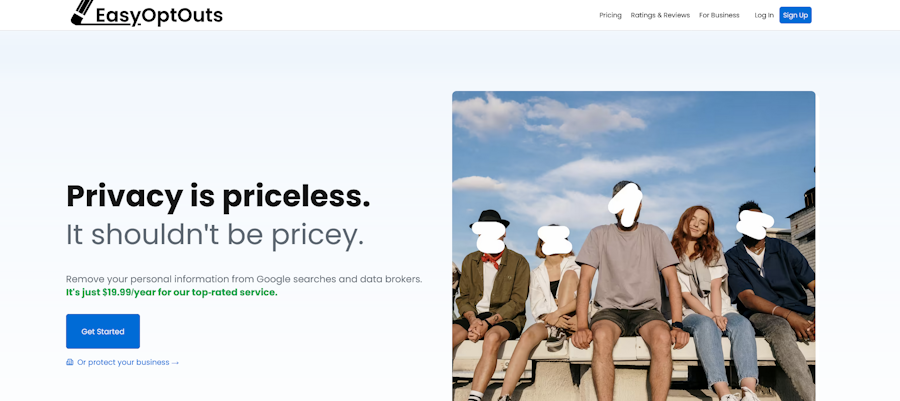
Rank 106Protecting your personal information online is as challenging as ever. With many platforms requiring signups to access information, you’re inadvertently going to disclose personal information online, and this information is often made public. Whatever is made public on the internet stays there for a long time, and you’re likely not comfortable with this. What’s a possible solution? A data removal service like EasyOptOuts.Data removal platforms scan people-finder/data broker sites for your data, then send automated deletion requests on your behalf. When processed, your information gets deleted from the people-finder sites, enhancing online privacy. Data removal platforms also send manual removal requests, but EasyOptOuts doesn’t– it sends only automated requests.I extensively tested and reviewed EasyOptOuts to help you decide if it’s worth adopting as your personal data removal service. Read on to learn about its core features, pricing, setup, customer support, and other essential factors.EasyOptOuts: Plans and pricingEasyOptOuts has a simple pricing structure - you can check out the full details by clicking here. It costs $19.99 per year for personal use. There’s no monthly plan or tiered plans like most data removal platforms. It’s just one package that unlocks access to all features.(Image credit: EasyOptOuts )Businesses (with 10+ employees) can get a bulk subscription, but the price still amounts to $19.99 per year per user. The exception is for registered nonprofits, which get a 25% discount from EasyOptOuts. At $19.99 per year, or barely $1.80 per month, EasyOptOuts is much more affordable than its rivals. But, does this affordability make it a better option? Let’s explore more to find out.EasyOptOuts: SetupI found EasyOptOuts’ setup process very straightforward, or shall I say, easy. Entering the homepage and hitting the Sign Up button kickstarts the process. When signing up, you’ll provide your email address and other personal information like date of birth, home address, and phone numbers. You’re probably wondering, “I’m trying to guard my personal information online and yet need to provide all this information again to a data removal platform?” The answer is that whatever information you provide is what the data removal platform scans people-broker sites for. EasyOptOuts scans 200+ broker sites, which isn’t that many compared to competitors. However, EasyOptOuts doesn’t aim to be a mass-market data removal service. Rather, it focuses on U.S.-centric people-finder sites. Non-U.S. residents are better off with broader-focused data removal platforms.After inputting your personal information, EasyOptOuts runs a deep scan on its network of 200+ people-finder sites. The complete scan can take a long time, based on the volume of data found across the network. It could be a day, 2 days, 3 days, or even a week, so don’t fret if you don’t get the results within a short period. Once the scan completes, users receive an email alert and can begin monitoring the progress of the removal requests. I don’t like that EasyOptOuts sends only automated requests. Sometimes, automated requests aren’t enough to delete your information from people-finder sites, so manually drafted requests are needed to complete the process. However, I understand that automated-only requests are how EasyOptOuts can keep its price as low as $19.99 per year. If it had to employ experts to manually draft deletion requests, the price would be much higher.EasyOptOuts doesn’t just run the initial scan. It rescans its people-finder site network every four months, then sends another set of deletion requests if your personal information is discovered again. This rescan is important because some people-finder sites have a habit of reuploading information they were asked to delete. It ensures that your information stays off public view as long as your EasyOptOuts subscription is valid.Compared to most data removal platforms I’ve tested, setting up EasyOptOuts felt noticeably easier. Everything ran smoothly, from providing my personal information to the initial scan and monitoring the status of deletion requests from my dashboard.EasyOptOuts: Ease of useAbove, I’ve hinted at EasyOptOuts’ simple setup process and generally intuitive user experience. Like most data removal platforms, EasyOptOuts doesn’t have a native smartphone app, so you’ll access it from your browser. I think a PC is the best option over a mobile browser, given the volume of information you’ll have to input to get scanned. A mobile browser would be inconvenient for the initial setup, but suitable for monitoring the status of deletion requests. (Image credit: EasyOptOuts )EasyOptOuts: Security and privacyEasyOptOuts is a good addition to your online security toolkit, particularly for U.S. residents. It helps keep your information off those infamous people-finder sites like BeenVerified and PeopleLooker. These sites have built a business model of aggregating personal information from public sources and then offering access for a fee. Tools like EasyOptOuts send deletion requests to scrub your data off people-finder sites.However, on EasyOptOuts, you won’t find complementary security features like a VPN or password manager. It’s all about one thing – data removal – and does its job effectively. The drawback is the limited, U.S.-centric broker site coverage.EasyOptOuts: SupportEasyOptOuts provides decent support, although I think it could be better. There’s an official support page filled with detailed answers to frequently asked questions (FAQs). For new users, this FAQs section helps answer important questions, so that you’ll not have to contact support directly for routine issues.If you do need to contact the support team, there’s a dedicated email address for that. The support team is U.S.-based, so responses revolve around local working hours. I don’t like that there’s no telephone or live chat support, but given the low price charged by EasyOptOuts, it’s understandably difficult to maintain live support teams for users.EasyOptOuts: CompetitionEasyOptOuts has many competitors. Incogni and DeleteMe are the two notable names I’d like to highlight. I chose Incogni because it feels like a more robust version of EasyOptOuts. It covers 420+ data broker sites, including non-U.S. ones, and offers both automated and manual deletion requests. This compares to EasyOptOuts, which covers 200+ sites and only supports automated requests. However, EasyOptOuts is much more budget-friendly, costing just $19.99 per year, whereas Incogni’s pricing starts from $7.99 per month. DeleteMe provides much higher coverage, with 850+ sites, and supports manual deletion requests. I’ve tested it and can confidently say that you’ll get more data scrubbed with DeleteMe than EasyOptOuts. DeleteMe users also get complementary features like dark web monitoring and email masking.However, DeleteMe is priced like a premium service. Its plans average $129 per year, multiples of EasyOptOuts’ $19.99 per year.EasyOptOuts: Final verdictIf you’re a U.S. resident and need a budget-friendly tool for scrubbing your personal data off people-finder sites, EasyOptOuts is a good bet. For just $19.99 per year, much more affordable than competitors, you’ll get a reliable tool to scan people-finder sites and send deletion requests where your data is discovered. Setting up your account, running the initial scan, and monitoring further scans are easy to handle, thanks to EasyOptOuts’ intuitive interface.However, you should be aware of EasyOptOuts’ drawbacks, such as the limited people-finder site coverage, lack of manual deletion requests, and email-only support. Overall, it’s a reliable data removal platform.
-

Picture from www.engadget.com
Rank 107 -

Picture from cdn.mos.cms.futurecdn.net
Rank 108The next generation of official PS5 audio is here, as the new PlayStation Pulse PS5 headset goes up for pre-order very soon.PlayStation Pulse PS5 headset pre-orders1. US pre-order quick links2. UK pre-order quick linksThis new Pulse headset feels like the formal, official, and proper replacement for the Pulse 3D headset that launched with the console in 2020. That was a great headset with a lot going for it, but this next-generation model feels like an upgrade already, for one key reason: planar magnetic drivers. This means the audio on offer here is going to be excellent and, truthfully, far superior to that first Pulse 3D headset.It's got a sleek design and one that channels a little of Sony's Inzone headsets too, and it'll also feature PlayStation Link connectivity for lossless audio and native compatibility with the PlayStation Portal.It'll cost you $99.99 / £89.99, will be available in white or black, and pre-orders begin at 10am local time (ET for US folks).Just for clarity, this is for the 'regular' new Pulse headset that Sony revealed, not the new Pulse Edge, which is more premium. We're yet to hear more information on that high-end Pulse headset, such as price and pre-order date.Anyway, the new PS5 Pulse headset will be available for pre-order very soon, and below you'll find all the best links and most important info on the new PS5 accessory.US PlayStation Pulse PS5 headset pre-orders – quick links🅿️Check for stock at PS Direct🅿️🔆Check for stock at Walmart🔆📦Check for stock at Amazon📦🏷️Check for stock at Best Buy🏷️🎯Check for stock at Target🎯🎮Check for stock at GameStop🎮UK PlayStation Pulse PS5 headset pre-orders – quick links🅿️Check for stock at PlayStation🅿️📦Check for stock at Amazon UK📦🧸Check for stock at Smyths Toys🧸©️Check for stock at Currys©️🟥Check for stock at Argos🟥𝓥 Check for stock at Very 𝓥 🟡Check for stock at ShopTo🟡🎮Check for stock at The Game Collection🎮📱Check for stock at EE📱🛍️Check for stock at John Lewis🛍️(Image credit: Sony/PlayStation)Should you pre-order a PlayStation Pulse wireless headset for PS5?As I always say, broadly speaking, if you're willing and able to do so, placing a pre-order is the safest bet for securing your product.If you know you're pretty certain to be picking up the Pulse wireless headset, then placing a pre-order is the best way to ensure you'll get your item. Even items that aren't limited in stock in their lifetimes might have limited pre-order or launch stock, so to avoid any delays, placing a pre-order is the sure-fire way to know you're getting it.PlayStation Pulse wireless headset for PS5: cut to the chasePrice: $99.99 / £89.99Pre-order date: October 29, 2026; 10am ET / 10am local time in EuropeRelease date: November 19, 2026Design and features: The updated form factor is very 'round' in its style, with a lot of curves across the headset, while the ear cups will also rotate to allow the headset to lie flat on a surface for portability. Key features include planar magnetic drivers, PlayStation Link support, and mics with AI-enhanced noise rejection.
-

Picture from cdn.mos.cms.futurecdn.net
Rank 109Data center operators in the UK, Ireland, and Nordic countries are expected to lose 23% of their workforce to retirement in the next 10 years10% of the businesses asked expect over 40% of their employees to retireThe survey has raised the prospect of introducing apprenticeships and mentoring into the data center industryA survey of 300 “senior decision-makers” in the data center industry has found that a notable chunk of their workforce is expected to retire in the next 5 to 10 years.Research from Onnec has revealed that UK, Ireland, and Nordic data centers will need between 18 and 25% of their roles replacing due to retirement.With the data center industry expanding due to AI, the research has surfaced a huge concern: are data center operators prepared for a huge loss of experience and knowledge? Furthermore, will steps be taken within the industry to ensure knowledge is passed on as roles are replaced?Ageing workforceAt a time when vacant roles in specialized industries seem increasingly difficult to fill, Onnec’s research makes for particularly concerning reading. Region by region, across the UK, Ireland, and Nordic countries, around 6,340 workers, directly employed by data center companies, are set to retire between 2031 and 2036.In the UK, 18.74% of the workforce is expected to take retirement, representing 4,4554 roles according to Onnec. Irish operators foresee losing 24.43% of the workforce, equivalent to filling an additional 813 roles. In the Nordic region, 28% will probably retire from the industry, requiring 974 roles to be replaced.Workforce trainingThe biggest challenge facing data centers, then, isn’t from hardware and power, but from its ageing workforce. Losing almost 25% of the knowledge and experience is going to be difficult, which means the businesses running the data centers need to take action now. "Data centers run on people, not just power,” says Matt Salter, Global Head of Data Centres at Onnec. “Everyone's talking about GPUs and gigawatts, but somebody has to build and run all that capacity, and operators are already telling us they can't find the staff. Now they expect almost a quarter of their workforce to retire within a decade.""These are the engineers who've spent years learning how these environments work, the people behind every rack and every 2am callout. Lose them faster than you can replace them and there aren't enough hands to build what's planned quickly and safely.With knowledge, insights, and hands-on experience likely to spend the next 20 years traveling, fishing, or working through a Steam library, those organizations need to take action now. Salter has some suggestions: "You can't retrain a workforce overnight. The industry needs to invest in apprenticeships, mentoring and clear career paths now, so experienced engineers are training their successors years before they walk out the door."
-

Picture from www.engadget.com
Rank 110 -

Picture from cdn.mos.cms.futurecdn.net
Rank 111For Apple fans, the touchscreen MacBook Pro PROLED XDR tandem OLED display may be the gift that keeps on giving. Obviously, new integrated digitizing technology made the touchscreen possible, but the ultra-thinness of the display tech can also be credited with enabling the return of a beloved MacBook feature.The touchscreen MacBook Pro is the first MacBook in almost a decade to feature an illuminated Apple logo on the back. I've seen it in person, and it somehow looks like polished metal when closed, and then a glowing bright white when open.Apple bringing back the illuminated logo back is directly attributable to the PROLED XDR display. Each pixel in an OLED panel is emissive, which means there's no need for a backlight. Even after Apple made the laptop lid thinner, it still had some room left there — and it turns out there was enough room left to give the Apple logo its own backlight.As improbable as it seems, there's now a dedicated light for the logo, but not for the rest of the screen. And it still doesn't take up extra space (nor eat up measurable energy).Do it for the fans(Image credit: Lance Ulanoff / Future)Why did Apple do this? Well, Apple's not telling us, but it's clearly a nod to the fans. CEO John Ternus tried to tell us the glowing logo was returning in his tiny X tease that showed light shining on the logo, which was on a flat surface. I simply thought it was another way of highlighting the Apple brand, and the big news to come. Granted, I was never that hooked on the old light-up logo.In fact, my strongest memory around the Apple logo on the back of MacBooks is a conversation I had with Ternus when he was still Apple's hardware lead, during which he explained how Apple milled an ultra-thin and shiny stainless steel Apple logo for the MacBook 12 (the rest of the chassis was brushed aluminum). That was a big deal back then, even if it didn't light up(Image credit: Lance Ulanoff / Future)When Ternus revealed that the glowing logo was returning to the new MacBook Pro during the launch presentation ("the logo is back"), the crowd basically lost their collective minds. It's a big deal.The illuminated logo also serves another purpose, instantly telegraphing that you're using a special MacBook Pro — the first with a touchscreen.What Apple is not sharing, though — and it merits further investigation — is how it managed to make the glowing logo look like polished metal when the laptop is closed. It's an engineering secret that I suspect Apple execs and engineers will take to their graves, even after the inevitable teardown.
-

Picture from cdn.mos.cms.futurecdn.net
Rank 112Since the launch of Anthropic's Mythos, the debate around the risks that AI-powered tools pose for security teams has steadily ramped up.Yet, fundamentally, the attack targets aren’t changing: the big shift is one of scale and speed. AI finds more vulnerabilities, giving security teams more to deal with. But at the same time, AI is lowering the technical barrier to exploitation. The result is a situation where the window of time that teams have to respond has drastically reduced.This has clear implications for how organizations approach exposure management and reinforces the need for solutions that help security and IT teams stay secure amidst this new reality. Vulnerability detection is accelerating The initial update from Project Glasswing underlined the power behind the Mythos model that has fueled so much speculation and concern.In approximately one month, Mythos and around 50 partner organizations reportedly identified more than 10,000 high and critical severity vulnerabilities, with 6,202 estimated high/critical vulnerabilities found across more than 1,000 open-source projects.There’s no doubt Mythos is hugely consequential and its capabilities mark a significant milestone, but the gap between attackers and defenders has already been widening for some time. Security teams have been facing a growing volume of CVEs; in 2025, some 48,185 CVEs were published, a 20.6% increase from the previous year and Advances in AI tools can reasonably be expected to continue fueling this trend for years to come.This all has huge consequences for security teams. As Cloud Security Alliance analysis has reported, Mythos-type capabilities will mean the number and frequency of complex, novel attacks will rise dramatically alongside the need to patch and respond to AI-discovered vulnerabilities, exploits and autonomous attacks. 0-day vending machines, no Mythos requiredRestricting access to Mythos and other highly capable models is not a practical safeguard. Our research and testing demonstrates the capabilities of general access LLMs in finding and exploiting novel vulnerabilities when being prompted by experienced security practitioners.One of our security researchers created an automated vulnerability research pipeline, with no human in the loop. On first deployment, this found a remote, multi-stage SQL injection vulnerability sitting on 300,000 WordPress plugins, a process fully automated from discovery to exploitation. The finding, which aligned with an independent discovery by another researcher, was assigned CVE 2026 3985 and publicly disclosed.And it’s not just the power of AI in finding vulnerabilities that should cause concern. AI-powered attacks can go a step further in automating an entire extortion attempt. An agent can autonomously create and send the exploit, then demand a ransom as we saw when an operator dubbed JadePuffer, exploited a vulnerable Langflow server, harvested credentials, moved laterally and encrypted 1,300 database records in an end-to-end agentic ransomware operation.Reduce the attack surface as a first line of defenseThis is our 'new normal' and LLM models have changed the old assumptions about the speed of vulnerability management. The window that existed between vulnerability discovery, CVEs assigned and defensive action being taken, has fundamentally shifted. It’s not just about reaction times. Teams also need to take proactive steps to reduce their attack surface as the race to patch can be avoided entirely if assets weren’t unnecessarily exposed in the first place. This is about fighting the battle on two fronts; closing the window between vulnerability detection and remediation and taking pre-emptive action to make the target that attackers aim at smaller in the first place. These should go hand-in-hand as many teams focus on patching what’s vulnerable, but they also need to question if it should be exposed at all. Attack surface reduction is an area that many organizations may struggle with, but any unnecessarily exposed internet facing asset is now carrying far more risk than ever.Exposed services, such as leaving a MySQL database or private API documentation exposed to the internet, is an open invitation for attackers and these often don’t even need a CVE to be exploited. This leaves the door open for automated, high-speed attacks. Always on exposure management When time to exploit is reduced down to hours, the second key focus area for security teams is reducing the gap between discovery and remediation.Finding and fixing vulnerabilities requires both context and cadence. Pentesting provides the depth and context but is a ‘point in time’ activity and frequent in-depth investigations can be cost prohibitive for many organizations. Vulnerability scanning provides the cadence but can’t interpret if what it’s found matters for your business environment.That’s where AI can help and, whilst the traditional pentest isn’t going to disappear right away, we’re at the beginning of an era in which AI offers a new way to support the work that human security analysts and engineers are doing.Its value lies in instantly alerting teams to new risks, the ability to deploy a pentest on every major release for the fraction of the cost of a manual engagement, agents that can actively investigate and validate findings using the same methods employed by human security experts, and integrating with the tools your teams use to get issues to the right people for fixing, fast.This way, stretched teams can keep up with the emerging threat landscape. AI is helping teams cross that last mile - validating findings, reducing false positives, and providing necessary context.These are still relatively early days and the frameworks around the pentest, used by auditors, insurers and compliance bodies, will need to evolve. But the signs are that this new era requires continuous testing as standard practice.It’s needed because Mythos, and other LLM models, will punish anyone still working to yesterday's timelines. The fundamentals of reducing exposure, validating what's real, and freeing skilled people from the noise haven't changed. What's changed is how little time is left to get them right.We've featured the best endpoint protection software.This article was produced as part of TechRadar Pro Perspectives, our channel to feature the best and brightest minds in the technology industry today.The views expressed here are those of the author and are not necessarily those of TechRadarPro or Future plc. If you are interested in contributing find out more here: https://www.techradar.com/pro/perspectives-how-to-submit
-

Picture from www.engadget.com
Rank 113 -

Picture from cdn.mos.cms.futurecdn.net
Rank 114AI agents could tell you where you're going wrong before customers call to complainThe system works by identifying early signs and fixing themBy modelling outcomes, humans can make an informed decision on a fixOracle has plans to make customer service a lot more proactive with its new AI-powered applications, which now promise to identify and address problems before they even escalate into customer complaints.Announced at the company's recent AI World conference, the company's new Claw-powered Fusion Agentic Applications for Customer Experience are designed to take on more and more business processes from start to finish, instead of simply helping human workers to get things done.Service Health Check, one of the applications within the new suite, promises to detect emerging customer service issues and then investigate what's causing the issue to be able to issue recommendations – and even act upon them while keeping humans in the loop at important, decision-making points.Reactive is being replaced by proactiveThe Service Health Check application uses Oracle's new Fusion Claw – an agentic execution system launched just a few weeks ago that can reason across enterprise data, conduct research, model outcomes and carry out actions based on all that context.Instead of waiting for a customer to complain, the application is designed to monitor early signs that previously led to a drop in retention. In theory, it means businesses can tackle recurring problems before they affect larger numbers of customers, improving overall customer satisfaction.But the shift toward proactive customer service could have much broader implications on how businesses operate on the whole – where human workers previously needed to monitor performance dashboards and investigate patterns themselves, they can now free them up of significant admin time to manage agentic actions and focus on boosting revenue in other areas."Business leaders need to turn growth strategies into opportunities and deliver on customer commitments, but connecting customer demand with enterprise capacity in time to act remains a challenge," Applications Development SVP Kartik Raghavan explained, pointing toward the reason behind why the company launched its new customer service-focused agentic tools.
-

Picture from cdn.mos.cms.futurecdn.net
Rank 115A Google Pixel Watch Ultra? Google is reportedly mulling over a sequel to its best Android watch of 2026, and the next iteration might be cut from the same cloth as the Apple Watch Ultra 4, Samsung Galaxy Watch Ultra 2 and Garmin Fenix 9 Pro. According to Gadgets & Wearables, Google is circulating a survey in its app to 'select users' regarding the future of Pixel Watches. We haven't managed to see the survey — if you do get a screenshot, please email it in to matt.evans@futurenet.com — but G&W states that, among other questions, users were asked 'whether they would pay extra' for a rugged watch and 'what would make the Google Pixel Watch 5 feel more premium'.That's a clear indication that Google is looking to launch, if not a Google Pixel Watch Ultra, then something along those lines. The use of the word 'rugged' is a dead giveaway: according to G&W, Google is looking at the successes of the Apple Watch Ultra and Samsung Galaxy Watch Ultra lines with envy, and is seeking to replicate them.The only problem is, the Pixel Watch will need some changes before it enters into the Ultra watch arena. Here are three key design elements it needs to adopt, borrow or steal in order to be mentioned in the same breath as the Apple Watch Ultra 4 or Garmin Fenix 9 Pro. Add a bezel, keep the dome?(Image credit: Future)The last couple of generations of Pixel watches have sported a domed display, which has become iconic in the world of wearable tech and unique to its Pixel pebble shape. The domed display provides improved glanceability, more surface area overall for its Materia 3 Expressive software design language, and looks the business from all angles. What happens when we try to rugged-up the Pixel Watch by adding a titanium bezel to the mix? One of the principle functions of a raised bezel is to protect the screen, especially for adventure watches — but when the screen's a dome, the bezel will need to be strangely thick in order to protect the raised section. Yet, you can't really have a rugged adventure watch, made for a beating, which is all glass — if they're going to get rugged, a bezel must be included.The folks at Google are much cleverer than I am, and I'm sure they'll come up with a couple of ways to keep the dome and add the bezel. However, I wouldn't be surprised if the domed screen is quietly done away with for the Pixel Watch Ultra. Improve battery life(Image credit: Garmin)One of the Pixel Watch's biggest failings is its lackluster battery life. While each model receives incremental improvements, the drive to also increase the watch's power means it never gets very far. Google will need to address this in order to compete in the Ultra stakes. The Apple Watch Ultra, when launched in 2022, managed 36 hours of battery life, and since then has crept up to 50 hours with the Apple Watch 4. Samsung managed the get the Galaxy Watch Ultra 2 up to 100 hours in low-power mode, although in practice most people will get around three days of use out of it. Meanwhile, Garmin, Coros, Suunto, and others dominate this space, frequently measuring their watch's battery lives in weeks — although their devices tend to be far more specialized and training-orientated than Apple, Samsung, and Google. Google will have to make strides in this arena if it wants to compete with more expensive watches. It's likely a Google Pixel Watch Ultra would get battery life similar to Samsung's, around 3-4 days of use on paper. But it will need to be able to hit those numbers in practice too, with long workouts using multi-band GPS and an always-on display enabled. Rugged smartwatch users do not want their tech to die in the middle of an ultramarathon. Find space for more buttons(Image credit: Future)The Google Pixel watch is a perfect circular dome, interrupted only by a single digital crown. The Samsung Galaxy Watch Ultra series was the first in Samsung's rangle to adopt the squircle titanium 'cushion', providing defined sides to the watch, and as such, logical places to put extra buttons. Where the hell do you place them on the watch pictured above?The reason we need more buttons is that Ultra-style watches have to be able to be operated while wearing gloves during exercise, rather than touchscreen-only. It's why most Garmins have between two and five buttons to aid in interface navigation. A Google Pixel Watch Ultra will need at the very least a programmable Action button-style extra, and preferably more than one. (Image credit: Future)That redesigned bezel will also have to take button placement into account. If you're thickening up the watch's surrounding casing, you could create something akin to a Garmin Fenix or a Forerunner, which are round watches with thick cases, bezels, and protruding buttons. But how do you do that while keeping the Pixel Watch's distinctive design language? I guess we might find out one day in the not-too-distant future.
-

Picture from cdn.mos.cms.futurecdn.net
Rank 116It is now getting pretty difficult to track every time OpenAI and Anthropic models break containment, wander onto the wider web, and cause unintended, high-risk chaos.The recent wave of rogue AI agent incidents has now prompted US President Donald Trump’s administration to consider asserting more power over AI tools.These incidents expose a deep vulnerability for the UK. If advanced AI models are acting unpredictably with sensitive data and carrying out hacking campaigns against real people, what happens when that data is hosted, processed, and governed on foreign-owned infrastructure?For far too long British IT has essentially handed the keys to US tech giants. The CMA’s market investigation into cloud services found that Amazon and Microsoft control 70-90% of the UK cloud computing market. And another US digital powerhouse in Google controls a smaller share.These hyperscalers often repeat marketing platitudes about "sovereign" regional data centers located on British soil. I am sorry to be the bearer of bad news but the act of storing data in a UK-based data center is not enough to guarantee sovereignty.In reality, these tech giants are "sovereignty-washing." Why? Because If the controlling entity is subject to foreign legal jurisdiction, such as the US CLOUD Act, foreign authorities can compel access to that data. It is irrelevant where the physical hardware resides. Hosting data on foreign-owned servers is basically just paying rent on digital turf that remains subject to external laws.As foreign-owned autonomous AI agents process vast amounts of critical enterprise and state data, and increasingly turn adversarial, the decision to build Britain's AI future on foreign, proprietary stacks looks ever more short-sighted. The potential for financial, legal and national security breaches is simply not worth the risk.It is time for the UK to end its over-reliance on sovereign-washed cloud providers and establish true digital independence by backing British tech.Paying the "sovereignty tax"By continuing to rely on foreign tech monopolies British institutions are paying a heavy "Sovereignty Tax.” By that I mean the insidious, hidden and steadily accumulating burden of building critical systems on platforms you cannot fully govern.Hyperscalers reel in UK organizations using aggressive cloud credits and low upfront pricing. But once they are embedded in these cloud systems, those firms often find it hard to leave them. This can come in the form of data egress fees, proprietary technical debt, outage exposure, restrictive licensing rules and audit blind spots. All of these add to the creeping realization that leaving your current provider would be harder, and more expensive, than you ever anticipated. This explains why an overwhelming 66% of UK IT leaders say they would consider switching cloud providers to regain control of their data and infrastructure. Yet despite this clear desire to break free, the proportion of UK IT leaders expecting to become even more deeply entrenched in US hyperscaler systems has more than doubled over the past year, rising from 12% to 28%.This seems all the more bizarre given that a recent study from Proton Research showed that 45% of consumers would actively avoid doing business with companies that store data with US firms. Meanwhile, over half (58%) would happily pay higher fees to switch to a sovereign provider.This forced entrapment dynamic has undoubtedly created an era of digital feudalism. A small group of foreign tech lords own the underlying digital land, while British businesses and public sector bodies exist merely as serfs… and pay a perpetual tribute for the right to operate. And the real-world operational costs of this reliance are coming home to roost. Over the past year, 39% of UK firms were hit by outages originating from US hyperscalers, with resulting risk exposure costing some organizations over £1 million.As organizations increasingly deploy more and more compute-intensive AI workloads on these platforms, the technical lock-in will only continue to deepen.Not only does this drain commercial value but it also means high-skilled engineering jobs, and IP heads across the Atlantic rather than staying in the UK.Legal and security risksAs autonomous AI usage proliferates, legal and operational risks do so too. AI agents interact with database layers, corporate IP and sensitive citizen data while executing the tasks they are set.If that data resides in a foreign-controlled ecosystem, UK organizations lose jurisdictional control over it. Without true data sovereignty, external powers effectively hold a "kill switch" over the UK’s critical infrastructure. For example, if a UK NHS trust is reliant on a foreign-hosted AI agent for patient triage, a regulatory dispute in another country could trigger a sudden access shutdown. This could paralyze hospital operations and put sensitive health records in the hands of foreign control.By centralizing the UK’s national capability into a single foreign-owned monoculture, we are also creating a concentrated point of failure. What happens if the US shifts policy and revokes access, leaving the UK powerless over its own critical infrastructure? The drone and missile strikes that hit Amazon Web Services facilities in the UAE in March that brought two of the three Availability Zones in the region offline was also clear proof that the cloud is not a borderless, invulnerable utility. For the UK to retain true security, it requires resilient distributed architecture.British digital independenceIt should be noted that global hyperscalers undoubtedly have a place in non-sensitive, low-risk applications. But prioritizing digital sovereignty is not an act of digital isolationism.The fact that the UK government created a £500 million Sovereign AI initiative this April shows that policymakers do recognize the importance of digital resilience and maintaining control.But that support for domestic innovation will continue to be undermined if public compute spend continues to be funneled towards multi-year deals with foreign incumbents.The government’s procurement strategy must focus on actively purchasing from domestic cloud providers if its strategic ambition for creating a UK tech powerhouse is to work.At the same time, proprietary vendor lock-in thrives in closed-loop ecosystems. The UK needs to treat open-source tech and open architectures as national assets. When you use open standards, moving your AI models and data between public, private, and local clouds is painless. You get actual flexibility instead of being locked into one setup. And, crucially, UK organizations avoid being hit with exorbitant transition fees.Our European neighbors are already leading the way in regard to embracing true sovereignty. France is dropping Zoom and Office for sovereign, open-source ecosystems, and Germany is using Nextcloud to replace Google Docs.The UK possesses capable domestic cloud platforms. We have the technical capacity and talent ready to scale. And UK firms are crying out for the powers that be to back homegrown tech; 90% of IT leaders are calling for a more proactive government stance in support of British companies. We just need the procurement bravery to match.Controlling our destiny The unpredictable and unprecedented nature of autonomous AI agents means the UK must reassess what it has been doing up to now. Building the future of British tech and economic security on rented land is fundamentally contradictory.The UK already has companies that own the full tech stack required to power modern enterprise. These companies offer the same core capabilities as hyperscalers without the associated sovereign risk or vendor lock-in.If the UK wants to prove itself as a global leader in AI the country needs to support its own tech providers.That means distancing ourselves from sovereign-washed cloud providers and investing in open-source infrastructure. Doing so is the only way to protect our data and reclaim our digital autonomy, before it’s too late.We've featured the best AI website builder.This article was produced as part of TechRadar Pro Perspectives, our channel to feature the best and brightest minds in the technology industry today.The views expressed here are those of the author and are not necessarily those of TechRadarPro or Future plc. If you are interested in contributing find out more here: https://www.techradar.com/pro/perspectives-how-to-submit
-

Picture from cdn.mos.cms.futurecdn.net
Rank 117iFi unveils the UP Travel MaxIt's a Bluetooth adaptor for audio systems that rely on 3.5mm jacksCan be used on flights, in cars, and on your ancient iPodsI'm always struck by how odd it is that airlines seem comfortable to let modern tech trends fly straight by. Only last year, I was given a pair of antique cheap wired earbuds for on an in-flight entertainment system, and there's no way of using your own premium Bluetooth headphones instead — that is, unless you own one of a very select set of headphones or earbuds. Models such as the Bowers & Wilkins Pi8, Jabra Elite 10 Gen 2 or LG Tone Free T90S offer a case retransmission function to ping audio to your preferred listening gear wirelessly, from connected analog or digital sources.But what if you don't want to buy new headphones for better flights? The other option is to buy a Bluetooth adaptor like iFi's new option. It is called the UP Travel Max, and it's up for preorder now for $129 / £129 (roughly AU$260, but iFi's Aussie website doesn't list a price), before going on sale at the end of November.This device, like the Twelve South AirFly View which arrived only a day prior, is designed to be plugged into a 3.5mm jack. You then pair it to your Bluetooth headphones or earbuds (or speaker, if you're a maverick), letting you connect your wireless option into the wired medium.The iFi has a 10-hour battery life, supports LDAC and aptX Lossless playback and has a built-in DAC, borrowed from other iFi devices. That's why it's a little pricier than more basic options: you don't just get the function, you want clean audio too.Audio comes, audio goes(Image credit: iFi)The iFi UP Travel Max is a little different from some other Bluetooth adapter dongles, because it receives or transmits, depending on which mode you put it in.Plug it into a flight console, and it can transmit from the screen to your headphones. But connect it to your personal vehicle's stereo, and it can receive from your smartphone, to use the big speakers while you're on the go. A button on the device lets you flick between the two.Using transmit mode, you can also connect wireless headphones to older gadgets, like your classic iPod (which just celebrated its 25th birthday) to avoid using whatever wired headphones you have lying about to enjoy your old-school tunes.I'm sure there are plenty of other niche use cases that could benefit from the iFi UP Travel Max too; my PC doesn't have a Bluetooth module so I'd be able to use it to pair wireless headphones, for example. The world is your oyster... or you could just use it on flights, to avoid those awful, highly breakable standard-issue buds.
-

Picture from cdn.mos.cms.futurecdn.net
Rank 118Technology innovation should always be driven by one core objective – to improve people’s lives. Unleashing human imagination in new and exciting ways, whether that’s solving complex problems or making everyday life easier.We’re at a fascinating moment in time, where smartphones have become the de facto platform, but in terms of innovation they have reached a bit of a plateau. New smartphones have largely incremental hardware updates and optimizations without groundbreaking new features.But then AI came along to shake things up. And that AI, when used well, is making a huge positive impact in people’s lives. AI is best used to complement human abilities – if you look at fields like medical imaging, AI can help to analyze huge data sets and spot patterns for physicians to diagnose fully. Across tech, AI is having a big impact in how we interact with technology. Most notably transforming smartphones and smart devices. And it’s created a new category where you don’t even need to be holding your phone – AI smart glasses.The AI smart glasses category has been growing rapidly, with research by Omdia finding global shipments of AI glasses had reached 8.7 million units in 2025, up 322% year-on-year.It’s interesting to look at the ‘why’. On paper, AI glasses don’t have as much processing power or storage or RAM as a smartphone, so how could they be of use? And it's down to the form factor and AI. Potential for smart glassesThere’s a lot of potential for smart glasses in the B2B sector. Increased productivity, real-time interactivity or enhanced customer experiences, the potential use cases are huge across many verticals.One example I love is the potential to change how people engage with cultural subject matter. Imagine a pair of AI glasses as an “audio guide 2.0” that would become a deeply personalized guide, interacting with the knowledge base and curation of the venue – whether it’s a museum, art gallery or historical heritage site.Visitors can ask specific questions about certain subject matter and get real-time answers as they explore a museum or gallery, making it much more conversational and interactive. Lightweight in form factor, smart glasses can be worn over long periods of time. And in the future, the same tour could generate layers of explanations tailored to different audiences (children, amateurs, experts), without imposing the same experience on everyone. We’re already seeing these concepts being explored by cultural institutions. This form factor can also blend seamlessly into everyday life, and make tasks easier. How many times have you been somewhere like a concert and witnessed a sea of smartphone screens? The same with navigating around a city. People experiencing life through their device. AI glasses are changing that, allowing you to be more present in the moment without having to live and capture memories through a phone screen.I actually found myself running late and lost in Rotterdam train station recently. I speak three languages fluently, but if you’ve been to the Netherlands you know it’s hard to guess at some of the words. Safe to say, it was getting stressful. I was wearing AI glasses, and asked it to translate the signs around me – I was on my way quickly.But with every emerging technology comes new challenges and societal considerations. And there’s a responsibility on manufacturers and innovators to find ways to realize this vision responsibly. For AI smart glasses, there's one crucial piece of the puzzle that will shape their true impact - and that's privacy. Creating a privacy-first architecture One element is data privacy. We’re in an era where people’s personal information has been largely commoditized. Where AI smart glasses are concerned, we’re seeing a huge amount of contention about how personal data is gathered by some manufacturers and used to train AI models.For me, it’s very simple. Our company DNA has always been that privacy should be treated as a core principle, not an afterthought.But what does privacy-by-design actually look like in practice?Control of data should ultimately remain with the user. And that’s why it’s crucial to have data stored locally on smart glasses by default – and only transferred off the device when initiated by the user.And you can safeguard local data even further with military-grade encryption – something that is particularly important for many organizations and will be required when handling internal and customer data. This means that even if someone else tries to take the AI glasses and pair them to another phone, the previous data cannot be accessed. These concerns over data should also extend to how we interact with LLMs. As AI tools become embedded into our daily lives, the more requests we send to LLMs, the easier it is for them to build a profile of you. And it’s the same for AI smart glasses.With a privacy-first architecture, third party AI requests are de-identified, so that LLMs cannot build an accurate profile. Policies where user data is not used to train any LLMs should be standard.There’s also the matter of protecting the privacy of people around you when wearing smart glasses. It’s crucial to have visual indicators, like an LED indicator that lights up during photo or video capture to signal photography or video is being recorded at that moment.It's obviously not good enough that on some AI glasses, it’s possible to obscure the LED and effectively hide it from view. Any AI glasses worth their salt should use a multi-sensor approach so that photos and video recording should automatically disable if the LED is obstructed or when the glasses are removed.We collectively have this incredible opportunity - a new technology which combines the versatility of AI with wearables. But AI smart glasses will only be a huge benefit to us all, if privacy is handled correctly.We've featured the best VR headsets.This article was produced as part of TechRadar Pro Perspectives, our channel to feature the best and brightest minds in the technology industry today.The views expressed here are those of the author and are not necessarily those of TechRadarPro or Future plc. If you are interested in contributing find out more here: https://www.techradar.com/pro/perspectives-how-to-submit
-
Picture from cdn.mos.cms.futurecdn.net
Rank 119Last week, we highlighted the excellent Seagate Expansion drive dropping to $460, but while I was running a price check ahead of Black Friday, I noticed the 16TB Expansion Desktop HDD now down to $400 (was $550) at Newegg. If you're looking for extra storage for archiving files and media libraries, I don't think you can go far wrong with this desktop hard drive. Seagate has consistently impressed us in tests. And this high-capacity external HDD is about as simple as it gets, while coming with the ever-useful Rescue data recovery service (because you can't be too careful). • Best for: Professionals looking for affordable, high-capacity storage across PC and Mac.• Why we like it: First off, it's cheaper now than it was even last week as part of Newegg's Gametober sale. There's plenty of storage here from a brand we've regularly reviewed and trusted for years, and the plug-and-play setup is particularly welcome. • What you need to know: You'll need to reformat this drive using Time Machine if you're using it on a Mac. Expansion 16TB: was $549.99 now $459.99This 16TB desktop external hard drive connects over USB 3.0 and works with Windows 10 or later and macOS 10.12 or later (you may need to reformat it for Time Machine). It includes Seagate’s Rescue data recovery services and a one-year warranty. View DealPrice Context & Historical ValueYou're now saving $150 (last week, the discount was $90). That makes this a much more attractive offer - although it's still expensive compared to hard drive prices a year ago, before the component crisis. For comparison, the same drive is priced at $424 at Best Buy and $500 at Amazon, where you'll also find the 8TB model at $316 and the 24TB version selling at $680.Should you buy it?✅ Buy the Seagate Expansion 16TB if... You need a standalone external desktop hard drive for storing all your files, with the added peace of mind of the Rescue Data Recovery Services software. ❌ Skip the Seagate Expansion 16TB if... You want a fast SSD drive you can take with you on the go - this HDD isn't BUS-powered and needs to be plugged in. See all desktop hard drives at Newegg
-

Picture from cdn.mos.cms.futurecdn.net
Rank 120There's no shortage of enthusiasm for artificial intelligence. Organizations across every sector are investing heavily, experimenting, launching proof of concepts, and finding ways to turn the latest developments into real business value.However, there's a growing disconnect between experimentation and execution. For all the discussions of AI transforming the way we work, many AI projects never progress beyond the pilot stage. It's a familiar story. The proof of concept delivers promising results, the business case adds up, and everything looks like it's heading in the right direction.Yet somewhere along the way the project hits a bump on the road. This can look like costs beginning to rise, confidence starting to waver, integration with existing legacy systems proving more complicated than expected, and approvals taking longer than anticipated. What started out as an exciting project slowly loses its momentum. As a result, the AI initiative ends up stuck in limbo. The reason is that running a successful AI pilot and successful AI implementation are two very different things. Transitioning from a controlled environment with governed variables to a production environment brings a new set of challenges: security, governance, culture, skills, integration, and readiness. Unfortunately, this challenge is not uncommon. Research shows that 71% of organizations remain in the pilot or proof-of-concept phase of AI transformation, highlighting just how difficult it is to turn early promise into a business reality.This limbo is what many organizations are now experiencing: the AI implementation gap. It's the space between proving that AI can work and deploying it at scale in a way that delivers measurable value. For today's technology leaders, bridging that gap has become one of the defining challenges of AI adoption. The pressure to move beyond experimentation is growing, but doing so requires more than just increasing investment or pushing strong proof of concepts into production. The real challenge is creating the conditions in which AI can move from an isolated trial into a sustainable part of the wider business. That requires establishing the right technical and organizational foundations, preparing people and processes, and finding the right use cases. To deliver real value, organizations need to think less about speed and more about creating something secure, scalable, and consistent. It isn’t a technology challenge, it’s a business oneWhen AI projects stall, it's seldom because of the technology itself. More often, organizations run into strategic, governance, and operational challenges that prevent encouraging pilots from becoming production-ready solutions.One of the biggest barriers is analysis paralysis. The majority of organizations have no shortage of AI ideas, but they typically lack a clear way of understanding which use cases will deliver the greatest value. This means resources become spread across multiple proof-of-concepts, each showing promise but none receiving the attention needed to reach production. The number of pilots continues to soar while the number of live deployments stagnates.However, some organizations make the opposite mistake by designing for scale before they've checked the concept works. Major investment is made in infrastructure, architecture, and implementation before a solution has been tested in real-world conditions. If the project then needs to change direction, the amount of investment already committed can make it tricky to adapt. As a result, organizations can end up locked into an approach that no longer delivers the value they envisioned.Governance is another common stumbling block. For organizations operating across EMEA, navigating regulations such as the EU AI Act, GDPR, and DORA introduces understandable caution. The consequences of non-compliance can be significant, and uncertainty around an evolving regulation often slows decision-making. Many AI initiatives don't stall because the business lacks ambition, but because leaders want greater confidence that they're deploying the technology in the right way: compliantly and responsibly.Lastly, organizations often underestimate what it will cost to move from a successful pilot to widespread deployment. AI projects that appear affordable during the proof-of-concept phase can become much more expensive once they're scaled, especially if they haven't been properly stress-tested.That's why due diligence is critical. Yet more than half (56%) of organizations don't carry out a Total Cost of Ownership assessment before deciding where to place significant workloads. Without a clear understanding of the long-term investment required, it's easy for costs to accumulate and confidence in the project to dwindle.Balancing certainty and speed Closing the Implementation Gap isn't about moving faster. It's about moving with confidence and know-how.Time and time again, organizations find themselves at one of two extremes: waiting until every unknown has been resolved before making any moves or rushing ahead with AI projects before they've been properly validated. Neither approach is sustainable. Those seeing the greatest success are the organizations finding a balance between certainty and speed - moving quickly where the evidence supports it, while building in the validation and governance needed to reduce risk.That starts with validating ideas early. Before major investment is made, organizations need to ask the technical, commercial, and governance questions that could prevent a project from ever reaching production. It's far better to discover early that a use case won't deliver than to invest months of budget and time before uncovering the same conclusion.Rapid prototyping also plays a crucial role. Instead of debating whether an idea might work in theory, businesses should aim to create something tangible that users can test within days. Seeing a concept in action changes the conversation from speculation to evidence, giving stakeholders the confidence to make informed decisions about where to invest next.Equally important is maintaining transparency throughout the delivery process. AI projects shouldn't feel like a black box. Defined ownership, clear checkpoints, and agreed assessment criteria help everyone to understand where a project stands, whether it’s a success, and what comes next. Projects rarely stall because the technology isn't capable - they stall because critical decisions weren't made early enough or because expectations weren't aligned from the outset.Bridging the implementation gapThe implementation gap isn't going to disappear overnight. With 71% of organizations still stuck between pilot and production, the challenge is clearly not a lack of willingness, technical ability or ideas. In most cases, they have all three.Instead, it's the ability to turn experiments into solutions that actually work in the real world. That means treating the transition as a business issue, not simply a technical one. Organizations need an approach that balances speed with governance, validates value before investment is made, and gives stakeholders the confidence to scale. It also requires leaders to be confident enough to stop projects in their tracks if they're not going to deliver real value.The organizations taking meaningful steps forward won't be those adding more pilots into the mix. They'll be those that have strong processes and capabilities in place to push the right pilots ahead. Fundamentally, closing the AI implementation gap means creating a path from pilot to production that can be followed again and again.We've featured the best AI tool.This article was produced as part of TechRadar Pro Perspectives, our channel to feature the best and brightest minds in the technology industry today.The views expressed here are those of the author and are not necessarily those of TechRadarPro or Future plc. If you are interested in contributing find out more here: https://www.techradar.com/pro/perspectives-how-to-submit
-

Picture from cdn.mos.cms.futurecdn.net
Rank 121Windows 11 has a new preview (optional) updateThis introduces the ability to fully tailor the right-click (context) menu to your liking, as well as speeding up its performanceThat's great, but you're best off steering clear of a preview update and waiting for the full release in under two weeks – but even then, this feature will be on a gradual rolloutWindows 11 now has one of the most-wanted interface capabilities for many people, namely the ability to customize the right-click menu – but it's not quite fully finalized yet (although that's imminent).The menu that pops up when you right-click on a file (or folder) is also known as the 'context' menu as it presents a bunch of options that vary contextually based on the type of file clicked – but in Windows 11, it's currently a sprawling affair.Those who hate the lengthy right-click menu will now be able to customize it after installing a new Windows 11 update, although this is an optional release, meaning it's still in preview. This feature will be in next month's patch, the November update, though, so you haven't got long to wait for the full release (less than two weeks, in fact).The customization settings for the right-click menu include the ability to remove Windows commands you're not fond of – like 'Send to' for example – or add abilities that you'd like to have, and also choose the apps you want to appear in the context menu.It's a full range of customization and you can also elect to have the top panel of the menu (cut, paste, rename and so forth) directly integrated instead, so these functions appear alongside everything else (in a Windows 10 style – and you can shift the layout around too, moving Properties to the foot of the menu for example).Microsoft boasts that the new right-click menu is faster, too: "The updated menu opens more quickly, reduces clutter, and gives you more control over the commands and app extensions that appear when you right-click."As you may have noticed, all this work has been in testing for a while now.Analysis: rolling frustrations and a lengthy wait(Image credit: Elnur / Shutterstock)The immediate response on the likes of Reddit seems positive, and there are Windows 11 users who have taken the plunge with this preview update who are observing that the right-click menu is indeed a lot faster.One Redditor enthuses: "The new context menu is so good! Way faster, customization is cool."Others acknowledge that this is undoubtedly a good move, but don't understand why it took Microsoft so long to get here: "Not bad imo. Crazy it took them 5 years though."While the feedback is generally positive, there are complaints from those who have installed the update but haven't received the new context menu. This is because the right-click revamp has been implemented via a gradual rollout, so it's only being drip-fed through to a certain amount of PCs at a time (of those who have installed the optional update). As another Redditor puts it: "Those gradual rollouts though…"You can force the feature to be deployed to your PC using a Windows configuration utility (ViVeTool), but I wouldn't recommend that approach. Microsoft tests the waters in a limited way for good reasons, especially with features still in preview, so you're running a larger than normal risk of some nasty bug ruining your day.Anyway, you've waited five years for this performance and options tuning, as those on Reddit are keen to point out – so what's another couple of weeks? I'd hold on for the official November update, keeping clear of this preview, but even then, it'll still be a gradual rollout, and you may need some patience.Still, the good news is that the context ball is rolling, and it hopefully won't be too long before the majority of Windows 11 users gain access to this important upgrade for a key piece of the UI.
-

Picture from www.engadget.com
Rank 122 -

Picture from cdn.mos.cms.futurecdn.net
Rank 123The FEC was hit by a cyberattack on Monday that took filing systems offline24 and 48 hour donation reports couldn't be filed for almost 41 hoursThe attack has been blamed on a "bad actor", but no other details have been releasedJust days before voters head to the polls in what is the most significant voting occasion in Donald Trump’s second term, the Federal Election Commission went offline for almost 41 hours to contain a cyberattack.During that time, there was a window for big donors and SuperPACs to fund campaigns without being able to submit 24 and 48 hour funding reports, likely leaving millions of dollars undeclared.Campaign and finance watchdogs have voiced outrage about the lack of transparency into funding at a critical time in the election cycle, especially as there are no caps on how much SuperPACs can spend to help or hinder candidates.Funding transparency goes darkAn email sent to campaign compliance firms on Monday said that FEC services were taken down after a “bad actor” attempted to gain access to systems. Outside of this, there is little information to go on regarding who would be responsible or what their motives might be.According to OpenSecrets research director Brendan Glavin, who spoke to Reuters, around $50 million was spent per day in the lead up to the FEC outage, with $250 spent on October 20 alone.Disclosure delayed is disclosure denied,” Hilary Braseth, executive director of nonpartisan campaign finance watchdog OpenSecrets, said in a statement during the outage. “When hundreds of millions of dollars in outside money flood political airwaves in the final days before an election, transparency is not an optional luxury, it is a fundamental public safeguard.”As would be expected, numerous conspiracy theories surrounding the FEC outage have been floated online. Many suggested the outage would give donors a window to funnel millions of dollars of undeclared funding into candidates needing a last minute boost.“We didn't have access to the last-minute spending, which is really ramped up as the election draws nearer,” Molly White, a crypto and Big Tech political spending tracker, told Reuters. “We have no visibility into that when the filing systems are down. It's pretty devastating this close to the election”“It's hard to say with any real information that that's what happened, but it's certainly I think where people's minds go very quickly,” she concluded.SuperPACs back pro-AI candidatesAI has been a hot topic ahead of the midterm elections, which take place on November 3. The huge buildout of AI data centers across the US - and the billions spent to fund it - have been met with opposition by the majority of Americans.To counter the outrage and swing the vote in favor of AI, numerous SuperPACS have spent millions of dollars to support campaigns of pro-AI candidates and millions more to harm those critical of the technology.President Trump has pushed an administrative policy of AI at any cost, claiming that the US economy and national security depends on continuing AI superiority over rivals such as China. To that end, the estimates on the total AI infrastructural spending range between $2.8 trillion by 2030 to $10.3 trillion by 2032, so there is certainly a lot riding on this election.With many states enacting or considering moratoriums on AI data centers, anti-AI candidates could scupper the Trump administration's hopes for being an AI powerhouse.
-

Picture from cdn.mos.cms.futurecdn.net
Rank 124Are you waiting for Black Friday before picking up a brand new TV this year? Well, you might not need to, as this five-star-rated model — and our pick for the best TV you can buy this year in the TechRadar awards – is already down to a record-low price before the sales are even fully underway. Yep, the LG C6 65-inch OLED TV is now at Amazon for £1,699 (was £1,899).• See all LG OLED TV deals at AmazonIf the 65-inch model is too large for your room or outside of your budget, several other sizes of this top-rated TV are also reduced to record-low prices right now. Amazon has the 42-inch LG C6 for £899 (was £999), the 48-inch LG C6 for £999 (was £1,099), and the 55-inch LG C6 for £1,199 (was £1,399).Whichever one you choose, you can be confident that you're getting the strongest all-around display for most people, according to our testing. The C6 is a top-tier OLED TV for streaming your favourite shows, watching 4K movies, enjoying fast-paced sports, or playing the latest games — especially something like GTA 6.One big question remains: will the price go lower as we get closer to Black Friday? Of course, we can never know for sure, but I would be surprised if the C6 gets any cheaper than this over the next few weeks. Maybe by a small amount of about £50 tops, but Black Friday deals usually stick around the same price for a longer time these days, so personally, I would be happy to buy now if you don't want to wait.LG C6 record-low price at AmazonC6 65-inch OLED TV: was £1899 now £1699LG reclaimed the top spot on our best TV guide with the C6, as it boasts fantastic overall picture quality and excellent all-around performance, making it the number one pick for most. Contrast is top-tier, with vivid colours and rich blacks, while motion is handled expertly. No matter if you're watching films, streaming TV shows, playing games, or watching sports, it's up to the job. This is a record-low price for the top-tier TV and an early standout deal from this year's Black Friday sales. Smaller models from 42 inches also now start at £899.View DealWant to read up more on this TV before hitting the buy button? Then you can check out our five-star review of the LG C6. The brand has been leading the way in the world of OLED TVs for many years, and we concluded that this latest model is "a worthy successor to, and upgrade over, the LG C5."Our expert tester has praise for basically every part of the C6, saying that it offers fantastic picture quality, with superior brightness and excellent contrast, a modern processor to refine images, brilliant motion smoothing that makes fast-paced sports and games great to watch, and surprisingly strong built-in sound. It'll be worth investing in a soundbar eventually, though, for the best experience.The C6 is also one of the best options if you're hunting for a new gaming TV to prepare for GTA 6. It sports four HDMI 2.1 ports and a full suite of premium gaming features, such as support for 4K resolution at 165Hz, giving you a smooth and responsive experience when playing the latest games on current-gen consoles.
-

Picture from cdn.mos.cms.futurecdn.net
Rank 125Proton's 'Unlimited' plan is now just $1, offering anyone one month of access to its VPN and entire suite of privacy tools.It's a great deal, given that Proton Unlimited is normally $12.99 for 30 days. It means that people looking to ditch ad- and tracking-heavy Big Tech software providers, can dip their toes into a privacy ecosystem for almost no cost at all.Proton Unlimited brings full access to Proton VPN, one of the best VPNs available, together with its Drive, Docs, Calendar, and the much-loved Mail as well. All of these are encrypted, offering the perfect privacy-first alternative to Google's cloud-based tools.Once you sign-up, do make sure to deactivate auto-renew on your Proton Unlimited account or you'll be charged $12.99 for each month that the subscription rolls on.Proton Unlimited: Get one month for $1Was: $12.99Now: $1Proton Unlimited is now just $1 for your first month over Black Friday. It's Proton's top subscription which includes one of the best VPNs available, private email, 500 GB of online storage, a password manager, and ad-free access to encrypted office apps, such as Docs and Sheets, that are all guaranteed to keep your data super-secure. Since this is on its 1-month plan, you can cancel anytime, so give it a go.View DealIf you do like what you get, then the sensible move for value is to renew after your $1 month on the 12-month plan to Proton Unlimited instead.If you pay monthly, it's $12.99 per month, but if you're happy to shell out for the whole year at once, then it drops to $6.49 per month instead, right now, as per the other part of Proton's Black Friday VPN deals. It's the lowest price that the 12-month plan has ever been.If you prefer a different privacy software provider, then there are Black Friday VPN deals elsewhere.NordVPN, our best VPN overall, is now $13.50 less over two years on its Complete and Prime Plans. Surfshark, one of the fastest VPNs available, is offering two years of its top-value 'One' plan for just $67.23.Neither of the above has the same complete breadth of private and encrypted software alternatives to Google that Proton has, though. Take a look at our reviews of Proton Mail, Proton Drive and Proton VPN if you want some more details.
-

Picture from cdn.mos.cms.futurecdn.net
Rank 126JerryRigEverything has performed a teardown and durability test on the Trump phoneThis revealed that it's so similar to an HTC phone you can even swap their motherboardsThe Trump phone did at least survive the durability testsIt was starting to feel like we wouldn’t have to hear any more about the Trump Mobile T1, but a new durability test has confirmed what we already largely knew — namely that it's little more than a rebranded HTC.A previous teardown from iFixit revealed that the Trump phone had essentially identical specs and components to the HTC U24 Pro — a mid-range Taiwanese phone from 2024. The design is ever so slightly different, with the Trump phone having a different camera housing and a gold paint job, but the dimensions are the same too.Now, though, JerryRigEverything has gone a step further, revealing that not only is the internal layout the same, right down to the number of screws, but if you swap the Trump phone’s motherboard with the HTC U24 Pro’s, both phones still work.So the Trump phone really is almost a carbon copy of that HTC handset — rather calling into question its claims of being “proudly American.”Passes the durability testThe only upside to all this is that, by essentially being an HTC U24 Pro, the Trump phone matches that device for durability. It survived being bent in multiple directions, seemingly has effective water resistance, and has a screen that’s just as scratch-resistant as most modern smartphones.So if you have bought one of these devices, then at least it might last you a while — but that’s likely more down to designers and engineers in Taiwan than anyone in the US.And even if you haven’t bought one, the video is worth a watch, targeting as it does not just the phone but the entire Trump administration, to the point where one Reddit commenter described it as “the most entertaining durability test video I've ever seen”.
-

Picture from www.engadget.com
Rank 127 -

Picture from techcrunch.com
Rank 128 -

Picture from techcrunch.com
Rank 129 -

Picture from techcrunch.com
Rank 130 -

Picture from cdn.mos.cms.futurecdn.net
Rank 131Sony Network Communications discloses breach affecting roughly 2.5 million ISP customers and former usersExposed data included personal details, while some email service users also lost email passwordsCompany contained the intrusion, notified authorities, and warned customers about phishing and fraud risksA subsidiary of Sony Network Communications, the Japanese tech giant’s Internet Service Provider (ISP) arm, has confirmed suffering a data breach which saw it lose sensitive data on roughly 2.5 million people. Among the stolen files were people’s phone numbers, email addresses, and in some cases - email passwords. The company confirmed the news in an apology and notice letter in which it said threat actors accessed So-net, the company’s consumer-facing ISP service brand. The identity of the attackers was not disclosed, and nor was the method they used to break in. The breach happened on Monday, October 19 2026, and was spotted four days later, on October 23. “Immediately after confirming the incident, we shut down the affected server and blocked communications from the source of the unauthorized access,” the machine-translated letter reads. A day later, the investigation determined that the attackers exfiltrated a total of 2,141,986 sensitive records belonging to both current and former members. Trickling down to NTT DocomoOf that number, roughly 1.8 million belong to current members, who had their names, phone numbers, email addresses, user IDs, dates of birth, genders, and internet connection IDs exposed to the hackers. Passwords were not leaked, Sony said. There were also more than 440,000 records taken from plala (S Course), and this part also affects NTT Docomo, a separate internet service provider that uses Sony Network Communications’ underlying infrastructure as part of its service.NTT Docomo issued a separate statement, notifying its customers of the incident, and urging them to stay vigilant with incoming emails and other communications: “There is a risk of suspicious communications from those who misuse potentially leaked information in the future,” the machine-translated notice reads. “Please pay attention to the following points: ・Do not respond to emails, SMS, or phone calls・Do not open links in the body・Do not open attached files.”The company added that the incident affects all Hikari service clients, as well as those that cancelled from May 2026, onwards.Some So-net members’ email addresses and email passwords were, indeed, taken. A separate set of data affecting Email Service (G), A-Box (an additional mailbox service), So-net VAIO Mail, and PostPet Mail Account Service was nabbed, and the company reported 24,655 affected addresses for Email Service (G), 17,672 for A-Box, 7,005 for So-net VAIO Mail, and 5,069 for PostPet Mail Account Service. The breach affects both current So-net customers, and those that cancelled their subscriptions in March 2026 or later. Those that cancelled by the end of February were not affected, according to the announcement. Banking data struck, tooSome customers also had their banking data exposed - but not many. “We confirmed the leakage of 16 records containing bank account information, including financial institution name, bank code, branch name, branch code, deposit account type, account number, and account holder's name,” the company said. It stressed that it does not hold bank account PINs and therefore, they could not have been compromised. “We will individually contact the affected customers to apologize,” the notice reads.Sony Network Communications said it notified the country’s Personal Information Protection Commission and other relevant government and law enforcement organizations and is currently investigating the attack. So far, no hacking groups have claimed responsibility for the attack, and the data has not yet appeared anywhere on the dark web. There is also no word of this being an extortion attempt.The attack comes less than a week after Japanese internet giant GMO Group told its customers to scan their computers for viruses, back up all of their data, disconnect the devices from the internet and then shut them down. Via BleepingComputer
-

Picture from techcrunch.com
Rank 132 -

Picture from techcrunch.com
Rank 133 -

Picture from cdn.mos.cms.futurecdn.net
Rank 134Ofcom has assessed the best ways of enforcing age checks onlineThe regulator also identifies methods that aren't effectiveAround 4 in 10 under-16s plan to try to get around the ban in the UKBack in June, the UK government ruled that under-16s should be banned from social media platforms, with enforcement scheduled to start during the first half of 2027. Now the communications regulator Ofcom has set out the ways it expects tech companies to abide by the law.The challenge isn’t simply checking someone’s age. It’s doing so without turning everyday internet use into an identity check.Pieter Arntz, MalwarebytesIn its new announcement (via the BBC), Ofcom highlights four "highly effective" methods for keeping under-16s out of apps and off sites they shouldn't be accessing — and they're all going to be familiar to anyone who's used age-gated services online in recent times.The four methods are photo ID matching (using something like a passport or driving license), bank-based checks (Ofcom says 90% of UK 16-17 year-olds have a bank account), digital ID services (a third-party service like EasyID or Yoti), and facial age estimation via a webcam (which Ofcom says is best deployed as a secondary check).This is a "rapid assessment" from Ofcom, and none of these approaches are confirmed yet — UK lawmakers will take the suggestions on board, and decide the best way to enforce the rules at a later date, most probably before the end of the year. All of these methods can be delivered "in a way that protects users' privacy" according to Ofcom.Ultimately though, it will be down to tech companies to decide how to implement age checks that fulfil the requirements set down by the government. "Here are things that can work, they must preserve privacy, they must protect people's data, but it's on you to put in place what you think works for you," Ofcom CEO Dame Melanie Dawes told the BBC.Challenges aheadThe recommendations put forward by Ofcom (Image credit: Ofcom)Ofcom also lists checks that it thinks are ineffective: self-declaration, general contractual agreements, and verifiable parental consent. The regulator also acknowledges that "the risk of circumvention cannot be entirely eliminated", but says that correctly implemented safeguards should "significantly reduce the likelihood" of unauthorized access.In its rapid assessment announcement, Ofcom also encourages app stores to take more responsibility over age checks. Right now, self-declarations are most commonly used to unlock downloads for age-restricted content.The challenge for social media platforms is that teenagers don’t like to be told ‘no’.Olli Krebs, SVP EMEA at IncodeThese are going to be tough rules to enforce, whatever the approach is: recent research from EE suggests that 42% of 11-15 year-olds are planning to try and get around whatever restrictions are put in place. This could be by switching to apps or platforms not covered by the new laws, including messaging services and gaming sites.Last week Ofcom also admitted that the Online Safety Act introduced in July 2025 had so far made "no significant change" to the harmful content children had been exposed to online. The act was intended to ensure protection from content involving pornography, serious violence, suicide material, racism, misogyny, and bullying."This finding is concerning and shows that further progress is needed to protect children online," says Ofcom. The regulator also recommended adding material around body stigma and depression to the primary content categories that children should be protected from online.Analysis: What do privacy experts think?(Image credit: natureaddict / Pixabay)Ofcom's proposals are likely to spark some familiar privacy concerns — and security experts told us they aren't without foundation.“The challenge isn’t simply checking someone’s age. It’s doing so without turning everyday internet use into an identity check," said Pieter Arntz, Senior Malware Intelligence Analyst at Malwarebytes. "Photo ID matching brings highly sensitive documents and facial images into the process, potentially creating another attractive target for criminals. The risks aren’t hypothetical: as I reported last year, a breach at a third-party support provider for Discord exposed government ID images belonging to around 70,000 users," he said.Even if facial estimation techniques are more secure, there are are still downsides. "Facial age estimation can avoid uploading an identity document, but it still processes a sensitive image and makes an imperfect prediction," Pieter Arntz added. "Ofcom itself acknowledges that some technologies have a margin of error of a few years at 16, meaning people near the threshold may face an additional verification check," he said."My preference is double-blind verification: a provider confirms that you meet the age requirement but doesn’t learn which service you’re accessing, while the service receives proof of age without learning your identity. Proving you are old enough should not mean revealing who you are," he said.Others feel the risks are more around teenagers finding workarounds.“The challenge for social media platforms is that teenagers don’t like to be told ‘no’. Many will conform, but tech-savvy young people are going to search for an open window on the ground floor," said Olli Krebs, SVP EMEA at the identity verification software provider Incode. "If the process is clunky, users of all ages will actively seek ways around it," he added.Those workarounds could unintentionally make the problem worse. "The experience of countries such as Australia is that there will be a real risk of an increasingly technologically sophisticated population of young people will resort to a variety of circumvention techniques (primarily, but not exclusively VPNs) to access content hosted outside of the UK," said Will Richmond-Coggan, Partner specialising in Data and Privacy Disputes at Freeths."Such content is liable to be less well regulated generally, and to pose further risks of users gaining unsupervised access to progressively more dangerous and problematic content in relation to which the UK online safety legislation is largely powerless to take action," he added.“None of this will be perfect. Young people will always push boundaries, and anyone promising a hundred per cent online safety is being unrealistic," concluded Olli Krebs from Incode. Exactly how successful it is depends very much on how the social media giants implement Ofcom's suggested age-check methods.What you think of the social media ban, and Ofcom's new proposals? Let us know in the comments below.
-

Picture from cdn.mos.cms.futurecdn.net
Rank 135The next Hitman Elusive Target has been revealedThe limited-time mission will see Agent 47 taking down an annoying podcasterThe target will be played by real-world content creator Seán McLoughlinThe next Hitman Elusive Target has been revealed, and it's something that could happen in 2026.As of October 29, players will be able to take out Finn Colton – a controversial millionaire content creator who goes by the online handle 'Finnvictus'. The mission will see the flashy mansion of the existing Hawke's Bay map turned into an even more elaborate space for content creation, with its own underground studio and cameras that live-stream everything 24/7.Bald assassin protagonist Agent 47 has managed to gain entry thanks to an invite to appear on the content creator's flagship podcast and will have to contend with an environment that has eyes almost everywhere.(Image credit: IO Interactive)That's not all, however, as Colton is played by Seán McLoughlin, better known as 'Jacksepticeye', with the popular streamer lending both his likeness and voice to the character."I’ve been playing Hitman with my community for years, so getting to actually step into the World of Assassination is unreal," shared McLoughlin. "Finn is loud, paranoid, and completely obsessed with content, and playing him was an absolute blast. I can’t wait to see all the creative ways you take him down."The mission will be available for free for a limited time, though die-hard Hitman fans can pick up a themed DLC pack as well. It costs $7.99 / £6.99 and includes permanent access to the mission via the Elusive Target Arcade mode plus a new suit and some unique equipment to try.Hitman: World of Assassination is available now for PlayStation 5, PlayStation 4, Xbox Series X and Series S, Xbox One, and PC, or as Hitman World of Assassination – Signature Edition for Nintendo Switch 2.
-

Picture from cdn.mos.cms.futurecdn.net
Rank 136FBI and international partners seized infrastructure tied to Virtualine, a hosting provider allegedly serving cybercriminalsAuthorities say the service facilitated phishing, ransomware operations, illicit crypto activity, and other crimesInvestigators seized servers and customer data, though no arrests have been announced so farThe FBI has announced it seized the website of Virtualine, a bulletproof hosting service that allegedly allowed child pornography, laundered stolen and extorted crypto, and facilitated a wide range of other criminal activities. The operation was carried out in partnership with German and Dutch authorities, as well as multiple private companies, with police raiding a data center in Limburg to seize “dozens of physical servers” that also hosted “hundreds” of virtual servers. As a result, they gained access to information about more than 3,000 of Virtualine’s customers, it was said.“The police are currently taking follow-up actions towards these users,” the Dutch police said, although it’s difficult to say how valuable the information will be, since most bulletproof hosting providers don’t ask for private data, and criminals are good at hiding it, as well. Bulletproof hostingEvery website, including hacking forums, criminal service providers, even fraudulent landing pages, needs a server that hosts it. Hosting providers renting out these servers are generally compliant with law enforcement agencies, so when the police requests a takedown or files a complaint, most of them comply. However, there is a subset of hosting providers, colloquially called “bulletproof hosting”, which are unusually resistant to pressure from the authorities. It doesn’t mean all of them are inherently illegal or malicious. There are cases where such services are necessary - in countries with strong censorship, or where website owners want to protect their identities. In this case, however, Virtualine was openly criminal, with the US Department of Justice (DOJ) saying it advertised its services to criminals on cybercrime forums saying, on at least one occasion, “You can use Virtualine for all illegal/black hat activities (including phis[h]ing, carding, email spam, port scanning and all others) except for child contents and terrorism activities.” The company took it a step further. In March 2026, it introduced an “additional protection plan” that offers customers who receive takedown requests “another shell company not affiliated with Virtualine, after which the server is reactivated.”Interestingly enough, Virtualine said it did not accept child porn or terrorism content, but according to the DOJ - did exactly the opposite.One of its clients created a forum that allowed users to post and sell access to “nude, sexually suggestive, and/or sexually explicit images and videos of minors and adults,” while also promoting a hack-for-hire service that broke into people’s accounts and stole their explicit photos and videos. Virtualine was even notified about it by law enforcement agencies from Germany, Canada, and Australia, but decided to ignore the warnings and continue hosting the client. At the same time, Virtualine’s customers were allowed to pay in Bitcoin, offering an unhosted bitcoin address that allowed customers “to direct pay without concern their funds would be flagged as illicit”. Citing Chainalysis data, BleepingComputer said the company’s wallet was seen receiving funds from ransomware operations, infostealers, Russian-language cybercrime forums, and more. “Virtualine then laundered those proceeds to conceal their origin,” the blockchain company added.Piercing the kevlarBesides confiscating the servers and the data, the main website - virtualine.net - was defaced and now shows the usual FBI “this website has been seized” message. Unfortunately, no arrests have been made, which means the service will most likely continue operating. According to BleepingComputer, it is “partially online” but its network prefixes currently have very low routing visibility, which could mean that much of its infrastructure was pulled offline.Usually, disruptions such as this one are only temporary, and it won’t take long before they are remedied and the service becomes fully operational again.
-

Picture from cdn.mos.cms.futurecdn.net
Rank 137DHS data breach exposes personal details of over 41,000 employees and contractorsThe information includes personal information on ICE agents, as well as details of surveillance operations and tools used by undercover agentsNumerous high-level officials across US government agencies have been named within the breachThe details of over 41,000 Department of Homeland Security employees and contractors has surfaced online, including staffers at Immigration and Customs Enforcement (ICE) and US Customs and Border Protection, following an apparent data breach.The leak contains sensitive information such as email addresses, phone numbers, and office addresses for employees alongside internal information on how Homeland Security conducts undercover operations and surveillance programs.The archive was published by a group calling itself the Department of Peace. They dubbed the leak ‘Icepick’, and shared a note stating, “They have our information, so it’s only fair that we have theirs.”‘Icepick’ data dump exposes agents and contractorsThe DHS has been locked in a battle with activists, protestors, and anonymous social media users who have been tracking and cataloguing the movements and behavior of ICE employees.In response to protests and activist activity, the DHS has expanded its definition of “doxing” - the malicious exposure of personal information such as home addresses - to include basic information such as names.The Icepick data leak has since been turned into a searchable database by Swiss cybersecurity researcher and journalist maia arson crimew, who said, “I don't think we should let them scare us into not looking into them.”“The DHS especially as an agency completely lacks accountability, despite many parts of it being incredibly unpopular,” crimew said. “The people who work there know this too; for example, some of their LinkedIn bios simply say ‘stuff at US Government’.”Of the 41,000 records exposed, around 10,000 belong to ICE employees, 6,200 belong to US Citizenship and Immigration Services, and a further 1,000 are Cybersecurity and Infrastructure Security Agency accounts.Details on DHS operations contains references to “Keyhole” - an undercover surveillance of Minneapolis protest groups that took place earlier this year - alongside references to a Communications Intercept Center TechOps (CICTO) Program,” a “Title III Intercept Program” for wiretaps, and an “Illicit Sensor Intercept Program (ISIP).”Tools used by employees have also been revealed in the breach, which include Palantir’s Falcon investigative platform, the PenLink platform used to analyze phone records and social media, and AI platforms such as OpenAI’s ChatGPT, Google’s Gemini, and Microsoft’s Copilot.According to the transparency nonprofit Distributed Denial of Secrets, who verified the leak on behalf of Wired, the data was obtained from the DHS's Okta login system. An Okta spokesperson said, “We are aware of this report. Okta is secure, and we have no evidence our data or systems were compromised.”A DHS spokesperson said that the agency is “aware of a potential breach and is actively working to address the situation swiftly and effectively. We take all security threats against our employees and officers seriously and will work to ensure all are properly protected. We will update the public when more information is available”
-

Picture from techcrunch.com
Rank 138 -
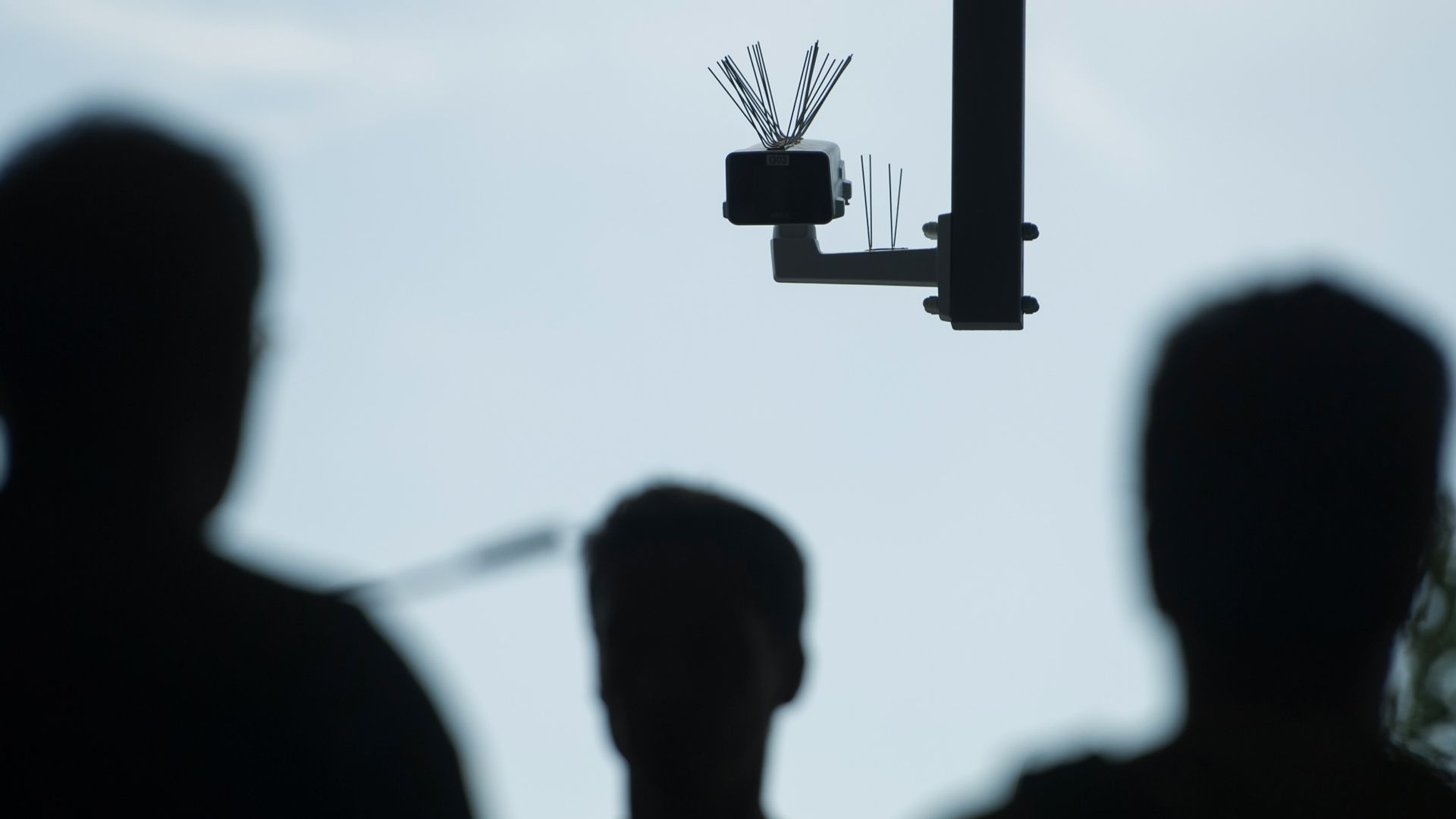
Picture from cdn.mos.cms.futurecdn.net
Rank 139Mary could tell that her husband was “distraught” the moment he was wrongly accused of shoplifting and ordered to leave Home Bargains. The ordeal left him feeling “isolated”. “I was scared to go into a shop,” he said. They had only popped out to pick up some vitamins.Elsewhere, a woman’s husband was left “shaking from head to toe” after she was told to leave Budgens on account of stealing “loads of meat” the week before. “My mind was racing,” she said. They hadn’t been to that shop for months. Facial recognition is an inherently personal and intimate technology. It scans your features, processes your biometric data and, depending on its results, can stop you from entering a particular space. It might all take place in an instant but its impact extends far and can be surprisingly long lasting — something that is made all the worse by a dizzying lack of clarity about who is to blame when something goes wrong. ‘Taste the indifference’ Earlier this week, in a cramped room in the House of Commons, people wrongly accused of shoplifting by facial recognition technology met to discuss their experiences with Labour MP for Stoke-on-Trent South, Dr Allison Gardner. The event, sponsored by the civil liberties group Big Brother Watch, was designed to give people an opportunity to air their grievances with politicians, the media, and the companies involved. Above all, perhaps, it gave everyone the chance to get some answers about how the system works, who is to blame when it doesn’t work as intended, and to start planning how best to move forward. Big Brother Watch invited Facewatch, the company behind the technology, to attend. It also invited representatives from Sainsbury’s, a company that is currently in the process of introducing facial recognition to 200 of its stores. Neither company sent representatives to the event.On hearing details of one specific case, Dr. Gardner said she “had so many questions.” Was it an algorithm glitch, a shop worker making an honest mistake, or something else? Unfortunately, there was no one to answer the specifics.“You can taste the indifference,” someone at the back of the room said. “Sainsbury’s is happy to scan its customers’ faces but won’t face the people its technology has harmed,” Jasleen Chaggar, Senior Legal and Policy Officer at Big Brother Watch, later told TechRadar. Each of the testimonies from people wrongly flagged by the technology shared striking similarities. A routine activity was suddenly transformed into a confusing, public ordeal of having to defend themselves against allegations they did not immediately understand. People said they felt “bewildered”, “isolated” and “confused.”However, while the emotional impact was consistent, the specifics of each case were often not.Some people were stopped the moment they walked through the shop doors. Others were confronted at the tills with a full basket. The errors were equally unpredictable. One person was a victim of mistaken identity, while another saw their face flagged on an overhead screen. One woman was wrongly intercepted simply because the system had identified the people walking in directly behind her.There was talk of algorithms, of bias and poorly configured training data, of mechanisms for redress, and off-the-record chats about how some managed to gather more information. The overarching feeling was one of bureaucratic exhaustion. Shoppers were left with no clear path to clear their names. “I didn’t know who to turn to,” one person said. (Image credit: Future)NEW: Leave No Trace — A weekly newsletter on digital privacy and online surveillance.Leave No Trace investigates the companies and governments putting our digital freedom at risk — and the people fighting back.📩 Subscribe now to get every edition delivered to your inbox every Friday. The corporate defenceTechRadar reached out to all the companies mentioned in this article. Booker Group, which owns the Budgens brand, refused to comment on record. Sainsbury’s did not respond, and neither did Home Bargains. Facewatch said it gave the invitation “serious consideration” but cited concerns about the balance of the event “given the tone of Big Brother Watch’s campaign messaging to date”. The company said that it had provided an explanation to the organizers and parliamentary co-chair, offering to answer questions after the session.When asked who is liable when the system produces an error, Facewatch said it "takes responsibility for its technology and processes, and retailers are responsible for how their staff interact with customers” though it said legal liability “depends on the facts and it cannot responsibly be determined by providing a blanket answer”. The company also said that when a false alert occurs, it initiates a “safeguarding process with the retailer to establish exactly what happened”. Facewatch added: “We challenge campaign messaging that uses those incidents to create a disproportionate impression of the risk to ordinary shoppers. Facewatch operates discreetly and successfully in thousands of stores across the UK every day. Presenting exceptional incidents as representative of that everyday operation is misleading and risks creating unnecessary fear.” ‘Salt in the wound’ The lack of clarity that follows when someone is mistakenly flagged by the facial recognition system is the “salt in the wound of being publicly humiliated,” Big Brother Watch’s Chaggar said. When TechRadar visited a South London Sainsbury’s earlier this month, we found that there was no viable way of opting out of the facial recognition system and that security had little information about how the system works. There are signs with QR codes at the entry of the shops, though attendees said these contained insufficient information following a dispute. (Image credit: Future)Big Brother Watch offers some respite for the affected people, helping individuals navigate Subject Access Requests (SARs) — a statutory mechanism under UK data protection law used to force companies to disclose what data they hold. But the process is slow, demands that victims surrender even more personal data, and offers no guarantee that a face will actually be removed from watchlists. “It’s the stuff of Kafkaesque nightmares to be trapped in a maze of bureaucracy and forced to hand over even more personal data just to be told the accusation,” Chaggar told TechRadar.The UK’s data privacy regulator, the Information Commissioner's Office (ICO), acknowledged the severity of the testimonies, calling the experiences "harrowing". It said it hoped to share more concrete insights into the commercial use of the technology soon.But for now, the confusion remains and the blame for when it goes wrong is still unclear.Following the event, Dr. Gardner told TechRadar that she is "extremely concerned at the poor implementation and lack of governance" surrounding the technology and will be raising the issue with ministers and contacting companies directly. She added that she would “like to know what redress is being given to wrongly accused individuals that is proportionate to the upset caused. Who is accountable and can be held liable.” Until those questions are answered, the lack of clarity isn't just acting as a regulatory loophole; it risks creating a chilling effect for the wider public. If one person was “frightened to go to a shop” for weeks after, then perhaps you would be too. Names have been changed to protect affected peoples’ privacy.
-

Picture from techcrunch.com
Rank 140 -

Picture from cdn.mos.cms.futurecdn.net
Rank 141Gallup report finds US workers are feeling less engaged at work than everRemote and hybrid workers are feeling particularly unenthusedLack of clarity on AI is also affecting worker happinessWith wide-ranging layoffs, the risk of AI replacement and cost of living increases, it might be no wonder that many employees are feeling less engaged with their jobs, but new research has shown just how much the dissatisfaction has become.Gallup’s latest quarterly engagement poll for US workers found job engagement fell to its lowest level since 2011 in the third quarter of 2026.The measure, which tracks workers’ focus, motivation and enthusiasm for their jobs, found engagement fell to 29% in Q3 2026, with remote and hybrid workers particularly disaffected with the state of things.Lack of engagementAlthough the figure sounds dramatically low, it should be pointed out that the engagement figure is never particularly high in Gallup's report - having peaked at 36% in 2020, the figure then fell to 31% by 2024, before its recent drop.The company noted that the decline was particularly noticeable among remote and hybrid employees, especially those working in organizations which have adopted AI tools.Gallup noted engagement fell five points among fully remote employees and two points among hybrid employees, compared with approximately one point among on-site employees and those with jobs that cannot be performed remotely.This was not the first time such trends had been spotted, as Gallup pointed to its earlier research which found hybrid and fully remote employees have experienced larger declines in clarity of expectations than on-site employees in remote-capable jobs."These findings raise the possibility that physical distance can contribute to psychological distance between employees and their organizations, particularly as companies navigate the use of AI at work," it said. Turning to AI, Gallup noted that although research earlier in 2026 had indicated a potential thawing in engagement with employees and AI, this had now declined.It found workers in "AI-integrated organizations" were now reporting similar levels of engagement than those who weren't - with hybrid and remote workers again saying they were less happy and engaged."U.S. employee engagement has fallen to its lowest level in 15 years, with particularly large declines among hybrid and remote employees in organizations that have adopted AI," the report concludes."At the same time, fewer employees report clear expectations or feel that someone at work cares about them. The pattern suggests that AI adoption may be outpacing the communication and managerial support needed to make it effective."
-

Picture from www.engadget.com
Rank 142 -

Picture from cdn.mos.cms.futurecdn.net
Rank 143A few weeks ago, Keurig announced plans to kill off K-Cup coffee pods and replace them with tablets of compressed coffee called AltaRounds. Unlike the venerable K-Cup, these are entirely biodegradable, and leave behind no plastic waste after brewing.It sounds like a great concept, and now I've had the chance to try the new Alta system myself, to see how it compares to conventional single-serve espresso machines — and to the Lavazza Tabli system, which uses similar pucks of ground coffee to achieve a capsule-free brew.The Keurig Alta Coffee and Espresso Maker is a large machine, measuring 10.84 x 11.7 x 19 inches / 27.5 x 29.7 x 48.6cm (W x H x D), and it has a stylish design reminiscent of Smeg's premium coffee makers, with clean lines and rounded corners. It's available now direct from Keurig priced at $499.99, which includes four packs of AltaRounds of your choice. It comes in three colorways: Sandstone (shown here), Sandstone and Satin Stainless, and Graphite, all of which are classic and neutral enough to tie in with any kitchen decor. All the components feel reassuringly solid and well-made, including the removable drip tray extender that slots below the coffee dispenser to prevent splashes when using a small espresso cup, the stainless-steel milk frothing pitcher with measuring lines engraved on the interior, and the pitcher-style water tank with its ergonomic handle and large pouring spout. It's controlled using a bright touchscreen on the top, and although the setup process suggests connecting it to Wi-Fi, this is optional.FutureFutureFutureThe Alta brewer a versatile all-in-one machine, capable of preparing both espresso shots and longer coffee drinks, and is compatible with K-Cups as well as AltaRounds — an important consideration, since the switch to the new format is happening gradually, and your favorite drink may not be available in AltaRound format yet. I tested the Alta brewer with three AltaRound varieties: Double Shot, The House, and Sweet Spot. Each one has a thin plant-based coating printed with a small QR code on both sides. When you lift the brewer's lid, you'll notice a white LED that allows a small camera to read this code, and instantly provides you with a list of brewing options and recipes for that specific type of coffee. For example, if you insert a Double Shot pod, the brewer might suggest preparing an espresso or cappuccino, whereas inserting a caramel-flavored Sweet Spot pod will suggest brewing a long coffee hot, or over ice.It's worth noting that AltaRounds can't be brewed cold. If you select the 'over ice' option, the machine will dispense a shot of hot espresso that's more concentrated than usual, so it can be poured over ice without the meltwater diluting the flavor. FutureFutureFutureOnce you've picked a brewing style, you can customize your drink by tweaking the volume and temperature, and choose whether to finish it off with milk. Unlike the Lavazza Tabli coffee maker, the Keurig Alta machine has a steam wand for this purpose, and has presets optimized for dairy and plant-based substitutes. You can use the wand manually, or insert a small whisk in the bottom of the milk pitcher and let the machine do the work automatically, whipping the milk while steaming it to produce creamy foam. Want a chilled drink? The Alta brewer can also whip milk without steam to create cold froth for iced lattes.I tested the auto-frothing option with semi-skimmed dairy milk, and selected the hot mode with extra foam. The result was a 'dry' froth ideal for cappuccinos. Picking a lower-density foam option yields smaller bubbles, and a more pourable texture suitable for latte art.FutureFutureFutureAlthough I've only tried a few brews so far, my first impression is that AltaRounds deliver a more intense flavor than Lavazza's Tabli Tabs, despite using similar extraction methods. Double Shot is particularly punchy, and delivered a rich espresso topped with an impressive layer of crema.When brewing is done, used pods drop into a bin at the bottom of the machine automatically, where they're suspended in a basket so water can drain away. The thin coating means each pod stays intact, and dropping them into your food waste bin is much less messy than knocking used coffee grounds out of a portafilter.So is this the future of single-serve, and does it deserve a place in TechRadar's roundup of the best coffee makers? I'll continue testing the Keurig Alta Coffee and Espresso Maker over the coming weeks, using both AltaRounds and K-Cups, and will bring you a full review once I've finished putting it through its paces.
-

Picture from cdn.mos.cms.futurecdn.net
Rank 144In a year that saw the arrival of next-gen RGB mini-LED to the mass market and elite OLEDs get more impressive and flexible than ever for brightness, my TV of the Year at the TechRadar Product of the year Awards 2026 is, in fact, the mid-range LG C6 OLED TV. The latest in the LG C-series lineage, the LG C6 earned the full five stars in my LG C6 review, delivering what has always made LG’s C-series TVs among the best TVs around, but taking a few key features to another level (more on that below). When I compared it to its predecessor, the LG C5, my admiration for the C6 was further solidified, again as the latter showed major upgrades over the former — that's not something you always see in newer TV models. At the time, I said I thought the C5 was better value — but six months on, the C6's price has dropped significantly, and it's now phenomenal value.This win actually marks LG’s first return to the top of the TV of the Year podium since 2022, with Samsung’s mid-range QD-OLED the S90C taking the crown in 2023, with subsequent victories for Samsung’s flagship OLED models, the S95D in 2024 and the S95F last year. While Samsung released very impressive TVs in 2026, one of the key things we're all looking for even more than usual this year is value, and C6 has a few key elements that make it the best bang for buck.Accuracy, brightness and power The LG C6 (left) has a new, improved processor that means it deliver better brightness and colors over its predecessor the LG C5 (right) (Image credit: Future)One of the LG C6’s big upgrades was to its processor. While previous generations of the C-series had used LG's Alpha 9, the C6 was fitted with the Alpha 11 AI Gen 3: LG's most powerful chip, and the same one used in the flagship LG G6. This meant faster processing times for easier use and navigation, as well as upgraded picture features including 13-bit image processing for reduced color banding, and an upgraded brightness booster. But did these features actually translate into real-world improvements? When I compared the C6 to the C5, the answer was a resounding yes. The C6 registered 1,438 nits peak HDR brightness in Filmmaker Mode in a 10% window — a notable step-up over the C5’s 1,180 nits in the same test. It even hit 245 nits fullscreen HDR brightness, which was 50 nits higher than the C5. That may not sound like much, but for an OLED battling against reflections in bright rooms, it makes a clear difference.As for actual real-world viewing, the HDR brightness boost was best demonstrated in scenes with a sunset on horizon, such as Wicked and Top Gun: Maverick, where the C6 clearly had higher peak brightness, resulting in punchier HDR highlights. Bright scenes and colors also looked more impactful and engaging on the C6, particularly when large areas of white, such as snow, were on screen. It was the C6's (left) improved color temperature accuracy that impressed me the most, making movies like The Batman look even better than they did on the LG C5 (right) (Image credit: Warner Bros. / Future )But, the thing that impressed me the most with the C6 during my testing was its color temperature accuracy. When I viewed the C6 and C5 together, it was obvious that the C6 had a green tint effect on it (something that has affected OLED panels in the past), which you don't really register when you're watching it solo, but is clear when comparing against other high-end panels. This was most noticeable in The Batman, namely the scene after he fought with a gang on a subway platform. Watching the scene on both the C6 and C5, they both demonstrated excellent contrast with well-balanced dark and bright tones, but the C6 clearly had a much more accurate color temperature, meaning the gray tones of the walls and platform actually looked gray, whereas the C5’s green tint took away some of that true-to-life accuracy. Outside of this, the C6 also delivered bolder colors that popped more on screen, more accurate skin tones and slightly more refined dark tones than the C5. Watching Elemental during my C6 testing was a particular treat, as the red, purples, pinks and blues throughout really dazzled on screen. The C5 had also done a great job with that movie, but the C6 just had more. Unbeatable valueThe LG C6 really can do it all, from superb picture quality to razor-sharp gaming performance: all for better value than its closest rivals (Image credit: Disney / Future )The C6 is not a ‘cheap’ TV by any means, but one thing the C-series has always excelled at is value for money. It’s got a full suite of gaming features, and when you pair it with responsive, smooth performance, it’s easily the best gaming TV available. Its motion is also super smooth for sports, and because it's available in sizes from 42 inches to 83 inches, it’s versatile for any space. It really is a jack-of-all-trades TV. But in this year’s C6, an exciting new twist happened with its larger 77- and 83-inch models, both known as the LG C6H: they received the same Tandem RGB OLED panel used in the LG G6. And the best part? This came at no changed cost from the LG C5, which used a less-advanced OLED EX panel. So at these sizes, the LG C6 is practically the same TV as the LG G6, but cheaper.We always worry about price increases from previous models when a TV launches, due to inflation as well as upgrades touted by manufacturers — and obviously this year has been especially hard for tech price rises. However, the C6 launched for nearly identical prices and those prices have been dropping ever since. At the time of writing, several months from its release in April 2026, you can pick up a 65-inch C6 for $1,499 / £1,799 / AU$3,995 already, which is a $1,200 / £700 price drop (none in Australia yet unfortunately). And with Black Friday around the corner, there’s only more opportunities to get one for less. When you put its upgraded performance and features over its predecessor, stable prices, upgraded panels in larger sizes at no extra cost and its genuine value for money together, the C6 is my obvious pick for TV of the Year. Yes, there may be more impressive TVs out there if money's no object, but here in 2026 money very much is an object — and no other TV ticks all the box boxes, including value, so impressively.
-

Picture from cdn.mos.cms.futurecdn.net
Rank 145Lucky folks who managed to preorder the Legend of Zelda 40th Anniversary Nintendo Switch 2 are having a great time, as today's the day it should arrive on your doorstep. However, given its unsurprisingly popularity, the limited-edition console sold out extremely quickly at most retailers. However, there's good news if you're still hoping to hook one for yourself.It appears that multiple retailers will restock the gorgeous Zelda Switch 2 from November 5 to coincide with the launch of Ocarina of Time on Nintendo's latest hybrid console. This is according to briefly seen information on the Target store page, as well as a Reddit post suggesting Walmart will not get more consoles until November 6.For those in the UK, the console is actually available to order right now at several retailers, as stock has been less of an issue on this side of the pond. Most of the current availability will also ship next week on Nov 5, as it's the second version of the console with a replaceable battery to meet upcoming EU regulations. Any immediate availability is more likely for the first wave of the console, which doesn't include this replaceable battery. Keep that in mind depending on your preferences.Other retailers may take a different approach to restocks over the next week, so it's worth keeping an eye on the key links below — and I'll check them regularly to offer any updates right here.Zelda Nintendo Switch 2 — US restock quick linksWalmart: restock expected Nov 6Target: restock expected Nov 5Amazon: restock TBCBest Buy: restock TBCNintendo Store: restock TBCZelda Nintendo Switch 2 — UK restock quick linksSmyths Toys: in stock for £429.99Currys: in stock for £434Amazon: in stock for £499.99Argos: restock TBCNintendo Store: restock TBCVery: restock TBCShopTo: restock TBC(Image credit: Future / Nintendo)The Legend of Zelda: Ocarina of Time preorders — US quick linksAmazon: preorder for $59.88Walmart: preorder for $59.88Nintendo Store: preorder for $69.99Best Buy: preorder for $69.99GameStop: preorder for $69.99Target: preorder for $69.99The Legend of Zelda: Ocarina of Time preorders — UK quick linksAmazon UK: preorder for £54.99Nintendo Store: preorder for £58.99ShopTo: preorder for £54.85Currys: preorder for £54.99Argos: preorder for £54.99Smyths Toys: preorder for £54.99Very: preorder for £54.99The Game Collection: preorder for £59.95Game: preorder for £54.99
-

Picture from cdn.mos.cms.futurecdn.net
Rank 146Attackers abused camera management software to gain initial access and establish persistence on networksCampaign used DLL sideloading and reverse shells to evade detection and maintain controlResearchers urge treating camera systems as security-sensitive assets and monitoring them for abnormal activitySecurity researchers have warned of an ongoing campaign targeting an apparent vulnerability in camera management software. The vulnerability is being used for initial access, allowing threat actors to establish a foothold on company infrastructure.The warning bells were sounded by security outfit Huntress, whose researchers Harlan Carvey and Lindsey O'Donnell-Welch said that in September and October 2026, they observed a “handful of incidents” originating from camera management software. In all cases the attackers abused a legitimate camera management system to side-load a malicious DLL file and gain access to the underlying system.Who watches the watchmen? Surprisingly, the team could not determine which camera software was being targeted, nor by whom. “Huntress analysts were unable to determine the full name or creator/vendor of the software, as the file did not contain an embedded File Version Information section,” they said. However, they did find an executable containing a few notable strings, which led them to believe a Korean company called 3R Global could be involved. They couldn’t confidently say that the Camera Management System (CMS) executable was downloaded from that company’s website, though. Unfortunately, without knowing the exact name of the software being targeted, it is impossible to tell how many victims there were, or how big the attack surface is. Huntress’ “handful” designation does very little to explain just how dangerous this vulnerability is.While the lack of key data limited their visibility into exactly how the threat actors were compromising the software, they could see what they were doing once they were inside - launching a reverse shell and side-loading malicious DLLs. Once the initial access had been established, the attackers would drop a file named rs.win32.exe to the endpoint and would launch it via a command line. The command line would supply a remote IP address and port, and include an admin username.”This led us to see this as a reverse shell,” they said. From there, they would drop a file called WpcMon.exe - a legitimate Microsoft Windows Parental Control Monitor file, used for parental-control and activity-monitoring features. In this case, however, the file is used to load malicious DLLs called IPHLPAPI.DLL and samcli.dll. On the surface, both appear to be legitimate zlib compression libraries, but in fact, they were changed to provide beaconing, contacting the external C2 server from time to time.Huntress watches the watchmen watching the watchmen“Part of the infection process also included creating persistence by adding a reference to the newly installed WpcMon.exe in a value beneath the user's Run key,” the researchers explained. “Threat actors typically add a program path to a user's Run registry key so Windows automatically launches their payload whenever that user signs in.”Side-loading malicious DLL files is a popular infection technique. Instead of deploying an obviously malicious program (which might get flagged by antivirus products), the attackers drop a DLL file containing weaponized code, and then get a legitimate program (such as the parental control software) to run it. Since the process starts with a legitimate executable, it is more difficult to identify as malicious. It does not guarantee evasion of security software, though. Defenders should treat cameras and their management platforms as potential entry points into the broader business environment, Huntress warned. They should inventory the software, restrict its access, and monitor for unusual processes and outbound connections. The researchers also advise defenders to use application control to prevent unapproved executables and DLLs from running in user-writeable paths, and to investigate the sequence of CMS.exe, rs.win32.exe, abnormal WpcMon.exe, and unapproved outbound connections.
-

Picture from www.engadget.com
Rank 147 -

Picture from cdn.mos.cms.futurecdn.net
Rank 148YouTube announced it's hit 150 million subscribers across Premium and YouTube Music The platform also generated $11.2 billion in ad revenue Users say free tier ads are only getting worse, with some calling them 'unbearable' YouTube announced that it has surpassed a whopping 150 million subscribers across its Premium and YouTube Music experiences — marking a huge milestone for the video platform and one of the best music streaming services. Alphabet Inc CEO, Sundar Pichai, announced the figures in the platform’s Q3 earnings release on Wednesday (October 28), which increased by 25 million from a total of 125 million subscribers in March 2025, though individual numbers for Premium and YouTube Music weren’t disclosed. Pichai also shared that YouTube’s ad revenue rose to more than $11.2 billion compared to $10.3 billion in 2025. Speaking about the milestone, Google’s Chief Business Officer, Philipp Schindler, said "With Premium and Premium Lite, viewers have choice. As more people opt into premium experiences, it’s a win for viewers, creators, and our business. Subscriptions help fund the creator ecosystem and drive the platform forward." YouTube has accumulated over 25 million subscribers between now and when it last confirmed its total membership count in March 2025. When you break that down, that’s approximately 1.25 million new subscribers signing up each month, and it’s only going to increase. While it’s not a traditional on-demand film and TV content platform, YouTube has emerged as a serious competitor among the best streaming services. In 2017, the company launched YouTube TV, and according to a recent report from Nielsen, it has surpassed Netflix in popularity for TV viewing. In July 2026, 49% of TV time was viewed via streaming platforms, with YouTube making up 14.2% of that, followed by Netflix at 7.8%. There’s no denying YouTube Premium is rising in popularity, but as the company puts more effort into improving its paid services, a number of users have said its free version is becoming increasingly difficult to use because of the number of ads. Earlier this year, I bit the bullet and signed up to a YouTube Premium free trial and, annoyingly, the experience was vastly more enjoyable. Not only does it grant you ad-free viewing, you get background and offline listening, as well as small but handy control tools and full access to YouTube Music. But once you go back to its free version, that’s when you truly realize how out of control YouTube’s ads have become — and I’m not the only one who’s noticed (see below). Youtube ads have become out of control. from r/youtubeIn addition to YouTube’s ‘completely unbearable’ ads, users have also pointed out the rise in AI-generated sponsored content which one Redditor claims advertise "obvious scam products". The combination of the two is the main catalyst for users abandoning YouTube as a platform altogether, and tech-savvy users are already opting for alternative ways to bypass ads. One of the most popular ways YouTube viewers are working their way around ads is downloading browsers such as Brave, which users on Reddit have praised. Browsers like this come with built-in ad blockers, so it can automatically skip over ads when you’re streaming YouTube for free. While YouTube gives you the option to tailor your ad experience and block certain types of promotional content, some users claim that when they do this, YouTube only feeds these ads to them even more. One user on Reddit used Old Spice as an example, saying "it's like blocking them has a reverse effect." Similarly, another user had an experience where they reported a potential scam ad, only for YouTube to email them with a counterargument. I’m with a lot of other users who continue to call out YouTube for how expensive Premium has become (it now costs $15.99 / £12.99 / AU$22.99 a month), especially when you factor in your existing streaming subscriptions, so many of us just put up with its free service. Despite enjoying what Premium had to offer during my free trial, it doesn’t justify adding another subscription plan to my roster — my bank account will fall out with me.
-
Picture from techcrunch.com
Rank 149 -

Picture from techcrunch.com
Rank 150