Technology New of the last 24 hours
This list is constantly updated to include the latest technology news.
-

Picture from images.theconversation.com
Rank 1Binance now says it has restored about 95% of the stolen assets using various funds.
-

Picture from image.cnbcfm.com
Rank 2Palantir's commercial revenue jumped 148% to $984 million, surpassing government revenue of $953 million.
-

Picture from i.guim.co.uk
Rank 3Chains in seven countries say cooling unit temperatures rose overnight in incident similar to hack of French shops Who is hacking Europe’s supermarket fridges and freezers, and why? Supermarket chains in at least seven European countries have said the temperatures of refrigerators and freezers in some of their shops soared overnight to as high as 50C (122F), echoing a cyber-attack last month that caused millions of euros of damage in France. Retailers in Belgium, Estonia, Ireland, Finland, Luxembourg, the Netherlands and Sweden reported problems with their refrigeration systems on Monday, and several companies confirmed they had been hacked. Continue reading...
-

Picture from image.cnbcfm.com
Rank 4Intel’s turnaround now hinges on proving its foundry strategy can deliver, as customers look for signs the company will add fab capacity and catch TSMC
-

Picture from platform.theverge.com
Rank 5Google says one of its Android manufacturing partners secretly built a backdoor in 1.3 million devices and turned them into a botnet. The company says it has now dismantled the backdoor and "cut ties" with the manufacturer, the Shenzhen, China-based Videostrong Technology Co., which has been banned from building or selling certified Android devices or […]
-

Picture from platform.theverge.com
Rank 6The New York Times and a group of other publications have filed lawsuits against the company that makes the Brave web browser over alleged unlawful scraping to train AI and also letting users bypass their paywalls, as reported by Reuters. According to a complaint filed by the New York Daily News, the Chicago Tribune, and […]
-

Picture from image.cnbcfm.com
Rank 7Follow Apple Q4 2026 earnings live for revenue, EPS, iPhone sales, China performance, AI updates, holiday guidance and AAPL stock reaction.
-

Picture from image.cnbcfm.com
Rank 8Democratic gains in Congress could bring tougher oversight of major companies and shift billions of dollars in federal spending and regulatory policy.
-
Picture from i.guim.co.uk
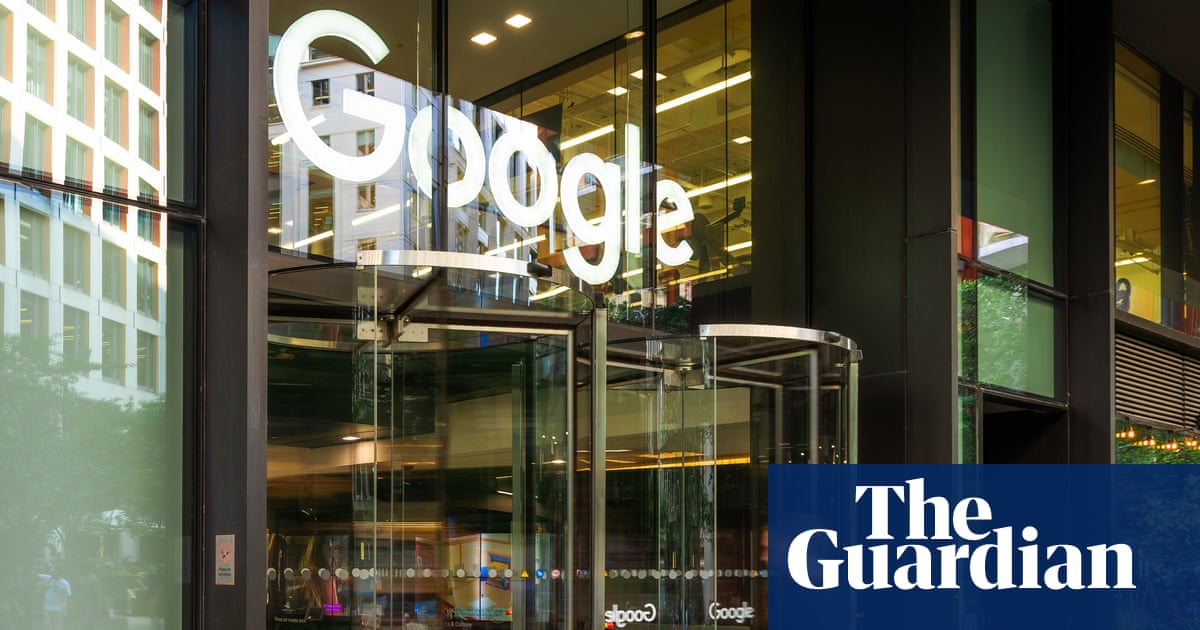
Rank 9Prospect to hold workplace sessions and recruit members under agreement with tech company Trade unions are expected to make further inroads into big tech companies in the UK after new rights for unions to access workplaces came into force, with Google UK signing an agreement on Monday. The Prospect union has reached an agreement with Google to begin organising among about 7,000 workers across its UK operations, including YouTube but excluding DeepMind. Continue reading...
-

Picture from platform.theverge.com
Rank 10Meta is planning to release the last OS update for its Quest 2 and Quest Pro VR headsets by March 2027, the company announced today. The last OS update for those devices is planned to be v213, and after that, Meta will continue to ship security patches and critical bug fixes through the end of […]
-

Picture from image.cnbcfm.com
Rank 11Employees describing jobs as 'remote' are now often in-office, as companies fail to create the collaboration they claim is critical, NY Fed research shows.
-

Picture from platform.theverge.com
Rank 12Apple has reportedly delayed the launch of its rumored smart home robot until next year at the earliest or possibly even 2028, according to The Information. It says the robot's hardware "has been finished for around two years," but that the software isn't ready. The device's software team has reportedly pushed to delay the launch […]
-

Picture from image.cnbcfm.com
Rank 13The AI infrastructure deal is expected to close during the first half of 2028.
-

Picture from image.cnbcfm.com
Rank 14Automakers including Ford, Rivian and GM are expanding 3D printing to make prototypes, factory tools and low-volume parts faster and at lower cost.
-

Picture from images.euronews.com
Rank 15From a drone carrying traffic lights to a remotely operated robot, exhibitors at Milipol Qatar demonstrate equipment designed for emergency response, surveillance and work in dangerous places.
-

Picture from platform.theverge.com
Rank 16Xbox's former chief operating officer, Helen Chiang, suddenly left Microsoft less than two weeks ago after being promoted into the role in July. I wrote in my Notepad newsletter last week that it seemed very weird for Chiang to suddenly depart Microsoft after 21 years with a surprisingly short memo from Xbox CEO Asha Sharma. […]
-

Picture from images.theconversation.com
Rank 17Handing your heirs a list of passwords is only the first step in ensuring they can access and manage your digital affairs after you die.
-

Picture from image.cnbcfm.com
Rank 18Fanatics and the NHL debuted Hometown Remix, a special-edition uniform and apparel program covering all 32 teams.
-

Picture from cdn.mos.cms.futurecdn.net
Rank 19The Explorer 100D is a palm-sized 30,000mAh portable power stationIt uses a long-lasting lithium iron phosphate batteryIt has a maximum total output of 158W and supports direct solar inputJackery has just launched a new portable power station that combines a high capacity with an impressively small and lightweight design.Dubbed the Jackery Explorer 100D, it measures 11.87 x 8.26 x 8.57cm and weighs 850g, which sounds fairly compact when you consider that it has 30,000mAh of power. Indeed, it’s 14% smaller and 12% lighter than the Explorer 100 Plus, making it Jackery's smallest portable power station yet.So, while it will certainly add some weight to your bag, it's small enough to carry around in a backpack, so you can keep your devices powered when out and about or on trips. It’s designed to comply with lithium battery transport standards, too, so you can take it on planes and trains, and even though it’s palm-sized, it also includes a built-in handle and supports an optional shoulder strap.(Image credit: Jackery)An LFP battery with solar supportThe Jackery Explorer 100D also uses a lithium iron phosphate (LFP) battery rather than the more common lithium-ion ones, meaning it’s theoretically both safer and longer-lasting, with Jackery claiming it has an up to 8-year lifespan and will retain at least 80% of its capacity across 3,000 charging cycles.It has two 140W USB-C ports and an 18W USB-A port, so you can charge, for example, a laptop, phone, and tablet all at once. That said, it tops out at 158W of combined charging power, so you can’t use all of those ports at full power simultaneously.When you need to charge the 100D itself, you can of course plug it in to any outlet, but it also supports up to 100W of direct solar input, making it suited to an off-grid setup.So there’s a lot to like here, and while this isn’t the cheapest 30,000mAh power station, it’s reasonably affordable too, coming in at $99 / €99 (roughly £75 / AU$140). It’s not currently available in the UK or Australia, but Jackery does have a presence in both regions, so that might change.
-

Picture from cdn.mos.cms.futurecdn.net
Rank 20The Dell Pro Max Tower T2 is one of those desktop workstations that immediately resonated when we tested it. It's fast, performance-driven, and scored 4.5 stars in our review. It's a beast for professional workloads. But here's something else I noticed. The Dell Pro Max Tower T2 workstation can be configured with an Nvidia RTX Pro 6000 Blackwell GPU for $16,780 (was $18,645) at Dell when you sign up to receive newsletters with one of our Dell coupon codes, which gives you 10% off your first purchase.And when you consider that the Blackwell 6000 graphics card costs $15,799 at EmpoweredPC and $17,999 at Newegg, that makes the whole bundle a bit of a steal. • Best for: Enterprise professionals, AI developers, and creative studio engineers.• What we like: The machine itself is superb, blazing through our benchmark tests. It's highly configurable for a range of workloads. But it's the fact that you're getting a full tower workstation for almost the cost of the GPU alone that stands out. • What to know: This is a high-end desktop PC designed for demanding and complex workloads, not your run-of-the-mill business computer. Today's best Dell PC dealPro Max Tower T2 Desktop: was $18645 now $16780Like most Dell PCs, the Pro Max T2 is available in a range of configurations. This is the cheapest one with the Nvidia RTX Pro Blackwell 6000 GPU, running Windows 11 Pro on an Intel Core Ultra 5 235 CPU, 8GB DDR5, and 256GB SSD. But you can spec the machine to fit any workload. Sign up for the newsletter to get 10% off your first purchase. View DealWhy we recommend itThis workstation scored 4.5 stars in our review, and we awarded it a TechRadar Pro Highly Recommended badge. To see how it fared, we ran Dell's Pro Max T2 alongside engineers working with large data warehouses, AI, 3D modeling, 4K and 6K video editing, and large-scale visual events. And it performed beautifully in that role - it's what it was built for. In our review, we found it "a beast of a machine for professionals who need uncompromising power in engineering, AI, and all-around business performance, and who want a machine that is capable today and upgradable for the future." For more work-oriented PCs, we've tested out the best business computers.Price context & historical valueThe workstation's price, configured with this GPU, is about what I'd expect in today's volatile market. However, the value comes from getting it specced with a Blackwell 6000 graphics card for about the same price as buying the GPU on its own. I've listed the cheapest Blackwell config here. However, for truly demanding tasks, I'd recommend bumping up the memory to 32GB - although you can go as high as 128GB, and potentially increasing storage from the base 256GB (Dell sells configurations up to 4TB). Should you buy it?✅ Buy the Dell Pro Max T2 if... You want a high-performance workstation desktop for complicated workloads, AI, or production-grade creative projects. ❌ Skip the Dell Pro Max T2 if... You need a business PC for largely administrative or general content creation tasks. You could spec out the Pro Max T2 for that, but personally, I rate the highly configurable Dell Tower Plus (EBT2250).See all desktop PCs at Dell
-

Picture from cdn.mos.cms.futurecdn.net
Rank 21Spotify's AI remixing tool is tipped to arrive early in 2027Premium users may have to pay $4–$5 extra for itReaction from potential users has been lukewarmBack in August, Spotify announced plans to introduce new AI-powered features to let users create custom covers and remixes of their songs, and a new rumor suggests the feature may arrive in February — at the cost of a $4–$5 surcharge on top of existing Premium subscriptions.That's according to the Financial Times (via Android Authority), which reports that "people familiar" with the plans reckon a launch could be scheduled to coincide with the Grammys — the music awards show is on Sunday, February 7 — or could happen on some other date within the first quarter of 2027.Spotify is apparently still trying to get artists and labels to embrace the technology, which would (for example) let you turn a dance track in your library into a country ballad, or have one of your favorite artists cover a song recorded by a different singer or band.It's worth bearing in mind that these details are still to be confirmed, as, per the FT, the timing and pricing have not been finalized, though we know from what Spotify has already said that it's keen to push this new feature out.Winning over artists and fansSpotify aims to launch AI music remix service early next year from r/indieheadsThe plan seems to be to reward artists who let Spotify use their music for AI purposes, and one analyst quoted by the FT estimates that 7–8% of US Premium subscribers (of whom there are thought to be around 75 million) would pay the extra few dollars for the feature."Winning over major contemporary stars has proved more challenging than securing participation from some established older artists," says the FT — with Olivia Rodrigo mentioned as one of the artists who have previously taken a public anti-AI stance.If the Reddit boards are any indication of feeling, there's not much of an appetite for these new AI tools among users either. One thread responding to the FT report is filled with negative comments and recommendations for alternative music streaming services."Who wants this?" is indicative of the comments, while the words "gross" and "horrible" are also thrown around. Spotify doesn't, of course, have to convince all of its users to adopt the AI add-on to make it profitable; but as this report suggests, getting artists on board might be the bigger issue.
-

Picture from cdn.mos.cms.futurecdn.net
Rank 22Windows 11 just got a revamped internet speed test in previewThis feature was shuttled swiftly through development using agentic AI in combination with human oversightMicrosoft boasts that this is about: "Getting from idea to customer value faster. Without AI slop." Others are more cynical, thoughWindows 11 just got a useful change in preview, with its built-in internet speed test being revamped, and the new version was produced using AI (in conjunction with human oversight, I should add).Windows Latest spotted that Marcus Ash, Microsoft's VP of Windows Design and Research, posted on X to explain that the "team moved pretty fast on this one", adding that following feedback asking for the speed test to be improved, "within a day, Diego had a working prototype." (Diego Baca is VP of Design for Windows).Ash tells us: "From there, our connectivity team worked with partners to bring the experience into Windows. The design and build work was driven by an agentic AI workflow, with a person guiding the process in their spare time."The Microsoft exec further explains that this is where he sees "a lot of potential in AI" and using agentic workflows, in terms of "Getting from idea to customer value faster. Without AI slop. That is the way."Analysis: AI, oversight, bugs, and jobs(Image credit: Microsoft)Of course, this is a controversial topic. Mention AI being involved in the coding of Windows 11 and some tempers will flare online, even though we know this is happening anyway. Microsoft has made no secret of that fact.Indeed, among the AI hate and flames on social media, a lot of people are point out that these days pretty much all software is being developed in conjunction with Large Language Models (LLM agents) — even Linux.As one Redditor makes clear: "Newsflash — every single piece of software you use, except for open source projects that are making a statement, you should expect to have AI written code in it. It is pervasive, it is everywhere."The key aspect here is exactly how the AI agent in question is employed.It's one thing for such an agent to be given a task to write a piece of code for a certain feature, and then just to slap that into your software or operating system as it is (or maybe after a cursory glance through the work). It's another thing to have a human programmer working on a feature and using an agent to perform grunt-work (easy but perhaps time-consuming) coding therein — and then to properly check the AI's output.Theoretically, there's nothing wrong with the latter approach, at least in terms of the soundness of the coding work. And as Microsoft's Ash points out, this is really accelerating development times — meaning Windows 11 users will get new features (hopefully capabilities they want, like this improved internet speed test) much more swiftly. Which is exactly why almost every developer is now utilizing this tech.There are problems here, though, and they're bound up in the public perception of Microsoft. Do Windows 11 users trust the company to be using AI in the right — i.e., properly checked and vetted — way? Not really, in many cases, as there remains a lot of doubt over the overall quality of Windows 11 code, and rightly so given the regularity, and severity, of the bugs we've seen (with more prevalence since 2024, and that 24H2 update).As another Redditor observes: "People aren't calling Windows slop because it's being made using AI these days. They're calling it slop because it's being made using AI with woefully insufficient human oversight and even more woefully insufficient QA, leading to repeated disastrous bugs making it to production and end users being treated as beta testers. You want people to stop calling your product slop? Stop shipping updates that take down people's computers or break existing features."The other issue here is that of AI stealing coding jobs from people. Agents may make things happen a lot more quickly, but as Ash notes, this revamped speed test was implemented mainly by an agent — including its design — with the software engineer "guiding the process in their spare time", making it sound like a rather casual amount of effort on the human side of the equation.Is it a particularly sensitive approach to be touting the benefits of AI — as real as they may be for an operating system's ongoing development and maintenance — in this way at a time when Microsoft has been swinging the axe with various job cuts and pushing staff towards voluntary redundancy in a big way? I'd suggest it isn't, and the timing of this particular push of the value of agentic AI is dubious in that respect.At least in this case Microsoft is being upfront and transparent about what it's doing — and we can expect a good deal more AI acceleration of Windows 11's development going forward.
-

Picture from cdn.mos.cms.futurecdn.net
Rank 23'Thousands' of GCHQ storage devices are missing or unaccounted forMost are likely protected by encryption or PIN accessWatchdog is 'concerned' and 'disappointed'The UK's intelligence and cybersecurity agency, GCHQ, has been slammed by its very own watchdog after failing to account for thousands of missing storage devices.The 2025 Investigatory Powers Commissioner's Office (IPCO) report ultimately concluded GCHQ has failed to establish the location or status of thousands of removable storage devices such as USB sticks, external hard drives and memory cards.While the exact number of devices is unconfirmed, the IPCO report does confirm the estimate to be "in the thousands" – and that's a GCHQ estimate, not a third-party estimate.GCHQ has seemingly lost thousands of USBs, external drives, memory cards"There is a programme of further work to locate and account for as many of these devices as possible," the report adds, noting that "GCHQ will be able to report how many devices have been confirmed as lost."Nevertheless, the IPCO expressed disappointment at how long investigations and remedial action had taken – the problems were actually first brought to the watchdog's attention years ago, so it's not a newly discovered issue. "We remain very concerned about this issue and are disappointed with the time it has taken GCHQ to investigate."The issue was already raised in the IPCO's 2024 report, when the watchdog confirmed that it has asked GCHQ and MI5 to "review their internal allocation and audit of removable media" the year prior.Back then, it was already acknowledged that many of the missing devices were either encrypted or required a PIN to access, however given the intense sensitivity of many of these artefacts, significant risk could still be on the cards.The latest report acknowledged the technical and practical difficulties involve with the ongoing investigation, but calls for continued senior-level oversight." According to the report, GCHQ has commissioned a new tool to monitor the issue.
-

Picture from cdn.mos.cms.futurecdn.net
Rank 24Grok Bot users recently found they were hitting their usage limits very fastThat’s because Elon Musk decided to throttle Grok Bot usage limitsThe X owner said Grok Bot costs were "unsustainably high"If you noticed that you burned through your Grok Bot usage much faster than usual in recent days, there’s a reason for that: Elon Musk intentionally limited users’ AI agent allowances in the face of “unsustainably high costs.” And as you’d expect, a lot of people are unhappy with that. The revelation came about after an X user pinged platform owner Musk, asking for a Grok Bot reset after they surprisingly hit their 100% usage limit, four days before it was due to reset. They additionally commented that “Normally I don’t even reach 100%.” Musk then replied to the post, stating: “The cost of serving Grok Bot was unsustainably high relative to revenue.” Many X users seemed irked by the situation, with several saying that their Grok Bot usage had hit the 100% limit while they were sleeping and not using any AI agents. Users claimed their usage had suddenly gone from 50% to 100%, 35% to 78%, and 70% to 100%, all supposedly without using Grok Bot at all.Unsustainable costs(Image credit: Shutterstock)Elon Musk’s comments come amid broader scrutiny of the financial sustainability of many AI products. Tech stocks — including those of many leading AI firms — fell sharply last week as investors grew concerned over the profitability of the industry, with Google revealing that its own AI summaries have hurt its search advertising revenue. Concerns have also been raised in recent months over the finances involved in many AI companies’ offerings. For instance, users of AI tools like ChatGPT and Claude Code can often spend many times more in tokens than they’re actually paying in monthly subscriptions, leading to questions over how sustainable many AI business models really are and whether things will need to be adjusted in the near future. This changing landscape hasn’t gone down well with many users, of course. One thread on Reddit dubbed Musk’s about-face an “indirect rug pull” of Grok Bot, with features and usage limited in a bid to cut costs. But it’s unlikely that AI producers will be able to subsidize their products’ costs to users forever. Usage limits will necessarily need to tighten (as OpenAI quietly announced recently, much to the frustration of users) and prices will need to increase for these business models to make sense. So don’t be surprised if Grok Bot’s lower cap is just the first of many big changes looming on the horizon.
-

Picture from cdn.mos.cms.futurecdn.net
Rank 25Sam Altman has been making headlines for his claims that consumers don’t deserve DRAM because it is only utilized “5% of the time.” In his opinion, DRAM supplies should be prioritized for data centers where its utility can be maximized powering cloud environments.Altman’s perspective is like a utilitarian's fantasy. Humanity’s endurance of short-term pain - by handing over every bit of DRAM we have - will lead to a morally right outcome in the form of a world powered by time-saving, efficiency-increasing, productivity-boosting AI.Sounds great if you’re the head of an AI company, but less so if you just want memory to be affordable again.But what the OpenAI head seems to forget is that the DRAM shortage is part of a crisis he had a hand in creating. When OpenAI’s Stargate datacenter buildout was announced in early 2025, it was predicted that the project would require 40% of the world’s global supply. Supply issues were compounded as leading producers of memory entered a production turndown just a few years before to help stabilize pricing.Will Sam Altman break into your house to steal your RAM?The good news is that there is little Sam Altman himself can do to take your RAM off you. One reddit user asked Google AI the question we’ve all been thinking: “Is Sam Altman going to break into my house and steal my RAM?”We’re safe… for now from r/ChatGPTGoogle reassured the user with, “No, Sam Altman is not going to break into your house to physically steal your RAM.” So at least there's that.But given how constrained the current memory supply is, there are a few ways that AI and other future tech could make the whole situation worse.The worst could still be yet to comeOne of the world’s leading memory manufacturers, SK Hynix, has predicted that the supply shortage could “persist through 2030,” making any hopes of a return to affordable pricing in the next few years a distant dream.With OpenAI and Anthropic both set to hit the public market within that window, there is a lot of uncertainty over how the memory giants that control around 90% of the world’s supply will shift production.Given the difference in revenue between the consumer memory market and the AI market, it wouldn’t be surprising to see a significant production swing towards the high-bandwidth memory required for AI inference and training.This could be compounded by AI’s effect on the job market, with numerous firms enacting hiring freezes as AI strategies help cut out repetitive rote work. Higher unemployment and a lack of open positions could further reduce the demand for consumer memory, swinging production further in favor of AI.But other emerging industries are also looking to take a bite out of the memory market.Robots and autonomous vehicles are coming for your RAMThere has been a recent explosion in the robotics industry: from humanoid bots competing in their very own Olympics, to warehouses staffed by fleets of micro-bots. As AI improves and converges with the robotics industry to produce bots with near-human fine motor control, numerous industries spanning manufacturing, hospitality and logistics could buy robots in place of humans.After all, a robot can work around the clock, doesn’t need to rest, and doesn’t have any rights to be violated with unsafe working conditions or excessive hours. The same goes for an autonomous taxi or cargo truck.But they will need memory to run their little AI brains. And serving the corporate overlords is much more important (and much more profitable) than expanding memory production for the consumer market, so don’t expect things to improve any time soon.
-

Picture from cdn.mos.cms.futurecdn.net
Rank 26Google confirms it will move away from Jules, which launched in 2025Users have until November 11 2027 to finish projects, then it'll be read-only'Learnings' gained from the 'experiment' will inform Antigravity projectIt feels like just months since Google launched its AI coding agent, Jules, but the tech giant is now shuttering the project as it looks to consolidate its agentic AI efforts.The company confirmed in an X post that "Jules will be winding down" while it "focus[es] on [the] unified experience" that is Antigravity.While Jules itself as a product will be shuttered, with Google describing it as an "experiment to learn how asynchronous coding agents can help developers ship faster," many of the tools it offered will live on under Google's Antigravity project.Google shutters Jules AI coding agentUsers now have until November 11 2027 to finished their ongoing Jules sessions, after which it will operate in read-only mode for existing projects. The company has also introduced an export process to help developers move out of the platform."You can now export everything Jules knows about your work into a local folder: account settings, environment variables, scheduled tasks, connected repositories, memories, setup scripts, and every session, including its prompt, plan, full activity log, and code patches," a more detailed announcement confirms.The decision may not come as a surprise to all – the platform didn't seem especially popular among developers. "Could've just emailed the 3 people this affects," one comment on X reads.Google never shared details of how popular Jules was, but it did boast of thousands of developers testing it during the beta phase. Still, Jules will have likely faced stiff competition from OpenAI's Codex and Claude Code, as well as GitHub Copilot and a long list of others.Looking ahead, Google's focus has now shifted to a consolidated agentic strategy under Antigravity, where it promises to apply the "learnings" it amassed from Jules.
-

Picture from cdn.mos.cms.futurecdn.net
Rank 27Henrico County in Virginia was forced to remove Flock cameras by handOfficials say the company is failing to fulfil its “contractual obligation”A growing number of police forces are cancelling contracts with FlockWork crews in a Virginia county have removed more than 120 Flock cameras after officials said the surveillance tech company had failed to fulfil its “contractual obligation” to remove them.An image obtained by news outlet 12 On Your Side shows a pile of cameras and solar panels that were collected after Henrico County ended its contract with Flock in early October over privacy concerns. Reportedly, the poles upon which the cameras were mounted still remain, as crews claimed Flock has to remove these itself.The removal of the automatic license plate reading technology comes as public trust wanes, and concerns over privacy continue to grow. Plymouth, Massachusetts also canceled its contract with Flock cameras after a high-profile case involving a motoring journalist made national news. Joel Feder, a writer for The Drive, was ambushed by police when the license plate of the $155,000 Range Rover he was test driving was flagged as belong to a stolen vehicle.The car belonged to Jaguar Land Rover's media fleet. According to Feder, the police had used Flock’s camera system to track the journalist down over a number of days.A very similar license plate on another Jaguar Land Rover media vehicle was also falsely flagged by the Flock system in Nebraska only a few days later, leading to another journalist facing lengthy questioning over the vehicle.Plymouth Police Chief Eric Fadden told The Drive that the City Council voted to discontinue using the Flock system in September of this year. Fadden stated that the police force “did not hear any reply from Flock Safety Corporate or Legal, other than some communication with our local representative.” As a result of the lack of communication, he subsequently directed staff to “disconnect the power cords from the cameras,” according to The Drive.However, the cameras remain the property of Flock, and both Henrico County and Plymouth are still waiting for a response from the company as to when they will be collected. Analysis: controversy refuses to go away(Image credit: Getty Images)Flock’s automated license plate recognition cameras have caused plenty of controversy in the past few months, with stories surfacing of police department misuse, hackers gaining access to millions of images, and general concern over personal privacy.Some people have been taking matters into their own hands by disabling cameras, while a number of software companies have been mapping the location of the cameras to help drivers avoid them.MapQuest enjoyed a resurgence in popularity after it added a new Surveillance Layer to its app, showing the location of cameras from Flock, as well as those from rival companies.But during the TechCrunch Disrupt 2026 event last month, Flock’s CEO Garrett Langley said we shouldn’t "pause progress” in the face of privacy concerns. “If we want to live in a society where, if you commit a crime, you have a higher probability of being held accountable, we shouldn’t pause progress,” he said.Many privacy advocate groups have raised concerns over Flock’s technology, including the recent news that it was capable of processing ambient audio in order to determine screams, gunshots and even car crashes before alerting emergency services.Flock pulled its plans to implement that particular feature, owing to suggestions from consumer rights groups that it could be classed as "mass surveillance", but a huge amount of public mistrust remains.
-

Picture from cdn.mos.cms.futurecdn.net
Rank 28I've used a pair of Bose QuietComfort Headphones for years, and they remain some of the best cans I've ever owned. The manufacturer just released a new pair in the last few months, promising the same excellent audio quality, strong noise cancellation, and comfortable fit in a whole new package. These Bose QuietComfort Headphones (2nd Gen) are now at Amazon for $219 (was $359) — that's a record-low price.• Browse all Bose deals at AmazonAt the same time as this offer, the original Bose QuietComfort Headphones are at Amazon for $169 (was $359). Personally, I'd pay for the upgraded model if possible, but this is also a record-low price and arguably an even better deal if you're on a tighter budget.Today's best Bose headphone dealsQuietComfort Headphones (2nd Gen): was $359 now $219This is a record-low price for the new version of the flagship Bose QuietComfort Headphones. These continue the manufacturer's reputation as an industry leader when it comes to sound quality and noise cancellation, while also offering a comfortable fit and all-day battery life. Although they were a harder sell at full price, this $140 discount for Black Friday makes them a much better buy if you want some affordable premium over-ear headphones.View DealThe second-generation model has now been revealed, but the original Bose QuietComfort Headphones remain a top choice if you want quality noise-cancelling headphones at a budget price. I've been using a pair for a long time now and rate them highly, while our expert testers also scored them an impressive four stars in our review. You get excellent noise cancellation, top-tier audio quality, and 24 hours of battery life for an all-new lowest-ever price.View DealQuietComfort Ultra Headphones: was $449 now $369The fantastic Bose QuestComfort Ultra Headphones have remained available at this price since Prime Day in June, so it's effectively the new standard price for this model. These offer a clear step up in audio compared to other premium cans, with superbly detailed and energetic sound and the best noise cancellation you can get right now, in a light and comfortable design.View DealWe scored the new model four stars in our Bose QuietComfort Headphones (2nd Gen) review. While they came with a strong recommendation for the impressive sound, snug fit and good noise cancellation, we suggested it was best to wait for a price cut. Now that there's $140 off for Black Friday, the value for money is undeniable.
-

Picture from cdn.mos.cms.futurecdn.net
Rank 29AI innovation took center stage at IFA Berlin this year, with unprecedented solutions operating alongside vastly enhanced products powered by AI. Exhibitors showcased everything from advanced humanized assistants designed for daily chores to AI-driven robotic pets offering emotional companionship. It will take time for these products to be honed and readily available for consumers, but many innovations are already here. Hisense demonstrated its AI companion suite, which will transform user interaction while Miele’s flagship lineup highlighted the role AI, advanced sensors and connected systems can play in minimizing decision-making in daily tasks.While these products may be received well by tech loving audiences, not all consumers are convinced. When these products make it to market, brands and retailers are likely to be faced with cynicism, safety concerns and complexity-driven confusion. To overcome these challenges, innovators must consider the customer experience.Overcoming the information gapWhen it comes to big-ticket tech purchases, consumers want to understand what they are paying for. High spec products are increasingly complex, and many consumers do not have the technical know-how to understand the differences between products and the potential benefits of new AI-enabled features. In product descriptions and marketing campaigns, brands often prioritize the ‘cool factor’, focusing on innovative new features. While techy audiences take this in their stride, this often alienates consumers who are less confident in their knowledge. These audiences need straightforward explanations of what the product does, how AI or tech has been incorporated and how it can enhance their lives – but they are often hard to find. Unfortunately, some companies take advantage of limited understanding, slapping misleading ‘AI’ labels on their products, which ultimately do not deliver. This disappointment and negative word-of-mouth these customer experiences generate, along with high-profile hacking horror stories and broader concerns about data security, have impacted trust – and a lack of transparency and information only adds to the nagging feeling that companies have something to hide. Companies that are honest and open about how their products incorporate AI, the benefits these features offer and how data is used and stored, can start to rebuild trust and earn the respect of consumers. While exciting high-tech features remain an important marketing tool, a ‘back to basics’ approach that offers easy-to-find answers to common questions and addresses concerns in clear, accessible language can help consumers to understand if a product meets their needs and to feel more comfortable making a purchase.Consider all channels in the retail ecosystemAlthough discovery and research often take place online, more than four in five (85%) consumers prefer to buy electronics in-store. Bricks-and-mortar locations provide the opportunity to see or trial products in person, receive answers to unresolved questions and seek advice from sales assistants – and demand will only increase as products become more complex. While consumers may have a good idea of their preferred product when they enter a store, their decision can change quickly if the experience falls short of their expectations. When shoppers go into a store and cannot find anyone to assist them, they may abandon their purchase or feel undervalued. Despite the importance of the in-store experience, many tech brands are leaving a gap in the funnel. Once goods reach a physical store, the retailer is often trusted to convert intention into action. However, with physical retail coming under pressure due to rising operational costs, many are reducing headcount, which makes it harder for consumers to get the help and advice they came for.Lean into education and advocacyAs AI makes products more complex, availability of information and access to in-depth knowledge is becoming a necessity rather than a nice-to-have. When consumers are uncertain, sales will falter and there is a far higher risk of buyers’ remorse. Retailers must be equipped to convert the confusion of the average shopper into purchases, but training budgets are being cut alongside headcount, with in-person practical training being replaced by online learning. Digital updates can provide a solid foundation, but surface-level modules do not inspire teams’ confidence or build their ability to sell. Many retailers are unable to fund and provide the training required, but brands have an opportunity to step in. Brands with more complicated products should consider placing brand ambassadors in store or providing additional training to stockists’ staff to ensure that someone is on hand to answer challenging questions, reassure shoppers and help them find the model that will strike the best balance between their needs and their budget.Experience is make-or-break for tech brandsBrand equity and goodwill are vital for long-term commercial success. Negative experiences detract from trust in both the retailer and the brand, while positive interactions help to solidify it. Brands should monitor sales and reviews closely, identifying areas for improvement, and work closely with retail partners to address any potential issues at the point of sale. The cost of providing accurate, helpful information online or in-store is negligible, while the cost of ambassadors and training far outweighs the cost of potential failure and subsequent delisting of a brand and its products. Failure to offer in-depth details, expertise and advice can have a sizeable impact on the bottom line: making customers feel comfortable is the only way to ensure AI-enhanced products deliver the expected returns.We've listed the best online courses for learning Word, Excel, HTML, JavaScript, SQL and Python.This article was produced as part of TechRadar Pro Perspectives, our channel to feature the best and brightest minds in the technology industry today.The views expressed here are those of the author and are not necessarily those of TechRadarPro or Future plc. If you are interested in contributing find out more here: https://www.techradar.com/pro/perspectives-how-to-submit
-

Picture from cdn.mos.cms.futurecdn.net
Rank 30Applebee’s fixes mobile app flaw that exposed customer data through hardcoded database credentialsResearchers found access to personal information including names, contact details, birthdays, and account metadataNo evidence of abuse was found, but the incident highlights the persistent risk of hardcoded secrets in softwareApplebee’s has fixed a serious flaw in its mobile app that exposed sensitive customer information to pretty much anyone. Whether or not anyone malicious actually found this vulnerability and exploited it is not known at this time.The chain has an Android mobile app that allows customers to browse the menu, customize meals, place orders for delivery or pickup, save their favorites, or receive personalized food recommendations. A security researcher from What Security called Robert Wiggins, used AI to analyze the source code of the app and found a gaping hole - hardcoded credentials for a company database.Notifying the businessThe database contained plenty of sensitive information: customer names, their email addresses (both verified and unverified ones), dates of birth, phone numbers, ZIP codes, veteran status, the number of logins, dates of account creation, and the IP address of the most recent login session. We don’t know exactly how many people had their sensitive data exposed that way, but the app has more than a million downloads on the Google Play Store. Wiggins soon realized that there was no way to report the issue either to Applebee’s itself or to its parent company, Dine Brands, so he reached out to TechCrunch. The publication verified his claims by finding the exposed credentials itself, and even created a new entry which Wiggins was later able to extract, and also confirmed the credentials allowed users to modify database entries.TechCrunch managed to get ahold of Dine Brands, who plugged the hole and thanked everyone involved: “We appreciate TechCrunch and the security researcher for bringing this matter to our attention,” the company said. “Our security team promptly launched an investigation and has not currently found any evidence of unauthorized access.” “Our investigation is ongoing, and we will take appropriate steps based on our findings,” the company added. Hardcoded credentials are a very common mistake that sometimes has dire consequences. During production, software developers would leave login credentials inside the code to work faster, allowing the app to skip the tedious process of identifying every single time. However, the credentials are supposed to be temporary and are usually removed from the code before launch. Sometimes, though, the credentials don’t get spotted during final code review and end up in the live version. Crooks who scan the codes for vulnerabilities can then use the information for unauthorized access. A common errorUnfortunately, it is a very common problem. In March 2025, security researchers from Cybernews analyzed more than 156,000 iOS apps and found more than 815,000 hardcoded secrets, thousands of which were “very sensitive and could lead directly to breaches or data leaks.” It’s worth mentioning that in this case, a “secret” means more than just passwords - it also includes API keys and encryption keys. The average app's code exposed 5.2 secrets, and 71% of apps leak at least one secret, Cybernews reported at the time.A few months later, in July, HPE patched a similar bug in Aruba Instant On Access Points, and at roughly the same time, a similar flaw was found in Cisco’s Unified CM, enterprise-grade IP telephony call control platform providing voice, video, messaging, mobility, and presence services. The leaks continued in 2026 - in February, news broke of Chinese state-sponsored threat actors abusing hardcoded credentials found in Dell’s RecoverPoint for Virtual Machines.Applebee’s did not notify its customers about the incident, and it did not publicly disclose it on its website or social channels, at press time. Also, there are no indications that any threat actors exfiltrated this data or leaked it to the dark web.
-

Picture from cdn.mos.cms.futurecdn.net
Rank 31Lego Advent calendars might be the best type of Advent calendar there is. Behind each door you'll find a Lego character or mini build to complete. Unlike chocolate (gone in seconds), these daily treats stick around throughout the festive season and for years to come — Lego has also got creative with the boxes, transforming them into game boards or scenes where the behind-door builds can live, and turning them into a part of your seasonal decor.I've been holding off placing my order, but now is the time to take the plunge — the full range of 2026 calendars is discounted right now, with at least 20% off list price. And there's plenty of time for it to arrive before Advent begins. I'll be picking up the Lego City set, which the classic festive option and includes everything you need to make a Santa's workshop. However, there are also Marvel and Star Wars calendars (which put a Christmassy twist on your favorite characters), as well as Disney Princess and kid-focused Lego Friends sets.I've rounded up all your deal options below, as well as some bonus discounts on alternative festive Lego sets you might want to throw into your shopping trolley at the same time. Lego 2026 Advent calendar deals Lego City 2026 Advent Calendar 60510 Lego Marvel 2026 Advent Calendar 76340 Lego Star Wars 2026 Advent Calendar 75456 Lego Disney Princess 2026 Advent Calendar 43298 Lego Friends 2026 Advent Calendar 42698 More festive brick bargains Lego Botanicals Wreath, Festive Home Decor Set 10340 Lego Disney Frozen Olaf and Bruni's Picnic Fun Set 43287 Lego Ballerina and Nutcracker Scene 40701 Lego Snowman Ornaments 40812 Lego Gingerbread At-At Walker 40806 Lego Up-Scaled Santa Minifigure 40820 Lego Christmas Table Decoration 40743 Lego Creator Winter Holiday Train 40700 Lego Nutcracker 40640 Lego Wintertime Polar Bears 40571 Lego Icons Santa's Visit 10293
-

Picture from cdn.mos.cms.futurecdn.net
Rank 32'Heartwood' is a wood-based gaming PC that took seven years to buildIt's stunningly neat, and the hidden trick is that it routes the cooling and other cables outside the PCThose pipes and cables run underneath the desk, which the PC is effectively built into, and down into the basement below, where the full cooling system residesFancy custom PC builds come along with some regularity, but every now and then something really unusual presents itself — and I'd class this as the smartest and neatest desktop computer I've ever seen.Wccftech spotted the rig in question, which was posted in the PC build subreddit by Mithiral67. The gaming PC is called 'Heartwood', and it took a rather incredible seven years to build.It's based on an Inwin 909 case (which looks impressive in itself in brushed aluminum) using a semi-open concept, with the motherboard sitting in an empty space (there's no rear panel with the build here, as you can see in the YouTube video below that shows off this PC).This desktop looks incredibly neat and slick decked out in wood and aluminum, with the nifty lighting in the top of the case too, but where's the cooling and other cabling? That's when the full extent of this build becomes clear, because it also includes the desk underneath the PC.(Image credit: Mithiral67 on Reddit)What the maker has done is route the liquid cooling and power cables down through the bottom of the case and the desk, with these running around the underside of the desk, and then down a leg into the floor, to the basement of the house, where all the water-cooling gubbins (built around a Mora 400) resides.Not only was this build a time-consuming labor of love, it was also a very costly one. Another Redditor enquires about the price of the materials, and according to Mithiral67 the wood itself was around $4,000 – and they said they didn't even want to get into the cost of the woodworking tools.As for the components, the PC is built on a Ryzen 9800X3D processor plus Nvidia RTX 5090 GPU.Waiting out the GPU pricing nightmaresSo, this was a pricey build, and a complex one, but even then, seven years seems like a very long time for putting the PC together — it means Mithiral67 started their project before the pandemic.What gives? Well, as they explain: "For those asking, 7 years was mostly waiting for a GPU at MSRP, literally took 4 generations to get lucky at Micro Center."There you have it. Those hoping to feature an RTX 5090 in their custom build are looking at paying an absolute fortune currently, of course, and getting the Nvidia flagship at list price now seems almost as miraculous a feat as the construction and thoughtful crafting witnessed with this PC.Mind you, even then Mithiral67 had to buy the RTX 5090 as part of a full PC to get it at the equivalent of the sticker price (which worked out fine, as it meant they could use that other PC for playing games while they painstakingly finished off the work of art that is 'Heartwood').(Image credit: Mithiral67 on Reddit)As one admiring Redditor summed up nicely: "This is genuinely the most beautiful setup I've seen, in every aspect from the choice of wood, color, design, and function."There's no shortage of commenters approving of the build, or indeed those pointing out that Sam Altman doubtless disapproves of the amount of RAM used in this desktop, too. Don't you know that's memory which could have powered another AI agent from a data center somewhere?
-

Picture from cdn.mos.cms.futurecdn.net
Rank 33The current targets are in Ireland, Sweden, Belgium, Luxembourg and EstoniaThe US military is investigating similar issues affecting six US basesOver 400 French supermarkets were attacked in October 2026 In October 2026 hundreds of French supermarkets lost food worth millions of euros after a cyberattack turned their freezers up to 120F (50C) — and it looks like it's happening again, this time in other European countries. This time the targeted supermarkets include Supervalu, which is one of Ireland's biggest supermarket chains, as well as the Swedish retailers Axfood and ICO and big-name supermarkets in Belgium, Luxembourg and Estonia.While the targets are different the method appears to be the same, with remote access turning the freezers into heaters and spoiling their contents.According to one retailer on Facebook, ICA Kvantum Sjöbo, "What shouldn't have happened has happened!"So what's happening?What's happening to the supermarket freezersThis most recent attack follows in the footsteps of the French hack and the more recent Pentagon investigation into refrigeration issues in US military bases. It could well be exploiting a very simple vulnerability, which is that remote refrigeration management systems have weak authentication and "dangerous" software flaws. Certainly in the case of the French supermarkets the BBC reported that the affected units were "older models whose security software could not be updated to ward off a risk" that the manufacturer had identified.The French hack affected over 400 stores, and while the numbers aren't in yet the new hack is likely to reach three figures too.As we noted in our report on the Pentagon investigation, the "Internet of Things" makes it easier for companies to manage large groups of devices automatically and remotely, but it also opens up a new way for hackers to cause trouble — and if the software isn't secure enough or updated when new threats emerge, it effectively puts up a welcome sign for cybercriminals.The European Food Commissioner Christophe Hansen posted on X that "food security requires more attention at all levels. Because the weaponisation of food has become a reality." He's not wrong: whether they're being exploited by cybercriminals looking for an easy payday, tech troublemakers or nation states waging hybrid wars, it's clear that the Internet of Things needs to take security much more seriously. Thinking of buying a new TV?Try our TV size and model finder! You tell it how far you sit from your TV, we'll tell you what size to buy based on viewing angle advice from image quality experts, and we'll recommend our three top TVs at that size for different prices.
-

Picture from cdn.mos.cms.futurecdn.net
Rank 34When we tested out FastestVPN, we found "above-average speeds and rock-bottom prices" from this service. Now, I'm all for low pricing at a time when everything seems to be costing more and more. But there's something even better hidden in the company's early Black Friday sale that you might've missed. You can get a lifetime premium family password for six users alongside the VPN, for a one-off $27 (was $115) with code FUTUREBF2026. • Best for: Families bundling together privacy and security tools without ever losing or forgetting passwords again. • Why we like it: I really appreciate one-time charge - we've all got subscription-fatigue at this point. Our reader-exclusive code drops the price of the lifetime plan to less than the cost of the two-year plan, so you're effectively getting the password manager free on top of the multi-login VPN. • What you need to know: This deal is for the lifetime plan, but a standard plan for two years is also available. FastestVPN has additional monthly costs for users who need dedicated IP and port forwarding. That might not affect most people, but worth knowing. Lifetime VPN plan with lifetime family password manager: was $115 now $27The Lifetime VPN plan bundles together a 6-user family password manager and VPN for 15 devices at once. For the full discount, use code FUTUREBF2026. View DealWhy we recommend itThere's a lot to like about FastestVPN's lifetime plan - particularly for busy households and home offices. The lifetime password manager for up to six users is the real draw for me, because it means you can protect your accounts with stronger passwords that you won't forget (it feels like I'm reading about password breaches every week these days). On the VPN side, the service offers WireGuard Protocol, 10 Gbps high-speed servers - despite its name, it's not the fastest VPN we've ever tested, but we scored it 4 stars in our review. The platform also offers streaming-optimized servers for Netflix, Disney+, and other popular sites.There's app support for Windows, macOS, Android, and iOS, as well as smart TVs, routers, and Fire Sticks. For more options, we've rounded up the best password managers and best VPNs we've tested.Price Context & Historical ValueConsidering it's lifetime access for under $30, this is great value for general password management and VPN use. The lifetime plan alone typically costs $40 (or $35 for the two-year plan) in the Black Friday sale. Our reader-exclusive code is what makes this the best value. Should you buy it?✅ Buy the FastestVPN Lifetime Plan if... You want to end those never-ending subscriptions critical security and privacy tools for your household. ❌ Skip the FastestVPN Lifetime Plan if... You prioritize VPN speed or don't need a password manager for six users.
-

Picture from cdn.mos.cms.futurecdn.net
Rank 35Coolgeek P1 Cassette Player unveiledBrings some modern twists like Bluetooth and a HD displayKickstarter campaign just launched; MSRP is $179 but cheaper nowThe cassette player revival began with retro-inspired models such as the EDITH WE-001 and FiiO CP13, but we're beginning to see more modern versions like, well, this strange wall-mounted system. And another new option — the one you're here to read about — definitely falls into the latter camp.Coolgeek, whose RGB light-up turntable we covered several months ago, is back with its newest gadget: the P1 Cassette Player.Like its turntable, this device is being 'released' on Kickstarter, so you can't buy it immediately. However, from what we've been told, it sounds pretty far along in production, so I don't envision the turn-around time being too long here.While the standard price of the P1 is $179 (about £130, AU$260), in true Kickstarter fashion it's available for much cheaper if you sign up to the campaign earlier; it'll be half that price in the 'Super Early Bird' wave, and slowly increase over time.What your money gets you(Image credit: CoolkGeek)At its core, Coolgeek's P1 Cassette Player is... well, a cassette player (think Walkman, but Sony makes those), so you don't really need me to run you through what it does, do you? It plays cassettes. But there's more, of course, or we wouldn't be covering it.For one, the model has Bluetooth 5.3 connectivity, so you can listen to your tapes using your wireless headphones. There's a 3.5mm jack for wired headphone lovers too, as well as a USB-C port, but the latter's just for charging.There's also a little HD display, which is primarily used for arranging the Bluetooth connection. Judging by images we've seen, there's also some colorful LED indicator column (ooh, lights!) probably for volume, but we weren't expressly told what it depicts.Like many retro-inspired gadgets, the P1 is see-through, so you can see your tape spinning around as you listen. Coolgeek told us that it was designed not merely to ape older cassette players, but to have its own design identity.Plenty of the new cassette players we've seen have playful, pastel-colored designs and curved edges, and Coolgeek's P1 looks a lot more mechanical and industrial in comparison — like true 1970s and 1980s tangible tech. So if you've been wanting an alternative cassette player, the campaign might be worth taking a look at.
-

Picture from cdn.mos.cms.futurecdn.net
Rank 36The FBI formally attributes $6.7 billion Binance cryptocurrency theft to North Korea’s TraderTraitor groupInvestigators say the attackers are laundering stolen assets across multiple blockchains and DeFi servicesThe breach highlights ongoing threats from Lazarus-linked campaigns targeting crypto, DevOps, and software professionalsThe FBI has publicly accused a North Korean state-sponsored threat actor of being behind the recent attack on cryptocurrency exchange Binance. One of the largest cryptocurrency exchange platforms on the planet was forced to freeze deposits and withdrawals, before confirming a threat actor stole around $6.7 billion worth of different cryptocurrencies.Analysts were quick to investigate, with some claiming a known North Korean state-sponsored group called TraderTraitor was behind the heist. TraderTraitor is apparently part of Lazarus Group - a huge cybercriminal operation on North Korea’s payroll, allegedly tasked with stealing money to fund the country’s state apparatus and weapons program.TraderTraitorNow, the FBI has issued a new statement, official naming TraderTraitor as the attackers.“The Federal Bureau of Investigation (FBI) is releasing information advising the Democratic People's Republic of Korea (North Korea) was responsible for the theft of more than $6 billion USD in virtual assets from cryptocurrency exchange Binance, on or about October 29, 2026. The FBI refers to this specific North Korean malicious cyber activity as ‘TraderTraitor’.,” the announcement reads.“The FBI, together with partners at the USSS and IRS-CI, has observed TraderTraitor actors converting stolen assets primarily into Ethereum (ETH). It is expected these assets will then be further laundered by converting them using DeFi and instant swap services as they prepare them for further laundering stages.”Binance said one of its DevOps engineers had their laptop compromised which “gave an attacker access to a service container, where they submitted unauthorized withdrawal transactions.” Some speculated the engineer fell to a classic fake job scam, while others argued it was a romance scam.In the meantime, Binance resumed operations and has covered most of its losses.Initial reports found that the attackers siphoned out money from 10 different chains, including Bitcoin, Ethereum, Solana, XRP, Arbitrum, and others. For Ethereum, they even set up a smart contract that automatically withdrew any new money that was flowing into the account. The silver lining in the attack is that these were not user funds, but rather those of the exchange itself. Cryptocurrency exchanges are obliged to have two separate wallets - one for their own funds, and one for those of their customers. Binance has a security fund called SAFU (Secure Asset Fund for Users), designed to protect user assets during extreme platform-level incidents, such as this one.Operations DreamJob and Contagious InterviewObviously, North Korea has not commented on these allegations, but the cybersecurity community has logn warned about Lazarus Group targeting organizations in the West, sometimes tasked with stealing money, and sometimes with cyber-espionage and eavesdropping. The group is split into numerous sub-groups, one of them being TraderTraitor, and among other things, the group runs two major scam campaigns: Operation DreamJob, and Contagious Interview. Both are aimed at software developers, blockchain programmers, and DevOps professionals, and the wider software development industry. As part of these scams, the attackers would create fake companies, fake employees, and fake job offers. They would reach out to their targets on LinkedIn and offer lucrative job positions, only to infect their computers with malware during the interviews. In some cases, they would apply for open positions, impersonating Chinese, Vietnamese, or Thai nationals and would, when they get the job, use the position to steal sensitive data and money.North Korea is under heavy sanctions from the US, and the country does not allow its companies to hire, or do business with, individuals and organizations in North Korea.The FBI shared a long list of wallets it believes contain the stolen funds, and has asked THORNode operators, RPC node operators, instant exchanges, DeFi services, blockchain analytics firms, and other virtual asset service providers to block transactions with or derived from these addresses.
-

Picture from cdn.mos.cms.futurecdn.net
Rank 37Everything we know so far below...Watch I'm A Celebrity free on ITV (UK)Traveling? Unblock ITV and watch anywhere with a VPNITV have finally announced the release date for this year's I'm A Celebrity...Get Me Out Of Her. The date is set for Monday 16th November. When it arrives, you can watch I'm A Celebrity 2026 online from anywhere with a VPN and potentially for free.The show will air on ITV every night at 9pm and will stream on ITVX right after they finish airing. The show had been scheduled to air on Sunday November 15, but was pushed back due to a Nations League match between Spain and England. Where will you be able to watch I'm A Celebrity?You wil be able to watch the full series of I'm A Celebrity... for free on ITV.Each episode will the be available immediately on ITVX.I'm A Celebrity... premieres on Monday, November 16, at 9pm GMT on ITV1 and ITVX. The series then airs every weeknight for three weeks, building to the live grand final expected to be around December 6.If you're traveling outside the UK when I'm A Celebrity... airs, then a VPN can help you access your usual streaming service from abroad — our favourite is NordVPN.View DealHow to watch I'm A Celebrity... from anywhereIf you’re away from home and can’t access your usual stream due to geo-blocking, a VPN is an easy workaround that lets you appear to be in your home country.Use one of the best VPNs to watch I'm A Celebrity... from anywhere:🟩 NordVPN – get the world's best VPNNot having a VPN is like leaving your front door wide open in a busy city – anyone can walk right in and take a peek.TechRadar regularly reviews all the biggest and best VPN providers, and NordVPN is our #1 choice.✅ 75% Off Today✅ 3 Extra Months Free✅ Unlocks ITVXGet NordVPN and stream I'm a Celeb 2026 for free.View DealHow to watch I'm a Celebrity 2026 in the UK(Image credit: Future)In the UK, I'm A Celebrity... airs on ITV1, with live and on-demand streaming available through ITV.com. Viewers in Scotland can also watch via STV and STV Player.The first episode airs on Monday, November 16 at 9pm GMT, and the show will continue every weeknight for three weeks.If you're creating an ITVX account, you'll need a UK postcode (examples: ukpostcode.co.uk)Outside the UK? Use a VPN to regain access to ITVX while you’re away.Who will be in the line up?The celebs rumored to be heading to the jungle are as follows:AJ OduduWayne RooneyLeomie AndersonClaire SweeneyLeigh FrancisChloe BurrowsRicky WilsonJoanna PageAde AdepitanSharkyMariella FrostropJack SkipperCan I watch I'm A Celebrity 2026 from the U.S.?There is no official U.S. broadcaster confirmed for I'm A Celebrity 2026 at the time of writing.BUT – If you're a UK viewer traveling in the States, you can use a VPN like NordVPN to sign into ITV and watch I'm A Celeb as you normally would.Can I watch I'm A Celebrity in Canada?There is no official Canadian broadcaster confirmed for I'm A Celebrity... at this time.If you're away from the UK and still want to use your usual service, a VPN can help you access ITVX while abroad.Can I watch I'm A Celebrity... in Australia?(Image credit: free)There is no official Australian broadcaster confirmed for this UK edition of I'm A Celebrity... at the time of writing.It's also worth noting that Australia has its own separate local version of I'm A Celebrity.If you're a UK viewer traveling in Australia, you can use a VPN such as NordVPN to access ITVX as usual.You may also enjoy...How to watch The Other Bennet SisterHow to watch Survivor 50 onlineWe test and review VPN services in the context of legal recreational uses. For example:1. Accessing a service from another country (subject to the terms and conditions of that service).2. Protecting your online security and strengthening your online privacy when abroad.We do not support or condone the illegal or malicious use of VPN services. Consuming pirated content that is paid-for is neither endorsed nor approved by Future Publishing.
-

Picture from cdn.mos.cms.futurecdn.net
Rank 38PrivadoVPN has added SmartRoute, its multi-hop routing feature, to its iOS app in version 4.1.0.You can choose to double-hop only your web browsing or all of your traffic, and pick where it exits.The extra hop adds privacy, but there are trade-offs to weigh before leaving it on all the time.PrivadoVPN has brought SmartRoute to iPhone and iPad in its latest iOS update, letting you route your data through two VPN servers instead of one.Android users have had SmartRoute since the summer, when it arrived in version 4.1.13 of the Android app. This update brings iOS in line, and also adds status indicators to the main screen so you can see which features are switched on at a glance.How PrivadoVPN's SmartRoute worksSmartRoute connects your device to an entry server first, then relays your encrypted traffic to a second server that acts as the exit point. Websites and online services only see the exit server's location and IP address.You choose the exit location, while PrivadoVPN picks the entry server automatically based on network performance. That's a different approach from many traditional double VPN setups, which often rely on fixed server pairs and give you less say over where your traffic leaves the network.The point of chaining two servers is separation. As our double VPN explainer notes, a second server makes correlation and timing attacks much harder, and the exit server never sees your real IP address.Web, all traffic, or just this onceSmartRoute's flexibility comes from its options, which are the same on iOS and Android.All Traffic sends every app's data through both servers. This is the setting for maximum separation, such as when you're on untrusted public Wi-Fi or researching something sensitive.Web Traffic puts only your browser traffic on the two-hop route, while other apps keep using a standard single-server VPN connection.Exit location lets you choose the country your traffic appears to come from. That's handy if you need a specific region, but still want the fastest possible entry server.Default or one-off is the final choice. You can make SmartRoute your default across all devices, or you can create a one-off session.Is SmartRoute worth switching on?For everyday use, probably not all the time. PrivadoVPN itself says a regular single-server connection is usually better when speed and low latency matter most, because the extra hop adds a routing step.That's worth bearing in mind with Privado in particular. In our PrivadoVPN review, we measured noticeably higher latency than most rivals, and its mobile apps lagged behind its desktop clients. We also flagged that its no-logs policy hasn't been independently audited.
-

Picture from www.engadget.com
Rank 39 -

Picture from www.engadget.com
Rank 40 -

Picture from www.engadget.com
Rank 41 -

Picture from www.engadget.com
Rank 42 -

Picture from www.engadget.com
Rank 43 -

Picture from www.engadget.com
Rank 44 -
Picture from www.engadget.com
Rank 45 -

Picture from www.engadget.com
Rank 46 -

Picture from www.engadget.com
Rank 47 -

Picture from www.engadget.com
Rank 48 -

Picture from www.engadget.com
Rank 49 -

Picture from www.engadget.com
Rank 50