news,technology
news,technology
-
Picture from o.aolcdn.com
Rank 2101Sonos is offering discounts on its refurbished gear just in time for Earth Day. Select purchases of the audio company's certified refurbished products are currently 25 percent off. That means you can pick up a pre-owned Arc soundbar for $599, or $120 less than the usual sticker price. The deal is running through April 22 or as long as supplies of the refurb items last, so if you're considering one of these revitalized audio products, it's probably best to act quickly. Here's the list of what's currently available.
Right now, in addition to the Arc, the Sub subwoofer is $160 off and available for $479, or you can save $90 on the smaller Sub Mini for $259. Ace headphones are $269, which is a savings of $90. There are also versions of the Beam soundbar currently listed on the refurbished page. The newer Beam (Gen 2) speaker costs $299 and the older Beam (Gen 1) costs $191, which is $100 and $128 off their usual prices.
Buying refurbished items is a great option for saving on major tech purchases while also keeping pre-owned products from going into landfills. We've got a complete guide on how to approach this sector, but in most cases, it's a chance for companies to find buyers for products that are like new that were returned.
We've recommended Sonos' refurbished program for a while, namely because each product goes through testing to make sure it's working good as new, and the company includes all of the original manuals, accessories and documentation, necessary replacement parts, quality packaging and the same one-year warranty that you'd get buying a brand new device. And with this promotion, Sonos is upping the environmental impact by donating a portion of refurbished item sales to conservation nonprofits.
Follow @EngadgetDeals on X for the latest tech deals and buying advice.This article originally appeared on Engadget at https://www.engadget.com/audio/sonos-refurbished-gear-is-25-percent-off-through-april-22-194800039.html?src=rss
-

Picture from techcrunch.com
Rank 2102 -
Picture from o.aolcdn.com
Rank 2103Following a two-year wait, NVIDIA’s highly-anticipated GeForce 50 series of GPUs arrived at the start of 2025. Engadget published its review of the $2,000 RTX 5090 in January, followed by reviews of the RTX 5070 in March and, most recently, the RTX 5060 Ti. But if you’re reading this article, chances are you already know if you want to splurge on a 50 series card. The question then is how to buy one. If you're reading this story on or after April 21, the good news is that major retailers, including Best Buy and Newegg, have officially begun selling the first wave of NVIDIA's new GPUs.
As for the bad news? Like with the 40 series before it, early demand for NVIDIA's new GPUs has been high, leading to limited availability and rampant scalping. What's more, pricing from NVIDIA's board partners has been all over the place, with most non-Founders Editions models costing far more than their MSRP. For instance, scanning Newegg you won't find a single RTX 5070 listed for its $549 suggested price. Right now, the cheapest model costs $670.
GeForce RTX 5090 for $2,000: The RTX 5090 is the most expensive consumer GPU NVIDIA has ever released. It’s also one of the most powerful and power-hungry, with the 5090 featuring 21,760 CUDA cores, 32GB of GDDR7 VRAM and a potential total power draw of 575W.
Of course, as with all of NVIDIA’s new GPUs, raw specs are only half the story. In conjunction with DLSS 4, the entire 50 series is capable of multi-frame generation. With the tech, RTX 50 GPUs can generate up to three additional frames for every frame they render using traditional techniques. DLSS 4 is the reason the 5090 can produce an average of 246 frames per second with full ray tracing in games like Cyberpunk 2077.
If you prefer to buy from Newegg or Best Buy, both retailers will stock models from third-party OEMs, including ASUS, Gigabyte, MSI and Zotac.
GeForce RTX 5080 for $999: The RTX 5080 features 10,752 CUDA cores and 16GB of GDDR7 VRAM, with a memory bandwidth of 960GB/sec. Like the 5090, you get the benefit of DLSS 4 multi-frame generation. Moreover, total power draw is more modest at 360W, meaning you probably won’t need a 1,000W PSU to power the 5080. Early reviews of the 5080 have been mixed, but that hasn't stopped people from buying the new high-end card.
Again, both Newegg and Best Buy will stock third-party options. For a Founders Edition model, your best bets are NVIDIA and Best Buy.
GeForce RTX 5070 Ti for $749. Between the two 5070 variants, the Ti version is probably the safer purchase. That’s because it features 16GB of GDDR7 VRAM compared to the 5070’s 12GB. An extra 4GB of VRAM might not seem like much, but it will likely translate to the 5070 Ti offering better performance over its lifespan. Modern AAA games use a lot of VRAM, so much so that 8GB GPUs like the RTX 3070 are starting to show their age.
Unfortunately, the 5070 Ti is the one model NVIDIA won't offer a Founders Edition version of, so finding one to buy at MSRP may be tricky. Your best bet here is B&H.
GeForce RTX 5070 for $549: The RTX 5070 was NVIDIA’s most affordable 50 series GPU. That title is currently held by the RTX 5060 Ti. The 5070 offers solid performance at 1440p and is decent enough for some occasional 4K gaming. That said, it's not much faster than the 4070 it replaced, and, as mentioned, with only 12GB of VRAM, you will probably replace it before long.
GeForce RTX 5060 Ti for $299 : Until the RTX 5060 arrives sometime in May, the 5060 Ti stands as NVIDIA's most affordable 50 series card right now. Between the 5070 and 5060 Ti, the latter is the better deal, with it featuring 16GB of VRAM. It offers excellent performance at both 1080p and 1440p, and provided you can find it for NVIDIA's suggested retail price of $299, it won't break the bank either.
Update 1/29/25 1:50pm ET: As one may have predicted, it seems like it will be difficult to get your hands on one of NVIDIA’s new graphics cards. The company itself stated publicly that it “expect significant demand for the GeForce RTX 5090 and 5080 and believes stock-outs may happen.” It’s possible that limited availability, or widespread stock-outs, could affect customers worldwide. It's reported that some countries, like Korea, won't see shipments until mid-February.
Update 1/30/25 10:10am ET: We updated this piece with more information about availability now that some of the cards are officially up for sale.
Update 4/21/25 12pm ET: We updated this piece to more information about RTX 5060 Ti availability.This article originally appeared on Engadget at https://www.engadget.com/computing/how-to-buy-a-nvidia-rtx-50-series-gpu-160902797.html?src=rss
-
Picture from o.aolcdn.com
Rank 2104Roblox has adapted its payment system to allow for regional pricing. This means that the software will automatically adjust the cost of an in-game item to match the local economy of the buyer. The company says this will make it easier for active community members to "better adapt to local market conditions and maximize earnings."
Prior to this move, users in a country like Vietnam would pay the exact same price as folks here in the US. This effectively priced out users who live in countries with weaker economic conditions. Regional pricing should make international users more active in the Roblox marketplace.
Roblox
Creators have to opt-in for the service. The software will not only automatically determine optimal local prices for items, but will update costs periodically as the global economy shifts. Companies like Nintendo already do this, as anyone who has opened up an eShop account in a different region can attest to.
For the uninitiated, Roblox creators earn something called Robux by selling in-game items that grant perks and abilities. Regional pricing doesn’t yet cover avatar items, but will later in the year.
This follows the platform’s recently-launched price optimization feature, which helps creators set the best price for anything they are selling. Roblox says the feature has increased earnings by around four percent for eligible creators, typically because the price was lowered but more units were sold.This article originally appeared on Engadget at https://www.engadget.com/gaming/the-roblox-economy-is-going-global-as-users-can-now-set-regional-pricing-160047440.html?src=rss
-

Picture from cdn.mos.cms.futurecdn.net
Rank 2105Crooks are abusing Google's notification system to bypass email protection Through OAuth apps, they are able to generate convincing phishing emailsThe campaign also uses sites.google.com
Researchers have discovered a clever and elaborate phishing scheme that abused Google’s services to trick people into giving away their credentials for the platform.Lead developer of the Ethereum Name Service, Nick Johnson, recently received an email that seemed to have come from no-reply@google.com. The email said that law enforcement subpoenaed Google for content found in his Google Account.He said that the email looked legitimate, and that it was very difficult to spot that it’s actually fake. He believes less technical users might very easily fall for the trick.
Get Keeper Personal for just $1.67/month, Keeper Family for just $3.54/month, and Keeper Business for just $7/monthKeeper is a cybersecurity platform primarily known for its password manager and digital vault, designed to help individuals, families, and businesses securely store and manage passwords, sensitive files, and other private data. It uses zero-knowledge encryption and offers features like two-factor authentication, dark web monitoring, secure file storage, and breach alerts to protect against cyber threats.Preferred partner (What does this mean?)View Deal
DKIM signed
Apparently, the crooks would first create a Google account for me@domain. Then, they would create a Google OAuth app, and put the entire phishing message (about the fake subpoena) in the name field.Then, they would grant themselves access to the email address in Google Workspace.Google would then send a notification email to the me@domain account, but since the phishing message was in the name field, it would cover the entire screen.Scrolling to the bottom of the email message would show clear signs that something was amiss, since at the bottom one could read about getting access to the me@domain email address.The final step is to forward the email to the victim. “Since Google generated the email, it's signed with a valid DKIM key and passes all the checks,” Johnson explained how the emails landed in people’s inbox and not in spam.The attack is called a “DKIM replay phishing attack,” since it leans on the fact that in Google’s systems, DKIM checks only the message and the headers, not the envelope. Since the crooks first registered the me@domain address, Google will show it as if it was delivered to their email address.To hide their intentions even further, the crooks used sites.google.com to create the credential-harvesting landing page. This is Google’s free web-building platform and should always raise red flags when spotted.Via BleepingComputer
You might also like
Millions of airline customers possibly affected by OAuth security flawTake a look at our guide to the best authenticator appWe've rounded up the best password managers
-

Picture from techcrunch.com
Rank 2106 -

Picture from techcrunch.com
Rank 2107 -
Picture from o.aolcdn.com
Rank 2108Barring a completely shocking turn of events, it seems that Microsoft and Bethesda are about to formally unveil the long-rumored remake of The Elder Scrolls 4: Oblivion. The publisher will hold a livestream on Tuesday, April 21 at 11AM ET. You can watch it on YouTube or right here by clicking the play button on the above video when the time is right.
Bethesda hasn't explicitly said what the stream is about. The YouTube video is currently titled "All will be revealed..." But the teaser image is a dead giveaway, considering the "IV" logo and the face shield that it depicts. The logo doesn't match the Diablo IV font either.
So, yes, this is almost certainly the Oblivion remake that's said to have been in the works for years. Screenshots from the game were recently spotted on developer Virtuos' website. Reports suggest that Bethesda will release the remake on PC, Xbox Series X/S (including on Game Pass) and PS5 this week, so Elder Scrolls fans might want to start making space on their system storage now. I wonder if they'll do a Skyrim remake next.This article originally appeared on Engadget at https://www.engadget.com/gaming/how-to-watch-bethesda-reveal-the-oblivion-remake-165806233.html?src=rss
-

Picture from cdn.mos.cms.futurecdn.net
Rank 2109The best AI generation trends are the cute ones, especially those that transform us into our favorite characters or at least facsimiles of them. ChatGPT 4o's ability to generate realistic-looking memes and figures is now almost unmatched, and it's hard to ignore fresh trends and miss out on all the fun. The latest one is based on a popular set of Anime-style toys called Chibi figures.Chibi, which is Japanese slang for small or short, describes tiny, pocketable figures with exaggerated features like compact bodies, big heads, and large eyes. They are adorable and quite popular online. Think of them as tiny cousins of Funko Pop!.Real Chibi figures can run you anywhere from $9.99 to well over $100. Or, you can create one in ChatGPT.What's interesting about this prompt is that it relies heavily on the source image and doesn't force you to provide additional context. The goal is a realistic Chibi character that resembles the original photo, and to have it appear inside a plastic capsule.The prompt describes that container as a "Gashapon," which is what they're called when they come from a Bandai vending machine. Bandai did not invent this kind of capsule, of course. Tiny toys in little plastic containers that open up into two halves have been on sale in coin-operated vending machines for over 50 years.If you want to create a Chibi figure, you just need a decent photo of yourself or someone else. It should be clear, sharp, in color, and at least show their whole face. The effect will be better if it also shows part of their outfit.Here's the prompt I used in ChatGPT Plus 4o:
Generate a portrait-oriented image of a realistic, full-glass gashapon capsule being held between two fingers.Inside the capsule is a Chibi-style, full-figure miniature version of the person in the uploaded photo.The Chibi figure should:
Closely resemble the person in the photo (face, hairstyle, etc.)Wear the same outfit as seen in the uploaded photoBe in a pose inspired by the chosen theme
A time capsule
(Image credit: Mr Rogers Chibi generated by ChatGPT)
Since there's no recognizable background or accessories in the final ChatGPT Chibi figure image, the final result is all about how the character looks and dresses.I made a few characters. One based on a photo of me, another based on an image of Brad Pitt, and, finally, one based on one of my heroes, Mr. Rogers.These Chibi figures would do well on the Crunchyroll Mini and Chibi store, but I must admit that they lean heavily on cuteness and not so much on verisimilitude.Even though none of them look quite like the source, the Mr. Rogers one is my favorite.Remember that AI image generation is not without cost. First, you are uploading your photo to OpenAI's server, and there's no guarantee that the system is not learning from it and using it to train future models.AI image generation also consumes electricity on the server side to build models and to resolve prompts. Perhaps you can commit to planting a tree or two after you've generated a half dozen or more Chibi AI figures.
You might also like
The action figure trend is the latest way people are ...Everyone wants the viral AI doll – but it's a privacy ...The hottest new AI image trend is Sora users begging for ...
-
Picture from o.aolcdn.com
Rank 2110Nintendo is going after the leaker behind last year’s massive Pokémon data breach, according to a report by Polygon. The company has asked a California court to force Discord to give up the identity of the person behind the leak, who goes by the name "GameFreakOUT" on the platform.
Nintendo wants Discord to release the name, address, phone number and email address of the leaker. It said in a subpoena that the person uploaded "confidential materials not released to the public" to a Discord server called FreakLeak. After that, the leaked materials reached every nook-and-cranny of the Internet.
These materials included source codes, early character designs, references to an upcoming MMO and transcripts of design meetings. There was even information about an unreleased Detective Pikachu sequel and other planned Pokémon movies. The data breach included so much data that it’s become known as the “Teraleak” on the internet, referring to the sheer breadth and scope of the leaked materials.
Babe wake up, a new Pokémon beta video from the Teraleak just dropped!▶️ A Deep Dive Into Pokemon Sword & Shield’s Scrapped Content[ Full video link in the first reply ] pic.twitter.com/G8pEzWDCHQ— Centro LEAKS (@CentroLeaks) April 17, 2025
As of this writing, Discord hasn’t publicly addressed the request. We’ve reached out to the company and will update this post when we hear back. If the platform complies with Nintendo’s request, it’s likely that "GameFreakOUT" will face a lawsuit.
In the past, Nintendo has taken people to court over Pokémon leaks. This happened when photos of a Pokémon Sword and Pokémon Shield strategy guide were distributed online before the games were released. The defendants in that case were required to pay $150,000 each in damages and attorneys’ fees.This article originally appeared on Engadget at https://www.engadget.com/gaming/nintendo/nintendo-is-going-after-the-person-behind-last-years-massive-pokemon-leak-171336637.html?src=rss
-

Picture from techcrunch.com
Rank 2111 -

Picture from cdn.mos.cms.futurecdn.net
Rank 2112Fake PDF converters are tricking users with cloned sites and fake CAPTCHAs PowerShell command installs malware that steals browser and crypto wallet dataAttackers use realistic designs and social engineering to avoid detection
Cybercriminals are using fake PDF converters to install powerful malware on victims' systems, experts have warned.Research from CloudSEK found attackers are cloning popular file conversion websites like pdfcandy.com - replicating its logo and brand elements - in order to trick users into downloading malicious software.CloudSEK says these fake sites look almost identical to the real ones. When someone tries to convert a file, the page shows a fake loading screen and then prompts for a CAPTCHA verification. Instead of just confirming the user is human, this step leads to an instruction to run a PowerShell command. Following the command downloads a zip file containing malware known as ArechClient2, part of the SectopRAT family of information stealers.
Collecting personal data, and worse
The malware uses a number of hidden methods to infect the system. It spawns normal Windows processes to hide its activity and begins collecting browser passwords, crypto wallet information, and other sensitive data. Once the malware is active, it can quietly send stolen information back to the attackers, CloudSEK reports.The FBI has already warned that online file converters are becoming a popular way for criminals to spread their malware. CloudSEK’s research shows that attackers are improving their methods, cleverly blending realistic website designs with social engineering tricks in order to lower users' defenses.With online tools becoming part of everyday work and personal life, it’s important to know how to avoid these threats.
How to stay safe
(Image credit: Amazon India)
The best way to protect yourself is to avoid clicking random search results for online file converters. Always visit known official websites directly.In addition to that, always double-check the website address for small spelling changes that might be easy to miss.For a good starting point, check out our round up of the best PDF editors, and the best free PDF editors. We also recommend the best Adobe Acrobat alternatives.Staying cautious when uploading documents online can stop many of these attacks before they start.Keep your antivirus software up to date (you’re doing this anyway, right?) and scan any downloaded files before you open them. Installing browser extensions that block suspicious or dangerous sites can also help.If a website asks you to run PowerShell commands or download extra files after uploading a document, close the page immediately.Finally, if you think you’ve been tricked, disconnect the device from the internet right away, change all important passwords from a safe device, and let your bank or service providers know as soon as possible.
You might also like
Stay protected with the best endpoint protection tools aroundWe've also rounded up the best ransomware protection toolsAnd these are the best free PDF to Word tools you can use
-
Picture from o.aolcdn.com
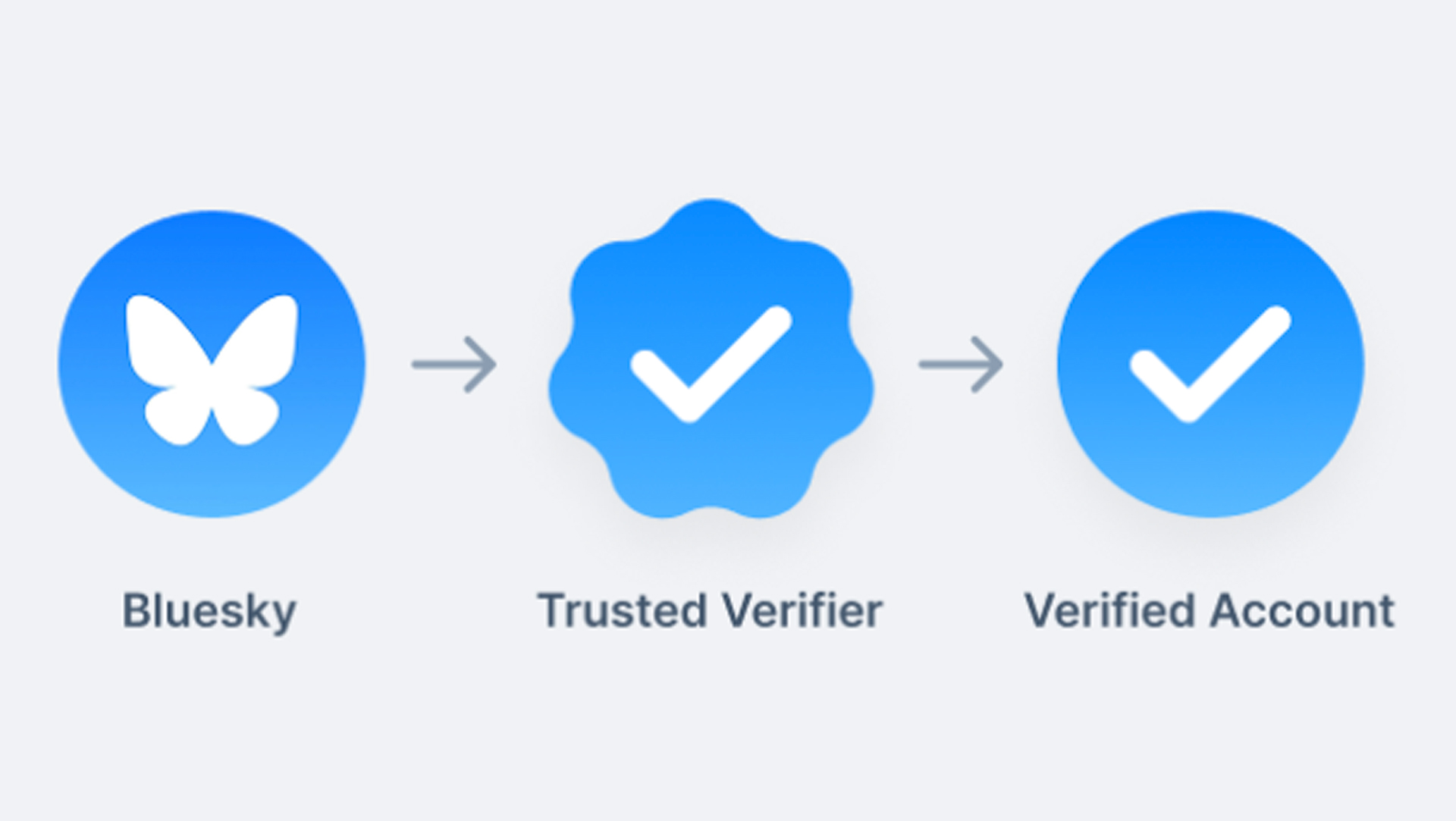
Rank 2113Bluesky is adopting an official verification system after all. In an update, the company said it plans to grant blue checkmarks to “authentic and notable” accounts. It will also allow some “trusted organizations" to verify users as well.
The change is a notable shift for the upstart platform, which previously resisted the idea of centralized verification. Up to now, the company has relied on a domain-based verification system, which allows users to change their handles to match domains that they are associated with. But that approach was often criticized for being overly complicated and offering insufficient protection from impersonation.
These critiques have only amplified as Bluesky has grown in popularity and attracted more prominent users. For example, when former President Barack Obama joined Bluesky in recent weeks, his handle did not use a custom domain, which understandably led many users to question whether the account was authentic. Instead, individual Bluesky employees ended up publicly vouching that the account was legitimate
Under Bluesky’s new system, the company will proactively verify certain accounts and add a prominent blue checkmark to their profile. It’s not clear what criteria Bluesky will use for these badges or how it plans to verify users’ identities. Additionally, there will be a slightly different blue badge — one with “scalloped edges” — that certain “trusted organizations” can grant through a new “trusted verifiers” feature.
Bluesky
The New York Times is one such organization, and the newspaper will now be able to hand out blue checks to its journalists. Bluesky didn’t say what other organizations will be able to participate in the program, but added that it will review verification from third-parties in order to “ensure authenticity.”
Notably, Bluesky said that people and organizations are still “highly encourage(d)” to verify themselves via a custom domain. And it sounds like the new blue ticks may be in short supply, at least to start. “During this initial phase, Bluesky is not accepting direct applications for verification,” the company wrote in its announcement. “As this feature stabilizes, we’ll launch a request form for notable and authentic accounts interested in becoming verified or becoming trusted verifiers.”This article originally appeared on Engadget at https://www.engadget.com/social-media/bluesky-is-getting-blue-checkmarks-and-an-official-verification-system-173204662.html?src=rss
-

Picture from techcrunch.com
Rank 2114 -
Picture from o.aolcdn.com
Rank 2115Nearly four years after it was originally announced, Riot Games has finally shared a look at Valorant Mobile. The mobile version of the competitive shooter was developed by LightSpeed Studios and will launch in China first before coming to other countries and regions.
Valorant Mobile looks like it relies on a lot of onscreen buttons, but based on a brief gameplay video, the game otherwise seems pretty similar to its PC counterpart in terms of speed and intensity. LightSpeed Studios successfully adapted PlayerUnknown's Battlegrounds into PUBG Mobile, and Riot Games clearly believes the developer has managed to do the same with the originally mouse-based Valorant.
Coming to mobile has been in the works for Valorant for years, and makes a ton of sense given the current popularity of mobile first-person shooters like PUBG Mobile and Call of Duty: Warzone. This isn't the first time the game's precise gunplay has had to be adapted to a slightly more cumbersome control scheme, either. Valorant successfully made the jump to controllers when it launched on Xbox Series X/S and PlayStation 5 in 2024. Mobile controls aren't that much bigger of a hurdle in comparison.
Players in China can pre-register now to be ready for the next playtest, ahead of a more formal launch at some point in the future.This article originally appeared on Engadget at https://www.engadget.com/gaming/valorant-mobile-pre-registration-is-open-in-china-180132021.html?src=rss
-

Picture from techcrunch.com
Rank 2116 -

Picture from cdn.mos.cms.futurecdn.net
Rank 2117The FBI is warning about an ongoing scheme targeting victims of online fraudThe victims are encouraged to reach out to a person on Telegram, posing as the chief of IC3The person would try to gain access to the victims' financial accounts
Cybercriminals are preying on victims of online fraud, using their state of emotional distress to cause even more harm, the FBI has said, revealing it received more than a hundred reports of such attacks in the last two years.In the campaign, cybercriminals would create fake social media profiles and join groups with other victims of online fraud. They would then claim to have recovered their money with the help of the FBI's Internet Complaint Center (IC3). This makes the ruse credible, since IC3 is an actual division of the FBI and serves as a central hub for reporting cybercrime.Those who believe the claim are then advised to contact a person named Jaime Quin on Telegram. This person, claiming to be the Chief Director of IC3, is actually just part of the scheme. Quin will tell people who reach out that he recovered their funds and would then ask for access to their financial information, to steal even more money.
Get Keeper Personal for just $1.67/month, Keeper Family for just $3.54/month, and Keeper Business for just $7/monthKeeper is a cybersecurity platform primarily known for its password manager and digital vault, designed to help individuals, families, and businesses securely store and manage passwords, sensitive files, and other private data. It uses zero-knowledge encryption and offers features like two-factor authentication, dark web monitoring, secure file storage, and breach alerts to protect against cyber threats.Preferred partner (What does this mean?)View Deal
Getting in touch
This is just one example of how the scam works. The FBI says that initial contact from the scammers can vary.“Some individuals received an email or a phone call, while others were approached via social media or forums," it said. "Almost all complainants indicated the scammers claimed to have recovered the victim's lost funds or offered to assist in recovering funds. However, the claim is a ruse to revictimize those who have already lost money to scams."To minimize the risk of falling victim to these scams, you should only reach out to law enforcement through official channels. Furthermore, you should keep in mind that law enforcement (especially those in executive positions) will never reach out to you this way, especially not to initiate contact.Finally, the police will never ask for your password, financial information, or access to private services.Via BleepingComputer
You might also like
Key Strategies for financial institutions to combat fraudTake a look at our guide to the best authenticator appWe've rounded up the best password managers
-

Picture from techcrunch.com
Rank 2118 -

Picture from techcrunch.com
Rank 2119 -
Picture from cdn.mos.cms.futurecdn.net
Rank 2120Bluesky, the upstart, decentralized social network that's offered an island of blue calm for those departing the tumultuous, dark waters of X (formerly Twitter), is finally introducing an official form of account verification. It will look familiar to those who spent time on old-school Twitter, but it does feature a few notable caveats.Up until today (April 22, 2025), there was no Bluesky-supported system for verifying an account or visual indication of verified status, and the microblogging social media platform was suffering from an imposter problem. Bluesky addressed this, in a way, by encouraging people to set up and use their own domain names to establish the veracity of an account.My account, for instance, is attached to lanceulanoff.com, a domain I've owned for years. Bluesky reports that some 270,000 accounts have linked their accounts to domains.Still, setting up a domain and connecting it to your Bluesky account is not a trivial matter. This new feature significantly simplifies the process.
A new check
(Image credit: Future)
According to a new Bluesky blog post, there are now three levels of identity on the platform: the basic Bluesky account, a Trusted Verifier, and a Verified Account.The Trusted Verifier is interesting because it's a verified account that, with Bluesky's review, can verify other accounts. The example given is The New York Times' Bluesky account, which can then verify its journalists' accounts.Years ago, Twitter had something similar, where an entity like TechRadar could ask Twitter directly to verify some of its journalist employee accounts.It was not a popular feature among, for instance, celebrities and officials, who wondered (often on Twitter) why journalists needed verification. The topic of Blue Checks and verification on Twitter became so fraught that, for a time, Twitter's then-CEO Jack Dorsey stopped verifying accounts. When Elon Musk took over, he removed verifications from millions of accounts, only to return them some months later.
Who verifies who
Bluesky wrote that it is proactively verifying some "authentic and notable accounts," which will now have a white check in a blue circle.Trusted Verifiers will have a scalloped blue check to indicate their vaunted status. A tap on someone's verified status can show you which Trusted Verifier granted verification.It's not necessarily a foolproof system, as I think media companies might seek to verify all journalists in their camp, and Bluesky could push back against that. Or maybe Bluesky says yes, but at some point, "the notables" grow irritated because there are suddenly so many non-famous people with checks.One thing Bluesky is not supporting is "requests for verification." However, the social media platform is not ruling it out and has promised that as this system settles in and stabilizes, it will "launch a request form for notable and authentic accounts interested in becoming verified or becoming trusted verifiers."If you're wondering about the other decentralized social media platform, Threads, it adopts verifications directly from Instagram, another Meta property.It'll be interesting to see what Bluesky asks for in its future verification process and if any part of it will involve some form of ID.
You might also like
What is Bluesky? The new social media network explainedHow to switch to Bluesky from TwitterI wasted my day on Bluesky Social and no, I'm not sorry
-

Picture from techcrunch.com
Rank 2121 -
Picture from o.aolcdn.com
Rank 2122We know Cassian Andor is doomed. 2016's Rogue One makes clear he will meet an untimely death in a massive explosion. That sense of inevitable destruction lingered in the background of the first season of Andor, the prequel series that follows his journey from a low-rent criminal to a rebel spy. But his fate is even more crushing in Andor's second (and final) season, where the cost of fighting against the seemingly all-powerful Empire chips away at his soul.
"Rebellions are built on hope," was an iconic line from Rogue One, first uttered by Andor and then repeated triumphantly by that film's lead, Jyn Erso. In the streaming series' second season, we see how that idea is formed and inspires many people. Rebellions aren't just about massive space battles, and Death Star trench runs. They don't rely on an untrained kid hopping into a spaceship and scoring a major victory thanks to the Force and destiny. Rebellions start with small decisions by normal people, and through collective action they evolve into something powerful enough to take down empires. Read into that what you will.
Lucasfilm Ltdâ¢
Andor always seemed like an odd series for Disney, which spent the last decade milking the Star Wars franchise for all it's worth. Created by Tony Gilroy, the Bourne Identity screenwriter who reportedly swooped in to save Rogue One at the last minute, Andor has no lightsabers and minimal references to the Force. While it's filling in the gaps for a storyline that leads to A New Hope, the series also feels refreshingly free of the stifling mythology that has plagued shows like The Mandalorian and Ahsoka (and Boba Fett, and Obi-Wan Kenobi). Andor takes its time, building up its characters and laying out complex ideas, instead of rushing between action set pieces. It's Star Wars for grownups, something I never thought we'd see for a franchise so devoted to kids.
In season one, we're introduced to Andor as he's searching for his sister, who disappeared years ago. After being targeted by two local police officers, he ends up killing them both and is forced to hide out in his home planet of Ferrix. There he meets up with his friend Bix (Adria Arjona), who is working for Luthen Rael, a mysterious man who has devoted his life to taking down the Empire. It doesn't take long before Luthen sees potential in Andor, and begins to court him for his rebel cause.
Lucasfilm Ltdâ¢
Minor spoilers ahead for Andor season two.
Taking place over the course of a few years (and counting down to the Battle of Yavin, where the Death Star was destroyed in A New Hope), season two follows Andor and Bix as they delve further into the rebellion. Bix is still recovering from the events of the first season, where she was imprisoned and tortured. And Andor splits his time caring for Bix and going on spy missions to help rebels on other planets.
I won't say too much about what happens in the season specifically, but in general it builds on everything that made Gilroy's first stab such a refreshing Star Wars entry. We see how the heartless machinations of the Empire affect real people, and how it can push entire populations to fight against tyranny. Small moments, like a hotel bellhop revealing his true thoughts about the Empire to Andor, can lead to more profound acts of rebellion.
Lucasfilm Ltdâ¢
Star Wars has always been about the battle between good and evil. But Andor breaks down what that means for ordinary people, not hyper-powerful space wizards with laser swords. An average citizen could be killed on the spot if they decide to speak up against the Empire. Or, with self-preservation in mind, they could keep their heads down or even volunteer to be a cog in the fascist machine. Not everyone can be Han Solo (though Andor himself is a bit close). But when living under an authoritarian regime, there comes a time for everyone to draw a line. Resist, or lose your soul.
Andor also spends plenty of time on Senator Mon Mothma (Genevieve O'Reilly) before she eventually becomes the leader of the Rebel Alliance. We see her dealing with the difficulty of funding Luthen's rebel activities, especially as they lead to explosive outcomes. But after the Empire massacres thousands of civilians on the planet Ghorman, an event that’s been referenced in recent Star Wars books, Mothma and other rebel leaders conclude that violent rebellion is the only way to fight back against the fascist Empire.
Lucasfilm Ltdâ¢
"The Empire has been choking us so slowly, we're starting not to notice. The time has come to force their hand," Luthen tells Senator Mothma in Andor's first season. When she notes that people will suffer, he replies "That's the plan. You're not angry at me. I'm just saying out loud what you already know. There will be no rules going forward. If you're not willing to risk your conscience, then surrender and be done with it."
Even though this is Andor's final season, I have a feeling this series will live on in viewer's minds far longer than whatever the hell happened in The Book of Boba Fett. It forces you to think about how the Empire directly affects everyone, from civilians on remote planets to the bureaucratic stooges devoting their lives to fascism. In many ways, it's practically a blueprint for rebellion. And not to put too much on a Disney TV show, but that feels like something we could use right now.This article originally appeared on Engadget at https://www.engadget.com/entertainment/tv-movies/andor-season-2-review-a-star-wars-miracle-an-ode-to-rebellion-190057159.html?src=rss
-
Picture from techcrunch.com
Rank 2123 -
Picture from o.aolcdn.com
Rank 2124The Federal Trade Commission has decided to take formal action against ride-hailing service Uber over what it describes as "deceptive billing and cancellation practices." The FTC's lawsuit, filed on Monday, specifically takes issue with the Uber One service, which lets subscribers earn cash back on rides, get free deliveries and avoid cancellation fees.
According to the FTC, Uber made it easy for subscribers to join Uber One, but much harder to cancel. "Users can be forced to navigate as many as 23 screens and take as many as 32 actions to cancel," the commission claims. The company also reportedly charged some users before their bill their free trial was up, and misrepresented the savings Uber One offered by not taking its subscription fee into account.
The lawsuit says that Uber's actions violated the FTC Act and the Restore Online Shoppers' Confidence Act, which "requires online retailers to clearly disclose the terms of the service they are selling, obtain consumers' consent before charging them for a service and provide a simple way to cancel a recurring subscription."
Uber intends to fight the lawsuit and believes that the FTC has misrepresented the facts in some key ways. The company says that it "does not sign up or charge consumers without their consent" and that subscription cancellations can happen in-app, at any point. Uber does acknowledge that subscriptions previously had to be cancelled 48 hours before a charge through the company's support team, but that's apparently no longer the case.
Despite the best efforts of tech executives, the Trump administration has maintained a level of animosity towards tech companies. New FTC chair Andrew Ferguson suggested that censorship would be a major concern for the FTC under President Donald Trump, but the commission is still moving forward with an antitrust case against Meta, for example. The possibility for the (technically) independent organization to be wielded as a weapon by Trump feels a lot more likely without any Democrat members.This article originally appeared on Engadget at https://www.engadget.com/big-tech/ftc-sues-uber-over-claims-the-company-makes-subscriptions-hard-to-cancel-191552906.html?src=rss
-

Picture from techcrunch.com
Rank 2125 -

Picture from techcrunch.com
Rank 2126 -

Picture from cdn.mos.cms.futurecdn.net
Rank 2127Synology’s 2025 Plus range only works with certain hard drivesIt says this is for lower failure rates and compatibility issuesOlder models won’t be affected by this new policy
Taiwanese NAS-maker Synology has confirmed a new policy that requires Synology-branded hard drives to be used for full compatibility within its 2025 Plus series of network-attached storage (NAS) devices.From launch, the policy states Synology-branded hard drives will need to be used, but the company promises to “update the Product Compatibility List as additional drives can be thoroughly vetted in Synology systems,” a company spokesperson said(via Ars Technica).In the meantime, this could spell out reduced choice and increased cost for customers, with potential sustainability issues stemming from users’ inability to use hard drives they might already have, rendering them unusable.
Synology NAS devices hard drives
Synology has nine products in its Plus range, supporting all the way up to 24 hard drives, however users will be required to use approved storage drives only.The company said that “Synology systems are at less risk of drive failure and ongoing compatibility issues.”Chad Chiang, the Managing Director of Synology’s Germany and UK businesses, noted: “With our proprietary hard disk solution, we have already seen significant benefits for our customers in various deployment scenarios.”Despite the change for 2025-onward models, the company confirmed that older models sold up to and including 2024 (excluding XS Plus series and rack models) remain unchanged.Interestingly, Synology doesn’t manufacture its own hard drives, instead choosing to rebrand models from popular brands like Toshiba and Seagate.This could be good news, indicating the possibility that further Toshiba and Seagate models might appear on the approved list of third-party drives at a later date, however it could also mean that drives from other brands might be less likely to appear on the list.Of course, this is speculation only, but we’ve contacted Synology for further details in the hope that we can get access to a list of pre-approved third-party drives.
You might also like
We’ve listed the best NAS hard drivesKeep your data online with the best cloud storage solutionsPopular NAS vendor issues emergency patch against potentially highly damaging vulnerabilities — here's what you need to know
-
Picture from techcrunch.com
Rank 2128 -
Picture from o.aolcdn.com
Rank 2129The American Civil Liberties Union is suing to find out exactly what information the so-called Department of Government Efficiency has accessed from federal agencies. The civil rights organization submitted a Freedom of Information Act request to several goverment departments in February; it is now suing to get responses from the Social Security Administration and the Department of Veterans Affairs. The SSA denied the group's request for expedited processing and has not responded to the ACLU's appeal, while the VA did not act on the FOIA request, according to the press release announcing the lawsuit.
The ACLU requested any records that would show whether DOGE members have accessed databases that contain personally identifying information about citizens. The request also seeks information about whether AI is being used to analyze government data.
"The federal government cannot dodge accountability by ignoring our lawful demands for transparency," said Nathan Freed Wessler, deputy director of the Speech, Privacy and Technology Project within the ACLU. "The American people have an urgent need to know if their private financial, medical and personal records are being illegally accessed, analyzed or weaponized by Trump's unaccountable team of unvetted outsiders. This is doubly true for our seniors and veterans, who are at particular risk if their data has been accessed illegally."
DOGE, a group headed by Elon Musk, has been leading the move to cut jobs across federal agencies, including those that oversee Musk's business endeavors. Although there have been other lawsuits trying to prevent people who are not civil servants from accessing sensitive government data, other reports claim DOGE members have been trying to circumvent court orders that limit their reach.This article originally appeared on Engadget at https://www.engadget.com/cybersecurity/aclu-sues-two-federal-agencies-for-transparency-around-doge-activity-195916390.html?src=rss
-

Picture from cdn.mos.cms.futurecdn.net
Rank 2130Developers shift from loyalty to flexibility as OpenAI leads, but DeepSeek gains ground fastMicrosoft struggles for developer mindshare with only a 10% adoption rateAI integration gets leaner as teams drop formal structures and focus on usable tools
OpenAI has been dominating the LLM space for some time, and remains the leading choice for many developers, but market dynamics and loyalty seem to be shifting, new research has claimed.A survey by Vercel of 656 app builders found 87% use OpenAI’s models and 83% rely on its inference APIs. However, developers now use an average of two providers, and 60% have changed vendors within the last six months - raising questions about their loyalty.DeepSeek is now used by nearly a third of businesses (29%), while Microsoft's LLMs, by contrast, appears to be struggling, with only 10% of respondents report using the latter, and 9 out of 10 developers do not consider it a viable option.
Developers now focus on tools, not teams
“AI is dissolving the boundaries between roles. We’re seeing new product designers blend UX, UI, and code in one creative flow - thanks to tools like Vercel, v0, Uizard, and Cursor. Whether junior or senior leader, anyone can now build, test, and ship ideas independently - and that’s not just efficient, it’s liberating,” said Nicolas Le Pallec, CTO, EMEA - AKQA.AI now builds around clear use cases, with developers prioritizing tools - not teams. Forty-five percent of respondents said they have no dedicated AI team, while 57% reported no specific AI leadership structure. Instead, success with AI depends on clear priorities and the right tools.“By embracing cutting-edge AI technologies, we’re empowering our teams to work smarter and faster,” said Dr. Jan Ittner of BCG X, echoing the sentiment that an AI writer or developer tool can be more valuable than another hire.Product AI features are now a priority for 75% of customer-facing apps, while only 39% still include traditional support chatbots. Website personalization remains underutilized at 27%, indicating room for future innovation.Cost control is also a major priority. Over 70% of developers manually test their models, spending under $1,000 monthly - showing how much can be achieved on limited budgets. To cut costs, only 14% train their models, while 60% instead use retrieval-augmented generation (RAG) and vector databases.The focus on tools stems from a perceived "overhype" around AI, with an average rating of 6.4 out of 10. Yet developers gave a 7.7 out of 10 when asked if AI will transform their industries in the next 12 months.In a shifting field where speed, precision, and adaptability matter more than scale, the best LLM for coding isn’t fixed - it’s the one that solves today’s problems while keeping tomorrow’s door open.
You may also like
Check out the best AI phones on the marketHere is our list of the best AI website builders on the webAI in the workplace: why upskilling, not fear, is the key to AI collaboration
-
Picture from o.aolcdn.com
Rank 2131The Academy of Motion Picture Arts and Sciences has decide that its official stance towards AI-use in films is to take no stance at all, according to a statement the organization shared outlining changes to voting for the 98th Oscars. The issue of award-nominated films using AI was first raised in 2024 when the productions behind Best Picture nominees The Brutalist and Emilia Pérez admitted to using the tech to alter performances.
"With regard to Generative Artificial Intelligence and other digital tools used in the making of the film, the tools neither help nor harm the chances of achieving a nomination, " AMPAS writes. "The Academy and each branch will judge the achievement, taking into account the degree to which a human was at the heart of the creative authorship when choosing which movie to award."
While the organization at least reaffirms that human involvement is their primary concern, they also don't seem to believe that using AI — potentially trained on the ill-gotten work of their membership — is an existential problem. Hollywood labor unions have historically felt differently: One of several issues raised during the WGA and SAG-AFTRA strikes in 2023 was that AI could be used to replace the work of real people. The Brutalist and Emilia Pérez used it to modify vocal performances, but you don't have to connect too many dots to see generative AI playing an even more substantial role in the future.
The Academy is more flexible than it's been in years, expanding membership, adding new award categories and alongside this AI statement, improving awards voting for the better. But it still seems like most industries are waiting for a decisive legal victory against an AI company to set a new standard before they change their tune towards the tech.This article originally appeared on Engadget at https://www.engadget.com/entertainment/tv-movies/using-generative-ai-will-neither-help-nor-harm-the-chances-of-achieving-oscar-nominations-201719890.html?src=rss
-

Picture from cdn.mos.cms.futurecdn.net
Rank 2132Google has been hyping up its Project Astra as the next generation of AI for months. That set some high expectations when 60 Minutes sent Scott Pelley to experiment with Project Astra tools provided by Google DeepMind.He was impressed with how articulate, observant, and insightful the AI turned out to be throughout his testing, particularly when the AI not only recognized Edward Hopper’s moody painting "Automat," but also read into the woman’s body language and spun a fictional vignette about her life.All this through a pair of smart glasses that barely seemed different from a pair without AI built in. The glasses serve as a delivery system for an AI that sees, hears, and can understand the world around you. That could set the stage for a new smart wearables race, but that's just one of many things we learned during the segment about Project Astra and Google's plans for AI.
Astra's understanding
Of course, we have to begin with what we now know about Astra. Firstly, the AI assistant continuously processes video and audio from connected cameras and microphones in its surroundings. The AI doesn’t just identify objects or transcribe text; it also purports to spot and explain emotional tone, extrapolate context, and carry on a conversation about the topic, even when you pause for thought or talk to someone else.During the demo, Pelley asked Astra what he was looking at. It instantly identified Coal Drops Yard, a retail complex in King’s Cross, and offered background information without missing a beat. When shown a painting, it didn’t stop at "that’s a woman in a cafe." It said she looked "contemplative." And when nudged, it gave her a name and a backstory.According to DeepMind CEO Demis Hassabis, the assistant’s real-world understanding is advancing even faster than he expected, noting it is better at making sense of the physical world than the engineers thought it would be at this stage.
Veo 2 views
But Astra isn’t just passively watching. DeepMind has also been busy teaching AI how to generate photorealistic imagery and video. The engineers described how two years ago, their video models struggled with understanding that legs are attached to dogs. Now, they showcased how Veo 2 can conjure a flying dog with flapping wings.The implications for visual storytelling, filmmaking, advertising, and yes, augmented reality glasses, are profound. Imagine your glasses not only telling you what building you're looking at, but also visualizing what it looked like a century ago, rendered in high definition and seamlessly integrated into the present view.
Genie 2
And then there’s Genie 2, DeepMind’s new world-modeling system. If Astra understands the world as it exists, Genie builds worlds that don’t. It takes a still image and turns it into an explorable environment visible through the smart glasses.Walk forward, and Genie invents what lies around the corner. Turn left, and it populates the unseen walls. During the demo, a waterfall photo turned into a playable video game level, dynamically generated as Pelley explored.DeepMind is already using Genie-generated spaces to train other AIs. Genie can help these navigate a world made up by another AI, and in real time, too. One system dreams, another learns. That kind of simulation loop has huge implications for robotics.In the real world, robots have to fumble their way through trial and error. But in a synthetic world, they can train endlessly without breaking furniture or risking lawsuits.
Astra eyes
Google is trying to get Astra-style perception into your hands (or onto your face) as fast as possible, even if it means giving it away.Just weeks after launching Gemini’s screen-sharing and live camera features as a premium perk, they reversed course and made it free for all Android users. That wasn’t a random act of generosity. By getting as many people as possible to point their cameras at the world and chat with Gemini, Google gets a flood of training data and real-time user feedback.There is already a small group of people wearing Astra-powered glasses out in the world. The hardware reportedly uses micro-LED displays to project captions into one eye and delivers audio through tiny directional speakers near the temples. Compared to the awkward sci-fi visor of the original Glass, this feels like a step forward.Sure, there are issues with privacy, latency, battery life, and the not-so-small question of whether society is ready for people walking around with semi-omniscient glasses without mocking them mercilessly.Whether or not Google can make that magic feel ethical, non-invasive, and stylish enough to go mainstream is still up in the air. But that sense of 2025 as the year smart glasses go mainstream seems more accurate than ever.
You might also like
Why 2025 will be the year of the AI smart glassesYou don't have to pay for Google Gemini to comment on what you're looking at on your phone anymoreGoogle Gemini could soon get a super-useful 'Power up' button – here's what it does
-

Picture from techcrunch.com
Rank 2133 -

Picture from techcrunch.com
Rank 2134 -
Picture from o.aolcdn.com
Rank 2135The Fyre Festival saga is getting an unexpected new chapter. Shawn Rech, who co-founded the TruBlu streaming network for crime and investigative content, is planning to leverage the Fyre Festival name for a new music streaming platform. He's acquired select intellectual property trademarks for the famously failed music event whose co-founder Billy McFarland went to jail for fraud. However, Rech will not play a role in Fyre Festival's hypothetical live events. According to him, he's just trying to capitalize on the name's familiarity for his own project.
"It has nothing to do with music," Rech told Deadline in a surprisingly candid statement. "I needed a big name that people would remember, even if it’s attached to infamy, so that’s why I bought these [trademarks] to start the streaming network."
Deadline reports that the Fyre Music Streaming will have a subscription video-on-demand platform and free ad-supported television channels. Rech claims it will launch at Thanksgiving. "We’re building something authentic and lasting," he said.
It takes an impressive amount of hubris to use the name of a comically ridiculous music festival fraud and expect people to give you money for it. But considering Rech did manage to get TruBlu off the ground, maybe his music platform will actually exist. If the fact that the second Fyre Festival has already been indefinitely postponed is any sign of what's to come, though, it will be a hilarious exercise in schadenfreude.This article originally appeared on Engadget at https://www.engadget.com/entertainment/music/fyre-festival-is-becoming-a-music-streaming-service-that-might-not-be-a-scam-this-time-221058381.html?src=rss
-
Picture from o.aolcdn.com
Rank 2136Anbernic, a popular retro handheld maker, has announced that its suspending shipments of its devices from China to the US because of tariffs. The company, which makes a variety of emulation-focused consoles and has appeared in Engadget's "Best gaming handhelds" list, is still selling devices it's already shipped to the US while supplies last.
"Due to changes in U.S. tariff policies, we will be suspending all orders shipping from China to the United States starting today," Anbernic writes. "We strongly recommend prioritizing products shipped from our U.S. warehouse, which are currently not affected by import duties and can be purchased with confidence."
Anbernic has long offered the option to choose which warehouse your device is shipped from as a way to avoid additional customs fees or a model being out of stock in specific region. Because of this policy change, though, US customers will no longer be able to order directly from China and could miss out on the company's future hardware launches.
The decision to stop shipping to the US is understandable given the current chaos around tariffs. President Donald Trump announced a 90-day pause on most tariffs on April 9, but increased the tariffs companies would pay to import goods from China. Specific exemptions were carved out for certain electronics, but then the Trump administration later clarified that electronics would get their own separate semiconductor tariffs at some point, too.
All of this flip-flopping over trade policies was also paired with the removal of the "de minimis exemption" which allows packages shipped to the US under $800 to be duty-free, a key ingredient in cheap Amazon-alternatives like Temu and the budget products Anbernic sells. Given how messy the current approach to trade is, it's possible Anbernic might be able to ship to the US again in the future. For now, though, not everyone is able to eat the costs of tariffs like Nintendo is.This article originally appeared on Engadget at https://www.engadget.com/gaming/retro-handheld-maker-anbernic-stops-us-shipments-due-to-tariffs-220217833.html?src=rss
-

Picture from cdn.mos.cms.futurecdn.net
Rank 2137Kaleidescape may not be a household name, but most home theater fans will have at least some familiarity with the company’s movie players and servers, which provide the highest-quality alternative to the best 4K Blu-ray players.In case you’re not familiar with Kaleidescape, its systems let you download movies for purchase or rental from an online storefront with a comprehensive library, and in some cases, new titles not yet available from other online services like Amazon or Apple TV. The picture quality of Kaleidescape downloads is equivalent to 4K Blu-ray, with support for both Dolby Vision and HDR10 high dynamic range formats, along with lossless Dolby Atmos and DTS:X soundtracks.A typical Kaleidescape system can be pricey, but over the past year, the company has expanded its product line with a lower-cost standalone 4K movie player, the Kaleidescape Strato V, plus an even cheaper 2K model, the Strato M. Those releases demonstrate that the company is looking to expand its reach into new markets, and also to give existing Kaleidescape owners options for expanding their systems outside of a dedicated home theater driven by the best projectors.
The Kaleidescape Strato V combines a movie player with built-in 960GB SSD storage – enough to hold ten 4K movies at a time (Image credit: Future)
The most recent news from Kaleidescape is an announcement of its membership in the 8K Association, an industry group dedicated to accelerating the adoption of 8K content and 8K TVs.In a company press release, Kaleidescape chairman and CEO Tayloe Stansbury characterized the alliance as one that “positions Kaleidescape alongside other industry leaders, committed to fostering a collaborative environment, and dedicated to the advancement and standardization of 8K technology.”Stansbury further stated, “As consumers demand larger screens, higher-fidelity and increasingly immersive experiences, Kaleidescape’s involvement in the 8KA will play a pivotal role in shaping the future of premium home cinema.”
A fighting chance for 8K?
Samsung's new QN990F series 8K TVs include a 98-inch size option (Image credit: Future)
Looking at the current TV market, it’s impossible to ignore that set manufacturers have a lukewarm relationship with the 8K format. Until recently, new 8K TVs were a regular thing, but only one company, Samsung, has announced new 8K models for 2025 (the Samsung QN990F and Samsung QN900F).Projectors supporting 8K have also been slow to emerge, with only two consumer models, the JVC DLA-NZ9 and JVC DLA-NZ8, currently available.An 8K TV can be priced almost twice as high as an equivalent 4K model, but the main reason why the 8K TV market hasn’t really taken off is a lack of 8K content. You can find some 8K – mainly eye candy travelogues – on YouTube, but there isn’t a better online source for streamed 8K content such as documentaries, concert videos, or movies.An 8K disc format isn’t technically out of the question, but there’s been no commercial advancement on that front since 8K TVs first appeared. Also, physical disc sales, 4K Blu-ray included, have been steadily declining, falling below $1 billion for the first time in the US in 2024.Given that trend, the outlook for an 8K disc format is grim to nonexistent. That’s why Kaleidescape’s 8K Association announcement is intriguing – the company has the technical infrastructure to make 8K downloads possible, and its business model means that content can be delivered without the high compression levels that make the best streaming services inferior to 4K Blu-ray Disc.Another good omen for 8K is Kaleidescape’s customer base, which is comprised of high-end home theater enthusiasts willing to pay for the highest quality presentation possible. Many of those customers also use either video projection systems or ultra-large screen TVs, and the added detail provided by 8K can be appreciated on such displays.Samsung’s new QN990F series 8K TVs are available in a 98-inch screen size. An 8K TV that large deserves actual 8K content, and with Kaleidescape’s announcement, there’s new hope that more and better 8K content could be coming.
You might also like
8K TVs were supposed to be the next big thing – what happened?Samsung’s new 98-inch 8K mini-LED makes 8K TVs finally make senseWelcome to TechRadar’s Home Theater Week 2024
-

Picture from techcrunch.com
Rank 2138 -

Picture from cdn.mos.cms.futurecdn.net
Rank 2139ChatGPT's o3 model scored a 136 on the Mensa IQ test and a 116 on a custom offline test, outperforming most humansA new survey found 25% of Gen Z believe AI is already conscious, and over half think it will be soonThe change in IQ and belief in AI consciousness has happened extremely quickly
OpenAI’s new ChatGPT model, dubbed o3, just scored an IQ of 136 on the Norway Mensa test – higher than 98% of humanity, not bad for a glorified autocomplete. In less than a year, AI models have become enormously more complex, flexible, and, in some ways, intelligent.The jump is so steep that it may be causing some to think that AI has become Skynet. According to a new EduBirdie survey, 25% of Gen Z now believe AI is already self-aware, and more than half think it’s just a matter of time before their chatbot becomes sentient and possibly demands voting rights.There’s some context to consider when it comes to the IQ test. The Norway Mensa test is public, which means it’s technically possible that the model used the answers or questions for training. So, researchers at MaximumTruth.org created a new IQ test that is entirely offline and out of reach of training data.On that test, which was designed to be equivalent in difficulty to the Mensa version, the o3 model scored a 116. That’s still high.It puts o3 in the top 15% of human intelligence, hovering somewhere between “sharp grad student” and “annoyingly clever trivia night regular.” No feelings. No consciousness. But logic? It’s got that in spades.Compare that to last year, when no AI tested above 90 on the same scale. In May of last year, the best AI struggled with rotating triangles. Now, o3 is parked comfortably to the right of the bell curve among the brightest of humans.And that curve is crowded now. Claude has inched up. Gemini’s scored in the 90s. Even GPT-4o, the baseline default model for ChatGPT, is only a few IQ points below o3.Even so, it’s not just that these AIs are getting smarter. It’s that they’re learning fast. They’re improving like software does, not like humans do. And for a generation raised on software, that’s an unsettling kind of growth.
I do not think consciousness means what you think it means
For those raised in a world navigated by Google, with a Siri in their pocket and an Alexa on the shelf, AI means something different than its strictest definition.If you came of age during a pandemic when most conversations were mediated through screens, an AI companion probably doesn't feel very different from a Zoom class. So it’s maybe not a shock that, according to EduBirdie, nearly 70% of Gen Zers say “please” and “thank you” when talking to AI.Two-thirds of them use AI regularly for work communication, and 40% use it to write emails. A quarter use it to finesse awkward Slack replies, with nearly 20% sharing sensitive workplace information, such as contracts and colleagues’ personal details.Many of those surveyed rely on AI for various social situations, ranging from asking for days off to simply saying no. One in eight already talk to AI about workplace drama, and one in six have used AI as a therapist.If you trust AI that much, or find it engaging enough to treat as a friend (26%) or even a romantic partner (6%), then the idea that the AI is conscious seems less extreme. The more time you spend treating something like a person, the more it starts to feel like one. It answers questions, remembers things, and even mimics empathy. And now that it’s getting demonstrably smarter, philosophical questions naturally follow.But intelligence is not the same thing as consciousness. IQ scores don’t mean self-awareness. You can score a perfect 160 on a logic test and still be a toaster, if your circuits are wired that way. AI can only think in the sense that it can solve problems using programmed reasoning. You might say that I'm no different, just with meat, not circuits. But that would hurt my feelings, something you don't have to worry about with any current AI product.Maybe that will change someday, even someday soon. I doubt it, but I'm open to being proven wrong. I get the willingness to suspend disbelief with AI. It might be easier to believe that your AI assistant really understands you when you’re pouring your heart out at 3 a.m. and getting supportive, helpful responses rather than dwelling on its origin as a predictive language model trained on the internet's collective oversharing.Maybe we’re on the brink of genuine self-aware artificial intelligence, but maybe we’re just anthropomorphizing really good calculators. Either way, don't tell secrets to an AI that you don't want used to train a more advanced model.
You might also like
ChatGPT o1 goes live and promises to solve all our science and math problemsHappy 2nd birthday, ChatGPT! Here are 5 ways you've already changed the worldChatGPT Tasks can start taking over your calendar and remind you to finish your to-do list
-

Picture from ichef.bbci.co.uk
Rank 2140 -

Picture from cdn.mos.cms.futurecdn.net
Rank 2141The biggest challenges facing Channel stakeholders include performance concerns, as there's an ongoing desire for the latest technology and a perception that refurbished tech is inferior. Revenue is also a factor, as companies profit from selling new equipment and need to adapt to offering sustainable services.Education remains crucial, as there's a need for a significant shift in consumer behavior from buying new to embracing the circular economy and considering the full product lifecycle, including disposal.Increased environmental pressures and government legislation are driving demand for Channel stakeholders to explore new ways they can reduce their carbon footprint and tackle e-waste. With the Technology Channel placing sustainability near the top of its list of priorities, businesses are responding by automating roles, utilizing electric vehicles for logistics and reducing e-waste headed for landfills.Channel operators should be adopting the ‘Repair, Rework, Reuse’ model, which aims to extend IT hardware lifecycles and reduce the carbon footprint of technology wherever possible. Through the development and implementation of robust sustainability initiatives, vendors, distributors, resellers and MSPs can play a leading role in helping to create a more circular economy and minimize e-waste.
What key strategies, policies and procedures should be adopted to meet net zero targets?
Developing a robust strategy is essential for Channel businesses to bolster their net zero, carbon offsetting and sustainability goals. Companies that aim to create a comprehensive e-waste strategy must align their initiatives with environmental regulations and industry standards while striving to minimize the impact of their operations on the environment.To create a concise strategy, Channel organizations must analyze their current operations - from sourcing components to end-of-life disposal - to minimize waste generation at each stage of the supply chain. The importance of this was revealed in our recent Sustainability report, with 36% of respondents already implementing initiatives to become more sustainable, and a further 37% looking to roll out strategies within the next 12 months.Businesses need to create a plan that aligns with their future growth trajectory and the impact that this will have on emissions. With that in mind, the best option is to reduce the carbon intensity of their operations by establishing reduction strategies and mobilizing infrastructure change. This can take effect across a number of areas in an organization, most predominantly in the business’ supply chain, which links back to the company’s scope 3 emissions.Channel operators must also consider measures to extend the life of hardware beyond the typical manufacturer lifespan, whilst ensuring the necessary quality standards and warranties are met. By repairing, reworking and reusing IT hardware, organizations can also reduce their carbon footprint and that of customers, whilst reducing cost.
How can vendors build e-waste initiatives within their partner programs?
Consumers and businesses across the Channel sector are waking up to the importance of Environmental, Social and Corporate Governance (ESG) with supply chain transparency, sustainable finance and renewable energy sources and materials all key to helping industries meet their net zero, carbon offsetting and sustainability goals.Vendors are now incorporating e-waste initiatives in processes to help streamline operations and boost efficiency for Channel partners. This not only enables significant environmental savings, but also an economical one for Channel partners and their end user clients.By delivering white label maintenance, engineering services’ solutions and break-fix maintenance, Channel vendors can enable partner organizations to benefit from cost-effective, multi-vendor hardware maintenance services. This mitigates the need to dispose of mass hardware, allowing partners to extend product life cycles and reduce their carbon footprints through dedicated platforms like EcoVadis and by creating strategies internally, like a sustainability dashboard.
How is sustainability influencing customers and purchasing decisions?
It’s not for everyone – some customers are still very focused on price. Others see sustainability as a nice to have but would not be willing to pay considerably more. However, we are starting to experience a shift for ESG credentials to form part of the tender process, up to 30% of the total scoring for a partner in some cases. Also the frequency of being asked about sustainability is increasing.As Channel vendors continue to scale their respective operations, they must consider their ESG strategies and goals and how best to meet the demands of customers, environmental legislation and compliance. They can also improve their sustainability approach by automating roles, utilizing electric vehicles for logistics and reducing electrical and electronic waste headed for landfills.By investing in sustainable strategies, Channel partners gain a competitive edge, enabling them to improve business growth and strengthen stakeholder and consumer relationships while adhering to their sustainability principles.
How can data be leveraged to better understand and manage problems?
For Channel firms wanting to make their supply chain more sustainable, the process of collecting and sharing data is often seen as a key challenge. However, once the hard work of data collection is done, it is hugely beneficial for evaluating an organization's ESG performance.Channel businesses, like many others, are relying heavily on data and analytics to make crucial business decisions. While this is seen as efficient, if decisions are being made based on data that is unreliable and inaccurate, the impact it can have could be huge. Accurate data collection is essential for tracking Scope 3 emissions, yet just 10% of the companies with under 100 employees surveyed for our research said they prioritize managing customer sustainability goals.By leveraging digital solutions to aid visibility and transparency of both supply chains and in line with required sustainability metrics, companies can expect to deepen engagement with their customers, reduce risk and create trust with their supply chain stakeholders. Just as importantly, sustainability practices and corporate responsibility can deliver a positive impact both inside and outside of the business long term.
We've reviewed the best business computers.
This article was produced as part of TechRadarPro's Expert Insights channel where we feature the best and brightest minds in the technology industry today. The views expressed here are those of the author and are not necessarily those of TechRadarPro or Future plc. If you are interested in contributing find out more here: https://www.techradar.com/news/submit-your-story-to-techradar-pro
-
Picture from o.aolcdn.com
Rank 2142Instant Pots were all the rage a few years ago, promising to be an all-in-one multi-cooker that can pressure cook foods quickly in addition to being a rice cooker, yogurt maker, slow cooker and more. Pressure cooking is arguably the best feature of this gadget, but thanks to all of the cooking modes it supports, it can effectively replace other kitchen tech hiding in your cabinets if you know how to use it properly.Maybe you bought an Instant Pot at the height of the craze, or you just picked one up on discount. It can be overwhelming to decide what to do with a small appliance like this that seemingly does everything. In this guide, we’ll give you a primer on the first steps you should take when you get one, some tips and tricks on how to use it and a few favorite recipes and source links. A lot of this comes from personal experience; I've been an Instant Pot owner for a few years. I'll also note that the listed recipes reflect my own taste, but hopefully this guide will provide a good start for your own culinary adventures and help you find the best Instant Pot model for you.
Table of contents
Which Instant Pot model is right for you?
How Instant Pots work
Getting started with an Instant Pot
Instant Pot accessories
Instant Pot tips and tricks
Instant Pot recipes and guides
Which Instant Pot model is right for you?
A brief word on other Instant Pot models:
The Duo Plus is an upgraded version of the Duo Series. It has two additional functions: sous vide (for temperature-controlled cooking) and sterilizer (a steam shortcut for sterilizing items like baby bottles). There’s also a cooking progress status bar plus an anti-spin design that keeps the inner pot in place when you’re sauteing.
The Duo Crisp + Air Fryer is basically an Instant Pot that comes with an additional lid that adds dry-heat cooking methods like baking, broiling, dehydrating and of course air frying. There’s also a $200 Pro version that pairs the air fryer lid with the Pro model mentioned above.
How Instant Pots work
For the uninitiated, the Instant Pot is an "all-in-one" kitchen gadget that promises to replace a rice cooker, a yogurt maker, a slow cooker and more. But the real reason the Instant Pot has risen to fame is that it's also a very good electric pressure cooker. This lets you cook food at an accelerated rate; imagine pulled pork in an hour instead of five or a chicken curry done in 10 minutes. And because it's electric, you just press a few buttons and walk away. Unlike a stovetop pressure cooker, there's no need to keep a constant eye on it.
There are several Instant Pot models to choose from. Some of the lower-end ones lack the yogurt mode, and a couple of the higher-end models have extra features like sous-vide cooking and canning, but even the basic models have the pressure cooker function, and indeed, much of this guide focuses on that.
Getting started with an Instant Pot
The Instant Pot has three parts: the housing with the cooking element at the bottom; the stainless steel inner pot; and the lid, which comes with a sealing ring plus a steam-release valve. Setup is as easy as putting the inner pot inside the housing and plugging it in. You'll also want to attach the tiny condensation collector on the back if the instructions call for it.
The first thing to do is a "water test," which not only helps familiarize you with the basic pressure cooker features, but confirms your appliance is in proper working order. To do this, put three cups of water in the pot, twist the lid on — it'll make a sound when it's locked in place — and set the pressure cooker on high for two minutes. The way to do this varies from model to model; on the Duo machines, you'll have to press Manual, select High, then dial down the time to two minutes. On something like the Ultra, you just need to go to the Pressure Cooker menu, dial it to two minutes and select High.
Then, make sure your valve is set to "Sealing" so that the Instant Pot can build pressure. On the Duo machines, this means rotating it so the arrow points up, while on the Ultra, the valve will automatically be set to Sealing. Finally, press "Start." The Instant Pot will then build up that pressure level to High, maintain it for the set two minutes, and then stop. In some cases, you'll hear hissing and see steam coming out of the Instant Pot. This is totally normal. You'll know the Instant Pot is under pressure when the float valve pops up and the hissing quiets down.
The lid cannot be opened when the Instant Pot is under pressure; you must depressurize it first. Once the cooking is done, you can let the pot naturally depressurize (also known as "Natural Release"), which simply means leaving it alone for 20 or so minutes until the float valve comes down.If you don’t want to wait that long, you can do a manual pressure release (also known as "Quick Release") by switching the valve to "Venting." To do that on the Duo models you rotate the valve; on the Ultra, press the steam release button on top. This method will release a lot of steam, so I suggest doing this under a range hood if you have one. Again, once the float valve comes back down, you'll know the Instant Pot has been depressurized.
Doing the water test teaches you the basics of sealing the Instant Pot, setting it and depressurizing it. Plus, if anything goes wrong along the way — especially if it doesn't seal the pressure — you can call the retailer or manufacturer to troubleshoot or ask about a return or exchange. It's a step that many people skip, but I recommend it for beginners.
Instant Pot accessories
The Instant Pot is ready to use right out of the box, but if you want to get even more functionality out of it, then you might want to consider some accessories. The following are just a few suggestions that we think will elevate your Instant Pot experience.
Tempered glass lid
The main reason to get an Instant Pot is to use it as a pressure cooker, but it has other functions too. If you want to use it as a slow cooker or you simply want to keep your food warm, you’ll want to invest in a tempered glass lid like our former editor-in-chief Dana Wollman did. This lid is also a good way to keep your food covered if you want to transfer the inner pot to a table or in the fridge.
Steamers/PIP
Steaming food in the Instant Pot is quick and easy, but you’ll want specific equipment to get the job done right. Instant Pot makes two styles of silicone steamers; one is a stacking model that you can use for dumplings or fish, and another is a collapsible one that is ideal for batch-cooking vegetables. If you need even more capacity, we recommend this Hatrigo mesh steamer basket.
Along your Instant Pot discovery journey, you might come across a phrase called “PIP cooking.” This stands for Pot-in-Pot and involves putting another vessel inside the Instant Pot. This method is great if you’re cooking foods that don’t contain liquid (such as cheesecake) or you simply want to cook in smaller quantities. One of our favorite accessories for this is the Aozita Stackable Steamer, which not only acts as a steamer, but also contains tiered containers so that you could cook multiple foods at once.
Sealing ring
If you use your Instant Pot for both savory and sweet applications, then we suggest getting extra sealing rings so that the odor of one doesn’t affect the other. You don’t really want your cheesecake to smell like pulled pork or vice versa.
Air fryer lid
As the name suggests, the Instant Pot Air Fryer Lid essentially turns your Instant Pot into an air fryer. It’s a good option if you don’t want two appliances taking up space on your kitchen counter, and this add-on does a decent job of “air frying” foods. Still, the Lid really only works for small batches as well as smaller pieces of food. Even a hot dog is too large to fit inside the air fryer basket.
If you’re going to use the air fryer lid to add roasting and broiling capabilities to the Instant Pot — so you can brown a roast chicken or melt the cheese on a lasagna, for example — then it’s not a bad option. But as far as air frying goes, I’d recommend saving up and investing in one of the best air fryers instead.
Instant Pot tips and tricks
Don't worry about all the buttons
When you first get the Instant Pot, you might be overwhelmed by all of the different buttons on the control panel. There are ones that say "Meat/Stew," "Chili/Beans," "Multigrain," "Egg" and even "Cake." With the exception of a few, most of these are simply shortcuts the Instant brand programmed ahead of time. You might never need to use them.
The most important buttons to know are "Sauté," which (as you might expect) lets you sauté things in the pot, and the aforementioned "Manual" or "Pressure Cooker" function. The rest are pretty superfluous, with the exception of "Keep Warm," "Cancel" and non-pressure cooking settings like the "Slow Cooker" or "Yogurt" (which helps maintain the cultured milk at a specific temperature).
Add at least half a cup of liquid, and don't go over the maximum
One of the things you'll learn about pressure cooking is that you don't need to add as much liquid as you would in regular recipes. But you'll still need to add some because the pressure cooker requires moisture to build that pressure. Otherwise, the Instant Pot could overheat and show an "OvHT" or “BURN” error on the display. On the other hand, you shouldn't fill it up beyond two-thirds capacity, which is handily marked on the inside of the cooking pot. The Instant Pot probably won't explode on you — it has a lot of safety features to prevent that — but you probably shouldn't test its boundaries.
Cooking times aren't always accurate
Setting the pressure cooker timer for two minutes doesn't mean the entire cooking time is two minutes. You have to take into account the amount of time the Instant Pot needs to come to pressure and the time it'll need to depressurize. The more stuff you have in the pot (and the colder it is), the longer the cooking process takes. Because of that, a "five-minute" chicken curry could really be more like 10 or 15 minutes from start to finish.
Clean it carefully and frequently
The inner pot doesn't have a nonstick coating, but it is dishwasher safe, which is convenient. The rest has to be cleaned by hand, though. Also, don't make the same mistake I did and accidentally spill something hot directly on the cooking element. The outer shell is hard to clean because you can't put it in the sink — electricity and water don't mix, after all — and you risk damaging the appliance. As for the lid, hand wash it after every use. You'll also notice after a while that the sealing ring — the rubber/silicone gasket on the inside of the lid — might develop a smell as it absorbs the scent of the food you're cooking. I recommend soaking it in a vinegar solution, or you could also put it on the top rack of your dishwasher.
You can't cook everything with it
Sure, you can cook everything from dog food to jam in the Instant Pot, but it's not a miracle worker. You can't deep fry in it. You can't bake a pie in it. Don't be ridiculous.
Instant Pot recipes and guides
Now you're all ready to cook, and you're probably dying to know what to make in it. Due to the popularity of the Instant Pot, you'll find no shortage of cookbooks and recipe tutorials online. The Facebook group I mentioned is a good place to start, and there are countless YouTube tutorials as well. Here are just a few of my favorite resources:
Pressure Cook Recipes
Amy and Jacky are part of the OG Instant Pot community, and their site is great for beginners. Not only will you get the low-down on the aforementioned water test, but you'll also get great recipes for bone broth, "fail-proof" rice, yogurt, cheesecake and more.
Nom Nom Paleo
Whether or not you're into the "paleo" lifestyle, you'll like Michelle Tam's list of Instant Pot recipes. Pressure cookers are great for shortening the amount of time for cooking braised meats, and she has a lot of recipes that cater to your inner carnivore. Her Instant Pot pulled pork recipe is still my go-to, and the short ribs are great as well.
Serious Eats
My personal favorite site for pressure-cooker recipes is probably Serious Eats. All of these recipes are fantastic. I've tried the chicken stock, the mushroom risotto, the chicken pho, the chicken and chickpea masala, and they've all been outstanding.
The New York Times
Another personal favorite is The New York Times’ Cooking section, which has a list of wonderful pressure-cooker-friendly recipes. My favorites are from Melissa Clark, who has written two Instant Pot cookbooks: Dinner In an Instant and Comfort in an Instant. There's a recipe in Comfort in an Instant for spaghetti and meatballs that I was hugely skeptical of but turned out to be one of the most remarkable things I've ever made. I also love the recipes for chicken korma and shrimp biryani.
Here are a few other guides that I found very useful in my own Instant Pot journey, and they contain links to many more recipes and sites than I have space for here:
Neven Mrgan's Instant Pot guide
The Instant Pot Starter Guide from 101 Cookbooks
75+ recipes to make in your Instant Pot by thekitchn
With all of this information in your arsenal, you should have no fear in picking up an Instant Pot. Thankfully, not only is the base model pretty affordable at less than $100, Amazon frequently puts it on sale either on Prime Day or on Black Friday. So if you haven't bought one just yet, it's not a bad idea to wait until one of those times of year to get one at a deep discount. And when you do, come on back here, read through the guide once more and venture off on your own pressure-filled culinary adventures.
Images: Detroit Free Press via Getty Images (First Instapot); Portland Press Herald via Getty Images (Instapot / chopping board); Boogich via Getty Images (cooking)This article originally appeared on Engadget at https://www.engadget.com/home/kitchen-tech/instant-pot-guide-131534709.html?src=rss
-

Picture from cdn.mos.cms.futurecdn.net
Rank 2143Ahead of the 98th Oscars ceremony, scheduled for March 2026, the Academy of Motion Picture Arts and Sciences has made its first official rule regarding the use of generative AI in films.This follows a controversial 2024 season that saw Best Picture finalist The Brutalist (and, to a lesser extent, co-nominee Emilia Perez) come under fire for its use of AI to alter actor performances and create architectural drawings.As recommended by the Academy’s Science and Technology Council, this new rule states:"With regard to Generative Artificial Intelligence and other digital tools used in the making of the film, the tools neither help nor harm the chances of achieving a nomination. The Academy and each branch will judge the achievement, taking into account the degree to which a human was at the heart of the creative authorship when choosing which movie to award."The new guidelines come alongside three other notable rule changes and additions:
Academy members must now watch all nominated films in each category to be eligible to vote in the final round for the Oscars.The new Achievement in Casting award will be awarded from 10 nominees.Countries will be able to nominate films that were creatively controlled by “citizens, residents, or individuals with refugee or asylum status”.
The price of perfection
Faced with the choice to take a stand against generative AI or allow its controlled use, the Academy has landed on a rule that is decidedly neutral and does little to change the current status quo.While the Academy taking the safe route is hardly surprising, it arguably ignores Hollywood’s history of always being at the forefront of embracing new technology – and at a time when the use of AI in filmmaking is becoming increasingly common.It’s not the first instance of film critics and commentators coming out swinging against AI. 2023's Late Night with the Devil was condemned by some for its use of AI to generate a handful of still images that only appeared onscreen for a few seconds, but while it was one of the year’s best horror films it was perhaps no huge surprise that it didn’t receive any Oscar nominations – horror films rarely do.Conversely, a more serious historical drama based on a true story, such as The Brutalist, was sure to receive attention from the Academy, putting extra eyes on its use of AI.
(Image credit: A24)
While it received 10 Oscar nominations, it’s hard not to feel that the film’s chances at winning Best Picture (which it ultimately lost to Anora) were unfairly tarnished due to its use of AI – although the fact that Adrien Brody went on to win Best Actor for his role in the film does somewhat undermine that notion.That's because Brody’s AI-enhanced performance is at the centre of the backlash this film has received. Unlike French, English or Australian accents, which have all been poorly performed too many times to count, Hungarian vowel sounds are reportedly notoriously difficult – even for Brody, whose mother is Hungarian.So, while Brody and co-star Felicity Jones tried their best to offer an authentic accent during filming, with the actors’ permission editor Dávid Jancsó ultimately opted for an AI tool to achieve perfection.Whether Brody’s win hinged on that enhancement is impossible to say, but it's clear Academy voters were happy with this particular trade-off.
Where do we draw the line?
AI isn't going away anytime soon, and in certain ways – like the voice enhancement in The Brutalist and Emilia Perez – it offers a subtle enhancement to the authenticity of an actor’s performance.That doesn't necessarily make its use right, though. One could argue that an actor shouldn't be cast if their singing isn't up to par for a musical.If authentic Hungarian is a must, maybe hire a Hungarian actor – or, if you need the starpower of an Adrien Brody, perhaps audiences would favor the earnestness of an actor's performance versus technical accuracy.Hollywood workers have made no secret of their worries surrounding AI and its potential impact on jobs. The use of AI in the writing process was one of the biggest issues raised during the 2023 Writers Strike.
(Image credit: Mario Tama/Getty Images)
It undoubtedly would have sent a powerful message if the Academy barred the use of AI in films outright, but that's honestly an unrealistic expectation in 2025.But, while it's pleasing to see the Academy taking into account "the degree to which a human was at the heart of the creative authorship", it’s hardly a clear, measurable rule for how AI can and can't be used – and leaves the door open to future controversies.AI won't be going away anytime soon – but as much as you can expect it to pop up more, we’ll undoubtedly see more films carrying disclaimers that proudly state no AI was used in their production, as found in the end-credits of Hugh Grant's horror outing Heretic.The Academy may have pushed the problem under the carpet, but with AI’s growing influence it's unlikely we've seen the last rule change.
You might also like...
From novelty to nuisance: The AI revolution no one wanted is sweeping all before itAI took a huge leap in IQ, and now a quarter of Gen Z thinks AI is consciousWe’re locked inside a creative bubble, will AI burst it or throw away the key?
-

Picture from cdn.mos.cms.futurecdn.net
Rank 2144Artificial intelligence is already playing a remarkable role in our response to the climate crisis. From predicting extreme weather events to optimizing renewable energy grids, AI is giving us tools we’ve never had before. It is helping us understand complex climate patterns, reduce waste, and rethink how industries operate at a fundamental level.But this is just the beginning. The true power of AI is not just in making systems more efficient, but in expanding how we think, plan, and strategize in the face of environmental challenges. AI doesn’t just give us better answers—it gives us the ability to ask better questions, explore new pathways, and simulate possibilities at a scale no human could achieve alone.So, how do we take AI’s incredible potential and push it even further? How do we ensure it is deployed in ways that maximize its impact, account for its challenges, and truly serve the climate cause?
AI’s Expanding Role in Climate Strategy
We are already seeing AI’s ability to enhance, accelerate, and scale climate solutions across industries:Optimizing Renewable Energy Grids – AI is balancing wind and solar power on national grids, ensuring that clean energy is distributed where it’s needed most. Google’s DeepMind, for example, is using AI to predict wind energy availability 36 hours in advance, making renewable energy more reliable.Precision Agriculture & Land Restoration – AI is helping farmers use less water, reduce pesticide waste, and improve soil health. It is also mapping deforestation at speeds 100 times faster than human analysis, helping conservationists protect ecosystems before damage becomes irreversible.Disaster Response & Climate Resilience – AI-powered models can now predict hurricanes, droughts, and wildfires with greater accuracy, giving governments and emergency responders more time to prepare and adapt.Decarbonization & Carbon Capture – AI-driven molecular simulations are unlocking breakthroughs in carbon sequestration, helping researchers design materials that could significantly reduce the energy cost of capturing CO₂ from the air.These are not hypothetical solutions. They are happening right now. But the next step—the place where AI’s role becomes truly transformative—is in its ability to reshape how we plan for the future.
From Efficiency to Intelligence: AI as a Climate Strategist
Right now, AI tools are primarily being used to optimize existing systems—making buildings more energy-efficient, helping companies track their emissions, and improving climate models. But its greatest potential lies in its ability to help us think further ahead, test solutions before they exist, and make better long-term decisions.Imagine if AI could:
Stress-test entire industries against different climate futures, allowing leaders to make informed choices about supply chains, infrastructure, and policy.Model global cooperation scenarios, helping nations coordinate climate action without compromising sensitive economic data.Redesign urban environments to maximize sustainability, using AI-generated simulations to predict how different city layouts could improve emissions, biodiversity, and resilience.
AI allows us to approach climate action in ways we’ve never been able to before—not just by predicting outcomes but by creating entirely new ways of thinking about the future.One of the biggest barriers to climate action today is the limits of human perception and risk modeling. When decision-makers think about climate policy, infrastructure investments, or industry shifts, they are constrained by what they know, what they can model, and what they assume is possible. AI, however, can break through these limitations.Instead of reacting to climate risks as they unfold, AI gives us the ability to map multiple futures, test different interventions, and choose paths that maximize long-term resilience. It allows us to model entire ecosystems of impact, showing how one change—such as shifting global shipping routes—could influence carbon emissions, ocean health, and economic stability all at once.We’ve already seen early glimpses of this in action. AI-powered climate simulations have helped policymakers in the Netherlands redesign flood defenses that account for centuries of rising sea levels, rather than just the next decade. In emerging economies, AI models are helping predict how water scarcity will shift population movements, informing infrastructure decisions that anticipate future realities, rather than responding too late.What if AI could help us fundamentally redesign industries before they become unsustainable? What if it could guide corporate and government decisions based on the best possible climate outcomes, rather than just incremental improvements?This is the next frontier—not just AI as an optimizer, but AI as a strategic architect for a more sustainable world.
Addressing the Challenges, Without Limiting the Potential
Of course, AI is not a silver bullet. It comes with its own challenges, including energy consumption, data bias, and accessibility. These are real concerns that must be addressed with intentionality and innovation, but they should not overshadow the immense value AI can bring.We need a dual approach—one that recognizes the need for sustainable AI infrastructure and governance, while also ensuring that we do not slow down the momentum of AI-driven climate action.This means:
Investing in energy-efficient AI models that reduce computational waste.Aligning AI development with climate-positive goals, ensuring that models are trained using renewable-powered data centers.Building inclusive AI solutions that are accessible and relevant to communities in both developed and emerging economies.
The key is not to view AI as a problem to solve, but as a powerful tool that must be wielded responsibly.
A Future Built on AI-Climate Collaboration
AI is not here to replace human decision-making—it is here to enhance it. The best climate solutions will not come from AI alone, but from the collaboration between technology, governance, and human ingenuity.We are at a moment where we can harness AI to not just react to climate change, but to fundamentally reshape how we address it. This requires leadership—from policymakers, businesses, researchers, and technology developers—to ensure that AI is deployed in ways that are scalable, ethical, and impactful.The possibilities ahead are extraordinary. The question is not whether AI can help fight the climate crisis—it already is. The question is: How far are we willing to push the boundaries of what’s possible?The future of climate action is being written right now—and AI is a crucial part of the story.
We've rated the best project management software.
This article was produced as part of TechRadarPro's Expert Insights channel where we feature the best and brightest minds in the technology industry today. The views expressed here are those of the author and are not necessarily those of TechRadarPro or Future plc. If you are interested in contributing find out more here: https://www.techradar.com/news/submit-your-story-to-techradar-pro
-
Picture from o.aolcdn.com
Rank 2145A good mouse can make a bigger difference than you might think — especially if you spend hours each day clicking through spreadsheets, editing documents or working across multiple tabs. Whether you’re looking to declutter your desk, ditch a worn-out clicker or finally upgrade from those old wired mice, the best wireless mice offer more flexibility, comfort, and features than ever before.If you want to boost your workflow, finding the best productivity mouse is key. The right one can offer a smooth scroll wheel, customizable controls and an ergonomic design that won’t wreck your wrist during long sessions. Some models are made specifically with Mac users in mind, while others cater to different preferences like left-handed use, quiet clicks or a low-profile, sleek look that blends right into your setup. Whether you prefer a rechargeable model with USB-C or a more traditional one powered by an AA battery, the best productivity mouse for you can make your workflow even more convenient.
The obvious candidates
James Trew / Engadget
Google around for “the best PC mouse” or "the best productivity mouse" and you’ll find one answer: Logitech’s MX Master 3. You might see a few mentions of others — like the Razer Pro Click and Microsoft’s Surface Precision mouse — but the reviews are clear that this Logitech mouse is the one. Since we first published this guide, Logitech has released the MX Master 3S which improves on the already popular device with a sharper sensor and quiet clicks. We’ve updated this guide accordingly to consider this high-quality good mouse.
I looked at all three of these, and honestly, there’s not a lot in it. All of them cost $100 and all of them meet my basic requirements of decent ergonomics, configurable buttons and solid battery life. The latter is the hardest to quantify thanks to how each manufacturer likes to define “time.” For Logi’s MX Master 3S it’s “70 days.” Razer on the other hand touts the Pro Click as lasting between 200 and 400 hours depending on whether you use their USB receiver or Bluetooth respectively (that’s 8-16 “days” but it’s not clear if this is “in use”).
Microsoft’s Surface Precision is listed as “up to 3 months” which I somehow read with an implied shrug on their part. It’s hard to know whether those are active use or “the device is on and it’s on your mouse pad.” The better news is that all of them can be charged while you use them. In practice, I found the MX Master 3S to last the longest, but also needing a charge way sooner than its 70 days claim, in my experience it’s more like every 5-6 weeks.
Of this trio, the Pro Click offers the most configurable buttons (8). The MX Master 3S is a close second (7) but has the advantage of a second scroll wheel near the thumb. In reality, two of Razer’s “buttons” are side-clicks on the scroll wheel — typically these default to sideways scroll, the same as Logi’s thumb dial does. The net result is that I found the MX Master 3S slightly more configurable for my use cases. The thumbwheel is perfect for switching between desktops — something I do a lot, which would occupy two slots on the Razer meaning, effectively, the MX Master 3S has one more spare mouse button in this setup.
James Trew / Engadget
While we’re on the topic of buttons, the new MX Master 3S wireless mouse has almost no click sound at all. It makes almost every other mouse seem quite conspicuous by comparison. It also means the click motion feels a little smoother which all adds up to a much nicer experience — especially if you work in a shared space or just prefer quiet clicks.
Lastly, there’s a programmable button on the MX master 3S located just under where your thumb rests. This can be used for almost anything, but by default, it activates something called “gesture control,” which lets you assign certain tasks to, you guessed it, different gestures. I gave the gesture controls a spin and they seemed pretty helpful, but the usefulness soon dissolved when I found I wasn’t always able to ace the gesture on the first attempt.
For its part, Microsoft’s Surface Precision mouse offers six buttons and includes left/right clicks on the scroll wheel and three side buttons, putting it about on par with Razer and a shade under the MX Master 3S for configuration dorks like me. But it also makes for a good ergonomic mouse given the location of its controls and overall design.
All three companies offer companion software — Microsoft’s is built right-in to Windows. It’s worth noting that Logitech makes a distinction between its office mice and its gaming mice which I’ll get to later (basically, different software with different configuration options). The short version is each gets its own software and what you can do there differs which will be a key factor if considering a variety of their models..
I found Logitech’s Options software the most straightforward with a deep selection of Windows commands, media controls, shortcuts and navigation tools on offer. You can also assign keystroke combinations if something you need isn’t listed. On top of that there are options for app-specific buttons which means you can, for example, have right-click do one thing in Photoshop but something totally different in Chrome. Logitech doesn’t offer full macros in Options though, so more complex commands are off the table via the native software.
James Trew / Engadget
Razer’s Synapse also offers app-specific controls alongside a wealth of predefined media and OS shortcuts, but perhaps less comprehensive than those found in Options. That said, you do also have full macro support: Simply hit record and whatever you do next can be converted into a single click of the mouse. There’s even “HyperShift” which means you can add a second layer of commands while holding down an allocated button.
Microsoft’s Mouse and Keyboard Center is no slouch either with some decent shortcuts on offer and support for both macros and app-specific controls. Though, overall, it’s perhaps less in-depth than both Logitech and Razer’s companion apps.
On a more minor note. During my time with MacOS I joined the dark side of “natural scroll.” It’s not a deal-breaker for me, as I don’t mind regular scroll, but Logitech and Microsoft both offer reverse scrolling as a setting, Razer doesn’t appear to — though you can work around this in other ways of course.
All the above mice offer the flexibility of both Bluetooth and 2.4Ghz wireless connectivity, can be used while cabled and support multi-device (at the same time) modes, if that’s your thing.
Winner: MX Master 3S.
Gaming mice for everyday use
Just because a mouse has a gaming focus, it doesn’t mean it’s not the best mouse for productivity, too. That was my reasoning when I looked at things like the Logitech G502 Lightspeed and the G Pro X Superlight. From Razer, the Viper Ultimate looked like another strong option.
There are a few things that change once you go gamer it seems. First: Things get much much lighter. The heaviest I tried was the G502 which, at 114g is a hair heavier than the Razer Pro Click (106g). But 26g lighter than the MX Master 3S. The G Pro X Superlight and the Viper Ultra are much more svelte however, weighing in at 63g and 74g respectively. This puts the G Pro X at under half the weight of its Logitech productivity sibling.
James Trew / Engadget
The next thing to consider is the form factor. Gaming mice are much more likely to have either a neutral or ambidextrous design. This isn’t a no-no for my RSI concerns (especially when offset against the lighter weight) but it was something I was cautious about. Of the ones I am testing here, the G502 Lightspeed is the most “ergonomic.”
Lastly, gamers want speed and even 2.4GHz is a bit too laggy for some, so Bluetooth connectivity is rare to find in this category. Even the best wireless mice can struggle with latency issues. That’s not a deal-breaker for me, but worth knowing in case it is for you.
I actually had high hopes for the G502 Lightspeed. Not only is it lighter and a similar form factor to the MX Master 3S, it offers a whopping 11 configurable buttons. What’s more you’re able to assign full macros along with a slew of deep keyboard commands to those buttons. From a customization standpoint, it’s pretty comprehensive. The G502’s office-bound rival has most of what you need, but macros aren’t there and the keyboard commands on offer aren’t as extensive as in Logitech’s gamer-focused G Hub software.
I should mention the G Pro X Superlight here, too, given it uses the same software as the G502. The G Pro X is semi ambidextrous (you can palm it with either hand, but the extra buttons are only on one side). There are only five buttons total, too.
The issue for me was really all in the handling. I liked that both of these were lighter, that’s a solid plus. But the wealth of buttons on the G502 meant things were a little more cramped. For example, there are two right alongside the left-click button and then another two just above where your thumb rests. They aren’t hard to locate without looking, but overall not as naturally placed as those on the MX Master 3S, at least in my opinion. Also, the scroll wheel on both the G502 and the G Pro X protrudes more than any of the other mice on this list which, again, takes some getting used to. Neither was as fluid or comfortable to me as those in the MX Master 3S or Razer Pro click.
Moreover, the G502 has a button to switch between smooth and ratchet scroll (fast, free gliding versus clicky slow, basically). The MX Master 3S offers both types of scrolling but with a setting where ratchet mode will seamlessly become smooth mode which is much more apt for browsing and navigating lists. I found scrolling on the G502 a bit annoying. Much bigger “clicks” and finding the button to switch to smooth seemed to kill my flow. I am guessing it’s better for gamers though.
The G Pro X, for its part, is a really nice option if you want something light with a couple of extra buttons. But with just two additional ones over the standard two-plus-clickwheel it wasn’t quite up to my requirements.
James Trew / Engadget
Razer’s Viper Ultimate, literally on the other hand, is a surprisingly competent all-purpose mouse. For one, as alluded to, it’s truly ambidextrous. At 74g it glides across the desk making it a pleasure to use for extended periods. With a 70 hour battery life it was joint first with the G Pro X for longevity in this category (the G502 offers around 50 hours).
The main nitpick for me with the Viper is that the two buttons near your ring finger and pinkie take a little getting used to if you palm a mouse like I do. I had to train myself to click with the side of my finger rather than the tip. The net result is that I was surprised to find myself gravitating toward the Viper Ultimate most out of this category, despite the G502 being closer to what I had in mind when setting out on this test.
Thanks to gamery specs that I’m not going to make use of, such as 20,000+ DPI sensors and 1000Hz polling rates, all of the gaming mice do cost more than the “productivity” options. In fact all three cost the same: $150.
Winner: Razer Viper Ultimate
Mobile mice
Let’s be clear, there’s almost no chance any of the mobile mice on offer would make a great full-time desktop replacement. That said, it’s also one of the more interesting categories thanks to being free from the burden of having to do everything. A mobile mouse can get a little wackier and do one or two things really well.
There’s also the fact that many of us are working at home on the company laptop, so pairing that with a mouse can make the transition back to the office a little smoother (and not everyone is a fan of trackpads anyway). As such, a straight head-to-head feels less appropriate, but here’s a rundown of five contenders.
Logitech Pebble
Logitech’s Pebble is a mobile mouse in the purest form. At 100g it’s not the lightest on this list, but that does give it a reassuring feel in use. There are only three buttons: The standard left click, right click and click wheel. You also have the choice between Bluetooth and 2.4GHz dongle connectivity. A nice touch is that you can stow the USB dongle under the top plate as that’s also where you’ll change the (AA) battery ( this model is, unfortunately, not rechargeable).
The Pebble has a slight angle to it which felt like my hand was arching forward when in use. The ambidextrous design is welcome but I do have my concerns about how comfortable it is for extended use. The two aces up the Pebble’s sleeve, however, are its epic battery life: A claimed 18 months (though this will obviously depend on what batteries you use) and the $25 price tag, making it one of the best budget mice on this list.
Logitech MX Anywhere 3
As the name suggests, the MX Anywhere 3 is the mobile version of the MX Master 3S Bluetooth mouse. Unlike its bigger brother, the Anywhere has a semi-ambidextrous design. It’s perhaps a shade too small to cut it as desktop replacement, but in the mobile realm it feels premium, complete with the auto-switching between ratchet and free-flowing scroll wheel — which at $80, it should.
With six buttons, it’s pretty configurable for something so small and at 99g it won’t overstay its welcome under your palm. Though for the life of me I cannot understand why there is no option to stow the USB dongle inside the mouse somewhere. Given its mobile nature this seems like a no-brainer. You can, of course, just use Bluetooth if, like me, USB dongles seem to vanish into thin air unless they have a home.
Razer Orochi V2
The winner of the most forgettable-looking option in this nest of mice goes to the Orochi V2. Or maybe it’s just understated? Especially for a Razer product. Looks aside, the Orochi V2 is a very capable mobile mouse with six buttons, Bluetooth or dongle connectivity and it works with Razer’s Synapse software, so any macros you might already have can be assigned here (or make your own!).
At 425 (2.4Ghz) or 950 hours (BLE) you get a decent amount of time out of each battery and you can use either a single AA or AAA. It weighs just 60g, so it’s also pretty nimble. At $70, it’s edging into full-desktop mouse territory, but given that it’s big enough to actually use this full time, that seems less surprising. Especially given that you can stow the dongle under the top cover, which is more than can be said for the MX Anywhere 3 (or even the MX Master 3S).
Microsoft Surface Arc
Who was betting on Microsoft having the most stylish mouse on this list? The Surface Arc is a delight with a “transforming” design that pops into shape (an “arc” no less). Once you’re done simply snap it flat again for easy storage in a pocket of your laptop bag. You don’t even need to turn it on as “snapping” it also acts as a power switch. Oh, and did I mention that the touchpad area does double duty as left/right click and vertical or sideways scroll (Magic Mouse style)? There’s even the option for a “triple” click to give the Surface Arc an extra, assignable button. All that, and it’s only around $55.
As satisfying as it is to click into shape, the hollow area under the arc does mean that your thumb and little finger don’t have anywhere to naturally rest. I also found the curve of the arc led me more into a claw position over my usual palm, which might be okay for you but gave me pause about using this for longer periods. As a purely mobile mouse, though, it’s one of the more pleasing, especially if you like its semi-trackpad nature.
Microsoft Modern Mobile mouse
The Modern Mobile mouse is Microsoft’s answer to the Pebble. Streamlined, lightweight and with a focus on the basics. There’s no 2.4GHz option here though; it’s Bluetooth only. At $35, compared to the Pebble’s $25 it might seem a foregone conclusion but there’s a lot to like about Microsoft’s take on a portable mouse.
For one, its build quality feels far superior. It also looks more stylish (if that matters). More importantly, it has a more neutral position that feels really comfortable for a smaller mouse and doesn’t feel like it’s craning my hand forward. Throw in the fact that you can still assign app-specific controls via Microsoft’s Mouse and Keyboard center and you end up with something that’s smarter than it first seems.
Conclusion
James Trew / Engadget
If nothing else, I was surprised by the diversity of options despite my initial concern to the contrary. Who knew that Microsoft had such style, at least in the mobile category? Likewise, Razer, it turns out, makes surprisingly adept productivity mice despite its true-green gamer aesthetic. Logitech, on the other hand, is a steady hand across all categories.
Predictably, the MX Master 3S does seem to do most of the things I want. BUT, only really thanks to that thumbwheel. It is particularly suited for what I need. That said, I find myself quite taken by the Pro Click, and despite lacking a second scroll wheel, it pretty much matches the MX Master 3S in every other manner. It’s also lighter which is a small positive in its favor.
For those that prefer lightweight options (something that became more appealing to me the more I tested), then the Viper Ultimate from Razer impressed me with its balance of function and form. If you don’t need as many buttons then Logitech’s Pro X Superlight lives up to its name. I could happily live with either of these mice full time.This article originally appeared on Engadget at https://www.engadget.com/computing/accessories/best-wireless-mice-pc-gaming-mobile-150027822.html?src=rss
-

Picture from cdn.mos.cms.futurecdn.net
Rank 2146Google has just released a software update for the Pixel Watch It fixes an issue with over-inflated step counts It's also an important upgrade for people on last year's releases
Google has just released a second April 2025 Google Pixel Watch software update, which includes a vital step count algorithm fix to correct previously over-inflated step counts.Google announced the update on its support site. It says it has started rolling out and will be pushed to devices in phases over the next few weeks. As always, when you get the update depends on your carrier and device, but you should get a notification to tell you when the download is ready.Since the March and first April software updates, Google says that some users have reported receiving step counts that were higher than expected. Google changed the step count algorithm in March, but has since reverted to the original algorithm for all users.
Pixel Watch's second April update
Google also confirms that the update is far more significant for anyone on last year's Pixel Watch software. Wear OS 5.1 brings users in the US the Loss of Pulse Detection feature, which can alert emergency services and bystanders if your heart stops beating. However, you'll need the best Android smartwatch, the Google Pixel Watch 3, to take advantage of this feature.If you're still on the November release, other upgrades include new Menstrual Health support, Media Controls upgrades, and an expansion of Auto Bed-Time Mode on the Pixel Watch 2. The step count upgrade is of course, absent.Sadly, this isn't the Pixel Watch Gemini upgrade we've been waiting for. While that did show up briefly on devices in recent weeks, Google may be reserving the AI rollout to its wearables line for the unveiling of the Pixel Watch 4, which we can probably expect later this year.Gemini will replace Google Assistant as an AI-powered on-wrist assistant. While that's good news for Pixel Watch fans, Fitbit owners will be left out in the cold, with Google confirming it will end Google Assistant support on Fitbit with no Gemini replacement in sight, a change that has already started to take effect.
You may also like
Leaked renders may have given us our first proper look at the Google Pixel Watch 4Download Google's latest Pixel Watch update now to solve notification lag and crashing issuesGoogle Pixel Watch can now alert you to scam calls in real time
-

Picture from cdn.mos.cms.futurecdn.net
Rank 2147The Nintendo Switch 2 Editions of Breath of the Wild and Tears of the Kingdom seemingly won't support cloud savesThe US and EU store pages for both games state that the software "does not support the Nintendo Switch Online paid membership's Save Data Cloud backup feature"Players can still import their original Switch data, but the disclaimer for both Zelda games means players can't create a new cloud save file on the Switch 2
It seems that the Nintendo Switch 2 Editions of The Legend of Zelda: Breath of the Wild and Tears of the Kingdom won't support Switch Online's cloud save backup feature.As reported by Eurogamer, both the US and EU store pages for the Switch 2 games offer a disclaimer that reads, "Please note: this software does not support the Nintendo Switch Online paid membership's Save Data Cloud backup feature."This is significant because, as one Resetera user pointed out, Nintendo has already said that players can import their original Switch save data to the Switch 2 Editions, but if these disclaimers are true, it could mean that players can't create a new cloud save file on the Switch 2 for these games.It also means if players start a new playthrough on the Switch 2, they can't create a file to backup their save.Although the US and EU store pages both feature this disclaimer, the Japanese website states otherwise."To use the save data storage service, you must subscribe to Nintendo Switch Online (paid membership)," the page reads (via Google Translate).Notably, games like Super Mario Party Jamboree, Kirby and the Forgotten Land, and Metroid Prime 4 don't offer the same disclaimer, which makes me wonder why both Zelda games do. Nintendo has yet to officially comment on the decision.This new development comes after Nintendo confirmed, after some confusion, that Nintendo Switch 2 Edition games, like Breath of the Wild and Tears of the Kingdom, will contain the full game and upgrades on the cartridge.However, there is still some uncertainty as to whether players will need to re-purchase Breath of the Wild's downloadable content (DLC)The Nintendo Switch 2 launches on June 5, 2025, for $449.99 / £395.99 or $499.99 / £429.99 for a Mario Kart World bundle.Pre-orders are now live in the UK, but US pre-orders and Canadian pre-orders have been delayed as Nintendo assesses the potential impact of tariffs.
You might also like...
Nintendo Switch 2 pre-orders live: latest UK stock updates as My Nintendo Store's pre-order date arrives, while US pre-orders remain delayedConsoles in the US could be hit with a 145% tariff, which means the Nintendo Switch 2 might get even pricierXbox boss Phil Spencer confirms Microsoft will support the Nintendo Switch 2: 'I’m really a big believer in what Nintendo means for this industry and us continuing to support them'
-

Picture from cdn.mos.cms.futurecdn.net
Rank 2148One UI 7 is now appearing on phones from 2023The Galaxy S23 and Galaxy S24 FE are includedSouth Korea is the first country to see the update
The rollout of One UI 7, which is Samsung's take on Android 15, has been a rather tortuous one so far – but it appears there is some light at the end of the software update tunnel, with both the Samsung Galaxy S23 and the Galaxy S24 FE now receiving their upgrades.News of the updates are popping up in various places, with SamMobile spotting that Galaxy S23 devices are now receiving the software, and well-known tipster @tarunvats33 reporting on the arrival of One UI 7 for the Galaxy S24 FE.There is a caveat here, which is that the rollout has only been seen in Samsung's home country of South Korea so far. However, it shouldn't be too long before these same devices get One UI 7 across the rest of the world.The Samsung Galaxy S23 launched in 2023, which suggests the Samsung Galaxy Z Fold 5 and the Samsung Galaxy Z Flip 5 – the flagship foldables from that year – should also be getting One UI 7 in the near future.
The story so far
Breaking!!Galaxy S24 FE receives One UI 7 update in Korea.Build Version: S721NKSU2BYD9/S721NOKR2BYD9/S721NKSU2BYD9 pic.twitter.com/uTVOi0CSAAApril 22, 2025
We got our first proper look at One UI 7 when it appeared on the Samsung Galaxy S25 handsets that were launched in January. Though it was missing some small finishing touches, the software development was virtually completed in time for those devices.The One UI 7 upgrade has taken a while to reach older Samsung phones though. The release date for the Galaxy S24, Galaxy Z Fold 6, and Galaxy Z Flip 7 handsets was originally set for April 7, but even then it didn't all go smoothly.Within the first few days, there were reports of a bug that had halted the rollout of the software, though there wasn't much in the way of clarity around what had happened – or when One UI 7 might continue to be pushed out to devices.Since then, the 2024 Samsung handsets have apparently started getting the update again, and now the 2023 phones are following on. If you're just getting the software, you don't have long to explore its features, because One UI 8 is already on the way.
You might also like
The Galaxy S25 gets a 'final' One UI 7 update5 new features to try in One UI 7Owners of older Samsung phones are still waiting
-
Picture from cdn.mos.cms.futurecdn.net
Rank 2149The Joy-Con 2 could have shipped without release buttonsThis comes from an interview with Switch 2's hardware leadsThe original removal method could have been as primitive as simply pulling them away
The Nintendo Switch 2 hardware leads have confirmed that the console's magnetic Joy-Con 2 controllers may have at one point have shipped without release buttons.In an interview with Mobile Syrup, Nintendo Switch 2 producer Kouichi Kawamoto shared that the Joy-Con 2 - now connecting to the handheld display magnetically as in place of the original's rail system - suggested that the original release method was a little more primitive than what we have now."Originally, we didn’t have the button that would release the magnet. And so you had to pull," said Kawamoto. "And then we discussed, 'Well, wouldn’t the kids pull it apart?' So my first request was, 'Please use a strong magnet.' And the second was, 'Okay, if you want to be able to pull it, please make sure you can pull it.'Kawamoto also stated that the hardware team "had several ideas" for how the magnetic Joy-Con 2 could be disconnected, but that "the technology wasn’t quite available" for some of these ideas.In the end, the solution is a simple but effective one. Both left and right Joy-Con 2 controllers have a release button nestled next to the triggers. As I discovered during my Nintendo Switch 2 hands-on session, it's as simple as holding these buttons in to safely disconnect them from the handheld unit.In other news, Nintendo has finally confirmed pre-order dates for the Switch 2 in the US. Shoppers in the region will have a chance to put their console pre-orders down from April 24. The console and its games will have their prices remain the same, but you should expect accessories like the Joy-Con 2 and the Switch 2 camera to have some slight price increases.
You might also like...
Nintendo quietly removes mentions of VRR support from its US and Canada Switch 2 websitesThankfully Mario Kart World will have some open-world challenges in Free Roam modeI think the Joy-Con 2 mouse controls are the Nintendo Switch 2’s most exciting feature - here’s why
-

Picture from cdn.mos.cms.futurecdn.net
Rank 2150GameStop and Walmart have raised the prices of upcoming amiibo by $10They now cost up to almost $40 per figureIt follows an announcement from Nintendo that some Switch 2 accessory prices could change
In some bad news for all the lovers of Nintendo's line of collectible figures out there, it looks like upcoming amiibo will more expensive than first anticipated.Late last week the company announced that Nintendo Switch 2 accessories would "experience price adjustment", with retail prices increasing across the board in the US. The Nintendo Switch 2 Pro Controller, for example, went up to $84.99 from $79.99, while a pair of Joy-Con 2 controllers now costs an eye-watering $94.99 - up from $89.99.The Nintendo Switch 2 dock and camera were also hit, rising from $109.99 to $119.99 and from $49.99 to $54.99 respectively. Notably, the prices of upcoming amiibo figures were not mentioned in the announcement, though now it seems clear that they will also be affected.GameStop was the first retailer to increase amiibo prices, raising the cost of the upcoming The Legend of Zelda series from $19.99 to $29.99 each. The Street Fighter 6 series was also hit, going up from $29.99 to $39.99.This week, Walmart followed suit - increasing the asking price of both The Legend of Zelda and Street Fighter 6 series amiibo by $10. This would indicate that the amiibo price rises are not an isolated incident and that we might see $29.99 and $39.99 becoming the standard price point for future figures.I'm very much hoping that this isn't the case, as almost $40 for a single collectible is very steep. You can easily find many of the best Nintendo Switch games for that price and, as much as I like some Street Fighter characters, I definitely know what I would rather have.Just bear in mind that we don't know whether this is an official change in MSRP quite yet and Nintendo did not immediately respond to a request for comment on this matter.Nintendo Switch 2 pre-orders were delayed indefinitely in the US on April 4, 2025. In a statement given to TechRadar Gaming, Nintendo cited "the potential impact of tariffs and evolving market conditions".The console is is set to launch worldwide on June 5, 2025. It will cost $449.99 / £395.99 or $499.99 / £429.99 for a bundle that includes a digital copy of Mario Kart World.
You might also like...
I spent four hours with Nintendo Switch 2, and it hasn't just exceeded my expectations – it's blown them awayThe Nintendo Switch 2's game prices may single-handedly ruin gaming, and we need to stop it before it's too lateGoing hands-on with the Nintendo Switch 2 Pro Controller feels like a fantastic upgrade, but I have just one small concern


