news,technology
news,technology
-
Picture from o.aolcdn.com
Rank 1901More details about Mario Kart World, the big first-party Nintendo Switch 2 launch title, were shown during a dedicated Direct on Thursday. The 17-minute presentation showcased some of the game's courses, such as the canal-based Salty Salty Speedway and spooky Boo Cinema, and revealed that some classic, reimagined courses will be dotted around the game's open world.
Beyond regular races and the new Knockout Tour elimination mode, there are a bunch of other ways to play Mario Kart World. Team-based races will see you compete in squads of between six and 12, and you can test yourself in time trials. The classic Balloon Battle mode is here, and in Coin Runners, you'll compete to collect the most coins.
Nintendo
New tricks include a charge jump and a wall-riding option that was highlighted in the reveal trailer. A nifty Rewind feature in particular caught my eye. If you miss a jump or want another crack at making it to an elevated shortcut, you can hit a button that will send your kart backward a bit. You'll probably want to use this sparingly, as the Rewind function only affects your own kart. Your opponents can easily overtake you in the process, so there's a risk-reward balance to consider here. The Forza Horizon series has a similar rewind feature, so it's interesting to see Nintendo adopt that.
Some of the fresh items look pretty nifty. You'll be able to embrace your inner Hammer Bro by peppering the track with an arc of hammers to either hit an opponent or block their progress. With the Ice Flower, you can freeze enemies, while deploying the Coin Shell, oddly enough, leaves a trail of coins that you can collect. It's nice to see the feather, which debuted all the way back in the original Super Mario Kart, make a return.
The open-world aspect of the game looks pretty interesting. You can explore it with your friends (you're all going to be using GameChat, right?) and find some secrets. Hitting one of the hundreds of P Switches that are dotted across the world starts a minigame, such as collecting a number of blue coins in a certain period of time. In Free Roam, you'll also be able to make use of the photo mode.
Nintendo
Elsewhere in the first completely new mainline Mario Kart game since 2014, there are several assist options. The Smart Steering feature can help you avoid accidentally veering off a track, and there's a tilt control function for steering.
On top of all of that, you can pick up food from drive-thrus. While I suspected that we might be taking a trip to The Snack Zone, the Dash Food that you pick up unlocks outfits that are inspired by your meal. Munch on some sushi, for instance, and you'll find yourself wearing a Japanese-influenced getup.
Mario Kart World is slated to arrive on June 5, the same day as the Nintendo Switch 2. There's still no official update on when Switch 2 pre-orders will go live in the US and Canada after Nintendo delayed them. However, rumors suggest that you may be able to lock in a pre-order in either country in the coming days.This article originally appeared on Engadget at https://www.engadget.com/gaming/nintendo/mario-kart-world-for-switch-2-borrows-forzas-rewind-feature-160818661.html?src=rss
-

Picture from ichef.bbci.co.uk
Rank 1902 -

Picture from cdn.mos.cms.futurecdn.net
Rank 1903Nintendo has quietly removed the mention of VRR support from some of its regional Switch 2 websitesThe US, Canada, and Japan websites no longer feature the mention of VRR supportAs of writing, the UK website still mentions VRR, but could still be removed
Nintendo has quietly removed any mention of variable refresh rate (VRR) support from some of its regional Switch 2 websites, suggesting the console may not offer the feature after all.That's according to Digital Foundry's Oliver Mackenzie (via VGC), who spotted that the US website has been updated since the Nintendo Switch 2 Direct, and no longer mentions VRR support for docked play.Now it reads: "Take in all the detail with screen resolutions up to 4K when you connect the Nintendo Switch 2 system to a compatible TV using the dedicated dock. The system also supports HDR and frame rates up to 120 fps on compatible TVs."It's not just the US website that has been updated, but the Canada and Japan sites too.As of writing, the UK site still mentions that the Switch 2 "supports HDR, VRR, and frame rates up to 120 fps on compatible TVs," but Nintendo may be in the process of removing it from all its regional sites.
Some weird stuff going on at Nintendo. Looks like they've changed their US website to no longer mention VRR support for TV play? Only HDR and 120Hz support get a call-out. pic.twitter.com/3VmFDfrNvtApril 17, 2025
It's unclear why Nintendo has made changes, but Mackenzie theorises that VRR support may not be available at launch. However, the Switch 2 in handheld looks like it will still offer VRR thanks to Nvidia G-Sync, which will ensure "ultra-smooth, tear-free gameplay."Everything we needed to know about the Switch 2's specs was revealed during the Direct earlier this month, where it was also confirmed that the console will have a bigger screen, from 6.2 inches to 7.9 inches, 256GB of internal storage, and a mouse function for its magnetic Joy-Con controllers.The Nintendo Switch 2 is set to launch on June 5, 2025, for $449.99 / £395.99 or $499.99 / £429.99 for a Mario Kart World bundle.You can now pre-order the console in the UK, but US pre-orders and Canada pre-orders have been delayed as Nintendo assesses the potential impact of tariffs.
You might also like...
Nintendo Switch 2 pre-orders live: latest UK stock updates as My Nintendo Store's pre-order date arrives, while US pre-orders remain delayedThankfully Mario Kart World will have some open-world challenges in Free Roam modeXbox boss Phil Spencer confirms Microsoft will support the Nintendo Switch 2: 'I’m really a big believer in what Nintendo means for this industry and us continuing to support them'
-

Picture from cdn.mos.cms.futurecdn.net
Rank 1904Apple has removed DVPN from its App Store at Russia's requestNORSE Labs' decentralized VPN was among Apple's top free VPN appsOver 100 VPNs are currently unavailable in the Russian Apple App Store, with at least 60 apps killed since July last year
Earlier today, April 17, 2025, the Founder and CEO of NORSE Labs, Aleksandr Litreev, received a notification from Apple that its decentralized VPN app was removed per Roskomnadzor's demand "because it includes content that is illegal in Russia."The NORSE Labs DVPN app has gained huge popularity lately across the country, ranking #3 among Apple's top free apps before the block – the provider reported. It adds to the over 100 VPNs, including some of the best VPNs on the market, currently unavailable in Russia's Apple App Store.
Apple keeps killing popular Russia VPNs
"Just a few hours ago, Apple removed our NORSE Labs DVPN app from the Russian App Store – without any valid court order – at the request of Roskomnadzor, the government’s censorship agency," announced Litreev in a X post on Thursday morning.A popular free VPN app especially for Russian Apple TV, Mac, and iPad users, DVPN is a decentralized VPN service by NORSE Labs that relies on a global network of independent nodes rather than centralized VPN servers.This feature, the provider explains on its official website, should make it much harder for governments or ISPs to block access to the service. It doesn't then promise only better privacy and security, but also stronger censorship circumvention skills – exactly what's needed to bypass Roskomnadzor's internet blocks currently in place.A Russian activist and IT engineer, Litreev is a well-known opposition figure in Russia who was involved with Alexei Navalny's movement. In 2020, he managed to flee to Estonia and escape trial.Since then, he's been working in the decentralized VPN space to offer privacy and anti-censorship solutions to help people in Russia, China, Venezuela, and other countries enforcing strong control on the national internet."Ensuring secure and free access to independent media is a fundamental duty of any democratic power in the fight for human rights, and Apple picked the wrong side," said Litreev.
Just a few hours ago, @Apple removed our @norselabs DVPN app from the Russian App Store—without any valid court order—at the request of Roskomnadzor, the government’s censorship agency.Thread 👇 pic.twitter.com/cVWWCzJsaoApril 17, 2025
NORSE Labs is only the latest victim of Roskomnadzor's crusade against VPN.VPN censorship efforts intensified in 2024 since a law enforced in March began criminalizing the spread of information about ways to circumvent internet restrictions. This is likely the legal basis upon which the Russian censor body issues these requests.In 2024 alone, Apple was found to have killed at least 60 VPN apps in this way, bringing the total to 98 VPN unavailable apps in September. These include some of TechRadar's favorites, such as NordVPN, ExpressVPN, and ProtonVPN.The current toll is expected to be even higher, especially considering that another popular Russian VPN, Amnezia VPN, reportedly disappeared from the country's App Store at the end of October, becoming the last target of Russia's anti-VPN actions in 2024.While Apple appears to have been largely compliant with Russia's orders so far, Google Play has also been targeted by similar removal requests.According to AppCentroship's latest data, Google received 212 VPN blocking orders between March and April 2025. Among these, however, only 6 apps appeared to have been removed so far, bringing the total of unavailable VPN services on Russia's Google Play Store to 53.
How to keep downloading unavailable VPNs
Litreev ensured that all users who have already downloaded the NORSE Labs DVPN app before its removal know that the app they have downloaded isn't at risk."The app will continue to work despite the Russian government’s attempts to block it," he said.In case you haven't downloaded it yet, you can still do so by changing your App Store region to any other country. The DVPN app remains available globally.Another alternative is using the DVPN mini-app version that the provider has launched on Telegram. This will remain functional as long as Telegram does, Litreev explains."While we’re working on a tool to help our Russian users bypass this absurd restriction and install the app directly, we’re also evaluating our options for legal action," he added.
You might also like
Russia demands over 200 VPNs are removed from the Play Store – but Google is resistingRussia to invest over half a billion US dollars in its battle against VPN usageRussia disconnects several regions to test its sovereign net
-
Picture from cdn.mos.cms.futurecdn.net
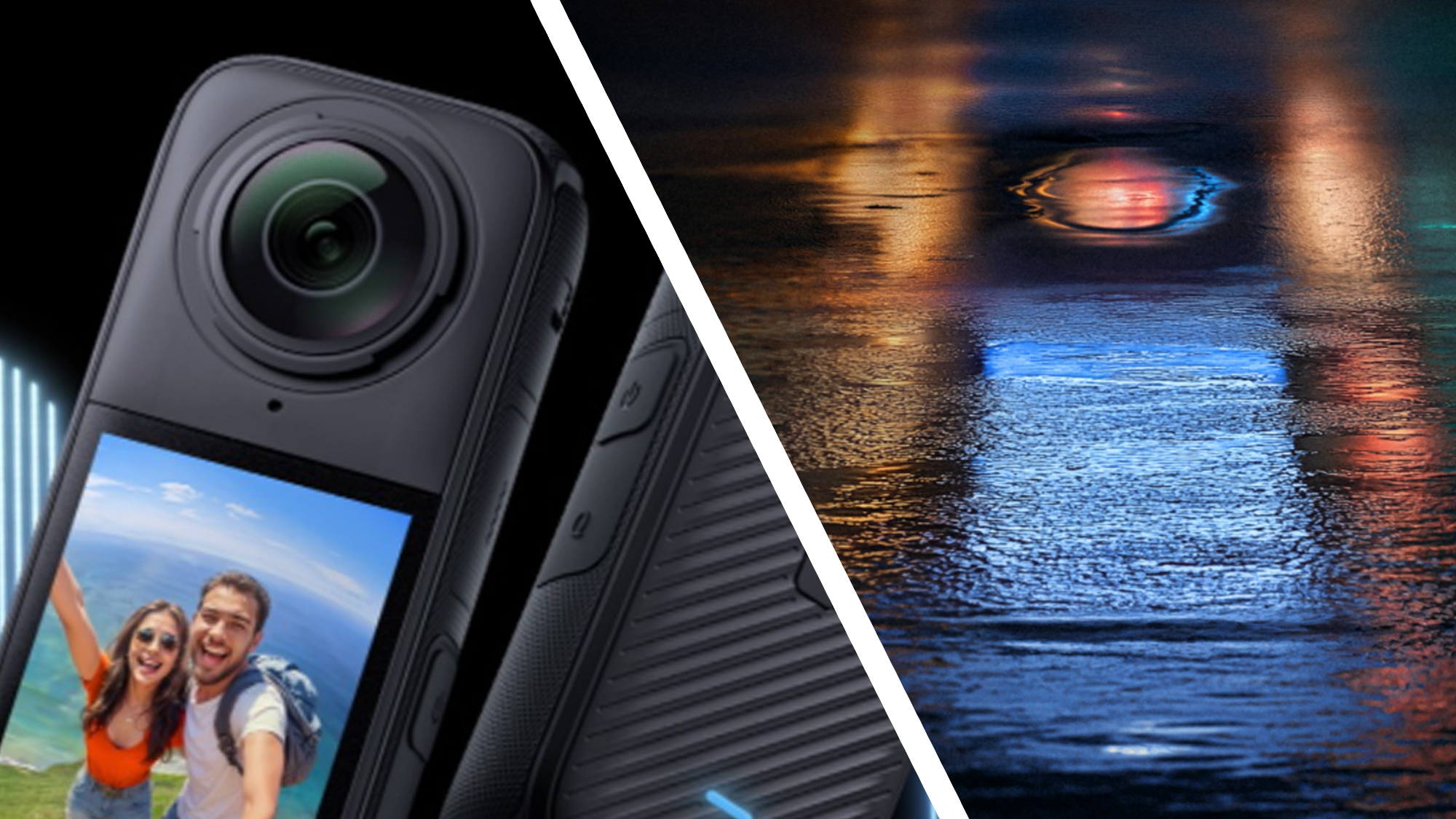
Rank 1905Insta360 has released a new teaser for a launch event on April 22It has the tagline "all day, all night, all angles" and hints at a new 360 cameraRecent leaks suggest it's preparing to launch the Insta360 X5
Insta360 has long topped our guide to the best 360 cameras – and a new teaser suggests it's preparing to launch a new flagship model. Fortunately, some recent leaks have also given us an idea of what to expect, with a successor to last year's Insta360 X4 looking highly likely.The X4 was only launched a year ago in April 2024, but a promo image for Insta360's event on April 22 suggests it'll be replaced next week. The image (below), which has the tagline "all day, all night, all angles", shows the reflection of a camera that very much looks like an X4.We've also recently seen some leaks that point to the arrival of an Insta360 X5 on April 22. The reliable @Quadro_Newshas posted two leaked images for an X5, and the 360 camera also appears to have been prematurely posted in an ad in the Best Buy app.
WIN our next camera 👇 All day. All night. All angles.1️⃣ Follow @insta3602️⃣ Like & repost (1000+ reposts and we'll give away TWO!)3️⃣ Reply with the #1 activity you'd film with the cameraWinner on April 22 🤞*Do not attempt to replicate–smashing a camera may damage it. pic.twitter.com/vvElzEFvW0April 16, 2025
So what can we expect from the Insta360 X5? The leaks so far don't give much away, other than hinting at a mild redesign of the pill-shaped camera and potentially a bigger battery to boost its recording times.Insta360's teaser video is also light on details, mainly focusing on some of the impressive creative video effects that are the series' hallmark. Our Insta360 X4 review also gave the current model five stars, suggesting that there's little room for improvement.
The @insta360 X5 has gotten a nice upgrade. Let's see how the DJI 360 stacks up against it. Not much time left before the show,)#insta360 #insta360x5 pic.twitter.com/nZEz3HNWbuApril 15, 2025
But with Insta360 looking to extend its lead over GoPro (which still hasn't launched its GoPro Max 2) and DJI, which is tipped to be launching a DJI Osmo 360 camera this year, there are definitely some new features it could squeeze into its flagship camera.So, here are five things we'd like to see from the rumored Insta360 X5...
Insta360 X5: what I'd like to see
1. Better low-light performance
(Image credit: Insta360)
Like most 360 cameras, one of the Insta360 X4's biggest weaknesses is low-light performance. It's still very much a day-time camera, but Insta360's teaser – with the tagline "all day, all night, all angles" – suggests its new model could improve this.The low-light weakness comes from a combination of sensor size and processing. Our X4 review noted that, while low-light images look "fairly clean" after being processed with Insta360's mobile and desktop editors, they were also "a little smudgy as a result of noise reduction".Hopefully, a combination of improved processing and a larger sensor (see below) will make the rumored X5 a more versatile camera that can be confidently used outside of bright daylight.
2. Larger sensors
(Image credit: Future)
The challenge for 360 cameras is that they need to house two image sensors, while remaining pocketable and travel-friendly. The Insta360 X4 combines two 1/2-inch sensors, which are decent but still something of a bottleneck on image quality – hence the inclusion of an HDR video option to improve detail in highlights and shadows.While I'm not expecting the X5 to go quite as far as the Insta360 One RS 1-Inch 360 Edition and jump to a 1-inch sensor, it'd be nice to see it upgraded to 1/1.3-inch sensors (the same size as the ones we recently saw on the Insta360 Ace Pro 2).That would help improve dynamic range, low-light shooting and straight-out-of-camera image quality. It could also help the X5 match the incoming DJI Osmo 360, which has been rumored to be going straight in with 1/1.3-inch sensors.It sounds like some long-awaited competition in the 360 camera space could be good news for us…
3. Better heat dissipation
(Image credit: Future | Tim Coleman)
While not a big issue in most recording modes, we did find that the X4 has a propensity to get warm quickly – particularly in those demanding high-resolution video modes.The obvious way to prevent this is to avoid shooting static, long-form 8K videos, but it'd be good to see the rumored X5 take a step forward in heat management.This is less of an issue when shooting action, as there's some natural airflow to cool the camera down in those scenarios – but a reduction in overheating during stationary recording would again make for a more versatile 360 camera.
4. Replaceable lenses
(Image credit: Future | Tim Coleman)
We don't have many qualms about the Insta360 X4's build quality. Our review called it "superb" in this department and the camera is fully waterproof to 33ft / 10m, with all of its ports rubber-sealed and some handy color-coding inside the catch letting you quickly check to make sure everything's locked.But one upgrade that would be useful is user-replaceable lenses. While it's possible to do this with third-party kits, it certainly isn't straightforward and sending your camera in for repair is usually the best bet for deep scratches.It'd be good to see the rumored X5 offer something like GoPro's swappable lenses system. That may be difficult to achieve on a 360 camera, even if it is hinted at in Insta360's teaser video, where a workman smashes the camera with a hammer.
5. The same price tag
(Image credit: Future | Tim Coleman)
The Insta360 X4 isn't exactly cheap at $499/ £499 / AU$879, but it is probably the most fun camera you can buy for that money. We also thought that was a fair price at the time of the X4's launch, because it was only a 10% markup from the X2 – a camera that launched back in 2022.Because Insta360 is based in China, there's a danger that the recent US tariffs could meddle with this pricing. But we're hoping that isn't the case and that the X5 (if it does indeed launch on April 22) comes in at a similar price to its predecessor, outside of the US at least.
You might also like
Insta360 X4 review – the best 360-degree camera just got betterBest 360 camera 2025: the finest choices for capturing every angleLeaked DJI Osmo 360 image suggests GoPro and Insta360 should be worried – here's why
-
Picture from cdn.mos.cms.futurecdn.net
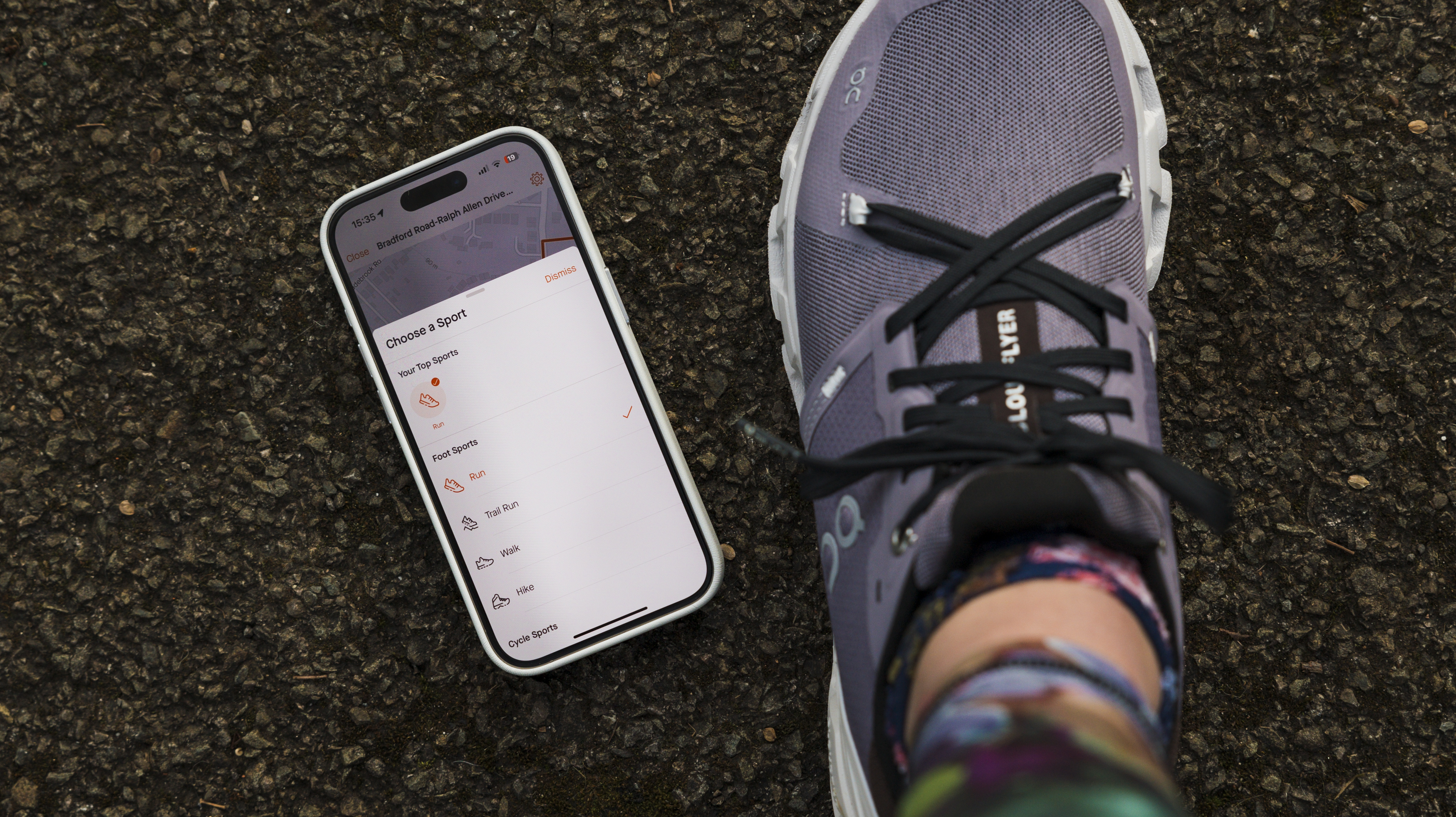
Rank 1906This morning, news broke that two of the services on our best fitness apps list were joining forces: Strava is buying Runna.Strava, which we rated an excellent service at both free and premium tiers with a terrific social media platform and run-tracking integrations, doesn't really have much in the way of coaching, bar the availability of some static training plans. This seems to make Runna, another highly-rated app built around coaching plans, including an AI coaching service, a great fit.As Strava CEO Mike Martin put it in an interview with TechRadar, alongside Runna CEO Dom Maskell, "The way that I think about it, it's like the world's largest team just got a new coach. I think that's a really exciting way to position it."
(Image credit: Runna)
After reading the reactions on the Runna subreddit (cautious optimism, unlike the furor around Garmin's new Connect+ premium tier last month), I wanted to ask both CEOs, especially Martin, if there's a temptation to force Runna users to eventually onboard to a new system, in the same way Google has done with the Fitbit community.Martin said: "I want to be really clear to both communities and user bases... A key component of Strava is that we are and remain an open platform for the entire connected fitness industry. So we expect to continue to do that, and that is the way that Runna is is integrated in with Strava as well."I think there's lots of interesting opportunities for us to accelerate both the support that we provide for the the running community between the two businesses. And just to put a fine point on it, this is a growth and investment play for us... not to do a forced integration play, or something like that."
A Runna for swimmers/cyclists?
(Image credit: Strava)
I asked Maskell and Martin what the acquisition means for users of both platforms, and in the short term, nothing will change. However, it seems like a given Strava will eventually be able to use some of Runna's comprehensive workout plan-building Runna AI technology in some way.I also asked what Runna will be taking from Strava: of course, Strava also offers features for cyclists, swimmers, triathletes, and all sorts of other disciplines. Could we see Runna-branded AI coaches for other sports in the future, with Strava's help and investment?Short answer: not yet.Maskell said: "It has always been our long-term intention to explore other sports one day. The reason why we didn't do triathlon kind of a couple of years ago is because it's very complicated to do. We would have to build a swimming app for the Apple Watch, and we would have to give customer support to cyclists, and all this kind of stuff. We wanted to really, really nail running before we started exploring other sports."However, Maskell has revealed some changes to his roadmap: "We'll probably look to internationalize to non-English speaking languages, probably in the next couple of years. Strava has a lot of users... that number [of non-English speaking users] is very, very high."We might decide to translate a bunch of the coaching comments, all of the videos, all the kind of content in the app sooner, so that we're able to serve those users. I think that's the kind of thing that would make sense to expedite."In terms of other sports, I think that's more the long-term vision."
You might also like...
I've been wearing Apple Watches for 10 years, and it changed meThe slow, painful death of Fitbit continues, with Google Assistant the latest feature to be axedThe best running watch 2025: Top GPS watches for runners of every level
-
Picture from o.aolcdn.com
Rank 1907You might now be out of luck if you've been relying on Apple's AI tools to help you craft a Facebook post or generate a custom emoji to slap on an Instagram Story. As first reported by Sorcererhat Tech (by way of 9to5Mac), Apple Intelligence features are not currently functional on Meta's iOS apps, including Facebook, Instagram, WhatsApp or Threads. Engadget has confirmed that Apple Intelligence isn't working in the apps at the time of writing.
As things stand, along with writing tools (which include the likes of text generation and proofreading), Apple Intelligence features such as Genmoji aren't working in Meta's apps. While people were previously able to include keyboard stickers and Memoji in Instagram Stories, that's no longer the case.
Developers can opt out of using Apple Intelligence in their iOS apps and Meta may have done just that. Perhaps it's looking to nudge folks to use its own Meta AI tools in Facebook et al. Engadget has contacted Meta and Apple for comment.This article originally appeared on Engadget at https://www.engadget.com/ai/apple-intelligence-is-busted-on-metas-ios-apps-165620772.html?src=rss
-

Picture from techcrunch.com
Rank 1908 -
Picture from o.aolcdn.com
Rank 1909There are several meteor showers we can count on seeing every year as Earth passes through the debris trails of known comets and asteroids orbiting the sun, and two of them are about to be in full swing. The Lyrids, which come from comet C/1861 G1 Thatcher, will be visible from April 17 to 26, most prominently in the skies over the Northern Hemisphere. And just a couple days later, the bright streaks of the Eta Aquarids — stemming from the famous Halley’s Comet — will make their first appearance around April 20 before peaking in early May. In both cases, you won’t need any equipment to enjoy the show.
How to see the Lyrids
While the Lyrid meteor shower isn’t the most fruitful astronomical event of the year, we can still expect to see an average of 15 meteors per hour during its peak on the night of April 21 going into April 22, if the conditions are right. In the days before and after that, they’ll come at a rate of about five per hour. The Lyrids’ radiant, or the point from which they appear to emerge, will be in the northeast near the constellation Lyra and well above the horizon by around midnight. You’ll want to set up in a spot with a wide view of the sky and as little light pollution as possible, and look up toward the east.
“The best time to watch is late evening on April 21 until the moon rises a few hours before dawn on April 22,” EarthSky recommends. “Then, after the moon rises, place yourself in the moon’s shadow.” You’ll have the best shot at seeing the Lyrids if you’re in the Northern Hemisphere (and if the weather is clear), but viewers south of the equator may be able to catch some too.
Every so often, the Lyrid meteor shower produces an unusual abundance of meteors in events known as outbursts, but when they’ll occur is unpredictable. In 1982, viewers in Florida spotted as many as 75 meteors per hour, according to NASA. While that’s by no means the norm, it’s not out of the question that you might catch an outburst one of these days. More likely than that, though, is the chance of seeing a fireball, or an exceptionally bright meteor that NASA says is occasionally a feature of the Lyrids.
The relatively short meteor shower will come and go in a little over a week, but the Eta Aquarids right after will offer a whole month of potential “shooting star” sightings.
How to see the Eta Aquarids
The Eta Aquarid meteor shower (also spelled Aquariid) is one of two annual meteor showers originating from comet 1P/Halley, or Halley’s Comet. “This comet is in a retrograde orbit around the sun,” EarthSky explains. “That means it runs around the sun in the opposite direction from Earth and all the other planets. As a result, we pass near its path twice,” giving us the Eta Aquarids on the outbound leg of the trip and the Orionids in late October during the inbound.
The Eta Aquarids are more plentiful than the Lyrids, and you can start looking out for them around April 20, according to NASA. The shower will be active until May 21, but the best time to spot meteors will be overnight from May 5 into May 6, when it peaks, in the pre-dawn hours. During that time, as many as 50 meteors per hour could be visible, versus about 10 per hour in the non-peak windows. The Eta Aquarids’ radiant is in the constellation Aquarius.
These meteors are best seen from the Southern Hemisphere, where they’ll pop up at a higher rate, but that doesn’t mean you won’t be able to see any if you’re in the north. Observers in the Northern Hemisphere may just see fewer, and they’re more likely to see those dubbed ‘Earthgrazers,’ or “long meteors that appear to skim the surface of the Earth at the horizon,” NASA notes. The Eta Aquarids in general move fast, at about 40.7 miles per second, according to the space agency, and they’ll often leave incandescent “trains” lingering in the sky after they’ve zipped by.
While the debris from Halley’s Comet graces our skies twice a year, the comet itself (which I can’t think about without also remembering that episode of Hey Arnold!) only swings past Earth about every 76 years, which last happened in 1986. It’ll make its next appearance in 2061.
After the Eta Aquarids wrap up, we’ll still have a few more meteor showers to look forward to through the summer, so there will be plenty of chances to view some shooting stars if you missed out this time around or just want to catch as many as possible. That includes the Arietids in early June, the Delta Aquarids starting in mid-July and perhaps the best known meteor shower, the Perseids, in mid-August.This article originally appeared on Engadget at https://www.engadget.com/science/space/the-first-meteor-shower-of-spring-peaks-soon-and-another-is-close-on-its-heels-174458501.html?src=rss
-

Picture from cdn.mos.cms.futurecdn.net
Rank 1910My latest NotebookLM podcast creation is deeper and more fascinating than anything I've ever created, and I bet it'll shock you, too.I don't understand string theory. In fact, I bet there's fewer than 1% of the world that can speak cogently on the subject, but I am fascinated by the concept and have read a bit on it. Not enough to understand or explain it to you, but enough to have a steady and abiding curiosity.AI, on the other hand, I think I understand and now regularly use as a tool. When Google released a recent NotebookLM update that includes, among other things, mind maps, I thought it was time to bring together something at the very outer edges of my understanding and this bleeding-edge artificial intelligence capability.So I created a String Theory Podcast.First, a tiny primer on NotebookLM. It is a powerful AI-based research tool in which you can upload sources, and it will turn them into summaries and extrapolated information in the form of text, podcasts, and visual guides like mind maps.For me, the most fascinating bit has been the podcasts or "Audio Overviews", which churn out chatty audio conversations about virtually any topic you feed into them. I call it a podcast because the audio style walks a well-worn path of most popular podcast series. It's conversational, usually between two people, sometimes funny, and always accessible.I've been wondering, though, if you can stretch the limits of the format with a topic so deep and, honestly, confusing, that the resulting podcast would be conversational nonsense.My experiment, however, proved that while the current version of NotebookLM has its limits, it's far better at comprehending dense science bits than me and probably most people you or I know.
(Image credit: Future)
Weird science
Once I decided I wanted NotebookLM to help me with the topic, I went in search of string theory content (there's a lot more of it online than you might think), quickly stumbling on this 218-page research paper from 2009 by University of Cambridge researcher Dr. David Tong.I scanned the doc and could tell that it was rich with string theory detail, and so far over my head, it probably resides somewhere near the rings of Saturn.Imagine trying to read this document and make sense of it. Maybe if someone explained it to me, I'd understand. Maybe.I downloaded the PDF and then fed it into NotebookLM, where I requested a podcast and a mind map.
(Image credit: Future)
It took almost 30 minutes for NotebookLM to create the podcast, and I must admit, I was a little anxious as I opened it. What if this mass of detail on one of physics' most confounding topics overwhelmed Google's AI? Might the hosts just be babbling incoherently?I shouldn't have worried.I'd heard these podcast hosts before: a somewhat vanilla pair (a man and a woman) who banter casually, while making witty asides. In this case, they were trying to explain string theory to the uninitiated.
Next, I think I should create an AI podcast avatar who can point at this graphic while they talk. (Image credit: Shutterstock)
They started by talking about how they'd walk through the topic, covering bits like general relativity, quantum mechanics, and how, at least as of 2009, we had never directly observed these "strings". Earlier this month, some physicists claimed that they had, in fact, found the "first observational evidence supporting string theory." But I digress.The hosts spoke like physics experts, but, where possible, in layman's terms. I quickly found myself wishing they had a guest. The podcast would've worked better if they were proxies for me, not understanding much at all, and had an AI-generated expert to interview.
Stringing it all together
(Image credit: Future)
As the podcast progressed, the hosts dug into the details of string theory, specifically, the definition of a "string." They described them as tiny objects that vibrate and added, "all stuff in the universe comes from how tiny strings are vibrating."Things got more complex from there, and while the AI podcast hosts' tone never changed, I struggled to follow along. I still can't tell you what "relativistic point particle viewed through Einstein's special relativity" really means. Though I did appreciate the analogy of "imagine a string moving through space time."The AI hosts used various tricks to keep me engaged and not completely confused. The male host would, like a podcast parrot, often repeat a bit of what the female host had just explained, and use some decent analogies to try to make it relatable.At times, the female host lapsed into what sounded like she was reading straight out of the research paper, but the male host was always there to pull her back to entertainment mode. He did a lot of chatty summarizing.I felt like I reconnected to the whole thing when they explained how "string morphed into the theory of everything" and added, "bosons and fermions, partners in crime due to supersymmetry."
This was heavy
(Image credit: Future)
After 25 minutes of this, my head was stuffed to the point of bursting with those still-theoretical strings and spinning with terms such as "vertex operators" and "holomorphic."I hoped for a grand and glorious summary at the end, but the podcast abruptly ended at almost 31 minutes. It cut off as if the hosts ran out of stream, ideas, or information, and walked away from the mics in frustration and without signing off.In some ways, it feels like this is my fault. After all, I forced these SIMs to learn all this stuff and then explain it to me, because I could never do it. Maybe they got fed up.I also checked out the mind maps, which are branching diagrams that can help you map out and represent complex topics like string theory. As you can imagine, the mind maps for this topic start simple but get increasingly complex as you expand each branch. Still, they're a nice study companion to the podcast.It's also worth noting that I could enrich the podcast and mind maps with other research sources. I would simply add them into the sources panel in NotebookLM and rerun the "audio overview".
A real expert weighs in
For as much as I learned and as much as I trust the source material, I wondered about the podcast's accuracy. AI, even with solid information, can hallucinate, or at least misinterpret. I tried contacting the paper's author, Dr. Tong, but never heard back. So, I turned to another physics expert, Michael Lubell, Professor of Physics at City College of CUNY.Dr. Lubell agreed to listen to the podcast and give me some feedback. A week later, he emailed me this brief note, "Just listened to the string theory podcast. Interestingly presented, but it requires a reasonable amount of expertise to follow it."When I asked about any obvious errors, Lubell wrote, "Nothing obvious, but I’ve never done string theory research." Fair enough, but I'm willing to bet Lubell understands and knows more about string theory than I do.Perhaps, the AI podcasters now know more about the subject than either of us.
You might also like
ChatGPT gets a useful new home for your AI imagesChatGPT's memory upgrade might just be the biggest AI ...I tried Mind Maps in NotebookLM and it's my new favorite ...
-

Picture from techcrunch.com
Rank 1911 -
Picture from o.aolcdn.com
Rank 1912The long-awaited second season of weekly Playdate game drops commences on May 29. During a showcase on Thursday, Panic revealed that players will get two fresh games on their console every seven days for six weeks. It's also promising a surprise of some kind. Unlike the first season of games that's included with every Playdate, you'll need to pay extra for this one. Playdate Season Two will run you $39. You can pre-order now through the Playdate Catalog.
Part of the allure of Playdate's seasons is that the games are a bit of a mystery, so you never quite know what you're going to get in your weekly drops. To that end, Panic didn't go super in depth into all 12 during the showcase, instead opting to shine a spotlight on four of them. One of the games will be of particular interest to FTL: Faster Than Light and Into The Breach fans.
Subset Games, the studio behind those hits, has made a brand new game for the Playdate. It's an arcade action game called Fulcrum Defender. You'll use the crank to aim and shoot at waves of enemies as you try to survive. Subset co-founder Jay Ma says the enemies will progressively become more complex and you'll need to have good aim and choose upgrades wisely to keep your run going.
Antonio "Fáyer" Uribe, one of the folks behind last year's well-received Arco (which Panic published), teamed up with Flinthook designer Dom2D to make Dig! Dig! Dino!. This is a relaxing puzzle game in which you'll be digging for dinosaur bones and treasure. Sell the booty and you can unlock upgrades to help you dig deeper for more bones and artifacts.
The maker of Playdate titles Life’s Too Short and Time From Earth is back with another game that will be part of Season Two. It's a remake of the classic point-and-click adventure Shadowgate for the diminutive console. Pixel Ghost says it took the best parts of the previous versions to make Shadowgate PD, which includes new music, art and features.
The fourth game that was featured in the showcase is Taria & Como, a puzzle platformer that's based around swinging instead of jumping (that reminds me a little of the wonderful Grapple Dogs). You'll take on the role of Taria, a girl with a prosthetic leg who sets out to find her sister, Como. JuVee Productions, Viola Davis' production company, collaborated with Popseed Studio on this project.
"A few years ago, my friend’s son was diagnosed with Tourette’s, and I began to think about what sort of stories he’d grow up with. As a disabled person, I’ve seen the same tropes recycled — pity case, inspiration, disability as a superpower, magical cures," Taria & Como creator Kip Henderson said in a statement. "Disability is complex, and we’re more than the inspirational fodder for able-bodied people. Taria & Como is the story I wish I had growing up."
In addition to the Playdate Season Two details, Panic revealed a new cover for the console to go alongside the purple, blue and pizza ones. This one is yellow to match the hardware and it costs $34. The price of the console itself recently jumped up to $229, but you might be able to snag an official refurbished model for the system's original price of $179.This article originally appeared on Engadget at https://www.engadget.com/gaming/playdate-season-two-includes-an-action-arcade-game-from-into-the-breach-studio-subset-181438605.html?src=rss
-

Picture from cdn.mos.cms.futurecdn.net
Rank 1913At just €6 per terabyte, Storadera undercuts US cloud giantsIt skipped SSDs for HDDs to slash costs while maintaining solid speedsStoradera plans to expand into Germany, the UK, and beyond
Storadera, a Tallinn-based cloud startup, is offering some of the best cloud storage for photos with S3-compatible storage at €6/TB/month. This puts it head-to-head with providers like Backblaze, which offers a slightly lower rate of €4.75/TB/month.The company's pitch lies not just in low pricing but also in jurisdiction. Being a Europe-based startup, its stored data is beyond the direct jurisdiction of non-EU countries, making it appealing to organizations that require data sovereignty.Storadera’s architecture relies on HDDs rather than SSDs for primary writes. “If we can offer fast enough service on 10x less expensive hardware, then it sounds like magic,” Tommi Kannisto, the founder of Storadera, explained.
Hyperconverged setup
While SSDs are used for metadata, accounting for just 0.05 percent of total disk space, all major writes are done to traditional disks. "QLC 100-plus TB SSDs are still too expensive – and probably will be for the next ten years,” Kannisto said.The company uses a hyperconverged setup, with all servers writing to JBODs – racks containing 102 conventional Western Digital hard drives – using erasure coding schemes such as 4+2 and 6+2, with 8+2 coming soon. Each server has 32GB of RAM and runs services written in 100,000 lines of Go code.“All software runs in all servers and all servers write to all JBODs. There is no load balancer unit,” Kannisto said.The system adapts to load, using “small blocks at times of low load with bigger blocks used at high load times,” and can achieve “close to 300MBps with 2MB files.” It is also preparing to implement higher-capacity shingled magnetic recording (SMR) drives to reduce capital expenditure by up to 25 percent. Storadera also offers bucket geo-replication, object locking for immutability, and integrity checks every 60 days.The company says it is doing well financially, with around 100 customers, including Telia and the Estonian government. It has positioned itself as one of the best cloud storage and cloud backup options available.Despite making slightly less than €1 million a year, the company says it is sustainable and eyeing further growth. “We are profitable… we make a very good profit [and] we’re growing 5 percent/month in revenue,” Kannisto said.Storadera plans to expand into Germany by mid-2025, and aims to enter the UK, and possibly North America or the Asia-Pacific region, later in the yearVia Blocksandfiles
You may also like
Want to transfer your files 9x faster than WeTransfer?Take a look at our roundup of the best business VPNs available nowThese are the best cloud document storage solutions to choose from
-
Picture from o.aolcdn.com
Rank 1914The TV adaptation of the video game Twisted Metal is coming back for a second season on July 31. Just like the first season, this won’t be a weekly release. All of the episodes will be available on Peacock on that date.
The first season was surprisingly decent, and occasionally hilarious. One thing we didn’t see in that batch of episodes, however, was the titular tournament. The show is rectifying that, as the second season looks to revolve entirely around the Twisted Metal demolition derby.
Co-leads Anthony Mackie and Stephanie Beatriz are both returning. Will Arnett will also once again voice the killer clown Sweet Tooth. Anthony Carrigan, from the HBO show Barry, is on deck as the iconic derby host Calypso. The show’s creators include folks from Cobra Kai and the Deadpool film franchise.
Like I said up top, the first season was surprisingly fun. It’s a fast-paced action-comedy set in a post-apocalyptic version of the US. It’s more goofy than grimdark, so think Fallout and not The Last of Us.
Twisted Metal joins other modern TV adaptations of video games, like Knuckles, The Last of Us, Arcane and Castlevania: Nocturne. Video game adaptations have also been ruling the box office these past few years, with A Minecraft Movie and The Super Mario Bros. Movie both breaking records.This article originally appeared on Engadget at https://www.engadget.com/entertainment/tv-movies/twisted-metal-season-two-crashes-onto-peacock-on-july-31-182717907.html?src=rss
-
Picture from o.aolcdn.com
Rank 1915We already knew that Mario Kart World was being released alongside the Nintendo Switch 2 on June 5 for a whopping $80 (or bundled with the Switch 2 hardware at a slight discount). But this morning, the latest Nintendo Direct gave us nearly 17 minutes of Mario Kart World gameplay. There are plenty of callbacks to classic Mario Kart modes (Balloon Battle Mode), mixed in with all-new options (Knockout Tour). Want the full download? Watch the replay below, and read our full summary of the latest Mario Kart World reveal, as well as our hands-on impressions of the game from earlier this month.
The original story follows.
There’s yet another Nintendo Direct coming our way, which is the third in less than a month. This one is entirely focused on the upcoming Switch 2 launch title Mario Kart World. It starts at 9AM ET and should last around 15 minutes.
It’s livestreaming on Nintendo’s YouTube page, but mega-fans can also open up that recently-launched Nintendo Today! app to follow along. We are embedding the YouTube link, so feel free to keep this tab open.
We have no idea what information Nintendo is going to spring on us as part of this Direct presentation. The company has already released a ton of info about Mario Kart World. It’s an open-world racer that can accommodate 24 plays at the same time.
However, there are still a couple of unknowns. Most of these involve the open-world aspect. Are there any rewards for exploration? Are there secret tracks that can only be unlocked by finding them? Can the same be said for unlockable characters? Again, we don’t know, but hope springs eternal.
There’s also the $80 elephant in the room. The exorbitant retail price of Mario Kart World has sent many fans into a tailspin. That’s a whole lot of money, and Nintendo only recently-released its first-ever $70 game. There’s a minuscule chance that the company will throw us a bone and knock $10 off the asking price, but this is highly unlikely given current economic uncertainty. At the very least, we could get some new data regarding the preorder date for US customers.
Update, April 17 2025, 2:30PM ET: This story was updated after its original publication to include a brief summary of the announcements and link to additional relevant coverage of the game.This article originally appeared on Engadget at https://www.engadget.com/gaming/nintendo/mario-kart-world-direct-rewatch-nearly-17-minutes-of-switch-2-gameplay-184825781.html?src=rss
-
Picture from o.aolcdn.com
Rank 1916New Jersey's Attorney General Matthew Platkin is suing Discord over the chat company's child safety features. The lawsuit claims that Discord has "misled parents about the efficacy of its safety controls and obscured the risks children faced when using the application."
The Office of the Attorney General and the state's Division of Consumer Affairs concluded that Discord violated New Jersey's Consumer Fraud Act after a multiyear investigation into the company. The details of the lawsuit are currently sealed, but Platkin's announcement suggests a few ways he plans to argue Discord's approach may have endangered children. He says the app uses default settings that "allow users to receive friend requests from anyone on the app" and that it makes it simple to create an account when you're under 13. According to Platkin, Discord "only requires individuals to enter their date of birth to establish their age when creating an account."
When ask for comment, Discord offered the following statement:
Discord is proud of our continuous efforts and investments in features and tools that help make Discord safer. Given our engagement with the Attorney General's office, we are surprised by the announcement that New Jersey has filed an action against Discord today. We dispute the claims in the lawsuit and look forward to defending the action in court.
Discord has introduced multiple features over the years with the express purpose of protecting younger users. Following a report that detailed 35 cases involving Discord in which adults were prosecuted on charges like "kidnapping, grooming or sexual assault," the company introduced its Family Center tool, which lets adults track what their children do on the app. Teen Safety Assist, also introduced in 2023, added automatic content filters and a new warning system for people who violate the apps guidelines. In 2025, Discord launched a nonprofit coalition called Roost with the express purpose of developing open-source child safety tools.
Discord, like other social platforms, has faced scrutiny before, and the pressure seems like it's only going to increase. Back in 2024, California lawmakers proposed the idea of blocking children's access to algorithmic social feeds, and just this year Utah passed an age verification law for app stores, a decidedly blunt way to try and guarantee child safety.This article originally appeared on Engadget at https://www.engadget.com/apps/new-jersey-ag-sues-discord-over-alleged-child-safety-failures-184501604.html?src=rss
-

Picture from techcrunch.com
Rank 1917 -

Picture from techcrunch.com
Rank 1918 -
Picture from o.aolcdn.com
Rank 1919Xbox's Spring Sale is live, with big discounts on old and new classics and plenty of forgotten gems. But the deals aren't limited to Xbox console games; there's plenty on tap for PC, too. (You can filter by platform under the "Play with" option in the sidebar.)
Some of the standouts in the Xbox sale include 75 percent off Red Dead Redemption 2 (a mere $15 for the 2018 masterpiece), Elden Ring ($36) and 20 percent off Baldur's Gate 3 ($56). Also available are Subnautica ($9.89), the feline adventure Stray ($18) and Alan Wake 2 Deluxe Edition ($40).
If you're one of the two gamers who don't already own it, you can even snag Grand Theft Auto V for a mere $20. (Even if you have the 2013 mega-hit on another platform, this is the enhanced version for Xbox Series X/S.)
CupheadStudioMDHR
A few more worth checking out include the Cuphead & The Delicious Last Course bundle ($18.89), Borderlands 3 ($6), Hogwarts Legacy: Digital Deluxe Edition ($20) and the stealth sandbox Hitman World of Assassination ($28).
You can check out the entire Xbox Spring Sale for much more. It lasts until April 30, so you have time for a deep dive before it ends.This article originally appeared on Engadget at https://www.engadget.com/gaming/xbox/the-xbox-spring-sale-is-live-185646088.html?src=rss
-

Picture from techcrunch.com
Rank 1920 -

Picture from cdn.mos.cms.futurecdn.net
Rank 1921Just a day after massive Spotify and Zoom outages, it appears that Walmart is having some issues with its online store in the United States. While it’s not a complete outage, it seems to be preventing folks from viewing products and checking out.Right now, I can get the main Walmart page to load as well as shopping category ones, but when searching for an item – be it a Nintendo Switch 2 preorder, AirPods Pro, or Lego sets – I receive a “Sorry…” graphic.It seems I’m not the only one either, as Down Detector, a site that tracks outages and lets folks mark issues, is currently showing over 3,250 reported outages for Walmart as of 3:12 PM ET.We’re going to keep trying to search for products on Walmart, but TechRadar has also reached out to the retail and online shopping giant to ask what’s going on with the site. If they respond, we’ll update, but in the meantime, follow along with our live blog on Walmart’s current issues with its online store.
Here's a look at what I'm encountering when searching for AirPods: I see a "Sorry..." typeface with a random graphic – in this case, a toaster – as well as the text "We’re having technical issues, but we’ll be back in a flash."
(Image credit: Future)
-
Picture from o.aolcdn.com
Rank 1922Sonos is offering discounts on its refurbished gear just in time for Earth Day. Select purchases of the audio company's certified refurbished products are currently 25 percent off. That means you can pick up a pre-owned Arc soundbar for $599, or $120 less than the usual sticker price. The deal is running through April 22 or as long as supplies of the refurb items last, so if you're considering one of these revitalized audio products, it's probably best to act quickly. Here's the list of what's currently available.
Right now, in addition to the Arc, the Sub subwoofer is $160 off and available for $479, or you can save $90 on the smaller Sub Mini for $259. Ace headphones are $269, which is a savings of $90. There are also versions of the Beam soundbar currently listed on the refurbished page. The newer Beam (Gen 2) speaker costs $299 and the older Beam (Gen 1) costs $191, which is $100 and $128 off their usual prices.
Buying refurbished items is a great option for saving on major tech purchases while also keeping pre-owned products from going into landfills. We've got a complete guide on how to approach this sector, but in most cases, it's a chance for companies to find buyers for products that are like new that were returned. With this promotion, Sonos is upping the environmental impact by donating a portion of refurbished item sales to conservation nonprofits.
Follow @EngadgetDeals on X for the latest tech deals and buying advice.This article originally appeared on Engadget at https://www.engadget.com/audio/select-sonos-refurbished-gear-is-25-percent-off-through-april-22-194800703.html?src=rss
-

Picture from techcrunch.com
Rank 1923 -

Picture from techcrunch.com
Rank 1924 -

Picture from techcrunch.com
Rank 1925 -

Picture from techcrunch.com
Rank 1926 -

Picture from techcrunch.com
Rank 1927 -
Picture from o.aolcdn.com
Rank 1928A live-action Pacific Rim TV series is in-development at Amazon, according to Variety. News of the project was first shared in 2024, when Variety reported that Arrival screenwriter Eric Heisserer was attached to develop and write the show.
The new series will apparently be a prequel to Guillermo Del Toro's original Pacific Rim, a movie about Kaiju-fighting giant mechs and the humans that pilot them. Legendary, which produced Pacific Rim, is also backing the series alongside Amazon MGM. The studio appears to be using the same strategy with Pacific Rim that worked with its Godzilla-and-King-Kong-starring "MonsterVerse" franchise. Monarch: Legacy of Monsters streamed on Apple TV+ in 2023, and acted as both a prequel and sequel to the "MonsterVerse" films.
Heisserer has plenty of experience adapting existing material. His Arrival script converted an experimental second-person short story into a (relatively) thoughtful blockbuster, and his work on Netflix's Shadow and Bone found a clever way to interweave the first book in Leigh Bardugo's series with characters from a later duology. Pacific Rim seems a lot more straightforward in comparison.
There's yet to be an official announcement from Amazon, or any dates for when we can expect the series to be available, but there has been quite a bit of new Pacific Rim material since the first film came out in 2013. The live-action sequel Pacific Rim Uprising was released in 2018 and Netflix put out its anime sequel, Pacific Rim: The Black, in 2021.This article originally appeared on Engadget at https://www.engadget.com/entertainment/tv-movies/the-pacific-rim-prequel-series-has-reportedly-found-a-home-at-amazon-213245776.html?src=rss
-
Picture from cdn.mos.cms.futurecdn.net
Rank 1929OpenAI's latest reasoning model o3 can analyze photosIt's particularly good at geo-locating based on image cluesIt may be too good a tool for letting people geolocate your activities
It's no secret that digital photo metadata contains everything from technical info about the camera that shot it to, based on GPS data, exactly where you were standing when you took the photo. ChatGPT, doesn't need that detail.The latest model GPT-o3 is shockingly good at geo-locating almost any photos you feed it.In the latest viral craze to sweep through the AI meme universe, people are feeding ChatGPT Plus running the Advanced Reasoning model o3 images, often stripped of all metadata, and prompting it to "geoguess this".The really cool thing about it is that because model o3 is a "reasoning" model, it shows you its work, telling you how long it's thinking, displaying how it's splicing up an image to investigate specific parts, and explaining its thinking and how well it's doing at solving the goelocation riddle.I tried a few experiments, starting first with an image culled from an article about the 26 best beaches. In this test, I made what I think was a critical error and gave away the game to ChatGPT.
Image 1 of 2(Image credit: Future)Image 2 of 2(Image credit: Future)
After downloading the image of the Praia de Santa Monica beach in Cape Verde (off the coast of Africa), I dropped it into ChatGPT with the prompt "GeoGuessr", which also happens to be the name of a popular online geo guessing game and is one of a handful of prompts people are using for geolocation guessing.It only took 24 seconds for ChatGPT to respond:
Here’s an educated “GeoGuessr”‑style guess, following AP style:Probable setting: Boa Vista, Cape Verde — specifically a stretch such as Praia de Santa Mónica.Why this beach fits:Water color and clarity: The gradient from pale aqua to deep teal is common on mid‑Atlantic tropical islands, where volcanic shelves drop off quickly.Sand tone: The sand is light gold with very fine grain, matching Boa Vista’s deserts and dune‑fed beaches rather than the whiter coral sand of much of the Caribbean. Surf and slope: The breakers are modest but steady, typical of Atlantic swell hitting a long, shallow shelf; Mediterranean beaches rarely show this consistent whitewater.Sky and horizon: A faint haze over a light‑gray blue sky is consistent with harmattan dust that sometimes drifts west from Africa across the Cape Verde archipelago.Confidence level: Low to moderate. Many open, dune‑lined Atlantic beaches—from the Canary Islands to parts of Western Sahara or even certain Caribbean coasts—could look almost identical without landmarks.
That was remarkably accurate. However, I noticed afterwards that the image file name included some location information.It was time to give ChatGPT o3 a more challenging task, and I knew exactly how to do it. Instead of downloading images, I would screen capture them and paste them into the prompt field.This method strips out all metadata and forces the model to use the image alone for its geolocation sleuthing.I chose an image of a bookstore, one where I wasn't even sure of the location.
Image 1 of 3(Image credit: Future)Image 2 of 3(Image credit: Future)Image 3 of 3(Image credit: Future)
ChatGPT started by examining potential bookstores. It also zoomed in on numerous image details that it considered clues, like a Persian rug, and even some of the books and signage.In its thinkling out loud sort of way, o3 considered a wide range of bookshops in New York City and around the world:"Hmm, the modern filament-style bulbs suggest a more contemporary feel. It could potentially be "Daunt Books," but their walkway has an arched skylight, not the wooden style I'm seeing here."I know, it sounds like a real person.This went on for a few minutes as it thought, analyzed, and searched the web. Ultimately, it failed to come up with an answer.
Going deeper, getting lost
I could tell this feature was going viral because ChatGPT o3 failed multiple times, even to ingest and analyze the photo, complaining of server errors.Eventually, I got it working again and fed it first a portrait mode selfie and then the same shot without the portrait mode effect.
Image 1 of 2(Image credit: Future)Image 2 of 2(Image credit: Future)
On the former, it broke my image up into pieces and told me that I was in mid-town Manhattan. That was mostly accurate, but ChatGPT failed to determine my exact location and even admitted that its "Confidence level" was low.When I turned off the bokeh effect and fed it only a screen grab, it found my exact location in just 56 seconds. The result:
Most probable locationMidtown Manhattan — on the south side of East 42nd Street, just east of Park Avenue, in front of Cipriani 42nd Street (110 E. 42nd St.). Estimated coordinates: 40.7518 N, 73.9775 W.How the clues point thereA green octagonal sign with yellow script and a matching pennant flag both read “Cipriani,” the exact street frontage of the landmark Bowery Savings Bank building that now houses Cipriani 42nd Street.Across the street stands the gold‑tinted curtain wall of 120 Park Ave. Its sloped glass pavilion, visible over your left shoulder, is unique to that address.The camera looks west; Midtown’s setback towers, a Sixth Avenue bus stop disk and the sliver of One Vanderbilt’s crown align with that sight line.A green Evergreen shipping container, used as a construction barrier, currently sits outside Grand Central’s Pershing Square plaza, matching the photo’s lower left corner. Confidence levelModerate. The Cipriani branding and the distinctive 120 Park Ave. façade give a high‑quality anchor, though similar curtain‑wall towers exist farther west on 42nd Street.
Image 1 of 2(Image credit: Future)Image 2 of 2(Image credit: Future)
I frustrated the model with a photo from Antigua that was taken on my car ride to the airport. It was a shot of a hillside through a fence. ChatGPT rightly guessed a tropical island near the Caribbean but could not pinpoint the exact location.For my last test, I gave it a clearer picture of the resort where I stayed.ChatGPT o3 thought for two minutes, 22 seconds before deciding it was Hawksbill Bay in Antigua. It got the island right, but my resort on Long Bay is located 46 miles away on the opposite side of the island.
Image 1 of 2(Image credit: Future)Image 2 of 2(Image credit: Future)
This is another fun AI game to play with friends, but there are some concerning privacy implications.If you take digital photos of yourself or anything in any location around the world and post them online, anyone with access to ChatGPT Plus could use them and the o3 model to suss out where you are or have been.And it's not just friends and family you have to worry about. Your employer could be looking or even the authorities might be interested in your location.Not that I'm implying you would be sought by the authorities, but just in case, maybe stop posting photos from your latest hideout.
You might also like
I fed NotebookLM a 218-page research paper on string theory and the podcast results were mind-blowingChatGPT spends 'tens of millions of dollars' on people saying 'please' and 'thank you', but Sam Altman says it's worth itI tried Claude's new Research feature, and it's just as good as ChatGPT and Google Gemini's Deep Research featuresClaude tipped to get its answer to ChatGPT’s Advanced Voice Mode soon - is adding an AI voice to a chatbot yet another tick box exercise?
-

Picture from techcrunch.com
Rank 1930 -
Picture from o.aolcdn.com
Rank 1931The Consumer Financial Protection Bureau has been reduced to a skeleton crew. The department, which was created to oversee banks and financial institutions, has cut about 1,500 jobs, leaving about 200 employees and reducing the agency by about 90 percent.
In addition to cutting most of the staff, Chief Legal Officer Mark Paoletta sent a memo detailing the changed priorities for the CFPB. The bureau has been ordered to deprioritize subjects including consumer data, digital payments, medical debt and student loans. Mortgages will now be the leading topic for remaining employees.
SInce it was created in 2010, this department has pursued actions against financial and tech institutions accused of deceptive or abusive practices, with cases involving firms such as PayPal and Block, which created Cash App. It was also slated to provide oversight of the providers of digital wallets and payment apps.
However, since the start of 2025, the CFPB has abandoned multiple cases it had launched under President Joe Biden's administration. The Office of Management and Budget's Acting Director Russell Vought had signaled that the bureau's days may be numbered when he ordered all of its "supervision and examination activity" to stop in February.This article originally appeared on Engadget at https://www.engadget.com/big-tech/the-consumer-financial-protection-bureau-has-cut-90-percent-of-its-employees-225239056.html?src=rss
-
Picture from cdn.mos.cms.futurecdn.net
Rank 1932Meta will soon start training its AI models with EU users' dataMeta AI will be trained with all users' interactions and public content posted on Meta's social platformsThe Big Tech giant resumes its AI training plan, after pausing the launch amid EU data regulators' concerns
Meta has resumed its plan to train its AI models with EU users' data, the company announced on Monday, April 14, 2025.All public posts and comments shared by adults across Meta's social platforms will soon be used to train Meta AI, alongside all interactions users directly exchange with the chatbot.This comes as the Big Tech giant successfully launched Meta AI in the EU in March, almost a year after the firm paused the launch amid growing concerns among EU data regulators.
What's Meta AI training and how to opt out
"We believe we have a responsibility to build AI that’s not just available to Europeans, but is built for them. That’s why it’s so important for our generative AI models to be trained on a variety of data so they can understand the incredible and diverse nuances and complexities that make up European communities," wrote Meta in the official announcement.This kind of training, the company notes, it's not unique to Meta or Europe. Meta AI collects and processes the same information, in fact, across all regions where it's available.As mentioned earlier, Meta AI will be trained with all public posts and interactions' data from adult users. Public data from the accounts of people in the EU under the age of 18 won't be used for training purposes.Meta also promises that no people's private messages shared on iMessage and WhatsApp will ever be used for AI training purposes, too.
(Image credit: Meta / Future)
Beginning this week, all Meta users in the EU will start receiving notifications about the terms of the new AI training, either via app or email.These notifications will include a link to a form where people can withdraw their consent for their data to be used for training Meta AI."We have made this objection form easy to find, read, and use, and we’ll honor all objection forms we have already received, as well as newly submitted ones," explains the provider.It's crucial to understand that once fed into an LLM database, you will be completely losing control over your data, as these systems make it very hard (if not impossible) to exercise the GDPR's right to be forgotten.This is why privacy experts like Proton, the provider behind one of the best VPN and encrypted email apps, are urging people in Europe concerned about their privacy to opt out of Meta AI training."We recommend filling out this form when it's sent to you to protect your privacy. It's hard to predict what this data might be used for in the future – better to be safe than sorry," Proton wrote on a LinkedIn post.Meta's announcement comes at the same time that the Irish data regulators have opened an investigation into X's Grok AI. Specifically, the enquiry seeks to determine whether Elon Musk's platform uses publicly-accessible X posts to train its generative AI models in compliance with GDPR rules.
You might also like
Everyone wants the viral AI doll – but it’s a privacy nightmare waiting to happenGrok may start remembering everything you ask it to doGive Meta my face recognition data? I'd rather lose my Instagram account
-

Picture from cdn.mos.cms.futurecdn.net
Rank 1933Google has made Gemini Live’s screen and camera sharing features free for all Android users.The release reverses the previous subscriber-only option.The feature lets Gemini respond to real-time visual input from your screen or camera.
In a surprise twist and a reversal of its earlier paywalled plans, Google has announced that Gemini Live’s screen and camera sharing features are now rolling out for free to all Android users. No subscription or Pixel ownership necessary, just Gemini Live, accessible to anyone with the Gemini app on Android.This update means your AI assistant can now see what’s on your screen or through your camera lens and react to it in real time. Gemini Live with screen sharing lets you show Gemini a webpage, a spreadsheet, or a tangled mess of app settings and ask for help. Or you can point your camera at a real-world object, like a product label, a chessboard, or a confusing IKEA manual, and let Gemini identify and explain what you're looking at.The feature first debuted earlier this month, but only for Gemini Advanced subscribers and only for certain phones, such as the Pixel 9 and Samsung Galaxy S25. At the time, Google said the visual capabilities would eventually expand, but even then, only to other subscribers. Google apparently had a change of heart, or at least it claims to have decided to open up access because of how much people seem to like the feature. Now, it’s rolling out to every Android over the next few weeks.
We’ve been hearing great feedback on Gemini Live with camera and screen share, so we decided to bring it to more people ✨Starting today and over the coming weeks, we're rolling it out to *all* @Android users with the Gemini app. Enjoy!PS If you don’t have the app yet,… https://t.co/dTsxLZLxNIApril 16, 2025
AI eyes
The idea for the feature is to make Gemini more flexible as an assistant. Instead of just answering questions you type or speak, it’s interpreting the world around you visually. The move also coincides with Microsoft announcing that Copilot Vision, its own version of AI eyes, is now available for free in the Edge browser. That might be a coincidence, though probably only in the way that you running into your crush outside their class in high school is a coincidence.But while Microsoft’s Copilot lives in the browser, Gemini’s advantage is its integration straight into the Android ecosystem. No need to fire up Edge or download a separate tool. Gemini Live is baked into the same system that already runs your device.The new ability fits with many of the other additions and upgrades Gemini has added in recent months. The AI assistant now comes with real-time voice chat, a new overlay so you can summon Gemini on top of other apps, and the inclusion of the long report writing tool Deep Research.Once the new feature is live, you’ll see the option to “share screen” or “use camera” in certain Gemini prompts on Android devices. And because Google is giving this away for free, it sets a new bar. If Gemini can watch your screen and your camera without charging you for the privilege, what happens to the idea of “premium” AI access? The developers are probably hotly debating what AI features are worth paying for and how much to charge, when, at least for now, all of these tools become free relatively quickly.
You might also like
I tried Google's new AI mode powered by Gemini, and it might be the end of Search as we know itGoogle’s AI Mode can explain what you’re seeing even if you can’tGoogle Gemini could soon get a super-useful 'Power up' button – here's what it does
-

Picture from cdn.mos.cms.futurecdn.net
Rank 1934If you’re a Star Wars fan and haven’t been jealous of not being at Star Wars Celebration 2025 in Japan as of yet, prepare to be. The same applies if you have an Apple Vision Pro instead of a Meta Quest.Why? Well, Industrial Light & Magic and Lucasfilm are finally sharing more on their next Star Wars mixed and virtual reality experience that’s set to arrive on the Meta Quest 3 and Meta Quest 3S headsets at some point in the future, and boy oh boy does it look stunning.Star Wars: Beyond Victory - A Mixed Reality Playset is set during the events of Solo: A Star Wars Story and has three modes of play: Adventure, Arcade, and Playset. You can see the full trailer below, along with some select screenshots. It's a full-immersive experience that can place you in the Star Wars universe or overlay elements in your own space.Adventure is more of a classic, immersive experience, similar to other titles like Star Wars: Tales from the Galaxy’s Edge – a personal favorite I’ve played on the PSVR, as I’m a fan of the Disney Parks – and Vader Immortal: A Star Wars VR Series. Here you’ll follow the story of an aspiring podracer, Volo, who goes on a journey courtesy of a mentorship with Sebulba.
(Image credit: Lucasfilm)
This one might be the neatest, though – Arcade places a holotable in your space through mixed or augmented reality, and you can seemingly get up close and personal with Star Wars action, including a podracing course.And if you’re at Star Wars Celebration 2025 in Japan, you can play a demo that combines the Adventure and Arcade modes at Booth #20-5 in Hall 4 of the Makuhari Messe convention Center. Instant jealousy from me!
(Image credit: Lucasfilm)
Alyssa Finley, the executive producer of the title, shared, “We're calling this a Playset because it isn't just a game; it's an entirely new way to experience the Star Wars galaxy and the worlds we create at ILM.”
This new mixed reality experience blends the physical and digital worlds in a way that's unlike anything we've done before
She continued, “This new mixed reality experience blends the physical and digital worlds in a way that's unlike anything we've done before,” which certainly ups the excitement and hype for the title. It’s almost similar to another project that Industrial Light & Magic worked on for the Apple Vision Pro – that’s What If…? – An Immersive Story, and it had times where it fully placed you elsewhere or overlaid battles in your own space.
Image 1 of 6(Image credit: Lucas Film)Image 2 of 6(Image credit: Lucasfilm)Image 3 of 6(Image credit: Lucasfilm)Image 4 of 6(Image credit: Lucasfilm)Image 5 of 6(Image credit: Lucasfilm)Image 6 of 6(Image credit: Lucasfilm)
Adding to this is the playset mode, which promises to let you have your own “Star Wars' moments in mixed reality, allowing you to view and interact with vehicles from the universe and action figures.While Star Wars: Beyond Victory - A Mixed Reality Playset is still in development, it’s undoubtedly one of the most ambitious titles from Industrial Light & Magic and Lucasfilm yet. Whenever it’s ready for prime time, it will launch for the Meta Quest 3 and 3S, so we’ll be waiting for further news on a release date.If you have a Vision Pro, maybe we can petition Apple, ILM, and Lucasfilm to also bring it to the $3,500 spatial computer. And if you're at home, check out all the new Star Wars sets that Lego announced here.
You might also like
Lego just dropped 9 new sets, but as a Star Wars obsessed fan, I'd shop these three first‘We only build technology in the interest of storytelling’ – Disney’s associate lab director of Robotics on the Star Wars BDX Droids and what lies aheadHere’s your first hands-on look at the Star Wars: Grogu, Mandalorian, R2-D2, and Darth Vader earbuds
-

Picture from techcrunch.com
Rank 1935 -

Picture from cdn.mos.cms.futurecdn.net
Rank 1936Artificial intelligence (AI) is reshaping workplaces at lightning speed—but nearly a third of employees don’t know how to use it effectively. Instead of unlocking AI’s potential, many companies are watching productivity stall as workers struggle to adapt. The problem isn’t the AI itself; it’s a failure to prepare employees for collaboration with AI rather than competition against it.So, how can companies turn this around?
The AI Knowledge Gap: A Threat to Workplace Innovation
Despite the widespread adoption of AI tools, many employees feel left behind. The Corndel 2025 Workplace Training report revealed that:
49% of employees believe AI is outpacing their company’s ability to train them, creating a skills gap that threatens productivity.54% of workers report that they lack clear guidelines on AI usage, leading to inconsistent adoption.65% of employees want ethical AI training, highlighting concerns about responsible AI use.31% of UK small businesses hesitate to adopt AI due to a lack of understanding and support.
Employees aren’t just unsure about AI—they feel left behind. Without structured L&D strategies that encourage AI collaboration, organizations risk falling behind as competitors fully integrate AI-driven efficiencies.
Shifting L&D to Enable AI Collaboration
Traditional workplace training focuses on developing human-only skills. However, in an AI-powered workplace, employees must learn how to work alongside AI—not against it.Here’s how L&D departments can adapt:1. AI Literacy for All EmployeesOrganizations must introduce foundational AI training to demystify the technology and show employees how to incorporate it into daily tasks. This includes:
Understanding the basics of machine learning and AI capabilities.Identifying which workplace tasks AI can enhance or automate.Recognizing the ethical implications of AI in decision-making.
2. Role-Specific AI Training Not all employees need the same AI training. L&D teams should tailor programs to specific job functions:
Marketing teams: Training on AI-powered analytics and content automation.HR teams: Understanding AI-driven recruitment tools and employee sentiment analysis.Customer service teams: Leveraging AI chatbots and automation for better customer interactions.
3. Ethical and Responsible AI Training Ethical AI use must be a core component of workplace training. This includes:
Teaching employees how to detect AI bias.Implementing decision-making frameworks to ensure AI aligns with company values.Conducting interactive workshops where employees assess real-world AI dilemmas.
4. Hands-On AI Learning and Experimentation Many employees are hesitant to use AI simply because they have never tried it. L&D teams should:
Set up AI “sandboxes” where employees can test AI tools without risk.Provide guided workshops on AI-powered applications like ChatGPT, Midjourney, or automation software.Offer continuous learning resources that evolve alongside AI advancements.Highlight case studies, such as IBM’s AI mentorship programs and Walmart’s AI-driven virtual reality (VR) training simulations.
5. Cross-Functional AI Collaboration AI training should not be siloed within specific departments. Instead, organizations should foster cross-functional AI collaboration by:
Encouraging teams to share AI use cases and best practices.Hosting AI-driven hackathons or innovation challenges.Creating AI mentor programs where tech-savvy employees guide others.
The Future of AI in L&D: What’s Next?
Looking ahead, AI will continue to revolutionise L&D through:
Personalized Learning Paths: AI-powered learning platforms can tailor training based on an employee’s progress, strengths, and learning style.AI-Powered Virtual Coaches: Chatbots and AI assistants will offer real-time feedback and guidance during training exercises.Predictive Skill Gap Analysis: AI can forecast emerging skills employees need, helping companies proactively train their workforce.Immersive AI-Driven Learning: Virtual reality (VR) and augmented reality (AR) will create hands-on AI training experiences that simulate real-world applications.
Invest today for long-term gain
Businesses that invest in AI training today won’t just survive the AI revolution—they’ll lead it. The future belongs to companies that embrace AI as an extension of human capability, not a competitor to it.The question isn’t whether AI will change the workplace, but whether organizations will equip their people to change with it.L&D is no longer just about keeping up—it’s about leading the way. Businesses that reimagine their training strategies today will be the ones defining the AI-driven workplace of tomorrow.
We rate the best employee experience tool.
This article was produced as part of TechRadarPro's Expert Insights channel where we feature the best and brightest minds in the technology industry today. The views expressed here are those of the author and are not necessarily those of TechRadarPro or Future plc. If you are interested in contributing find out more here: https://www.techradar.com/news/submit-your-story-to-techradar-pro
-
Picture from o.aolcdn.com
Rank 1937If your PlayStation 5 library is starting to burst at the seams, upgrading with one of the best SSDs for your PlayStation 5 can make a huge difference. Modern PS5 games are massive, and while the console’s internal storage is speedy, it fills up fast — especially if you're juggling big titles like Call of Duty, Spider-Man 2, or Final Fantasy XVI. A compatible SSD gives you more space without sacrificing load times or performance, so you can spend less time managing your library and more time gaming.Many SSDs are easy to install and perform just as fast as the PS5’s built-in storage. You’ll want to look for drives that meet Sony’s specs, including Gen4 speeds and a built-in heatsink (or the ability to add one). Whether you’re after tons of storage for your digital collection or just want a performance boost for next-gen titles, we’ve rounded up the top SSD options to suit every need and budget.
Read more: These are the best SSDs in 2025
Table of contents
Best SSDs for PS5 in 2025
How we test PS5 SSDs
PS5 SSD FAQs
Best SSDs for PS5 in 2025
How we test PS5 SSDs
I’ve tested most of the SSDs recommended on this list, either for PS5 or computer use. I also bought and used our top pick in my own PS5.
PS5 SSD FAQs
How much PS5 storage do I need?
The PlayStation 5 and PlayStation 5 Pro can accept internal drives with between 250GB and 8TB of storage capacity. If you already own a PS5, chances are you have a reasonable idea of how much storage you need for your game library. If you’re buying an SSD with a new PS5 or PS5 Pro, or buying for someone else, it’s more difficult to tell what you might need for a high-performance experience.
PS5 games are smaller on average than their PS4 equivalents, typically taking up between 30GB and 100GB, with some notable (and very popular) exceptions. If you’re a fan of the Call of Duty series, installing Black Ops 6 and Warzone 2.0 can eat up to 240GB. In other words, a full Call of Duty install will take up more than one-third of the PS5’s internal storage. If you’re not a CoD fan, though, chances are you’ll be good to store between six to 10 games on a regular PS5 internally before running into problems.
You also need to consider your internet speed. If you live in an area with slow broadband, the “you can just download it again” rationale doesn’t really work. At my old home, a 100GB download took me around eight hours, during which time it was difficult to simultaneously watch Twitch or, say, publish articles about upgrading PS5 SSDs. Keeping games around on the off-chance you’ll want to play them at some point makes sense.
Aaron Souppouris / Engadget
Off the bat, there's basically no point in going for a 250GB PS5 SSD. Economically, 250GB drives aren’t that much cheaper than 500GB ones — and practically, that really isn’t a lot of space for modern games to live on. 500GB drives can be a decent option, but after years of declining prices, I think the sweet spot for most people is to opt for a high-capacity 1TB or 2TB drive, which should run you at most $200. The latter will more than double the PS5 Pro’s storage without breaking the bank.
Unless you’re rolling in cash and want to flex, 4TB and 8TB models should mostly be avoided, as you’ll end up paying more per gigabyte than you would with a 1TB or 2TB drive.
While the 825GB PS5 only provides 667GB of storage, that’s largely due to storage being reserved for the operating system and caching. If you install a 1TB PS5 SSD, you'll have, within a margin of error, 1TB of storage available for games. Out of the box, the PS5 Pro offers 1.86TB of storage for games, though you can eke out more if you delete the pre-installed Astro’s Playroom (gasp).
Since neither the PS5 Slim nor PS5 Pro feature updated CPU architecture, all of our recommendations will work with whatever PS5 model you own.
Can you play PS5 games on an external SSD?
External hard drives tend to cost less than internal SSD counterparts (and there’s a good chance you might own one already). Unfortunately, there are restrictions on what you can do with them. An external SSD connects to your PS5 via USB, and is only suitable for playing PlayStation 4 games, or storing PS5 titles. That’s useful if you have anything but the best high-speed internet — it’s faster to move a PS5 game out of “cold storage” on an external drive than it is to re-download it — or want to keep your PS4 library on hand.
Due to the limitations here, you don’t need the highest-performing model, although you should opt for SSDs over HDDs for improved transfer speeds and load times. Any basic portable drive from a reputable brand will do, with the Crucial X9 Pro and Samsung T7 being options we’ve tried and can recommend.
Which SSD cards are compatible with the PS5?
The official answer to this question is an “M.2 Socket 3 (Key M) Gen4 x4 NVME SSD.” But even within that seemingly specific description, there are additional factors to consider. The main requirements Sony has laid out for compatibility come down to speed, cooling and physical dimensions.
For speed, Sony says drives should be able to handle sequential reads at 5,500MB/s. Early testing showed that the PS5 would accept drives as slow as 4,800MB/s, and that games that tap into the SSD regularly — such as Ratchet & Clank: Rift Apart — would cause no issues. Pretty much the only thing the PS5 will outright reject is one that doesn't match the Gen4 x4 spec.
In our opinion, though, using a drive slower than the specification is a risk that, if you don’t already have that drive lying around, is not worth taking. Just because we haven’t found issues yet doesn’t mean there won’t be games that could be problematic in the future. The price difference between these marginally slower Gen4 drives and the ones that meet Sony’s spec isn’t huge, and you might as well cover all your bases.
Slightly more complicated than speed is cooling and size. Most new SSDs are going to be just fine; the PS5 can fit 22mm-wide SSDs of virtually any length (30mm, 40mm, 60mm, 80mm or 110mm, to be precise). The vast majority of drives you find will be 22mm wide and 80mm long, so no problem there.
It should be noted that the system can fit a 25mm-wide drive, but that width must include the cooling solution. Speaking of, Sony says SSDs require “effective heat dissipation with a cooling structure, such as a heatsink.” The maximum height supported by Sony’s slot is 11.25mm, of which only 2.45mm can be “below” the drive.
This previously meant some of the most popular heatsinked Gen4 SSDs, including Corsair’s MP600 Pro LP, would not fit within the PS5’s storage expansion slot. Since Engadget first published this guide in 2021, most NVMe makers, including Samsung, have come out with PlayStation-specific models that meet those requirements. That said, if you want to save some money, bare drives are often cheaper and it’s trivial to find a cooling solution that will work for the PS5.
The only component in an NVMe SSD that really requires cooling is the controller, which without a heatsink will happily sear a (very small) steak. Most SSDs have chips on only one side, but even on double-sided SSDs, the controller is likely to be on top, as manufacturers know it needs to be positioned there to better dissipate heat.
So, head to your PC component seller of choice and pick up basically anything that meets the recommended dimensions. A good search term is “laptop NVME heatsink,” as these will be designed to fit in the confines of gaming laptops, which are even more restrictive than a PS5. They’re also typically cheaper than the ones labeled as “PS5 heatsinks.”
One recommendation is this $6 copper heatsink, which attaches to the PS5 SSD with sticky thermal interface material. It works just fine, and in performing stress tests on a PC, we couldn’t find anything metal that didn’t keep temperatures under control. When you’re searching, just make sure the solution you go for measures no more than 25mm wide or 8mm tall (including the thermal interface material) and has a simple method of installation that’s not going to cause any headaches.
One last thing: When shopping for a PS5 NVMe, there’s no reason to buy a Gen5 model over a more affordable Gen4 model. As things stand, Sony’s console can’t take advantage of the new standard, and though Gen5 drives are backward compatible, they’re more expensive than their Gen4 counterparts. Just buy the fastest and highest-capacity Gen4 model you can afford.
How to install an SSD into your PS5
If you need guidance on how to install your new NVMe into your PS5 or PS5 Pro, we have a separate guide detailing all the steps here. Installation is pretty straightforward, but our how-to can help you if you're stuck. Just make note: Before attempting to add more storage via a PS5 SSD, ensure that you have Sony’s latest software installed.This article originally appeared on Engadget at https://www.engadget.com/gaming/playstation/best-ssd-for-ps5-130004175.html?src=rss
-

Picture from cdn.mos.cms.futurecdn.net
Rank 1938The Last of Us season 2 has finally landed on TV screens across the globe – and if you're eager to watch its next episode, you'll need my help to find out when it'll make its debut.Below, I'll tell you when The Last of Us TV show's latest chapter will be released in the US, UK, and Australia. You'll also learn which of the world's best streaming services it'll be available on. Oh, and I'll give you the details on when new episodes will air every single week.Here, then, is when you can catch the follow-up to The Last of Us season 2 episode 1.
What time does The Last of Us season 2 episode 2 come out in the US?
Don't look so sad, Joel, episode 2 will be out soon! (Image credit: HBO/Liane Hentscher)
Episode 2 of the sophomore season of The Last of Us will be available to stream in the US on Sunday, April 20 at 6pm PT / 9pm ET. Just like its predecessors, the HBO exclusive's next installment is going to air on the aforementioned cable network and Warner Bros Discovery's super streamer Max.
When can I watch The Last of Us season 2's next episode in the UK?
Abby isn't happy that she has to wait a few more days for season 2's next episode (Image credit: HBO/Liane Hentscher)
The Pedro Pascal and Bella Ramsey-starring TV adaptation of Naughty Dog's video game series will return in the UK on Monday, April 21 at 2am BST.As for where you can stream it, Sky Atlantic and Now TV are your friends on British shores.
When will The Last of Us season 2 episode 2 come out in Australia?
We'll be reunited with Toomy soon enough (Image credit: Liane Hentscher/HBO)
Episode 2 of one of the best Max shows will make its debut in Australia on Monday, April 21 at 11am AEST.As I mentioned in my season 2 episode 1 release date and time article, Foxtel subscribers will be able to watch new episodes of The Last of Us on that platform, too.
The Last of Us season 2 full release schedule
More dangerous adventures await Ellie and Dina in season 2 (Image credit: Liane Hentscher/HBO)
Five more episodes of The Last of Us 2 are set to launch on the aforementioned streamers before the dystopian drama departs once again. You can find out when episode 3 and its follow-ups will arrive by consulting the list below.
Episode 1 – out nowEpisode 2 – April 20 (US); April 21 (UK and Australia)Episode 3 – April 27 (US); April 28 (UK and Australia)Episode 4 – May 4 (US); May 5 (UK and Australia)Episode 5 – May 11 (US); May 12 (UK and Australia)Episode 6 – May 18 (US); May 19 (UK and Australia)Episode 7 – May 25 (US); May 26 (UK and Australia)
You might also like
The Last of Us season 2 cast and character guide: who's playing who in the popular HBO TV show's next chapter?The Last of Us season 2 won't be the hugely successful Max TV show's final entry as HBO officially announces its third seasonHBO's Harry Potter TV show confirms the cast for Dumbledore, Snape, Hagrid, and more, but there are three surprises I wasn't expecting
-
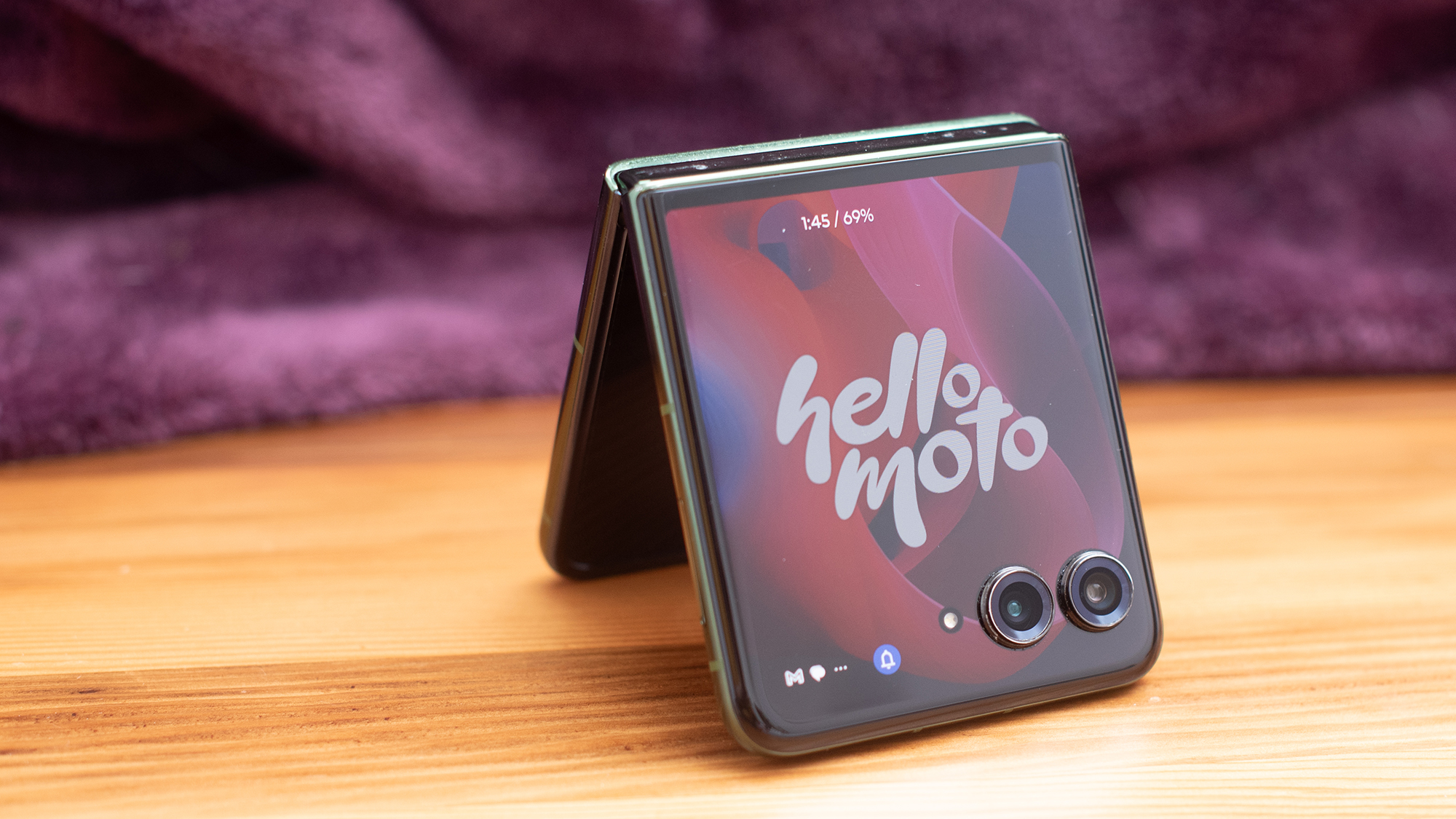
Picture from cdn.mos.cms.futurecdn.net
Rank 1939A full specs list for the Motorola Razr Plus 2025 has leakedWe know the phone is launching officially on April 24Some useful upgrades appear to be on the way for the foldable
We're more than ready for a successor to the Motorola Razr Plus 2024, and we now have a better idea of what the Moto Razr Plus 2025 will bring along with it thanks to an extensive leak of the flip foldable's specs.The specs have been published by 91mobiles and well-known tipster @OnLeaks, and add to Motorola's official announcement that this phone – which will be known as the Motorola Razr 60 Ultra outside of the US – is going to be unveiled on Thursday, April 24.It seems we're set for some considerable upgrades: a Snapdragon 8 Elite processor (up from the Snapdragon 8s Gen 3), 16GB of RAM (up from 12GB), and a 4,700 mAh battery (up from 4,000 mAh), with better wired and wireless charging speeds than before.The main display is tipped to get a slight size bump from 6.9 inches to 7 inches, but the cover display is apparently staying the same size, at 4 inches. We'll get more storage inside, it sounds like: 512GB instead of 256GB.
Cameras and dimensions
The new model might be ever so slightly thicker than the current model, shown here (Image credit: Philip Berne / Future)
When it comes to cameras, the leak suggests the 50MP wide + 50MP 2x telephoto dual camera setup of the 2024 model will be replaced by a 50MP wide + 50MP ultrawide configuration – not as much zoom, but the option to fit more inside the frame.If these details are accurate, the Moto Razr Plus 2025 will be a shade taller, thicker, and heavier than its predecessor, though not by much. Overall, it sounds like this is a respectable year-on-year upgrade, though as always the pricing will be crucial.We've heard quite a few leaks and rumors in the build-up to the official launch later this month. Just a few days ago, benchmarks for the foldable phone appeared online, which also pointed to processor and memory upgrades.It's likely that a standard Razr 2025 will show up at the same time as the Razr Plus 2025. We're also now looking forward to the launch of the Samsung Galaxy Z Flip 7 flip foldable, which should be making an appearance sometime in July.
You might also like
These are the best Motorola phones right nowYour Android phone is getting a major new security featureHere are the best foldable phones on the market
-

Picture from cdn.mos.cms.futurecdn.net
Rank 1940Cybercriminals don’t discriminate. They go where the money, data, and opportunities are. And in today's hyper-connected world, engineering firms have become lucrative targets. The recent attacks on companies such as IMI and Smiths Group are a prime example of that. In engineering environments, cybersecurity can’t be just an add-on. Not when complex supply chains, high-value intellectual property, and critical infrastructure are at stake. Not when a single security breach can lead to catastrophic consequences.Imagine an engineering firm spearheading smart infrastructure projects, embedding sensors into bridges to monitor structural integrity. A cyberattack could manipulate those readings, triggering unnecessary shutdowns, or worse, concealing a real threat. Now scale that risk across an entire industry reliant on smart manufacturing, Industrial IoT (IIoT) devices, and cloud-based systems. Every new digital advancement creates another entry point for hackers.Yet, despite the dangers, cybersecurity in engineering is often reactive rather than proactive. Many firms treat security as patching vulnerabilities only after an attack has already taken place. So how does that mindset change?
From firefighting to prevention
Cybersecurity used to function like a fire department – teams would rush to put out flames after a breach. But today’s threat landscape demands something different, from continuous network monitoring and early detection to rapid response. This is where Security Information and Event Management (SIEM) comes into play.SIEM operates like a high-tech security nerve center, constantly scanning logins, file access, and network traffic for anomalies. When it detects suspicious activity such as an unauthorized attempt to access sensitive blueprints, it raises an alert before real damage occurs. And if an attack does happen, SIEM doesn’t only just sound the alarm – it provides forensic insights, helping companies understand how the breach occurred, where it spread, and how to prevent it from happening again.For an industry where security failures can have life-or-death consequences, this kind of proactive defense is non-negotiable.
High-tech meets the human element
The good news is that the time it takes to detect and contain breaches is improving. Thanks to automation, in 2024, the average time dropped to 258 days, the shortest in seven years. But there’s still room for improvement, and AI-driven cybersecurity solutions are stepping up.For instance, AI processes massive amounts of security data in real-time, identifying patterns in API calls, logins, and system behavior to flag anomalies faster than any human team could. Think of it as a digital watchdog that never sleeps. When combined with SIEM, AI can pinpoint suspicious behavior, like an industrial machine suddenly executing unauthorized commands, before an incident escalates.And beyond just detection, AI-driven automation reduces breach costs. In fact, research from IBM found that companies leveraging AI in cybersecurity saved an average of $2.22 million per breach compared to those that didn’t.But even the most advanced systems can’t compensate for basic cybersecurity hygiene. An impressive 22% of last year’s breaches stemmed from avoidable human error – misconfigured settings, weak passwords, or falling for phishing emails. Yet, despite the risks, many companies remain critically understaffed in cybersecurity expertise. In fact, the World Economic Forum found that in 2024, only 14% of organizations felt confident in their ability to fend off cyberattacks.A balanced approach is the only effective solution. While AI and automation enhance security, organizations still need skilled professionals to interpret threats, make critical decisions, and instill a culture of cyber awareness across their workforce.
Cost vs investment
Data breaches aren’t just technical issues, they can be financial disasters. In 2024, the average cost of a breach surged to $4.88 million, up from $4.45 million the previous year – a whopping 10% spike and the highest increase since the pandemic.For engineering firms, the stakes are even higher. A single cyberattack on a company developing next-generation electric vehicles could leak years of research to competitors, wiping out its competitive edge overnight. A breach in a transportation infrastructure project could delay completion timelines, inflate costs, and erode public trust.By embedding SIEM into their cybersecurity framework, engineering companies can ensure that every digital action – whether it’s accessing blueprints, placing procurement orders, or monitoring industrial processes – is continuously protected. The result? Reduced downtime, lower financial risk, and a reputation as a secure and forward-thinking industry leader.
We list the best RFP platform.
This article was produced as part of TechRadarPro's Expert Insights channel where we feature the best and brightest minds in the technology industry today. The views expressed here are those of the author and are not necessarily those of TechRadarPro or Future plc. If you are interested in contributing find out more here: https://www.techradar.com/news/submit-your-story-to-techradar-pro
-

Picture from cdn.mos.cms.futurecdn.net
Rank 1941Snowflake research finds 93% of UK businesses report efficiency gains from GenAIMany are also tweaking LLMs for the best outputData and privacy concerns remain widespread, seperate EY report finds
Businesses are now getting to grips with AI and are implementing it with efficacy, marking a shift from the experimentation phase, with as many as 93% of UK businesses now reporting efficiency gains from generative AI (and 88% globally), new research from Snowflake has claimed.Moreover, a staggering 98% are also training, tuning or augmenting their LLMs for better outcomes, demonstrating that companies know exactly where the tech’s benefits are and how to optimize it.However, the usual hurdles and challenges remain in place, preventing some organizations from accessing the promised productivity benefits.
Businesses in the UK are pretty au fait with AI
Snowflake found nearly two-thirds (62%) of businesses are using AI in software engineering, with 69% using it for code reviews and debugging – both higher percentages than the global average.AI technology is also proving popular in customer support (61%) and cybersecurity (69%) use cases, where workers are seeing faster first response times (59%), reduced manual workload (64%) and lower costs (56%).Separate EY reporting reveals seven in 10 UK respondents have used AI in their daily lives in the past six months, but the findings conflict with Snowflake’s findings – only 44% have used it in a professional setting, lower than the global average of 67%.Globally, EY says workers are using AI for writing or editing content (31%), learning about topics (30%) and generating new ideas (27%).“They're not just experimenting – they're building with purpose,” Snowflake VP and UK&I Country Manager James Hall said about UK businesses.“With smart investments in cloud infrastructure and a focus on actionable use cases, the UK is laying the groundwork to lead the next phase of gen AI transformation.”The research also highlighted some of the challenges that businesses face when adopting AI at scale, with unstructured data presenting the biggest hurdle according to Snowflake.EY added that privacy and security are also at the front of UK business leaders’ minds, with security breaches (71%), privacy violations (65%) and the reliability of AI outputs (67%) all cited as major concerns.Looking ahead, EY UK&I AI Client Strategy Leader Catriona Campbell says that businesses must build worker confidence and demonstrate the value of AI.“As AI continues to reshape our daily lives, it is crucial for business leaders to foster trust and transparency, empowering individuals to engage with AI on their own terms,” Campbell added.
You might also like
Check out the best AI tools and best AI writersLearn about the tech with the best online learning platformsMicrosoft study claims AI is still struggling to debug software
-
Picture from ichef.bbci.co.uk
Rank 1942 -

Picture from cdn.mos.cms.futurecdn.net
Rank 1943To say that the last episode of Yellowjackets season 3 was a killer would be an understatement: it was a highly dramatic, often surprising and very violent end to not just the season, but to some of the key characters too.Warning: serious spoilers ahead!
If you haven't already seen the entire third season of one of the best Paramount+ shows please don't read on, because there were some important things in the season finale that I want to talk about, and in order to explain them I'm going to have to include some massive spoilers.Trust me: Spoiling any of the surprises for you is definitely not what the wilderness wants.
Misty's smile was misdirection
(Image credit: Paramount Plus)
One of the most disturbing parts of Yellowjackets' very first episode was what happened immediately after the horrible death of Pit Girl, who of course we now know to be Mari.There's a lingering moment in the pilot where, post-cannibalism, the camera focuses on Misty and she doesn't seem upset; she seems happy, with what you could describe as either a smirk or a smile.It turns out that that was misdirection: we were set up to think that Misty was heartless or even evil, and in successive seasons that was reinforced by the animosity between her and Mari. But we now know that Shauna, not Misty, was the person who ensured that Mari would be Pit Girl.Seeing Misty's smile in context at the end of season 3 showed us the real story: Misty was smiling because she knew her and Nat's plan – getting away to make that phone call on the repaired satellite phone – had worked.
Shauna's crown is hollow
(Image credit: Showtime; Paramount Plus)
In the very final moments we see Shauna become the Antler Queen, which of course you saw. But that coronation is misdirection again, because it's already a hollow victory: the Yellowjackets are turning against Shauna in both timelines because of her shocking actions.Of course we know she makes it back home in the 1990s timeline, because if she didn't then we wouldn't have the present-day Shauna to be horrified by.But with Misty and even Tai now lined up against her, I'm really not expecting a happy ending to Shauna's story. Not least because...
Callie is a killer
(Image credit: Paramount Plus)
Among the many revelations of the finale, one of the biggest is the identity of Lottie's killer – Callie. When Misty works it all out, she isn't slow to tell Jeff and Shauna. Jeff realizes that Shauna is, to put it mildly, not the greatest role model Callie could have, and spirits her away.But something strange happened in the finale when Shauna finds empty closets and no sign of a note: nothing.After an entire season where Callie and Jeff's characters became really important, their story just stops dead. We're no wiser about where they are or what they're doing than Shauna is.I think that's a third bit of misdirection. I reckon that we're going to see a lot more of Callie in season four – and that that's not going to be good news for Shauna.Remember, this is a show all about teens murdering people, and Mari's final words to Shauna were "you deserve all the bad things that are going to happen to you"... are you thinking what I'm thinking?
You might also like
Paramount+ price: how much does each plan cost?5 new movies on Paramount+ with over 94% on Rotten TomatoesMobLand is the most-watched Paramount+ Original series premiere ever
-
Picture from o.aolcdn.com
Rank 1944Think about your digital footprint. How many accounts have you created online since you first started using the internet? How many of those use the same passwords, so you have an easier time logging in? It’s a habit we’ve all fallen into, but it greatly weakens our ability to stay secure online. Just one password leak can compromise dozens of accounts. Password managers can help you break that habit. It’ll do the tedious work of creating and storing various passwords to up your security posture without testing your memorization skills.But there are dozens of password managers available now — that’s why we tested out nine of the best password managers available now to help you choose the right one for your needs. 1Password remains our top pick for the best password manager, thanks to its zero-knowledge policy, numerous security features and general ease of use, but there are other top password managers out there to consider as well.
Table of contents
Best password managers for 2025
Are password managers safe?
Are password managers worth it?
How we tested password managers
Other password managers we tested
Password manager FAQs
Best password managers for 2025
Are password managers worth it?
You likely already use a password manager, even if you wouldn’t think to call it that. Most phones and web browsers include a log of saved credentials on the device, like the “passwords” keychain in the settings of an iPhone. That means you’ve probably seen the benefits of not having to memorize a large number of passwords or even type them out already.
While that’s a great way in, the downfall of these built-in options are that they tend to be device specific. If you rely on an Apple password manager, for example, that works if you’re totally in the Apple ecosystem — but you become limited once you get an Android tablet, Lujo Bauer, professor of electrical and computer engineering, and of computer science, at Carnegie Mellon University, said. If you use different devices for work and personal use and want a secure option for sharing passwords with others, or just don’t want to be tied to one brand forever, a third-party password manager is usually worth it.
How we tested password managers
We tested password managers by downloading the apps for each of the nine contenders on iPhone, Android, Safari, Chrome and Firefox. That helped us better understand what platforms each manager was available on, and see how support differs across operating systems and browsers.
As we got set up with each, we took note of ease of use and how they iterated on the basic features of autofill and password generators. Nearly all password managers have these features, but some place limits on how much you can store while others give more control over creating easy-to-type yet complex passwords. From there, we looked at extra features like data-breach monitoring to understand which managers offered the most for your money.
Finally, we reviewed publicly available information about security specs for each. This includes LastPass, which more experts are shying away from recommending after the recent breach. For the sake of this review, we’ve decided not to recommend LastPass at this time as fallout from the breach still comes to light (The company disclosed a second incident earlier in 2024 where an unauthorized attack accessed the company’s cloud storage, including sensitive data. Since then, hackers have stolen more than $4.4 million in cryptocurrency using private keys and other information stored in LastPass vaults.)
These are the password managers we tested:
1Password
LastPass
Bitwarden
Dashlane
Keeper
NordPass
Enpass
Norton password manager
LogMeOnce
Other password managers we tested
LastPass
For a while, security experts considered LastPass a solid choice for a password manager. It’s easy to use, has a slew of helpful extra features and its free version gives you a lot. But we decided not to include LastPass in our top picks because of the high profile data breaches it has experienced over the past couple of years.
Keeper
Keeper met a lot of the basic criteria we tested for, like autofill options and cross-platform availability. We liked its family plan options, too, that can keep your whole household secure. There's even a self-destruct feature that deletes local data after five incorrect login attempts, should your device be lost or stolen (the cloud-based data remains untouched). But we didn’t think its extra features, like the encrypted messaging app, added much value.
Enpass
Enpass works well as an affordable password manager. That includes an inflation-beating “lifetime” access pass instead of a monthly payment for users really committed to the service. Still, it was confusing to set up across devices and because Enpass stores data locally, as opposed to in the cloud, we struggled to get started with it on mobile.
Norton
A familiar name in security, we were excited to test out Norton’s password manager. While it’s free, its features seem underdeveloped. It lacked password sharing, account recovery and complex form-filing tools that come standard in many of the other password managers we tested.
LogMeOnce
LogMeOnce comes with a wide range of premium tiers, from professional to family, that include different levels of storage and features. But when we tested, it lacked some basic cross-platform availability that other password managers had already, like compatibility with Mac and Safari.
Password manager FAQs
Why use a password manager?
Using a password manager can enhance your online security. They store all of your complex passwords and autofill them as needed, so that you can have unique, good passwords across the web without remembering each of them yourself. In many cases, unique passwords are your first defense against attack, and a reliable manager makes it easier to keep track of them all.
Are password managers safe?
It seems counterintuitive to store all your sensitive information in one place. One hack could mean you lose it all to an attacker and struggle for months or even years to rebuild your online presence, not to mention you may have to cancel credit cards and other accounts. But most experts in the field agree that password managers are a generally secure and safe way to keep track of your personal data, and the benefits of strong, complex passwords outweigh the possible risks.
The mechanics of keeping those passwords safe differs slightly from provider to provider. Generally, you have a lengthy, complex “master password” that safeguards the rest of your information. In some cases, you might also get a “security key” to enter when you log in to new devices. This is a random string of letters, numbers and symbols that the company will send you at sign up. Only you know this key, and because it’s stored locally on your device or printed out on paper, it’s harder for hackers to find.
These multiple layers of security make it difficult for an attacker to get into your vault even if your password manager provider experiences a breach. But the company should also follow a few security basics. A “zero-knowledge” policy means that the company keeps none of your data on file, so in the event of an attack, there’s nothing for hackers to find. Regular health reports like pentests and security audits are essential for keeping companies up to par on best practices, and other efforts like bug bounty programs or hosting on an open source website encourage constant vigilance for security flaws. Most password managers now also offer some level of encryption falling under the Advanced Encryption Standard (AES). AES 256-bit is the strongest, because there are the most number of possible combinations, but AES 128-bit or 192-bit are still good.
How do password managers work?
Think of password managers like virtual safe deposit boxes. They hold your valuables, in this case usually online credentials, in a section of the vault only accessible to you by security key or a master password. Most of these services have autofill features that make it convenient to log in to any site without needing to remember every password you have, and they keep your credit card information close for impulse purchases.
But given that passwords are one of the top ways to keep your online identity secure, the real value of password managers is staying safe online. “It's just not possible without a password manager to have unique, long and hard-to-guess passwords,” Florian Schaub, an associate professor of information and of electrical engineering and computer science at the University of Michigan, said.
Common guidance states that secure passwords should be unique, with the longest number of characters allowed and uppercase letters, lowercase letters, numbers and special characters. This is the exact opposite of using one password everywhere, with minor variations depending on a site’s requirements. Think of how many online accounts and sites you have credentials for — it’s an impossible task to remember it all without somewhere to store passwords safely (especially in instances when you need to create a new password for any given account). Password managers are more readily accessible and offer the benefit of filling in those long passwords for you.
Who are password managers for?
Given their universal benefit, pretty much everyone could use a password manager. They’re not just for the tech-savvy people or businesses anymore because so much sensitive information ends up online behind passwords, from our bank accounts to our Netflix watch history.
That’s the other perk of password managers: safe password sharing. Families, friends or roommates can use them to safely access joint accounts. Texting a password to someone isn’t secure, and you can help your family break the habit by starting to use one yourself, Lisa Plaggemier, executive director at National Cyber Security Alliance, said. Streaming is the obvious use case, but consider the shared bills, file storage and other sites you share access with the people around you as well.
What if I forget my master password?
Forgetting a master password won’t necessarily lock you out for good, but the recovery process varies from provider to provider. Some services give you a “security key” at sign up to enter when you log into new devices. It can also be used to securely recover your account because it’s a random string of keys stored locally that only you have access to. Other services, however, have no way to recover your vault. So creating a master password that you won’t forget is important.
How can I make a good master password?
A good master password should be unique, with the longest number of characters allowed and uppercase letters, lowercase letters, numbers and special characters. Experts often recommended thinking of it like a “passphrase” instead of a “password” to make it easier to remember. For example, you can take a sentence like “My name is Bob Smith” and change it to “Myn@m3isB0b5m!th” to turn it into a secure master password that you won’t forget.
What are passkeys?
A passkey is a sort of digital identification that's interlocked to your account on a given app or website. While that sounds like a password, there’s an important distinction: Passkeys are bilateral authenticators that have two separate components: a private key stored locally on your device and a public key belonging to the website or application. When logging in with a passkey, these two keys pair and give you access to your account. You can read more about passwords versus passkeys here.
Recent updates
April 2025: Updated for timeliness and to ensure our top picks were still current.
October 28 2024, 5:15PM ET: This story has been updated to note that Keeper's "self-destruct" security feature only deletes local content when engaged, but maintains data on a subscriber's cloud-based account. This article originally appeared on Engadget at https://www.engadget.com/cybersecurity/best-password-manager-134639599.html?src=rss
-
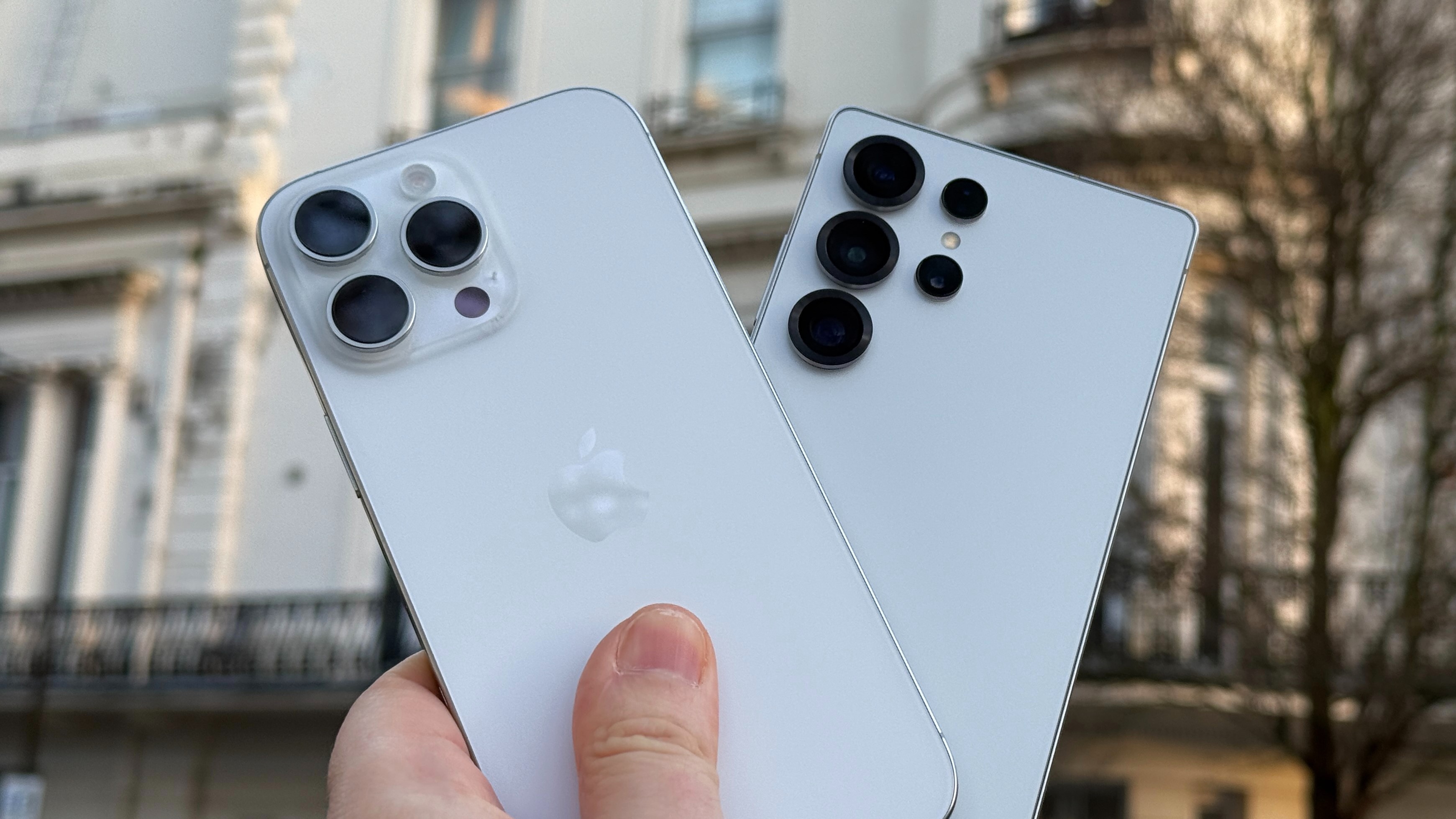
Picture from cdn.mos.cms.futurecdn.net
Rank 1945My eyesight sucks. A detached retina and the subsequent operations to fix it, and the rise of glaucoma as a result, mean most of the vision in my left eye has gone. My right eye, on the other hand, is very short-sighted, meaning I can see bits of floating debris in the vitreous liquid behind the surface of my eye, which is distracting, and my current contact lens isn’t sitting correctly.So while I can see, spotting fine details or seeing things clearly at a distance is a pain in the proverbial posterior. This harsh reality slammed into me particularly hard during a recent bachelor-party trip to Berlin. While steins of good German beer were consumed, we also did a lot of sightseeing – or at least my friends did, as I spent a good bit of time squinting.That changed when I decided to lean on the iPhone 16 Pro Max and the Samsung Galaxy S25 Ultra, both of which I had on my person, with the latter as a backup but also because I’m a tech journalist and live the dual-ecosystem life.Specifically, the 5x telephoto cameras on both flagship phones came in very handy, letting me zoom in on details on the Reichstag or the myriad of street art sprayed onto the walls and buildings of the city. But both phones really helped me and my poor eyes when visiting the Berlin Zoo.
Zooming at the zoo
Now I’m not a huge fan of zoos; I appreciate the preservation side of things, but I don’t like seeing animals in limited space. Berlin Zoo did at least seem to have plenty of space for its collection of creatures, which was promising but also a bit of a challenge for my bad eyes.I found myself desperately squinting into smartly made enclosures to spot some of the smaller and more camouflaged animals, or get a proper look at the ones in large enclosures that were sitting as far away from visitors as possible; I don’t blame them.Enter the telephoto cameras of the aforementioned flagship phones. These basically become my eyes when entering the areas where the animals were better camouflaged or elusive. And they let me capture shots that clipped past the crowds and let me get a nice framed image of a prowling leopard or bemused bear; see the photo gallery below.
Image 1 of 16A selection of photos of animals taken at Berlin Zoo on the iPhone 16 Pro Max and Samsung Galaxy S25 Ultra (Image credit: Future / Roland Moore-Colyer)Image 2 of 16(Image credit: Future / Roland Moore-Colyer)Image 3 of 16(Image credit: Future / Roland Moore-Colyer)Image 4 of 16(Image credit: Future / Roland Moore-Colyer)Image 5 of 16(Image credit: Future / Roland Moore-Colyer)Image 6 of 16(Image credit: Future / Roland Moore-Colyer)Image 7 of 16(Image credit: Future / Roland Moore-Colyer)Image 8 of 16(Image credit: Future / Roland Moore-Colyer)Image 9 of 16(Image credit: Future / Roland Moore-Colyer)Image 10 of 16(Image credit: Future / Roland Moore-Colyer)Image 11 of 16(Image credit: Future / Roland Moore-Colyer)Image 12 of 16(Image credit: Future / Roland Moore-Colyer)Image 13 of 16(Image credit: Future / Roland Moore-Colyer)Image 14 of 16(Image credit: Future / Roland Moore-Colyer)Image 15 of 16(Image credit: Future / Roland Moore-Colyer)Image 16 of 16(Image credit: Future / Roland Moore-Colyer)
Advancements in the quality of cameras sensors, alongside optical zoom range and improved image processing – plus the addition of sensor fusion letting a phone take shots with multiple cameras at once and stitch an image out of them – has seen telephoto cameras, at least on some of the best phones, go from mild novelties to useful additions.I’ve long favored telephoto cameras over ultra-wide ones, which can make me an outlier compared to some people. Maybe I just don’t have big groups of friends to capture in digital images. So the more recent push by flagship phones from bigger brands to go past 3x telephoto cameras and adapt 5x and above – think the past couple of generations of Galaxy, Pixel and Pro iPhones – has really caught my eye (pun partially intended).And for helping me appreciate the range of animals at Berlin Zoo without enraging German animal handlers and administrators by leaping into lion enclosures, these telephoto cameras were basically essential.Furthermore, the advancements in low-light photography have meant that when I entered a very dark section of the zoo where the nocturnal animals were kept, and where I basically couldn’t see, the night mode of the iPhone 16 Pro Max was a boon, letting me view various critters without activating a flash or anything obnoxiously disturbing.Honestly, without such tech, I think I’d have stumbled from enclosure to enclosure without seeing a single critter.
(Image credit: Future / Roland Moore-Colyer)
Now I do need to see an optician to get a new contact lens that actually fits, and I’m not saying that looking at life through a smartphone is the panacea to my poor eyes.Yet my trip to Berlin and its zoo hammered home quite how capable two of the best camera phones are. Sure, upgrades to phone cameras have been iterative lately. Nevertheless, each improvement leads to a better overall experience, and in my case, basically saved me from what could have been a rather miserable and frustrating time.
You might also like
New iPhone 17 Pro render ditches the two-tone design for a possibly more accurate appearanceMy favorite iOS 18 app is a tool you're probably not using – and I suggest you try it right away5 things I want from the iPhone 17 – or I’m out and back to Android
-
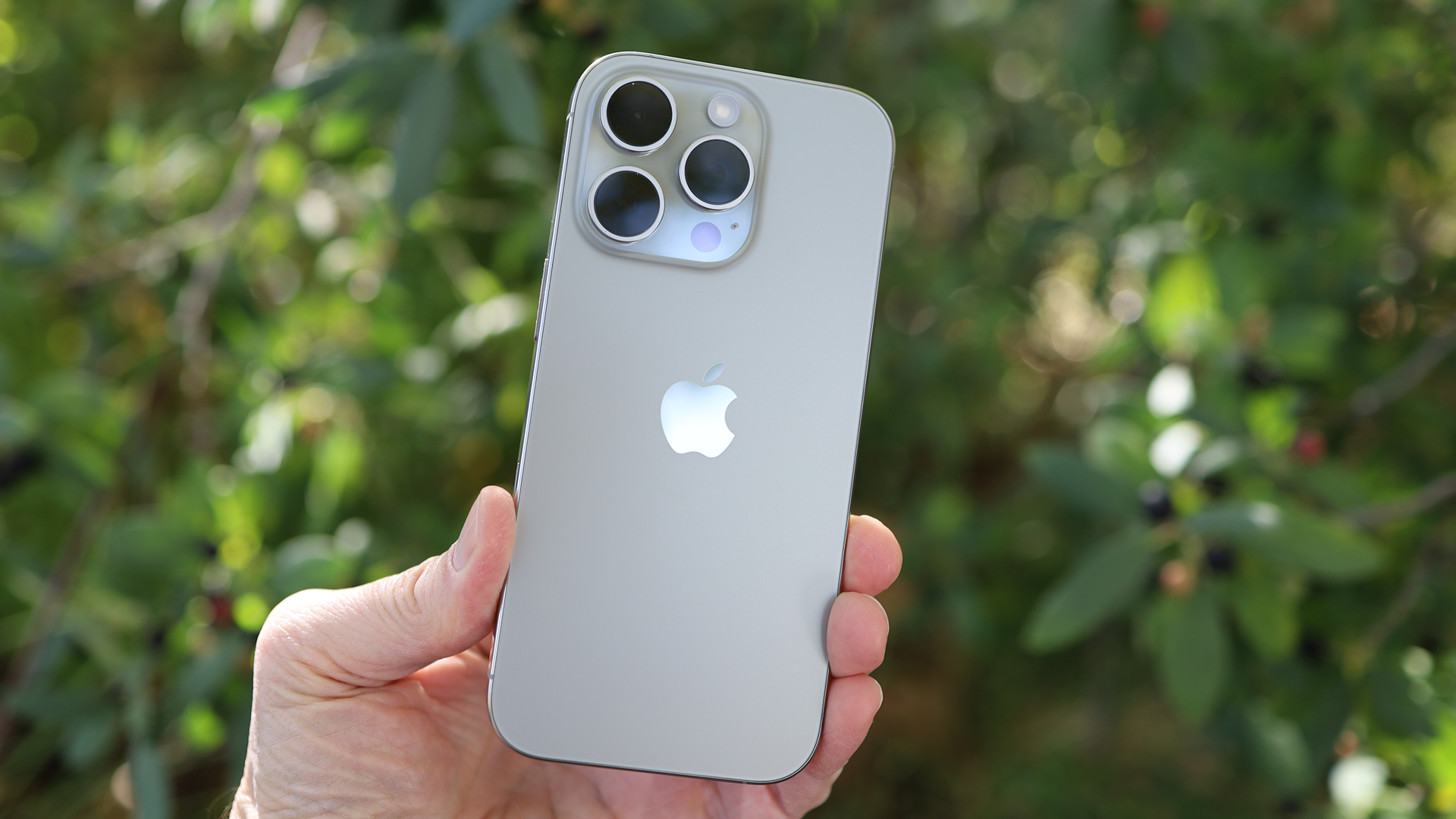
Picture from cdn.mos.cms.futurecdn.net
Rank 1946The iPhone 18 is again tipped to make the 2 nm switchIt means more power and a higher cost to makeThe phones are due to launch in September next year
Should you upgrade to the iPhone 17 this year, or wait for the iPhone 18? A new leak suggests that the 2026 iPhone is going to come with a significant performance boost, but might also have a notably higher price tag.This comes from seasoned tipster Digital Chat Station on Chinese social media site Weibo (via MacRumors). Apparently, the A20 chip destined for the iPhone 18 series will switch from a 3 nanometer to a 2 nanometer manufacturing process – essentially packing more transistors into the same space.That should mean a major boost in performance and efficiency (which then improves battery life). iPhone chips get faster every year of course, but where a nanometer (nm) jump is involved, the differences in generations should be even greater.We've heard this rumor before, from well-placed sources, and we're even more likely to believe it now that it's been repeated again. Expect Apple to make a lot of noise about the performance of its iPhones when next year rolls around.
It'll cost you
The iPhone 16 launched in September 2024 (Image credit: Future)
The same tipster says (via Google Translate) that the cost of these chips is expected to "increase significantly", with "another round of price increases for new phones". Add in current tariff uncertainty, and the 2026 iPhone series could be the most expensive yet.Other chip makers, including Qualcomm and MediaTek, are apparently moving to the same 2 nm process next year as well – so flagship smartphones might be more expensive across the board, not just when it comes to Apple's offerings.Again, this is something that other tipsters have predicted. This isn't a completely new rumor, but it adds to the mounting evidence that the iPhone 18 handsets are going to be impressively powerful... and perhaps rather pricey too.Expect more rumors like this for the rest of this year and into the next one. In the meantime, we're hearing that the iPhone 17 range could come with a substantial redesign, certain video recording improvements, and a brand new model.
You might also like
iOS 18: all the important details5 rumors about the iPhone 18These are the best Apple iPhones
-

Picture from cdn.mos.cms.futurecdn.net
Rank 1947A US judge has deemed Google violated antitrust lawsIt reportedly monopolized ad market by tying to of its products togetherGoogle could have to sell off parts of its business, but remedies are yet to be confirmed
A Virginia District Judge has ruled Google violated antitrust laws by “willfully acquiring and maintaining monopoly power” in the advertising technology market, spelling potentially grave consequences for the tech giant.The ruling follows a 2023 lawsuit by the Department of Justice, backed by eight separate US states, accusing the company of harming rivals, publishers and consumers online.Google was specifically found guilty of monopolizing the market by tying together two parts of its adtech stack – DoubleClick for Publishers (DFP) and Ad Exchange (AdX).
Judge rules that Google violated antitrust laws
Despite the findings, the judge did not find a monopoly in advertiser ad networks, representing a partial win for Google.Although Google has been found guilty, the judge did not determine any remedies. A separate court hearing will set out what Google must do to comply with antitrust laws and set straight any violations. Consequences could include breaking up Google’s ad business, such as selling off Google Ad Manager, and further behavioral remedies like prohibiting Google from self-preferencing in ad auctions.“Having found Google liable, the Court will set a briefing schedule and hearing date to determine the appropriate remedies for these antitrust violations,” the decision confirms.Noting the continued employment of anticompetitive business practices for more than a decade, the judge said: “ In addition to depriving rivals of the ability to compete, this exclusionary conduct substantially harmed Google’s publisher customers, the competitive process, and, ultimately, consumers of information on the open web.”“We won half of this case and we will appeal the other half. The Court found that our advertiser tools and our acquisitions, such as DoubleClick, don’t harm competition," Google’s VP of Regulatory Affairs Lee-Anne Mulholland told TechRadar Pro."Publishers have many options and they choose Google because our ad tech tools are simple, affordable and effective."Google is also in hot water about its search market dominance – nine in 10 (89.7%) of all internet searches tracked by Statcounter used Google. Bing, in second place, accounted for just 4%.If the company is found guilty of violation there, it could also be forced to sell off its Chrome business, a browser that accounts for two in three (66.2%) browser sessions globally. That case is ongoing.
You might also like
We’ve listed the best privacy tools and anonymous browsersCheck out our roundup of the best online marketing servicesGoogle's Gemini AI is going to try and help build better online ads
-
Picture from o.aolcdn.com
Rank 1948Q: I’m traveling soon and plan to bring all the devices I usually use, including my smartphone, tablet and laptop. What should I buy to keep everything charged?
A: If you’re traveling domestically, one large and one small power bank plus a foldable charging station (in addition to your usual cables and wall adapters) should keep your devices reliably powered. If you’re heading to another country, you should also include an outlet adapter. And if you’re flying, there are a few TSA rules you should know about that apply to electronics and external batteries.
How to pick a power bank for travel
Over the past few years, I’ve tested dozens of portable batteries for Engadget’s guide to the best power banks and I’ve brought a bunch with me on planes, trains and interminable automobile rides. My go-to battery right now is Anker’s Laptop Power Bank, which I only rarely use for charging my laptop — it's far more versatile than the uncreative name may suggest. I also have a couple of smaller banks to grab when I don’t need quite so much charge.
The three important features to look for when picking a portable charger to take on your travels are its capacity, weight and connections.
Capacity
Most portable chargers list their capacity in milliamp hours (mAh). Anything less than 5,000mAh is pretty useless — it won’t even get a smartphone up to fifty percent. I recommend looking for a power bank with 10,000mAh or higher capacity. One thing to note is that there’s not a one-to-one correlation on capacity: a 10,000mAh power bank will not refill your smartphone’s 5,000mAh battery twice. Voltage conversions, heat loss and the operation of the battery all cut down on the amount of charge delivered.
Weight
This is directly related to capacity. Just about every 20,000mAh battery will be heavier than a 10,000mAh battery. If you’re really concerned with keeping down the pounds and ounces in your luggage, you might want to pick the smallest capacity you think you’ll need. That said, the largest TSA-compliant batteries are 27,000mAh models, which weigh between two and 2.5 pounds. That may or may not make a huge difference in your packing scheme.
Connections
The last thing to look for is the right connections. Every power bank I’ve tested has at least one USB-C port. Since you can get a USB-C cable with just about any connector at the other end, that should cover what you need. But if, for example, you have an older smartwatch charger with a USB Type-A connector, you’ll want to make sure your power bank has that slot. You’ll also want to remember to pack the right cables for each device. I’m seeing more banks with built-in cables, which is convenient, but you’ll probably still want to bring a couple extra cords just in case.
How to fly with charging accessories
Current TSA and FAA rules say that all spare batteries, including power banks, can only go in your carry-on luggage, not your checked bags. They must be rated at 100 watt-hours or lower, which in most batteries translates to roughly a 27,000mAh capacity. That capacity range covers most portable power chargers out there, since most manufacturers want their banks to fit within travel recommendations (larger batteries are often marketed as portable power stations). There’s no limit on the number of batteries you can carry, but they should be for your personal use and must be protected from damage.
Items like fast chargers, wall adapters, cables and regular alkaline batteries (ie. AA and AAA cells) can fly in either your checked or carry-on luggage. Of course, as with all TSA regulations, the final determination of what you can and can’t bring with you lies with the agents themselves, but this advice follows the agency’s current guidelines.
If you’re flying internationally, you’ll want to check the baggage policies of the airline and airport you’ll use for your return flight. A quick check of International Civil Aviation Organization (ICAO) policies and the five highest-trafficked non-US airports (Delhi, Haneda, Istanbul, Heathrow and Dubai) shows that similar rules apply: spare batteries must go in carry-on bags and can’t be checked. A few policies put the upper capacity limit for external batteries at 100Wh, but the ICAO actually allows banks up to 160Wh.
Have a tech question you’d like Engadget to answer?
As tech reporters, the Engadget staff is always answering questions from friends and family about electronics, software, gaming, big tech policies and more. So we decided to write down our answers. This question is a composite of ones we’ve been asked recently. If you’ve got a tech-related question you’d like us to answer for you, please email ask@engadget.com.This article originally appeared on Engadget at https://www.engadget.com/computing/accessories/ask-engadget-how-do-i-keep-my-electronics-from-dying-when-i-travel-110022879.html?src=rss
-
Picture from o.aolcdn.com
Rank 1949Welcome to your Friday edition of TMA. It’s a public holiday where I’m from, so it’s a shorter briefing than usual. Barring a barrage of new cars (tariffs? shh!) revealed at the New York International Auto Show, it’s been a relatively quiet week, but not without a bit of drama.
Engadget
“You know, they say money can’t buy happiness. And… yeah, OK… I guess that’s true. God knows I’ve tried. But it can buy a Cybertruck, and that’s pretty sick, right? …Right?? Fuck, I’m so alone.” That’s what a pretty realistic AI voice clone of Elon Musk was saying to pedestrians at crosswalks in Palo Alto. An AI Mark Zuckerberg joined him, with both billionaires’ voices mimicked to say, well, the things a lot of us are thinking, whether it’s the invasive AI push, billionaires wielding power over government or other bleak, beige real-world versions of Black Mirror premises.
They were in operation at downtown intersections in Redwood City, Menlo Park and Palo Alto but were gone, sadly, by Saturday.
No one’s staked a claim to the prank — but there are probably many people in Silicon Valley capable of pulling it off. More recently, an AI clone of Jeff Bezos was talking on Seattle crosswalks.
— Mat Smith
Get Engadget's newsletter delivered direct to your inbox. Subscribe right here!
The biggest stories you might have missed
Our (actual) favorite VPN is on sale, with 64 percent off
The best VPNs (just to prove my point)
Mario Kart World Direct: Rewatch nearly 17 minutes of Switch 2 gameplay
18 percent of the new music uploaded to Deezer is AI-generated
20,000 tracks each day. 5 total listens.
Music streaming service Deezer said 20,000 completely AI-generated tracks are added to its music service daily, making up “over 18% of all uploaded content” the platform receives every day. At the start of the year, Deezer introduced a tool for detecting and tagging AI-generated content, which at the time accounted for only 10 percent of uploads.
Continue reading.
Panasonic S1R II camera review
Its video is great, it finally does stills well and it’s cheaper than its rivals.
The S1R II is Panasonic’s first camera that can both shoot up to 8K video and capture 44-megapixel (MP) photos in rapid bursts. And unlike its rivals, the new model is available at a more reasonable $3,300 — half the price of Sony’s A1 II. At the same time, it’s a massive upgrade over the original S1R. We have some issues with the rolling shutter, but it’s a minor problem on an otherwise excellent hybrid camera.
Continue reading.
The $666 edition of Doom includes a game box that, itself, plays Doom
The true physical edition.
Doom
Physical editions of the iconic shooters Doom and Doom II are on their way, and the highlight is something called the Will It Run Edition. This comes with a game box that actually runs the original Doom itself. All you have to do is connect a controller as the box also has a port. It’s an expensive gimmick: The copies cost $666 and are being kept to a limited run of 666. Because hell. There’s also the usual special edition content inside, including a soundtrack (on cassette), trading cards and a handheld cacodemon handheld console that also plays Doom.
Continue reading.
This article originally appeared on Engadget at https://www.engadget.com/general/the-morning-after-engadget-newsletter-111621557.html?src=rss
-

Picture from cdn.mos.cms.futurecdn.net
Rank 1950Security researchers find a 10/10 flaw in Erlang/OTP SSHHorizon3 Attack Team says the flaw is "surprisingly easy" to exploitA patch is available, so users should update now
Erlang/OTP SSH, a set of libraries for the Erlang programming language, carries a maximum-severity vulnerability that allows for remote code execution and is “surprisingly easy” to exploit, researchers are warning.A team of cybersecurity researchers from the Ruhr University Bochum (Germany) recently discovered an improper handling of pre-authentication protocol messages flaw, which affects all versions of Erlang/OTP SSH. It is tracked as CVE-2025-32433 and carries a severity score of 10/10 (critical).Erlang/OTP SSH is a module within the Erlang/OTP standard library that provides support for implementing Secure Shell (SSH) clients and servers in Erlang applications.
Monitor your credit score with TransUnion starting at $29.95/monthTransUnion is a credit monitoring service that helps you stay on top of your financial health. With real-time alerts, credit score tracking, and identity theft protection, it ensures you never miss important changes. You'll benefit from a customizable online interface with clear insights into your credit profile. Businesses also benefit from TransUnion’s advanced risk assessment tools.Preferred partner (What does this mean?)View Deal
Remote code execution
Erlang is a functional programming language and runtime system designed for building highly concurrent, distributed, and fault-tolerant systems. It was originally developed by Ericsson, for use in telecoms, but has expanded into messaging systems, databases, and other applications where uptime and scalability are critical."The issue is caused by a flaw in the SSH protocol message handling which allows an attacker to send connection protocol messages prior to authentication," a warning on the OpenWall vulnerability mailing list reads.Soon after the news broke, security researchers from the Horizon3 Attack Team tried to reproduce the flaw and found it to be “surprisingly easy”, which should be cause for concern.“Just finished reproducing CVE-2025-32433 and putting together a quick PoC exploit — surprisingly easy,” the team said on X. “Wouldn’t be shocked if public PoCs start dropping soon. If you’re tracking this, now’s the time to take action.”Taking action would mean applying the patch which is now available and which mitigates the risk. Since all older versions are vulnerable, all users are advised to upgrade to versions 25.3.2.10 and 26.2.4.Threat actors are more active in the short window between a patch being released, and being applied by the users. Most organizations are not that diligent when it comes to patching, giving cybercriminals a relatively easy exploit avenue.Via BleepingComputer
You might also like
OpenSSH vulnerabilities could pose huge threat to businesses everywhereTake a look at our guide to the best authenticator appWe've rounded up the best password managers


