news,technology
news,technology
-

Picture from techcrunch.com
Rank 1301 -

Picture from cdn.mos.cms.futurecdn.net
Rank 1302Kaspersky observed a threat actor called ToddyCat abusing a bug in ESET's cybersecurity solutionThe group used a now-patched flaw to deploy a piece of malware called TCESB Users are advised to patch their systems and monitor for threats
A component of ESET’s endpoint protection solution was being abused to launch stealthy malware on Windows devices, researchers are saying.In an in-depth report published earlier this week, security researchers from Kaspersky said they saw a critical vulnerability in ESET’s command-line scanner being abused to deploy a tool named TCESB.The vulnerability, now identified as CVE-2024-11859, allowed attackers to hijack the loading process of system libraries by abusing how the ESET scanner usually loads them. Instead of retrieving legitimate libraries from system directories, the scanner would first look in its current working directory, which enabled a classic “bring your own vulnerable driver” approach.
Monitor your credit score with TransUnion starting at $29.95/monthTransUnion is a credit monitoring service that helps you stay on top of your financial health. With real-time alerts, credit score tracking, and identity theft protection, it ensures you never miss important changes. You'll benefit from a customizable online interface with clear insights into your credit profile. Businesses also benefit from TransUnion’s advanced risk assessment tools.Preferred partner (What does this mean?)View Deal
ToddyCat
The group behind the attack is dubbed ToddyCat. It is an advanced persistent threat (APT) group, first observed in 2021. It is known for targeting government and military organizations, diplomatic entities, and critical infrastructure. Its targets are mostly located in Asia and Europe, and there are some indications that it might either be Chinese, or China-aligned. This was not confirmed, though.In this instance, the researchers did not discuss the victims, their industry, or location. However, it was said that ToddyCat was able to place a malicious variant of version.dll alongside ESET’s scanner, which forced the endpoint protection tool to run the custom malware and thus bypass standard security detection mechanisms.The TCESB malware is a modified version of an open-source tool named EDRSandBlast, Kaspersky further explained, saying that it includes features that change the OS kernel structures and can disable callbacks (notification routines).ESET patched the flaw in January 2025 following responsible disclosure. Organizations using this popular endpoint protection solution are urged to update their systems as soon as possible, and closely monitor their endpoints:"To detect the activity of such tools, it's recommended to monitor systems for installation events involving drivers with known vulnerabilities," Kaspersky said. "It's also worth monitoring events associated with loading Windows kernel debug symbols on devices where debugging of the operating system kernel is not expected."Via The Hacker News
You might also like
The growing threat of ransomware for SMBsTake a look at our guide to the best authenticator appWe've rounded up the best password managers
-
Picture from o.aolcdn.com
Rank 1303The Nintendo Switch 2 is functionally similar to its predecessor. Sure, the detachable controllers can now each be used as a mouse (on your pants, no less), the screen is bigger, the hardware is more powerful and there's a built-in mic for voice chat. But otherwise the company isn't rocking the boat too much. At least not outside of its business model, as it may be preparing to sell the console at a loss.
For most countries, President Donald Trump has paused the harshest tariffs that he announced last week. Still, he increased tariffs on imports from China to 125 percent on Wednesday, while imports from elsewhere will still be subject to a levy of at least 10 percent.
Per Bloomberg, Nintendo may be looking to make as many Switch 2 units as it can in Vietnam (it's manufacturing about a third of the consoles there) during the 90-day freeze on higher tariffs and ship as many as possible to the US. The US is a critical market for Nintendo as it accounts for about a third of sales.
Still, with a 10 percent tariff, Nintendo may reluctantly eat that cost, even if that means losing money on each sale. "We believe the Switch 2’s bill of materials is around $400, meaning Nintendo would still be selling consoles at a loss in the US with the 10 percent tariff — but the loss would be something Nintendo would be able to absorb," Hideki Yasuda of Toyo Securities told Bloomberg. "Sony is in a tougher situation as most of its PlayStation production is in China, and it may be forced to hike PS5 prices in the US in the near future."
If the Switch 2 has about $400 worth of materials, that means Nintendo will also be taking a hit on a Japan-only edition of the console in its home country. It's selling that variant for under $350.
Another analyst, Robin Zhu of Bernstein, also suggested that Nintendo will take the hit and keep the price at $450 if the tariff on Vietnamese imports remains at 10 percent. However, "At 46 percent Vietnam tariffs, I expected them to raise [the Switch 2 price] by $50 to $100."
Unlike Sony and Microsoft, Nintendo has not historically sold its consoles at a loss with the aim of making up for that with sales of pricey software. The gaming side of the business is far and away Nintendo's largest source of revenue. It's diversifying more these days with things like movies and theme parks, but it still needs a thriving base of Switch and Switch 2 players. With the consoles critical to the company's success, the suggestion that Nintendo may sell the $450 Switch 2 at a loss is somewhat surprising, even if it's because of tariffs.
Nintendo formally revealed the Switch 2 just hours before Trump announced higher import tariffs on every country. Soon after, Nintendo delayed pre-orders for the console in the US (it later did the same in Canada, perhaps to reduce the risk of secondary-market price gouging) to assess the impact of the tariffs. With those now on hold, the company surely wants to get the ball rolling on pre-orders so it has a better sense of North American demand and can accordingly adjust its manufacturing plans if need be.This article originally appeared on Engadget at https://www.engadget.com/gaming/nintendo/nintendo-may-sell-the-switch-2-at-a-loss-in-the-us-due-to-tariffs-175857327.html?src=rss
-

Picture from techcrunch.com
Rank 1304 -
Picture from o.aolcdn.com
Rank 1305Panic has set a date for when it will share more about the second season of Playdate games. The company is hosting a Playdate Update event on April 17, at 1PM ET / 10AM PT where it plans to cover the developers participating in the season, how you can pre-order it and how much it'll cost.
The Playdate's season structure was one of the main things that made the tiny handheld unique when it was first released. Every week for 12 weeks you receive two new games automatically downloaded to your Playdate, free of charge. The list was curated, featuring games from prominent developers like Katamari Damacy creator Keita Takahashi, but also varied, with adventure games, platformers and more.
Given the difficulties Panic faced making and shipping the Playdate to customers, there was initially some uncertainty whether the company could afford to commission another season. Before season two became official, Panic introduce an on-device store, called Catalog, as a way to purchase games from a curated library of titles. Then in October 2024, Panic confirmed that season two was happening in 2025.
In a statement to press, Panic shared that through the Playdate and Catalog, they've been able to raise $1,043,186.85 for developers. The company has also sold over 70,000 Playdate handhelds since the device launched in 2022. The price of the Playdate was recently raised from $179 to $229.
You'll be able to watch the Season Two Playdate Update on April 17 at 1PM ET / 10AM ET on Panic's website and the company's YouTube channel.This article originally appeared on Engadget at https://www.engadget.com/gaming/panic-will-showcase-the-second-season-of-playdate-games-on-april-17-181556782.html?src=rss
-
Picture from o.aolcdn.com
Rank 1306On the heels of Razer pausing direct laptop sales in the US (thanks to those on-again, off-again, yet still very much on for China tariffs), the company has officially launched its remote game streaming app. Razer PC Remote Play, which the company rolled out in beta at CES 2025, is now officially available for iOS and Android.
Razer may be a bit late to the party here, and its app is hardly the only way to stream your PC games to other devices. (For example, Steam's version has offered similar functionality for six years.) But Razer's app has a neat trick: It automatically adjusts the game's resolution and frame rate to match your mobile device's. So, you can avoid the black bars you get with services that only stream games in a fixed aspect ratio.
Razer
The company says it works with all iOS and Android gaming controllers, and the iPad version has keyboard, mouse and trackpad support. It works with titles from multiple storefronts (including Steam, Epic, PC Game Pass and more). The app uses the AV1 video codec, which Razer says boosts quality and lowers latency.
Setup requires the Razer Nexus and PC Remote Play apps on your mobile device and Razer Cortex on the host PC. After signing in with your Razer ID, the two should pair automatically, and you can get down to business. You can download the app now from Google Play and the App Store.This article originally appeared on Engadget at https://www.engadget.com/gaming/pc/razers-pc-remote-play-app-is-now-available-182533832.html?src=rss
-

Picture from techcrunch.com
Rank 1307 -

Picture from cdn.mos.cms.futurecdn.net
Rank 1308Immutable backup storage is the best ransomware protectionResearch shows backups are almost always targeted in ransomware attacksRansomware is on the rise already in 2025
Ransomware attacks in the first quarter of 2025 set new records, up by 84% in the same period of 2024.Moreover, ransomware is often talked about as an attack that businesses should expect to be hit by, with two-thirds of organizations experiencing an attack in the last two years.But it’s not all doom and gloom, as new research from backup storage provider Object First shows that 81% of IT decision makers agree that immutable backup storage is the best ransomware protection.
Monitor your credit score with TransUnion starting at $29.95/monthTransUnion is a credit monitoring service that helps you stay on top of your financial health. With real-time alerts, credit score tracking, and identity theft protection, it ensures you never miss important changes. You'll benefit from a customizable online interface with clear insights into your credit profile. Businesses also benefit from TransUnion’s advanced risk assessment tools.Preferred partner (What does this mean?)View Deal
Segmentation, zero trust, and immutable storage
While having a 3-2-1 backup strategy is a start when it comes to ransomware protection, the Object First research also reveals that 96% of organizations who have suffered a ransomware attack in the last two years saw their data backups targeted as part of at least one attack, with one in ten seeing their backup storage targeted in every attack.While there is a general consensus that immutable backup storage is probably the best way to protect against ransomware, only 59% of organizations actually deploy this form of storage, and only 58% have multiple copies of their data in separate locations. In addition to this, 61% of respondents believe that IT security hardening offers enough protection against ransomware attacks.Object First recommends that businesses adopt a breach mentality, and couple this with Zero Trust principles and immutable backup storage. To do this, businesses should segment their networks to minimize the potential blast radius of an attack, alongside using authentication mechanisms for log-ins such as multi-factor authentication and identity access management practices. Moreover, each user should only have access to the files and applications they need for their specific workload.Immutable backup storage helps protect against ransomware attacks by storing data in a way that it cannot be modified or deleted. Traditionally, these have been hard drives or other storage mediums that are used to back up data and then stored in an ‘air-gapped’ environment that has no connection to the outside world. However, with cloud services booming, immutable cloud storage is now also an option.
You might also like
Take a look at the best backup softwareThese are the best business cloud storage services aroundGoogle Cloud Next 2025 — all the day one news and updates as it happens
-

Picture from techcrunch.com
Rank 1309 -

Picture from techcrunch.com
Rank 1310 -

Picture from techcrunch.com
Rank 1311 -

Picture from cdn.mos.cms.futurecdn.net
Rank 1312As someone who's covered Apple for almost a quarter of a century, this Apple Intelligence Siri chapter is by far its most confounding one. We're now just two months away from the next Apple developer's conference, and it will likely mark an ignominious anniversary for Apple's artificial intelligence efforts.Apple's uncharacteristic failure to deliver on a product promise has shocked many fans. Ever since the company announced it would not deliver some of the promised Siri enhancements this year, I, for one, have been wondering how we got here.Now, a new report paints a surprising picture of rival AI factions or rather two teams with divergent strategies that somehow led to flashy demos and some unfulfilled promises.Not everything in The Information's report on the Apple Siri debacle is surprising. I've been writing for some time about how Apple's usually laudable adherence to privacy principles hamstrung its Siri efforts.However, The Information's claim that Apple's AI lead John Giannandrea and Craig Federighi (Apple's software engineering head) were in some fashion acting at cross purposes is unexpected.Giannandrea's slow and steady approach and Apple's insistence on using its own models as opposed to, say, OpenAI's GPT LLMs was in stark contrast to the obvious excitement Federighi's Intelligent Systems team had for experimenting with and possibly using third-party models.
Two visions, no clarity
(Image credit: Future / Lance Ulanoff)
Internal battles are not unheard of in companies of all sizes, but they usually don't play out on a public stage at Apple. As The Information tells it, the Apple Intelligence demos I saw last June at WWDC may have broken what I thought was a cardinal rule for Apple: never announce technology that you can't demo live, at least in some fashion.When Apple stunned WWDC 2023 with the new Apple Vision Pro, it followed later that afternoon by inviting a handful of journalists (including me) for hands-on demos. The pricey mixed reality headset wasn't done, but it was still functional enough to blow our collective minds.In the case of Apple's Intelligence, though, our post-event demos were limited (Siri was no smarter). It seems that not only were many of the best bits not finished, but Apple may have shown them off in the pre-tapped keynote without giving the main Apple AI team in charge of Siri a full heads-up.Doing so obviously put Apple in a tough spot. The pre-tapped WWDC video showed us a responsive and aware Siri capable of looking into your iPhone, its apps, and your information to take action on your behalf. Apple then promised we'd see it sometime that year.Even after Apple delivered the iPhone 16 with iOS 18 and the first blush of Apple Intelligence (a new look, writing tools, Image Playground, Genmojis), most assumed it was just a matter of time before Siri got its major intelligence glow-up.
Half baked
(Image credit: Future / Lance Ulanoff)
By possibly demonstrating technology that was not ready or even fully programmed to run on any Apple Intelligence-ready iPhone, Apple may have set itself or, at least the Siri team, up for failure.Apple hasn't spoken on the record about this beyond the initial announcement of the delay. News that Apple Intelligence is now reportedly under Craig Federighi's leadership is further proof that perhaps Apple realizes it chose the wrong path.Federighi's team, according to The Information, is much more open to integrating third-party LLMs. It's a good strategy not only because it will help Apple's AI efforts get back on track but also because it's the same strategy employed by most of its AI competitors, at least those who are not at heart AI companies.Late in the game, Amazon relied on Perplexity's Claude AI models to build its own Nova system. Samsung has leaned heavily on Google Gemini to develop its own models. As we well know, Microsoft made a big bet on OpenAI's GPT models to power Bing AI and then Copilot to build its own Microsoft AI models.
Siri will rise
(Image credit: Future/Jacob Krol)
This, folks, is the way in. Sure, it's maybe less predictable and, possibly, rock-solid secure than Apple's initial strategy, but most of these companies are racing ahead while iPhone fans wait for Apple to get its act together.Federighi (and Vision Pro lead Mike Walker) taking over is good news, but much of Apple's future success in the AI space will depend on Apple CEO Tim Cook's leadership.This failure happened under his watch, possibly because he trusted the team to get the job done and has been adamant about sticking to Apple's secure and private approach. Now Cook has to find a new plan and, with Federighi, identify a clear path that gets you the smarter Siri you want in 2026, if not sooner.I've seen Apple do amazing things in the past, and honestly, I'm confident it'll do it again here.
You might also like
Apple Intelligence might finally transform Siri into the ultimate AI assistant if these leadership changes are trueThe big Siri Apple Intelligence delay proves that maybe we really don't know Apple at allI installed iOS 18.4 beta and the big Siri intelligence update is nowhere to be found
-

Picture from techcrunch.com
Rank 1313 -

Picture from cdn.mos.cms.futurecdn.net
Rank 1314China’s GPMI cable could finally replace HDMI and ThunderboltGPMI supports 16K video, high power, and universal controlGPMI offers more speed and power than HDMI ever could
Following its push to replace Bluetooth with Nearlink, China is now turning its attention to physical connectors, targeting HDMI, USB4, and Thunderbolt with a new high-bandwidth alternative.The General Purpose Media Interface (GPMI) was recently unveiled by the Shenzhen 8K UHD Video Industry Cooperation Alliance, a consortium of over 50 tech companies.Designed to meet the demands of ultra-high-resolution content, GPMI promises significant improvements in speed, power delivery, and versatility, enough to transmit 8K, and potentially even 16K, video.
A choice of versions
The GPMI standard comes in two versions - the more powerful GPMI Type-B offers a massive 192Gbps bandwidth and can deliver up to 480 watts of power, enough to support high-performance laptops for photo editing, and far exceeding the capabilities of HDMI or Thunderbolt.GPMI Type-C, on the other hand, uses the widely adopted USB-C form factor but doubles the bandwidth of USB4 and Thunderbolt 4, reaching 96Gbps.It also matches USB4’s 240-watt power delivery, enough to power 5K/8K monitors and charge devices simultaneously.In comparison, HDMI 2.1 maxes out at 48Gbps and delivers no power. USB4 and Thunderbolt 4 both top out at 40Gbps, with power delivery of 240W and 100W, respectively. DisplayPort 2.1, currently the leader in bandwidth at 80Gbps, does not offer power transmission.Additionally, the GPMI standard supports a universal remote-control protocol, allowing users to control multiple connected devices with a single remote.This will be especially useful for creative professionals who rely on multiple displays or peripherals, such as those using high-end laptops for graphic design.Via TomsHardware
You may also like
These are the best mobile workstations you can buy right nowWe've also listed the best portable monitors for every budget and resolutionIntel's former CEO invests in hardware startup that aims to make Nvidia obsolete
-

Picture from techcrunch.com
Rank 1315 -
Picture from o.aolcdn.com
Rank 1316Choosing the best Android phone can feel overwhelming as there are so many options from so many brands, it’s hard to know where to start. Unlike Apple, which sticks to its sleek lineup of iPhones, Android offers a world of variety. Whether you're eyeing the latest flagship from Samsung, a budget-friendly smartphone from Motorola or something unique with a foldable design, there’s an Android device out there to suit your needs.The beauty of Android is its flexibility. You’ll find phones with different screen sizes, camera setups, battery life and even quirky extras like stylus support or rugged builds. Plus, Android lets you customize your device to your heart's content – something Apple fans might envy. We’ve tested and researched the top Android phones to help you find the right one for your budget, lifestyle, and tech preferences.
Best Android phones for 2025
What to look for in a new Android phone
Performance
When it comes to picking our favorite Android phones, the main things we look for are pretty straightforward: good performance (both compute and AI), a nice display, solid design, sharp cameras, long battery life and a significant commitment to ongoing software support. For performance, not only do we look at benchmarks and other metrics, but we also evaluate phones based on responsiveness. Regardless of whether you’re reading, text messaging, scrolling through social media or playing a game, no one wants a gadget that feels sluggish.
Display
When it comes to displays, we generally prefer OLED panels that can produce rich, saturated colors with at least 600 nits of brightness, though many of our top mid-range and high-end phones can hit 1,000 nits or more. And more recently, most of our favorite devices also support screens with fast refresh rates of 90Hz or 120Hz, which adds an extra level of smoothness and fluidity.
Design
Now we will admit there is a bit of subjectivity when deciding which phones look the best, but there are other design aspects like dust and water resistance or screen durability that can make a big difference to long-term survival. It’s also important to consider things like support for wireless charging, power sharing (aka reverse wireless charging) and UWB connectivity, which can have an impact on how your phone interacts with your other devices.
Cameras
Obviously, for photos we’re looking for sharp, colorful shots in both bright and low-light conditions. And we want video clips with high dynamic range, rich audio and smooth image stabilization. Extra cameras for ultra-wide and telephoto lenses are a plus. The best cameras should also include features like dedicated night modes, support for various video recording resolutions, and additional photo modes like timelapse, slow motion and more.
Battery and software
Finally, in terms of longevity, we’re looking for all-day battery life on devices that also delivered great results on our local video rundown test (at least 16 hours on a charge, but more is obviously better). Wireless charging capabilities have become almost ubiquitous over the past few years, and most of our top picks have this extra perk. Fast-charging is available on some Android phones, too. Finally, with people holding onto their phones longer than ever, we like to see companies commit to at least three years of software support, upgrades and regular security updates.This article originally appeared on Engadget at https://www.engadget.com/mobile/smartphones/best-android-phone-130030805.html?src=rss
-
Picture from o.aolcdn.com
Rank 1317Naughty Dog is back with yet another way for players to buy The Last of Us. The team announced a new bundle called The Last of Us Complete, which has the latest editions of both award-winning games for the PlayStation 5. This Complete edition runs $100 for the digital bundle, which is available now. A physical collector's edition can be pre-ordered now for $110, with availability expected on July 10.
The original 2013 game was remastered for the PS4 just a year after its release, then received a complete remake and rebrand as The Last of Us Part I in 2022 for the PS5. Naughty Dog also moved pretty quick on the remaster of the 2020 sequel, pushing out the The Last of Us Part II Remastered early last year. The Part II project was a $10 upgrade that included new content as well as new bells and whistles for the graphics, but the Part I remake displeased some fans with its $70 asking price.
The announcement of this new game bundle was timed to align nicely with the debut of the TV adaptation's second season, which premieres on April 13 and has already been confirmed for a third season. Between this new bundle being dubbed Complete and a recent interview with creator Neil Druckman, this does seem to squash any hopes fans might have had for the game to have a third installment. At least that means Complete really should be the last time you need to buy the titles. (At least, the last time until the PlayStation 6 arrives…)This article originally appeared on Engadget at https://www.engadget.com/gaming/playstation/sonys-first-ps5-exclusive-of-2025-is-the-last-of-us-210329305.html?src=rss
-

Picture from techcrunch.com
Rank 1318 -
Picture from o.aolcdn.com
Rank 1319Motorola is gearing up to announce new phones on April 24, based on a short teaser video the company shared on X. The video shows what looks like two types of phone — presumably a member of the 2025 Razr family and a Moto Edge — sliding and unfolding into place to spell "AI."
There's little else to go on from the video other than the April 24, 2025 date and a glimpse of some new finish options for Motorola's phones, including a wood option. Last year's Razr and Razr+ came in a variety of bright, poppy colors with faux suede and leather backs. Historically, Motorola has also prided itself on offering unique customizations options, starting all the way back with the Moto X in 2013, which was also available with a wooden finish. It's possible that wood-paneled options ends up exclusive to the Moto Edge, but it would certainly make the Razr and Razr+ standout from other foldables if they got it, too.
Big reveals. Iconicdesigns. Coming 4/24 🤫. #MakeItIconic #GatewayToIconic pic.twitter.com/PhfPg4o71h— motorola (@Moto) April 10, 2025
Beyond that, the improvements Motorola could reasonably make to the Razr are more expected. It's made the front cover screen bigger before, and it could again on the 2025 Razr. The 2025 Razr+ couldn't get a bigger front display without Motorola changing the dimensions of the phone itself, but that's possible, too. If Motorola wanted to really offer a Razr worth upgrading to, it would also improve the phone's camera, fixing things like color reproduction and photo processing.
We should have a better idea of what Motorola has planned when it makes its April 24 announcement, until then, smart money is on the company cramming in a few more AI-powered features.This article originally appeared on Engadget at https://www.engadget.com/mobile/smartphones/youll-have-to-wait-until-april-24-to-know-if-motorola-was-brave-enough-to-make-a-wooden-razr-211723767.html?src=rss
-

Picture from techcrunch.com
Rank 1320 -

Picture from cdn.mos.cms.futurecdn.net
Rank 1321Dough Spectrum Canvas is an affordable alternative to Apple's Studio DisplayIt is the display every Mac user has been waiting forThe display offers a Mac-friendly design, tailored for creatives
For many Mac users, Apple’s Studio Display is a highly desirable product, but its steep price will have placed it out of reach for some potential buyers.Tech start Dough is developing the Spectrum Canvas, an alternative to the Apple Studio Display, based on feedback from Mac users on r/Mac.This device is a 32-inch 6K monitor aimed at creatives, remote workers, and professionals who want Apple-like quality without the premium price tag. The Canvas aims to strike a balance between visual fidelity, premium materials, and community-informed features.
6K display built with macOS in mind
At the heart of the Spectrum Canvas is LG’s 6K IPS Black panel, which was announced at CES 2025. It offers true 10-bit color, 98% DCI-P3 coverage, 218 PPI, a 2000:1 contrast ratio, and 99.5% AdobeRGB coverage.The monitor also includes an ATW polarizer, which helps reduce IPS glow and improves color uniformity. With this level of performance, the Canvas is being positioned as one of the best 5K/8K monitor options available for modern Mac users.In terms of design, the device features an anodized aluminum body, a die-cast stand, and solid cover glass on the front. The glass finish is glossy yet anti-reflective, avoiding the glare typically associated with glossy panels.At the time of writing, some aspects of the monitor, such as power delivery specs, webcam options, speaker integration, and USB hub layout, are still under development. Instead of finalizing these decisions internally, Dough is involving its user community in the process. Those interested in contributing can join the company’s Reddit community.For users searching for the best monitor for Mac Mini or the best monitor for MacBook Pro, the native 6K resolution and large format of the Spectrum Canvas promises to deliver a seamless experience across both everyday tasks and creative workflows.As of now, Dough has not released official details regarding pricing or availability.
You may also like
These are the best vertical monitors around todayWe've also listed the best laptops for working from homeAnd here are the best monitors for programming that we've found
-

Picture from techcrunch.com
Rank 1322 -

Picture from techcrunch.com
Rank 1323 -

Picture from cdn.mos.cms.futurecdn.net
Rank 1324Google Docs is introducing a new Audio Overviews featureAudio Overviews can read your documents aloud or summarize them like a podcastThe tool aims to help users improve their writing and enable multitasking
Reading your writing out loud is one of the best ways to discover any mistakes or awkwardness that could use some editing. But as the writer, you might have a blind spot for your own typos or be too close to what you wrote to note where it needs some rewriting (or outright cutting).So, if you don't always have a friend on hand to help, Google will start jumping in with a new Audio Overview feature for Google Docs.Audio Overviews are already a part of Google's NotebookLM platform. Now, Google is sending that “natural-sounding” narration to Google Docs to read your documents aloud.The goal is for the user to hear Audio Overviews read a document back to you, uncovering every mistyped word and stilted phrase you didn't hear when you wrote it.
(Image credit: Google)
Google is also including a second option besides just getting an AI recitation. You'll be able to hear what the company calls a “podcast-style overview” of the text, meaning just a collection of the highlights instead of every single word. For texts that are more than a dozen pages long and full of research, that could be a big help.Alas, this isn't the kind of podcast-style review available on NotebookLM, which will generate an actual conversation between two AI voices discussing everything you've uploaded.
Reciting AI
Google claims the voices will be indistinguishable from an actual human, and if it's the same AI voice model employed by NotebookLM, that's not far from the truth. Of course, mispronouncing words, especially proper nouns they haven't heard before, is a very human foible when reading out loud. Still, that might not matter much if it also catches your actual errors.The feature also has a major accessibility benefit as AI voices reading text have been a boon for people with impaired sight or other reading difficulties. An upgraded, more natural-sounding voice to read Google Docs would only make text more accessible. Plus, it could help anyone who just has a lot going on. You could 'read' a long report while driving, folding laundry, or doing anything else that keeps your eyes busy.This isn't a world-shaking feature, but it's the kind of quality-of-life improvement to a widely used product, Google Docs, that AI is uniquely suited to provide. It's hard to argue that using AI to enhance productivity software to make it more adaptive is unnecessary.Anything to streamline how you polish your writing will be a draw. Not that Google is unique in this pursuit, though, as both Microsoft and Apple have been experimenting with similar AI augmentation of their word processors.Even so, Google Docs is the go-to for millions of people, students, and professionals alike, and this move makes the product that much easier to stick with.
You might also like
I used NoteBookLM to help with productivity - here’s 5 top tips to get the most from Google’s AI audio toolOne of my favorite AI tools is getting an iPhone app, and here's why you should install itGoogle will turn those long documents into your next favorite podcast
-

Picture from techcrunch.com
Rank 1325 -
Picture from o.aolcdn.com
Rank 1326The US Department of Justice has indicted Albert Sangier for defrauding investors with misleading statements about his Nate financial technology platform. Founded by Sangier in 2018, Nate claimed it could offer shoppers a universal checkout app thanks to artificial intelligence. However, the indictment states that the so-called AI-powered transactions in Nate were actually completed by human contractors in the Philippines and Romania or by bots. Sangier raised more than $40 million from investors for the app.
This case follows reporting by The Information in 2022 that cast light on Nate's use of human labor rather than AI. Sources told the publication that during 2021, "the share of transactions Nate handled manually rather than automatically ranged between 60 percent and 100 percent."
Many ambitious and ethically challenged entrepreneurs have attempted to make their fortunes by disguising human actions as a mechanical or technological innovation over the centuries. Claiming the results as AI work is just the most digital age application of the idea.This article originally appeared on Engadget at https://www.engadget.com/ai/tech-founder-charged-with-fraud-for-ai-that-was-secretly-overseas-contract-workers-225910022.html?src=rss
-

Picture from techcrunch.com
Rank 1327 -

Picture from sounds.files.bbci.co.uk
Rank 1328 -

Picture from techcrunch.com
Rank 1329 -

Picture from cdn.mos.cms.futurecdn.net
Rank 1330The promise of a lot what we currently call AI is that these tools can streamline some of the most tedious bits of life. They can summarize that meeting you missed without having to read a transcript or they can trim a video without you manually cutting every silent second. Adobe has taken that to the next stage with its new range of AI agent features.Adobe’s new agentic AI actively takes on full tasks, not just bits of larger projects. It can suggest edits in Photoshop and make them happen with a click. The AI can analyze hours of raw video footage in Premiere Pro, then make a judgment call about the best clips, assemble a rough cut, and even make color corrections. The AI agents will build an animated flyer from scratch in Express and read your PDFs in Acrobat, highlighting what they believe matters. They will even use them to produce a full sales pitch.The idea of delegating the mind-numbing roles to AI so you can focus on the parts that engage your mind creatively is appealing. Adobe isn’t wrong when it says this could significantly shift how people carry out these projects. But it's also a moment fraught with uncertain implications.The more we let the AI handle the heavy lifting, the fewer hours we spend manually adjusting every image or organizing the minutes of every meeting, and the easier it becomes for those passing out those assignments to devalue the creativity underlying the toil.It’s easy to tell ourselves we’re still in control. That we’re just tweaking what the machine gives us. But at some point, if all we’re doing is picking from drop-downs and nudging sliders, how much of the “creative” in the “creative process” is left?
Creative business
Adobe says this isn’t about replacing creativity but amplifying it. The AI isn’t the artist; it’s the assistant. And in many ways, that’s true. The AI doesn’t know your brand voice, your weird sense of humor, or your obsession with putting subtle frog references in every campaign.It can’t feel the rush of a good idea or the gut instinct that something just works. It doesn’t daydream in the shower or scribble storyboards on napkins. It just calculates.Artists, whether professional painters, commercial designers, or guerrilla documentarians, all understand that the AI's help is only as good as the human vision. Even so, there are plenty of people who would reason that if an AI can generate 10 polished options in seconds, then it's not worth paying a human to spend hours coming up with one that may not work out.After all, why wrestle with structure, tone, or typography when your digital agent is happy to make those calls for you?In a business context, speed and cost often win out. If the AI can generate something that’s “good enough,” will anyone fight for the slower, messier, more human-made alternative?If a marketing department can produce entire campaigns in minutes that are on-brand, on-message, and 85% ready to go, how long before creative teams become more like editors, checking the machine’s work rather than making their own?
Uncertain visions
This isn't happening today or tomorrow or even next year. There are still a thousand tiny decisions that only a human can make, or at least make well. The inevitable mockery and outrage that greets attempts to delegate creative tasks to AI fully makes that clear.Remember the ad Google had for the Olympics suggesting a little girl use AI to write a fan letter? There's a reason Google had to answer a lot of questions about the point of that ad. There’s still a soul in the work. But the slope is starting to feel a little slippery.I don't claim to have all the solutions, but I do have a few ideas on how to think about AI's place among creative tools. I do think there's a place for it, but at the same time, the more people and companies that reserve space in a project for actual creative exploration, the better.Related to that, talking about the value of AI is certainly worthwhile, but it shouldn't outweigh highlighting human creativity. AI might be 'good enough' almost always, but rough ideas, weird experiments, and even bad drafts are still worth making. Sometimes, they're the only things worth remembering.
Creative future
Adobe does seem to get this. They talk a lot about keeping the human in the loop in their announcement, about making the creator the director and the agent the crew. They describe how these tools are transparent, responsive, and in service of creative goals. And for now, that feels mostly true. You can reject suggestions. You can still do things the long way. You’re not being forced to hand over the reins.It still feels like a potential cultural shift as much as a technological one. The future Adobe is working toward is one where creative professionals may be expected to do more, faster, with fewer people, by relying on agents that never sleep and don’t charge hourly rates. That’s great for productivity. Maybe less great for careers built on the slow, joyful chaos of making stuff.Agentic AI is not the death of creativity, but it might constrain its presence without conscious effort. If we don’t pay attention and let speed and convenience dictate artistic efforts, creativity might become mostly a hobby and not something valued outside of that. If ideas come from prompts and output comes from agents, humans will mostly be there to sign off.That doesn’t have to happen. These tools can be incredible if we use them intentionally. They can give beginners a head start and help pros focus on what matters most. They can democratize design and storytelling in ways we’ve never seen. I'm sure we can come up with all new ways for creativity to flourish beyond the reach of any AI if we use our imagination.
You might also like
I refuse to jump on ChatGPT’s Studio Ghibli image generator bandwagon because it goes against everything I love about those moviesWhy Bill Gates is wrong about AI and 3 things he needs to realizeMeta's AI chief is right to call AI fearmongering 'BS' but not for the reason he thinks
-

Picture from cdn.mos.cms.futurecdn.net
Rank 1331The practice of developing publicly accessible technologies and preventing monopolies of privately-owned, closed-source infrastructure was a pivotal technological movement in the 1990s and 2000s.The open source software movement was viewed at the time as a form of ‘digital civil duty’, democratizing access to technology. However, while the movement's ethos underpins much of today’s technological landscape, its evolution has proven to be a challenge for its pioneers.
Hurdles Facing Young Developers
Open source models successfully paved a path for the development of a multitude of technologies, cultivating a culture of knowledge sharing, collaboration, and community along the way. Unfortunately, monetizing such projects has always been a challenge, and ensuring contributors are compensated for their contributions working on them, even more so.On the other hand, closed-source projects offer greater control, security, and competitive advantage through proprietary innovation. These models allow companies to protect intellectual property and maintain strategic differentiation in the market. As a result, they’re significantly better funded and more lucrative.While this may be a contributing factor for the current generation of coders that prioritize financial gain over ideology, there are also technological drawbacks in the debate between open and closed source models.Many of the languages used to develop traditional open source technologies have been overtaken by popular alternatives – particularly in the wake of the current GenAI era. Over the past three years since the introduction of ChatGPT and other GenAI tools, Python rose to become the number one language of choice for people learning to code and 'other coders', as tracked in Stack Overflow’s 2024 Developer Survey.Python was also an established and utilized programming language at the time, but C and C++ dominated systems programming and performance-critical applications, while Perl and PHP fueled the early growth of web development. These languages haven’t fallen completely out of favor, but Python is largely regarded as the language of AI – and new coders are taking note.The appeal of developing proprietary systems for startups or innovative Big Tech companies is understandable for young developers looking for both inspiration and remuneration. With AI very much shaping the new frontier in technology and the LLM wars raging, it was common wisdom that deeply competitive, closed-source development would remain the status quo.Until, of course, the launch of DeepSeek.
The rise of a new open-source era?
In December 2024, DeepSeek released DeepSeek-V3, an advanced open-source LLM designed to enhance performance in areas such as mathematics, coding, and language tasks. Wherever you may land on the security implications of using DeepSeek, it’s undeniable that its launch dropped a bomb on the AI ecosystem – and crucially, on open versus close source programming.DeepSeek's dedication to open source AI models has sparked meaningful discussions on openness and collaboration in AI development – and may well be the catalyst needed to ignite interest in open source development amongst young coders. While these projects may still aim to become commercially successful, they nonetheless democratize AI beyond major tech corporations and provide opportunities for collaboration within the developer community.While this is undoubtedly a positive development, striking the right balance between open and closed source technology is essential for long-term innovation and business success. Open source approaches fuel rapid innovation, fosters developer trust, and creates a foundation for community-driven improvements. Open source technologies also provide transparency, flexibility, and cost efficiency, allowing developers to adapt and scale solutions quickly. But relying solely on open source can expose businesses to security risks, IP conflicts, and support limitations – which can have significant ramifications in our highly competitive, digital-first age.
Striking the right balance
The key to success – for both young coders and businesses – lies in adopting a hybrid strategy. Leveraging open source for foundational infrastructure and rapid development while building proprietary layers to create value-added differentiation can ensure long-term scalability and security.By combining the strengths of both approaches, developers can innovate faster while businesses reduce costs and maintain a competitive edge, all the while safeguarding their intellectual property and enhancing customer trust.This balance allows companies to harness the collaborative power of open source without sacrificing the strategic benefits of proprietary technology. And in turn, this approach will better serve the needs of the next generation of coders.
Checkout our list of the best school coding platforms.
This article was produced as part of TechRadarPro's Expert Insights channel where we feature the best and brightest minds in the technology industry today. The views expressed here are those of the author and are not necessarily those of TechRadarPro or Future plc. If you are interested in contributing find out more here: https://www.techradar.com/news/submit-your-story-to-techradar-pro
-
Picture from o.aolcdn.com
Rank 1332If you buy a TV today, it’ll almost assuredly be a smart TV. But there are still a few reasons you may want a streaming device. Some cheaper and older smart TVs have pretty dismal built-in operating systems that are slow, laggy or otherwise tedious to use. In that case, a streaming device can help you navigate more quickly and give you an interface that’s more pleasant to deal with. Streaming devices come in handy when you travel, too. As long as the TV at your Vrbo or hotel has an HDMI port, you should be able to plug in the streamer and watch your shows (without having to type in a bunch of passwords). Nearly every streaming device will support the major VOD apps (like Netflix, Prime Video and Max), free services (like Pluto and Plex), as well as live TV streaming subscriptions (like YouTube TV and Fubo). We tried out streamers from the major brands in the market and judged the interface, price, speed and image quality to help you pick the best streaming device for your cord-cutting needs.
Table of contents
The best TV streaming devices for 2025
What to look for in a TV streaming device
How we tested and picked the best streaming devices
What to look for in a TV streaming device
Operating system and interface
Google’s TV Streamer, the Apple TV 4K, Amazon’s Fire TV Sticks and Roku devices are the most popular players in the space. Three of those brands also come built into TVs, such as Fire, Google and Roku TVs, but the Apple TV 4K doesn't come pre-loaded on any set. Each one has a unique operating system and interface. This may be the biggest deciding factor for many people, as it determines how the home entertainment you want to watch is arranged and presented. We go into detail for each platform below, but all of them come with home screens that, to varying degrees, gather your apps in one place, present the movies and TV shows you’re currently watching and give you suggestions of other media streaming options.
Nearly all streaming devices come with a remote that lets you search and do other operations using your voice, eliminating the need to hunt and peck at on-screen keyboards. They all offer “universal search,” in which searching for a title takes you to whichever app has it available. If you want to watch Wicked but don’t know where it’s playing, just push the voice button on the remote and say "Wicked.” (We found simply saying the title or the genre you want sometimes works better than saying “Show me…” or “Search for…”) From the search results, hit the play button and the correct app will open and start playing — assuming you’ve previously logged into that app and, in most cases, have an active subscription.
Connectivity
Most streaming sticks connect to the internet via Wi-Fi, with the majority of them supporting Wi-Fi 5 or 6 protocols. Set-top boxes can also have Ethernet ports, so you can hardwire your internet connection to the device, which is typically faster than wireless. Streaming media players connect to your TV through an HDMI port, and most sticks hide behind the screen, while set-top boxes sit on a surface nearby. Nearly all units also plug into an AC outlet for power. Some sticks used to work by pulling power from a USB port on the TV, but increasingly, these devices are designed to plug into the wall.
Video and audio features
If your home theater setup has a screen that can display 4K content with Dolby Vision and HDR10, you’ll want a streaming device that supports those high-end formats. Of course, even the most top-shelf streamer can’t make a 1080p TV stream 4K. The series or movie also has to be transmitted in 4K and, increasingly, companies restrict higher-quality streaming to more expensive subscription plans. In short, every element needs to support the video or audio feature, otherwise the highest quality you’ll get will be the lowest of any component in the chain.
Remotes
Most remotes that come with streaming devices will allow you to control the power and volume of your TV. Some of the less expensive devices, however, don't have that feature, so you'll need to use your TV's remote to turn it on, then use the streaming remote to navigate the streamer's interface. If your streamer's remote does offer power and volume controls, the setup process will usually calibrate your remote to your TV. If you want to use a soundbar, such as from Sonos or other brands, for audio you may also have to take the additional step of pairing your remote to the speaker.
Voice control
In addition to helping you find stuff to watch, streaming devices from Apple, Google and Amazon can answer questions about the weather, sports scores and general facts using built-in voice assistants. They can also act as smart home controllers to turn off connected smart bulbs or plugs and show feeds from smart cameras. Just remember, as with all smart home devices, compatibility is key. Fire TV devices work with Alexa-enabled smart home equipment; the Google TV Streamer lets you control Google Home devices; and Apple TV 4Ks play nice with HomeKit and other Apple devices. Rokus grant power over Roku’s smart home products, but also work with the other ecosystems.
Below are some recommendations for the best streaming sticks and other budget-friendly options. We also included suggestions for set-top boxes and devices geared toward gamers.
Best streaming devices for 2025
How we tested and picked the best streaming devices
Like every gadget we test, we start by researching what’s worthy of reviewing. Then we get a hold of the devices ourselves and see how well they work. We don’t have a central Engadget lab; we test things in our own living rooms, on our own TV sets. We also figure that’s a better approximation of how you’d use the gadgets anyway.
We began testing streaming devices as far back as 2007 with the first Apple TV device. Since then, we’ve tried out most of the major new releases to come along — from the Roku Stick back in 2014 to the 2024 Google TV Streamer 4K. A few years ago, we decided to compile the streaming devices we reviewed into this guide. Since then, we’ve updated our top picks using verdicts from our reviews, as well the testing we perform just for this guide. As new devices come out, we try them and, if something is worthy, we add it to our top picks on this list.This article originally appeared on Engadget at https://www.engadget.com/entertainment/streaming/best-streaming-devices-media-players-123021395.html?src=rss
-

Picture from techcrunch.com
Rank 1333 -

Picture from cdn.mos.cms.futurecdn.net
Rank 1334It's almost time. The Last of Us season 2 premieres this weekend (April 12-13) and if, like me, you can't contain your excitement, you'll want to know when you can watch its opening chapter.Below, I'll explain when you can stream the hugely successful HBO TV Original's latest episode in the US, UK, and Australia. Towards the end of this article, you'll also find a full release schedule for the Max show's second season.Let's waste no more time, then. Here's when The Last of Us TV show will return to a screen near you.
When does The Last of Us season 2 premiere on Max in the US?
Looking for more information on The Last of Us season 2's first episode like... (Image credit: Liane Hentscher/HBO)
The Last of Us season 2 will make its Max debut in the US on Sunday, April 13 at 6PM PT / 9PM ET.One of the best Max shows will only return to our screens with a single episode. So, if you were hoping to spend time Joel and Ellie in more than one installment, you'll be sorely disappointed.
When is The Last of Us season 2 coming out in the UK?
Abby is one of many new characters who'll be introduced in season 2 (Image credit: Liane Hentscher/HBO)
UK viewers can tune into The Last of Us season 2 episode 1 on Monday, April 14 at 2AM BST.Right now, Max is unavailable on British shores and it isn't likely to launch there until sometime in 2026. Thankfully, just like its predecessor, you can view The Last of Us' sophomore season on Sky Atlantic and Now TV.
What is The Last of Us season 2 release date for Australia?
Jesse and Ellie know when season 2 will debut Down Under (Image credit: Liane Hentscher/HBO)
The Last of Us season 2 premieres in Australia on Monday, April 14 at 11AM AEST.With Max launching in Australia on March 31, Warner Bros. Discovery's (WBD) super streamer will be the official home for The Last of Us 2 in this country.However, if you're still subscribed to Foxtel, the streaming platform where HBO and Max projects were exclusively available Down Under until Max's recent arrival, you'll be able to stream season 2 on that service, too.
When do new episodes of The Last of Us season 2 come out? Full release schedule explained
Don't keep season 2's full release schedule to yourselves, Dina and Ellie... (Image credit: Liane Hentscher/HBO)
Want to know when new episodes of season 2, which is shorter than The Last of Us season 1, will be released on some of the world's best streaming services? Read on for its complete release schedule:
Episode 1 – April 13 (US); April 14 (UK and Australia)Episode 2 – April 20 (US); April 21 (UK and Australia)Episode 3 – April 27 (US); April 28 (UK and Australia)Episode 4 – May 4 (US); May 5 (UK and Australia)Episode 5 – May 11 (US); May 12 (UK and Australia)Episode 6 – May 18 (US); May 19 (UK and Australia)Episode 7 – May 25 (US); May 26 (UK and Australia)
You might also like
The Last of Us season 2 cast and character guide: who's playing who in the popular HBO TV show's next chapter?The Last of Us season 2's final trailer teases a huge showdown between Ellie and Joel, but the big moment I'm waiting for is still being held backThe Last of Us season 2 won't be the hugely successful Max TV show's final entry as HBO officially announces its third season
-

Picture from cdn.mos.cms.futurecdn.net
Rank 1335Businesses are increasingly seeking ways to streamline processes, enhance efficiency and above all, accelerate innovation – making intelligent automation a desirable solution. At the heart of successful automation and the epicenter of key business operations is enterprise resource planning (ERP) software, a market that is projected to grow at a compound annual growth rate (CAGR) of 5.31% from 2024-2029.Modern ERP systems go beyond traditional data management to actively enable intelligent automation. Powered by advancements in artificial intelligence (AI) and machine learning (ML), these systems facilitate real-time decision-making, predictive analytics, and advances that adapt to dynamically changing business needs.While ERP systems are crucial for ensuring automation initiatives are scalable, compliant, and aligned with business objectives, successful intelligent automation extends beyond the implementation of the latest technology. It demands leadership commitment, and alignment between strategy, people, and processes. Companies that leverage ERP systems as the foundation of their automation strategies are better positioned to unlock operational excellence and gain a competitive advantage.
ERP systems: driving end-to-end automation and seamless integration
Modern ERP systems are evolving beyond process automation to become critical enablers of IoT integration and cybersecurity frameworks. By serving as the central nervous system of an organization, ERPs provide the data consolidation and real-time analytics essential for IoT ecosystems. Connected devices generate vast amounts of data that can inform operational decisions, and ERPs act as the hub where this information is aggregated, processed, and transformed into actionable insights. This convergence facilitates predictive maintenance, smarter supply chain management, and dynamic resource allocation.In parallel, the rising reliance on IoT will result in new vulnerabilities coming to the surface. ERP systems now implicitly not only have to manage data but also actively prevent misuse. Advanced ERP cloud platforms have integrated cybersecurity tools, such as AI-powered threat detection and blockchain-enabled authentication, to mitigate risks across devices including IoT-connected devices. Organizations must prioritize ERP systems that emphasize robust cybersecurity measures, ensuring compliance with evolving data protection standards while safeguarding sensitive information.ERP systems need to incorporate greater adaptability to manage increasingly complex business networks while leveraging advanced AI tools.
How AI and ML elevate ERP-driven automation
The infusion of AI and ML into ERP systems elevates their capabilities beyond traditional process management. AI-powered ERPs enable real-time decision-making by analysing vast amounts of data and identifying actionable insights. For example, predictive analytics powered by ML can anticipate future trends, such as demand fluctuations, enabling businesses to optimize inventory and allocate resources effectively. Similarly, AI algorithms can detect patterns in financial transactions, flagging anomalies that might indicate fraud or inefficiencies.Moreover, machine learning enhances ERP systems adaptability by continuously refining automation workflows based on historical data and varying conditions. This self-learning feature makes automation resilient, allowing businesses to respond proactively to disruptions, such as supply chain delays or market shifts.
Addressing and navigating ERP integration challenges
It’s important to note that integrating ERP systems with automation technologies can often present challenges. Legacy systems, for instance, may lack compatibility with modern platforms, which complicates integration. This can be addressed through middleware solutions, APIs, or phased upgrades that maintain operational continuity while transitioning to more advanced systems.Cultural resistance is another common hurdle, as employees may fear job displacement or disruption due to innovative tools such as AI, when the reality is that in most scenarios more agile and nimble competitive businesses will drive enterprises out of market due to better cost and value propositions.Clear understanding of the ROI, communication about automation’s benefits and role in augmenting human effort and market differentiation is essential. Additionally, organizations need to consider the costs of the integration, given the significant investment required and prioritize automation in high-impact areas, implementing solutions incrementally.
Aligning ERP implementation with automation objectives
Companies must align ERP implementation with automation objectives in order to achieve successful digital transformation, otherwise, they’ll get left behind. A clear definition of automation goals is the first step, as these objectives guide the ERP system’s configuration and integration. Whether the focus is on cost reduction, process efficiency, or compliance, these targets provide a framework for designing systems that meet business needs effectively.By fostering a cross-functional alignment, with collaboration across departments and active stakeholder engagement, organizations can leverage ERP systems to create a unified operational ecosystem that supports cohesive workflows.A well-designed ERP system should be capable of withstanding the growth and evolution of the business, demonstrating scalability and flexibility. Moreover, comprehensive training and change management are essential to ensure smooth user adoption and minimize resistance to new systems and processes. Employees must understand how to effectively utilize ERP-driven automation and recognize its value in enhancing their work.By proactively addressing these challenges, businesses can fully unlock the potential of ERP-driven automation, enabling systems and stakeholders to operate with greater efficiency, resilience, and innovation throughout the enterprise.
We've featured the best IT documentation tool.
This article was produced as part of TechRadarPro's Expert Insights channel where we feature the best and brightest minds in the technology industry today. The views expressed here are those of the author and are not necessarily those of TechRadarPro or Future plc. If you are interested in contributing find out more here: https://www.techradar.com/news/submit-your-story-to-techradar-pro
-
Picture from o.aolcdn.com
Rank 1336Smart security cameras can be a useful addition to your smart home setup, letting you keep an eye on things when you’re not around. Indoor units can show your dog sleeping on the couch and what’s going on in the playroom. Outdoor cams will notify you of unexpected movement in the backyard or when a package is delivered on your porch. Cameras can also serve as triggers for automations, like turning on lights when you get home.Before you buy your first security camera, you’ll likely want to consider things like whether it’ll work with your other smart home devices, as well as how much (and how necessary) a monthly subscription is. Features like privacy settings, night vision capabilities and mounting options will also make a difference. We set up more than a dozen cameras in and around our homes, testing out the settings while filming our cats and family members for a few weeks. We found a few clear winners and also include our advice on what to consider so you can pick the best security camera for your home.
Table of contents
Best security cameras for 2025
What to look for in a security camera
Other security cameras we tested
Security camera FAQs
Best security cameras for 2025
What to look for in a security camera
Hardware and design
One of the first things you’ll want to consider before buying a home security camera is where you intend to put it. Do you want an outdoor or indoor setup, or cameras that can work in both environments? That’s the first decision to make, since not all cameras are designed to be weatherproof. Next, consider where those cameras will live: do you need ones that can easily mount to the side of your home or above your garage? Do you want cameras in every room of your house, installed up in a ceiling corner out of reach? Should those cameras be able to swivel and turn on their own to track subjects or give you a wider field of view? If you just want to see packages on your porch or who's coming to the door, a doorbell camera might be a better option.
Check the specifications for the cameras you’re considering to see if they come with any mounting hardware in the box, or if you’ll need special attachments to get the capabilities you want. For example, an extra feature like solar power for outdoor security cameras typically requires buying the solar panel separately, or buying a configuration of the camera that includes the panel in the box.
Another hardware component to consider is the proper connection for local storage. Many home security cameras give you the option to save footage locally by connecting a thumb drive or a microSD card either to the camera itself or to its base station. If you don’t intend on using cloud storage (which typically comes with a subscription cost), choosing a surveillance camera system that allows for local storage will be key.
Battery life
Battery life considerations will only apply to wireless cameras, so you’ll want to make note of the expected battery life of any wire-free camera you’re considering. For most that use rechargeable lithium-ion batteries, it will come down to how “busy” the camera will be on a regular basis recording video. Some could estimate a minimum battery life of a couple weeks to one month with high usage, but you could get even more than that if the camera is in a low-traffic area.
I personally think you should be getting at least three weeks of battery life out of any rechargeable-battery security camera — anything less and it becomes a hassle just to keep the device in working order. Also, be prepared to access your cameras (including those mounted in high places) whenever you need to recharge their batteries. Scant few options today (looking at you, Blink), run on AA or AAA batteries, and those tend to last up to two years before you need to replace them.
Audiovisual features
Nearly every security camera can send you a notification when it detects motion. Most also offer more sophisticated alerts, like person, package, pet and vehicle detection, though those sometimes require a subscription. You can decide under which conditions you’d like to be alerted as well. Many cameras will let you set location preferences, using your phone to discern where you are, so you’re only alerted when you’re away. Some can then be programmed to turn off completely when you’re home, or you can decide to keep the camera recording without alerting you of activity. Systems without location tracking can be armed on a schedule or manually turned on and off.
Almost every security camera can listen as well as see — some can send you an alert when specific sounds are detected, such as breaking glass, barking dogs or fire alarms. Those microphones also let you hear what’s going on in the room, while built-in speakers allow for two-way conversations.
If viewing events at night is important to you, you’ll want to consider a camera’s ability to see in the dark. Most use infrared LEDs to detect motion and record events after the sun goes down. Infrared will work in total darkness, but can only produce a black and white image. A few cameras can capture color video at night through a combination of larger sensors and onboard image processing, but they won’t work in total darkness. A couple of the options we tried were spotlight cams with an onboard light you can manually turn on to light up a space for a better picture. Floodlight cameras are another option for outdoor models, which shine a bright light when motion is detected which may act as a deterrence.
Subscription features
Without exception, every camera we tested has an optional subscription component. These typically run between $3 and $15 per month, though some offer a discount if you pay for a year up front. Advanced (and sometimes basic) features are paywalled behind these subs, so if you’re looking for things like person detection, extended live feeds, cloud storage, event labeling and longer event history, you’ll want to check whether you get those for free or only if you pay up.
Cloud storage for video clips beyond a day or so is the most common subscription-only feature, but some cameras have the option of using local storage with a microSD card or flash drive. Cameras that work with Apple’s HomeKit will usually let you store clips using your iCloud+ plan, so you might not need a separate subscription for those. To help make sense of whether you need to pay for a plan or not, we detail the monthly prices and membership features for each pick below so you can gauge the full cost of the level of monitoring you want.
Privacy settings
The majority of security cameras use cloud storage for clips. Even those that store your footage locally on SD cards or USB drives are still considered Wi-Fi cameras, connecting to the world at large through your home internet. Anything that’s in communication with other networks has the potential to be accessed by bad actors. Manufacturers take measures such as encrypting video before it’s sent to the cloud and requiring two-factor authentication to sign into any account to make systems safer. Users can go one step further by regularly installing security updates and making sure the passwords they use are strong and not reused elsewhere.
As for keeping your personal activity private, all cameras have a disarm feature, but some can automatically turn off when you are home if you share your location. Others will also let you set privacy zones and won’t capture footage or send alerts for movements in designated areas. That could be a part of the house you don’t want recorded or, for outdoor coverage, parts of your neighbor’s yard or driveway.
All the units we tested have indicator lights that turn on when a live view is being accessed or recording is taking place. But you’ll have to check what your particular camera’s LEDs mean, as nearly every one is different. Recording in progress is sometimes indicated with a red light, sometimes that light is blue, and on other cameras, it’s green. Some security cameras let you disable the recording light too, if you don’t want to alert would-be intruders that you’re watching them.
Compatibility
If this is your first foray into smart home gear, you just need to ensure that the camera you buy will work with your phone — and all of our top picks here have apps that work with both iOS and Android. If you already have TVs, smart monitors, home hubs, doorbells and other smart devices, check that what you buy now will work with what you already have if you want the most seamless system.
We’ve listed which of the three major smart home ecosystems each of our picks will work with, but in general, Amazon Alexa has the widest compatibility with third party brands, followed by Google. Apple’s HomeKit has a smaller number of compatible cameras on the market, but the list is still sizable enough and includes well-regarded brands like Ecobee, Logitech and Aqara, so you’ll likely be able to find one with the features you want.
Other security cameras we tested
Logitech Circle View Apple HomeKit-Enabled
We called out the Logitech Circle View camera as a HomeKit-enabled alternative to our top Siri pick, the Ecobee cam but it’s worth mentioning its merits once more. The Circle View works well with Apple’s smart home system and connected easily with my HomePod. Like with Ecobee, you may not need to pay for an additional subscription for cloud storage if you already have an iCloud+ plan. The video captured is warm and sharp. But it’s pricier than Ecobee’s HomeKit option and the web cam-aesthetic isn’t particularly elegant.
Roku Indoor Security Camera
While we don’t love that the Roku Indoor Security Camera uses a micro USB connection, the unit itself has a solid build. It can spin in either direction to track movement, either automatically or manually through the app. It’s easy to set up and is remarkably affordable. A subscription is required for clip storage and event filtering. Without it, the camera will only store stills from detection events, though you can easily manually save clips to your photos library from within the app. The color night vision is surprisingly clear, and the daytime recordings are bright and sharp. While other cameras we tested simply offered more features and better apps, this could be a compelling budget pick.
Aqara 2K Hub G3
If you ask a seven-year-old which camera is best (and we did) they will tell you it’s the Aqara 2K Hub G3, thanks to the unit’s cute little ears. We tested it with its own app, which worked well, and with HomeKit, which unfortunately kept disconnecting throughout our testing. The camera was easy and quick to set up thanks to the dual-bank Wi-Fi connection. We also appreciated the privacy setting that physically angled the camera lens down inside the unit (revealing a pair of shut-eye images that added to the adorableness). If you’re considering getting other Aqara smart home devices, and will primarily use the Aqara app, the Hub H3 is a good buy as it acts as the required hub for other devices from the brand.
Ring Indoor Cam (wired)
The Blink camera was simply a better value than the Ring Indoor Cam. The Ring unit felt overly lightweight and insubstantial, to the point where its own cable caused it to fall over. Set up was a little fussy and many of the available features are reserved for paid subscriptions. But the app helpfully leads you through setup and walks you through the various features, making it good for beginners. You’re also automatically opted into the Ring Neighbors app which is a fascinating glimpse into your neighborhood’s porch piracy events, lost cats, wild animal sightings and missing binky alerts.
Ring Outdoor Cam (Stick Up Cam, wireless)
Similarly to the Indoor Cam, the Ring Outdoor Cam was easy to set up and could be a decent option for beginners. Previously known as the Stick Up Cam, this model is wireless and rechargeable, but our biggest gripe with it is that it powers up via microUSB. USB-C is the standard now, so we recommend only buying new tech that supports the latest standard whenever possible. It’s worth noting that the new Ring Outdoor Cam Plus also charges via microUSB, so it seems Ring faithfuls may be stuck with old tech for a while longer.
Security camera FAQs
Is it better to have wired or wireless security cameras?
Wired security cameras are hardwired directly to the system’s local video storage, such as a digital video recorder (DVR) or a network video recorder (NVR) connected via Ethernet cables. That makes it more secure and not subject to the whims of Wi-Fi connections. But running the power and Ethernet cables to the camera require more intensive installation, possibly requiring a professional. Wireless cameras or plug-in cameras give you more flexibility in the installation process and location. Though a local, wired connection is less susceptible to remote hacking, most current wireless cameras implement fairly strong security measures — but you’ll still want to make sure you choose complex passwords and turn on safety measures like two-factor authentication.
What do security camera subscriptions look like?
Subscriptions for security cameras usually run between $3 and $15 per month, though you can often get a discount if you pay for a year of service up-front. They give you access to advanced (and sometimes basic) features such as person detection, cloud storage, live feeds and intelligent labelling of events.
What security system does not require a monthly fee?
Excluding cameras from home security system companies like ADT and Slomins, nearly all DIY security cameras will work on a basic level without a subscription, meaning you can usually get motion-triggered alerts and the ability to see at least a short history of recorded action. Some cameras, such as the Blink Mini, offer no cloud storage without a subscription, but you can still see a live feed and you can opt for local footage storage with additional equipment.
How do you install a security camera?
Installing a security camera can be as simple as setting it on a table, plugging it in and using the app to connect to your home’s Wi-Fi. Indoor cameras often come with user-installable wall mounts as well. Wireless outdoor security cameras are sometimes battery-operated, so you don’t need to install them near an outlet and they often come with mounting brackets for attaching them to outdoor surfaces. Larger security systems with hardwired cameras may require professional installation.
Do security cameras record sound?
Every security camera we tested records sound as well as video. You can turn sound recording on or off at your leisure.
Do security cameras work with existing surveillance systems?
Some do. The easiest way to ensure that your camera will work with your other surveillance equipment is to get devices from the same brand.
Do wireless security cameras work without Wi-Fi?
Most wireless home security cameras connect via Wi-Fi. However, some cameras have the option of connecting through a cellular data plan. Of course, there’s an additional cost for such connectivity, but it allows the cameras to record if the Wi-Fi goes out or if a camera is too far from home to get a signal from the router.This article originally appeared on Engadget at https://www.engadget.com/home/smart-home/best-security-camera-130035012.html?src=rss
-

Picture from cdn.mos.cms.futurecdn.net
Rank 1337The Future Games Show Summer Showcase will be returning this yearIt will air on June 7, 2025, across multiple social channelsThat's just two days after the launch of Nintendo Switch 2
Great news! The Future Games Show Summer Showcase is returning for another year, and likely another round of big gaming announcements.This year, the Summer Showcase event will be broadcast live on June 7, 2025 - just a couple of days after the launch of Nintendo Switch 2. Will we get announcements of new Nintendo Switch 2 games? That remains to be seen, but the timing of this year's event does suggest it's one you won't want to miss.As ever, the Future Games Show Summer Showcase will be broadcast on various social channels simultaneously. These include Twitch, YouTube, X / Twitter, Facebook, TikTok, and with our friends over at GamesRadar.“We’re delighted to have reached over 13 million live viewers with our Spring Showcase across our biggest ever line up of global distribution partners including newcomers Epic Games Store, GOG.com, Netease CC, DouYu and many more," said Future Games Show content director Daniel Dawkins."Our Summer Showcase on June 7 will be our most ambitious show yet, as the Future Games Show continues its mission to spotlight the most exciting and creative upcoming games. 2025’s highest-rated game on Metacritic, Blue Prince, made its debut in the Future Games Show, and we’re thrilled that so many partners trust us to reveal their exciting and bold new projects.”If you're anticipating this year's Summer Showcase, you can keep up with all the latest information over at the official Future Games Show website.
You might also like...
Yes, Nintendo Switch 2 Edition games will contain the upgrades on the cartridge, but it seems Breath of the Wild DLC will still need to be purchased separatelyNintendo says its divisive Game-Key Cards will help 'future-proof' the Switch 2The new PS Portal system update brings a slew of improvements, including the ability to capture gameplay in cloud sessions
-

Picture from cdn.mos.cms.futurecdn.net
Rank 1338A bug in OttoKit allows threat actors to create new admin accountsThe bug can lead to full website takeoverMore than 100,000 websites are at risk
Almost immediately after being disclosed to the public, a vulnerability in a WordPress plugin was used in an attack, security researchers have warned.Earlier this week, security outfit Wordfence disclosed an authentication bypass in OttoKit, the all-in-one workflow authentication platform. The vulnerability is tracked as CVE-2025-3102, and was given a severity score 8.1/10 (high).It affects all versions of the plugin up to 1.0.78, and allows threat actors to create new administrator accounts without authentication. The accounts can then be used for full website takeover, posing immense risk for hundreds of thousands of WordPress-powered websites using this plugin. The WordPress website showed “100,000+ active installations."
Monitor your credit score with TransUnion starting at $29.95/monthTransUnion is a credit monitoring service that helps you stay on top of your financial health. With real-time alerts, credit score tracking, and identity theft protection, it ensures you never miss important changes. You'll benefit from a customizable online interface with clear insights into your credit profile. Businesses also benefit from TransUnion’s advanced risk assessment tools.Preferred partner (What does this mean?)View Deal
Hours to attack
The first clean version is 1.0.79 although at the moment, version 1.0.80 is available for download. Users are advised to upgrade their plugin to the newest version as soon as possible, especially since in-the-wild abuse was already observed.According to Patchstack, the first attempts at exploiting the flaw were logged just “hours” after the flaw was disclosed, BleepingComputer reported.“Attackers were quick to exploit this vulnerability, with the first recorded attempt occurring just four hours after it was added as a vPatch to our database,” reports Patchstack. “This swift exploitation highlights the critical need to apply patches or mitigations immediately upon the public disclosure of such vulnerabilities,” the researchers said.To make matters worse, there is evidence pointing to the attacks being automated, meaning thousands of websites could quickly be compromised.OttoKit is an all-in-one workflow automation platform designed to connect applications, services, and WordPress plugins. It allows users to automate repetitive tasks and streamline business processes. It was formerly known as SureTriggers, and supports integration with more than 1,000 apps.WordPress’ plugins and themes are almost constantly being scanned for vulnerabilities. Website owners are advised to uninstall and disable all the ones they’re not using at any given moment, and keep the ones they do up to date.Via BleepingComputer
You might also like
Another serious WordPress plugin vulnerability could put 40,000 sites at risk of attackTake a look at our guide to the best authenticator appWe've rounded up the best password managers
-

Picture from cdn.mos.cms.futurecdn.net
Rank 1339A new Google Play services v25.13 update is rolling out nowIt means phones and watches should get better battery lifeGoogle Wallet passes can also now have nicknames
Google is pushing out new Android updates in the form of Google Play services v25.13 – responsible for some of the behind-the-scenes tech on Android devices – and there are battery life improvements here, as well as a new feature for Google Wallet.As spotted by Android Central, the release notes for Google Play services v25.13 include "updates to system management services that improve battery life and device connectivity" across smartphones, smartwatches, Android TV, Google TV, Android Auto, and ChromeOS.The Google Wallet update, meanwhile, lets you add a nickname to your passes inside the app: so if you've added a pass for something that has a rather lengthy or confusing name by default, you're able to change it to something shorter and more memorable.One final update to mention comes through an update to the Google Play Store app, which extends the 'ask a question' feature to include video answers – a little bit of extra assistance if you've got queries about apps you're potentially installing.
No action needed
The Pixel Watch 3 is one of the devices in line for an update (Image credit: Future/Lance Ulanoff)
Google doesn't quantify exactly how much extra battery life you'll see on gadgets like the Google Pixel 9 or the Google Pixel Watch 3, but any improvements will be welcome. No doubt the boost users will see is going to vary between devices.These background updates have been separated from major releases like Android 15 in recent years so that Google is able to push out bug fixes and security patches more quickly. A lot of the Google Play services and Google Play Store updates focus on the connections between third-party apps and Android as a whole.You don't actually have to do anything to get this update: it should arrive automatically. You can check manually on your phone if you want to, by choosing Apps from Android Settings, then tapping Google Play services and App details.It shouldn't be too long before we get the next big update, Android 16, for smartphones. We know Google wants to get it out well before the Pixel 10 phones appear (in August, probably), and the rumors are pointing towards early June for a launch date.
You might also like
Android 16 beta 3 arrives with these welcome new featuresHere's our full review of the Google Pixel 9aMajor Android security update patches a host of actively exploited flaws
-

Picture from cdn.mos.cms.futurecdn.net
Rank 1340As reviews go, "everyone involved should be in prison" is pretty harsh. But that was one of many deeply disappointed reviews of Persuasion, Netflix's adaptation of the Jane Austen classic.For many fans of Austen, and of adaptations generally, the best versions are the ones that stick close to the source text. So I'm cautiously optimistic that Netflix's newly announced and apparently faithful adaptation of Pride & Prejudice is going to soar over the admittedly low bar set by its 2022 Austen adaptation to become one of the best Netflix shows.
Netflix's new Pride and Prejudice: what we know so far
The 2022 adaptation of Persuasion had a Rotten Tomatoes rating of just 31% from the critics. (Image credit: Netflix)
There are lots of reasons to be cheerful about this forthcoming six-episode adaptation. The first is who's writing it; the second is who's directing it; and the third, fourth and fifth are who's in it.The writer is Dolly Alderton, who won a National Book Award for her novel Everything I Know About Love and who absolutely loves Austen's book. It's "the blueprint for romantic comedy," she says, and "the book is a gift to adapt – packed with drama and depth as well as comedy and charm".Alderton is also very pleased to be working with director Euros Lyn, who directed Heartstopper, and with a "stellar" cast.That cast includes Emma Corrin (Nosferatu, Black Mirror) as Elizabeth Bennet, and Jack Lowden (Slow Horses, Benediction) as Mr Darcy.Did you know Lowden is Scottish? He was born in England but grew up in the Scottish borders town of Oxton. I'm so used to seeing him as an English agent in Slow Horses that I was genuinely shocked when I heard him talk in his normal Scots accent. But I digress. The wonderful Olivia Coleman (The Favourite, The Crown), one of the UK's finest actors, is Mrs Bennet.Will this Pride and Prejudice series arrive sometime in 2025? Probably not: Netflix says the series will start shooting in the UK later this year. But all the signs are that this adaptation could be everything that Persuasion wasn't, so it could be worth the wait.
You may also like
Every Black Mirror Season 7 episode - ranked!Haven't caught the Yellowjackets Season 3 finale yet? Here's where to stream itThe best Netflix shows to stream
-

Picture from cdn.mos.cms.futurecdn.net
Rank 1341Recall has entered the final stage of testing in Windows 11 previewsThis means it could soon be released for all Copilot+ PCsHowever, the rollout will likely be a gradual one (as is the case in Release Preview testing right now)
Those wondering where Windows 11’s controversial Recall feature has got to – last seen lost in testing somewhere – well, it looks like Microsoft is readying to release this AI-powered search functionality for real soon enough.The Verge highlighted that Microsoft has pushed out a new test build (version 26100.3902) in the Release Preview channel, and that this comes with both Recall and its partner feature Click to Do (context-sensitive AI-driven suggestions).There are four main testing channels for Windows 11, and Release Preview is the last stage before hitting finished versions of the desktop operating system – as the name denotes, it’s the final stage before release.In short, it looks like Recall and Click to Do could soon arrive for everyone (who has a Copilot+ PC – remember, these AI features need the powerful NPU that’s a requirement for those devices).When Recall does pitch up, it’ll be optimized for only an initial small set of languages. Those are: English, Chinese (Simplified), French, German, Japanese, and Spanish.For those who’ve forgotten – though that’s unlikely, given all the controversy this capability has caused since its revelation last year – Recall uses AI and regularly taken screenshots of the activity on your PC to drive an in-depth natural language search. (Queries such as: “Find that document where I wrote my packing list for holidays abroad.”)While that certainly promises to be very useful, there have been many privacy and security concerns around Recall, which has led Microsoft to take a bunch of steps to shore up those areas. That includes the introduction of Windows Hello sign-in to confirm it’s actually you present at the Copilot+ PC when using Recall.
(Image credit: Microsoft)
Analysis: A pivotal moment for Copilot+ PCs
This is exciting news for those who want to use Recall, of course, and interesting for those of us who don’t feel drawn to the feature yet, but still want to see how it plays out in the real-world.This is Microsoft’s cornerstone AI feature for Copilot+ PCs, of course, so it’s going to be watched keenly by a whole lot of eyes. And prodded and poked at by a whole lot of security experts and hackers (white hat or otherwise).Will Microsoft be nervous? Most likely, certainly about the reaction this is going to be met with, and how bulletproof Recall actually is security-wise, when it launches on a grand scale – although we need to hold our horses a bit on that front.Recall will still likely be labelled a preview ability, even when it releases to finished Windows 11 Copilot+ devices. There’ll be a limited rollout to begin with, as well, when Recall formally debuts. Even right now in testing, Microsoft has said that the rollout is a gradual one, so not all testers will see this straight away. I’m guessing the speed of the rollout in Release Preview will depend on how well this last phase of testing progresses.In the footnotes for the blog post for this new preview build, Microsoft tells us that Recall will be available in “early 2025 in most markets” which is a bit odd, seeing as that timeframe has already sailed in my book. (I’d call Q1 the early part of the year, and of course we’re in Q2 now, in April).However, Microsoft also clarifies that Recall won’t be coming to Europe early in 2025, and that it’ll be “rolling out to the European Economic Area later this year” instead. That’s presumably due to the data regulations in that region, which has been the cause of a number of capabilities being put on ice.
You may also like...
Windows 11 users are getting fixes for some longstanding bugs in 24H2 today, including the cure for a seriously annoying File Explorer glitchWindows 11 is getting a very handy change to the taskbar, as Microsoft takes a leaf from Apple’s Mac playbookMicrosoft looks to be making a big change to how you install and log in to Windows 11 – and I’m not happy about it at all
-

Picture from cdn.mos.cms.futurecdn.net
Rank 1342AI promises a huge revolution for developers, but is it just for code creation?Popular AI models from Anthropic and OpenAI aren’t great at debuggingMicrosoft’s researchers are open-sourcing their tools to facilitate research
Although generative AI is increasingly being integrated into programming workflows, new research from Microsoft reveals that large language models still aren’t quite up to scratch when it comes to debugging.The research suggests that even advanced models still struggle with debugging tasks that are pretty simple for experienced developers, highlighting the continued importance of human programmers.AI does appear to have a solid use case, though, with Google now claiming that around 25% of new code is AI-generated. Meta has also noted the wide deployment of AI for coding.
AI is good for code creation, but not for debugging
The report explores how 11 Microsoft researchers tested nine AI models on SWE-bench Lite – a popular debugging benchmark. Claude 3.7 Sonnet offered the highest success rate at a far-from-perfect 48.4%. OpenAI’s o1 and o3-mini posted lower success rates of 30.2% and 22.1% respectively.“Even with debugging tools, our simple prompt-based agent rarely solves more than half of the SWE-bench Lite issues,” the researchers wrote, blaming the suboptimal performance on a lack of data representing sequential decision-making behavior.All hope is not lost, though. “We believe that training or fine-tuning LLMs can enhance their interactive debugging abilities,” they added. The researchers intend to fine-tune an info-seeking model specialized in gathering the necessary information to resolve bugs, but in the meantime, they promise to open-source debug-gym to make it easier for others to conduct similar research.Debug-gym is described as an “environment that allows code-repairing agents to access tools for active information-seeking behavior.”However, for now, artificial intelligence might not be bringing as much value to developers’ lives as AI companies suggest. “Most developers spend the majority of their time debugging code,” the researchers wrote, indicating that even if they are benefitting from code generation, it might not be saving them that much time.
You might also like
Enhance productivity with the best AI tools and best AI writersGitHub Copilot launches new AI tools, but also limits on its premium modelsNeed an upgrade? Consider asking your boss for the best laptops for programming
-
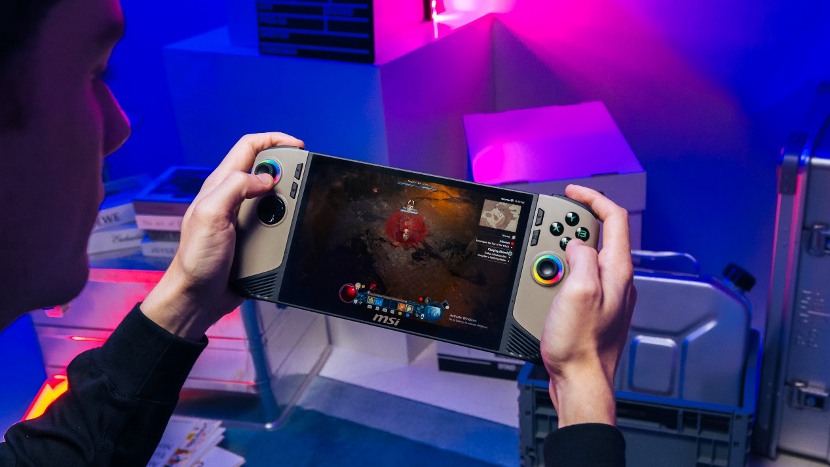
Picture from cdn.mos.cms.futurecdn.net
Rank 1343Intel's new Arc Graphics Driver 32.0.101.6734 targets better handheld gaming PC power managementIt improves frame pacing while gaming at lower wattagesThis could improve playing sessions for users with less power consumption and better performance
The handheld gaming PC scene is expanding rapidly, and we still have plenty more to look forward to - most notably the upcoming Lenovo Legion Go 2 using AMD's Ryzen Z2 Extreme APU. However, one of the best handheld gaming devices right now, the MSI Claw 8 AI+, has just received an exciting update.As reported by Notebookcheck, Intel's new Arc Graphics Driver 32.0.101.6734 optimizes power management for the Intel Core Ultra 200V series processors, specifically handheld gaming PC iGPUs: the key takeaway here is basically that the MSI Claw 8 AI+ and the MSI Claw 7 AI+ (both using the Core Ultra 7 258V) now have much better game performance.The driver patch notes highlight improvements on 'frame pacing' at lower power modes, allowing users to game at lower TDPs (essentially lower wattages) while still providing great FPS and frame pacing results. The latter is ideal, especially when using features like XeSS Frame Generation: lower TDPs usually result in poor frame pacing, regardless of how high your fps is, leading to a less consistent gaming experience.With Intel targeting this, XeSS Frame Generation may feel much smoother, especially if base frame rates are high enough (a recommended native framerate is usually around 40 fps or above). It could also help extend your gaming sessions, with the improved power management granting less battery consumption compared to older graphics drivers.
(Image credit: MSI)
Now we just have to wait to see how AMD's Ryzen Z2 Extreme will perform...
Intel is currently taking the handheld gaming PC scene by storm, with its powerful SoCs providing exceptional performance on the new Claw AI+ devices. I've not had the privilege of testing it myself yet (pretty please, MSI?), but based on plenty of reviews and performance results, it appears to dominate its key competitors like the Asus ROG Ally X.However, the verdict isn't final yet: AMD's Ryzen Z2 Extreme APU is set to hit the market sometime this year, likely appearing first in the Lenovo Legion Go 2. There are supposedly performance results available, which are likely based on the Z2 Extreme's rumored Radeon 880M or 890M iGPUs (since the actual chip hasn't been released yet).I'm hoping that the Ryzen Z2 Extreme offers a significant performance boost over its Z1 Extreme predecessor - enough of a performance leap to challenge Team Blue's impressive Core Ultra 7 258V processor.If it doesn't, there's still hope for AMD's new FSR 4 upscaling method to make its way to RDNA 3.5 hardware for performance and image quality in games. Right now, FSR 4 is exclusive to RDNA 4 GPUs (the Radeon RX 9000 series). Regardless, I'm glad to see that handhelds of this generation are getting the attention they deserve.
You may also like...
I absolutely love handheld gaming PCs, but I’m sorry Acer – an 11-inch display is just too largeBest handheld games consoles in 2025: the top systems we've triedIt looks like HP won't be ditching Windows 11 for gaming handhelds after all - but it wants to work with Microsoft to make it better
-

Picture from cdn.mos.cms.futurecdn.net
Rank 1344Symantec says it found GammaSteel on devices belonging to a military operation in UkraineGammaSteel is an infostealer built by Russian cyber-outfit GamaredonGamaredon is one of many groups on GRU's payroll
A “military mission of a Western country”, located in Ukraine, was the target of a Russian cyber-espionage attack according to cybersecurity researchers Symantec, who said they identified an attack that started in February 2025 and likely continued until March.As per the researchers, the attack started with an infected removable drive. This device contained a malicious .LNK file that triggered an infection chain which resulted in the deployment of GammaSteel.GammaSteel is an infostealer malware, capable of exfiltrating documents in various formats, such as .DOCX, .PDF, .XLS, .TXT, and more. It was most likely built and deployed by a Russian state-sponsored threat actor known as Gamaredon (or Shuckworm).
Monitor your credit score with TransUnion starting at $29.95/monthTransUnion is a credit monitoring service that helps you stay on top of your financial health. With real-time alerts, credit score tracking, and identity theft protection, it ensures you never miss important changes. You'll benefit from a customizable online interface with clear insights into your credit profile. Businesses also benefit from TransUnion’s advanced risk assessment tools.Preferred partner (What does this mean?)View Deal
Infected removable drives
Besides stealing files, it can also take screenshots of the infected device, and gather vital information about things like installed antivirus tools, running processes, and more.Finally, the tool establishes persistence on the compromised endpoints via a new Windows registry entry. The researchers said that the threat actors changed their tactics a bit to better hide the payload.Symantec did not say whose military mission was compromised, or what kind of information - if any - was stolen in the attack. It is safe to assume that the attack is part of a broader cyber-war effort since Russia invaded Ukraine more than three years ago.Russian aggression has shown just how much warfare changed and turned digital. The digital world became an entire front, with Russian cyber-infantry targeting communications satellites, government endpoints, electrical substations, and more.The Ukrainians responded by hacking Russian TV and radio to broadcast anti-war messages, manipulated a taxi app to send dozens of cars to a single location in Moscow, and leaked gigabytes of data from Russian entities, including the private military Wagner Group.Gamaredon is just one of many groups actively involved in the war, next to Conti, or Sandworm. All are apparently part of GRU, Russia’s military intelligence unit.Via BleepingComputer
You might also like
One year into Russia's war in Ukraine, "all is not quiet on the cyber front"Take a look at our guide to the best authenticator appWe've rounded up the best password managers
-

Picture from techcrunch.com
Rank 1345 -

Picture from techcrunch.com
Rank 1346 -

Picture from cdn.mos.cms.futurecdn.net
Rank 1347Razer has launched its PC Remote Play game streaming serviceThis lets you stream games from your PC to a mobile deviceIt comes with optimization features and works with controllers
I love my gaming PC, but it’s not the most portable device in the world. At the same time, my iPhone 16 Pro isn’t capable of playing the best PC games due to all manner of compatibility issues. That’s why Razer’s latest announcement – of the launch of its PC Remote Play system – piqued my interest.According to Razer’s website, PC Remote Play lets you stream games from your PC to a mobile device like an iPhone or an iPad, to handheld gaming devices, or to a Windows-based computer. It’s also compatible with a range of mobile games controllers, too, while it supports keyboards, mice and trackpads when paired with a tablet.Razer says that PC Remote Play can automatically optimize your games based on the device and screen they are played on. It takes your device’s maximum resolution and refresh rate into account, without locking your games to a fixed aspect ratio.When used on an Android device that’s paired with a Razer Kishi Ultra controller, PC Remote Play can also add haptic feedback into the mix. And it works with many of the biggest gaming platforms and libraries, including Steam, Epic Games, Microsoft’s PC Game Pass, and more.
Gaming over the air
(Image credit: Razer)
I do my fair share of mobile gaming, but I’ve never been truly convinced to migrate away from my gaming PC. Most of my favorite titles, like Cyberpunk 2077 and Baldur’s Gate 3, don’t have native mobile versions. Handheld gaming devices like the Steam Deck, meanwhile, have always cost more than I’ve wanted to spend.With something like Razer’s PC Remote Play, though, I can use my existing iPhone and games controller to play away from my desk (as long as I’m within connection range of my PC, of course). Its optimization features are the cherry on the cake.But will it convince me to spend most of my gaming time on my iPhone? Perhaps not, as nothing beats the large-screen PC experience for me. But if you’re looking for a new way to play on your mobile device without having to buy a pricey Steam Deck or similar product, it could be worth a look.
You might also like
The Steam Deck keeps winning me over – here’s why it’s my most-played console of 2024Best handheld games consoles in 2025: the top systems we've triedHandheld gaming PCs are here to stay: here's why I'd recommend the Asus ROG Ally over a gaming laptop any day of the week
-
Picture from o.aolcdn.com
Rank 1348This week, Engadget's Sam Rutherford dives into his experience with Google's new $499 mid-range smartphone, the Pixel 9a. Is it really the new mid-range king, as we previously predicted? Or is it worth spending more for the Pixel 9? Also, we chat about how the Trump administration's volatile tariff strategy will affect consumer technology (not to mention everything else you buy).
Subscribe!
iTunes
Spotify
Pocket Casts
Stitcher
Google Podcasts
Topics
Sam Rutherford’s Pixel 9a Review: Basic in just the right way – 1:16
Tariff Watch: Switch 2 preorders delayed, Razer pauses laptop sales in the U.S. – 30:27
TikTok ban deadline extended for another 75 days – 42:40
Samsung’s Ballie robot with Google Gemini arrives this Summer (allegedly) – 43:31
Listener Mail – 46:53
Working on – 57:41
Pop Culture picks – 59:23
Credits
Hosts: Devindra Hardawar and Sam RutherfordProducer: Ben EllmanMusic: Dale North and Terrence O'Brien
This article originally appeared on Engadget at https://www.engadget.com/mobile/smartphones/engadget-podcast-pixel-9a-review-and-bracing-for-tariffs-113049119.html?src=rss
-
Picture from o.aolcdn.com
Rank 1349Google is back with another entry-level smartphone, the Pixel 9a. With more AI smarts, a new hardware design, and the biggest battery on any Pixel yet, on paper, it sounds good. Especially the sub-$500 price tag.
In our full Pixel 9a review, Sam Rutherford breaks down where corners have been cut compared to the rest of the Pixel 9 family, namely screen (which is still nice!) and sluggish charging.
Engadget
While there is support for nearly all of Google’s AI features, the $499 Pixel 9a doesn’t get access to Google’s Screenshots app, which is an odd oversight. Especially when the phone has the Tensor G4 chip.
With ‘only’ two cameras, once again the Pixel 9 offers accurate images and enough versatility for most of us, including a macro focus mode for pin-sharp close-ups. In short, it’s likely to elbow out last year’s Pixel 8a as the best mid-range smartphone.
— Mat Smith
Get Engadget's newsletter delivered direct to your inbox. Subscribe right here!
The biggest stories you might have missed
Cheeky household object romance sim Date Everything! is now arriving in June
You’ll have to wait until April 24 to know if Motorola was brave enough to make a wooden Razr
Black Mirror is now a delightful escape from reality
Samsung’s robot ball arrives this summer
Ballie is happening.
Samsung
Samsung’s Ballie will go on sale in the US and South Korea this summer and will now pack Google’s Gemini AI model. Samsung says it can manage your smart home devices and even offer health and styling recommendations, for some reason. Having said that, we don’t know what kind of OS is running on the device, but it will process voice, audio and visual data. And struggle... with stairs. Samsung has yet to announce pricing for the robot ball, however. Probably for good reason.
Continue reading.
Get three months of Apple TV+ for only $9
Understand the Severance obsession.
Apple TV+ is on sale right now for $3 per month for the first three months, bringing the total cost to just $9 for the entire period. That saves you $21 off the standard $10 monthly cost of the subscription. The deal is available through April 24, and the good news is that both new and qualified returning subscribers (those who haven’t been subscribed for the past 30 days) are eligible.
Continue reading.
The best drone for 2025
DJI still dominates, but HoverAir and Autel have some interesting alternatives.
Engadget
In the market for a drone? We break down the best options at different budgets, including some impressive budget models, like DJI’s Neo and Flip drones, along with the HoverAir X1 Pro lineup, all under $500. If you want the best flight experience (or camera quality), expect the budget to circle $1,000.
Continue reading.This article originally appeared on Engadget at https://www.engadget.com/general/the-morning-after-engadget-newsletter-114531238.html?src=rss
-

Picture from cdn.mos.cms.futurecdn.net
Rank 1350When it comes to TV shows and movies, Apple TV_ is definitely about quality rather than quantity: its catalog may be much smaller than Netflix or Prime Video, but it's consistently delivered some of my very favorite shows – such as Shrinking, Sugar, Severance and many shows that don't begin with the letter 'S'. So the announcement of its mid-2025 highlights is very exciting indeed.There are lots of treats here including golf comedy Stick, the Guy Ritchie adventure Fountain of Youth and the Jason Momoa historical epic Chief of War. But there are a few notable omissions too, including the next seasons of For All Mankind and Foundation. Then again, maybe sci-fi is best saved for the darker nights during colder seasons.Apple TV+ has put the teaser trailer online (it's embedded below) and for me there are three titles that are particularly exciting; my iPhone will definitely be on Airplane Mode for these.
Slow Horses Season 5
(Image credit: Apple TV Plus / YouTube)
It's a strange, strange game – you've got the theme in your head now, haven't you? – and the game resumes with the fifth season of this superbly entertaining spy thriller.We knew we wouldn't have to wait too long for this season, because it was filmed back to back with last year's Season 4. But we don't know what it'll be about, because so far Apple TV+ has only given us a single still (above) of Jackson Lamb (Gary Oldman) looking typically disheveled. But with four seasons under our belt we know what to expect: skulduggery, treachery, Lamb's horrible hygiene and River (Jack Lowden) biting off more than he can chew.
Murderbot
Apple released the trailer for Murderbot yesterday, and I am very, very, very excited about this one because it feels like a sci-fi story with distinctly Deadpool vibes. Based on the brilliant and much-loved books by Martha Wells and with Wells on-board as consulting producer it's the tale of "a self-hacking security android who is horrified by human emotion yet drawn to its vulnerable clients." The trailer's been warmly received by Murderbot fans, it really made me laugh and I can't wait for it to start streaming from May 16, 2025.
Echo Valley
Premiering June 13, Echo Valley could leave me an emotional wreck. Julianne Moore is Kate, whose troubled daughter Claire turns up covered in blood. Someone else's blood. Written by Mayor of Easttown's Brad Inglesby and with Sydney Sweeney as Claire, it's about grief, secrets, addiction and how far a parent will go to protect their child.Speaking to Variety, Moore said that "there's a lot of action in this movie, but [Kate]'s an ordinary person. What she does is extraordinary because she's faced with it, not because she's able to do this stuff. She just feels that she has to."Variety says that the film is much bigger than it sounds: "There are horses and diving, a dramatic set piece involving fire, and several fight scenes." And it "will leave audiences debating their own moral boundaries."
You may also like
Apple has discovered the Fountain of Youth and you can jump in this MayThe best Apple TV Plus shows to streamEverything new on Apple TV+ this month


