news,technology
news,technology
-
Picture from cdn.mos.cms.futurecdn.net
Rank 501Tinder’s new Game Game feature lets users practice flirting with AI personasThe voice-based encounters provide real-time feedback on your charmUsers are rated on a three-flame scale to gamify the experience
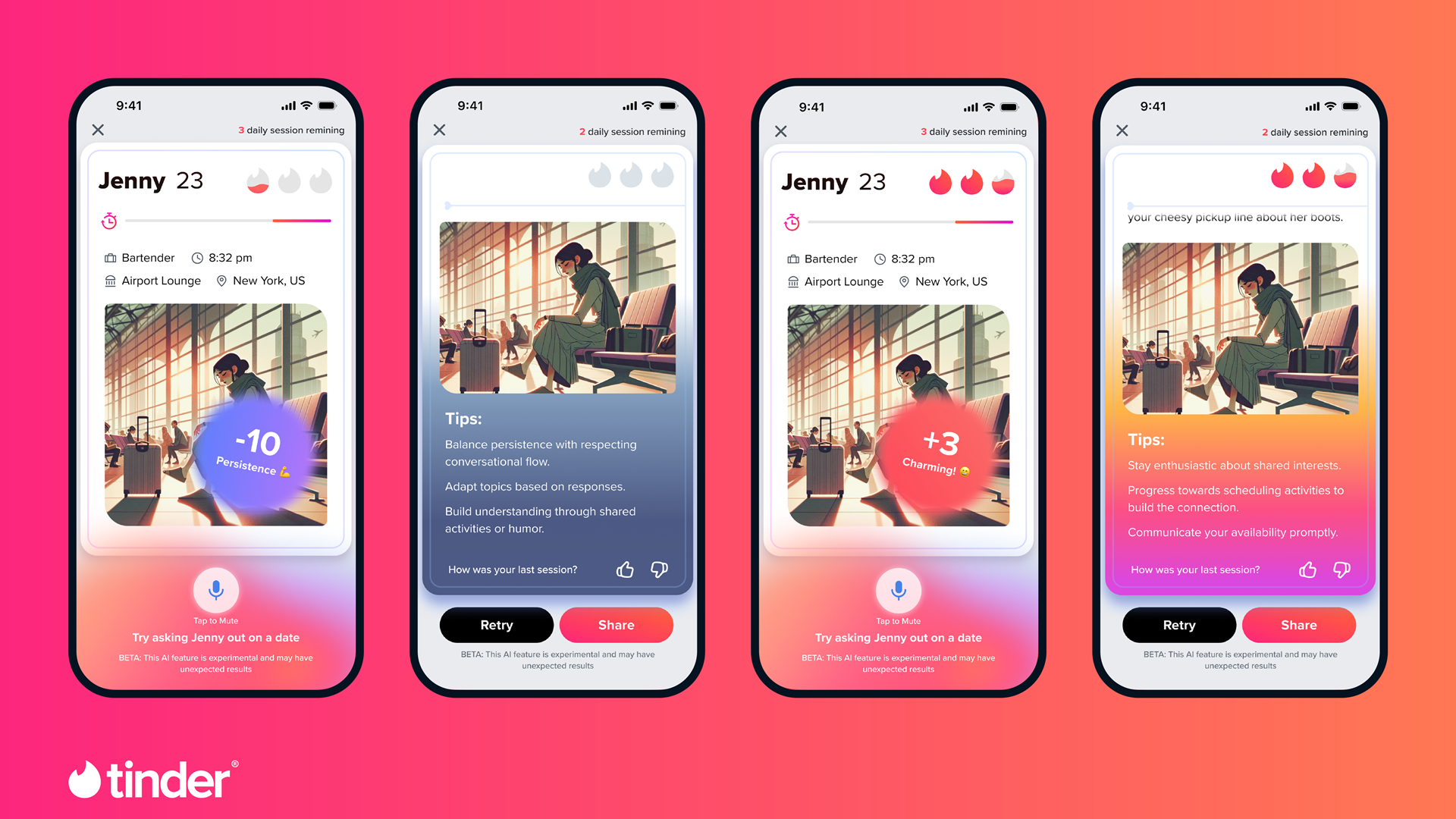
I'm very happily married, but the memories of excruciating anxiety in attempts to flirt are carved into my brain forever. Just getting up the nerve to start a conversation felt like a victory. Perhaps it would have felt less intense after practicing with someone who has absolutely no chance of rejecting me, like, say, an AI character. That's what Tinder thinks. The dating app has released an AI-powered experiment called 'The Game Game,' which produces artificial conversational partners and fictional situations for you to practice those pick-up lines.Despite the April 1st release, The Game Game is a no-fooling real voice-based feature built into Tinder’s iOS app. Using OpenAI’s GPT-4o AI model, the feature lets you practice flirting with AI characters. Play out a scenario like you’re at an airport, and your AI-generated love interest has accidentally picked up your identical suitcase. Sparks fly. You charm them. Or at least, you try.You access it by tapping the Tinder logo in the corner of the app, where you're dealt a stack of virtual cards. Each one contains a random persona, albeit one based on your age and other preferences. That persona is matched to an often cheesy meet-cute scenario in a random location. Whatever it is, the AI initiates the conversation, and you respond with your voice.And the voices are all different, with accents, cadences, and tones that are unique. You actually talk out loud to your phone, interrupting each other and talking about the scenario as if you're casually bantering with a charming stranger in real life. You can see a couple examples of the scenarios and the 'people' I talked to below.
(Image credit: Tinder Screenshot)
(Image credit: Tinder Screenshot)
Flirting AI
I’ll admit, I went in skeptical, but it was actually a pretty smooth interaction that didn't feel stilted at all. I could imagine attempting to work on my initial conversational gambits with it. The real-time feedback doesn’t just tell you whether you “won” the scenario; it nudges you. If you’re too sarcastic, the AI might suggest you dial it down. If your answers are a little flat, it might prompt you to open up. Based on how you handle yourself, the AI scores your "date" using a three-flame rating system, a flirtatious Michelin rating.That gamification is likely a major draw for some who like the idea of a somewhat objective rating. Of course, the AI isn't perfect. Sometimes, the responses felt canned, repetitive, or just a little off. There are guardrails in place so users can’t veer into wildly inappropriate territory, which might be overly limiting sometimes, though it does keep the vibe light and weird in the right way.I don't think The Game Game will be universally loved, as it comes off as a somewhat gimmicky concept. And some people may worry it’s another step toward outsourcing genuine human interaction. But I think most people know it's just a simulation with sophisticated technology that lets you rehearse for real people.The Game Game is only available for a limited time on iOS in the U.S., but I wouldn't be surprised if Tinder brings it back and expands access should it prove popular. Whether the practice translates to real-life success, well let's just say puns are a hit-or-miss tactic with both AI and real people.
You might also like
Tinder's new AI will pick out your best photos for your dating profileCan Grindr's AI Cupid help you find love?Bumble is giving you new AI tools to find love
-

Picture from techcrunch.com
Rank 502 -
Picture from cdn.mos.cms.futurecdn.net
Rank 503While the Nintendo Direct about the Switch 2 was only about an hour long, the accompanying deep dives released offer even more information and peeks at the much-anticipated console, which launches on June 5, 2025.Now, as spotted in “Ask the Developer Vol. 16, Nintendo Switch 2 – Chapter 4,” we’re getting our first look at the redesigned Nintendo eShop. It not only looks much sleeker and well organized, but it should also allow for better curation of titles and for you to more easily find titles that interest you.Similar to the Switch 2’s interface compared to that of the original, Lite, and OLED, it’s not night and day with the shop. You’ll still find your primary sidebar on the left-hand side, but it has new options. I’ll list those out below, but what’s catching my eye is the central portion next to it titled “Game Finds For You.”
(Image credit: Nintendo)
The shared image reads, “Hey there, Sarah! Looking to find some games? We’ve got recommendations!” Seemingly, Nintendo will be doing some personalized curation based on your preferences, and it will be refreshed weekly, on Saturdays, in this case.Kouichi Kawamoto, Producer, Entertainment Planning and Development Department at Nintendo, says in the post “there's a feature on Nintendo eShop called For You, which lets you quickly see screenshots and watch introduction videos for games.” The team believes this will let you more easily find something you like within a title, and decide if you’d like to get it or not.Additionally, the Nintendo eShop has been optimized and improved to run on the Switch 2’s larger 7.9-inch display. The post details that Nintendo thinks it’s just as important that the browsing experience here for deciding what to play is as good as a game.The new sidebar for the eShop, reads as:
Featured TitlesProduct SearchGame Finds For YouWish ListGreat DealsBestselling SoftwareRecent ReleasesComing SoonNintendo Switch OnlineEnter Code
While it’s not a complete redesign, the optimizations shown off here seem to up the fidelity and enhance the recommendation engine a bit further for the eShop. It’s unclear as of yet if there are more changes or if this new look might trickle down to the Switch Lite, Switch, or Switch OLED.
You might also like...
Nintendo Switch 2 Direct live: The Duskbloods revealed, plus release date, price and a full recap of everything announced todayThe Nintendo Switch 2’s interactive-manual bloatware is a paid app, and it’s the last straw following a disappointing launch
-

Picture from techcrunch.com
Rank 504 -
Picture from o.aolcdn.com
Rank 505The Switch 2 is bigger, more powerful and more expensive than the original Switch, but the tech specs for the new console reveal at least one key way it's worse: The Switch 2's battery life is shorter.
Nintendo says that battery life on the Switch 2 varies depending on the game you play, but that it estimates the console should last approximately "2 – 6.5 hours." That's notably shorter than the battery life you'll get out of a current Switch or Switch OLED, based on the company's support page. Nintendo estimates that a Switch OLED "with a serial number that starts with 'XT'" should last around "4.5 to 9 hours." Non-OLED Switch consoles "with a serial number that starts with 'XK'" are expected to last the same amount of time. Even the original Switch, which has "a serial number that starts with 'XA'," gets a minimum of 2.5 hours of battery life. Apparently, the extra power of the Switch 2 comes with a price.
Nintendo's tech specs confirm a few other notable details. The Switch 2 supports Wi-Fi 6, which should mean you'll get faster internet speeds when the console isn't docked and connected over ethernet. Based on Nintendo's guarantee that the console "supports 120 fps when 1920x1080/2560x1440 resolutions are selected," it seems like the Switch 2 won't support HDMI 2.1.
As far as controllers are concerned, Amiibo support remains, but if you have special place in your heart for the Wii-esque motion controls you could use on the original Switch, it looks like you're out of luck on the Switch 2. Neither the left or right Joy-Con 2 controllers have an IR sensor, one of the ways Nintendo tracked motion on the Wii and Switch. That doesn't mean you can't use motion controls on the Switch 2, just that Nintendo isn't using IR to make them work. (At least in Metroid Prime 4: Beyond, it seems like "mouse control" fills the role motion controls used to on older games.)
Do any of these changes dramatically alter the calculus on whether the Switch 2 is worth buying? Maybe not, but it is interesting to see some of the compromises and decisions Nintendo made to offer what is effectively "the Switch, but better."This article originally appeared on Engadget at https://www.engadget.com/gaming/nintendo/the-switch-2s-battery-life-is-shorter-than-the-current-switch-211753028.html?src=rss
-

Picture from cdn.mos.cms.futurecdn.net
Rank 506Pump-and-dump schemes dominate crypto markets, driven by 438 manipulative mastermindsTelegram’s ease of communication fuels the rise of crypto manipulationsAdvanced tools like Perseus expose crypto scammers, but regulation remains essential
As cybersecurity faces challenges with common internet scams like phishing, advanced fee fraud, and fake lotteries, cryptocurrency pump-and-dump schemes have emerged as a significant issue.A recent study from researchers at University College London revealed just 438 masterminds are responsible for the majority of pump-and-dump crypto schemes worldwide.These masterminds manipulate crypto coins by inflating prices through misleading hype, selling them once enough buyers are lured, collectively accounting for $3.2 trillion in artificial trading and earning $250 million annually. According to Google, such "cloaking" scams are the most damaging scams around.
Telegram is the preferred platform for manipulation
The researchers found popular encrypted messaging app Telegram is the primary tool used by crypto coin masterminds to spread false information, with manipulators using channels and chats to create artificial demand for coins."On the app, chats are used to communicate between potential buyers and sellers," the researchers note.With easy communication and limited regulation, manipulators convince others to buy into the hype, leaving many victims unaware of the risks and devastated by the schemes.As the research team pointed out, the simplicity of executing these scams "should be of concern to those attempting to make money off crypto coin investing."To track these schemes, the researchers developed Perseus, a tool capable of analyzing the coordination efforts behind these manipulations.Similar to AI-powered scam detectors like the one developed by McAfee, which stops scammers before they can reach potential victims, Perseus helps identify the masterminds behind the scams and measure their impact.Perseus consists of three components: a real-time fetcher, a temporal attributed graph generator, and a mastermind detector. These technologies work together to uncover and track the key figures orchestrating these scams.The researchers suggest that tools like Perseus, along with other scam detection technologies, could be crucial in recognizing harmful schemes within the largely unregulated crypto space."At some point, some form of regulation is going to be needed to keep the system running," they concluded.As cryptocurrencies grow in popularity, the prevalence of scams raises concerns about market stability, with the lack of regulations leaving investors vulnerable to manipulations.Via Techxplore
You may also like
These are the best Android antivirus apps around todayHere is our guide to the best malware removal tools aroundFBI warns about working from home scam
-
Picture from o.aolcdn.com
Rank 507TikTok may be back online and in app stores, but its future in the United States is still far from certain. President Donald Trump’s executive order delaying enforcement of the ban was only a temporary reprieve for the company and the clock is once again running out on a potential ban.
While ByteDance was once resistant to the idea of selling TikTok’s US business, that seems to have changed since Trump took office. A ByteDance investor said early this year that striking a deal to keep TikTok in the US is “in everybody's interest." Officials in China also suggested they were “open” to a deal, according to The Wall Street Journal.
A number of people and companies have signaled some interest in TikTok. Trump himself has said he would like to see a “bidding war” for the app and that the US government should own a stake in the company. What an eventual deal may look like, though, is unclear. These are the offers we currently know about. On March 9, Trump said the administration was "dealing with four different groups" on a potential deal, though he didn't name names.
Trump’s executive order gave the company 75 days to come to an agreement, though he has recently said he would "probably" extend the deadline if a deal isn't reached by April 5.
Oracle + new US investors
NPR reported in January that Oracle was working with Trump Administration officials on “a plan to save TikTok that involves tapping software company Oracle and a group of outside investors to effectively take control of the app's global operations.” Under this arrangement, ByteDance “would retain a minority stake in the company” but Oracle would oversee “the app's algorithm, data collection and software updates.”
Recent reports suggest that a new investors, including Silicon Valley heavyweight Andreesen Horowitz, would join TikTok's existing US investors to form a new entity. It could be called "TikTok America," according to a report in The Information. This option is likely appealing because it wouldn't require a new owner to attempt to re-architect the app's algorithm and because TikTok has an existing partnership with Oracle. The cloud company already hosts TikTok’s US user data and the company was a key part of TikTok’s original negotiations to remain operational in the US under a plan called Project Texas. (Those negotiations abruptly fell apart in 2022.)
Trump also previously signed off on a deal for Oracle and Walmart to acquire a 20 percent stake in TikTok in 2020, when the president tried to ban the app during his first term. That deal never materialized.
Microsoft
Microsoft is reportedly also interested in playing a role in TikTok’s future, according to the same NPR story, which said Microsoft was among the “other potential investors” involved in the talks with Oracle. Trump seemingly confirmed this. When asked directly if Microsoft was interested in buying TikTok, Trump responded “I would say yes.”
As with Oracle, this isn’t the first time Microsoft has attempted to acquire the social media company. Microsoft was in talks to buy TikTok in 2020 and take over its US business, but the deal abruptly fell apart. Microsoft CEO Satya Nadella later described it as “the strangest thing I’ve ever sort of worked on.”
Perplexity AI
Just before TikTok briefly went offline, Perplexity AI threw its hat into the ring, offering a deal to ByteDance that “would “create a new entity combining Perplexity, TikTok US and New Capital Partners.”
Since then, Perplexity has tweaked its proposal. The company put out a detailed plan outlining how it would rebuild the app's core recommendation algorithm, integrate shortform videos into its search engine and bring a Community Notes-like fact checking feature to the service.
Project Liberty
Another set of investors that’s proposed a bid to buy TikTok is a group known as Project Liberty. Led by investor Frank McCourt, it includes Kevin O’Leary of Shark Tank fame. The group initially came forward before the ban took effect.
In March, Reddit cofounder Alexis Ohanian announced that he was joining the Project Liberty bid to acquire TikTok's assets. "I'd love to see an app where users actually own their data and where creators have real control," he wrote in a short post on X that hinted at a potential tie-in with... the blockchain. "Imagine bringing all those users seamlessly onchain..." An accompanying video referenced the possibility of "decentralized distribution," but didn't offer details.
O’Leary previously told CNBC that deals involving a government stake may not comply with the law. “That 50/50 deal, I would love to work with Trump on, so would every other potential buyer ... But the problem with some of these ideas is they are inconsistent with the ruling of the Supreme Court,” he said. “I would love to do a deal, if the law provided for it, but I don’t have the luxury of breaching the order of Congress.” Later, he said that the deal "changes by the hour," writing on X that "it's clear to me now that we're going to have to do a dance between the original owners, the founders of ByteDance itself, and interpreting the law of what Congress and Supreme Court has upheld."
MrBeast
YouTuber MrBeast, also known as Jimmy Donaldson, joked on X about buying TikTok ahead of the initial ban. He later said that “so many billionaires” had reached out to him about making an offer that he was going to try to actually pull it off.
Okay fine, I’ll buy Tik Tok so it doesn’t get banned— MrBeast (@MrBeast) January 14, 2025
At least one group has already confirmed his involvement, along with other “high-net-worth individuals” looking to make an “all-cash offer.” That group, led by employer.com founder Jesse Tinsley also reportedly includes Roblox CEO David Baszucki. According to Bloomberg, together they have put together “significantly” more than $20 billion for a bid, though it’s not clear how seriously their offer is being considered. Bloomberg noted that there’s also a possibility that MrBeast may attach himself to other bids.
Amazon
Amazon reportedly made a last-ditch bid to buy TikTok, according to reports in The New York Times and Wall Street Journal. The online retailer reportedly approached Vice President JD Vance and Commerce Secretary Howard Lutnick about the offer, which doesn't seem to be under serious consideration. Amazon declined to comment on the reports.
AppLovin
Another company to make a last-minute offer is AppLovin, a Silicon Valley company that makes software for app developers. The Wall Street Journal reported that the firm also has backing from Steve Wynn, a casino mogul and Trump donor. "AppLovin’s pitch to the Trump administration, which would be funded by Wynn, was that it could solve national security concerns and unleash economic growth as a job creator," The WSJ reported.
OnlyFans CEO Tim Stokely
Yet another eleventh hour bid for TikTok reportedly comes from OnlyFans CEO Tim Stokely. Reuters reports that Stokely (via a startup he runs called Zoop) partnered with the Hbar Foundation, a cryptocurrency firm, to bid on TikTok.
"Our bid for TikTok isn't just about changing ownership, it's about creating a new paradigm where both creators and their communities benefit directly from the value they generate," one of Zoop's executives told the publication.
pic.twitter.com/bQNcWYJ2tD— HBAR Foundation (@HBAR_foundation) April 2, 2025
What’s next?
So where does all this leave TikTok? For now, the company is still in limbo. Even if a tentative deal is announced ahead of the April 5 deadline, ByteDance and Chinese officials would also need to sign off on any agreement in order for it to move forward.
Update, March 10, 2025, 6:55PM ET: This story has been updated to add new statements from President Trump, as well as to add details about Reddit founder Alexis Ohanian joining the Project Liberty bid.
Update, April 2, 2025, 6:47PM ET: This story has been updated with new information regarding proposals involving Oracle and Perplexity AI. It's also been updated to reflect reported bids from Amazon, AppLovin and OnlyFans CEO Tim Stokely.This article originally appeared on Engadget at https://www.engadget.com/social-media/what-will-happen-to-tiktok-a-look-at-the-potential-buyers-000110723.html?src=rss
-
Picture from cdn.mos.cms.futurecdn.net
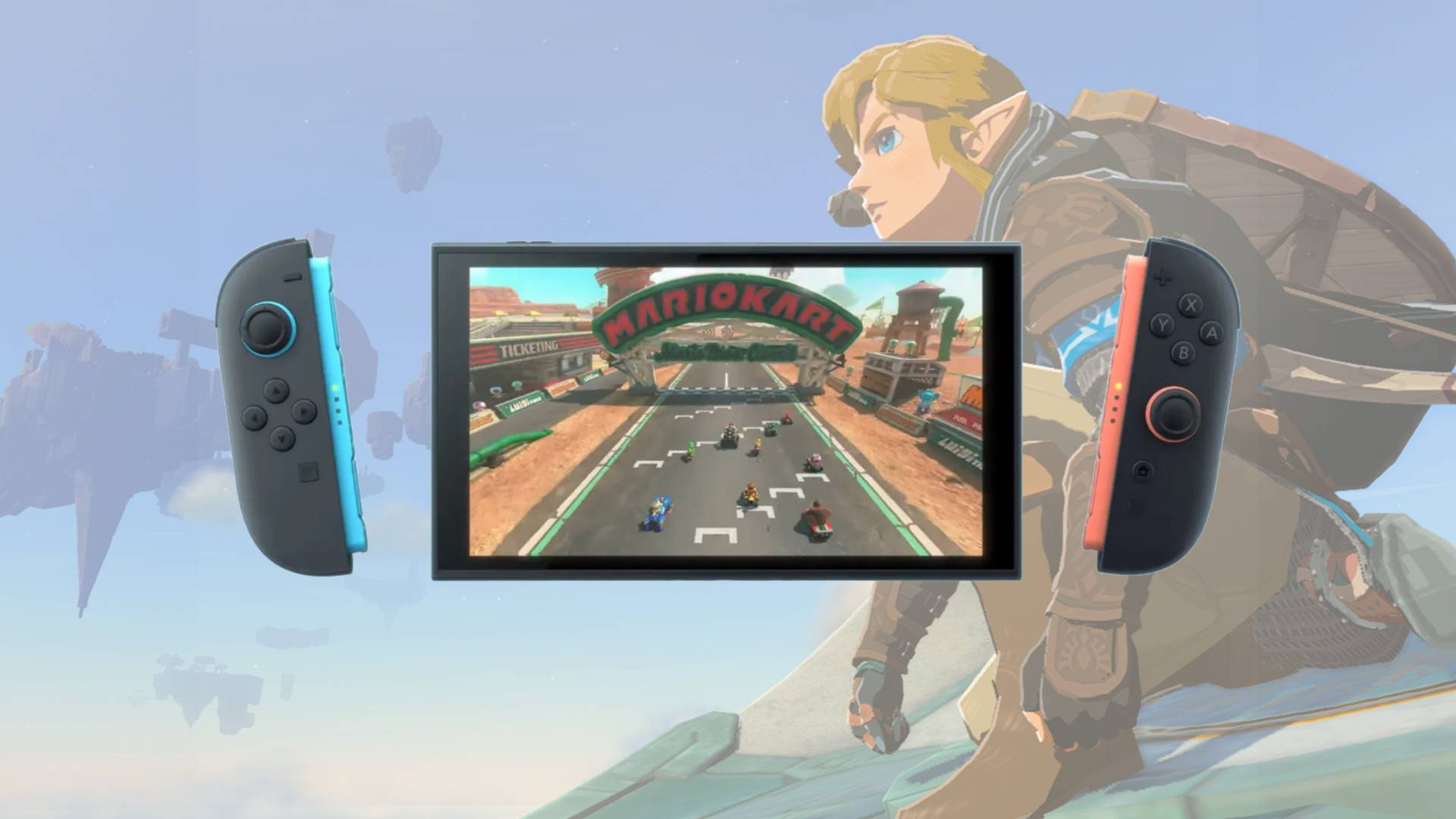
Rank 508With announcements flooding in on all sides from Nintendo Direct, it's easy to get caught up in the excitement and miss some important details.One of which isn't all Mario Sunshine and daisies: unfortunately, you won't be able to play all of your Switch 1 games on the Switch 2.This is due to how Nintendo built the Switch 2 as, interestingly, it "doesn't contain any Switch hardware."That doesn't mean you won't be able to move any of your favorite titles over to the new system, but it does mean you won't see the same kind of compatibility you saw between the DS and 3DS.Here's what you need to know.
The Switch 2 focuses on "enhancing its performance as hardware"
Dohta (left) and Kawamoto (right) discuss the launch of the upcoming Switch 2 (Image credit: Nintendo)
Now, the incompatibility between some Switch games and the new Nintendo Switch 2 does come with a reasonable explanation.In Vol. 16 of Nintendo's Ask the Developer conference, Kouichi Kawamoto (Producer, Entertainment Planning & Development Department), Takuhiro Dohta (Senior Director, Entertainment Planning & Development Department), and Tetsuya Sasaki (General Manager, Technology Development Division) accepted questions on the development of Nintendo's new handheld console.When asked if the team had "already decide[d] on this functionality when [they] were first planning the development of a new dedicated game system," the team highlighted that compatibility was indeed a consideration. Even so, it wasn't as simple as porting Wii games to the Wii U.The foremost focus with the Switch 2 was instead "on enhancing its performance as hardware, namely, expanding its capacity. So, compatibility was a lower priority."This meant creating a revamped system with no original Switch hardware under the hood. Sasaki comments, "It's tricky to explain... Maybe the easiest way to understand it is that the methods used to achieve compatibility between Nintendo DS and Nintendo 3DS, and between Switch and Switch 2, are completely different."Kawamoto adds to that: "Simply put, those systems were compatible because Nintendo 3DS contained Nintendo DS hardware, and Wii U contained Wii hardware. However, Switch 2 doesn't contain any Switch hardware."If you're brave enough to check whether your favorite game made the journey, Nintendo published and continues to update a comprehensive list of Switch games that are not compatible with the Switch 2.
It's not all gloom and doom, though
That's not to say the Switch 2 won't run any games from the OG Switch. Most of your favorites run just fine thanks to what Dohta explains is "something that’s somewhere in between a software emulator and hardware compatibility."It's also important to note that almost all first-party Nintendo titles are available on the new Switch 2 (save for Fitness Boxing).Sasaki continues, "There are some games that ran well due to the Switch system's hardware configuration. Switch 2, on the other hand, has increased processing capabilities and an expanded memory capacity, which could theoretically cause some of those games to stop working. We weren't so confident at first, but as we tested games one by one, we found out that some issues could be solved by making improvements. This process helped us build confidence that, while we might not be able to solve everything, we can work it out for many games."In fact, thanks to the Switch 2's new and improved hardware, some of your go-to games may even run better. The team mentioned seeing shorter load times and more stable gameplay in some instances.You'll also see the arrival of some new features like GameChat, which lets you voice chat and screen share with up to 12 players at a time. This could be a home run for party games, ultimately enhancing the experience of hanging out with your Switch- 2-wielding friends.Overall, it's worth checking the list of games that will run on the Switch 2 to make sure your favorites aren't on the red light list. The good news is that the majority of Switch titles will run on the Switch 2, which launches June 5 and will be available for preorder starting April 9.
You might also like
We finally know about the C button on the Nintendo Switch 2 – here’s what it doesHollow Knight Silksong - everything we knowNintendo’s best Switch 2 announcement was its GameCube game rereleases, but buying the new GameCube controller will be a challenge
-

Picture from cdn.mos.cms.futurecdn.net
Rank 509Same 24.5MP full-frame stabilized sensor as Nikon ZfLatest Expeed 7 processor delivers a raft of performance improvementsPricier than Z5 at launch, costing £1,599 body-only (US and AU pricing TBC)
Nikon has unveiled the successor to its Z5 entry-level full-frame mirrorless camera: the powerful – and pricier – Z5 II.It's probably about time – the 24MP Z5 was launched in 2020 and was beginning to look a little dated, especially for high-speed photography and video.Nikon has pushed the boat out with the Z5 II – the second-gen model delivers several performance-based improvements and inherits a raft of flagship features, including superb autofocus skills.These improvements mirror how the Nikon Z50 II improved on the Z50 – it was a decent if not radical upgrade.The rub, however, is that the Z5 II feels pricey for an entry-level model, and is close to stepping on the toes of Nikon's mid-range models; so much so, in fact, that it could represent an upgrade from the Z6 II – the previous version of Nikon's mid-range model, since updated by the Z6 III.So the question is, does the Z5 II step out of its lane, or is it a perfectly balanced offering?
Image 1 of 2(Image credit: Nikon)Image 2 of 2(Image credit: Nikon)
Too much camera?
In the five years since its launch, the Nikon Z5 has steadily dropped in price, and can be had for way less than $1,000 / £1,000. That feels like a sensible price tag for beginners and enthusiasts considering their first full-frame camera.The Z5 is surprisingly well made for an entry-level model, too, meaning it's excellent value for stills-focused users. However, in 2025 the camera's specs are somewhat modest, especially if you shoot action and video. In steps the Z5 II.At £1,599 body-only, or £1,859 with the 24-50mm lens, the Z5 II, costs around 10% more than the Z5 when it launched in 2020, but it's effectively double the price of a Z5 now in 2025. In some regions, the Z5 II is also available in a kit with the 24-70mm f/4 lens (£2,129) or with the 24-200mm lens (£2,299). I'll update this page with US and Australia pricing when I get it.
What do you get for the money? A camera with the same 24.5MP resolution as the Z5, albeit in a refined sensor that's identical to the one in the Nikon Zf, with Nikon's best-ever image stabilization, now rated up to 7.5EV.There's also Nikon's latest, snappier Expeed 7 processor, which delivers significantly faster burst-shooting speeds: 14fps continuous high, and 30fps in a high-speed frame capture+ mode, complete with up to one second of pre-capture when you half-press the shutter button.The phase-detection autofocus system with 3D tracking is also Nikon's best version, as found in the flagship Z8 and Z9 models, with subject detection for up to nine types, including people, birds, dogs, cats, cars, and airplanes.Nikon says the Z5 II's autofocus can detect distant and small subjects that take up as little as 3% of the frame, plus it's the most sensitive focusing yet, rated up to -10EV, meaning it's able to acquire focus in near darkness.Video recording is much improved over the Z5 too. We now get 4K 30p video with Nikon's N-RAW and N-Log color profiles, plus 4K 60p video, albeit with an image area crop. N-RAW video can be recorded straight onto a memory card, which is a first for Nikon – the Z5 II has twin SD UHS-II slots.
Image 1 of 2(Image credit: Nikon)Image 2 of 2(Image credit: Nikon)
It's not just the performance that's received a boost – the Z5 II's handling is improved too. Its weather-sealed body is much like the Z6 III's, including a 3.2-inch 2.1m-dot touchscreen that's now the vari-angle type, meaning it that can be flipped out to the side of the camera and reversed for selfies. The 3.69m-dot EVF is three times brighter too, rated at 3,000 nits to the Z5's 1,000 nits.And, as on the Z50 II, there's a Picture Control button, with which users can select the color profile they like, including recipes that can be downloaded from Nikon's Imaging Cloud and / or custom created.Overall, it's a sizable update without rocking the boat, even if the asking price is pushing it a bit. That said, we won't labor the cost point too much, because Nikon has a history of discounting its cameras more rapidly, and heavily, than rivals.The fact that the Z5 II addresses the three Z6 III upgrades I wished for as a Z6 II user is super-impressive – Nikon's Z5 series just upped the bar for entry-level performance.We're currently carrying out an in-depth review of the Nikon Z5 II, and we'll share our experiences soon.
You might also like
Best full-frame mirrorless camera 2025: top options from Canon, Sony, Nikon and moreNikon Z5 review The best beginner mirrorless camera for 2025: budget stars for new photographers
-

Picture from cdn.mos.cms.futurecdn.net
Rank 510The threat landscape is evolving at an alarming rate, and business leaders who may have previously believed that nation-state attacks are a problem for governments alone are increasingly mistaken. The latest revelations surrounding China’s Volt Typhoon and Salt Typhoon campaigns should serve as a wake-up call to executives worldwide. These are not theoretical threats—they are calculated, long-term infiltrations into critical infrastructure, and no company or country is off-limits.While the bulk of the activity surrounding these operations has focused on the United States, the underlying objective is clear: establish persistent access to key systems that, when needed, can be exploited for geopolitical leverage. In other words, these attacks are not just about stealing secrets—they are about preparing to disrupt entire industries and nations when it is strategically advantageous to do so. And the UK, along with Europe and other Five Eyes nations, is likely on that target list.If your business operates in energy, telecommunications, transport, water, or government-adjacent industries, you’re already in the crosshairs. Volt Typhoon, a Chinese-backed cyber operation, has been caught burrowing into critical infrastructure with the goal of establishing long-term footholds that can be used for future sabotage. Meanwhile, Salt Typhoon has been focused on telecommunications—an industry with a truly global footprint and an essential enabler for economic and national security.
No organization is safe
The interconnected nature of global business means that no organization is safe. The very corporations targeted in the US—large multinational firms with operations across the UK, Europe, and beyond—are the same ones supporting infrastructure elsewhere. China has every reason to expand these attacks to Five Eyes allies like the UK, given its vested interest in disrupting intelligence-sharing and counter-espionage efforts.There is precedent for this expansion. We’ve already seen similar tactics in Flax Typhoon, which targeted Taiwan, and given China’s long-term cyber strategy, it is reasonable to assume that European and UK-based entities are already on the list for similar intrusions. The question isn’t if these attacks will scale globally—it’s whether businesses will be prepared when they do.State-sponsored cyber actors typically don’t launch ransomware attacks for quick payouts. Their goals are much more insidious: access, persistence, and control. China’s cyber teams are laser-focused on industries where disruptions would have the most significant impact—energy, water, communications, transportation, and education.These sectors are not just economic pillars; they are also key to national security and societal stability. Imagine the chaos that could ensue if a foreign adversary had the ability to disrupt power grids, water supplies, or telecom networks at will, such as SektorCert in the EU.
Action required at board level
Yet many businesses in these sectors are still not treating cybersecurity as a board-level issue. Too often, security is seen as an IT problem rather than a core risk. If a company has any role in critical infrastructure—even as a supplier to larger entities—it should already be treating cyber resilience as a priority, because ignoring it is an open invitation for adversarial control.There has been speculation about AI-powered cyber threats, but here’s the reality: Volt and Salt Typhoon are not using cutting-edge AI to develop novel exploits. Instead, they are deploying well-worn tactics—leveraging known vulnerabilities and methodically working through their targets with a level of discipline that outpaces many corporate defenses.However, China, like everyone else, is integrating AI into its cyber operations. It may not be leading the charge in AI-powered hacking just yet, but automation, summarization, and workflow efficiency tools are already being employed to accelerate and scale cyber operations.This means that while companies may not yet be facing AI-generated, self-evolving malware, they are still dealing with adversaries who can analyze, target, and exploit weaknesses faster than ever before. The key takeaway is that businesses cannot afford to move at yesterday’s speed when their attackers are already operating at tomorrow’s pace.
Traditional security solutions aren’t enough
What makes the Volt and Salt Typhoon campaigns even more threatening is that traditional security solutions—firewalls, endpoint protection, intrusion detection—simply aren’t sufficient enough.In fact, one of the biggest weaknesses that attackers like Volt and Salt Typhoon exploit is a lack of network visibility. Businesses often invest in endpoint protection and firewalls, yet many industrial control systems (ICS), IoT devices, and network appliances—the exact infrastructure being targeted—do not support traditional security tools. This creates a massive blind spot, allowing state-sponsored actors to infiltrate, persist, and move laterally undetected.Without deep, real-time network monitoring, organizations have no way of detecting unusual patterns of behavior, unauthorized communications, or stealthy command-and-control (C2) traffic that signal a compromise. Volt Typhoon, for example, has been known to use “living off the land” techniques, blending in with normal system activity to evade detection. The only way to uncover these threats is through continuous monitoring, anomaly detection, and threat intelligence integration—traditional perimeter security simply isn’t enough.
Resilience is essential
Boardrooms globally must recognize that resilience against state-backed cyber threats is as essential as financial stability. Businesses must adopt an assumption-of-breach mindset, recognising that their systems may already be compromised, and focus on threat hunting and proactive monitoring. Supply chains have to be secured, as many breaches occur through third-party vendors, making every link in the supply chain a potential vulnerability.Companies that operate in or support critical industries must prioritize robust cyber defenses now, rather than reacting once an attack occurs. Aligning with national security efforts and intelligence-sharing initiatives is critical, as collaboration with government cybersecurity bodies can provide crucial insights and defenses. Training and testing must be continuous, with regular cybersecurity education for employees and rigorous red-teaming exercises to stay ahead of emerging threats.We are just beginning to understand the full extent of the Salt Typhoon campaign and the vulnerabilities it has exposed. This is just one front in an ongoing cyber war where the stakes are national and economic security. The sheer number of connected devices in the average organization today is unmanageable without advanced monitoring, making network detection and defense more critical than ever in identifying and stopping these persistent threats before they escalate into full-scale cyber crises.
We rate the best cloud firewalls.
This article was produced as part of TechRadarPro's Expert Insights channel where we feature the best and brightest minds in the technology industry today. The views expressed here are those of the author and are not necessarily those of TechRadarPro or Future plc. If you are interested in contributing find out more here: https://www.techradar.com/news/submit-your-story-to-techradar-pro
-

Picture from cdn.mos.cms.futurecdn.net
Rank 511While AI Agents, or agentic AIs, are being touted as the next leap in human productivity, the unadvertised reality is that, like other AI technologies, they are only as good as the humans that design and use them.They still require a human to know what the problem is and give the right command. But what if you were to combine the horsepower of an agent with an AI that can think like a human? How much more could be achieved?This question is why many in the AI industry are already looking past agents, and are solely focused on AGI, artificial general intelligence. There are some leaders in the tech industry who believe AGI is as close as two years away. Google co-founder Sergey Brin, recently sent a memo to employees recommending they work 60 hours a week, saying “Competition has accelerated immensely and the final race to A.G.I. is afoot.”But let’s get real, are we really that close to AGI? Even if we are, will it be able to truly replicate the adaptability and complexity of the human mind? And even if so, should we look past agents now and wait for the promise of AGI?
True AGI is Still a Long Ways Away
Much of the conversation around AGI has started with AI reasoning models. Reasoning models like OpenAI’s o1 and X’s Grok 3, are designed to “think through” problems before they respond. The human mind, however, is much more sophisticated than a reasoning machine. Reasoning models don’t solve the three biggest problems with achieving AGI.The first problem is AI models, even reasoning models, need to be continually updated and trained. That requires continual human oversight to reinforce the AI’s logic. Without a human telling an AI that it is thinking about things in the right way or the wrong way, it will remain in a perpetual embryonic state.The second problem is that current AI models cannot assimilate information or adapt to novel situations. If an AI model can think through a math problem, that does not mean it can think through a legal problem.Finally, the biggest problem is that AI’s are unable to form unique ideas. AI “thought” is confined to the data it was trained on. To put it another way, AI can only restate concepts that already existed. We are struggling to find a way for AIs to come up with anything original.Dr. Robert Ambrose, NASA’s former Chief of its Software, Robotics and Simulation Division, has posited that a possible solution is to induce AI’s to dream. The idea being that if you can make it possible for an AI to think abstractly and spontaneously by suspending its normal reasoning for extended periods of time, and then having the AI incorporate those abstract thoughts into its training data, you could artificially create original thought.But scientists don’t even know why humans dream or how, making the prospect of having AI’s dream of electric sheep that much more remote.
Don’t Overlook Agents – They Can Help You Right Now
Believe it or not, you don’t need to wait for AGI to control your agents, general intelligence still works. If you are intentional with how you set up your AI agent, you can use it to substantially multiply your productivity. Instead of performing tasks manually or prompting discrete AIs and automations to do work, you can rely on an AI agent to project manage for you.Don’t mistake AI agents as some sort of magic “Easy Button,” though. No matter what tech companies are promising you, there is still work that needs to be done on the front end to really make AI agents effective.Think of it this way, if you hire a person, presumably with general intelligence, and hand them a work manual, would you expect they could do your job on day one?Like a new employee, your agent needs to be trained on your processes to know how to get the job done. It needs to be given tools and trained on how to use them to accomplish each task in the process chain. That means you need to create underlying automations for your AI to execute in pursuance of its objective. It also needs to be trained on how to handle the different exceptions, roadblocks, and variations that may interrupt the nominal process flow.The difference with an agent is, once built, you are not at risk of losing an employee anymore. Recruiting and training people is not only expensive but continuous no matter the role. The investment of time and money in an agent on the other hand is a mostly a one time cost, you don’t need to recruit or train a new one ever again.It may seem daunting but we’re doing it today, and guess what, even AGI wouldn’t be able to work without that groundwork being laid.The payoff is once that initial work is done, you have an agent that cannot only work at a speed a human never could but can also perform far more task simultaneously.
Don’t Pin Your Hopes on Sci-Fi Timelines
According to Back to the Future we’d have flying cars and time travel by 2015. Blade Runner said we’d have fully sentient androids by 2017. In Terminator 2, Skynet’s artificial super intelligence comes online in 1997. AGI is still in the realm of science fiction, if we wait around for it, we’re missing out on the progress available now.The path forward isn't about choosing between agents and AGI, but rather about leveraging the concrete benefits of current AI technology while maintaining a pragmatic perspective on future developments. By focusing on thoughtful implementation of AI agents today – establishing clear processes, creating necessary automations, and providing proper training – organizations can realize significant productivity gains without waiting for the uncertain timeline of AGI.Rather than fixating on when machines might think exactly like humans, we should concentrate on how they can help us think and work better right now.
We rate the best task management app.
This article was produced as part of TechRadarPro's Expert Insights channel where we feature the best and brightest minds in the technology industry today. The views expressed here are those of the author and are not necessarily those of TechRadarPro or Future plc. If you are interested in contributing find out more here: https://www.techradar.com/news/submit-your-story-to-techradar-pro
-

Picture from cdn.mos.cms.futurecdn.net
Rank 512As artificial intelligence (AI) technology continues to advance its way further into our daily lives, new, and often controversial, players are entering the space, intensifying the competition. While we see the immediate benefits, these innovations also give rise to a complex suite of legal challenges, particularly in respect of how AI models are trained.The latest competitor to enter the industry, DeepSeek AI, came under fire, not only, for potential sharing of user data, but also met with claims that its model is trained on outputs from existing AI models – specifically Open AI’s ChatGPT. These allegations raise critical questions for the industry regarding AI copyright, data usage rights, and just how enforceable platform policies really are.
Copyright protection
Competing players aside, one of the most pressing issues in this debate is whether AI-generated content is itself eligible for copyright protection. There’s no immediate and clear answer here as there has not yet been a case of this nature between two AI companies, and it also varies depending on jurisdiction. Many countries still require human authorship as a fundamental condition for copyright ownership, meaning that purely AI-created works often fall into a legal “grey area.Let’s look into the copyright issue first. AI models operate by processing and generating responses based on vast data pools, making it exceedingly difficult to establish clear-cut cases of direct copying. We can’t use the same methods for identifying traditional plagiarism here, where we’d usually see identical passages of text or near-verbatim reproductions, as AI outputs are inherently non-deterministic—meaning they produce varied results even when given the same prompt.A competitor AI system might also be trained by repeatedly querying an existing AI model, collecting the responses, and using them to improve its own algorithms. This creates another challenge for enforcement: unless an AI model produces identical or highly similar outputs to another, trying to prove substantial copying remains a significant hurdle.
Infringement claims
One possible approach for AI providers seeking to establish infringement claims is to embed unique, detectable markers within their AI-generated responses. If such markers consistently appear in a competing AI’s output, it could serve as stronger evidence of unauthorized training. However, such methods are not foolproof, as AI models that are trained on large datasets may generate similar responses simply due to the nature of large-scale language modelling.So, even if an AI company had a compelling case of direct copying, the issue of jurisdiction then comes into play. In regions where AI-generated content does not qualify for copyright, AI companies may struggle to assert ownership over their models' outputs. This raises a further dilemma: if an AI system produces content that isn’t legally protected, can another company legally train its own models using those outputs? And if there’s no copyright to infringe upon, is there even a case for intellectual property theft? Jurisdictions that allow for some level of protection over AI-generated work may provide AI firms with a stronger legal footing.For example, the US copyright office recently determined that copyright vests in an image that was created by an artist selectively modifying or regenerating parts of an AI generated image through multiple prompts. However, whether an AI provider like OpenAI retains rights over user-generated content would then depend on its terms of service and the licensing agreements accepted by users when utilizing the platform.
Contractual restrictions
Finally, there’s the matter of contractual restrictions. OpenAI, like many AI service providers, has strict terms that prohibit ChatGPT users from employing its AI-generated content to train competing models. If DeepSeek AI, or any other company, violated such an agreement, the issue at hand then shifts from copyright infringement to breach of contract.If an AI company believes it has a strong case against another, it is highly likely that they would opt to mediate or settle such a dispute privately in order to avoid the potential downsides associated with litigation. A confidential settlement would allow both parties to protect their proprietary training methodologies, reduce costs, and avoid the risks of an unfavorable legal precedent.However, should a landmark AI training practices case emerge, far-reaching implications would be introduced. If a court can definitively rule that AI-generated materials are protected under copyright law, or that training on another model’s output is an infringement, then this would set a precedent for global AI development and the legal frameworks governing it.Ultimately, the allegations surrounding DeepSeek AI and the lack of a clear-cut route to protect AI companies highlights that legal frameworks and contractual agreements are struggling to keep up with the pace of a rapidly evolving AI industry. While we await a case that could settle the issues raised around copyright and user agreements, it is important that businesses relying on AI remain vigilant as to how they use third-party services and are cautious to safeguard their own proprietary technology.
We've compiled an extensive list of the best AI tools.
This article was produced as part of TechRadarPro's Expert Insights channel where we feature the best and brightest minds in the technology industry today. The views expressed here are those of the author and are not necessarily those of TechRadarPro or Future plc. If you are interested in contributing find out more here: https://www.techradar.com/news/submit-your-story-to-techradar-pro
-
Picture from cdn.mos.cms.futurecdn.net
Rank 513Google confirms more Android devices will get this AI upgradeReal-time camera and screen access is being added to Gemini LiveWe've previously seen the tech demoed with Project Astra
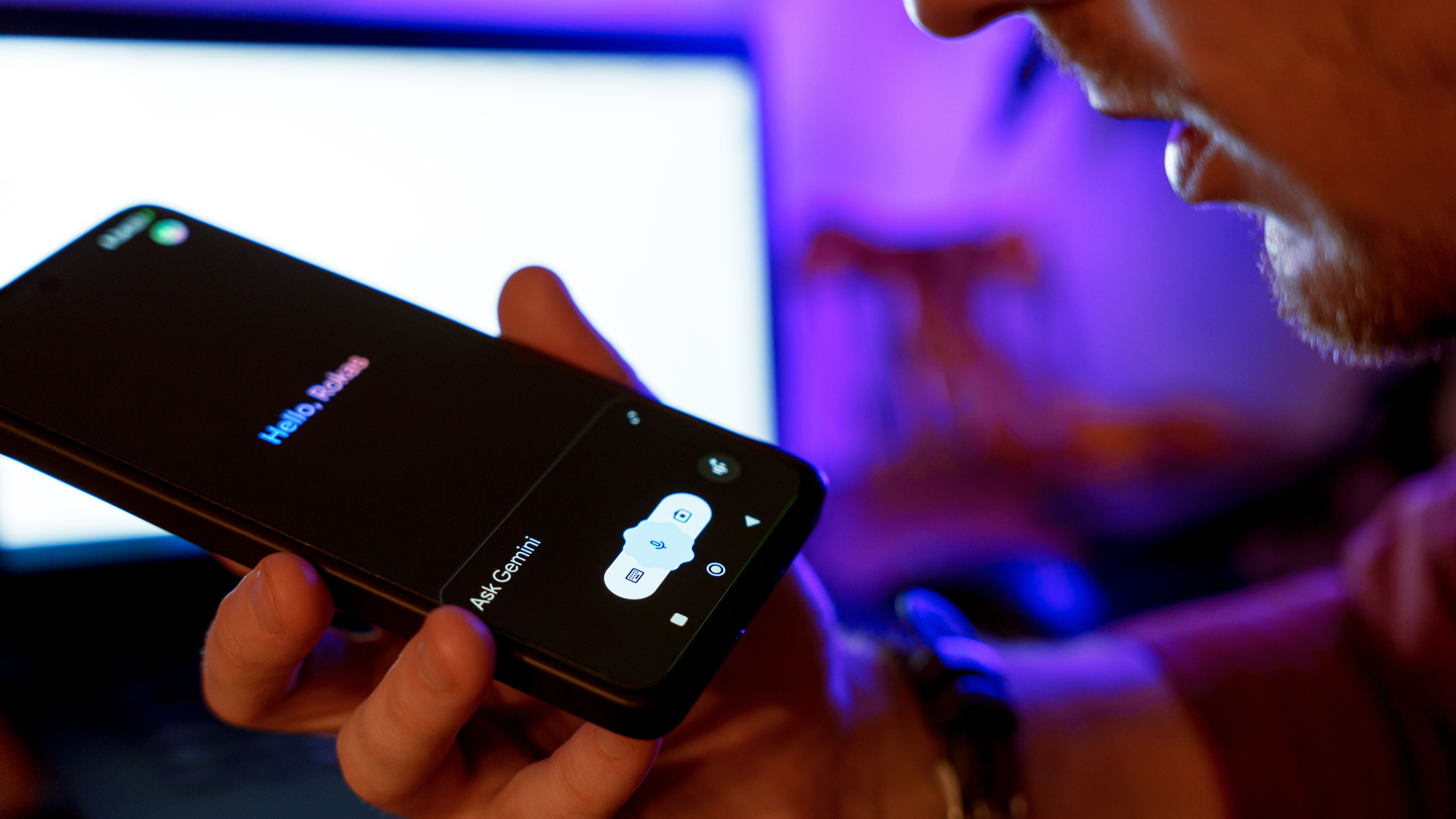
Last year we got a tantalising preview of Project Astra, Google's next-gen, multi-modal AI upgrade that interprets the world through your phone's camera. Now it seems the upgrade will be appearing on more Android phones than originally thought.According to a Google support article (via 9to5Google), the ability to share your camera or screen with Gemini Live inside the Gemini app – so key aspects of the Project Astra update – is going to be available on "any Android device with Gemini Advanced".There had been rumors that this enhanced functionality was going to be exclusive to Gemini running on flagship Google Pixel and Samsung Galaxy devices, but it appears that won't be the case. The catch is, you'll need to pay $19.99 / £18.99 / AU$32.99 a month for Gemini Advanced.The features are actually in the process of rolling out now, as we reported last week, but Google advises that "these features are being released gradually, so they might not be available to you just yet". So far we haven't seen them pop up on the phones of the TechRadar team.
Gemini Live meets Project Astra
Thanks for the comments -- we see (and share) the excitement around this feature and are working hard to make it available to more people! The ability to share your camera or screen in Gemini Live conversations will continue to roll out and we'll provide updates on this page as…March 30, 2025
There are so many modes and sub-modes in Google's Gemini AI chatbot that you'd be forgiven for being a little confused about what each one does. Gemini Live is the more natural, conversational chat mode on mobile that lets you interrupt it, while speaking in a more human-like way compared to the standard Gemini voice mode.The upgrade on the way now will give Gemini Live access to your camera feed and phone screen, so you can ask it about anything you're looking at in the real world or on your mobile device. The early demos look promising, with Gemini identifying objects, remembering locations, and even solving math problems.Gemini can already analyze images and screenshots you give to it, and identify what's in them, but the upgrade will make all of this a real-time experience you can call on as you make your way around the world.You can access the core Gemini Live features – minus the new Project Astra upgrades – with or without a Gemini Advanced subscription. In the Gemini app for Android or iOS, tap the sound wave icon on the far right, next to the text input box.
You might also like
Gemini's 'most intelligent AI model' yet is now available for free5 ways to get the best art from Google's AI image generatorGemini could be about to make an appearance on Wear OS
-

Picture from cdn.mos.cms.futurecdn.net
Rank 514Microsoft is celebrating a very special birthday, and you're all invited. The Microsoft 50th Anniversary Copilot Event takes place tomorrow, and will see the Seattle tech giant unveil its latest AI developments – and, presumably, look back at its vast history.In the lead-up to the event at 9:30 AM PT / 12:30 PM ET / 5:30 PM BST on April 4, we'll discuss all of our favorite Microsoft moments from the last 50 years and predict what Copilot upgrades we can expect to see.Whether you're a fan of Windows, Xbox, Copilot, or even the Zune (remember that?), you won't want to miss this birthday bash.Plus, we'll have reporters on the ground in Seattle ready to cover all the breaking news as it happens, so stay tuned to TechRadar and bookmark this live blog to keep up with everything Microsoft 50th Anniversary and Copilot.
Good morning! John-Anthony Disotto, TechRadar's Senior AI Writer here, ready to kickstart our coverage of the Microsoft 50th Anniversary Copilot event!Stay tuned – because we've got a while until the event starts tomorrow (April 4), so we'll have plenty time to talk about the best (and worst) Microsoft moments from the last half century.And of course, we'll also be speculating as to what we expect to see from Copilot, and bringing you any last-minute rumors on that front.
-
Picture from cdn.mos.cms.futurecdn.net
Rank 515Big CarPlay updates adds a number of handy featuresHyundai showcases its next-gen infotainment systemTesla probably won’t be very happy
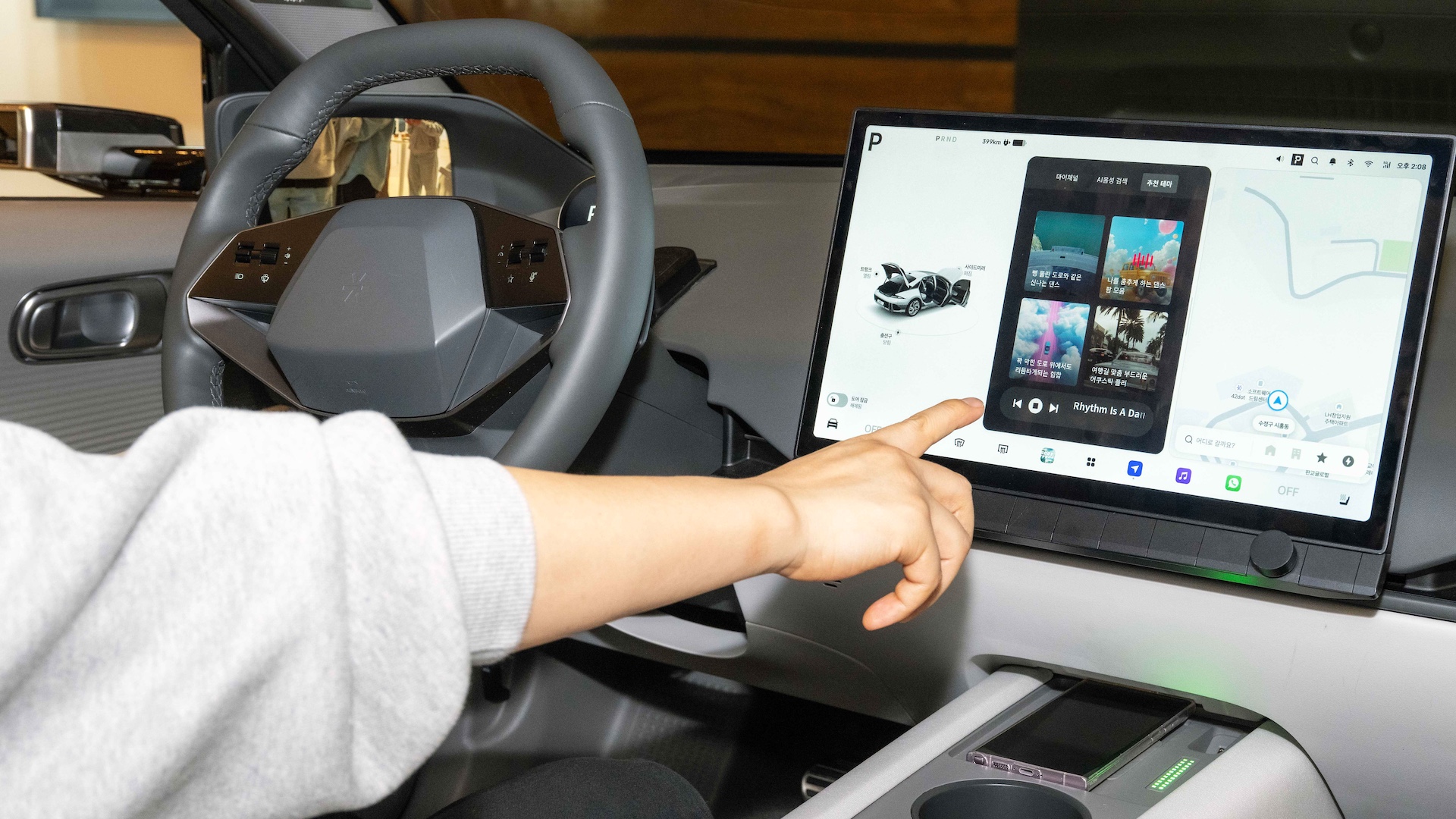
It has been a bumper week for automotive infotainment updates, with Hyundai launching its Pleos software brand, proprietary vehicle OS and open app development program, while Apple rolled out iOS 18.4 that brought with it a number of updates to CarPlay.Interestingly, the Hyundai Motor Group has been working alongside Google to realize its next-generation operating system, leveraging the power of Android Automotive OS to create a more “smartphone-like” experience for users.Due to roll out in the second half of next year, Pleos Connect features Hyundai’s upcoming Gleo AI voice assistant, as well as ‘split-view’ multi-window approach.It looks eerily like Tesla’s interface – even down to the icon of the vehicle and the ability to open doors and the trunk. Don't tell Elon.Pleos Connect is part of a wider drive by Hyundai to move into the true Software Defined Vehicle (SDV) space, which sees the entire electrical and sensor architecture redesigned and refined so all parts of the vehicle can be updated over the air.
(Image credit: Hyundai)
Chang Song, the man in charge of all things SDV at the Hyundai Motor Group, says the Pleos platform supports "all devices in motion" to move autonomously and be managed smartly. It will connect transport and infrastructure, assisting in the next generation of autonomous vehicles, both passenger cars and logistics vehicles.Another part of Song’s master plan is to develop what he refers to as “killer apps”, which is a reference to unique software that benefits the end user to such a degree, it has customers flocking to Hyundai product in order to make the most of it.Pleos Playground will allow the world’s hottest third-party mobile app developers to freely access automotive software endpoints, providing software development kits, analytics and support tools to create apps that can be distributed through Hyundai’s App Market.
Apple expands CarPlay offering... literally
(Image credit: Apple)
As previously reported, Apple recently introduced a third row of apps to select CarPlay users with larger infotainment screens, but this feature has now been rolled out beyond its Beta stage.This crams more app icons onto the display, which should reduce the amount of swiping that’s required – particularly for those that like to horde all of the apps.On top of this, the recent iOS 18.4 update also introduces an API that allows select sports application developers to deliver live scores and match updates to a designated portion of the screen, although we are yet to see how it looks in the wild.Naturally, this won’t include video replay highlights, but it’s a neat way of keeping on top of results as they come in.Finally, Apple CarPlay users in Europe can finally change their default navigation app away from Apple Maps, meaning that simple Siri commands will automatically open in Google Maps, Waze or whatever you select as a favorite in the settings menu.
You might also like
Hyundai is building its own in-car AI system – and it actually sounds like a good ideaNissan is back to its bold best with new EV lineup that's led by a third-generation Leaf – and yes, it's an SUVHyundai reveals wild Insteroid concept EV with Pac-Man interior – and it’s the exciting hot hatch that electric vehicles need right now
-

Picture from cdn.mos.cms.futurecdn.net
Rank 516Old habits die hard. Even in 2025, legacy systems like fax machines, PBX phone systems and filing cabinets remain in use in many offices. Another surprising holdover is the traditional VPN (Virtual Private Network.) VPN technology had a nice run, serving as the default choice for remote access for decades. But many organizations continue to rely on legacy VPN solutions, despite significant advancements in secure remote access technologies.Indeed, in the modern threat landscape, VPN services bring more risk than benefit. Let’s look at five reasons why it is time to say goodbye to VPN infrastructure and what to use instead.
Workloads have moved to the cloud
In recent years, businesses have steadily migrated their operations to cloud computing environments. Consider how many Teams or Zoom meetings you’ve attended this week and how many of your daily applications now operate in the cloud.This shift has made VPN solutions less and less necessary. As cloud usage increases, the need to remotely access on-premises resources diminishes. Nevertheless, many companies still maintain VPN solutions to provide access to a dwindling number of legacy resources, much like individuals holding onto Blu-ray players solely to watch a couple of dusty discs tucked in an old cabinet.But is it worth maintaining a complex, outdated VPN infrastructure for a few remaining items, such as a designated machine or a legacy file storage repository? Today, businesses have a multitude of alternative solutions to choose from. These cloud-centric solutions improve efficiency and productivity because they eliminate the need for constant maintenance, patching and monitoring. They can also easily scale up or down to accommodate fluctuating numbers of remote users. But perhaps the most important benefit is stronger security.
Blocking lateral movement and privilege escalation is critical
Traditional VPNs provide broad network access to everything — which can expose sensitive data and critical systems unnecessarily. Indeed, this expansion of your attack surface is what enables threat actors to steadily escalate their privileges and compromise multiple systems across the network. What's more, VPN-enabled accounts sit dormant when not in use, ready for takeover by attackers at their convenience. Compounding this risk, organizations have limited control over the off-premises devices running VPN clients, which further increases the potential for malware infiltration and unauthorized access.Secure access solutions, on the other hand, provide access to the specific resources that the user currently needs, nothing more. Strictly enforcing the principle of least privilege restricts lateral movement, which in turn significantly reduces the potential impact of a breach. These modern solutions also dynamically create access privileges that last only for the duration of a session and are then removed; this just-in-time approach dramatically reduces the risk of dormant accounts being exploited while maintaining productivity for remote users.
You need better visibility and control
Traditional VPN configurations are static which means they need to grant broad access to each user. This lack of granular control exposes organizations to significant security risks and potential data breaches – once connected, those users can engage in risky activities such as launching RDP sessions or accessing malicious websites without oversight.In contrast, today’s advanced secure access systems can dynamically modify users’ access rights based on real-time factors such as user behavior, device status and threat intelligence. For example, if an account begins attempting to delete or encrypt sensitive files, its access rights can be cut off immediately.In addition, live monitoring and session recording capabilities empower security teams to carefully observe and analyze user activity. This comprehensive visibility enables prompt threat detection and rapid incident response. Moreover, enabling deep visibility and accountability discourages users from engaging in risky behavior in the first place.
VPNs are a gateway for multiple threats
An active VPN connection is one more open door to your network. If a user is surfing the web while connected, they can inadvertently download malicious code onto their system. As a result, threat actors can gain remote control of the device, enabling them to compromise MFA tokens, redirect text messages, implement man-in-the-middle (MITM) attacks and more.A modern secure access solution significantly reduces the risk of these threats because it creates isolated, application-specific connections rather than broad network-wide access. In addition, it enforces least privilege access and applies real-time security controls to detect and block suspicious activity. This proactive approach helps safeguard sensitive data and systems and, therefore, core business operations.
Compliance regulations are becoming stricter
There is no legislative mandate today that dictates that companies cannot use a VPN. However, the goal of compliance isn’t to check boxes; it is to strengthen your security posture. Ask yourself: are you truly meeting your due diligence obligations if you continue to rely on VPN solutions?Moreover, compliance standards are rapidly changing in response to advances in both technology and the threat landscape. In particular, regulations increasingly emphasize the importance of proactive risk management and adaptive security solutions. Soon enough, regulatory bodies are likely to recommend more robust security measures than VPNs — just as they already discourage the use of old encryption and authentication protocols.
Conclusion
As cyber threats evolve, businesses must rethink their approach to remote access. It’s time to retire VPNs and embrace modern, identity management security solutions that provide far better protection for critical assets while improving efficiency and scalability. Although saying goodbye can be tough, the benefits of contemporary access solutions far outweigh the comfort of maintaining outdated systems.
We rate the best business VPN.
This article was produced as part of TechRadarPro's Expert Insights channel where we feature the best and brightest minds in the technology industry today. The views expressed here are those of the author and are not necessarily those of TechRadarPro or Future plc. If you are interested in contributing find out more here: https://www.techradar.com/news/submit-your-story-to-techradar-pro
-
Picture from o.aolcdn.com
Rank 517Smartwatches do more than just track your steps and deliver phone alerts to your wrist. The best smartwatches go even further, giving you the ability to pay for a cup of coffee, take calls and connect to apps like Spotify all without whipping out your smartphone.Chances are, if you’re reading this, you already know all of the benefits of a smartwatch. You’re ready to invest, or upgrade from an aging accessory, but we wouldn’t blame you if you if you didn’t know where to start. There are dozens of smartwatches available now, including GPS running watches, fitness trackers that look like smartwatches and multi-purpose devices. Plus, you’ll want to consider factors like durability, battery life and operating system before you spend a lot of money on a new wearable. We’ve tested and reviewed most major smartwatches available today and these are our top picks.
Table of contents
Best smartwatches
Stylish smartwatches: Fossil and more
Factors to consider before buying a smartwatch
Other smartwatches our experts tested
Best smartwatches
Stylish smartwatches: Fossil and more
Fossil
Yes, there are still companies out there trying to make “fashionable” hybrid smartwatches. Back when wearables were novel and generally ugly, brands like Fossil, Michael Kors and Skagen found their niche in stylish smartwatches that took cues from analog timepieces. You also have the option to pick up a “hybrid” smartwatch from companies like Withings and Garmin – these devices look like classic wrist watches but incorporate some limited functionality like activity tracking and heart rate monitoring. They remain good options if you prefer that look, but thankfully, wearables made by Apple, Samsung, Fitbit and others have gotten much more attractive over the past few years.
Ultimately, the only thing you can’t change after you buy a smartwatch is its case design. If you’re not into the Apple Watch’s squared-off corners, all of Samsung’s smartwatches have round cases that look a little more like a traditional watch. Most wearables are offered in a choice of colors and you can pay extra for premium materials like stainless steel for extra durability. Once you decide on a case, your band options are endless – there are dozens of first- and third-party watch straps available for most major smartwatches, and for both larger and smaller wrists, allowing you to change up your look whenever you please.
Factors to consider before buying a smartwatch
Compatibility
Apple Watches only work with iPhones, while Wear OS devices play nice with both iOS and Android phones. Smartwatches made by Samsung, Garmin, Fitbit and others are also compatible with Android and iOS, but you’ll need to install a companion app on your smartphone.
The smartwatch OS will also dictate the type and number of third-party apps you’ll have access to. Many of these aren’t useful, though, making this factor a fairly minor one in the grand scheme of things.
Price
The best smartwatches generally cost between $300 and $400. Compared to budget smartwatches, which cost between $100 and $250, these pricier devices have advanced operating systems, communications, music and fitness features. They also often include perks like onboard GPS tracking, music storage and NFC, AMOLED displays, and long battery life, things that budget devices generally don’t have.
Some companies make specialized fitness watches: Those can easily run north of $500, and we’d only recommend them to serious athletes. Luxury smartwatches from brands like TAG Heuer and Hublot can also reach sky-high prices, but we wouldn’t endorse any of them. These devices can cost more than $1,000, and you’re usually paying for little more than a brand name and some needlessly exotic selection of build materials.
Battery life
Battery life remains one of our biggest complaints about smartwatches, but there’s hope as of late. You can expect two full days from Apple Watches and most Wear OS devices. Watches using the Snapdragon Wear 3100 processor support extended battery modes that promise up to five days of battery life on a charge — if you’re willing to shut off most features aside from, you know, displaying the time. Other models can last five to seven days, but they usually have fewer features and lower-quality displays. Meanwhile, some fitness watches can last weeks on a single charge. If long battery life is a priority for you, it’s worth checking out the watch’s specs beforehand to see what the manufacturer estimates.
Communication
Any smartwatch worth considering delivers call, text and app notifications to your wrist. Call and text alerts are self explanatory, but if those mean a lot to you, consider a watch with LTE. They’re more expensive than their WiFi-only counterparts, but cellular connectivity allows the smartwatch to take and receive phone calls, and do the same with text messages, without your device nearby. As far as app alerts go, getting them delivered to your wrist will let you glance down to the watch face and see if you absolutely need to check your phone right now.
Fitness tracking
Activity tracking is a big reason why people turn to smartwatches. An all-purpose timepiece should function as a fitness tracker, logging your steps, calories and workouts, and most of today’s wearables have a heart rate monitor as well.
Many smartwatches' fitness features include a built-in GPS, which is useful for tracking distance for runs and bike rides. Swimmers will want something water resistant, and thankfully most all-purpose devices now can withstand at least a dunk in the pool. Some smartwatches from companies like Garmin are more fitness focused than others and tend to offer more advanced features like heart-rate-variance tracking, recovery time estimation, onboard maps and more.
Health tracking on smartwatches has also seen advances over the years. Both Apple and Fitbit devices can estimate blood oxygen levels and measure ECGs. But the more affordable the smartwatch, the less likely it is that it has these kinds of advanced health tracking features; if collecting those kinds of wellness metrics is important to you, you’ll have to pay for the privilege.
Music
Your watch can not only track your morning runs but also play music while you’re exercising. Many smartwatches let you save your music locally, so you can connect wireless earbuds via Bluetooth and listen to tunes without bringing your phone. Those that don’t have onboard storage for music usually have on-watch music controls, so you can control playback without whipping out your phone. And if your watch has LTE, local saving isn’t required — you’ll be able to stream music directly from the watch to your paired earbuds.
Displays
Most wearables have touchscreens and we recommend getting one that has a full-color touchscreen. Some flagships like the Apple Watch have LTPO displays, which stands for low-temperature polycrystalline oxide. These panels have faster response times and are more power efficient, resulting in a smoother experience when one interacts with the touchscreen and, in some cases, longer battery lives.
You won’t see significant gains with the latter, though, because the extra battery essentially gets used up when these devices have always-on displays, as most flagship wearables do today. Some smartwatches have this feature on by default while others let you enable it via tweaked settings. This smart feature allows you to glance down at your watch to check the time, health stats or any other information you’ve set it to show on its watchface without lifting your wrist. This will no doubt affect your device’s battery life, but thankfully most always-on modes dim the display’s brightness so it’s not running at its peak unnecessarily. Cheaper devices won’t have this feature; instead, their touchscreens will automatically turn off to conserve battery life and you’ll have to intentionally check your watch to turn on the display again.
NFC
Many new smartwatches have NFC, letting you pay for things without your wallet using contactless payments. After saving your credit or debit card information, you can hold your smartwatch up to an NFC reader to pay for a cup of coffee on your way home from a run. Keep in mind that different watches use different payment systems: Apple Watches use Apple Pay, Wear OS devices use Google Pay, Samsung devices use Samsung Pay and so forth.
Apple Pay is one of the most popular NFC payment systems, with support for multiple banks and credit cards in 72 different countries, while Samsung and Google Pay work in fewer regions. It’s also important to note that both NFC payment support varies by device as well for both Samsung and Google’s systems.
Other smartwatches our experts tested
Apple Watch Ultra 2
The Apple Watch Ultra 2 is probably overkill for most people, but it has a ton of extra features like extra waterproofing to track diving, an even more accurate GPS and the biggest battery of any Apple Watch to date. Apple designed it for the most rugged among us, but for your average person, it likely has more features than they'd ever need. If you’re particularly clumsy, however, its high level of durability could be a great reason to consider the Apple Watch Ultra 2.
Apple Watch SE
The Apple Watch SE is less feature-rich than the flagship model, but it will probably suffice for most people. We actually regard the Watch SE as the best smartwatch option for first-time buyers, or people on stricter budgets. You’ll get all the core Apple Watch features as well as things like fall and crash detection, noise monitoring and Emergency SOS, but you’ll have to do without more advanced hardware perks like an always-on display, a blood oxygen sensor, an ECG monitor and a skin temperature sensor.
Garmin Forerunner 745
Garmin watches in general can be great options for the most active among us. The Garmin Forerunner 745 is an excellent GPS running watch for serious athletes or those who prize battery life above all else. When we tested it, we found it to provide accurate distance tracking, a killer 16-hour battery life with GPS turned on (up to seven days without it) and support for onboard music storage and Garmin Pay.This article originally appeared on Engadget at https://www.engadget.com/wearables/best-smartwatches-153013118.html?src=rss
-

Picture from techcrunch.com
Rank 518 -
Picture from cdn.mos.cms.futurecdn.net
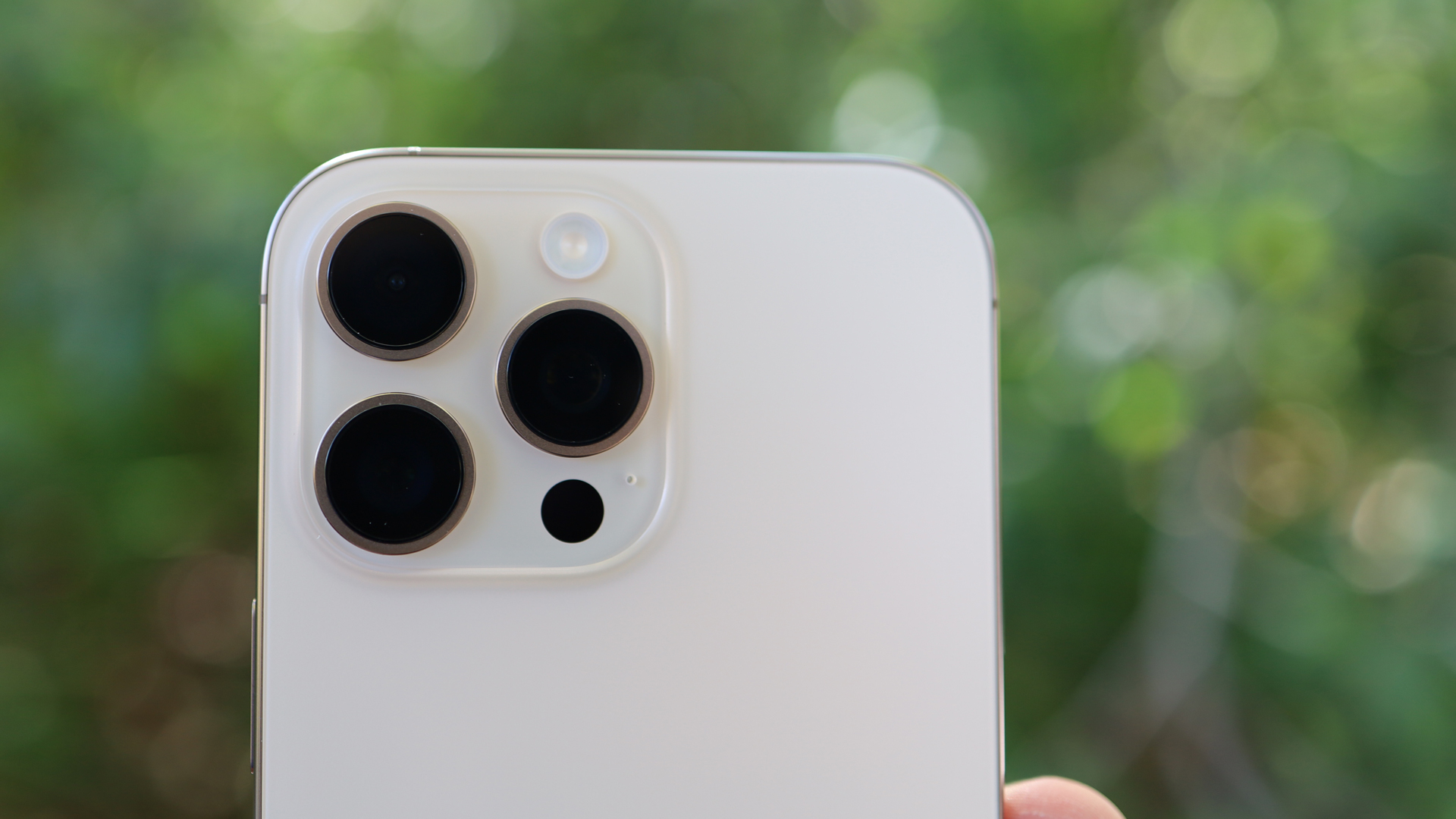
Rank 519The iPhone 17 Pro and Pro Max could have a 3.5x optical zoom instead of a 5xHowever a 5x and even 7x lossless zoom might still be achievable through croppingThis change would apparently be paired with a new 48MP sensor
One thing we’ve heard from quite a few sources is that the telephoto camera on the iPhone 17 Pro and iPhone 17 Pro Max could be getting an upgrade, with a 48MP sensor reportedly set to be included in place of the 12MP one on the iPhone 16 Pro models. The latest tip echoes that, but suggests a lot more is changing than just the megapixel count.According to tipster Majin Bu (via 9to5Mac), the iPhone 17 Pro series will have a telephoto camera that offers 3.5x, 5x, and even 7x optical zoom. The wording makes it slightly ambiguous as to how this is achieved, but they mention lossless cropping as a feature, so we’d assume it’s a 3.5x optical zoom camera, which can then crop an image to achieve a 5x or 7x zoom at a lower megapixel count.This sort of optical-quality cropping wouldn’t be possible without upping the megapixels, so it’s a feature that would make sense for Apple to offer if the sensor is 48MP.
Not a new idea for Apple
The iPhone 16 Pro (Image credit: Future / Lance Ulanoff)
We’ve already seen this idea on iPhones, with the 48MP main sensor on the iPhone 16 series being able to take optical-quality 2x zoom photos at 12MP, so it wouldn’t be surprising if Apple added this same feature to the telephoto lens.This change then would arguably be for the better, since you’d still be able to achieve a 5x zoom like you can on the current Pro models, but there would also be longer and shorter distance zooms available too.And being able to get 3.5x images at – presumably – full 48MP quality would be especially desirable for some people, as a 3.5x zoom is typically more useful for portrait shots than a 5x zoom.All that said, while this is a credible claim, we’d take it with a pinch of salt, as the source has a slightly mixed track record, and the iPhone 17 series is still a long way from launching, with September likely to be the announcement month.
You might also like
Our review of the new iPhone 16eNew iPhone 17 report lends weight to rumors of major display and camera upgrades, and a pricey Apple foldableiPhone 17 Air: 5 key rumored features
-

Picture from cdn.mos.cms.futurecdn.net
Rank 520Project 007 may not have been fully revealed yet, but there is a lot to look forward to from the upcoming James Bond game from IO Interactive. We don't have a lot of information regarding a release date, yet we've still managed to scrape together a few bits and pieces.So far, we've only had two short teaser trailers that doesn’t show any gameplay, but the official website confirms that the story is about James Bond’s origins and it’ll be “completely original”. That means IO Interactive won’t be borrowing stories from previous James Bond movies or books. That said, we also know for a fact that Project 007 doesn't feature actors from the films.As a whole, Project 007 is keeping its cards close to its chest when it comes to gameplay. We can almost certainly expect gunslinging in some form, but the precise details have yet to be revealed. We could be in for some classic first-person action in the vein of Goldeneye 007 for the N64. Alternatively, IO Interactive might opt for some third-person stealth mechanics in the tradition of their much-celebrated Hitman series. But, speculation aside, here's what we know so far.
Project 007: cut to the chase
What is it? A James Bond game from the developer of HitmanWhen can I play it? TBCWhat can I play it on? TBC
Project 007 potential platforms
There are no official details about when we can expect the new Project 007 game. Given we know that IO Interactive is still pulling together its development team, it could be a good few years before the new James Bond title sees the light of day. Interestingly, the game was showcased during the Nintendo Switch 2 reveal event, so we now have one confirmed platform at least.For now, we can also probably expect to see it launch on PS5, Xbox Series X/S and PC, but we don't know definitively. Given the seemingly far out release date, it seems unlikely that it'll come to Xbox One or PS4.
Project 007 trailer
So far, IO Interactive has only provided us with two teaser trailers for Project 007. They're not much to go on, but it's always charming to see a new take on the classic James Bond opening sequence.
Project 007 news
New Bond game could be the start of a trilogySpeaking in an interview with IGN, IO Interactive boss Hakan Abrak shared some details on the upcoming Project 007 game. He revealed: "It's completely beginning and becoming a story, hopefully for a big trilogy out there in the future,"IO Interactive hires audio director for Project 007Making an official announcement on the developer’s website, IO Interactive has announced that its hired a new audio director, Dominic Vega. Having previously worked on big names like League of Legends, Ratchet and Clank: Nexus, and Just Cause 4, Vega stated:“I don’t think there are many sound palettes as iconic as the James Bond universe. It’s one of my favorite soundtracks of all time. Working on such an iconic franchise with IOI, and the audio team here is incredibly exciting."
We're thrilled to welcome Dominic Vega to the team as the Audio Director for Project 007. “Working on such an iconic franchise with IOI and the audio team here is incredibly exciting.” says Vega.Full announcement: https://t.co/IMcRye9flL pic.twitter.com/d8ipXUwhWpJune 15, 2022
Project 007 featured in the Nintendo Switch 2 reveal eventAfter announcing Hitman: World of Assassination for Nintendo Switch 2, IO Interactive then revealed that Project 007 will also be coming to the new platform. A brief teaser trailer was shown, and no further details given.Don't expect familiar actors to returnAt the moment, further details on the project are few and far between, but an interview with IO Interactive's studio director did reveal that the upcoming game won't be based on any of the actors featured in the film series. Hakan Abrak described how his team “have been allowed to make [their] own digital Bond, which will not lean on a Bond actor."
You Might Also Like...
The best horror games to play right nowUpcoming PS5 exclusivesHere are the Xbox Series X games coming in 2024
-

Picture from cdn.mos.cms.futurecdn.net
Rank 521A Minecraft Movie's name was chosen for a very simple reasonIts director has lifted the lid on why he didn't get more creative with its titleThe decision was taken in light of the hugely successful game's endless storytelling potential
A Minecraft Movie director Jared Hess has a very simple explanation for the film adaptation's uncomplicated title.Speaking ahead of the movie's release on April 4, Hess revealed its plot and cast of characters were just "one of many stories" that could exist within the Minecraft universe.It's an obvious answer to an obvious question, but there's logic to what Hess means. The primary reason is that there's unlimited storytelling potential in Mojang' Studios' best-selling sandbox title. Indeed, every time someone starts a new game, or a group of individuals embark on a new adventure in a unique, procedurally generated world, they've no idea how this new world's story will unfold.It's that 'leap into the unknown' storytelling component that Hess wanted to capture in one of 2025's new movies. Rather than seek narrative inspiration from the seemingly endless number of Minecraft Let's Plays on YouTube, then, Hess and the film's team of writers decided to create a wholly original tale with character that, while relatable, had distinct personalities, strengths, and weaknesses.
Hess' daughter created a hotel for wolves in one of her single-player games (Image credit: Warner Bros. Pictures/Mojang Studios)
"That's what's special about Minecraft," Hess told me. "It's the biggest video game of all-time, but it doesn't have a built-in story to follow, so you bring your own narrative to it every time that you play.
You bring your own narrative to it every time that you playJared Hess, A Minecraft Movie director
"I watched my daughter playing it one day [and] she had a crazy, complex storyline [where] she'd built a hotel for wolves," Hess continued. "I'd never seen that before, but that's proof that there's endless stories that go along with the game."So, while we were developing our movie, we had to have the same approach. We're just one of many, many stories out there that's set in this world with these characters. For me, it was like 'how do we take a group of unlikely heroes, who are in a difficult place in their lives, and send them on this adventure where they have to use creativity to survive and cooperate?'."My introduction to the game was right when it came out. My kids would play it and they were having such a riot, so I thought I had to play it, too. It became something we did together as a family, so to be able to be creative and collaborate with other people just became one of the movie's big themes."
Critics haven't responded kindly to A Minecraft Movie ahead of its April 4 launch (Image credit: Warner Bros. Pictures/Mojang Studios)
Fun as all of that sounds, Warner Bros' film adaptation hasn't been a hit with critics. In my review of A Minecraft Movie, I gave it two stars out of five, said it "isn't the wildly creative blockbuster videogame film adaptation I was hoping for", and told people to wait until it's available to stream on Max.Based on its near-bang average 52% Rotten Tomatoes critical score, it seems many agree with me that it's not very good, either. Nonetheless, industry analysts expect the movie to rake in the cash during its opening weekend at the global box office. Per Deadline, A Minecraft Movie is reportedly eyeing a huge $140m haul this weekend (April 4 to 6). With relatively little in the way of competition during that three-day period, it could defy the critics and easily earn that amount, too.
You might also like
'They were taken out of context': A Minecraft Movie director responds to fan backlash over the film adaptation's visuals'We were old school': A Minecraft Movie's Jared Hess denies using AI to enhance his film adaptation of Mojang's very popular sandbox gameMcDonald's reveals A Minecraft Movie meal with a bizarre set of collectibles and the most sinister sounding sauce ever
-

Picture from cdn.mos.cms.futurecdn.net
Rank 522Pluralsight survey finds 77% of workers admit to pretending they know more about AI than they doMany workers consider using AI to be lazy, especially leaders93% of employees are worried about losing their job to AI
Nine in 10 (91%) UK tech workers claim to be AI-savvy, yet three-quarters (77%) admit to pretending they know more about AI than they actually do, new research has claimed.The findings from Pluralsuggt come at a critical point for many organizations, with 86% of UK businesses either using or planning to use AI and 93% fast-tracking AI initiatives in the past six months.However, popular misconceptions around the tech continue to plague businesses, preventing the effective deployment and utilization of AI.
AI misconceptions are leading to a lack of AI transparency
Pluralsight found that two in three (59%) workers say that AI use is seen as lazy, rising to three in four (73%) at the C-suite level.As a result, nearly one-third (31%) hide their AI use due to fear of judgment and two-thirds (65%) have observed colleagues using AI without admitting it, highlighting the need for more ethical AI use guidelines and consistent strategies.“Without a clear understanding of the right ways to use AI, UK businesses risk wasted investment, inefficiencies and even security threats,” Pluralsight Chief Technology and Product Offixer Chris McClellan said.“Using AI at work isn’t about cutting corners. When used correctly, it’s a way to increase efficiency and alleviate talented workers from routine tasks,” McClellan added.More broadly, a considerable majority (93%) of workers are still concerned that AI tools could replace their jobs, even though 44% of firms have actually added more roles due to AI growth and a further 87% stated they’re likely to replace or outsource roles just to tackle the AI skills gap.Highlighting just how important it is for workers to upskill in AI, Pluralsight’s study revealed that only 6% do not factor in AI skills when hiring, with 94% agreeing that staying up-to-date with AI skills is the best way to ensure having a job.“The key for tech workers isn’t to resist AI; it’s about leaning into upskilling. Employees who proactively learn to work alongside AI will be the ones shaping the future of the workplace, not being replaced by it,” McClellan concluded.
You might also like
Businesses are struggling to scale AI across their businessCheck out the best online learning platformsWe’ve listed the best job sites
-

Picture from cdn.mos.cms.futurecdn.net
Rank 523More signs of ultra wide-band in Find My Device are spottedThe upgrade could be rolling out imminentlyDevices can be tracked more precisely with the technology
Google's Find My Device platform got a hefty upgrade last year, adding support for offline devices and third-party trackers, and it looks like it's about to get another significant boost – courtesy of ultra wide-band technology (UWB).This is the precise location tracking protocol that you'll find in everything from the Apple AirTag to the Google Pixel 9 Pro, and the team at Android Authority just found references to it inside the latest Find My Device app for Android.Phones and other gadgets can already be located via GPS, Bluetooth, and Wi-Fi, but UWB adds an extra level of accuracy. Rather than just knowing something is in your house, you'll actually be able to find the sofa cushion it's buried under.We actually got the first signs of this upgrade last June, which were then followed up by mentions of a 'compass' tool in the Find My Device app. The latest code snippets – which aren't yet live – suggest the feature is now about to be deployed.
Compatible devices
AirTags offer UWB support (Image credit: Apple)
Ultra wide-band isn't just about location tracking: the standard works over short distances using radio waves, and it also has applications in smart home and car tech (letting you wirelessly unlock your vehicle, for example).For you to be able to find something via UWB, you'll need the tech to be built into the phone you're searching with, and the gadget you're trying to find. You can then find the lost item to an accuracy of just a few centimeters or inches.Many devices now include UWB, such as the Google Pixel Watch 3, but it's not everywhere – the flagship Google Pixel 9, launched last August, doesn't offer UWB. You will find UWB in some tracking devices, including the Galaxy Smart Tag 2.We're still waiting for some Google-branded AirTag competitors, and we haven't seen anything to suggest they're launching imminently. If Google were to launch its own trackers soon, it would be the perfect way to showcase UWB support for Find My Device.
You might also like
AirTags were pitched against Google's Find My Device trackersOur full review of the Google Pixel 9 ProAndroid's Find My Device can now let you track your friends
-

Picture from cdn.mos.cms.futurecdn.net
Rank 524NETSCOUT report claims Distributed Denial of Service attacks are on the riseSuch attacks are increasingly being used as political weaponsNotorious Russian Group NoName057(16) targeted European countries in the second half of 2024
Distributed Denial of Service (DDoS) attacks are reportedly becoming a tool of choice for politically motivated cybercriminals, new research has revealed.Sociopolitical events like civil protests, elections, and policy disputes are increasingly playing out through digital platforms, and DDoS attacks are an effective way to erode trust in institutions and critical services, NETSCOUT research claims.These intrusions are aimed at a wide range of industries, and are difficult to defend against as they require constant vigilance and advanced cybersecurity strategies, as shown by a recent Pro-Russian hacking group targeting critical infrastructure and public services through DDoS attacks which disrupted key utilities and companies.
The scale of the surge
A DDoS attack is a technique in which an attacker will flood a server with an enormous amount of traffic, overwhelming the site and making it impossible to access. The malicious traffic can cripple websites and infrastructure, and can cause serious financial and reputational damage.The nature of these attacks means they are very often politically motivated, as opposed to ransomware attacks, for example, which are unsurprisingly largely carried out for financial reasons.According to the research, the second half of 2024 saw almost 9 million DDoS attacks, a 12.75% increase from the first six months. Israel in particular saw a 2,844% increase in attacks, seeing a high of 519 in one day.The above mentioned Russian hacking group, NoName057(16), focused primarily on government services in the UK, Belgium, and Spain. Georgia also saw a 1,489% increase in attacks in the lead up to the “Russia Bill”, highlighting its use as a political weapon.“DDoS has emerged as the go-to tool for cyberwarfare,” stated Richard Hummel, director, threat intelligence, NETSCOUT.“NoName057(16) continues to be the leading actor for politically motivated DDoS campaigns targeting governments, infrastructure, and organizations. In 2024, they repeatedly targeted government services in the United Kingdom, Belgium, and Spain.”
You might also like
Take a look at our picks for the best malware removal software aroundCheck out our choice for best antivirus softwareOne of the most powerful ransomware hacks around has been cracked using some serious GPU power
-

Picture from cdn.mos.cms.futurecdn.net
Rank 525New Disney+ movies are coming thick and fast now, aren't they?After a lengthy barren spell, we've had four consecutive weeks where a new film had joined Disney+'s movie library. This week, one of 2024's final new movies in A Real Pain has landed on one of the world's best streaming services. Well, outside of the US, anyway – it landed on Hulu stateside in January.Our best Disney+ movies is also packed with other great film suggestions. Bookmark that page for later, though, and read on to see if any of the recently released new Disney+ movies take your fancy first.
New Disney+ movies: April
A Real Pain
Release date: April 2 (available on Hulu in the US)Runtimes: 91 minutesAge rating: R (US) / 16+ (UK)Directors: Jesse EisenbergMain cast: Jesse Eisenberg, Kieran Culkin, Will Sharpe, Daniel Oreskes, Liza Sadovy, and Jennifer GreyRotten Tomatoes (RT) score: 96% (critics); 81% (audiences)
Watch A Real Pain on Disney+
New Disney+ movies: March
Mufasa: The Lion King
Release date: March 26Runtimes: 125 minutesAge rating: PG (US) / 9+ (UK)Directors: Barry JenkinsMain cast: Aaron Pierre, Kelvin Harrison Jr, Tiffany Boone, Preston Nyman, Kagiso Lediga, Mads Mikkelsen, and Thandiwe NewtonRotten Tomatoes (RT) score: 56% (critics); 89% (audiences)
Watch Mufasa: The Lion King on Disney+
O'Dessa
Release date: March 20 (available on Hulu in the US)Runtimes: 108 minutesAge rating: PG-13 (US) / 16+ (UK)Directors: Geremy JasperMain cast: Sadie Sink, Kelvin Harrison Jr, Murray Bartlett, and Regina HallRotten Tomatoes (RT) score: 40% (critics); 64% (audiences)
Watch O'Dessa on Disney+
Moana 2
Release date: March 12Runtimes: 102 minutesAge rating: PG (US) / 6+ (UK)Directors: David G Derrick Jr, Jason Hand, and Dana Ledoux MillerMain cast: Auli'i Carvalho, Dwayne Johnson, Alan Tudyk, Temeura Morrison, Nicole Scherzinger, and Rose MatafeoRotten Tomatoes (RT) score: 61% (critics); 86% (audiences)
Watch Moana 2 on Disney Plus
New Disney Plus movies: coming soon
There aren't many other new Disney+ movies set to arrive this month, so another barren spell may be in-bound. For now, here are three films that are due to land on the platform over the next seven days:
Not Just a Goof – April 7 (docufilm)Pets – April 11 (docufilm)The Abyss in 4K – April 11 (US only)
Not up for a movie? Try our pick of the best Disney+ shows, see if there's a free Disney+ trial available, read our Disney+ review, or get the lowdown on the new Disney+ price points.
-
Picture from cdn.mos.cms.futurecdn.net
Rank 526Lenovo has leaked Nvidia’s next GPUs, in theory, in a listing for an incoming desktop PCThe Lenovo Legion Tower 5i offers options on the as-yet-unannounced RTX 5060 Ti and 5060If Lenovo is preparing product listings that mention these GPUs (and accidentally sent one live), this hints that RTX 5060 models are imminent
What could be Nvidia’s next Blackwell GPU models – the RTX 5060, and 5060 Ti – have popped up in the official specs page for a Lenovo desktop PC.As VideoCardz highlighted, the machine in question is the Lenovo Legion Tower 5i Gen 10 (Intel), which as the name denotes has an Intel processor (actually a mobile flavor, soldered to the motherboard – up to an Intel 285HX CPU, apparently). Note that Lenovo refers to this chip as a ‘Core Ultra i9’ which is incorrect, confusing Intel’s old naming scheme (i9) with the new one (Ultra 9).It’s the GPU options which are key here, though, and they consist of a choice of the Nvidia RTX 5070 Ti, or the RTX 5060 Ti, or RTX 5060 (the RTX 5070 seems to have been skipped over by Lenovo for this PC).Of course, the RTX 5060 models don’t officially exist yet, but are rumored to be nearing release. The fact that Lenovo has listed them with this PC is a heavy hint that these graphics cards are indeed imminent, just as the grapevine has suggested multiple times now.
(Image credit: Lenovo)
Analysis: Possibly imminent GPUs and pressing concerns about stock
The rumor mill has been alive with chatter about the RTX 5060 graphics cards for some time now, and theories that Nvidia actually intended to launch this next tier in its Blackwell GPUs already – but there have been delays.Obviously, we need to take that speculation about Nvidia pushing back its plans with a fistful of seasoning, but the latest guess is that the RTX 5060 Ti is possibly delayed to mid-April and the vanilla RTX 5060 to mid-May.Mind you, if we are looking at mid-April, that’s only a couple of weeks away now, so it makes sense that Lenovo is readying listings for PCs with these GPUs to go live on its site, and has accidentally published this product blurb a little prematurely.Normally, I’d expect after this sighting was reported, Lenovo would have taken down the listing (or at least removed the mention of the unreleased GPUs here), but at the time of writing, it’s still live (as linked above).Unfortunately, there are no spec details accompanying the mention of the RTX 5060 GPUs, but as VideoCardz noticed, we do get a glimpse of the graphics card inside the PC, showing it has two fans and a single 8-pin power connector (which backs up existing rumors).Speculation thus far contends that the RTX 5060 will run with 8GB of VRAM, but the RTX 5060 Ti should offer both 8GB and 16GB versions (exactly as is the case with the current RTX 4060 range).The consistent rumors about the RTX 5060 being likely to suffer from poor levels of supply are also a worry here, but with what we’ve experienced so far from Blackwell launches, this would hardly be a surprise. That might well be tied into the rumored delays, as Nvidia really needs to ensure a more robust level of stock for Blackwell GPUs that are going to be priced more affordably, and therefore be under much greater demand, than the RTX 5070 and above.
You might also like
If the AMD Radeon RX 9060 XT comes with a sub-$400 price tag, it might be the best-value graphics card PC gamers have ever seenAMD could be working on a faster RX 9070 Extreme graphics cardWe explain all PC cases available and the form factor builds you can make
-

Picture from cdn.mos.cms.futurecdn.net
Rank 527Nintendo confirms that some Switch 2 games will only contain a download keyIt explains that games with Game-Key Cards don't feature the full game dataPlayers will require an internet connection when first inserting a Game-Key Card
Following the full reveal of the Nintendo Switch 2, Nintendo has confirmed that certain physical games will only feature a download key.The company detailed everything we need to know in a new customer support post after the Nintendo Switch 2 Direct, explaining that its new 'Game-Key Cards' - physical Switch 2 games - will contain a download "key" and don't feature the full game data."Game-key cards are different from regular game cards, because they don’t contain the full game data. Instead, the game-key card is your 'key' to downloading the full game to your system via the internet," Nintendo said.After the game is downloaded, players can play the game by inserting the Game-Key Cards into their console and starting it up like a standard physical game.Players can identify which Switch 2 physical games will contain a Game-Key Card by a key icon on the front of the game box. When a card is inserted, the HOME Menu will then provide instructions on how to download it for the first time.Currently, we know games like Bravely Default and Street Fighter 6: Year 1-2 Fighters Edition will only feature a Game-Card Key, while new titles like Mario Kart World and Donkey Kong Bananza will offer standard physical game cards like the original Switch.Many fans are conflicted about Nintendo's new Game-Key Card idea, with some worrying that the company might be moving toward a full digital output. However, it's worth mentioning that keys are quite similar to some PS5 physical games that may require an additional download via the internet, except the PS5 only offers one physical version compared to the Switch 2.In case you missed it, the Nintendo Switch 2 officially launches on June 5, 2025, for $449.99 / £395.99, with preorders set to begin on April 8.
You might also like...
Here are the Nintendo Switch 2 launch games that you'll be able to pick up and play on June 5Nintendo Switch 2 specs revealed, and yes, it will support 4K resolution - as well as a host of other upgrades over the originalWhile we wait for a Bloodborne remake or sequel, FromSoftware just announced The Duskbloods, a brand new Switch 2 exclusive
-
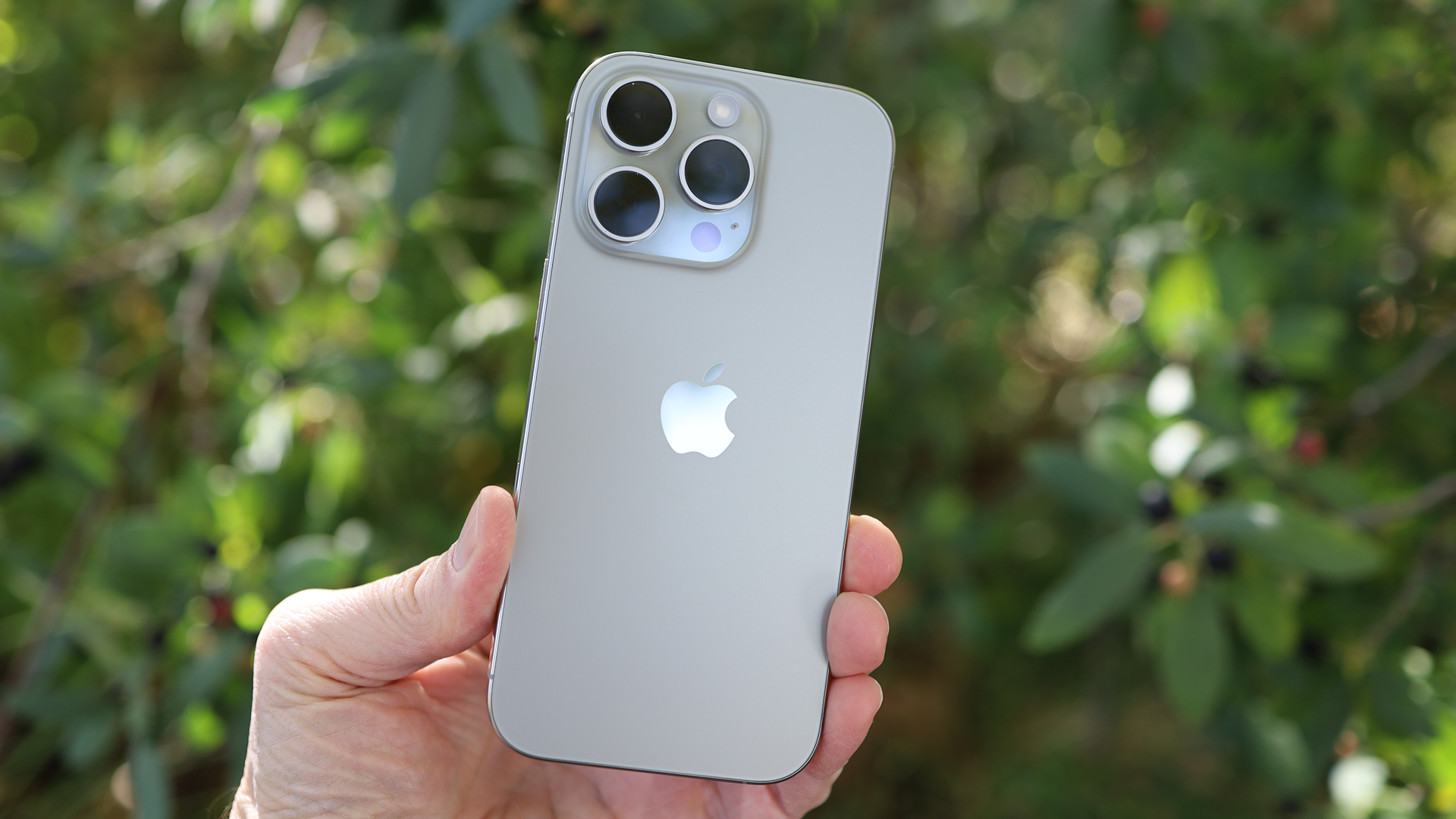
Picture from cdn.mos.cms.futurecdn.net
Rank 528The iPhone 17 Pro probably won’t land until September 2025, but this being a high-profile handset we’re already hearing leaks and rumors about it – along with the rest of the iPhone 17 series.The Pro will likely slot in just below the iPhone 17 Pro Max, and just above the iPhone 17 and perhaps the rumored iPhone 17 Air or iPhone 17 Slim.And while we don’t know loads about it yet, early rumors suggest the iPhone 17 Pro will have a new button, new cameras, and a new chipset, making this a potentially major and exciting upgrade. Below, you’ll find everything we’ve heard about the iPhone 17 Pro so far.
Latest newsThe iPhone 17 Pro might have just 3.5x optical zoom.View Deal
Cut to the chase
What is it? The next smaller Pro iPhoneWhen is it out? Probably September 2025How much will it cost? Likely upwards of $999 / £999 / AU$1,849
Expect it in September
The iPhone 16 Pro (Image credit: Future / Lance Ulanoff)
Likely to land in September of 2025Will probably cost at least $999 / £999 / AU$1,849
We haven’t heard many iPhone 17 Pro release date leaks yet, but based on Apple’s usual patterns we can say that it will probably be announced in the first or second week of September, and indeed the one leak we have heard points to a September launch for the iPhone 17 Pro.More specifically, it will probably be announced on the Monday, Tuesday, or Wednesday of the first or second week of September. Apple more often goes for the second week of September, leaving the most likely announcement dates as September 8, September 9, or September 10.Pre-orders then typically open on the Friday of the announcement week, which would mean September 12, and the iPhone 17 Pro will most likely ship the following Friday, which would be September 19.But it’s possible the various stages of the launch will happen a week earlier, or that Apple will break with its usual patterns.There aren’t yet any iPhone 17 Pro price leaks either, but the iPhone 16 Pro starts at $999 / £999 / AU$1,849, so you can expect to pay at least that much for the next model.
Can you trust these rumors?
So far there aren't any release date or price leaks, but based on past form we're almost certain that the iPhone 17 Pro will be announced in September.
A new button and a new color
The iPhone 16 Pro (Image credit: Future / Lance Ulanoff)
Might include a new button and a new camera designExpect the same screen size but possibly upgrades to the techCould have an aluminum frame
The biggest iPhone 17 Pro design leak we’ve heard so far is that the volume buttons and the Action button might all be replaced by a single new key that can do the job of all those things. Exactly how it would do all those things is uncertain, but it may well have a similar design to the Camera Control button, meaning it can register different strength presses as well as swipes, and respond in different ways to each.It's worth noting that Apple has previously made iPhone prototypes with unified volume buttons, including an iPhone 14 Pro prototype. The buttons here were solid-state rather than mechanical, and it's not clear whether the iPhone 17 Pro's implementation would be mechanical or not, if it even happens, but it could look something like this anyway.The iPhone 17 Pro will probably also be available in at least one new shade, with one leak suggesting Apple is considering using one of the three colors pictured below. From left to right these are Dark Green Titanium, Teal Titanium, and Green Titanium, and the source says Teal Titanium is the most likely to get used.
(Image credit: Majin Bu)
We’ve also heard that the iPhone 17 Pro might use a “more complex” aluminum design, rather than the titanium of its predecessor.Another leak has since shed more light on this aluminum design, saying that the iPhone 17 Pro will have an aluminum frame and that the top half of the back will also be aluminum, with the bottom half remaining glass so wireless charging will work. The report adds that it will also have a larger rectangular camera bump than the iPhone 16 Pro.A leaked image supposedly showing an iPhone 17 series frame lines up with this leak, and points to a Pixel 9-like camera design. You can see this below.
(Image credit: @Jukanlosreve)
However, we've elsewhere heard a counter to this, with another source saying the iPhone 17 Pro will use titanium, not aluminum.We've also heard the possibility of a different but still new iPhone 17 Pro camera design, as you can see in the image below. But this comes from a source with a mixed track record, so we're not convinced.
(Image credit: Front Page Tech / @asherdipps)
This iPhone 17 Pro Max render got given a redo by its creator that paints the odd design in a new light. But it doesn't tell us any more about why Apple would go for such a design; Cupertino tends not to mix up iPhone design unless it facilitates a new feature or hardware.There's also a small chance the iPhone 17 Pro could have a smaller Dynamic Island by hiding Face ID components under the screen, but another source claims the Dynamic Island won't be changing.One smaller design change we might see either way is the presence of curvier sides than the iPhone 16 Pro has, though so far only one source has mentioned this.And while we don't yet know how thick the iPhone 17 Pro will be, it certainly looks a lot thicker than the iPhone 17 Air in a leaked image.As for the screen, the iPhone 17 Pro might have a 6.3-inch display, just like the iPhone 16 Pro, but it could be more anti-reflective than the current display, as well as being more scratch resistant.We've also heard that the iPhone 17 Pro's screen could use a new technology that makes it more power efficient, durable, and overall better performing.
Can you trust these rumors?
We fully expect the iPhone 17 Pro to have a 6.3-inch screen, since Apple only recently upped the display size with the iPhone 16 Pro. The other design and display leaks so far are worth taking with a pinch of salt though, as not many sources have weighed in.
Two upgraded cameras
The iPhone 16 Pro (Image credit: Future / Lance Ulanoff)
A 48MP telephoto upgrade is likelyIt could also have a new 24MP front-facing cameraThe main sensor could be smaller
The main camera upgrade coming to the iPhone 17 Pro could be a 48MP telephoto camera, up from 12MP on the iPhone 16 Pro. This 48MP telephoto camera has been mentioned in several iPhone 17 Pro camera leaks, including from reputable iPhone leakers, so this may well happen.Most leaks suggest it will still offer the same level of zoom – namely 5x optical zoom, but one source differs, saying that the iPhone 17 Pro will instead offer 3.5x zoom, but will still be capable of 'lossless' 5x and even 7x by cropping into the image.The other significant camera upgrade we could see is a 24MP front-facing camera, up from 12MP on the current model.As for the main and ultra-wide cameras, leaks so far suggest they’ll stick at 48MP like on the current model. However, one source suggests that oddly the main sensor could be smaller on the iPhone 17 Pro, which might make it a downgrade.We've also heard that the iPhone 17 Pro might be capable of 8K video recording, which would be up from the 4K of current Pro models.And while less likely there’s also talk that the iPhone 17 Pro could have a mechanical aperture, meaning you’d be able to change the aperture and therefore also the depth of field.
Can you trust these rumors?
So many sources have talked about a 48MP telephoto camera that this upgrade seems likely. We haven't heard as much about the other cameras though, including the rumored 24MP selfie snapper upgrade, so we're less sure of those specs. We also wouldn't count on the phone having a mechanical aperture, as that seems a bit niche for how much work it might involve.
The most powerful iPhone chipset yet
The iPhone 16 Pro (Image credit: Future / Lance Ulanoff)
A top-end A19 Pro chipset8GB of RAM again
One thing we can be very confident about is that the iPhone 17 Pro will have a new chipset, one that will most likely be called the A19 Pro.Not only is an A19 Pro chipset an obvious upgrade, but it has also been mentioned by multiple sources.Beyond that, there’s a chance that the iPhone 17 Pro will get 12GB of RAM, which is something we've heard more than once, and would be an increase on the 8GB in the iPhone 16 Pro. However most current leaks suggest that only the iPhone 17 Pro Max will get this upgrade.The iPhone 17 Pro might however get a vapor chamber, which could help it avoid overheating and could also boost performance.And as for the battery, Apple is reportedly considering using a thinner and lighter motherboard, which could free up additional space for a larger battery than in the current model. We've also heard that the iPhone 17 Pro could offer reverse wireless charging.
Can you trust these rumors?
One of the few things we're almost certain of is that the iPhone 17 Pro will have a new chipset, since that's a standard yearly upgrade for Apple's phones. We hope it will also get a RAM upgrade, but so far it looks more likely to stick at 8GB.
You might also like
Best iPhone: which Apple smartphone reigns supreme?iPhone 16 Pro review: pocket-sized brilliance and no concessionsiPhone 17 Pro Max: latest news, rumors, and everything we’ve heard so far
-
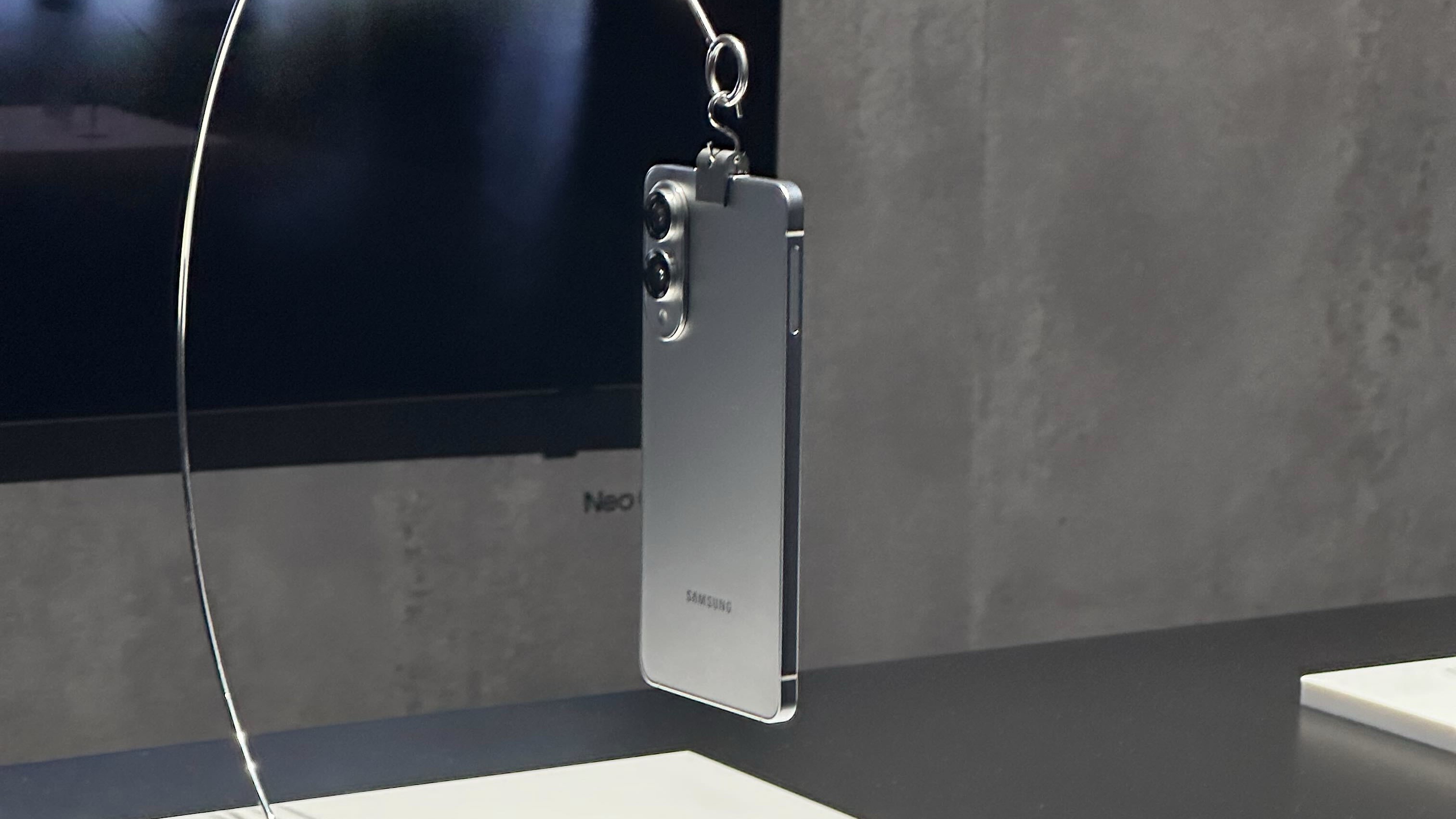
Picture from cdn.mos.cms.futurecdn.net
Rank 529The Galaxy S25 Edge has apparently been delayed due to technical issuesIt might now launch in May or June, in line with other recent claimsBut there's seemingly the possibility that it could be canceled entirely
Just yesterday, we heard that the Samsung Galaxy S25 Edge has been postponed from a planned launch in mid-April to sometime in May or June, and while sources at the time suggested this was not due to any problems with the phone itself, we’re now hearing that Samsung might be facing technical issues after all.In a report for WinFuture, reputable leaker Roland Quandt claims that “sources close to Samsung” have confirmed that the delay is due to “technical reasons” and that further testing of the phone is necessary.They didn’t specify what these technical issues might be, but Quandt seems under the impression that they could be significant, stating that it is “questionable whether Samsung will bring the S25 Edge to market at all.”
(Image credit: Lance Ulanoff / Future)
Its prospects aren't promising
Quandt sounded similarly bleak about the phone's prospects across a couple of Bluesky posts, saying in one that they “wonder if Sammy might even decide to cancel it overall” and in another that “the official pics I posted earlier could well be the only ones we'll ever see.”It would seem surprising for Samsung to cancel the Galaxy S25 Edge at the last minute, especially since the company has already teased the device, but this certainly doesn’t sound promising for the Edge’s prospects.With the phone still potentially landing within the next few months, we’ll probably hear more soon – and if we don’t, that in itself could be a good sign that the Samsung Galaxy S25 Edge has been canceled.
You might also like
Best Samsung phones: top Galaxy handsets rankedAll three rumored Samsung Galaxy S25 Edge colors shown off in ‘official’ imagesSamsung Galaxy Z Flip 7: latest news, rumors, and everything we’ve heard so far
-
Picture from cdn.mos.cms.futurecdn.net
Rank 530The iPhone 16 line has only recently landed at the time of writing, and yet there are already numerous iPhone 17 claimed leaks – some of which emerged even before the launch of Apple’s latest phones.As such – even though we’re not expecting the iPhone 17 and its siblings to launch before September 2025 – we already have some idea of what to expect from these phones. That includes camera upgrades, yet another new button, better screens, and even an entire new model.Below then, you’ll find full details of all the credible leaks and rumors we’ve heard so far, and we’ll be updating this article whenever we hear anything new.
Latest newsThe iPhone 17 Pro and Pro Max could have 3.5x optical zoom instead of 5x.
Cut to the chase
What is it? The next flagship iPhoneWhen is it out? Probably September 2025How much will it cost? Likely upwards of $799 / £799 / AU$1,399
A predictable release date
The iPhone 16 (Image credit: Future)
Likely to be announced in the first half of SeptemberCould start at upwards of $799 / £799 / AU$1,399
There aren’t many iPhone 17 release date rumors yet, but we don’t really need any, as Apple tends to follow a highly predictable pattern.As such, based on past form we predict that the iPhone 17 will be announced in the first half of September 2025. Typically Apple announces the device on a Tuesday or Wednesday, but the company broke with that pattern for the iPhone 16 and used a Monday, so we aren’t totally confident of the exact day.That said, Apple more often uses the second week of the month, so it could be announced sometime between Monday, September 8, and Friday, September 12, with September 8, 9, or 10 being most likely based on the weekdays Apple usually goes with.In any case, the phones will likely then go up for pre-order on the Friday of their announcement week (meaning probably Friday September 12 or failing that September 5 if our guesses are right), and then ship on the following Friday, which would probably be September 19 but could be September 12. While those are all just predictions for now, one source has unsurprisingly pointed to a September launch for the iPhone 17 series.As for the price, the only leaks there so far are for a new model possibly dubbed the iPhone 17 Slim or iPhone 17 Air (more on which below), but a report suggests this slimmer iPhone 17 model could have a starting price of $1,299 (about £1,000 / AU$1,950).We would however take that with a pinch of salt, as that would be a higher price than the current top iPhone, and some other leaks suggest this would be positioned more in the middle of the pack.Indeed, more recently we've heard that the iPhone 17 Slim could cost less than the iPhone 17 Pro, with the latest leak pointing to a starting price of $899 for the iPhone 17 Air, which would see it match the iPhone 16 Plus.In any case, we can look at previous pricing for possible starting prices of the other models. The iPhone 16 then starts at $799 / £799 / AU$1,399, the iPhone 16 Plus starts at $899 / £899 / AU$1,599, the iPhone 16 Pro starts at $999 / £999 / AU$1,799, and the iPhone 16 Pro Max starts at $1,199 / £1,199 / AU$2,149, so successors to these models are likely to cost at least this much.
Can you trust these rumors?
The claim that the iPhone 17 Air could have the same price as the iPhone 16 Plus is believable, and the release date for all these phones will very likely be in September.
A new model
We might not get a successor to the iPhone 16 Plus (Image credit: Future)
An iPhone 17 Air rather than a Plus modelAlso expect an iPhone 17, an iPhone 17 Pro, and an iPhone 17 Pro Max
You won’t be surprised to hear that we’re expecting an iPhone 17, an iPhone 17 Pro, and an iPhone 17 Pro Max, but what about the iPhone 17 Plus? Well, while that’s a possibility, several leaks have suggested that there might be a slimmer and more expensive iPhone 17 Air or iPhone 17 Slim instead.However, a reputable analyst predicts that the iPhone 17 Air won't be any more popular than the company's Plus and mini models.There’s also an outside chance that we’ll see an iPhone 17 Ultra, either instead of or as well as the iPhone 17 Pro Max. This would be an ultra-premium model that would sit at the top of the line. But that’s seeming less likely, as it’s not something that’s been leaked much recently, though claims of an Ultra model still occasionally emerge.Claims of an iPhone 17 Air though have arrived with more frequency, and from a number of reputable sources, so there’s every chance we could see a super-slim iPhone in 2025.In fact, the latest leaks point to the iPhone 17 Air measuring even thinner than the competition, namely the recently-announced Samsung Galaxy S25 Edge, at a possible thickness of just 5.44mm. That's even thinner than an unfolded Samsung Galaxy Z Fold 7.What's more, the iPhone 17 Air is tipped to get Apple's new C1 modem, revealed with the iPhone 16e, unlike the base model iPhone 17.
Can you trust these rumors?
Numerous reputable sources have pointed to an iPhone 17 Air or iPhone 17 Slim, so we'd think this is likely to make an appearance, though what it will actually be called is less clear, and we wouldn't count on seeing an iPhone 17 Ultra.
A new button
The iPhone 16 Pro (Image credit: Future / Lance Ulanoff)
A 120Hz screen for all four modelsA new button in place of the Action and volume buttonsA new display technology for the Pro models
One of the more intriguing iPhone 17 design leaks we've heard is that the iPhone 17 Pro and possibly other models could have another new button – this time a single button that would replace the Action button and both volume keys.Details of this possible button are limited, but it’s easy to imagine it could work like the Camera Control key, allowing you to swipe to change the volume, and press it to launch an app or feature of your choice. Perhaps it would even accept both light and strong presses to launch different things.Apple has actually experimented with unified solid-state volume buttons in the past, including on an iPhone 14 Pro prototype, so it's possible the idea is being resurrected for the iPhone 17 series.And in a less likely leak, we’ve heard that Apple could equip some or all iPhone 17 models with under-display Face ID.One other source has leaked three possible iPhone 17 Pro colors, namely Dark Green Titanium, Teal Titanium, and Green Titanium. Apparently only one of these will be used if any, and of these it's the Teal Titanium they suspect is most likely to be used. That's the middle shade in the leaked image below. That said, we suspect all three of these are brighter than Apple would opt for.
(Image credit: Majin Bu)
In another leak, we've heard that all four iPhone 17 models could have an aluminum frame, which would be a change for the Pro models, as the iPhone 16 Pro and Pro Max use more premium titanium.So that seems an odd shift, and the report adds that in the case of the iPhone 17 Pro and Pro Max the top half of the back will also be aluminum, with the bottom half sticking as glass, and the camera bump being larger than on current models.However, another leak has since refuted this, saying the iPhone 17 Pro and Pro Max will stick with titanium frames.Since then, we've heard that the iPhone 17 series could use the frame pictured below, which could make for a Pixel 9-like design, and somewhat lines up with the leak above mentioning an aluminum top half and a larger camera bump.
(Image credit: @Jukanlosreve)
Another source has similarly claimed that the iPhone 17 Pro (and probably the other models) will have the design shown below.
(Image credit: Front Page Tech / @asherdipps)
This source has also shared the possible design of the iPhone 17 Air, as you can see below.It has a very slim build but a quite large camera block considering there's just one lens on the back. So we'd take it with a pinch of salt, though it does line up with another iPhone 17 Air design leak.The same source has also claimed that the standard iPhone 17 will have the same camera design as the iPhone 16, so that model might not get this new camera bar.
Image 1 of 2(Image credit: Front Page Tech / @Zellzoi)Image 2 of 2(Image credit: Front Page Tech / @Zellzoi)
Other leakers have since backed up these claims, with multiple sets of iPhone 17 dummy units being leaked, showing similar designs.Some smaller design changes could be planned too, with one source suggesting that some or all iPhone 17 models will have curvier sides than their predecessors.We’ve also elsewhere heard that the iPhone 17 Pro Max could have a narrower Dynamic Island than the current model, and that conflicting with one of the leaks above it will have a titanium frame, while the other models will apparently have a “more complex” aluminum shell, which may be a reference the the half metal, half glass rear leaked above. Multiple sources have now pointed to a smaller Dynamic Island, though one source says the Dynamic Island will stay the same.One of these sources also claimed that the iPhone 17 will have a 6.1-inch screen, the iPhone 17 Air a 6.6-inch one, the iPhone 17 Pro will have a 6.3-inch display, and the iPhone 17 Pro Max will have a 6.9-inch one. So that’s the same sizes as the iPhone 16 line, albeit the rumored new Air model could have a slightly smaller screen than the Plus model it might replace.There’s some disagreement on the iPhone 17 Air’s screen size though, with leaker Ross Young claiming it will be slightly smaller at 6.55 inches, while @UniverseIce says to expect a 6.65-inch screen, and another source points to a 6.7-inch 2796 x 1290 one.Also on the subject of the iPhone 17 Air, one report suggests it won't be as slim as Apple hoped, with the company originally aiming for around a 6mm thickness but apparently failing to achieve that, as it needs more space for the battery.That said, we've elsewhere heard that the iPhone 17 Air will be just 5.44mm thick, while another leak similarly says the iPhone 17 Air will in fact be 5mm to 6mm thick, but that thanks to this it won't have space for a SIM card slot (so it will be eSIM only).This report adds that the iPhone 17 Air will also only have one earpiece speaker, rather than two as is the case on other iPhones, and that it will have a “large, centered camera bump” housing just one lens.We've also now seen an image showing how slim the iPhone 17 Air might be in comparison to the iPhone 17 Pro, and it certainly looks very thin there.We've also heard that all four iPhone 17 models could have a 120Hz refresh rate and an always-on display. In fact, several sources have echoed this, saying that the base iPhone 17 will join its Pro siblings in having a 120Hz refresh rate and and always-on screen. We've heard this as recently as March 2025, with reputable leaker Mark Gurman saying as much.So this wouldn’t be an upgrade for the Pro models, but it would be for the standard iPhone 17, and for the iPhone 17 Plus if we get such a phone.Speaking of all the iPhone 17 models, a rumors has them all tipped to use Samsung's M14 OLED display, which features on the iPhone 16 Pro and 16 Pro Max. This would mark the first time the flagship iPhone lineup would feature 120Hz displays across the board, rather than only on the Pro models, a much requested feature. The current-gen iPhone 16 and iPhone 16 Plus are both limited to 60Hz.However, the Pro models could still get a screen upgrade, with one source claiming that their displays will use a new technology that "improves battery efficiency, maximizes display durability, and enhances overall performance compared to existing display technologies.”Finally, we’ve heard that the iPhone 17 line’s screens might use a type of glass that’s tougher to scratch and cuts down on reflections.
Can you trust these rumors?
Apple bringing 120Hz screens to all four models is long overdue, so we certainly hope that's true, and it has been tipped enough that for now we'd say it's likely.The talk of a new button is something we're less sure about, just because only one source has mentioned it so far, and they have a mixed track record.We're also unsure about claims that all four models will have an aluminum frame, as that would seem like a downgrade for the Pro units. And the rumored changes to the camera design also seem questionable, but enough sources have mentioned this that it's certainly possible.
More megapixels
The iPhone 16 Pro Max (Image credit: Future / Lance Ulanoff)
A new 48MP telephoto camera for the Pro modelsNew 24MP selfie cameras for all models
The iPhone 17 line could include several significant camera upgrades, including a new 24MP front-facing camera for every iPhone 17 model, up from 12MP on the current phones. It’s a claim this source (Jeff Pu) has made multiple times, most recently in March of 2025.The same source also points to a 48MP telephoto camera for the iPhone 17 Pro and Pro Max, up from 12MP currently. We’ve also heard analyst Ming-Chi Kuo say similar, though they weren’t sure whether both Pro models would get this, or if only the iPhone 17 Pro Max would get a 48MP telephoto camera.And leaker @UniverseIce has also said that the Pro models will have a trio of 48MP cameras, meaning an upgrade for the telephoto but not – at least in terms of megapixels – for the main or ultra-wide cameras. Mark Gurman (who has a great track record for Apple information) has also made this 48MP telephoto camera claim.We've heard mention of a trio of 48MP cameras from another source too, but they also claim that oddly the main camera on the iPhone 17 Pro and Pro Max will have a smaller sensor than on the 16 Pro series, which sounds like a downgrade.And one source has claimed that as well as a new 48MP sensor, the the iPhone 17 Pro and Pro Max will offer 3.5x optical zoom, rather than the 5x of the current models. However, they would reportedly still offer lossless zoom at 5x and 7x by cropping the image.We've also heard that the iPhone 17 Pro models could offer 8K video recording.Elsewhere, another leak says the standard iPhone 17 and iPhone 17 Air won't have a 5x telephoto camera. This isn't really surprising but it is disappointing. In fact, the iPhone 17 Air might just have one rear camera, with another source claiming the iPhone 17 Air will have a 48MP main camera and a 12MP front-facing one.Finally, we’ve heard that Apple might be planning a camera with a mechanical aperture for at least one phone in the iPhone 17 series. This would allow you to adjust the size of the aperture, and therefore the depth of field.
Can you trust these rumors?
The front-facing and telephoto cameras seem obvious upgrade choices in the iPhone 17 line, as their megapixel counts are noticeably lower than some of the other cameras. So there's a good chance those leaks will prove accurate.
A boost in power
The iPhone 16 Pro Max (Image credit: Future / Lance Ulanoff)
A powerful new A19 Pro chipsetUp to 12GB of RAM
One leak suggests that – unsurprisingly – the iPhone 17 Pro and iPhone 17 Pro Max will have a new A19 Pro chipset, and that the other models will have either an A18 or A19 chipset. The same source also says to expect 12GB of RAM in the Pro models, up from 8GB currently, but that the standard iPhone 17 and the iPhone 17 Slim will only have 8GB. They've now made this claim multiple times, so they seem confident of it.Another source has echoed this, saying to expect an A19 Pro chipset and 12GB of RAM in the iPhone 17 Pro and iPhone 17 Pro Max. This chipset will reportedly be built on a new 3-nanometer manufacturing process, which could mean a big jump in performance.That said, analyst Ming-Chi Kuo claims that only the iPhone 17 Pro Max will get 12GB of RAM, with the others stuck at 8GB, and that the Pro Max will also have an upgraded cooling system, and exclusively have “enhanced on-device AI capabilities.”Kuo also claims that the iPhone 17 line could use a lighter and thinner motherboard, which would leave room for other components or a larger battery. And speaking of the battery, the iPhone 17 Air might have a high-density cell, giving it comparable life to current iPhones. We've also heard that the iPhone 17 Air might support MagSafe.There’s also an outside chance that some or all iPhone 17 models could include under-display Touch ID, giving you a fingerprint sensor as well as Face ID, but we doubt that.Finally, the iPhone 17 Air might use Apple's in-house 5G modem, but this reportedly doesn't perform as well as the Qualcomm modems the company currently uses - and we've heard that the base model iPhone 17 could even miss out on Apple's C1 modem.
Can you trust these rumors?
New chipsets are sure to make an appearance, and we'd expect at least some models would get boosted to 12GB of RAM, especially as this could help with AI.We'd be quite surprised though if Touch ID makes a return, even in under-display form.
You might also like
iPhone 16 Pro review: pocket-sized brilliance and no concessionsiPhone 16 Pro Max review: a beautiful, intelligent beastBest iPhone: which Apple smartphone reigns supreme?
-

Picture from cdn.mos.cms.futurecdn.net
Rank 531WordPress.com, Tumblr and WooCommerce owner Automattic is laying off 16%Automattic wants to become more agile and responsiveLong-term financial viability and profitability is also key
Automattic, the company behind WordPress.com, Tumblr and WooCommerce, has confirmed it will be laying off approximately 16% of its workforce.The news is estimated to impact around 280 of its nearly 1,750 employees (via TechCrunch), with CEO Matt Mullenweg confirming HR representatives would be reaching out to affected workers after his email landed in the inboxes of all “Automatticians.”The usual “financial and support benefits” were promised, with Mullenweg citing profitability as a key driver for the layoffs.
Automattic layoffs
“We have reached an important crossroads,” Mullenweg wrote, illustrating a scenario of continued growth and an equally high competitive market. “We must improve our productivity, profitability, and capacity to invest,” he added.The leader confirmed that the changes would help the company to become more agile and responsive, break down organizational silos, focus on product quality and ensure long-term financial viability.More broadly, the layoffs follow a precarious year for both Automattic and Mullenweg personally, after he became embroiled in a battle with WP Engine, likening the WordPress hosting provider to a cancer that takes more than it gives back to the project.Mullenweg added the redundancy process would be more complex with workers in 90 countries, but as a rule they could expect severance pay and other benefits, including the retention of company laptops and other job placement resources.“I’m confident we will come out of this situation in a better position… In the coming weeks, we’ll share more about our path forward and how we’ll work together to strengthen our company,” Mullenweg added.According to layoffs.fyi, Automattic became the 96th tech company to announce layoffs in 2025, but although layoffs continue to plague the tech sector, workers are seemingly a lot more safe than the height of the tech sector layoffs in 2023.
You might also like
Affected by the news? Check out the best job sites and best recruitment platformsExpressVPN ‘reduces workforce’ for the second time in two yearsEnhance your upskilling with the best online learning platforms
-
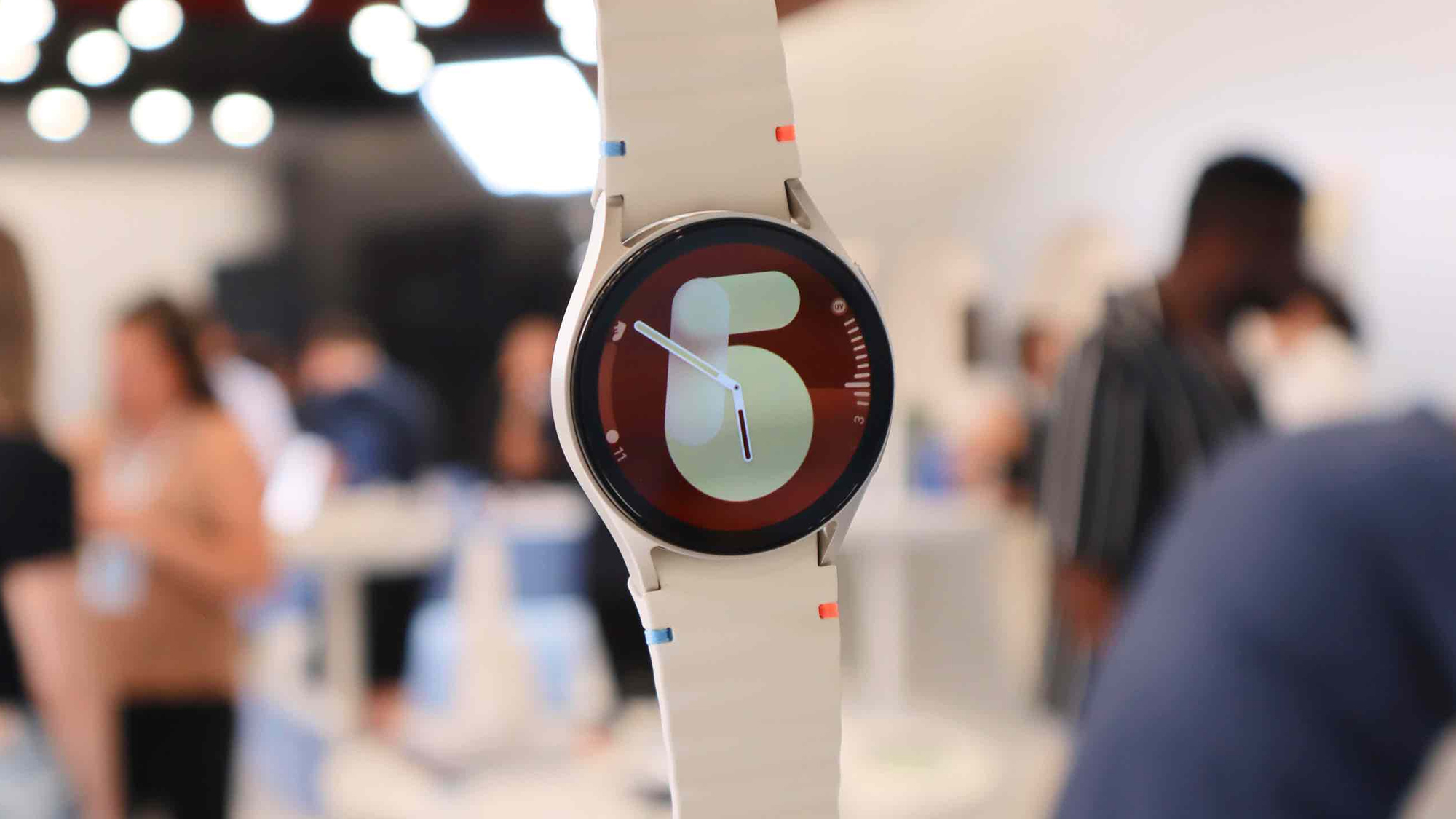
Picture from cdn.mos.cms.futurecdn.net
Rank 532Two new Samsung Galaxy Watch models are on the wayThe Galaxy Watch 8 and Galaxy Watch 8 Classic have surfaced, this time in regulatory filingsOne battery listed is slightly bigger than last year's model, but it's not a massive upgrade
Details of the upcoming Samsung Galaxy Watch 8 lineup have appeared for the second time in just a few days, this time with our first hint at the battery capacity for one of the models.In late March, firmware for the Samsung Galaxy Watch 8 and Galaxy Watch 8 Classic was spotted, pointing to four new Galaxy Watch models coming in 2025 – two Classic and two regular models, each with a Wi-Fi and an LTE (cellular connectivity) version.Now, filings have been uncovered in South Korea's SafetyKorea certification database, one of the myriad global regulatory bodies with which device manufacturers have to register upcoming new products, including the best Android smartwatches, before they can go on sale.As reported by Xpertpick, the batteries that will feature in the new Samsung Galaxy Watch 8 and 8 Classic appear to have surfaced in the database. The outlet matches these with the aforementioned firmware leak, indicating one battery each for the Galaxy Watch 8 and 8 Classic, respectively.This would reinforce the idea that two new models are on the way, but also gives us one small hint about battery life.
Galaxy Watch 8 battery leaks
As per the report, only one of these battery filings has a listed capacity, the Galaxy Watch 8. The battery is listed at 435mAh, a very minor bump over the Galaxy Watch 7. While that's technically bigger, it's nothing to write home about, and likely won't yield any tangible results in terms of battery-life performance.And if Samsung has added more power-hungry features to the new model, battery life might only match last year's model, and if so you can expect Samsung's rating of around 22 hours. This is the larger 44mm model, with no information out there about the smaller version yet.That definitely won't be enough to challenge the best Android watch for battery life right now, the OnePlus Watch 3, but it does tell us that both of these smartwatch models definitely exist, and will probably launch in early summer in the US and UK.The absence of the Galaxy Watch Ultra 2 in database listings could indicate that the company won't release an Ultra model this year, and may be alternating between the Classic and the Ultra on an annual basis.
You may also like
Samsung Galaxy Watch owners complain of strange forced reset issueWe've got another hint that the Samsung Galaxy Watch 8 is on the waySamsung confirms Galaxy Watches aren't tracking sleep properly – here's the fix if you're affected
-

Picture from cdn.mos.cms.futurecdn.net
Rank 533Some of the best Netflix movies and best Netflix shows of recent years have been watched by millions of people from different countries all around the world.Think Spain's Berlin, France's Lupin or Korea's Squid Game. And now many more Netflix viewers can experience shows from around the world in their native languages as the service becomes even more multi-lingual.Starting now, Netflix has upgraded its audio and subtitles options to offer you more than 30 different languages for on-screen translation or audio dubbing. Netflix says this is in response to the "thousands of language requests" it receives from customers every month.And that's not all. Netflix is coming for the Duolingo owl.
What's new in Netflix's multilingual update
Netflix knows that many of you use its foreign-language films to practice language learning, and it wants to point out the additional features it offers that can help you with that.For example, you now can customize subtitles to adjust their style and size for better legibility. Or you can watch a show with subtitles in one language and audio dubbing in another. And if you're on PC, you can use the 'Browse By Language' feature to find some suitably educational entertainment.This is an important and welcome upgrade for Netflix specifically, because it's been investing quite heavily in movies and shows from around the world. Squid Game is the most famous example, of course, but many of its other non-English language shows have been huge hits too: Money Heist, Lupin, La Palma, Who Killed Sara? and more.And of course it works in the other direction too, with the language features opening up English-language movies and shows to Netflix's huge global audience.
You may also like
Netflix is making non-English movies and shows better Netflix's most-watched movie isn't making people cryEvery new movie added to Netflix for your streaming pleasure
-

Picture from cdn.mos.cms.futurecdn.net
Rank 534Google Pixel 9a phones come with a new Battery health assistance toolIt will intentionally drop your phone’s maximum battery life every 200 charge cyclesIt turns off after 1,000 charges, and you can’t switch it off before then
The Google Pixel 9a has a new feature that will intentionally reduce your phone’s battery life over time – and there’s nothing you can do about it.While they’re never the most exciting features, battery health tools are some of the most useful you’ll find on modern smartphones. Following best practices can ensure your phone doesn’t become a massive battery sink after a year or two of use and can extend how long you can go before buying a replacement lithium-ion cell for your handset.And with its latest Google Pixel 9a release, Google looks to be taking battery health seriously with a new Battery health assistance feature that (at launch) will be exclusive to the new handset.But rather than giving you a choice on how your phone charges – such as manually setting your device to cut charging off at 80%, or only reaching a full charge just before when your phone expects you to unplug it – according to Google’s official help page Battery health assistance will automatically lower your battery’s maximum charge every 200 charge cycles.This gradual decline will continue every 200 cycles until your device completes 1,000 cycles.
(Image credit: Philip Berne / Future)
What’s more, while Google has confirmed to 9to5Google that the feature “will be voluntary for any customers using previously launched devices,” (i.e. the other best Google Pixel phones) its help page for the Pixel 9a reveals that for its latest device, “Battery health assistance settings on Pixel 9a aren’t customizable by the user.”Now, some of you might be worried that this will mean your Google Pixel 9a runs out of battery more quickly than if you could switch this feature off, but the silver lining here is that this feature will probably mean your phone battery lasts longer.Over time, most batteries degrade anyway, so 100% charge after several months won’t last as long as it did when the phone was brand new.The hope is that while you’re still losing some battery performance over time, Google’s controlled descent will mean your battery lasts longer per charge than it would if you didn’t use Battery Health assistance.Though we can understand that the lack of control over how you can manage your device is likely to rub many the wrong way, even if it is an upgrade. It also doesn’t do much to assuage concerns surrounding intentional performance throttling from smartphone manufacturers to encourage you to upgrade your smartphone more regularly.It’s looking like this feature is an upgrade in disguise, however, and if it’s a success we’ll likely see it appear on other Google smartphones going forward.
You might also like
Google Pixel 9a: five of the biggest upgradesThe Google Pixel 9a is already available to preorder in the UK - and you can save up to £500Older Pixels just got a big performance boost, while the Pixel 9a is lacking a key feature
-
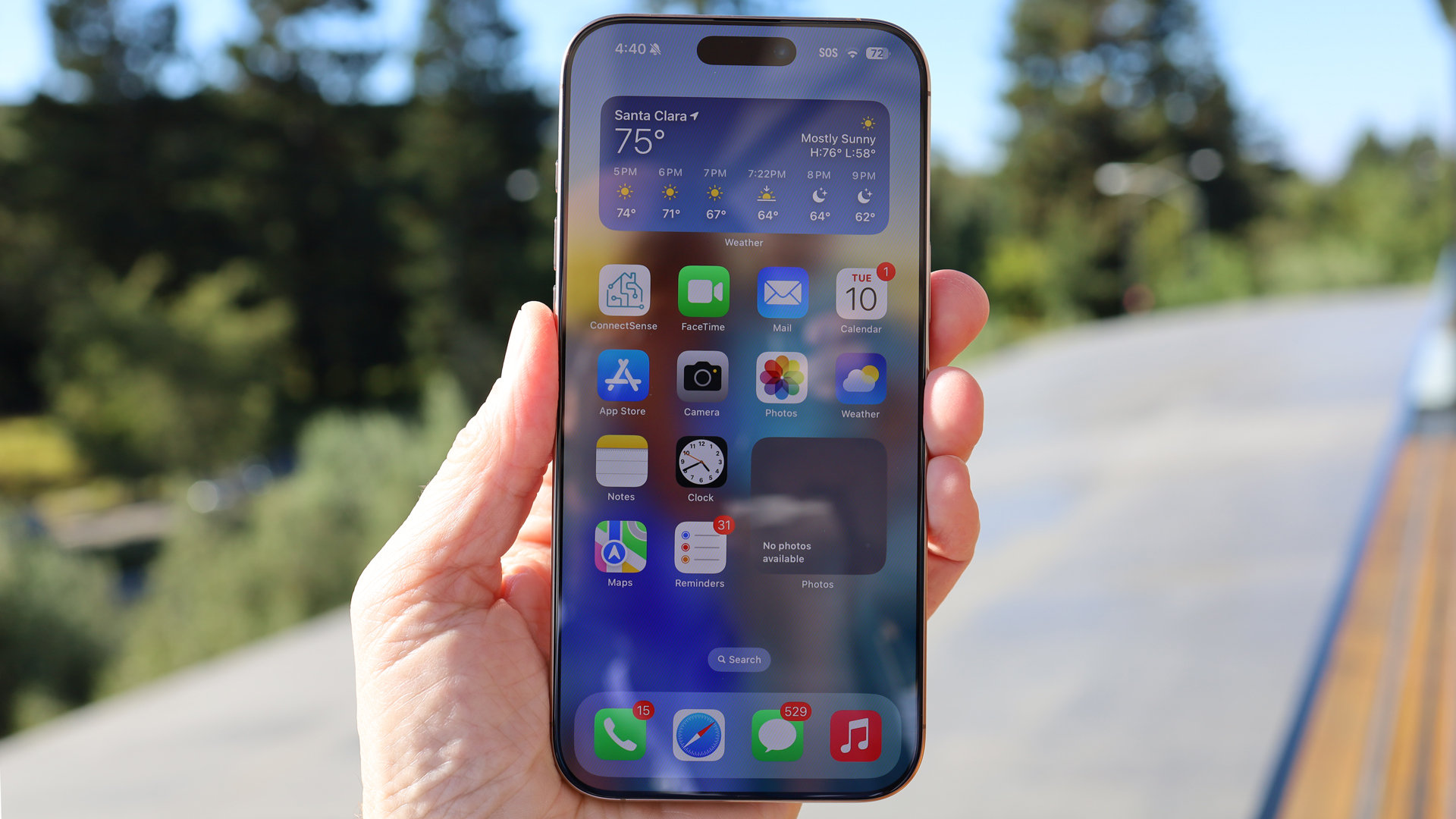
Picture from cdn.mos.cms.futurecdn.net
Rank 535The still rumored iPhone 17 Pro Max will almost certainly be one of the biggest and best phones of 2025, headlining the iPhone 17 line – which will also probably include the iPhone 17 itself, the iPhone 17 Pro, and a new iPhone 17 Air or iPhone 17 Slim model.That final phone may steal much of the attention, but it’s the iPhone 17 Pro Max that will probably have the most impressive specs.And while we’re not expecting it to land until September, leaks and rumors are already emerging – all of which you’ll find below.
Latest newsThe iPhone 17 Pro Max's telephoto camera might only offer 3.5x optical zoom.View Deal
Cut to the chase
What is it? The next top-end iPhoneWhen is it out? Probably September 2025How much will it cost? Likely upwards of $1,199 / £1,199 / AU$2,149
Look out for it in September
The iPhone 16 Pro Max (Image credit: Future / Lance Ulanoff)
Likely to launch in the first half of SeptemberWill probably cost at least $1,199 / £1,199 / AU$2,149
The iPhone 17 Pro Max – along with the rest of the iPhone 17 series – will probably be announced in September of 2025.One source has specifically pointed to a September launch for the iPhone 17 line, and Apple almost without exception launches its new phones in the first half of September, so we can be quite confident of that much.Prior to the iPhone 16 series Apple also usually announced the phones on a Tuesday or Wednesday, but with the iPhone 16 it went with a Monday instead, so we can’t be quite as confident of the exact day as in previous years.Still, the second week of September is the most likely based on past form, meaning likely Monday September 8, Tuesday September 9, or Wednesday September 10. The Thursday or Friday is also possible, but those aren’t days we usually see Apple go for.Either way, pre-orders for the iPhone 17 Pro Max will most likely start on the Friday of the announcement week, so our best guess for that is Friday, September 12 – though a week earlier on Friday, September 5 is also possible. And the phone will likely ship on the following Friday – meaning probably September 19 but possibly September 12.We haven’t heard anything about the iPhone 17 Pro Max price either and that’s a bit harder to predict, since we don’t know whether Apple will raise the price from the iPhone 16 Pro Max or not. For reference, the iPhone 16 Pro Max starts at $1,199 / £1,199 / AU$2,149, so it’s likely that the iPhone 17 Pro Max will cost at least that much.
Can you trust these rumors?
So far there aren't any price or release date leaks yet, so it's all just educated guesses, but we'd be surprised if this phone wasn't announced in September.
One button replacing three
The iPhone 16 Pro Max (Image credit: Future / Lance Ulanoff)
Could combine the volume and Action buttons into one keyMight have a new camera designLikely to once again have a 6.9-inch screen
So far we’ve heard of several possible design changes, including that the iPhone 17 Pro Max might gain a new button – or perhaps more accurately lose some buttons, as one report suggests it will have a single key that replaces the two volume buttons and the Action button.Details on this button are light, but if it emerges, we’d imagine it might sport a similar design to the Camera Control key, so you can swipe across it to change the volume, or press it to trigger a custom action.You can also get some idea of how it might look in an iPhone 14 Pro prototype, which includes a unified volume button (though this only combines two buttons into one, not three). According to various leaks, Apple has been working on versions of this idea for a long time, but it remains to be seen whether this sort of change will actually appear on the iPhone 17 Pro Max.Another big design leak suggests that the iPhone 17 Pro Max will have an aluminum frame rather than titanium, and that the top half of the back will also be aluminum (rather than glass), with the bottom half still being glass. The same source claims that the camera bump will be larger this time too.We've also seen an image of how this might look, thanks to a leaked iPhone 17 series frame, pictured below, which has a Pixel 9-like camera cut-out.
(Image credit: @Jukanlosreve)
On the other hand though another source has said the iPhone 17 Pro Max will stick with titanium, which seems more likely.And we've seen another possible new iPhone 17 Pro Max camera design, as you can see in the image of an iPhone 17 Pro below. You can see a similar design in some iPhone 17 Pro Max metal molds that have leaked.
(Image credit: Front Page Tech / @asherdipps)
We've also heard that at least some iPhone 17 models might have curvier edges than the iPhone 16 series, which could make them more comfortable to hold.Also on the design front, one source claims that the iPhone 17 Pro Max will be available in one of the three colors pictured below. These, from left to right, are apparently dubbed Dark Green Titanium, Teal Titanium, and Green Titanium. And apparently all three are being considered, but only one would be used if any, with the source speculating that Teal Titanium is the most likely.
(Image credit: Majin Bu)
We’ve also heard that Apple could hide the Face ID components under the screen in the iPhone 17 Pro Max, which might allow for a smaller Dynamic Island, and Apple now even has a patent for a technology that could enable this.That said, a smaller Dynamic Island could instead be achieved through using a new ‘metalens’ technology for the iPhone 17 Pro Max’s proximity sensor, which is a claim we've heard more than once. Then again, another source claims the Dynamic Island won't be shrunk after all.The source of the metalens claim also says that unsurprisingly the iPhone 17 Pro Max will have a titanium frame, just like the iPhone 16 Pro Max.The same source also says to once again expect a 6.9-inch screen, and we’ve elsewhere heard that the iPhone 17 Pro Max’s display might use a type of glass that’s less reflective and more resistant to scratches.Additionally, the iPhone 17 Pro Max's screen might use a new technology that makes it more power efficient and durable.
Can you trust these rumors?
So far only one source has mentioned a new button, so we'd take this with a pinch of salt, especially as the Action button is a recent addition, so it would be strange to remove it already.We're also slightly skeptical of the phone switching from titanium to aluminum, as that could be seen as a downgrade.Changes to the camera design are possible, but this would be a big switch for Apple so we'll reserve judgment until more leaks emerge.A smaller Dynamic Island is possible too, and has leaked multiple times, but it's more likely to be achieved through a new proximity sensor design than under-display Face ID.
A new telephoto camera
The iPhone 16 Pro Max (Image credit: Future / Lance Ulanoff)
Could have a new 48MP telephoto cameraThe front-facing camera might be boosted to 24MPThe main sensor might be downgraded
We’ve heard quite consistent tips about the iPhone 17 Pro Max’s cameras, with the most exciting claim being that the telephoto will have a new 48MP sensor, up from 12MP on the current model. We’ve heard this claim of a 48MP telephoto camera for the iPhone 17 Pro Max from multiple sources, including reputable leaker Mark Gurman, so this is very likely accurate.However, this snapper may offer just 3.5x optical zoom rather than the 5x optical zoom of its predecessor, according to one source, though with 5x and 7x 'lossless' zoom possible through cropping.This might also be the only rear camera that’s getting a significant upgrade – meaning 48MP main and ultra-wide cameras could make a return.The front-facing camera might also be improved though, with one of the same sources saying the iPhone 17 Pro Max will have a 24MP selfie camera, up from 12MP currently.We've also heard that the iPhone 17 Pro Max might be able to record video in up to 8K quality, up from 4K on the current model.And in more surprising news, one source has claimed that the iPhone 17 Pro Max could have a mechanical aperture, allowing you to adjust the aperture, changing the depth of field in the process.It might not all be upgrades though, as we've elsewhere heard that the main sensor on the iPhone 17 Pro Max could be smaller than on the iPhone 16 Pro Max.
Can you trust these rumors?
Numerous sources have mentioned a 48MP telephoto camera, so that much is very likely. The 24MP selfie camera hasn't been leaked as much, so we'd take that with a pinch of salt, but the claim comes from a credible source.As for a mechanical aperture, we're skeptical of this, as it sounds like a major yet niche upgrade, but it's always possible. We're also not currently convinced that Apple would reduce the main sensor size.
A powerful chipset and loads of RAM
The iPhone 16 Pro Max (Image credit: Future / Lance Ulanoff)
A powerful A19 Pro chipset12GB of RAM
The iPhone 17 Pro Max will almost certainly have an A19 Pro chipset – after all, the current model has an A18 Pro. Multiple sources have mentioned an A19 Pro chipset, and they’ve also said that the iPhone 17 Pro Max will have 12GB of RAM, up from 8GB in the current model.That could be a major boon to its AI capabilities, and we've heard this 12GB claim numerous times. Though there’s some debate over whether both iPhone 17 Pro models will get 12GB of RAM or whether this RAM upgrade will just be for the Pro Max.We've also heard that Apple could add a vapor chamber to the iPhone 17 Pro Max, helping it stay cool and perform better.We haven’t heard much about the battery yet, but reportedly the iPhone 17 Pro Max could have a thinner and lighter motherboard than the current model, which in turn might leave space for a larger battery, and we've also heard that it could offer reverse wireless charging.
Can you trust these rumors?
The iPhone 17 Pro Max will almost certainly have an A19 Pro chipset based on past form, and we'd say an increase to 12GB of RAM is very believable too, since it could help with AI.
You might also like
Best iPhone: which Apple smartphone reigns supreme?iPhone 16 Pro Max review: a beautiful, intelligent beastiPhone 17: latest news and rumors for every expected model
-
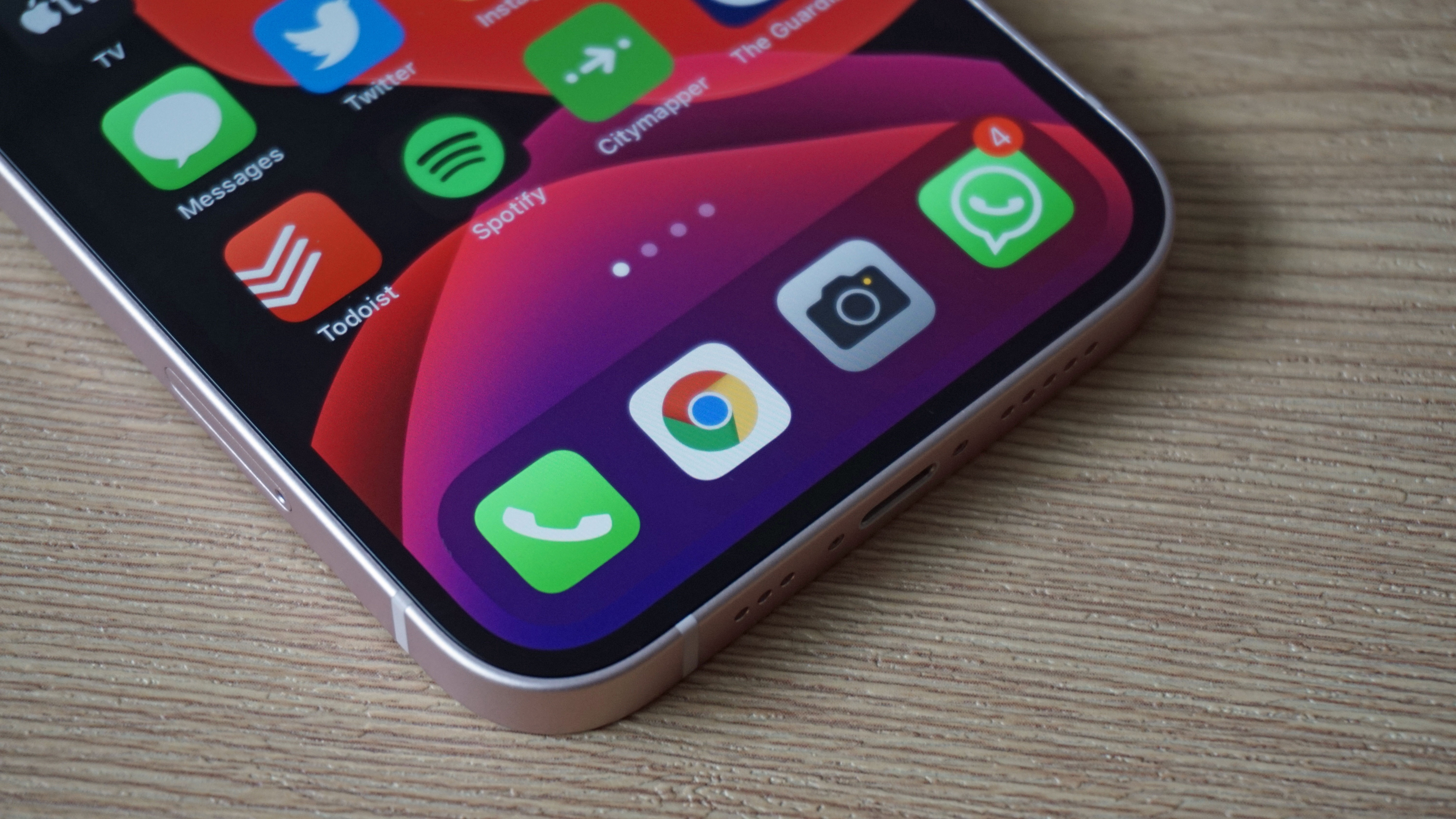
Picture from cdn.mos.cms.futurecdn.net
Rank 536Some iPhone users have seen random apps appear on their devicesMany apps were previously deleted but others are totally new to the usersThe bug might be caused by updating to iOS 18.4
Every now and then, a strange iOS bug comes along that brings back long-lost items, seemingly from the dead. We’ve seen this kind of behavior before with deleted photos, and now it looks like iOS 18.4 is mysteriously resurrecting old iPhone apps that some users removed many moons ago.As spotted by MacRumors, the issue has been documented by users posting on Reddit and Apple’s official support forums. There, people have been describing how their iPhones began automatically downloading apps after they were updated to iOS 18.4.Interestingly, while some users reported that the apps in question had once been on their devices but have since been deleted, other iPhone owners claimed that the apps were entirely new to them.For example, Reddit user EagleEyedTiger7 stated that their iPhone “randomly” downloaded the Last War game after updating to iOS 18.4. In response, user schulze1 said the same thing had happened to them and that “I’ve never had that app installed before.”
A strange situation
(Image credit: Shutterstock)
On first glance, it might appear that the issue relates to the Automatic Downloads setting in Apple’s App Store. This enables Apple devices to automatically download apps and games that have been installed on other Apple products you own, even if they have never been added to the device you are currently using.However, several users claimed that their iPhone is the only Apple device they own, meaning the apps could not have been downloaded in this way.We also do not have many details about whether the bug is only affecting people with certain iPhones, users who are located in specific regions, or people who have taken any other steps. It’s also unclear how widespread the issue is.For now, the main solution is simply to delete the unwanted apps from your device. Hopefully, Apple will soon roll out a fix that stops random apps from appearing on people’s iPhones, but for now we’ll just have to wait.
You might also like
iOS 18.4: 5 reasons to update now, including new Photos tools and Ambient MusicApple explains the strange iOS 17.5 bug that made photos reappearApple just finally patched a whole host of OS security issues on older devices, so update now
-
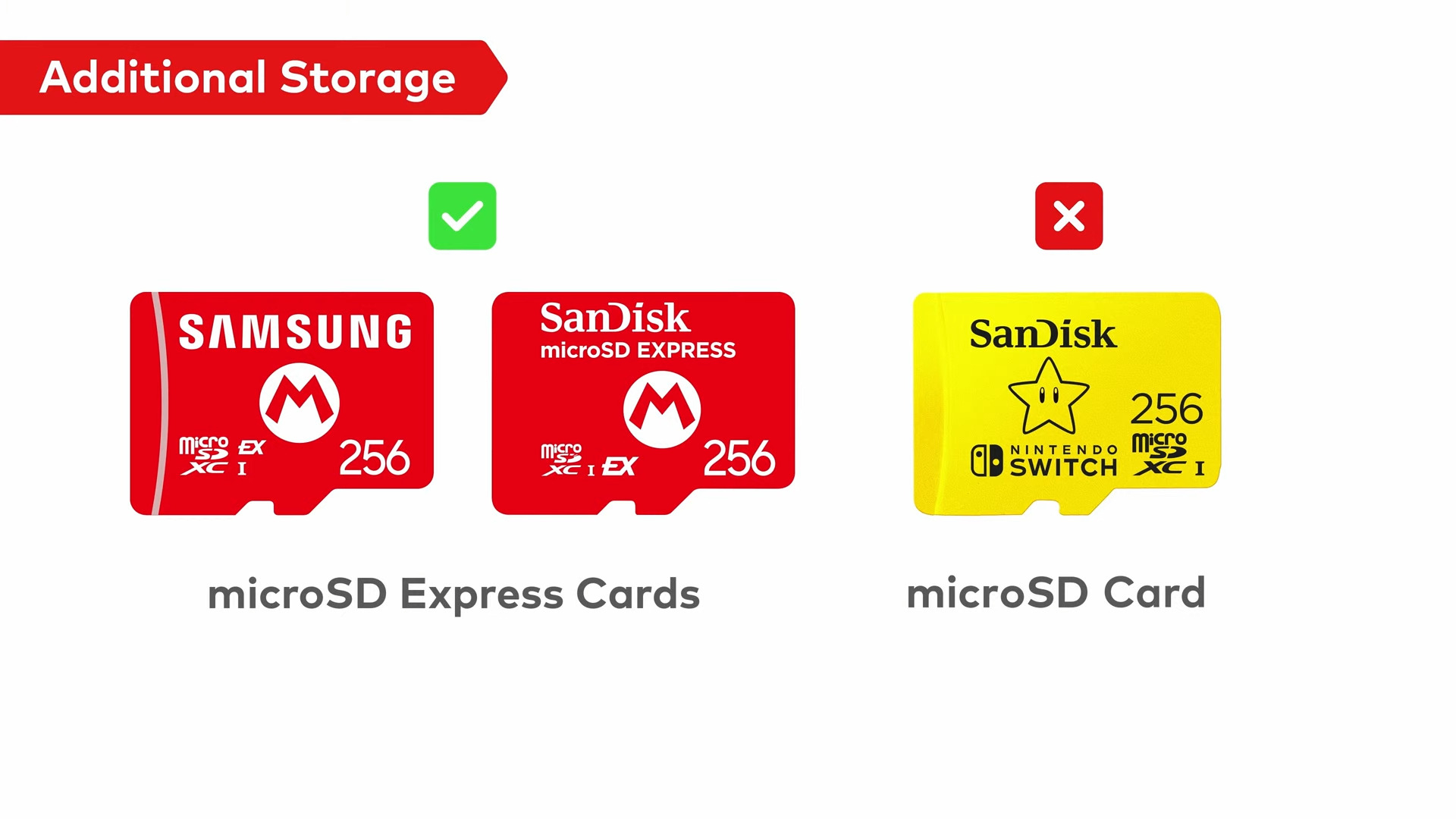
Picture from cdn.mos.cms.futurecdn.net
Rank 537The Nintendo Switch 2 features 256GB of internal storageThe console still supports expandable storage, but you'll need to use a microSD Express card to run gamesThese cards offer faster speeds but are more expensive
The Nintendo Switch 2 has a lot going for it – a more powerful CPU to enable even more impressive games, better audio from improved speakers, and yes, a larger screen at 7.9 inches. But can we give a round of applause to Nintendo for upping the internal storage to 256GB?That’s a big leap – eight times what the original Nintendo Switch offered – and it should mean that you’ll have a lot of room for games and apps. Of course, there is expandable storage. However, it’s not all roses in that regard … especially if you’ve invested in a lot of standard microSD cards for your current Switch and want to make the upgrade.Why? Well, the Nintendo Switch 2 still supports expandable storage, but it’s only going to work with microSD Express cards. That’s an important distinction, as non-standard microSD cards don’t carry the properties of ‘Express.’ These higher-end microSD cards, though, do offer faster speeds that are more on the level of SSDs (solid-state drives).
(Image credit: Nintendo)
That feature, alongside the improved performance, should make for a more fluid experience when reading or writing onto the microSD Express card. You will need a microSD Express card to use with the Switch 2 to save a game or open one. However, according to this support page, you can plug a standard microSD card in to view photos or screenshots.The improved speeds might weigh out the downsides aside from the cost though. A regular 128GB microSD card runs for about $20.99 (on Amazon for this SanDisk model), but a 128GB microSD Express card from SanDisk is $49.99 (currently $44.99 on Amazon). That’s quite a jump and generally the case here – microSD Express Cards are more expensive than microSD cards.So yes, upping the internal storage on the Switch 2 to 256GB is great, and keeping the option for expandable storage is good, but the microSD Express requirement might cost you a bit more.Of course, there’s always the chance that you might have been using a microSD Express card in your Switch Lite, Switch, or Switch OLED – it’s worth checking and as we get closer to preorders (April 8 from Nintendo and April 9 from other retailers) and launch (June 5, 2025), we’ll be writing about any major sales on this cards.
You might also like
Nintendo Switch 2 Direct live: The Duskbloods revealed, plus release date, price and a full recap of everything announced todayWe just got our first look at the eShop on the Nintendo Switch 2The new Nintendo Switch 2 Camera proves I was right to hope for a new age of Nintendo peripherals – but what comes next?
-
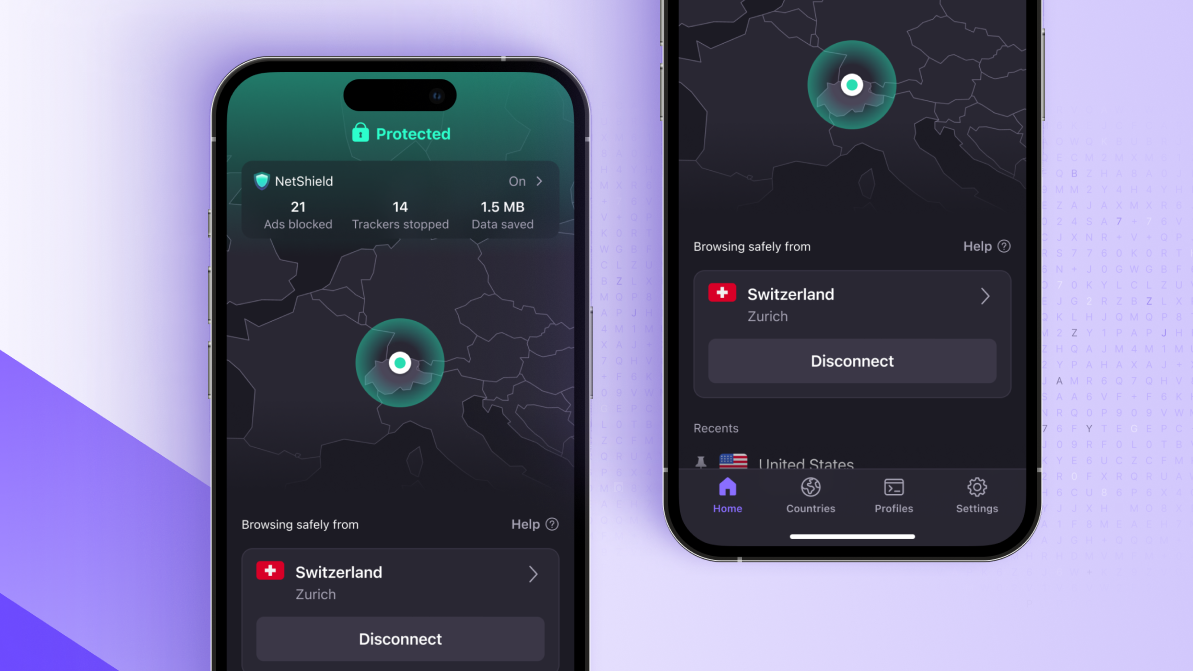
Picture from cdn.mos.cms.futurecdn.net
Rank 538Proton VPN released new updates and features for its Windows, iOS, and Android appsThe upgrade aims to make Proton VPN apps more intuitive, transparent, and customizable The new apps also provide a range of educational content to help users get the most from their VPN
Proton VPN unveiled a major upgrade that promises to make its apps more intuitive, transparent, and customizable.As of today, April 3, 2025, Proton VPN's Windows, iOS, and Android users will benefit from new updates and features. These include a sleek new interface, customizable home screen widgets for mobile, and a new enhanced Profile feature.The new apps also provide a range of educational content to help users get the most from one of the best VPN services on the market.
Proton VPN's new look
While increasingly more people have become familiar with the benefits of using a virtual private network (VPN) in their daily life – whether that's better streaming, privacy, or security – the underlying software and its features can still feel quite intimidating.As Proton VPN's General Manager, David Peterson explains, this may limit users' ability, especially those unfamiliar with the tech, to benefit from what a VPN has to offer. That's exactly where Proton VPN's revamp comes in."The new Proton VPN apps make it easier than ever before to protect users' privacy while enhancing transparency to explore new features effortlessly," said Peterson.After launching a new, more intuitive home screen interface on Android, the provider has decided to bring these improvements to its iOS and Windows VPN apps, too.The Windows app received a full redesign to match its Android VPN counterpart. A redesigned Settings menu makes it easier to scroll through all of Proton's advanced features, like split tunneling, a kill switch, and port forwarding. For the first time, you can also choose between a dark and a new light mode.
(Image credit: Proton)
An enhanced Profile tab is perhaps the most relevant new feature (see image above).This allows paid subscribers to create personalised connection profiles, picking their favorite location, city, or state, server, protocol, and settings depending on their needs.You may opt for the fastest server in the US to use Proton VPN to unlock US Netflix when abroad. Alternatively, you may choose a Secure Core server and Stealth protocol if you're worried about online surveillance and censorship.While the iOS app also comes with a Profile tab, the new release brings the latest, enhanced version to Windows and Android. The team is currently testing an early version on iOS, too, meaning that iPhone users won't need to wait too long to enjoy the same level of customization.Another exclusive feature for Windows and Android at the time of writing, Connect & Go, allows you to specify the website or app you want to launch when connecting to a specific profile.While the team didn't give TechRadar a timeline, Proton said the plan is to extend all these features across all platforms (iOS, macOS, and Linux).To know more about the new release, you can head to Proton VPN’s official website or visit the blog post with the official announcement.
You might also like
Proton joins forces with Vivaldi browser to help you break free from Big TechWe just reviewed Proton VPN – here are 5 ways it impressed usMullvad VPN promises to be even better at protecting you against AI surveillance
-

Picture from cdn.mos.cms.futurecdn.net
Rank 539Several reports claim a second Oracle data breach has occuredUser login credentials were apparently stolenOracle allegedly told some customers that the data is almost a decade old
Oracle has apparently suffered its second cyberattack in a month, but the company is downplaying its importance.A Bloomberg report citing two people familiar with the matter has claimed Oracle told some of its customers a threat actor compromised its IT infrastructure and stole client login credentials.At the same time, Reuters is reporting that an unidentified threat actor tried to sell the stolen data on the dark web, claiming to have stolen it from Oracle’s Austin, Texas premises.
Monitor your credit score with TransUnion starting at $29.95/monthTransUnion is a credit monitoring service that helps you stay on top of your financial health. With real-time alerts, credit score tracking, and identity theft protection, it ensures you never miss important changes. You'll benefit from a customizable online interface with clear insights into your credit profile. Businesses also benefit from TransUnion’s advanced risk assessment tools.Preferred partner (What does this mean?)View Deal
Old data
Bloomberg also reported that Oracle told some of its clients that the FBI was notified, and that CrowdStrike was brought in to investigate. Furthermore, the clients were notified that this is not the same incident that struck healthcare customers in March 2025. Finally, the attacker also tried to extort Oracle for the stolen data.Oracle has hinted that the data isn’t that relevant, however, claiming that the compromised system was not used for eight years. Therefore, the conclusion is that the data found there is outdated and poses little risk.However, there were Oracle customer login credentials from as recently as 2024.We would say that leaked login data is always a problem, regardless of if it’s ten years, or ten days old. Besides, many organizations never change their login credentials, or reuse the same passwords across a myriad of other services, in which case such a database could prove a gold mine for brute-force or credential stuffing attacks.At press time, Oracle has not yet addressed the media reports, but we have contacted the company for comment.
You might also like
We've rounded up the best password managersTake a look at our guide to the best authenticator appPalo Alto Networks gateways facing huge number of possible security attacks
-

Picture from techcrunch.com
Rank 540 -
Picture from o.aolcdn.com
Rank 541After years of lagging behind rivals when it comes to video capture (and then suddenly buying cinema camera manufacturer RED), Nikon is pushing new boundaries in that area. Its latest salvo is the $1,699 24-megapixel full-frame Z5 II, perhaps the cheapest mirrorless camera so far to support internal RAW video. It also offers improved autofocus with new AI powers, cleaner images and enhanced image stabilization.
The Z5 II is a wholesale remake of the original Z5 and that starts with video. While still limited to 4K 30 fps and cropped 4K 60 fps, it can now capture those formats internally using the company's 12-bit N-RAW format with N-log, along with 10-bit H.265 and 8-bit H.264. Interestingly, it will record in N-RAW to SDXC UHS-II cards, since the camera lacks high-speed CFexpress slots. That likely means you'll need to buy very fast (and expensive) cards and that the N-RAW video will be highly compressed. Still, it's a feature available on no other camera in this price range.
Nikon
Nikon is also promising much-improved autofocus bolstered by a new image-processing engine and tech borrowed from its high-end Z9 and Z8 models. The Z5 II can now lock onto subjects more quickly, particularly human eyes, faces and bodies, and works in lower light down to -10 EV, compared to -3 EV before. Meanwhile, the AI system can detect up to nine subject types ranging from animals (including a Bird Detection mode) to bicycles. When working in Auto-Area AF, these subjects can be detected, focused on, and tracked automatically.
Native ISOs have been boosted to 100-64000 (50-204,800 in expanded modes), up from a maximum 51,200 before. That should improve noise levels across the ISO ranges, the company said. However, resolution is still limited to 24 megapixels.
Nikon
In-body stabilization has been boosted to 7.5 stops with supported lenses, way up from five stops on the Z5. That's paired with electronic stabilization designed to keep handheld video steady.
The Z5 II's viewfinder still offers a decent 3.69-million dots of resolution, but brightness has been boosted to 3,000 nits with 13 levels of brightness control. And it now comes with a 1.7-million-dot vari-angle display that's a big improvement from the previous model's tilt-only screen. The body now has a deeper grip to improve handling and comes with a one-touch Picture Control button for previewing and switching between color profiles in real time, matching a recent trend started by Fujifilm's X100 VI.
Other features including dual SD UHS-II card slots, 3.5mm headphone and mic jacks, camera to cloud connectivity via Nikon's Imaging Cloud and a new weather-proof build "on par with the Z6 III," according to Nikon.
The Z5 II looks to be an impressive hybrid full-frame camera for the money and rivals Sony and Canon don't really have anything in the same price range that can match it. However, it also comes at a price $300 higher than the Z5 was at launch. Still, it could tempt filmmakers and others away from similarly priced crop sensor cameras from the likes of Fujifilm and Sony. The Z5 II is now on pre-order for $1,699 (body only) or $1,999 with a 24-50mm f/4-6.3 kit lens.
This article originally appeared on Engadget at https://www.engadget.com/cameras/nikons-z5-ii-is-the-cheapest-full-frame-camera-yet-with-internal-raw-video-113041486.html?src=rss
-

Picture from cdn.mos.cms.futurecdn.net
Rank 542A bug in iOS 18.4 stopped AirPods Max promised lossless update from workingApple has fixed the issue with firmware 7E101You'll need your iPhone, iPad or Mac and your charging cable
What do you call an Apple update that doesn't work? A Tim Cook-up! I made that joke up myself and I'm very proud of it, but it's time to get serious now: Apple's AirPods Max lossless audio update was about to launch, didn't work properly, was delayed, and is now working and ready for you to install it.The problem was with iOS 18.4, the newest version of iOS, which contained the necessary code to update your AirPods Max. Unfortunately that code didn't work properly, and the update wasn't downloading. Apple has fixed the problem and also provided helpful instructions on how to update your headphones.
"Update my AirPods! I said UPDATE MY AIRPODS!" (Image credit: Shutterstock / fizkes)
How to install the lossless audio update on your AirPods Max
Here are the instructions, directly from Apple.
Make sure that your iPhone, iPad, or Mac is updated to the latest version of iOS, iPadOS, or macOS, and that Bluetooth is onMake sure that your AirPods Max are connected via Bluetooth to your iPhone, iPad, or MacConnect your iPhone, iPad, or Mac to Wi-FiPlug the charging cable into the bottom-right earphone, then plug the other end of the cable into a USB charger or portKeep your AirPods Max in Bluetooth range of your iPhone, iPad, or Mac, and wait at least 30 minutes for the firmware to updateReconnect your AirPods Max to your iPhone, iPad, or MacCheck the firmware version again and make sure it lists “7E101"
I'm glad this update has been fixed, because it's a welcome one for owners of the USB-C AirPods Max: once installed, you'll be able to get lossless audio over USB-C to make your AirPods sound even better, and to finally be able to use them with airplane entertainment systems.We're going to test the feature to see if it sounds as good as it, er, sounds – at least, we will as soon as we've verified this firmware update.
You might also like
The best AirPods of all kinds for your listening pleasureOur in-depth review of the AirPods 4 with ANCThe best cheap AirPods sales and deals this month
-

Picture from cdn.mos.cms.futurecdn.net
Rank 543Intel has announced its Unison app will be discontinued at the end of JuneThis was an alternative to Windows 11’s Phone Link functionalityIt was better in some ways – notably for iOS users, and with the app being more streamlined – so it’s sad to see a viable alternative go
Intel’s take on tying your phone in with your Windows 11 PC – the Unison app – is being shuttered, with Team Blue announcing that it’ll be discontinued for most users at the end of June 2025.Windows Latest reports that Intel made the announcement in the Microsoft Store listing for app, stating that: “Intel Unison will soon be discontinued. The first step in its wind-down process is ending service for most platforms at the end of June 2025. Lenovo Aura platforms will retain service through 2025.”If you’re scratching your head and thinking "I’ve never heard of Intel Unison" well, you wouldn’t be alone there. In a nutshell, it’s Intel’s version of Windows 11’s built-in functionality known as the Phone Link app.Both Phone Link and Unison offer the ability to access iOS or Android smartphone functionality on the desktop of your Windows 11 PC. In the case of Intel Unison, the core abilities are covered, such as replying to texts, seeing notifications, making calls, and file transfer operations if you want to shift, say, a photo from your phone to the PC for image editing purposes.As Windows Latest notes, the key strength of Intel Unison is a better implementation on the iOS side (indeed, it supported Apple smartphones from the off, when Microsoft’s take on this formula didn’t for some time). It’s also a more streamlined app, and well enough liked by those who use it – the review ratings for Unison on the Microsoft Store are currently higher than for Microsoft’s own solution.At any rate, if you use Unison, you’ll have to ditch the app soon, so you might be looking at Phone Link in a couple of months’ time.Windows Latest has spoken to sources and claims that while officially June 30 is the day on which Unison will be discontinued, it may continue to work okay on some devices for a little time afterwards – or at least some parts of the app might. Before long, though, it’s going to be fully turned off, so you might as well start getting used to that idea now.
(Image credit: Intel)
Analysis: Disunification in progress
Intel Unison will have lasted two years (almost) when the app gets canned (Team Blue launched it back in August 2023). It’ll be a shame for some folks to see it go, as there are reports that it works more smoothly than Phone Link not just for iPhones, but for Android devices too – going by some of the online feedback for the app, anyway. (I haven’t used it myself).If this is the first time you’re hearing about Intel Unison, then obviously, it’s a bit late to be learning about the app now. Although it’s not something I’d heard of previously, either, and Unison somehow flew under my radar – and I’m guessing that’s part of the problem, and reason why it’s been dropped. The other likely reason here is that as Windows Latest hints, it’s probably part of Intel’s cost-cutting measures, with Team Blue having to streamline its business considerably, as we saw with all the very unfortunate layoffs (and more) last year.Compared to Intel Unison, the advantage of Phone Link is that it does offer more advanced functionality – particularly for Samsung smartphones, of course, but for all phones more broadly. And that includes the most recent step of integrating Phone Link directly in the Start menu, putting it front and center in the Windows 11 interface.In short, Phone Link isn’t going anywhere, and Microsoft is surely going to bolster it going forwards – so it’s not likely that Unison would have kept up with this pace anyway. Still, for those who wanted a simple alternative, and a streamlined app that covered the basics – and by all accounts, covered them with some aplomb – Intel’s app fitted the bill, but obviously that won’t be the case for much longer.
You may also like...
Here's why you should reinstall Windows 11 every two months - no, I'm not kiddingWindows 11’s latest patch declares war on BIOS updates for some Lenovo laptops, blocking them as a security risk in a bizarre turn of eventsWindows 11 fully streamlined in just two clicks? Talon utility promises to rip all the bloatware out of Microsoft’s OS in a hassle-free way
-
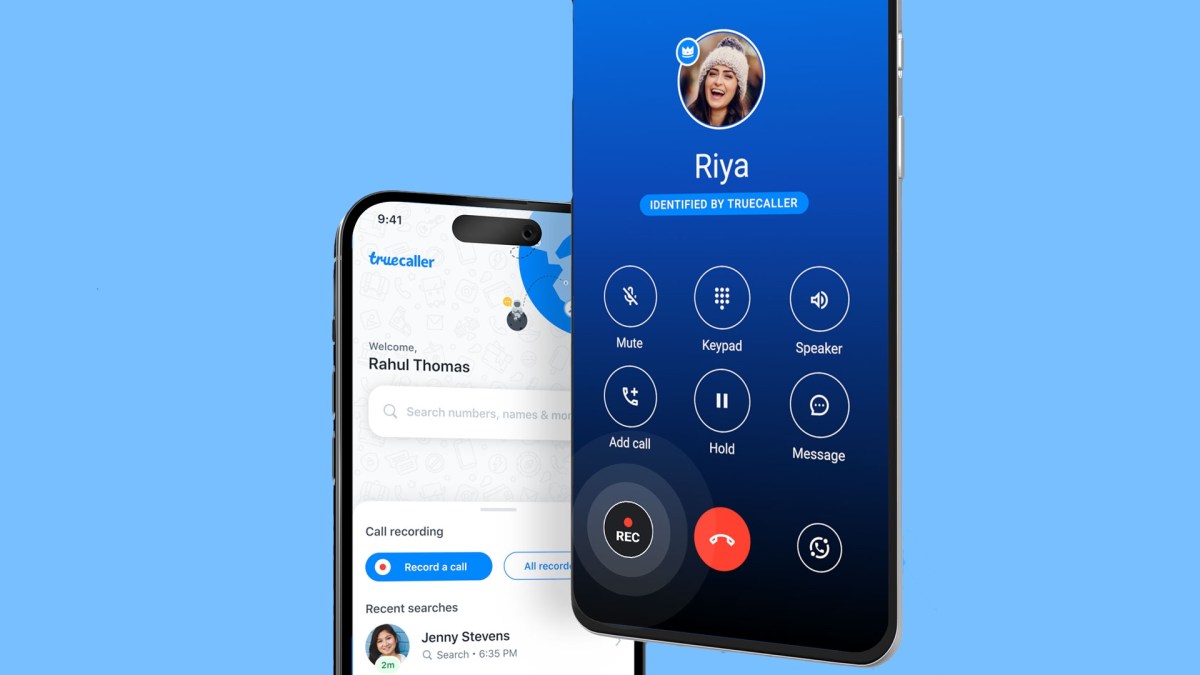
Picture from techcrunch.com
Rank 544 -
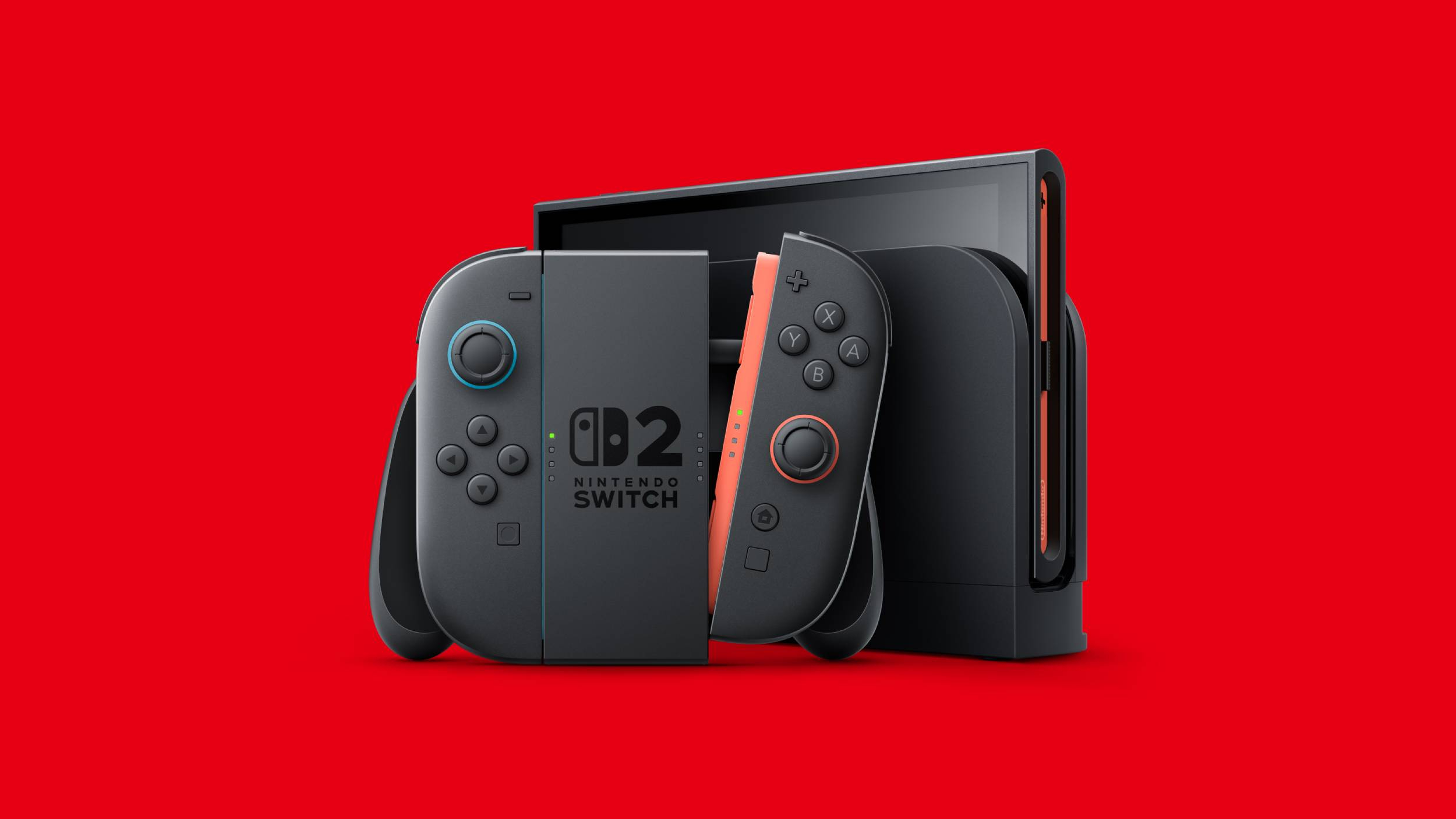
Picture from cdn.mos.cms.futurecdn.net
Rank 545Online retailers like Very and Smyths opened Nintendo Switch 2 preorders earlySome fans have already secured their console ahead of the official preorder date, April 8Amazon UK is currently accepting invites for Switch 2 preorders
Some online storefronts in the UK opened Nintendo Switch 2 preorders ahead of time, but if you missed out, there may be a way to get your hands on one, too.Nintendo Switch 2 preorders don't officially begin until April 8, but according to numerous posts online, fans were able to secure their console from websites like Very and Smyths days early.Unfortunately, these sites quickly sold out of units, and the majority of Very's Switch 2 preorder stock has now sold out – although we sometimes see a few bundles available.As of writing, however, Argos is currently accepting preorders for the Switch 2 and Mario World bundle, but we're unsure how long supplies will last.While Amazon isn't taking preorders right now, it is accepting invites for those interested in getting their hands on the console. When you head over to the webpage, there will be a "Request invite" button that will allow you to opt in for a chance to purchase."If invited to purchase, you'll get an email with a link that's valid for 22 hours. We won’t be able to grant all requests," Amazon explains.Meanwhile, US retailers such as Best Buy and Walmart have announced that they will take Nintendo Switch 2 preorders from April 9 with in-store collection or free delivery available on the release date.It's important to note that even though it may seem that your preorder has gone through on websites offering the console early, some stores may not have stock just yet. We'd recommend waiting until the official preorder date to ensure you've secured one.The Nintendo Switch 2 officially launches on June 5, 2025, and it will cost you $449.99 / £395.99.
Nintendo Switch 2 pre-orders – quick links
My Nintendo Store - from $449.99 on April 8Amazon - preorder details TBCWalmart - from $449.99 on April 9GameStop - register your interestBest Buy - from $449.99 on April 9
My Nintendo Store - from £395.99Argos - in stock now from £395.99Amazon - request an invite nowCurrys - register your interestEE - register your interestSmyths Toys - limited stockVery - limited stockShopTo - sold outTGC - register your interest
Nintendo Switch 2 pre-orders in the US
The official My Nintendo Store is, naturally, one of the best places to bookmark and keep close by for Switch 2 pre-orders when they go live. You can register your interest now and priority will be given to Nintendo Switch Online members who have an active membership and a minimum of 50 hours playtime as of April 2.
Best Buy is one of the best places to pre-order gaming gear and the retailer has confirmed it will take orders from April 9. You can register your interest now for notifications. Also, Best Buy will do some late-night store openings so you can pick up your console from 12:01am ET on June 5.
No word on pre-orders here just yet, but as the biggest retailer of them all, Amazon is always one of our top places to check for stock. It will likely require you to register your interest or request and invite before the pre-order window opens on April 8, so check back in regularly to get your name on the list.
Old, reliable retailer Walmart has confirmed it will take Nintendo Switch 2 pre-orders on April 9, with both the Switch 2 console and Switch 2 Mario Kart World bundle listed as coming soon. As a bonus, the retailer also promises free delivery before 9am on launch day when you pre-order at Walmart.
Of course, video game retailer GameStop will be offering Nintendo Switch 2 pre-orders - and it might even offer some super attractive trade-in deals for your OG Switch.
Nintendo Switch 2 pre-orders - UK links to bookmark
Going straight to the source is never a bad idea, and this is the first place we've seen offering Nintendo Switch 2 preorders. However, there is one caveat: preorders from here will be initially offered on an invite-only basis to Nintendo Switch Online members.
Argos is a superb option if you're looking for that physical store element to your Switch 2 pre-order, and it's available right now. Don't expect stock to stick around for long.
Amazon is giving you the option to request an invite to preorder the Nintendo Switch 2, but the retailer hasn't confirmed if they will be available on April 8 like the official Nintendo Store. However, if you're one of the lucky chosen ones, you'll be emailed a link to buy the console that remains valid for 22 hours.
Very has several Nintendo Switch consoles and bundles available to preorder right now. Stock is extremely limited, though, and seems to be vanishing from sale about as quick as we're seeing it. Because of that, you'll need to move fast if you want to secure a Nintendo Switch 2 from here.
Currys is a terrific option in the UK for pre-orders. Since its reveal, it has been working hard on Switch 2 coverage and taking registrations of interest.
You might also like...
Nintendo confirms that certain Switch 2 game cards will just have a download key, but I don't think it's as bad as we first thoughtHere are the Nintendo Switch 2 launch games that you'll be able to pick up and play on June 5Nintendo Switch 2 specs revealed, and yes, it will support 4K resolution - as well as a host of other upgrades over the original
-
Picture from cdn.mos.cms.futurecdn.net
Rank 546Sonos Era 100 is now $199 / £199 / AU$319Sonos Ray is now $199 / £199 / AU$349Retailers may discount even further
If I were in charge of Sonos, my earworm would be Black Eyed Peas' Where Is The Love? – because since the botched app update in 2024, there have been many cases of users hurtin' and users cryin'. But now the firm has embarked on a new strategy to win back audio fans' love: it's seriously cutting the price of some of its key products.Sonos has permanently cut the price of two of its key speakers, the Sonos Era 100 smart speaker and the Sonos Ray soundbar.These are significant cuts: the Era 100 is down $50 from $249 to $199 (£199 / AU$319). And the Ray is down even more, from $279 to $199 (£199 / AU$349).These aren't the cheapest prices we've ever seen for these Sonos products. But this is a permanent price reduction, not a promotional discount or retailer loss leader.
Opinion: a sound strategy for Sonos
There's no doubt that the Sonos app fiasco did a lot of damage to the brand. But Sonos has made good on its promises to keep updating the app, and while that's still ongoing, the app is in much better shape now.The app problems seem to have cost Sonos a lot of sales as well as reputation, and the previously loyal customers who've vowed to ditch the brand altogether may not be coming back. And that means Sonos needs to persuade new people to buy into its ecosystem.
(Image credit: Future)
For years, Sonos has positioned itself as the Apple of audio, a premium brand offering a premium experience at not too premium prices. The app problems have made that a much harder sell, and until the app disaster is a distant memory – as it eventually will be; who thinks about Apple's "antennagate" when considering an iPhone? – one of the best tools in Sonos's toolbox is price.Even before the app problems we felt that these two products were a little overpriced. In our Sonos Era 100 review, we said that the price was pushing it "closer to high-end speakers", where there's an expectation of excellence. Similarly, we felt that the Sonos Ray was "middle of the pack for value". At these newly reduced prices, both products are much more compelling.
You might also like
The best Bluetooth speakersThe best Sonos speakers and soundbarsThe best wireless speakers for every listener
-

Picture from cdn.mos.cms.futurecdn.net
Rank 547GPT-4o updated includes deeper training on a “variety of image styles”Users have created images replicating the hand-drawn look of Studio GhibliRenders raise legal and ethical questions over the work of living artists
Tl;DR What's the debate?Fans are using OpenAI's latest generative model to create images which imitate the distinctive hand-drawn style of Japanese animation house Studio Ghibli. Creatives have questioned whether this is ethical, as artists such as studio founder Hayao Miyazaki are still alive. Legal experts suggest the style itself isn’t protected, but its usage might be.
If you’re a regular on X or Instagram, chances are your feed’s been flooded this week by images that look like scenes from Spirited Away. But these imitation animations aren’t the work of famed Japanese company Studio Ghibli: they’re from ChatGPT. And that has some copyright experts sounding the alarm.Just a few days ago, OpenAI released the latest version of GPT-4o, the generative AI model which underpins ChatGPT. That update introduced more accurate text rendering, the ability to understand more complex prompts and – crucially – deeper training on a “variety of image styles”.Within hours of the update, fans were using ChatGPT to create pictures which emulated the art style of different animations. The most common kind of recreation? Renders that bore an uncanny resemblance to the dreamy, hand-drawn aesthetic of Studio Ghibli’s work.Users have given the Ghibli treatment to everything from popular memes to political figures. But with ChatGPT now apparently able to replicate such an iconic look with ease, there are serious question marks over the legality – and morality – of its usage. Does the Ghibli craze breach copyright? And is it ethical to imitate a living artist? We’ve asked expert lawyers and broken down all of the issues this short explainer.
The debate: users flood social media with AI-generated Ghibli memes
Fan art is nothing new. For as long as there have been animations, fans have created replica artwork. These community creations are usually tolerated by animation houses such as Studio Ghibli, as long as they aren’t used for commercial purposes. Imitation is the sincerest form of flattery, after all.OpenAI’s latest GPT-4o update changes that. Now, anyone can generate or transform an image into a Ghibli-style scene. What would previously have taken hours can now be achieved in a matter of seconds. Users can emulate art styles with no appreciation of the effort that it would take to a seasoned animator to create the same scene.
Ghibli style memes taking over the internet 😅 pic.twitter.com/96v8ip8ezXMarch 27, 2025
On one hand, this opens up the realm to users who want to create their own fan art but don’t have the requisite skills. On the other, it arguably reduces the value and originality of the source material. Images circulating on social media faithfully replicate the Ghibli look, without a single human artist being involved.ChatGPT’s ability to channel the visual language of animation houses such as Studio Ghibli makes it a powerful creative tool for fans. But there’s also a moral dimension: some might see such easy imitation as an affront to the studio’s hand-drawn legacy, especially when applied to memes.Studio Ghibli founder Hayao Miyazaki is known for his painstaking frame-by-frame approach to animation. The studio famously spent more than a year animating a four-second scene in The Wind Rises. In a 2016 documentary, Miyazaki described AI-generated animation as “an insult to life itself”.Then there are the legal questions. Many of the visuals seen on social media effectively ape the Ghibli look. Because it’s capable of such faithful mimicry, some have questioned whether they infringe on the studio’s copyright.
Awesome. The Ghibli style is now going to become oversaturated and associated with lazy and boring content - can’t wait for kids to grow up thinking the Ghibli movies are Ai-generated and instead of art that’s crafted by excellent artists https://t.co/YFOUIRLYAmMarch 27, 2025
Copyright generally doesn’t protect a visual style as such. So the dreamy backgrounds, oversized eyes and whimsical creatures which are hallmarks of Studio Ghibli animations probably aren’t covered. Unless ChatGPT were to replicate a specific character or scene, it might be hard to prove infringement.There’s the matter of training data, too. OpenAI hasn’t disclosed specifically what image assets were used to train the latest version of its GPT-4o model. It only specifies that a “vast variety of image styles” featured in the training data. Without more information, it’s impossible to say whether the model was trained on copyrighted Ghibli frames directly – or whether the AI simply learned to emulate the aesthetic from publicly available derivatives, such as existing fan art.But here's the verdict today from expert copyright lawyers on where this could all be headed.
The reality: style isn't legally protected, but its usage might be
We asked Chris Mammen, IP litigator and San Francisco Office Managing Partner for Womble Bond Dickinson, for his expert insight. “Copyright law in the US does not protect ideas or styles,” Mammen explains. “One artist creating a work 'in the style of' some other artist has been happening for centuries.”According to Mammen, AI tools such as ChatGPT are changing two important factors when it comes to fan art creations: “(a) the scale, volume and speed with which new works can be generated, and (b) the fidelity with which these rapidly-generated new works can mimic the style of the original.”While the style of Ghibli animations might not be covered by copyright, the studio could have other routes to protecting its intellectual property. Mammen continues: “If someone were to represent that one of these GenAI-created images is, in fact, a product of Studio Ghibli, then it could give rise to issues, such as false designation of origin, under trademark and unfair competition laws.”
(Image credit: Studio Ghibli / Netflix)
What’s clear is that AI tools will continue to give rise to new issues around the rules and grey areas involved with derivative and generative content. “These issues are really testing the boundaries of copyright and other intellectual property laws,” Mammen says.These observations echo those of Matthew Sag, en Emory University law professor studying copyright law and artificial intelligence, who recently told Business Insider: "OpenAI took a pretty sensible decision to say 'We are going to stop producing images in the style of living people'. Not because it's copyright infringement, but because people don't like that. Individuals get very understandably viscerally upset by that," he said. Studios, though, are a different matter.Asked for comment by TechRadar, an OpenAI spokesperson said: “Our goal is to give users as much creative freedom as possible. We continue to prevent generations in the style of individual living artists, but we do permit broader studio styles – which people have used to generate and share some truly delightful and inspired original fan creations. We're always learning from real-world use and feedback, and we’ll keep refining our policies as we go.”With tools such as ChatGPT and OpenAI Sora advancing so rapidly, law- and policymakers are scrambling to keep up with the thorny issues arising around intellectual property as a result. As Mammen concludes, “Advocates on both sides of the issue are arguing for legal reform.”
You might also like...
I refuse to jump on ChatGPT’s Studio Ghibli image generator bandwagon because it goes against everything I love about those moviesCopyright and AI in the UK: the balancing actA day in the life of an AI-augmented lawyer
-

Picture from techcrunch.com
Rank 548 -
Picture from cdn.mos.cms.futurecdn.net
Rank 549Adobe Premiere Pro 25.2 becomes even more powerful with AIGenerative Extend lets you plug gaps with footage that you forgot to takeOther under-the-hood updates include faster processing and performance
Adobe has launched version 25.2 of Premiere Pro, its video editing software, including even more advanced features, and of course, artificial intelligence makes more than just one appearance.Some of the highlights include Generative Extend, powered by Firefly, automatic caption translation to over 27 languages and additional GPU accelerated format support for better processing capabilities.Key to the updates, Adobe says many of the new features are based on customer feedback, including the automatically translated captions, which were demanded after the creative giant launched text-based editing in 2023.
Adobe Premiere Pro 25.2
Taking the headlines, AI-powered Generative Extend is one of the most noteworthy features coming to version 25.2, including 4K and vertical video support.With the tool, video editors can extend video clips up to two seconds and ambient audio up to 10 seconds to fill gaps, hold shots or create transitions even if they don’t have the full footage required.Paul Saccone, Senior Director of Product Marketing for Professional Video at Adobe, confirmed users can try out Generative Extend for free for “a limited time,” after which they’ll need to use Firefly generative credits, with exact costs determined by video format, frame-rate and resolution.Another update makes “fly[ing] through hours of footage and find clips fast[er]” with thanks to even more AI. Users can search for objects, locations, camera angles and more to find exactly the clips they need even in the largest libraries.The company stressed this analysis happens locally and offline, and that user content is not used to train its AI models.Auto translation of captions also happens with AI assistance – the functionality now works with 27 languages, and editors can see multiple caption tracks at the same time to ensure consistency and quality.Other smaller but no less useful changes include dynamic waveforms for better audio level visual representation, rewritten support for H.264 in MP4 and MOV for up to 4x performance increase on Apple silicon and hardware-accelerated Canon Cinema RAW Light on Apple silicon computers for up to 9x faster export.For a full breakdown of what’s new, check out Adobe’s blog post.
You might also like
Adobe launches game-changing GenAI tools for video editingCut the costs with the best free video editing softwareWe’ve rounded up the best AI tools
-
Picture from o.aolcdn.com
Rank 550Following recent tests, Amazon is finally ready to launch its Project Kuiper space internet project in a bid to rival Elon Musk's Starlink, the company announced. The first batch of 27 satellites on the KA-01 (Kuiper Atlas 1) mission are set to launch into low earth orbit (LEO) aboard a United Launch Alliance Atlas V rocket on April 9th next week from Cape Canaveral if conditions allow. Amazon hopes to start offering the high-speed internet service "later this year," it said.
Amazon's network will eventually comprise 3,200 satellites launched from partners including ULA, Arianespace, Blue Origin and even SpaceX. Much like that company's Starlink, Project Kuiper's service will cover the entire planet when completed. It will work with a dish as small as seven inches that will deliver speeds up to 100Mbps, smaller than Starlink's Mini, or up to 1Gbps with larger dishes. The company said the cost of terminals will be under $400.
The satellites will cruise at 17,000 mph at 392 miles above earth, circling the planet in about 90 minutes. They'll use a dialectic mirror film coating that's supposed to scatter light and make them less visible to ground-based astronomers, Amazon said. SpaceX's constellation currently uses over 7,000 satellites, so the Project Kuiper and Starlink fleet will use over 10,000 LEO satellites once Amazon's network is complete.
Amazon
Amazon launched two test satellites in October 2023 and proclaimed its early tests a success, with the pair sending and retrieving data at speeds of up to 100 gigabits per second. Later in December, it bolstered the network with a network of high-speed laser cross-links that promise further speed boosts. The company claims its mesh network can move data about 30 percent faster than terrestrial fiber optic cables.
Project Kuiper’s first launch will be the heaviest payload yet for the Atlas V, which will fly in its most powerful configuration. The rocket will include five solid rocket boosters in addition to the main booster, and a payload fairing 77 feet high and 16.4 feet wide.
Despite past successful tests, the mission isn't without risk. "We’ve done extensive testing on the ground to prepare for this first mission, but there are some things you can only learn in flight, and this will be the first time we’ve flown our final satellite design and the first time we’ve deployed so many satellites at once," Project Kuiper vice president Rajeev Badyal wrote. "No matter how the mission unfolds, this is just the start of our journey, and we have all the pieces in place to learn and adapt as we prepare to launch again and again over the coming years."This article originally appeared on Engadget at https://www.engadget.com/science/space/amazon-will-start-launching-its-project-kuiper-starlink-rival-next-week-123011012.html?src=rss


