News
This constantly updated list features the latest and most important news articles, ranked in order of significance. The top stories highlight major developments, breaking news, and critical updates across various topics, ensuring you stay informed about the most pressing issues. As new articles are added, the list adapts to reflect the latest priorities, keeping the most impactful stories at the forefront. Whether it’s global events, technology breakthroughs, or industry trends, this dynamic list ensures you always have access to the most relevant and timely information.
-

Picture from static.independent.co.uk
Rank 48801 -

Picture from static.independent.co.uk
Rank 48802 -

Picture from static.independent.co.uk
Rank 48803 -

Picture from static.independent.co.uk
Rank 48804 -

Picture from ichef.bbci.co.uk
Rank 48805 -

Picture from static.independent.co.uk
Rank 48806 -

Picture from static.independent.co.uk
Rank 48807 -
Picture from ichef.bbci.co.uk
Rank 48808 -

Picture from static.independent.co.uk
Rank 48809 -

Picture from static.independent.co.uk
Rank 48810 -

Picture from static.independent.co.uk
Rank 48811 -

Picture from assets1.cbsnewsstatic.com
Rank 48812 -

Picture from assets3.cbsnewsstatic.com
Rank 48813 -

Picture from assets1.cbsnewsstatic.com
Rank 48814 -

Picture from assets3.cbsnewsstatic.com
Rank 48815 -
Picture from o.aolcdn.com
Rank 48816Meta seems to have finally taken a small step to address the epidemic of over-sharing happening in the public feed of its AI app. The company has added a short disclaimer that warns users to "avoid sharing personal or sensitive information" to the "post to feed" button in the Meta AI app.
The change was first spotted by Business Insider, which labeled the app "one of the most depressing places online" due to the sheer volume of intimate, embarrassing and sometimes personally-identifying information Meta AI users were — apparently unwittingly — publicly sharing to the app's built-in "discover" feed. Though Meta AI doesn't share users' chat histories by default, it seems that many of the app's users were choosing to "share" their interactions without realizing it would make the voice and text chats visible to the public.
Last week, I found posts where users asked for advice on "improving bowel movements" and inquiring whether a relative could be liable for their employer's unpaid taxes. Another user desperately added "keep this private" to his public posts in an apparent attempt to hide his embarrassing chats after the fact. These types of strange public interactions have been happening since the Meta AI app rolled out in April, but received renewed attention last week after social media users began posting about all of the weird conversations that were visible in the app's "discover" feed.
Privacy experts criticized Meta, noting that most other mainstream AI chatbots don't include a social, publicly-visible feed. "If a user’s expectations about how a tool functions don’t match reality, you’ve got yourself a huge user experience and security problem," Rachel Tobac, a security expert who has previously partnered with Meta, observed last week. "Humans have built a schema around AI chat bots and do not expect their AI chat bot prompts to show up in a social media style Discover feed — it’s not how other tools function." The Mozilla Foundation also urged Meta to change the app's design. "Meta AI's app doesn’t make it obvious that what you share goes fully public," it wrote in a statement last week There’s no clear iconography, no familiar cues about sharing like in other Meta apps."
Now, the company has apparently taken note. With the change, choosing to share a Meta AI interaction publicly prompts the warning seen above, though it only seems to appear on the first share. "Prompts you post are public and visible to everyone," it states. "Your prompts may be suggested by Meta on other Meta apps. Avoid sharing personal or sensitive information."
As Business Insider notes, the app's public feed also seems to no longer feature text exchanges other users have shared with the app, only AI-generated images and video. It's unclear if that's a permanent change, or the result of the recent negative attention the app's received. We've reached out to Meta for more information and will update if we hear back.
In the meantime, if you've found yourself the victim of unintended public posts in the app, you can remove them by tapping on your profile in the top right corner of the app, heading to Data & Privacy -> Manage your information -> Make all public prompts visible only to you and selecting "apply to all." This article originally appeared on Engadget at https://www.engadget.com/social-media/meta-warns-users-to-avoid-sharing-personal-or-sensitive-information-in-its-ai-app-233900625.html?src=rss
-

Picture from static.independent.co.uk
Rank 48817 -

Picture from static.independent.co.uk
Rank 48818 -

Picture from assets2.cbsnewsstatic.com
Rank 48819 -

Picture from image.cnbcfm.com
Rank 48820 -

Picture from ichef.bbci.co.uk
Rank 48821 -

Picture from ichef.bbci.co.uk
Rank 48822 -

Picture from static.independent.co.uk
Rank 48823 -

Picture from static.independent.co.uk
Rank 48824 -

Picture from assets3.cbsnewsstatic.com
Rank 48825 -

Picture from assets3.cbsnewsstatic.com
Rank 48826 -

Picture from assets2.cbsnewsstatic.com
Rank 48827 -

Picture from image.cnbcfm.com
Rank 48828 -
Picture from cdn.mos.cms.futurecdn.net
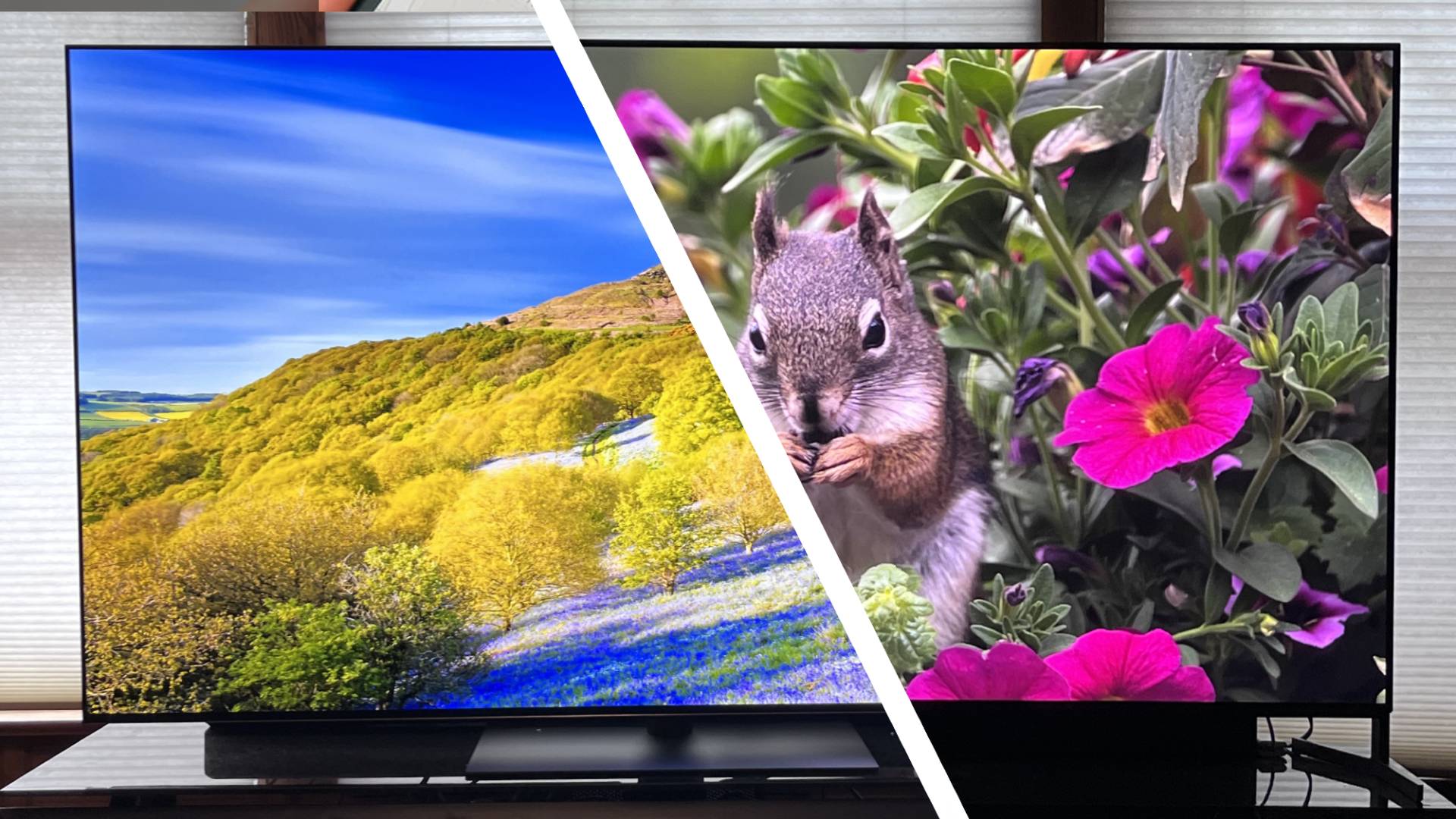
Rank 48829I tested the Sony Bravia 8 II OLED TV, and I don’t think Samsung and LG have anything to worry aboutThe Sony Bravia 8 II is the company’s top OLED TV for 2025, and at $3,500 / £2,999 / AU$3,999, it’s priced at the level you’d expect for a flagship Sony TV.The Sony Bravia 9, the company’s flagship mini-LED model, was one of the best TVs I reviewed in 2024, so I was very curious to get my hands on Sony’s new flagship OLED. A main reason was that Sony had claimed the new model would be 150% brighter than its Sony Bravia 8 predecessor, an advancement made possible by the company’s switch from a standard W-OLED panel, the type used in last year's Bravia 8, to a QD-OLED panel for the Bravia 8 II.While our Sony Bravia 8 OLED review was positive overall, the TV’s peak brightness measured significantly below what we’d seen from the best OLED TVs of 2024, such as the Samsung S95D and LG G4. New flagship OLED TVs in 2025 are now even brighter than last year’s models, with the LG G5 measuring 2,268 nits peak brightness, a level that surpasses many of the best mini-LED TVs, when I tested it.Brightness mattersThe LG G5 (shown above) has a picture that looks bright even with bright room lighting conditions (Image credit: Future)The LG G5 features a new “four-stack” OLED display panel, which LG calls the Primary RGB Tandem Structure. Unlike previous panels, which use two blue OLED layers plus a third with red, green, and yellow elements, LG’s new design produces light via individual red, green, and blue layers. This design results in improved color detail and, notably, increased peak and fullscreen brightness. (See chart below for a benchmark comparison between the Sony Bravia 8 II, LG G5, and competing OLED TVs.)The G5’s exceptional brightness had a real impact on its picture quality when I reviewed it. Movies with HDR had a near-3D quality due to the picture’s powerful contrast, which made bright highlights in pictures gleam with a high level of intensity. Colors also looked bright, which gave them a vivid quality without looking unnatural or boosted.Another important factor with the G5 when I tested it was its ability to retain strong contrast when viewing in bright room lighting conditions, something helped by its anti-reflective screen. This made it a great TV for viewing daytime sports, and movies and darker TV shows also held up very well in bright lighting.I’ve just started testing the 65-inch model of the Sony Bravia 8 II, so I’m only able to make preliminary judgments about its performance at this point. But as you can see in the brightness benchmark chart above, it falls short of Sony’s claimed 150% peak brightness boost over last year’s Bravia 8, which maxed out 817 nits peak and 182 nits fullscreen brightness.That’s not to say the Bravia 8 II isn’t bright for an OLED TV. Its peak brightness (measured in Cinema mode, the most accurate available picture preset) is about the same as the 65-inch Samsung S90F, that company’s mid-range OLED TV for 2025, and another TV that uses a QD-OLED display panel. Fullscreen brightness is notably lower on the Bravia 8 II compared to the S90F, however.As I said above, I’m just starting my subjective testing of the Sony Bravia 8 II, so I’ve yet to get a full sense of its capabilities. The Bravia 8 II’s lower brightness compared to the LG G5 (and also several flagship mini-LED TVs I’ve recently tested) means its picture has less of a vibrant pop when viewing in daylight conditions, and its color, while undoubtedly accurate (see picture accuracy chart), also appears a bit less vibrant.Is the price right?Sony's Bravia 8 II has a compelling picture, but its measured brightness falls below its premium OLED TV competition (Image credit: Future)At $3,500 / £2,999 / AU$3,999 for the 65-inch model, the Sony Bravia 8 II is priced around the same as new flagship OLED TVs such as the LG G5 and Samsung S95D. It has a premium design, along with a great set of audio features such as Acoustic Surface Audio+, which turns the TV’s OLED panel into a speaker, and Acoustic Center Sync, which lets it be used as a center channel when paired with compatible Sony speaker systems and soundbars.It’s hard to ignore, though, that the new Samsung S90F, an OLED TV with comparable brightness plus a superior set of gaming features, costs $1,000 less at $2,499 / £2,699 / AU$4,299 for the 65-inch model. That’s quite a bit of cash that could otherwise be spent on 4K Blu-rays and other home theater goodies.Does the Sony Bravia 8 II justify its premium price? We’ll soon have our review wrapped up, and at that point will provide complete thoughts on its performance and value.In the meantime, the premium OLED TV competition is looking pretty tough for 2025, and Sony’s flagship model has plenty to prove.You might also likeOLED vs Mini-LED: which TV type is best?LG Display announces viability of ‘Dream OLED’ tech 3 new 4K Blu-rays to add to your collection from May 2025
-

Picture from static.independent.co.uk
Rank 48830 -

Picture from assets2.cbsnewsstatic.com
Rank 48831 -

Picture from static.independent.co.uk
Rank 48832 -

Picture from assets3.cbsnewsstatic.com
Rank 48833 -

Picture from image.cnbcfm.com
Rank 48834 -

Picture from assets1.cbsnewsstatic.com
Rank 48835 -

Picture from assets1.cbsnewsstatic.com
Rank 48836 -

Picture from assets1.cbsnewsstatic.com
Rank 48837 -

Picture from assets2.cbsnewsstatic.com
Rank 48838 -

Picture from assets3.cbsnewsstatic.com
Rank 48839 -

Picture from assets1.cbsnewsstatic.com
Rank 48840 -

Picture from assets3.cbsnewsstatic.com
Rank 48841 -

Picture from assets1.cbsnewsstatic.com
Rank 48842 -
Picture from assets3.cbsnewsstatic.com
Rank 48843 -

Picture from ichef.bbci.co.uk
Rank 48844 -

Picture from static.independent.co.uk
Rank 48845 -

Picture from assets1.cbsnewsstatic.com
Rank 48846 -
Picture from static.independent.co.uk
Rank 48847 -
Picture from assets1.cbsnewsstatic.com
Rank 48848 -

Picture from ichef.bbci.co.uk
Rank 48849 -

Picture from static.independent.co.uk
Rank 48850
