News
This constantly updated list features the latest and most important news articles, ranked in order of significance. The top stories highlight major developments, breaking news, and critical updates across various topics, ensuring you stay informed about the most pressing issues. As new articles are added, the list adapts to reflect the latest priorities, keeping the most impactful stories at the forefront. Whether it’s global events, technology breakthroughs, or industry trends, this dynamic list ensures you always have access to the most relevant and timely information.
-

Picture from assets2.cbsnewsstatic.com
Rank 44051 -

Picture from assets3.cbsnewsstatic.com
Rank 44052 -

Picture from assets3.cbsnewsstatic.com
Rank 44053 -

Picture from assets3.cbsnewsstatic.com
Rank 44054 -

Picture from assets3.cbsnewsstatic.com
Rank 44055 -

Picture from assets1.cbsnewsstatic.com
Rank 44056 -

Picture from assets1.cbsnewsstatic.com
Rank 44057 -

Picture from assets2.cbsnewsstatic.com
Rank 44058 -

Picture from assets1.cbsnewsstatic.com
Rank 44059 -

Picture from assets3.cbsnewsstatic.com
Rank 44060 -

Picture from assets2.cbsnewsstatic.com
Rank 44061 -

Picture from cdn.mos.cms.futurecdn.net
Rank 44062Utran’s PCIe 5.0 card holds 28 M.2 SSDs, reaching a total 224TB capacity Delivers 109GB/s read speed using Broadcom switch and advanced cooling Ideal for AI workloads, but overkill for most enterprise storage needsUtran Technology has introduced a new PCIe 5.0 add-in card which feels more like a GPU than a storage solution.Unveiled at Computex 2025, the device can host up to 28 NVMe Gen5 M.2 8TB SSDs in a single slot, delivering 109GB/s sequential read speed and a total storage capacity of 224TB.Two versions of the 28x M.2 Host Card: HM-5281A and HM-5282A will be available - both use the Broadcom AtlasII PEX89144 switch to handle internal bandwidth and connectivity. The HM-5281A uses a single PCIe Gen5 x16 upstream link, while the HM-5282A doubles that with two x16 links, bringing total bandwidth up to 1024 GT/s.Surprise hot plug supportCooling comes via a high-pressure fan and radiator combo. Although it has a dense footprint, the layout is built for rack-scale deployment. In theory, eight cards could deliver nearly 1.8PB of flash inside a single server.Both models run on an EPS 8-pin connector and support surprise hot plug, meaning the system can detect and manage the 28 M.2 drives even if they’re swapped in unexpectedly. This is particularly useful for testing or dynamic environments. You'd need to take care doing so in real-world deployments though, especially as the card itself isn't hot-swappable.28x M.2 Host Card also lacks card-level power loss protection, so you’d need to rely on SSDs that include their own safeguards.The card does, however, support USB terminal control for firmware updates and system monitoring.Supported operating systems include Windows, Windows Server, and Linux, making it relatively flexible at the software level.It's hard to argue with the raw numbers - 109GB/s read speed and sub-millisecond latency are unquestionably impressive - but outside of certain HPC or AI use cases, it's frankly difficult to see a wide audience. Even in dense environments, this level of performance might outpace most storage needs.Utran says it plans to begin shipping its 28x M.2 Host Card in summer 2025.Via Tom's HardwareYou might also likeThese are the fastest SSDs you can buy right nowAnd these are the largest SSDs and hard drives on the marketHere's why 100TB+ SSDs will play a huge role in ultra LLMs in the near future
-

Picture from techcrunch.com
Rank 44063 -

Picture from static.independent.co.uk
Rank 44064 -

Picture from static.independent.co.uk
Rank 44065 -

Picture from assets1.cbsnewsstatic.com
Rank 44066 -

Picture from assets3.cbsnewsstatic.com
Rank 44067 -

Picture from assets3.cbsnewsstatic.com
Rank 44068 -

Picture from assets1.cbsnewsstatic.com
Rank 44069 -

Picture from assets2.cbsnewsstatic.com
Rank 44070 -

Picture from assets1.cbsnewsstatic.com
Rank 44071 -

Picture from assets2.cbsnewsstatic.com
Rank 44072 -

Picture from assets1.cbsnewsstatic.com
Rank 44073 -

Picture from assets1.cbsnewsstatic.com
Rank 44074 -
Picture from o.aolcdn.com
Rank 44075Here's an AI-government collaboration of a less… unsettling variety than some. Google DeepMind is teaming up with the National Hurricane Center (NHC) for tropical cyclone season. The AI research lab claims it can predict hurricane paths and intensities with at least the same accuracy as traditional methods.
NHC forecasters have already begun using DeepMind's AI model. Google says they're designed to support, not replace, human NHC forecasters. (Although President Trump's National Weather Service cuts have already reduced its headcount.) The company is also careful to repeatedly describe its models as "experimental."
Google claims that its models offer fewer trade-offs than physics-based predictions. The more accurate those methods are at forecasting a hurricane's path, the worse they are at predicting its intensity. (And vice versa.) The company says its experimental system offers "state-of-the-art" accuracy for both.
DeepMind backs that up with data from real-life storms over the last two years. On average, its five-day hurricane track prediction gets 87 miles closer to the storm's actual path than ENS, a widely used traditional model. Google's was comparable to a 3.5-day prediction model. In other words, it's like gaining an extra 1.5 days of warning with the same level of confidence. The company says such an improvement typically takes over a decade to achieve.
Google
Alongside the NHC collab, Google is launching a new website that you can try. Now in a public preview, Weather Lab lets you see the AI storm predictions. It lets you view both live and historical predictions. You can even compare them to physics-based models to see how the AI version measures up.
It's important not to treat Weather Lab's experimental forecasts as official. But the website could come in handy if you live in Hurricane Alley. You can check it out now.This article originally appeared on Engadget at https://www.engadget.com/ai/google-deepmind-is-sharing-its-ai-forecasts-with-the-national-weather-service-173506456.html?src=rss
-

Picture from ichef.bbci.co.uk
Rank 44076 -

Picture from static.independent.co.uk
Rank 44077 -

Picture from assets1.cbsnewsstatic.com
Rank 44078 -

Picture from assets3.cbsnewsstatic.com
Rank 44079 -
Picture from static.independent.co.uk
Rank 44080 -

Picture from static.independent.co.uk
Rank 44081 -

Picture from static.independent.co.uk
Rank 44082 -

Picture from assets2.cbsnewsstatic.com
Rank 44083 -

Picture from assets3.cbsnewsstatic.com
Rank 44084 -
Picture from assets1.cbsnewsstatic.com
Rank 44085 -

Picture from assets2.cbsnewsstatic.com
Rank 44086 -

Picture from assets3.cbsnewsstatic.com
Rank 44087 -

Picture from assets1.cbsnewsstatic.com
Rank 44088 -
Picture from cdn.mos.cms.futurecdn.net
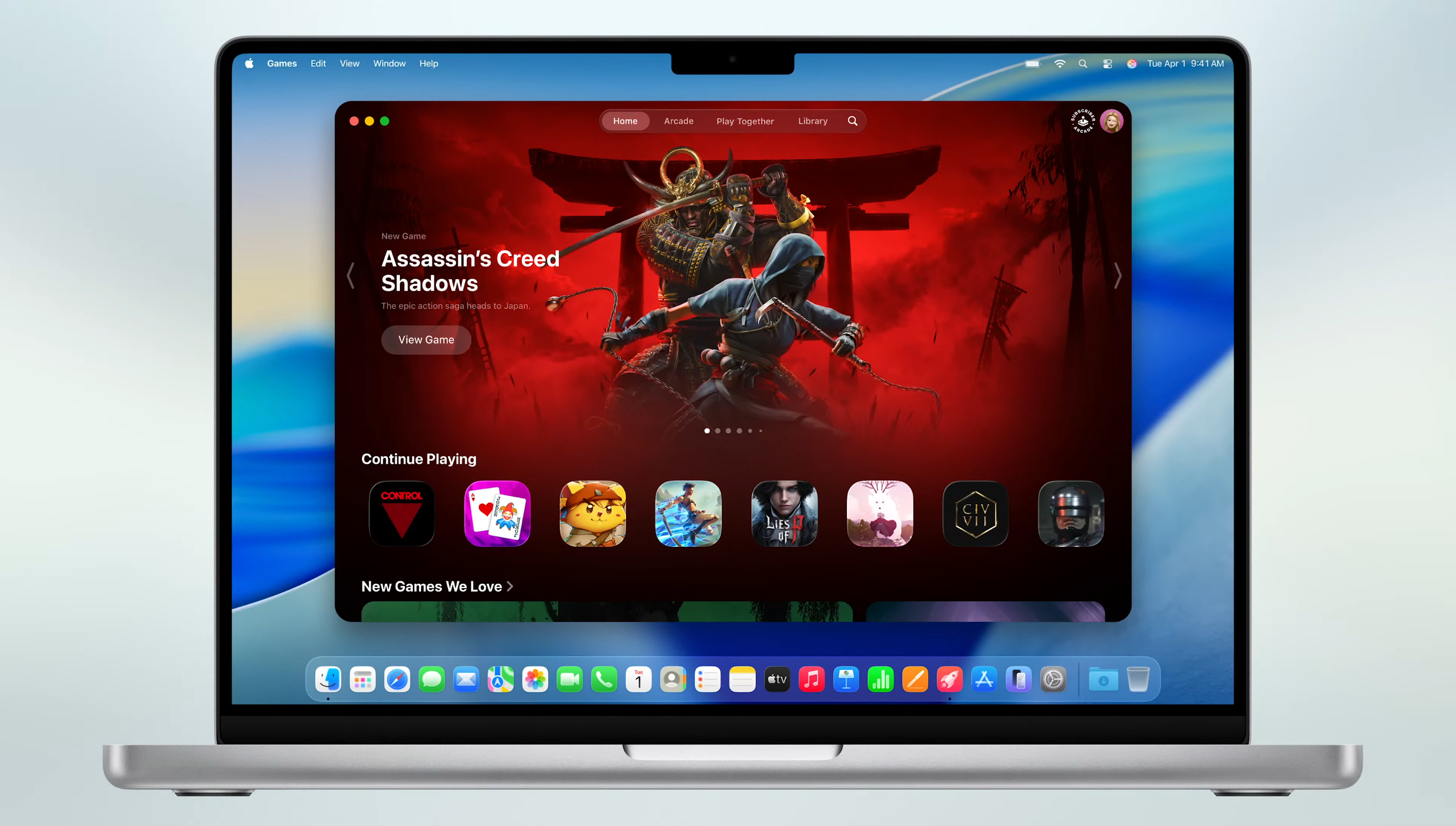
Rank 44089Microsoft compared Liquid Glass to Windows Vista on its Instagram accountIt’s rather late to the party in drawing this kind of comparisonMind you, if anyone has a right to do so, it’s Microsoft, which brought in transparency with the Aero effect on the desktop of VistaMicrosoft has joined the throng of those who’ve been making fun of Apple’s new Liquid Glass interface for macOS Tahoe 26 (and iOS 26 or indeed other platforms such as iPadOS 26).On its Instagram account yesterday, as flagged up by Windows Latest, Microsoft posted a collection of screenshots of Windows Vista. This arrived complete with nostalgic sound effects (the chime of booting to the desktop) from back in the day (2007), with a single, simple sentence: “Just gonna leave this here.”A post shared by Windows (@windows)A photo posted by on In case you missed it, Apple has caught quite a volley of criticism for what’s perceived as making it seem like Liquid Glass has reinvented the idea of transparency – a glassy, see-through interface – when this was actually done by Microsoft in… yes, you guessed it: Windows Vista.In Windows Vista, this effect was called Aero (and later, Aero also came to Windows 7), and as you can see in the Instagram montage above, it’s all about translucent windows, allowing you to see the background through them.Microsoft is late to the party here, really, and in that respect, the company looks a tad silly. Everybody’s done their take on how Liquid Glass is Vista (or Windows 7), how Apple are copycats, etcetera – and so Microsoft is running the risk of inducing some yawns here.But still, Microsoft did invent Aero with these venerable desktop operating systems many translucent moons ago, so in a way, more than anyone, the software giant has a right to poke some fun at macOS Tahoe 26 here.Analysis: Fun but not fair?(Image credit: Apple)So, given the hail of critical bullets trying to shatter Apple’s Liquid Glass – Microsoft’s latest potshot included – it’s worth considering a key question. Is it really fair to level accusations at the Mac and iDevice maker for being so unoriginal and dated with its UI innovation here?I don’t think it is. Still, Apple must’ve known it was going to face this kind of backlash, even if it’s a rather tongue-in-cheek affair (mostly). And for Microsoft, it’s an obvious opportunity to take a rival down a peg or two, which, let’s face it, is not to be missed. However, I'm not sure why Microsoft was slow to move with its post.Whatever the case, one thing is obvious: Liquid Glass does not equal Vista’s Aero effect (and I hardly think Microsoft is suggesting that, of course). Yes, there are clear visual parallels, but what macOS Tahoe 26 is doing is very different from Windows Vista or 7.For starters, the reason nobody liked Aero much in Windows Vista was because it caused the OS environment to run slower – nobody wanted lag when dragging windows around the desktop, unsurprisingly. (Windows 7 did better here, of course).Not only is contemporary hardware ripe for a much better implementation of transparent interface elements now, so it’ll all be suitably responsive, but Apple’s Liquid Glass appears to be far more sophisticated in nature. It looks like there’s a lot of careful crafting here, with nuances in the way light passes through the ‘glass’ and interacts with the interface behind.Granted, it’s still too early to say exactly how this will pan out, but Aero it ain’t, that’s for sure. I’ve been told by others on the TechRadar team who’ve seen the interface in action that it looks much better in real-world use than screenshots can convey.Even so, worries remain, without a doubt. The most obvious potential thorn is the diminished accessibility and the potential lack of clarity that these fancy, see-through effects might cause. What we don’t want is a muddied look where the user may struggle to read basic text or make out icons in the foreground.Time will tell regarding those concerns, but Apple appears to have thought this whole plan and overarching philosophy through quite fully, given that this is not just a mere interface revamp, but a wholesale cross-platform unification for macOS, iOS, and all the rest of the company’s operating systems.Thus far, Liquid Glass looks pretty slick, it looks like function is as important as form, and yes, it looks like Windows Vista a bit, too. But hey, what did you expect Apple to do with all eyes on its big WWDC 25 interface reveal? Acknowledge Microsoft as the forerunner of glassy transparency in the realm of desktop operating systems?You might also like...macOS Tahoe 26 is official - here's everything you need to know about all the new featuresCan’t upgrade to Windows 11? This Linux project wants to save your old PC from the scrapheap when Windows 10 support endsWindows 11 is getting more AI shortcuts, but is Microsoft in danger of cluttering up the OS with AI creep?
-

Picture from techcrunch.com
Rank 44090 -

Picture from ichef.bbci.co.uk
Rank 44091 -

Picture from static.independent.co.uk
Rank 44092 -

Picture from assets3.cbsnewsstatic.com
Rank 44093 -

Picture from assets3.cbsnewsstatic.com
Rank 44094 -

Picture from assets3.cbsnewsstatic.com
Rank 44095 -

Picture from assets3.cbsnewsstatic.com
Rank 44096 -

Picture from assets3.cbsnewsstatic.com
Rank 44097 -

Picture from assets2.cbsnewsstatic.com
Rank 44098 -
Picture from assets2.cbsnewsstatic.com
Rank 44099 -

Picture from assets2.cbsnewsstatic.com
Rank 44100
