News
This constantly updated list features the latest and most important news articles, ranked in order of significance. The top stories highlight major developments, breaking news, and critical updates across various topics, ensuring you stay informed about the most pressing issues. As new articles are added, the list adapts to reflect the latest priorities, keeping the most impactful stories at the forefront. Whether it’s global events, technology breakthroughs, or industry trends, this dynamic list ensures you always have access to the most relevant and timely information.
-

Picture from assets1.cbsnewsstatic.com
Rank 41801 -

Picture from image.cnbcfm.com
Rank 41802 -
Picture from cdn.mos.cms.futurecdn.net
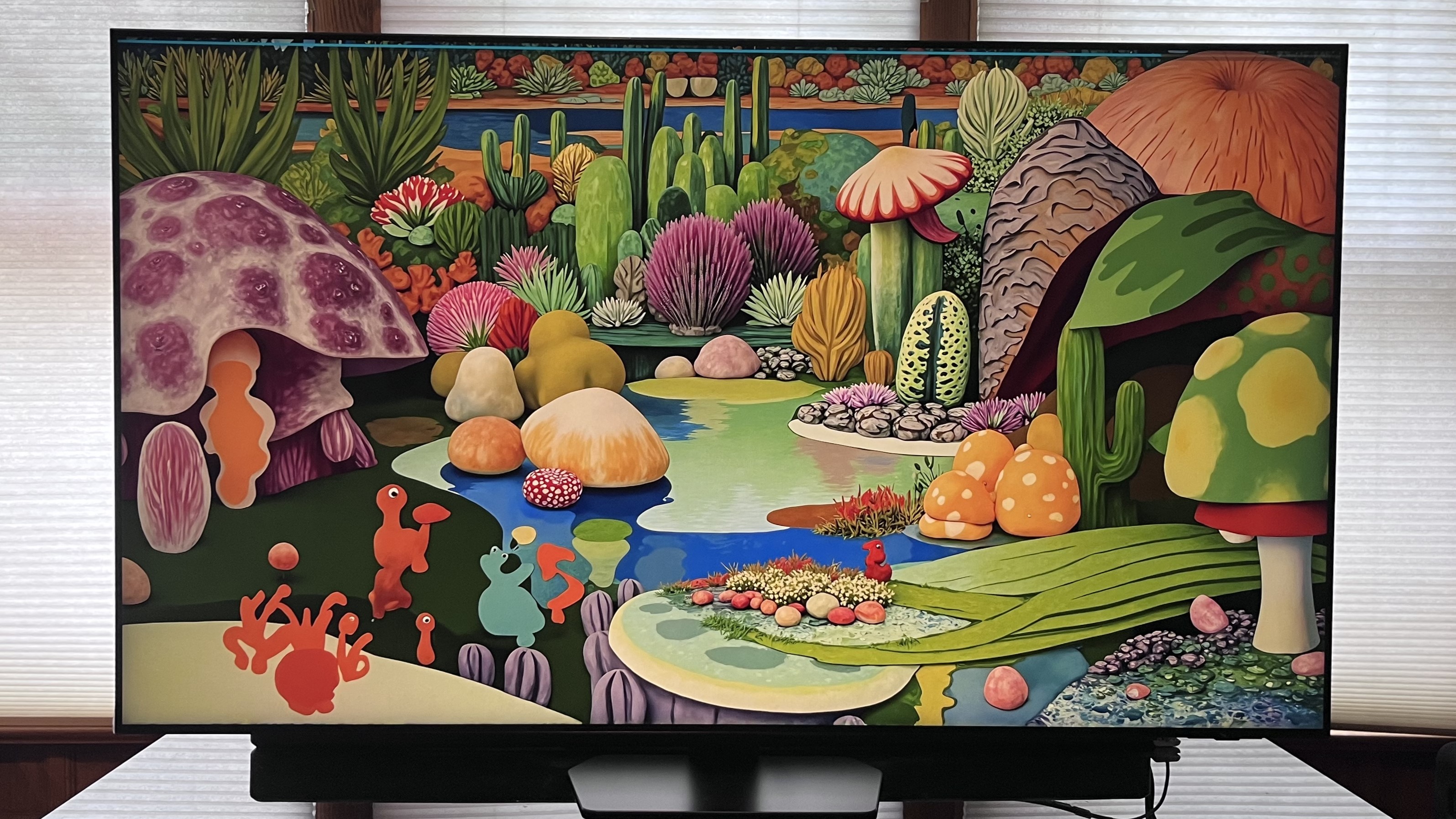
Rank 41803If you’re a sports fan like me, you may have had some complaints in the past about your TV when trying to watch sports. Whether it’s reflections while watching a game in the afternoon or blurring during fast motion, something always seems to need tweaking.Another issue: a TV that appears dim, with a flat-looking image, particularly for field sports such as football and rugby.Even the best TVs can struggle with sport, but thankfully, there’s a TV tech that’s ideal for sports fans: mini-LED.Mini-LED: perfect for sports fansMini-LED TVs are not only becoming increasingly popular but also more affordable. This tech delivers an improved picture over standard LED by using backlights with smaller LEDs (hence the mini part).By miniaturizing the LEDs, a higher number can be used, which results in increased brightness. It also allows for a higher number of local dimming zones in the backlight, which helps to boost contrast and improve black uniformity.Mini-LED TVs can hit significantly higher brightness levels than other TV panel types, with 2,500 - 4,000 nitspeaks possible in flagship models. But for sports fans, it’s fullscreen brightness – the level of brightness that the TV can sustain over its entire screen area – that matters most, and once again, mini-LED TVs here regularly beat other panel types, including the best OLED TVs.To provide an example of that from our TV testing, we regularly measure fullscreen brightness levels of between 580 - 800 nits on the best mini-LED TVs. But even the brightest OLED TV we’ve tested, the LG G5, topped out at 331 nits in our fullscreen measurement.I’ve picked three models below that are examples of the best mini-LED TVs for sports.1. Samsung QN90F(Image credit: Future)The Samsung QN90F is the perfect TV for sports. Not only does it deliver exceptionally high brightness levels – 2,086 nits peak and 667 nits fullscreen in Filmmaker Mode – but it has a Glare-Free screen (first introduced in the Samsung S95D OLED) that effectively eliminates reflections, making it perfect for afternoon sports watching.The QN90F also delivers the superb motion handling that's essential for fast-paced sports. Even for movies, we found we could get smooth motion, with no sign of the dreaded ‘soap opera effect’, by setting both Blur Reduction and Judder Reduction to 3.The QN90F delivers vibrant colors, strong contrast and realistic textures for a brilliant picture. And when viewing from an off-center seat, there’s little sign of the backlight blooming that results in contrast fade, meaning it’s great for watching in large groups.The QN90F is a premium-priced TV, with the 65-inch model we tested priced at $2,499.99 / £2,499 / AU$3,499, but if you’re a sports fanatic, it’s worth the investment. Plus, you can expect prices to drop at some point in the near future.2. Amazon Fire TV Omni Mini-LED (Image credit: Future)When I first began testing the Amazon Fire TV Omni Mini-LED, I didn’t anticipate it would be such a good TV for sports. But in its preset Sports mode with Smoothness (Judder Reduction) set to 4 and Clarity (Blur Reduction) set to 10, sports looked impressively smooth. Color was also surprisingly accurate in that mode, which is unusual as I’ve found the Sports mode makes colors look oversaturated and garish on most TVs.Something unique about the Omni Mini-LED is that it’s nearly ready out of the box for sports. In contrast, I found when testing competing models such as the Hisense U6N and Hisense U7N that more setup was required to get sports looking right.The Amazon Omni mini-LED is a significantly more affordable TV than the Samsung QN90F, with its 65-inch model often discounted down to $949.99 / £949.99. It may not have the same level of sports prowess as the Samsung QN90F, but it’s great for the money.3. TCL QM7K / TCL C7K Image 1 of 2TCL QM7K - US (slide 1) & TCL C7K - UK (slide 2) (Image credit: Future)Image 2 of 2(Image credit: Future)This entry is a hybrid as the TCL model name (and specs) will vary depending on which side of the pond you’re on. Either way, it’s the mid-range model in TCL’s 2025 mini-LED lineup.Both of these TVs deliver exceptional brightness at a mid-range price, with the TCL QM7K and TCL C7K hitting 2,350 nits and 2,784 nits HDR peak brightness, respectively. More importantly, they hit 640 nits and 678 nits HDR fullscreen brightness, respectively – very good numbers for watching sports in bright rooms.These TVs require some motion setup. Since I'm based in the UK, I tested the C7K, and I found that I needed to tweak the Sports or Standard picture mode by setting Blur Reduction to 3 and Judder Reduction to 6. I also needed to lower the color setting in Sports, as it was oversaturated in its default settings.Once this was completed, the C7K was a solid TV for sports. It isn’t quite as effective as the two models above, but it is still a very good mid-range option overall. If the QM7K is anything like its UK counterpart, then the story for that model will be the same.Again, for the 65-inch models of these two sets, you’re looking at paying $999 / £1,099. That’s a similar price to the Amazon Omni Mini-LED, which has the best motion of the two, but with the TCL, you’re getting that extra hit of brightness.You might also like I compared a new cheap mini-LED TV to a mid-range model, and here’s why upgrading is more than worth a small price increaseSony Bravia 9 review - an ultra-premium mini-LED TV with performance to matchHow far mini-LED TV tech has evolved in 9 years and the 'dark side' of Netflix – what I learned on my visit with TCL
-
Picture from o.aolcdn.com
Rank 41804The long-anticipated F1 film comes to theaters on June 27. To celebrate the pending release, Apple has developed a haptic trailer exclusively for iPhones. This leverages the smartphone's Taptic Engine to let people "feel the action" right in the palm of their hands.
Apple promises that viewers will "experience the power of the engines, the rumble of the curbs, and the intensity of every gear shift like never before with responsive vibrations." It's available to stream right now via the Apple TV app, but requires iOS 18.4 or later. Here's a regular trailer that won't make your hands rumble, but is still fun.
F1 stars Brad Pitt and was directed by Joseph Kosinski, who made the box office monster Top Gun: Maverick. He also directed the underrated Tron: Legacy, though has no involvement with the upcoming Tron: Ares. Hans Zimmer made the score. Apple spared no expense here.
To that end, the company is extremely bullish regarding the film. It's getting the full theatrical treatment, along with a nationwide IMAX release. Apple also featured the movie prominently at its recent WWDC event and screened it for attendees at the Steve Jobs Theater.
Pulling up to the Steve Jobs Theater for the F1 Movie screening 🤯 pic.twitter.com/U3nygAJym7— Ayush Singh (@heyayush_io) June 11, 2025
Formula 1 has been surging in popularity these past years, as the sport has significantly widened its cultural footprint. Netflix released a documentary series about the organization called Formula 1: Drive to Survive, which was a huge hit. People like cars that go fast. Who knew?This article originally appeared on Engadget at https://www.engadget.com/entertainment/apple-made-a-haptic-trailer-for-the-f1-movie-that-only-works-on-iphones-180815475.html?src=rss
-

Picture from static.independent.co.uk
Rank 41805 -

Picture from static.independent.co.uk
Rank 41806 -

Picture from static.independent.co.uk
Rank 41807 -

Picture from assets3.cbsnewsstatic.com
Rank 41808 -

Picture from assets1.cbsnewsstatic.com
Rank 41809 -

Picture from assets2.cbsnewsstatic.com
Rank 41810 -

Picture from assets1.cbsnewsstatic.com
Rank 41811 -
Picture from assets3.cbsnewsstatic.com
Rank 41812 -

Picture from assets1.cbsnewsstatic.com
Rank 41813 -

Picture from assets3.cbsnewsstatic.com
Rank 41814 -

Picture from assets3.cbsnewsstatic.com
Rank 41815 -

Picture from assets3.cbsnewsstatic.com
Rank 41816 -

Picture from assets1.cbsnewsstatic.com
Rank 41817 -

Picture from image.cnbcfm.com
Rank 41818 -

Picture from image.cnbcfm.com
Rank 41819 -

Picture from image.cnbcfm.com
Rank 41820 -

Picture from techcrunch.com
Rank 41821 -

Picture from techcrunch.com
Rank 41822 -

Picture from ichef.bbci.co.uk
Rank 41823 -

Picture from assets1.cbsnewsstatic.com
Rank 41824 -

Picture from assets2.cbsnewsstatic.com
Rank 41825 -

Picture from assets3.cbsnewsstatic.com
Rank 41826 -

Picture from assets1.cbsnewsstatic.com
Rank 41827 -

Picture from assets2.cbsnewsstatic.com
Rank 41828 -

Picture from assets3.cbsnewsstatic.com
Rank 41829 -

Picture from assets2.cbsnewsstatic.com
Rank 41830 -
Picture from assets3.cbsnewsstatic.com
Rank 41831 -

Picture from assets1.cbsnewsstatic.com
Rank 41832 -

Picture from assets2.cbsnewsstatic.com
Rank 41833 -

Picture from assets3.cbsnewsstatic.com
Rank 41834 -

Picture from assets2.cbsnewsstatic.com
Rank 41835 -

Picture from assets1.cbsnewsstatic.com
Rank 41836 -

Picture from assets3.cbsnewsstatic.com
Rank 41837 -

Picture from assets3.cbsnewsstatic.com
Rank 41838 -

Picture from assets1.cbsnewsstatic.com
Rank 41839 -

Picture from assets3.cbsnewsstatic.com
Rank 41840 -

Picture from assets1.cbsnewsstatic.com
Rank 41841 -

Picture from assets2.cbsnewsstatic.com
Rank 41842 -

Picture from assets1.cbsnewsstatic.com
Rank 41843 -

Picture from static.independent.co.uk
Rank 41844 -

Picture from static.independent.co.uk
Rank 41845 -

Picture from assets3.cbsnewsstatic.com
Rank 41846 -

Picture from assets2.cbsnewsstatic.com
Rank 41847 -

Picture from assets1.cbsnewsstatic.com
Rank 41848 -
Picture from o.aolcdn.com
Rank 41849When it launched, Apple 's Visual Intelligence feature allowed you to point your compatible phone's camera at things around you and either perform a Google Image Search or ask questions via ChatGPT. At WWDC 2025, the company showed off updates to broaden the usefulness of Visual Intelligence, largely by embedding it into the screenshots system. To quote the company's press release, "Visual intelligence already helps users learn about objects and places around them using their iPhone camera, and it now enables users to do more, faster, with the content on their iPhone screen."
This reminded me of the "onscreen awareness" that Apple described as one of Siri's capabilities when it announced Apple Intelligence last year. In that press release, the company said, "With onscreen awareness, Siri will be able to understand and take action with users’ content in more apps over time." Though it's not quite the same, the updated screenshot-based Visual Intelligence more or less allows for your iPhone to serve up contextual actions from your onscreen content, just not via Siri.
In a way, it makes sense. Most people are already accustomed to taking a screenshot when they want to share or save important information they saw on a website or Instagram post. Integrating Apple Intelligence actions here would theoretically put the tools where you expect them, rather than make users talk to Siri (or wait for the update to roll out).
Basically, in iOS 26 (on devices that support Apple Intelligence), pressing the power and volume down buttons to take a screenshot will result in a new page being pulled up. Instead of the thumbnail of your saved image appearing in the bottom left, you'll see the picture take up almost all of the display, with options around it for editing, sharing or saving the file, as well as getting Apple Intelligence-based answers and actions at the bottom. In the bottom left and right corners sit options for asking ChatGPT and doing a Google Image Search respectively.
Depending on what's in your screenshot, Apple Intelligence can suggest various actions below your image. This can be asking where to buy a similar-looking item, adding an event to your calendar or identifying types of plants, animals or food, for instance. If there's a lot going on in your screenshot, you can draw on an item to highlight it (similar to how you select an object to erase in Photos) and get information specific to that part of the image.
Third-party apps or services that have enabled App Intents, like Google, Etsy and Pinterest, can also appear here so you can carry out actions within this space too. For example, if you've found a bookend you like, taken a screenshot and identified it, you can shop for it on Etsy or pin it on Pinterest.
One aspect of this update to Visual Intelligence that gives me pause is that, for people like me who screenshot mindlessly and don't want to do anything other than get receipts, this might add a frustrating step between capturing a screenshot and saving it to Photos. It sounds like you may be able to turn off this interface and stick to the existing screenshot system, though.
The examples that Apple gave for Siri's ability to understand what's on your screen felt somewhat similar. In its press release from last year, Apple said "For example, if a friend texts a user their new address in Messages, the receiver can say, 'Add this address to his contact card.'"
Like Visual Intelligence in screenshots, this involves scanning the onscreen content for pertinent information and helping you put it in a place (like Contacts or Calendar) where it's most useful. However, the promise of Siri's new era was more about interacting with all parts of your phone, across first- and third-party apps alike. So you could ask the assistant to open an article you added to your Reading List in Safari or send photos from a specified event to a contact.
It's clear Apple has yet to deliver these advancements to Siri, and like Craig Federighi said at the WWDC 2025 keynote, those might only be discussed later this year. Still, as we await that status update, the changes coming to screenshots might be a preview of things to come.This article originally appeared on Engadget at https://www.engadget.com/ai/ios-26-screenshots-could-be-an-intriguing-preview-of-apples-delayed-siri-rework-183005404.html?src=rss
-

Picture from static.independent.co.uk
Rank 41850

