News
This constantly updated list features the latest and most important news articles, ranked in order of significance. The top stories highlight major developments, breaking news, and critical updates across various topics, ensuring you stay informed about the most pressing issues. As new articles are added, the list adapts to reflect the latest priorities, keeping the most impactful stories at the forefront. Whether it’s global events, technology breakthroughs, or industry trends, this dynamic list ensures you always have access to the most relevant and timely information.
-

Picture from static.independent.co.uk
Rank 39751 -

Picture from static.independent.co.uk
Rank 39752 -

Picture from static.independent.co.uk
Rank 39753 -

Picture from assets1.cbsnewsstatic.com
Rank 39754 -

Picture from assets2.cbsnewsstatic.com
Rank 39755 -

Picture from assets1.cbsnewsstatic.com
Rank 39756 -

Picture from assets2.cbsnewsstatic.com
Rank 39757 -

Picture from assets2.cbsnewsstatic.com
Rank 39758 -
Picture from assets3.cbsnewsstatic.com
Rank 39759 -
Picture from assets1.cbsnewsstatic.com
Rank 39760 -

Picture from assets3.cbsnewsstatic.com
Rank 39761 -

Picture from assets1.cbsnewsstatic.com
Rank 39762 -

Picture from image.cnbcfm.com
Rank 39763 -

Picture from cdn.mos.cms.futurecdn.net
Rank 39764Experts warn there are millions of game-themed malware variants out thereHackers are luring gamers with the promise of loaders, cracks, exclusive content, and moreGTA, Minecraft, and COD are among the most-abused titlesGrand Theft Auto V (GTA), Minecraft, Call of Duty (CoD), and other popular games, are being abused left and right to distribute malware among the Gen Z gaming community, experts have warned.A report from cybersecurity researchers at Kaspersky has claimed between April 1, 2024, and March 31, 2025, there were more than 19 million attempts to download malicious files spoofing popular gaming titles.Overall, it believes some 400,000 people worldwide may have been affected, many of them younger gamers.GTA, Minecraft, CoD, Sims all hitKaspersky says the threat actors are going for older games with large, thriving communities.GTA V was published more than a decade ago, but thanks to its open-world modding capabilities, it is still hugely popular. In fact, it sold more than 215 million copies worldwide to date, making it one of the best-selling video games of all time.The researchers detected almost 4.5 million attack attempts involving files disguised as GTA-related content.The fact that GTA 6 is around the corner (it is expected to be released in 2026) only exacerbates the problem, since the hype leading up to the release will most definitely be abused to distribute fake installers, early access offers, and beta invites.Minecraft, another hugely popular title, ranked second, with 4.1 million attack attempts. Similar to GTA, the attacks were driven mostly by the game’s vast modding ecosystem and enduring popularity. CoD ranked third with 2.6 million attacks, followed by The Sims with 2.4 million.Hackers usually hunt for victims on forums, social media groups, and instant messaging chats and channels.They advertise cracks, loaders, different mods and add-ons, which often turn out to be infostealers, cryptocurrency hijackers, backdoors, and Trojans. Kaspersky has urged gamers to refrain from downloading pirated content, and be skeptical of giveaways, promises of rare skins, or various bonuses.You might also likeFriendly fire: Hackers target their own with fake malware and gaming cheatsTake a look at our guide to the best authenticator appWe've rounded up the best password managers
-
Picture from cdn.mos.cms.futurecdn.net
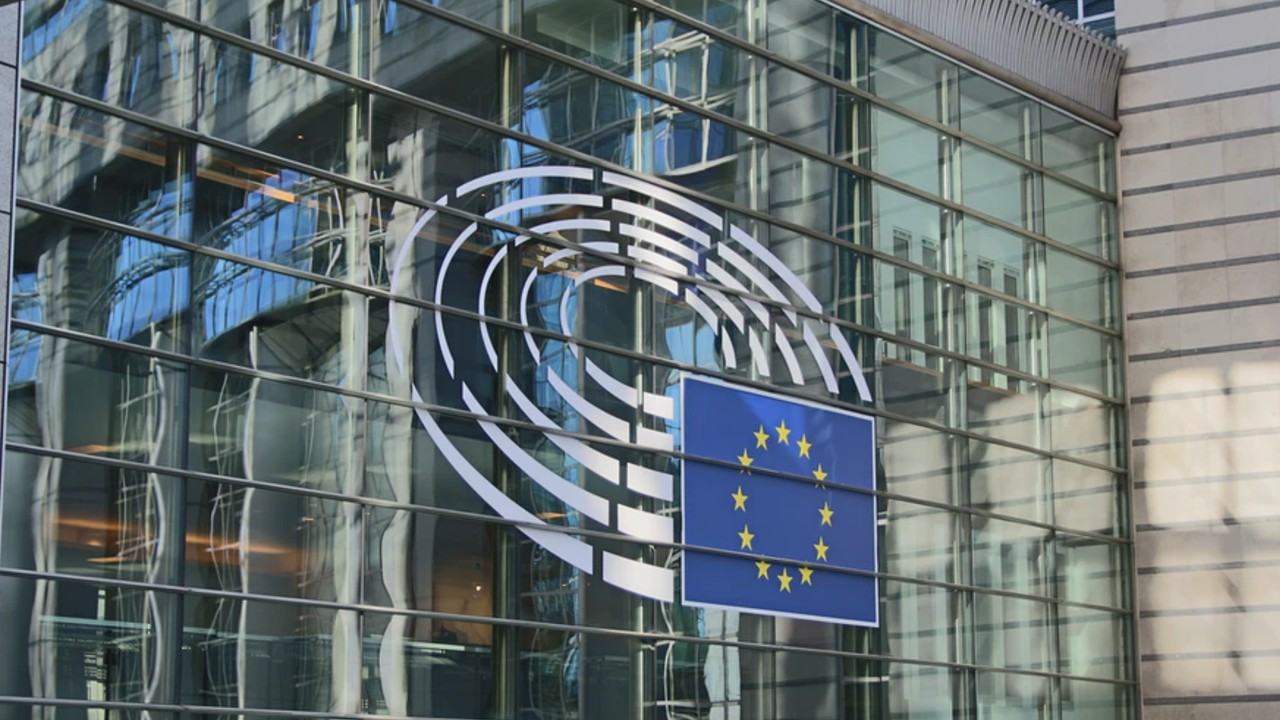
Rank 39765The EU unveiled its very own DNS resolver, promising to be more privacy-compliant and cyber resilientThe DNS4EU comes as an alternative to major US-based services and includes built-in filters to block dangerous trafficWhile it remains voluntary for all EU citizens, some privacy experts warn against potential issues around content filtering and privacyThe European Union has officially unveiled its very own DNS resolver, which promises to strengthen privacy and security for EU citizens, government organizations, and telecom providers across the bloc.The DNS4EU wants to be an alternative to major US-based public DNS services (like Google and Cloudflare) to boost the EU's digital autonomy by reducing European reliance on foreign infrastructure.This isn't only an EU-developed DNS, though. The DNS4EU comes with built-in filters against malicious domains, like those hosting malware, phishing, or other cybersecurity threats. The home user version also includes the possibility to block ads and/or adult content.While its usage remains voluntary, some privacy experts warn against potential issues around content filtering and privacy.What is the DNS4EU?As the EU Commission wrote on its official website: "The goal of DNS4EU is to ensure the digital sovereignty of the EU by providing a private, safe, and independent European DNS resolver."Short for Domain Name System, a DNS resolver acts as the Internet phone book, translating user requests into strings of numbers – IP addresses – to connect them with the right websites.Every time you connect to the internet, it's your Internet Service Provider (ISP) that chooses the DNS to reroute your traffic. Yet, an organization or end users alike might choose to switch services to improve connection speeds, enhance security and privacy, or better control the content geo-location (similarly to what the best VPN do).First unveiled in October 2022, the project was developed under the supervision of the EU cybersecurity agency ENISA and is currently managed by a pan-European consortium led by Czech cybersecurity firm Whalebone, which includes experts from across 10 EU countries.This week, DNS4EU Public Service was launched for Stakeholder Group testing. Thank you to all involved. We are currently gathering feedback to support final adjustments.🗓️ Official public launch coming next week. Stay tuned.#DNS4EU #Cybersecurity #DNS pic.twitter.com/G0uAqIUTDcJune 6, 2025The DNS4EU, which the EU ensures "will not be forced on anyone," has been developed to meet different users' needs.The home users' version is a public and free DNS resolver that comes with the option to add filters to block ads, malware, adult content, or all of these, or none. There's also a dedicated version for government entities and telecom providers that operate within the European Union.As mentioned earlier, the DNS4EU comes with a built-in filter to block dangerous traffic alongside the ability to provide regional threat intelligence. This means that a malicious threat discovered in one country could be blocked simultaneously across several regions and countries, de facto halting its spread."DNS4EU threat intelligence is enhanced by Computer Emergency Response Teams (CERTs) and other institutions all around the EU, providing information on EU-specific threats, as well as by the data about cyberattacks gathered through the telco partners," the EU explains.What are the experts saying?The ability to filter unwanted content has sparked concerns among experts since its inception.For example, speaking to Torrentfreak in 2022, a former MEP for the German Pirate Party, Patrick Breyer, pointed out how "a government-run DSA scheme comes with the risk of online censorship."Talking to TechRadar at the time of writing, Breyer welcomes the decision to leave traffic filtering capabilities as optional. "However, it remains to be seen how the operator will react to demands for filtering. Using a government-sponsored service can be a risk because of law enforcement and intelligence agencies' wishes," he said.The Senior Director for European Government and Regulatory Affairs at the Internet Society, David Frautschy Heredia, also warns against potential risks related to content filtering, arguing that "safeguards should be developed to prevent abuse."Heredia also fears that applying geographic borders to global infrastructure may bring more harm than good in the long run.He told TechRadar: "This normalizes the approach and could inspire other actors around the world to introduce their own DNS resolvers, which may be mandatory to use. Other countries, including Mauritius and Kazakhstan, have previously attempted to impose the mandatory use of national DNS resolvers, with the capability of indiscriminate filtering."(Image credit: Shutterstock)Besides these potential issues, Breyer also noted that the DNS4EU lacks a no-log policy. This is a guarantee that no record of users' activities is ever stored.As per the DNS4EU policy issued on June 1, 2025, the service collects a limited number of DNS query data and IP addresses. The latter are most anonymized directly on the DNS resolver.Yet, "The logging of all requests - even if mostly anonymised – comes with risks," Breyer told us.On its side, the EU promises to never share any information that could identify an individual. It also rejects any concerns about censorship, promising the EU will not have any access to configuration and users' data alike."DNS4EU is not a way toward censorship, but actually toward data protection and better internet security and sovereignty for Europeans," reads the official website.You might also likeSurfshark has launched a free, privacy-first, public DNS service"DNS resolvers aren’t a censorship tool" – experts warn against the risks of growing internet blocking"A dangerous precedent" – The VPN industry reacts to France’s order to block illegal streaming sites
-

Picture from static.independent.co.uk
Rank 39766 -

Picture from assets3.cbsnewsstatic.com
Rank 39767 -

Picture from assets3.cbsnewsstatic.com
Rank 39768 -

Picture from assets3.cbsnewsstatic.com
Rank 39769 -

Picture from assets1.cbsnewsstatic.com
Rank 39770 -

Picture from assets2.cbsnewsstatic.com
Rank 39771 -
Picture from assets2.cbsnewsstatic.com
Rank 39772 -

Picture from assets2.cbsnewsstatic.com
Rank 39773 -

Picture from assets1.cbsnewsstatic.com
Rank 39774 -

Picture from image.cnbcfm.com
Rank 39775 -

Picture from static.independent.co.uk
Rank 39776 -

Picture from static.independent.co.uk
Rank 39777 -

Picture from assets3.cbsnewsstatic.com
Rank 39778 -

Picture from assets1.cbsnewsstatic.com
Rank 39779 -

Picture from assets3.cbsnewsstatic.com
Rank 39780 -

Picture from assets3.cbsnewsstatic.com
Rank 39781 -

Picture from assets2.cbsnewsstatic.com
Rank 39782 -

Picture from assets2.cbsnewsstatic.com
Rank 39783 -

Picture from assets2.cbsnewsstatic.com
Rank 39784 -

Picture from image.cnbcfm.com
Rank 39785 -

Picture from techcrunch.com
Rank 39786 -
Picture from static.independent.co.uk
Rank 39787 -

Picture from static.independent.co.uk
Rank 39788 -

Picture from assets1.cbsnewsstatic.com
Rank 39789 -

Picture from assets2.cbsnewsstatic.com
Rank 39790Since 2004, some 1,800 metropolitan and community newspapers have gone out of business or merged – a challenging environment for journalists whose job is to report the life's blood of a city. Two "princes of print" who'd gotten their starts in the heyday of New York City metropolitan newspapers were Jimmy Breslin (who died in 2017) and Pete Hamill, both of whom are the subject of a new HBO documentary, "Breslin and Hamill: Deadline Artists." Hamill talked with Tony Dokoupil about working the city beat, and offered advice for journalists of today.
-

Picture from assets2.cbsnewsstatic.com
Rank 39791 -

Picture from assets2.cbsnewsstatic.com
Rank 39792 -

Picture from assets3.cbsnewsstatic.com
Rank 39793 -

Picture from assets1.cbsnewsstatic.com
Rank 39794 -

Picture from assets1.cbsnewsstatic.com
Rank 39795 -

Picture from assets1.cbsnewsstatic.com
Rank 39796 -

Picture from assets1.cbsnewsstatic.com
Rank 39797 -

Picture from techcrunch.com
Rank 39798 -

Picture from static.independent.co.uk
Rank 39799 -

Picture from static.independent.co.uk
Rank 39800