News
This constantly updated list features the latest and most important news articles, ranked in order of significance. The top stories highlight major developments, breaking news, and critical updates across various topics, ensuring you stay informed about the most pressing issues. As new articles are added, the list adapts to reflect the latest priorities, keeping the most impactful stories at the forefront. Whether it’s global events, technology breakthroughs, or industry trends, this dynamic list ensures you always have access to the most relevant and timely information.
-

Picture from static.independent.co.uk
Rank 39501 -

Picture from assets1.cbsnewsstatic.com
Rank 39502 -

Picture from assets2.cbsnewsstatic.com
Rank 39503 -
Picture from cdn.mos.cms.futurecdn.net
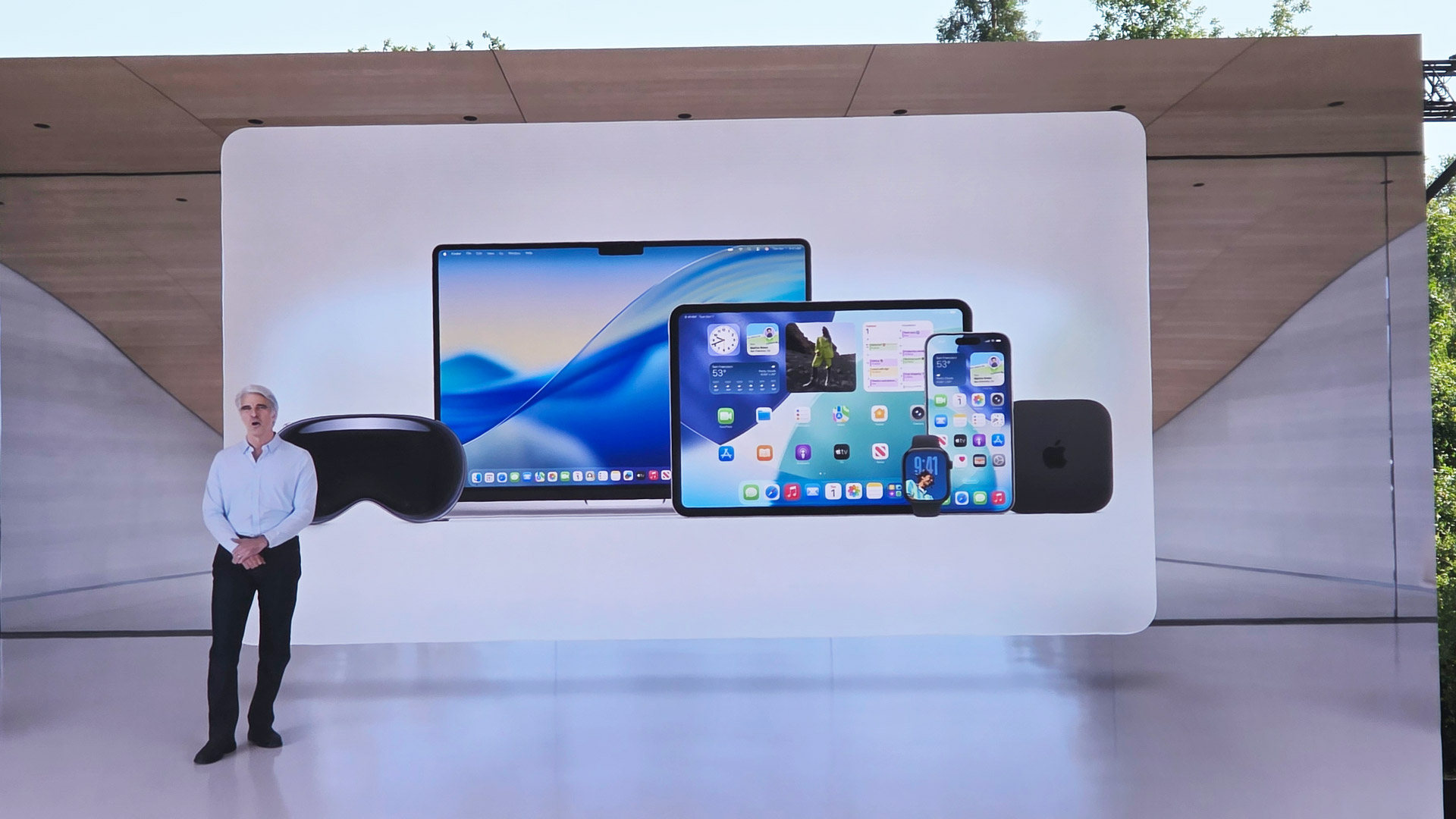
Rank 39504Liquid Glass. It's an umbrella term for interface changes across virtually every Apple platform, but it's also evocative of an intangible thing; digital, transparent, amorphous glass that glides, flexes, and responds to touch in a way real glass could never do.Just hours after Apple unveiled, at WWDC 2025, the biggest change to iOS since iOS 7 13 years ago, I, along with Tom's Guide Global Editor-in-Chief Mark Spoonauer, sat down with Apple's Senior Vice President of Software Engineering Craig Federighi and Apple Global VP of Marketing Greg Joswiak to talk about everything the company unveiled during its 90-minute keynote.We talked about Siri, Apple Intelligence, and iPadOS's remarkable transformation, but it was when we asked about the inspiration for Liquid Glass that the pair became most animated.Federighi first confirmed what rumors have been suggesting for months: that the toddler-aged visionOS, which runs on Apple's $3,500 mixed reality Vision Pro headset, was where it all started.(Image credit: Lance Ulanoff / Future)"So I would say the most obvious inspiration is visionOS, which uses glass, and you say, 'Well, why did visionOS use glass? Well, glass is a material that allows interfaces to sit in the context, in this case, of a room, and feel like the chrome [or frame] – that is, the glass – is somehow consuming kind of less space. It's allowing more of the context to come through. That was very powerful in the concept of visionOS".I found it hard to believe, though, that this still-new platform could be the full inspiration for Liquid Glass, a design approach that's set to appear in iOS 26, iPadOS 26, macOS Tahoe, tvOS 26, and watchOS 26. I asked Federighi if they looked at visionOS and the lightbulb went off, or if there were other, older influences. It turns out that Apple's obsession with glassy interfaces goes back at least a dozen years.Through the looking glassImage 1 of 2(Image credit: Lance Ulanoff / Future)Image 2 of 2(Image credit: Lance Ulanoff / Future)"If you look back at even iOS, 7, we had started to work with translucent materials, and then you saw even in MacOS Yosemite, the sidebars and windows started to have this kind of translucency," he says. "So there was a glassness, already, that was finding its way as a building block material for interfaces."Federighi also revealed the extent of real-world testing that went into developing the uncannily realistic look and responsiveness of Liquid Glass. "There [are these] designed rooms. You know, they bring [...] in different pieces of glass with different opacities, different lensing, it's quite interesting.".He added that Apple has an industrial design studio which has the capability to fabricating almost anything. "There were certainly real material studies that were being done there."The efforts to simulate real glass and its optical qualities were extensive, but then Liquid Glass also does things no real glass can do, like changing shape when you touch or move it. But it goes deeper than that."We found that because of the incredible diversity of content that you have on your device – you're scrolling through a feed and it's all white and then suddenly there's a dark sky image that comes and scrolls under the glass – but you want the glass to react in a way that a clear piece of light glass would.Suddenly, the black thing comes in, and you can't read any of your text, or it looks poor. We were able to build adaptive glass that changes the way it's transmitting color that even can flip from a dark glass to a light glass adaptively, by understanding what's behind it. So, you know, it now becomes this incredibly malleable material that always fits in with whatever is beneath it."Check back soon for a link to the TechRadar and Tom's Guide podcast featuring the full interview with Federighi and Joswiak.You might also likeApple reveals major visual redesign for iOS 26, macOS 26 and more at WWDCThese are the best macOS Tahoe 26 features for your new Mac or MacBookWWDC 2025 as it happened: all the iOS 26, MacOS Tahoe, and iPadOS news
-

Picture from techcrunch.com
Rank 39505 -
Picture from ichef.bbci.co.uk
Rank 39506 -

Picture from static.independent.co.uk
Rank 39507 -

Picture from static.independent.co.uk
Rank 39508 -

Picture from static.independent.co.uk
Rank 39509 -

Picture from static.independent.co.uk
Rank 39510 -

Picture from static.independent.co.uk
Rank 39511 -

Picture from assets1.cbsnewsstatic.com
Rank 39512 -

Picture from assets1.cbsnewsstatic.com
Rank 39513 -

Picture from image.cnbcfm.com
Rank 39514 -
Picture from assets1.cbsnewsstatic.com
Rank 39515 -

Picture from assets2.cbsnewsstatic.com
Rank 39516 -

Picture from assets3.cbsnewsstatic.com
Rank 39517 -

Picture from assets3.cbsnewsstatic.com
Rank 39518 -

Picture from assets1.cbsnewsstatic.com
Rank 39519 -

Picture from assets2.cbsnewsstatic.com
Rank 39520 -

Picture from assets1.cbsnewsstatic.com
Rank 39521 -

Picture from assets3.cbsnewsstatic.com
Rank 39522 -

Picture from image.cnbcfm.com
Rank 39523 -

Picture from image.cnbcfm.com
Rank 39524 -

Picture from techcrunch.com
Rank 39525 -

Picture from static.independent.co.uk
Rank 39526 -

Picture from static.independent.co.uk
Rank 39527 -

Picture from static.independent.co.uk
Rank 39528 -

Picture from assets2.cbsnewsstatic.com
Rank 39529 -

Picture from assets3.cbsnewsstatic.com
Rank 39530 -

Picture from assets2.cbsnewsstatic.com
Rank 39531 -

Picture from ichef.bbci.co.uk
Rank 39532 -
Picture from ichef.bbci.co.uk
Rank 39533 -

Picture from image.cnbcfm.com
Rank 39534 -

Picture from image.cnbcfm.com
Rank 39535 -

Picture from image.cnbcfm.com
Rank 39536 -
Picture from o.aolcdn.com
Rank 39537It's hard to look at Apple's new "Liquid Glass" aesthetic and not think about Windows Vista, Microsoft's much-maligned OS which also touted transparencies and glass-like effects as a bold new vision for computing. You can see the similarities between Apple's UI and Vista's "Windows Aero" design language everywhere, from the glassified app icons in iOS 26 and macOS Tahoe 26 which look a lot like VIsta's glossy icons, to the transparent backgrounds used in drop down menus, which hearken back to VIsta's transparent window borders. The key difference is that Apple is just doing it all better. (Sorry, not sorry, Windows fans.)
While Microsoft started off with an intriguing idea, it failed to execute the Windows Aero UI well in Vista. Mostly, that's because Vista itself was a huge mess — it was far slower than Windows XP, it was notoriously buggy and it handled drivers poorly. And if you actually wanted to partake in the glory of Aero transparency bars, you needed a computer with a powerful GPU. That was far more rare in 2007 than it is today, when even integrated graphics can run basic 3D and fancy UI elements well. With its homegrown chips, Apple also provides decent graphics capabilities in its devices that support iOS 26, iPadOS 26 and other new software releases with Liquid Glass.
It also helps that Liquid Glass isn't really a huge change for Apple, unlike the jump from Windows XP to Vista. Apple has been creeping towards a flashier UI and more widespread use of transparencies ever since iOS 7 was released in 2013, which dropped the archaic skeuomorphic design trend in favor of a flatter and more stylish aesthetic. So sure, your icons and menus may have a bit more shine to them in iOS 26, but they mostly work the way you remember. (You could also argue Apple itself kickstarted the move towards transparencies in desktop operating systems with the original Mac OS X in 2001, which gave its iconic dock a glossy background.)
Apple
I can argue for the overall wisdom of Apple's Liquid Glass, at least compared to Windows Vista, and personally I also think it gives iOS a much-needed dose of personality. But I can't really convince you otherwise if you think it looks ugly, as many of my Engadget colleagues do. Senior News Editor Avery Ellis calls it "busy and obnoxious," and Editor-in-Chief Aaron Souppouris noted that "it truly feels like Aero, rooted in the mid '00s.... I don't need light refracting around my pause button." Fair complaints! And as usual, you can also reduce transparency effects and motion elements in Apple's Accessibility Settings, if these elements truly bother you.
But after spending a bit of time with the first iOS 26 developer beta, I'm more intrigued by Liquid Glass than anything else. It makes app icons look like tiny jewels that I just want to touch, and I dig the transparency effects throughout the OS — they almost seem like a preview for a future where we're using holographic Apple devices. (That's also something I felt while using visionOS on the Vision Pro, which served as the launchpad for Liquid Glass.) I also genuinely love iOS 26's revamped Safari, which lets you browse completely in full screen. As you scroll down, the location bar at the bottom of your screen shrinks and gets out of the way. But if you scroll up or tap into the location bar, it pops back up to give you the sharing and navigation options you're used to.
Devindra Hardawar for Engadget
It could also be that I'm a sucker for novelty. Back in my Windows XP days, I used to use apps like WindowBlinds to customize the OS and add transparent effects. And there are signs that Apple may be going a bit too far with transparencies, like with the iOS 26's Control Center (above). It looks fine if you're swiping it down while inside an app, but if you're on the home screen, it's just one of many levels of glass-like windows. I could see that being a bit overbearing for some users.
It’s also worth noting that interface redesigns are often rejected at first glance, especially since you’re seeing them abstracted through screenshots and videos. Even Apple’s slick marketing magic doesn’t replicate the experience of using Liquid Design. In my experience, iOS 26 really isn’t that different from everything that came before. Once you get over the initial shock of a new interface, you may see it with new eyes.
Apple
There's also still plenty of time until Apple's new operating systems arrive this fall though, and the company is often quick to tweak major design changes if beta users complain about them. I could see Apple toning down the Control Center's transparent background, or even better, giving users more control over the amount of Liquid Glass elements on your screen. Personally, I don’t mind it when companies stretch their interface ideals a bit too far – there’s always room to move back. That’s far better than being too conservative and never really pushing your aesthetic vision forward.This article originally appeared on Engadget at https://www.engadget.com/computing/apples-liquid-glass-is-windows-vista-done-well-181954910.html?src=rss
-

Picture from assets1.cbsnewsstatic.com
Rank 39538 -

Picture from assets3.cbsnewsstatic.com
Rank 39539 -

Picture from assets1.cbsnewsstatic.com
Rank 39540 -
Picture from assets3.cbsnewsstatic.com
Rank 39541 -

Picture from assets3.cbsnewsstatic.com
Rank 39542 -

Picture from assets1.cbsnewsstatic.com
Rank 39543 -

Picture from cdn.mos.cms.futurecdn.net
Rank 39544Kaspersky warns multiple DVR devices are being targeted with malwareThe malware assimilates the devices into a botnet, granting DDoS and proxy capabilitiesThe victims are scattered all over the world, and there seems to be no patchIf you are using TBK DVR-4104, DVR-4216, or any digital video recording device that uses these instances as its basis, you might want to keep an eye on your hardware because it’s being actively hunted.Cybersecurity researchers at Kaspersky claim to have seen a year-old vulnerability in these devices being abused to expand the dreaded Mirai botnet.In April 2024, security researchers found a command injection flaw in the devices listed above. As per the NVD, the flaw is tracked as CVE-2024-3721, and was given a severity score of 6.3/10 (medium). It can be triggered remotely and grants the attackers full control over the vulnerable endpoint. Soon after discovery, the flaw also got a Proof-of-Concept (PoC) exploit.Victims around the worldNow, a year later, Kaspersky says it saw this same PoC being used to expand the Mirai botnet. The attackers are using the bug to drop an ARM32 malware which assimilates the device and grants the owners the ability to run distributed denial of service (DDoS) attacks, proxy malicious traffic, and more.The majority of victims Kaspersky is seeing are located in China, India, Egypt, Ukraine, Russia, Turkey, and Brazil. However as a Russian company, Kaspersky’s products are banned in many Western countries, so its analysis could be somewhat skewed.The number of potentially vulnerable devices was more than 110,000 in 2024, and has since dropped to around 50,000. While most definitely an improvement, it still means that the attack surface is rather large.Usually, when a vulnerability like this is discovered, a patch soon follows. However, multiple media sources are claiming that it is “unclear” if makers TBK Vision patched the bug.CyberInsider reports that multiple third-party brands use these devices as a basis for their models, further complicating patch availability, and stating that “it’s very likely that for most, there is no patch.”Some of the brands are Novo, CeNova, QSee, Pulnix, XVR 5 in 1, Securus, Night OWL, DVR Login, and others.Via BleepingComputerYou might also likeTVT DVRs become prime target for Mirai botnetTake a look at our guide to the best authenticator appWe've rounded up the best password managers
-
Picture from ichef.bbci.co.uk
Rank 39545 -

Picture from assets3.cbsnewsstatic.com
Rank 39546 -

Picture from assets2.cbsnewsstatic.com
Rank 39547 -

Picture from assets3.cbsnewsstatic.com
Rank 39548 -

Picture from assets1.cbsnewsstatic.com
Rank 39549 -

Picture from assets3.cbsnewsstatic.com
Rank 39550
