News
This constantly updated list features the latest and most important news articles, ranked in order of significance. The top stories highlight major developments, breaking news, and critical updates across various topics, ensuring you stay informed about the most pressing issues. As new articles are added, the list adapts to reflect the latest priorities, keeping the most impactful stories at the forefront. Whether it’s global events, technology breakthroughs, or industry trends, this dynamic list ensures you always have access to the most relevant and timely information.
-

Picture from static.independent.co.uk
Rank 39351 -

Picture from static.independent.co.uk
Rank 39352 -

Picture from assets2.cbsnewsstatic.com
Rank 39353 -

Picture from cdn.mos.cms.futurecdn.net
Rank 39354Lies of P's director Jiwon Choi has said new changes for the Overture DLC will be implemented following player feedbackChoi said Round8 Studio is paying attention to the combat experienceThe developer is reviewing various adjustments, including "difficulty reduction"Developer Round8 Studio has confirmed that Lies of P: Overture will receive additional difficulty changes based on player feedback.In a new Director's Letter video following the shadow-drop release of the Overture downloadable content (DLC) at Summer Game Fest, director Jiwon Choi thanked players for their feedback and confirmed that the studio is looking to implement some changes that will mainly target combat and difficulty."We're reviewing all of it carefully and are already looking into when to implement some of your suggestions," Choi said. "Among all the feedback, we are paying the closest attention to the combat experience."Players online have shared their thoughts on Overture, with some stating that the DLC feels more difficult than the base game, even when playing on the game's standard difficulty, Legendary Stalker."I’m at level 300 and should not be getting two-shot from basic enemies," one player wrote on Steam(via IGN). "It doesn’t help that the enemy grouping is designed for you to have to deal with multiple at once. This wouldn’t be a problem if even one of those enemies doesn’t take out half your health with one hit."Choi continued, saying that the game will receive adjustments that will essentially nerf the difficulty."We identified areas that did not turn out quite as we intended. Therefore, we are reviewing various adjustments, including difficulty reduction."However, combat is one of the most fundamental experiences in Lies of P, so any modifications or changes require meticulous work and thorough testing."We don't know when the patch will arrive, but we'll keep you updated.In TechRadar Gaming's Lies of P: Overture review, Hardware Editor Rhys Wood said that DLC is an "expansion that exudes confidence on the part of developer Round8 Studio" and "successfully enriches the entire Lies of P package, with stunning and creative level design and some of the best boss fights in the subgenre as a whole".You might also like...IO Interactive says 007 First Light is the 'ultimate Bond experience' and 'definitely not a reskin' of HitmanDon't worry, Team Cherry says Hollow Knight: Silksong won't be an Xbox Asus ROG Ally exclusiveCall of Duty: Black Ops 7 officially announced and it stars that one Gilmore Girls actor
-

Picture from ichef.bbci.co.uk
Rank 39355 -
Picture from static.independent.co.uk
Rank 39356 -

Picture from assets3.cbsnewsstatic.com
Rank 39357 -

Picture from image.cnbcfm.com
Rank 39358 -

Picture from techcrunch.com
Rank 39359 -

Picture from ichef.bbci.co.uk
Rank 39360 -

Picture from static.independent.co.uk
Rank 39361 -

Picture from assets3.cbsnewsstatic.com
Rank 39362 -
Picture from o.aolcdn.com
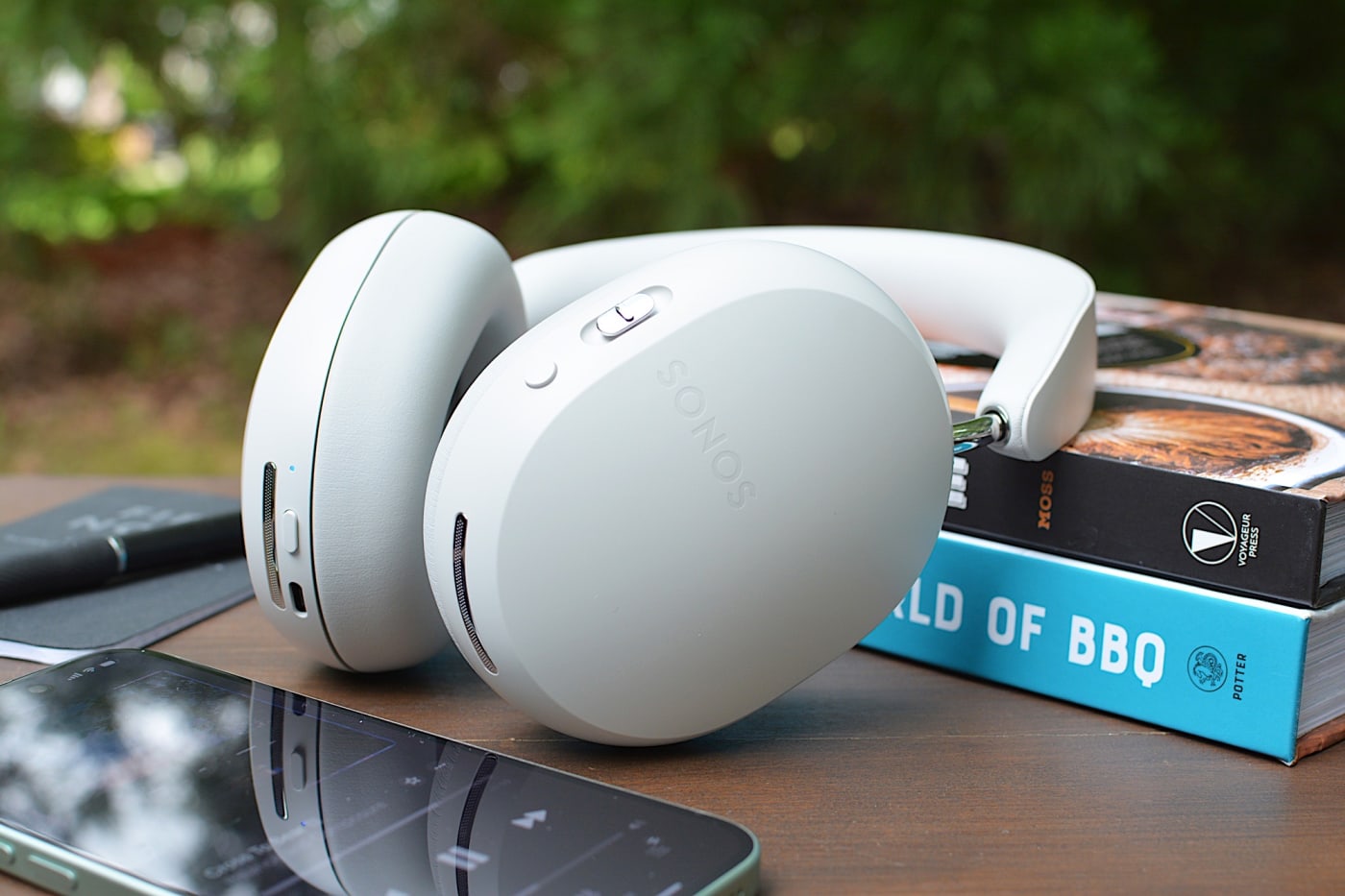
Rank 39363Sonos has announced a major software update for its flagship Sonos Ace headphones that brings some new features to the premium wireless cans. Chief among them is the long-awaited TrueCinema feature, which was first promised as upcoming when the headphones launched in 2024. TrueCinema uses a compatible Sonos soundbar to measure the acoustic dynamics of the room you’re sitting in. It then uses that data to increase the accuracy of the spatial sound in your headphones, in the same fashion as Trueplay on Sonos speakers. The idea is for the audio the user hears to mimic that of a well-balanced surround sound system thats sits right in the room you're listening in.
TV Audio Swap is also getting an update and will now support two sets of Sonos Ace headphones synced to the same compatible soundbar, where it previously supported just one set. This feature allows users to seamlessly transfer the audio from their soundbar to their headphones.
The update also improves the headphones Active Noise Cancellation by leveraging on-board sensors to adapt to a user's hair, glasses or hats in real time. Using the sensors, the Sonos Ace will then compensate for sound leaks.
Some improvements to call quality are also coming to Sonos Ace with the addition of SideTone, a feature that plays a user’s voice back to them at low volume while on a call. The audio fidelity on phone calls has also received a bump through this update, though details on what bitrate or exactly how it was improved are not available.
Jason White, head of software at Sonos, said the company’s goal has been to share meaningful software updates that deliver new enhancements to existing products. “Our goal has always been to create products that earn their place in people’s lives for years, and this Sonos Ace update is a great example of that. It proves that your best tech investment doesn’t need to be your newest, it just has to be built right,” White said.
This update launches globally today and is available through the Sonos app.This article originally appeared on Engadget at https://www.engadget.com/audio/headphones/sonos-ace-headphones-get-long-awaited-truecinema-sound-and-more-in-big-update-163012056.html?src=rss
-
Picture from o.aolcdn.com
Rank 39364Qualcomm's has launched its latest processor for smart glasses, and though it's a modest upgrade over the previous chip, it has a new trick. The Snapdragon AR1+ Gen 1 can run AI directly on devices with no need for a smartphone or cloud connection, allowing users to go out or do chores with only their smart glasses, the company claims. The chip could appear in next-gen AR glasses from the likes of Meta and XReal.
Smart glasses often require large temple arms to accommodate chips and other components, but the AR1+ Gen 1 is 28 percent smaller than the the AR1 Gen 1, so it allows for a 20 percent temple height reduction. At the same time, it requires less power across key use cases including computer vision, wake with voice, Bluetooth playback and video streaming. Qualcomm also promises "premium" image quality via technologies like binocular display support, image stabilization and a massive multi-frame engine.
Qualcomm
The key feature, though, is the on-glass AI powered by Qualcomm's 3rd-gen Hexagon NPU, with 1 billion small language model (SLM) parameters on-glass. That allows it to run AI assistants that use SLMs like Llama 1B, with users speaking commands and seeing the results displayed on the glasses as text.
"While on stage, I was at the 'supermarket' and asked my glasses for help with fettuccine alfredo I needed to make for my daughter’s birthday party," wrote Qualcomm SVP of XR Ziad Asghar. "This demonstration was a world’s first: an Autoregressive Generative AI model running completely on a pair of smart glasses."
Qualcomm shouted out Meta's Ray-Ban glasses as well as its chunky Orion AR glasses prototype as examples of where smart glass technology is heading. It then added that tech like its Snapdragon AR1+ Gen 1 chip will enable "sleeker form factors that don’t compromise on the ability to run AI models." Reading between the lines, you can expect the chip to appear in ever-slimmer standalone AI-powered smart glasses in the near future. This article originally appeared on Engadget at https://www.engadget.com/wearables/qualcomm-says-its-new-ar1-gen-1-chip-can-handle-ai-directly-on-smart-glasses-163002410.html?src=rss
-

Picture from static.independent.co.uk
Rank 39365 -
Picture from static.independent.co.uk
Rank 39366 -

Picture from assets1.cbsnewsstatic.com
Rank 39367 -

Picture from image.cnbcfm.com
Rank 39368 -

Picture from ichef.bbci.co.uk
Rank 39369 -

Picture from static.independent.co.uk
Rank 39370 -

Picture from static.independent.co.uk
Rank 39371 -

Picture from static.independent.co.uk
Rank 39372 -

Picture from static.independent.co.uk
Rank 39373 -

Picture from static.independent.co.uk
Rank 39374 -

Picture from static.independent.co.uk
Rank 39375 -

Picture from static.independent.co.uk
Rank 39376 -

Picture from static.independent.co.uk
Rank 39377 -

Picture from static.independent.co.uk
Rank 39378 -

Picture from static.independent.co.uk
Rank 39379 -

Picture from static.independent.co.uk
Rank 39380 -

Picture from static.independent.co.uk
Rank 39381 -

Picture from image.cnbcfm.com
Rank 39382 -
Picture from o.aolcdn.com
Rank 39383Google has released Android 16 to the masses, as it's now available for compatible handsets. The company says new devices will come preloaded with the OS in "the coming months."
The update includes several notable features. The biggest one might be live updates in notifications. This means that stuff like ride-shares and food deliveries will get a progress bar directly in the notification, so folks won't have to constantly open and close the app to wonder why a burrito seems to be stuck four blocks away.
Google
Also, notifications from the same app will now be automatically grouped together to reduce clutter and pings. There's now support for LE audio hearing aids, with a native control option. Users can also switch to the phone's microphone when using one of these hearing devices for clearer audio in noisy places.
Google has tied all of its security features together, so users can now be protected from "online attacks, harmful apps, unsafe websites, scam calls and more in just a tap." This includes new scam detection features that were previewed back in May.
Google
Shutterbugs are getting a fairly robust suite of new features, including automatic night mode scene detection, hybrid auto exposure and more precise color temperature adjustments. UltraHDR images have been improved, with support for HEIC encoding, and Android 16 offers integration with the high-end Advanced Professional Video (APV) codec.
Google
The company is finally bringing desktop windowing to Android, but it's not ready just yet. That feature will be available to general users later in the year, but Android 16 QPR 3 Beta 2 is currently previewing the feature.
There's also a neat Android ecosystem update with some nifty features. This includes upgraded RCS group chats, with custom icons and the ability to mute threads. Google Photos now offers an AI-enhanced image editor that will recommend suggested edits. Emoji Kitchen is receiving new sticker combinations and Wear OS devices can now pay for transit fares without having to open a dedicated app.
Google
Finally, Google has offered details on the Pixel Drop for June. New features include a Pixel VIPs widget that displays information on preferred contacts and more expressive captions on videos.This article originally appeared on Engadget at https://www.engadget.com/mobile/android-16-is-out-complete-with-live-notification-updates-and-new-camera-features-170006072.html?src=rss
-

Picture from static.independent.co.uk
Rank 39384 -
Rank 39385
-

Picture from static.independent.co.uk
Rank 39386 -

Picture from static.independent.co.uk
Rank 39387 -

Picture from static.independent.co.uk
Rank 39388 -

Picture from assets2.cbsnewsstatic.com
Rank 39389 -

Picture from assets1.cbsnewsstatic.com
Rank 39390 -

Picture from assets2.cbsnewsstatic.com
Rank 39391 -

Picture from cdn.mos.cms.futurecdn.net
Rank 39392The race to put augmented reality smart glasses on your face is heating up. Snap Spectacles are transforming into "Specs" and will launch as lighter and more powerful AR wearables in 2026.CEO Evan Spiegel announced the all-new Specs on stage at the XR event AWE, promising smart glasses that are smaller, considerably lighter, and "with a ton more capability."The company didn't spell out a specific time frame or price, but the 2026 launch schedule does put Meta on notice, which is busy prepping its exciting Orion AR glasses for 2027. It appears, Snap Specs will face off with the Samsung/Google Android XR-based Glasses, which are also expected sometime in 2026.As for what consumers can expect from Specs, Snap is building them on the same Snap OS used in its fifth-generation Spectacles (and likely still using a pair of Qualcomm Snapdragon XR chips). That means all the interface and interaction metaphors, like gesture-based controls, will remain. But there are a significant number of new features and integrations that will start showing up this year, long before Specs arrive, including AI.Upgrading the platform(Image credit: Lance Ulanoff / Future)Spiegel explained the updates by first revealing that Snap started working on glasses "before Snapchat" was even a thing and that the company's overarching goal is "making computers more human." He added that "with advances in AI, computers are thinking and acting like humans more than ever before."Snap's plan with these updates to Snap OS is to bring AI platforms into the real world. They're bringing Gemini and OpenAI models into Snap OS, which means that some multi-model AI capabilities will soon be part of Fifth Generation Spectacles and, eventually, Specs. These tools might be used for on-the-fly text translation and currency conversion.The updated platform also adds tools for Snap Lenses builders that will integrate with the Spectacles' and Specs' AR waveform-based display capabilities.A new Snap3D API, for instance, will let developers use GenAI to create 3D objects in lenses.The updates will include a Depth Module AI, which can read 2D information to create 3D maps that will help anchor virtual objects in a 3D world.Businesses deploying Spectables (and eventually Specs) may appreciate the new Fleet Management app, which will let developers manage and remotely monitor multiple Specs at once, and the ability to deploy the Specs for guided navigation at, say, a museum.Later, Snap OS will add WebXR support to build AR and VR experiences within Web browsers.Let's make it interestingSpiegel claimed that, through lenses in Snapchat, Snap has the largest AR platform in the world. "People use our AR lenses in our camera 8 billion times a day."That is a lot, but it's virtually all through smartphones. At the moment, only developers are using the bulky Spectacles and their Lenses capabilities.The consumer release of Specs could change that. When I tried Spectacles last year, I was impressed with the experience and found them, while not quite as good as Meta Orion glasses (the lack of gaze-tracking stood out for me), full of potential.A lighter form factor that approaches or surpasses what I found with Orion and have seen in some Samsung Android XR glasses, could vault Snap Specs into the AR Glasses lead. That is, providing they do not cost $2000.You might also likeThe best VR headsets in 2025 - Virtual Reality GamingI took my Meta Quest 3 on a 3000-mile flight so you don't ...Meta Orion hands-on: if this is a prototype the finished product is going to be incredible
-
Picture from o.aolcdn.com
Rank 39393Snap's next generation of standalone augmented reality glasses will arrive next year and will be smaller, lighter and more powerful than the developer-focused device the Snapchat maker introduced last year. CEO Evan Spiegel announced the upcoming glasses, which will be called "Specs," during a keynote at Augmented World Expo (AWE).
"Specs are coming next year, in a much smaller form factor, at a fraction of the weight, with a ton more capability," Spiegel said. He said the glasses will be "ready for public release," but didn't provide details on how much they may cost. The current fifth-generation glasses are available only to approved developers willing to commit to a year-long $99/month subscription.
Still, a smaller pair of AR glasses from Snap should be welcome news to Snapchat fans curious about the company's standalone AR device, but who may have been put off by its bulky, oversized design. Spiegel shared few details about the glasses, but in a blog post Snap suggested that AI will play an important role. "It’s clear that today’s devices and user interfaces are woefully inadequate to realize the full potential of AI," the company wrote. "Chatbots will soon give way to immersive experiences that bring AI into the world through augmented reality, empowering us to express ourselves, live in the moment, learn about the world, and have fun together."
The existing version of Spectacles already has some AI-powered experiences, thanks to a partnership with OpenAI. And Snap today also announced new integrations with OpenAI and Google that allow developers to build multimodal lenses for Spectacles that can use the built-in cameras to react to the wearer's surroundings. Developers have already created experiences for recipe generation, translation and currency conversion, Snap said.
Spiegel did confirm that the AR lenses that developers are building now will work with the next-generation of frames. So whenever they do launch, there should be an established catalog of AR experiences for the glasses. This article originally appeared on Engadget at https://www.engadget.com/ar-vr/snap-says-new-lightweight-ar-glasses-will-come-in-2026-171020059.html?src=rss
-

Picture from techcrunch.com
Rank 39394 -

Picture from static.independent.co.uk
Rank 39395 -

Picture from static.independent.co.uk
Rank 39396 -

Picture from static.independent.co.uk
Rank 39397 -

Picture from static.independent.co.uk
Rank 39398 -

Picture from assets3.cbsnewsstatic.com
Rank 39399 -

Picture from assets3.cbsnewsstatic.com
Rank 39400