News
This constantly updated list features the latest and most important news articles, ranked in order of significance. The top stories highlight major developments, breaking news, and critical updates across various topics, ensuring you stay informed about the most pressing issues. As new articles are added, the list adapts to reflect the latest priorities, keeping the most impactful stories at the forefront. Whether it’s global events, technology breakthroughs, or industry trends, this dynamic list ensures you always have access to the most relevant and timely information.
-
Picture from assets2.cbsnewsstatic.com
Rank 38401 -

Picture from assets3.cbsnewsstatic.com
Rank 38402 -

Picture from cdn.mos.cms.futurecdn.net
Rank 38403OpenAI’s Head of Model and Behavior Policy, Joanne Jang, has penned a blog post on X about human-AI relationships, offering some well-considered ideas about the subject and how OpenAI approaches the issues surrounding it. Essentially, as AI models get better at imitating life and engaging in conversation, people are starting to treat AI chatbots like they are also people. It makes sense that OpenAI would want to make it clear that they are aware of it and are incorporating the facts into their plans.But the thoughtful, nuanced approach, including designing models that feel helpful and kind, but not sentient, misses something crucial. No matter how clear-eyed and careful Jang tries to be, people having emotional connections with AI, an occasional outlier event, or a future hypothetical, it's happening now, and it seems to be happening quite a lot.OpenAI may have been caught off guard, as CEO Sam Altman has commented on being surprised by how much people anthropomorphize AI and how deeply users claim to connect with the models. He’s even acknowledged the emotional pull and its potential risks. That's why Jang's post exists.She makes it clear that OpenAI is building models to serve people and that they are prioritizing the emotional side of that equation. They’re researching how and why people form emotional attachments to AI and what it means for shaping future models. She makes a point of distinguishing between ontological consciousness, as in actual consciousness that humans have, and perceived consciousness, whether it seems conscious to users. Perceived consciousness is what matters for now, since that’s what affects people interacting with the AI. The company is trying to thread a behavioral needle that makes the AI seem warm and helpful without pretending it has feelings or a soul.Nonetheless, the clinically compassionate language couldn't disguise an obvious missing element. It felt like watching someone put down a Caution: Wet Floor sign and bragging about plans for waterproof buildings a week after a flood left the floor knee deep in water.The elegant framing and cautious optimism of the blog post and its focus on responsible model creation based on research and long-term cultural conditioning sidestep the messy reality of how people are developing deep connections to AI chatbots, including ChatGPT. A lot of people aren't just talking to ChatGPT like it's software, but like it's a person. Some are even claiming to have fallen in love with an AI companion, or using it to replace human connections entirely.AI intimacyThere are Reddit threads, Medium essays, and viral videos of people whispering sweet nothings to their favorite chatbot. It can be funny or sad or even enraging, but what it's not is theoretical. Lawsuits over whether AI chatbots contributed to suicides are ongoing, and more than one person has reported relying on AI to the point where it's become harder to form real relationships.OpenAI does note that constant, judgment-free attention from a model can feel like companionship. And they admit that shaping the tone and personality of a chatbot can impact how emotionally alive it feels, with rising stakes for users sucked into these relationships. But the tone of the piece is too detached and academic to acknowledge the potential scale of the problem.Because with the AI intimacy toothpaste already out of the tube, this is a question of real-world behavior and how the companies behind the AI shaping that behavior respond right now, not just in the future. Ideally, they'd have systems in place already for dependency detection. If someone is spending hours a day with ChatGPT, talking like it’s their partner, the system should be able to gently flag that behavior and suggest a break.And the romantic connections need some hard boundaries. Not banning it, that would be silly and probably counterproductive. But strict rules that any AI engaged in romantic roleplaying has to remind people they are talking to a bot, one that isn't actually alive or aware. Humans are masters of projection, and a model doesn’t have to be flirty for the user to fall in love with it, of course, but any hints of conversation trending in that direction should trigger those protocols, and they should be extra strict when it comes to kids.The same goes for AI models as a whole. Occasional reminders from ChatGPT saying, "Hey, I'm not a real person," might feel awkward, but they're arguably necessary in some cases and a good prophylactic in general. It's not the fault of users that people anthropomorphize everything. Googly eyes on Roombas and endowing our vehicles with names and personalities is not seen as more than slightly quirky. It's not surprising that a tool as responsive and verbal as ChatGPT might start to feel like a friend, a therapist, or even a partner. The point is that companies like OpenAI have a responsibility to anticipate this and design for it, and should have from the start.You might argue that adding all these guardrails ruins the fun. That people should be allowed to use AI however they want, and that artificial companionship can be a balm for loneliness. And that's true in moderate doses. But playgrounds have fences and roller coasters have seat belts for a reason. AI capable of mimicking and provoking emotions without safety checks is just neglectful.I'm glad OpenAI is thinking about this, I just wish they had done so sooner, or had more urgency about it now. AI product design should reflect the reality that people are already in relationships with AI, and those relationships need more than thoughtful essays to stay healthy.You might also likeAnthropic’s new AI-written blog is more of a technical treat than a literary triumphAI can write a hit song, but it can’t lift your soul or break your heartAudible’s AI narration sounds impressive, but I'd rather hear the story told by a human
-

Picture from assets3.cbsnewsstatic.com
Rank 38404 -

Picture from assets3.cbsnewsstatic.com
Rank 38405 -
Picture from assets3.cbsnewsstatic.com
Rank 38406 -
Picture from assets2.cbsnewsstatic.com
Rank 38407 -

Picture from assets3.cbsnewsstatic.com
Rank 38408 -
Picture from assets1.cbsnewsstatic.com
Rank 38409 -
Picture from assets2.cbsnewsstatic.com
Rank 38410 -
Picture from assets1.cbsnewsstatic.com
Rank 38411 -

Picture from assets1.cbsnewsstatic.com
Rank 38412 -
Picture from assets1.cbsnewsstatic.com
Rank 38413 -

Picture from assets2.cbsnewsstatic.com
Rank 38414 -
Picture from assets1.cbsnewsstatic.com
Rank 38415 -
Picture from assets3.cbsnewsstatic.com
Rank 38416 -

Picture from assets3.cbsnewsstatic.com
Rank 38417 -
Picture from assets1.cbsnewsstatic.com
Rank 38418 -
Picture from assets1.cbsnewsstatic.com
Rank 38419 -

Picture from static.independent.co.uk
Rank 38420 -
Picture from assets2.cbsnewsstatic.com
Rank 38421 -

Picture from assets3.cbsnewsstatic.com
Rank 38422 -

Picture from assets1.cbsnewsstatic.com
Rank 38423 -

Picture from assets3.cbsnewsstatic.com
Rank 38424 -
Picture from assets3.cbsnewsstatic.com
Rank 38425 -
Picture from assets1.cbsnewsstatic.com
Rank 38426 -

Picture from assets3.cbsnewsstatic.com
Rank 38427 -
Picture from assets3.cbsnewsstatic.com
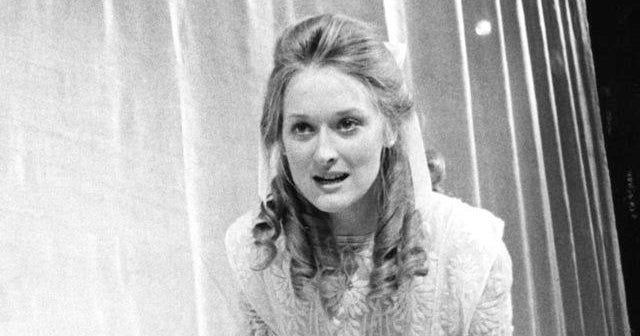
Rank 38428"The Rep" - what insiders call the Yale Repertory Theatre - is a unique entity on the American theater scene, a place where graduate students at the Yale Drama School work side-by-side with experts in every aspect of theater. Now celebrating its 50th year, it has been the launching pad for many a fabled career, from Meryl Streep and Sigourney Weaver to playwright Christopher Durang. Rita Braver looks back at the company's history with Streep, artistic director James Bundy, and actor James Earl Jones, who appeared with then-Yale grad student Courtney B. Vance in the Yale Rep-produced premiere of August Wilson's "Fences" in 1985.
-
Picture from assets3.cbsnewsstatic.com
Rank 38429 -

Picture from ichef.bbci.co.uk
Rank 38430 -
Picture from assets2.cbsnewsstatic.com
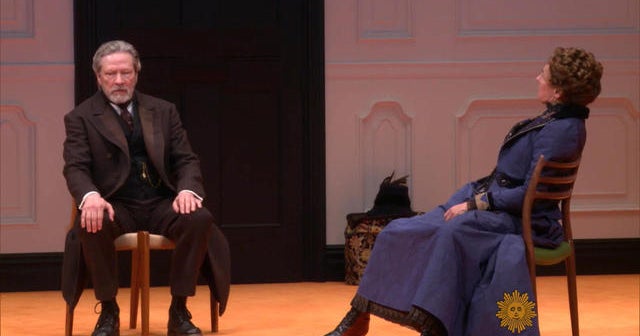
Rank 38431When last we left off with Nora Helmer in Henrik Ibsen's landmark 1879 drama, "A Doll's House," she had had an awakening - and exited her marriage and family with the slam of a door. Now she's back, in the Tony-nominated "A Doll's House, Part 2." Mo Rocca talks with playwright Lucas Hnath and the cast (including Laurie Metcalf, Chris Cooper and Jayne Houdyshell) about this continuation of the story of a woman awakened, and the mess she left behind in her journey toward self-discovery.
-
Picture from assets3.cbsnewsstatic.com
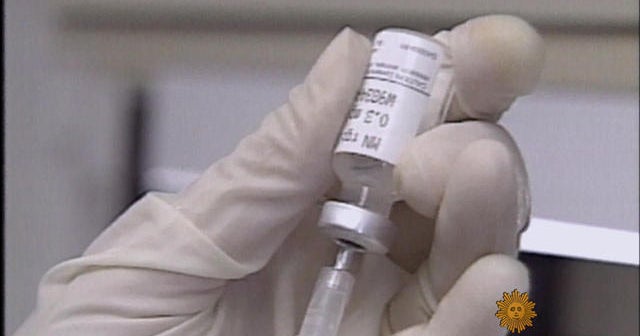
Rank 38432In 1981 an infectious disease researcher at the National institutes of Health started noticing reports that clusters of gay men were being diagnosed with infections that were highly unusual in younger people. It would take a few years before the medical community identified HIV which, left unchecked, can develop into the deadly syndrome known as AIDS. Today, treatments and preventive measures have changed expectations about the disease - and, in the eyes of some, caused undue casualness about prevention. Rita Braver talks with Dr. Anthony Fauci, director of the National Institute of Allergy and Infectious Diseases, and with playwright and activist Larry Kramer.
-

Picture from assets1.cbsnewsstatic.com
Rank 38433 -

Picture from assets1.cbsnewsstatic.com
Rank 38434 -
Picture from assets1.cbsnewsstatic.com
Rank 38435 -
Picture from assets3.cbsnewsstatic.com
Rank 38436 -
Picture from assets3.cbsnewsstatic.com
Rank 38437 -

Picture from static.independent.co.uk
Rank 38438 -

Picture from assets2.cbsnewsstatic.com
Rank 38439 -

Picture from assets3.cbsnewsstatic.com
Rank 38440 -

Picture from assets2.cbsnewsstatic.com
Rank 38441 -

Picture from assets3.cbsnewsstatic.com
Rank 38442 -
Picture from assets1.cbsnewsstatic.com
Rank 38443 -
Picture from assets1.cbsnewsstatic.com
Rank 38444 -

Picture from assets2.cbsnewsstatic.com
Rank 38445 -

Picture from assets2.cbsnewsstatic.com
Rank 38446 -
Picture from assets1.cbsnewsstatic.com
Rank 38447 -

Picture from assets1.cbsnewsstatic.com
Rank 38448 -

Picture from assets2.cbsnewsstatic.com
Rank 38449 -

Picture from assets1.cbsnewsstatic.com
Rank 38450