News
This constantly updated list features the latest and most important news articles, ranked in order of significance. The top stories highlight major developments, breaking news, and critical updates across various topics, ensuring you stay informed about the most pressing issues. As new articles are added, the list adapts to reflect the latest priorities, keeping the most impactful stories at the forefront. Whether it’s global events, technology breakthroughs, or industry trends, this dynamic list ensures you always have access to the most relevant and timely information.
-

Picture from static.independent.co.uk
Rank 36701 -

Picture from image.cnbcfm.com
Rank 36702 -
Picture from cdn.mos.cms.futurecdn.net
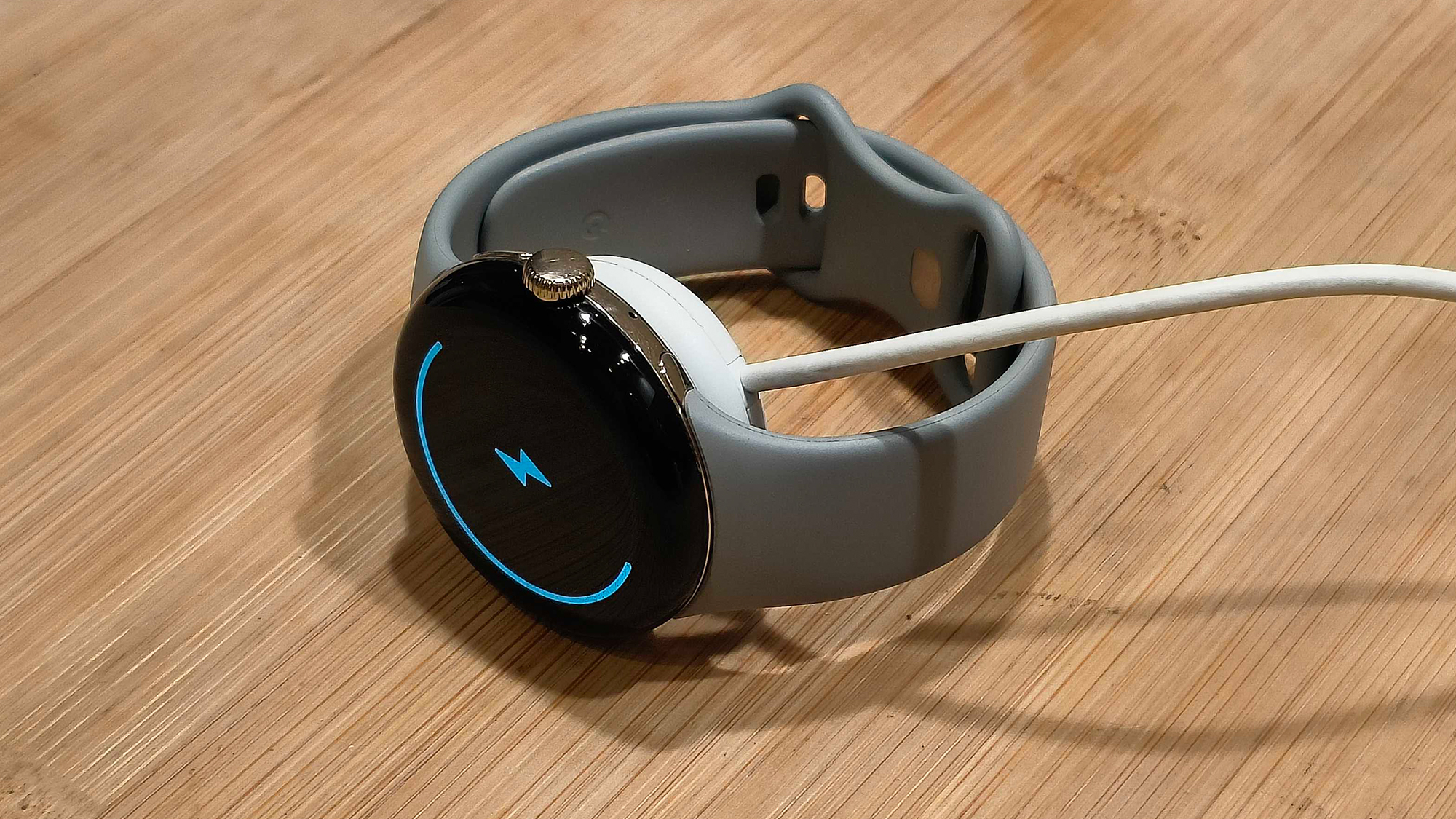
Rank 36703Wear OS 6 is said to bring two unannounced, vital quality-of-life improvements to your Android watchWear OS 6 will be released for Android watches later this yearIt's said to get two new unannounced features: firstly, a dedicated Water Lock for Pixel WatchSecondly, Adaptive Charging will improve your watch's long-term battery healthWear OS 6 has been revealed, and it's making a lot of changes that users of the best Android smartwatches are quite excited about. Changes to the user experience, a visual redesign, adding Google Gemini's AI assistant to your wrist... there's going to be plenty for wearers of the best smartwatches (that aren't for iPhone) to get their teeth into. You can read our Wear OS 6 feature breakdown here.However, there are two more features rumored to arrive with Wear OS 6, either on launch or as a future update.Firstly, according to Android Authority, you can expect a new adaptive charging feature. Adaptive charging is often used for devices to extend the battery's lifespan, preventing the battery from being over-charged too often, which can cause the battery to degrade.Android Authority found the strings of code, unveiling a feature similar to that on the best Pixel phones: pausing the charge at 80% completion and resuming an hour before you unplug your device. Samsung watches will reportedly get a similar feature with Samsung's Wear OS-adjacent system, One UI Watch 8.Water Lock on Pixel WatchesPixel Watches have a touch screen locking feature, which enables itself automatically during swimming workouts, but it can't eject water from crevices in the same way Samsung and Apple watches can. Nor does it have a dedicated labelled Water Lock, which disables the touch screen during rainfall, showers, or baths.Current Pixel Watches are expected to get a Water Lock feature at least, again via Android Authority's recent examination of code in the Wear OS 6 developer preview.The code doesn't actually detail what this new feature will do, so while there's always an outside chance that it will indeed eject water, it's more likely this is an update for existing Pixel Watches, restricted to a touchscreen-locking hot key under a more logical name for dealing with wet screens.Touchscreens are notoriously jumpy and flawed when wet, and trying to operate a watch in heavy rain or the shower could prove challenging if a water lock feature isn't available. While this is unlikely to change the way swimming and similar workouts operate on Pixel Watches, they will at least become more usable in the rain.You might also like...watchOS 12: 3 things I expect to see Tim Cook announce at this year's WWDC 2025Best Samsung watches 2025Your Google Pixel Watch could be about to get a useful new security feature
-

Picture from cdn.mos.cms.futurecdn.net
Rank 3670417 NPM packages with more than a million weekly downloads were compromised to deliver a RATThe attack could turn into a major supply chain attack, experts warnedThe packages were since deprecated, but users should be on their guardMore than a dozen packages on NPM were poisoned with a Remote Access Trojan (RAT), possibly infecting millions of projects.Cybersecurity researchers Aikido Security recently discovered malicious code buried very deep in 17 popular Gluestack packages.The packages cumulatively have more than a million downloads weekly, meaning huge amounts of users could possibly be affected, the experts warned.Revoking access tokensHere is the full list of compromised packages:@react-native-aria/button@react-native-aria/checkbox@react-native-aria/combobox@react-native-aria/disclosure@react-native-aria/focus@react-native-aria/interactions@react-native-aria/listbox@react-native-aria/menu@react-native-aria/overlays@react-native-aria/radio@react-native-aria/switch@react-native-aria/toggle@react-native-aria/utils@gluestack-ui/utils@react-native-aria/separator@react-native-aria/slider@react-native-aria/tabsThe packages deployed malicious code that connected to the attackers’ command-and-control (C2) and received additional commands including, among other things, the ability to upload a single, or multiple files.Furthermore, the trojan can execute Windows PATH hijacking and silently override legitimate python and pip commands.In response, Gluestack revoked an access token used to publish the compromised packages. All of the poisoned tools are marked on NPM as deprecated."Unfortunately, unpublishing the compromised version wasn’t possible due to dependent packages," a GlueStack developer said on GitHub. "As a mitigation, I have deprecated the affected versions and updated the latest tag to point to a safe, older version."The Node Package Manager (NPM) is the default package manager for the JavaScript runtime environment Node.js. It is used to install libraries, share packages with the community, manage dependencies, run scripts, and more.As such, it is vastly popular, having millions of monthly visitors, and hundreds of thousands of registered accounts that frequently publish their packages.Unfortunately, popular platforms attract threat actors in droves, and situations such as this one are not uncommon on NPM, or similar platforms such as GitHub or PyPi.Via BleepingComputerYou might also likeNPM users warned dozens of malicious packages aim to steal host and network dataTake a look at our guide to the best authenticator appWe've rounded up the best password managers
-

Picture from ichef.bbci.co.uk
Rank 36705 -

Picture from static.independent.co.uk
Rank 36706 -

Picture from assets2.cbsnewsstatic.com
Rank 36707 -

Picture from assets1.cbsnewsstatic.com
Rank 36708 -

Picture from cdn.mos.cms.futurecdn.net
Rank 36709Security and data protection are no longer separate concerns. Instead, they are two sides of the same coin, one inextricable from the other. If not considered as such, then a revaluation of your cybersecurity strategy is in order.Backups are widely seen as an “insurance policy”. If an organization is the target of an attack, with data deleted or encrypted for ransom, restored backups can make this far less catastrophic to operations.As always, threat actors have wised up and shifted their tactics. They now target backups in 93% of cases, and succeed 57% of the time.This is why security and data protection need to merge, creating a singular idea of “resilience” that unifies robust security measures with comprehensive data protection. Thanks to changing threat tactics, the security of backup infrastructure and the immutability of backup data are not just best practice, but essential requirements.The need for backup and data protectionMicrosoft 365 is one of the most commonly used office suites, but the need for third-party backup is often overlooked. This is partly because it has a built-in backup solution, but also an assumption that as a service it is “safe”. This could be a costly mistake. Critical data is often centralized in OneDrive, SharePoint, Teams, and Outlook—making Microsoft 365 services a tempting target for attackers.Microsoft does recommend third-party backups in its service agreements, and we are starting to see this advice being followed. A 56% increase in recovery events related to Microsoft 365 domains in the last year shows the necessity of Microsoft 365 backups and that many are heeding this recommendation.Microsoft 365 isn’t the only service where backups are required, of course, but it’s a good example of where this need can be easily missed, and why thinking about “resilience” is key.Diversifying for watertight insuranceRansomware groups are targeting backups, and they’re not subtle about it. Both research and public claims by threat actors make it clear: disabling the ability to recover data is a key objective of modern cyberattacks. To counter this, cyber resilience must go beyond reacting after the damage is done. It must include prevention, early detection, and well-practiced recovery.The first step is isolating the backup infrastructure, the metadata and storage, keeping it off the primary network. This significantly reduces the attack surface, ensuring backups remain secure and harder to reach.Second, access to backup systems must be tightly controlled. Enforcing multifactor authentication and following the principle of least privilege is essential. Ideally, unique, dedicated accounts should be used exclusively for backup access, never shared with other systems or users.Third, organizations should maintain immutable copies of their backup data. These tamper-proof versions cannot be altered or deleted, providing a powerful safeguard against ransomware and other threats that aim to corrupt or destroy recovery points.Fourth, cyber-ready organizations don’t just trust their backups—they test them. Regular, full-scale recovery drills conducted in a clean, isolated environment are vital for verifying that data can be restored reliably in the event of an incident.Finally, even with multiple layers of defense in place, true resilience requires ongoing vigilance. Continuous monitoring for anomalous activity—such as deleted backups, altered retention policies, unexpected job selections, or unusual file modification patterns—can help surface early signs of compromise.Feeding these alerts into a security team’s preferred SIEM tools ensures a swift, coordinated response. Increasingly, AI-powered anomaly detection is enhancing this process by automating threat identification and reducing the need for manual troubleshooting or recovery interventions.Compliance sets the standardThe merging of security and backup into “resilience” will be driven by compliance. Compliance standards are prioritizing cyber resilience, blending prevention, detection, and recovery into unified frameworks. Examples of frameworks that recognize BDR as best practice include NIS2, Cyber Essentials, CMMC, and Essential Eight, and it is also common regulations targeting specific sectors such as financial services.These industry-specific and global regulations require organizations to demonstrate both preventative measures to stop an attack and their robust recovery plans should these barriers be breached. For businesses that have not fully implemented their plans, perhaps because of internal resistance to the cost or uncertainty around exactly what action needs to be taken, new regulations will force their hand.Cyber insurance is yet another driver. A simple backup is often not enough to attain a cyber-insurance policy. The cyber-insurance industry increasingly expects and demands immutable backups as a non-negotiable item. Insurers are also more hands-on and will also play an increasingly central role in incident response, coordinating legal, forensic, and ransomware negotiation efforts.What to do next?When thinking about backup and data protection, compliance is a good place to start. Aligning to compliance frameworks means following best practice guidance and the ability to prove due diligence to cyber insurers. But it’s important to think beyond compliance and look at where attackers will take opportunities to attack backup along with other systems—and build in resilience whenever possible.We've featured the best data loss prevention.This article was produced as part of TechRadarPro's Expert Insights channel where we feature the best and brightest minds in the technology industry today. The views expressed here are those of the author and are not necessarily those of TechRadarPro or Future plc. If you are interested in contributing find out more here: https://www.techradar.com/news/submit-your-story-to-techradar-pro
-

Picture from cdn.mos.cms.futurecdn.net
Rank 36710Microsoft Edge has two smart new features in beta testingAI will help you find websites in your browsing historyA new media control center provides a hub for all media playback activityHave you ever found a useful web page, forgot to bookmark it, then remembered about it later, and had to go hunting through your browser history to try and find the site? This can be a frustrating experience, but Microsoft Edge is aiming to remove the pain from such a scenario.Neowin reports that as of the beta release of Edge 138 for testers (version 138.0.3351.14 to be precise), there’s a new AI-powered web history search.Of course, you already get a search facility in Edge’s history (and the other best web browsers out there), but the new feature gives your search query a wider scope and the ability to use synonyms (and more besides).Microsoft explains: “Enhanced search finds sites in your History even when you use a synonym, phrase, or typo.”In short, you can type something only vaguely related, and possibly make mistakes or typos when doing so, and AI will still be able to work out what you’re looking for – and hopefully surface the correct website.Elsewhere in the beta of Edge 138, Microsoft has introduced a media control center. This is a central hub that allows for controlling any video or music playback that’s currently underway within the browser, or other activity such as casting media to another device.Whatever’s happening media-wise, you can deal with it from here, and the control center is opened by clicking the music note icon along from the address bar in Edge.Analysis: On-device model(Image credit: Future)Remember that these features are just in testing for the moment. On top of that, the AI-powered web history search is a limited rollout among testers, so even if you do run the beta of Edge, you may not see it for a while.In short, it may be some time before this functionality progresses to the release version of the browser, but it’s inbound. And with Microsoft keen to expand AI powers however it can, I can’t imagine this is a feature that’s in any danger of being discarded.For those worried about privacy in terms of AI hooking its tendrils into your web history, Microsoft is using an “on-device model” and the company promises that none of your data is ever sent off the device into the cloud, or to Microsoft’s servers. Furthermore, the feature needs to actively be enabled, rather than being on by default.You might also likeCan’t upgrade your laptop to Windows 11? Asus joins Microsoft’s campaign urging you to buy a new Copilot+ PC, and I’m not sure that’s wiseI’ve tried the Opera Air browser – here are 3 features that have already convinced me to ditch ChromeHow to use Microsoft Edge
-
Picture from o.aolcdn.com
Rank 36711We've been hearing rumors for what feels like an eternity about Microsoft working with ASUS' ROG division on a gaming handheld device, and we got confirmation during the Xbox Games Showcase at Summer Game Fest. There are two variants of the handheld: the ROG Xbox Ally and ROG Xbox Ally X.
Microsoft hasn't reveal pricing for the devices as yet. It stands to reason that they'll be in the same ballpark as the currently ROG Ally systems, which cost up to $800 for the ROG Ally X. Details on how much the systems cost, pre-orders, accessories and more are coming soon, the company said.
The exact release date is not yet known but the Xbox Ally and Xbox Ally X are coming this holiday season. The handhelds will initially be available in Australia, Belgium, Canada, Denmark, Finland, France, Germany, Ireland, Italy, Japan, Korea, Mexico, the Netherlands, New Zealand, Norway, Poland, Portugal, Saudi Arabia, Singapore, Spain, Sweden, Switzerland, Thailand, Turkey, the United Arab Emirates, the United Kingdom and, shockingly enough, the US.
Xbox head Sarah Bond says that every game included in the showcase will be playable on the Xbox Ally, but didn't make clear whether all of those would run natively on the devices. The reveal trailer also included a notable focus on Hollow Knight: Silksong, for what it's worth (and it was reaffirmed that the game is still set to come out this year).
Microsoft
Critically, Microsoft and ROG aren't locking the devices to only playing Xbox games (though you can play those natively, via the cloud or by accessing an Xbox console remotely). You'll be able to play games from Battle.net and "other leading PC storefronts" too — those include Steam, GOG and Ubisoft Connect. Obviously, there's Game Pass integration here, as well as support for the Xbox Play Anywhere initiative, which enables you to play games with synced progress across a swathe of devices after buying them once.
Microsoft says it has teamed up with Roblox to make that game natively playable on a gaming handheld for the first time. It's working with third-party developers on a Steam Deck-style program to make it clear which games have been optimized for handhelds, including the Xbox Ally systems. Expect more details on that down the line. In addition, it seems that those who snap up an Xbox Ally or Ally X and haven't yet tried out Game Pass will get a free trial.
Microsoft has designed a full-screen Xbox user interface for the handhelds. There's a dedicated physical Xbox button that can bring up a Game Bar overlay, which seemingly makes it easy to switch between apps and games, tweak settings, start chatting with friends and more. Accessibility features from Xbox consoles and PCs will be available too, along with the Gaming Copilot.
Naturally, the systems run on Windows 11. Microsoft says it has optimized the operating system for the devices, with easy access to device and input controls via ASUS' Armoury Crate. The company added that "the lock screen and task switcher have also been adjusted for easy navigation with a controller." You'll be able to mod games on either system as well.
The Xbox Ally is powered by the AMD Ryzen Z2 A Processor, and has 16GB of RAM and 512GB of SSD storage. The Xbox Ally X is the more powerful model. It has a AMD Ryzen AI Z2 Extreme processor, 24GB of RAM and 1TB of storage. They each have a microSD card reader, so you won't need to worry about shelling out for proprietary storage to have extra space for your games.
The two models seem to have the same screen, a seven-inch 1080p, 16:9 display with a 120Hz refresh rate and 500 nits of brightness. The anti-reflection displays will feature Corning Gorilla Glass Victus and support FreeSync Premium.
Both systems boast "HD haptics." The Xbox Ally has hall effect analog triggers, while the Xbox Ally X has "impulse triggers for enhanced control." It sounds a little like Microsoft and ASUS are taking a page out of the PlayStation DualSense playbook there. Anyway, both of the Xbox Ally systems have two assignable back buttons and 6-axis IMU — a fancy way of saying that they'll probably have gyro controls. Blessedly, both of the handhelds have a 3.5mm combo audio jack, along with Wi-Fi 6E and Bluetooth 5.4.
Microsoft
The Xbox Ally and Xbox Ally X are exactly the same size at 290.8 x 121.5 x 50.7mm . They each weigh more than the Nintendo Switch 2 (534g or 1.18lbs with Joy-Con 2 attached) and PlayStation Portal (520g or 1.15 lbs). The Xbox Ally is marginally heavier than the Steam Deck (669g or 1.47lbs) at 670g. The Xbox Ally X is even beefier at 715g (1.58lbs). For the record, the ROG Ally is 608g (1.34 lbs) and the Ally X is 678 grams (1.5 lbs).
So, they're both chonksters, but at least those grips look more ergonomic than those on the Nintendo Switch 2 (which is already cramping my hands) or even the Steam Deck. Microsoft says the design principles of Xbox Wireless Controller was adopted for the Xbox Ally handgrips.
Both systems will be capable of outputting video to a TV or monitor, as they have two USB-C ports with support for DisplayPort 2.1 and Power Delivery 3.0. One of the Xbox Ally X's USB-C ports is compatible with ThunderBolt 4. It also has a larger battery, with a capacity of 80Wh compared with the Xbox Ally's 60Wh battery. Both models come with a charging stand.
Microsoft has spent the last few years expanding the Xbox ecosystem beyond consoles and PC through efforts like Xbox Cloud Gaming. Its first official move into gaming handhelds is a big step as it tries to play catch up to PlayStation and Nintendo. This article originally appeared on Engadget at https://www.engadget.com/gaming/xbox/rog-xbox-ally-handheld-gaming-devices-are-real-and-will-be-released-during-the-2025-holiday-season-142135533.html?src=rss
-

Picture from ichef.bbci.co.uk
Rank 36712 -

Picture from static.independent.co.uk
Rank 36713 -

Picture from assets3.cbsnewsstatic.com
Rank 36714 -

Picture from assets1.cbsnewsstatic.com
Rank 36715 -

Picture from assets2.cbsnewsstatic.com
Rank 36716 -

Picture from assets3.cbsnewsstatic.com
Rank 36717 -

Picture from assets3.cbsnewsstatic.com
Rank 36718 -

Picture from static.independent.co.uk
Rank 36719 -

Picture from cdn.mos.cms.futurecdn.net
Rank 36720Apple’s yearly developer conference, WWDC 2025, is mere hours away from kicking off with a keynote presentation featuring CEO Tim Cook – and of all the rumors I’ve heard so far, the one I really hope ends up being true is a minor Apple Intelligence appearance.This year’s WWDC sees Apple in a rather odd spot, with the company largely being seen as behind some of its key competitors, especially Microsoft and Google, when it comes to artificial intelligence, and many commentators will no doubt crow about this loudly if WWDC 2025 goes by without much mention (if any) of Apple Intelligence, Apple’s AI tool that was announced at last year’s WWDC.However, after more than a year of companies trying (and failing) to convince me that AI is the next big thing for laptops, I’d actually love it if Apple Intelligence is barely a footnote at WWDC 2025.I feel like I’m being gaslighted(Image credit: Future)Now, let me first say that I am not completely against AI, or at least the modern tech that a lot of companies are calling AI. The actual technology behind it is incredibly impressive, and for some industries, such as scientific research and healthcare, the transformative potential is genuinely exciting.The problem I have is that a lot of companies are pushing AI into products where the user benefit is less clear. Earlier this year I attended the huge computing show Computex 2025 in Taiwan, and whilst looking out for potential candidates for best laptops of the next 12 months, pretty much every laptop maker was eager to tell me how great the AI features of its laptops, while seeming to ignore all the cool technical advancements I was actually interested in, such as slimline designs, powerful performance and long battery lives.These are the things that will make big differences to how we use our laptops, but instead I was told how great it would be to use Copilot (the AI tool Microsoft has stuffed into Windows 11) to generate images in Paint, write up my work in Word or summarize emails that until now I never realized that I had trouble reading.While the companies excitedly listed off all these AI features, I was left wondering what all the fuss is about. I tried generating images in Paint a while back, and while it was mildly diverting for a few moments, it’s something I’d never do again. Meanwhile, reading and writing emails, something I was repeatedly told was a time-consuming, difficult, and boring task, has actually never been an issue.(Image credit: Microsoft)It felt like I was being gaslighted, to be honest. When a spokesperson for a company that is heavily pushing AI said that they now never write emails themselves, they get AI to do it, rather than being excited and inspired, I just felt a bit depressed. It never takes me that long to write an email, and the idea that someone I’m talking to doesn’t take that same time, but just generates a response, didn’t feel great. It certainly meant that if I ever got an email from that person, I’d be less inclined to spend time engaging with the email.These kinds of disconnects between what the laptop makers were telling me to be excited about and what I was actually interested in are becoming ever more common, I feel.I felt it again during my recent Surface Pro 12 review. This is the latest tablet from Microsoft, and as a high-profile ‘Copilot+ PC’, which is the company’s name for Windows 11 devices that feature an NPU (Neural Processing Unit) capable of on-device AI tasks, Microsoft is using it to showcase its vision of AI in Windows.Now, to be fair to Microsoft (maybe something you’d never expect me to write), the company’s AI integration is a lot more ambitious than many of its competitors, going beyond the usual image generation/asking questions/writing and rewriting text. Unfortunately, while these tools are trying something different, they remain the least interesting aspect of the Surface Pro 12, with tools like Recall still feeling a little creepy and intrusive, while Click to Do just feels pointless at the moment.So, if the rumors are true and Apple won’t be talking about AI that much, it would actually make me very happy.Apple’s AI woes(Image credit: Apple)There have been quite a few reports that allege that Apple is struggling to keep up with the AI competition. We’ve not seen much of what Apple Intelligence can do outside of image and text generation, which are as uninspiring to me as similar tools from Microsoft, Google, and the like.Apple’s overhauled virtual assistant, Siri, which is supposed to feature AI, has also been missing in action since it was first announced. This has led to a general feeling that Apple might not know what to do with AI – and that’s the most relatable I’ve ever found this trillion-dollar company.Weirdly, Apple was ahead of the game in many respects – the M1 chip that launched in 2020 and ushered in a new age of the best MacBooks and Macs was based on Arm architecture (like many flagship Copilot+ PCs are), and came with an NPU (named the Neural Engine) many years before Microsoft and the like got all hot and bothered about it.But if Apple is struggling to find a way to integrate AI into its products, maybe that’s a sign that, at the moment, there’s no real benefit to including it in many consumer devices, especially laptops. One suggestion about why Apple might be wary of showing or talking about AI is that the tech is still not ready, and the company has already been burned by announcing the all-new Siri and then failing to release it.However, I’d much rather Apple held off any AI announcements until it has a clear vision on how these tools can improve their products (and our lives), and offer tools that work well and showcase the full potential of AI.The alternative is to do what Microsoft did, which was to initially delay tools such as Recall, then roll out both Recall and Click To Do as early ‘preview’ releases in a bid to assure people they are still being worked on. The problem is, during my time with the Surface Pro 12, neither Recall nor Click To Do felt remotely finished (both lacked features and even crashed the system). Rather than a tantalizing taste of an AI-powered future, it put me off the features altogether.Not talking about AI would be the brave thing to do at WWDC, as it would inevitably lead to commentators declaring it proof that Apple is behind the curve when it comes to artificial intelligence, but it would be the right thing to do – it would give the company space to talk about its current technology and the exciting, actually useful, features coming to iOS and macOS. It could even change the narrative – rather than Apple trying to keep up with competitors, it’s instead choosing not to chase a bandwagon and do its own thing instead.The problem is, deep down, I think what will really happen is that we’ll get a few half-baked AI tools and some nonsense platitudes about how AI will change our lives, then some deja vu-triggering examples of someone using AI to generate an ugly looking image and summarize an email that should take five seconds to read. Please prove me wrong, Apple.You may also likeWWDC 2025 live blog: all the breaking news as it happens5 new features to look forward to in iOS 19macOS 16 Tahoe is imminent – here’s what to expect from Apple’s next desktop OS
-

Picture from ichef.bbci.co.uk
Rank 36721 -

Picture from static.independent.co.uk
Rank 36722 -

Picture from static.independent.co.uk
Rank 36723 -

Picture from static.independent.co.uk
Rank 36724 -

Picture from static.independent.co.uk
Rank 36725 -

Picture from assets2.cbsnewsstatic.com
Rank 36726 -

Picture from assets1.cbsnewsstatic.com
Rank 36727 -

Picture from image.cnbcfm.com
Rank 36728 -
Picture from o.aolcdn.com
Rank 36729Warner Bros. Discovery (WBD) has announced that it will be splitting up into two separate media companies. The new structure will see one entity retain Warner Bros. film, television and game studios, along with New Line Cinema, DC Studios, HBO and HBO Max, while the other will hold the company’s full portfolio of live cable channels, which includes many household names like CNN, HGTV, Cartoon Network, Discovery, TCL and others.
In a shareholder deck, WBD refers to these two entities as “WBD Global Networks” and “WBD Streaming & Studios,” and highlights the strengths of each portfolio. The company points out that the newly minted entities would each produce healthy free cash flow and intends for each to be listed as publicly traded companies. This comes just three years after the original merger between WarnerMedia and Discovery.
David Zaslav, the current CEO and president of WBD, will serve as president and CEO of Streaming & Studios. Gunnar Wiedenfels, currently CFO of WBD, will serve as president and CEO of Global Networks. Both remain in their current roles until the separation is complete.
“The cultural significance of this great company and the impactful stories it has brought to life for more than a century have touched countless people all over the world. It’s a treasured legacy we will proudly continue in this next chapter of our celebrated history,” said Zaslav in a statement. “By operating as two distinct and optimized companies in the future, we are empowering these iconic brands with the sharper focus and strategic flexibility they need to compete most effectively in today’s evolving media landscape.”
In an investor presentation, WBD announced it will be taking a $17.5 billion loan from J.P. Morgan to assist in a cash tender and consent solicitation for all of its approximately$35.5 billion in outstanding bonds. This means it will be buying back some of the bonds while also asking bondholders to loosen their terms, and will offer cash incentives to those who agree to sell or restructure. According to The Hollywood Reporter, the majority of the total debt will be held by Global Networks, while “a not-insignificant portion” will remain with Streaming & Studios. The exact breakdown of the debt at each entity remains to be seen, pending the outcome of the companies' debt restructuring.This article originally appeared on Engadget at https://www.engadget.com/entertainment/warner-bros-discovery-will-split-into-two-media-giants-144553585.html?src=rss
-

Picture from ichef.bbci.co.uk
Rank 36730 -

Picture from static.independent.co.uk
Rank 36731 -

Picture from assets1.cbsnewsstatic.com
Rank 36732A correspondent for Australian news outlet 9News was shot with a rubber bullet fired by a police officer while she was covering the Los Angeles protests. The moment was captured on video moments after she finished a live report. The outlet confirmed the incident, saying the U.S. correspondent, Lauren Tomasi, was shot in the leg by the officer "who was standing guard in the city's downtown district." The publisher of the outlet said the correspondent and her camera operator "are safe and will continue their essential work covering these events."
-

Picture from assets3.cbsnewsstatic.com
Rank 36733 -

Picture from image.cnbcfm.com
Rank 36734 -

Picture from static.independent.co.uk
Rank 36735 -

Picture from static.independent.co.uk
Rank 36736 -

Picture from image.cnbcfm.com
Rank 36737 -

Picture from static.independent.co.uk
Rank 36738 -

Picture from static.independent.co.uk
Rank 36739 -

Picture from static.independent.co.uk
Rank 36740 -

Picture from static.independent.co.uk
Rank 36741 -

Picture from static.independent.co.uk
Rank 36742 -

Picture from static.independent.co.uk
Rank 36743 -

Picture from static.independent.co.uk
Rank 36744 -

Picture from cdn.mos.cms.futurecdn.net
Rank 36745Indian police conducted raids at 19 locations to target scammersSix people were arrested, and numerous equipment seizedThe operation targeted elderly Japanese victimsIndian and Japanese law enforcement, with the help of Microsoft’s Digital Crimes Unit (DCU), have taken down a major financial fraud network and arrest six people suspected of running the entire operation.India’s Central Bureau of Investigation (CBI) recently conducted raids at 19 locations across the country and dismantled a large network that includes tech support schemes.The network mostly targeted older adults in Japan (aged 60 and above) and included two illegal call centers. Besides the arrests, both digital and physical infrastructure was seized, including computers, storage devices, digital video recorders, and phones.Chakra VThe fightback started with the Japan Cybercrime Control Center (JC3), a Japanese nonprofit dedicated to combating cybercrime, which identified the cybercriminal operation impersonating Microsoft, flagging it to the tech giant.The operation, known as Chakra V, was large and well-organized, the report notes - it revolved around fake pop-ups tricking people into thinking their computers were broken, and providing a phone number to “call Microsoft” and have the issues fixed.However the calls were actually being made towards the scammers, who would trick the victims into installing remote desktop software, or malware, and use this to steal sensitive files and money.The operation included pop-up creators, search-engine optimizers, lead generators, logistics and technology providers, payment processors, and talent providers.Microsoft also said that the introduction of Gen AI made scaling the operation infinitely easier and thus - more dangerous.“These actors used generative AI to scale their operations, including to identify potential victims, automate the creation of malicious pop–up windows, and perform language translations to target Japanese victims,” Microsoft explained.“This activity highlights the increasingly sophisticated tactics employed by cybercriminals and underscores the importance of proactive global collaboration to protect victims.”You might also likeMicrosoft thinks it could stop this dangerous scam foreverTake a look at our guide to the best authenticator appWe've rounded up the best password managers
-

Picture from techcrunch.com
Rank 36746 -

Picture from ichef.bbci.co.uk
Rank 36747 -

Picture from static.independent.co.uk
Rank 36748 -

Picture from static.independent.co.uk
Rank 36749 -

Picture from assets3.cbsnewsstatic.com
Rank 36750

