News
This constantly updated list features the latest and most important news articles, ranked in order of significance. The top stories highlight major developments, breaking news, and critical updates across various topics, ensuring you stay informed about the most pressing issues. As new articles are added, the list adapts to reflect the latest priorities, keeping the most impactful stories at the forefront. Whether it’s global events, technology breakthroughs, or industry trends, this dynamic list ensures you always have access to the most relevant and timely information.
-
Picture from cdn.mos.cms.futurecdn.net
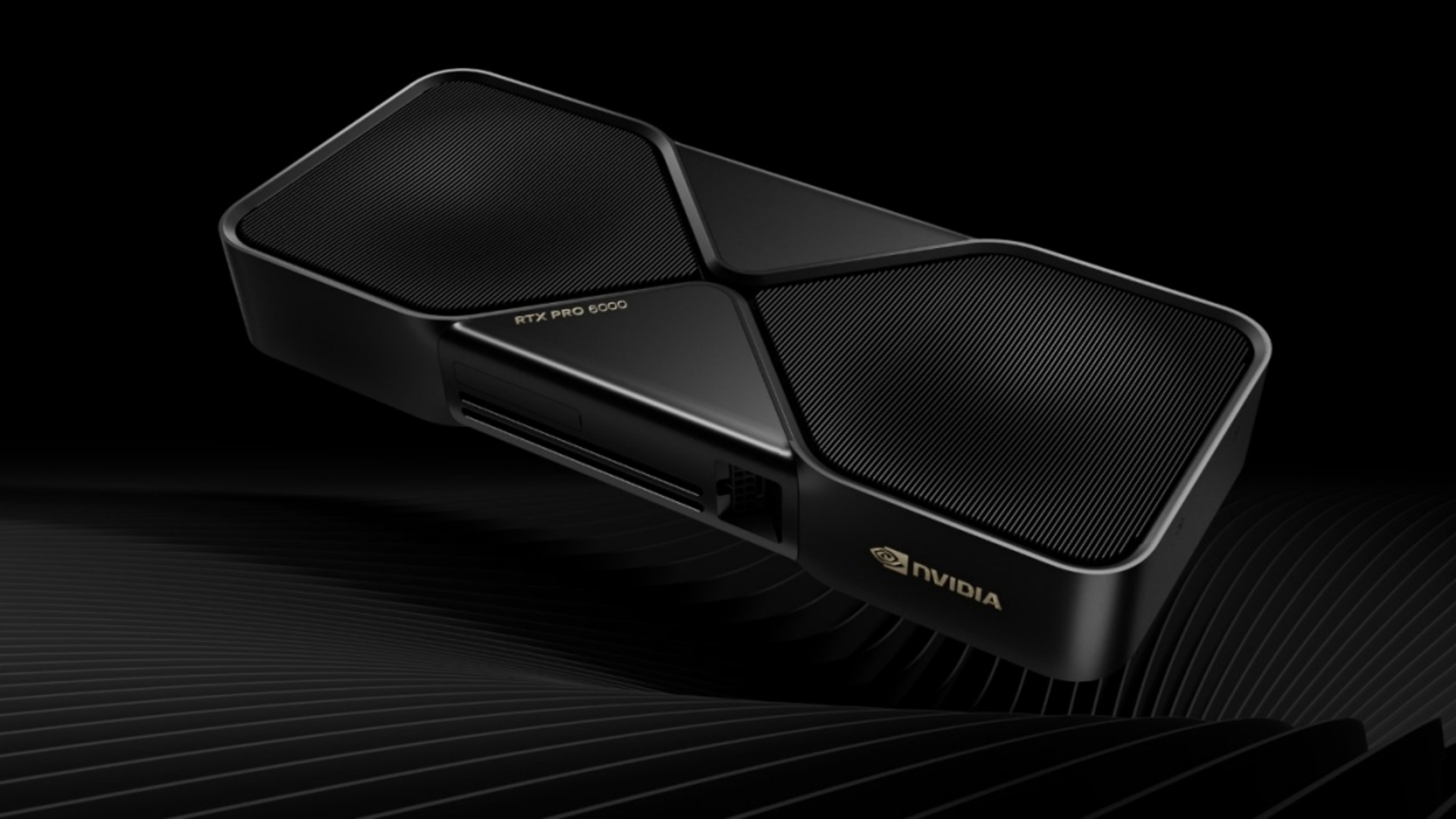
Rank 32351RTX Pro 6000 beats the unreleased 5090 despite lacking important driversNvidia’s $10000 card was benchmarked across multiple modern game titlesExtreme power noise and price make it impractical for most would-be buyersNvidia’s RTX Pro 6000 might not be marketed as a gaming GPU, but overclocking expert Roman ‘der8auer’ Hartung has shown it can outperform every consumer card Nvidia makes, and that includes the yet-to-be-released RTX 5090.In his latest video, which you can watch below, der8auer benchmarked the $10,000 Blackwell-based workstation GPU across multiple titles, calling it “the new gaming king.”Unlike the RTX 5090, which uses the same GB202 chip, the Pro 6000 sports 24,064 CUDA cores, more Tensor and RT cores, and a massive 96GB of GDDR7 memory.Coil whineIt lacks Nvidia’s Game Ready Drivers, but der8auer notes this didn’t seriously affect gaming performance. In 4K Cyberpunk 2077 tests (without ray tracing), the Pro 6000 pulled 14% ahead of the RTX 5090, though it also used 15% more power.Performance across other titles echoed that trend. The card was 11% faster in Star Wars Outlaws and Remnant 2, and 3% faster in Assassin’s Creed Mirage, the latter possibly held back by driver limitations.Power draw and heat are challenges, with the card reaching 600W during gaming. Noise was another factor. According to der8auer, the fan ramps up aggressively, and the coil whine was the loudest he’s ever heard.While the Pro 6000 is clearly dominant in raw performance, its price point makes it unreachable for most.Der8auer noted that although the card has three times the VRAM of the RTX 5090, the price is five times higher. He estimated the 64GB of additional VRAM might cost $200 more to produce, but that doesn’t justify the $8,000 difference for consumers.Still, for those chasing the absolute peak of performance - and willing to overlook coil whine and noise - the RTX Pro 6000 has set a new bar. Just don’t expect it to be practical for most gamers.Via Tom's HardwareYou might also likeWant to carry an Nvidia GeForce RTX 5090 to your laptop? Try this eGPU chassisNvidia RTX Pro 6000 Blackwell Workstation Edition is an enhanced version of the RTX 5090Nvidia is dreaming of trillion-dollar data centers with millions of GPUs
-
Picture from o.aolcdn.com
Rank 32352Discord co-founder and CTO Stanislav Vishnevskiy wants you to know he thinks a lot about enshittification. With reports of an upcoming IPO and the news of his co-founder, Jason Citron, recently stepping down to hand leadership of the company over to Humam Sakhnini, a former Activision Blizzard executive, many Discord users are rightfully worried the platform is about to become, well, shit.
"I understand the anxiety and concern," Vishnevskiy told Engadget in a recent call. "I think the things that people are afraid of are what separate a great, long-term focused company from just any other company." According to Vishnevskiy, the concern that Discord could fail to do right by its users or otherwise lose its way is a topic of regular discussion at the company.
"I'm definitely the one who's constantly bringing up enshittification," he said of Discord's internal meetings. "It's not a bad thing to build a strong business and to monetize a product. That's how we can reinvest and continue to make things better. But we have to be extremely thoughtful about how we do that."
The way Vishnevskiy tells it, Discord already had an identity crisis and came out of that moment with a stronger sense of what its product means to people. You may recall the company briefly operated a curated game store. Discord launched the storefront in 2018 only to shut it down less than a year later in 2019. Vishnevskiy describes that as a period of reckoning within Discord.
"We call it embracing the brutal facts internally," he said of the episode. When Vishnevskiy and Citron started Discord, they envisioned a platform that would not just be for chatting with friends, but one that would also serve as a game distribution hub. "We spent a year building that component of our business and then, quite frankly, we quickly knew it wasn't going well."
Out of that failure, Discord decided to focus on its Nitro subscription and embrace everyone who was using the app to organize communities outside of gaming. Since its introduction in 2017, the service has evolved to include a few different perks, but at its heart, Nitro has always been a way for Discord users to get more out of the app and support their favorite servers. For instance, the $3 per month Basic tier allows people to use custom emoji and stickers on any server, and upload files that are up to 50MB. The regular tier, which costs $10 per month, includes 4K streaming, 500MB uploads and more. They're all nice-to-haves, but the core functions remain free.
Marissa Leshnov for Discord
Vishnevskiy describes Nitro as a "phenomenal business," but the decision to look beyond gaming created a different set of problems. "It wasn't clear exactly who we were building for, because now Discord was a community product for everyone, and that drove a lot of distractions," he said.
That sense of mission drift was further exacerbated by the explosive growth Disord saw during the pandemic, as even more new users turned to the platform to stay in touch with friends during lockdown. "It covered up all the things that we didn't fully clarify about how we want to approach things," said Vishnevskiy. "We came out stronger. A lot of people were introduced to Discord, and it's their home now, but it's probably part of what made it take longer to realize some of the decisions we made at the time weren't right."
One of those was a brief flirtation with the Web3 craze of 2021. That November, Citron tweeted a screenshot of an unreleased Discord build with integrations for two crypto wallet apps. The post sparked an intense backlash, with users threatening to cancel their Nitro subscriptions if the company went forward with the release. Two days later, Citron issued a statement saying Discord would not ship the integration.
"We weren't trying to chase a technology. It was about allowing people to use Discord in a certain way, and that came with a lot of downsides. We were trying to do some integrations to limit some scams, and actually do right by users and make people safer," said Vishnevskiy. "But we really underestimated the sensitivity the general user base had to the topic of NFTs, and we did not do a really good job at explaining what we were trying to do."
According to reporting from that period, Discord's employees were partly responsible for the reversal. An internal server made up of workers and game studio representatives reportedly erupted over the proposed implementation.
Looking back, Vishnevskiy credits the company's employees, some of whom have been with Discord for a decade, for steering leadership in the right direction over the years. He says there have been situations where the company's employees have come to him and Citron to ask "why are we doing this?" He adds, "sometimes, they've pushed us to do things [Jason and I] didn't think we should be doing. I think that's an amazing asset to have. This product is built by people who love it and use it."
Coming out of the pandemic, Discord announced last year it would refocus on gaming. In the immediate future, that shift of strategy will see the company emphasize "simple things" like app performance and useability over "building new features." In March, users got a taste of that new approach, with the company releasing a redesign of its PC overlay that made it less likely to trigger anti-cheat systems like BattleEye. In turn, that made the overlay compatible with a greater number of the most-played games on Discord. In that same release, Discord added three new UI density options to give users more control over the look and feel of the app.
Moving forward, one area where the company wants to be particularly thoughtful is around AI. Discord has deployed the tech in a few areas – for example, it partnered with Krisp AI in 2019 to add noise cancellation to calls – but it also has wound down experiments that didn't work. "What we've found is that a lot of these things did not work well enough to be in the product," said Vishnevskiy, pointing to features like AutoMod.
The tool exists in Discord right now. Moderators can use it to filter for specific words and phrases. But when the company first pitched the feature, it envisioned an AI component that would help admins manage large, unruly servers, and even built a version of it that ran on a large language model. The company has yet to ship the feature because "it was making too many mistakes." Discord also experimented briefly with a built-in chatbot called Clyde that leveraged tech from OpenAI, but canned it less than a year later. At the time, the company didn't give a reason for the shutdown, but the occasional screenshots posted to the Discord subreddit showed Clyde could, often unprompted, say some questionable things.
"We're constantly retrying some of those ideas with modern models. No timeline on any of this because we will not ship until we think it's a good fit for the product," said Vishnevskiy, adding the last thing the company wants to do is "slap [AI] in because everyone else is doing it."
Looking to the future, Vishnevskiy says Discord is focused on helping game developers, especially as it relates to discovery. The majority of the most popular games on Discord are the same ones that were popular on the platform 10 years ago. That's where Vishnevskiy says the app's new Orbs currency comes in, which people can earn by watching interactive ads, playing a game, or streaming their gameplay to friends on Discord. Yes, it's a way for Discord to grow its revenue, but Vishnevskiy believes the system aligns player interests with developer interests by giving Discord users something in return for their time and attention.
At least that's the idea. I got to try the system after my interview with Vishnevskiy, and while it does feel friendly to users, I'd like to see how Discord plans to make it into something smaller game studios can leverage. Right now, many of the publishers the company has partnerships with are advertising releases that already have a lot of word of mouth going for them. I'm sure fans of Marvel Rivals will love the chance to earn an Ultron avatar decoration for their Discord, but a game with 147,000 concurrent players on Steam isn't exactly struggling.
Vishnevskiy wouldn't discuss the specifics of when and if the company plans to IPO, but did offer one last assurance for users. "Discord is something that is meant to be a durable company that has a meaningful impact on people's lives, not just now but in 10 years as well," he said. "That's the journey that Hammond joined and signed up for too. We are long-term focused. Our investors are long-term focused."
While it may be true that the Vishnevskiy and Discord's veteran employees have learned a lot over the company's sometimes turbulent history, it's not clear how a culture of experimentation and dissent might change with more shareholders to appease. The test will be whether Discord can stay true to itself and its many users.This article originally appeared on Engadget at https://www.engadget.com/gaming/discords-cto-is-just-as-worried-about-enshittification-as-you-are-173049834.html?src=rss
-

Picture from static.independent.co.uk
Rank 32353 -

Picture from assets1.cbsnewsstatic.com
Rank 32354 -

Picture from assets2.cbsnewsstatic.com
Rank 32355 -

Picture from assets2.cbsnewsstatic.com
Rank 32356 -

Picture from assets3.cbsnewsstatic.com
Rank 32357 -

Picture from assets3.cbsnewsstatic.com
Rank 32358 -

Picture from assets1.cbsnewsstatic.com
Rank 32359 -

Picture from assets3.cbsnewsstatic.com
Rank 32360 -

Picture from assets1.cbsnewsstatic.com
Rank 32361 -

Picture from static.independent.co.uk
Rank 32362 -

Picture from static.independent.co.uk
Rank 32363 -

Picture from assets1.cbsnewsstatic.com
Rank 32364 -

Picture from assets3.cbsnewsstatic.com
Rank 32365 -

Picture from assets1.cbsnewsstatic.com
Rank 32366 -

Picture from assets3.cbsnewsstatic.com
Rank 32367 -

Picture from assets2.cbsnewsstatic.com
Rank 32368 -

Picture from assets2.cbsnewsstatic.com
Rank 32369 -

Picture from assets1.cbsnewsstatic.com
Rank 32370 -

Picture from assets1.cbsnewsstatic.com
Rank 32371 -

Picture from assets1.cbsnewsstatic.com
Rank 32372 -

Picture from assets2.cbsnewsstatic.com
Rank 32373 -

Picture from assets2.cbsnewsstatic.com
Rank 32374 -

Picture from assets2.cbsnewsstatic.com
Rank 32375 -

Picture from assets2.cbsnewsstatic.com
Rank 32376 -

Picture from assets3.cbsnewsstatic.com
Rank 32377 -

Picture from assets3.cbsnewsstatic.com
Rank 32378 -

Picture from assets3.cbsnewsstatic.com
Rank 32379 -

Picture from assets2.cbsnewsstatic.com
Rank 32380 -

Picture from assets1.cbsnewsstatic.com
Rank 32381 -

Picture from assets3.cbsnewsstatic.com
Rank 32382 -
Picture from o.aolcdn.com
Rank 32383AI companies claim their tools couldn't exist without training on copyrighted material. It turns out, they could — it's just really hard. To prove it, AI researchers trained a new model that's less powerful but much more ethical. That's because the LLM's dataset uses only public domain and openly licensed material.
The paper (via The Washington Post) was a collaboration between 14 different institutions. The authors represent universities like MIT, Carnegie Mellon and the University of Toronto. Nonprofits like Vector Institute and the Allen Institute for AI also contributed.
The group built an 8 TB ethically-sourced dataset. Among the data was a set of 130,000 books in the Library of Congress. After inputting the material, they trained a seven-billion-parameter large language model (LLM) on that data. The result? It performed about as well as Meta's similarly sized Llama 2-7B from 2023. The team didn't publish benchmarks comparing its results to today's top models.
Performance comparable to a two-year-old model wasn't the only downside. The process of putting it all together was also a grind. Much of the data couldn't be read by machines, so humans had to sift through it. "We use automated tools, but all of our stuff was manually annotated at the end of the day and checked by people," co-author Stella Biderman told WaPo. "And that's just really hard." Figuring out the legal details also made the process hard. The team had to determine which license applied to each website they scanned.
So, what do you do with a less powerful LLM that's much harder to train? If nothing else, it can serve as a counterpoint.
In 2024, OpenAI told a British parliamentary committee that such a model essentially couldn't exist. The company claimed it would be "impossible to train today's leading AI models without using copyrighted materials." Last year, an Anthropic expert witness added, "LLMs would likely not exist if AI firms were required to license the works in their training datasets."
Of course, this study won't change the trajectory of AI companies. After all, more work to create less powerful tools doesn't jive with their interests. But at least it punctures one of the industry's common arguments. Don't be surprised if you hear about this study again in legal cases and regulation arguments.This article originally appeared on Engadget at https://www.engadget.com/ai/it-turns-out-you-can-train-ai-models-without-copyrighted-material-174016619.html?src=rss
-

Picture from static.independent.co.uk
Rank 32384 -

Picture from assets2.cbsnewsstatic.com
Rank 32385 -

Picture from assets3.cbsnewsstatic.com
Rank 32386 -

Picture from assets3.cbsnewsstatic.com
Rank 32387 -

Picture from assets2.cbsnewsstatic.com
Rank 32388 -

Picture from ichef.bbci.co.uk
Rank 32389 -

Picture from ichef.bbci.co.uk
Rank 32390 -

Picture from static.independent.co.uk
Rank 32391 -

Picture from static.independent.co.uk
Rank 32392 -

Picture from assets2.cbsnewsstatic.com
Rank 32393 -

Picture from assets2.cbsnewsstatic.com
Rank 32394 -

Picture from image.cnbcfm.com
Rank 32395 -

Picture from ichef.bbci.co.uk
Rank 32396 -

Picture from ichef.bbci.co.uk
Rank 32397 -
Picture from o.aolcdn.com
Rank 32398Sony’s 1000X earbuds may get most of the attention in the company’s lineup, but there are gems to be found on the roster for less money. The LinkBuds series offers some serious contenders for $100 less than the flagship WF-1000XM5. There have also been some compelling products under $150 from Sony, and the recently released WF-C710N ($120) also fits the bill. A comfortable fit, a long list of features and above-average ANC performance lead the positives here, but there are a few caveats you’ll need to consider before you commit.
What’s good about the WF-C710N?
The WF-C710N is the successor to the WF-C700N that debuted in 2023. That set was a formidable mid-range contender in its own right, thanks to a compact design and handy features. Sony didn’t change the overall look too much for the C710N, but the touch panels for the controls are easier to find since they’re now concave circles. The company also introduced a transparent blue color option that allows you to see inside the earbuds and case. It’s giving Beats Solo Buds and Studio Buds + vibes, but I’m all for it. In my opinion, the more transparent gadgets, the better.
Compared to much of the competition, the C710N’s smaller size also means it is more comfortable to wear for long periods of time. The earbuds sit on the ridges of my ears nicely, and there isn’t any unbalanced, excess weight projecting out from the side of my head. It’s clear Sony fine-tuned the ergonomics for all-day use, and I had no trouble wearing them for the entirety of my battery tests. That’s not always the case with larger, bulkier earbuds.
The C710N might be a midrange set at $120, but the long list of features allows the earbuds to punch above their weight. Starting with the basics, there’s active noise cancellation (ANC), adjustable ambient sound mode, customizable EQ (presets and sliders), multipoint connectivity, reconfigurable touch controls and automatic pausing when the buds are removed from your ears. On the more advanced end of the spec sheet, you get Adaptive Sound Control: Sony’s trademark tool that automates changes to sound settings based on activity or location. There’s also a personalized EQ, 360 Reality Audio support, DSEE upscaling and a Quick Attention feature that lowers the volume and activates ambient sound for any brief chats. The only notable omission here is Speak-to-Chat that does the same thing as Quick Attention automatically when you start talking, but I’m not surprised it was left off a pair of $120 earbuds.
ANC performance is remarkably strong on the C710N, a feat that typically eludes the competition in this price range. In particular, I noticed these earbuds do an above average job of blocking human voices as I was able to greatly reduce the volume of nearby chatter in most instances. I’m not talking complete silence, but the amount of noise blocking is above average when you’re in the vicinity of someone you’d rather not listen to at full volume. Constant distractions like loud fans are also reduced but not entirely thwarted, so that too is better than what you’ll get from a lot of the similarly priced options.
What’s not so good about the WF-C710N?
Billy Steele for Engadget
Compared to other midrange earbuds, sound quality is slightly above average on the C710N, but it could be good enough to satisfy you at this price. The bass is tight and punchy, but oftentimes it overpowers the mix for hip-hop, rock and metal — basically any genre with a driving beat. And when you switch to something more mellow like bluegrass, the low-end tone still constrains the treble and mid range. Depending on the song, highs can cut through, but a boost in the middle of the EQ would do wonders for overall depth of sound here (you’ll want to keep DSEE active). Is it good enough for someone looking to pick up a set of earbuds on a budget? Yes. Does the audio performance compete with flagship options like the WF-1000XM5? Not even close.
In my tests, the C710N didn’t last as long as Sony promised. The company says you’ll get up to eight and a half hours on a charge with ANC active. But, using a mix of noise cancelling and ambient sound modes, I only managed between six and a half and seven hours. That’s a respectable amount, but if you’re looking to wear these for an entire work day, you might not make it. That’s especially true if you need them to also stick around for your commute.
Despite offering the option to “Capture Voice During a Phone Call” in the Sound Connect app, the C710N doesn’t pipe much of you back through the earbuds in that scenario. Even with ambient sound active, I still felt the need to speak up more than normal, so voice and video calls weren’t as natural as they could be. Overall, Sony’s assurance of “crystal-clear calls” falls flat as you’ll sound decent, but not pristine. The C710N will block most background noise from coming through, but in doing so the quality of your voice greatly suffers. All of that means these earbuds are usable for calls if you really need them, but if sounding comprehensible in calls is important , you’ll want to look elsewhere.
Final verdict on the WF-C710N
If comfort and handy features are your primary concern, the C710N will serve you well. Sound quality isn’t the best, but it isn’t bad either, so I have no doubt that many people will be pleased with it. If I had been able to hit (or even surpass) Sony’s stated battery life, these earbuds would be easy to recommend. Despite that, they’re still a solid option, especially at $120, since the company once again outpaces its midrange rivals with more convenient tools than you’ll find anywhere else. The C710N is definitely a better choice than the slightly cheaper Beats Solo Buds, which are now $99.95 at full price ($80 at launch).
This article originally appeared on Engadget at https://www.engadget.com/audio/headphones/sony-wf-c710n-review-more-than-midrange-180018400.html?src=rss
-

Picture from techcrunch.com
Rank 32399 -

Picture from static.independent.co.uk
Rank 32400


