News
This constantly updated list features the latest and most important news articles, ranked in order of significance. The top stories highlight major developments, breaking news, and critical updates across various topics, ensuring you stay informed about the most pressing issues. As new articles are added, the list adapts to reflect the latest priorities, keeping the most impactful stories at the forefront. Whether it’s global events, technology breakthroughs, or industry trends, this dynamic list ensures you always have access to the most relevant and timely information.
-

Picture from static.independent.co.uk
Rank 29151 -

Picture from static.independent.co.uk
Rank 29152 -

Picture from static.independent.co.uk
Rank 29153 -
Picture from assets2.cbsnewsstatic.com
Rank 29154 -
Picture from assets2.cbsnewsstatic.com
Rank 29155 -
Picture from assets1.cbsnewsstatic.com
Rank 29156 -
Picture from assets3.cbsnewsstatic.com
Rank 29157 -

Picture from assets2.cbsnewsstatic.com
Rank 29158 -
Picture from image.cnbcfm.com
Rank 29159 -

Picture from image.cnbcfm.com
Rank 29160 -

Picture from image.cnbcfm.com
Rank 29161 -
Picture from cdn.mos.cms.futurecdn.net
Rank 29162For over two decades, Google has monopolized how and where people search online. From outfit ideas and travel tips to medical symptoms and product reviews, consumers have turned to Google to guide their decision-making. But we’re now witnessing a monumental shift in how people search. As antitrust pressures mount and tools like ChatGPT redefine the very nature of information discovery, a new contender has entered the ring: AI-powered search.This isn’t just a blip on the radar - it’s a full-blown transformation. AI-driven platforms are not only gaining popularity, they’re also fundamentally changing consumer expectations and search behavior.According to our latest research at adMarketplace, one in five consumers already prefers AI-powered search tools over traditional methods, drawn to their ability to deliver seamless, personalized, and conversational results. For advertisers, this presents a golden opportunity should they seize it. The age of AI search is here, and brands that fail to evolve with it risk being left behind.AI search: redefining relevancy and intentThe foundation of search advertising has always been built on intent - understanding what consumers want and delivering relevant results in real-time. AI supercharges this. Unlike traditional keyword-based systems, AI search engines use natural language processing, machine learning, and real-time data to understand user intent more deeply and deliver results in a way that feels intuitive and tailored.Consumers are no longer satisfied with a list of blue links on the legacy search engine results page. They want responses to their queries delivered natively on the sites, apps, and platforms they use daily. Whether it's product comparisons, local food recommendations, or answers to complex questions, AI search tools are meeting users where they are. This is a major leap forward for the consumer search experience and a powerful opportunity for advertisers to capitalize on.Search is no longer confined to traditional platformsDiscovery is increasingly happening natively within the apps, websites, and digital ecosystems consumers already engage with daily, whether it's through AI-driven assistants, retail apps, or vertical-specific platforms. This decentralization of search represents a major change for advertisers. It's no longer enough to focus campaigns exclusively on legacy search engines.To reach consumers effectively, brands must expand their search strategies to meet audiences where they are, across multiple platforms that are integrated with AI-driven discovery tools. As the search landscape modernizes, advertisers who diversify their investments and embrace this broader, AI-enhanced environment will be best positioned to capture attention and drive engagement.A seamless, conversational experienceOne of the key differentiators of AI search is its ability to make searching feel more engaging, relevant and intuitive. Instead of fragmented queries and manual refinement, users can engage in a natural, back-and-forth dialogue with AI tools, refining results through follow-up questions, contextual cues, and real-time data to find answers that fit their needs more efficiently.This conversational approach is already proving to be a game-changer. It simplifies the path to discovery, reduces friction, and increases the likelihood that consumers will find - and act on - what they’re looking for. For brands, this opens up new creative formats and interaction points within search, allowing for more immersive and persuasive ad experiences.Capturing the next generation of consumersAI-powered search isn’t just a novelty. It’s quickly becoming the de facto method for specific types of discovery, especially among the younger, tech-native generations. Gen Z and younger Millennials are already leaning into tools like ChatGPT and AI-enhanced assistants for everything from shopping advice to academic support. These demographics expect search experiences to be fast, intuitive, and tailored to their needs.For advertisers, this presents a crucial opportunity. If you want to engage the next wave of digital consumers, your search strategy must evolve. That means embracing AI-powered experiences, diversifying search media investment, and prioritizing how you approach consumer search intent.What this means for advertisersSo, how should advertisers respond to this AI-powered revolution?1. Reevaluate search strategies – Traditional search advertising, placing ads at the top of search pages, is no longer sufficient. It's time to experiment with native search integrations that leverage AI to deliver personalized, intent-driven results and enable conversational, real-time interactions between users and your brand.2. Invest in personalization – Use AI to analyze behavior, preferences, and context to create more targeted and meaningful search experiences.3. Reach next-generation consumers today – Target the younger demographics that are already adopting AI search. Meet them on the platforms they prefer with messaging and formats that resonate.4. Stay agile and curious – AI search is evolving fast. Keep testing, learning, and adapting your campaigns to remain relevant in this rapidly shifting environment.The bottom lineWe’re on the cusp of a new era in digital discovery. AI is not just changing how consumers search, it’s redefining what they expect from every brand interaction. Advertisers that lean into this transformation will be able to connect with consumers in smarter, more personal ways, capturing attention and loyalty in a crowded market.The crown of search is up for grabs. It’s time for advertisers to claim their place in the AI-powered future.We've featured the best AI chatbot for business.This article was produced as part of TechRadarPro's Expert Insights channel where we feature the best and brightest minds in the technology industry today. The views expressed here are those of the author and are not necessarily those of TechRadarPro or Future plc. If you are interested in contributing find out more here: https://www.techradar.com/news/submit-your-story-to-techradar-pro
-

Picture from static.independent.co.uk
Rank 29163 -

Picture from image.cnbcfm.com
Rank 29164 -

Picture from image.cnbcfm.com
Rank 29165 -
Picture from assets1.cbsnewsstatic.com
Rank 29166 -

Picture from techcrunch.com
Rank 29167 -

Picture from static.independent.co.uk
Rank 29168 -

Picture from assets1.cbsnewsstatic.com
Rank 29169 -
Picture from cdn.mos.cms.futurecdn.net
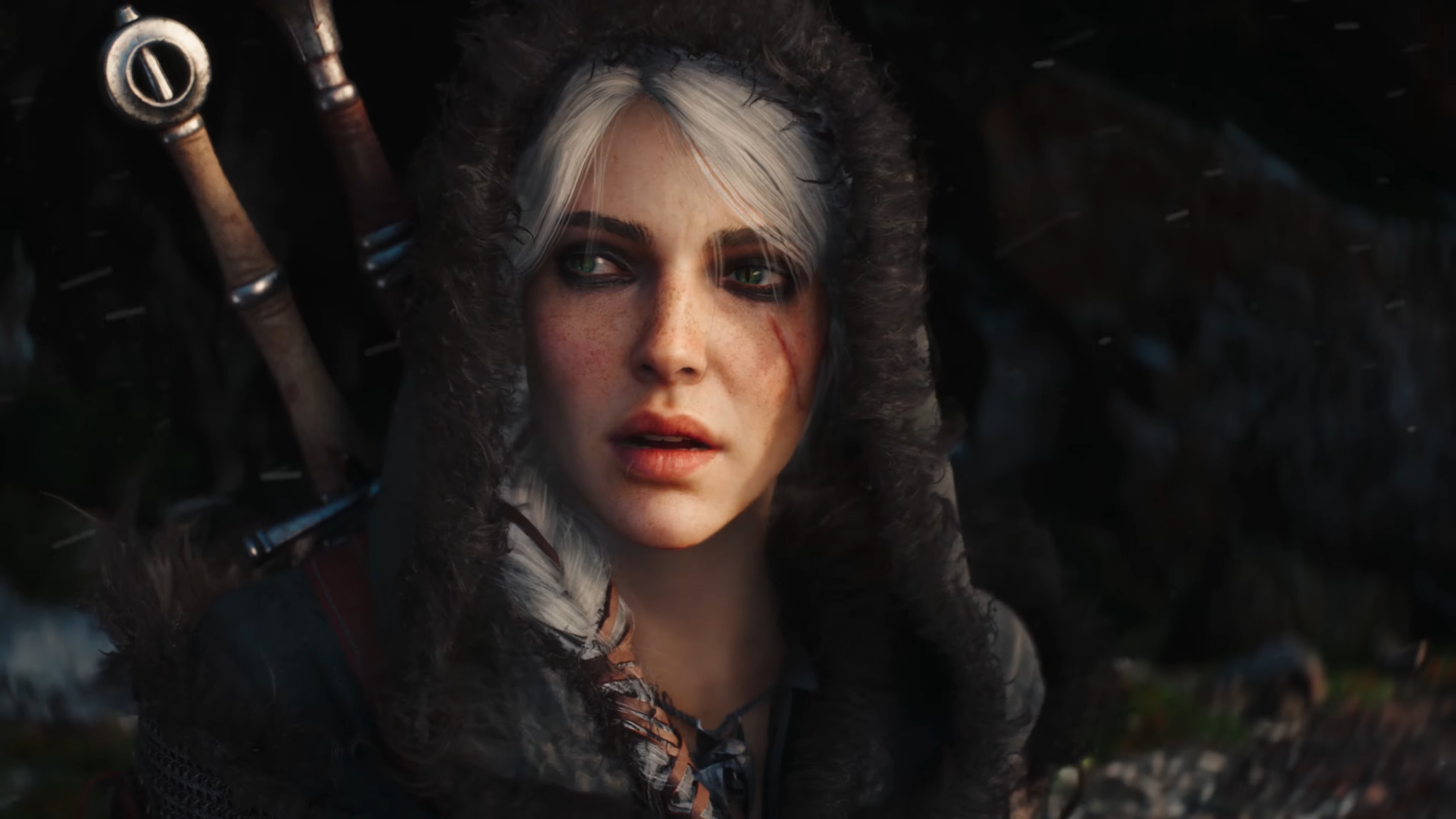
Rank 29170CD Projekt Red has shared a new tech demo for The Witcher 4 at the State of Unreal 2025 showcaseThe demo revealed new cinematic and gameplay footage, which offered a first look at the region of Kovir and protagonist CiriThe gameplay footage captured is running on the base PS5 at 60 FPS with ray tracingCD Projekt Red has shared a brand new look at The Witcher 4 with an impressive tech demo.During the State of Unreal 2025 event today, we were treated to a technical demo that offered an early glimpse into the Unreal Engine 5.6 features that will be in The Witcher 4.At the start of the livestream, we saw a short cinematic of a group of men being attacked by a monster, before the footage seamlessly transitions into gameplay. We then see Ciri, the game's titular Witcher and playable protagonist, emerging from a cave onto a cliff after investigating the attack and showing off the never-before-seen region of Kovir.According to CD Projekt Red, the gameplay shown is running on the base PS5 at 60 FPS, with ray tracing enabled, and it looks incredible.Just like Geralt of Rivia, Ciri also has her own horse companion named Kelpie, and the two of them can be seen riding through the mountains and dense forests of Kovir to the port town of Valdrest.The town is bustling with crowds of NPCs, some of whom will react to certain instances created by the player, thanks to Unreal Engine's MetaHuman technology with Mass AI crowd scaling.For instance, when Ciri knocks into a man carrying apples, she kicks off a chain reaction. She apologizes, and then a child can be seen running forward to steal some apples that fell on the ground, followed by a pig looking to eat them up.We also see other NPCs interacting with each other and creating their reactive scenes, making the whole town feel alive. It also appears that gameplay will seamlessly transition back into cutscenes when Ciri reaches her destination and starts a conversation, suggesting there'll be no black loading screens in between these moments.Tools like the new Unreal Animation Framework and Nanite Foliage rendering are being utilized in The Witcher 4 to help deliver an immersive world at 60 FPS without compromising on quality, according to the developer."We started our partnership with Epic Games to push open-world game technology forward," said CDPR co-CEO Michał Nowakowski. "To show this early look at the work we’ve been doing using Unreal Engine running at 60 FPS on PlayStation 5, is a significant milestone - and a testament of the great cooperation between our teams."But we're far from finished. I look forward to seeing more advancements and inspiring technology from this partnership as development of The Witcher 4 on Unreal Engine 5 continues."The studio also confirmed that while the tech demo was running on a PlayStation console, "the features and technology will be supported across all platforms the game will launch on", including Xbox and PC.You might also like...Upcoming games 2025 for console and PCNew PS5 games 2025: most anticipated PS5 release datesGhost of Yotei pre-orders live: Collector's Edition up in the US, Standard Edition retailers, and where to buy in the UK
-
Picture from o.aolcdn.com
Rank 29171Meta has signed a 20-year agreement with Constellation Energy that will allow it to purchase nuclear power supplied by the Clinton Clean Energy Center in southern Illinois. To help fuel its AI ambitions, Meta said in a statement that it is prioritizing 100 percent clean, renewable energy for its data centers and recognizes the "immense value of nuclear power in providing reliable, firm electricity."
Rather than building a new nuclear plant, Meta says its deal with Constellation for its existing Clinton center will ensure the plant can remain in operation long-term, preserving over 1,000 local jobs. The deal, the first of its kind for Meta, commences in 2027, and will see Facebook’s parent company buy in full the approximately 1.1 gigawatts of emissions-free nuclear energy currently being generated at the site. Meta also committed to expanding the grid by an additional 30 megawatts. The exact financial details of the landmark agreement are not detailed in the statement.
Meta has been behind the curve on nuclear, with big tech rivals Google and Microsoft already buying up significant capacity. In December last year, Meta confirmed its ambition to add between one and gour gigawatts of nuclear energy capacity to its US data centers by the early 2030s, so the Constellation agreement is something of a headstart for Mark Zuckerberg’s company.
Meta did actually plan to build a nuclear-powered data center of its own, but was reportedly forced to scrap it when a rare bee species was discovered on the land it had earmarked for the project. According to the Financial Times, Zuckerberg told staff at the time that Meta would have had the first nuclear energy AI if the bee-related pivot hadn’t been necessary.This article originally appeared on Engadget at https://www.engadget.com/big-tech/meta-signs-multi-decade-nuclear-energy-deal-to-power-its-ai-data-centers-144916645.html?src=rss
-

Picture from static.independent.co.uk
Rank 29172 -

Picture from static.independent.co.uk
Rank 29173 -

Picture from static.independent.co.uk
Rank 29174 -

Picture from static.independent.co.uk
Rank 29175 -

Picture from static.independent.co.uk
Rank 29176 -

Picture from image.cnbcfm.com
Rank 29177 -

Picture from static.independent.co.uk
Rank 29178 -

Picture from static.independent.co.uk
Rank 29179 -

Picture from static.independent.co.uk
Rank 29180 -

Picture from assets3.cbsnewsstatic.com
Rank 29181 -
Picture from cdn.mos.cms.futurecdn.net
Rank 29182Qualcomm has addressed three zero-days abused since January 2025The patches must now be applied by OEMsNo details about in-the-wild abuse, but users should still be on guardQualcomm has finally patched three Adreno GPU zero-day vulnerabilities that were being abused in the wild.According to the June 2025 Android Security Bulletin, the chipmaker has now fixed CVE-2025-21479, CVE-2025-21480, and CVE-2025-27038.The first two are incorrect authorization flaws in the Graphics component. They were given a severity score of 8.6/10 (high), and could trigger memory corruption. They were first observed in January 2025. The third bug is a use-after-free vulnerability in the Graphics component that also leads to memory corruption. This one was given a lower severity score - 7.5/10.Payment information intact"There are indications from Google Threat Analysis Group that CVE-2025-21479, CVE-2025-21480, CVE-2025-27038 may be under limited, targeted exploitation," Qualcomm explained."Patches for the issues affecting the Adreno Graphics Processing Unit (GPU) driver have been made available to OEMs in May together with a strong recommendation to deploy the update on affected devices as soon as possible."Now, it’s up to different device manufacturers, such as Samsung, Google OnePlus, or Xiaomi, to apply these patches in their products.The affected devices span a wide range of Qualcomm chipsets, including flagship models like the Snapdragon 8 Gen 2 and Gen 3, as well as midrange and budget platforms such as the Snapdragon 695, 778G, and 4 Gen 1/2.There are currently no details on who abused these flaws, against whom, and to what end, however similar vulnerabilities were seen used in the past in spyware campaigns such as Variston and Cy4Gate.A separate Qualcomm bug (CVE-2024-43047) was used by Serbian secret service agency, BIA, in December 2024, to unlock Android devices seized from journalists, activists, and protestors, the same source claims.Via The Hacker NewsYou might also likeQualcomm releases raft of security patches, urges users to fix nowTake a look at our guide to the best authenticator appWe've rounded up the best password managers
-

Picture from cdn.mos.cms.futurecdn.net
Rank 29183Genki has unveiled its new handheld gaming accessory collection, available exclusively online starting today (May 29)The collection is designed to eliminate the common frustrations while playing on the goAll-new accessories include a Modular Grip Case, Minimalist Protective Case, a 30W Wireless Power Bank, and moreGenki, the innovative gaming accessories company, has unveiled its brand new handheld accessory lineup.The collection, which Genki is calling "its most complete accessory lineup yet," is officially available exclusively at its online store starting today (May 29) and arrives just in time for the newest generation of handheld gaming consoles, like the Nintendo Switch 2.The lineup includes a range of different accessories, including the Attack Vector Modular Grip Case, Force Field 2 Minimalist Protective Case, Sleeper Ultra Protective Zipper Carry Case, and Aegis Shield Perfect Screen Protector.There's also the 30W MagSafe Wireless Power Bank, Detachable Controller Charging Station and Grips, Mimic Chest Game Cartridge Storage Case, and the Saya Carry bag.These all-new accessories are purpose-built for uninterrupted handheld gaming and designed to eliminate the common frustrations while playing on the go by introducing ergonomic upgrades, smart power solutions, and rugged protection, "all engineered with Genki’s signature focus on innovation and design.""The problem with handheld consoles has always been the trade-off between portability and a complete gaming experience—whether it’s poor ergonomics, limited battery life, or inadequate protection. Genki, known for redefining portable play, is tackling these challenges head-on," Genki said.You can check out the Genki handheld accessory collection pricing details below and see the collection here.Attack Vector Modular Grip Case - $49.99 / $59.99 with travel coverForce Field 2 Minimalist Protective Case - $29.99 / $39.99 with travel coverSleeper Ultra Protective Zipper Carry Case - $42.99Aegis Shield Perfect Screen Protector - $19.9930W MagSafe Wireless Power Bank - $69.99Detachable Controller Charging Station and Grips - $39.99Mimic Chest Game Cartridge Storage Case - $19.99Saya Carry Case - $139.99You might also like...Best PS5 games 2025 - top PlayStation 5 titles to play right nowBest handheld games consoles in 2025: the top systems we've triedLeaker claims Sony is now working on a new PlayStation handheld console
-
Picture from o.aolcdn.com
Rank 29184Spoilers for “The Reality War.”
The BBC and Disney chose not to share screeners ahead of “The Reality War” to preserve its numerous twists. There isn’t time to review it in the usual style, but I felt I’d be remiss not to cap off this run of reviews by talking about the finale. And it's not as if I've nothing to say about what the hell happened on Saturday.
“It’s the end… but the moment has been ‘prepared for.’”
I refuse to believe that “The Reality War” was planned and written as the execution of this run of Doctor Who. I’m well aware the BBC, Bad Wolf and Ncuti Gatwa claimed the intention from the start was for him to bow out after two short seasons. I’m not buying it.
On one hand, the rumors of disharmony behind the scenes, last minute reshoots and Disney’s reported displeasure are hard to ignore. But there’s far better evidence, which is to just watch the damn episode and try to think about what happened for more than a heartbeat.
Everything after the Doctor’s triumphant return to UNIT HQ feels like it was hastily assembled and tacked on. In fact, there are times in which it feels like all of the main actors are reading from different scripts, and not interacting with one another.
Spot the join
Lara Cornell/BBC Studios/Bad Wolf
I’ve seen some people grousing about the simple way the Omega storyline was resolved, but I think it was always planned that way. Russell T. Davies’ has always ended the big dramatic plots of his finales early to make more room to show the aftermath for the characters.
Take last year’s “Empire of Death,” which dumps off Sutekh two thirds of the way in to spend the rest of the episode showing Ruby meeting her birth mother. For Davies, the big CGI space monsters are always the means through which he can spend moments with his characters.
And yet the character moments here are weird if not totally incoherent — the one highlight being the moment that Poppy disappears. The shot of the Doctor and Belinda absentmindedly handing her coat back and forth as it turns into an ever-smaller piece of cloth is sublime.
But when Ruby’s protestations are finally taken seriously, the Doctor’s decision to just hand Belinda a child comes totally out of left field. Not only does it not agree with anything that we’ve come to know about her over the last eight weeks, it’s also totally pretty outrageous.
Which is why it’s far more plausible that Davies, faced with no commission for a third season and with a lead actor looking to quit, just wrote a few pages of nonsense to justify the change.
“One day, I shall come back.”
Naturally, the rumors suggest the original ending would have seen Susan appear as a lead-in to the next season. Again, this isn’t so much a hint as something the last two years have been very clearly laying the foundations for. The Doctor openly discussed that he has a child living in London (in “The Devil’s Chord”) and the Susan Twist saga was designed to play up to that. Going to the trouble of hiring the 84-year-old Carole Ann Ford and putting her in brief cameos in the last two episodes — plus dropping references to that in “Lux” — was clearly part of the plan. Now, after the extensive, patient buildup of that storyline, it appears that we’ll not get the chance to see what Davies had intended.
Going back to the point about the BBC and Gatwa’s claim that this was always meant to be a two-season deal, it’s likely the show’s original ending will be swept under the rug. And given Ford’s age, it’s likely that we’ll never get the chance to give the actress the sendoff she really deserved in 1964.
“Davies has never been that sort of writer.”
A large amount of fan speculation this year was focused on the various structural and thematic coincidences. Each episode of this run could more or less map onto the previous one and went over similar ground. But, as far back as “Lux,” I said that Russell T. Davies wasn’t that sort of writer, building a mystery box that would resolve perfectly by its conclusion. His writing is a little more like a kid pulling toys out of a toybox and smashing them together at speed.
“The Reality War” is a great example of this approach, since while there were plenty of elements that came back, none of them were as vital to the plot’s conclusion as they could have been. Anita was a convenient way of getting the Doctor out of the cliffhanger, but did nothing else for the rest of the episode. Hell, it’s hard to take the suggestion seriously that she’d fallen in love with the Doctor but not realized he was, at least in this incarnation, more interested in men. Joy, too, from “Joy to the World” gets a mention but with little emotional attachment given the events of that episode. And on the subject of its treatment of women…
“I was this really brilliant woman”
James Pardon/BBC Studios/Bad Wolf
Doctor Who has spent much of its recent years trying to address its own blind spots around representation. This era has continued this tradition, broadening out the series’ supporting cast, especially the team known by fans as the “UNIT Family.” In “The Reality War,” every one of the Doctor’s allies, barring Colonel Ibrahim, is either a woman or non-binary. And yet, the sheer number of cast members means each one is almost aggressively underserved.
“The Reality War,” after all, is focused on unpacking a false reality called into existence by an ultra-conservative YouTuber who ignores and erases disabled and queer people. But the show’s treatment of these characters both during the action-packed finale, and afterward, is rough. When the team starts working together, the legion of people around the Doctor get little to nothing of note to actually do.
Anita is quite literally reduced to the role of a human doorstop (she holds the door to the Time Hotel open to counteract Conrad’s wish). Kate orders Shirley to fire the lasers. Susan (Triad) builds the zero room. Mel does quite literally nothing once she’s sneered at the Rani. And then there’s Rose.
Rose’s brief inclusion would have been extraordinarily poignant if she’d helped defeat Conrad once she’s been pulled out of oblivion. Instead, she’s just there so the Doctor can point out she was erased because Conrad hates (and/or ignores) nonbinary transfem people. And after that moment, Yasmin Finney essentially disappears from the episode once again, making her less a character and more a prop.
It gets worse with the treatment of Ruby and Belinda — the former marginalized and almost aggressively ignored by the characters to the point that I assumed their rejection of her claims was a sign the reality hadn’t actually been fixed. But the latter goes from not having a child, to having a fictional child in Conrad’s world, to forgetting she exists when Conrad’s wish is undone. When the timeline resets and she no longer has any memory of a child, the Doctor then opts to sacrifice his life in order to bring that child back into existence. I mean, what? Given Davies’ politics, and the (ostensibly) pro-abortion subtext of “Space Babies,” the Doctor suddenly re-writes the universe to force his companion — without her consent — into motherhood.
“It’s funny, but is it going to get them off their tractors?”
I’m a Brit, reviewing a uniquely British show for a predominantly American audience, and so try to view the series through that lens. Doctor Who has been a fixture in the US since the ‘70s and was a mainstay on PBS through the ‘80s and so it’s not an unknown property. The revival series may not have been an instant hit, but quickly built a respectable audience on BBC America. But while in the UK the series is a mainstream hit, its US demographic can be roughly broken down into genre nerds and anglophiles.
Consequently, there was a degree of nervousness about how the revitalized series would be received by the far broader audience on Disney+. Davies’ had spoken about the need for the series to recruit new fans, downplaying the series’ six-decades-long backstory. But despite that aim, it never felt that the series was making many concessions to its potential audience. Don’t forget, the Ncuti Gatwa series is playing out in the shadow of specific events from its 2021 series and the second and third of its three 2023 specials. And yet, rather than starting from a clean(-ish) slate, the series threw itself headlong into a multi-year story about its broken reality.
“In the ‘70s or ‘80s depending on the dating protocol…”
The Two Ranis / Two Ronnies gag was great, but did anyone over the age of 30 get it?BBC Studios/Bad Wolf
And on that subject, I don’t think we really needed to see the Rani or Omega again, especially as Conrad was a compelling enough villain on his own. I’m the sort of Doctor Who fan who bleeds TARDIS Blue if you were to cut me (but don’t do that). But I’m also sufficiently interested in new experiences that I’d rather the show avoid relitigating and revisiting the same coterie of classic series villains.
Omega wasn’t a mainstay anyway, and his second appearance (in “Arc of Infinity”) was tedious enough that his absence wasn’t missed. Similarly, while the Rani offers a different spin on the homegrown foe trope, it’s hard not to just write her as a female Master. And, let’s be honest, as much as I’m trying not to invoke Steven Moffat here, Missy was so well done we didn’t need to go back to that well ever again.
Similarly, I can’t help but wonder how many folks who persisted with the series until this point bailed out. The late Craig Hinton coined the term “Fanwank” as a catch-all term for the sort of self-indulgent storytelling that exists to satisfy the author’s own obsessions. You know, fan fiction that makes Captain Kirk the father of Jean-Luc Picard or that Han Solo and Luke Skywalker were secretly friends in childhood. Having the Rani bi-generate to rebuild a new Gallifrey with Omega as its progenitor is the sort of self-indulgence most people grow out of.
Doctor Who isn’t Star Trek
James Pardon/BBC Studios/Bad Wolf
Several times this season, we’ve seen Doctor Who smash its face into the limits of its own storytelling. Its premise is far more elastic than many others, but there are themes it simply cannot meaningfully engage with. “Lux,” “Lucky Day” and “The Interstellar Song Contest” all gestured toward big real-world topics (structural racism, abuse and radicalization, genocide and reputation laundering) that are simply beyond the capacity of a science fantasy show about a quasi-immortal clown solving problems. And here we’re learning another big fact about Doctor Who: It’s not Star Trek.
The battle between UNIT and the big dinosaur skeletons was shot and edited as if we were watching the crew of the Enterprise. Now, I’m not watching Doctor Who for the gritty realism but there’s a moment when you can go through silly fun and into ridiculousness. And when the UNIT tower, consciously modeled on the Avengers’ Stark Tower, starts spinning around to shoot its lasers, you have to wonder how many people had to sign off on that image thinking it was okay.
Eating its own tail
Doctor Who’s critical and popular success has always waxed and waned, and that’s nothing to be worried about. There was, however, a sense during Chis Chibnall’s era that he wanted to recapture the glories of Davies’ era. After all, David Tennant’s initial tenure saw the show become the biggest thing on British TV with ratings often passing the 10 million mark. I suppose it comes as no surprise, then, that Davies would repay the compliment by giving Jodie Whittaker’s 13th Doctor a cameo. It’s a shame that it’s as equally incoherent as the rest of the episode’s finale, but it does a far better job of addressing the #Thasmin plot — the implied romance between the Doctor and her companion Yaz – than Chibnall’s own era does.
Naturally, Davies was better able to capitalize upon this nostalgia, recruiting the stars of his own era — David Tennant and Catherine Tate — to come back for the 60th anniversary specials. That was a nice piece throwback to help get the series back on track ahead of its rejuvenation with Ncuti Gatwa at the helm. Obviously, while hiring one of the stars of the series’ most recent heyday for a short tenure for the anniversary was a nice treat, the series now needs to strike out on its own. Or, at least, that was the thinking until Ncuti Gatwa regenerated into Billie Piper.
Billie Piper
BBC
I was 20 when Doctor Who came back and was as sneery as the rest of the country when Billie Piper was announced as the show’s companion. Piper was a teenage singer — the youngest UK Number One act — and while not a one-hit wonder, her music career stalled. Aged 18, she married the 35-year-old radio DJ and TV presenter Chris Evans and became tabloid fodder. Naturally, the whole country had to eat crow when it turned out she wasn’t just a fantastic actor but a true powerhouse and star. Her return for “The Day of the Doctor,” as the psychic interface of Gallifreyan superweapon The Moment, was a joyous one. And while the leaks had revealed Piper would be replacing Gatwa, it was still nice to see her appear on screen.
Given Piper was not credited as “And introducing Billie Piper as the Doctor” it’s clear that her inclusion is another hedge. If nothing else, she can take the role for the revival series’ 20th anniversary and hopefully pull in more eyes to whoever replaces her. But as desperate as the move seems, I’d be happy to see her remain in the role for an extended period of time — she’s brilliant, clearly has plenty of affection for the show, and has enough star power to carry the series on her back. So, if Piper is back, let her be back for a long time and let her bask in all of the adoration she so rightly deserves.
“There are worlds out there…”
At the risk of armchair psychologizing, I suspect all Doctor Who fans of a certain age carry the wound of 1989 very deeply. The show had entered a creative renaissance thanks to the work of Andrew Cartmel that had invigorated long-serving producer John Nathan-Turner. Just as it had found its feet and started to produce era-defining work in a model that could have sustained it through the 1990s, the plug was pulled. There have been many (many!) post mortems as to the causes but James Cooray-Smith’s recent essay on the subject is probably the most concise. In short, a combination of executive snobbery, personal enmity (John Nathan-Turner was not well-liked by his bosses) and budgetary issues caused the show’s demise.
1989 to 2005 was beset by false dawns, the BBC’s self-sabotage and fans essentially taking ownership of the property. Virgin Publishing had the license to publish tie-in novels that evolved into the New Adventures line. In the gap, the need for new Doctor Who was filled by writers: some professional, some fans who would go on to become professionals with a monthly book series. And then, in 1999, a production company called Big Finish secured the rights to produce new audio adventures featuring classic Doctors. But aside from the abortive (and mostly awful) 1996 TV movie that served as a pilot for a US version of the show, Doctor Who was dead.
It wouldn’t be until the second series of the reboot, when David Tennant took the role and it became the biggest thing on TV, that the worry the show would go away again started to fade even as ratings and public enthusiasm declined with Steven Moffat at the helm. But those fears have returned in the last decade, especially given the lukewarm critical and audience reception to Jodie Whittaker’s tenure. And with Disney pulling back and the BBC’s own budget crisis, the risk to Doctor Who’s future — with no new series confirmed to be in the works — is grave.
On one hand, the BBC has said we may see the situation change in a year, but then it said that in 1989 as well. I’m going to hold off writing an obituary, however, because if Doctor Who is to go back on the shelf, it’s going to be taken very good care of. After all, many of the fans who kept the flame alive during the first wilderness years would go on to make the series proper. And I’m sure the next generation of fans are ready to cut their teeth on their own projects that’ll one day grow into whatever Doctor Who becomes in a decade or more.This article originally appeared on Engadget at https://www.engadget.com/entertainment/tv-movies/12-thoughts-about-that-doctor-who-finale-150032038.html?src=rss
-

Picture from techcrunch.com
Rank 29185 -

Picture from static.independent.co.uk
Rank 29186 -

Picture from assets1.cbsnewsstatic.com
Rank 29187 -
Picture from o.aolcdn.com
Rank 29188The internet is both excellent and horrible at spreading information and community. In one sense, it can provide access to so many people and perspectives that aren't available in a person's day-to-day life. At the same time, it can be ripe with misinformation and people who cause more harm than good.
Now, a new study from The Guardian is revealing just how intertwined these two things can be. An investigation found that 52 out of the top 100 videos tagged #mentalhealthtips contained at least some misinformation, according to a team of mental health professionals. These clips discussed conditions and experiences such as anxiety, depression, bipolar disorder, trauma, neurodivergence and more.
"TikTok is spreading misinformation by suggesting that there are secret universal tips and truths that may actually make a viewer feel even worse, like a failure, when these tips don’t simply cure," said Amber Johnston, a British Psychological Society-accredited psychologist, who reviewed videos about trauma for The Guardian.
The experts identified four major themes within the misleading and inaccurate information. The first, pathologizing normal emotions, came in videos that described everyday feelings, such as tiredness or feeling anxiety around changes, as clear indicators of specific mental health disorders. They seemed to imply that experiencing any symptoms of a mental health disorder meant the viewer must be living with it.
Then there was misuse of therapeutic language, whether through inaccurately describing a mental health disorder or using words like abuse, to explain certain actions, without context or nuance. The third category was reportedly the most common: unevidenced treatments and false claims. These clips include claims that a certain method can heal trauma in just one hour, that ingesting certain things causes depression and that manufactured supplements will ease anxiety.
The last theme identified was anecdotal evidence. Videos in this area included recommendations to get inpatient treatment solely based on the creators' own experiences. Another showed someone in a hospital gown who implied that they were in a psychiatric unit for being too honest with their therapist.
Misinformation is a tremendous issue across social media platforms, with many companies doing little to nothing about it. Take Meta, for example, which removed its fact-checking program in the US this past April. Instead, it has opted for community notes that allow for crowdsourced responses to posts.
TikTok has made multiple claims over the years that it's removing "problematic" content and inaccurate videos. In a statement shared with The Guardian, a TikTok spokesperson commended the app for being a place people can share and get support for their mental health experiences. "There are clear limitations to the methodology of this study, which opposes this free expression and suggests that people should not be allowed to share their own stories."
The spokesperson added that TikTok works with the World Health Organization and the NHS in the UK to provide accurate information, further claiming that the app removes 98 percent of "harmful misinformation before it’s reported to us." This article originally appeared on Engadget at https://www.engadget.com/social-media/tiktok-ripe-with-mental-health-misinformation-new-study-reports-150359735.html?src=rss
-

Picture from techcrunch.com
Rank 29189 -

Picture from static.independent.co.uk
Rank 29190 -

Picture from static.independent.co.uk
Rank 29191 -

Picture from static.independent.co.uk
Rank 29192 -

Picture from static.independent.co.uk
Rank 29193 -

Picture from static.independent.co.uk
Rank 29194 -
Picture from assets1.cbsnewsstatic.com
Rank 29195 -
Picture from assets1.cbsnewsstatic.com
Rank 29196 -

Picture from image.cnbcfm.com
Rank 29197 -

Picture from static.independent.co.uk
Rank 29198 -

Picture from static.independent.co.uk
Rank 29199 -

Picture from image.cnbcfm.com
Rank 29200


