News
This constantly updated list features the latest and most important news articles, ranked in order of significance. The top stories highlight major developments, breaking news, and critical updates across various topics, ensuring you stay informed about the most pressing issues. As new articles are added, the list adapts to reflect the latest priorities, keeping the most impactful stories at the forefront. Whether it’s global events, technology breakthroughs, or industry trends, this dynamic list ensures you always have access to the most relevant and timely information.
-

Picture from static.independent.co.uk
Rank 27551 -

Picture from image.cnbcfm.com
Rank 27552 -

Picture from static.independent.co.uk
Rank 27553 -

Picture from static.independent.co.uk
Rank 27554 -

Picture from static.independent.co.uk
Rank 27555 -

Picture from assets1.cbsnewsstatic.com
Rank 27556 -

Picture from assets2.cbsnewsstatic.com
Rank 27557 -

Picture from image.cnbcfm.com
Rank 27558 -

Picture from ichef.bbci.co.uk
Rank 27559 -

Picture from assets2.cbsnewsstatic.com
Rank 27560 -

Picture from cdn.mos.cms.futurecdn.net
Rank 27561The UK Government is investing in cyber defences and capabilities£1 billion investment includes a new Cyber and Electromagnetic Command“Digital Targeting Web” looks to bolster cyber defences and national securityThe UK Government has announced plans to invest over £1 billion into a new pioneering “Digital Targeting Web” to bolster cyber defences and national security.Alongside this, a new Cyber and Electromagnetic Command will aim to ”put the UK at the forefront of cyber operations,” with enhanced targeting capabilities and digital defences.The investments will look to “spearhead battlefield engagements” by applying lessons learnt from Ukraine to the UK’s weapons systems, enabling faster and more accurate battlefield decisions and better connected military weapons systems.Digital capabilitiesCybersecurity and defence is a key priority for this administration, with Prime Minister Kier Starmer committing to an increase in defence spending to 2.5% of GDP, “recognising the critical importance of military readiness in an era of heightened global uncertainty.”In 2024, the UK announced the establishment of a laboratory dedicated to security research, and invited its allies to collaborate to combat the “new AI arms race” - investing millions into improving cybersecurity capabilities.The new Command wants to give the British military the upper hand in the race for military advantage by degrading command and control, jamming signals to missiles or drones, and intercepting enemy communications, for example.The Government warns that cyberattacks are threatening the foundations of the economy and daily life, and with critical infrastructure sustaining 13 cyberattacks per second, the dangers are certainly apparent.“The hard-fought lessons from Putin’s illegal war in Ukraine leave us under no illusions that future conflicts will be won through forces that are better connected, better equipped and innovating faster than their adversaries,” warns Defence Secretary John Healey.“We will give our Armed Forces the ability to act at speeds never seen before - connecting ships, aircraft, tanks and operators so they can share vital information instantly and strike further and faster.”You might also likeTake a look at our picks for the best malware removal software aroundCheck out our choice for AI toolsCan the UK be a big data leader in the military?
-

Picture from static.independent.co.uk
Rank 27562 -

Picture from static.independent.co.uk
Rank 27563 -

Picture from static.independent.co.uk
Rank 27564 -

Picture from static.independent.co.uk
Rank 27565 -

Picture from static.independent.co.uk
Rank 27566 -

Picture from cdn.mos.cms.futurecdn.net
Rank 27567As the quest for AI’s breakthrough use case is ongoing, the ubiquity of AI tools is already clear—embedded in our personal devices and set to transform all aspects of our lives. Yet this rise collides with the stark reality the computing sector faces: exponential energy demands that global energy production cannot keep up with.The computing power needed for AI is doubling every 100 days, while computational capacity is reaching an “extinction event” curtailed by the energy supply that will eventually force a plateau in computational growth. In response, big tech companies are turning to nuclear energy to power rapidly growing AI systems.The slowdown of Moore’s Law further exacerbates this crisis as conventional device scaling approaches physical limits. Unless we build innovative technology that allows energy-efficient computing, the growth of computing power will inevitably stagnate. Instead of focusing solely on incremental optimizations of current architectures, breakthrough innovation sourcing from different technology sectors will be needed to maintain sustainable progress.Convergence of Technologies as a Path ForwardThe solution lies in the convergence of technologies, particularly new computing paradigms from unconventional areas like biology, chemistry, and optics. As we move further into the 21st century, we increasingly recognize the power of biology and the inspiration we can draw from it for radical technological innovation.This year’s Nobel Prize in physics underlined this importance by awarding it to inventions and discoveries enabling AI that were fundamentally inspired by the brain's structure.The next generation of computingAs we continue to explore biologically inspired architectures, we should note that the human brain’s efficiency per unit of power when performing cognitive tasks is 10,000 times greater than that of generative AI. On a molecular scale, this is driven by complex cellular architectures and biochemical reactions that surpass silicon-based operations in energy efficiency while also being massively parallel.For example, a modern supercomputer can perform approximately one quintillion operations per second. A human cell performs approximately 1 billion biochemical reactions per second, with trillions of cells in the body. This scales to a sextillion reactions per second. Despite these staggering numbers, the energy needed to sustain a human body is orders of magnitude lower than that needed to power a supercomputer.While this comparison is not computationally equivalent, it underscores the remarkable complexity and energy efficiency of biological systems, which inspire the development of emerging technologies like biological and neuromorphic computing.More practically, biological computing can utilize synthetic DNA as a medium for storage and computation. DNA offers massive data storage density—the volume of a sugar cube could store the entire Library of Congress—and long-term durability, potentially reducing the need for energy-intensive cooling systems. Computing on DNA can use various breakthroughs that allow assembling, manipulating, storing, and reading the DNA, which the biotechnology industry is continuing to improve rapidly.Other breakthrough technologies, such as neuromorphic computing, organoid intelligence, and photonic computing, hold similar promise. Neuromorphic systems are silicon-based and designed to mimic the brain’s architecture, achieving highly energy-efficient processing by replicating synaptic connections.Organoid (a simplified version of an organ grown in the lab) intelligence—a field still in its infancy—also seeks to leverage the brain’s architecture parallel processing capabilities with entirely new biological hardware made from cerebral organoids.Photonic computing, on the other hand, utilizes light to perform faster, lower-power operations than electronic counterparts. All these approaches are still in their early stages and face technical challenges that need to be overcome. Still, they provide routes to sustainable computing that move beyond the energy limitations of traditional architecture and highlight the importance of early-stage research and development.In contrast to incremental improvements in existing systems, they offer the potential for a step-change in energy efficiency that could facilitate a Cambrian explosion in applications for the next generation of AI.Overcoming Challenges To ConvergenceDespite its potential, technology convergence faces challenges, including technological maturity of its components, economic feasibility, potential regulatory and human factors.For new technologies to achieve large-scale adoption, they must demonstrate maturity along with clear value propositions that are financially viable to implement. Organizations may hesitate to fundamentally be rethinking their process due to cost of hiring, training, and investments in new infrastructure, especially if the initial market is too small.Additionally, some emerging technologies, like organoid intelligence, may raise ethical considerations. In these cases, educating the public and ensuring transparency around ongoing research can help mitigate concerns. For instance, in DNA computing, proactive measures such as screening DNA sequences for biosafety not only addresses potential regulatory concerns but also builds trust in this emerging innovation.A Vision for the FutureTo truly harness the potential of technological convergence, innovation must move beyond simply optimizing existing systems and focus on building entirely new architectures that are both scalable and energy efficient.These new systems should not be expected to replace or surpass current technologies immediately. Nor should they be viewed as comprehensive in their computational operations. After all, the semiconductor industry has had decades to innovate and optimize existing technologies. Instead, they should be viewed as complementary, finding initial applications in specialized domains that offer unique advantages and can be tested at scale.The energy crisis in computing presents a daunting challenge, but it also creates a pivotal opportunity for transformative innovation. By prioritizing convergence and breakthrough architectures, we can achieve scalable, sustainable AI and computing solutions.The next era of computing will be driven by innovation, not incremental improvements. The path forward lies in radical shifts that leverage the synergies of multiple fields, ensuring that the digital age continues to evolve in harmony with our planet's energy realities.LINK!This article was produced as part of TechRadarPro's Expert Insights channel where we feature the best and brightest minds in the technology industry today. The views expressed here are those of the author and are not necessarily those of TechRadarPro or Future plc. If you are interested in contributing find out more here: https://www.techradar.com/news/submit-your-story-to-techradar-pro
-

Picture from ichef.bbci.co.uk
Rank 27568 -

Picture from ichef.bbci.co.uk
Rank 27569 -

Picture from static.independent.co.uk
Rank 27570 -

Picture from static.independent.co.uk
Rank 27571 -

Picture from assets3.cbsnewsstatic.com
Rank 27572 -

Picture from static.independent.co.uk
Rank 27573 -

Picture from static.independent.co.uk
Rank 27574 -

Picture from cdn.mos.cms.futurecdn.net
Rank 27575Notepad is getting light text formatting abilities but only in testingThese allow you to use bold and italics, headings, and listsSome folks appreciate those formatting extras, while others see them as further bloat – though in this case, the functionality can be turned offNotepad is getting light text formatting abilities in testing, in yet another move to extend the feature set of the app which has proved predictably divisive.Microsoft wrote a blog post describing the changes which have started to roll out to Windows 11 testers in the Canary and Dev channels via an update to the Notepad app (version 11.2504.50.0).The formatting capabilities are a light sprinkling of support for bolding and italics, hyperlinks, as well as headings (in a more prominent font) and basic lists (using bullet points and the like).Microsoft explains that the ‘markdown’ formatting syntax is used, meaning that this keeps the implementation simple and streamlined. Furthermore, this formatting support can be turned off in Notepad settings if you’re not going to use it, and don’t want it hanging around.Analysis: Light (formatting) and shade(Image credit: Microsoft)This sounds like a straightforward enough potentially useful move, so why is it divisive as I indicated at the outset? If you peruse a few Reddit threads on this addition for Notepad, while you’ll see there are some users who approve of this plan, it won’t be long before you come across someone who isn’t pleased about the introduction of text formatting here.The reason some folks have beef with what Microsoft is doing with Notepad, in terms of adding more and more features – which has been the case for a while now – is that it’s supposed to be a lightweight, quick to load and responsive text editor. The fear is that unnecessary bloat is going to encumber the app and slow it down.In this case, though, the added formatting options are going to be quite useful for some (especially those folks who miss WordPad, the other more fleshed-out text editor that Microsoft canned a while back). And as they’re implemented in markdown, as noted, any performance impact should be minimal (or hopefully non-existent). On top of that, with it being possible to turn off the formatting, this isn’t a feature that should be contributing to any worries around bloat.AI-powered extras, on the other hand, well, that might be a different kettle of fish, but it’s clear enough that Microsoft is set on continuing to travel down the road of providing fresh functionality for Notepad.You might also like...Windows 11 is getting more AI shortcuts, but is Microsoft in danger of cluttering up the OS with AI creep?Can’t upgrade to Windows 11? This Linux project wants to save your old PC from the scrapheap when Windows 10 support endsBeen hiding from Windows 11 24H2 due to the fuss about all the bugs? There’s nowhere to run now as Microsoft’s made the update compulsory
-

Picture from ichef.bbci.co.uk
Rank 27576 -

Picture from static.independent.co.uk
Rank 27577 -

Picture from static.independent.co.uk
Rank 27578 -

Picture from ichef.bbci.co.uk
Rank 27579 -

Picture from static.independent.co.uk
Rank 27580 -

Picture from ichef.bbci.co.uk
Rank 27581 -

Picture from static.independent.co.uk
Rank 27582 -

Picture from static.independent.co.uk
Rank 27583 -

Picture from static.independent.co.uk
Rank 27584 -

Picture from cdn.mos.cms.futurecdn.net
Rank 27585The Anker Soundcore Boom 3i is highly salt water resistant and designed to floatIt has a self-clearing function, and is washable tooIt has emergency alarm and broadcast featuresAnker has launched a brand new version of its fun and bass-heavy Soundcore Boom Bluetooth speaker. The Soundcore Boom 3i promises to do something no other Bluetooth speaker can do, and it also borrows a nifty trick from the Apple Watch.Let's talk about that industry first first. The Boom 3i promises perfect playback even when it's floating on the water, even if there are waves: the promise is "no distortion, no sinking – just loud, clear audio for kayaking, pool parties and every water adventure". Basically, it's weighted so that it'll float in water, but the speaker grille with point upwards.It's extremely saltwater resistant and has been drop-tested to 1m, although it's unclear whether it's also shark-proof. However it does have an emergency 96dB alarm feature you can use to get help if you're having a Jaws moment, or if you're lost in the wilderness and just need someone to be able to find you without being able to see you.And you can also use the speaker to amplify your voice for your fellow travelers to hear from a distance, for example "aaaagh aaaagh aaagh I'm being attacked by a shark."(Image credit: Anker)Soundcore Boom 3i: key features and pricingThe Soundcore Boom 3i has what Anker calls Buzz Clean, and it gets rid of dry sand on the speaker by vibrating the drivers powerfully, in much the same way that the Apple Watch ejects water from its speakers using vibrations. And because the 3i is very water resistant, you can run it under the tap or dunk it in water if the Buzz Clean feature doesn't get rid of it all.Power output is 50W, with a bass boost that goes down to 56Hz, and battery life is a promised 16 hours. And in addition to soundtracking a pool party, it can light it up too, thanks to its rhythm-synced lights.We really liked the Boom 2, and while we wouldn't exactly describe it as an audiophile experience, it's a powerful, punchy speaker that makes a lot of noise from a surprisingly lightweight speaker. The 3i looks like it’s a worthwhile upgrade to an already fun formula for people who want a real outdoors speaker.So far, the Soundcore Boom 3i is available in Canada for an introductory price of CA$189 (about $138 / £101 / AU$212). Pricing and availability for other countries hasn't been announced just yet, but we're looking forward to throwing this one around.You might also likeThe best waterproof speakers, all tested by audio expertsThe best Bluetooth speakers for all budgets, all tested by usI used the Garmin Instinct 3, Whoop MG, Apple Watch Ultra 2, and AllTrails all at once on a hike – here's how they compare
-

Picture from image.cnbcfm.com
Rank 27586 -

Picture from cdn.mos.cms.futurecdn.net
Rank 27587Garmin is apparently planning to drop new guided workouts for its Garmin Coach serviceAccording to the leak, swimming and walking are the two disciplines being focused onCoach Swim is likely to have open water-focused classes, while Coach Walking will reportedly offer ‘nature exposure’ and stress managementAccording to leaks, new workouts focused on swimming and walking are going to be added to some of the best Garmin watches.Garmin Coach SWIM, as it’s referred to by leak site The5kRunner, is apparently set to complete Garmin’s new triathlon coaching service, and will focus on building good technique (using tools like buoys to ‘refine form’ and focus on kicking efficiency), endurance and stamina, intensity, recovery and race preparations.Some classes are said to focus on open-water swimming, making them particularly helpful for triathletes. Open water swimming is also becoming increasingly popular with non-triathletes, as wild swimming participants use the activity as an opportunity to connect with nature. There’s an opportunity here for Garmin to serve wild swimmers looking to gently improve, as well as the multi-discipline athletes who are Garmin’s typical target audience.Garmin Coach WALKING, as the other set of classes are referred, will reportedly offer a more holistic approach to fitness. While endurance and fitness classes are mentioned, presumably offering a variety of interval-style sessions and walk lengths, the leaks describe a greater emphasis on recovery and wellness, mindfulness, and stress management.‘Breathing awareness’ and ‘nature exposure’ are listed as aspects of some of these walking classes. Like open water swimming, walking in nature (be it a local park or a scenic hike) allows participants to disconnect from screens and reconnect with the natural world, with proven stress management benefits.It’s not yet known which watches will support these classes, or when they can be expected to land on the Garmin Connect app.The benefits of 'nature exposure'A 2021 study from Harvard ‘found evidence for associations between nature exposure and improved cognitive function, brain activity, blood pressure, mental health, physical activity, and sleep’ with positive links between time spent in the natural world, and both mental and physical health.But you don’t need us to tell you that: advice on lowering blood pressure and boosting mood by spending time in sunlight and near trees has been bandied around for decades. Empowering people to take advantage of the green spaces near them with on-watch guided workouts is a novel way for Garmin to improve its users' health and mood.These classes will find their niches, but won’t be for everyone. Open water swims aren’t accessible to all, but triathletes and keen wild swimmers will certainly benefit from dedicated Garmin Coach classes. Walking workouts are much more accessible, but may be too sedate for keen runners and cyclists, who will likely prefer to access nature using their more intense chosen disciplines.You might also like...I tried this armband-style Coros heart rate monitor to free me from the shackles of smartwatchesGarmin's long-rumored Whoop-style screenless 'sleep band' will reportedly break cover soonI used the Garmin Instinct 3, Whoop MG, Apple Watch Ultra 2, and AllTrails all at once on a hike
-

Picture from ichef.bbci.co.uk
Rank 27588 -

Picture from ichef.bbci.co.uk
Rank 27589 -

Picture from static.independent.co.uk
Rank 27590 -

Picture from static.independent.co.uk
Rank 27591 -

Picture from static.independent.co.uk
Rank 27592 -

Picture from static.independent.co.uk
Rank 27593 -
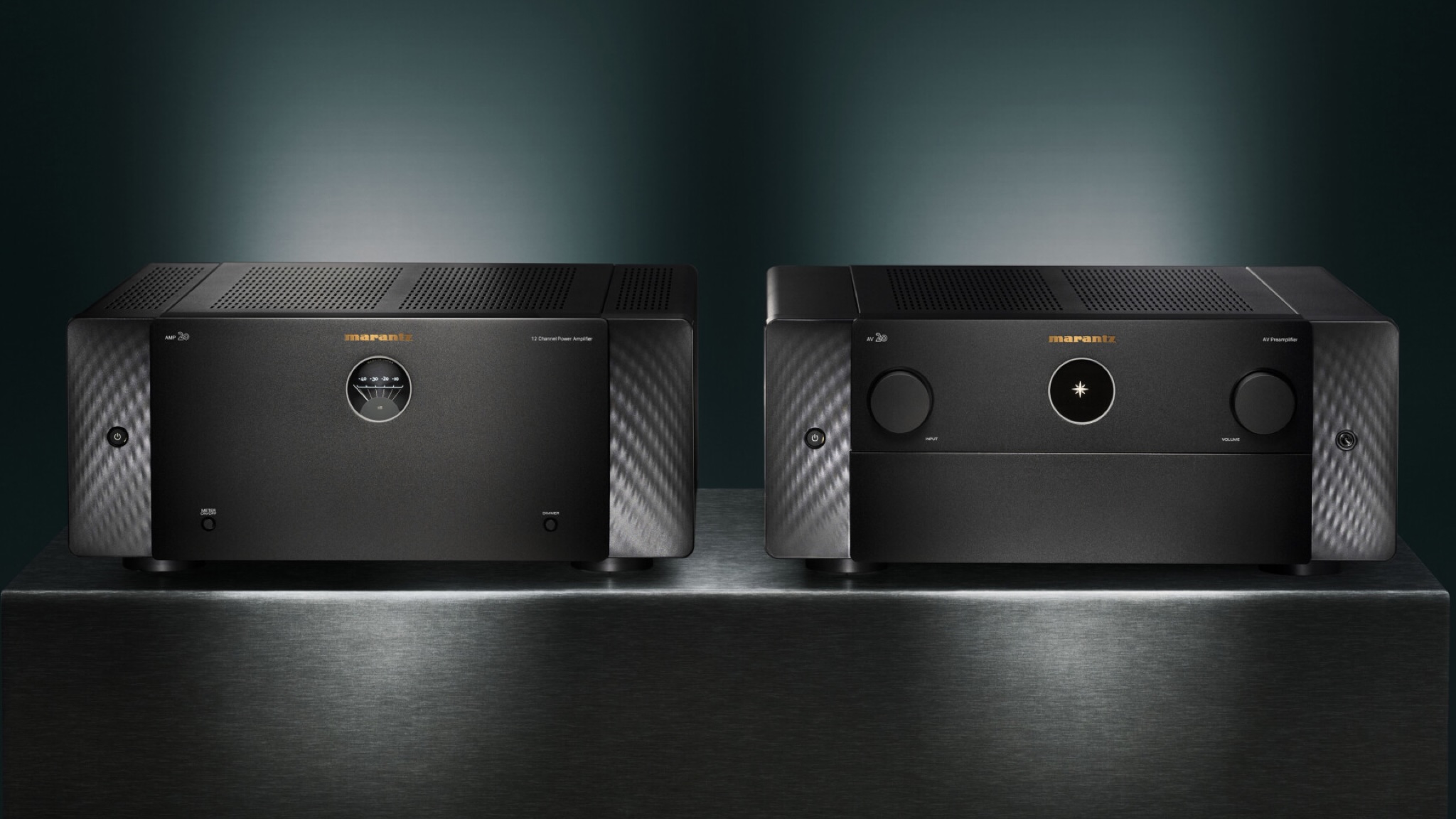
Picture from cdn.mos.cms.futurecdn.net
Rank 27594The AV20 and AMP20 deliver 200W per channel, or 400W per channel to six channelsDesigned to work together but also compatible with other Marantz models$1,000 cheaper when bought togetherAs much as I love a good soundbar, my idea of home theater heaven features a high-end AV receiver – and Marantz's new AV20 and AMP20 could be the soundtrack for the home setup of my dreams.The AV20 and AMP20 are reference-quality home theater separates, and as you've probably deduced from the names, the AMP20 takes care of the amplification. And it's a lot of amplification: 200W per channel over 12 channels, or 400W per channel to six.(Image credit: Marantz)Marantz AV20 and AMP20: key features and pricingThe AV20 and AMP20 can deliver a 13.4 channel surround system – so you're probably talking about 9.4.4 channels in practice as the maximum Dolby Atmos configuration. While they've been made to work together, they can also be used separately – so for example, you can invest in the more powerful AMP10 and team it with the AV20.They're as good to look at as they are to hear: they have Marantz's premium industrial design with its distinctive porthole display and I think they look spectacular.The AV20 has Audyssey MultEQ XT32 room calibration and Dirac Live (that one's an optional extra) with Dolby Atmos, DTS:X Pro, Auro-3D and IMAX Enhanced. There are seven HDMI 2.1 inputs and three HDMI outputs with 4K 120Hz and 8K 60Hz support.Both models feature Marantz's distinctive porthole design (Image credit: Marantz)Naturally it works with Marantz's HEOS system for multi-room, and it also has AirPlay 2, Spotify Connect, Tidal Connect and plain old Bluetooth.The Marantz AV20 and AMP20 are priced identically at $6,000 / £4,750 (about AU$9,880) each. But if you buy both together you'll get a big discount: together they're $11,000 / £9,500 (about AU$19,849).You might also likeThe best soundbars for when you don't have room for a full speaker systemThe best 8K TVs: super-detailed displays from Samsung and moreThe best 85-inch TVs: huge 4K and 8K TVs for home cinema
-

Picture from ichef.bbci.co.uk
Rank 27595 -

Picture from static.independent.co.uk
Rank 27596 -

Picture from cdn.mos.cms.futurecdn.net
Rank 27597There's evidence that the One UI 8 beta is expandingSupport could go back to the Galaxy S22 phonesA full software launch is expected in JulySamsung's One UI 7 (based on Android 15) has only been widely available for a couple of months, but the beta test program for One UI 8 (based on Android 16) is already up and running – and could soon expand to more Galaxy phones too.Right now, you need a Samsung Galaxy S25, Galaxy S25 Plus, or Galaxy S25 Ultra to enrol in the One UI 8 beta, but users have spotted preparations being made to allow the Galaxy S23 and the Galaxy S22 access as well.Samsung hasn't said anything officially about this yet, but it's a strong hint that the One UI 8 beta won't be exclusive to the Galaxy S25 handsets for too much longer. Presumably, the Samsung Galaxy S24 handsets are going to be included in the expansion too.The One UI 8 beta opened up last week, and you can sign up through the Members app on your Samsung phone. It might be an idea to keep checking the front page of that app if your phone has been tipped to join the beta program soon.Location lockedGreat News !!Galaxy S23 Series: The official One UI 8.0 beta Samsung Community page has been created, but so far only in Germany.It has not yet been found for the US, UK, Korea, India, or Poland pic.twitter.com/MaAPkY9gnhMay 31, 2025There is a caveat here, which is that the One UI 8 beta program is currently only available to users in the US, the UK, Germany, and South Korea (where Samsung is based). It's not clear if the program will expand beyond those countries.There might also be problems with capacity, too: as SamMobile reports, the beta program in the US filled up over the weekend, so new users couldn't enrol. However, at the time of writing, new users are now being accepted again.Samsung has confirmed that One UI 8 is going to be preinstalled on the Galaxy Z Fold 7 and the Galaxy Z Flip 7. Given that those foldables are expected to be unveiled sometime in July, it looks as though this will be quite a short-lived beta.There's plenty to look forward to in One UI 8. The software update is going to bring with it better multitasking support, improvements to phone security, enhanced file sharing features, tweaks to Samsung Internet and Samsung Reminders, and plenty more.You might also likeSamsung reveals One UI 8 rollout timelineThese are the best Samsung phones right nowSamsung TVs will get new One UI software
-

Picture from static.independent.co.uk
Rank 27598 -

Picture from static.independent.co.uk
Rank 27599 -

Picture from static.independent.co.uk
Rank 27600