News
This constantly updated list features the latest and most important news articles, ranked in order of significance. The top stories highlight major developments, breaking news, and critical updates across various topics, ensuring you stay informed about the most pressing issues. As new articles are added, the list adapts to reflect the latest priorities, keeping the most impactful stories at the forefront. Whether it’s global events, technology breakthroughs, or industry trends, this dynamic list ensures you always have access to the most relevant and timely information.
-

Picture from cdn.mos.cms.futurecdn.net
Rank 24801World War Z VR, a new first-person, single-player game, is coming to SteamVR and Meta Quest on August 12Saber Interactive's new game will allow players to take on hordes of over 200 zombies at once in VRPre-orders are now available on the Meta Store and SteamSaber Interactive has announced the next game in its World War Z franchise, World War Z VR, and it's launching this summer.World War Z VR is a brand new first-person, single-player game based on the Paramount Pictures 2013 film and Saber’s game franchise, and is set to release on August 12 for SteamVR, Meta Quest 3, Meta Quest 2, and Meta Quest Pro."World War Z VR faithfully reimagines the intense action of the original World War Z game to create the most immersive VR zombie experience ever," Saber said. "Take on hordes of over 200 zombies on screen at a time, an astounding technical feat for VR which will put your skills to the ultimate test."In this new installment, players will find themselves taking on hordes of zombies in three locations: New York, Tokyo, and Marseille. There will be seven playable characters to choose from, and after selecting their operative, players can start missions with a pre-selected AI squad, equipped with a wide variety of weapons and perks.The VR missions will present unique challenges for players and even offer three difficulty modes to choose from. Zombies will also adapt to their surroundings and recognize the players' playstyle to hunt them down, while special infected enemies raise the stakes even higher.Pre-orders are now available on the Meta Store and Steam for $19.99 / £14.99. Those who secure a pre-order will also gain access to the Golden Skin Pack, which features four exclusive gold weapon skins.Steam users can also pre-order a special game bundle that includes both the new World War Z VR and the original World War Z, featuring a 20% discount.You might also like...Sony's Days of Play sale kicks off tomorrow and will bring price cuts to the PS5 Pro, DualSense Edge, the PS5 Call of Duty: Black Ops 6 bundle, and a host of price cuts on accessories and gamesLeaker claims Sony is now working on a new PlayStation handheld consoleGhost of Yotei pre-orders live: Collector's Edition up in the US, Standard Edition retailers, and where to buy in the UK
-

Picture from cdn.mos.cms.futurecdn.net
Rank 24802A new update for the Philips Hue mobile app is rolling out nowThe app now suggests adding new sensors and switches to a zone during the setup processThis avoids a problem where lighting scenes are unavailable later onIf you've ever struggled to set up new sensors and switches for your Philips Hue lights, help is at hand. A new app update is rolling out now that automatically suggests adding accessories to a zone when you connect them for the first time, so you don't miss out on any features later on.A zone is a set of lights and other accessories that you want to control together as a group. They don't necessarily have to be in the same place or include all the lights within a room. For example, you might want to create a zone specifically for your home entertainment lighting, or one that includes all the lights on a particular floor.Previously, assigning new devices to a room or zone was an optional step within the Philips Hue app, which you might miss if you were in a hurry. If you did, you wouldn't be able to use all of the switch or sensor's functions afterwards. For example, you may be unable to view all the available scenes (ready-made lighting profiles).The new app update was spotted by the editor of Hueblog.com, who says he's often contacted by readers stuck in this frustrating 'accessory trap'. From now on, the app will suggest creating at least one zone during the setup process so you don't suffer that problem, and will note that you can always hide zones in the future if you prefer.Simpler setupThere is also a change to the setup process when you're installing a new Philips Hue security camera. As Notebookcheck explains, the app now offers you the chance to set up motion-controlled lighting during the initial setup process.Both of these are relatively minor changes, and there's still no news about the upcoming Philips Hue AI assistant. However, they address some common problems that you might face when extending your Philips Hue setup and make your best smart lights even better.You might also likeNanoleaf's new indoor and outdoor smart lights are its funkiest designs to datePhilips Hue bulb types explained: choose the right lights for your homeIf the Philips Hue Play HDMI Sync Box is too expensive, this new budget-friendly alternative from WiZ could be exactly what you need
-
Picture from cdn.mos.cms.futurecdn.net
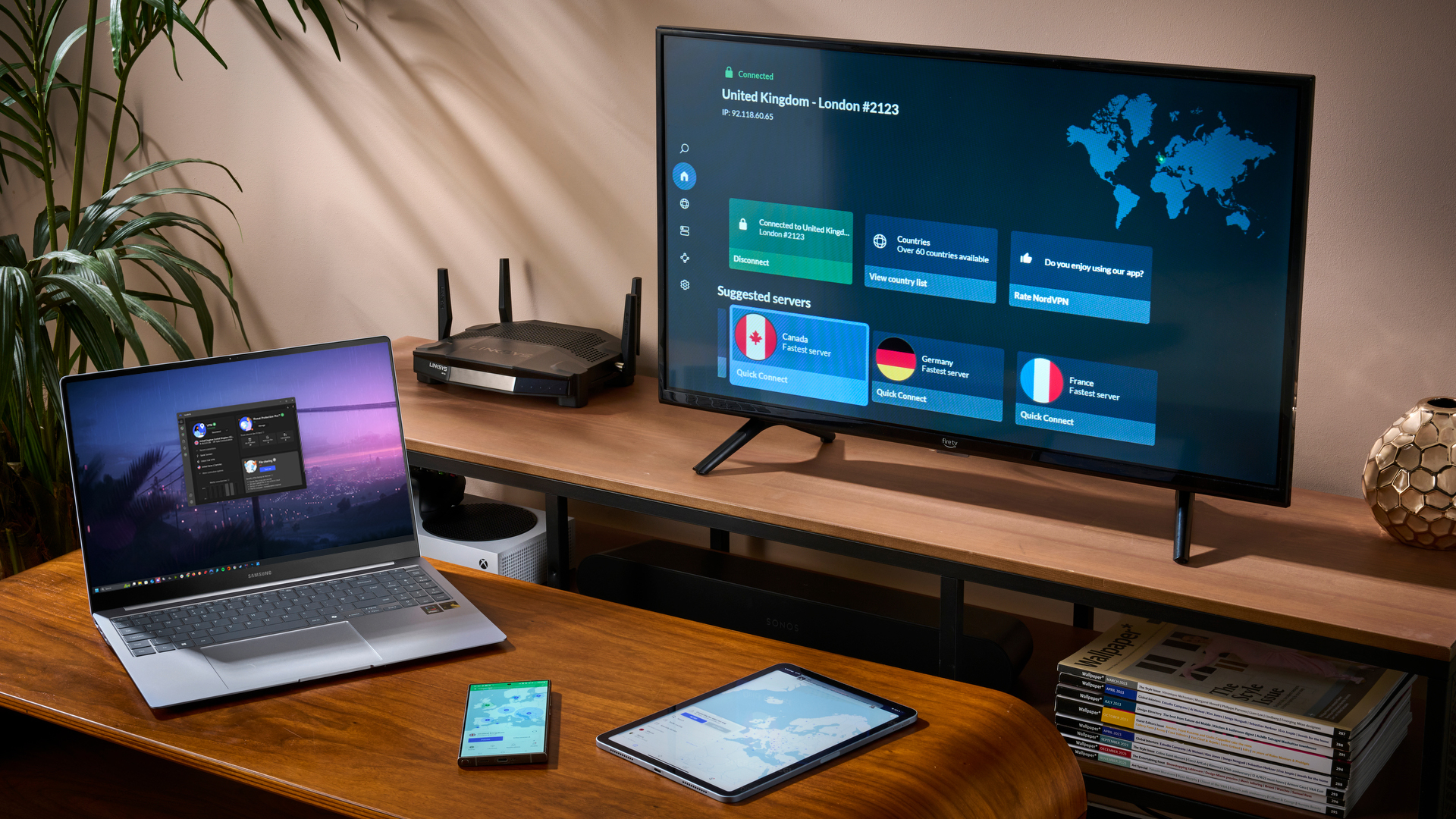
Rank 24803NordVPN has launched post-quantum encryption (PQE) across all its applicationsThe provider launched its first iteration of PQE in 2024, but only for its Linux VPN appThis comes as traditional encryption methods are set to become obsolete with the advent of quantum computers NordVPN has just taken an important step forward into its post-quantum transition, extending support for quantum-safe encryption across all its applications.While the provider launched its first iteration of post-quantum encryption (PQE) in September 2024, only Linux users could enjoy this protection. Now, all NordVPN users can enjoy PQE no matter the platform they use.Already rated as the best VPN service on the market by TechRadar's reviewers, NordVPN joins a handful of VPN providers that also include quantum-safe cryptography in their software.Why and how use NordVPN post-quantum encryptionAs quantum computing advances, NordVPN's CTO, Marijus Briedis, explains, RSA-based key exchange encryption methods that most VPN protocols use today will eventually become vulnerable.Experts predict, in fact, that traditional encryption will soon be broken by the ability of quantum computers to perform computations that machines can't handle, within minutes.While this is expected to happen between five to 10 years, cybercriminals have already started to conduct what's known as "store now, decrypt later (SNDL) attacks." The idea is simple – to collect encrypted data now so they can crack it in the future when quantum computing is finally up to the task.This is exactly why the cryptographic world is already catching up. Last August, the National Institute of Standards and Technology (NIST) released the first three quantum-resistant encryption standards to better support software providers in their transition. NordVPN joined the post-quantum revolution a few months after that, adding one of these algorithms (ML-KEM) to its WireGuard-based Nordlynx protocol, which is known for its speed and security."By integrating PQE into our VPN infrastructure, we're taking a proactive step to ensure long-term confidentiality and resilience for our customers' data, both now and in a post-quantum future," said Briedis.TechRadar needs you! We want to know what you think about the world of VPNs. Whether you're a novice or a VPN pro, we want to hear your thoughts. Don't worry, though, your responses are completely anonymous, and it takes less than five minutes to complete!To take part, click the link below: https://futurenet.questionpro.eu/tr-vpnAs mentioned earlier, before the latest release, only the Linux VPN app included PQE support.This choice allowed the NordVPN team to analyze how the new quantum-safe algorithm, which was implemented in a hybrid way alongside classic encryption methods, could affect performance like connection speeds and latency."The gathered data served as a stepping stone in the transition to quantum-resistant encryption for the rest of our platforms," said Briedis. "The Linux case demonstrated that we successfully maintained the highest level of user experience in terms of connection time and speed during the transition."As a result, NordVPN rolled PQE across all its platforms – from Windows and macOS to Android and iOS, even including its Android TV and tvOS apps.Users need to actively enable this extra protection by heading to the Connections tab in the app's Settings and switching on the toggle. The PQE feature will automatically activate whenever the user connects via the NordLynx protocol.Which VPN providers offer post-quantum encryption?NordVPN is not the only virtual private network (VPN) provider currently including PQE support on its service.ExpressVPN added quantum-safe encryption on its proprietary Lightway protocol in October 2023, by default across its Android, iOS, Linux, Mac, and Windows apps. Last January, the team took a further step forward by upgrading to the NIST standards.After pioneering the post-quantum transition in 2017, Mullvad extended PQE support for all platforms when it released post-quantum protection for iPhone in September 2024. The provider now plans to migrate to the new NIST standards, too.AdGuard, Windscribe, and PureVPN are other providers currently offering PQE protection, with Surfshark and NymVPN also expected to join the list soon.You might also likeVPNs need to be ready for the post-quantum world – here's what's being doneIs the internet ready for the "biggest security threat of all time"?NordVPN has now a full GUI Linux VPN app
-
Picture from cdn.mos.cms.futurecdn.net
Rank 24804Doda, a district in India's Jammu and Kashmir region, issued a 2-month VPN ban over national security concerns The ban was enforced on May 2, 2025, with some VPN users reportedly detained after that date Experts are warning against the attack on people's digital rights, while questioning the legality of the banDoda, a district in India's Jammu and Kashmir region, enforced a 2-month VPN ban on May 2, 2025, over national security concerns.Authorities issued the ban under Section 163 of the new BNSS law (the equivalent of the Indian Penal Code), citing individuals and groups misusing virtual private network (VPN) tools "to circumvent lawful cyber restrictions and access prohibited applications," the order reads.Digital rights and legal experts have so far strongly criticized this decision. They warn against the attack on people's digital rights and security, while questioning its legality.Is Doda's VPN ban legal?The Doda's VPN ban aims to "curtail the use of VPNs in the interest of public safety," and it's extended to all individuals, institutions, internet service providers, and cyber cafes operating in the district.This means that all residents are barred from using one of the best VPN services or similar tools for two months, to avoid being liable for legal action.Repercussions for allegedly using VPNs seem to have already begun. In a report published on May 18, Indian publication The Wire reported allegations that an unspecified number of Doda residents under "technical surveillance" have already been arrested as found to be using VPNs.Two days before, Doda's authorities had already confirmed to have "detained several individuals across the district for violating the directive."This is why many experts have been raising concerns about how the ban can impact people's rights, like free speech, free access to information, and privacy.TechRadar needs you! We want to know what you think about the world of VPNs. Whether you're a novice or a VPN pro, we want to hear your thoughts. Don't worry, though, your responses are completely anonymous, and it takes less than a minute to complete!To take part, click the link below: https://futurenet.questionpro.eu/tr-vpnTalking to TechRadar, Senior Policy Counsel and Encryption Policy Lead at Access Now, Namrata Maheshwari, explains that the right to the internet and the right to privacy are protected fundamental rights under the Indian Constitution.Maheshwari also pointed out how the Indian government has already implemented "an onerous mandate" for VPN providers when it enforced a new data retention law in 2022.A host of online services are now required to store users' data for up to five years and share it with authorities on request, in fact, something that led to an exodus of major VPN companies from the country.VPNs are not illegal."Namrata Maheshwari, Access NowYet, "VPNs are not illegal," said Maheshwari, adding that a blanket ban on all VPNs for two months is "unnecessary and disproportionate.""People have a fundamental right to information and freedom of expression, and restrictions on these rights ought to be legal, necessary, and proportionate – a standard this ban does not meet," she added.The ban isn't affecting only individual users, though, but also businesses and institutions that regularly use these services for security purposes.According to Maheshwari, the ban could then end up increasing vulnerabilities in the country's cyberspace, ultimately weakening security as opposed to strengthening it.She said, "Even in an emergency, preventative measures cannot be this vague and overreaching, particularly where less intrusive means are available."You might also likeIndia ordered X to block 8,000 accounts – here's what we know so farProton Mail hit with blocking order in IndiaVPNs are disappearing from India's app stores – and a 2022 law may be the culprit
-
Picture from o.aolcdn.com
Rank 24805Elon Musk has left his role as the de facto head of the Department of Government Efficiency (DOGE). “As my scheduled time as a Special Government Employee comes to an end, I would like to thank President @realDonaldTrump for the opportunity to reduce wasteful spending,” Musk wrote on X. “The @DOGE mission will only strengthen over time as it becomes a way of life throughout the government.”
DOGE is a Trump administration initiative with the stated goals of cutting wasteful government spending, modernizing IT systems and maximizing efficiency in various departments — even though DOGE itself was initially set to have two leaders, Musk and Vivek Ramaswamy, who dropped out to focus on a bid to become Ohio's governor. Musk’s tenure there has been an eventful one, to put it mildly, as DOGE has taken a chainsaw to the government over the last four months.
Musk's slash-and-burn approach (similar to the one he adopted in his early days at X) played a role in hundreds of thousands of federal workers being turfed out — reportedly including some working at an agency that regulates Tesla. DOGE officials were involved in firing workers who it turned out had essential roles and had to be quickly hired back. In some cases, federal judges ordered the reinstatement of fired federal employees.
DOGE has inserted staffers into many government agencies. It demanded access to sensitive data including federal employee information and Treasury Department financial records, a request that a judge granted this week despite 19 attorneys general trying to prevent that over privacy and legal concerns.
Elsewhere, DOGE has been using generative AI chatbots to try to automate some government tasks. (A custom version of ChatGPT used by the Department of Veterans Affairs is called, in all seriousness, VAGPT.) The initiative also reportedly monitored government communications for criticisms of Musk and President Donald Trump. It was also reported last month that the Social Security Administration was moving all its official communications with the public to X, the social network that Musk owns.
Given his status as a Special Government Employee, Musk could only legally serve in his position for 130 days in a one-year period. The 130 days are up as of May 30, though DOGE is slated to remain operational until July 4, 2026.
Musk's departure comes at a time of turmoil for some of his higher-profile companies. It emerged this week that, between April 2024 and last month, sales of new Tesla electric vehicles dropped by half in Europe. — despite EV sales in the region rising overall by 28 percent. In Quebec, said to be the most EV-friendly market in Canada, Tesla sales reportedly sank by 87 percent between the first three months of 2024 and the same period this year. Overall, Tesla deliveries dipped by 13 percent in that timeframe.
Tesla’s business is interlocked with Musk and the public persona of its CEO. Its reputation has been damaged in the eyes of many given Musk’s political dealings, personal views, his association with DOGE, the agency’s actions and his efforts to help Donald Trump win the presidency.
Activists have called for boycotts of Musk's companies and staged protests at Tesla showrooms. Many Tesla owners have been trying to distance themselves from Musk by placing stickers on their cars. Others have sold their EVs, even though that meant taking a financial hit amid plummeting resale values. Protestors have targeted Cybertrucks and others have made fun of the vehicle and owners of it on social media. (In fairness, that’s not entirely to do with Musk’s association with DOGE and the president — the Cybertruck is an absolute eyesore).
Meanwhile, SpaceX had mixed results with its latest Starship test flight this week. While the spacecraft reached space, the payload door got stuck and it was unable to deploy its payload of fake satellites. As for the Super Heavy booster, which had been reused after the successful seventh test flight, that was supposed to splash down into the ocean but, six minutes after launch, it experienced a "rapid unscheduled disassembly."
So Musk has plenty to concern himself with as he officially leaves DOGE, but he's been critical of a federal budget bill. As he prepared to depart his government role, he expressed "disappointment" with the Trump spending bill, suggesting in an interview that it "undermines the work that the DOGE team is doing." The One Big Beautiful Bill Act, which the House passed last week, will end most clean energy tax credits, including those on EV purchases. Tesla has claimed that "abruptly ending the energy tax credits would threaten America’s energy independence and the reliability of our grid."
In any case, it's unclear whether DOGE has actually met its mandate of slashing government spending. A tracker on the DOGE website claims to have saved taxpayers some $170 billion by canceling contracts and laying off workers, but reports suggest that the "Wall of Receipts" is full of misleading or inaccurate claims. A fellow at the conservative-leaning American Enterprise Institute think tank suggested to CBS News this month that the figure is more likely to be around $80 billion.
Meanwhile, Bloomberg reported on Thursday that, since Trump took office in January, federal spending has actually increased by 8.7 percent compared with the same period in 2024. That's largely due to spending on Social Security, Medicare and other social insurance programs, as well as interest payments on the federal debt. However, the report notes that the full impact of the DOGE-led cutbacks may not yet been factored into the figures, given the up-front costs involved in ending programs and canning so many workers.This article originally appeared on Engadget at https://www.engadget.com/big-tech/elon-musk-leaves-doge-amid-tanking-tesla-sales-153859407.html?src=rss
-

Picture from static.independent.co.uk
Rank 24806 -

Picture from static.independent.co.uk
Rank 24807 -

Picture from static.independent.co.uk
Rank 24808 -

Picture from static.independent.co.uk
Rank 24809 -

Picture from static.independent.co.uk
Rank 24810 -

Picture from static.independent.co.uk
Rank 24811 -

Picture from static.independent.co.uk
Rank 24812 -

Picture from static.independent.co.uk
Rank 24813 -

Picture from static.independent.co.uk
Rank 24814 -

Picture from static.independent.co.uk
Rank 24815 -

Picture from static.independent.co.uk
Rank 24816 -

Picture from static.independent.co.uk
Rank 24817 -

Picture from assets1.cbsnewsstatic.com
Rank 24818 -

Picture from assets1.cbsnewsstatic.com
Rank 24819 -

Picture from assets3.cbsnewsstatic.com
Rank 24820 -

Picture from assets3.cbsnewsstatic.com
Rank 24821 -

Picture from assets1.cbsnewsstatic.com
Rank 24822 -

Picture from assets2.cbsnewsstatic.com
Rank 24823 -

Picture from assets1.cbsnewsstatic.com
Rank 24824 -

Picture from image.cnbcfm.com
Rank 24825 -

Picture from image.cnbcfm.com
Rank 24826 -

Picture from image.cnbcfm.com
Rank 24827 -

Picture from image.cnbcfm.com
Rank 24828 -

Picture from image.cnbcfm.com
Rank 24829 -

Picture from static.independent.co.uk
Rank 24830 -

Picture from static.independent.co.uk
Rank 24831 -

Picture from assets3.cbsnewsstatic.com
Rank 24832 -
Picture from o.aolcdn.com
Rank 24833The New York Times and Amazon have entered into a multi-year licensing agreement that will allow Amazon access to much of the publication’s editorial content for AI-related uses. In a press release announcing the deal, The New York Times shared that this agreement will bring new features for customers like accessing summaries or excerpts of Times content using Alexa. It will also allow Amazon to train its AI models on The New York Times content.
In announcing the deal, The New York Times shared, "The collaboration will make The New York Times’ original content more accessible to customers across Amazon products and services including direct links to Times products and underscores the companies’ shared commitment to serving customers with global news and perspectives within Amazon’s AI products." Access to content from NYT Cooking and The Athletic is also included in the deal.
AI models require training on vast amounts of data, and many of the companies building them are likely running afoul of copyright laws by training on protected materials. OpenAI and Google went so far as to ask for a government exemption to copyright laws for their models to train freely. The New York Times sued OpenAI and Microsoft for training their models on the company’s content without permission back in 2023, though the case is still ongoing.
Licensing agreements can offer additional revenue streams for companies willing to hand over user data or allow AI models to train on content created by their employees. The Washington Post is one of several major publications that have signed deals with OpenAI earlier this year. The specific contents of today’s deal, such as how much Amazon is paying, have not been disclosed. Amazon has been on a tear releasing AI-powered tools for shopping, book recaps and product explanations.This article originally appeared on Engadget at https://www.engadget.com/big-tech/amazon-and-the-new-york-times-enter-ai-related-licensing-agreement-155019578.html?src=rss
-

Picture from assets2.cbsnewsstatic.com
Rank 24834 -

Picture from image.cnbcfm.com
Rank 24835 -
Picture from techcrunch.com
Rank 24836 -

Picture from static.independent.co.uk
Rank 24837 -

Picture from assets3.cbsnewsstatic.com
Rank 24838 -

Picture from image.cnbcfm.com
Rank 24839 -

Picture from cdn.mos.cms.futurecdn.net
Rank 24840The 2025 edition of Netflix Tudum, aka the now-annual fan event that celebrates everything about the world's best streaming service, is almost upon us.This year's installment will take place on Saturday, May 31 at 5pm PT / 8pm ET – non-US readers can work out when it'll begin using the aforementioned times – and there'll be plenty of announcements made on the night.We already know that TV hits including Stranger Things, Wednesday, and Squid Game will be featured at Netflix Tudum 2025. However, Netflix has stayed tight-lipped on what it'll actually reveal during its live event, which you can watch on Netflix if you didn't manage to secure a ticket to the in-person event.That won't stop me from speculating on what'll be shown, mind you. With that in mind, here are four things I predict we'll see at Tudum 2025.1. Stranger Things season 5 release date and format, plus a teaser trailerMe and who as we sit around our computers hoping for some Stranger Things 5 news on Saturday? (Image credit: Netflix)As far as many people are concerned, these are the biggest reveals that Netflix could make at Tudum 2025.We already know that the hugely popular show's final season is set to be released sometime in 2025. Indeed, filming wrapped on Stranger Things 5 in December 2024 but, while a big Stranger Things season 5 leak seemingly suggested it'll air in late 2025, we still don't know when it'll make its actual debut.Nevertheless, Tudum 2025 is the perfect time for Netflix to finally confirm when Stranger Things season 5 will be released. I predict that the streaming giant will also tell us whether it'll launch in full, or be released in two parts like Stranger Things season 4 was.Lastly, I'd be surprised if a teaser trailer isn't unveiled to further generate hype for one of the best Netflix shows' final hurrah. We've had to live on behind-the-scenes morsels for years at this point, so some actual footage of season 5 would go down a storm.2. An official trailer for Squid Game season 3 Unchain Squid Game season 3's official trailer, you cowards! (Image credit: Netflix)It's hard to believe that another incredibly successful Netflix TV Original – Squid Game – will end this year, too.The Korean-language survival drama is set to end when Squid Game season 3 arrives on June 27. But, despite the fact that we were treated to an exciting Squid Game 3 teaser in early May, an official trailer still hasn't been released online. Tudum 2025 is the ideal time to drop a much longer trailer that'll make me and millions of other Netflix users even more stoked for the series' last chapter.3. More footage of Wednesday season 2This is the exact same pose and facial expression I'll have if we don't see more of Wednesday season 2 (Image credit: Netflix)Unlike the aforementioned pair, Netflix hasn't been shy about disclosing information about Wednesday season 2.In the last few weeks alone, we've received word about Wednesday 2's dual release dates and first-look at its new cast members, and been treated to a finger-clickingly good behind-the-scenes featurette of the show's sophomore outing.I'm hungry for even more, though, so I'd like to see another first-look clip or two for Wednesday's second chapter. I don't really care what's shown, either. Indeed, I'll take an extended sequence of Jenna Ortega's eponymous character interacting with Joanna Lumley's Grandmama, a tension-filled reunion with Hunter Dooham's Tyler/Hyde, or something more kooky. Just give me something, please Netflix.4. Release date reveals for Netflix's 2025 movie line-up"No Knives Out 3 release date yet? It makes no goddamn sense! Compels me, though..." (Image credit: https://x.com/rianjohnson)It's not all about the biggest shows that Netflix has to offer. There are numerous new Netflix movies that'll launch on the platform before the end of 2025, but lots of them still only have placeholder launch windows.There's no better moment to announce some proper release dates for some of Netflix's most anticipated new movies of the year, then, than at Tudum 2025. I'm hoping for official launch dates for Wake Up, Dead Man: A Knives Out Mystery, Guillermo del Toro's Frankenstein, The RIP, and The Twits, but I won't turn my nose up at any other major reveals that are made.What are you hoping to hear more about at Netflix Tudum 2025? Will you be tuning in to watch it live, or do you plan on catching up on the biggest news once it's wrapped up? Let me know in the comments!You might also likeThese are the best Netflix movies to stream today'Is this for real?': Lilo and Stitch fans are furious about the live-action remake's ending, so they're watching the original movie on Disney+ insteadAvengers: Doomsday could spell the end for another original Avenger as Marvel actor's thank you video sparks MCU exit rumors
-
Picture from o.aolcdn.com
Rank 24841The Nintendo Switch 2 comes with 256GB of built-in storage, eight times more than the original Switch and four times more than the Switch OLED. But the new console’s improved performance means that some games will hog a ton of that space: Cyberpunk 2077 is a 60GB download, for one, while Split Fiction checks in at 73GB. Other titles aren’t nearly as big, but chances are you’ll eventually want to add more room to the device.
When you do, you’ll need a microSD Express card. These are not the same as the standard microSD cards you may have bought for the first Switch or other gaming handhelds — they’re newer, faster and significantly more expensive. But if you want more space, they’re your only choice. If you’re looking to grab one today, we’ve laid out the best microSD cards for the Switch 2 and broken down what you should know before you buy.
The best microSD cards for the Switch 2 (and why you might want to wait to buy)
The SanDisk microSD Express Card and Lexar Play Pro.Jeff Dunn for Engadget
The Switch 2 is the first mainstream device to require microSD Express for storage expansion, so there aren’t many options available to buy just yet. To make things easy, here’s a list of every microSD Express card we’ve seen at retailers at the time of writing:
128GB
SanDisk microSD Express Card ($56 MSRP)
PNY microSD Express Card ($47 MSRP)
256GB
Samsung microSD Express Card for Nintendo Switch 2 ($60 MSRP)
SanDisk microSD Express Card ($75 MSRP)
Lexar Play Pro ($50 MSRP)
PNY microSD Express Card ($59 MSRP)
GameStop Express microSD Card for Nintendo Switch 2 ($60 MSRP)
Onn microSD Express Card ($36 MSRP)
512GB
Lexar Play Pro ($100 MSRP)
GameStop Express microSD Card for Nintendo Switch 2 ($100 MSRP)
Onn microSD Express Card ($66 MSRP)
1TB
Lexar Play Pro ($200 MSRP)
GameStop Express microSD Card for Nintendo Switch 2 ($190 MSRP)
Remember: You’re looking for microSD Express, not “Extreme,” a la the branding SanDisk uses for some of its conventional microSD cards. A microSD Express card will have a big “EX” logo printed on it — if you see that, you should be good to go.
Nintendo says the Switch 2 technically supports cards with a capacity up to 2TB, but we haven’t seen any microSD Express model go beyond 1TB just yet. It’s also worth noting that GameStop and Onn (Walmart’s in-house electronics brand) aren’t manufacturers, so it’s unclear who exactly is making their cards.
Currently, stock for each of these cards has been extremely spotty. SanDisk’s microSD Express Card has also increased in price since it first went up for sale in February; originally, it cost $45 for 128GB and $60 for 256GB. Either way, all of these cards are far pricier than traditional microSD options. The Samsung Pro Plus, for example, costs $17 for 128GB, $25 for 256GB, $43 for 512GB and $90 for 1TB as of this writing.
All microSD Express cards will have this "EX" logo printed on them.Nintendo/Engadget
We’ve already tested SanDisk’s Express card and the Lexar Play Pro for our broader guide to the best microSD cards. Between the two, SanDisk’s card has much faster sequential read speeds — up to 899 MB/s vs. 712 MB/s in CrystalDiskMark, to name one benchmark — which theoretically makes it better equipped to reduce load times.
The Play Pro is quicker for sequential writes (up to 720 MB/s vs. 650 MB/s), available in more sizes and should be cheaper at 256GB whenever it’s in stock. (SanDisk says the 128GB version of its card has slower sequential writes than the 256GB model, too.) Random performance is about equal, so the two should be similarly adept at keeping large games like Mario Kart World running smoothly.
We mainly tested those cards on a Windows PC and Mac, though. How they perform on the actual Switch 2 remains to be seen. We’ll test as many options as we can once we have our hands on the console, but for now we can’t say if it’ll render all microSD Express cards to similar speeds. That was largely the case with the first Switch: Once a (regular) microSD card hit a certain threshold of performance, there wasn’t that much practical difference between it and other alternatives. The Switch 2 is working with a different standard, but if something similar were to happen again, the “best” microSD Express card would simply be the most affordable one from a reputable brand in the capacity you want.
That brings us to our main piece of advice: If you can hold off on buying one of these things early on, that’s probably a good idea. It’s not just about the lack of testing — truthfully, we’d be surprised if any of the cards above were truly “bad.” It comes down to value: Barring more tariff shenanigans, all of these cards are as expensive today as they’re ever likely to get. The Switch 2 is already popular and will continue to be, thus more microSD Express cards will need to be made and prices will (eventually) come down. Try to use all 256 of the gigabytes baked into the Switch 2 first, even if it means having to delete a game or two. But if you’re absolutely sure you want more space right away, the cards above should be good enough.
What are microSD Express cards?
A microSD Express card like the one on the right has a second row of pins on the back.Jeff Dunn for Engadget
Most microSD cards are based on a standard called Ultra High Speed (UHS), of which there are three versions: UHS-I, UHS-II and UHS-III. The vast majority of cards you may have bought in the past utilize UHS-I. These have one row of pins in the back and a theoretical maximum data transfer speed of 104 megabytes per second (MB/s). (Though many cards are able to surpass that limit with proprietary tech and card readers.) The original Switch has a UHS-I microSD slot, as do most other gaming handhelds like Valve’s Steam Deck.
UHS-II cards add a second row of pins and can reach up to 312 MB/s. These are pricier and much less common than cards based on UHS-I, but they’re supported by some cameras and higher-power handhelds like the ASUS ROG Ally X. UHS-III, meanwhile, is twice as fast as UHS-II in theory (624 MB/s), but no microSD cards have actually used it.
UHS-I cards have held on over the years because they’re cheap, widely supported and fast enough for the things most people need them to do: record 4K video, stash photos and so on. But with the Switch 2, Nintendo needs more. The new console is dramatically more powerful, which allows it to run demanding games that may have originally been built for stronger hardware like the PlayStation 5, Xbox Series X or gaming PCs. The device also uses UFS 3.1 storage internally, which is much speedier than the eMMC storage used by the original Switch. (A custom file decompression engine should help improve load times as well.) So if the Switch 2 is going to accept microSD cards, it needs ones that won’t bring a serious drop-off in performance and can hold up with modern games.
The Nintendo Switch 2.Sam Rutherford for Engadget
Hence, SD Express. This standard has technically been around since 2018 but mostly went nowhere until the Switch 2 came along. It also uses a second row of pins, but it lets microSD cards take advantage of the PCI Express (PCIe)/NVMe interface, which is the same underlying tech used by modern SSDs. As a result, it can produce considerably faster read and write speeds, with a current theoretical maximum of 985 MB/s.
As noted above, real-world performance won’t be quite that fast. Even if it was, the best microSD Express cards would still be much slower than the NVMe SSDs used by the PS5 and Xbox. (Sony recommends SSDs with sequential read speeds of at least 5,500 MB/s.) And they’ll fall well below their peak speeds under sustained loads: SanDisk, for instance, says sustained write speeds for its 128GB Express card can drop as low as 100 MB/s.
But they’re still a marked improvement over old UHS-I cards, and in theory, they should be quicker than some older SATA-based SSDs when it comes loading game levels, asset streaming, retrieving saves or copying games to external storage. Whereas SanDisk’s microSD Express card can produce sequential read speeds around 900 MB/s, Lexar’s Professional Silver Plus — the top UHS-I pick in our general microSD card guide — topped out just over 200 MB/s, and that’s with a proprietary reader. (On the first Switch, it’d be closer to 100 MB/s.) Sequential writes and random speeds were three to four times better as well, and sometimes even more depending on the benchmark we used.
It remains to be seen how well these Express cards will hold up with extended use, and there’s no way to know exactly when their sky-high prices will drop. Non-Switch 2 devices that support microSD Express are still exceedingly rare, and the standard itself isn’t backwards compatible with UHS-II, so you’ll be limited to UHS-I speeds if you want to use your card with another device (unless you buy a pricey external reader). Still, while the increased costs and limited selection are annoying, the tech itself seems worthy of a next-gen Switch.This article originally appeared on Engadget at https://www.engadget.com/gaming/nintendo/the-best-microsd-cards-for-the-nintendo-switch-2-160052535.html?src=rss
-

Picture from techcrunch.com
Rank 24842 -
Picture from ichef.bbci.co.uk
Rank 24843 -

Picture from static.independent.co.uk
Rank 24844 -

Picture from static.independent.co.uk
Rank 24845 -

Picture from image.cnbcfm.com
Rank 24846 -
Picture from o.aolcdn.com
Rank 24847Apple's big 2025 software reveal is nearly upon us. On June 9, the Worldwide Developers' Conference (WWDC) keynote will showcase the changes coming with its 2025 software. That includes — deep breath — iOS, iPadOS, macOS, watchOS, tvOS and visionOS.
Leaks suggest this year will be a biggie. In addition to the requisite Craig Federighi gags, expect a significant visual overhaul — one of Apple's biggest ever — and (shocker) new Apple Intelligence features.
Visual redesign
The company is reportedly set to unveil a platform-wide visual overhaul. The revamp is said to be a dramatic change, drawing inspiration from Apple's mixed reality headset.
Apple
According to Front Page Tech's Jon Prosser, that may even include (nearly) round icons on the home screen and in Control Center. He also noted subtler changes, like a redesigned tab view within apps and the search box in Messages being moved to the bottom of the screen.
One of Apple's core goals with the new software is to unify the design language of its operating systems. The idea is to make it less visually jarring to hop between devices. If executed well, jumping from iPhone to iPad to Mac (and so on) will feel like touring different flavors of the same OS.
Apple's last big macOS makeover was with 2020's Big Sur. For the iPhone's software, you have to go all the way back to 2013. That's when iOS 7 kicked skeuomorphic design to the curb, replacing it with a flat, minimalistic look. Minus some iterative changes, it's still the UI you see today.
A new naming scheme
Along with the big visual refresh, Apple is also rumored to be changing how it names its operating systems. Instead of having random version numbers at the end, the company is apparently planning to unify the names by year — so iOS 19 would become iOS 26, as it'll be Apple's platform for the coming year. The same goes for all of Apple's other software, so we're looking at iPadOS 26, macOS 26 and so forth. Of course, it goes without saying that macOS should still get a California-themed name; hopefully Apple won't be throwing that tradition in the bin just yet.
The iPad goes to work
Nathan Ingraham for Engadget
Could 2025 be the year the iPad Pro starts to feel… Pro? The high-end versions of Apple's tablet have been more than capable on a hardware level for generations. (Especially when they switched to M-series chips.) But the software has held it back. That's presumably because the company doesn't want to cannibalize Mac sales. After all, if the iPad Pro can truly replace a laptop, then fewer people would buy both.
The bad news for those wanting a full-on Mac experience: The iPad won't switch to macOS. The good news: iPadOS may get much more Mac-like. This year's update will reportedly focus on productivity, featuring improved multitasking and app window management.
It's not that Apple hasn't inched the iPad's software in that direction. It incrementally did so with Stage Manager in iPadOS 16. The year before, it added the multitasking menu at the top of app windows. But for many, those tweaks fell far short of the full-on productivity overhaul they craved. Will it be enough this time? Bloomberg's Mark Gurman thinks it will "likely go far enough" for most power users. (Is that a "Hallelujah!" I hear?)
Apple Intelligence
Apple
Even if leaks hadn't already suggested as much, this one would be a no-brainer. After all, AI has been every tech company's obsession since ChatGPT took the world by storm over two years ago. Expect a healthy portion of the keynote to be devoted to Apple's AI advances. These will reportedly include improvements to existing features and a few new ones.
Siri
Remember when Apple promised a more personalized Siri at last year's conference? The one that many wished would come ahead of the visual overhaul? Well, we're still waiting on that. The last official update we heard was in March, when the company told Daring Fireball, "It's going to take us longer than we thought." (Oops!) Apple expects the new Siri features to arrive "in the coming year," a clear-as-mud description if ever there was one.
A report from The Information last month hinted that the upgraded Siri was nowhere near ready. The 2024 demo, where Siri condensed minutes of multi-app planning into mere seconds, reportedly came as a surprise to team members working on Siri. (Never an encouraging sign.)
Apple
Separate reporting this month from Bloomberg sheds a bit more light, adding that we probably won't hear much about those Siri upgrades at WWDC 2025. The publication described those updates as being months away from shipping. The company is also reportedly separating its Apple Intelligence and Siri marketing. The logic behind this is that users are so fed up with Apple's assistant that it's hurting Apple's AI push.
The company's 2024 presentation was undoubtedly impressive. It showed a more context-sensitive Siri that better understands what you're doing. It pulled info from various apps and spliced them together in a seamless flow. It recorded a specific type of video in a third-party app. It shared a meeting summary via email with a teammate. And it found missing information the user remembered reading... somewhere. It even controlled system settings and explained them when needed.
The bottom line: If or when Apple pulls off what it promised last year, that's big news for Siri. But don't hold your breath for it to show up at WWDC 2025.
According to Bloomberg, the Siri updates we do see will be much subtler. These would include adding the option to use Gemini instead of ChatGPT with the assistant.
AI battery management
Apple
Another iOS 19 scoop points to an Apple Intelligence feature that's easy to get behind. A new AI-powered battery management mode will reportedly analyze how you use your phone. It can then use that to make power-saving adjustments on the fly. If it works well, that could be pretty nifty.
It may also be a key ingredient to a new device: the "iPhone Air." Whatever Apple calls it, the rumored ultra-slim handset is expected to join Apple's lineup this year. Without this feature, the phone's smaller battery might struggle to make it through a typical day. (According to Gurman, it would last several hours less than Apple's other iPhones.) But with the AI battery feature activated, the svelte iPhone could become more practical.
Will we see this slim-jim iPhone at WWDC? Well, let's say you have as good a chance of Valve randomly showing up to announce Half Life 3 at Apple's conference. First, the svelte handset is expected to be part of the iPhone 17 lineup, which typically arrives around September. Second, Apple hasn't unveiled a new iPhone at WWDC since Steve Jobs showed off the iPhone 4 in 2010. So, in short, nope.
Virtual health coach
Apple
Apple is reportedly working on a virtual health coach. Allegedly codenamed Project Mulberry, the AI feature would pair a refreshed Health app with an AI-powered coach. Bloomberg says the feature would, to some degree, give you advice you'd usually seek from a doctor.
The virtual coach would collect data from your Apple devices and use AI to provide personalized health advice, chatbot-style. Apple is reportedly training the AI agent with data from company physicians. Meanwhile, outside experts would shoot educational videos.
In March, Bloomberg's Gurman said the virtual coach could arrive as early as iOS 19.4, which wouldn't likely come until early to mid-2026. But a quick aside in a report this month from Gurman and Drake Bennett mentioned that it could be a point of focus at WWDC.
A new gaming app
Bloomberg's Mark Gurman is predicting that Apple will introduce a centralized, pre-installed app for gaming on the Mac, iPad, iPhone and Apple TV. It'll include some of the features in the long-neglected Game Center service like leaderboards and matchmaking and pair them with a dedicated game launcher and editorial content including recommendations —including a push towards the Apple Arcade service.
Hair Force One
Apple
It wouldn't be an Apple keynote without some wacky Craig Federighi hijinks. Last year, Apple's software lead strapped on a hair-shaped helmet and skydived into Apple Park. At previous events, he showed off his parkour skills, summoned an iPad like he's a Jedi and jammed out on a three-necked guitar.
Say what you will about "Hair Force One." Federighi knows how to sell a sight gag. (With maybe just a teensy bit of help from Apple's visual effects artists.)
Betas and release dates
Following Apple's typical schedule, you can expect the first developer betas to arrive after the conference ends. (Likely the same day!) Public betas would follow early this summer. And you can expect the final versions of iOS 19, iPadOS 19, macOS 16 and so on to arrive alongside new iPhones this fall.
What not to expect at WWDC
While Apple's developer conference will be jam-packed if they serve up even a fraction of the expectations above, there are a few things we can pretty confidently take off the board, too.
With the possible exception of the Mac Pro, nearly all of Apple's hardware lines have either just finished an upgrade cycle (consumer Macs, most iPads) or are going to get updated in the fall as usual (iPhone, Apple Watch). As such, we're not expecting any major hardware announcements. Apple has talked about the Mac Pro at past WWDC events, but that computer is updated so infrequently that it's hard to say with any confidence that we'll see any changes. This article originally appeared on Engadget at https://www.engadget.com/mobile/smartphones/wwdc-2025-what-we-expect-apple-to-reveal-including-new-ios-macos-apple-intelligence-and-more-210051103.html?src=rss
-

Picture from ichef.bbci.co.uk
Rank 24848 -

Picture from ichef.bbci.co.uk
Rank 24849 -

Picture from static.independent.co.uk
Rank 24850


