News
This constantly updated list features the latest and most important news articles, ranked in order of significance. The top stories highlight major developments, breaking news, and critical updates across various topics, ensuring you stay informed about the most pressing issues. As new articles are added, the list adapts to reflect the latest priorities, keeping the most impactful stories at the forefront. Whether it’s global events, technology breakthroughs, or industry trends, this dynamic list ensures you always have access to the most relevant and timely information.
-

Picture from static.independent.co.uk
Rank 22751 -

Picture from static.independent.co.uk
Rank 22752 -

Picture from static.independent.co.uk
Rank 22753 -

Picture from static.independent.co.uk
Rank 22754 -

Picture from static.independent.co.uk
Rank 22755 -

Picture from static.independent.co.uk
Rank 22756 -

Picture from cdn.mos.cms.futurecdn.net
Rank 22757When choosing the best antivirus software for your device, its important to know how to use it - otherwise you could be paying for a service that isn't actually protecting anything.Running a virus scan is actually quite easy. You open an antivirus of your choice, click the usually prominent ‘Scan’ button, wait for the program to do its thing, and take care of anything that gets flagged. Or at least, that’s the gist of it and the bare minimum a user can do.In reality, the process can have a bit more to it than. So, we decided to write a detailed guide for conducting virus scans and everything else that comes with it, such as protecting all of your devices.Select the right security softwareBefore we get to the matter at hand, picking the right software for the job is the first step in doing a proper virus scan. Personal antivirus tools are a dime a dozen, with a lot of features and additional security options that go beyond just running a virus scan.With no shortage of options on the market sporting different features, the key is to discern between the stuff you need and what you can do without. That said, it’s always a good idea to pick an antivirus that has these features:Real-time protectionAutomatic updatesRansomware protectionWeb protectionFirewall integrationEmail scanningBonus points if the software is lightweight so that it doesn’t slow down your system. That said, you want to avoid any free tools with excessive ads, poor reviews, or that come bundled with bloatware.Keep your antivirus up to dateIt’s prudent to do some preparation work prior to the scan, as keeping antivirus software up-to-date is something you don’t want to forget. This includes doing (boring but important) stuff like updating antivirus definitions and signatures, applying the latest software patches, and similar, either automatically or manually.The main reason you need to do this is that malware evolves rapidly, no thanks to the increasing use of AI. As a result, users face all kinds of attacks, such as advanced persistent threats, ransomware-as-a-service, or targeted attacks. Granted, it’s more likely that businesses (big and small) will be attacked by more advanced threats, though individual users aren’t exempt from it either, especially if they have valuable data on their devices.Hence, outdated software can easily miss these threats or just fail to protect you altogether, and then you’ll be in quite a pickle. In the best-case scenario, your device will now be very slow with subpar performance, prompting a big clean-up, and that’s always a hassle.Also, if you’re using a subscription-based software, it might be an idea to keep the renewal option on, so you don’t end up without any protection.If you’re unaware that your device has been infected, do note that there are always signs. These include, but are not limited to, sudden slow performance, excessive ads, new browser toolbars or search engines, apps opening or crashing on their own, unknown files or shortcuts on the desktop, and more. In case any of these happen, run a full scan immediately.Choose an appropriate scan typeWhen it comes to actual scans, there are several types available, with some more suitable than others depending on the needs. A quick scan can be a good choice for routine operations and daily or continuous monitoring of high-risk areas like memory or system files.A full or deep scan takes time and is more fitting for weekly or monthly checkups across all files, especially after patch cycles or any security incidents. It checks every file, app, folder, and system component on your device, but it takes a long time.In the event of newly introduced devices, a custom scan will do the trick, more so if a targeted scan on high-value assets and suspicious directories is required. USB drives are a good example.In some instances, a boot-time scan might be the best option if malware is deeply embedded. This type of scan runs before an operating system starts, catching hidden or rootkit malware.Whatever the occasion, automated and policy-driven scan schedules are essential as they minimize manual work and guarantee consistency.Executing scansWith all the preparation in place, we’ve reached the crux of this guide - actually running a scan. There shouldn’t be any complications here, as with the right tool, performing a scan is straightforward and easy. However, there are a few things to keep in mind.For instance, don’t use heavy apps while scanning because they may slow down the scan and your system. Antivirus software has the ability to pause the scan, so use that if the device is busy or if you ever need to take a break for other reasons.If you’re using a laptop, keep it charged and plugged in. This might sound silly, but people sometimes forget the simplest things.During the scan, your antivirus may detect potentially unwanted programs called PUPs. It’s usually adware, but don’t ignore them since they can very easily be malicious.Remember, the goal here is to minimize operational disruption while still maintaining a thorough security coverage.Analyzing scan results and taking actionAfter the scan is done, it’s time to go over the results. Simply detecting malware isn’t enough. Detailed reporting is a must, and the reports should include threat names, severity ratings, affected files, and recommended actions. This is obviously under the assumption that something harmful was found.In that case, you should try to correlate detections with known vulnerabilities if there are any. Otherwise, make sure you thoroughly read the report so you’re aware of what you’re dealing with.If the threat is detected, there should be a structured response to it (preferably a fast one) before the damage is done. At a minimum, you want to reduce its impact.Get to know what kind it is, and either quarantine or delete it. Normally, malware or suspicious files are auto-quarantined or erased from the system, but it never hurts to check.In some situations, you’ll have to perform a device restart since some malware can't be removed while the operating system is running. For particularly pesky threats that keep returning, try boot-time scanning and reinstalling the antivirus.You can always manually remove the infected file by following the antivirus instructions. This shouldn’t be an issue, as most top-rated AVs are capable of dealing with problems like these. If all else fails, perhaps pick a different antivirus - you might have more luck with it.What’s more, it’s not a bad idea to maintain exportable logs in case you need to learn more about the threat or Google it.Afterward, its a good idea to analyze how the malware entered. For example, malicious files often enter your system through phishing, unpatched vulnerabilities, or some other method. It’s essential to know so it doesn’t happen again.Post-scan security measuresOnce the immediate threat is neutralized, there is still some work left. Namely:Patch operating systems and applications to remove vulnerabilitiesChange passwords if keyloggers or credential-stealing malware were detectedPerform a system backup after confirming the system is cleanMaintain a regular backup and recovery planMost antivirus programs allow you to automate scans and enable real-time protection, so absolutely make sure you do that. You can schedule weekly quick scans, run full scans monthly, get notified if definitions are out of date, and so on.Generally speaking, antivirus works best when set and forgotten - that is, after you’ve configured it correctly and thoroughly. Make sure to always check the reports, though.There is a human element to keeping your device free of viruses, namely:Avoid clicking on unknown links or email attachmentsOnly download legitimate software from official websitesUse strong, unique passwords for each accountBack up important files to a cloud service or an external driveKeep your browser and plugins up to dateEnable multi-factor authentication wherever possibleRegular virus scans make all the differenceIn today’s technology-led world, cybersecurity plays a huge role that only grows with every new attack and data breach. So, regular virus scans go a long way in helping you stay secure online. They will protect intellectual property, financial data, and personal information, as well as avert downtime, performance and time loss, and numerous other things that can hurt an everyday user.As such, consumers ought to consider integrating virus scanning into their daily online activities and device use. After all, prevention is the best medicine.
-

Picture from static.independent.co.uk
Rank 22758 -

Picture from static.independent.co.uk
Rank 22759 -

Picture from static.independent.co.uk
Rank 22760 -

Picture from ichef.bbci.co.uk
Rank 22761 -

Picture from techcrunch.com
Rank 22762 -

Picture from techcrunch.com
Rank 22763 -

Picture from static.independent.co.uk
Rank 22764 -

Picture from static.independent.co.uk
Rank 22765 -

Picture from image.cnbcfm.com
Rank 22766 -
Picture from cdn.mos.cms.futurecdn.net
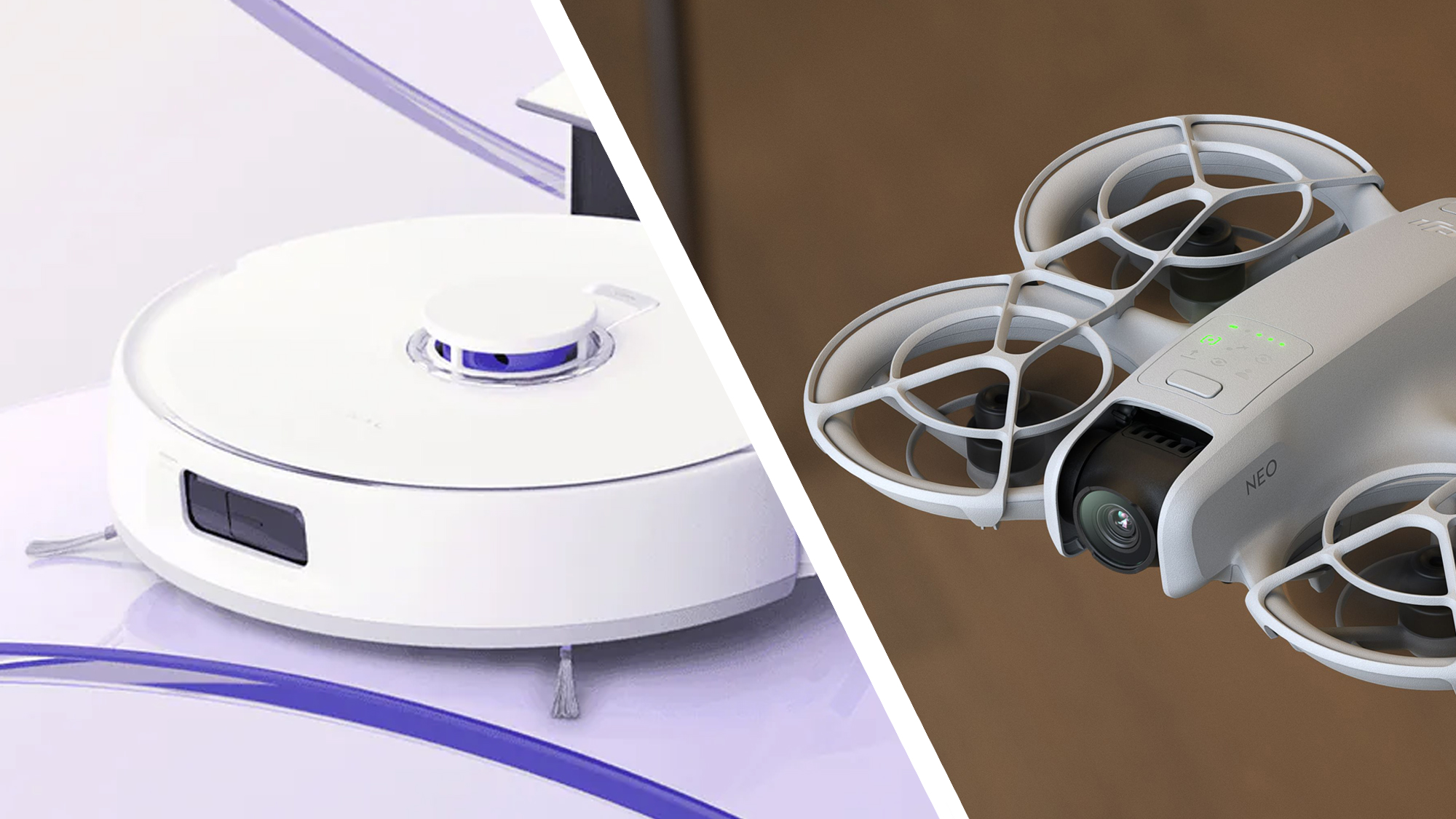
Rank 22767Photo shows 'DJI Romo' product boxed on shipping palletRumors suggest Romo will combine vacuum and mop functions, plus pet avoidanceIt would be DJI's first vacuum – but the company has shown willingness to enter new market sectors recentlyIt appears that the rumored DJI Romo, a robot vacuum with integrated mop, is not only real but moving closer to launch.A photograph tweeted by China-based drone leaker OsitaLV shows what appears to be a shipment of six boxed Romo vacuum cleaners on a pallet and ready for shipping, which suggests that the product could be poised to go on sale very soon.I'm sure this thing has no NFZ! pic.twitter.com/TRkv9G80iuMay 29, 2025We first heard rumblings about the Romo back in November 2024, where a leaked image purported to show the robot’s design. However, even if this picture was real, it wasn’t clear at the time whether or not the product was merely in prototype form or destined for a real-world release. It now seems likely that it’s very much a real product, coming to stores imminently.DJI has never confirmed the existence of the Romo. However, initial speculation suggested that the Romo would combine vacuum and mop functions, and include features like individual room controls and pet detection.More recently, other leaked imagesof what appears to be Romo's companion app, suggest it'll match the best robot vacuums with features like automatic self-emptying and powerful obstacle avoidance (which is something DJI's drones are known for).While the Romo's release would represent DJI’s first foray into the robot vacuum market, we think it's highly plausible that the Chinese company would make a move into this market sector.Why a robot vacuum?The DJI RomoMaster S1, the company's educational robot, was released in 2019. (Image credit: DJI)DJI is best known for its aerial photography drones (like the new Mavic 4 Pro), action cameras and smartphone gimbals. But its proficiency in automated motion, obstacle avoidance and battery technology make it well-positioned to produce a self-guiding domestic robot. It’s even made a ground-based educational robot in the past: the 2019-released RoboMaster S1.Diversifying its product line-up could prove a canny strategy for DJI, given that its drone business seems to be under threat – in the US, at least – on account of the Trump administration’s chaotic tariffs plans and general US regulatory hostility towards Chinese-made drones. The Mavic 4 Pro hasn't even been launched in the US, for instance, despite it being DJI's new flagship camera drone.The robot vacuum market could also be ripe for disruption, with no clear dominant manufacturer in place. Check out our best robot vacuums guide, for instance, and you’ll find it contains a wide mix of brands, each with varying strengths.If we hear any more on the DJI Romo, we’ll bring you further updates.You might also like4 things I loved about the world's first robovac with a mechanical arm – and 3 that need workI test robot vacuums for a living, and this new bot has the best mopping system I've seenDJI isn't slowing down: the DJI Mini 5 Pro, DJI Avata 3, and DJI Neo 2 all get mentioned in new leaks
-

Picture from static.independent.co.uk
Rank 22768 -

Picture from assets1.cbsnewsstatic.com
Rank 22769 -

Picture from assets1.cbsnewsstatic.com
Rank 22770 -

Picture from ichef.bbci.co.uk
Rank 22771 -

Picture from ichef.bbci.co.uk
Rank 22772 -

Picture from static.independent.co.uk
Rank 22773 -

Picture from static.independent.co.uk
Rank 22774 -

Picture from static.independent.co.uk
Rank 22775 -

Picture from assets2.cbsnewsstatic.com
Rank 22776 -

Picture from cdn.mos.cms.futurecdn.net
Rank 22777There’s a new update out for Windows 11 24H2 in previewIt offers a whole load of features, albeit some are Copilot+ PC exclusivesNew abilities include a supercharged search in Settings, cross-device resume with OneDrive files, useful new HDR options and much moreWindows 11 version 24H2 is set to receive a towering pile of new features soon, and they’re already out in an optional patch for those who want to test the waters early.The preview update for May (picked up by Neowin) will become the full June patch next month, and it comes with some changes for Copilot+ PCs only, as well as plenty of goodies for those with a traditional Windows 11 PC.We’ll start with the latter, given that most folks still have a standard Windows 11 device, and an interesting addition for everyone with update KB5058499 is a new Cross Device Resume feature.As Microsoft explains, you can now resume working on a OneDrive file on your PC if you were previously playing about with it on your smartphone (Android or iOS). Windows 11 will prompt you with a notification to check if you want to resume working on a file you were just using on your phone within the past five minutes, which is a nifty touch.There are improvements for those with an HDR display, too, with new options in Settings, including a better explanation of what enabling ‘Use HDR’ means, and a toggle to turn on Dolby Vision (or turn it off) independently of HDR. Windows 11 will also now stream HDR video in all its glory even if you have HDR turned off (for the OS environment, games and so forth).New share options (as previously seen in testing) now pop up when you drag a file out of a folder (in File Explorer), with suggested apps appearing in a tray at the top of the screen, so you can drop the file there to conveniently share it directly to any of those applications.Furthermore, when typing with Voice Access, you can now turn off the profanity filter, and in the Settings app, a FAQ has been implemented which tells you more about the spec of your PC and what it really means. (Putting some perspective on how good your graphics card is, or how the amount of system RAM you have might affect the performance of Windows 11).Also worth noting is that Microsoft has reintroduced the ability to open Copilot with the Windows key + C shortcut as an alternative for those who don’t have a dedicated Copilot button. Also, if you hold that shortcut (or the Copilot button), you’ll invoke ‘Press to talk’ with the AI assistant, whereby you can use voice commands (if you have a mic).Copilot+ PC exclusives(Image credit: Microsoft)In the case of Copilot+ PCs, the May optional update goes to town with fresh features for Click to Do, the companion feature introduced with Recall that provides context-sensitive AI-related actions.That includes a new Ask Copilot option within the Click to Do menu that appears when an image or a block of text is selected, which opens the AI assistant with the highlighted content ready to go as a query.Also, the intelligent text actions which were previously only available with Snapdragon (Arm) Copilot+ PCs are now out for devices with AMD or Intel processors. This gives you options within Click to Do to quickly summarize or rewrite text (or turn it into a list), all of which is achieved using the AI powers built into Windows 11. (Specifically, this is the ‘Phi Silica’ Small Language Model, and it means that the work is done right on the device, not in the cloud).Microsoft has also made it so that those with a stylus can have the shortcut button on the pen open Click to Do (with either a single or double click), and it’s now possible to make the feature one of the four specified apps in the pen menu.Furthermore, Click to Do is now being made available in the European Economic Area, with all these fresh moves in tow.Finally, there’s a big move with Copilot+ PCs in the introduction of a supercharged search leveraging AI for the Settings app. You can type a natural language query in the Windows 11 search box on the taskbar to find any setting you want, such as ‘change my desktop wallpaper’ which will bring up the relevant part of the Settings app.Also with Narrator, the screen-reading tool built into Windows 11, AI now produces descriptions for images on web pages (or other content) where that alternative (alt) text hasn’t been provided.Analysis: A gradual rollout of nifty powers(Image credit: Future / Jasmine Mannan)Bear in mind that this is an optional update as noted, so if you grab this now, you may encounter bugs. Given that, the generally perceived wisdom is that most users will be better off waiting until the preview update becomes a full release, which will happen next month (on June 10 to be precise).If you can’t wait to test out some of these features, then jump on this upgrade by all means – you’ll find it by checking in Windows Update as usual. However, remember that these features are all labelled as having a gradual rollout, so it may take a bit of time for some of this functionality to filter through to your PC. In this case, that’s another reason to be patient and wait until June.There are some nifty powers here, certainly, and the changes to HDR, the hardware FAQ in Settings, and extra file-sharing options are all welcome. The supercharged search is a definite highlight, but that’s only for Copilot+ PCs, so most people won’t get that.Another noteworthy move is Cross Device Resume, which looks smartly implemented, and this is a space to watch because Microsoft is set to expand this ability in the future. We should see this become a much broader piece of work, allowing for all apps to be resumed in this way across your phone and PC eventually, not just OneDrive files.In short, this should be Microsoft’s equivalent to Apple’s Handoff feature, or at least that’s the theory based on weighty clues the company recently dropped (and swiftly retracted).You might also like...Hate Copilot? You might change your mind if this hint that it’ll extend your laptop’s battery life is trueCan’t upgrade to Windows 11? This Linux project wants to save your old PC from the scrapheap when Windows 10 support endsBeen hiding from Windows 11 24H2 due to the fuss about all the bugs? There’s nowhere to run now as Microsoft’s made the update compulsory
-

Picture from cdn.mos.cms.futurecdn.net
Rank 22778CD Projekt has confirmed that Cyberpunk 2 is currently in pre-productionThe Cyberpunk 2077 DLC Phantom Liberty has also reached over ten million copies soldCyberpunk 2 will likely launch after The Witcher 4, which is also in the works Developer CD Projekt has confirmed that a sequel to Cyberpunk 2077, which it is now calling Cyberpunk 2, is now in pre-production.The news comes from the studio's latest earnings report, which stated that sales of the Cyberpunk 2077 expansion Phantom Liberty have now surpassed ten million copies in less than two years.This major milestone, according to the developer, "confirms sustained interested in the Cyberpunk universe on the part of the gaming community."It goes on to reveal that the Cyberpunk 2077 sequel, previously referred to as Project Orion, has now "wrapped up its conceptual phase and entered pre-production".Pre-production is an important step in game development, largely focused on nailing down the core concepts of the game that you're developing and drafting out key design documents.As the name would suggest, however, it does mean that the game is still in its very early stages. I wouldn't expect a Cyberpunk 2 release any time soon, especially when you consider that it took almost eight years to complete its predecessor.Cyberpunk 2 is being developed alongside The Witcher 4, a fantasy role-playing game (RPG) and sequel to the highly popular The Witcher 3: Wild Hunt.The Witcher 4 was officially revealed in a cinematic trailer at The Game Awards 2024, following an initial tease all the way back in 2022. Given the release of its reveal trailer, The Witcher 4 is likely much further along in development than Cyberpunk 2, and will almost undoubtedly release sooner.Hopefully we'll see more of it, potentially in the form of a new trailer, soon.You might also like...Check your Nintendo Switch 2 pre-order ASAP, as some retailers are reportedly cancelling themCostCo is the latest US retailer to confirm Nintendo Switch 2 stockNintendo has updated its Switch 2 game compatibility page, identifying over 100 titles with 'start up issues' on the upcoming console
-
Picture from static.independent.co.uk
Rank 22779 -

Picture from static.independent.co.uk
Rank 22780 -

Picture from image.cnbcfm.com
Rank 22781 -

Picture from cdn.mos.cms.futurecdn.net
Rank 22782HP says it is on track to halt work in ChinaComputing giant will halt production in China to avoid Trump tariffsHP also reveals price hikes to deal with higher than expected tariffsHP Inc has revealed it is nearly done with its exit from China as the Trump administration tariffs continue to affect even the biggest companies.Speaking on its latest Q2 2025 earnings call, company president and CEO Enrique Lores said it has "accelerated" its move to have zero products heading to the US, made in China.HP Inc had said it would make such a move last quarter, and now seems close to ensuring it fully complies with the increasing punitive tariffs.HP exiting China“A quarter ago, we shared that our goal was to have less than ten percent of the products in North America being shipped from China by September,” Lores said on the call.“We have accelerated that and we share that now almost no products will be coming from China sold in the US by June. It’s a very significant acceleration of the plan that we have."“We accelerated the shift of factories out from China into Southeast Asia, into Mexico to a certain extent in the US to mitigate the impact of the change,” he added.Lores also revealed that in order to avoid further tariffs, HP will also no longer use the US as a distribution hub for products sold in Canada or to Latin America.The company revealed $13.2 billion net revenue for Q2 2025, up 3.3% year on year, however EPS (earnings per share) fell from $061 to $042 - below the company's outlook.Lores noted the company was in, "a very different economic situation from where we were a few months ago in terms of both consumer and business confidence," forcing it to take what he called "price actions", effectively increases across PC and printing hardware.“In light of the increased macroeconomic uncertainty, we have adjusted our outlook to reflect moderated demand and the net impact of trade-related costs,” Karen Parkhill, CFO, HP Inc, said, adding the company was, "executing targeted mitigation strategies, and assuming current conditions remain, we expect to fully offset these costs by Q4.”She noted HP had, “worked aggressively to respond to changes in the regulatory trade environment” however, “tariff increases announced in April were higher than expected."“The full benefit of these mitigating actions can take a few months lead time depending on the scope,” Parkhill added.You might also likeThese are the best mobile workstations around todayWe've also rounded up the best HP printers on offerDell's super-powered new mobile workstation has one crucial feature which sets it apart from all the competition
-

Picture from cdn.mos.cms.futurecdn.net
Rank 22783The Nintendo Switch 2 will automatically upload players' screenshots and videos to the official Nintendo Switch appThe Switch app will store up to 100 files for up to 30 days at a time, and old files will be automatically deleted once the limit is reachedThe system will work the same as the PlayStation appUnlike the Nintendo Switch, the Nintendo Switch 2 will have a feature that will allow players to easily save their screenshots and videos.According to dataminer 'OatmealDome', the Switch 2 can automatically upload new screenshots and videos to the official Nintendo Switch app's new Album feature, offering a faster and more efficient way of saving files to users' phones or tablets.The Switch app will store up to 100 files for up to 30 days at a time, and old files will be automatically deleted once the limit is reached, so users will need to save any photos and videos they want to keep before they're gone for good.As per the attached screenshot, if players' uploads are taking a long time to appear, they can check the file's status by navigating to the console's Album, Upload Settings, and then Upload Status.This system works quite similarly to the PlayStation app, which will also automatically store screenshots and game capture footage from the PlayStation 5.[Switch app]The Switch 2 can automatically upload new screenshots and videos to the Switch app on your tablet or phone.Up to 100 files can be stored for up to 30 days. Old files will be automatically deleted once a limit is reached.[image or embed]@oatmealdome.bsky.socialThis new feature is a welcome one and something that Switch users have been wanting for years. Previously, players were required to scan a QR code on their console to link their device to their mobile to save their files.Before it was removed, there was also an option to upload images and videos to social media accounts like X / Twitter, and some players, including myself, would use this as a way of saving files.The Nintendo Switch 2 launches next week on June 5 for $449.99 / £395.99, and $499.99 / £429.99 for the official Mario Kart World bundle, which comes with a digital copy of the game.UK pre-orders and US pre-orders are now live. For those who missed out on a pre-order, retailers like GameStop and Best Buy have announced that they will be restocking Switch 2 units in-store and online during the console's launch.You might also like...Nintendo Switch 2 pre-orders live: latest UK stock updates as My Nintendo Store's pre-order date arrives, while US pre-orders remain delayedThe Nintendo Switch 2 has been spotted at retailers ahead of its June release - but the reported stock numbers aren't hugePokémon Legends: Z-A officially launches in October and will offer 'improved graphics and frame rates' on the Nintendo Switch 2 version
-

Picture from ichef.bbci.co.uk
Rank 22784 -

Picture from static.independent.co.uk
Rank 22785 -

Picture from static.independent.co.uk
Rank 22786 -

Picture from static.independent.co.uk
Rank 22787 -

Picture from ichef.bbci.co.uk
Rank 22788 -

Picture from ichef.bbci.co.uk
Rank 22789 -

Picture from static.independent.co.uk
Rank 22790 -

Picture from image.cnbcfm.com
Rank 22791 -
Picture from cdn.mos.cms.futurecdn.net
Rank 22792Valve has released SteamOS 3.7.9 beta, with fixes for the Lenovo Legion Go S and other Strix Point handheldsIt comes only a week after SteamOS 3.7 stable, which provided official support for the Legion Go SIt further highlights Valve's SteamOS benefits over Microsoft's Windows 11 for gamingMicrosoft's Windows 11 has been controversial for PC gamers recently, specifically with its 24H2 update. And Valve's SteamOS looks set to be the most suitable alternative for handheld users, with its focus moving away from the Steam Deck for the first time.As reported by GamingOnLinux, Valve released SteamOS 3.7.9 beta, which comes after its recent SteamOS 3.7 stable update. The update provided support for the Lenovo Legion Go S and other AMD-powered handhelds, and this new beta contains fixes for the devices; it addresses controller input and frame-pacing issues, and other tweaks you can read in its patch notes.Valve recently stated that it would be continuously working on support for handheld devices that aren't officially SteamOS licensed, and it appears that it's kept true to its word. Users also have other SteamOS clones like Bazzite, which has been available and supported much longer than Valve's recent efforts for other handhelds.It's an example of Valve supporting these portable systems within a short period of time, exactly one week after the SteamOS 3.7 stable release. Since Microsoft's Windows 11 is focused on desktop PCs and laptops, and less on handhelds, the difference between the two operating systems is evident.Handheld vendors like Asus and Lenovo provide software like Armoury Crate to help streamline the experience with menus and hubs built for gaming. However, performance in games on SteamOS has been showcased as much better than games running on Windows 11 – and without bloatware and non-gaming software running in the background, it's not too much of a surprise.Analysis: Leaving Windows 11 for SteamOS on handhelds for SteamOS is a no-brainer at this point...(Image credit: T. Schneider / Shutterstock)With features like sleep mode and quick resume on SteamOS (or Bazzite, which is what I'm using), and most importantly better performance, leaving Windows 11 behind was an easy choice for me – and I anticipate more Asus ROG Ally X, MSI Claw 8 AI+, and Lenovo Legion Go users will be making the switch sooner.Using sleep mode on Windows 11 via the power button is a complete mess. Either the screen will constantly switch itself back on (especially while running a game), or resuming and getting back into your game will make it crash or freeze the device altogether.Combined with the issues of constant micro-stutters in games, the lack of graphics drivers provided by vendors, AMD's AFMF (frame generation software) not working efficiently, and bloatware, it would be a literal downgrade to return to Windows.It's also promising to see that game developers of games using anti-cheat software work towards support for the Linux-based OS – and Splitgate 2 is a prime example of this with its recent update, highlighted by GamingOnLinux.You may also like...AMD is making a handheld gaming PC chip with proper AI capabilities, but do gamers really need this?I've never been more excited to get my hands on a new handheld: Intel's new graphics driver reportedly provides greater MSI Claw 8 AI+ performanceIt looks like HP won't be ditching Windows 11 for gaming handhelds after all - but it wants to work with Microsoft to make it better
-

Picture from static.independent.co.uk
Rank 22793 -

Picture from ichef.bbci.co.uk
Rank 22794 -

Picture from assets2.cbsnewsstatic.com
Rank 22795 -

Picture from static.independent.co.uk
Rank 22796 -

Picture from static.independent.co.uk
Rank 22797 -

Picture from static.independent.co.uk
Rank 22798 -

Picture from static.independent.co.uk
Rank 22799 -

Picture from static.independent.co.uk
Rank 22800