News
This constantly updated list features the latest and most important news articles, ranked in order of significance. The top stories highlight major developments, breaking news, and critical updates across various topics, ensuring you stay informed about the most pressing issues. As new articles are added, the list adapts to reflect the latest priorities, keeping the most impactful stories at the forefront. Whether it’s global events, technology breakthroughs, or industry trends, this dynamic list ensures you always have access to the most relevant and timely information.
-

Picture from ichef.bbci.co.uk
Rank 17601 -
Picture from o.aolcdn.com
Rank 17602The FAA last week cleared SpaceX's Starship to fly again after concluding its review of the previous flight, which ended in an explosion, and the next test could now take off as soon as Tuesday. SpaceX is eyeing May 27 for Starship's ninth flight test, with a launch window opening at 7:30PM ET (6:30PM local time for the Texas Starbase). This launch will mark the first time SpaceX reuses a Super Heavy booster; the booster for flight nine previously flew with Starship's seventh flight test earlier this year. While single-use parts have been replaced, SpaceX says it's reusing 29 of the booster's 33 Raptor engines.
As always, viewers at home will be able to watch along by tuning into the livestream, starting about 30 minutes before Starship launches. That will be available on SpaceX's website and in a broadcast on its X profile.
Watch Starship's ninth flight test → https://t.co/Gufroc2kUz https://t.co/NYF0ZMyeGp— SpaceX (@SpaceX) May 23, 2025
SpaceX conducted Starship's eighth flight test back in March, but the vehicle ran into some issues a few minutes after launch. The Super Heavy booster was able to return to the launch site after separation from the upper stage and be successfully caught by the tower's "chopstick" arms, but as for the ship itself, several Raptor engines shut off, causing it to tumble and ultimately blow itself up.
SpaceX says the issue was likely due to "a hardware failure in one of the upper stage’s center Raptor engines that resulted in inadvertent propellant mixing and ignition." It's since made some changes to prevent that from happening again. SpaceX said in an update on May 22 that "engines on the Starship’s upper stage will receive additional preload on key joints, a new nitrogen purge system, and improvements to the propellant drain system."
For flight nine, the Super Heavy booster won't return to the launch site, but will instead splash down in the ocean. The Starship upper stage will attempt to deploy eight Starlink dummy satellites, and SpaceX is otherwise looking to this flight to test "several experiments focused on enabling Starship’s upper stage to return to the launch site."This article originally appeared on Engadget at https://www.engadget.com/science/space/how-to-watch-spacexs-ninth-starship-flight-test-on-tuesday-213424312.html?src=rss
-

Picture from ichef.bbci.co.uk
Rank 17603 -

Picture from ichef.bbci.co.uk
Rank 17604 -

Picture from ichef.bbci.co.uk
Rank 17605 -

Picture from ichef.bbci.co.uk
Rank 17606 -

Picture from ichef.bbci.co.uk
Rank 17607 -

Picture from ichef.bbci.co.uk
Rank 17608 -

Picture from ichef.bbci.co.uk
Rank 17609 -

Picture from techcrunch.com
Rank 17610 -

Picture from ichef.bbci.co.uk
Rank 17611 -

Picture from ichef.bbci.co.uk
Rank 17612 -

Picture from ichef.bbci.co.uk
Rank 17613 -

Picture from ichef.bbci.co.uk
Rank 17614 -

Picture from ichef.bbci.co.uk
Rank 17615 -

Picture from ichef.bbci.co.uk
Rank 17616 -

Picture from ichef.bbci.co.uk
Rank 17617 -

Picture from ichef.bbci.co.uk
Rank 17618 -

Picture from ichef.bbci.co.uk
Rank 17619 -

Picture from ichef.bbci.co.uk
Rank 17620 -

Picture from ichef.bbci.co.uk
Rank 17621 -

Picture from ichef.bbci.co.uk
Rank 17622 -

Picture from ichef.bbci.co.uk
Rank 17623 -
Picture from ichef.bbci.co.uk
Rank 17624 -

Picture from cdn.mos.cms.futurecdn.net
Rank 17625The Last of Us season 2 episode 7 is out now – and, with it, the incredibly popular show's latest installment has come to an end.Like its predecessor, season 2 of HBO's TV adaptation has been appointment viewing for all of us over the past seven weeks. And, as the dust settles on its near-50-minute finale, I imagine you've got some big questions about what happened and the show's future.So, how does The Last of Us season 2 end? Are there any end credits scenes? And when do we think season 3 will arrive worldwide? I'll aim to answer those questions below, but bear in mind that full spoilers immediately follow for The Last of Us' season 2 finale. Make sure you've watched it before you proceed.Who dies in The Last of Us season 2 episode 7?RIP, Jesse (Image credit: HBO)The Last of Us TV show's latest episode contains three big character deaths.The most unexpected of those, and arguably the most shocking one since Joel's demise in season 2 episode 2, is Jesse's. The close friend of Ellie and Dina's ex-boyfriend (and father of Dina's unborn child) is killed by Abby when she single-handedly storms the Seattle theater that's been Ellie and Dina's base of operations since this season's fourth episode.Jesse's death probably won't shock those who have played The Last of Us Part II, aka the Naughty Dog video game season 2 is based on. And if you'd been paying attention to the foreshadowing throughout season 2's final episode, such as Jesse constantly expressing his wish to get out of Seattle in one piece, I doubt you would've been stunned by his passing, either.Mel and Owen are two of three big casualties in The Last of Us season 2 finale (Image credit: HBO)But why does Abby kill him? The reason is simple: Ellie accidentally killed Owen and Mel, two members of Abby's party who helped her track down and murder Joel in episode 2. A vengeful Abby, then, wants revenge for Ellie murdering two of her closest friends.Having learned of Abby's location from Nora in episode 5 – that being, Seattle's aquarium not too far from the city's unmissable Ferris wheel – Ellie infiltrates the building and encounters Owen and Mel while searching for Abby.Still traumatized from how much she tortured Nora two episodes ago, Ellie claims she won't shoot Owen and Mel if they tell her where Abby is now. Owen initially refuses, but to buy himself and Mel some time, he eventually agrees to show Ellie where she can find Abby on a map.However, as Owen approaches the map on a table, he makes a move to grab a handgun to shoot Ellie first. Unfortunately for Owen, Ellie's survival instincts kick in and she shoots him first.Three down, two to go, eh Ellie? (Image credit: HBO)The bullet passes through Owen's neck, killing him instantly. After exiting the back of Owen's throat, it hits Mel, who's standing behind him. The bullet slices her neck, nicking an artery in the process, which results in Mel collapsing and bleeding out.Ordinarily, this would be a tragic accident in its own right – after all, Mel was unarmed and made no attempt to harm Ellie. However, Mel makes things even worse for Ellie (and, by proxy, us as viewers) before she dies by revealing she's heavily pregnant.If Ellie felt incredible guilt and shame over what she'd done to Nora, she feels 50 times worse over not only taking Mel's life, but also that of her innocent unborn child. It's a moment that hits home even harder when you consider how much danger Ellie has put a pregnant Dina in since the pair left Jackson, Wyoming, too.Abby tracks down Ellie and company to get revenge for Mel and Owen's deaths (Image credit: HBO)Jesse, Owen, and Mel aren't the only casualties of season 2 episode 7 – well, that's what The Last of Us wants you to think. One of the finale's last shots shows Abby pointing her sidearm at an unarmed Ellie, who shouts "no no no!" before the screen cuts to black as a shot is fired.There's no way that the hit Max show just bumped off another of its main characters in Ellie, right? In short: no, she doesn't die. Ellie is the protagonist of this TV series and The Last of Us Part II. Spoilers notwithstanding, her story is far from over in HBO's live-action adaptation.So, who fired the shot that we hear? I'm not going to ruin that now. You'll just have to wait for season 3 (more on this later) to arrive. Or, you know, you could watch a playthrough of The Last of Us 2 on YouTube if you want an answer ASAP.Is there a mid-credits scene in The Last of Us season 2 episode 7?As of season 2 episode 7, Dina is still alive (Image credit: Liane Hentscher/HBO)There's no mid-credits scene to stick around for.This season's final scene doesn't count as one, either. Sure, it drops a big hint about how season 3 will begin (more on this shortly), but it's a brief scene that takes place before the end credits start to roll. So, it can't be classed as a traditional mid-credits stinger.Does The Last of Us season 2's final episode have a post-credits scene?Expect to see more of Isaac in The Last of Us' third season (Image credit: Liane Hentscher/HBO)Nope. The Last of Us season 2 doesn't have a post-credits scene, either. Based on how the show's latest episode ends, it doesn't need one.When will The Last of Us season 3 be released?Trying to get word on when season 3 will make its worldwide debut like... (Image credit: Liane Hentscher/HBO)We don't know. HBO only confirmed that The Last of Us season 2 wouldn't be the hit series' final chapter in April, so it'll be a few years before one of the best Max shows' third season is released.It's likely that work has been going on behind the scenes on season 3 for some time. Indeed, I'd be surprised if the show's chief creative team hasn't been penning its scripts, location scouting, and conducting other pre-production elements for months at this point.Nevertheless, with filming yet to begin on The Last of Us season 3, I suspect it'll be mid-2027 at the earliest before it launches worldwide.What does The Last of Us' season 2 finale tell us about the plot of season 3?Season 3's first few episodes will jump back in time to depict events from Abby's viewpoint (Image credit: HBO)Season 2 episode 7's final scene suggests that next season will give us an entirely different perspective on the events that play out during Ellie and Dina's first 72 hours in Seattle.After the screen cuts to black in this season's finale, many viewers might have expected the credits to roll, thereby leaving us on a cliffhanger.Instead, a new scene begins seconds later, reuniting us with Abby as she's woken up by Manny. He tells her that "they" won't be happy if she keeps them waiting, to which Abby replies she'll be there in five minutes.Once she's fully come to, Abby steps out onto a balcony overlooking a football stadium that's been repurposed as a headquarters for the Isaac-led antagonistic faction known as the Washington Liberation Front (WLF). After she surveys the scene, Abby heads back inside as the words 'Seattle, Day One' appear in the bottom left-hand corner of the screen.We'll witness Ellie's first 72 hours in Seattle from Abby's perspective next season (Image credit: HBO)This is the same location and time stamp that appeared in season 2 episode 4 when Ellie and Dina first arrive in Seattle. So, The Last of Us season 3's first few episodes, if not the entirety of next season, will travel back in time and cover the same three-day period in the US Pacific Northwest city through Abby's eyes.That won't be a surprise to those who have played The Last of Us Part II. As the deuteragonist of the aforementioned video game, Abby was a playable character for half of the story depicted in the second entry of Naughty Dog's acclaimed and multi-award-winning game franchise. That means her side of the Seattle-based story, which runs concurrently to Ellie's, will be brought to life in season 3 of HBO's TV adaptation.There's a lot of ground to cover in the Abby-centric part of the story, too. What were Owen and Mel planning to do before Ellie interrupted them? Who's the father of Mel's baby? How did Abby know where to find Ellie and co. in Seattle? What convinced Isaac to choose Abby as the WLF's new leader? Why does Isaac believe the WLF's current leadership is set to perish during the assault on the Seraphites' main headquarters? And does Manny meet the same fate as Owen, Mel, and Nora at Ellie's or someone else's hands, or is he still alive somewhere?These questions will need answering in season 3 and beyond if The Last of Us officially ends with its rumored four-season plan. I could provide more details now, but again, I don't want to spoil anything significant about Ellie and Abby's journeys from this point on in the story. So, unless you scour the internet for answers now, you'll have to wait until season 3 arrives for them.You might also likeFind out more about Peacemaker season 2Or get the lowdown on House of the Dragon season 3These are the best Max movies to stream today
-

Picture from ichef.bbci.co.uk
Rank 17626 -

Picture from ichef.bbci.co.uk
Rank 17627 -

Picture from ichef.bbci.co.uk
Rank 17628 -

Picture from ichef.bbci.co.uk
Rank 17629 -

Picture from ichef.bbci.co.uk
Rank 17630 -

Picture from ichef.bbci.co.uk
Rank 17631 -

Picture from ichef.bbci.co.uk
Rank 17632 -

Picture from ichef.bbci.co.uk
Rank 17633 -

Picture from ichef.bbci.co.uk
Rank 17634 -

Picture from cdn.mos.cms.futurecdn.net
Rank 17635As businesses realized the potential of artificial intelligence (AI), the race began to incorporate machine learning operations (MLOps) into their commercial strategies. But integrating machine learning (ML) into the real world proved challenging, and the vast gap between development and deployment was made clear. In fact, research from Gartner tells us 85% of AI and ML fail to reach production.In this piece, we’ll discuss the importance of blending DevOps best practices with MLOps, bridging the gap between traditional software development and ML to enhance an enterprise’s competitive edge and improve decision-making with data-driven insights. We’ll expose the challenges of separate DevOps and MLOps pipelines and outline a case for integration.Challenges of Separate PipelinesTraditionally, DevOps and MLOps teams operate with separate workflows, tools, and objectives. Unfortunately, this trend of maintaining distinct DevOps and MLOps pipelines leads to numerous inefficiencies and redundancies that negatively impact software delivery.1. Inefficiencies in Workflow IntegrationDevOps pipelines are designed to optimize the software development lifecycle (SDLC), focusing on continuous integration, continuous delivery (CI/CD), and operational reliability.While there are certainly overlaps between the traditional SDLC and that of model development, MLOps pipelines involve unique stages like data preprocessing, model training, experimentation, and deployment, which require specialized tools and workflows. This distinct separation creates bottlenecks when integrating ML models into traditional software applications.For example, data scientists may work on Jupyter notebooks, while software engineers use CI/CD tools like Jenkins or GitLab CI. Integrating ML models into the overall application often requires a manual and error-prone process, as models need to be converted, validated, and deployed in a manner that fits within the existing DevOps framework.2. Redundancies in Tooling and ResourcesDevOps and MLOps have similar automation, versioning, and deployment goals, but they rely on separate tools and processes. DevOps commonly leverages tools such as Docker, Kubernetes, and Terraform, while MLOps may use ML-specific tools like MLflow, Kubeflow, and TensorFlow Serving.This lack of unified tooling means teams often duplicate efforts to achieve the same outcomes.For instance, versioning in DevOps is typically done using source control systems like Git, while MLOps may use additional versioning for datasets and models. This redundancy leads to unnecessary overhead in terms of infrastructure, management, and cost, as both teams need to maintain different systems for essentially similar purposes—version control, reproducibility, and tracking.3. Lack of Synergy Between TeamsThe lack of integration between DevOps and MLOps pipelines also creates silos between engineering, data science, and operations teams. These silos result in poor communication, misaligned objectives, and delayed deployments. Data scientists may struggle to get their models production-ready due to the absence of consistent collaboration with software engineers and DevOps.Moreover, because the ML models are not treated as standard software artefacts, they may bypass crucial steps of testing, security scanning, and quality assurance that are typical in a DevOps pipeline. This absence of consistency can lead to quality issues, unexpected model behavior in production, and a lack of trust between teams.4. Deployment Challenges and Slower Iteration CyclesThe disjointed state of DevOps and MLOps also affects deployment speed and flexibility. In a traditional DevOps setting, CI/CD ensures frequent and reliable software updates. However, with ML, model deployment requires retraining, validation, and sometimes even re-architecting the integration. This mismatch results in slower iteration cycles, as each pipeline operates independently, with distinct sets of validation checks and approvals.For instance, an engineering team might be ready to release a new feature, but if an updated ML model is needed, it might delay the release due to the separate MLOps workflow, which involves retraining and extensive testing. This leads to slower time-to-market for features that rely on machine learning components. Our State of the Union Report found organizations using our platform brought over 7 million new packages into their software supply chains in 2024, highlighting the scale and speed of development.5. Difficulty in Maintaining Consistency and TraceabilityHaving separate DevOps and MLOps configurations makes it difficult to maintain a consistent approach to versioning, auditing, and traceability across the entire software system. In a typical DevOps pipeline, code changes are tracked and easily audited. In contrast, ML models have additional complexities like training data, hyperparameters, and experimentation, which often reside in separate systems with different logging mechanisms.This lack of end-to-end traceability makes troubleshooting issues in production more complicated. For example, if a model behaves unexpectedly, tracking down whether the issue lies in the training data, model version, or a specific part of the codebase can become cumbersome without a unified pipeline.The Case for Integration: Why Merge DevOps and MLOps?As you can see, maintaining siloed DevOps and MLOps pipelines results in inefficiencies, redundancies, and a lack of collaboration between teams, leading to slower releases and inconsistent practices. Integrating these pipelines into a single, cohesive Software Supply Chain would help address these challenges by bringing consistency, reducing redundant work, and fostering better cross-team collaboration.Shared End Goals of DevOps and MLOpsDevOps and MLOps share the same overarching goals: rapid delivery, automation, and reliability. Although their areas of focus differ—DevOps concentrates on traditional software development while MLOps focuses on machine learning workflows—their core objectives align in the following ways:1.Rapid DeliveryBoth DevOps and MLOps strive to enable frequent, iterative releases to accelerate time-to-market. DevOps achieves this through the continuous integration and delivery of code changes, while MLOps aims to expedite the cycle of model development, training, and deployment.Rapid delivery in DevOps ensures that new software features are shipped as quickly as possible. Similarly, in MLOps, the ability to deliver updated models with improved accuracy or behaviour allows businesses to respond swiftly to changes in data or business needs.2.AutomationAutomation is central to both practices as it reduces manual intervention and minimises the potential for human error. DevOps automates testing, building, and deploying software to ensure consistency, efficiency, and reliability.In MLOps, automation is equally crucial. Automating data ingestion, model training, hyperparameter tuning, and deployment allows data scientists to focus more on experimentation and improving model performance rather than dealing with repetitive tasks. Automation in MLOps also ensures reproducibility, which is critical for managing ML models in a production environment.3.ReliabilityBoth DevOps and MLOps emphasize reliability in production. DevOps uses practices like automated testing, monitoring, and infrastructure as code to maintain software stability and mitigate downtime.MLOps aims to maintain the reliability of deployed models, ensuring that they perform as expected in changing environments. Practices such as model monitoring, automatic retraining, and drift detection are part of MLOps that ensure the ML system stays robust and reliable over time.Treating ML Models as Artifacts in the Software Supply ChainIn traditional DevOps, the concept of treating all software components as artefacts such as binaries, libraries, and configuration files, is well-established. These artifacts are versioned, tested, and promoted through different environments (e.g., staging, production) as part of a cohesive software supply chain. Applying the same approach to ML models can significantly streamline workflows and improve cross-functional collaboration. Here are four key benefits of treating ML models as artifacts:1. Creates a Unified View of All ArtifactsTreating ML models as artifacts means integrating them into the same systems used for other software components, such as artifact repositories and CI/CD pipelines. This approach allows models to be versioned, tracked, and managed in the same way as code, binaries, and configurations. A unified view of all artifacts creates consistency, enhances traceability, and makes it easier to maintain control over the entire software supply chain.For instance, versioning models alongside code means that when a new feature is released, the corresponding model version used for the feature is well-documented and reproducible. This reduces confusion, eliminates miscommunication, and allows teams to identify which versions of models and code work together seamlessly.2. Streamlines Workflow AutomationIntegrating ML models into the larger software supply chain ensures that the automation benefits seen in DevOps extend to MLOps as well. By automating the processes of training, validating, and deploying models, ML artifacts can move through a series of automated steps—from data preprocessing to final deployment—similar to the CI/CD pipelines used in traditional software delivery.This integration means that when software engineers push a code change that affects the ML model, the same CI/CD system can trigger retraining, validation, and deployment of the model. By leveraging the existing automation infrastructure, organizations can achieve end-to-end delivery that includes all components—software and models—without adding unnecessary manual steps.3. Enhances Collaboration Between TeamsA major challenge of maintaining separate DevOps and MLOps pipelines is the lack of cohesion between data science, engineering, and DevOps teams. Treating ML models as artifacts within the larger software supply chain fosters greater collaboration by standardizing processes and using shared tooling. When everyone uses the same infrastructure, communication improves, as there is a common understanding of how components move through development, testing, and deployment.For example, data scientists can focus on developing high-quality models without worrying about the nuances of deployment, as the integrated pipeline will automatically take care of packaging and releasing the model artifact. Engineers, on the other hand, can treat the model as a component of the broader application, version-controlled and tested just like other parts of the software. This shared perspective enables more efficient handoffs, reduces friction between teams, and ensures alignment on project goals.4. Improves Compliance, Security, and GovernanceWhen models are treated as standard artifacts in the software supply chain, they can undergo the same security checks, compliance reviews, and governance protocols as other software components. DevSecOps principles—embedding security into every part of the software lifecycle—can now be extended to ML models, ensuring that they are verified, tested, and deployed in compliance with organizational security policies.This is particularly important as models become increasingly integral to business operations. By ensuring that models are scanned for vulnerabilities, validated for quality, and governed for compliance, organizations can mitigate risks associated with deploying AI/ML in production environments.ConclusionTreating ML models as artifacts within the larger software supply chain transforms the traditional approach of separating DevOps and MLOps into a unified, cohesive process. This integration streamlines workflows by leveraging existing CI/CD pipelines for all artifacts, enhances collaboration by standardizing processes and infrastructure, and ensures that both code and models meet the same standards for quality, reliability, and security. As organizations race to deploy more software and models, we need holistic governance.Currently, only 60% of companies have full visibility into software provenance in production. By combining DevOps and MLOps into a single Software Supply Chain, organizations can better achieve their shared goals of rapid delivery, automation, and reliability, creating an efficient and secure environment for building, testing, and deploying the entire spectrum of software, from application code to machine learning models.We've compiled a list of the best IT infrastructure management services.This article was produced as part of TechRadarPro's Expert Insights channel where we feature the best and brightest minds in the technology industry today. The views expressed here are those of the author and are not necessarily those of TechRadarPro or Future plc. If you are interested in contributing find out more here: https://www.techradar.com/news/submit-your-story-to-techradar-pro
-

Picture from ichef.bbci.co.uk
Rank 17636 -

Picture from ichef.bbci.co.uk
Rank 17637 -

Picture from ichef.bbci.co.uk
Rank 17638 -

Picture from ichef.bbci.co.uk
Rank 17639 -
Picture from cdn.mos.cms.futurecdn.net
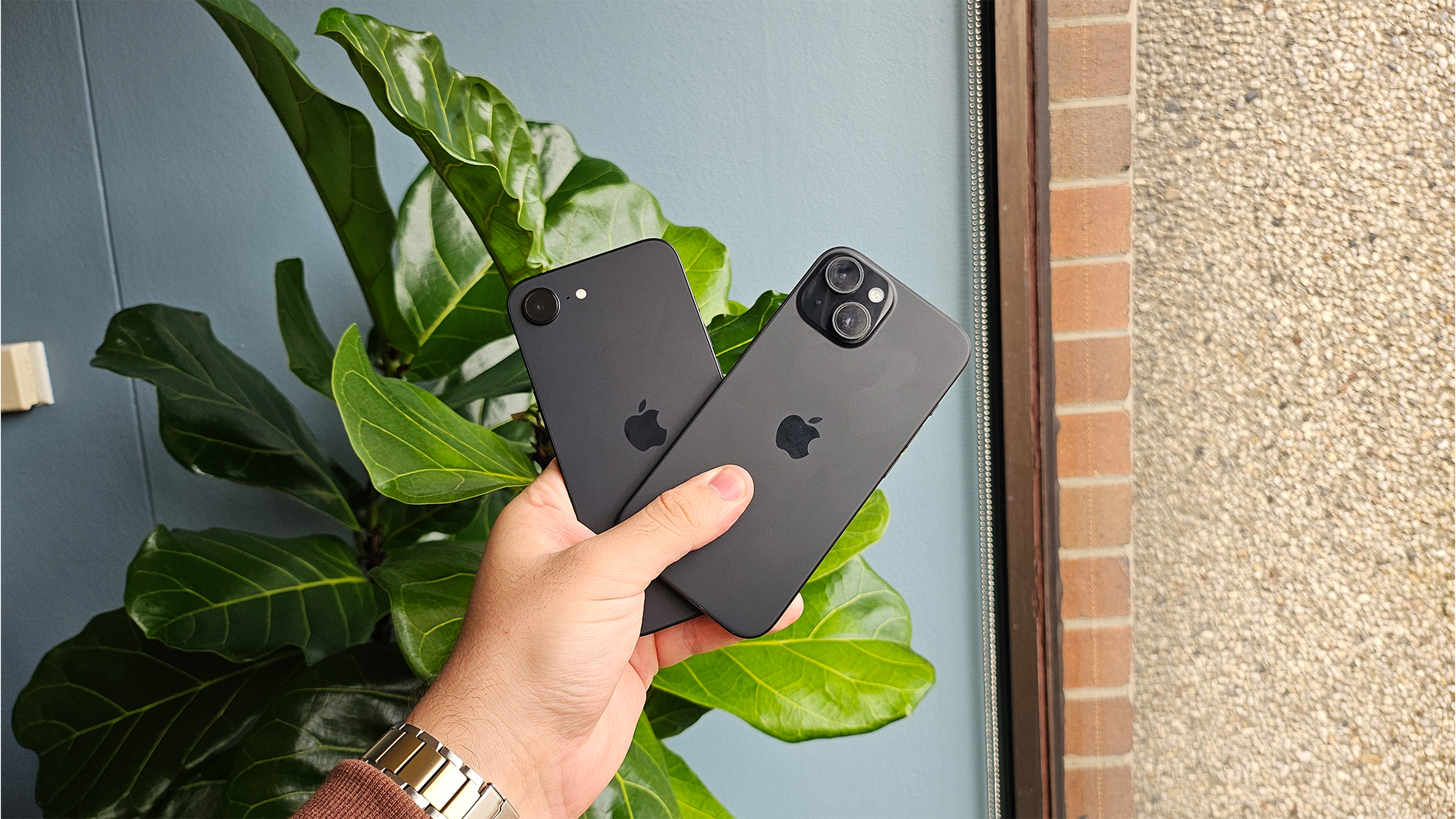
Rank 17640As the proud owner of an iPhone 15 for almost two years, I've had no issues with the handset since I bought it. It runs perfectly for my needs – music, YouTube, texting and aimless doomscrolling social media – and seamlessly integrates with my other Apple devices.Other than its Pro siblings and a handful of Android competitors, the iPhone 15 was top of the line when I bought it. I’d just been paid, so I plonked down AU$1,499 ($799 / £799) to purchase it outright to replace my broken iPhone 12 Mini.(That’s a purchase I cringe at after experiencing the value on offer from the best cheap phones, but I digress…)The iPhone 16 marked a larger upgrade over its predecessor than usual thanks to the addition of Apple Intelligence – even if its launch has been less than smooth, with many parts of the promised Siri upgrade still up in the air.Still, the iPhone 15 is an excellent smartphone in 2025, which is why it caught my eye when I found it for AU$1,077 here in Australia where I'm based (which converts to around $692 / £519). There's similarly enticing deals abroad, too – like in the US, where it's just $100 when switching to T-Mobile.(Image credit: Zachariah Kelly / TechRadar)However, in February, Apple threw a curveball at the iPhone 15 when it introduced another option for Cupertino loyalists looking to save on an upgrade when it launched the iPhone 16e for $599 / £599 / AU$999.Like the iPhone 5c and the three iPhone SE models, this new ‘budget’ Apple handset has made small concessions to keep the price down, while still allowing buyers to purchase a truly new iPhone that can access the latest iOS features. The iPhone 16e is arguably even more enticing than its SE forebears, as it offers the power to handle Apple Intelligence.This creates an interesting conundrum – if I needed a new phone and didn't want to splurge on the iPhone 16, which device is the better choice: the iPhone 15, or iPhone 16e?TechRadar has an entire iPhone 16e vs iPhone 15 comparison article based on this question and it concludes that, for most people, it's worth spending a little extra and go for the older iPhone 15.But after spending a week with the iPhone 16e, I disagree.Better battery, baby(Image credit: Future / Lance Ulanoff)For many smartphone buyers, camera quality is key – but for me, battery life is far more important and the iPhone 16e dominates the iPhone 15 in this category.While Apple doesn't disclose exact battery capacity, third-party reporting shows that the iPhone 16e has a 3,961mAh battery compared to the iPhone 15's 3,349mAh.It's not just that larger size that makes the 16e longer lasting either. The iPhone 16e's C1 cellular chip – which is exclusive to the device – processes power more efficiently, resulting in a significantly improved stamina.This was very noticeable in my time with it. Granted, my iPhone 15's battery capacity is slightly degraded down to 91% these days, but I limit its overnight charging to stop at 85%. As a result, after about three hours of listening, watching, scrolling and texting, my iPhone 15's often sitting at less than 30% by 9:30am.It's 3:30pm as I write this, and with the same battery settings and general screen-on time, the iPhone 16e I'm currently using is sitting at 44%.My experience seems to fully back up Apple’s own claims, with the brand boasting that the iPhone 16e offers 26 hours of video playback – 15% better than the iPhone 16's 22 hours and a 23% increase over the iPhone 15.Apple Intelligence is already pretty smart, actuallyHaving fun creating AI-generated images in Apple's Playground app (Image credit: Future/Jacob Krol)We're still waiting for AI Siri – and Apple might have to let users swap Siri for another default voice assistant party alternatives – I was surprised by how much I enjoyed Apple Intelligence on the iPhone 16e, a set of features the iPhone 15 lacks.Visual Intelligence is helpful, letting you quickly search for or ask ChatGPT about any object you take a photo of. And the Clean Up feature is useful for removing photo bombers or objects from any given image, like Samsung's similar Object Remover tool as found on newest Galaxy devices.And, while I rarely used them, I appreciated the (mostly) constructive AI-generated message replies and smarter phrasing suggestions. Highlighting your written text opens an array of AI-powered options by clicking the Apple Intelligence logo (or 'Writing Tools'). In any app it can proofread or rewrite your text to sound more friendly, professional or concise.Image 1 of 3Visual Intelligence analyzing potato chips (Image credit: Future)Image 2 of 3Using Apple Intelligence to create a Genmoji of a dragon holding a hot dog (Image credit: Future)Image 3 of 3Using AI to editing and proofread text messages (Image credit: Future / Max Delaney)Moreover, and especially helpful when writing up notes, is its ability to format text into key points, a list or a table. You also have the option to compose text with ChatGPT.However, I think my favorite thing about Apple Intelligence is the ability to create my own emojis. Called Genmojis, it lets you turn anything – like my own face and other regularly found faces in my camera roll, or a highland cow surrounded by flowers – into an emoji or sticker.As someone who uses emojis quite sparingly, I'm now a Genmoji-making dynamo. While the AI tools and features of the iPhone 16 family are far from revolutionary, they're both fun and generally useful. It's a small but significant advantage for the iPhone 16e over the iPhone 15.Bring the action(Image credit: Future / Lance Ulanoff)The last little feature that I think puts the 16e above the 15 is the Action Button. It, like Apple Intelligence, is exclusive to the iPhone 15 Pro, Pro Max and the iPhone 16 series.This handy little button replaces the mute/silent switch from older iPhones. There's nothing revolutionary here: all it does is offer shortcuts for commonly used features like Silent Mode, Focus, Camera, Visual Intelligence, Torch and any other app, like Instagram.Personally, I didn't find myself using any of those preset options, and instead set the Action Button to control my Do Not Disturb mode.It's such a small difference – after all, unlocking the device, bringing up the Control Center and activating Focus is hardly a laborious task. However, it's a small quality-of-life change that I thoroughly appreciated – letting me turn it on without even directly looking at my phone.Winner by a split decisionThe two phones are nearly identical apart from the camera array (Image credit: Future / Max Delaney)The iPhone 16e vs iPhone 15 contest is by no means a knockout by the newer model. There are two main reasons that the older iPhone may be the better choice for some people: display and camera.The iPhone 16e only has a single 48MP Fusion camera, while the iPhone 15 pairs a 48MP main camera with a 12MP ultrawide lens that's equally useful for grand nature shots and trying to fit the whole family into one photo. More importantly, the 16e's single lens means you can't take silly up-close photos of your friends or dog with the 0.5x zoom.The 15 also has a (small) lead on the 16e in terms of display, as the latter reverts back to the iPhone 14’s notched display rather than the Dynamic Island found on subsequent devices. Personally, I don't mind it, but for some users it could be the reason to spend a little more for the iPhone 15. The latter’s display is brighter and (slightly) higher res too – 1179 x 2556 with a max brightness of 2,000 nits compared to the 16e's 1170 x 2532 and 1,200 nits.MagSafe charging is also missing from the iPhone 16e. It was rumored this was to make room for the C1 chip, but that has since been denied by Apple according to Macworld. The 16e can still wirelessly charge, but it lacks the magnet.I'd never much required MagSafe until I recently purchased a magnetic power bank – which is now all but useless with the iPhone 16e. And users who have a magnetic car mount will probably sorely miss this functionality.The iPhone 15 still has a place, then, and it's a wonderful purchase if you can get it for close to the same price as the iPhone 16e.It's still ultimately more expensive than its new sibling, though – and unless you really need a telephoto lens, I think the iPhone 16e is the budget iPhone to have.You might also like...The best iPhone 2025: which Apple smartphone reigns supreme?The iPhone Fold is apparently being tested with a feature we’ve been waiting years foriPhone 17 Air leak hints at how the super-slim phone might solve its potential battery life issues
-

Picture from ichef.bbci.co.uk
Rank 17641 -

Picture from ichef.bbci.co.uk
Rank 17642 -

Picture from ichef.bbci.co.uk
Rank 17643 -

Picture from ichef.bbci.co.uk
Rank 17644 -

Picture from ichef.bbci.co.uk
Rank 17645 -

Picture from ichef.bbci.co.uk
Rank 17646 -

Picture from cdn.mos.cms.futurecdn.net
Rank 17647In today's digital economy, the ability to handle explosive growth without performance ramifications isn't just a technical consideration, it's now a business imperative. So when success arrives, systems must be ready.Throughout my career advising technology and business leaders, I've witnessed a recurring scenario: a company experiences unexpected success - perhaps they had a successful viral marketing campaign, or suddenly face market interest, or even a random rapid uptick in customer adoption - only to have this triumph transform into a technical crisis as systems falter under the load and stress.What should be a celebratory moment instead becomes an emergency. Performance levels considerably dip. Customer experience suffers. And the very success that should propel the business forward becomes its biggest operational challenge.This phenomenon isn't limited to startups and it isn’t necessarily new. Established enterprises frequently encounter these issues during product launches, seasonal peaks, or when entering new markets. Black Friday becomes a nightmare for fresh retailers. The root cause is rarely insufficient hardware or lack of technical talent. More often than not it is that the architectural foundations weren't designed for rapid, unpredictable scaling.Why traditional approaches can failConventional technology stacks typically perform well under predictable, linear growth conditions. However, real-world business expansion is rarely so simple. Life and business comes in surges, spikes, and sometimes happens overnight.Traditional databases particularly struggle with these dynamics. When transaction volumes multiply, these systems often hit performance bottlenecks that can't be resolved by simply adding more hardware and their scalability is limited by the biggest available box. Connection limits are reached, query performance deteriorates, and the costs for digital infrastructure climb without delivering proportional benefits.This is a particular headache that many players in the cryptocurrency space face, where market volatility can trigger 5x transaction volume increases within a matter of minutes. Platforms built on rigid architectures simply cannot adapt quickly enough, leading to trading halts or poor functionality precisely when users need reliability most.Similarly problematic are monolithic architectures, which are geared for initial speed-to-market rather than long-term flexibility. These approaches might launch quickly, but they rarely support sustainable hypergrowth.Building from the ground upForward-thinking companies are increasingly adopting architectures specifically designed for unpredictable scaling patterns. At the core of this approach is the need for horizontal scalability. This is the ability to expand capacity by adding instances rather than continuously upgrading to larger, more expensive IT infrastructure. In short, flexibility and adaptability is prioritized.One cryptocurrency exchange that we've worked with demonstrates this principle effectively. By implementing a distributed database architecture, they maintain sub-millisecond response times even during market volatility. So if a run on a certain coin dramatically leads to substantial trading volume fluctuations and customer demand, their platform can automatically scale to handle this without any impacts to the overall service offering.Equally important is the adoption of cloud-native design patterns - be it deployed on a public cloud, private cloud or just on premises. Microservices, containerization, and orchestration tools all allow businesses to scale cloud computing components independently and recover quickly from failures or setbacks. This modularity essentially supports innovation without compromising stability.Data model flexibility also plays a crucial role. When another trading platform needed to quickly add new cryptocurrencies to their exchange, their flexible schema approach allowed them to introduce new assets without database migrations or downtime. Understandably, this is a critical advantage in the fast-moving digital asset space.What does this mean for technology leaders?For executives preparing their organizations for potential hypergrowth, four priorities consistently make the difference. Firstly, they must design for horizontal scaling from day one. Systems should be built to scale outwardly, but not only in an upward direction. This approach will provide long-term resilience and cost efficiency, something that becomes increasingly valuable as businesses grow and develop.Secondly, leaders should look to embrace automation. The past two decades have shown how manual processes rarely manage to scale well. Investing in automated provisioning, deployment, and monitoring will not only reduce errors, it allows engineering talent to focus on innovation rather than firefighting issues.On top of this, they have to stress test beyond their expected peaks. Many systems fail because they're only tested to their current limits. Rigorous testing at 5-10x anticipated peak loads helps identify bottlenecks before they have the chance to impact customers.Lastly, every leader seeking out hypergrowth must outline architectural efficiency as a key boardroom focus. What I mean here is that scaling isn't purely around performance. It’s as much about financial sustainability, meaning everything from granular resource management to efficient data architecture can help maintain steady growth.The competitive edge of scalabilityIn markets where digital experience defines success, scalability is no longer just a technical consideration, it has to be a strategic business capability.The most successful organizations recognize this. Technology foundations either enable or constrain their ability to capitalize on opportunities and markets. Thinking of recent conversations I’ve had with cryptocurrency executives, when markets surge with interest, exchanges with truly scalable architectures will be the ones that welcome new customers seamlessly. Competitors not following this approach will be forced to implement emergency registration freezes or they risk crumbling altogether.Ultimately, scaling isn't just about handling growth. It's about being prepared for success, whenever and however that arrives. The question isn't whether your business will face a scaling challenge, but whether you'll be ready when opportunity presents itself.We've compiled a list of the best cloud databases.This article was produced as part of TechRadarPro's Expert Insights channel where we feature the best and brightest minds in the technology industry today. The views expressed here are those of the author and are not necessarily those of TechRadarPro or Future plc. If you are interested in contributing find out more here: https://www.techradar.com/news/submit-your-story-to-techradar-pro
-
Picture from o.aolcdn.com
Rank 17648Old-school, upright vacuums left a lot to be desired, and cordless models are here to right many of those wrongs. These types of vacuums tend to be thinner, lighter and easy to maneuver around a home, and you don’t really have to sacrifice suction power anymore to get those benefits. Dyson isn’t your only option anymore either — like the robot vacuum space, there are dozens of cordless vacuums to choose from today.Variety is great, but it can also lead to decision fatigue and confusion. We at Engadget can help make that decision a bit easier. After testing a bunch of the best cordless stick vacuums available today, we’ve come up with our top picks, plus loads of buying advice to help you figure out which is the best cordless vacuum for you.
Table of contents
Best cordless vacuums for 2025
Factors to consider before buying a cordless vacuum
How we test cordless vacuums
Other cordless stick vacuums we tested
Cordless stick vacuums FAQs
Best cordless vacuums for 2025
Factors to consider before buying a cordless vacuum
Design and bin capacity
Most of the cordless models you’ll find today have stick designs, with a handle at the top attached to a debris bin, which has a space to connect different attachments at one end. These designs are more versatile than old-school, upright vacuums of yesteryear because, while you may use the long stick attachment most of the time to clean your floors, many cordless vacuums come with other attachments as well. Some allow you to clean hard to reach spaces like the interior of your car, while others make it easier to vacuum furniture and clean inside crevices.
Bin volume is worth keeping in mind when you’re choosing a cordless vacuum. The larger the bin, the more debris it can hold, but it might also mean a heavier machine. All of the cordless vacuums we tested had a bin size between 0.1 and 0.8 gallons and all were able to handle cleaning an entire one-pet home (roughly 2,000 square feet) in a single run without needing to be emptied. Anything smaller and you may have to deal with more frequent emptying during each cleaning session.
Some cordless models also have removable, replaceable battery packs, which is super handy. That means you can buy a replacement battery and install it easily, without needing to seek out professional assistance. Also, these extra batteries cost around $150-$200 a pop — expensive, yes, but nowhere near as costly as buying a whole new cordless vacuum.
Suction and power modes
Cordless vacuum suction power is typically measured in air wattage (AW), but you’ll see some that list the power of the motor in wattage (W) instead. Typically the higher the air or motor wattage the stronger the suction power, offering improved cleaning performance. And often strength is proportional to price — more expensive cordless vacuums tend to have stronger suction power. A general rule of thumb is that those with precocious pets or mess-making children would benefit from a cordless vacuum cleaner with stronger-than-average suction power.
Most cordless stick vacuums will have two different power modes: a “normal” or default power mode that balances suction power with battery life, as well as a “max” or stronger mode that kicks suction strength up a notch. Some vacuums, like those from Dyson, also have an “eco” mode, or one that prioritizes run time over strength.
Separate from power modes you can select yourself, some cordless vacuums will automatically adjust motor strength depending on the detected floor type or the amount of mess in its wake. This not only improves ease of use but ensures the vacuum is working as efficiently as possible.
Floor type
The best cordless vacuums will be able to clean any standard floor type — hardwood, tile, carpet and everything in between. As mentioned previously, some can even detect floor type and adjust suction power accordingly. That said, it's still worth thinking about the types of flooring you have in your home. If you primarily have carpet, you may want to consider a cordless vacuum with the most powerful suction you can afford, since there are more nooks and crannies for debris to get suck in with carpet.
Battery life
Obviously, battery life is important since you’ll probably want to clean more than one room in a shot. All of the cordless vacuums we tested had a battery life of at least 40 minutes in standard cleaning mode. I tested each by cleaning all three floors of my home (upstairs, downstairs and basement) on a single charge with the machine running in its standard (“auto”) mode and none of them ran out of juice before I could finish the third floor. That said, extra battery life can come in handy if you’re switching between power modes since “max” or high-power programs use more energy.
Base style
Most cordless stick vacuums come with some sort of base or mount where the machine lives when you’re not using it. Wall mounts are the most common, but some have free-standing bases where you dock and charge the vacuum. Consider the space in your home where you want the cordless vacuum to live, since it will have to have an outlet or another power source nearby.
Some high-end cordless vacuums come with self-emptying bases that act much like those included with expensive robot vacuums. After cleaning and returning the vacuum to the base, it will automatically empty the dustbin into a larger dustbin that you can then detach from the base when you need to empty it. This is great for anyone concerned about allergens, as you’ll only need to empty the larger dustbin every month or two, reducing your contact with dust and debris.
“Smart” features
Yes, some cordless vacuums have “smart” features like Wi-Fi and app connectivity. But before we get into those, let’s talk about the extra perks scattered among these devices. Some models, like the latest from Dyson, include particle sensors that show you how many different sized pieces of debris it’s sucking up in real time. Dyson’s, for example, is a piezo acoustic sensor that detects particle size and frequency and displays that information on the vac’s LCD screen. Tineco’s iLoop sensor is similar, controlling its vacuums’ automatic suction power adjustment and changing a circle on the display from red to blue as you fully clean an area.
Higher-end cordless vacuums may also have companion apps that show things like battery level, filter status and cleaning logs. It’s an added level of convenience, but by no means necessary. Unlike the best robot vacuums, or even the best budget robot vacuums, which rely on their apps to set cleaning schedules, manually control the machines and more, cordless vacuums that you operate yourself really don’t need Wi-Fi or an app connectivity.
Price
Cordless stick vacuums range in price from $150 all the way up to over $1,000. The best ones for most people lie in the middle, in the $400 to $700 range. You’ll notice most of our picks land in the higher end of that range, but for good reason: More expensive machines tend to have more sucking power, which means less time wasted going over the same spots over and over. But does that mean everyone needs the most premium cordless vacuum? Definitely not. We’ve come up with top picks at various price points that should work well for people with different budgets, lifestyles, home sizes and more.
How we test cordless vacuums
Engadget doesn’t have a dedicated lab in which we can test cordless vacuums, but I used each model in my home for weeks. I ran them over hardwood and tile flooring, as well as low-pile carpet. And my first runthrough consisted of cleaning all three floors of my home on a single battery charge. I performed the same cleaning job as many times as possible, but also intermittently cleaned a single floor as needed, or sucked up isolated messes like crumbs, cat litter spills and tufts of pet fur. Over the course of many cleanings with each model, I made note of how loud the machine was, how easy it was to maneuver around my home, how easily it sucked up pieces of large debris (or if it pushed it around my floor instead) and if they got warm or hot.
Other cordless stick vacuums we tested
Dyson Gen 5 Detect
The Dyson Gen 5 Detect has a single-button start and stronger suction power than our top pick, but it’s otherwise quite similar. However, since the Gen 5 Detect is more expensive at $950 (although it does receive discounts at Dyson online), the V15 Detect still provides greater value for your money. The Gen 5 Detect is arguably best for those who want the latest Dyson, or care about getting a more future-proof machine, since it came out just last year.
Shark Detect Pro
The Shark Detect Pro provides a lot of value for the money, but it was ultimately beat by the Tineco Pure One S15 Pet for our runner-up slot thanks to the Tineco’s stronger suction power. The kicker for the Detect Pro is that it includes a self-emptying base in its $450 price, which is super handy. It’ll automatically dump the contents of the vacuum into the larger bin in the base after every cleaning, and you only need to empty the base’s container every month or so. The Detect Pro did a good job cleaning up messes across different types of flooring, and it’ll auto-adjust suction power depending on the amount of debris and whether you’re cleaning hard or carpeted floors. However, it’s not as smooth to use as any of our top picks and its main cleaner head is a bit tall, making it difficult to use to clean under low furniture.
Cordless stick vacuums FAQs
How long does the battery last on a cordless vacuum?
Most cordless vacuums will run for at least 30-40 minutes on a single charge, but you can find cordless vacuums with battery lives of up to 60 or 70 minutes. Manufacturers will outline an estimated battery life for each model, and they’re usually based on using the vacuum’s standard power mode for the entire runtime; if you switch between modes or prefer to use a higher-powered program for improved suction, you’ll drain the battery faster.
Can cordless vacuums be as powerful as corded ones?
Cordless vacuums do sacrifice a bit in overall power when compared to corded models, but that doesn’t mean they can’t handle everyday messes just as well. If suction power is your biggest concern, we recommend springing for a high-powered, high-end cordless vacuum since, typically, the more expensive a cordless vacuum is, the stronger the suction. Also, cordless vacuums have the edge over corded models when it comes to weight and convenience: cordless vacuums are much lighter than their corded counterparts, and you’ll never have to worry about placement or picking a fight with a cord while cleaning your living room.
Are cordless vacuums effective on pet hair?
Yes, cordless vacuums can handle pet hair well, but we recommend getting a model with strong suction power to get the best results. It’s also wise to get one with a larger bin, since pet hair can quickly fill up smaller bins, which may force you to stop cleaning to empty the vacuum before finishing.
What are the best methods for maintaining a cordless vacuum cleaner?
Maintaining a cordless vacuum is super easy and helps to keep it running like new. First, make sure to empty the dustbin regularly — don’t let it overfill, as this can impact suction. Many models have washable filters, so rinse them out every few weeks (check your manual for specifics) and let them dry completely before putting them back.
Next, take a look at the brush roll — hair and debris can get tangled up in there over time. Most vacuums make it simple to remove the brush roll, so you can snip away any tangles with scissors. If your vacuum has a replaceable battery, try not to let it fully drain too often, as this can reduce its lifespan. A quick wipe-down of the vacuum’s exterior and attachments will also keep everything looking fresh.
Lastly, keep an eye on the sensors and charging contacts, as dust can build up there too. A gentle wipe with a dry cloth every now and then will do the trick.
Can cordless vacuums also be used to clean curtains and upholstery?
Cordless vacuums are surprisingly versatile, and many come with attachments specifically designed for surfaces like curtains, upholstery and even mattresses. A handheld vacuum mode, which is common in cordless models, makes it easy to tackle these areas. Look for a soft brush or an upholstery tool in the attachments for the vacuum you’re considering — it’ll help remove dust and pet hair without damaging fabrics. For curtains, it’s a good idea to use a lower suction setting if your vacuum has adjustable modes. This prevents the fabric from getting pulled into the nozzle.
Check out more from our spring cleaning guide.This article originally appeared on Engadget at https://www.engadget.com/home/smart-home/best-cordless-vacuum-130007125.html?src=rss
-

Picture from cdn.mos.cms.futurecdn.net
Rank 17649Marks & Spencer suffered a cyber-incident in April 2025Reports claimed the attack was the work of ScatteredSpiderTata Consultancy Services is investigating if the attack came from its networkTata Consultancy Services (TCS), an Indian IT company and part of the massive Tata Group conglomerate, is currently investigating whether the recent cyberattack on Marks & Spencer (M&S) originated from its infrastructure.In late April 2025, M&S confirmed suffering a “cyber incident” which affected its stores and resulted in changes to store operations.Later reports said the company had to take some of its systems and processes offline, and was forced to disable contactless and Click and Collect services in stores, since the incident was, in fact, a ransomware attack. Online orders were also halted. The disruption persisted for weeks, M&S’ market capitalization dropped by £1 billion, and customer data was allegedly stolen by the actors.Get Keeper Personal for just $1.67/month, Keeper Family for just $3.54/month, and Keeper Business for just $7/monthKeeper is a cybersecurity platform primarily known for its password manager and digital vault, designed to help individuals, families, and businesses securely store and manage passwords, sensitive files, and other private data. It uses zero-knowledge encryption and offers features like two-factor authentication, dark web monitoring, secure file storage, and breach alerts to protect against cyber threats.Preferred partner (What does this mean?)View DealTargeting TataIt had been reported the group known as Scattered Spider was behind the ordealNow, BBC News reports TCS, which has been servicing M&S for more than a decade, is investigating whether it was the stepping stone to the attack. Right now, both parties are staying silent, but the investigation should wrap up before June 2025.TCS is part of the large Indian conglomerate Tata Group, which counts more than 100 companies across a wide range of industries. As such, it is a major target for all sorts of cybercriminals, and roughly two years ago, Hive Ransomware struck Tata Power, India’s largest integrated power company. Early this year, Tata Technologies, a global engineering services provider was also attacked.The attack is reportedly the work of Scattered Spider, a ransomware organization usually targeting UK retailers, financial institutions, technology firms, and entertainment/gambling organizations. The group is not as tightly-knit as organizations such as LockBit or Cl0p.It is relatively loose, and operates within a larger hacking community known as “the Com”. Its members engage in all kinds of attacks, from social engineering and SIM swapping, to ransomware.Via BBCYou might also likeMarks & Spencer outage allegedly linked to ScatteredSpider ransomware attackTake a look at our guide to the best authenticator appWe've rounded up the best password managers
-

Picture from cdn.mos.cms.futurecdn.net
Rank 17650More Google Pixel 10 leaks emergeColors and wallpapers have appeared onlineThe phones should launch in AugustWe've already seen the Google Pixel 10 being filmed for an advert on the streets of Canada, but the leaks aren't stopping: we now have unofficial information about some of the color options and wallpapers the flagship phone will bring with it.According to tipster Mystic Leaks (via 9to5Google), the standard Pixel 10 will be available in Obsidian (black), Blue, Iris (purple), and Limoncello (yellow-ish) shades. Limoncello could be similar to the Lemongrass option we saw with the Google Pixel 7 in 2022.As for the Pixel 10 Pro and the Pixel 10 Pro XL, the colors listed here are Obsidian (black), Green, Sterling (Gray), and Porcelain (white-ish). We've only got the names though, and there are no images showing what these colors actually look like.The Pixel 9 offers Obsidian (black), Peony (pink), Wintergreen (green-ish), and Porcelain (white-ish). The Pro and Pro XL models come in Obsidian (black), Porcelain (white-ish), Rose Quartz (pink), and Hazel (gray).Pixel 10 wallpapersThe Google Pixel 9 Pro XL (Image credit: Peter Hoffmann)From the same source, we've got a host of high-resolution Pixel 10 wallpapers, and the team at Android Authority has collected them all together in a bundle, so you can install them on your current phone if you'd like to.There are a lot of swirls and shapes and gradients here, and everything is very abstract. The colors of the backdrops also match the leaked colors of the phones, and each image has both a dark and a light option to match Android's visual modes.We haven't heard too much about the Google Pixel 10 so far, apart from what was spotted at the recent promotional shoot, but it is expected to show up sometime in August – perhaps with a display upgrade and a significant speed boost.Before then, Android 16 should begin to make its way out to the masses. The software is bringing with it numerous improvements, and is going to introduce a significant visual overhaul known as Material 3 Expressive.You might also likeHow the Pixel 10 can beat the iPhoneThe best Pixels you can buy right nowRumored upgrades for the Pixel 10

