News
This constantly updated list features the latest and most important news articles, ranked in order of significance. The top stories highlight major developments, breaking news, and critical updates across various topics, ensuring you stay informed about the most pressing issues. As new articles are added, the list adapts to reflect the latest priorities, keeping the most impactful stories at the forefront. Whether it’s global events, technology breakthroughs, or industry trends, this dynamic list ensures you always have access to the most relevant and timely information.
-

Picture from ichef.bbci.co.uk
Rank 17401 -

Picture from ichef.bbci.co.uk
Rank 17402 -

Picture from ichef.bbci.co.uk
Rank 17403 -

Picture from ichef.bbci.co.uk
Rank 17404 -

Picture from techcrunch.com
Rank 17405 -

Picture from ichef.bbci.co.uk
Rank 17406 -

Picture from ichef.bbci.co.uk
Rank 17407 -

Picture from ichef.bbci.co.uk
Rank 17408 -

Picture from ichef.bbci.co.uk
Rank 17409 -

Picture from ichef.bbci.co.uk
Rank 17410 -

Picture from ichef.bbci.co.uk
Rank 17411 -

Picture from ichef.bbci.co.uk
Rank 17412 -

Picture from ichef.bbci.co.uk
Rank 17413 -

Picture from ichef.bbci.co.uk
Rank 17414 -

Picture from ichef.bbci.co.uk
Rank 17415 -

Picture from ichef.bbci.co.uk
Rank 17416 -

Picture from cdn.mos.cms.futurecdn.net
Rank 17417Spaceship’s Thunderbolt replaces your phone number with a domain name - if you’re tech-savvy enoughThunderbolt promises end-to-end encryption and no central storageDomain names are secure, but may not be practical for everyday messaging and callsThunderbolt, a new app developed by domain registrar Spaceship, aims to replace phone numbers and email addresses with domain names for voice, video, and text communication.Promoted as a privacy-focused alternative to existing platforms, Thunderbolt uses DNS ownership as a form of identity verification. Spaceship says this approach avoids the vulnerabilities of centralized databases and traditional login credentials.While it shares conceptual similarities with systems like what3words, which translate complex data into simpler, more memorable units, Thunderbolt applies this idea to communication rather than geography.The pitch and the privacy angleThunderbolt presents a domain as a “digital home” that can serve as a universal identifier. This concept allows users to make calls or send messages using a domain like “alice.chat” instead of a phone number.The company claims that domain names are more secure, inherently private, and easier to remember. “A domain is a public address, but it reveals nothing personal,” the company states.Thunderbolt also promises end-to-end encryption and no central message storage, claiming to deliver a high degree of privacy. Security is tied to DNS ownership, with DNSSEC used to further authenticate access.However, this model assumes users are comfortable navigating domain registration and DNS server settings, tasks that many still find opaque and unintuitive.The claim that the platform is “virtually impossible to hack” also warrants skepticism. While decentralized identity and DNSSEC offer strong protections, no system is entirely immune to compromise.Thunderbolt supports traditional domains, as well as Handshake and ENS domains, offering compatibility with third-party registrars.Still, the app’s onboarding experience is optimized for users who register domains through Spaceship, raising concerns about vendor lock-in and the true commitment to decentralization.For a tool that emphasizes user control and independence, this preference seems to conflict with its stated goals, as users may be wary of being funneled toward a single provider under the guise of convenience.There's also the broader question of how many people actually want to manage their identity through domain infrastructure. While this may appeal to those who already run personal websites or online portfolios, the average consumer might find it cumbersome compared to services that work out of the box.Thunderbolt enters a crowded market dominated by platforms like WhatsApp, Zoom, and Skype. People seeking the best alternative to Skype may appreciate that Thunderbolt has no ads, uses strong encryption, and gives users more control over their identity.However, it remains unclear how well the platform performs at scale, or how easy it is to find and connect with others on the app.You might also likeThese are the best video conferencing tools available nowWe've listed the best business phone systems you can useRICO crypto fraud investigation leads to twelve more arrests
-
Picture from ichef.bbci.co.uk
Rank 17418 -

Picture from ichef.bbci.co.uk
Rank 17419 -

Picture from ichef.bbci.co.uk
Rank 17420 -
Picture from cdn.mos.cms.futurecdn.net
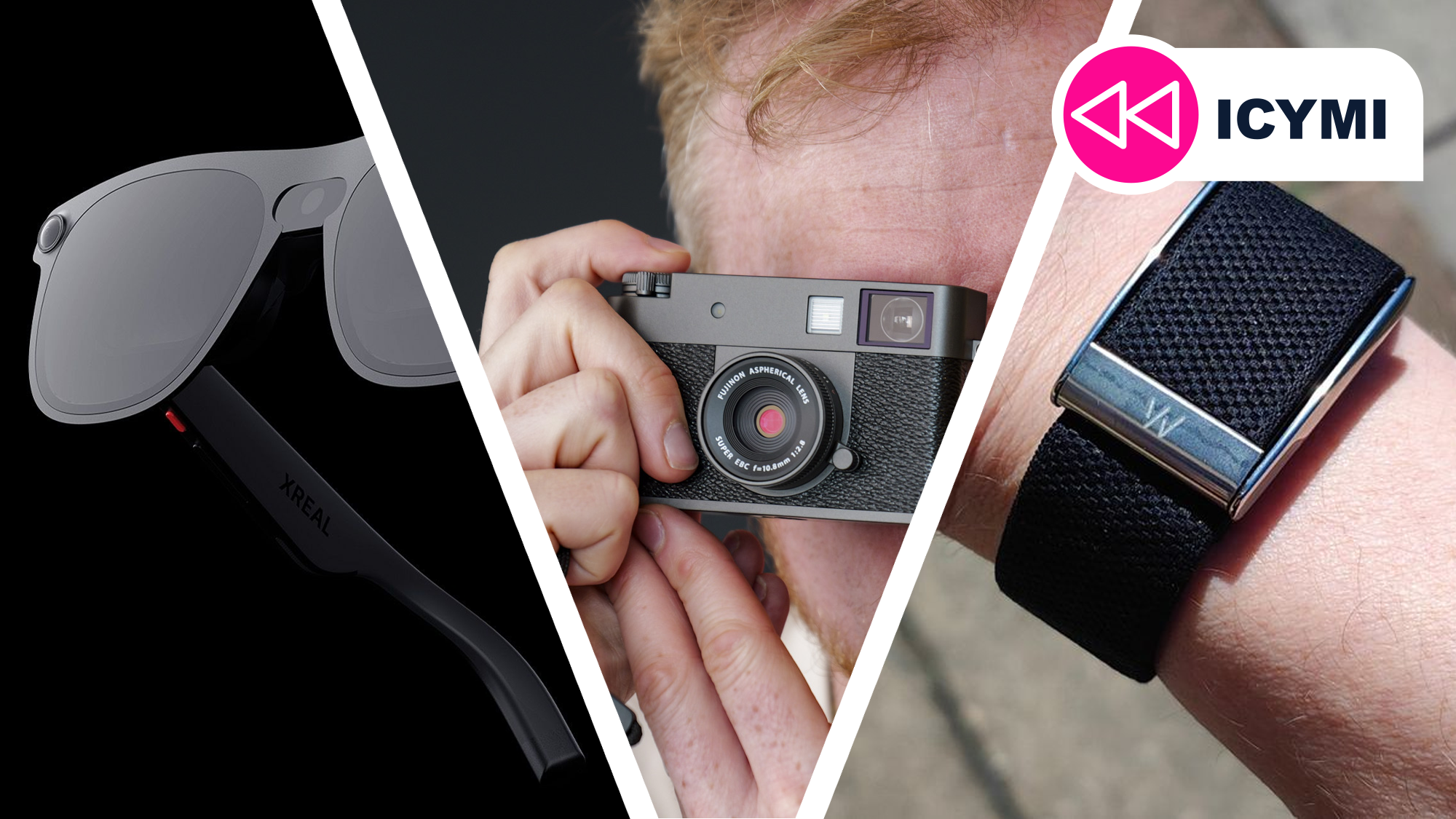
Rank 17421This week, Google wowed us with its new AI features – including the scarily good Veo 3 video generator – and a showcase of its Android XR efforts as it details the features coming to smart glasses and XR headsets in the coming years.To catch up on all this and more, scroll down for recaps of the week’s 7 biggest tech news stories.Once you’re up to speed, be sure to check out the 7 new movies and TV shows to stream this weekend (May 23).7. Google I/O gave us AI updates galore(Image credit: Google)Google's annual I/O event took place this week, with the tech giant making several major announcements centered on AI. Among the most significant reveals were the rollout of AI Mode in the U.S., enabling users to converse with Google rather than solely using it as a search engine, and the release of Gemini Live for free on iOS and Android, allowing users to grant Gemini access to their camera and screen on an iPhone.Another key talking point was introducing the video generation tool, Veo 3. This represents a significant improvement over previous video tools, notably by adding the capability to synchronize voice with the generated moving images.Speaking of images, Imagen 4 was also unveiled, elevating image generation on Gemini to an entirely new level, allowing for the creation of impressive visuals in just a few seconds.Elsewhere, Google upgraded its models, showcasing the power of Gemini 2.5, and introduced a new ultra-premium subscription called Google AI Ultra. This subscription grants access to all the company's most advanced AI features for a whopping $250 a month.Read more: Google I/O 2025 as it happened6. Google showcased Android XR(Image credit: Future)The new Google operating system made for Android headsets and Android glasses has finally had its time in the spotlight thanks to Google I/O 2025.At its core is Google Gemini. The AI, in conjunction with your glasses’ cameras and display, can recommend a place to eat based on what you request and then give you directions to where to find it. It can perform live translation, and on a headset, it can use Google Maps' immersive view to virtually transport you anywhere in the world.We know 5 brands are working on AR and AI glasses: Samsung, Warby Parker, Xreal, Kering Eyewear and Gentle Monster, though no release dates or prices have been given yet.Read more: Google finally gave us a closer look at Android XR – here are 4 new things we've learned5. We went to Computex(Image credit: Future)The world's biggest computing tech show, Computex 2025, has been underway in Taiwan, and we attended to bring you all the latest news and opinions of the coolest new computing gadgets showcased there.Huawei gave us a foldable laptop that looks like it's ripped straight out of a Mission Impossible flick, MSI's new Nintendo Switch 2 rival was made official, and Intel gave us new Battlemage GPUs to maybe make budget 1440p gaming practical again.Read more: Best gaming laptops of Computex 2025 - top picks from Asus, Acer, and more4. Apple invited us to WWDC 2025(Image credit: Apple)Right before Google I/O kicked off, Apple formally sent out invites for the opening keynote of WWDC 2025 and shared more details about the week-long developer conference. As with past Apple special events, it’ll all kick off at 10AM PT / 1PM ET / 6PM UK on June 9, 2025. TechRadar will be on the ground, and the event will be live-streamed for all to watch.It’ll be a big moment for Apple as well, marking a year since Apple Intelligence debuted and the expected reveal of its next-generation of platforms. On the latter, we’re expecting the next generation of iOS – iOS 19, iPadOS, watchOS, macOS, tvOS, and even visionOS for the Apple Vision Pro.The rumor mill points to some of the aesthetics of the Vision Pro’s interface spreading to other platforms, making it likely the most significant redesign for iOS and the iPhone’s software look in quite some time. Suffice it to say, there is a lot of hype and hope leading up to WWDC 25, but also a lot of questions about how Apple will address Apple Intelligence. A few months back, it pushed back the promised AI-infused Siri upgrades, and thus far, the Apple Intelligence features have been a bit hit or miss.We’ll see how Apple addresses all this when CEO Tim Cook and many others take the virtual stage for the WWDC 2025 opening keynote.Read more: Apple’s next big event is officially coming in June3. We wore the Whoop MG(Image credit: Future)The latest Whoop fitness tracker has arrived alongside the Whoop 5.0, and controversy surrounding its arrival aside, we’ve been excitedly testing it.Its automatic workout tracking seems to surpass the best passive workout tracker (the Oura Ring 4), and its granular detail of health and fitness stats – added by the medical-grade features it offers like ECG and blood pressure functionality – mean it looks to be establishing itself as an essential companion in the lead-up to a competition or event.Though its guilt-tripping tendencies make it less ideal for more casual users who want to do a little working out, but also partake in sub-optimal behaviors like staying up past their bedtime.Read more: I've been wearing the Whoop MG for four days, and there's one thing I love about it – and one thing I really don’t2. Fujifilm launched a retro compact camera(Image credit: Tim Coleman)Fujifilm unveiled the X half, a retro compact camera packed with surprising and unique features. From its twin vertical LCD displays to its charming film camera shooting mode, diptych composites, and, of course, Fujifilm's Film Simulations, this tiny digital camera is a love letter to half-frame film photography.We had a brief hands-on with the X half ahead of its announcement, and it reminded us how fun photography can be. Its core features are underwhelming on paper – including a vertical 1-inch sensor, JPEG-only photos, and HD video – but the shooting experience certainly doesn't. This camera completely charmed us.Read more: There's nothing half baked in this charming homage to half-frame1. Dyson launched a weird little vacuum(Image credit: Dyson)Dyson has unveiled a new vacuum cleaner that looks absolutely nothing like the rest of the range. The Dyson PencilVac is incredibly streamlined, with all its internal mechanics - including dust cup and motor - shrunk down and squeezed into its 1.5-inch wide handle.The floorhead then consists of four fluffy rollers shaped like cones to prevent hair tangling and make the whole thing appear to float across the floor. This looks like a specialist hard floor model, and it is due to launch in Australia later this summer, but not until 2026 in the US and UK.Read more: The new PencilVac looks nothing like any vacuum I've seen before
-
Picture from cdn.mos.cms.futurecdn.net
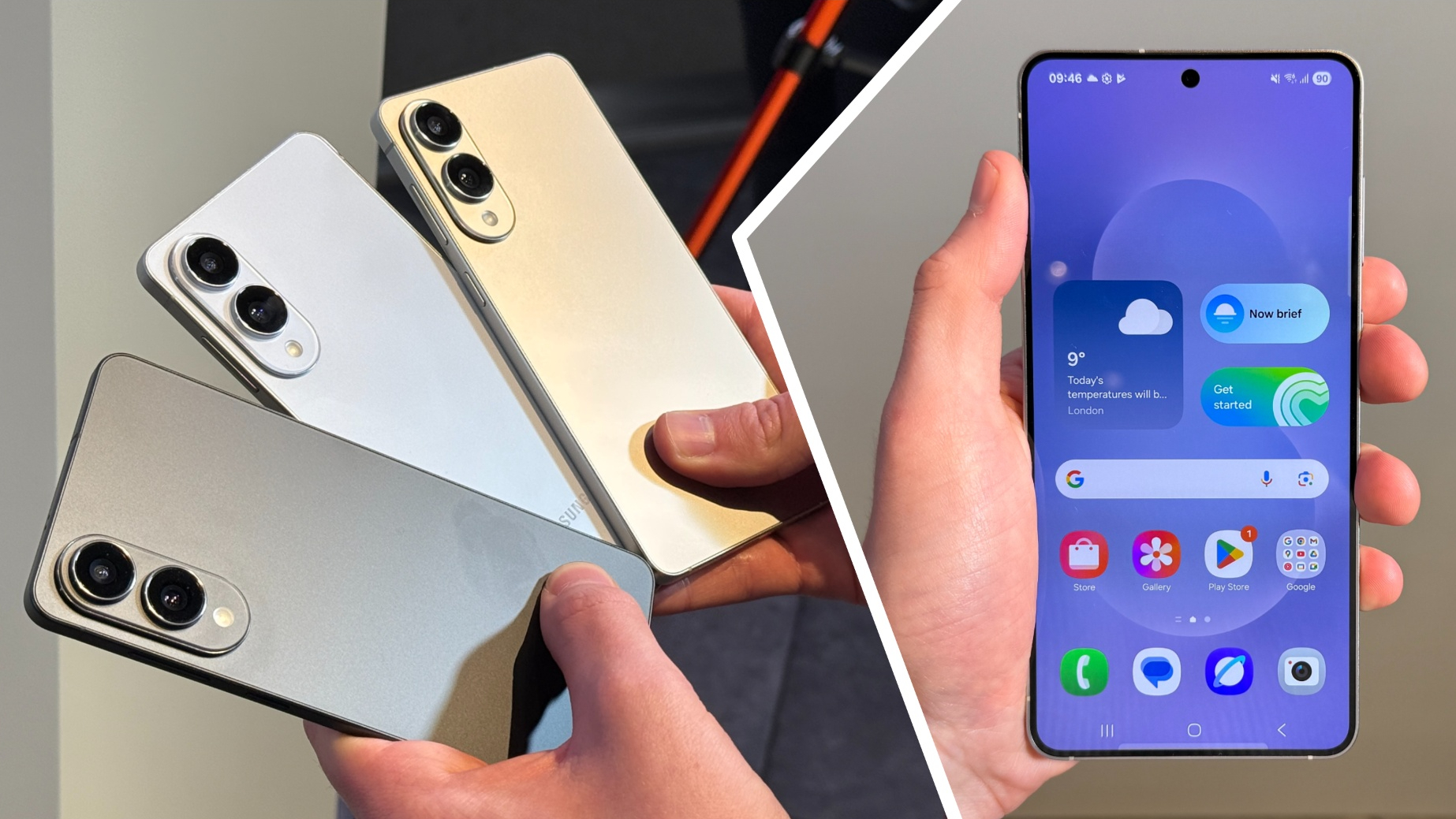
Rank 17422In February, Samsung released the Samsung Galaxy S25 series, bringing the baseline Galaxy S25, super-premium Galaxy S25 Ultra, and intermediate Galaxy S25 Plus to the world.This lineup, comprising a standard, enlarged, and premium model, was nothing new, but the reveal of the Samsung Galaxy S25 Edge at a recent Galaxy Unpacked event had me thinking a little harder than usual about this year’s Samsung smartphones.At the time, I wondered where the Galaxy S25 Edge would fit in Samsung’s smartphone lineup – would it lean towards the Galaxy S25 Plus or start a new branch of premium phones alongside the Galaxy S25 Ultra?Now that the Galaxy S25 Edge is almost here, we know that the answer is a bit of both – and while the Galaxy S25 Edge has joined the existing lineup without replacing any of the existing models, I do think it could signal the beginning of the end for the Plus.Sibling rivalry(Image credit: Philip Berne / Future)The truth is, the Galaxy S25 Edge and Galaxy S25 Plus don’t have that much reason to coexist.Firstly, lets look at the sales figures. According to WCCFTech, in the first month of global sales the Galaxy S25 Ultra sold 2.55 million units, the Galaxy S25 sold 1.17 million units, and the Samsung Galaxy S25 Plus sold just 840,000 units.Next, the Galaxy S25 Plus and Galaxy S25 Edge are unusually close together on the Galaxy pricing ladder. Unlike Apple and others, Samsung’s flagship phones each have a pretty wide price gap between them – the baseline Galaxy S25 starts at $799 / £799 / AU$1,399, the Galaxy S25 Plus starts at $999 / £999 / AU$1,699, and the Galaxy S25 Ultra starts at $1,249 / £1,249 / AU$2,149.The Galaxy S25 Edge starts at $1,099 for the model with 256GB of storage; that certainly feels like it’s encroaching on the Galaxy S25 Plus’ turf.And speaking of Apple, the latest rumors suggest that Cupertino could axe its larger base-model flagship as soon as this year – supposedly leaked images suggest that the rumored iPhone 17 Air could take the iPhone 17 Plus’ spot. And where Apple goes, the industry tends to follow.The same, but better(Image credit: Future)To me, the most damning part of the story is simply that the Galaxy S25 Edge embodies everything I like about the Galaxy S25 Plus – let me explain.I’ve had my hands on a Galaxy S25 Plus for a few months now, using it to test out One UI 7 and get first-hand experience with new features.I’m honestly a big fan – I love the phone’s minimalist design. While One UI isn’t my favorite Android wrapper, I do find its quirky look and straight-laced UI animations very charming. It also helps that the phone runs at a sprint and boasts a lovely display.However, the thing I like most about the Galaxy S25 is that it gives me a large screen in a thinner and lighter frame than either the Galaxy S25 Ultra or most comparable top-end phones.A large screen, light weight, and thin build – sounds an awful lot like the Samsung Galaxy S25 Edge. Having spent some time with the Edge myself, I can confidently say that it beats the Galaxy S25 Plus when it comes to ergonomics, and there are no compromises made with its excellent display.And while the Galaxy S25 Plus wins against the Edge with its telephoto-equipped triple camera system and, most notably, battery capacity, I’m not actually convinced that people buy the former for its performance.Looking again at those first month sales figures, we can see that for every Galaxy S25 Plus sold, three Galaxy S25 Ultras were sold – I reckon that power users were going straight for the performance champ Galaxy S25 Ultra, with those who chose the Galaxy S25 Plus doing so for its large screen and light weight.For these people, the Galaxy S25 Edge is sure to look tempting – I suppose we’ll find out for certain when the phone releases globally on May 30. Until then the above is mostly based on my own opinions on the Samsung Galaxy S family – let us know yours in the comments below.You might also likeThe iPhone 17 could come with a nasty price hike – here's howSamsung Galaxy S25 Edge vs Samsung Galaxy S25 Ultra: a style vs substance showdownHere's how much the Samsung tri-fold could cost – though you probably won't get chance to buy it
-

Picture from ichef.bbci.co.uk
Rank 17423 -

Picture from ichef.bbci.co.uk
Rank 17424 -

Picture from ichef.bbci.co.uk
Rank 17425 -

Picture from ichef.bbci.co.uk
Rank 17426 -

Picture from ichef.bbci.co.uk
Rank 17427 -

Picture from ichef.bbci.co.uk
Rank 17428 -

Picture from ichef.bbci.co.uk
Rank 17429 -

Picture from ichef.bbci.co.uk
Rank 17430 -

Picture from ichef.bbci.co.uk
Rank 17431 -

Picture from ichef.bbci.co.uk
Rank 17432 -

Picture from ichef.bbci.co.uk
Rank 17433 -

Picture from ichef.bbci.co.uk
Rank 17434 -

Picture from ichef.bbci.co.uk
Rank 17435 -
Picture from cdn.mos.cms.futurecdn.net
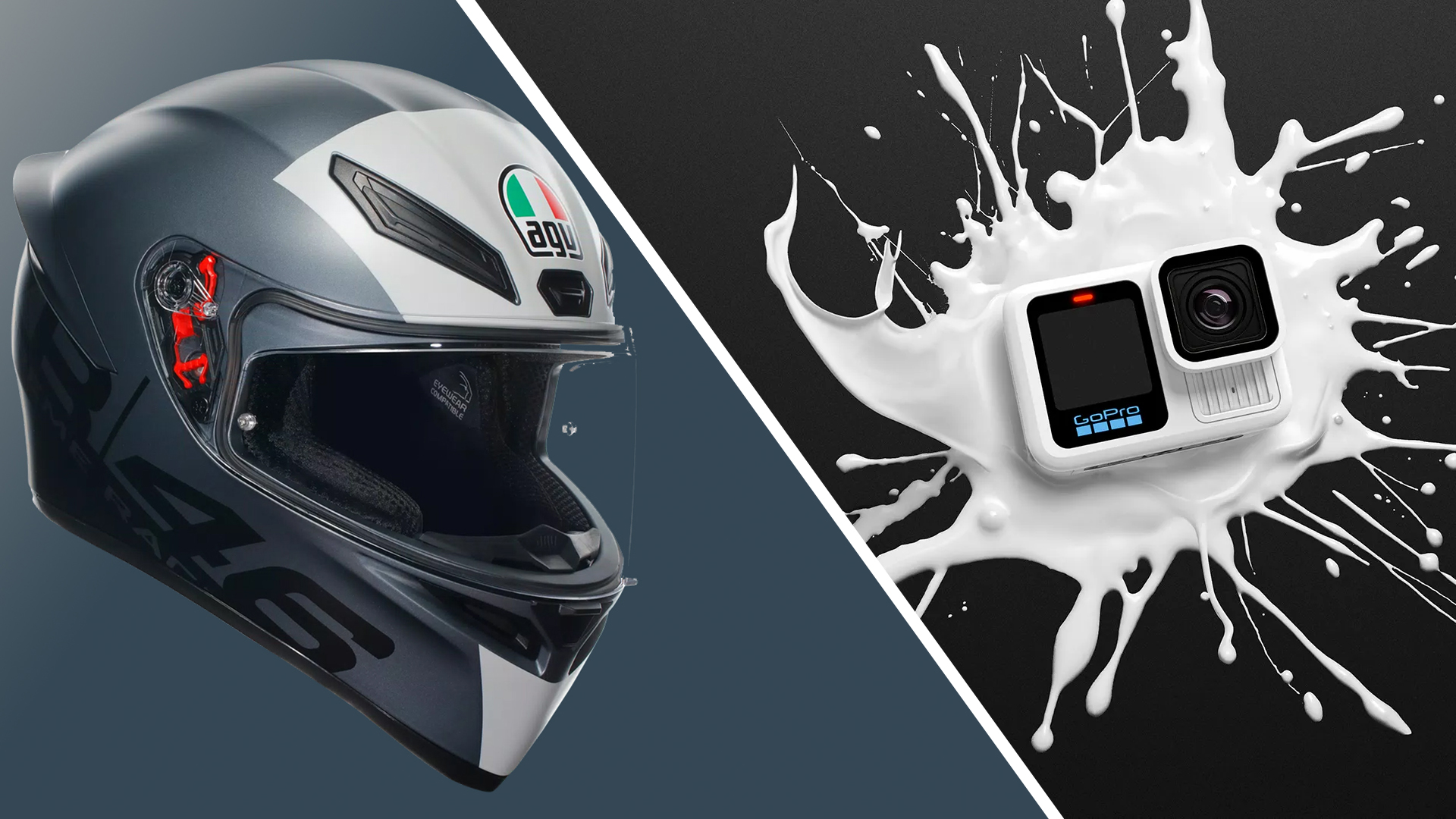
Rank 17436Since GoPro purchased the Australian smart motorcycle helmet company Forcite last year, the two-wheeled world has been waiting to see what the action camera giant can do if it applied its technology to rider safety equipment.Now, GoPro has announced that it will work with Italian helmet manufacturer AGV on its debut line of action camera-enabled lids, which are tipped to feature its built -in sensor and lens technology that will allow riders to capture POV footage without the need to mount an additional camera and other accessories.Forcite’s original goal was to provide a built-in dash cam experience for motorcycle riders, using a basic sensor from Sony, but is understood that GoPro’s influence will likely see the introduction of more advanced sensor, lens and processor tech that could allow for cinematic, high-definition footage to be captured and edited using the US company’s user-friendly software.Currently, riders wishing to capture POV footage either have to rely on handlebar or chest mounts, as well as accessories that clip to the chin of a motorcycle helmet or mount to the very top of it. But there have been questions raised about the potential impact on helmet safety in the unfortunate even of an accident.Designing a built-in solution would allow both GoPro and AGV to start from the ground up and create an aerodynamic, motorcycle-specific system that doesn’t compromise on safety, but can also deliver fantastic quality footage, alongside accident-detecting dash-cam functionality.AGV is a solid partner for GoPro, as it has been, manufacturing helmets for racing, the road and beyond since 1947. In fact, its Giacomo Agostini livery is one of the most recognizable in the motorcycle racing world and it kept MotoGP legend Valentino Rossi’s head safe throughout his career.Currently, its range-topping Pista GP carbon fibre lids can cost in the region of $1,924/ £1,370 / AU$$2,200, although it does offer much more affordable options in its more wallet-friendly K1 S range.There is no hint at what the GoPro tie-up helmet could eventually cost, but we would expect it to be expensive given the technology involved.Analysis: Technology moves faster than helmets(Image credit: Forcite/GoPro)Thanks to the advent of social media, many riders are increasingly looking for ways to document their two-wheeled escapades – or merely to record footage that could come in very handy should an insurance claim eventually arise.GoPro and AGV’s partnership is undeniably exciting for those that want technology seamlessly integrated with a high quality helmet, but whatever way you cut it, it is going to be expensive.What’s more, camera technology moves at such a rate that the GoPro sensors, lenses and processing chips integrated into the upcoming lid could well be second-rate or obsolete after a couple of years.When riders invest a large sum of money in a new helmet, they typically expect that piece of safety equipment to last a number of years, if not decades, so long as it isn’t dropped or damaged.It would be a crying shame if GoPro’s solution isn’t upgradeable, as it could end up being a bulky, heavy helmet that is only capable of capturing second rate footage. Or worse, is eventually not supported by GoPro at all.That said, AGV is a good partner for GoPro as it makes some of the nicest motorbike helmets around, and a built-in camera is still a better solution that helmet-mounted cams, which can be dangerous – so I'm looking forward to see what the partnership delivers.You might also likeBest GoPro camera 2025: the finest models you can buy at all price pointsI’ve driven the new Ford Capri – and it proves that nailing the retro-inspired EV brief isn’t easyApple CarPlay Ultra finally rolls out – here are 4 things you need to know about its Aston Martin debut
-

Picture from ichef.bbci.co.uk
Rank 17437 -

Picture from ichef.bbci.co.uk
Rank 17438 -

Picture from ichef.bbci.co.uk
Rank 17439 -

Picture from ichef.bbci.co.uk
Rank 17440 -
Picture from o.aolcdn.com
Rank 17441A full year of Peacock Premium is on sale right now for $25 as part of a Memorial Day promotion. This is $55 off the typical price of $80. Just enter SPRINGSAVINGS at checkout. The promotion is live until May 30. This is the ad-supported version.
Peacock is a decent platform and made our list of the best streaming services. It doesn't get the attention of Netflix or Disney+, but it's home to several nifty original shows. There's the AI-adjacent tomfoolery of Mrs. Davis and the Rian Johnson-made whodunnit Poker Face. It also airs several video game adaptations, like Knuckles and the surprisingly-decent Twisted Metal.
The big draw here, however, is likely the long-awaited spinoff of The Office, which is called The Paper. That one premieres in September and is a Peacock exclusive. The platform also signed an 11-year agreement with the NBA and that goes into effect this fall. The mobile app could be getting minigames and short-form vertical videos (like TikTok) in the near future.
There's one caveat. This subscription will automatically renew for $80 after the year runs out. Stay on top of scheduling if you want to cancel before then.
The Scranton documentary crew is heading to Toledo. #ThePaper arrives this September on Peacock. pic.twitter.com/Mzmbw7TBzF— Peacock (@peacock) May 12, 2025
Check out our coverage of the best streaming deals for more discounts, and follow @EngadgetDeals on X for the latest tech deals and buying advice.This article originally appeared on Engadget at https://www.engadget.com/deals/get-peacock-premium-for-one-year-for-only-25-163231269.html?src=rss
-

Picture from ichef.bbci.co.uk
Rank 17442 -

Picture from ichef.bbci.co.uk
Rank 17443 -
Picture from cdn.mos.cms.futurecdn.net
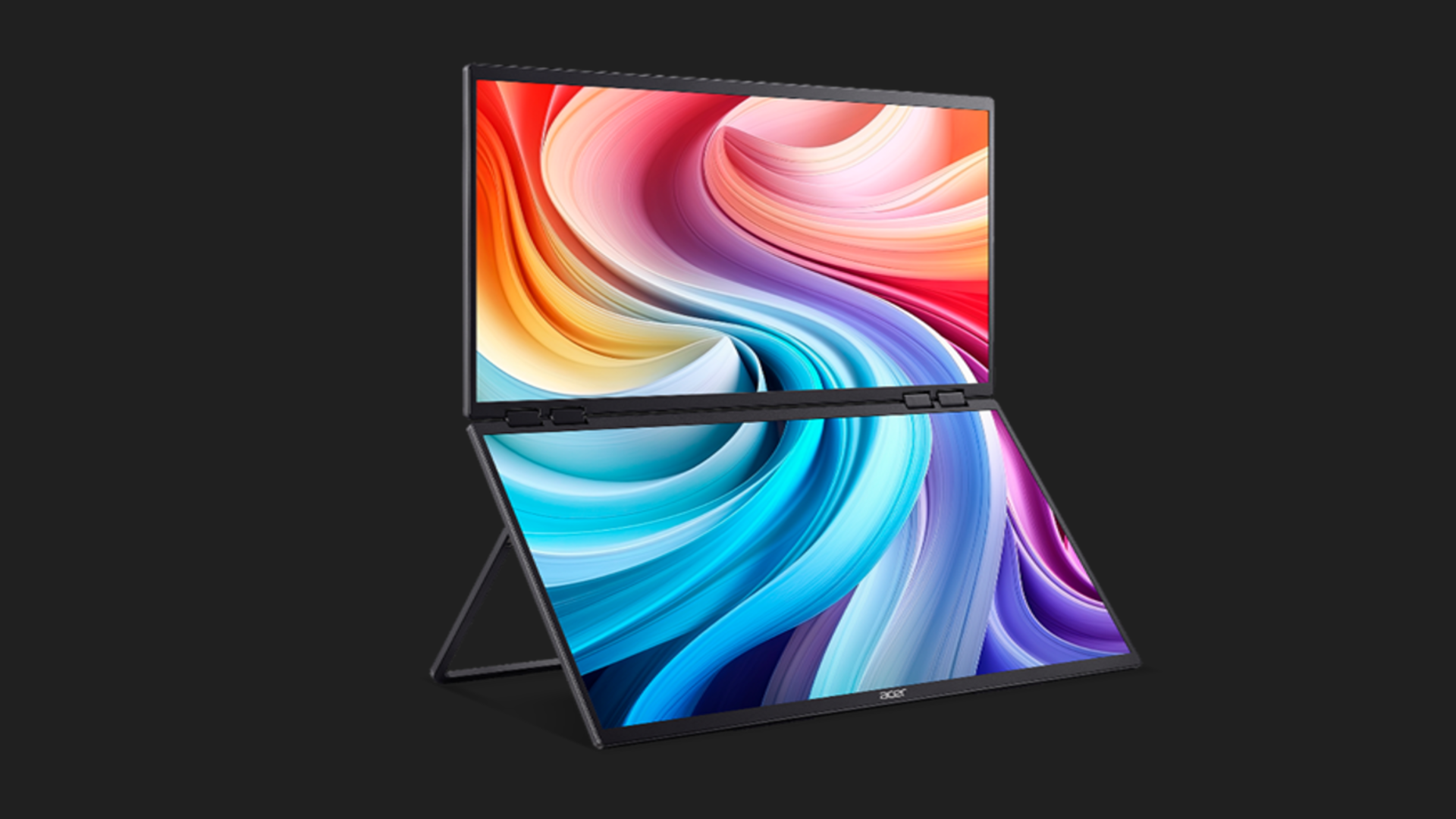
Rank 17444Acer’s portable monitors blend portability and touchscreen techAcer’s VisionCare targets comfort, but 100Hz refresh rate benefits are questionableMacBook Pro users may find these monitors lacking native macOS optimizationAcer’s new line of portable monitors introduces some unexpected features, especially in models like the PD163QT and PD243Y E.While portable displays typically focus on minimalism and basic connectivity, these Full HD (1920x1080) panels go a step further with wide viewing angles, aiming for more versatile use in multitasking.These monitors can fold up to 315°, a feature designed to improve collaboration and presentations. The PD163QT also adds touch functionality, a rare feature in this category.Dual-display setup with single-screen monitorsAlthough marketed as supporting dual-screen setups, each monitor contains only one display panel. The reference to “two Full HD displays” pertains to using the PD163QT and PD243Y E together, rather than a single device offering two screens.The PD243Y E features a 100Hz refresh rate and flicker-free technology, though the practical benefits over a standard 60Hz screen for typical office tasks are unclear. At best, it may slightly reduce eye strain during prolonged use.Acer also includes its VisionCare technology for eye comfort, signaling an expectation of extended usage.For Apple users, none of these models appears to be optimized for macOS. While they function as general-purpose external screens, they may not be the best monitors for MacBook Pro users who prioritize native aspect ratios and accurate color reproduction.The PM191Q E is another portable model featuring an ultra-thin profile and adjustable kickstand. It supports Full HD resolution and a refresh rate up to 100Hz.All of these monitors are portable, flexible, and VESA wall-mountable, but none exceed 1080p resolution, a common limitation in this segment.In parallel, Acer has launched its ProCreator Series, aimed at creative professionals. The series includes 4K and 6K monitors that support Delta E
-

Picture from ichef.bbci.co.uk
Rank 17445 -

Picture from ichef.bbci.co.uk
Rank 17446 -

Picture from ichef.bbci.co.uk
Rank 17447 -

Picture from cdn.mos.cms.futurecdn.net
Rank 17448The Pixel 10 may have been spotted on the streets of CanadaIt looks to have a similar design to the Pixel 9Google is expected to launch these phones during AugustIt's no real secret that the Google Pixel 10 is going to be unveiled around August time, and we just got a sneak preview of the upcoming flagship in one of the more unusual phone leaks we've come across recently.As spotted by @MarksGonePublic (via 9to5Google), the handset was out on the streets of Vancouver, Canada, during what seems to have been filming for a Pixel 10 advert. The real giveaway? The multiple mentions of the "Pixel 10" on the storyboards.Based on the flash and thermometer circles to the right of the cameras, this appears to be a Pixel 10 Pro or a Pixel 10 Pro XL, and it doesn't look like much is going to change design-wise from what we saw with the Google Pixel 9 series.There's also a glimpse of a tagline that tells us to "ask more of your phone". It seems that photography and AI will again be front and center when Google is promoting the Pixel 10 and all the features it comes with.Cameras and pricing🎬 Just out for a walk…stumbled onto a full-on commercial shoot for the Google Pixel 10 📱They had a macro probe lens, a Panavision rig, and 20+ crew members…to film someone holding a phone 😂If the Pixel camera’s so good, why not just use it? 👀 #BTS #Vancouver pic.twitter.com/muDluZfK75May 23, 2025So far, Pixel 10 rumors and leaks have been pretty thin on the ground – perhaps a sign that this isn't going to be a huge upgrade for the series, though we would expect the processor to get a speed bump, as is the norm for a new Pixel.There might even be downgrades in certain areas: the standard Google Pixel 10 has been rumored to be getting a third camera around the back, but the other two sensors will be reduced in their capabilities, perhaps to keep costs down.Speaking of costs, a separate leak points to similar pricing for the Pixel 10 and Pixel 10 Pro as we saw last year with the Pixel 9 equivalents, while the Pixel 10 Pro XL could cost more and the Pixel 10 Pro Fold might even be reduced in price.As our Google Pixel 9 Pro Fold review will tell you, that foldable started at $1,799 / £1,799 / AU $2,699, so a price reduction for its successor would be most welcome. The Pixel 9 series launched on August 22, 2024, and the date should be similar this time around.You might also likeThe Pixel 10 is likely to get a useful display upgrade5 things the Pixel 10 needs to do to beat the iPhone 17These are the best Android phones you can buy
-

Picture from ichef.bbci.co.uk
Rank 17449 -
Picture from cdn.mos.cms.futurecdn.net
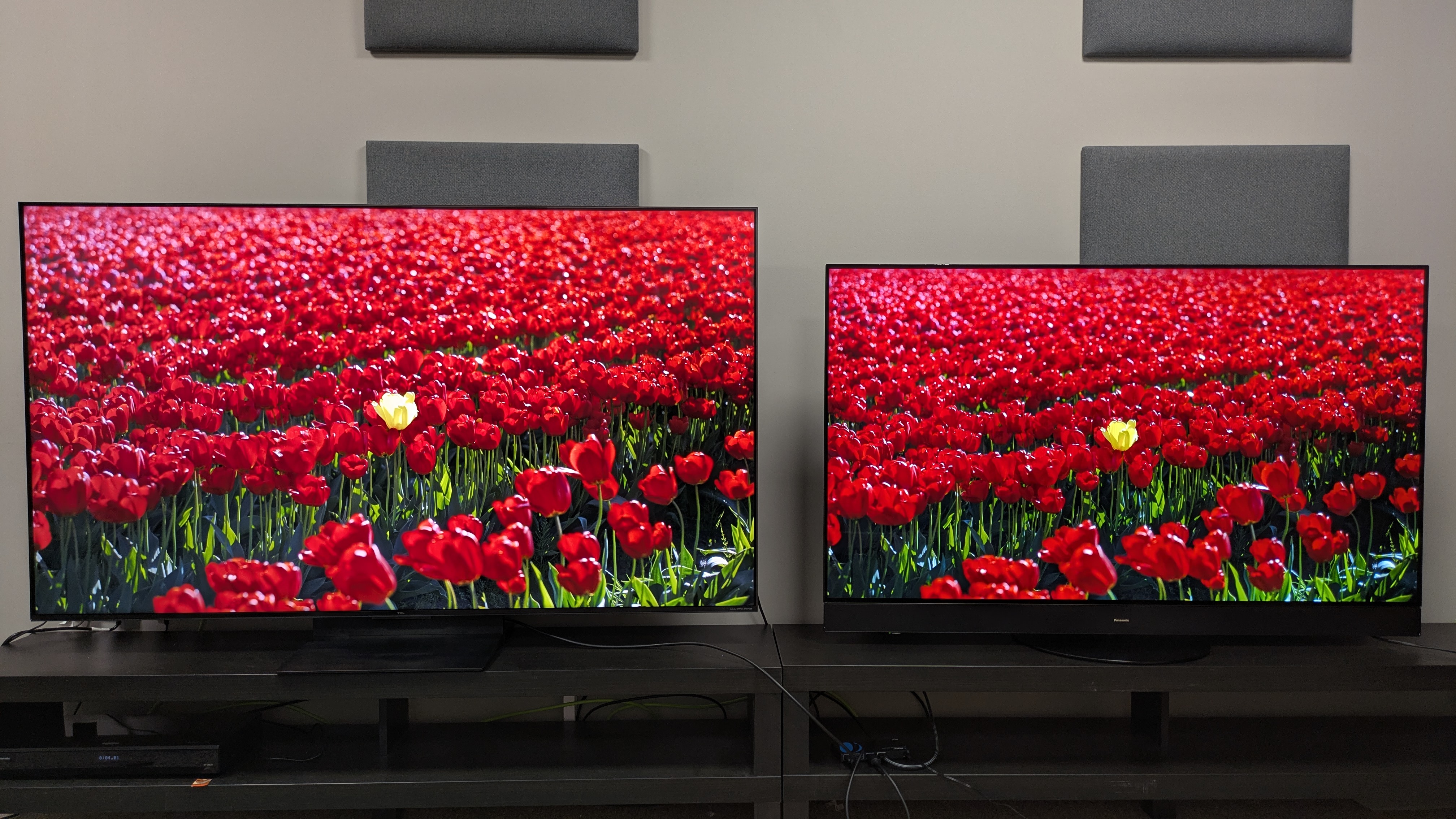
Rank 17450OLED and mini-LED are the two leading display technologies, with both offering improved picture quality over standard LED TVs.Most of the best TVs use these two technologies, but deciding which one is more suitable for you can depend on several factors. Previously, OLED was the go-to option for better black levels and contrast, while Mini-LED was better for brightness. While this remains partially the case, the differences between what each panel tech can offer have changed somewhat.Some of the best OLED TVs, such as the LG G5, are now hitting over 2,000 nits peak brightness, which is enough to compete with mini-LED TVs. And some of the best mini-LED TVs now have significantly improved local dimming, allowing for deeper and more OLED-like blacks.I’ve been testing the TCL C7K mini-LED TV, the mid-range model in TCL’s 2025 UK TV lineup, and decided to put it up against our reference Panasonic MZ1500 OLED TV (from 2023) to see how much the gap between the two technologies has been closed.A quick note: these two TVs are only available in the UK, but for our US readers, the closest equivalents would be the TCL QM7K mini-LED and either the Panasonic Z85A OLED from 2024 or the LG C5 OLED from 2025.OLED vs mini-LED: colorImage 1 of 2The TCL C7K (left) showed bright, punchy colors compared to the Panasonic MZ1500 (right), which showed richer, more detailed colors (Image credit: Future)Image 2 of 2(Image credit: Future)Both OLED and mini-LED have their advantages when it comes to color. With Mini-LED TVs, colors tend to be brighter and punchier, while colors on OLED TVs tend to look more saturated and have greater depth due to OLED tech’s inherently high contrast. However, this wasn’t completely the case with the C7K and MZ1500.Watching a 4K Blu-ray of Wicked with both TVs in their Dolby Vision Dark picture mode, the TCL C7K’s colors had a surprising amount of depth while still showcasing the punch mini-LED TVs get from their high peak brightness. The pink flowers around Elphaba during the 'Wizard & I' scene looked vibrant on both TVs, but I couldn’t help but be more drawn to the C7K.The MZ1500 still showed the advantages of OLED’s self-emitting pixels vs the C7K’s local dimming backlight, with Elphaba’s green skin and the blue details in a design on the wall revealing better contrast, but the C7K was no slouch here.It was also no slouch when viewing demo footage in HDR10 format on the Spears & Munsil UHD Benchmark 4K Blu-ray. With both TVs set to Filmmaker Mode, the yellows and greens in a butterfly’s wings were brighter and seemed more natural as compared to the MZ1500’s bolder, deeper display.OLED vs mini-LED: black levels, contrast, and detail Image 1 of 2The TCL C7K (left) demonstrated surprisingly strong black levels and contrast compared to the Panasonic MZ1500 (right), shown here in Alien: Romulus (image 1) and on The Batman (image 2). (Image credit: Future)Image 2 of 2(Image credit: Future)One area where the C7K impressed in my comparison was black levels. Throughout Alien: Romulus, in any scene in a dark hallway or tunnel, the C7K’s black levels looked deeper and richer than I’d anticipated. Yes, the MZ1500 was better here, but it was still an excellent demonstration of the C7K’s local dimming prowess.The same was true when watching The Batman. Shadow detail on both TVs was excellent in the opening crime scene sequence, and the C7K showed vastly improved black levels compared to some mini-LEDs I’d tested in the past.Contrast was another area where competition was closer than expected. The C7K displayed a great balance between light and dark tones in the bright lights punctuating gloomy surroundings in both Alien: Romulus and The Batman, holding itself up well against the MZ1500.As with color, the MZ1500 OLED gave textures greater perceived depth and detail, creating a more 3D-like quality. But the same textures, such as skin and facial features, were displayed with a lifelike quality on the C7K as well.OLED vs mini-LED: screen uniformityImage 1 of 2Black & white scenes from Oppenheimer (pictured) ultimately showed the TCL C7K's (left) sub-par screen uniformity compared to the Panasonic MZ1500 (right): where OLED really shines. (Image credit: Future)Image 2 of 2(Image credit: Future)The C7K had impressed me during my comparison so far, but there’s one area where the Panasonic OLED triumphed: screen uniformity.Screen uniformity refers to a TV's ability to evenly display large areas of the same color, such as black. OLED panels use self-emitting pixels instead of a backlight and, as a result, they can deliver uniform tones across all areas of the screen. But as mini-LED TVs use backlights to produce light, insufficient control of backlight local dimming zones can create uniformity issues.Watching black and white scenes from Oppenheimer, the C7K did a great job of accurately displaying black and white tones, along with a good range of grays, but I also noticed streaks of brown underneath the black letterbox bars in these widescreen scenes – a sign of sub-par screen uniformity. This wasn’t an issue on the MZ1500 OLED.OLED vs mini-LED: conclusionThe TCL C7K (left) ultimately isn't as good as the Panasonic MZ1500 (right), but it's brighter, significantly cheaper and does a great job for the money. (Image credit: Future)Ultimately, the MZ1500 OLED had the superior picture in my comparison, thanks to its self-emitting pixels. But, there’s a key thing to remember here: price.For a 65-inch C7K at launch, you’d be paying £1,399 ($1,499 for the QM7K in the US, and roughly AU$2,326) whereas the MZ1500 65-inch at launch in 2023 was £2,900 (roughly $3,700 / AU$5,400).Panasonic’s OLEDs are notoriously pricey, but even a new mid-range OLED such as the LG C5 costs $2,699.99 / £2,699.99 / AU$4,299. That is one heck of a price gap.So yes, while the MZ1500 does come out on top, the C7K (and the QM7K, which earned four and a half out of five stars in our review) demonstrates the solid level of performance you can now expect from a mini-LED TV, along with its comparatively high value when pitted against an OLED TV.You might also likeI tested a premium and budget mini-LED 4K TV side-by-side – here are the real-world differencesOLED vs Mini-LED: which TV type is best?How far mini-LED TV tech has evolved in 9 years and the 'dark side' of Netflix – what I learned on my visit with TCL
