News
This constantly updated list features the latest and most important news articles, ranked in order of significance. The top stories highlight major developments, breaking news, and critical updates across various topics, ensuring you stay informed about the most pressing issues. As new articles are added, the list adapts to reflect the latest priorities, keeping the most impactful stories at the forefront. Whether it’s global events, technology breakthroughs, or industry trends, this dynamic list ensures you always have access to the most relevant and timely information.
-

Picture from ichef.bbci.co.uk
Rank 16251 -

Picture from ichef.bbci.co.uk
Rank 16252 -

Picture from ichef.bbci.co.uk
Rank 16253 -

Picture from cdn.mos.cms.futurecdn.net
Rank 16254The way security professionals and their businesses approach artificial intelligence is one of contrasts and contentions. We’re still in a state of flux as to whether AI will lead to true cyber safety, or leave us more vulnerable to increasingly sophisticated attacks.Optimists view AI as a gleaming opportunity to improve cybersecurity tools at a rate that helps us stay ahead of attackers. AI can strengthen defenses at unprecedented speeds and deliver automated threat intelligence that guides both immediate and long-term decision-making.A more pessimistic view however presents AI as a weapon for adversaries to launch increasingly sophisticated new and dangerous threats on unprepared individuals and organizations.In my view, our reality sits somewhere in between.
What it means to be AI-secure
There are always two sides to a coin. Where AI is considered, risks can arise both internally and externally. For instance, hackers use AI’s speed and scalability to launch widespread cyber attacks from outside the business, while any mishandling of AI technology within can hand valuable assets directly over to them.A sound AI security strategy considers both sides.AI’s efficacy in helping businesses automate the data collection process is a well known advantage. However, organizations must not forget that speed and efficiency do not surpass security as a priority. For example, automating data collection with AI still requires anonymization when sensitive information is included, and it must be controlled so only approved individuals can access it.Here, zero-trust and multi-factor authentication can help ensure only the correct individuals within an organization can access it. This practice stems from the tide of mishandling, improper storage and data leaks - purposeful or otherwise.Like with any new software, businesses must also consider the security of third-party AI services. Are you certain that the AI model you are using is truly secure? Here, diligence must come before investment - organizations can have the strongest internal defenses only to be let down by poor third-party security.We saw a recent example of third-party security failure by UnitedHealth, when an attacker gained server access through Change Healthcare, a third-party affiliate. Breaching this side door meant UnitedHealth’s highly protected customer data could be accessed in a matter of days.There’s also the need to continually train AI models with the latest information. Making decisions on out-of-date data opens the door for misguided defense strategies. Before businesses make any AI-based decisions, they must remember to account for the recency and relevancy of the data they are processing.
What features to look for in AI-secure security platforms
While the global battle for AI superiority rages, businesses must carefully consider which AI tools will bring them the most security. The best providers of AI-ready security tools and services have preempted the concerns laid out above, and innovated their services to limit errors in managing an AI-ready world. Microsoft Security Copilot is a great example approach to AI-security and a cyber safe outlook.Here are four features to look out for:
1. Real-time monitoring
When it comes to identifying vulnerabilities, monitoring threats and repelling attacks, cyber teams rely on powerful platforms to do the heavy lifting; there simply isn’t enough time or resources to do this on a case-by-case basis. Through proprietary AI, businesses gain transparent, comprehensive views of internal and external activity, network traffic, user journeys and data access.From here, intuitive machine learning can recognize anomalies from within and outside the organization, harnessing historical data to analyze minute-by-minute threat environments and predict when attacks might occur and in what form.
2. Immediate action
Even the hardest working security professional can’t be in two places at once. Microsoft Security Copilot, among other systems, accounts for this, leveraging AI to monitor the constant stream of business activity while also intelligently flagging real-time threats.Naturally, as incident response becomes more automated - although human oversight remains crucial - security teams can receive threat data almost instantly, with less manually intensive requirements, freeing up resources to immediately respond.For the past two decades, we have been one step behind cyber attackers; with real-time response, we level the playing field.
3. Automation to reduce time and error
While there is something to be said for automated processes reducing human error, especially from time and resource-poor cyber specialists, it’s my opinion that this risk will always exist. At least with this mindset, we’re not falling into the old adage of ‘fail to plan, plan to fail’. Microsoft Security Copilot and other systems, for all of their advantages, are only as robust and foolproof as the security specialist using them.Does automation decrease the chance of human error? Definitely. Does it cure it altogether? Definitely not. We must enable powerful new systems to remove manual task intensity, but they must remain directed by boots-on-the-ground specialists.
4. System cohesion
Businesses use many different systems for vital day-to-day operations. Data migration between separate systems, failing to train and educate employees, and poor security integrity across the tech stack, all increase the attack surface and therefore the organization's vulnerability.The tech giants hold a significant advantage here. Take Microsoft Security Copilot, which has been built to integrate into Microsoft’s existing suite of tools, such as Azure Cloud, Defender, and Office products. This level of ‘baked-in’ security reduces the attack surface. It’s a strategic advantage that cannot be underestimated, offering a greater degree of monitoring, control and transparency.
Becoming AI-secure is the first step
The best piece of advice I and many of my colleagues can provide is to adopt a constant, deliberate and thorough analysis of AI opportunities and challenges.Is there a new capability from your chosen provider that can help plug a long-known vulnerability to a greater extent? Invest and move quickly.Have attackers launched a new AI-based threat that challenges existing defenses? It’s time to quickly analyze current strategies and find ways to innovate in turn, relying on your network to formulate the best industry-wide approach.An AI-secure organization is one that commits itself to proactive cyber safety. AI can be our greatest tool in the fight to come, but we must not forget that attackers are thinking the same.
We've compiled a list of the best endpoint protection software.
This article was produced as part of TechRadarPro's Expert Insights channel where we feature the best and brightest minds in the technology industry today. The views expressed here are those of the author and are not necessarily those of TechRadarPro or Future plc. If you are interested in contributing find out more here: https://www.techradar.com/news/submit-your-story-to-techradar-pro
-

Picture from ichef.bbci.co.uk
Rank 16255 -

Picture from techcrunch.com
Rank 16256 -

Picture from ichef.bbci.co.uk
Rank 16257 -

Picture from ichef.bbci.co.uk
Rank 16258 -

Picture from ichef.bbci.co.uk
Rank 16259 -

Picture from ichef.bbci.co.uk
Rank 16260 -

Picture from techcrunch.com
Rank 16261 -
Picture from cdn.mos.cms.futurecdn.net
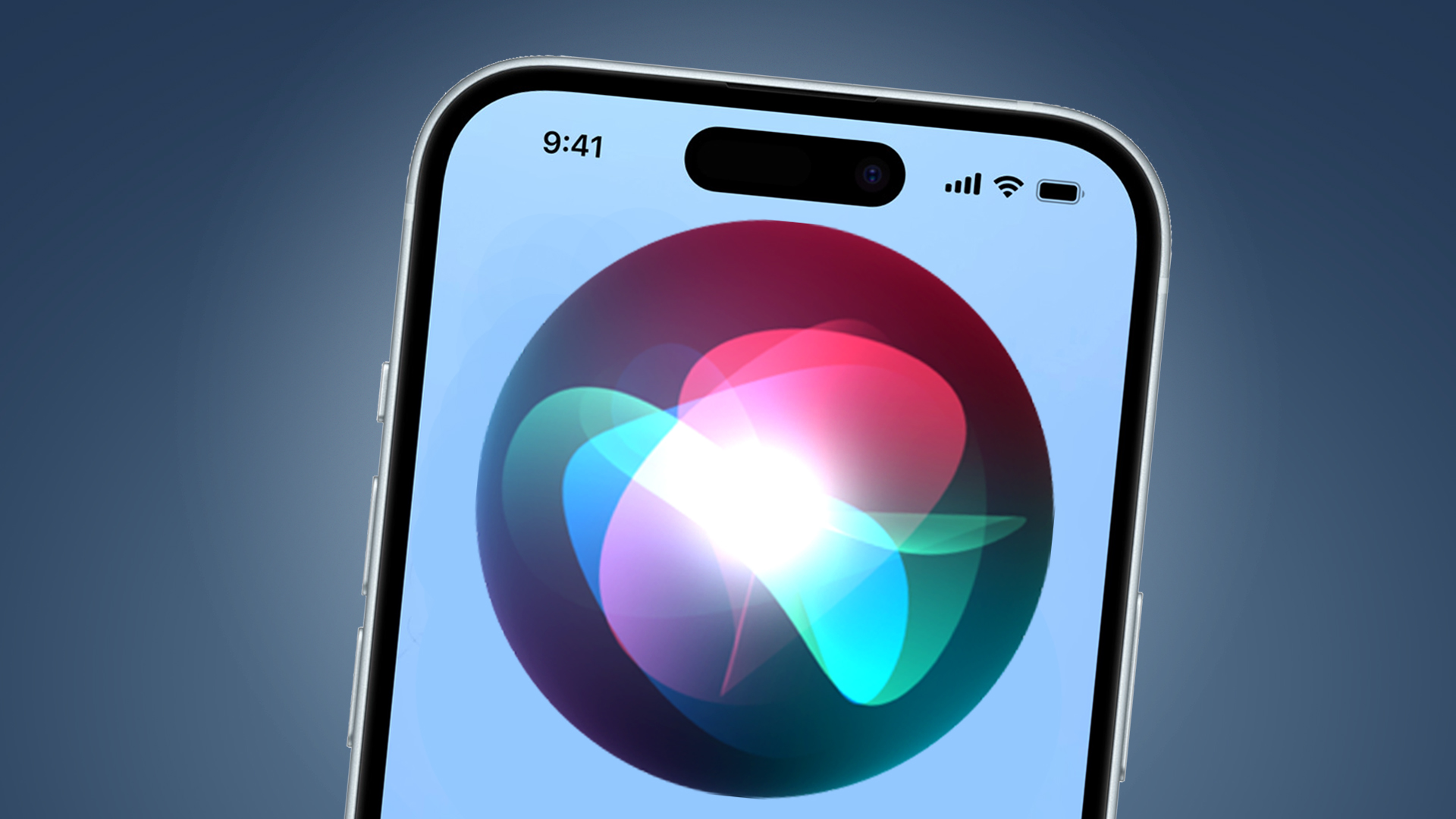
Rank 16262"In response to EU regulatory pressure" Apple could be working to let users in Europe switch to third-party voice assistants over SiriThe move comes amid indefinite delays to AI-powered Siri upgrades originally planned for March 31Executives are showing concern for the future of the company, as Apple falls behind competitors in the AI race
Apple is reportedly working on tweaking its iPhone operating system to allow European users to choose a third-party voice assistant as their default option over Siri.The news comes via a bombshell Bloomberg Apple AI report by Mark Gurman and Drake Bennet, citing "a person with knowledge of the matter" and follows in the wake of Apple's public struggle to provide Siri with AI upgrades that were first revealed in June 2024.It’s a situation that has already resulted in Apple pulling a range of AI-focused ads and "available now" claims from the Apple Intelligence webpage. These upgrades were originally supposed to launch in iOS 18.4 on March 31, but now appear to have been delayed with no firm release date.This report also claims that Google Gemini is on track to be added in iOS 19 as a ChatGPT alternative, according to people with knowledge of the plan.Alongside struggling to make Siri smarter, Apple is also now seemingly facing regulatory sanctions in the EU after already being fined for forcing users to use its own App Store.Right now, if you ask Siri on an Apple Intelligence-enabled iPhone (iPhone 15 Pro or newer) something like "How does CRISPR DNA editing work?" the virtual assistant currently has no answer – except to ask users if they'd like ChatGPT to answer.According to an Apple exec cited by Bloomberg, Apple's usual methodology is "we’re late, we have over a billion users, we’re going to grind it out, and we’re going to beat everyone", but that's not working this time around.
(Image credit: Apple)
Where to now for Siri?
To back up its claims, Bloomberg’s report notes that Eddy Cue – Apple’s Senior Vice President for Services – is worried that "AI could do to Apple what the iPhone did to Nokia". Cue has recently been quoted during court testimony as saying it's possible the iPhone could be irrelevant 10 years from now, "as crazy as it sounds".While it ultimately might not have a choice when it comes to changes in the EU, Apple would obviously prefer Siri to be able to compete with Gemini and ChatGPT head on, but at this point, it does not appear to have a clear path when it comes to closing the gap, with a senior member of Apple's AI team stating, “This is a crisis… It’s been sinking for a long time.”While allowing users to ditch Siri for a third-party alternative would deal with the problem in the short term and could be a good thing for iPhone and Mac users, from Apple’s perspective it would also be an undesirable admittance of that current state of affairs.
(Image credit: Photo by PHILIPPE LOPEZ/AFP via Getty Images)
In his court testimony, Cue stated that for the first time in 22 years, Google searches on Apple devices fell last month. The provided reason was that users were turning away from search engines and towards AI tools for gathering information.While Apple has a dedicated customer base that is going to continue to buy Apple devices almost no matter what, as AI becomes more integrated into people’s work and personal lives, it may be the deciding factor for less loyal users.By comparison, Android devices have long allowed owners to switch to a different virtual assistant, something that’s continuing into the age of AI.Apple has undeniably fallen behind when it comes to AI integration, but perhaps not disastrously so – and when it comes to such a world-changing technology, maybe that's not such a bad thing. Given how unreliable Google AI Overviews can be, it's certainly not an exact science.Acknowledging that they need time to get Siri to a point where it can rival the others, and giving users further functionality in the meantime, seems like a win/win for Apple and its customers – if the iPhone maker can swallow its pride.
You might also like...
4 Gemini announcements I can't wait to hear at Google I/O this yearThe iPhone will soon turn 20, but the last thing it needs is an all-glass makeoverApple wants to connect thoughts to iPhone control – and there's a very good reason for it
-

Picture from ichef.bbci.co.uk
Rank 16263 -

Picture from ichef.bbci.co.uk
Rank 16264 -

Picture from ichef.bbci.co.uk
Rank 16265 -

Picture from ichef.bbci.co.uk
Rank 16266 -

Picture from cdn.mos.cms.futurecdn.net
Rank 16267AI is undoubtedly one of the biggest developments to hit technology and business operations over the years. Tie that together with IT automation and everything suddenly appears a lot more complicated for business owners.‘Agentic AI’ is one of the latest innovations to emerge recently. Otherwise known as AI Testing Agents, they use tools to help software programs run smoothly for companies. They can both monitor and test application performances to help identify any issues and optimize them for better performance. Early stage examples of AI agents minus the testing element include Siri, Alexa and Google Assistant.In the past couple of years, I've observed firsthand how Artificial Intelligence is transforming entire industries, enhancing customer interactions, and refining operational efficiencies. It is these experiences that have led me to appreciate the nuanced benefits and challenges that come with integrating AI into business processes. Here, I share my perspectives on several key areas where I believe AI is making a significant impact.
The Pros and Cons of Using Test AI Agents in Business
From my point of view, the introduction of test AI agents in businesses heralds a new era of efficiency and capability. These agents excel in managing the inherent variability of AI responses, ensuring consistent performance monitoring amidst changing outputs. Their ability to handle large volumes of data through automated processes is particularly beneficial in environments where manual testing proves impractical.Moreover, their role in facilitating continuous improvement is undeniable, as they provide the necessary feedback for iterative enhancements. However, these benefits are not without their challenges. The complexity of testing probabilistic AI systems requires sophisticated, statistical approaches that can be resource-intensive. Additionally, the rapid pace of AI evolution sometimes outstrips the development of standardized testing protocols, leading to potential inconsistencies.Despite these hurdles, I believe that the strategic implementation of test AI agents is crucial for businesses in aiming to leverage AI effectively.
Implementing Agentic AI into the Workplace
For businesses, introducing Agentic AI into the workplace is a transformative process that I've seen yield enormous benefits when it comes to both efficiency and decision-making. In my experience, the key to successful integration is to start with clear objectives and thoughtful planning. This ensures AI agents are seamlessly incorporated into existing workflows, augmenting rather than disrupting established processes. Technical setup, including robust data pipelines and system integration, is what forms the backbone of this implementation.Pilot testing is also crucial as it allows for real-world evaluation and adjustments. Moreover, ongoing training and support are essential to help employees adapt to and effectively interact with new AI tools. Continuous performance monitoring and iterative improvements based on feedback also play a critical role in realizing the full potential of AI agents in the workplace.
Industries Benefitting Most from Agentic AI Technology
In my view, several industries are currently reaping significant benefits from Agentic AI technology. Customer service has been transformed by AI agents capable of handling large volumes of inquiries in real time, significantly enhancing consumer satisfaction. Healthcare is another sector where AI has made a profound impact, assisting with diagnostics and patient management to streamline operations.In finance, AI agents contribute to high-frequency trading, risk assessment, and fraud detection, improving accuracy and operational speed. E-commerce platforms utilize AI to personalize shopping experiences and optimize logistics, which enhances efficiency and customer engagement. These advancements underscore the versatile applications of AI across different sectors, driving improvements that are both transformative and beneficial for companies globally.
The Difference Between Conversational and Functional AI Agents
From my many years of experience in software, the distinction between conversational and functional AI agents is pivotal in tailoring AI applications to meet specific organizational needs. Conversational AI agents are designed for natural language interaction, making them ideal for roles that require engaging with customers or users, such as in service bots or virtual assistants.On the other hand, functional AI agents are focused on executing specific tasks efficiently—whether it's data processing, automated testing, or controlling machinery. It is this specialization in functionality that allows businesses to deploy AI solutions that enhance productivity and accuracy in targeted operations.Each of these facets of AI implementation and utilization reflects the broad spectrum of AI's capabilities and the diverse ways in which it can be harnessed to improve business processes and customer experiences. As we continue to explore and expand the boundaries of what AI can achieve, I remain optimistic about AI Testing Agents and their potential to drive further innovation and efficiency for businesses across the globe.
We feature the best AI chatbot for business.
This article was produced as part of TechRadarPro's Expert Insights channel where we feature the best and brightest minds in the technology industry today. The views expressed here are those of the author and are not necessarily those of TechRadarPro or Future plc. If you are interested in contributing find out more here: https://www.techradar.com/news/submit-your-story-to-techradar-pro
-

Picture from cdn.mos.cms.futurecdn.net
Rank 16268'Significant amount' of data stolen from Legal Aid AgencyUp to 2.1 million records accessed, hacking group saysLegal Aid online systems taken offline
The UK’s Ministry of Justice (MoJ) has revealed that a cyberattack on the Legal Aid system has led to the theft of a "significant amount" of data, including criminal records.The MoJ was alerted to the attack on April 23 when data dating back as far as 2010 was accessed by the attackers.Earlier this month, the MoJ said it was investigating a “security incident” and that payment information had potentially been accessed. The group responsible for the attack said they accessed 2.1 million pieces of data, but the MoJ has not confirmed this number.
‘Significant amount’ of data stolen
The MoJ said that the data accessed by the attackers “may have included contact details and addresses of applicants, their dates of birth, national ID numbers, criminal history, employment status and financial data such as contribution amounts, debts and payments.”Legal Aid Agency chief executive Jane Harbottle issued an apology for the breach, adding that the breach “will be shocking and upsetting for people”. The MoJ is working with the UK’s National Crime Agency and the National Cyber Security Centre to secure systems, and the Information Commissioner has been notified.The Legal Aid Agency is responsible for providing legal aid funding to over 2,000 providers. The amount administered in 2023/24 amounted to around £2.3 billion. The Agency’s online digital services have been taken offline as a result of the attack.The MoJ has recommended that anyone who has applied for legal aid since 2010 to take steps to protect themselves, including increased vigilance against unknown phone calls and text messages, as well as updating or replacing weak or reused passwords."If you are in doubt about anyone you are communicating with online or over the phone you should verify their identity independently before providing any information to them," the ministry said.Outside of personal data, it is likely that information relating to the barristers, solicitors, and other organizations, including not-for-profit organizations, was accessed by the hackers during the attack.“The recent cyber attack on the Legal Aid Agency is yet another example of the real-world impact from digital vulnerabilities. When criminal records and other sensitive personal data are exposed, it is not just a matter of IT failure, it’s a breach of trust, privacy and even safety in this case. Many of the individuals affected may already be in vulnerable situations and could now face the added stress of not knowing where their data will end up or how it might be used," said Jake Moore, Global Cybersecurity Advisor, ESET.“It highlights just how critical it is for public bodies and government agencies to invest in stronger cyber defences, quicker update times and better training as well as being transparent immediately when things go wrong. Delays in notifying victims or vague reassurances can often worsen the damage whether it’s a government agency or private company.”Via BBC
You might also like
Customer data stolen in M&S cyberattackProtect yourself with the best password managersProtect your family from online threats with the best parental control apps
-
Picture from o.aolcdn.com
Rank 16269Smart speakers have come a long way from being simple housings for voice assistants. Today’s best smart speakers can tee-up your favorite playlists, control your smart home devices, answer questions, set reminders and even act as intercoms around the house. Whether you're deep into the Alexa, Google Assistant, or Siri ecosystem, there’s a speaker out there that fits your setup and lifestyle.From compact models perfect for your desk or bedside table to premium picks that can fill a room with rich, immersive sound, smart speakers come in all shapes and sizes. Some even double as smart displays, while others prioritize high-fidelity audio for music lovers. No matter your budget or preferences, we’ve rounded up the top options to help you find the right voice-powered companion for your home.
Table of contents
Best smart speakers for 2025
Picking an assistant: Alexa, Google Assistant or Siri
Smart speaker FAQs
Best smart speakers for 2025
Picking an assistant: Alexa, Google Assistant or Siri
The first thing most people should do is decide what voice assistant they want to use. Google Assistant and Amazon's Alexa are both well-supported options that are continually evolving, with new features added at a steady clip. A few years ago, Alexa worked with more smart home products, but at this point, basically any smart device worth buying works with both.
Google vs. Alexa
It's mostly a matter of personal preference. If you’re already entrenched in the Google ecosystem and own an Android phone, it makes sense to stick with that. And if you have multiple Google-based smart devices in your home, you can use Google Home to easily control and navigate your devices. But while Alexa isn’t quite as good at answering general knowledge questions, it syncs just fine with things like calendars from your Google account. And it works with perhaps the widest variety of smart home products as well. If you’ve never used Alexa or Google Assistant, you can download their apps on your iOS or Android phone and spend some time testing them out before buying a speaker.
There are downsides to having a smart home device that’s always listening for a wake word, as giving more personal information to Amazon, Apple and Google can be a questionable decision. That said, all these companies have made it easier to manage how your data is used — you can opt out of humans reviewing some of your voice queries, and it's also less complicated to manage and erase your history with various digital assistants, too.
Sonos vs. Apple
If you buy a Sonos device with a microphone, you can also use the company's own voice assistant, voiced by Giancarlo Esposito. It's focused purely on music control, so you won't use it to do things like send messages or ask the weather forecast. But as a music assistant, Sonos Voice Control is generally quite fast and reliable.
As for Apple, you won’t be surprised to learn the HomePod and HomePod mini are the only Siri-compatible speakers on the market. It’s rumored that Apple will potentially release a new range of smart displays, like its HomePod with a touchscreen, sometime soon. Apple's Siri has a reputation for not being as smart as Alexa or Google Assistant, but it’s totally capable of handling common voice queries like answering questions, controlling smart home products, sending messages, making calls and streaming music via AirPlay. Technically, Siri and Apple’s HomeKit technology doesn’t work with as many smart home devices as the competition, but it’s not hard to find compatible gear. And Apple has most definitely improved Siri’s functionality over the last couple years, with handy features like and Intercom tool and routines that take advantage of the built-in temperature sensor in the HomePod and HomePod Mini.
Smart speaker FAQs
How do I connect my phone to smart speakers?
Connecting your phone to a smart speaker is usually quick and easy. Most smart speakers support Bluetooth, so you can just turn on Bluetooth on your phone, put the speaker in pairing mode (usually via a button or voice command) and select it from your phone’s Bluetooth menu.
If you're using a speaker with a built-in voice assistant like Alexa, Google Assistant or Siri, you can also connect through the speaker’s companion app — the Alexa app for Echo devices or the Google Home app for Nest speakers. These apps let you link your phone over Wi-Fi, giving you more features like multi-room audio and voice control. Once you're connected, you can stream music, make calls or even use your voice to control playback.This article originally appeared on Engadget at https://www.engadget.com/audio/speakers/best-smart-speakers-151515264.html?src=rss
-

Picture from ichef.bbci.co.uk
Rank 16270 -

Picture from ichef.bbci.co.uk
Rank 16271 -

Picture from ichef.bbci.co.uk
Rank 16272 -

Picture from cdn.mos.cms.futurecdn.net
Rank 16273Arcane fans might not have seen the last of Caitlyn and Vi on NetflixOne of the show's co-creators has teased the possibility of their return in a sequel projectThe series' head writer also dropped some hints at where she'd like their story to go next
The creators of Arcane haven't ruled out the possibility of continuing Vi and Caitlyn's individual and/or collective stories in another Netflix project.In comments made during an Arcane season 2 post-mortem panel that took place on May 10, but which was only published by Variety on Saturday (May 17), Christian Linke wouldn't be drawn on the future of the fan-favorite pair.However, while Linke played down suggestions that Vi and Caitlyn would show up in one of Arcane's sequel projects, it teased the prospect that, while this chapter of their Runeterra-based journey was over, we may not have permanently waved them goodbye."Well, that’s a tough one [to answer]," Linke said in response to a fan query about Vi and Caitlyn's future. "I have to say no comment, because... you never know. That’s a s****y answer, but it’s in your favor."Full spoilers immediately follow for Arcane season 2 episode 9.
Fans had long wondered if Caitlyn and Vi would get together in the Emmy-winning animated series (Image credit: Netflix/Riot Games/Fortiche)
Arcane only ended six months ago, and you can remind yourself what happened to Caitlyn in Vi by reading my Arcane season 2 ending explained piece.If you don't have time to peruse that article, though, the short answer is Vi and Caitlyn – the gay couple dubbed 'CaitVi' by fans – got something of a happy ending in one of the best Netflix shows' final episode.Okay, Vi's sister Jinx is presumed dead after she sacrificed herself to save her older sibling. And, for what it's worth, Link exclusively told me he could "neither confirm or deny" if Jinx actually survived events depicted in the show's last-ever chapter.That moment aside, though, not only did Caitlyn and Vi live to fight another day following season 2 episode 9's life-threatening events, but also officially became a couple after originally expressing their love for each other in an earlier episode of the Netflix show's second and final season.If season 2 episode 9 is the last time we see 'CaitVi', it would be a fitting end to their time in Netflix's adaptation of League of Legends (LoL), i.e., the incredibly popular video game that Arcane and its forthcoming follow-ups are based on. With so many other LoL champions expected to appear in other projects that Netflix is developing with animation studio Fortiche and LoL creator Riot Games, the chances of us being reunited with Vi and Caitlyn are currently slim.
Caitlyn and Vi's first kiss is the most captured scene in the history of Netflix's Moments feature (Image credit: Netflix)
Nonetheless, Amanda Overton, Arcane's head writer, expressed her wish to see the Piltover Enforcers' journeys continue on the world's best streaming service. And, while we shouldn't read anything into Overton's quotes, which you can read below, about their future post-Arcane, they're sure to excite fans who want to see more of their individual and shared history play out on the small screen."These characters are very young in the show," Overton remarked. "They’re like 20 or whatever. We haven’t seen Vi or Caitlyn become adults yet. The show was them becoming adults
I want Vi to get to see more of the worldArcane writer Amanda Overton
"Now, they get to ask themselves, ‘Who am I when I don’t have anyone to protect? Because all they did [in] the entire show was try to protect someone besides themselves."Figuring out who Vi is and what she wants, and how she fits into being a cop, and who she decides to fight for and why –those are stories we have not yet explored at length," Overton added about one of Arcane's lead characters. "Is she a gumshoe investigator? Are they [Caitlyn and Vi] a crime-fighting duo? Do they go out to the wider world and encounter other champions? That would be dope and fun. I want Vi to get to see more of the world."
You might also like
Arcane creators say it'll be a long time before the next League of Legends adaptation lands on Netflix: 'We're not in production on those yet'New League of Legends video might have set up Arcane's sequel series, and now I'm even more desperate to see the hit Netflix show's first follow-upArcane co-creator vows 'we will learn from it' after fan frustrations of the Netflix show's 'rushed' final season
-

Picture from ichef.bbci.co.uk
Rank 16274 -
Picture from cdn.mos.cms.futurecdn.net
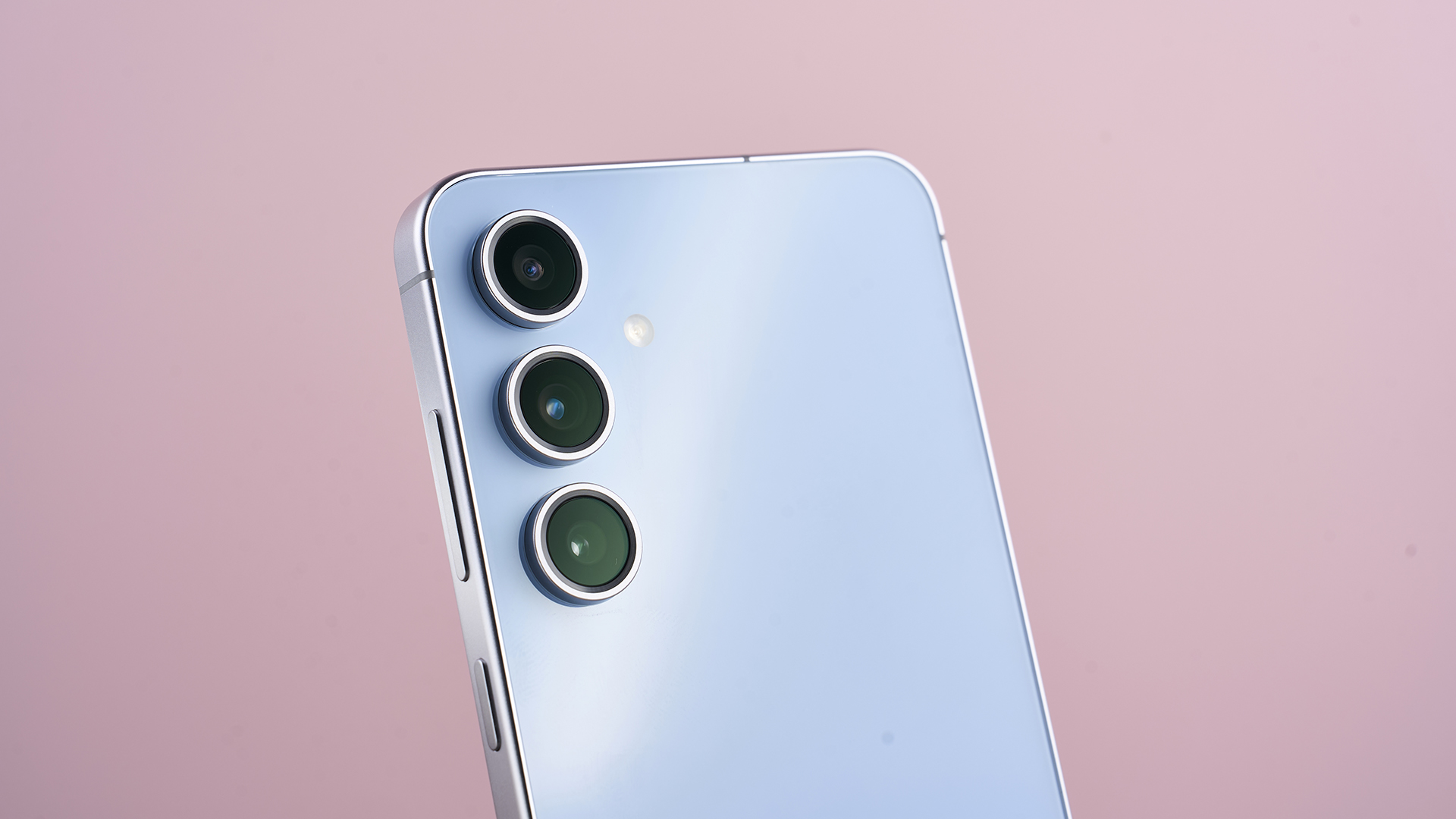
Rank 16275The Samsung Galaxy S25 FE could have the same rear cameras as its predecessorReportedly only the selfie camera is getting an upgradePrevious leaks suggest the chipset won't be much better either
It almost seems like Samsung might have a cap on how many interesting phones it can launch in a year, because having added a new and intriguing model to the mix in the form of the Samsung Galaxy S25 Edge, we’re now hearing that the Samsung Galaxy S25 FE might be a lot less desirable.According to GalaxyClub (via GSMArena), the Samsung Galaxy S25 FE will have almost identical cameras to its predecessor, with the phone said to once again have a 50-megapixel main camera, a 12MP ultra-wide, and an 8MP telephoto with 3x optical zoom.The only camera that will apparently be improved is the front-facing one, with this said to be 12MP – up from 10MP on the Samsung Galaxy S24 FE.So it sounds like the cameras will barely be an upgrade at all, and while a 50MP main sensor isn’t bad, an 8MP telephoto has no business being on an upper mid-range phone in 2025. Though as the article notes, the Galaxy S25 FE will at least have the Samsung Galaxy S25 Edge beat there, as that latter phone has no telephoto camera at all.
The chipset could disappoint too
The Samsung Galaxy S24 FE (Image credit: Future)
This isn’t the only disappointing rumored aspect of the Samsung Galaxy S25 FE though, as earlier reports point to it having either exactly the same Exynos 2400e chipset as the S24 FE, or more likely a slightly upgraded Exynos 2400 (without the ‘e’).Either way, that would be a step down from what you’ll find in the rest of the Samsung Galaxy S25 series, and even with the latter it wouldn’t be much of an upgrade on last year’s phone.So it seems like there might not be much reason to buy the Samsung Galaxy S25 FE if you already have a Galaxy S24 FE, and even if you’re coming from something much lower end, it could be hard to justify this over the standard Samsung Galaxy S25 unless this new FE is substantially cheaper.Whether it will be remains to be seen, but we’ll hopefully find out soon, as references to Samsung Galaxy S25 FE firmware have been spotted, suggesting that it might launch before too long. That said, the Samsung Galaxy S24 FE didn’t land until September of last year, so if the S25 FE follows a similar pattern it could still be quite a few months away.
You might also like
Best Samsung phones: top Galaxy handsets rankedSamsung Galaxy S25 Edge: price, design, cameras, and everything you need to knowSamsung Galaxy Z Flip 7: latest news, rumors, and everything we’ve heard so far
-
Picture from cdn.mos.cms.futurecdn.net
Rank 16276Evidence of a StandBy Mode for Android has been spottedIt would be enabled on locked, charging phonesThe iPhone equivalent was introduced with iOS 17 in 2023
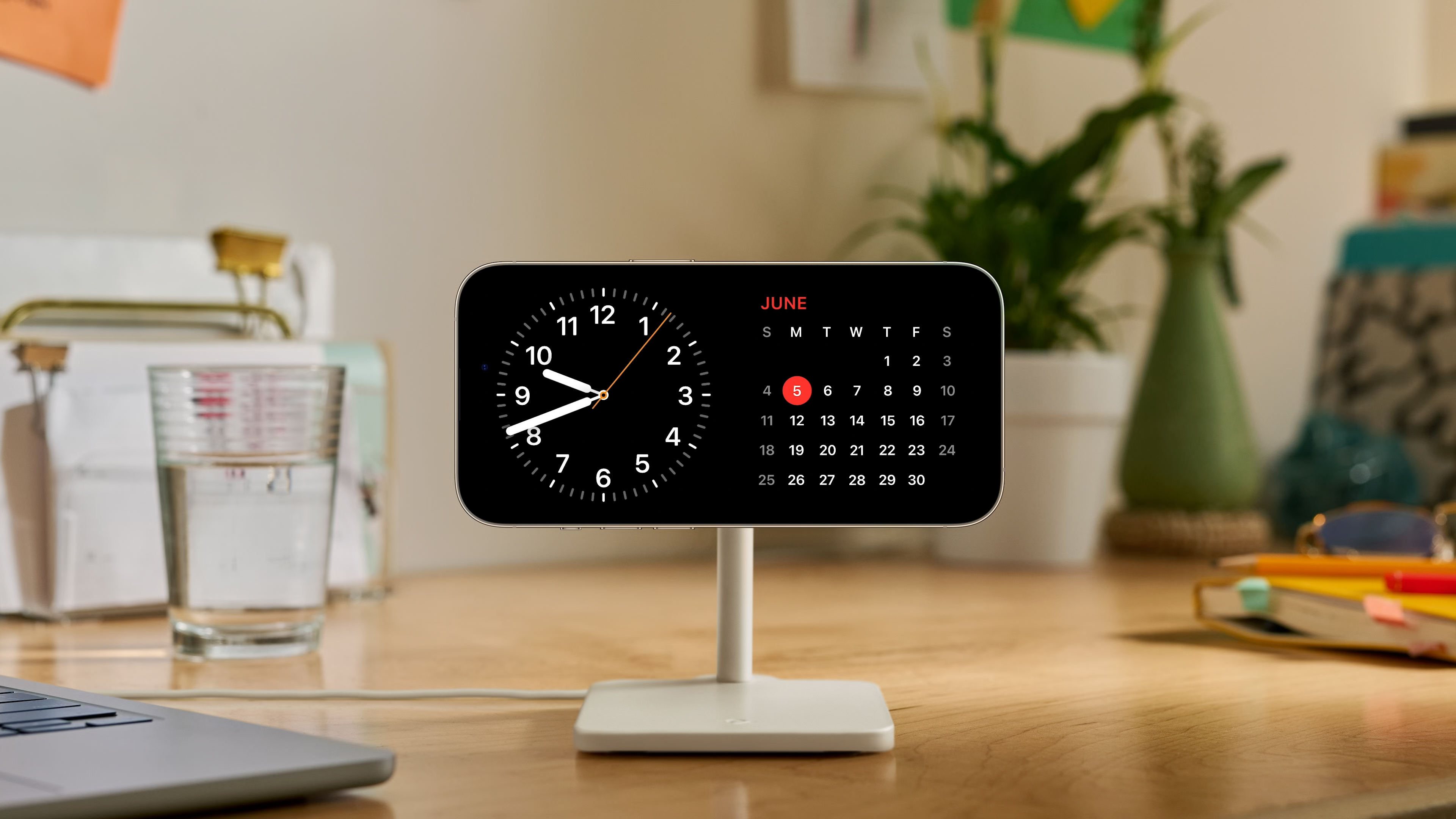
Android 16 could start to be pushed out to the masses within the next month, and signs of another imminent new feature have been spotted hidden in the platform code: a version of the iOS StandBy Mode for Google-powered phones.This has been spotted by Android Authority, and concerns code hidden in the Android 16 beta and Google Play Services. The key reference is to casting content from "standby-friendly" devices, which strongly suggests phones and tablets in standby mode.If you're not familiar with StandBy Mode on iOS, it shows a clock and other widgets on the iPhone screen when it's placed horizontally and being charged. Combine it with a MagSafe charger, and it essentially turns a locked iPhone into a smart display.While the evidence for Google doing something similar with Android 16 is pretty slight right now, it would make sense for something like this to be introduced: it's a handy feature to have, as has been shown by third-party StandBy Mode options for Android.
Chargers and hubs
The Pixel 9 will be one of the first phones in line for Android 16 (Image credit: Future)
Another piece of the puzzle is the Qi2 charging standard, which will bring a MagSafe-like wireless charging experience to Android phones. Support for this is limited right now, but more Qi2-ready Android phones are expected within the next year.It also looks as though Google is preparing to add a standby button to the Android interface, again as indicated by hidden code, and it looks as though the display setting will build on top of the existing Hub Mode available on the Google Pixel Tablet.Plenty more features are expected in Android 16, based on what Google has already told us, what's now available in the beta software, and what's been spotted in leaks. We know the software will come with an updated look, and new security and battery features.We're almost certainly going to hear more about Android 16 at the Google I/O 2025 event, which gets underway tomorrow, and will feature updates on AI, Android, Chrome, and more. You can get all the news from I/O right here on TechRadar, and watch along live.
You might also like
How Android 16 could install your apps fasterEverything we're expecting from Google I/O 2025Google teases an always-on display update
-

Picture from techcrunch.com
Rank 16277 -

Picture from ichef.bbci.co.uk
Rank 16278 -

Picture from ichef.bbci.co.uk
Rank 16279 -

Picture from cdn.mos.cms.futurecdn.net
Rank 16280Business Systems House was breached in SeptemberIt is a business partner of ADP, which serviced Broadcom at one pointNow, sensitive Broadcom files seem to have emerged on the dark web
Customers of the global semiconductor giant Broadcom have had their sensitive data leaked on the dark web after a two-step supply chain attack. Apparently, a company called Business Systems House (BSH), a human capital management (HCM) services provider from the Middle East, suffered a ransomware attack in September 2024, in which a group known as El Dorado (later rebranded as BlackLock), stole its files.This firm is a business partner of payroll company ADP which, in turn, worked with Broadcom. In fact, the chip giant was in the process of switching payroll providers when the incident happened, meaning it almost dodged that bullet.However, in December 2024, the two firms discovered the stolen data on the internet. “Because the data taken by the criminal actor was in an unstructured format, definitively determining which employees were impacted and, for each employee, which data fields were disclosed, was a lengthy process for BSH/ADP, and this information was not made available to Broadcom until May 12, 2025,” it was explained.
60% off for Techradar readersWith Aura's parental control software, you can filter, block, and monitor websites and apps, set screen time limits. Parents will also receive breach alerts, Dark Web monitoring, VPN protection, and antivirus.Preferred partner (What does this mean?)View Deal
El Dorado or BlackLock
According to The Register, who first broke the story, the attackers made away with the following data:
National ID numbersNational health insurance ID numbersHealth insurance policy/ID numbersFinancial account numbersDates of birthSalary detailsEmployment termination datePersonal email addressesPersonal phone numbersHome addresses
Broadcom urged everyone to turn on MFA and any other security settings that their financial institutions provide. Furthermore, it warned users to monitor their financial records.You’ll be forgiven for not knowing who El Dorado is. It is a relatively new ransomware operation, emerging in March 2024, and already rebranded to BlackLock. The files stolen from Broadcom were posted on the BlackLock leak site, as well. Allegedly, the group consists of Russian-speaking individuals.Broadcom serves a diverse range of customers across various industries, including technology, finance, healthcare, and telecommunications. Some of the biggest names include Apple, Samsung, Cisco, British Airways, and many others. ADP, The Register claims, is no worse, but so far, no one reported losing data.Via The Register
You might also like
Broadcom releases fixes for multiple VMware security flawsTake a look at our guide to the best authenticator appWe've rounded up the best password managers
-

Picture from ichef.bbci.co.uk
Rank 16281 -

Picture from ichef.bbci.co.uk
Rank 16282 -
Picture from cdn.mos.cms.futurecdn.net
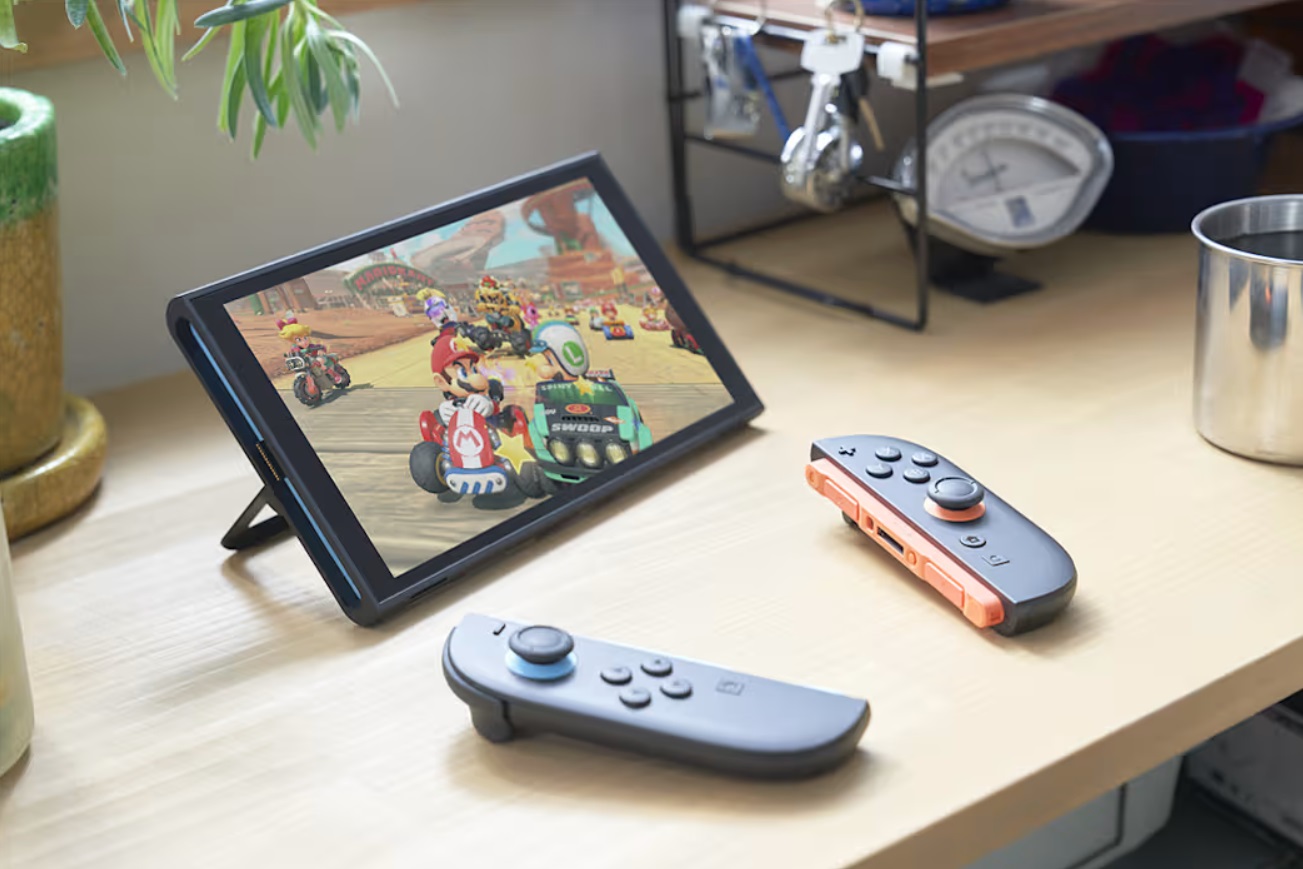
Rank 16283Nintendo Switch 2 will only support VRR using its built-in displayThis was confirmed in a recent statement from NintendoIt follows confusion about VRR support in docked mode
Nintendo has confirmed that the Nintendo Switch 2 will only feature variable refresh rate (VRR) support on its built-in display.This comes after the company quietly removed mentions of VRR support in docked mode from its US and Canada support websites. It was subsequently removed from the equivalent European support websites."The system also supports HDR, VRR, and frame rates up to 120 fps on compatible TVs," the website previously stated. This was updated to read: "The system also supports HDR, VRR, and frame rates up to 120 fps on compatible TVs."We already know that VRR is supported on the console's built-in screen, but this change left some potential purchasers wondering whether the system would in fact support VRR when it's in the dock.Nintendo has finally clarified the situation in a statement provided to NintendoLife. "Nintendo Switch 2 supports VRR in handheld mode only," the statement begins. "The incorrect information was initially published on the Nintendo Switch 2 website, and we apologise for the error."This could be bad news if you've already got your hands on one of the best gaming TVs or monitors, many of which offer VRR support. The technology dynamically adjusts the screen's refresh rate to match the frame rate of your games, reducing tearing and giving an overall impression of smoothness.It's supported by both the PlayStation 5 and Xbox Series X and Series S and has become a popular option for gamers with supported displays. In a title like Assassin's Creed Shadows, for example, we've found that enabling VRR leads to a much more pleasant experience.The Nintendo Switch 2 is set to launch on June 5, 2025. Both UK pre-orders and US pre-orders are live now.
You might also like...
Heading to Best Buy at midnight could be the fastest way to get your hands on a Nintendo Switch 2 come launch dayNintendo president says the Switch 2's lower than expected sales forecast is due to its high price, not US tariffsWhy is Nintendo Switch 2 so expensive? Analysts think the price of the console isn't the problem as software becomes a 'much harder sell'
-

Picture from ichef.bbci.co.uk
Rank 16284 -

Picture from cdn.mos.cms.futurecdn.net
Rank 16285A new report claims we won't see any AI Siri improvements at WWDC 2025One source claims Apple's AI strategy "is a crisis" while Bloomberg has seen internal data that shows Apple "remains years behind its competition"Apple is working internally on LLM Siri, which could bring the voice assistant up to speed with competitors
If you were excited about seeing Apple's AI-powered Siri at WWDC in June, think again. A new report claims we won't get a glimpse of any Apple Intelligence voice assistant improvements next month.According to Mark Gurman at Bloomberg, Apple's new Siri, which was previously expected to launch at the beginning of 2025, and instead was indefinitely delayed, will not be part of next month's WWDC keynote.Instead, Apple is expected to focus on new Apple Intelligence features, such as a rumored Battery Intelligence, which will help extend your device's battery life through the power of AI.It's claimed one senior member of Apple's AI team told Bloomberg, "This is a crisis," while another said Apple's AI strategy has been "sinking for a long time." Bloomberg says it has seen internal data which shows Apple "remains years behind its competition," despite an internal shakeup and a new approach to its Siri strategy.While we're unlikely to see anything related to Siri, it could be the case of "good things come to those who wait," as this in-depth report from Gurman gives a deeper insight into Apple's new AI strategy and the powerful tool the company is working on.
A new AI model incoming?
According to Bloomberg, "Employees say Apple now has its AI offices in Zurich creating a new software architecture to replace the problematic Siri hybrid—a so-called monolithic model, entirely built on an LLM-based engine, that would eventually make Siri more believably conversational and better at synthesizing information."That project is codenamed LLM Siri, and would be a major upgrade to the voice assistant compared to not only what we currently have on the best iPhones, but even in comparison to the initial promise Apple showcased at WWDC 2024.It's claimed Apple is training this LLM with synthetic data that allows the company to train the AI "without feeding actual user information into the models."At WWDC 2025, we can expect Apple to show improvements to Apple Intelligence, while "sources say the company, despite its hopes for LLM Siri, is also preparing to separate the Apple Intelligence brand from Siri in its marketing."Personally, I'm still optimistic Apple will turn its recent AI shortcomings around. If that means waiting longer for LLM Siri and functionality that allows me to truly harness the power of AI on my iPhone, then I'm willing to wait. Apple, don't let me down.
You may also like
Apple’s ‘AI crisis’ could mean EU users will have the option to swap Siri for another default voice assistantYou only need to see this screenshot once to realize why Gemini needs to follow ChatGPT in making its AI products less confusingI believed in Apple Intelligence, but Apple let me down
-

Picture from ichef.bbci.co.uk
Rank 16286 -

Picture from ichef.bbci.co.uk
Rank 16287 -

Picture from ichef.bbci.co.uk
Rank 16288 -

Picture from cdn.mos.cms.futurecdn.net
Rank 16289The triple-lens Nubia Z70S Ultra features a 35mm main cameraThe optional Z70 Series Retro Kit effectively transforms the phone into a Leica-like compact cameraThe kit features a grip, physical controls, and lens filters
Camera kits for smartphones are becoming a thing. They're designed to transform your phone into a compact camera-like device that's easier to use for photography – to see what I'm talking about, check out my long-term Xiaomi 15 Ultra review, in which I unpack Xiaomi's Photography Kit.Now Nubia has created its own take on the concept, with its Z70 Series Retro Kit. The kit is compatible with Nubia's flagship Z70 Ultra and Z70S Ultra phones, and of all the camera kits I've seen for phones I think it looks the part, even if it's cashing in on the Leica aesthetic.The new Z70S Ultra is already a retro-styled smartphone (see below, without the kit), with a silver-effect top and faux leather finish, available in Classic Black or Antique Brown. The Retro Kit takes things up a notch.I haven't used the Retro Kit yet, but adding it should transform the phone's handling into something akin to some of the best compact cameras like the Ricoh GR III, with the looks of a D-Lux 8.
The retro-styled Nubia Z70S Ultra phone, without the Retro Kit. (Image credit: Nubia)
Looking the part
The Nubia Z70S Ultra features a triple-camera unit, with the main camera being a slightly tighter-than-normal 35mm lens, which is complemented by a 2x telephoto lens and an ultra-wide macro optic.The phone is powered by a Snapdragon 8 Elite chip, features a large 6.85-inch AMOLED display, and packs a hefty 6,600mAh battery. Those are solid specs; but it's the phone's looks that set it apart.As I mentioned, the Z70S Ultra version is already a retro-styled handset, but by adding the optional Retro Kit you get a compact camera-style control layout too.There's the leather-style case with grip that should make even one-handed holding comfortable for photography, plus a tactile physical shutter that I would expect to give a lovely response for picture taking (see below).
Image 1 of 2The physical shutter should provide tactile feedback, while the control dial will likely put manual control at your fingertips. (Image credit: Nubia)Image 2 of 2Lens filters will come in the Retro Kit. (Image credit: Nubia)
Alongside the shutter button is a control dial that looks like it will offer various manual controls at your fingertips – the equivalent dial in the Xiaomi 15 Ultra photography kit can be used for manual exposure compensation.Finally, it looks like the case accepts lens filters over the camera unit. It's not clear what filters will be available, but further creative control options might be possible depending on what filters you can buy.The idea with these kits is that they can be added for times when you're taking a lot of pictures and videos, and then removed when you're using the phone for other things.The Nubia Z70 Series Retro Kit looks like it could be one of the best examples yet – I hope to get my hands on it for a proper test soon.
You might also like
I swapped my $3,000 camera for the Xiaomi 15 Ultra for a month – here's what I learnedLeica's new iPhone camera grip could have been great, but has 3 frustrating drawbacksThe best camera phone 2025: we've tested all the top smartphones for photos and video
-

Picture from ichef.bbci.co.uk
Rank 16290 -

Picture from ichef.bbci.co.uk
Rank 16291 -

Picture from ichef.bbci.co.uk
Rank 16292 -

Picture from ichef.bbci.co.uk
Rank 16293 -

Picture from ichef.bbci.co.uk
Rank 16294 -

Picture from ichef.bbci.co.uk
Rank 16295 -
Picture from cdn.mos.cms.futurecdn.net
Rank 16296The foldable iPhone is again rumored to have an under-display cameraWe're also hearing that it won't have Face IDIts screens could also be smaller than previously rumored
While the world learned to live with the iPhone’s notch, and matters improved when Apple switched to a Dynamic Island, ultimately, we’d wager that most people would prefer a smaller cut-out in the screen. Well, with the iPhone Fold – also known as the foldable iPhone – we might finally get that, and in fact, there might be no camera cut-out at all in one of the displays.This is according to leaker yeux1122, posting on South Korean site Naver (via GSMArena). According to them, Apple’s current foldable iPhone prototype has a punch-hole camera on the cover screen and an under-display camera for the foldable screen.Being under the display means it shouldn’t cause a visible interruption to the screen, and it’s something we’ve already seen on some phones, such as the Samsung Galaxy Z Fold 6, but never on an iPhone.This isn’t the first time we’ve heard talk of the foldable iPhone having an under-display camera, but hearing it again increases the likelihood that it will happen, and that could bode well for other iPhones too, as it might mean the days of a massive screen cut-out are numbered.
No Face ID to be found
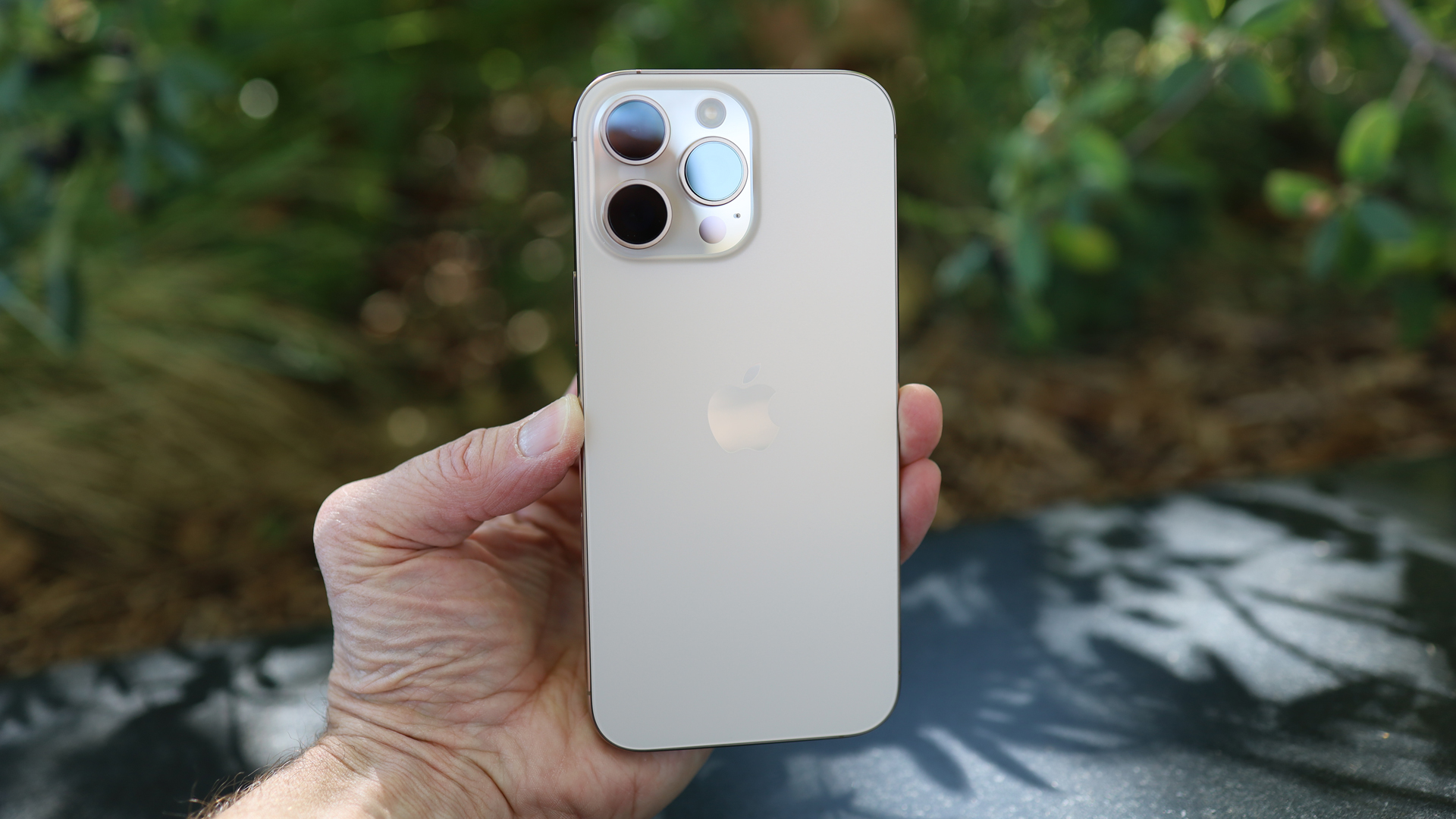
The iPhone 16 Pro Max (Image credit: Future / Lance Ulanoff)
That said, Face ID apparently won’t be under the display. In fact, according to this source, Face ID won’t be present at all, with the foldable iPhone instead said to have a Touch ID sensor on the side. This, too, is something we’ve heard before.Beyond that, yeux1122 claims that the screen size on this prototype is slightly smaller than on the previous prototype. They don’t specify what size it is here, but a fairly recent leak pointed to a 7.74-inch foldable display and a 5.49-inch cover screen.Apparently, though, the resolutions haven’t changed, despite a decrease in size, and yeux1122 adds that the foldable screen’s aspect ratio for this prototype is 14.6:1, while the cover screen’s is 14.1:1.Of course, even if these details are correct, it’s possible that things will change again in future prototypes, as with Apple not expected to launch the foldable iPhone until late 2026 at the earliest, the company quite possibly hasn’t yet finalized the design.
You might also like
iPhone Fold tipped to be an annual release and take flagship baton from Pro Max – with a price tag to matchThe iPhone 17 series could cost more than the iPhone 16 – and not just because of Trump's tariffsApple’s foldable iPhone tipped to have world-first display that eclipses the Galaxy Z Fold
-
Picture from cdn.mos.cms.futurecdn.net
Rank 16297Google Wallet has added a new security feature to protect your dataViewing anything in the app will require verification after three minutesThis previously only applied to making payments
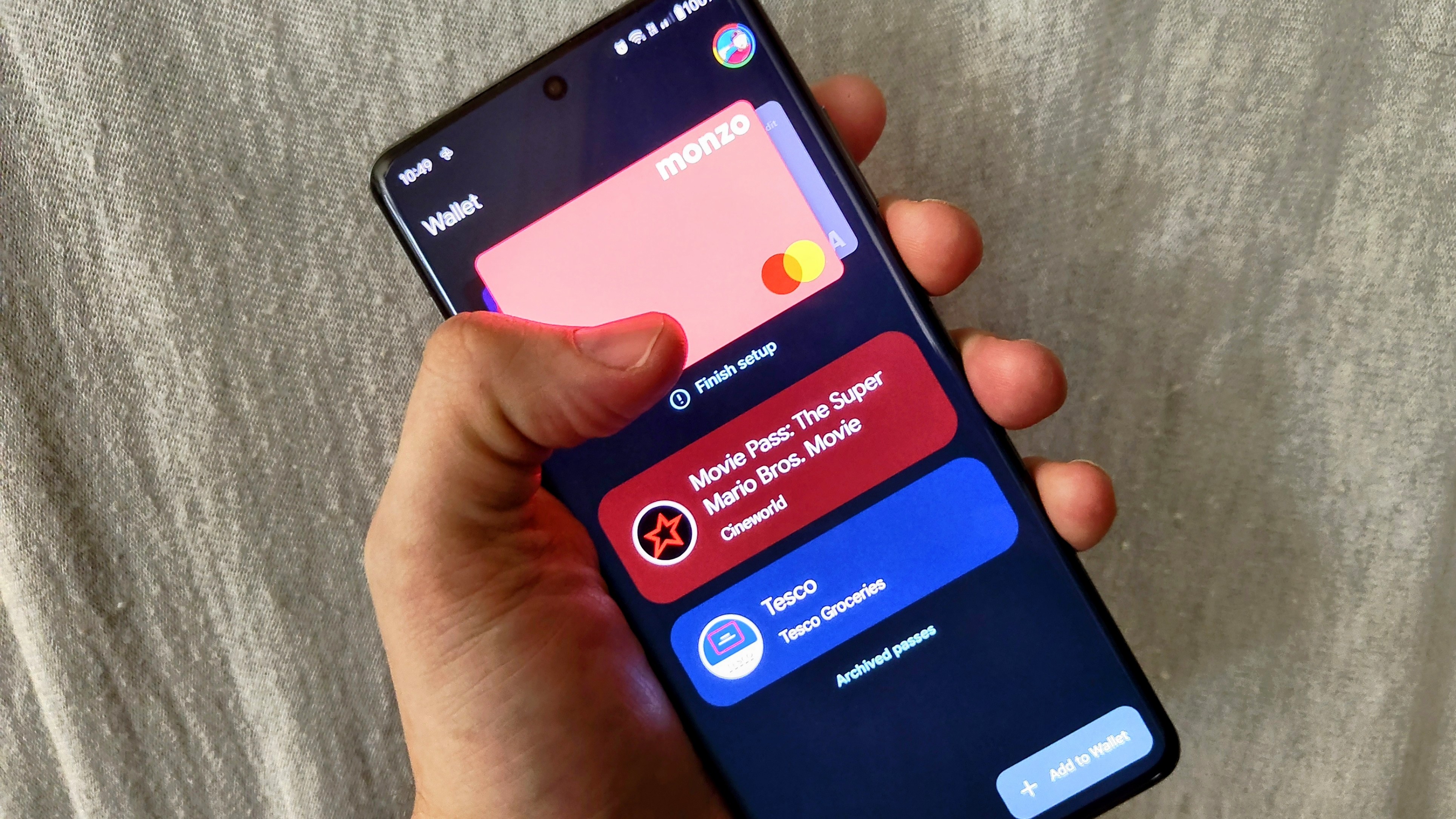
As digital wallets have grown in popularity, it’s become more important than ever that their security is certifiably rock solid. After all, the last thing you need is for your credit card details or identity documents to fall into the wrong hands.As spotted by 9to5Google, the Google Wallet app has made an adjustment intended to protect your security. Previously, if you attempted to pay for something using Google Wallet and three minutes had passed since you first opened the app, you’d be prompted to verify your identity using biometric info (like a fingerprint or a facial scan) or entering your passcode. Now, once three minutes are up, you’ll have to verify yourself if you want to use the app at all – even just viewing its home screen.This move protects anything stored in the Google Wallet app, including details of payment cards, tickets, identity documents, and more. It means that intruders won’t just be prevented from paying for things if they have unauthorized access to your device – they won’t be able to see anything in the app.9to5Google noticed the change in version 25.18 of the Google Wallet app on both Google Pixel and Samsung smartphones. The outlet said that the feature appears to be in testing but has been seen more frequently over time.It’s not the only security change that might be coming to Google Wallet. According to reports on Reddit, the Wear OS version of the app has been requiring some users to enter a PIN every time they make a contactless payment. One Reddit user was apparently told by Google support that “this is one of the security measures that Google will be taking to protect your transactions and your account privacy,” suggesting that it could be an intentional feature (rather than a bug) that might soon roll out to other users.
Stepping up security
(Image credit: Shutterstock / sdx15)
These days, digital wallet apps are used to store much more than just payment cards. You can carry around pretty much your entire identity on your smartphone, with items as trivial as loyalty cards and day passes sitting alongside vital documents like drivers’ licenses and credit cards. That means it’s more important than ever that digital wallets keep their contents safe.The wide variety of items that apps such as Google Wallet can store means you don’t just need protection from unauthorized users spending your hard-earned cash – you might not want them peeking at your identity documents either. With Google’s latest move, gaining access to that information could become harder for bad actors who have physical access to your device.However, there seems to be a slight lapse in that the latest change only asks for verification after three minutes. We conducted a brief and informal survey of TechRadar’s writers who own Android phones, and only one reported that Google Wallet asked for authentication when the app was first opened.Perhaps Google could improve its security further by requiring a PIN or biometric authentication when you first open Google Wallet, ensuring your cards are kept safe and secure no matter whether three minutes have passed or not.
You might also like
Google Wallet could soon let you add cards by tapping them on your phone, and I can’t believe this isn’t already a thingGoogle Wallet now lets you add passports, library cards, and health insurance, thanks to AIBest mobile payment app of 2025
-
Picture from o.aolcdn.com
Rank 16298NVIDIA's G-Sync will soon work with the latest Samsung OLED TVs for a better gaming experience on the big screen. The S95F series TVs, which the company introduced at CES, will be the first to get the update, and the rest of the 2025 OLED models will follow later this year. G-Sync compatibility is meant to help games run more smoothly on the TVs, making their refresh rates match the GPU's frame rate.
In the announcement, Kevin Lee, Executive VP of Samsung's Visual Display Customer Experience Team, said it'll bring "elite-level performance for even the most competitive players." Samsung started shipping its flagship S95F TVs in April alongside its other new OLED models, the S90F and S85F. Each comes in a handful of sizes, going up to 83 inches. The OLED lineup also offers AMD FreeSync Premium Pro support, Auto Low Latency Mode and AI Auto Game Mode, which is designed to tweak the picture and sound to best fit whatever game you're playing.
The announcement comes as Computex 2025 gets underway in Taiwan. The expo runs from May 20-23, and will focus heavily on AI this year.This article originally appeared on Engadget at https://www.engadget.com/gaming/samsungs-2025-oled-tvs-are-getting-nvidia-g-sync-compatibility-120033237.html?src=rss
-

Picture from cdn.mos.cms.futurecdn.net
Rank 16299Steam could soon appear in the Microsoft Store, a rumor claimsA leaker says the apps’ compatibility is being tested internallyIt backs up the idea that future Xboxes will be more like PCs than consoles
For years, gamers have suffered from the problem of platform fragmentation: with so many competing digital stores, from Steam to Epic to GOG and more, it’s not uncommon for users to have to maintain a huge slate of launchers and libraries in order to keep track of all their titles.But things could be about to get better in a small way, according to a recent leak from @eXtas1stv on X. The poster claimed (via a machine translation) that “Xbox has confirmed the internal tests to add Steam to the Microsoft Store.”In a linked video on YouTube, @eXtas1stv claimed that “Microsoft has just officially added the Steam application within the support software for its devices, appearing under the name of ‘Steam Developer Beta’.”The leaker added that “This, logically, is currently only available to certain employees and people who collaborate with Microsoft,” although they said it would be added to Microsoft’s Insider programs over time.They also said, “This integration will allow users to run Steam more smoothly and directly from Windows environments.”Interestingly, @eXtas1stv believes that future Xbox hardware will be more like a PC than a console, and that “everything is going to be developed around PC environments” – an idea we’ve seen before.These environments will need Steam integration, @eXtas1stv believes, and Steam will be available in the Microsoft Store in these upcoming devices. The Epic Games Store could also make an appearance in the Microsoft Store, according to @eXtas1stv’s video.
That syncing feeling
(Image credit: Steam)
However, we only really have @eXtas1stv’s word that Steam is being tested in the Microsoft Store, and we haven’t been able to get any direct proof that could confirm the claims made on X and YouTube. So, if Steam really is going to be integrated into the Microsoft Store, how would this work?One possibility has been floated by Notebookcheck, which is through backend linking. This would basically involve connecting your Steam account to the Microsoft Store, without the two platforms merging in any way. This is currently already used to link Steam with things like the EA app and Sony’s PlayStation platform, and this helps sync achievements and game progress.If there is any weight to @eXtas1stv’s claims, and Microsoft really is testing this with its Insider program, then we could see some evidence come to light over the coming weeks and months. Stay tuned for updates.
You might also like
The next Xbox could simply be a PC in a 'TV-friendly shell' per latest rumorFinally! Windows 11’s Microsoft Store will soon let you update non-Microsoft appsThe Epic Games store gained 25 million new users in 2024, with $2,229 of free games up for grabs throughout the year
-
Picture from o.aolcdn.com
Rank 16300LG's 27-inch 1440p UltraGear OLED monitor (model 27GX790A) is as close to gaming nirvana as fps-hungry players can get — for now, anyway. It has a 480Hz refresh rate, allowing it to actually display up to 480 fps for insanely fast-paced shooters, along with a low 0.03ms response time. And it supports DisplayPort 2.1, which offers higher bandwidth than typical DisplayPort 1.4 ports, so it doesn't need to use Display Stream Compression (DSC) like most other gaming displays. Together with NVIDIA G-Sync and AMD FreeSync Premium Pro technology, both of which will help to reduce screen tearing, the UltraGear 27 has pretty much everything you'd want in a high-end gaming display.
But given its high $1,000 retail price (though it's currently on sale for $800), the UltraGear 27 clearly isn't meant for most people. You'll absolutely need a powerful GPU and CPU to get close to seeing 480 fps in 1440p. And, let's be honest, very few people will even see the difference between 480Hz and more affordable 120Hz to 240Hz screens. The LG 27GX790A is for the true sickos.
I've tested plenty of high refresh rate screens in my time, from gaming laptops to a wide variety of monitors. I distinctly remember the excitement around 120Hz LCDs at CES 2010, and I definitely noticed the difference between those screens and standard 60Hz displays at the time. Shooters just looked smoother and felt more responsive. Then there was the leap to 240Hz screens, which was noticeable but not nearly as impressive as the arrival of OLED gaming displays with better black levels and astounding contrast.
Then came 360Hz screens, which, to be honest, didn't feel like a huge leap over 240Hz. Our eyes can only see so much after all, especially if you're moving beyond your peak gaming years. So I didn't really expect to be wowed by the UltraGear 27 — I figured it would be yet another solid OLED monitor, like the 27-inch 4K Alienware we recently reviewed.
But after spending plenty of time with the UltraGear 27 on my gaming PC, powered by an NVIDIA RTX 5090 and AMD's Ryzen 9 9950X3D, I noticed something strange. While I couldn't really see a major difference between its 480Hz screen and my daily driver, the 240Hz Alienware 32-inch QD-OLED, I could feel it.
Devindra Hardawar for Engadget
What's good about the LG UltraGear 27?
The first time the UltraGear 27 truly clicked for me — the point where I finally understood the hype around 480Hz displays — was during a Rocket League match. I noticed that the longer I played, the more I reached a flow state where I could easily read the position of the ball, re-orient the camera and zip off to intercept. It almost felt like there was a direct connection between what my brain wanted to do, and what was actually happening on the screen. I forgot about the Xbox Elite controller in my hand, and the desk clutter in my office. The real world melted away — I was fully inside Rocket League's absurd soccer arena. When the match ended, it took me a few minutes to reacclimatize to reality.
Rocket League's fast motion and lack of downtime made it the ideal introduction to super-high frame rates. I was also easily able to reach 480 fps in 1440p with my system's hardware, but you'll still easily be able to see upwards of 300 fps with older GPUs, especially if you bump down to 1080p. To be clear, this monitor is pretty much wasted on older and budget video cards.
I noticed a similarly transcendent flow state as I got back into Overwatch 2, a game I gave up on years ago. The UltraGear 27 shined best when I was playing fast-paced characters like Tracer, Genji and Lucio, since I had a better sense of space during heated matches. But it also helped with more accurate shots when sniping with the likes of Hanzo and Widowmaker.
Beyond the seemingly metaphysical benefits of its 480Hz screen, the UltraGear 27 is also simply a great OLED monitor. Black levels are wonderfully dark, and it can also achieve slightly brighter highlights (up to 1,300 nits) than most OLEDs in small areas. Graphically rich games like Clair Obscur: Expedition 33 practically leap off the screen, thanks to its excellent 98.5 percent DCI-P3 color accuracy. The UltraGear 27 doesn't use a QD-OLED screen like Alienware's latest models, but its color performance doesn't suffer much for it.
Devindra Hardawar for Engadget
If you've got a PlayStation 5 or Xbox Series X around, the UltraGear 27's two HDMI 2.1 ports will also let them perform at their best. While there are no built-in speakers, the display does include a headphone jack with support for DTS technology for spatial audio like most gaming monitors. It's also a 4-pole connection, so you can plug in headphones with microphones as well. For accessories, there are two USB 3.0 Type A ports, along with an upstream USB connection for your PC.
The UltraGear 27 doesn't look particularly distinctive when it's turned off, but it's hard to ask for much flair when it does so much right. Its nearly borderless bezel makes the screen practically float in the air, and you can also easily adjust its height and angle to suit your needs.
Devindra Hardawar for Engadget
What's bad about the UltraGear 27?
The biggest downside with the UltraGear 27 is its $1,000 retail price. While it's nice to see it already falling to $800, it's still absurdly high compared to most 27-inch 1440p monitors. If you want to save some cash, LG's 27-inch 240Hz UltraGear is still a very good option. But if you're in the market for a 480Hz display, you'll basically have to live with paying a ton. For example, ASUS's ROG Swift 27-inch OLED is still selling for $1,000.
Should you buy the UltraGear 27?
If you're an esports player, or a gamer who demands the highest framerates no matter the cost, the UltraGear 27 is an excellent OLED monitor. But I think most players would be perfectly fine with a cheaper 240Hz screen. Even if you can easily afford the UltraGear 27, it's also worth considering larger screens like the Alienware 32-inch 4K QD-OLED. You'll still get decently high frame rates, but you'll also get a screen that's more immersive for ogling the graphics in Clair Obscur.
Devindra Hardawar for Engadget
Wrap-up
With Samsung teasing a 500Hz OLED gaming screen, there's clearly still a demand for insanely high refresh rates. If you absolutely must have that fix, the UltraGear 27 was made for you. It has all of the benefits of OLED, and with the right title, it might help you achieve a new level of gaming transcendence.This article originally appeared on Engadget at https://www.engadget.com/gaming/lg-27-ultragear-oled-review-i-finally-get-the-480hz-gaming-hype-123042162.html?src=rss


