News
This constantly updated list features the latest and most important news articles, ranked in order of significance. The top stories highlight major developments, breaking news, and critical updates across various topics, ensuring you stay informed about the most pressing issues. As new articles are added, the list adapts to reflect the latest priorities, keeping the most impactful stories at the forefront. Whether it’s global events, technology breakthroughs, or industry trends, this dynamic list ensures you always have access to the most relevant and timely information.
-

Picture from ichef.bbci.co.uk
Rank 15201 -
Picture from o.aolcdn.com
Rank 15202Google I/O 2025 is still a week out, but Google shared a taste of the updates planned for Android and the larger Android Ecosystem it has in store this year in a separate event, dubbed The Android Show: I/O Edition.
Engadget followed along with the announcements as they happened in our liveblog, but for an overview, here are the changes Google has planned for Android, its visual design and Gemini.
Material 3 Expressive is making Android and Wear OS more fun
Google
Material Design, Google’s design language for Android and Android apps, has been slowly evolving for years at this point, but Material 3 Expressive should be the biggest departure yet, adding new animations, typography and colors.
Google believes these changes make Android and apps easier to understand, while making them more appealing to young people. Based on the screenshots and clips Google shared, using Material 3 Expressive on Android 16 and Wear OS 6 has made the OSes look bouncier, more playful and fun. On Android, that also comes with the ability to add more tools to Quick Settings and apps and widgets to your home screen app grid. How much of a difference the new design language actually makes in your day-to-day life will depend on how quickly developers adopt the new style.
Gemini is coming to even more places
Google
Google made Gemini the default assistant on Android and offered the multimodal generative AI's smarts on the web and iOS. Now the assistant is making the jump to even more of the surfaces Google already controls, including Wear OS, the wearable operating system used by Samsung’s Galaxy Watches and Google’s Pixel Watches, Google TV and Android Auto.
Gemini will be able to do all of the things Google Assistant could do, like setting timers or creating reminders, but with much more flexible, natural language interactions. In Android Auto and cars with Google Built-in, you’ll also be able to use Gemini Live, Google’s tool for having live conversations with the AI about whatever topic you choose.
Google TV will leverage Gemini for TV and movie recommendations across your favorite genres, along with the AI assistants basic ability to answer questions. You could ask it for recommendations for kid shows and get information about your favorite actor.
Android is getting new security features and the Find Hub
Google
A major component of each new version of Android is improved security features, and Google has a few new features planned for Android 16. The company says it's expanding its AI model for detecting spam texts and calls to account for new types of scams, like road toll scams.
The next version of Android will also make it possible to grant accessibility privileges on a call with an unknown contact, and a new Key Verifier tool makes it possible to swap encryption keys to verify the person you're talking to is who they say they are.
On top of those changes, Google is expanding its Find My Device network into the new Find Hub, which can track your Android devices, compatible accessories and trackers, all in one location. Devices in Find Hub will also be able to use your phone's satellite connectivity to make items findable even when you don't have cell service.This article originally appeared on Engadget at https://www.engadget.com/mobile/smartphones/everything-google-announced-at-the-android-show-174155773.html?src=rss
-

Picture from techcrunch.com
Rank 15203 -

Picture from ichef.bbci.co.uk
Rank 15204 -

Picture from ichef.bbci.co.uk
Rank 15205 -

Picture from techcrunch.com
Rank 15206 -
Picture from techcrunch.com
Rank 15207 -

Picture from ichef.bbci.co.uk
Rank 15208 -

Picture from ichef.bbci.co.uk
Rank 15209 -

Picture from ichef.bbci.co.uk
Rank 15210 -

Picture from cdn.mos.cms.futurecdn.net
Rank 15211Windows 11 has a new preview build in the Beta channelIt comes with an AI agent in Settings to help you change optionsAlso a new hardware-related FAQ has been introduced in Settings, too
Windows 11 has a new preview build out and it comes with a big change: the introduction of AI to the Settings app in order to help Copilot+ PC owners find and choose the options they need.This is a new piece of work Microsoft announced last week, but the company just said that it was coming to testing soon, at some stage this month. Well, that stage has now been set, and this ability has debuted in preview build 26120.3964 in the Beta channel.That preview release comes with the full AI agent present in Settings, although of course, this is just the initial stages of testing. Also note that this is for Copilot+ PCs only, it won’t be applicable to normal Windows 11 PCs, as it leverages the peppy NPU that’s on board Copilot+ devices. (Microsoft also revealed fresh goodies inbound for non-Copilot+ machines, it should be noted too).As I’ve covered before, the AI agent works via the usual query model. You type in what you’re looking for in Settings via a bar at the top of the panel using normal conversational language. For example, you could ask something like, “How do I put the YouTube video playing on my laptop onto my TV screen?” and the AI will find that relevant setting for screen mirroring.The idea is to make tweaking settings or finding various capabilities a good deal easier, and with some options, AI will even recommended specific choices for you.Another change to the Settings app in this preview build is a new hardware-related FAQ that provides info on your PC specs and how good they are. This nestles in the System > About panel within Settings, underneath the list of device specifications.The questions-and-answers specifically relate to your PC, so if you only have 8GB of RAM for example, and you’re worried that might slow down apps – or moreover PC games – there’ll be a section on exactly what that memory loadout means for you in terms of expected performance levels.
Analysis: PC spec cards and AI accuracy
(Image credit: Future)
This is the first time we’ve seen this hardware FAQ appear in testing, though oddly, it’s not partnered with the related ‘PC spec cards’ (small info panels) that carry the individual details of your CPU, GPU, system RAM and storage (which have been spotted in testing before, minus the FAQ).Presumably, these pieces of the puzzle are going to come together soon, delivering a useful extra for relative PC newbies who may not be so sure about what all these specs mean.As for the AI agent, it looks nifty and offers plenty of promise, but there are a few notable catches here. Firstly, AI could get things wrong when it comes to the specific recommendations given for certain settings (but hopefully not in terms of the basic finding and displaying of relevant options).So, we need to be cautious in that respect, and it’ll be interesting to see how accurate Windows 11 testers find the system, and what the initial feedback is – because this could be one of the best uses of AI Microsoft has found yet. Or the worst if it comes horribly off the rails, but Microsoft doesn’t appear overly ambitious here – yet – so that shouldn’t happen.Secondly, only the English language is supported by the Settings agent for now. Finally, just Copilot+ PCs with Snapdragon processors are supported in testing to begin with, but Microsoft has said the agent will come to Copilot+ devices with AMD and Intel CPUs soon enough. Perhaps that’ll be the next preview release, then.
You might also like...
Can’t upgrade to Windows 11? This Linux project wants to save your old PC from the scrapheap when Windows 10 support endsBeen hiding from Windows 11 24H2 due to the fuss about all the bugs? There’s nowhere to run now as Microsoft’s made the update compulsoryWindows 11 fully streamlined in just two clicks? Talon utility promises to rip all the bloatware out of Microsoft’s OS in a hassle-free way
-

Picture from cdn.mos.cms.futurecdn.net
Rank 15212Alibaba's ZeroSearch can generate training material for its AICost savings of up to 88% are possibleThe tech requires additional GPUs
Alibaba's Tongyi Lab has found a way to train AI search models without using real search engines, which it says can reduce search training costs by up to 88% compared to commercial APIs like Google.In a paper entitled "Incentivize the Search Capability of LLMs without Searching," Alibaba explains how the development uses simulated AI-generated documents to mimic real search engine outputs.Interestingly, Alibaba's researchers also note that using simulated documents can actually improve the quality of training, because "the quality of documents returned by search engines is often unpredictable" and risks introducing noise into the training process.
Alibaba will train AI search models on AI-generated documents
"The primary difference between a real search engine and a simulation LLM lies in the textual style of the returned content," the researchers wrote. ZeroSearch can also gradually degrade the quality of documents in order to simulate increasingly challenging retrieval scenarios.Of course, the key benefit to this technology is the significant cost saving available. Training with ZeroSearch's 14B model costs around $70.80 per 64,000 queries, compared with around $586.70 via Google's APIs. Costs are even lower for the 7B and 3B models, at $35.40 and $17.70 per 64,000 queries, and yet all three of the ZeroSearch models and the Google API method take the same amount of time.However, Alibaba acknowledged that one, two, or four A100 GPUs are required for its ZeroSearch method, compared with no GPU requirement via the Google API method, which could present a negative impact in terms of sustainability, like energy consumption and emissions."Our approach has certain limitations. Deploying the simulated search LLM requires access to GPU servers. While more cost-effective than commercial API usage, this introduces additional infrastructure costs," the researchers concluded.Still, challenging the reliance on expensive and gated platforms like Google Search APIs and reducing the costs could help democratize AI development even further.
You might also like
Apple is reportedly partnering with Alibaba in China for AI features, and it makes sense after DeepSeekWe've listed the best AI tools and best AI writers you can use todayCheck out the best laptops for programmers
-

Picture from ichef.bbci.co.uk
Rank 15213 -

Picture from ichef.bbci.co.uk
Rank 15214 -
Picture from o.aolcdn.com
Rank 15215The UK's House of Lords just voted to add an amendment to a data bill that mandates that tech companies disclose which copyright-protected works were used to train AI models, as reported by The Guardian. The amendment faced government opposition but resoundingly passed with 272 votes to 125.
The vote came just a few days after hundreds of artists and organizations joined together to urge the government not to "give our work away at the behest of a handful of powerful overseas tech companies." The artists involved in this push included Paul McCartney, Elton John and Dua Lipa, among many others.
Yesterday, the Lords asked the government to think again on the #DataBill, voting through changes on processing personal data, AI models, and the collection of sex data.⬇️ Find out more https://t.co/5T0A3BvCe6— House of Lords (@UKHouseofLords) May 13, 2025
The government's preferred position has been a provision that would force copyright holders to formally opt-out of being used to train AI models. Critics say this would be impractical and unworkable for many artists. The bill will now return to the House of Commons for another vote. If today's amendment is removed, it will likely lead to another confrontation with the House of Lords.
“The House of Lords has once again taken the right decision by voting to establish vital transparency obligations for AI companies," Sophie Jones, chief strategist for the British Phonographic Industry, told Billboard. "Transparency is crucial in ensuring that the creative industries can retain control over how their works are used.”
This isn't the first time the House of Lords has demanded tech companies make clear whether they have used copyright-protected material when training AI models. Back in January, the body voted 145 to 126 in favor of adding amendments to the bill aimed at strengthening copyright protections.
"Creators do not deny the creative and economic value of AI, but we do deny the assertion that we should have to build AI for free with our work, and then rent it back from those who stole it," Baroness Beeban Kidron of the House of Lords said during a debate before this week's vote.
There are some signs that Prime Minister Starmer is backing off the proposed "opt-out" idea that would force creators to petition AI companies not to use their work. The government recently added its own amendments to the data bill that include a commitment to conduct an economic impact assessment and to publish reports on transparency with regard to licensing. Technology secretary Peter Kyle has been looking into a new proposal that would, instead, create a licensing system for copyright holders and AI developers, according to a report by The Telegraph.This article originally appeared on Engadget at https://www.engadget.com/ai/the-uks-house-of-lords-kicks-back-bill-that-let-ai-train-on-copyrighted-content-181540558.html?src=rss
-

Picture from ichef.bbci.co.uk
Rank 15216 -
Picture from o.aolcdn.com
Rank 15217In an increasingly competitive EV landscape, Toyota hopes its newly redesigned and renamed Toyota bZ can stand out. As brands from Subaru to Volkswagen continue to expand all-electric offerings, Toyota is placing its bets on a single EV model for the American market.
The change in name may be partly in hopes of distancing the new model in consumers’ minds from the original bZ4X, which began stateside sales in 2022, only to be met with recalls and buybacks.
Toyota, for its part, states in a press release that the branding change is just “simplifying the name for customers.” Toyota is hoping for a fresh start and has brought several key improvements to the table.
The new bZ will have an estimated range of 314 miles, up from just 252 in the previous model. There is also a significant horsepower boost for all-wheel drive models, reaching 338 hp, and a modest 20-hp boost for front-wheel drive models, measuring in at 221 hp.
This model will come equipped with the now-standardized North American Charging Standard (NACS) outlet, first developed by Tesla. This brings fast-charging capability to the new bZ, which Toyota says will allow it to charge from 10 percent to 80 percent in about 30 minutes.
Toyota has also brought a number of other improved creature comforts and new features to this second-gen model including an updated X‑MODE system with Grip‑Control for improved off‑road traction.
The bZ’s price at launch is set to be somewhere between $37,000 and $42,000, depending on the trim and configuration. This positions the model to compete with other smaller all-electric SUVs like the Tesla Model Y.
Toyota expects the new bZ to begin arriving at Toyota dealerships in the back half of 2025.This article originally appeared on Engadget at https://www.engadget.com/transportation/evs/toyota-hopes-for-a-smoother-start-with-its-redesigned-bz-all-electric-suv-182426253.html?src=rss
-
Picture from cdn.mos.cms.futurecdn.net
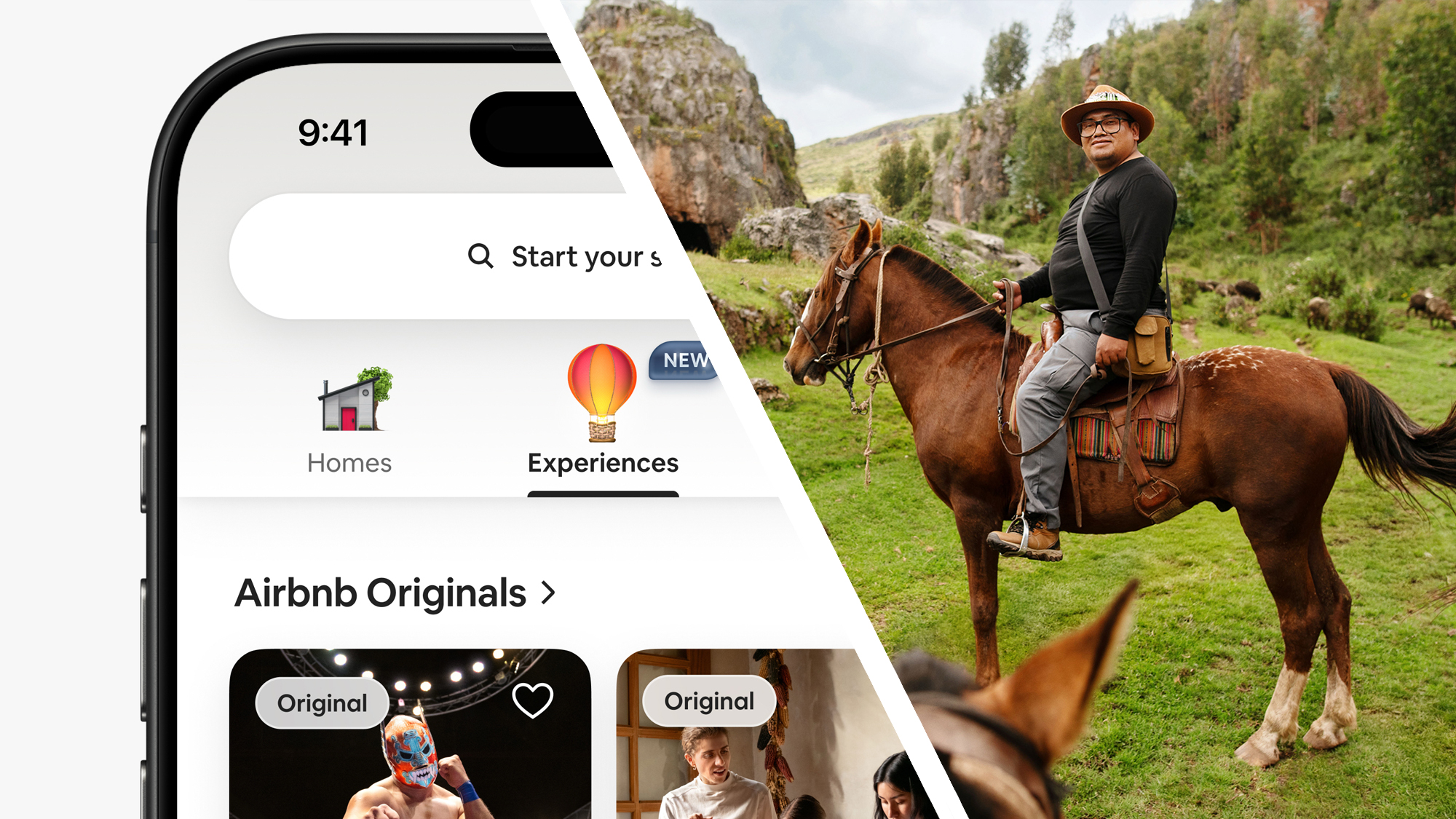
Rank 15218Airbnb has been a disruptor since it hit the scene in 2007. Now, at its annual Summer Release event, it’s redesigning its app to make navigating easier and ultimately leveling up what you might expect from a stay at one of its many properties worldwide.For instance, while you get a bit more space with an Airbnb, you might lose out on some amenities, be it a gym, an attached restaurant, or even some self-care. The tech company's answer is dubbed Airbnb Services, essentially a way to book a service like a massage, a haircut, or even a chef to arrive at wherever you’re staying.That aims to fill in the missing gap of what you might get from a hotel, but it also gives you, the visitor, a bit more control, with the option of looking through the available options and picking the ones that fit your needs the most.Similarly, Airbnb Experiences aims to replace the mundane with memorable, allowing you to book activities from locals in the cities where you stay to get the most out of them. These seem especially fun, and at a launch event, Airbnb certainly brought out the talent to up this.Then, tying this all together is a redesign app that looks a lot easier to navigate and acts more like a helpful companion. If you have a stay booked, as well as services or experiences, it can bundle them as an itinerary for you, listing important reminders.
1. Book a haircut, massage, or a catered meal with Services
(Image credit: Airbnb)
Services seem like the most approachable addition, and probably one of the most requested. Rather than finding out if the host approves of a third-party, Airbnb handles the vetting and will offer 10 categories of services at launch. Those include chefs, photographers, massages, spa treatments, personal training, hair treatments, makeup, nails, prepared meals, and catering.It’ll launch in 260 cities across the globe at first and lives directly in the Airbnb app – there is an entire ‘services’ category at the top, and after you book a location, or are considering, you can see recommended services.Airbnb is vetting the service providers and promises that each has around 10 years of experience in the respective industry. Additionally, each instructor or provider has to go through a verification process and list out applicable trainings or certifications.
(Image credit: Airbnb)
Services will start at $50 in the US (we’re waiting for exact starting prices to be confirmed in the UK and Australia, but that converts to around £40 / AU$80) and are rolling out now. Airbnb is also encouraging providers to apply to become hosts for services on the platform.The real kicker here, though, and one that potentially could have TaskRabbit concerned, is that you don’t need to book an Airbnb home for a stay to use Services or Experiences (more on this in a bit).If you need a photographer for a birthday party or a shower, you could fire up Airbnb on your iPhone or Android phone, look through reviews, and hire a professional. Same for a hibachi chef for a girls' night out – at an Airbnb or in your own home – or for a caterer specializing in soup dumplings.
2. Memorable moments dubbed Experiences
(Image credit: Airbnb)
Next to Services up-top in the Airbnb app will be ‘Experiences’ with a hot-air balloon icon. And similar to the 'Icons' homes that Airbnb lets folks enter to win a stay in – like the house from Up or the control room from Inside Out – Experiences is a bit more pie-in-the-sky, in the best way possible.These are unique activities run by folks from where you’re staying that aim to let you really immerse yourself in the locale. It could be a cooking class or a dining experience, but rather than just a meal at a restaurant, it’s interactive and potentially led by a Michelin-star chef, or you can freshen your wardrobe with a celebrity stylist.
(Image credit: Airbnb)
Similarly, rather than just visiting a historical place, you can be led through the site with a dedicated historian or take a workout class with an expert in that specific field. The idea is to have true experts for a more compelling, well, experience.Experiences will be launched in 650 cities worldwide, and Airbnb says that will be expanding. There will also be a higher tier dubbed Airbnb Originals, which the company promises could lead you to eating barbecue with Patrick Mahomes in Kansas City or playing volleyball with an Olympian. There’s no word on pricing for these, but I suppose these might be more similar to Airbnb Icons, in that you enter for the chance to use these.More likely, you’ll find yourself with the more standard Airbnb experiences, which aim to be more than just standard.
3. App redesign
(Image credit: Airbnb)
Helping to make all of these more appealing, and honestly more integrated into the booking of an Airbnb – maybe a beach bungalow, a fancy loft, or a classic cabin – the app is also getting smarter in some key ways. The layout aims to make this flow a bit easier, and for the app to act as a companion serving up reminders and suggestions.The biggest change, though, is that Airbnb now allows users to search for properties worldwide alongside the best services and experiences all in one place. Under the hood, Airbnb says it’s built an entire new tech stack that adds capacity for these new offerings and sets up a large runway for the future.And I think that hints at the broader play here – Airbnb doesn’t want to be an app you open once or twice a year for a big vacation or trip. Rather, it’s there and is an app with more tools in its chest, allowing you to book more casual everyday services but also more memorable ones, whether you’re on the go or for a staycation.Carolina Milanesi, President and Principal Analyst at Creative Strategies, told TechRadar, “Expanding into services makes a great deal of sense as it allows for a richer experience than the stay itself and can certainly add to it by adding a more visceral component to the stay – say you are using a personal trainer while you travel or organizing a photographer for your girls reunion weekend. The option of booking even when you are not staying shows they are trying to expand and deepen the relationship with a customer by having multiple touch points through the year.”It certainly adds up, and this could grow Airbnb’s user base as well. We’re going hands-on with the new app, and maybe even an experience or two soon, so we’ll report back with more. But if you’re keen to give it a go, update to the latest version of the Airbnb app now.
You might also like
United Airlines just unveiled its next-gen cabin with new Polaris seats – here are the biggest changesI spent time with the Galaxy S25 Edge and it's the phone for Samsung fans who complain about Samsung phonesThe best travel headphones 2025, chosen by our jet-setting reviewers
-

Picture from techcrunch.com
Rank 15219 -
Picture from o.aolcdn.com
Rank 15220President Donald Trump's administration has undone one of the last regulations set by his predecessor. Today, the Department of Commerce rescinded the AI Diffusion Rule implemented by former President Joe Biden, a policy that restricted the export of US-made AI chips to select international markets. The rule was introduced by Biden's administration in January and slated to take effect on May 15. Trump had previously walked back the broader AI guidelines adopted by Biden in October 2023 as part of his initial wave of executive orders upon taking office.
Although the Department of Commerce is not enforcing the previous AI Diffusion Rule, the Bureau of Industry and Security said it will release a replacement policy at a later date. The press release included three additional actions from the BIS:
"Issuing guidance that using Huawei Ascend chips anywhere in the world violates US export controls.
"Issuing guidance warning the public about the potential consequences of allowing US AI chips to be used for training and inference of Chinese AI models.
"Issuing guidance to US companies on how to protect supply chains against diversion tactics."
This sector may become increasingly relevant to the US's international affairs, including ongoing tariff negotiations with China and potential deals in the Middle East. NVIDIA may be the bellwether for the current administration's approach to the exports of AI infrastructure. The company revealed last month that the federal government is requiring a license for the export its H20 chips to some regions, including China, Macau, Hong Kong and countries designated as D:5 under the US Arms Embargo.This article originally appeared on Engadget at https://www.engadget.com/ai/president-bidens-rule-restricting-us-ai-chip-exports-has-been-rescinded-183935847.html?src=rss
-
Picture from o.aolcdn.com
Rank 15221TikTok hasn't shoved generative AI features into every corner of its app the way Meta has with Instagram, but the company has still experimented with the tech in some interesting — if slightly unsettling — ways. Now, TikTok is introducing a new AI-powered feature that feels even more meme-worthy. It's called AI Alive and it allows users to create short, stylized video clips from a static image.
Right now, the feature only exists for TikTok's Stories feature, so it's meant for more ephemeral sharing than what you might typically post on the app. You start with a still image Stories post (accessed from the app's inbox) and choose the new "AI Alive" option, which prompts you to "make this photo come alive." TikTok will surface suggested prompts, but you can also come up with your own.
You can see the feature in action in the video below. In all three cases, I started with an image of my cat standing on a railing and used prompts suggested by TikTok. The first was "bring this to life as an anime," the second was for him to walk "carefully" along the railing and the last was "style this like a retro game."
As you can see in the clip, the results were somewhat mixed. The anime-esque effect came out a bit creepy and erased my cat's tabby stripes, though I suppose it more or less aligned with the prompt. The second animation also looks a bit odd: there are numerous AI artifacts and my cat's tail and paws look unnatural. The final "retro game" style clip, though, is downright baffling. Why did TikTok's AI decide that my cat should hold up two comically huge wine glasses? Nothing about it evokes any video game I've ever played.
Still, like many generative AI features, it's a fun novelty and I can see TikTok users having a lot of fun coming up with their own, probably bizarre, creations.This article originally appeared on Engadget at https://www.engadget.com/social-media/tiktok-just-added-an-ai-powered-image-to-video-feature-and-it-did-some-weird-things-to-my-cat-184630740.html?src=rss
-

Picture from ichef.bbci.co.uk
Rank 15222 -
Picture from o.aolcdn.com
Rank 15223The adventure game Marvel 1943: Rise of Hydra has been delayed until 2026, according to a statement by publisher Skydance Games. The title was supposed to come out sometime this year.
What's the reason for the delay? The publisher says it's to "add more polish," which is never a bad thing. I'd rather a fully-finished game upon release than a buggy mess. The company does say it'll be available in the early part of 2026, so that isn't too long to wait. Still, it's disappointing news for eager Marvel fans.
Marvel 1943: Rise of Hydra is a narrative-driven adventure game with four playable characters, including long-time icons like Black Panther and Captain America. As the name suggests, it's set during World War II in occupied Paris.
It's being developed by Amy Hennig and her new studio, which is a subsidiary of Skydance. If her name sounds familiar, that's because she's best known for being a creative director and writer at Naughty Dog. Hennig was the lead writer on all three Uncharted games and was creative director for the Legacy of Kain franchise. She's got a fantastic pedigree, so this new Marvel game could be a heavy hitter.This article originally appeared on Engadget at https://www.engadget.com/gaming/amy-hennigs-marvel-1943-rise-of-hydra-is-delayed-to-2026-185945301.html?src=rss
-

Picture from techcrunch.com
Rank 15224 -

Picture from techcrunch.com
Rank 15225 -
Picture from o.aolcdn.com
Rank 15226YouTube will be streaming an exclusive NFL game in its entirety for free worldwide for the first time ever. After becoming the official home of NFL Sunday Ticket in 2023, YouTube has been pushing to expand its reach in the high-stakes, multibillion-dollar world of NFL coverage and broadcast rights.
The Google-owned streaming company has secured the exclusive rights to broadcast one of the NFL’s opening week games on Friday September 5 live from Brazil. The São Paulo spectacle will take place the day after the Thursday night NFL KickOff game between the Eagles and the Cowboys. The 2025 NFL regular season will feature seven international games, a record for the league.
In an NFL press release, YouTube’s chief business officer Mary Ellen Choe said, "Streaming the Friday night game to fans for free around the world will mark YouTube's first time as a live NFL broadcaster – and we'll do it in a way that only YouTube can, with an interactive viewing experience and creators right at the center of the experience."
Last year, fellow streaming giant Netflix streamed its first live NFL games on Christmas Day as part of a three-year deal with the league, though Netflix doesn’t have a NFL specific product to sell its customers like YouTube has with NFL Sunday Ticket.
In the press release announcing YouTube’s coverage of Week 1 from Brazil, Mary Ellen Choe discussed the reach of NFL games on YouTube, saying, "Last year, people spent over 350 million hours watching official NFL content on YouTube, so it's both fitting and thrilling to continue to build our relationship with our partners at the NFL."
This expanded partnership comes against the backdrop of other team-ups between YouTube and the NFL aside from NFL Sunday Ticket, namely a multi-year deal for the annual Super Bowl Flag Football game as well as additional international flag football games.
The exact cost for the broadcast rights to the Brazil game is not known at this time, though it’s known that YouTube is paying over $2 billion per year over a seven-year deal for NFL Sunday Ticket.This article originally appeared on Engadget at https://www.engadget.com/entertainment/youtube/youtube-will-exclusively-stream-an-nfl-game-for-free-191519460.html?src=rss
-

Picture from ichef.bbci.co.uk
Rank 15227 -

Picture from ichef.bbci.co.uk
Rank 15228 -
Picture from o.aolcdn.com
Rank 15229In just a week, Google's annual developer conference will kick off on May 20. The event is probably the most important on the company's calendar, offering a glimpse at everything it has been working on over the past year.
From the rumors and even information Google has trickled out, I/O 2025 should be one of the more exciting tech keynotes in recent memory. Plus, for the first time, Google has spun out a dedicated Android showcase planned a whole week earlier. That just happened today (May 13), and you can check out everything that was announced at the Android Show or go to our liveblog to get a feel for how things played out.
Now that the Android Show is over, it's time to look ahead to I/O, where the focus will almost definitely be about AI. We've gathered the most credible reports and leaks to put together this roundup of what to expect, and though most of the Android-related announcements have been made, it's still possible that Google shares more details about its mobile platform next week.
If you'd like to tune in from home and follow along as Google makes its announcements, check out our article on how to watch the Google I/O 2025 keynote. We'll also be liveblogging the event, so you can just come to Engadget for the breaking news.
Android 16
Some of my favorite I/O moments involved watching Dave Burke take to the Shoreline stage to talk about the latest updates for Android. But for the past couple of years, Android hasn't had much of a spotlight at Google's annual developer conference. That's about to change, with the company's dedicated showcase during today's Android Show: I/O Edition.
Get a front row seat to The Android Show: I/O Edition 🍿 May 13, 10 AM PT. Meet our team and learn about new experiences coming to Android. Set a reminder and be the first in the know → https://t.co/z8QLNSYkl6 #TheAndroidShow pic.twitter.com/RTzTOwUtFN— Android (@Android) April 28, 2025
The presentation featured Android Ecosystem President Sameer Samat, who took over for Burke in 2024. We saw Samat and his colleagues show off the new Material 3 Expressive design, and what we learned confirmed some of the features that were previously leaked, like the "Ongoing notifications" bar. Material 3 Expressive is also coming to Wear OS 6, and the company is expanding the reach of Gemini by bringing it to its smartwatch platform, Android Auto and Google TV. Android 16 will also come with new scam-detection features and a refined Find Hub that will see support for satellite connectivity later in the year.
Speaking of timing, Google has already confirmed the new operating system will arrive sometime before the second half of the year. Though it did not release a stable build of Android 16 today, Samat shared during the show that Android 16 (or at least part of it) is coming next month to Pixel devices. And though the company did cover some new features coming to Android XR, senior director for Android Product and UX Guemmy Kim said during the presentation that "we'll share more on Android XR at I/O next week."
It clearly seems like more is still to come, and not just for Android XR. We didn't get confirmation on the Android Authority report that Google could add a more robust photo picker, with support for cloud storage solutions. That doesn't mean it won't be in Android 16, it might just be something the company didn't get to mention in its 30-minute showcase. Plus, Google has been releasing new Android features in a quarterly cadence lately, rather than wait till an annual update window to make updates available. It's possible we see more added to Android 16 as the year progresses.
One of the best places to get an idea for what's to come in Android 16 is in its beta version, which has already been available to developers and is currently in its fourth iteration. For example, we learned in March that Android 16 will bring Auracast support, which could make it easier to listen to and switch between multiple Bluetooth devices. This could also enable people to receive Bluetooth audio on hearing aids they have paired with their phones or tablets.
Android XR
Remember Google Glass? No? How about Daydream? Maybe Cardboard? After sending (at least) three XR projects to the graveyard, you would think even Google would say enough is enough. Instead, the company is preparing to release Android XR after previewing the platform at the end of last year. This time around, the company says the power of its Gemini AI models will make things different. We know Google is working with Samsung on a headset codenamed Project Moohan. Last fall, Samsung hinted that the device could arrive sometime this year.
Whether Google and Samsung demo Project Moohan at I/O, I imagine the search giant will have more to say about Android XR and the ecosystem partners it has worked to bring to its side for the initiative. This falls in line with what Kim said about more on Android XR being shared at I/O.
AI, AI and more AI
If Google felt the need to split off Android into its own showcase, we're likely to get more AI-related announcements at I/O than ever before. The company hasn't provided many hints about what we can expect on that front, but if I had to guess, features like AI Overviews and AI Mode are likely to get substantive updates. I suspect Google will also have something to say about Project Mariner, the web-surfing agent it demoed at I/O 2024. Either way, Google is an AI company now, and every I/O moving forward will reflect that.
Project Astra
Speaking of AI, Project Astra was one of the more impressive demos Google showed off at I/O 2024. The technology made the most of the latest multi-modal capabilities of Google's Gemini models to offer something we hadn't seen before from the company. It's a voice assistant with advanced image recognition features that allows it to converse about the things it sees. Google envisions Project Astra one day providing a truly useful artificial assistant.
However, after seeing an in-person demo of Astra, the Engadget crew felt the tech needed a lot more work. Given the splash Project Astra made last year, there's a good chance we could get an update on it at I/O 2025.
A Pinterest competitor
According to a report from The Information, Google might be planning to unveil its own take on Pinterest next week. That characterization is courtesy ofThe Information, but based on the features described in the article, Engadget team members found it more reminiscent of Cosmos instead. Cosmos is a pared-down version of Pinterest, letting people save and curate anything they see on the internet. It also allows you to share your saved pages with others.
Google's version, meanwhile, will reportedly show image results based on your queries, and you can save the pictures in different folders based on your own preferences. So say you're putting together a lookbook based on Jennie from Blackpink. You can search for her outfits and save your favorites in a folder you can title "Lewks," perhaps.
Whether this is simply built into Search or exists as a standalone product is unclear, and we'll have to wait till I/O to see whether the report was accurate and what the feature really is like.
Wear OS
Last year, Wear OS didn't get a mention during the company's main keynote, but Google did preview Wear OS 5 during the developer sessions that followed. The company only began rolling out Wear OS 5.1 to Pixel devices in March. This year, we've already learned at the Android Show that Wear OS 6 is coming, with Material 3 Expressive gracing its interface. Will we learn more at I/O next week? It's unclear, but it wouldn't be a shock if that was all the air time Wear OS gets this year.
NotebookLM
Since 2023, Google has offered NotebookLM on desktop. The note-taking app uses machine learning for features like automated summaries. Based on App Store and Google Play listings, the company is getting ready to release a mobile version of the service on the first day of I/O 2025.
Everything else
Google has a terrible track record when it comes to preventing leaks within its internal ranks, so the likelihood the company could surprise us is low. Still, Google could announce something we don't expect. As always, your best bet is to visit Engadget on May 20 and 21. We'll have all the latest from Google then along with our liveblog and analysis.
Update, May 5 2025, 7:08PM ET: This story has been updated to include details on a leaked blog post discussing "Material 3 Expressive."
Update, May 6 2025, 5:29PM ET: This story has been updated to include details on the Android 16 beta, as well as Auracast support.
Update, May 8 2025, 3:20PM ET: This story has been updated to include details on how to watch the Android Show and the Google I/O keynote, as well as tweak the intro for freshness.
Update, May 13 2025, 3:22PM ET: This story has been updated to include all the announcements from the Android Show and a new report from The Information about a possible image search feature debuting at I/O. The intro was also edited to accurately reflect what has happened since the last time this article was updated.This article originally appeared on Engadget at https://www.engadget.com/ai/google-io-2025-what-to-expect-including-gemini-ai-android-16-updates-android-xr-and-more-203044563.html?src=rss
-

Picture from ichef.bbci.co.uk
Rank 15230 -

Picture from ichef.bbci.co.uk
Rank 15231 -
Picture from cdn.mos.cms.futurecdn.net
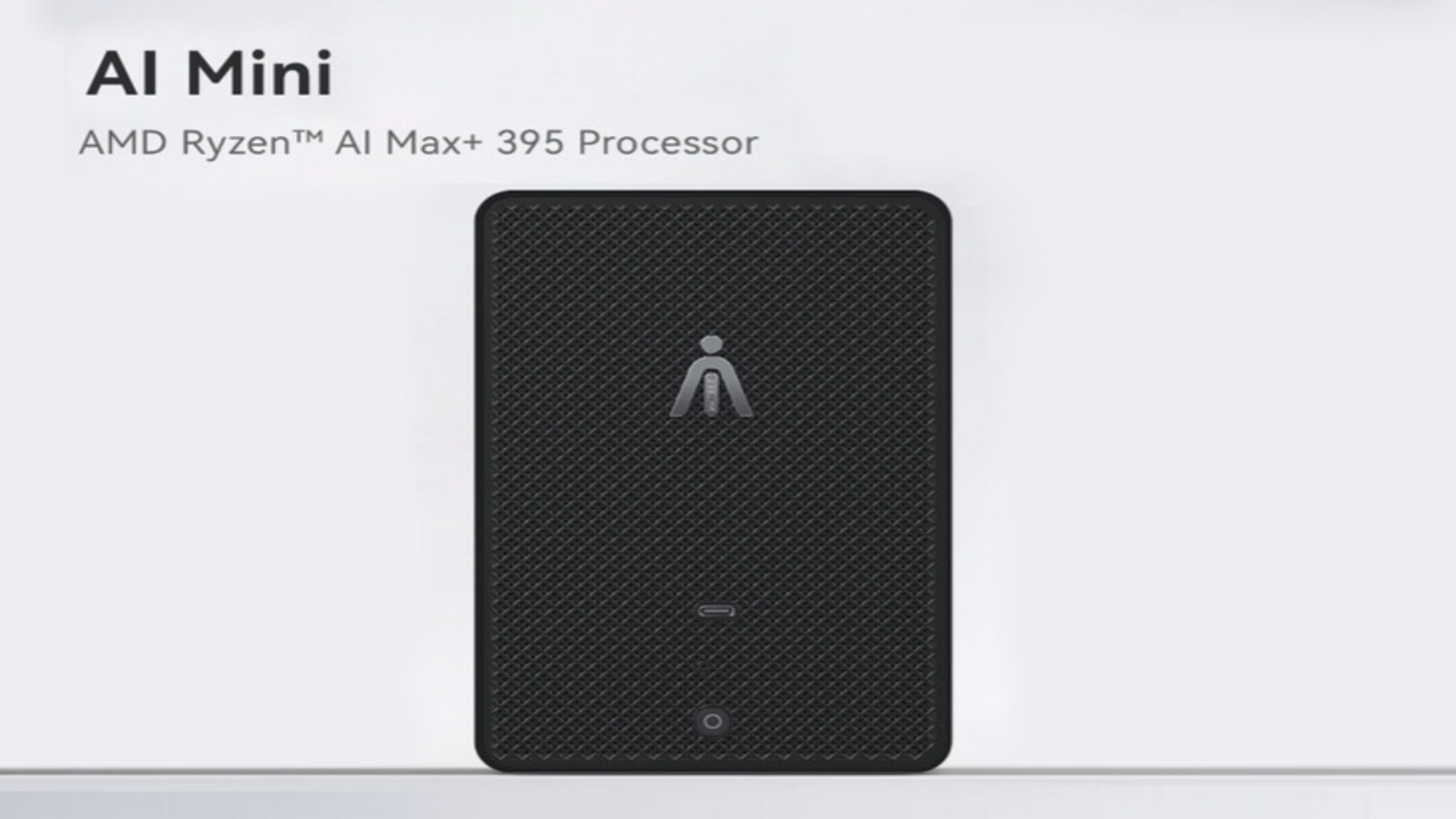
Rank 15232Beelink AI Mini packs 16 cores and 126 TOPS into a Mac Studio rivalThis mini PC doubles as a local AI server, no cloud requiredBuilt for developers and creators handling massive AI workloads
In a bold attempt to rival Apple's Mac Studio, Beelink, a Chinese company, has announced its new mini workstation, dubbed the AI Mini. This compact yet powerful device is designed to meet demanding computing requirements.The AI Mini is Beelink's second mini PC powered by AMD's Ryzen AI Max+ 395 processor, which combines the Zen 5 CPU architecture with a high-performance integrated Radeon 8060S graphics card.This 16-core, 32-thread chip delivers up to 126 TOPS of AI compute capability. Its APU architecture merges CPU and GPU processing into a unified platform, improving efficiency for both general-purpose computing and AI-specific tasks.
Huge RAM for handling large datasets
According to Beelink, the AI Mini can function as a local AI server, making it ideal for developers running intensive models like DeepSeek R1, without the need for external GPUs or cloud-based infrastructure.The device supports up to 128GB of RAM, boosting its appeal as a high end workstation for professionals handling large datasets, video rendering, or machine learning workloads.Beelink has confirmed the inclusion of dual USB4 ports, each capable of speeds up to 40 Gbps, along with a USB Type-C port located on the front panel. Additionally, the AI Mini supports dual 10 Gbps Ethernet ports, delivering seamless connections to multiple devices.Priced at $1,999, this business PC is not inexpensive, at nearly double the cost of Beelink's previous SER9 HX-370. However, similar devices based on AMD’s Strix Halo chip, such as the GMKTec EVO-X2, have also crossed the $1,500 mark.Via Beelink
You might also like
These are the best mobile workstations you can buy right nowWe've also listed the best mini PCs for every budgetChinese vendor shows picture of dozens of Ryzen AI Max+ 395 mini workstations
-

Picture from techcrunch.com
Rank 15233 -

Picture from cdn.mos.cms.futurecdn.net
Rank 15234Huawei is ditching Windows and replacing it with HarmonyOS on all future laptopsHarmonyOS is gunning for a billion users as it spreads far beyond smartphonesHarmonyOS Next ditches Android roots and is now a fully in-house Huawei operating system
Huawei’s software ambitions are rapidly expanding. What began as a survival strategy in response to U.S. sanctions has evolved into a bold initiative to position HarmonyOS as a dominant operating system across smartphones, tablets, TVs, and soon, PCs.Now aiming to surpass one billion users, HarmonyOS is preparing for a new era of computing after Huawei lost access to Microsoft Windows licenses.Originally unveiled in 2019 after seven years of development, HarmonyOS, known as Hongmeng in China, was Huawei’s answer to being cut off from Google’s Android ecosystem.
A billion smartphones powered by HarmonyOS
The operating system first appeared on smart TVs and quickly expanded to smartphones in 2021. By late 2024, over 900 million devices were already running HarmonyOS, with that number expected to cross the one-billion mark soon.This rapid adoption is reflected in Huawei’s mobile performance; its smartphones recently overtook Apple’s in Chinese market share, reaching 19% compared to Apple’s 17%.This growth has laid a strong foundation for Huawei to scale HarmonyOS across more devices as it seeks to unify its ecosystem, mirroring Apple’s seamless integration between iOS, iPadOS, and macOS.In March 2025, Huawei’s license to use Microsoft Windows expired. Due to ongoing U.S. sanctions, the company cannot renew the agreement. As a result, Huawei is taking another bold step by replacing Windows with HarmonyOS on its future laptops.The company has already showcased a new, unnamed laptop running HarmonyOS 5, also referred to as HarmonyOS Next. Unlike previous versions, this edition is no longer based on Android and is fully developed in-house. Huawei is expected to officially launch the device later this month.The new OS supports core productivity tools such as WPS Office and enterprise apps like DingTalk. Thousands of HarmonyOS mobile apps are expected to run on the new laptops, offering users a familiar, mobile-like experience on desktop devices.With its large ecosystem, spanning smartphones and beyond, HarmonyOS could soon emerge as one of the best Windows alternatives, particularly in regions where access to Microsoft's operating system is restricted or banned.However, if these laptops continue to use AMD or Intel chips, users may still have the option to install or dual-boot Windows, or even explore alternative Linux distros.Via Tomshardware
You might also like
Adobe offers US Government discounted software following DOGE reviewHuawei’s Harmony has potential to become ‘national OS’ of ChinaHuawei founder says company should pivot to software
-
Picture from o.aolcdn.com
Rank 15235Kia has introduced a wheelchair-accessible vehicle (WAV) iteration of its first electric van. The PV5 WAV offers several accessibility features, such as a side-entry system so a wheelchair user can board the van from the sidewalk, and a quick-use entry ramp rated for 300kg (661 lbs). It's equipped with a tip-up seat in the third row so other riders can assist a wheelchair passenger from the side. The PV5 WAV also has a wheelchair-specific belt fastening system.
The brand collaborated with Motability Operations on the debut of the PV5 WAV. Motability Operations is a long-term partner of the UK's vehicle leasing plan that helps people with disabilities to have an accessible mode of transportation.
Kia
"By integrating cutting-edge Platform Beyond Vehicle (PBV) technology with thoughtful design, we are paving the way for a future where everyone can enjoy the benefits of sustainable mobility, and our partnership with Motability Operations is a testament to our commitment to making this vision a reality," Sangdae Kim, executive vice president and head of Kia's PBV Division, said. The PBV tech has been the foundation for a few of Kia's new vehicle announcements over the past year, including at CES 2024.
The standard model of the PV5, Kia's first electric van, recently began pre-orders in the UK. Kia hasn't shared pricing information yet about the WAV model, but the non-WAV version retails starting at £32,995 (about $44,000).This article originally appeared on Engadget at https://www.engadget.com/transportation/evs/kia-debuts-the-pv5-wav-a-wheelchair-ready-electric-van-200554987.html?src=rss
-
Picture from o.aolcdn.com
Rank 15236A conservation program in Kenya that tech companies like Netflix and Meta rely on for carbon credits is in conflict with local herders, according to a report from The Wall Street Journal. The issue led to the program run by The Northern Kenya Rangelands Carbon Project to be put on hold, and could ultimately invalidate credits the organization has already sold.
This specific carbon capture program uses grass spread across 4.7 million acres of land communally owned by groups like the Maasai, to trap carbon in the soil. The project gets to use the land, and in exchange, the herders get a portion of the revenue from carbon credit sales. The issue that's put the whole program at risk is a conflict over the herders' farming practices. The local agricultural community has used the same grazing techniques for generations without issue, but the Northern Kenya Rangelands Carbon Project wants them to "rotate livestock grazing so grasses can recover and lock more carbon into the soil," The Wall Street Journal writes. Some herders frustrated with the rules have gone as far as to claim that they were misled when they originally agreed to participate in the conservation program.
Many tech companies rely on purchasing carbon credits to help offset the negative environmental impacts of rapid technological development. You don't get to run servers streaming movies or training AI models 24 hours a day without consuming a lot of electricity and water. Carbon offset projects plant trees or run agricultural programs like the one in Kenya to pull carbon from the atmosphere, selling credits to companies to absolve them of their sins.
Clearly, these carbon projects haven't always been actually beneficial for the people who live on the land they impact. The Wall Street Journal report is worth a read and gets into what the fallout of all of this could be, but at the very least, tech companies' branding themselves as "carbon neutral" seems like its going to get trickier.This article originally appeared on Engadget at https://www.engadget.com/big-tech/one-of-the-tech-industrys-sources-of-carbon-credits-is-in-conflict-with-kenyan-herders-201056081.html?src=rss
-

Picture from ichef.bbci.co.uk
Rank 15237 -

Picture from techcrunch.com
Rank 15238 -

Picture from cdn.mos.cms.futurecdn.net
Rank 15239Google put on an Android Show today to offer a glimpse at its upcoming interface changes with Android 16, in addition to a slew of Gemini news. It didn’t show off any new devices running the new look; instead, Google offered advice to developers and an explanation of its overall design philosophy. That philosophy seems very… purple.The new Material 3 Expressive guidelines call for extensive use of color (especially shades of purple and pink), new shapes in a variety of sizes, new motion effects when you take action, and new visual cues that group and contain elements on screen.
A screengrab of examples from Google's Material 3 Expressive blog post (Image credit: Google)
Google says it has done more research on this design overhaul than any other design work it's done since it brought its Material Design philosophy to Android in 2014. It claims to have conducted 46 studies with more than 18,000 participants, but frankly, I’m not a UX designer, so I don’t know if that’s a lot.
Google's Material 3 Expressive is the new look of Android 16
After all of that work, Google has landed on this: Material 3 Expressive. The most notable features, once you get past the bright and – ahem – youthful colors, are the new motion effects.For instance, when you swipe to dismiss a notification, the object you are swiping will be clear while other objects will blur slightly, making it easier to see. The other notifications nearby will move slightly as you swipe their neighbor. Basically, there will be a lot more organic-looking motion in the interface, especially on swipes and the control levers.
New shapes are coming to Android 16 with Material 3 Expressive (Image credit: Google)
There will be new type styles as well built into Android 16, with the ability to create variable or static fonts. Google is adding 35 more shapes to its interface library for developers to build with, along with an expanded range of default colors.Google didn’t say that its new Material 3 Expressive design language was targeting iPhone fans, but the hints are there. The next version of Android won’t look cleaner and more organized, instead, Google wants to connect with users on an ‘emotional’ level. According to Google’s own research, the group that loves this new look the most are 18-24 year olds, ie, the iPhone’s most stalwart fan base.
Will this look win over the iPhone's biggest fans? We'll see in the months ahead (Image credit: Google)
In its official blog post, Google says, “It's time to move beyond 'clean' and 'boring' designs to create interfaces that connect with people on an emotional level.” That connection seems to be much stronger among young people. Google says that every age group preferred the new Material 3 Expressive look, but 18-24 year olds were 87% in favor of the new look.Apple’s iPhone fanbase is strongest in this age group, if not the generation that’s even younger. It makes sense that Google is making big changes to Android. In fact, this refresh may be overdue. We haven’t seen many inspiring new features in smartphones since they started to fold, and foldable phones haven’t exactly caught on. I’m surprised Google waited this long to improve the software, since there wasn’t any huge hardware innovation in the pipeline (temperature sensors, anybody?).
Material 3 Expressive is coming to more than just Android phones
The new Material 3 Expressive look won’t be limited to Android 16. Google says Wear OS 6 will get a similar design refresh, with more colors, motion, and adaptable buttons that change shape depending on your watch display.Wear OS watches will also be able to use dynamic color themes, just like Android phones. Start with an image or photo and Wear OS will create a matching color theme for your watch to complement what it sees.
Google demonstrated new buttons that grow as they fill more of the Wear OS display (Image credit: Google)
Even Google’s apps will start to look more Expressive. Google says apps like Google Photos and Maps will get an update in the months ahead that will make them look more like Android 16.
Google borrows a few iPhone features for Android 16, including a Lockdown Mode
Google also demonstrated Live Updates, a new feature that borrows from the iPhone to show you the progress of events like an Uber Eats delivery. The iPhone does this in the Dynamic Island, and Google is adding this feature to the top of the Android 16 display.Security was a big focus of the Android Show, starting with new protections against calling and text message scams. Google is securing its phones against some common scammer tactics. For instance, scammers might call pretending to be from your bank and might ask you to sideload an app.With Android 16, you won’t be able to disable Google’s Play Protect app-scanner or sideload any apps while you are on a phone call. You also won’t be able to grant permission to the Accessibility features, a common workaround to get backdoor access to a phone.Google’s Messages app will also get smarter about text message scams. It will filter out scam messages that ask you to pay overdue toll road fees or try to sell you crypto.
The iPhone already has an extreme protection mode called Lockdown (Image credit: Future / Philip Berne)
Google is also enabling Advanced Protection, its own version of Apple’s Lockdown Mode, on Android 16. Advanced Protection is a super high-security mode that offers the highest level of protection against attacks, whether over wireless networks or physically through the USB port.Basically, if you’re a journalist, an elected official, or some other public figure and you think a government is trying to hack your phone, Google’s Advanced Protection should completely lock your phone against outside threats.
(Image credit: Google)
If you don’t need that much security but you still want more peace of mind, Google is improving its old Find My Device feature. Android 16 will introduce the Find Hub, which will be a much more robust location to track all of your devices, including Android phones, wearables, and accessories that use ultra-wideband (UWB), similar to Apple AirTags.Google is introducing new UWB capabilities to help find objects nearby, and those will roll out to Motorola’s Moto Tag first in the months ahead. The new Find Hub will also be able to use satellite connectivity to help locate devices and keep users informed. Plus, if you lose your luggage, Google is working directly with certain airlines like British Airways to let you share your tag information so they can go look for the bag they lost.
Gemini is coming to your car... and your TV... and your watch, and...
Today’s Android Show wasn’t all about Android. Google also made some big announcements about Google Gemini. Gemini is coming to a lot more devices. Gemini is coming to Wear OS watches. Gemini is coming to Android Auto and cars that run Google natively.Gemini is coming to Google TV. Gemini is even coming to Google’s Android XR, a platform for XR glasses that don’t even exist yet (or at least you can’t buy them). For a brief moment in the Android Show, we caught a glimpse of Google's possible upcoming glasses.
Could these be Google's new XR glasses? Hopefully we'll find out at Google I/O (Image credit: Google)
You’ll be able to talk to Gemini Live and have a conversation in your car on the way to work. ‘Hey Gemini, I need advice on asking my boss for a promotion!’ or ‘Hey Gemini, why is my life so empty that I’m talking to a machine in my car when I could be listening to music or a true crime podcast?’I may sound like an AI skeptic, but Google’s own suggestions are equally dystopian. Google says on the way to your Book Club, you might ask Gemini to summarize that book you read ages ago (and mostly forgot) and suggest discussion topics. That does not sound like a book club I want to join.Google did not offer any specific timing for any of the features mentioned in the Android Show, and only said these concepts would appear in the months ahead. It’s unusual for Google to share so much news ahead of Google I/O, which takes place May 20-21 near its HQ in Mountain View, CA. I’ll be on the scene at Google I/O with our News Chief Jake Krol to gather up anything new.With the Pixel 9a launch already passed, and now team Android spilling all the beans, I suspect Google I/O is going to be mostly about AI. Google is getting these tidbits out of the way so that I don’t waste time asking about new phones when it wants to talk more about Gemini and all the new AI developments. Or perhaps, even better, the Android XR news today was just a hint of what’s to come. Stay tuned, we’ll know more next week!
You might also like
Google confirms Android 16's useful new battery health tools will skip older Pixel phonesYour Android phone is about to look very different – here are 5 design changes that could come with Android 16Google could add Desktop Mode to Android phones, bringing a Samsung DeX-style experience to more devices
-

Picture from cdn.mos.cms.futurecdn.net
Rank 15240Saudi Arabia partners with Nvidia to build massive AI infrastructure by 2030 New AI data centers will deploy hundreds of thousands of GB300 chips HUMAIN and Nvidia plan national AI training and simulation skill programs
Nvidia has signed a strategic agreement with HUMAIN, a new AI-focused subsidiary of Saudi Arabia’s Public Investment Fund, as part of an ambitious plan to establish the kingdom as a global leader in artificial intelligence by 2030.The partnership includes large-scale infrastructure development, workforce training, and a massive hardware rollout featuring hundreds of thousands of Nvidia’s latest GB300 chips.HUMAIN plans to deploy up to 500 megawatts of AI computing capacity, beginning with 18,000 GB300 Grace Blackwell superchips powered by Nvidia’s InfiniBand networking. These chips will be used in hyperscale data centers across Saudi Arabia, designed to train and operate sovereign AI models at scale.
Broader digital transformation goals
The move is intended to support the country’s broader digital transformation goals and economic diversification outlined in Vision 2030.The partnership also includes the adoption of Nvidia’s Omniverse platform. According to HUMAIN, this will enable the development of physical AI and robotics applications across industries such as manufacturing, logistics, and energy.By using digital twins and simulation tools, companies in the kingdom will be able to optimize physical environments for greater efficiency, safety, and sustainability.Workforce development is a key component of the collaboration. HUMAIN and Nvidia plan to upskill thousands of Saudi citizens and developers in areas such as robotics, simulation, and digital twin technologies.“AI, like electricity and internet, is essential infrastructure for every nation,” said Jensen Huang, founder and CEO of Nvidia. “Together with HUMAIN, we are building AI infrastructure for the people and companies of Saudi Arabia to realize the bold vision of the Kingdom.”His Excellency Eng. Abdullah Alswaha, Minister of Communications and Information Technology, added: “This lays the groundwork for a new industrial revolution, anchored in advanced infrastructure, talent and global ambition. This is how Saudi Arabia continues to lead as a partner of choice in shaping the future of AI.”Our partnership with Nvidia is a bold step forward in realizing the Kingdom’s ambitions to lead in AI and advanced digital infrastructure,” said Tareq Amin, CEO of HUMAIN. “Together, we are building the capacity, capability and a new globally enabled community to shape a future powered by intelligent technology and empowered people.”
You might also like
Nvidia wants to own a slice of that sweet trillion-dollar cybersecurity pieNvidia wants to build its AI supercomputers entirely in the USNvidia is dreaming of trillion-dollar data centers with millions of GPUs
-
Picture from cdn.mos.cms.futurecdn.net
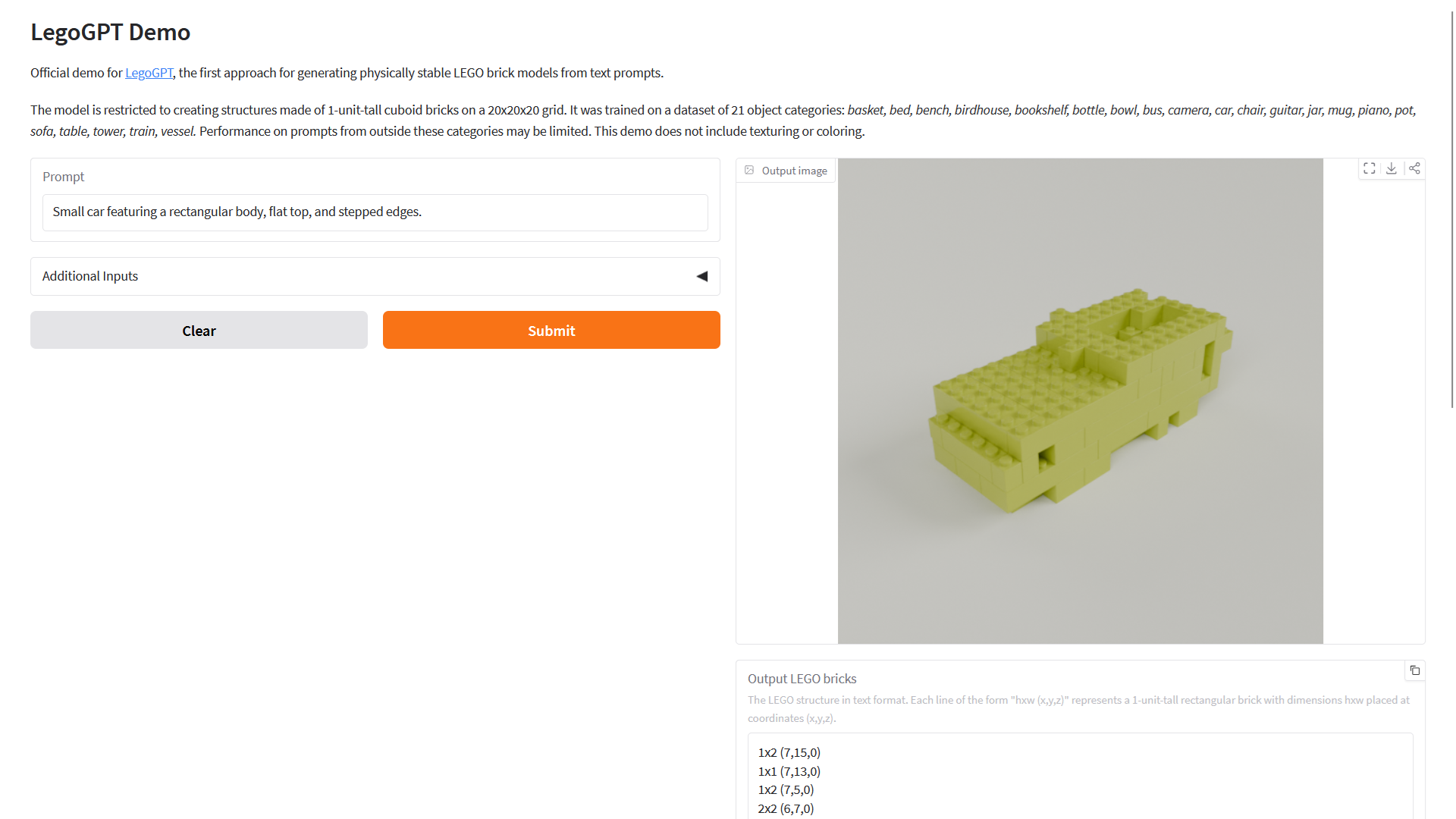
Rank 15241LegoGPT is a new AI model that turns text prompts into Lego designs you can actually buildLegoGPT uses AI models and physics simulations to generate brick-by-brick instructionsCarnegie Mellon researchers built LegoGPT as open-source and free to try
If you’ve ever stared at a pile of Lego bricks and despaired at making them match the vision in your head, you may be in luck thanks to a new, free AI tool that turns text prompts into real, buildable Lego designs. Describe what you want to build and the aptly named LegoGPT will produce a step-by-step plan using a limited palette of real Lego bricks, with a handy list of which bricks to use and how many you'll need..To function in the real world, LegoGPT is notably cautious in its approach. While many AI image generators can comfortably spit out wild 3D shapes with zero regard for the laws of physics, LegoGPT runs every design through a literal physics simulator. It checks for weak points. It identifies problem bricks. And if it finds something unstable, it starts all over, reworks the layout, and tries again. It's like how most AI chatbots are a kind of auto-complete for words, hunting for the right one to add to a sentence. Except LegoGPT is predicting the next brick to auto-build a (digital) Lego model.With LegoGPT's answers, you can learn how to turn that colorful plastic pile into brick art. You don’t need a PhD in structural engineering or a childhood spent mastering Technic sets, or even the Lego-building robot shown off in a video made by the Carnegie Mellon University researchers behind the new tool.
Brick AI
The magic behind LegoGPT comes from a very large dataset called StableText2Lego. The researchers made the dataset by building more than 47,000 stable Lego structures and pairing them with text captions describing their appearance. Rather than spend months or years on that tedious chore, the researchers roped in OpenAI’s GPT-4o AI model to analyze rendered images of the Lego structures from 24 different angles and come up with a detailed description they could use.LegoGPT’s code, data, and demos are all publicly available on the researchers’ website and GitHub. There are some caveats. LegoGPT currently only builds with eight standard brick types, all rectangular, and operates inside a 20-brick cubed space. So you’re not getting intricate curved architecture or sprawling castles just yet. Think more early-70s Lego catalog than 4,000-piece Millennium Falcon. Still, the results are fun and very sturdy.
(Image credit: LegoGPT)
The broader implication for generating real-world objects with AI from casual language makes LegoGPT exciting beyond the novelty of making toy blueprints from text descriptions. It promises designs that aren’t just possible, but verified to be physically buildable. This could become a cornerstone of prototyping, architectural modeling, and, of course, a weekend activity for Lego hobbyists. But don't dwell too much on the details. You don’t need to understand the underlying math to enjoy it.The limitations in size, scope, and brick variety ensure LegoGPT will not replace Lego’s in-house designers anytime soon, but it is a leap toward making design more accessible, playful, and connected to the real world. Also, right now, the system doesn’t care about color, unless you ask it to. The default focus is purely structural. However, the researchers have already added an optional appearance prompt feature that lets you layer on color schemes. So if you want your electric guitar built in metallic purple, go for it.
(Image credit: LegoGPT)
You might also like
I brought doodles to life with Deep Image, and it's like having a magic paintbrushI compared Adobe’s new Firefly Image Model 4 to ChatGPT’s image generator, and it’s like they went to the same art schoolI turned my dog into a plushie using AI and it was super easy
-

Picture from techcrunch.com
Rank 15242 -

Picture from ichef.bbci.co.uk
Rank 15243 -
Picture from o.aolcdn.com
Rank 15244In the early days of President Donald Trump's second administration, federal agencies including the US Department of Agriculture were ordered to remove information about climate change from their websites. Now, the USDA has committed to reinstating the deleted content following a lawsuit on behalf of the Northeast Organic Farming Association of New York, the National Resources Defense Council and the Environmental Working Group. According to a letter sent yesterday to a district court judge, the agency has already begun the restoration process and expects to "substantially complete" the effort in about two weeks.
The material removed from USDA sites in February included content about climate-smart agriculture, forest conservation, climate change adaptation and clean energy project investments in rural areas. The trio of plaintiffs sued on the basis that removing that information violated the Freedom of Information Act that allows public access to important federal records, as well as failing to provide advanced notice required by the Paperwork Reduction Act and without the reasoned decision-making of the Administrative Procedure act. The USDA said that it "will restore the climate-change-related web content that was removed post-Inauguration, including all USDA webpages and interactive tools enumerated in plaintiffs' complaint."
"This is a major victory and an important first step. Members of the public, including our clients, rely on information from USDA to understand how climate change is affecting our nation’s forests, food supply, and energy systems," said Stephanie Krent, staff attorney with Knight First Amendment Institute, which helped file the lawsuit. "USDA was wrong to remove these webpages in the first place, and it must comply with federal law going forward."This article originally appeared on Engadget at https://www.engadget.com/science/the-usda-will-republish-climate-change-information-online-following-farmer-lawsuit-211907357.html?src=rss
-
Picture from o.aolcdn.com
Rank 15245Buried in the blog posts and videos that accompanied Google's The Android Show: I/O Edition announcements was a nugget of Nothing news: The Nothing Phone 3 is going to be expensive. In an Android marketing video showcasing the company's phones, Nothing CEO Carl Pei shared that the new phone will cost around £800 when it launches this summer.
That new cost is thanks to Nothing's decision to go "all-in" on the new device by including "premium materials, major performance upgrades and software that really levels things up," according to Pei. The Nothing Phone 2 launched at £580 in the UK and $600 in the US, so selling the Phone 3 at £800 is a noticeable price jump. Assuming Nothing follows through on the premium upgrades it's promising, though, maybe it'll make sense that the Phone 3 costs as much as a Pixel 9 or iPhone 16.
Nothing made its name on affordable phones that have unique, premium designs. For example, the company launched the Phone 3a and Phone 3a Pro in March 2025, the budget and mid-range counterparts to the Phone 3. Both phones use mid-range chips and camera sensors, but feature a futuristic design and clever AI features that you'd expect out of a much more expensive device.
Switching to trying to compete with Apple and Samsung in terms of price suggests Nothing is confident, at the very least. We'll have to wait until this summer when the Phone 3 is actually released to see if that confidence is justified.This article originally appeared on Engadget at https://www.engadget.com/mobile/smartphones/carl-pei-teases-the-all-in-nothing-phone-3-with-a-flagship-price-213023983.html?src=rss
-

Picture from techcrunch.com
Rank 15246 -

Picture from ichef.bbci.co.uk
Rank 15247 -

Picture from ichef.bbci.co.uk
Rank 15248 -

Picture from cdn.mos.cms.futurecdn.net
Rank 15249Most former WordPress users don’t regret switching to other CMS platformsSwitchers report fewer plugin issues and no major increase in costMigration was smoother than expected with most avoiding major disruptions
A new survey from Liquid Web suggests switching away from WordPress is paying off for the majority of users.While much of the conversation around CMS migration focuses on risk, the new data shows that many businesses are seeing clear benefits after making the move.Of the former WordPress users surveyed, 7 in 8 said they don’t regret switching to a different CMS. Nearly 70% reported no increase in costs after the transition, and 72% said they’re not considering a return to WordPress. Shopify was the most common destination among switchers at 42%, followed by Wix at 38% and Squarespace at 6%.
Plugin fatigue
Plugin fatigue is a common pain point on WordPress, and 78% saw improvements in this department after the switch. While 22% said fatigue worsened, the majority experienced relief from the updates, compatibility issues, and maintenance that often come with large plugin stacks.The process of switching itself wasn’t as difficult as some were expecting either. Only 23% ran into trouble with content migration, meaning 77% were able to move their sites without major disruption.The same percentage said they didn’t find the new CMS harder to learn, and only a relatively small group (21%) said they missed features they had before.Tiffany Bridge, Product Manager, eCommerce Applications at Liquid Web, said CMS platforms can deliver better experiences when setup is done right. “Many users leave WordPress looking for simplicity and come back realizing it wasn’t the CMS, it was the setup. Hosting makes all the difference between fatigue and flow.”While WordPress still appeals to many for its flexibility, the survey shows that switching isn’t always a downgrade. In fact, for many users, it’s a step toward a simpler, more manageable experience.The numbers point to a growing group of businesses that have made the move, and aren’t looking back.
You might also like
We rounded up the best CMS solutions you can use right nowCraft CMS zero-day exploited to compromise hundreds of vulnerable serversOvercoming CMS migration technical debt
-

Picture from techcrunch.com
Rank 15250


