News
This constantly updated list features the latest and most important news articles, ranked in order of significance. The top stories highlight major developments, breaking news, and critical updates across various topics, ensuring you stay informed about the most pressing issues. As new articles are added, the list adapts to reflect the latest priorities, keeping the most impactful stories at the forefront. Whether it’s global events, technology breakthroughs, or industry trends, this dynamic list ensures you always have access to the most relevant and timely information.
-

Picture from techcrunch.com
Rank 14701 -

Picture from ichef.bbci.co.uk
Rank 14702 -
Picture from cdn.mos.cms.futurecdn.net
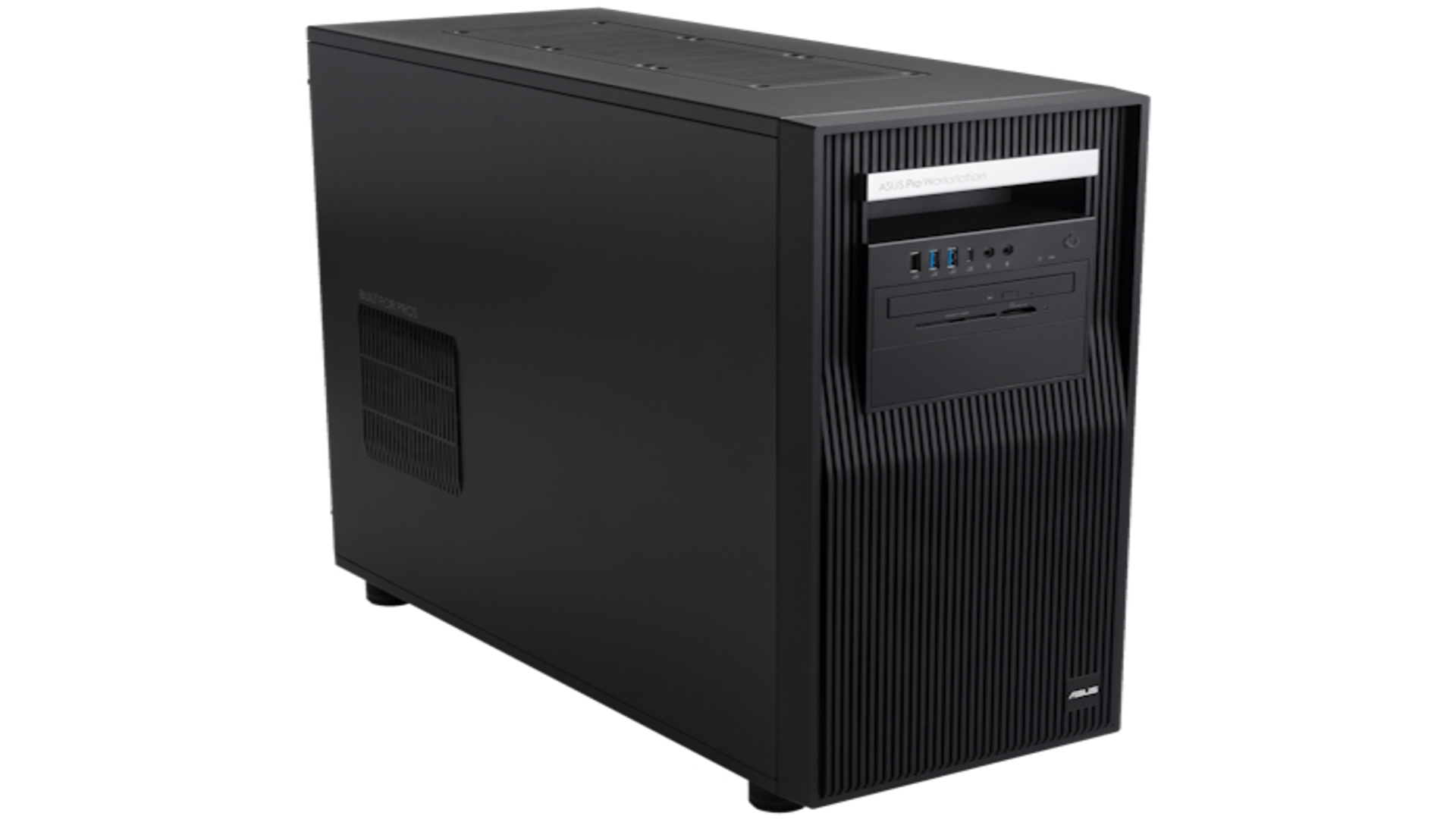
Rank 14703Asus ExpertCenter Pro ET900N G3 hides Nvidia's wildest chipWith up to 784GB of memory, it handles models that your RTX 5090 simply can’tNo rack, no noise - just supercomputer-class AI performance on a desktop you can use
Asus has unveiled a new high-performance desktop PC which delivers petaflop-scale AI performance, not in a flashy server rack, but in a surprisingly unassuming chassis.The Asus ExpertCenter Pro ET900N G3 looks like any standard business tower - so much so it even includes a DVD drive and a curious-looking slot that feels like a throwback to the early 2000s.At the heart of this business PC is the Nvidia GB300 Ultra, a two-part module that combines a Grace CPU with a Blackwell GPU via NVLink-C2C, Nvidia’s high-bandwidth interconnect, making it ideal for programming and AI development.
Designed for serious AI work
The unified chip architecture enables the CPU and GPU to share a single memory pool, reducing latency and improving efficiency for large-scale AI workloads. The system can deliver up to 20 PFLOPS of performance for training large language models or running inference on high-parameter models.It supports up to 784GB of coherent memory, more than double the combined VRAM of a workstation with four RTX 6000 Ada cards.That scale of memory access is essential for developers and researchers working with models that exceed the capabilities of mainstream GPUs like the GeForce RTX 5090, which offers 32GB of VRAM.The ExpertCenter Pro ET900N G3 also includes support for Nvidia ConnectX-8 SuperNIC, enabling high-throughput networking between systems. This allows it to function in clusters or within a larger enterprise AI deployment.Despite its performance, it retains a desktop form factor, eliminating the need for rack installation, custom cooling solutions, or the infrastructure demands of a data center.On the software side, the system runs Nvidia DGX OS, a specialized Ubuntu-based Linux distribution tailored for AI workloads. It provides native support for the full Nvidia software stack, including CUDA, TensorRT, and libraries for machine learning and data science.It also supports remote scaling, allowing the ET900N G3 to integrate seamlessly with other DGX systems if additional compute power is needed.
You might also like
These are the best business laptops available to buy right nowAnd you should take a look at the best office chairs we've triedRansomware hackers target a new Windows security flaw to hit businesses
-

Picture from ichef.bbci.co.uk
Rank 14704 -

Picture from ichef.bbci.co.uk
Rank 14705 -

Picture from ichef.bbci.co.uk
Rank 14706 -

Picture from ichef.bbci.co.uk
Rank 14707 -

Picture from ichef.bbci.co.uk
Rank 14708 -

Picture from ichef.bbci.co.uk
Rank 14709 -

Picture from techcrunch.com
Rank 14710 -

Picture from ichef.bbci.co.uk
Rank 14711 -

Picture from ichef.bbci.co.uk
Rank 14712 -
Picture from o.aolcdn.com
Rank 14713One of the ultimate goals of medieval alchemy has been realized, but only for a fraction of a second. Scientists with the European Organization for Nuclear Research, better known as CERN, were able to convert lead into gold using the Large Hadron Collider (LHC), the world's most powerful particle accelerator. Unlike the examples of transmutation we see in pop culture, these experiments with the LHC involve smashing subatomic particles together at ridiculously high speeds to manipulate lead's physical properties to become gold.
The LHC is often used to smash lead ions together to create extremely hot and dense matter similar to what was observed in the universe following the Big Bang. While conducting this analysis, the CERN scientists took note of the near-misses that caused a lead nucleus to drop its neutrons or protons. Lead atoms only have three more protons than gold atoms, meaning that in certain cases the LHC causes the lead atoms to drop just enough protons to become a gold atom for a fraction of a second — before immediately fragmenting into a bunch of particles.
Alchemists back in the day may be astonished by this achievement, but the experiments conducted between 2015 and 2018 only produced about 29 picograms of gold, according to CERN. The organization added that the latest trials produced almost double that amount thanks to regular upgrades to the LHC, but the mass made is still trillions of times less than what's necessary for a piece of jewelry. Instead of trying to chase riches, the organization's scientists are more interested in studying the interaction that leads to this transmutation.
"It is impressive to see that our detectors can handle head-on collisions producing thousands of particles, while also being sensitive to collisions where only a few particles are produced at a time, enabling the study of electromagnetic 'nuclear transmutation' processes," Marco Van Leeuwen, spokesperson for the A Large Ion Collider Experiment project at the LHC, said in a statement.This article originally appeared on Engadget at https://www.engadget.com/science/scientists-find-lead-really-can-be-turned-into-gold-with-help-from-the-large-hadron-collider-163431201.html?src=rss
-

Picture from ichef.bbci.co.uk
Rank 14714 -

Picture from ichef.bbci.co.uk
Rank 14715 -

Picture from ichef.bbci.co.uk
Rank 14716 -

Picture from ichef.bbci.co.uk
Rank 14717 -

Picture from ichef.bbci.co.uk
Rank 14718 -
Picture from cdn.mos.cms.futurecdn.net
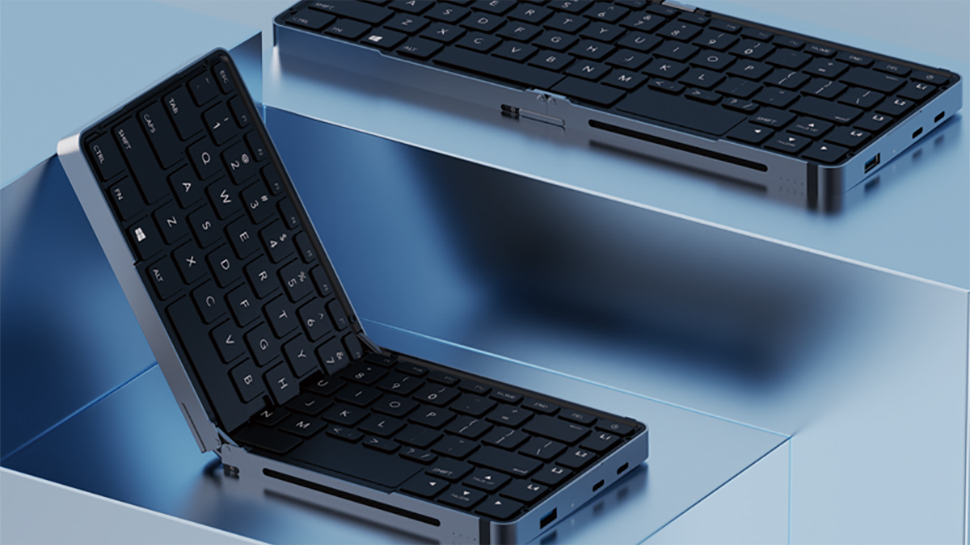
Rank 14719This foldable keyboard PC runs Windows 11 on Ryzen 7 power Fits in a jacket or trouser pocket yet handles multi-monitor productivity workloadsAluminum build and full keyboard hide a full-spec portable desktop inside
A pocket-sized Windows PC in a folding keyboard might sound like a concept device, but a new mini machine from China appears to be very real.Designed by a company called Linglong, this foldable Ryzen-powered mini PC fits in a jacket or (large) trouser pocket, unfolds into a full-sized keyboard, and runs a full Windows 11 Pro desktop.Weighing under 800g and roughly the size of a quarter-sheet of A4 paper when folded, the unit is aimed at anyone who wants portability without sacrificing functionality.
Decent port selection
Once opened, the PC reveals a full QWERTY keyboard with physical switches and a chassis made from CNC-machined aluminium.There’s no touchpad or ThinkPad-style pointing nub, so a separate mouse is required, but the mechanical travel and durability - rated to 100,000 keystrokes - suggest it’s built for serious use.At the heart of the system is an AMD Ryzen 7 7840U processor, paired with 16GB of LPDDR5 RAM and either 512GB or 1TB of storage.Graphics are handled by integrated RDNA3-based Radeon 780M, and a 16000mAh internal battery powers the device for up to 10 hours.Despite its small form factor, the unit includes a respectable selection of ports: USB4, USB-C 3.2, and USB-A 3.2, along with Bluetooth 5.2, Wi-Fi 6, and an HDMI-compatible USB display option.The device supports multi-screen output and can be docked to serve as a travel workstation, game center, or media hub.A built-in monitoring utility displays CPU and GPU load, temperature, and other stats in real time.Only available in China for now (I share your disappointment), the Linglong mini PC reminds me of the Orange Pi 800 keyboard computer.While it lacks global availability or official support for Western markets, it’s an ambitious reimagining of what portable computing can look like and I can only hope it gets a wider release soon or sparks similar designs elsewhere.
(Image credit: Linglong)
You may also like
Check out our list of the best mobile workstations for any budgetAnd these are the best mini PCs you can buy right nowMinisforum's NAS packs a Ryzen AI HX 370, up to 96GB RAM and 154TB storage
-

Picture from ichef.bbci.co.uk
Rank 14720 -
Picture from o.aolcdn.com
Rank 14721Following backlash about a quietly added clause to SoundCloud's Terms of Use that says users' content may be fed to AI, the company says it's "never used artist content to train AI models," and insists it "has always been and will remain artist-first." The outrage came after tech ethicist Ed Newton-Rex (via TechCrunch) spotted a change to SoundCloud's terms that was made in February 2024 seemingly without notifying users. The updated text states that by using the platform, "You explicitly agree that your Content may be used to inform, train, develop or serve as input to artificial intelligence or machine intelligence technologies or services as part of and for providing the services."
In a statement to TechCrunch, a spokesperson said the update was only meant to "clarify how content may interact with AI technologies within SoundCloud's own platform" and that the company "has never used artist content to train AI models, nor do we develop AI tools or allow third parties to scrape or use SoundCloud content from our platform for AI training purposes." SoundCloud's official Reddit account posted similar statements on the social media platform in response to users' outrage, and both noted that SoundCloud added a "no AI" tag for artists "to explicitly prohibit unauthorized use."
AI may be used for things like music recommendations, playlist creation and fraud detection, the company said. "Any future AI tools will be built for artists to enhance discovery, protect rights, and expand opportunities," SoundCloud posted on Reddit. "We hear your concerns and remain committed to transparency, artist control, and fair use."
Just a few months ago, though, SoundCloud introduced a suite of AI tools geared toward music creation, on top of three others it had announced earlier that year. That includes AI tools for generating remixes, new tracks, beats and singing voices.This article originally appeared on Engadget at https://www.engadget.com/ai/soundcloud-says-its-never-trained-ai-using-artists-work-after-getting-called-out-for-terms-of-use-change-174433356.html?src=rss
-

Picture from techcrunch.com
Rank 14722 -

Picture from ichef.bbci.co.uk
Rank 14723 -

Picture from ichef.bbci.co.uk
Rank 14724 -

Picture from ichef.bbci.co.uk
Rank 14725 -
Picture from o.aolcdn.com
Rank 14726It won't make you a better gamer, but Samsung's latest gaming monitor entices those hunting for faster refresh rates. The company's newest Odyssey OLED G6, which Samsung claims is the world's first OLED gaming monitor with a 500Hz refresh rate, is now available for pre-order in Southeast Asian markets, with a global rollout due to follow later this year. Samsung first announced the display, along with its sibling with 4K resolution called the Odyssey OLED G8, right before CES 2025 in January.
The monitor is up for sale in a silver colorway on Samsung Singapore's site for around 1,500 Singapore dollars, or around $1,150. The Odyssey OLED G6 is expected to see its first shipments starting May 18. For certain gamers, a high refresh rate could mean the difference between life and death in competitive first-person shooters like Counter-Strike 2 or Valorant. With most professional gamers using monitors that have a 240Hz refresh rate, Samsung's latest offering has more than double the speed to emphasize more responsive and smoother gameplay. Beyond its groundbreaking refresh rate, the Odyssey OLED G6 has a 2,560 x 1,440 resolution and a response time of 0.03ms for less motion blur and ghosting in fast-paced action games.
As with any OLED monitor, burn-in is a serious drawback that leaves a faint impression of a bright image even when the screen is blank. To combat this, Samsung includes its OLED Safeguard+ technology, which uses a cooling system to lower operating temps and a detection system that automatically reduces the brightness of static images like logos and taskbars. Samsung put its Odyssey OLED G6 up for pre-order first in Singapore, Thailand, Vietnam and Malaysia, and will roll it out in phases to other countries.This article originally appeared on Engadget at https://www.engadget.com/gaming/samsung-has-begun-taking-pre-orders-for-its-500hz-oled-gaming-monitor-183151123.html?src=rss
-

Picture from ichef.bbci.co.uk
Rank 14727 -

Picture from ichef.bbci.co.uk
Rank 14728 -

Picture from ichef.bbci.co.uk
Rank 14729 -

Picture from ichef.bbci.co.uk
Rank 14730 -

Picture from ichef.bbci.co.uk
Rank 14731 -
Picture from o.aolcdn.com
Rank 14732As first reported by Politico, the Trump administration has fired the Register of Copyrights and US Copyright Office Director, Shira Perlmutter. The Register of Copyrights works under the Librarian of Congress — a title held most recently by Carla Hayden, who was fired earlier this week for her DEI efforts, as White House press secretary Karoline Leavitt told The New York Times. Perlmutter's dismissal comes just after the office released a report that raised concerns about certain uses of copyrighted material to train generative AI. It's the third in a series of papers published over the last year analyzing copyright law as it pertains to AI.
The Trump administration — particularly DOGE — has been pushing for broader use of AI. In April, the White House called on federal agencies to develop AI strategies and name Chief AI Officers that will "serve as change agents and AI advocates."
In a statement released after news of Perlmutter's firing came to light, Congressman Joe Morelle, the top Democrat on the Committee on House Administration, called the move "a brazen, unprecedented power grab with no legal basis," saying, "It is surely no coincidence [Donald Trump] acted less than a day after she refused to rubber-stamp Elon Musk’s efforts to mine troves of copyrighted works to train AI models."This article originally appeared on Engadget at https://www.engadget.com/big-tech/trump-has-fired-the-director-of-the-us-copyright-office-195646724.html?src=rss
-

Picture from techcrunch.com
Rank 14733 -

Picture from ichef.bbci.co.uk
Rank 14734 -

Picture from cdn.mos.cms.futurecdn.net
Rank 14735Experts warn Facebook crypto ads now deliver malware through trusted brand impersonationMalware deploys only when victims meet specific browser or profile criteriaLocal server and PowerShell commands allow stealthy data exfiltration and control
A new wave of malware attacks is targeting Bitcoin and crypto owners through Facebook ads that mimic trusted names in the industry.Bitdefender says it has uncovered a multi-stage malvertising campaign that exploits the reputations of well-known platforms like Binance, TradingView, ByBit, and others.These malicious ads don’t just trick users, they also adapt in real time to avoid detection and deliver malware only when conditions are ideal for the attackers.
Highly evasive delivery system
(Image credit: Bitdefender)
The scheme begins when cybercriminals hijack or create Facebook accounts and use Meta’s ad network to run fraudulent promotions.These ads feature fake offers and use photos of celebrities - Zendaya, Elon Musk, and Cristiano Ronaldo are the usual suspects - to appear more convincing.Once clicked, users are redirected to lookalike websites that impersonate legitimate cryptocurrency services and prompt them to download what appears to be a desktop client.The malware delivery system is highly evasive. Bitdefender says the front-end of the fake site works with a local server quietly spun up by the initial install, allowing attackers to send payloads directly to the victim's system while dodging most security software.Delivery only happens if the victim meets specific criteria, such as being logged into Facebook, using a preferred browser like Microsoft Edge, or matching a certain demographic profile.Some malware samples run lightweight .NET servers locally and communicate with the website using advanced scripts that execute encoded PowerShell commands. These can exfiltrate sensitive data like installed software, system and OS info, and even GPU details.Depending on the findings, the malware may download further payloads or simply go dormant if it suspects it's being analyzed in a sandbox.Bitdefender researchers found hundreds of Facebook accounts promoting these campaigns. One ran more than 100 ads in a single day. Many ads target men aged 18 and older, with examples found in Bulgaria and Slovakia.
How to stay safe
(Image credit: Amazon India)
Scrutinize ads carefully: Be highly skeptical of ads offering free crypto tools or financial perks. Always verify links before clicking.Download from official sources only: Visit platforms like Binance or TradingView directly. Never trust redirects from ads.Use link-checking tools: Tools like Bitdefender Scamio or Link Checker can alert you to dangerous URLs before you engage.Keep your security software up to date: Use a reputable antivirus that gets regular updates to catch evolving threats.Watch for suspicious browser behavior: Pages that insist you use Edge or redirect erratically are massive red flags.Report shady ads: Flag suspicious content on Facebook to help others avoid falling into the same trap.
You might also like
Stay protected with the best antivirus tools aroundWe've also rounded up the best free antivirus solutionsHackers steal over $1bn in one of the biggest crypto thefts ever
-

Picture from ichef.bbci.co.uk
Rank 14736 -

Picture from ichef.bbci.co.uk
Rank 14737 -

Picture from ichef.bbci.co.uk
Rank 14738 -

Picture from ichef.bbci.co.uk
Rank 14739 -

Picture from ichef.bbci.co.uk
Rank 14740 -
Picture from o.aolcdn.com
Rank 14741Apple is reportedly planning to introduce a small but welcome convenience feature with iOS 19: cross-device syncing for Wi-Fi access portals. This is according to the latest Power On newsletter from Bloomberg's Mark Gurman. The feature would address the annoyance of having to individually fill out pop-up forms to access public Wi-Fi on all your devices, like when you're at a hotel. According to Gurman, "This new feature will let you enter that information on one device and have it synced to your other products."
It's one of several upcoming features Apple may show off at its Worldwide Developers Conference, which is set for June 9-13 this year. The event is expected to bring some major design changes to the company's operating systems that should make for a more consistent look between its products' software. Gurman also reports that AirPods may be getting a live translation feature, which we could see at WWDC alongside a revamped Health app.
This article originally appeared on Engadget at https://www.engadget.com/mobile/ios-19-may-bring-a-feature-that-makes-signing-into-public-wi-fi-less-of-a-hassle-210435303.html?src=rss
-

Picture from ichef.bbci.co.uk
Rank 14742 -

Picture from ichef.bbci.co.uk
Rank 14743 -
Picture from cdn.mos.cms.futurecdn.net
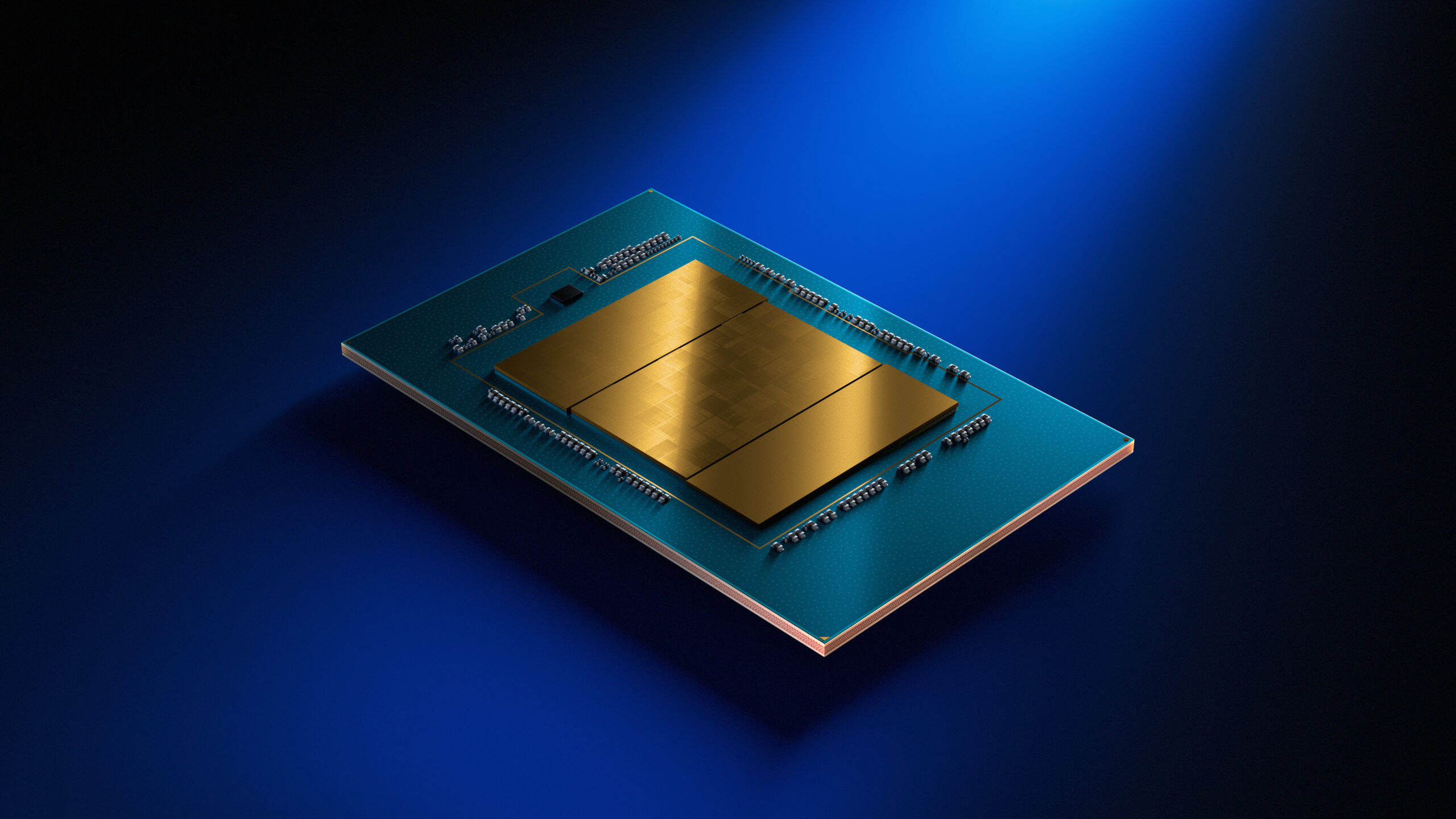
Rank 14744Peking University transistor could outperform Intel, TSMC, and Samsung’s top silicon chipsFull gate coverage boosts speed and cuts energy use in breakthrough Chinese transistor designChina may have just leapfrogged US chip tech with this silicon-free transistor innovation
Chinese researchers at Peking University have announced what seems like a breakthrough in transistor design, which if commercialized, could dramatically shift the direction of microprocessor development.The team created a silicon-free transistor based on a two-dimensional material, bismuth oxyselenide.The innovation hinges on the gate-all-around (GAAFET) architecture, where the transistor’s gate wraps completely around the source. Traditional FinFET designs, which dominate current silicon-based processors, only allow partial gate coverage. This full-wrap structure enhances the contact area between the gate and the channel, improving performance by reducing energy leakage and enabling better current control.
Could this mark the end of silicon chips?
Published in Nature Materials, the paper suggests that the new 2D GAAFET could rival or even surpass silicon transistors in both speed and energy efficiency.The researchers claim their 2D transistor achieves speeds 40% faster than Intel’s latest 3nm chips while using 10% less power, performance which would place it ahead of current processors from TSMC and Samsung.The partial gate coverage in traditional designs limits current control and increases energy loss. The new full-gate structure addresses these issues, resulting in high voltage gain and ultra-low power usage. The team has already constructed small logic units using the new design.“It is the fastest, most efficient transistor ever,” said Peking University. These claims are supported by tests conducted under identical conditions to those used for leading commercial chips.“If chip innovations based on existing materials are considered a ‘shortcut,’ then our development of 2D material-based transistors is akin to ‘changing lanes,’” said Professor Peng Hailin, the project’s lead scientist.Unlike the vertical structures of FinFETs, the new design resembles interwoven bridges. This architectural shift may overcome miniaturization limits faced by silicon technology, especially as the industry pushes below the 3nm threshold. It could also benefit the fastest laptops that require such compact chips.The team developed two new bismuth-based materials: Bi₂O₂Se as the semiconductor and Bi₂SeO₅ as the gate dielectric.These materials feature low interface energy, reducing defects and electron scattering.“This allows electrons to flow with almost no resistance, like water through a smooth pipe,” Peng explained.The performance results are backed by density functional theory (DFT) calculations and validated through physical tests using a high-precision fabrication platform at PKU.The researchers claim the transistors can be manufactured using current semiconductor infrastructure, simplifying future integration.
You might also like
Harnessing Generative AI: five essential steps for responsible integrationThese are the best business laptops available to buy right nowAnd you should take a look at the best office chairs we've tried
-

Picture from ichef.bbci.co.uk
Rank 14745 -

Picture from ichef.bbci.co.uk
Rank 14746 -

Picture from ichef.bbci.co.uk
Rank 14747 -

Picture from ichef.bbci.co.uk
Rank 14748 -

Picture from ichef.bbci.co.uk
Rank 14749 -

Picture from ichef.bbci.co.uk
Rank 14750


