News
This constantly updated list features the latest and most important news articles, ranked in order of significance. The top stories highlight major developments, breaking news, and critical updates across various topics, ensuring you stay informed about the most pressing issues. As new articles are added, the list adapts to reflect the latest priorities, keeping the most impactful stories at the forefront. Whether it’s global events, technology breakthroughs, or industry trends, this dynamic list ensures you always have access to the most relevant and timely information.
-
Picture from o.aolcdn.com
Rank 14301CEO and founder of Celsius Network Alex Mashinsky has been sentenced to 12 years in prison by a US District Court. Celsius Network held about $25 billion in assets at its height, but was one of the many cryptocurrency operations to fail during 2022. Prosecutors were seeking two decades for Mashinsky, claiming he defrauded and misled customers about the status of his company's CEL token.
"His crimes were not the product of negligence, naivete, or bad luck," the attorneys said. "They were the result of deliberate, calculated decisions to lie, deceive, and steal in pursuit of personal fortune."
After an initial not-guilty plea to seven criminal counts, the former cryptocurrency leader pled guilty to two of the fraud charges in December. As part of his plea deal, Mashinsky agreed not to appeal any sentence of 30 years or less.This article originally appeared on Engadget at https://www.engadget.com/big-tech/celsius-ceo-alex-mashinsky-sentenced-to-12-years-for-crypto-fraud-210415388.html?src=rss
-

Picture from ichef.bbci.co.uk
Rank 14302 -

Picture from ichef.bbci.co.uk
Rank 14303 -

Picture from techcrunch.com
Rank 14304 -
Picture from o.aolcdn.com
Rank 14305If you purchased an Apple device in the last 10 years, you might be able to receive some of the money from the company's recently settled spying lawsuit. The original lawsuit claimed Apple was capturing sensitive information with its Siri voice assistant without users' consent, and sending it to third-party contractors. The company agreed to settle the case for $95 million in January 2025, and thanks to the new landing page for the settlement, there's now a way to file a claim on your own.
To file a claim, you you need to have bought an "iPhone, iPad, Apple Watch, MacBook, iMac, HomePod, iPod touch or Apple TV" between September 17, 2014 and December 31, 2024, and believe Siri accidentally activated on your device during a private conversation. From the $95 million Apple is paying out, you can receive up to $20 per device you believe called up Siri, provided you swear under oath it happened.
You have until July 2, 2025 to file your claim. If you qualify for the settlement, you may have already been notified with information on your Claim Identification Number and Claim Confirmation Code. If you haven't received either but believe the settlement applies, you're free to submit a claim on your own.
Apple claims that Siri was designed with protecting users' privacy in mind, and agreeing to share data to improve the voice assistant — through your device's Privacy & Security settings — never uses audio recordings or transcripts for anything other than training. In the case of newer devices, voice data is processed locally anyway, so agreeing to share your data is supposed to be the only way Apple could ever access it.
Given the growing focus on AI, and the large amounts of data needed to train it, there's good reason to be skeptical about where companies are getting their training material. Apple prefers to get its customers consent, but the company has turned to new sources to help its AI research along. For example, Apple recently disclosed that it will start using the images captured for its Street View-esque feature in Apple Maps to train its models.This article originally appeared on Engadget at https://www.engadget.com/big-tech/you-can-now-claim-your-piece-of-apples-95-million-siri-privacy-settlement-213020351.html?src=rss
-

Picture from techcrunch.com
Rank 14306 -

Picture from techcrunch.com
Rank 14307 -

Picture from ichef.bbci.co.uk
Rank 14308 -
Picture from o.aolcdn.com
Rank 14309ChatGPT is bringing its Deep Research service directly into GitHub's developer ecosystem. This integration is beginning a beta test this week, with ChatGPT Plus, Pro and Team users the first to receive access over the coming days. Members of the Enterprise and Edu plans will get a chance to try it out "soon." Users can grant the AI assistant access to select code repositories and ask questions about their contents that ChatGPT will answer with cited reports.
Programmers have been a notable audience for AI assistants. A tool like ChatGPT can quickly review code and see where you've left a bracket unclosed or explain why a function isn't working, so looping the chatbot directly into GitHub could streamline the process. Plus, Microsoft owns GitHub and the company has made extensive investments into OpenAI.
When OpenAI initially announced Deep Research, the analysis-focused application of the AI chatbot required a Pro plan to use. In February, the company opened it up to all paying users of ChatGPT.This article originally appeared on Engadget at https://www.engadget.com/ai/chatgpt-deep-research-can-now-connect-to-github-215909296.html?src=rss
-

Picture from ichef.bbci.co.uk
Rank 14310 -
Picture from o.aolcdn.com
Rank 14311Microsoft hasn't secretly raised Surface prices, as earlier reports claimed. Instead, it has removed the base models of the Surface Pro 13-inch and Surface Laptop 13.8-inch from Microsoft.com, according to a statement by Nancie Gaskill, GM of the Surface group. "Customers can purchase base models of Pro and Laptop at the starting price of $999 at other key retailers," she added.
Currently, you can still find those models at Amazon and Best Buy, where they're discounted to $800. That's the same price as the smaller (and slower) Surface Pro 12-inch, so potential buyers have to think hard about balancing portability versus power. It's also unclear if those base models are still being produced by Microsoft, the company could be trying to sell through it's existing stock so future customers can only order the more expensive models.
Earlier this week, XDA first noticed a potential Surface price change at Microsoft.com. The starting prices of the 13.8-inch Surface Laptop and 13-inch Surface Pro appeared to jump from $1,000 to $1,200 — but it turns out those are just higher-specced models.
And despite the confusion around actual Surface pricing, Microsoft has definitely made its accessories more expensive. The 65W Surface power supply shot up from $90 to $120 this week, and the 127W variant went from $125 to $175. (Perhaps consider the many cheaper options from Anker and other companies in our fast charging guide.)
Microsoft also increased Xbox prices last week increases. The Xbox Series X is now $80 more expensive, while an Xbox Series X costs an extra $100.
Updated 5/8/2025 6:00PM: Added Microsoft's statement about not increasing Surface pricing.This article originally appeared on Engadget at https://www.engadget.com/computing/laptops/microsoft-says-it-hasnt-raised-surface-prices-210427376.html?src=rss
-

Picture from cdn.mos.cms.futurecdn.net
Rank 14312OpenAI’s Windsurf move puts its rivals under pressureOpenAI targets automating programming beyond the junior developer levelDevelopers may soon pick AI over IDEs if Windsurf integration hits full speed
OpenAI is set to acquire Windsurf, a top artificial intelligence-powered coding assistant, in a deal reportedly worth $3 billion.At the time of writing, the deal has not yet been finalized, however, if it goes through, it would mark OpenAI’s largest acquisition to date and signal an aggressive push to dominate the rapidly evolving field of AI-assisted software development.Windsurf, previously known as Codeium, is a product of Exafunction Inc., a startup that has attracted significant investor attention over the past year, as one of several emerging tools that translate plain language prompts into working code, reducing the need for manual development and, in some cases, automating tasks typically handled by junior engineers.
Raising the bar for AI coding tools
This acquisition would put OpenAI in more direct competition with Microsoft’s GitHub Copilot and Anthropic’s AI developer tools, two of the best coding platforms in this space.Windsurf was recently valued at $1.25 billion and had been in talks with investors to raise new funding at a $3 billion valuation before OpenAI stepped in with an acquisition offer.The deal follows OpenAI’s recent $40 billion investment round led by SoftBank, which pushed the company’s valuation to $300 billion.With such financial backing, OpenAI has the resources to expand its coding solutions and integrate Windsurf’s capabilities into its broader ecosystem.There has been no official public comment from either OpenAI or Windsurf, but sources suggest the acquisition could give OpenAI an edge in building AI assistants that better understand and execute complex programming tasks.The company is likely targeting a unified platform that not only generates functional code but also adapts to individual developers’ habits and project needs.Via Bloomberg
You might also like
Delivering the AI citizen experience – the future of governmentThese are the best business laptops available to buy right nowAnd you should take a look at the best office chairs we've tried
-
Picture from o.aolcdn.com
Rank 14313The Roku smart TV platform is an accessible way to watch your favorite streaming content in a centralized location. You can either get a Roku TV with the platform built in, or add a miniature box or dongle to an older-model TV.
One big advantage of the Roku platform is that it's always getting free software updates to keep it current, like the cool new feature that turns your TV into a virtual art museum by displaying famous paintings as a screensaver. There's one feature missing right out of the box, though — the ability to watch shows and events inaccessible in your home country.
Using a VPN is a common way to tackle this issue, but unlike Fire TV, Apple TV and other rivals, Roku systems don’t have native VPN support. But that’s not the end of the story. You can still use a VPN to access a wider range of programming with your Roku — you just need to use a workaround. We'll show you the simplest way.
The benefits of using a VPN
A VPN can change your IP address to make it look like you're getting online from a different region. When you mask your IP with a VPN, Netflix sees the VPN server's location, rather than your own. You’ll then have access to a different set of programming. For example, you need Max to stream Friends, The Big Bang Theory or Rick and Morty in the US, but they're all available on Netflix in the UK. So if you're in, say, Texas, but your VPN server is in London, Netflix will show you the British programming menu instead.
VPNs have several other privacy and security benefits. The connection between your home device and the VPN server is encrypted, so — if everything's working properly — nobody should be able to connect you to anything you do online. That means no worries about getting banned from streaming sites for using a proxy. It also means your Internet service provider can’t see all of your browsing destinations (and sell your viewing habits to data brokers).
The easiest way to use a VPN on Roku
Although Roku doesn’t natively support VPNs, there are a few workarounds. You can, for instance, set up a VPN on your home’s router. That allows you to protect your whole network and every device that connects to it, keeping everyone in your household anonymous online. But it can be inconvenient if you have to switch your server location often, and with a few exceptions (like ExpressVPN's Aircove), it demands some technical knowledge.
Instead, we recommend a far easier method: connecting a VPN to your Roku via AirPlay or screencast. To do this, subscribe to a VPN and install it on your smartphone or laptop. Then, stream content on that device and AirPlay or screencast it to your Roku TV. The icon to do this should look like a TV with Wi-Fi rays.
Engadget
We prefer this method because it’s simpler overall than managing a VPN through your router. You can access any geo-blocked content on your smartphone or laptop first and then cast it on your smart TV.
You can make sure your Roku model is AirPlay-compatible by checking this resource on Roku’s site. If it isn’t, you can always just directly patch your phone or laptop to the TV using an HDMI cable or an appropriate dongle.
Choosing the best VPN
Using a phone or laptop as the ultimate source for your VPN-routed streams gives you a wider list of services to choose from. Although each VPN has the same basic functionalities, their prices and extra features vary. Before deciding which one is right for your needs and the devices you have, take some time to look at what each one offers and see what other users have to say.
Start by checking out our list of best VPNs. If you're looking to stream content that's only available in a specific region, check your chosen VPN's website to make sure it has a server location in that region.
VPN options for other streaming platforms
Don't have a Roku? Good news: Robust VPN options (or alternatives) exist for the other major streaming platforms, too.
How to stream using a VPN on your Google TV or Chromecast
How to use a VPN on your Apple TV
How to use a VPN to stream with Fire TV
This article originally appeared on Engadget at https://www.engadget.com/cybersecurity/vpn/how-to-use-a-vpn-on-roku-130009703.html?src=rss
-

Picture from ichef.bbci.co.uk
Rank 14314 -

Picture from ichef.bbci.co.uk
Rank 14315 -

Picture from ichef.bbci.co.uk
Rank 14316 -

Picture from ichef.bbci.co.uk
Rank 14317 -
Picture from o.aolcdn.com
Rank 14318The World Video Game Hall of Fame welcomed its 2025 inductees today. The Strong National Museum of Play announced that the newest entries are GoldenEye 007 from Rare, Quake by id Software, Defender from Williams Electronics and Tamagotchi by Bandai. The four games chosen "have significantly influenced popular culture and the video game industry," the museum said in its press release. The other impactful games nominated for inclusion this year are Age of Empires, Angry Birds, Call of Duty: Modern Warfare 4, Frogger, Golden Tee, Harvest Moon, Mattel Football and NBA 2K.
The selections may spark some serious nostalgia for those of us who grew up in the 90s. I remember being deeply envious of my classmates who had little Tamagotchi pets to care for, and I have fond memories of smack-talking my friends during late-night GoldenEye matches. Last year's inductees also highlighted favorites from that era like Myst, Resident Evil and SimCity.
This article originally appeared on Engadget at https://www.engadget.com/gaming/goldeneye-007-and-quake-join-the-world-video-game-hall-of-fame-224818476.html?src=rss
-

Picture from ichef.bbci.co.uk
Rank 14319 -

Picture from cdn.mos.cms.futurecdn.net
Rank 14320Apple's reportedly working on a new chip to power smart glasses, which should be ready in 2027These first smart glasses from Apple will likely take on the Ray-Ban Meta glassesThe company is also reportedly still working on a more advanced pair
Apple’s been rumored to be working on smart glasses for what feels like forever, and it makes sense considering that this wearable gadget would be lighter than the Apple Vision Pro with a slimmer all-around design and, hopefully, lighter on the wallet as well.A new report from Bloomberg’s Mark Gurman details that the Cupertino-based tech giant is making progress on a chip that will power “its first smart glasses.”The report notes that ‘progress has been made’ on the chip, which means that internal work on the smart glasses is ramping up and that production on the processor is set to start by the end of 2027.Now, dates can move and change, but that would put these smart glasses on the road for release in about two years.
These aren’t the full-fledged AR glasses that have long been rumored, though; rather, the report says these smart glasses “would compete with the popular Ray-Ban spectacles” from Meta. The Meta Ray-Bans are a hit for the company, landing in a similar build to classic glasses. They allow one to take photos or videos without taking a phone out and offer easy access to the Meta AI assistant.Apple’s exact feature set for these smart glasses that wouldn’t overlay the world around you isn’t set as of yet, though. According to the report, “Apple is currently exploring non-AR glasses that use cameras to scan the surrounding environment and rely on AI to assist users.”This sounds pretty similar to what Meta Ray-Ban offers and also to Visual Intelligence on the iPhone 16 lineup – and iPhone 15 Pro and 15 Pro Max – which uses Google or ChatGPT to identify what’s in the scene. Hopefully, by 2027, though, Apple Intelligence will be more widely rolled out, with AI-powered Siri in the hands of plenty of consumers on the iPhone, iPad, and Mac.Seeing that this reported chip is modeled after the Apple Watch’s SoC, it’s likely that these smart glasses would pair with another device like an iPhone, probably in a process similar to setting up an Apple Watch or AirPods.
(Image credit: Future/Jacob Krol)
However, Apple isn’t just switching to focusing on building smart glasses without AR. The report notes that this new model and the previously rumored one are in development, and that Tim Cook really wants to beat Meta in the world of smart glasses.Offering more than one model when the time comes for a release would be an easy way to attract more consumers, especially if it lowers the entry price.Even so, we’re far out on Apple’s rumored smart glasses, as two years puts them at the earliest of 2027, but I’d bet we'll see plenty more rumors and reports in the lead up to that.In the more immediate future, though, Apple’s World Wide Developers Conference will kick off on June 9, 2025, and the company should share more about its next-generation platforms and Apple Intelligence at large. Who knows, we might even get a more substantial update for the Vision Pro, which could hint at future glasses.
You might also like
New Meta XR glasses again tipped to land later this year – well ahead of Apple's rumored AR glasses with Apple IntelligenceRock 'n' roll will never die – and neither will this modular Bluetooth speaker with an 'unlimited' battery lifeGoogle’s surprise Android XR glasses tipped to land in 2026 – and my only complaint is they aren’t launching sooner
-

Picture from ichef.bbci.co.uk
Rank 14321 -

Picture from techcrunch.com
Rank 14322 -

Picture from ichef.bbci.co.uk
Rank 14323 -

Picture from ichef.bbci.co.uk
Rank 14324 -

Picture from ichef.bbci.co.uk
Rank 14325 -

Picture from ichef.bbci.co.uk
Rank 14326 -
Picture from ichef.bbci.co.uk
Rank 14327 -

Picture from ichef.bbci.co.uk
Rank 14328 -

Picture from ichef.bbci.co.uk
Rank 14329 -

Picture from ichef.bbci.co.uk
Rank 14330 -

Picture from ichef.bbci.co.uk
Rank 14331 -

Picture from ichef.bbci.co.uk
Rank 14332 -

Picture from ichef.bbci.co.uk
Rank 14333 -

Picture from ichef.bbci.co.uk
Rank 14334 -

Picture from ichef.bbci.co.uk
Rank 14335 -

Picture from ichef.bbci.co.uk
Rank 14336 -

Picture from ichef.bbci.co.uk
Rank 14337 -

Picture from ichef.bbci.co.uk
Rank 14338 -
Picture from o.aolcdn.com
Rank 14339Google's annual I/O developer conference is coming on May 20, and for the first time, there's two major events you'll want to watch to stay on top of all the updates the company's making to its software platforms. I/O 2025 kicks off on May 20, and a week earlier on May 13, there's also The Android Show: I/O Edition, a dedicated showcase for the Android ecosystem.
The Android Show: I/O Edition airs on May 13 at 1PM ET / 10AM PT, and it'll stream at that time on Google's Android YouTube channel. Since it appears to be pre-recorded, we've embedded it below, so really, you can just bookmark this page and return then. Better yet, we will be liveblogging alongside the show, so you'll see our coverage, analysis and takes in real time.
Android is developed partially in the open, so there's already some indication of what could be coming with Android 16. So far, that's a visual redesign of some of the operating system's core features, like the notification shade, a take on Apple's Live Activities for tracking ongoing events and possibly a Samsung DeX-like "Desktop Mode" for Android phones. Google even appeared to accidentally publish its own blog post detailing its research around user interfaces and Material 3 Expressive, only to take it down quickly after. Unfortunately (or fortunately for Android enthusiasts), the internet never forgets.
Meanwhile, I/O 2025 starts on May 20 at 1PM ET / 10AM PT with Google's keynote, typically a series of updates on Android, Search, Google Workspace and Gemini. It's worth noting: Google typically doesn't set aside separate time for Android announcements. The company said there will be some Android news at I/O, but the safe bet is that Gemini will be the star. We expect Google to share Gemini updates, along with Android XR news and maybe further demonstrations of experimental projects like Project Astra.
Google's I/O keynote will be available to watch on Google's YouTube channel and right here once the livestream is up on May 20 at 1PM ET.
Update, May 8 2025, 10:30PM ET: This story has been updated to include information on Engadget's liveblog of the Android Show, as well as additional information on what we expect to be announced based on leaks around Material 3 Expressive.This article originally appeared on Engadget at https://www.engadget.com/big-tech/how-to-watch-the-android-show-ahead-of-google-io-2025-213327621.html?src=rss
-

Picture from cdn.mos.cms.futurecdn.net
Rank 14340ECHO flips malware's own systems to attack itself - like fighting fire with fire, but smarterECHO uses malware’s update channel to push out a digital self-destructGeorgia Tech’s tool makes botnet cleanup almost automatic
Malware infections, especially those linked to botnets, continue to cause major damage to enterprise systems, often going undetected until it's too late.Techxplore reports researchers at Georgia Tech have developed a tool called ECHO that turns the tables by using malware’s own infrastructure to remove it.ECHO exploits a key feature in many malware strains: built-in remote update mechanisms. By identifying and repurposing these mechanisms, ECHO can deploy a custom payload that disables the malware from within.
A self-spreading remedy for botnets
Botnets - a network of infected computers controlled by malicious actors - have long posed a serious cybersecurity threat. They can lock down workflows, expose sensitive data, and inflict financial losses.Ordinarily, removing botnets is a tedious, manual process that can take days or even weeks. ECHO aims to change that. In testing, it successfully neutralized 523 out of 702 Android malware samples, achieving a 75% success rate.The idea of hijacking malware’s communication channels isn’t entirely new. In 2019, Avast and French authorities collaborated to dismantle the Retadup botnet in Latin America. While successful, the effort was difficult to reproduce.“This is a really good approach, but it was extremely labor-intensive,” said Brendan Saltaformaggio, associate professor at Georgia Tech. “So, my group got together and realized we have the research to make this a scientific, systematic, reproducible technique, rather than a one-off, human-driven, miserable effort.”ECHO works by first mapping how the malware deploys code. It then analyzes whether these deployment channels can be reused to carry a new, benign payload that disables the original infection.Once validated, this remediation code is tested and deployed. The process significantly reduces botnet response time and limits potential damage.The tool, now open sourced on GitHub, isn’t meant to replace traditional security solutions but to complement them.“We can never achieve a perfect solution, but we can raise the bar high enough for an attacker that it wouldn’t be worth it for them to use malware this way,” Saltaformaggio explained.Organizations using antivirus, EPP, and other malware protection tools can turn to ECHO to streamline remediation once a breach is detected.
You might also like
Downloaded something dodgy? These are the best ransomware protection toolsNail the basics with the best firewalls available nowCompanies becoming more accepting of robotics in the workplace, survey finds
-
Picture from cdn.mos.cms.futurecdn.net
Rank 14341Leaked promotional images give a detailed look at its slim designImages of its silicone case and leather-like Kindsuit case also leakedAdds legitimacy to previous spec leaks like a 200MP camera and IP68 rating
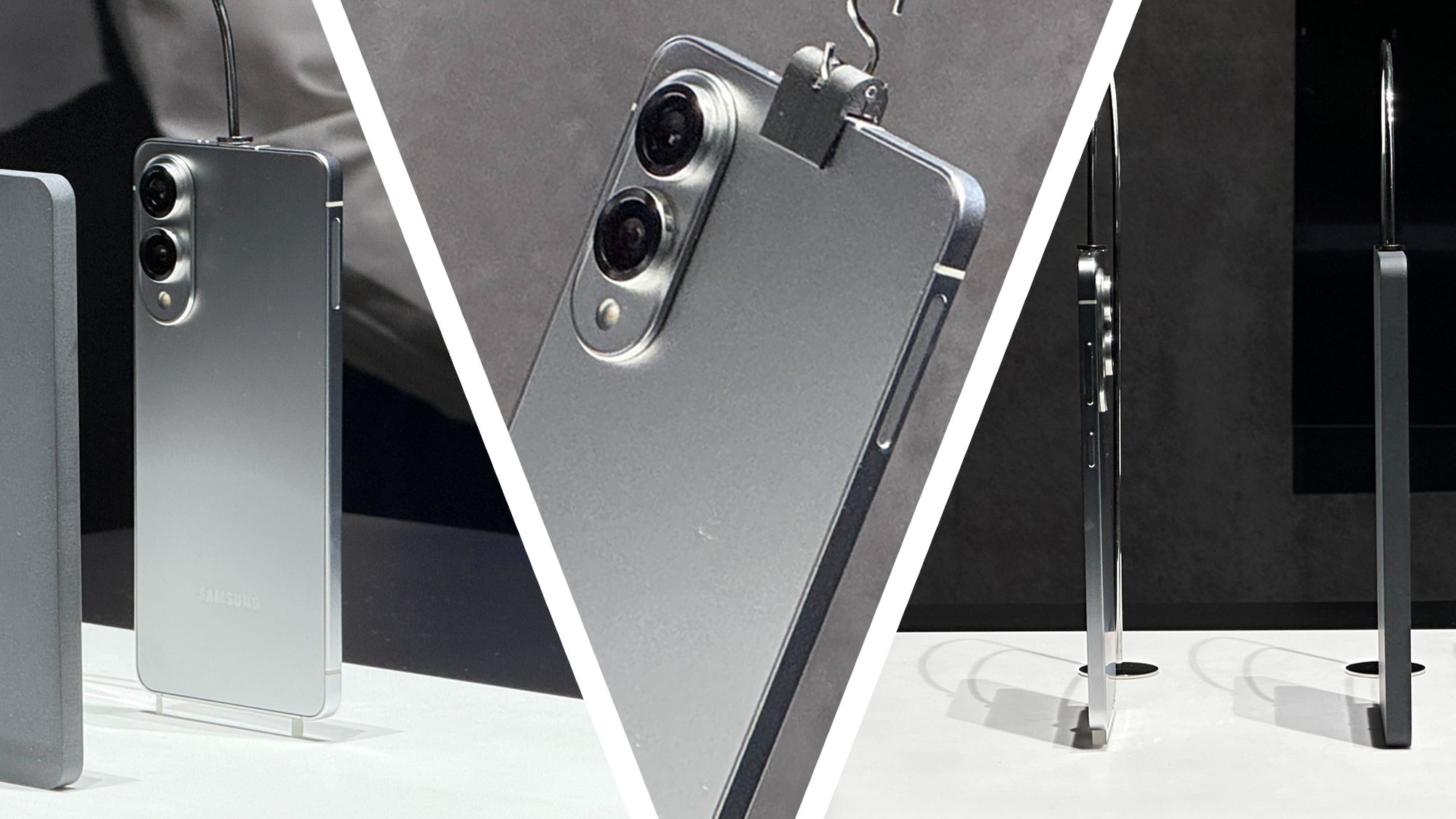
Samsung will officially reveal the Samsung Galaxy S25 Edge in San Jose next week during a virtual Unpacked event on Monday, May 12 at 8PM ET / 5PM PT (Tuesday, May 13 at 1:00 AM UK time or 10AM AEST).We've had a steady stream of leaks since the device was first rumored during a January Unpacked event, and just last week a major leak revealed the details of almost every spec and feature.However, we've never really gotten a clear look at the device. Now, that's no longer the case. This massive leak includes polished marketing images in three colorways that show off the S25 Edge’s screen, titanium build and super-slim side profile, alongside its glass screen protector, dual rear cameras, the USB-C charging cord and SIM-removal tools that come in the box.You can see the images below:
Image 1 of 3A clear image of the S25 Edge's side, back cover, camera array and three colors (Image credit: Samsung / Android Headlines)Image 2 of 3Camera, processor and battery details, as well as a clear look at the face of the device (Image credit: Samsung / Android Headlines)Image 3 of 3What's in the box and another view of it's slim profile (Image credit: Samsung / Android Headlines)
Leaked promotional images for the Galaxy S25 Edge give a detailed look at its designImages of its silicone case and leather-like Kindsuit case also leakedSeemingly confirms previously leaked specs like a 200MP main camera and IP68 rating
While Samsung’s not confirmed the legitimacy of these images, it's hard to deny that they display the professional finish and variety we’ve come to expect when the brand launches a new phone. We can see the S25 Edge's incredibly thin 5.8mm thick side, and three colors that will reportedly be titled Titanium Icyblue, Titanium Silver and Titanium Jetblack.We’d already seen many specs leak, including the details that it’ll feature a screen with a 120Hz refresh rate, an ultrasonic under-display fingerprint sensor, a 3,900mAh battery, wireless charging, and have an IP68 rating for water and dust resistance.However, these new images further confirm that its dual rear camera setup will consist of a 200MP and a 12MP ultrawide lens, and add that the main camera sports a 2x "optical quality zoom". We also again see that IP68 rating, "all-day battery", "the most powerful processor optimized for Galaxy" – rumored to be the Snapdragon 8 Elite chipset – and while there’s a USB-C cable in the box, as with pretty much all Samsung handsets, there’s no charger included.And, if you look especially closely, you can see the images state that the device is "made to last" with Corning Gorilla Glass Victus 2 on the back.And that's just half of what this leak provides. We're also getting a better look at the official cases for the Samsung Galaxy S25 Edge in various colors, and how they'll help showcase the thinness of the device.
Image 1 of 4The Galaxy Edge's silicone case in three colors (Image credit: Samsung / Android Headlines)Image 2 of 4(Image credit: Samsung / Android Headlines)Image 3 of 4(Image credit: Samsung / Android Headlines)Image 4 of 4(Image credit: Samsung / Android Headlines)
According to the leaker, the images above are of the Samsung Galaxy S25 Edge silicone case in black, blue and gray. There is also reportedly a translucent silicone option. Below, however, is what is being called the 'Kindsuit case' for the S25 Edge. Already being used with the Samsung Galaxy S25, it's a leather-like synthetic material available in the same three colors.
Image 1 of 2The Galaxy S25 Edge's 'Kindsuit case' in three colors (Image credit: Samsung / Android Headlines)Image 2 of 2(Image credit: Samsung / Android Headlines)
Old news, new detail
While this new report and photo set hasn’t really taught us anything new – there's definitely something exciting about this new phone, and given our incredible experiences with the Samsung Galaxy S25, S25 Ultra, S24 FE and Galaxy A56, we’re especially keen to see if the South Korean tech giant can keep up its winning streak in what looks set to be a widely adopted new form factor – even Apple’s getting on board, if rumors of the iPhone 17 Air are accurate.If these images are legitimate, and whether or not you think a thinner phone is necessary, it's certainly an attractive device – and they go a long way to clearing up any doubts we had that the super thin titanium frame will be a drawcard. In combination with what looks like a great camera, a durable frame and a beautifully fast display, it's clear it has the makings of one of 2025’s best phones.The biggest unanswered question is, of course, how much that slim profile will set us back. Last week's leak stated it would sit around $1,415 / £1,065 / AU$2,205, but thankfully, we won’t have to wait long to find out.
You might also like...
Samsung can make the Galaxy Z Fold 7 as thin as it likes, I'm not buying a phone with a 22:9 screenI've used a Samsung The Frame TV for years, and here's why The Frame Pro is a huge upgradeHonor takes a swipe at Samsung in teaser for its upcoming Galaxy A56 rival
-

Picture from ichef.bbci.co.uk
Rank 14342 -

Picture from ichef.bbci.co.uk
Rank 14343 -

Picture from ichef.bbci.co.uk
Rank 14344 -

Picture from ichef.bbci.co.uk
Rank 14345 -

Picture from ichef.bbci.co.uk
Rank 14346 -

Picture from ichef.bbci.co.uk
Rank 14347 -

Picture from cdn.mos.cms.futurecdn.net
Rank 14348As Gen AI adoption grows, organizations seek ways to scale the technology responsibly. The real challenge isn’t the technology itself. It’s how organizations integrate it into their workflows and operations.Adopting Gen AI tools in isolation delivers limited results. It also leads to higher risks and security exposures by leaving users to use gen AI as they see fit. Businesses need to provide a private and safe AI framework for users. Then embed it in business processes and operations to unlock AI’s value.Here are five key steps to do this successfully while ensuring data privacy and security.
1. Emphasize transparency
One of the challenges with Gen AI models is that it is often unclear how they make their decisions. Organizations must prioritize transparency by monitoring AI actions and creating comprehensive audit trails. Adopting a process platform allows businesses to establish clear rules for human oversight.It's also vital to ensure AI cites its sources. This enables users to verify output accuracy. For instance, the University of South Florida uses AI chatbots. They provide tailored academic information to advisers. The system gathers data from student records. It creates meeting agendas and drafts follow-up messages. It also provides links for easy verification.
2. Embrace private AI for enhanced data security
AI policies must focus on privacy risk mitigation and regulatory compliance. Public AI models rely on vast public datasets. This creates safety risks for sensitive information and intellectual property data.By choosing private AI, organizations can maintain data control within their systems. This allows them to train AI models in compliance with relevant regulations. It also helps ensure that sensitive information is secure. This approach safeguards intellectual property and enhances trust.
3. Address AI bias responsibly
AI bias arises from data or algorithms that create unfair results. To address this, organizations should remove sensitive details such as race and gender from their datasets. It's also important to use diverse data and check AI outputs often to help spot and fix bias early on.Integrating AI into existing processes also helps manage outside factors that could lead to bias. Training AI models on their data allows organizations to make fairer AI decisions.
4. Implement appropriate AIs for different use cases
Emerging regulations provide guidelines on the responsible deployment of AI in various contexts. The EU AI Act, for example, outlines rigorous rules for high-risk areas such as employment and healthcare. In lower-risk applications, transparency is vital to inform users when they are interacting with AI. Identifying risk levels and using proper protocols are key for safety and security.To maximize AI’s benefits, it should be integrated into high-value processes. However, human oversight remains critical for high-stakes decisions. For example, AI shouldn't approve mortgage applications. This could lead to unfair denials. However, it can help collect data and offer recommendations. The final decision should be made by a human to mitigate the risk of mistakes and algorithmic biases.
5. Embed AI into business processes
AI works best with clear goals and when it works with people in set workflows. To leverage AI effectively, it should be integrated into well-defined processes. This allows the organization to access AI’s capabilities seamlessly, enhancing overall efficiency.A robust process platform provides the necessary infrastructure to manage AI deployment. It introduces safety measures such as human approvals for high-risk activities. It also ensures detailed activity logs for better auditing and compliance. Importantly, it enables organizations to measure AI performance, identify bottlenecks, and optimize outcomes.
Final thought: The transformative power of AI in processes
Responsible AI adoption is not just about ethics; it offers a competitive advantage. When organization's see AI as a core part of their business operations, they can build customer trust, reduce risks, and drive growth.Companies looking to make the most of AI will significantly benefit from a process platform. This will enable them to integrate AI into their operations, making it central to their success.
We list the best no-code platforms.
This article was produced as part of TechRadarPro's Expert Insights channel where we feature the best and brightest minds in the technology industry today. The views expressed here are those of the author and are not necessarily those of TechRadarPro or Future plc. If you are interested in contributing find out more here: https://www.techradar.com/news/submit-your-story-to-techradar-pro
-

Picture from ichef.bbci.co.uk
Rank 14349 -

Picture from ichef.bbci.co.uk
Rank 14350


