News
This constantly updated list features the latest and most important news articles, ranked in order of significance. The top stories highlight major developments, breaking news, and critical updates across various topics, ensuring you stay informed about the most pressing issues. As new articles are added, the list adapts to reflect the latest priorities, keeping the most impactful stories at the forefront. Whether it’s global events, technology breakthroughs, or industry trends, this dynamic list ensures you always have access to the most relevant and timely information.
-

Picture from techcrunch.com
Rank 14051 -
Picture from techcrunch.com
Rank 14052 -

Picture from cdn.mos.cms.futurecdn.net
Rank 14053Google’s new Simplify tool for iOS explains dense and confusing text on the webSimplify uses Gemini AI to translate the text into plain, readable language without leaving the pageUsers can highlight confusing content and tap the “Simplify” button to unravel the jargon
Reading an article on a technical or particularly complex subject sometimes feels like navigating a maze rather than following a narrative. Google's iOS app has a new solution if you come across a scientific paper or an article written by someone a little too fond of being obtuse. The new Simplify feature for Google's mobile app rewrites any jargon-filled internet text into language that doesn't require a specialty dictionary, and without leaving the app.To use Simplify, you'll need to browse the web from the Google app. When you hit a wall of needlessly complicated text, you can highlight it, and a little Simplify button will appear. Tapping the button will rework that highlighted paragraph into something far more comprehensible to the average person.Simplify is essentially a shortcut for Google's Gemini AI. Google Research designed a prompt-optimization process that asks Gemini to transform the text into something easier to understand behind the scenes, activating when you tap the Simplify button.The Simplify button won't utterly change your life or redefine how you engage with content online, but it could cut down on the need for new tabs or at least remove the need to copy and paste opaque text into Gemini or ChatGPT every time you run up against a linguistic roadblock.
Simple AI
According to the developers of the Simplify tool, the AI translation not only made dense content easier to parse, but it also helped them remember what they read. It's of a piece with other AI tools rolled out by Google to streamline tedious or annoying bits of people's experiences online.It matches neatly with features like Google Gemini widgets or the anticipated Power Up button for improving your prompts. The Simplify feature also falls under the AI enhancement of the browsing experience that Google has deployed (with occasional pratfalls), like the Search Generative Experience and AI Overviews for Search. Simplify feels more directly pitched to individuals, though, since you have to choose to use it.For now, Simplify is iOS-only, and it's not going to be perfect every time. Like any AI tool, it might make a mistake or oversimplify its response and lose some of the nuance found in the original text. That's a tradeoff common to any translation, however. It may also be a tradeoff most users will be happy to make, especially when the alternative is drowning in multisyllabic nonsense about blockchain governance protocols.
You might also like
You can put Google Gemini right on your smartphone home screen – here’s howOne of my favorite AI tools is getting an iPhone app, and here's why you should install itGoogle Gemini could soon get a super-useful 'Power up' button – here's what it does
-

Picture from ichef.bbci.co.uk
Rank 14054 -

Picture from ichef.bbci.co.uk
Rank 14055 -
Picture from o.aolcdn.com
Rank 14056Add Microsoft's Surface lineup to the list of gear that now costs more. XDA first spotted price hikes of around 20 percent for most existing models. The damage applies to the Surface Laptop and Surface Pro lines, as well as power bricks.
The starting prices of the 13.8-inch Surface Laptop and 13-inch Surface Pro increased from $1,000 to $1,200. Of course, the new devices Microsoft launched on Tuesday stand pat. (And their curiously high prices now make more sense.) Only the 15-inch Surface Laptop was spared, sticking to its original $1,300.
Even accessories like power supplies are part of the fun. The 65W Surface power supply shot up from $90 to $120, and the 127W variant went from $125 to $175.
PCMag notes that retail partners like Best Buy and Amazon still show the original prices. So, if you were considering a new Surface, that's a good place to start.
The move follows last week's Xbox price increases. The Xbox Series X is now $80 more expensive, while an Xbox Series X costs an extra $100.
Unsurprisingly, Microsoft hasn't explicitly tied the price hikes to President Trump's tariffs. When XDA's Rich Woods asked the company about the surprisingly expensive entry-level Surface models introduced this week, it neither confirmed nor denied the connection.This article originally appeared on Engadget at https://www.engadget.com/computing/laptops/microsoft-raises-base-surface-prices-by-20-percent-210427490.html?src=rss
-

Picture from techcrunch.com
Rank 14057 -

Picture from techcrunch.com
Rank 14058 -
Picture from o.aolcdn.com
Rank 14059The Ninth Circuit US Court of Appeals has upheld a lower court's ruling that Microsoft's acquisition of Activision Blizzard did not violate antitrust laws. The Federal Trade Commission had sued to block the merger of these large gaming brands on claims that the new entity would fall afoul of antitrust laws. In the court's ruling, released today, the FTC failed to prove that Microsoft would have blocked access to popular titles such as Call of Duty on hardware owned by other gaming brands. The appeals court was also unswayed by the FTC's arguments that the deal would have lessened competition in gaming subscription services and cloud streaming.
The issue of platform-exclusive titles was one of the core tenets of the FTC's latest charge against this acquisition. However, the opinion written by Judge Daniel P. Collins observed that "all major manufacturers have engaged in this practice." And as Microsoft has been making more and more of its once-exclusive titles available on new hardware, this may mean that the competition agency will finally accept the deal as done.
The $68.7 billion deal for Microsoft to buy Activision Blizzard closed in October 2023, but the acquisition has faced multiple challenges from the FTC at varying stages of the process. In fact, this isn't the first time the Ninth Circuit Court has rejected the agency's efforts to block the merger. The competition agency also raised alarms about layoffs after the merger closed.This article originally appeared on Engadget at https://www.engadget.com/gaming/appeals-court-once-again-upholds-microsofts-acquisition-of-activision-blizzard-211008049.html?src=rss
-

Picture from ichef.bbci.co.uk
Rank 14060 -

Picture from techcrunch.com
Rank 14061 -
Picture from cdn.mos.cms.futurecdn.net
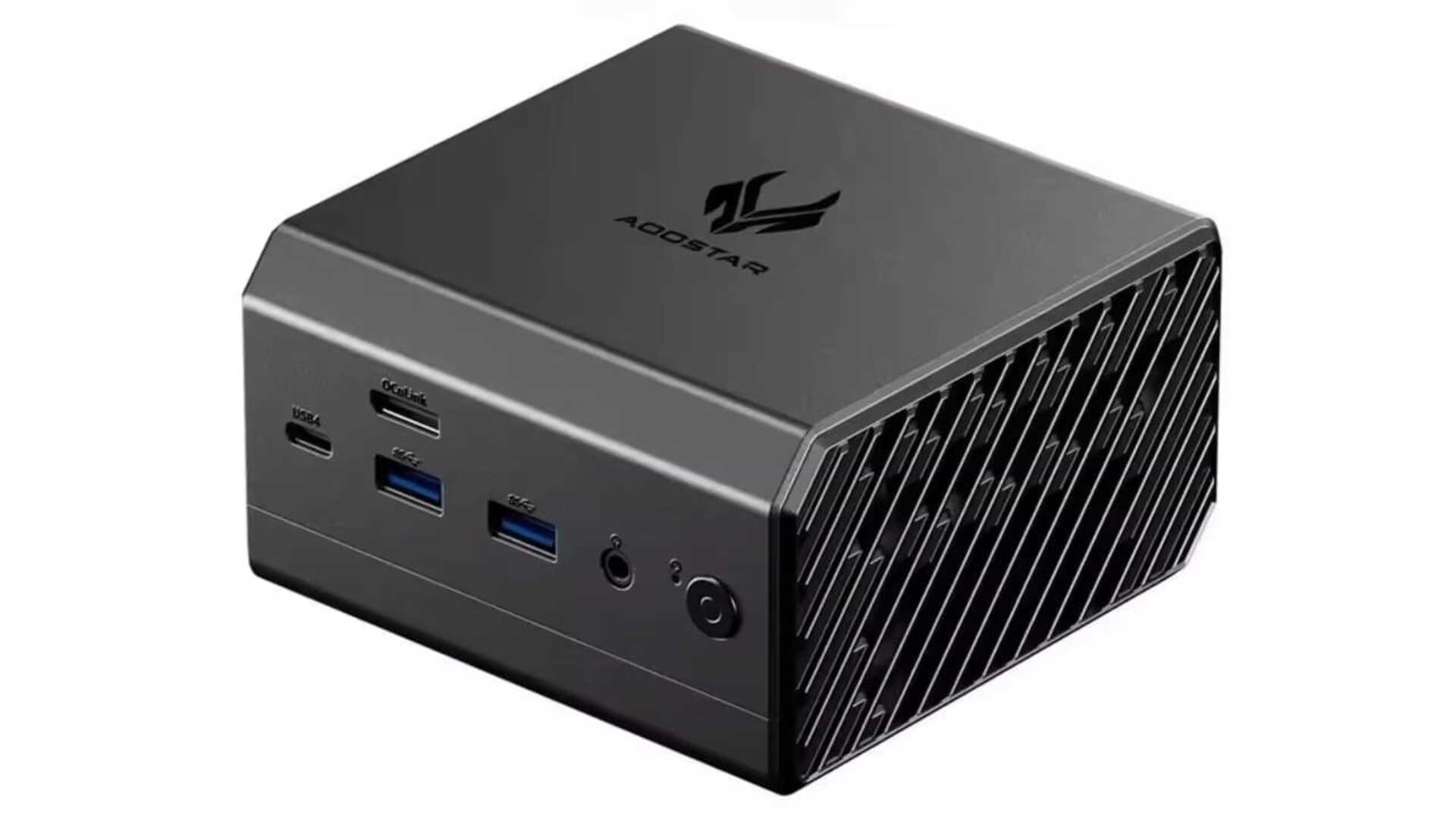
Rank 14062Aoostar GT37 mini PC delivers 12-core performance, 80 TOPS of AI, and it still fits in your handThe powerful Radeon 890M GPU will surprise youAdd an external GPU, and it becomes a desktop killer with real bite
The Aoostar GT37 is a compact mini PC powered by AMD’s Ryzen AI 9 HX-370 processor, designed to handle demanding workloads in professional, creative, and gaming contexts.Built on a 4nm process, the CPU features 12 cores - four high-performance Zen 5 and eight efficiency-focused Zen 5C cores - alongside a dedicated AI engine capable of up to 80 TOPS.It reaches peak speeds of 5.1GHz and supports 16 threads, making it a capable option for users who need consistent multi-core performance.
AI performance in a small form factor
Housed in a frame not much larger than a drink coaster, the GT37 makes a strong case as one of the best in its class, particularly for those seeking workstation-level power in a small, affordable form factor.Graphics are handled by the integrated Radeon 890M GPU based on the RDNA 3.5 architecture, featuring 16 compute units and clock speeds up to 2.9GHz. It offers solid performance for gaming and graphics-heavy applications.For users needing more GPU power, the front-facing OCuLINK port supports external GPUs at up to 64Gbps, extending the GT37’s use cases from compact gaming to professional content creation.The GT37 comes with 32GB of LPDDR5X RAM at 8000MHz in a dual-channel configuration. The memory is soldered to the board and paired with a 1TB PCIe 4.0 NVMe SSD, upgradable to 4TB.A dedicated fan cools the storage, helping to maintain performance during sustained workloads.Despite its small size (4.41 x 2.36 x 4.41 inches), the device includes extensive I/O: Wi-Fi 7, Bluetooth 5.3, dual 2.5G Ethernet ports, USB4, HDMI 2.1, DisplayPort 2.1, USB-A 3.2 and 2.0 ports, and a 3.5mm audio jack.It supports up to three displays, including 8K at 60Hz with HDR.The mini PC ships with Windows 11 Pro but also supports Linux. A VESA mount is included for easy attachment to monitors or walls. The system is priced at $829 and includes a 12-month warranty.
You might also like
These are the best mobile workstation you can buy right nowWe've also listed the best portable monitors for every budget and resolutionGlobal bean counters are struggling to find value for money in anything AI
-

Picture from techcrunch.com
Rank 14063 -

Picture from techcrunch.com
Rank 14064 -
Picture from techcrunch.com
Rank 14065 -

Picture from techcrunch.com
Rank 14066 -

Picture from ichef.bbci.co.uk
Rank 14067 -

Picture from ichef.bbci.co.uk
Rank 14068 -

Picture from ichef.bbci.co.uk
Rank 14069 -

Picture from ichef.bbci.co.uk
Rank 14070 -

Picture from ichef.bbci.co.uk
Rank 14071 -
Picture from o.aolcdn.com
Rank 14072The US Patent and Trademark Office has refused one of Tesla's initial attempts to trademark the term "Robotaxi" because it believes the name is generic and already in use by other companies, according to a filing spotted by TechCrunch. Tesla was hoping to trademark the term in connection to its planned self-driving car service, but now it'll have to reply with more evidence to change the office's mind.
The main issue outlined in the USPTO decision is that "Robotaxi" is "merely descriptive," as in its an already commonly used term. A robotaxi typically refers to the self-driving cars used in services like Waymo. As long as Silicon Valley has believed money could be made selling autonomous vehicles (and the rides you can take in them), the term has been in use. That means Tesla can't trademark "robotaxi" because the "term is used to describe similar goods and services by other companies," the USPTO writes. Like, Zoox, an Amazon subsidiary mentioned in the filing, which already refers to its product as a "robotaxi."
The application the USPTO refused was for "land vehicles; electric vehicles, namely automobiles; automobiles; and structural parts therefor." As TechCrunch notes, Tesla has trademark applications out for other names, like "Robobus," that might get a different response. The company is also apparently facing difficulties locking down trademarks for "Cybercab," the name of the self-driving car designed to be used in Tesla's robotaxi service.
The company formally introduced the Cybercab and the loose outline of its robotaxi service at an event in October 2024 called "We, Robot." The Cybercab has no steering wheel or pedals, and is supposed to rely on inductive charging for power in between rides. The event also featured the introduction of the Robobus and another appearance from Tesla's in-development Optimus robot.
Tesla needs to provide "fact sheets, instruction manuals, brochures, advertisements and pertinent screenshots of [its] website" to help make the case for how it'll use the "robotaxi" trademark, should the USPTO change its ruling. Considering the difficulty of pulling off a self-driving car service, though, not being able to trademark names seems like the least of Tesla's challenges.This article originally appeared on Engadget at https://www.engadget.com/transportation/evs/teslas-robotaxi-brand-might-be-too-generic-to-trademark-220429561.html?src=rss
-

Picture from ichef.bbci.co.uk
Rank 14073 -

Picture from cdn.mos.cms.futurecdn.net
Rank 14074Samsung's next Galaxy Unpacked is a virtual-only affair on May 12, 2025The invite teases an ultra-thin phone with the text "Beyond slim"All signs are pointing to a formal reveal of the Galaxy S25 Edge, which will feature a 200MP wide lens
Ever since Samsung teased its ultra-slim variant of the Galaxy S25 family at its January 2025 Unpacked, and since then brought the Galaxy S25 Edge on a bit of a world tour with a stop at MWC, we’ve all been wondering when the tech giant would share more. Well, now we know.Samsung’s just dropped invites for its next Galaxy Unpacked, and it’s an entirely virtual affair with a clear focus – the Galaxy S25 Edge. Even with its ultra-thin design that will land at under the Galaxy S25's 7.2-milimeters, it's still poking its way through the center of the invite.The invite image reveals, under a cloth of some kind, the super slim silhouette. It’s accompanied by “Beyond slim” on the left and “May 12, 2025 Live on samsung.com” on the right.That basically gives it away, and Samsung will stream this Galaxy Unpacked at 8pm ET/5pm PT/1am BST/ (10am AEST on May 13, 2025 in Australia) live on its site and on YouTube.
(Image credit: Samsung)
A shared blog post from Samsung details much more on this addition to the Galaxy S lineup and actually names the Galaxy S25 Edge, writing, “This is more than a slim smartphone.” It teases that the Galaxy S25 Edge will offer flagship-level performance with ‘superior portability’ without compromising on any of it, seemingly.It also confirms a key spec for the Edge that’s been rummored alongside many others. “Even with its slim form, Galaxy S25 Edge’s 200MP wide lens continues Galaxy’s iconic camera experience, delivering pro-grade capabilities to intuitively capture the world around you,” thus confirming the ultra-slim phone will have a very sharp main shooter. It will also match the Galaxy S25 Ultra, which has the same sensor for the primary lens.Samsung’s really highlighting that it took a lot of engineering work to make the Galaxy S25 Edge a reality and that it didn’t have any shortcomings that would have dropped it from the mainline Galaxy S family of phones. Much of the May 12 Galaxy Unpacked will likely delve into how this device came to be.
(Image credit: Future/Lance Ulanoff)
We still expect the Galaxy S25 Edge to arrive at a premium price, somewhere above $999 / £999 / AU$1,699. It should feature the Qualcomm Snapdragon 8 Elite for Galaxy inside, considering that’s powering the rest of the lineup. We also expect it to match 12GB of RAM, which should make it a speedy and efficient phone, but we also don’t yet know what size battery Samsung’s been able to squeeze inside the svelte frame.The latest rumors point to the Galaxy S25 Edge having a titanium frame, weighing only 163 grams, and only 5.85 millimeters thick. That same report claims the Galaxy S25 Edge will have a 6.7-inch AMOLED screen with a 120Hz refresh rate, which aligns with previous reports.
The best news is that we’re just days away from this being official and Samsung telling us all about the Galaxy S25 Edge. It’s also the start of a new category of sorts – ultra-slim, premium smartphones for the masses, and Samsung will, in turn, be beating Apple to the punch before the much-rumored iPhone 17 Air sees the light of day.Now, if you’re already sold on the Galaxy S25 Edge – maybe you’ve been holding out on getting an S25, S25 Plus, or S25 Ultra – Samsung is rolling out an early offer. You can sign up to reserve the next Galaxy, with no commitment to purchasing or strings attached, and score a $50 Samsung Credit towards the S25 Edge.
You can now sign up at Samsung to reserve the next Galaxy and score a $50 credit towards the next device, the Galaxy S25 Edge. As with past reserve offers, this is entirely commitment-free and doesn't cost anything.View Deal
You might also like
The Samsung Galaxy S25 Edge has just leaked in full – including specs, renders, and pricingExclusive: the Samsung Galaxy S25 Edge will have durability to match its ‘sexy’ design
-
Picture from o.aolcdn.com
Rank 14075Samsung will host a virtual Unpacked event on May 12 at 8PM ET. It streams live at the Samsung Newsroom and on the company’s official YouTube page.
The company promises a look at "the next evolution of Galaxy" devices and that it’ll unveil "more about the latest addition to the Galaxy S series." This means we’ll get more juicy tidbits about that slim Galaxy S25 Edge smartphone that was first teased at an Unpacked event in January.
What to expect: Samsung Galaxy S25 Edge
The company has confirmed via a blog post that the event will shine a light on the Galaxy S25 Edge, which was a long-rumored device before the official tease a few months ago. Samsung did give us a bit of information regarding specs. It offers a slimmer form factor than the standard S25 and includes an impressive 200MP wide camera lens.
The company also boasts that the phone will integrate with Galaxy AI to help the camera transform "into a smart lens that helps recognize what matters to create new memories." We don’t know if that translates to brand-new camera software or if the company’s referring to the pre-existing suite of AI tools available with its newer handsets.
Galaxy S25 Edge、理想的すぎるwwwめちゃくちゃほしい.... https://t.co/L1JBl8DCRD pic.twitter.com/zofJ3BLyGX— ちえほん📱モバイルドットコム (@chehonz201) January 22, 2025
We're still in the dark regarding traditional specs. Samsung’s blog post is heavy on hyperbole, calling the S25 Edge "a powerful AI companion and an engineering marvel" that merges "flagship-level performance with superior portability."
The company goes on to say the new handset "not only sets a new standard for what you can achieve with your smartphone, but it also unlocks a new era of growth for the mobile industry." We’ll find out just how true these words are on May 12.
Will this Unpacked event start and stop with the S25 Edge? That’s likely, but it’s always possible that Samsung will throw a curveball our way. Maybe the standard S25 Edge will get companion smartphones that are more powerful, like the S25+ or S25 Ultra. It’s also highly possible the company will reveal a new AI tool or two.This article originally appeared on Engadget at https://www.engadget.com/mobile/smartphones/samsung-is-hosting-a-virtual-unpacked-event-on-may-12-at-8pm-et-230026574.html?src=rss
-

Picture from ichef.bbci.co.uk
Rank 14076 -

Picture from ichef.bbci.co.uk
Rank 14077 -

Picture from ichef.bbci.co.uk
Rank 14078 -

Picture from ichef.bbci.co.uk
Rank 14079 -

Picture from ichef.bbci.co.uk
Rank 14080 -

Picture from ichef.bbci.co.uk
Rank 14081 -

Picture from ichef.bbci.co.uk
Rank 14082 -

Picture from ichef.bbci.co.uk
Rank 14083 -
Picture from ichef.bbci.co.uk
Rank 14084 -
Picture from o.aolcdn.com
Rank 14085Tesla has scrapped its plans to sell a range extender for the Cybertruck, the automaker has notified customers who have previously paid a $2,000 reservation fee for the $16,000 add-on. Based on copies of the email people have been posting on social networks and forums, Tesla will be refunding their deposits in full. It didn't say why it's no longer planning to sell the accessory, but the emails come a month after the company quietly pulled the option to add it to the vehicle from its website configurator.
The range extender is a battery pack that was supposed to be installed on the bed of the Cybertruck. It was Tesla's answer to releasing vehicles that had shorter ranges than it originally promised. When the company first unveiled the model, it said different versions would have different ranges, including one that has a 500-mile range. Instead, the long-range Cybertruck, which has the longest range, can only last for 350 miles on a single charge. As Electrek noted late last year, the battery pack was supposed to start shipping in early 2025, but Tesla pushed back its release to mid-2025 and also reduced its promised range from 470 miles to 445 miles.
Elon Musk previously said that he expects Tesla to sell between 250,000 to 500,000 Cybertrucks a year. However, a recent recall showed that the automaker sold fewer than 50,000 units over a 15-month period. It's unclear whether the company decided to pull the plug on the range extender because it's not worth manufacturing a new product for a model that's performing far below expectations, or if it has another reason altogether. Either way, the Cybertruck's battery add-on has been cancelled and won't be seeing the light of day.
BREAKING: Tesla has cancelled the Cybertruck Range Extender.“We are no longer planning to sell the Range Extender for Cybertruck. As a result, we will be refunding your deposit in full” pic.twitter.com/yb1xOqecX2— Sawyer Merritt (@SawyerMerritt) May 7, 2025
fffThis article originally appeared on Engadget at https://www.engadget.com/transportation/evs/tesla-will-no-longer-release-the-cybertruck-range-extender-004809209.html?src=rss
-

Picture from ichef.bbci.co.uk
Rank 14086 -
Picture from techcrunch.com
Rank 14087 -
Picture from techcrunch.com
Rank 14088 -

Picture from ichef.bbci.co.uk
Rank 14089 -

Picture from ichef.bbci.co.uk
Rank 14090 -

Picture from ichef.bbci.co.uk
Rank 14091 -

Picture from ichef.bbci.co.uk
Rank 14092 -

Picture from ichef.bbci.co.uk
Rank 14093 -

Picture from techcrunch.com
Rank 14094 -
Picture from ichef.bbci.co.uk
Rank 14095 -

Picture from ichef.bbci.co.uk
Rank 14096 -

Picture from ichef.bbci.co.uk
Rank 14097 -

Picture from cdn.mos.cms.futurecdn.net
Rank 14098Many organizations are finding it difficult to move Generative AI projects beyond the pilot stage into full-scale production, largely due to concerns around privacy, quality, and cost. As a result, there is a growing shift towards ‘AI agent systems’; a trend that is set to accelerate this year.An AI agent system enables businesses to build and operationalize an AI agent (an intelligent application designed to automate and enhance human productivity) or set of AI agents that can perform complex tasks by combining multiple interacting components.An AI agent system goes beyond using a single, stand-alone model to integrate a myriad of components, such as large language models (LLMs), classical machine learning (ML) models and business data and tools, to achieve very specific goals more efficiently.The rising interest in AI agent systems is no coincidence. Businesses require more than just general intelligence. They need ‘data intelligence’: a new standard of relevance, governance, precision, and trust in their data.
The rise of AI agent systems to deliver tailored solutions
Unlike general-purpose AI models that aim to answer everything (and sometimes miss the mark), AI agent systems rely on multiple underlying components to deliver a better performance for users, allowing them to simplify or entirely automate very specific tasks and objectives.The AI agents in the system have a distinct role and are created using specialized LLMs and pre-configured functions. For example, a customer support agent can collaborate with a financial forecasting agent within the same system, but each of them is performing optimally because they’re purpose-built for their domains.This approach ensures enterprises get solutions tailored to their workflows, customers, and industries—something general models struggle to deliver well. With AI agent systems, it’s not about being ‘all-knowing’; it’s about ‘exactly knowing’.
Eliminating AI uncertainty
Many UK businesses may still fear rolling out new AI projects because of errors, bias, or unpredictable outputs. AI agent systems tackle this head-on by integrating human oversight and AI-based validation mechanisms. Many organizations opt for ‘human in the loop’ grading systems combined with tools that evaluate, cross-check, and refine AI outputs before they’re deployed.These layers of validation create more trust. For enterprises, this means smoother adoption, greater confidence, and better outcomes.
Laying the groundwork for AI
To build such trusted systems, a robust data foundation is essential. Data is the lifeblood of any AI agent system - we hear this time and again. Enterprises today are racing to become data and AI companies, but the journey isn’t without challenges.There is pressure to adopt AI, with all stakeholders wanting ‘in’ but few knowing where to start. Data is everywhere, and with fragmented datasets, unifying assets becomes a headache. And lastly, governance and security become paramount as more data can often equate to greater risks.But despite these challenges, organizations are making strides, often starting with pilot projects that demonstrate ROI before scaling. This iterative approach is a strategic way to build the people, processes, and technology needed to sustain long-term AI transformations.A key part of successful AI transformations is bringing data intelligence to the forefront. Organizations can do this through modern data architectures—such as data intelligence platforms—which unify, govern, and operationalize data in one place.With natural language interfaces and private data integration, organizations can build custom models that truly understand their specific needs. These systems empower non-technical employees to more easily interact with data, democratizing AI and accelerating adoption across teams.In fact, in a recent Economist Impact report, almost 60% of those surveyed anticipate that, within three years, natural language will become the primary or sole method for non-technical employees to engage with complex datasets.
The future of AI is agentic
The future of Enterprise AI lies in building integrated systems of specialized AI agents rather than simply developing ever-larger, standalone models. This shift towards a more interconnected approach enables organizations to address complex challenges with greater trust and precision.With the right data platform, businesses can design AI agent systems tailored to their specific needs. By leveraging their own data, organizations can create domain-specific AI solutions that deliver reliable, high-quality results. This is made possible through the integration of key technologies, such as vector databases for precise data retrieval, fine-tuning and prompting for specialized reasoning, and monitoring frameworks to ensure safety and compliance.The AI industry is evolving at an unprecedented pace, with AI agent systems redefining what’s possible. These systems go beyond solving problems; they enhance confidence, create value, and expand AI’s potential. For businesses ready to embrace this transformation, the future of AI is not just about ‘general intelligence’ but a new era of ‘data intelligence’.
We've compiled a list of the best business intelligence platforms.
This article was produced as part of TechRadarPro's Expert Insights channel where we feature the best and brightest minds in the technology industry today. The views expressed here are those of the author and are not necessarily those of TechRadarPro or Future plc. If you are interested in contributing find out more here: https://www.techradar.com/news/submit-your-story-to-techradar-pro
-

Picture from ichef.bbci.co.uk
Rank 14099 -
Picture from ichef.bbci.co.uk
Rank 14100


