News
This constantly updated list features the latest and most important news articles, ranked in order of significance. The top stories highlight major developments, breaking news, and critical updates across various topics, ensuring you stay informed about the most pressing issues. As new articles are added, the list adapts to reflect the latest priorities, keeping the most impactful stories at the forefront. Whether it’s global events, technology breakthroughs, or industry trends, this dynamic list ensures you always have access to the most relevant and timely information.
-

Picture from ichef.bbci.co.uk
Rank 13551 -
Picture from o.aolcdn.com
Rank 13552Netflix has released its first teaser trailer for the final season of Squid Game. Based on the scenes the streaming service included in the video, the games will be restarted after a failed uprising led by the show's protagonist Seong Gi-hun, or Player 456. While Season 2 ended on a cliffhanger, it hinted strongly that the rebellion will fail to end the games right then and there.
In the teaser, Player 456 could be seen being brought back into a room full of players inside a coffin. And after he wakes up, the games resume, players are segregated into groups, mother and son are separated and, curiously, a baby could be heard crying by the end of the teaser. We also get glimpses of Jun-ho as he searches for the island where the games are being held and his brother In-ho, who resumes his role as the games' Front Man after pretending to be a player in the previous season.
Squid Game is a Korean survival thriller with themes revolving around class struggle and social inequality. In the story, ordinary people, often buried in debts and desperate to earn money, are locked in a facility where they're forced to play games. Only one person wins the pot of money players collectively earn by winning games. Everybody else? Well, they die. Seong Gi-hun, the first season's winner, chose to come back for another round in order to dismantle the organization running the games, and the third season will show the culmination of his efforts. Squid Game season 3 arrives on Netflix on June 27.
This article originally appeared on Engadget at https://www.engadget.com/entertainment/streaming/netflix-teases-squid-games-final-season-035721654.html?src=rss
-
Picture from cdn.mos.cms.futurecdn.net
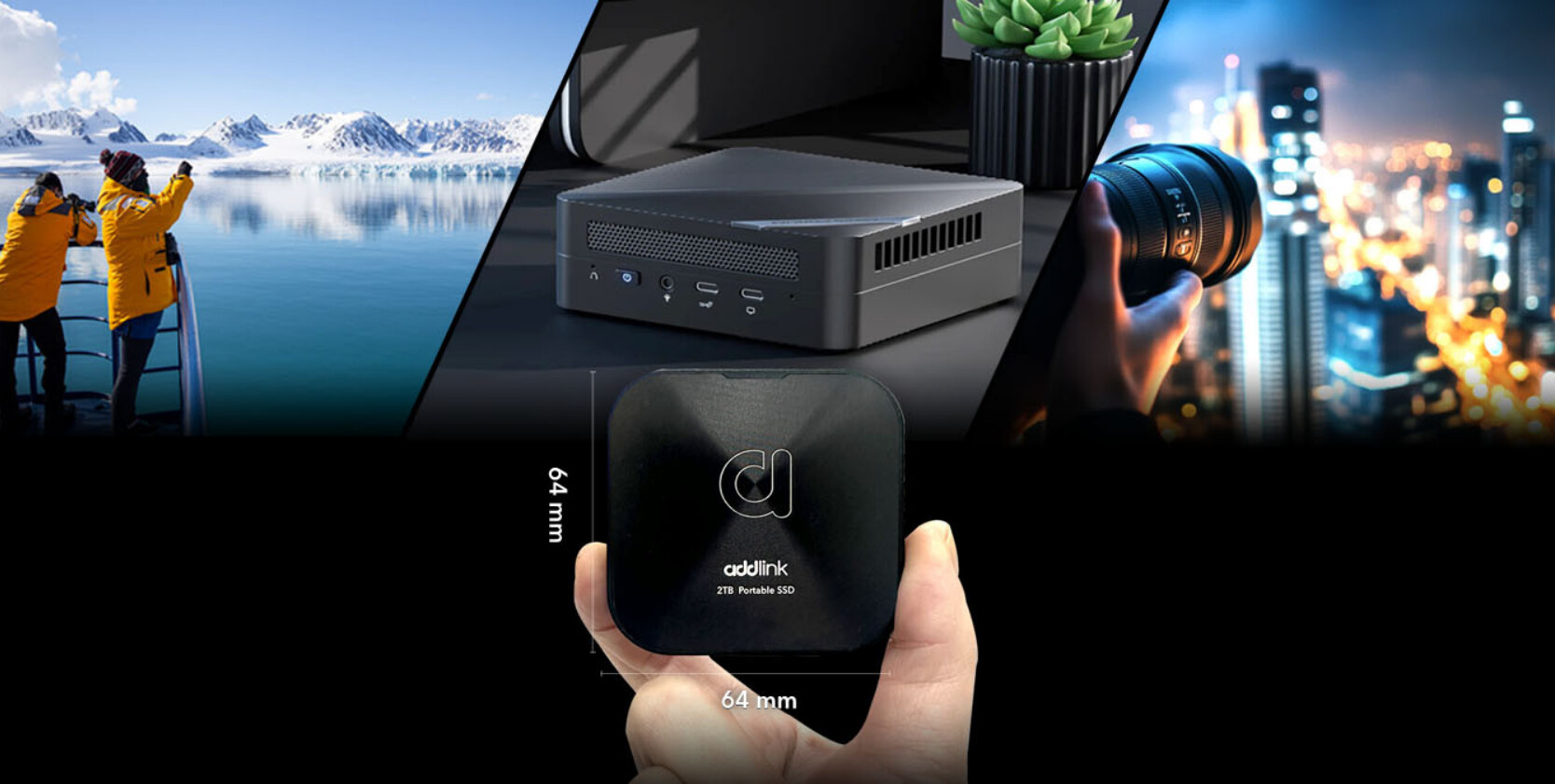
Rank 13553Addlink P30 USB 4.0 SSD can transfer 10GB in just 2.5 secondsBuilt-in MagSafe support means hands-free iPhone ProRes recording at 4K 120HzPreformatted in exFAT for instant plug-and-play across phones, consoles, and laptops
Addlink has launched its latest entry into the high-speed storage market: the P30 USB 4.0 Super-Speed Magnetic SSD.TechPowerUp reports this device supports the latest USB 4.0 standard, delivering sequential read speeds of up to 4000MB/s and write speeds of up to 3600MB/s.Designed to rival the best portable SSDs, the P30 can transfer a 10GB file in just 2.5 seconds, putting it on par with Thunderbolt 4-class devices and far ahead of traditional external HDDs.
Perfect tool for fast data transfer
Addlink describes the P30 as, “the perfect tool for anyone who needs their data fast, accessible, and secure - wherever life takes them.”One standout feature is its built-in MagSafe compatibility, allowing users to magnetically attach the SSD directly to an iPhone. This enables hands-free, high-resolution ProRes video capture at 4K 120Hz, ideal for content creators.The P30 includes a USB Type-C port for broad platform compatibility, including support for gaming consoles, laptops, Android devices, and Linux systems. It comes preformatted in exFAT, enabling immediate use without the need for reformatting.Weighing about 45 grams and measuring just 64 x 64 x 12 mm - roughly the size of a credit card - the P30 is available in 1TB, 2TB, and 4TB capacities, all backed by a 3-year warranty.It supports operating temperatures from 0°C to 70°C, though actual performance of this fast external SSD may vary depending on host device, interface, and usage conditions.“The P30 USB 4.0 Super-Speed Magnetic SSD is expertly designed for mobile users, offering seamless support for Apple ProRes recording. With MagSafe compatibility, it effortlessly attaches to your iPhone, providing a convenient, hands-free storage solution,” said Addlink.
You might also like
These are the fastest SSDs you buy right nowWe've listed the best NAS devices aroundAI is fueling the biggest financial scams ever - cyber safety experts are fighting back
-

Picture from ichef.bbci.co.uk
Rank 13554 -

Picture from ichef.bbci.co.uk
Rank 13555 -

Picture from ichef.bbci.co.uk
Rank 13556 -

Picture from ichef.bbci.co.uk
Rank 13557 -

Picture from ichef.bbci.co.uk
Rank 13558 -

Picture from ichef.bbci.co.uk
Rank 13559 -

Picture from ichef.bbci.co.uk
Rank 13560 -

Picture from ichef.bbci.co.uk
Rank 13561 -

Picture from ichef.bbci.co.uk
Rank 13562 -

Picture from ichef.bbci.co.uk
Rank 13563 -

Picture from ichef.bbci.co.uk
Rank 13564 -

Picture from ichef.bbci.co.uk
Rank 13565 -

Picture from cdn.mos.cms.futurecdn.net
Rank 13566B&O A1 3rd Gen promises more bass in the same designUp to 24 hours of battery life, and pairing with other A1 models$349 / £299 is a price hike over the previous model
Bang & Olufsen has announced the Beosound A1 3rd Gen, which is the new version of B&O's mid-tier portable Bluetooth speaker. The new model promises more powerful sound, a few new features, and longer battery life, and comes at a higher price than its predecessor, even before you take discounts on the old model into account.I've been a fan of the B&O A1 2nd Gen since its release in 2020 – it's the Bluetooth speaker I use at home, and I love it for its stylish aluminum design, more full sound than other mid-size Bluetooth speakers, and generous battery life that means it's always ready to go even if it's been forgotten for a season.According to B&O, the A1 3rd Gen has "the largest woofer in its class", meaning more powerful and "deeper" bass output (with a claimed bass SPL of 64dB, which is 2dB higher than the 2nd Gen). This sounds great to me, assuming it's well-balanced with the mids and treble – as I mentioned above, the real trick of the B&O A1 2nd Gen is that it managed a broader and more well-rounded sound than similar offerings from JBL and Sonos.The battery life has increased from 18 hours to 24 hours, which is really great for any of the best Bluetooth speakers, let alone a smaller option – even the five-star JBL Flip 7 is limited to 16 hours max with its battery extension feature active.
(Image credit: Bang & Olufsen)
Upgrades other than these are more subtle, though. The wireless connection is Bluetooth 5.1, which seems a little behind the times – so many new Bluetooth speakers today are arriving with newer versions that include Auracast support for audio sharing across multiple speakers.B&O hasn't gone for that kind of option, but it can be used in a stereo pair with either another A1 3rd Gen, or an A1 2nd Gen (I obviously have my eye on that feature…).The Alexa voice assistant support of the 2nd Gen seems to have been dropped, but there is still a mic – you can use it as a speakerphone. You have Microsoft Swift Pair and Google Fast Pair for easily connecting to those devices.
(Image credit: Bang & Olufsen)
The design looks largely unchanged from the previous model, which is alright by me – I really like the 'button' shape, and the clean metal finish. It's not quite as pocketable as the JBL Flip 7, but it's fairly thin and can slip into a bag easily enough anyway.As before, it comes with a strap attached and is IP67 rated, so it can stand up to a light dunking in water or roaming among the sand like the best waterproof speakers.B&O says this is also the first ever Bluetooth speaker to be "Cradle to Cradle Certified (Bronze Level)", meaning that it's made with sustainable practices in mind, and has modularity in the design that makes it repairable in the future – including a battery that can be replaced in a B&O service center.There are three colors: Natural Aluminium, Honey Tone, and Eucalyptus Green. I don't like the latter as much as the beautiful Forest Green finish B&O used on the A1 2nd Gen and the B&O Explore – which is maybe my favorite finish on any tech product ever – but it's still very nice, as is the Honey Tone.The stumbling block here is really the price. At $349 / £299, it's more expensive than the $299 / £259 official price of the A1 2nd Gen – but that model also regularly falls to around £180/$200, and it's only at the cheaper price that I generally recommend people buy it.At twice the price of the JBL Flip 7, it's going to have to work hard to feel worth it. But hey, the last version managed it for me.
You might also like…
The impressive Beats Pill portable speaker is landing in two gorgeous new colors, ready for summerSony adds three Bluetooth speakers to its bass-hungry ULT range: meet Tower 9, Field 5, and Field 3B&O’s latest limited edition speaker is also a portrait of David Bowie that looks as good as it sounds
-

Picture from ichef.bbci.co.uk
Rank 13567 -

Picture from ichef.bbci.co.uk
Rank 13568 -

Picture from cdn.mos.cms.futurecdn.net
Rank 13569A new era of AI is emerging and it’s more autonomous than ever before. Agentic AI is set to transform the way people interact with technology, marking a paradigm shift in artificial intelligence.Unlike generative AI (GenAI), agentic AI is proactive, and can solve complex problems and make decisions autonomously without human oversight. While these capabilities will prove hugely beneficial for enterprises, it is highly likely that ransomware groups will also look to exploit agentic AI to execute more effective attacks with much greater efficiency, at scale.Security professionals should take note because today’s emerging agentic AI models are set to revolutionize cybercriminal tactics and supercharge the ransomware exploits of bad actors. With that in mind, let’s take a look at how security teams should prepare for the floodgate of possibilities on the horizon.
Agentic AI – what’s different?
Back in 2022, the release of ChatGPT ignited concerns among security experts who postulated that threat actors could leverage generative AI to do bad things. Fortunately, these predictions about an AI security apocalypse proved unfounded. Instead, cybercriminals used gen AI tools to streamline tasks such as generating and debugging malware code and industrializing the creation of sophisticated phishing content.It turned out that while gen AI’s coding and scripting abilities boosted some aspects of their activities, it offered cyber-attackers limited incremental capabilities when it came to how they undertook some key malicious tasks. However, the emergence of agentic AI in late 2024 marks a whole new era in AI development and potentially changes the rules of the game where ransomware is concerned.Designed to autonomously make decisions, problem solve, and act dynamically in real-time, agentic AI systems are capable of independently pursuing complex goals with limited human supervision. Context-aware, dynamic, and highly adaptable to changing environments and events, agentic AI does not rely on human guidance to determine which potential actions to take. It goes ahead and acts.These new incremental abilities have the potential to transform how ransomware gangs overcome the technical and operational bottlenecks that, until now, have restricted their ability to launch successful attacks at scale.
The current state of play: how ransomware gangs operate
To reduce their workloads, today’s cyber threat actors will use specialist independent Initial Access Brokers (IABs) to find targets and secure a foothold in target networks. Having outsourced infiltration and paid an IAB for this access, they are able to focus on the task of identifying which assets to encrypt and the best way to deliver the malware payload and conduct the extortion.This is not as straightforward as it sounds. It requires a lot of skill and manpower to move laterally around the network, determine the best way to pivot and get from A to B, and identify where the organization's most valuable data is located - all without being detected.Today, this is a highly manual process that is difficult for humans to do reliably and efficiently. Indeed, many ransomware attacks are abandoned mid execution either due to human errors or mistakes that trigger antivirus software or data detection and response tools, or because it is simply too challenging to identify a potential payload trove of high value data.The emergence of agentic AI, however, closes the skills gap for threat actors. As well as making it easier to evade detection and launch attacks, it could also scale up the number and speed at which these attacks are executed.
Making life easier for ransomware groups
In the not too distant future, ransomware groups could be using agentic AI to boost up their ‘manpower’ and handle all the heavy lifting around identifying which assets to target and the best way to compromise these.Whether it is identifying exploitation paths of least resistance, finding ways to circumvent firewalls and EDR tools, researching and validating what data is located where, or determining which data presents the most promising target, these agents could decide the optimal point at which to execute the attack.In other words, agentic AI will be able to determine a target and figure out the most effective and efficient way to compromise it. Plus, it will automate every aspect of the attack execution process, independently handling all fetching and enumeration tasks as it navigates its way through the network and covers its tracks as it goes.In addition to lowering the skills and resource bar for threat actors, agentic AI reduces the time it takes to plan and execute a highly sophisticated attack to a matter of minutes - all of which will make it difficult for security professionals to detect and shut down threats. Ransomware gangs using agentic AI will also be able to improve the effectiveness of their attacks, and will acquire the automated resources they need to conduct multiple attacks in parallel.In summary, AI agents will make ransomware operations faster and more reliable. Requiring little or no human input, agentic AI can work in a predictable and highly efficient manner and tell ransomware gangs exactly where to focus and what to focus on.
Looking ahead: evaluating the impact
Cybercriminals have proven adept at leveraging GenAI to streamline certain aspects of the ransomware attack cycle and improve their productivity in these areas. In recent years the number of ransomware gangs using AI to hone the production of malware has grown significantly. The emergence of AI agents that can reason, plan and act autonomously is set to make ransomware attacks more scalable, more effective, and more efficient to undertake, with attack cycles reducing from weeks to near real-time.While agentic AI promises to automate, refine, and power up how ransomware gangs compromise targets on an industrial scale, security experts also predict that autonomous AI agents are set to become a critical defense tool for cyber security teams. By delegating intrusion detection and network monitoring and analysis tasks to agentic AI, security teams can up their game when it comes to detecting and shutting down cyber threats. It should also be possible to use AI agents to simulate assets that will tempt and misdirect hackers into connecting their malware and generating an intrusion alert.In terms of timelines, agentic AI is still under development and we are unlikely to see it being widely leveraged by ransomware gangs for a few years yet. This gives cyber security defenders ample opportunity to get one step ahead and develop the agentic AI tools and algorithms that will be needed to stop them.
Making proactive preparations
While organizations don’t need to worry about the immediate impacts from agentic AI right now, they should keep a finger on the pulse when it comes to its ongoing development and use. For security teams, keeping up with this fast evolving threat landscape depends on finding ways to integrate AI agents into their own defense techniques.One thing is for sure: where agentic AI is concerned the race is on. It remains to be seen who will get there first – attack or defense.
We've compiled a list of the best online cybersecurity courses.
This article was produced as part of TechRadarPro's Expert Insights channel where we feature the best and brightest minds in the technology industry today. The views expressed here are those of the author and are not necessarily those of TechRadarPro or Future plc. If you are interested in contributing find out more here: https://www.techradar.com/news/submit-your-story-to-techradar-pro
-

Picture from ichef.bbci.co.uk
Rank 13570 -

Picture from techcrunch.com
Rank 13571 -
Picture from ichef.bbci.co.uk
Rank 13572 -

Picture from ichef.bbci.co.uk
Rank 13573 -

Picture from ichef.bbci.co.uk
Rank 13574 -

Picture from ichef.bbci.co.uk
Rank 13575 -

Picture from ichef.bbci.co.uk
Rank 13576 -

Picture from ichef.bbci.co.uk
Rank 13577 -

Picture from ichef.bbci.co.uk
Rank 13578 -

Picture from ichef.bbci.co.uk
Rank 13579 -

Picture from cdn.mos.cms.futurecdn.net
Rank 13580The National Data Library (NDL) is a key element of the government's AI Opportunities Action Plan. At its heart the government is identifying five high-impact public datasets to make accessible to government agencies, businesses, and researchers, enabling innovation in healthcare, policy development, and public services.The questions are how do you build one and what are we building?
Precedents for a National Data Library
Opinions differ on how to build an NDL. One school of thought is that it should be a decentralized, federated data platform connecting existing databases and facilitating data exchange, without storing data centrally. Another argues that it should be centralized data repository.The UK Biobank is an example of the latter. It holds half a million people’s health data that can be accessed by approved academic, enterprise, charitable and government researchers. Transparency in data usage, strong security measures, and public trust in privacy protections have been key to its success.Estonia’s X-Road platform is an example of the former. X-Road is the technology underpinning a national digital identity scheme. It facilitates seamless data exchange across government agencies while maintaining decentralized data storage. The system enables Estonians to interact effortlessly with public services, from healthcare to taxation, saving time and improving efficiency.Lessons from the platform reinforce the need for interoperability, as well as the importance of ensuring that data cannot be corrupted and that it’s secure. Crucially it is also user-centric and operates on the ‘Only Once Principle’. Estonia’s citizens don’t need to know it works, just that it does. And only provide their data once, which is automatically updated across all relevant systems.
Solid Foundations Are Key to Building a Library
The proposed National Data Library will be the largest data unification project ever undertaken by any country. Regardless of what it contains and how it’s used, the foundations are the same: high quality, trusted data.Digital transformation efforts in the NHS are a perfect example of the complexity of modern master data management. Our health system contains the largest healthcare dataset in the world, which will make a fitting centerpiece of the NDL’s collection. Although the NHS is referred to as a singular – the ‘NHS’ it is a collection of departments, commissioning and provider organizations, regions and systems.Complexity increases further as it needs to coordinate care across local authorities and social care, particularly as our population is aging and creating pressure on hospitals. Patient data is currently siloed across legacy systems, fragmented IT infrastructure often without common data formats and/or standards and is often incomplete, outdated and/or inaccurate. All of which regularly results in duplicate entries in different (siloed) repositories. The goal for the NHS is to create a single view of truth by data matching across these multiple data sources.
The Modern Data Management Transformation Challenge
Traditional Master Data Management has an inherent data-quality problem. These models take an age to ingest source system feeds that are often beset by data quality issues. They also rely on data matching, which compares each data string and applies a score across it to create a record-to-record match.These probabilistic matching engines use algorithms that evaluate and score the matches. All of which is unideal for patient records that have several variations, because they might have multiple identifying attributes. Variations in personal data—such as name inconsistencies (e.g., Eliza vs Elizabeth)—can result in inaccurate matches, making it difficult to create a single, accurate record for each citizen.A more powerful approach to managing patient and citizen data, which is essential for unifying data across siloes, is Entity Resolution (ER). ER uses a schema-agnostic model to save data engineering teams time and money from performing preliminary data conversions. ER leverages all available records to create the most accurate possible representation of an individual’s data, minimizing errors and enhancing the reliability of government datasets.Crucially for public sector datasets that are constantly being added to, ER allows for continual data refresh for all the applications and services built on top of the platform.
Lessons from the NHS for the National Data Library
The Federated Data Platform (FDP), currently being implemented by NHS England, provides a glimpse into how the National Data Library could function. The FDP aggregates local healthcare data to enable faster, more coordinated care at a regional level, reducing inefficiencies caused by fragmented systems.If expanded, a national-scale data platform could unify health records across the NHS, allowing for a single patient record accessible via the NHS app. This approach recognizes that citizens engage with multiple public services across different regions, requiring a seamless data-sharing framework.
Enhancing Public Services Through Contextual Data Sharing
As mentioned, the government’s approach to the National Data Library will focus on identifying five key public datasets that can deliver the most immediate impact. However, data alone is not valuable without a clear strategy for its application.One promising example is using the NDL to enable cross-departmental data sharing between the NHS and the Department for Work and Pensions. By linking healthcare and employment data, policymakers could gain deeper insights into the connections between health outcomes and socioeconomic factors. Additionally, integrating benefit eligibility verification within healthcare services could reduce fraud and ensure that resources are allocated to those in genuine need.Seamless interoperability between government systems will be essential to maximizing the benefits of the NDL, allowing departments to communicate efficiently and reducing the need for manual data processing.
If You Build It, They Will Come
The government’s vision for a National Data Library is ambitious, but its potential to transform public services is unparalleled. While the exact structure of the NDL is yet to be finalized, the journey toward its creation is just as important as the outcome.
We've compiled a list of the best IT management tools.
This article was produced as part of TechRadarPro's Expert Insights channel where we feature the best and brightest minds in the technology industry today. The views expressed here are those of the author and are not necessarily those of TechRadarPro or Future plc. If you are interested in contributing find out more here: https://www.techradar.com/news/submit-your-story-to-techradar-pro
-

Picture from cdn.mos.cms.futurecdn.net
Rank 13581A UK business is adopting AI once every 60 seconds, AWS research claimsStartups are twice as likely to have a strategy than large enterprisesA lack of skills is slowing down businesses, with recruitment taking an average of 5.5 months
AI adoption in the UK has grown by 33% in the past year, with 52% of UK businesses on board with the tech compared with 39% last year, a new report has claimed.Adoption as accelerated to the point that one business is adopting new AI tools and strategies every 60 seconds, research from AWS says.Benefit realization is also becoming more apparent, with 92% of AI-adopting businesses now reporting an increase in revenue, compared with 64% in 2024, however Amazon's report reveals a discrepancy between different business types and the need for further work.
UK businesses are adopting AI every 60 seconds
Although large enterprises and startups have similar adoption rates of 55% and 59% respectively, startups seem to be more prepared for shifts in technology, with more than double (31%) having comprehensive AI strategies compared with their large enterprise counterparts (15%).Besides needing to identify a clear path, businesses are also struggling with the ongoing skill shortage, with nearly two in five (38%) citing a lack of skills as a key barrier, up from 29% last year.Nearly half (46%) say this is now slowing down their business, with the average company spending five and a half months to hire talent with the required digital skills. AI literacy is expected to be a highly desired skill across 47% of new jobs within the next three years, highlighting a key area that prospective employees should focus on to help themselves stand out against their peers.In line with Britain's effort to become an AI leader, AWS has announced a UK initiative to train 100,000 people in AI skills by the end of the decade, confirming collaborations with universities such as Exeter and Manchester.This, Amazon said, will help the UK unlock £45 billion per year in unrealized savings and productivity benefits across the public sector alone – a hefty sum prediction that comes from the Government's own figures."If we don’t address the key barriers to adoption in the UK – most notably digital skills – we risk the emergence of a two-tier AI economy," AWS Director of Enterprise Strategy Phil Le-Brun explained.
You might also like
We've listed the best AI writers around right nowEnhance your output with the best productivity appsRushed AI deployments and skills shortages are putting businesses at risk
-

Picture from ichef.bbci.co.uk
Rank 13582 -

Picture from techcrunch.com
Rank 13583 -

Picture from cdn.mos.cms.futurecdn.net
Rank 13584Microsoft has revealed a useful discount for Windows 365 as it looks to encourage Windows 10 users to update ahead of its end of life in October 2025.New users can now get 20% off all Windows 365 plans for the remainder of their Enterprise Agreement contract period, or the first year of their Windows 365 subscription (whichever is shorter).The offer runs from May 1, 2025, to October 31, 2025, meaning it is tailor-made to appeal to those Windows 10 stalwarts who are still holding out on updating their devices, offering them a taste of what life in the next generation of office software will be like.
Windows 365 or Windows 11?
"The 20 percent discount on all Windows 365 plans for new customers underscores Microsoft's unwavering commitment to supporting our customers during these uncertain times," a blog post by Stefan Kinnestrand, Vice President, Modern Work at Microsoft, said."In these uncertain times, marked by fluctuating economic conditions and supply chain concerns, businesses face numerous challenges. Amidst these complexities, it is even more important to adopt new technologies in the age of AI to stay competitive and secure."Kinnestrand emphasised that companies can check if their current Windows 10 PCs are eligible for a free upgrade to Windows 11, purchase a new and more secure Windows 11 PC, or move to the cloud with Windows 365.Microsoft has been pushing its upgrades for some time, with the official Windows 10 end of life coming on October 14, 2025.After this time, users will not receive free Windows product or security updates, potentially leaving them open to cyberattack - however subscribing to a Windows 365-powered Windows 11 Cloud PC would grant them access to such updates.Around one in five laptops using the software are estimated to be running hardware incompatible with Windows 11, and without a proper transition plan, these devices could end up consigned to landfill, creating a surge in e-waste as companies upgrade their IT infrastructure.Via The Register
You might also like
Windows 10 goes dark in months, yet shockingly, many businesses haven't even got a plan to upgradeWe've also featured the best free software for SMBsFancy something different? We've also rounded up the best alternatives to Microsoft Office
-

Picture from ichef.bbci.co.uk
Rank 13585 -

Picture from techcrunch.com
Rank 13586 -

Picture from cdn.mos.cms.futurecdn.net
Rank 13587Former PlayStation boss Shuhei Yoshida knew the cost of games would increase "sooner or later"Yoshida says inflation and production costs are the cause, so more expensive games were inevitableHe doesn't know if Rockstar Games would increase the price of Grand Theft Auto 6, but thinks "a balance must be found between production costs and game prices"
Former Sony Interactive Entertainment executive Shuhei Yoshida has said that the recent rise in the cost of games "was going to happen sooner or later" due to inflation and production costs.In a new interview with PlayStation Inside, Yoshida was asked about the increase in game prices, specifically regarding Nintendo Switch 2 games, like Mario Kart World, which will now cost upwards of $80, and if he thinks this will affect other studios and publishers.The ex-PlayStation boss explained that he predicted the rise in prices would happen eventually, mainly due to inflation and the cost of resources, but didn't think Nintendo would be the one to kick it off."I think it was going to happen sooner or later, maybe not from Nintendo, but it was going to happen eventually," said Yoshida. "We live in contrasting times, where inflation is real and significant, but people expect games that are ever more ambitious and therefore expensive to develop to cost the same. It’s an impossible equation. Everything in video games today is more advanced and more technologically demanding than ever before, and therefore requires more resources."Each publisher or manufacturer sets the price of its games, of course, but in the end the heart of the matter lies in production costs. And that’s why industry actors are so keen to diversify their revenues, in order to continue producing the AAA games that the public buys before anything else."Just last week, Microsoft raised the prices of its Xbox consoles and accessories, with some first-party games expected to release at $80 later this year. Elsewhere, Sony recently upped the prices of its PS5 consoles.Although there is a very obvious shift happening within the industry, Yoshida doesn't know if studios like Rockstar Games would consider setting the price of Grand Theft Auto 6 higher, but that "a balance must be found between production costs and game prices"."So I don’t know if Rockstar will jump at the chance to set the price of GTA 6 at 90 euros or more, to speak with your currency, but the situation is this. And we could even add subscription platforms and games as a service, which, while providing huge revenues in their own right, also help to finance AAA down the line."In any case, a balance must be found between production costs and game prices. GTA 6 will obviously be a case in point, but if you take the example of Clair Obscur: Expedition 33, the game is just as phenomenal visually, despite the fact that the team only has around thirty people. This is one of the ways forward, I think, because you can make excellent games with tighter teams and budgets without compromising quality."
You might also like...
Nintendo Switch 2 pre-orders live: latest UK stock updates as My Nintendo Store's pre-order date arrives, while US pre-orders remain delayedHere are the Nintendo Switch 2 launch games that you'll be able to pick up and play on June 5The latest Nintendo Switch update makes it impossible to play the same digital game while connected to the internet on two systems at the same time
-
Picture from cdn.mos.cms.futurecdn.net
Rank 13588The foldable iPhone will reportedly have a smaller crease than other foldable phonesIt's also said to have a higher-quality hinge, likely leading to improved durabilityAnd it could launch as part of the iPhone 18 series
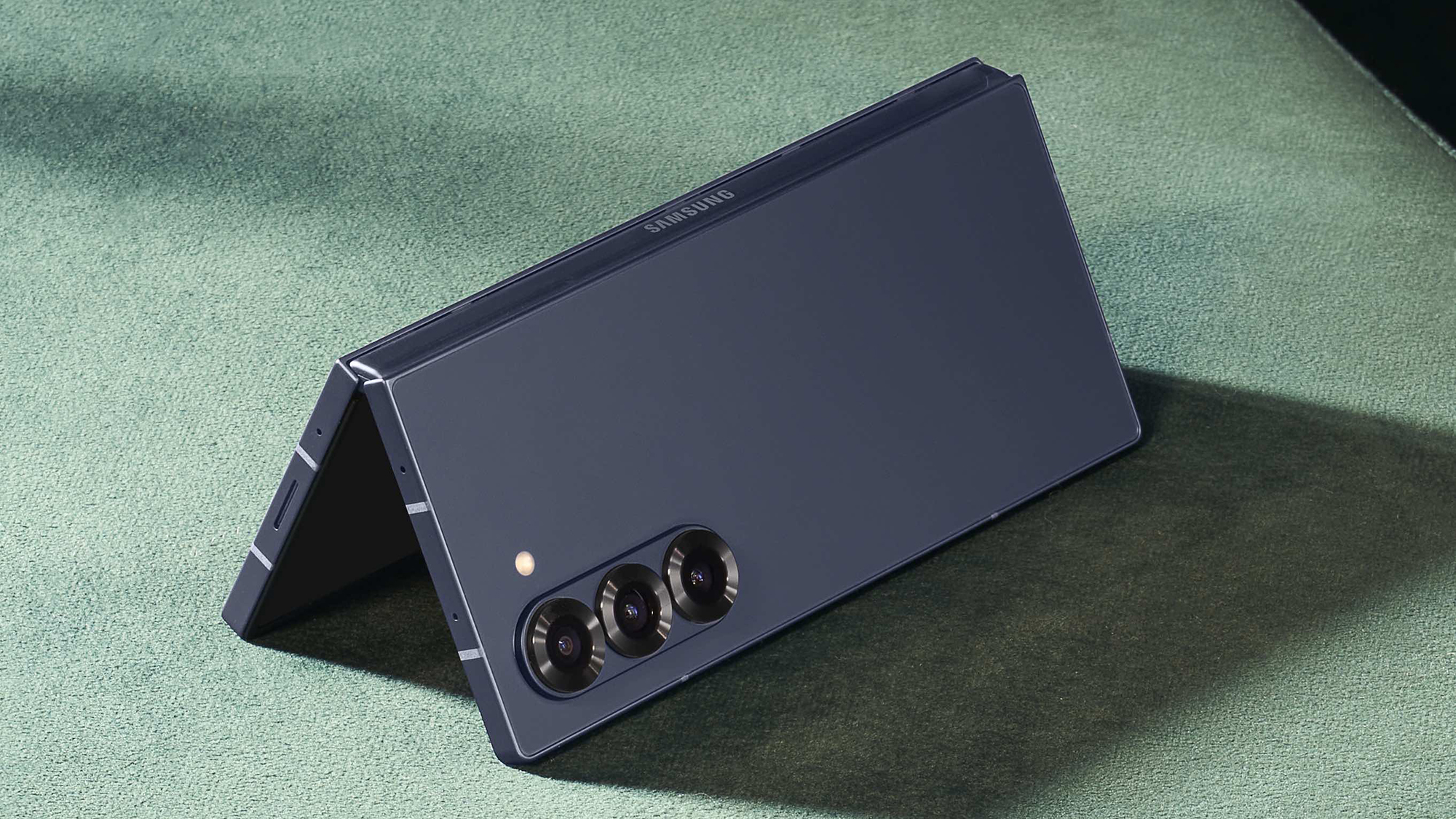
Apple is entering the foldable phone market very late in the day, as while Samsung is expected to launch the seventh generation of its Galaxy Z Fold and Galaxy Z Flip models this year, Apple’s first foldable probably won’t land until 2026. But when it does, it could come with some key advantages.According to Bloomberg's resident Apple expert Mark Gurman (via GSMArena), the foldable iPhone will have two major advantages over other foldable phones, with the first of these being a “nearly invisible” crease in the foldable screen.While Samsung and other foldable phone makers have been gradually decreasing the prominence of the crease in their phones – which appears where the display folds in the middle – they still haven’t eradicated it entirely, and it sounds like the foldable iPhone may come close to doing so.
The Samsung Galaxy Z Fold 6 has a visible crease (Image credit: Future / Lance Ulanoff)
A tough hinge for the top iPhone 18 model
Secondly, Gurman claims that the foldable iPhone will have a "much higher-quality hinge" than current foldables. He doesn’t expand on that tip, but we’ve previously heard that the phone's hinge might use liquid metal, which could improve durability and help reduce the size of the crease.We’re not sure how much of a selling point a more durable hinge will really be, though it certainly sounds desirable. But a foldable phone with little to no crease in the display is likely to prove popular, especially one with Apple branding.What's more, the foldable iPhone could be positioned as the highest-end iPhone, rather than as part of a separate smartphone series with "a niche alternative design," according to Gurman.That sounds reminiscent of how Apple has now positioned its mid-range models as part of the main line; it recently ditched the ‘SE’ branding and instead released an iPhone 16e. So, if the foldable iPhone does land next year, it may well include ‘iPhone 18’ in its name.We still probably have over a year to wait, though, so while Gurman has a great track record for Apple information, we’d still take all of this with a pinch of salt.
You might also like
The iPhone 17 could miss out on a long-awaited display upgrade – here's why Apple fans are upsetThe iPhone 17 Pro looks chunky in the latest leak, but it could still sell better than the sleek iPhone 17 Air'Those are so ugly': new iPhone 17 dummy unit photos show all four models side by side – and the internet isn’t impressed
-

Picture from ichef.bbci.co.uk
Rank 13589 -
Picture from cdn.mos.cms.futurecdn.net
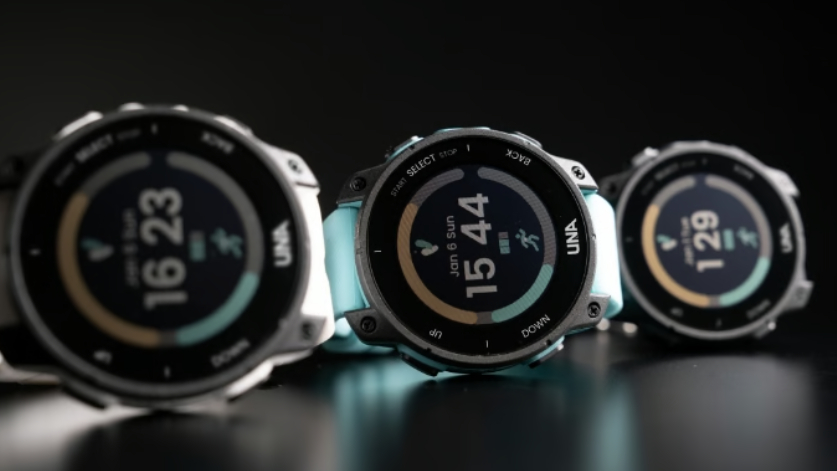
Rank 13590UNA Watch is a new sustainable smartwatchThe Edinburgh-based company just closed its Kickstarter campaignMore than 1,200 people have backed its first watch to the tune of $330,000, including a host of potential developers
Sustainable wearable outfit UNA Watch has secured more than $330,000 in funding from its Kickstarter campaign in just over four weeks, ahead of the planned launch of its first watch.As we've previously reported, UNA Watch is a sustainable wearable with a unique, modular design, and features GPS, health monitoring, and 10-day battery life.The USP? It can be put together like Lego, and its modular design means it's both repairable and upgradeable in a way that owners of the best Apple Watch models can only dream of.Edinburgh-based UNA Watch has now closed its Kickstarter, having garnered support from 1,249 backers and raised a cool £251,276 (about $335,000).
Developers flock to UNA Watch
(Image credit: UNA)
As well as proving popular with smartwatch fans, the UNA Watch has also generated excitement among developers, who are flocking to be first in line to buy one. UNA Watch offers both a Software Development Kit (SDK) and a Hardware Development Kit (HDK), which will let developers code their own apps and create new sensors and hardware modules.It's a similar open-source approach to the one that made Pebble popular back in the day, and UNA has confirmed to TechRadar that one in six backers has bought the company's Development tool, suggesting that a high percentage of backers are developers.UNA is targeting an estimated delivery date of August 2025 for its first Kickstarter packages.
You may also like
UNA Watch is the sustainable wearable that wants to replace your Apple WatchNew figures claim the smartwatch market just shrunk for the first time ever, and the Apple Watch Ultra 3 is to blameApple sued over 'false and misleading' Apple Watch claims – here's what you need to know
-

Picture from ichef.bbci.co.uk
Rank 13591 -

Picture from cdn.mos.cms.futurecdn.net
Rank 13592Apple has improved transfer speeds when switching from Android to iOSThe speed boost affects wired connections, not those over Wi-FiThe update might placate users who have faced long transfer times
If there’s one thing Apple would love more than anything, it’s for users of the best Android phones to switch to iOS. But Apple isn’t just crossing its fingers and relying on wishful thinking – it has a dedicated Move to iOS app for Android users to swiftly transfer their data to a new phone. And it’s just made a major change that could make the process a whole lot easier.That alteration affects data transfer speeds, which have now been made faster if you’re using a USB-C to USB-C cable or one that runs from USB-C to Lightning. That should help ensure switchers can get up and running faster than ever, without needing to hang around to be able to use their new device.Apple didn’t specify how much faster these transfer speeds will now be on the Move to iOS app’s download page. Yet the fact that Apple decided to point this change out in the app’s release notes suggests that it’s not merely a minor speed boost.Browse through the app’s reviews on the Google Play Store and you’ll see that data transfer speed has been a serious issue for numerous users. People have complained about the process taking hours and even timing out if it takes too long, so any improvement to transfer times should be welcomed.
Swifter setups
(Image credit: Shutterstock / Mr.Mikla)
This is not the only change that has come to the latest Move to iOS app update. The release notes also explain that “iOS tips are now displayed during migration,” while “call history and Dual SIM labels are now migrated” as well.Elsewhere, your Android voice recordings will be automatically added to either the Voice Memos or Files apps on iOS (depending on their format), and there’s expanded support for languages such as Bangla, Gujarati, Kannada, and more.Finally, while Apple has improved the data transfer speeds for wired connections, it has also added the ability to connect an Android and iOS device over Wi-Fi or a personal hotspot. While transfers using those methods won’t be as fast as over a wired connection, you now have a few more options.So, if you’re about to make the switch from Android to iOS, you shouldn’t have to wait around as long for your new phone to be set up. That sounds like good news whichever way you look at it.
You might also like
I ditched my Android for an iPhone 15 for a week – and Apple has some work to doHow to switch from Android to iPhone using Move to iOSBest apps to transfer Android phone data of 2025
-

Picture from cdn.mos.cms.futurecdn.net
Rank 13593Ticket To Cash, a ticket reselling website, kept an open databaseIt held more than 500,000 customer recordsAmong the records were partial credit card data, names, and more
Ticket reselling platform Ticket To Cash kept an unprotected database online, exposing sensitive information on hundreds of thousands of customers, experts have warned.The database was discovered by cybersecurity researcher Jeremiah Fowler, who managed to get in touch with the company and get the database locked down, sharing the details withVPNMentor.Ticket To Cash is a resale service site, using a network of thousands of partner resale sites to help users sell their concert, sports, and other tickets quickly.
Get Keeper Personal for just $1.67/month, Keeper Family for just $3.54/month, and Keeper Business for just $7/monthKeeper is a cybersecurity platform primarily known for its password manager and digital vault, designed to help individuals, families, and businesses securely store and manage passwords, sensitive files, and other private data. It uses zero-knowledge encryption and offers features like two-factor authentication, dark web monitoring, secure file storage, and breach alerts to protect against cyber threats.Preferred partner (What does this mean?)View Deal
Partial credit card data
According to Fowler, it kept a non-password-protected, non-encrypted database with 520,054 records, totaling 200 GB in size.The name of the database indicated that it contained customer inventory files in PDF, JPG, PNG, and JSON formats, Fowler explained.We don’t know how many of these documents belonged to a single person, therefore it’s difficult to determine how many people are affected. We can assume that it’s no more than 520,000.A “limited sampling” of the exposed documents determined that the database held “thousands” of concert and live event tickets, proof of ticket transfers, user-submitted screenshots of receipts, and other sensitive files.Some of the documents even contained parts of people’s credit cards, as well as full names, email addresses, and postal addresses.This type of information is crucial for cybercriminals, as it allows them to engage in targeted phishing, identity theft, and possibly even wire fraud.Since Fowler did not say when the database was generated, if you’ve ever used Ticket To Cash before, you should keep a close eye on your banking statements and watch for potentially suspicious transactions.Fowler said he reached out to Ticket To Cash, but it seems the company never responded. It did, after the second attempt, lock the database down. We don’t know for how long it remained open, or if any threat actors accessed it in the meantime.
You might also like
Top API testing firm APIsec exposed customer data during security lapseTake a look at our guide to the best authenticator appWe've rounded up the best password managers
-

Picture from ichef.bbci.co.uk
Rank 13594 -

Picture from cdn.mos.cms.futurecdn.net
Rank 13595The Ninja Luxe Café Pro is an new version of Ninja's popular coffee makerIt has a lever-operated tamper to apply even pressure and prevent messIt's considerably more expensive than the original Ninja Luxe Café
Ninja has launched a new version of its best coffee maker, the Ninja Luxe Café, with a lever-operated tamping system that takes the guesswork out of creating a perfectly compressed puck of espresso.The Ninja Luxe Café is one of the best espresso machines we've tested, and our reviewer awarded it four and a half stars out of five thanks to its smart design, guided weight-based dosing system, handy suggested grind sizes, and very reasonable price.The new Ninja Luxe Café Pro goes one step further, taking the guesswork and mess out of tamping your coffee as well. With the new machine, there's no need to move a portafilter full of loose grounds and risk spilling them all over your work surface.Instead, you leave it in place under the grinder and pull down a manual lever to compress it into a perfect puck.
(Image credit: SharkNinja)
Pro features, pro price
This extra feature does increase the price quite considerably though; the Ninja Luxe Café Pro has a list price of $699.99 / £699.99 (about AU$1,100) compared to $549.99 / £549.99 (about AU$850) for the original model without the tamping lever.That's a relatively high price, even for one of the best coffee makers, but the Ninja Luxe Café doesn't just brew espresso. It's a multi-functional machine that can also prepare tasty filter coffee, plus refreshing cold brew in a fraction of the time it would take to infuse the traditional way.At the time of writing, the Ninja Luxe Café pro is available direct from Ninja in the US, but is out of stock in the UK.
You might also like
What are ESE coffee pods? Everything you need to know about these quick alternatives to freshly ground coffeeDe'Longhi's smart espresso machine learns what type of coffee you enjoy, and when you want to drink itCraving cold-brew coffee this summer? We've tested three machines that will let you make it at home in seconds rather than hours
-

Picture from ichef.bbci.co.uk
Rank 13596 -

Picture from cdn.mos.cms.futurecdn.net
Rank 13597A new Material 3 Expressive redesign is coming for AndroidGoogle has leaked some of the updates ahead of timeWe can expect an official unveiling at Google I/O later this month
Android is getting a fresh coat of paint in the very near future, and the team at Google is apparently so excited about the visual overhaul that it's accidentally leaked the changes ahead of time, giving us all a sneak preview of what's coming.As spotted by 9to5Google, the now-deleted blog post outlining the upcoming "Material 3 Expressive" changes talks about it being "the most-researched update to Google's design system" ever applied to the software.Google says the new look "makes you feel something", inspiring emotion, communicating function, and helping you achieve your goals – even if those goals are just making sure your phone alarm wakes you up on time, or you can connect to the office Wi-Fi quickly.Colors and shapes have been revamped, with key actions and navigation options now better highlighted. There are more floating elements, and more curves, and this new leak builds on some of the details that we saw at the start of the month.
Android for the people
An early look at some of the visual changes (Image credit: 9to5Google / Google)
Google is keen to emphasize that a lot of research has gone into Android's new look, with engagement stats backing up the changes and showing how they improve usability and user satisfaction – proving that they "connect with people on an emotional level".A floating toolbar that pops up in certain scenarios is one of the tweaks we can look forward to, while Google has also done work to improve consistency, and to make sure related items are better grouped together on screen.It looks set to be the biggest design overhaul for Android since Material Design was introduced more than a decade ago, though of course phone manufacturers such as Samsung and Nothing will have their own spin on this new approach.You can see some of the visual refreshes over on 9to5Google, while Google's own blog post has been preserved on the Wayback Machine. This will be made official very soon, once the Google I/O 2025 showcase gets underway on Tuesday, May 20.
You might also like
Android 16 could bring an improved Samsung DeX-style desktop modeThe biggest Pixel 10 rumors so farHow Android 16 will upgrade the screen unlocking process
-

Picture from ichef.bbci.co.uk
Rank 13598 -

Picture from ichef.bbci.co.uk
Rank 13599 -

Picture from ichef.bbci.co.uk
Rank 13600
