News
This constantly updated list features the latest and most important news articles, ranked in order of significance. The top stories highlight major developments, breaking news, and critical updates across various topics, ensuring you stay informed about the most pressing issues. As new articles are added, the list adapts to reflect the latest priorities, keeping the most impactful stories at the forefront. Whether it’s global events, technology breakthroughs, or industry trends, this dynamic list ensures you always have access to the most relevant and timely information.
-

Picture from ichef.bbci.co.uk
Rank 12601 -
Picture from cdn.mos.cms.futurecdn.net
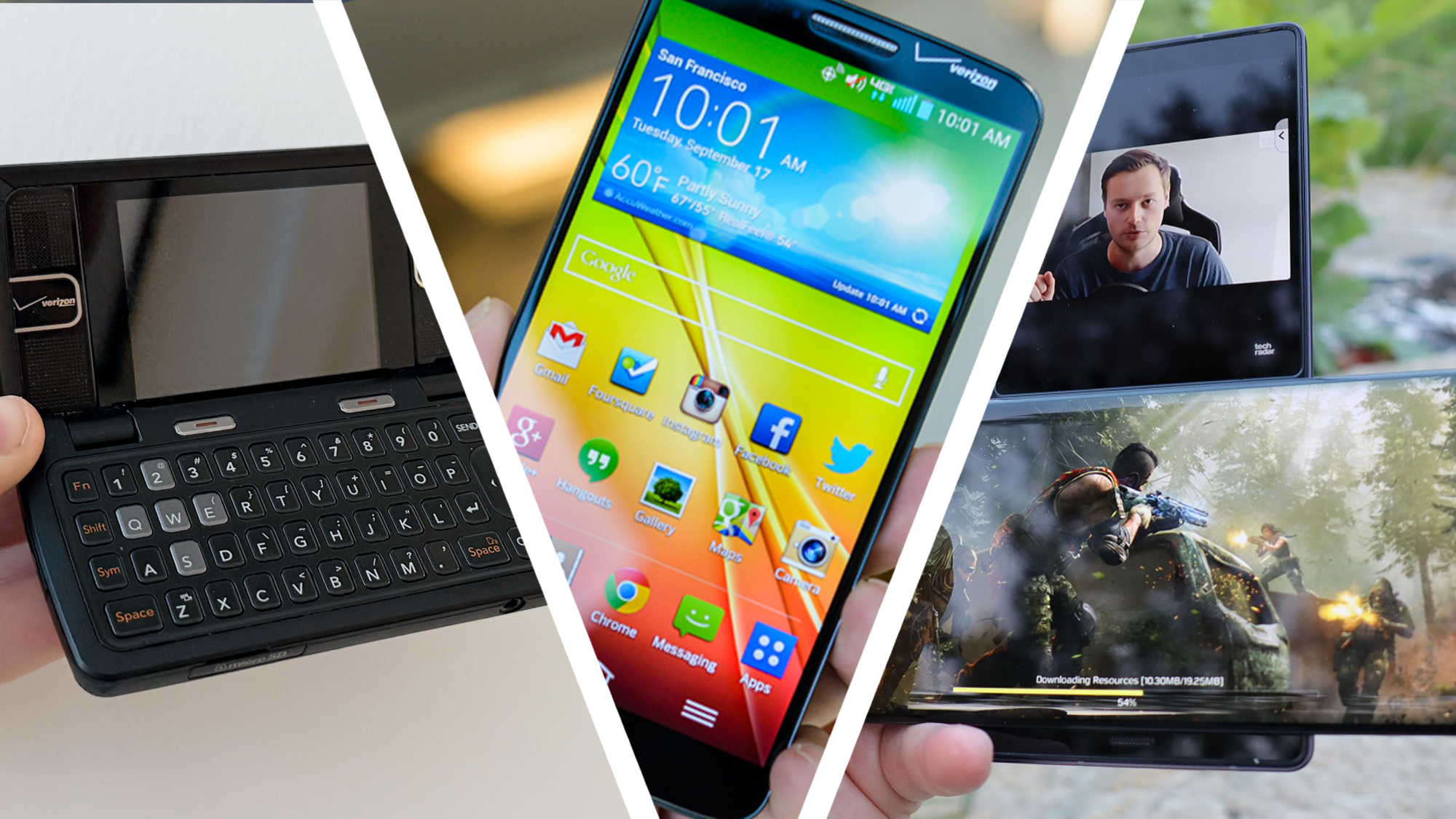
Rank 12602LG is finally shutting down the update servers for its phones in June This will mark the final end of LG's phones, a market it quit in 2021We've ranked our favorite LG phones from the last 25 years
Remember LG phones? Not too long ago, the Korean tech giant was one of the most exciting phone makers around, dazzling us innovators like the LG Chocolate 'slider' phone and the swivel-screened LG Wing.But sadly, no more – as spotted by Android Authority, LG plans to finally shut down the update servers for its phones on June 30. On a practical level, this means that if you still own an LG phone (a gold star for your commitment, if so), you have exactly two months left to download a final Android update on it before the cord is cut.Yet, the news is arguably more symbolic than practical. It's now four years since LG confirmed that it would stop making smartphones, after an impressive 25-year run of doing so.Indeed, LG was one of the first tech giants to step into the phone space in the 1990s, alongside Samsung and Sony, when it took on Nokia and Motorola and became a big player in the 'feature phones' space.So what exactly were LG's biggest phone hits, and the ones we look back on most fondly? Here's our list – let us know which ones you think are missing in the comments below.
7. LG G Flex (2013)
Image 1 of 3(Image credit: Future)Image 2 of 3(Image credit: Future)Image 3 of 3(Image credit: Future)
The most human phone ever. That was LG’s slogan for the wonderfully crazy LG G Flex - a handset that featured a ‘flexible’ display and ‘self-healing’ back.The device itself was also ‘flexible’. The G Flex had a natural curvature, which LG said allowed it to sit more comfortably against your face, and position the microphone closer to your mouth – who remembers the Nokia 8110 ‘banana phone?However, as I said in my review of the phone, “don't get too excited about its flexible abilities...you can't actually go about folding it up.“Lay the LG G Flex face down on a flat surface and at its most curved point the screen is still just a few millimeters above the surface. But then comes the fun part. Apply a decent amount of pressure to the rear of the G Flex and you can flatten the handset out.”And the reaction it got when I showed people this flexible feat? “I was met - without fail – by a sea of wincing faces as the G Flex made seriously concerning creaking and crunching sounds. Sure the handset does flex, slightly, but it never sounds like it's enjoying the workout.”Then there was the ‘self-healing’ back, which was able to soak up minor bumps and knocks, but it certainly wasn’t immune to a scratch or two.The LG G Flex wasn’t the best phone, and it was extremely expensive, but it did what LG did best – something different, something unique, something wild. And that’s what I love.By John McCann
6. LG KU990 Viewty (2007)
(Image credit: Mobile Phone Museum)
The very fact that I refuse to throw this phone away – 18 years after its release – shows the love I have for it. This phone had a 5MP camera, Xenon flash, DVD(ish) quality video recording, a manual zoom button – and a touchscreen.For all you kids out there, you don’t know how exciting this was to use when you’d been only used to tapping away at keys. A keyboard that could move and become a movie screen? Amazing! (Skipping past the fact that there was very little video content out there to actually watch).There was a stylus that you could attach with a little cord (although that quickly got annoying) and I’m certain that if I fired up the phone now, the resistive touchscreen would drive me up the wall (where it senses pressure over spotting the electrical conduct in your fingertips) by inaccurately guessing which part of the screen I wanted to prod.It was rumored that this phone actually outsold the initial iPhone, thanks to the higher spec, lower price (and the fact Apple wasn’t officially reporting sales figures…), and while that lead didn’t last long, it was entirely deserved in my eyes.By Gareth Beavis
5. LG Cookie (2008)
(Image credit: Destructive Dan)
When the LG Cookie launched in 2008, it took youngsters by storm. I know that, because I was one, and it marked the first phone I could actually call my own. In hindsight, the Cookie wasn’t all that spectacular, and in fact, LG used it to target the entry-level touchscreen market by keeping the cost of the device as low as possible.That scrimping resulted in a 3-inch, 240 x 400 pixel touchscreen powered by an ARM9E CPU with a clock rate of 175 MHz. It also had a 3.15MP camera capable of capturing videos at 12 frame/s, and no flash option.Pretty impressive, right? No, not really, but the combination of super cool looks (yes, I had the white version) and a neat little stylus hidden away in the phone’s body meant the LG Cookie was, for me, the height of style and innovation during my formative years.By Axel Metz
4. LG enV2 (2008)
Image 1 of 2(Image credit: Future)Image 2 of 2(Image credit: Future)
It may not have been my first phone, but the enV2 was definitely one of the first – and one I still have in a closet somewhere.The LG enV2 wasn't the original clamshell, but it did have a large number pad with a tiny screen on the front and the ability to fold open to a bigger screen (well, big by non-smartphone standards). With speakers on either side and a closer to full-size QWERTY keyboard, it was a real BlackBerry rival.The LG enV2 offered some smartphone-esque, BlackBerry-esque flair without the smarts, and it was quite fun to use and served me well, even with a removable battery on the back. It also has a decent camera, though not with shots I’d want to share now. But I remember getting pretty good at typing on the inside keys and had a lot of fun responding to text messages on it.In the years since, I reviewed a number of other LG phones. In my early blogging days, I fondly remember chatting with Mr. Mobile – aka Michael Fisher – at LG G3 Day. But the LG enV2 offered a lot of features, even some mini mobile games, in a durable, not-so-smart package.By Jacob Krol
3. LG Wing (2020)
(Image credit: Future)
The LG Wing was supposed to be unlike any other smartphone the world had ever seen. It was the first device in LG’s 'Explorer' series of devices, which would have been a series of products meant to explore unconventional form-factors – such as the LG Rollable.The LG Wing broke every rule of the textbook, with a big and bulky design, far too many moving parts, and at a premium price point for mid-range specs. While it was not really the best phone for the price, it was among the most enjoyable devices that I ever laid my hands on.It was a cool party trick to reveal the second display with just a swipe, in what was probably the most polarizing design of its time. Notably, even for a first-gen product with an unfamiliar form factor, it was surprisingly not bad, with a decent number of features and third-party apps optimized to make use of the dual-screen approach.The Wing is a fitting swansong for LG’s smartphone journey, cementing its place in the history books as one of the most innovative brands in this space, being unafraid of experimenting and going against the norms; while serving as a reminder of how unforgiving the smartphone market can be.By Aakash Jhaveri
2. Google Nexus 5 (2013)
(Image credit: TechRadar)
2013 was a big year for LG in the smartphone world. Alongside its G2 flagship and its first bendy phone, it was invited to make the next iteration of Google's Nexus line of smartphones.Nexus was a project from Google that brought in Android phone manufacturers to make hardware designed to show off what the software can do in its purest form. The Nexus 5 was one of the best handsets in the series, and a big part of that is down to LG's impact.The Nexus 5 had a lot of similarities with the LG G2 we've mentioned below (spoiler alert), but this used Android software in a way that Google intended. It felt even sleeker than the LG G2, and it had an affordable price, too.As one of the first smartphones I used as a technology journalist, I began to see what Google was aiming for with its Nexus line on the Nexus 5. I also spotted what LG was capable of in one of the best time periods for LG smartphones, and I'll always have a fondness for this specific phone because of that.By James Peckham
1. LG G2 (2013)
(Image credit: TechRadar)
There have been a few smartphones over the years that have almost exquisitely got the blend of features, hardware, and price right, and the LG G2 (or Optimus G2 in some regions, as the company inexplicably kept jamming a clunky extra word into the title) was just that.This was just a great handset. A 5.2-inch screen was huge at the time, and the 13MP camera was right in the race for the best out there, with loads of great features to tweak and some top snaps being possible. The shiny, rounded plastic shell felt robust in the hand, and the overall interface was brimming with clever little tweaks to improve the basic Android experience.But the main star was the placement of the rear buttons – a power key that was flanked above and below by the volume buttons on the back of the phone!The idea was that this would be more of a natural, ergonomic fit in the hand, given its ‘huge’ size, and therefore you’d be less likely to drop it. Some reviewers found that it was too hard to reprogram the brain to look for the unlock key there, but they weren’t using it for long enough. I sometimes still yearn for it now, and keep wondering why phone brands aren’t using the rear of the phone for some kind of touch interface.Of course, I’m pretty sure the annals of time are making me remember this phone with a rosy hue – Android overlays were often buggy back then, the fiddly camera settings probably irked, and the buttons probably fell off or something. But I remember this phone with true fondness – for a time, it looked like the success of this phone was going to keep LG at the top table of the smartphone world for years to come, but sadly, that never materialized.By Gareth Beavis
You might also like
50 years of the cell phone: the best mobile phones of all timeI loved LG phones because they were affordable, risky, and weird – and the smartphone world could use more of thatRanked: the best iMacs ever, as the iconic all-in-one turns 25
-

Picture from ichef.bbci.co.uk
Rank 12603 -
Picture from o.aolcdn.com
Rank 12604Google has announced that it's helping to financially support the electrical training ALLIANCe (etA), an organization formed by the National Electrical Contractors Association and the International Brotherhood of Electricians. The goal is to train "100,000 electrical workers and 30,000 new apprentices in the United States" to meet the growing power demands of AI.
Using AI will unlock unspecified, but positive economic opportunities, Google's new white paper, "Powering a New Era of American Innovation," claims. In order to take advantage of them, though, the US power grid needs to become more capable and efficient. That's largely because the data centers used to run and train AI models require vast amounts of energy. The white paper claims that new data centers could demand an additional "15-90 GW" of energy by 2030, something that more efficient chips and model training can't account for. For a sense of the scale, the US Department of Energy says 1 Gigawatt is the equivalent to 103 offshore wind turbines.
Google's paper calls for investments in alternative energy sources like nuclear power, but also notes that expanding the electrical workforce is necessary. "McKinsey estimates that 130,000 additional electricians will be needed by 2030 to build out data centers and manufacturing facilities," the company writes. Currently, though, retiring electricians outnumber newly trained ones. "Nearly 10,000 American electricians either retire or change careers each year, while only about 7,000 new entrants join the field."
Investing in electrical training is Google's attempt to help change that. It would be nice if it was paired with a clearer explanation around what that AI will be doing with all that extra power — Google notes that there's a "causal relationship between energy consumption and economic growth" — but skilled job training isn't a bad thing.This article originally appeared on Engadget at https://www.engadget.com/big-tech/google-is-funding-electrician-training-to-help-meet-the-power-demands-of-ai-221320678.html?src=rss
-

Picture from ichef.bbci.co.uk
Rank 12605 -

Picture from techcrunch.com
Rank 12606 -

Picture from ichef.bbci.co.uk
Rank 12607 -
Rank 12608
-
Picture from o.aolcdn.com
Rank 12609One day after Meta rolled out its standalone AI app, Mark Zuckerberg has shared more about how the company plans to eventually monetize its generative AI assistant. During the company’s first quarter earnings call, Zuckerberg said Meta AI could one day show ads and product recommendations. He also hinted at plans for a subscription component for those who want a more “premium” version of the assistant.
"I think that there will be a large opportunity to show product recommendations or ads, as well as a premium service for people who want to unlock more compute for additional functionality or intelligence,” Zuckerberg said.
He added that for now the company is more focused on growing Meta AI’s usage. (He announced yesterday that Meta Ai had reached “almost” 1 billion monthly users.) “I expect that we're going to be largely focused on scaling and deepening engagement for at least the next year before we'll really be ready to start building out the business here,” he said.
Zuckerberg’s comments — just one day after Meta introduced its standalone AI app — underscores how important the assistant is to the company. The Facebook founder has repeatedly said he wants Meta AI to be the most used AI assistant in the world, and he said on Wednesday’s call that a standalone app would be particularly important for attracting US users.
Meta’s strategy for monetizing the assistant in many ways mirrors its approach to Threads, which only just began expanding its early experiments with ads this month long after it reached hundreds of millions of users. Speaking of Threads, Zuckerberg also shared some new milestones for Threads, saying that text-based app now has 350 million monthly active users and that time spent on the platform has increased 35 percent over the last six months thanks to improvements to the company’s recommendations systems.
Later in the call, Meta’s CFO Susan Li shared that the company has also been testing its Llama model to power Threads’ recommendations and that the addition of the large language model has led to a 4 percent increase in time spent. “It remains early here, but a big focus this year will be on exploring how we can deploy this for other content types, including photos and videos,” she said.This article originally appeared on Engadget at https://www.engadget.com/social-media/meta-is-a-mulling-ads-and-a-premium-version-of-its-ai-assistant-mark-zuckerberg-says-225202560.html?src=rss
-

Picture from ichef.bbci.co.uk
Rank 12610 -

Picture from ichef.bbci.co.uk
Rank 12611 -
Picture from ichef.bbci.co.uk
Rank 12612 -

Picture from ichef.bbci.co.uk
Rank 12613 -

Picture from techcrunch.com
Rank 12614 -

Picture from ichef.bbci.co.uk
Rank 12615 -
Picture from ichef.bbci.co.uk
Rank 12616 -

Picture from ichef.bbci.co.uk
Rank 12617 -

Picture from ichef.bbci.co.uk
Rank 12618 -

Picture from ichef.bbci.co.uk
Rank 12619 -

Picture from ichef.bbci.co.uk
Rank 12620 -
Picture from ichef.bbci.co.uk
Rank 12621 -

Picture from techcrunch.com
Rank 12622 -

Picture from ichef.bbci.co.uk
Rank 12623 -

Picture from ichef.bbci.co.uk
Rank 12624 -

Picture from techcrunch.com
Rank 12625 -
Picture from techcrunch.com
Rank 12626 -

Picture from techcrunch.com
Rank 12627 -

Picture from techcrunch.com
Rank 12628 -

Picture from techcrunch.com
Rank 12629 -
Picture from ichef.bbci.co.uk
Rank 12630 -

Picture from ichef.bbci.co.uk
Rank 12631 -
Picture from cdn.mos.cms.futurecdn.net
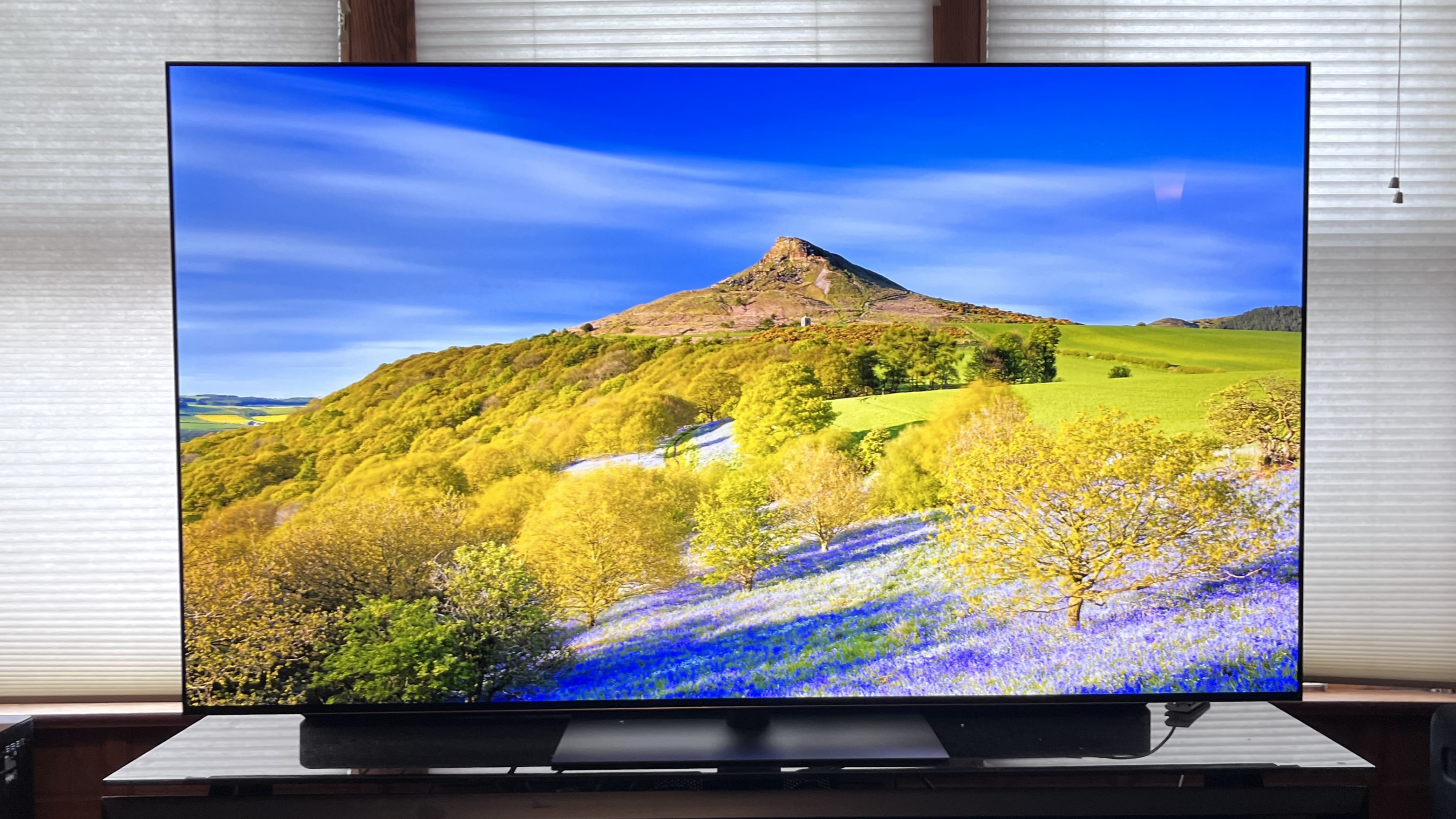
Rank 12632LG Display announced “commercialization level” performance of a blue phosphorescent OLED panelThe new panel is a hybrid fluorescent/phosphorescent design that consumes about 15% less power than typical OLED displaysThe new tech will be demonstrated in a "small and medium-sized panel that can be applied to IT devices such as smartphones and tablets”
Korean manufacturer LG Display today announced it has successfully verified the “commercialization level” performance of blue phosphorescent OLED panels.The announcement comes eight months after LG Display partnered with OLED technology company Universal Display Corporation on the development of blue phosphorescence, a necessary next step in creating a “Dream OLED” display.According to LG Display’s release, the company was able to make the technology mass production-ready using a “hybrid two-stack Tandem OLED structure, with blue fluorescence in the lower stack and blue phosphorescence in the upper stack.” This approach differs from previous OLED display panels, which use a blue fluorescent layer paired with red and green phosphorescent layers.
(Image credit: LG Display)
The issue with using a fluorescent layer in OLED panels is that it provides only 25% light efficiency compared to a phosphorescent layer, which provides 100% light efficiency. LG Display’s hybrid approach changes things up in “combining the stability of fluorescence with the lower power consumption of phosphorescence.” By doing so, it “consumes about 15% less power while maintaining a similar level of stability to existing OLED panels,” according to the company.LG plans to demonstrate its blue phosphorescent OLED panel with two-stack Tandem technology at SID Display Week, an event that gets underway on May 11, 2025 in San Jose, California.
Has the Dream OLED TV finally arrived?
While LG Display’s announcement is intriguing, the blue phosphorescent OLED panel it plans to display at SID Display Week will showcase the technology in “a small and medium-sized panel that can be applied to IT devices such as smartphones and tablets.”That means the current iteration of the tech, while mass production-ready (LG Display says it has “completed commercialization verification with UDC”) remains in prototype form, and is not ready for introduction in larger displays such as the best OLED TVs.We’ve been following the news on blue PHOLED, a term used for the phosphorescent layer in OLED displays, for some time, and previously reported on LG Display’s having "successfully developed an OLED panel based on blue phosphorescence."Today’s news goes further in certifying that a similar OLED display panel is ready for prime time, but this version uses a hybrid approach that doesn’t yet meet the full light efficiency expectations of a “Dream OLED.”Meanwhile, LG Display’s “four-stack” OLED display panel, a design that doesn’t rely on blue phosphorescent tech, hybrid or otherwise, but instead utilizes separate red, green, and blue elements to enhance color purity and boost brightness, can be found in the impressive new LG C5 OLED, one of the best TVs to arrive so far in 2025.We expect this panel to remain the cutting edge for OLED TVs for some time to come, while the new hybrid two-stack Tandem OLED structure with blue phosphorescence gets developed for devices like phones and tablets.
You might also like...
Sony’s new TV lineup for 2025 doubles down on QD-OLEDNew cheaper blue OLED material breakthrough could be great news for OLED TVs – and every other deviceSamsung says all sizes of the S95F OLED TV will hit 4,000 nits of brightness – even the W-OLED one
-
Picture from ichef.bbci.co.uk
Rank 12633 -

Picture from techcrunch.com
Rank 12634 -

Picture from ichef.bbci.co.uk
Rank 12635 -

Picture from ichef.bbci.co.uk
Rank 12636 -

Picture from ichef.bbci.co.uk
Rank 12637 -

Picture from ichef.bbci.co.uk
Rank 12638 -

Picture from ichef.bbci.co.uk
Rank 12639 -

Picture from ichef.bbci.co.uk
Rank 12640 -

Picture from ichef.bbci.co.uk
Rank 12641 -

Picture from techcrunch.com
Rank 12642 -

Picture from ichef.bbci.co.uk
Rank 12643 -

Picture from ichef.bbci.co.uk
Rank 12644 -

Picture from ichef.bbci.co.uk
Rank 12645 -

Picture from ichef.bbci.co.uk
Rank 12646 -

Picture from ichef.bbci.co.uk
Rank 12647 -

Picture from ichef.bbci.co.uk
Rank 12648 -

Picture from ichef.bbci.co.uk
Rank 12649 -

Picture from ichef.bbci.co.uk
Rank 12650

