News
This constantly updated list features the latest and most important news articles, ranked in order of significance. The top stories highlight major developments, breaking news, and critical updates across various topics, ensuring you stay informed about the most pressing issues. As new articles are added, the list adapts to reflect the latest priorities, keeping the most impactful stories at the forefront. Whether it’s global events, technology breakthroughs, or industry trends, this dynamic list ensures you always have access to the most relevant and timely information.
-

Picture from ichef.bbci.co.uk
Rank 12101 -

Picture from ichef.bbci.co.uk
Rank 12102 -

Picture from ichef.bbci.co.uk
Rank 12103 -

Picture from techcrunch.com
Rank 12104 -

Picture from ichef.bbci.co.uk
Rank 12105 -

Picture from ichef.bbci.co.uk
Rank 12106 -

Picture from techcrunch.com
Rank 12107 -

Picture from ichef.bbci.co.uk
Rank 12108 -

Picture from ichef.bbci.co.uk
Rank 12109 -

Picture from ichef.bbci.co.uk
Rank 12110 -

Picture from ichef.bbci.co.uk
Rank 12111 -

Picture from cdn.mos.cms.futurecdn.net
Rank 12112In 2024, less than 1% of enterprise software applications incorporated agentic AI but, according to Gartner, that number is expected to reach 33% by 2028. Understandably, industrial enterprises have shown a growing interest in agentic AI, hoping to leverage this transformative technology for real-world business applications.While eager to adopt the next phase of AI innovation, many are facing a dreaded “Proof-of-Concept (PoC) Purgatory,” failing to scale their AI tools beyond pilot stages.For most, the core question isn’t whether agentic AI can improve their operations but how quickly it will deliver tangible value — and PoC Purgatory is holding them back.Let’s explore some of the key reasons for this bottleneck, the barriers to unlocking agentic AI’s full potential and strategies to overcome them.
Why are Industrial Enterprises Getting Stuck in PoC Purgatory?
The transition from PoC pilots to large-scale deployment is not a straightforward journey. Agentic AI adoption is unlike any other technological adoption before it, and several challenges are likely to arise as industrial enterprises work to take the next step toward scalable implementation, including:1. Change Management Concerns: Industrial enterprises are often reluctant to embrace significant changes, especially when adopting technologies that drastically alter their operations. This fear stems from concerns about losing control over key business processes and the uncertainty of how these changes might impact their workflows. As a result, they may delay or abandon initiatives because of apprehension tied to unknown challenges and potential disruptions that come with relinquishing control to automated systems such as agents.2. Lack of Clear Success Metrics: Without well-defined success metrics, it’s difficult for companies to assess the effectiveness of emerging tools. Determining how agentic AI will impact key business outcomes, such as productivity, cost reduction or operational efficiency, is not a simple task. This lack of clarity can impact decision-making and delay implementation efforts.3. Appropriate Use Case Assessment: Identifying the right use cases for agent-driven technologies and understanding which complex processes they can effectively manage presents a significant challenge. To do this, businesses need deep domain knowledge and a clear grasp of their internal operations. Without this insight, they risk getting stuck in a testing phase, where only simple, non-representative scenarios are tried, ultimately hindering the potential to leverage agents for more impactful, complex tasks.4. The Need for a Robust Data Framework: While 86% of organizations recognize data readiness as crucial for AI success, only 23% have built the necessary foundation to make it happen. For industrial enterprises, the challenge is even greater, as outdated technology, fragmented data and legacy systems complicate AI deployment — and scaling agents only complicates things further. Agentic AI requires a powerful framework that can support an army of agents creating vast amounts of data in near real-time, making the process more complex and resource-intensive.5. Workforce Resistance: Since agentic AI fully automates certain tasks away from humans, employee resistance to the growing roles of agents is almost guaranteed based on early pushback seen from chatbots. While it allows people to focus on high-value items and only engage with agents on items that need approval or are lined with uncertainty, a fair amount of autonomy around work and how it’s done must be relinquished, which can be uncomfortable.
What Steps Can Industrial Enterprises Take to Reach Scaled AI Deployment?
The barriers laid out above can certainly be daunting, but overcoming them is well within reach for forward-thinking enterprises. Those looking to scale their agentic AI applications should start by following these five steps:1. Define Clear Business Outcomes and Roles for Agents: The first step is to clearly define the business outcomes that AI agents aim to achieve, and then map these outcomes to specific types of agents. For example, a monitoring agent, which operates continuously in the background, might have a KPI focused on uptime improvements while an agent that automates an end-to-end process focuses on productivity gains. By aligning AI agents with strategic business priorities and setting clear KPIs for each, organizations can create a strong foundation for measuring success.2. Ensure Data and Infrastructure Readiness: Agents rely not only on data quality, availability and efficient processing but also on process readiness. To move beyond PoC, companies must upgrade their data infrastructure and map out their processes. They also need to have a clear understanding of how their operations work, providing well-defined guidelines within which agents can operate. 3. Establishing AI governance frameworks ensures that implementations meet security, compliance and reliability standards while giving agents the structure needed to find effective solutions autonomously.3. Adopt a Phased Approach to Deployment: Rather than attempting a full-scale rollout from the outset, enterprises should take a phased approach. Begin with a targeted, high-impact agent that is likely to deliver measurable results, then refine and scale the model based on feedback. Continuous iteration is key to ensuring the agents can adapt to real-world conditions and evolve alongside the business needs. Once initial success is found, additional types of agents can be deployed across other business initiatives with greater ease.4. Drive Organizational and Workforce Alignment: With nearly half of the workforce concerned that AI may replace their jobs, leaders can’t simply introduce agentic AI and walk away. As processes become automated, employees will shift to new tasks such as overseeing outcomes and providing overall sign-off rather than executing each step manually. Companies should invest in robust onboarding initiatives, including training and upskilling programs, to ensure a smooth transition. Engaging cross-functional teams—such as operators, IT management and business leaders—early in the process will help create a sense of ownership and foster collaboration across the business.5. Measure, Iterate and Scale with Confidence: Once agents are deployed, it’s crucial to continuously monitor their scope and performance against predefined KPIs. This includes assessing whether an agent starts with a relatively simple task and gradually gains more autonomy over time or if there are specific areas where the agent struggles. Enterprises should also evaluate if agents are trusted to go beyond the company’s internal systems, such as negotiating and purchasing from suppliers. By establishing enterprise-wide frameworks for agents, organizations can streamline future projects, improve agent performance and accelerate their ability to scale agent initiatives across the business.
Take Agentic AI from Endless Pilots to Real-World Impact
Moving beyond PoC purgatory to achieve full-scale agentic AI deployment requires overcoming several significant hurdles. Addressing common barriers such as fear of failure, siloed initiatives and infrastructure challenges will be critical for industrial enterprises to unlock the full potential of these autonomous tools.Despite many organizations having already rolled out standard agents, the path to fully autonomous agents won’t be without challenges. By making strategic investments and taking a methodical approach to not only scaling agents but also defining their specific roles, industrial enterprises can move beyond endless trials and begin reaping the rewards of agentic AI in the real world well before Gartner’s predicted 2028 surge.
We rate the best business intelligence platform.
This article was produced as part of TechRadarPro's Expert Insights channel where we feature the best and brightest minds in the technology industry today. The views expressed here are those of the author and are not necessarily those of TechRadarPro or Future plc. If you are interested in contributing find out more here: https://www.techradar.com/news/submit-your-story-to-techradar-pro
-

Picture from ichef.bbci.co.uk
Rank 12113 -
Picture from o.aolcdn.com
Rank 12114If you’ve ever missed an on-time departure thanks to a set of lost keys or misplaced wallet, you’ll benefit from a Bluetooth tracker. These small devices attach to your stuff and use your smartphone to keep tabs on where they are. AirTags are the best known in the category, tapping into a finding network created through anonymous iPhone pings in the area. Google now has a similar network using nearby Android phones, and Samsung has its own network that employs Galaxy phones. Some third-party trackers work with either Google or Apple’s network and offer additional features to boot. We tested trackers from Apple, Tile, Pebblebee, Samsung and Chipolo, comparing their finding capabilities, sound levels, reliability and design. We think the Chipolo Pop is the best Bluetooth tracker for most people, but a few other trackers have their merits as well.
What to look for in a Bluetooth tracking device
Bluetooth trackers are small discs or cards that rely on short-range, low-energy wireless signals to communicate with your smartphone. Attach one of these gadgets your stuff and, if it’s in range, your phone can “ring” the chip so you can find it. These tracking devices offer other features like separation alerts to tell you when you’ve left a tagged item behind, or where a lost item was last detected. Some can even tap into a larger network of smartphones to track down your device when you’re out of range. Depending on what you want the tracker to do, there are a few specs to look for when deciding which to get.
Device compatibility
Like most things from the folks in Cupertino, AirTags only work with products in the Apple ecosystem. Both Apple and Google have opened up access to the Find My and Find My Device networks to third-party manufacturers, including Chipolo and Pebblebee. Those two companies make device-agnostic models that will work with the larger tracking network from either brand, so iPhone and Android users can buy the same tag. Tile trackers work with either Android or Apple devices, but use Tile’s own Life 360 finding network. Samsung’s latest fob, the Galaxy SmartTag2, only works with Samsung phones and taps into a finding system that relies on other Samsung devices to locate lost tags.
Finding network
Crowd-sourced finding capabilities are what make headlines, with stories about recovering stolen equipment or tracking lost luggage across the globe. Using anonymous signals that ping other people’s devices, these Bluetooth tracking devices can potentially tell you where a tagged item is, even if your smartphone is out of Bluetooth range.
Apple’s Find My network is the largest, with over a billion iPhones and iPads in service all running Apple’s Find My app by default. So unless an iPhone user opts out, their phone silently acts as a location detector for any nearby AirTags. Apple recently increased the AirTag’s finding power by enabling you to share the location of a lost tag with a third party, party, like an airline. Chipolo fobs that work on Apple’s network have the same ability. Google launched its Find My Device network in 2024 and it’s a close second for the largest in the US
Now that Google’s Find My Device network is up and running, it’s a close second for the largest in the US. Like Apple, Android users are automatically part of the network, but can opt-out by selecting the Google services option in their phone’s Settings app and toggling the option in the Find My Device menu. Samsung’s SmartTag 2 and related network also defaults to an opt-in status for finding tags and other devices.
Tile offers a large finding grid that includes Tile users, Amazon Sidewalk customers and people running the Life360 network. Life360 acquired Tile in 2021, and, according to the company, the Life360 network has more than 70 million monthly active users.
In our tests, AirTags and third-party tags using its network, like the Chipolo Pop and Pebblebee Clip Universal, were the fastest to track down lost items. They offered nearly real-time location data in moderately to heavily trafficked spots around Albuquerque, including a bar, bookstore and coffee shops in Nob Hill, along with various outdoor hangouts on UNM’s campus.
Samsung's SmartTags were able to locate our lost items most of the time, though not with the same precision finding accuracy as AirTags. When we tested Google’s Find My Device network right after launch, it was noticeably slower than Apple’s network when using the community finding feature. Testing it again in 2025, the time it took to locate a lost item was considerably improved, taking just a couple minutes for the community to track a fob. In our tests, Tile’s finding network wasn’t able to consistently locate its lost fobs.
Amy Skorheim / Engadget
Separation alerts
Here’s where a tracker’s day-to-day utility really shines. A separation alert lets you know when you’ve traveled too far from your tagged items, which is useful if you want to make sure your laptop bag, or jacket or umbrella always comes with you when you leave the house.
These notifications work when you’re out and about too. If you’ve got a Bluetooth tracking device in your wallet and walk out of a restaurant without it, the separation alert should kick in, resulting in fewer lost items. This feature also tells you where your tagged item and phone were last paired, allowing you to retrace your steps if you happen to miss the alert.
Each tracker handles left-behind items differently. AirTags and third-party fobs using its network (such as from Chipolo or Pebblebee) include the feature by default. Tile trackers require a yearly subscription to enable the alerts (currently $30 annually). Tags working with the Google Find My Device network don’t offer the feature at all, but Chipolo Pop tags can issue left-behind alerts using its own Android app. Both AirTags and Tiles allow you to turn off separation alerts at certain locations, meaning you can set your home as a “safe” place where items can be left behind, but alerts will still trigger elsewhere.
In our tests, AirTags and others using the Find My network alerted us between the 600- and 1,400-foot mark. Tiles sent a notification after about an average of 1,500 feet and were more consistent when using an Android phone than an iPhone. Chipolo Pop tags paired with an Android phone and using its own app sent an alert when we got around 450 feet away from our tagged item.
Connectivity, volume and design
The feature you may use most often is the key finder function, which makes the tracker ring when you hit a button in the app. With Apple's AirTags, you can say "Hey Siri, where are my keys?" and the assistant will ring the tag (assuming it doesn't mistakenly think you're asking for directions to the Floridian archipelago). Asking Alexa or the Google Assistant to find your keys will work with Chipolo, Tile and Pebblebee trackers linked to your Android device.
If you have your tag but can’t find your phone, some trackers will let you ring them to find your handset. SmartTag2 fobs reliably rang our Galaxy phone when we double-pressed it. Tile trackers have the same feature. Chipolo Pop trackers can ring your phone, but uses the Chipolo app to do so, which can run concurrently with the Find My or Find My Device connection. AirTags and any third-party tags using only Apple or Google’s networks don’t offer this feature.
The volume of the Bluetooth tracking device may determine whether you can find an item buried in your couch cushions or in a noisy room. AirTags have a reputation for being on the quiet side, and that aligned with what we saw (measuring roughly 65 decibels). Chipolo’s Pop tags and Tile’s Pro model measure between 83 and 86 decibels on average. Pebblebee’s new Clip Universal was the loudest of any tag we’ve tested, clocking in at 91 ear-splitting decibels.
Design will determine what you can attach the tracker to. AirTags are small, smooth discs that can’t be secured to anything without accessories, which are numerous, but that is an additional cost to consider. Chipolo, Pebblebee and Tile offer trackers with holes that easily attach to your key ring, and all three companies also offer card-shaped versions designed to fit in your wallet. Pebblebee Clip Universal tags come with a handy carabiner-style key ring.
Batteries are replaceable for AirTag, Tile Pro, SmartTag2 and Chipolo Pop fobs and each should go for at least a year before needing to be swapped. Tile Mate and card-shaped trackers don’t have replaceable batteries, which means you’ll have to replace the entire unit whenever it dies. Pebblebee trackers are rechargeable in both the disc and wallet variety. They’re also the only tags equipped with onboard LEDs.
Stalking, theft and data privacy
AirTags have gotten a lot of attention and even prompted some lawsuits for Apple due to bad actors planting them on people in order to stalk them. While this fact may not influence your buying decision, any discussion of Bluetooth trackers should note what steps Apple, Google and Tile have taken to address the issue. Last year, all the major players in the Bluetooth tracker business teamed up to combat misuse and standardize how unauthorized tracking detection and alerts work for iOS and Android.
Last year, Tile launched a feature called Anti-Theft Mode, which enables you to render one of its trackers undetectable by others. That means if someone steals your tagged item, they won’t be able to use the anti-stalking features to find and disable the tracker. That sort of negates one of the major ways potential stalking victims can stay safe, so Tile hopes ID verification and a $1 million penalty will deter misuse. Separately, Tile was recently hit by a data breach, raising different privacy concerns. The company issued a statement about the event, which it shared with Engadget:
Similar to many other companies, Life360 recently became the victim of a criminal extortion attempt. We received emails from an unknown actor claiming to possess Tile customer information. We promptly initiated an investigation into the potential incident and detected unauthorized access to a Tile customer support platform (but not our Tile service platform). The potentially impacted data consists of information such as names, addresses, email addresses, phone numbers, and Tile device identification numbers. It does not include more sensitive information, such as credit card numbers, passwords or log-in credentials, location data, or government-issued identification numbers, because the Tile customer support platform did not contain these information types.
We believe this incident was limited to the specific Tile customer support data described above and is not more widespread. We take this event and the security of customer information seriously. We have taken and will continue to take steps designed to further protect our systems from bad actors, and we have reported this event and the extortion attempt to law enforcement. We remain committed to keeping families safe online and in the real world.
As a theft deterrent, a Bluetooth tracker may or may not be the best option. Anecdotal stories abound in which people have recovered stolen goods using a tracker — but other tales are more cautionary. Neither Apple nor Google promotes its trackers or finding networks as a way to deal with theft. GPS trackers, on the other hand, are typically marketed for just that purpose.
How we tested
Before deciding on which trackers to test, we researched the field, looking at user reviews on Amazon, Best Buy and other retailers, along with discussions on sites like Reddit. We also checked out what other publications had to say on the matter before narrowing down our options to Apple AirTag, Tile, and Chipolo trackers. When Samsung's SmartTag 2 came out in October of 2023, we added that to our testing, along with Pebblebee's rechargeable Clip tracker. After Google launched its Find My Device, both Chipolo and Pebblebee released trackers in 2025 that work with either network and we tested the Pop and Universal key fob models and updated our top picks accordingly.
Here’s the full list of every tracker we tested:
Apple AirTag
Chipolo Card Spot
Chipolo One Spot
Chipolo One
Chipolo Card
Chipolo Pop
Pebblebe Clip Universal
Pebblebee Clip
Samsung SmartTag 2
Chipolo One Point
Pebblebee Clip for Android
Tile Pro (2024)
Tile Mate (2024)
Tile Mate (2022)
Tile Pro (2022)
Tile Slim (2022)
After acquiring the trackers, I tested each one over the course of a few weeks using both an iPhone 11 and a Samsung Galaxy S22 Ultra. I recreated likely user experiences, such as losing and leaving items behind at home and out in the city. I planted trackers at different spots near downtown Albuquerque, mostly concentrated in and around the University of New Mexico and the surrounding neighborhood of Nob Hill. Later, I conducted tests in the Queen Anne neighborhood of Seattle. Each test was performed multiple times, both while walking and driving and I used the measure distance feature on Google Maps to track footage for alerts. I paid attention to how easy the app was to use, how reliable the phone-to-tracker connection was and any other perks and drawbacks that came up during regular use.
Other trackers we tested
Tile Pro and Tile Mate (2024)
Tile recently came out with a new suite of trackers, replacing the Tile Mate, Tile Pro, Tile Sticker and Tile Slim with updated models. In addition to fun new colors for the Mate and Slim, Tile added an SOS feature that can send a notification to your Life360 Circle when you triple press the button on the tracker. It’s a clever addition that turns your keys into a panic button, something offered by personal safety companies as standalone devices.
There are a few caveats: You and the people you want to notify in an emergency will need the Life360 app installed on your phones. If you want your Tile to also trigger a call to emergency services, you’ll need a $15-per-month Life360 subscription (that’s in addition to a Tile membership, which starts at $3/month or $30 annually). And enabling the SOS triple-press disables the ability to ring your phone with the fob.
I tested the SOS feature and it did indeed send a text message to my Circle, with the message that I had triggered an SOS and a link to a website that showed my current location. I thought it odd that the link didn’t open the Life360 app (which shows the location of users' phones), but I wasn’t as much concerned with Tile’s personal safety features as I was with the tracking capabilities, which turned out to be less than ideal.
For my tests, I planted Tile trackers in a densely populated area of Seattle (about 15,000 people per square mile). After setting the trackers to “lost” in the Tile app, I waited. After four hours, one of the trackers was not discovered by the finding community, so I went and retrieved it. Another fob I planted alerted me that the tracker had been found by the Tile community after three hours — but the location it gave me was off by a third of a mile. I then decided to plant a tracker in the most populated place I could think of — the dried fruit and nuts aisle of a Trader Joes on a Friday evening before a major holiday. It still took over a half an hour before another Tile user anonymously pinged my lost tracker.
In my tests with Samsung’s trackers and the fobs on Google’s Find My Device network, it took around ten minutes for them to be discovered. AirTags took half that time and all were tested in a far less populated city. Four hours with no ping and over a half hour before getting a hit in a crowded TJs were pretty long stretches.
Our top pick, the classic Chipolo, has virtually no finding network. But if you’re getting a tracker for that feature alone, you should go with AirTags if you have an iPhone or the Google-enabled Chipolo or Pebblebee trackers if you use an Android phone. We prefer the Chipolo because it works with either iOS or Android devices, it rings loud, it’s quick to tell you when you’ve left it behind and it connects nearly instantly when you’re searching for a misplaced tracker around the house.
Tile devices also work with both mobile operating systems and its latest models are indeed louder than they were before. But they aren’t as quick to connect and you need to pay for a membership to activate left-behind alerts. And when you do, those notifications don’t kick in as quickly as they do with competing trackers.
Bluetooth tracker FAQs
Which Bluetooth tracker has the longest range?
Both the Tile Pro and the Samsung Galaxy SmartTag2 claim a maximum range of around 400 feet, which is longer than the 300-foot claim for Chipolo’s Pop tags. The Pebblebee Clip Universal claims a 500-foot range, though other trackers with a shorter claimed range performed better in our tests. Apple doesn’t make range claims for AirTags. Any Bluetooth signal, of course, is dependent on a few factors. Obstacles like walls and people can block the signal, so a clear line of sight is the only way to achieve the maximum range. Other signals, like Wi-Fi, can also interfere with Bluetooth connections. Even high humidity can have an effect and lessen the distance at which your phone will connect to your tracker.
Remember, when considering the range of Bluetooth trackers, the size of the “finding network” also comes into play. This is the number of nearby phones that can be used to anonymously ping your tracker when your own phone is out of Bluetooth range. As of now, Apple AirTags have the largest network, followed by Google’s Find My Device, Samsung’s finding community and Tile’s Life360 members.
What is the best Bluetooth tracker for a car?
Bluetooth trackers are designed to track small, personal items like keys, jackets, backpacks and the like. All trackers have safeguards to prohibit the tag from being used to stalk people, so most will alert someone if a tracker that does not belong to them is detected following them. That means a car thief may get tipped off that there’s a tracker in the car they’re trying to steal. That said, you’ll see plenty of stories about people finding their car thanks to a Bluetooth tracker. Some police departments have even handed out trackers to combat high rates of carjacking. In most instances, the tracker of choice has been AirTags thanks to their wide finding network. If you’re looking for a tracker for your car, you may want to look into GPS trackers, some of which are designed for just that purpose.
How accurate are Bluetooth trackers?
Accuracy for Bluetooth trackers can be looked at in two ways: Finding items nearby and finding items misplaced outside your home. For nearby items, you’ll most often use the ring function on the device to hunt it down. Two tags, Apple’s AirTags and Samsung’s Galaxy SmartTag2, also use ultra-wideband technology, which creates directional navigation on your phone to get you within a foot of the tracker.
Accurately finding lost items outside your home depends on the size of the finding network. Since this relies on the serendipity of a random phone passing within Bluetooth range of your tracker, the more phones on a given network, the better. And since Bluetooth ranges and distance estimates are only precise within about a meter or so, getting pings from more than one phone will help locating items. Here again, it’s worth noting that Apple’s Find My network is the largest, followed by Google, Samsung and Tile (both Chipolo and Pebblebee have fobs that work with the Apple and Google networks).This article originally appeared on Engadget at https://www.engadget.com/computing/accessories/best-bluetooth-tracker-140028377.html?src=rss
-

Picture from ichef.bbci.co.uk
Rank 12115 -

Picture from ichef.bbci.co.uk
Rank 12116 -

Picture from ichef.bbci.co.uk
Rank 12117 -

Picture from ichef.bbci.co.uk
Rank 12118 -

Picture from ichef.bbci.co.uk
Rank 12119 -

Picture from ichef.bbci.co.uk
Rank 12120 -

Picture from techcrunch.com
Rank 12121 -

Picture from ichef.bbci.co.uk
Rank 12122 -

Picture from ichef.bbci.co.uk
Rank 12123 -

Picture from ichef.bbci.co.uk
Rank 12124 -

Picture from cdn.mos.cms.futurecdn.net
Rank 12125In the aftermath of the COVID-19 pandemic the UK has witnessed a seismic shift in work patterns, with a staggering 41% of workers now engaging in remote work. This trend towards hybrid work arrangements has been on a consistent and steep rise, introducing major cybersecurity concerns for organizations around the world.As companies adapt to this new reality, they face the multifaceted challenge of managing unsecured networks at home, coupled with a lack of IT oversight and insufficient employee awareness.
A paradigm shift
The transition to hybrid work models has been swift and widespread, marking a paradigm shift in how businesses operate. What began as a necessary response to lockdown measures has evolved into a preferred mode of working for many employees and employers alike. It’s not just working from home which is an issue, employees can often work abroad in other countries.This change in usual business dynamics offers numerous benefits, including improved work-life balance, reduced commuting times, and potential cost savings for businesses. However, it also brings with it a host of cybersecurity challenges that organizations must address urgently to ensure their long-term viability and security.
The weakest link
Many employees work on home Wi-Fi networks that lack enterprise-grade security measures - making them vulnerable to attacks. These networks often use default or weak passwords, outdated firmware, and may not have proper encryption protocols in place. This creates an easy entry point for cybercriminals to intercept sensitive data or gain unauthorized access to corporate systems.
Blurring the lines between work and personal
The use of personal devices for work purposes, often referred to as ‘Bring Your Own Device’ (BYOD), can lead to data breaches if these devices are not properly secured or managed. Personal devices may lack the latest security patches, have outdated antivirus software, or contain malicious applications that could compromise corporate data.
Limited IT oversight
Remote work environments make it challenging for IT teams to monitor and manage security effectively, potentially leaving vulnerabilities unaddressed. The inability to physically access devices or networks complicates troubleshooting and security enforcement, leading to potential gaps in the organization's security posture.
The human factor
Without proper training, employees may inadvertently expose company data or fall victim to phishing attacks and other social engineering tactics. The human factor remains one of the most significant vulnerabilities in any security system, and the distributed nature of hybrid work exacerbates this risk.Employees working remotely may resort to using unauthorized applications or services to facilitate their work, a practice known as shadow IT. This can introduce unknown vulnerabilities into the corporate network and make it difficult for IT departments to maintain control over data flow and security.
Cloud security risks
The increased reliance on cloud services for collaboration and data storage introduces new security challenges that must be carefully managed. While cloud services offer flexibility and scalability, they also present new attack vectors if not properly configured and secured.
Building a resilient defense
As hybrid work becomes the norm, companies must critically address their security systems to protect against evolving cyber threats. It is vital that organizations have comprehensive cyber threat protocols in place, especially considering that cyber attacks are constantly on the rise and evolving to make recovery as difficult as possible.Key steps that companies should consider include:Implementing multi-factor authentication (MFA): MFA adds an extra layer of security to prevent unauthorized access to company systems and data. By requiring multiple forms of verification, such as a password combined with a fingerprint or a one-time code sent to a mobile device, MFA significantly reduces the risk of unauthorized access even if credentials are compromised.Deploying virtual private networks (VPNs): VPNs create secure connections for remote workers, encrypting data in transit and protecting against eavesdropping. This is particularly crucial when employees are using public Wi-Fi networks or working from locations with potentially compromised internet connections.Enhancing endpoint security: Robust protection for all devices accessing company resources is crucial in a distributed work environment. This includes implementing and regularly updating antivirus software, firewalls, and intrusion detection systems on all endpoints, including mobile devices and laptops.Adopting cloud-based security solutions: Cloud-based security solutions can provide scalable and flexible security measures that adapt to the needs of a hybrid workforce. These solutions often include features such as real-time threat detection, automated patch management, and centralized security policy enforcement across all devices and locations.Conducting regular security training: Ongoing cybersecurity awareness programs for all employees are essential to mitigate human error-related risks. This training should cover topics such as identifying phishing attempts, proper handling of sensitive data, and best practices for secure remote work.Implementing Zero Trust architecture: A Zero Trust security model assumes that no user or device should be automatically trusted, regardless of their location or network connection. This approach requires continuous verification and authorization for all access requests, significantly reducing the risk of unauthorized access.
Staying ahead of the curve
The shift to hybrid working has necessitated significant investments in technology and resources. However, it has also presented an opportunity for businesses to modernize their security posture and build resilience against emerging threats. Companies that successfully adapt to these changes can not only protect their assets but also gain a competitive advantage in attracting and retaining talent.Beyond implementing technical solutions, organizations should focus on fostering a culture of security awareness among their employees. This involves regular communication about security best practices, recognition of employees who demonstrate good security habits, and integration of security considerations into all aspects of business operations.
We rate the best business VPN.
This article was produced as part of TechRadarPro's Expert Insights channel where we feature the best and brightest minds in the technology industry today. The views expressed here are those of the author and are not necessarily those of TechRadarPro or Future plc. If you are interested in contributing find out more here: https://www.techradar.com/news/submit-your-story-to-techradar-pro
-

Picture from ichef.bbci.co.uk
Rank 12126 -
Picture from o.aolcdn.com
Rank 12127A mouse may seem like a small consideration for your workstation setup. But after you’ve addressed the crucial ergonomics — raising your monitor to eye-level, using the right keyboard and taking frequent breaks throughout your workdays — it’s a good idea to make sure the mouse you use is comfortable as well. People dealing with conditions like carpal tunnel and wrist pain may be interested in finding the best ergonomic mouse for them. Vertical and semi-vertical designs turn your palm towards your midline instead of downwards, creating a handshake position that may feel more natural. Others employ a trackball to minimize the work your shoulder has to do in a day. I tested out more than 20 highly regarded ergonomic mice to come up with recommendations for vertical, semi-vertical, trackball and more, along with advice about the merits of the different ergonomic designs.
Table of contents
What to look for in an ergonomic mouse
How we test ergonomic mice
Best ergonomic mouse for 2025
Other ergonomic mice we tested
Best ergonomic mouse for 2025
What to look for in an ergonomic mouse
Like everything related to ergonomics, the mouse design that works best for you will depend on your body and what you need to do on a typical day. So the shapes, added features and how the mouse communicates with your computer will determine which you should get.
Types and shapes of ergonomic mice
When we’re talking about ergonomic mice for productivity purposes, it usually refers to mice that look distinctly different from the standard, typically with shapes that tilt your hand towards a more “handshake” position instead of facing your palm downward. A vertical ergonomic mouse has the most severe up-and-down angle, semi-vertical mice split the difference and trackball models stay put on your desk while your thumb controls the movement of the cursor. Gaming mice have an ergonomic category as well, but that simply refers to a mouse with curves designed to fit either the right or left hand. It differentiates those mice from ambidextrous models, which don’t conform to a particular hand.
Each of three ergonomic mice shapes can help address different concerns. If you’re trying to avoid twisting your forearm, a vertical mouse could be what you need. Clicking a vertical mouse feels more like pinching your finger and thumb together, which could relieve certain other wrist issues as well.
A semi-vertical mouse feels the most like a traditional computer mouse, with an angle closer to 50 or 60 degrees from your desk. Semi-vertical mouse clicks can feel easier too, since you're pushing down instead of pinching. Some vertical and semi-vertical mice have an optional flange that supports the heel of your palm. Instead of pivoting on those bones to make your cursor move, your palm and wrist stay aligned and the entire arm controls the motion.
A trackball mouse can also keep your wrist from bending, as it keeps your forearm planted. My personal struggle is with neck and shoulder tension, so trackballs and very lightweight vertical mice work best for me as their configuration lets me keep my forearm from moving.
DPI, weight and buttons
As this guide focuses on productivity mice, gaming-specific stats like polling rates and IPS values don’t really come into play. (My colleague Jeff Dunn does a good job of explaining those metrics in his gaming mouse review guide.) What matters here are numbers like DPI, or dots per inch, which indicates how sensitive a mouse is. The higher the setting, the faster your cursor will move across the screen. Low DPI settings let you do precision work like pixel-by-pixel editing in Photoshop. All the mice here have at least two and as many as five settings, ranging from 400 to 3,200 DPI. Mice that make it easy to switch from high to low DPI might make sense if you do a lot of detailed work.
Weight makes a difference in vertical and semi-vertical mice (but not trackballs, since they stay put). A lighter model will be easier to move around, which could put less strain on your wrist and arm. That said, a little weight can make your movements feel more precise. For reference, a featherweight gaming mouse might weigh 45 grams and a large vertical mouse with a flange attached might weigh 140 grams. The latter may feel a little heavy, but if it has smooth feet and is used with a decent mouse pad, it will feel lighter.
It's always nice to have easily clickable buttons, but that matters even more when body health is a concern. Pressing hard on a button tenses up my arm and shoulder like nobody’s business. Since it’s an action desk workers perform hundreds or thousands of times a day, it's essential that it be effortless — nothing ruled out a mouse quicker in my tests than tough buttons.
Extra features
All mice have the basics: a right and left button and a scroll wheel. All mice in this guide also have a DPI selector button. Some have other functions such as a scroll wheel that can click with a press or handle horizontal scrolling by tilting the wheel to the right or left. Many also have back and forward buttons for browser windows, and sometimes those two are programmable to perform different functions in other apps.
More complex mice have additional buttons to customize, typically using a mouse’s proprietary software. Depending on that software, you can set buttons to mute calls, copy and paste, undo and redo, switch tabs and more. Performing multiple functions without extraneous movement is a big plus in ergonomic design. Of course, there are a number of keyboards that let you program multiple functions into specific keys, which cuts down on superfluous movement even more, which you can read about in our ergonomic keyboard guide.
Connectivity and compatibility
All the mice here will work with Mac's operating system as well as Microsoft Windows, and some work with Chrome, Linnux and even iPadOS (though I didn’t test those) as well. They connect in three ways: Wired, via Bluetooth or with a 2.4Ghz wireless dongle. More devices have incorporated USB-C interfaces, but most mice still use USB-A. So if you have a laptop that only sports USB-C ports (looking at you, MacBook), you’ll need an adapter to use a wired or dongle-enabled mouse. You can use a hub or docking station for this purpose, but in testing this guide, I ran into connectivity issues using a wireless USB receiver in a docking station, particularly when there wasn’t a direct and completely clear path between the mouse and receiver. Everything worked far more reliably with just a direct USB-C to A adapter.
The difference between wireless and Bluetooth is twofold: a wireless dongle connection tends to be quicker to set up. You just plug in the accessory, turn on the mouse (potentially granting permission for the device) and you’re set. For Bluetooth, you need to open the settings menu, activate pairing mode on the mouse, search for the mouse and then click connect. There’s also a bit more latency when using Bluetooth versus a wireless mouse. It’s not something most people will notice doing workaday stuff, but if you plan on playing some Overwatch after hours and want to use the same mouse, you might want to go with the faster, 2.4Ghz route.
How we test ergonomic mice
After many hours of research and reading reviews, I gathered just over 20 mice with good claims to ergonomic design to test in my work setup. I mostly tried out mice geared towards a work-from-home or office setting, as opposed to gaming (we have a whole guide dedicated to that topic). I used each mouse for a few hours or a few days, noting how well they felt as well as how they performed. I mostly used a MacBook Pro M1 but verified Windows compatibility with an Asus ROG Strix laptop. For reference, my right hand measures 7.25 inches from the wrist crease to the tip of my middle finger, which is just under average for a man and large for a woman.
Other ergonomic mice we tried
Logitech MX Master 3S
Logitech mice have made many appearances in our guides over the years. In our guide to the best productivity mice, we name the Logitech MX Master 3S the best wireless mouse you can get. As I considered its merits as a mouse, it was indeed an impressive option — it connected flawlessly, has a useful sideways wheel as well as the traditional scroll feature and the thumb rest is a nice touch. But the ergonomics didn't quite do it for me as it holds your hand in the standard, palm-down, claw-grip position.
Logitech Lift Vertical
The Logi Lift Vertical is likely one of the more popular ergonomic mice out there. It’s fairly lightweight, has an attractive design with a nice feel to the exterior. The buttons are easy to click and nearly silent. It also connects quickly using either Bluetooth or a dongle. Unfortunately, it doesn’t glide across the mouse pad all that smoothly, and the pinch grip the design requires actually aggregated my wrist. The cursor movements are fairly precise, though I occasionally had trouble getting the cursor to land just where I wanted it. Also, it’s small; my hands are too large for the Lift. Logitech’s Logitech MX Vertical is essentially a larger version, but again, the skinnier shape was uncomfortable in my hands and it was tough to get the cursor to go where I wanted it to.
HP 920 ergonomic vertical
The HP 920 ergonomic vertical also has a flange for resting your palm, but it makes the mouse overly heavy to move around. Without it, however, it's an extremely comfortable mouse with a premium feel, rechargeable battery, and two programmable thumb buttons. Unfortunately, the cursor movement was frustratingly imprecise and didn’t go exactly where I pointed, forcing a number of corrections — and extraneous movement is what we’re trying to avoid in ergonomic setups.
Turtle Beach Pure Air
Apart from the rather loud clicks, I was impressed with the build and performance of the Turtle Beach Pure Air. It’s lightweight, moves smoothly, and has impressively accurate cursor movements. But despite being labeled an ergonomic mouse, it’s particularly light on the ergonomics. There’s a divot for your right thumb, so it can't be called ambidextrous, but beyond that it’s a pretty standard (albeit quite nice) gaming mouse.
Perixx Perimice 719
The PERIMICE-719 from Perixx is a solid mouse with an exterior that feels nice to the touch. It has a comfortable, semi-vertical design, accurate cursor moves and a satisfyingly ratcheted scroll wheel. Plus, it offers reliable connectivity with a wireless dongle and only costs $22. Unfortunately, it was too small for my hand. Only folks with smaller glove sizes (or don’t mind adopting more of a fingertip grip) will be able to get the most out of this one.
Anker 2.4G vertical
The Anker 2.4G mouse could make a decent budget pick for anyone who doesn't mind using more of a pinch grip on their peripheral. It's lightweight and has a precise scroll wheel along with back and forward browser buttons. It's battery operated, but doesn't come with batteries and only connects via the included USB radio dongle. I also found the buttons a little harder to press which ultimately eliminated it from the running. This article originally appeared on Engadget at https://www.engadget.com/computing/accessories/best-ergonomic-mouse-120004931.html?src=rss
-

Picture from ichef.bbci.co.uk
Rank 12128 -

Picture from ichef.bbci.co.uk
Rank 12129 -

Picture from ichef.bbci.co.uk
Rank 12130 -

Picture from ichef.bbci.co.uk
Rank 12131 -
Picture from cdn.mos.cms.futurecdn.net
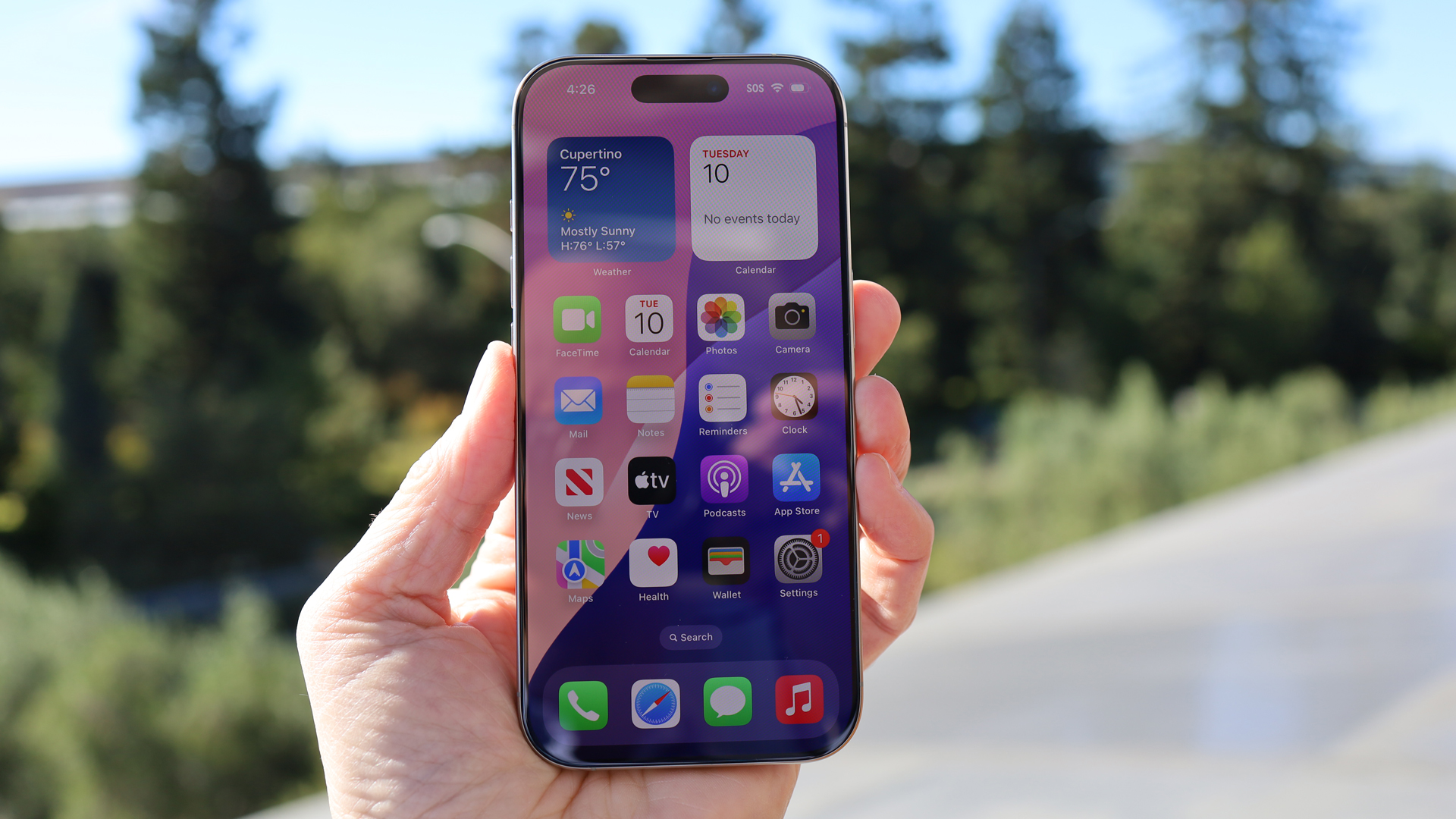
Rank 12132The iPhone 17 series will reportedly lack a previously rumored anti-reflective, scratch resistant coatingApparently it was taking too long to apply to the millions of iPhones Apple is buildingIn other news, the iPhone 17 series is reportedly on schedule for a September launch
One of the earliest iPhone 17 rumors suggested that the upcoming phones would have a scratch-resistant and anti-reflective display coating, but now we’re hearing that this won’t be the case after all.It seems that the original claim may have been correct at the time, as a source “with reliable information” told MacRumors that this had been planned for the iPhone 17 Pro and the iPhone 17 Pro Max.But apparently the process to apply the coating to the millions of handsets Apple is building was taking too long, so the company is said to have scrapped the idea – at least for this year.What MacRumors isn’t clear on is whether Apple has switched to using a simpler coating, or perhaps a nano-texture display (which can also cut down reflections and is currently in use on some iPads and Macs), or whether the screens on the iPhone 17 series won’t be any more anti-reflective than current models.
The iPhone 16 Plus catches a lot of reflections (Image credit: Future)
A big miss
While we’d take this claim with a pinch of salt, it certainly sounds believable since we hadn’t heard anything about this coating in a long time. And that’s a shame, because this sounded like a big upgrade for Apple’s phones.Cutting down on reflections and glare would make the colors appear more true to life and less washed-out in bright lighting conditions, and the other feature of this coating – its scratch resistance – would obviously help keep the screen safe from damage.So it’s no surprise that Apple fans haven’t responded well to this news, with a lengthy Reddit thread including comments like “this is such a shame”, “really falling behind”, and “I’ll probably switch to Samsung”, with those last two comments likely referring to the fact that the Samsung Galaxy S25 Ultra does have an anti-reflective coating.Still, there is some good iPhone 17 news, as in a paywalled DigiTimes report (via BGR) it's claimed that Apple has completed engineering validation testing (EVT) for at least one iPhone 17 model.If that's correct – and nothing changes – it should mean that Apple is currently on track to launch the iPhone 17 series in September.
You might also like
The iPhone 17 Pro looks chunky in the latest leak, but it could still sell better than the sleek iPhone 17 Air'Those are so ugly': new iPhone 17 dummy unit photos show all four models side by side – and the internet isn’t impressedThis iPhone 17 Air dummy unit video suggests the phone is so slim it might bend
-

Picture from techcrunch.com
Rank 12133 -

Picture from ichef.bbci.co.uk
Rank 12134 -

Picture from ichef.bbci.co.uk
Rank 12135 -

Picture from ichef.bbci.co.uk
Rank 12136 -

Picture from techcrunch.com
Rank 12137 -
Picture from o.aolcdn.com
Rank 12138After a couple years of having its open-source Llama AI model be just a part of its Connect conferences, Meta is breaking things out and hosting an entirely generative AI-focused developer conference called LlamaCon on April 29. The event is streaming online, and you'll be able to watch along live on the Meta for Developers Facebook page.
LlamaCon kicks off today at 1PM ET / 10AM PT with a keynote address from Meta's Chief Product Officer Chris Cox, Vice President of AI Manohar Paluri and research scientist Angela Fan. The keynote is supposed to cover developments in the company's open-source AI community, "the latest on the Llama collection of models and tools" and offer a glimpse at yet-to-be released AI features.
The keynote address will be followed by a conversation at 1:45PM PT / 10:45PM ET between Meta CEO Mark Zuckerberg and Databricks CEO Ali Ghodsi on "building AI-powered applications," followed by a chat at 7PM ET / 4PM PT about "the latest trends in AI" between Zuckerberg and Microsoft CEO Satya Nadella. It doesn't seem like either conversation will be used to break news, but Microsoft and Meta have collaborated before, so anything is possible.
We'll be liveblogging the keynote presentation today, along with some of the subsequent interviews and sessions between Zuckerberg and his guests. Stay tuned and refresh this article at about 10AM ET today, when we'll kick off the live updates. Should you prefer to watch the video yourself, LlamaCon will stream live through the Meta for Developers Facebook page.
Meta hasn't traditionally waited for a conference to launch updates to Meta AI or the Llama model. The company introduced its new Llama 4 family of models, which excel at image understanding and document parsing, on a Saturday in early April. It's not clear what new models or products the company could have saved for LlamaCon.
Update, April 29 2025, 6:00AM ET: This story has been updated to include the details of Engadget's liveblog, and correct a few typos in timezones.This article originally appeared on Engadget at https://www.engadget.com/ai/how-to-watch-and-follow-llamacon-2025-metas-first-generative-ai-developer-conference-today-215241414.html?src=rss
-

Picture from ichef.bbci.co.uk
Rank 12139 -
Picture from cdn.mos.cms.futurecdn.net
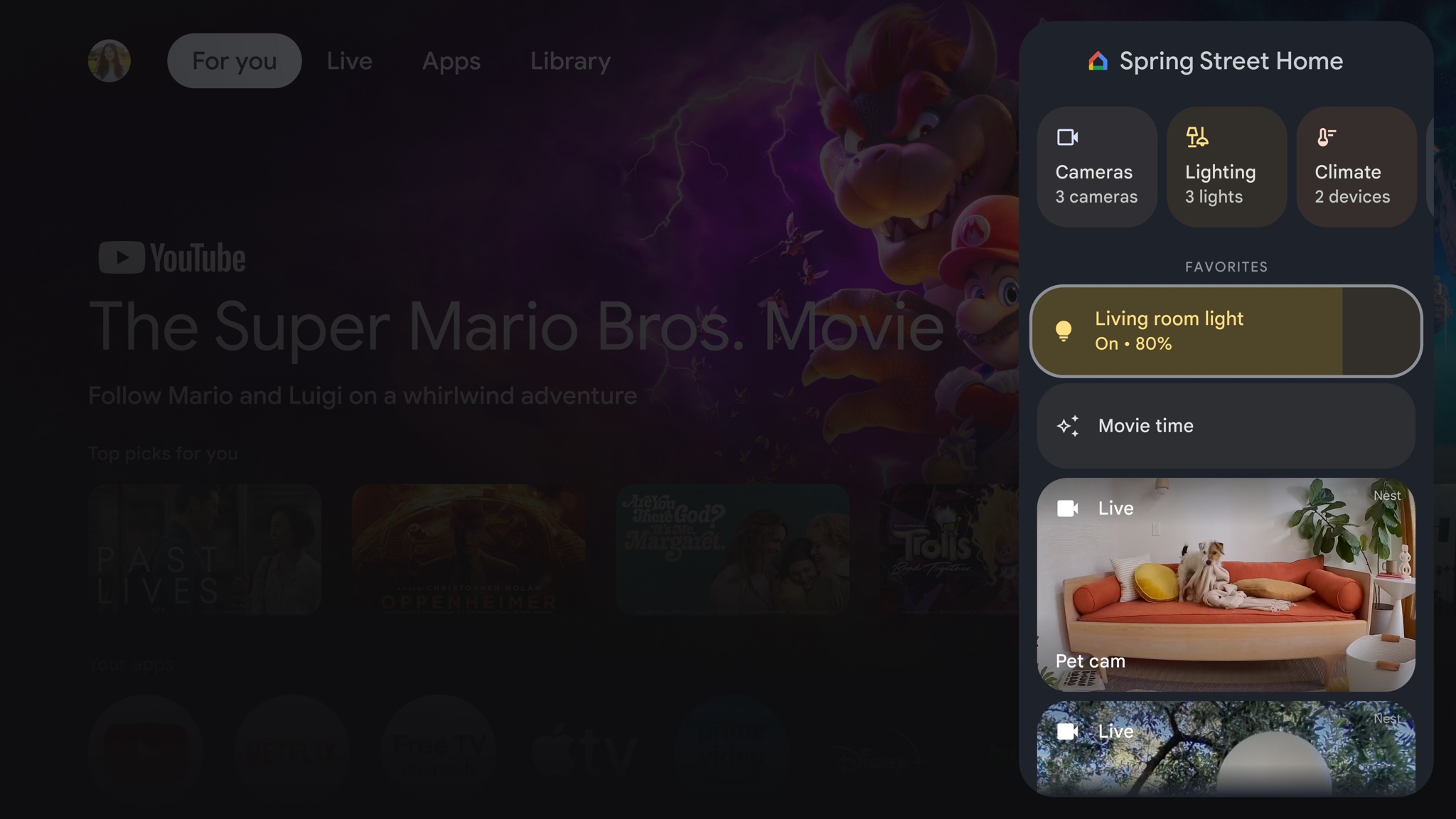
Rank 12140The Google TV Streamer's Home Panel is arriving on more devicesRequires you to have a Home set up in the Google Home appIncludes live video and doorbell notifications
One of the things we really like about the Google TV Streamer is its Home Panel, which enables you to control your smart home devices from your TV. And now it's coming to more Google devices.The Home Panel was originally exclusive to the Streamer, but Google made it clear that the plan was to roll it out more widely by launching a Public Preview. That preview has now become a roll-out, and that means it's available for Chromecast devices and Google TVs too.Not only that, but Google is rolling it out to models that have long been discontinued, including some older Chromecasts and Hisense TVs.
How to get the Home Panel on your Chromecast or Google TV
According to 9to5Google, the update means you'll get a pop-up on your compatible device the next time you use it. It'll ask you if you want to set up the Home Panel, and if you do it'll take you step by step through the process.It seems that all the features from the Streamer are present and correct, including Nest Doorbell notifications; control of lights, thermostats and speakers; live view from cameras; and quick access directly from the Quick Settings panel.In addition to adding the feature to your TV or Chromecast, you'll also need to have a Home set up in the Google Home app. That should be the same Home that your Google TV is part of; if there isn't a Home set up, you won't get the Home Panel notification.And finally, you'll need to be a grown-up. Google quite sensibly doesn't want the kids getting their hands on all your smart home controls.
You might also like
The Google TV Streamer is now finally worth buying in the UKGoogle TV Streamer vs Apple TV 4KXiaomi's Google TV Streamer rival gets a power-up
-

Picture from ichef.bbci.co.uk
Rank 12141 -

Picture from cdn.mos.cms.futurecdn.net
Rank 12142Huawei is unveiling a new smartwatch on May 15The company has teased a brand-new type of health sensorSince the announcement, the device has leaked in full
Huawei has confirmed that it will unveil a new smartwatch with an intriguing new health sensor on May 15 – and if you don't want any spoilers ahead of time, you won't want to hear about how the device has since leaked in full.Huawei confirmed that an "Innovative Product Launch" is scheduled for May 15 in Berlin, with a post on X that reads "Feel the future of digital health at your fingertips." With Huawei sales limited in the US, the Watch 5 is unlikely to land a spot on our best smartwatch roundup, but it's an exciting prospect all the same.
Feel the future of digital health at your fingertips. #TaptheNext #HuaweiLaunch #HUAWEIWatch5 pic.twitter.com/OzEbMi5eWOApril 25, 2025
In a second teaser post, Huawei states, "More comprehensive. More convenient. A whole new health monitoring experience is coming your way."The accompanying video teases a quick health check-in feature with readouts for temperature, heart rate, ECG, and other option,s which could be mood and respiratory rate, depending on how much you read into the emojis in the video.
More comprehensive. More convenient. A whole new health monitoring experience is coming your way. #TaptheNext #HuaweiLaunch #HUAWEIWatch5 pic.twitter.com/59ECcX8REaApril 29, 2025
Huawei Watch 5 leaked in full
Since the first announcement, 91Mobiles has leaked the device in full. Renders reveal 42mm and 46mm size options, matching the best Apple Watch models in terms of chassis.According to the report, there are gold/beige, blue, white, green, brown, and black color options, although they'll no doubt have snappier names. The circular dial and narrow bezels are complemented by a digital crown, as well as one physical button and the intriguing health sensor the company has been teasing.While 91Mobiles speculates this could be for charging, Huawei's videos clearly show that this is a sensor related to the health innovations the company will announce later this month.
Huawei Watch 5 as leaked by 91Mobiles (Image credit: Huawei)
While there's no word on an official release date or pricing, we should find out more when Huawei takes the covers off on May 15.
You may also like
Huawei Watch GT 5 review: a gorgeous-looking mid-range fitness trackerThe Huawei Watch 3 is a decent Apple Watch alternative, and its successor could be close at handThe Apple Watch Series 11 isn’t tempting me to upgrade – and these 5 rumors explain why
-
Picture from cdn.mos.cms.futurecdn.net
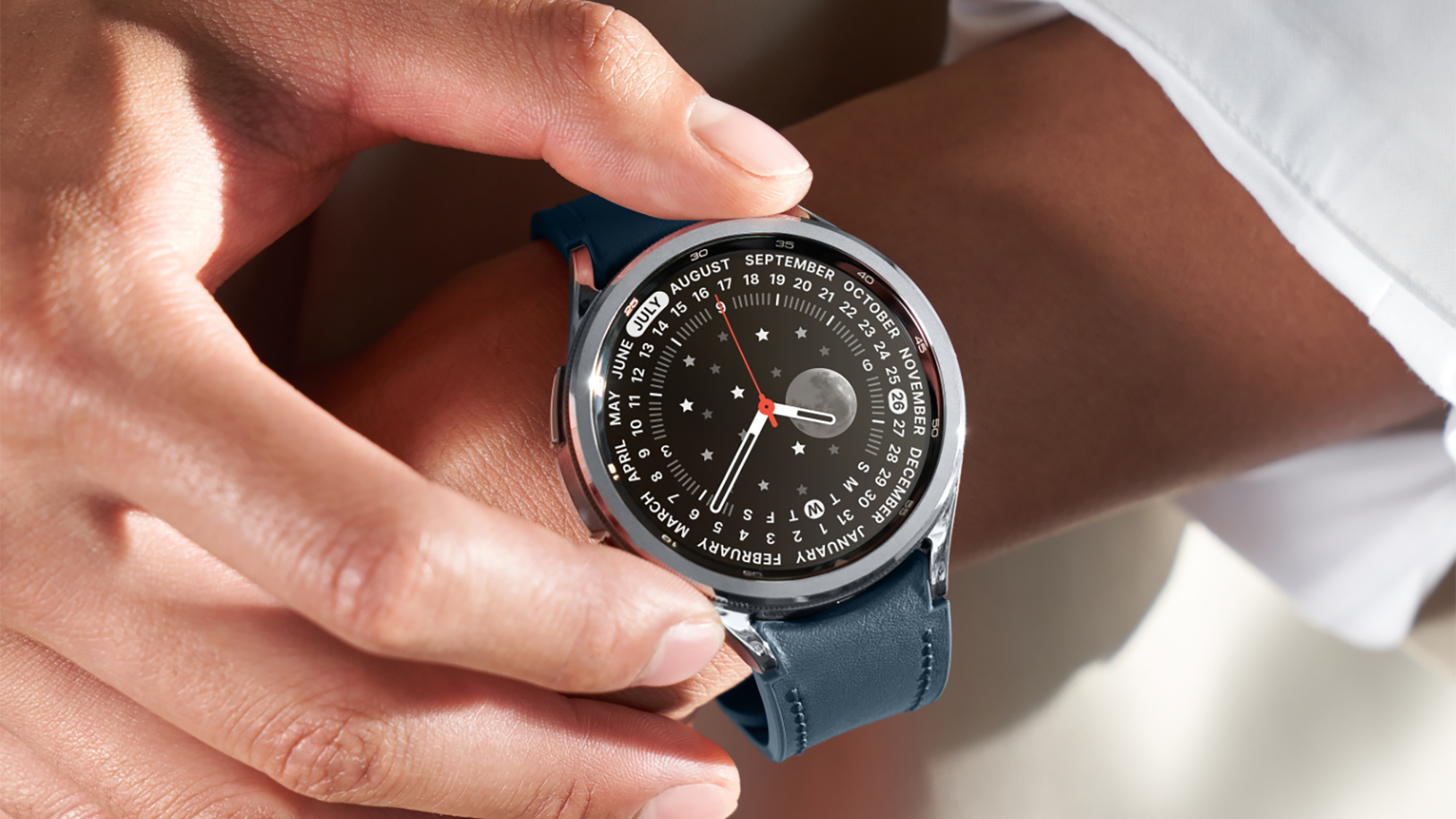
Rank 12143The Galaxy Watch 8 Classic has been spotted againIt's shown up in a Bluetooth regulatory databaseWe didn't get a Classic model with the 2024 series
As we get closer to the expected launch of the Samsung Galaxy Watch 8 – most probably around July time – we're starting to get a fuller picture of what's going to be on offer, and the latest leak once again points to a return to the Classic model for the best Samsung watches.The team at Xpertpick (via 9to5Google) spotted a device that most likely corresponds to the Galaxy Watch 8 Classic in a Bluetooth regulatory database, with the model number SM-L505U. However, the filing doesn't give us any more details about the wearable.This isn't the first time that we've heard that the Classic could be making a comeback, and in fact these rumors stretch all the way back to last year. Earlier this month the same Galaxy Watch 8 Classic model was spotted in another official database.If you haven't been following Samsung's watch launches closely, the Classic variation is usually bigger, made from better materials, and more expensive, compared to the standard smartwatch that Samsung puts out each year.
Bring it back
The Samsung Galaxy Watch 4 Classic, launched in 2021 (Image credit: Samsung)
We didn't get a Classic model last year, but as our Samsung Galaxy Watch 6 Classic review will tell you, we did in 2023. Back in 2022 we got the Samsung Galaxy Watch 5 and the Samsung Galaxy Watch 5 Pro.Samsung now seems to be alternating Classic model releases with Samsung Galaxy Watch Ultra and Pro models – we saw the first Ultra appear in 2024, and we're still hopeful that we might see the Galaxy Watch Ultra 2 break cover this year. However, if we're getting a classic, the Ultra 2 may be saved for 2026.Another key feature of the Classic models is a physical, rotating bezel you can use to interact with the watch. It's an input option that often makes more sense than jabbing at the screen or pushing buttons, especially on the move or in tricky weather conditions.In fact it's so useful, it might even make me consider switching over from my Garmin Instinct 3 – where working through menus and lists takes a lot of button pushing. I'll wait and see what else the Galaxy Watch 8 Classic brings to the table first, though.
You might also like
The Galaxy Watch Ultra 2 could debut with the Galaxy Z Fold 7These are the best smartwatches you can buyAnother hint that the Samsung Galaxy Watch 8 is on the way
-
Picture from cdn.mos.cms.futurecdn.net
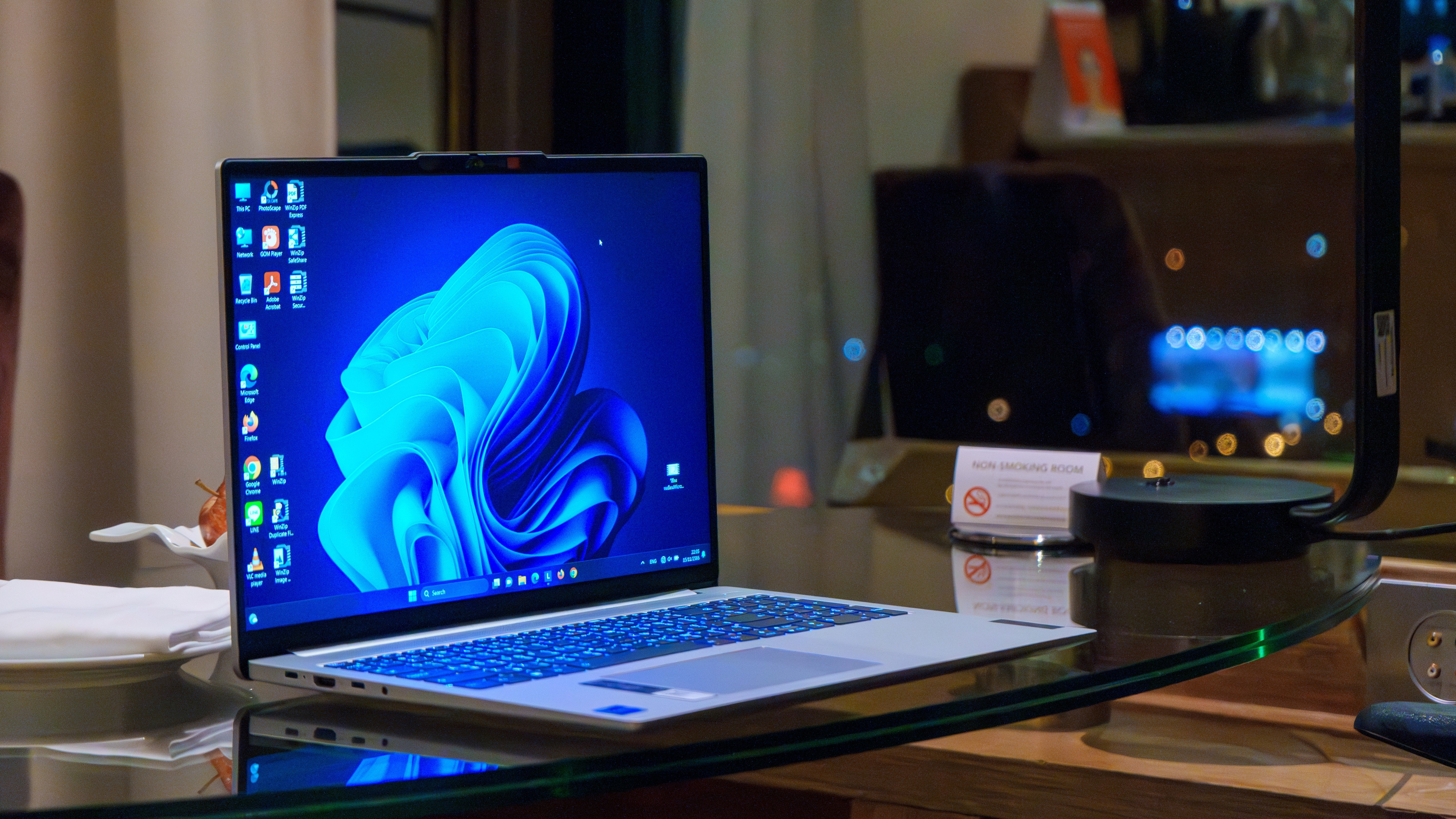
Rank 12144Microsoft is porting over another part of the old Control Panel to Windows 11’s Settings appThis time around it’s keyboard options (following some mouse-related settings in the recent past)This is hidden in test builds of Windows 11, so there’s no guarantee it’ll happen – but it seems a likely enough possibility
Microsoft is continuing the slow drip-feed of features moving from Windows 11’s Control Panel over to the Settings app.The Control Panel is a rusty old part of Windows 11 that has been superseded by the Settings app, although they’re effectively the same thing – just a whole bunch of settings.The Control Panel is still hanging around in the desktop OS because it has some legacy options that remain important (even if much of this functionality is pretty niche at this point). However, Microsoft is slowly migrating all these features across to Settings (where everything should be, ideally), and Techspot noticed the most recent move on this front.In this case, it’s some keyboard options getting ported over, as flagged up by that regular leaker of all things Windows on X, PhantomOfEarth.
Welcome to yet another episode of Control Panel options moving to Settings. Hidden (not available by default) in the latest Dev and Beta CUs: migrated keyboard character repeat delay and repeat rate options in Settings > Accessibility > Keyboard. pic.twitter.com/Xgfi1xOXkfApril 25, 2025
These are accessibility settings for the keyboard, specifically keyboard character repeat delay and repeat rate options.I should make it clear that this hasn’t actually happened yet; as the leaker points out, this work is hidden away in the background of the latest releases of Windows 11 preview builds in both the Dev and Beta channels.
(Image credit: Microsoft)
Analysis: Peripheral consideration
As this hasn’t been implemented yet, we must be aware that not every change that’s put in place in the background of Windows 11 preview builds like this ends up being enabled. So, nothing might come of it, but given that Microsoft is slowly porting over features from the old Control Panel to the Settings app, it seems likely that this will be the next step.Especially given that we recently saw clues that Microsoft is moving mouse options over from the Control Panel as well, so keyboard-related settings would fit with that. It makes sense to migrate the full range of mouse and keyboard settings over, too, as those are capabilities that a greater number of folks running Windows 11 are more likely to use (in comparison to some of the obscure stuff kicking about in corners of the Control Panel).Naturally, all of this is (or should be) part of a broader drive to eventually do away with the Control Panel entirely, by shifting all its functionality across to the modern-looking Settings app.Windows 11 will be a better place when this happens, simply because when you do stumble across a less commonly used setting that is still languishing in the Control Panel, it feels very jarring when that old interface pops up in the middle of Windows 11’s streamlined and modern desktop.As to how long this full migration process will take, well, that’s anyone’s guess. However, given how sluggishly Microsoft has been going with this project so far – let’s just say it doesn’t appear to be any kind of priority – it’s likely to be the next version of Windows (whatever that may be called – Windows Copilot, perhaps) that this work is finished in.
You might also like...
Windows 11 24H2 update arrives in preview with important fix for blue screen crashes – but I still wouldn’t rush to install this upgradeWindows 11 is getting a very handy change to the taskbar, as Microsoft takes a leaf from Apple’s Mac playbookWindows 11 fully streamlined in just two clicks? Talon utility promises to rip all the bloatware out of Microsoft’s OS in a hassle-free way
-

Picture from ichef.bbci.co.uk
Rank 12145 -

Picture from cdn.mos.cms.futurecdn.net
Rank 12146In Q1 2025 there were 20.5 million DDoS attacksIn the whole 2024 there were 21.3 millionHyper-volumetric DDoS attacks are growing more popular
In the first quarter of 2025, there were as many Distributed Denial of Service (DDoS) attacks as there were through the entire 2024.This is according to Cloudflare’s new Q1 2025 DDoS Threat Report, published earlier this week. Based on data from the Cloudflare network, the report claims that in the first three months of 2025, there were 20.5 million DDoS attacks, almost the same as in all 12 months of 2024 which had 21.3 million such incidents.This also represents a stunning 358% year-on-year increase, as well as a 198% quarter-on-quarter increase.
Get Keeper Personal for just $1.67/month, Keeper Family for just $3.54/month, and Keeper Business for just $7/monthKeeper is a cybersecurity platform primarily known for its password manager and digital vault, designed to help individuals, families, and businesses securely store and manage passwords, sensitive files, and other private data. It uses zero-knowledge encryption and offers features like two-factor authentication, dark web monitoring, secure file storage, and breach alerts to protect against cyber threats.Preferred partner (What does this mean?)View Deal
Targeting Germany
A Distributed Denial of Service attack works by flooding the target server with information packages from a vast, distributed network. If the server cannot process all of the requests on time, it bogs down, denying regular visitors proper access. There are different types of DDoS attacks, with hyper-volumetric ones now being “the new normal.”A hyper-volumetric DDoS attack is a massive cyberattack that floods a network or website with an extremely large volume of fake traffic, often measured in terabits per second. These require a huge network of devices, which is why in the past they weren’t as common. However, in Q1, roughly 700 attacks were deemed hyper-volumetric as they exceeded rates of 1 billion packets per second (pps) or 1Tbps - averaging about 8 attacks a day.At the same time, network-layer DDoS attacks (which target the lower levels of the internet stack, like routers and firewalls, by flooding them with traffic such as ICMP or UDP packets) are getting more popular. There were 16.8 million such attacks, representing a staggering 509% YoY increase and a 397% quarter-over-quarter increase.Germany is the number-one most targeted country in the world, followed by Turkey, who jumped 11 spots to reach second place. China slipped to third. As for the location of the attackers, Hong Kong is the number one source, followed by Indonesia and Argentina.
You might also like
Largest DDoS attack of 2025 so far was triggered by Alexander Ovechkin tying NHL Wayne Gretzky’s recordTake a look at our guide to the best authenticator appWe've rounded up the best password managers
-

Picture from techcrunch.com
Rank 12147 -

Picture from ichef.bbci.co.uk
Rank 12148 -

Picture from ichef.bbci.co.uk
Rank 12149 -

Picture from cdn.mos.cms.futurecdn.net
Rank 12150Upcoming Switch 2 games include a brand new 3D Donkey Kong platformer, a sequel to a cult classic Kirby racing game, and even a Nintendo-exclusive FromSoftware game. Judging by this year's line-up, the new Nintendo console is off to a very strong start indeed.
What's the next big Switch 2 game?(Image credit: Nintendo)Thanks to the full Nintendo Switch 2 reveal, we know that the console will launch on June 5, 2025. It's accompanied by Mario Kart World at launch, as well as a new Pro Controller with back-paddle buttons. And while Mario Kart is undoubtedly the headliner, you'll also be able to play other Switch 2 launch games like Cyberpunk 2077, Deltarune, and Street Fighter 6. Later on in the year, Elden Ring and Metroid Prime 4 will arrive on Nintendo's new console.
And whether you managed to get ahold of a Nintendo Switch 2 pre-order yet, you'll be able to play a lot of these games on the original Nintendo Switch. Still, it's clear that Nintendo Switch 2 is the best place to play, with a whole host of Switch 2 exclusives lined up over the next year or so, each looking like a true next-gen experience.We've even played Nintendo Switch 2, testing out the new Pro Controller, giving Mario Kart World a preview, and using our knowledge to compare the Switch vs Switch 2 specs. Over the last eight years, TechRadar Gaming has covered the full lifecycle of the Switch, and we're all very excited to apply our expertise to its successor in the coming months.For now, here's every confirmed Upcoming Nintendo Switch 2 game, so that you can see what you'll have the option of playing in the near future. As new release dates are unveiled, this page will be updated.
Upcoming Switch games 2025: this year’s biggest games
Mario Kart World - June 5, 2025 (Switch 2)Deltarune - June 5, 2025 (Switch 2)Donkey Kong: Bananza - July 17, 2025 (Switch 2)Borderlands 4 - September 23 (Switch 2, XSX|S, PS5, PC)Kirby Air Riders - TBC 2025 (Switch 2)Pokémon Legends Z-A - TBC 2025 (Switch 2, Switch)Metroid Prime 4: Beyond - TBC 2025 (Switch 2, Switch)
Now, let's go deeper into some of the biggest games planned for Switch 2.
(Image credit: Nintendo)
Mario Kart WorldAround the world
Mario Kart World is the first fully new console entry into the series since 2017, and from what we've seen so far, it looks set to be a bold leap forward. The main change here is that there's a huge open world to race across with your friends, with every course now having an actual position on an interconnected map. Up to 24 players can race against each other in Grand Prix, or the new Knockout Mode, which tasks racers with getting from one side of the map to the other.This one is only coming out on Nintendo Switch 2, and launches alongside the console on June 5, 2025.
(Image credit: Nintendo)
The Legend of Zelda Breath of the Wild + Tears of the Kingdom (Switch 2 Edition) Modern classics, remasteredPowerful new abilitiesMassive, rich open worldStuffed with puzzlesComplex battles cause low framerates
Now for some new versions of two absolute belters. The Legend of Zelda: Breath of the Wild and Tears of the Kingdom (sold separately) will each be getting a Nintendo Switch 2 edition alongside the new console's launch, making them look and play better than ever. It feels a bit silly to sing the praises of these games at this point, but yes, they are two of the best games ever made, and yes, you should absolutely play them. The new versions add increased resolution and better performance, as well as new compatibility with the Zelda Notes App.You'll be able to pick up both of these enhanced titles on June 5, 2025. Note that if you already own them on Nintendo Switch, you can upgrade to the new versions for a small fee.
(Image credit: Nintendo)
Donkey Kong BananzaKONG!
Donkey Kong Bananza is a brand new 3D platformer that stars the titular ape as he tries to fend off a greedy mining corporation called Voidco. You see, they're after golden bananas, which just so happen to be Kong's food of choice, so he'll punch, smash, stomp, and grab anyone who gets in his way. You'll explore a sprawling underground world filled with colorful locales, filled with treasure and secrets to find.Donkey Kong Bananza launches July 17, 2025, only on Nintendo Switch 2.
(Image credit: Gearbox)
Borderlands 4Greetings, Vault Hunter
Now onto Borderlands 4, which first launches in September for PS5, XSX|S, and PC. This one's a great example of how the newer console is able to play third-party titles in a way its predecessor simply couldn't. The Switch 2 version launches sometime in 2025, meaning that you'll be able to take your vault-hunting action on the go in handheld mode. Details are a little scarce at the moment regarding the game's story, though we do know there are four new playable characters to choose from.Borderlands 4 launches in 2025 for Nintendo Switch 2.
(Image credit: Nintendo)
Metroid Prime 4: BeyondFriend or foe?
Metroid Prime 4: Beyond is the long-awaited return of the 3D Metroid series. It's still set for 2025, and it'll release on both Nintendo Switch 2 and Nintendo Switch. The gameplay revealed so far points to this being faithful to the original trilogy, with platforming, puzzles, and first-person shooting action. Samus has psychic abilities this time around, and players can use the new Joy-Con mouse functionality to aim.Metroid Prime 4: Beyond will launch at some point in 2025. Once we hear a more precise release date, we'll update this section.
(Image credit: Nintendo)
Pokémon Legends Z-ALumiose City awaits
Pokémon Legends Z-A takes players back to Lumiose City to take part in a program to make the place more suited to Pokémon and people living in harmony. There are dynamic battles, city-wide exploration, and three starter Pokémon in Totodile, Chikorita, and Tepig. Mega Evolution is back too, adding a new layer to combat, and giving Pokémon like Charizard and Lucario new forms.Pokémon Legends Z-A will launch sometime in 2025 for Nintendo Switch 2 and Nintendo Switch.
(Image credit: FromSoftware)
The DuskbloodsBloodsworn
The Duskbloods was perhaps the biggest surprise announcement of the Switch 2 reveal event. It's a multiplayer online action game from the creators of Elden Ring, Dark Souls, and Bloodborne. Crazier yet, it's only launching on Nintendo Switch 2, something that's very unexpected indeed. There's still a lot to learn about the game, but we do know that players will engage in PvPvE combat, taking on the role of "The Bloodsworn". These vampiric characters possess superhuman abilities, which can be used to hunt down and eliminate foes.The Duskbloods is set for a 2026 release on Nintendo Switch 2. So far, a more precise date hasn't been given.
Nintendo Switch 2 games release schedule
(Image credit: Nintendo)
Now, onto the full Nintendo Switch 2 release schedule. The games below will release on Switch 2, and some on Switch as well. We'll indicate where this is the case, and will continue to update release dates as they're unveiled.
Upcoming Switch 2 games: June
(Image credit: Nintendo)
We'll all get our hands on Nintendo Switch 2, and a whole host of launch games in June:
Arcade Archives 2 Ridge Racer - June 5 (Switch 2)Bravely Default Flying Fairy HD Remaster - June 5 (Switch 2)Cyberpunk 2077: Ultimate Edition - June 5 (Switch 2)Deltarune - June 5 (Switch 2)Fast Fusion - June 5 (Switch 2)Fortnite - June 5 (Switch 2)Hitman World of Assassination: Signature Edition - June 5 (Switch 2)Hogwarts Legacy - June 5 (Switch 2)Kunitsu-Gami: Path of the Goddess - June 5 (Switch 2)Mario Kart World - June 5 (Switch 2)Nintendo Switch 2 Welcome Tour - June 5 (Switch 2)Nobunaga's Ambition: Awakening Complete Edition - June 5 (Switch 2)Puyo Puyo Tetris 2S - June 5 (Switch 2)Rune Factory: Guardians of Azuma - June 5 (Switch 2)Sid Meier's Civilization 7 (Nintendo Switch 2 Edition) - June 5 (Switch 2)Sonic X Shadow Generations - June 5 (Switch 2)Split Fiction - June 5 (Switch 2)Street Fighter 6 - June 5 (Switch 2)Survival Kids - June 5 (Switch 2)The Legend of Zelda: Breath of the Wild (Switch 2 Edition) - June 5 (Switch 2)The Legend of Zelda: Tears of the Kingdom (Switch 2 Edition) - June 5 (Switch 2)Yakuza 0 Director's Cut - June 5 (Switch 2)Radio Remastered: Mystery of the Soulless Army - June 19 (Switch 2)Tamagotchi Plaza (Switch 2 Edition) - June 27 (Switch 2)
Upcoming Switch 2 games: July
(Image credit: Activision)
Now onto July, which sees a new Donkey Kong game launching exclusively for Nintendo Switch 2.
Tony Hawk's Pro Skater 3 + 4 - 11th July (PC, PlayStation, Xbox, Switch)Donkey Kong Bananza - 17th July 2025 (Switch 2)Shadow Labyrinth (Switch 2 Edition) - July 18 (Switch 2)Super Mario Party Jamboree (Switch 2 Edition) - July 24 (Switch 2)No Sleep For Kaname Date - July 25 (Switch 2)Wild Hearts S - July 25 (Switch 2)Ys X: Proud Nordics - July 31 (Switch 2)
Upcoming Switch 2 games: August
(Image credit: Nintendo)
August brings a new version of an excellent Kirby 3D platformer:
Story of Seasons: Grand Bazaar (Switch 2 Edition) - August 27 (Switch 2Kirby and the Forgotten Land (Switch 2 Edition) - August 28 (Switch 2)
Upcoming Switch 2 games: September
(Image credit: Ubisoft)
Players will be able to jump into Star Wars Outlaws on Switch 2 in September:
Star Wars Outlaws (Switch 2 Edition) - September 4 (Switch 2)Dæmon X Machina: Titanic Scion - September 5 (Switch 2)
Upcoming Switch 2 games: Rest of 2025 and TBC
(Image credit: Nintendo)
Finally, here's a list of Switch 2 games that have been announced, but either don't have more than a release year attached to them yet, or are much further out. For now, they're simply TBC, but once each game does receive a release date, this page will be updated.
Hyrule Warriors: Age of Imprisonment - Winter 2025 (Switch 2)Borderlands 4 - TBC 2025 (Switch 2)Drag x Drive - TBC 2025 (Switch 2)Elden Ring: Tarnished Edition - TBC 2025 (Switch 2)Hades II - TBC 2025 (Switch 2)Hollow Knight: Silksong - TBC 2025 (Switch 2)Metroid Prime 4: Beyond - TBC 2025 (Switch 2, Switch)Pokémon Legends Z-A - TBC 2025 (Switch 2, Switch)Professor Layton and the New World Of Steam - TBC 2025 (Switch 2)Reanimal - TBC 2025 (Switch 2)Two Point Museum - TBC 2025 (Switch 2, Switch)Witchbrook - TBC 2025 (Switch 2)Yooka-Replaylee - TBC 2025 (Switch 2)Marvel Cosmic Invasion - TBC 2025 (Switch 2)The Duskbloods - TBC 2026 (Switch 2)Enter The Gungeon - TBC 2026 (Switch 2)Final Fantasy VII Remake Intergrade - TBC (Switch 2)Human: Fall Flat 2 - TBC (Switch 2)My Time at Evershine - TBC (Switch 2)PowerWash Simulator 2 - TBC (Switch 2)Project 007 - TBC (Switch 2)
New Switch 2 games FAQ
(Image credit: Nintendo)
What games are coming out for Switch 2?There are many games coming out for Switch 2 over the next year or so. The biggest ones are Mario Kart World on June 5, Donkey Kong Bananza on July 17, and then Metroid Prime 4 at some point in 2025. We'll also get Pokémon Legends: Z-A this year, as well as Hades 2 as a console exclusive.
Is the Switch 2 better than Switch 1?The Switch 2 has better specs than Switch 1, with a larger screen, the capacity to output games at up to a 4K resolution, and support for 120 frames per second modes. We'll have to wait for launch to see how it stacks up against its predecessor, though for now, it's looking like Switch 2 could be a much better console than Switch 1, with better third-party game support and an improved Pro-Controller featuring back paddles.
Did Switch 2 sell out yet?While stock for Switch 2 has been very hit or miss in the last week or so, with small flurries of listings going live before selling out immediately, we're still expecting to see a few more opportunities to pre-order. Keep an eye on our Nintendo Switch 2 stock tracker, as it'll be updated as soon as retailers get new supply.
You Might Also Like...
Underrated Switch games to play in 2025The best cozy games on Nintendo SwitchBest Nintendo Switch games 2025


