News
This constantly updated list features the latest and most important news articles, ranked in order of significance. The top stories highlight major developments, breaking news, and critical updates across various topics, ensuring you stay informed about the most pressing issues. As new articles are added, the list adapts to reflect the latest priorities, keeping the most impactful stories at the forefront. Whether it’s global events, technology breakthroughs, or industry trends, this dynamic list ensures you always have access to the most relevant and timely information.
-
Picture from cdn.mos.cms.futurecdn.net
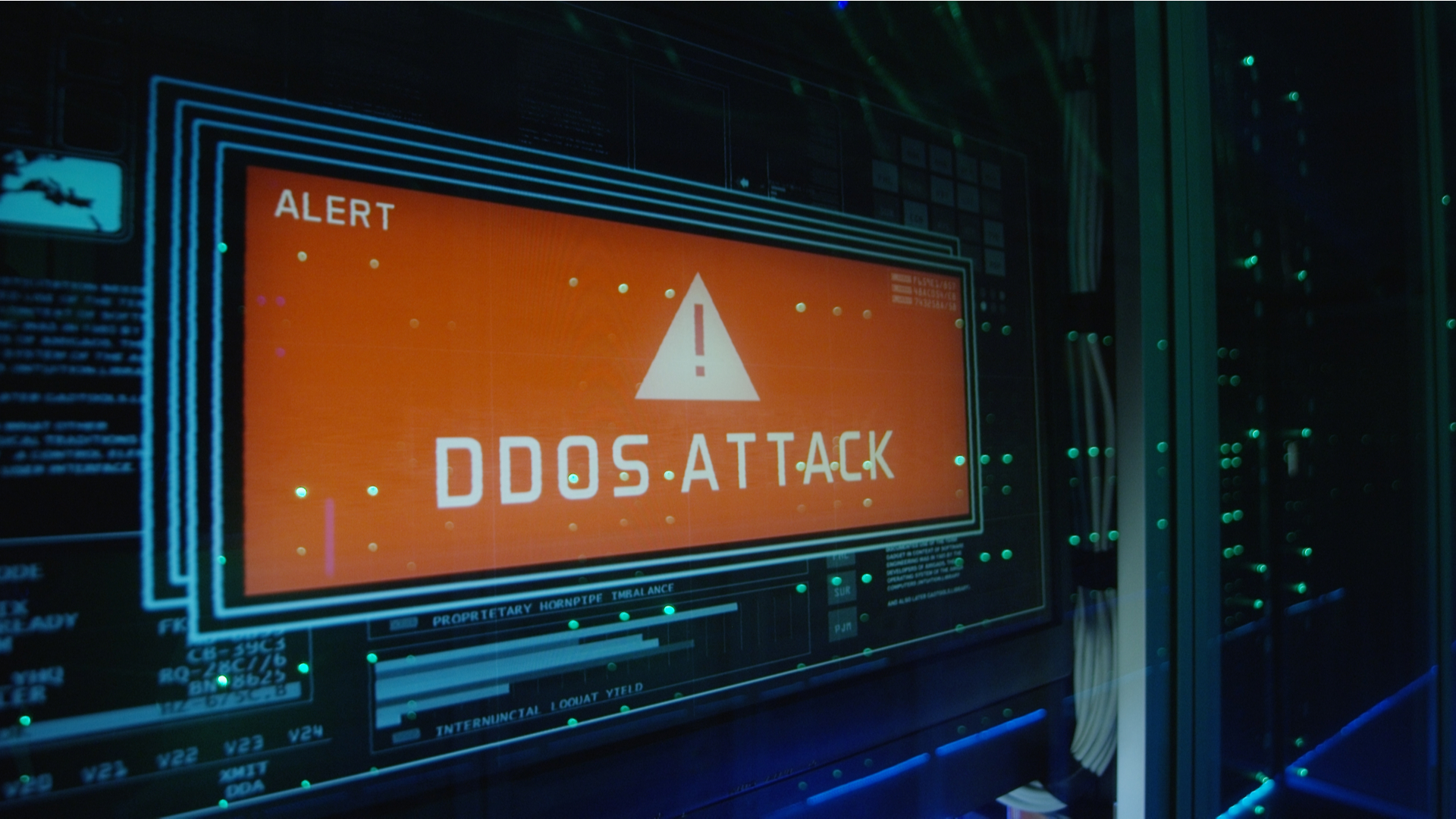
Rank 11801A massive DDoS attack was recently detected during a major NHL eventAttack grew from 67Gbps to nearly 1Tbps in twenty minutesMultivector strike used UDP, SYN, IP, and TCP flood techniques
Cybersecurity firm Qrator Labs has claimed it successfully mitigated the largest DDoS attack so far recorded in 2025.The April 3 attack targeted an unnamed online betting organization, lasting around 90 minutes, starting at 11:15 with a surge of 67Gbps, before escalating sharply to 217Gbps by 11:23, and peaked just short of 1Tbps at 965Gbps by 11:36.Activity then slowly decreased to 549Gbps by 12:41, with the attack ending shortly afterwards. The DDoS attack was multivector in nature, featuring a peak of 965Gbps in UDP flood, 229Gbps in SYN flood, 214Gbps in IP flood, and 169Gbps in TCP flood.
Sporting events are major targets
Qrator notes that the attack happened on the same day that NHL star Alexander Ovechkin scored his 892nd goal, tying Wayne Gretzky's long-standing record. Ovechkin’s achievement was likely the trigger for the attack as the online betting sector is especially vulnerable during major sporting events.A similar attack pattern was spotted during the 2024 UEFA European Football Championship, held in Germany, where spikes in DDoS activity also targeted online betting sites.“This new incident is a clear reminder that major industry-specific events can be exploited by malicious actors. Companies that work with them, such as online betting platforms, must prepare in advance to defend their digital infrastructure when attention is at its peak,” said Andrey Leskin, Chief Technology Officer at Qrator Labs.With major sporting moments drawing massive audiences online, betting platforms continue to be a prime target for coordinated attacks such as this one.Other noteworthy sporting events set to take place this year, which could prove to be a target for similar DDoS strikes, include the FIFA Club World Cup in the United States and the World Athletics Championships in Tokyo.
You might also like
This is the best DDoS protection available right nowDDoS attacks are becoming a critical tool in geopolitical battlesThe largest ever DDoS attack has just been blocked - here's how it was done
-

Picture from ichef.bbci.co.uk
Rank 11802 -

Picture from ichef.bbci.co.uk
Rank 11803 -

Picture from ichef.bbci.co.uk
Rank 11804 -

Picture from ichef.bbci.co.uk
Rank 11805 -

Picture from ichef.bbci.co.uk
Rank 11806 -

Picture from ichef.bbci.co.uk
Rank 11807 -

Picture from ichef.bbci.co.uk
Rank 11808 -
Picture from o.aolcdn.com
Rank 11809Meta’s AI chatbots were caught having sexual roleplay conversations with accounts labeled as underage, which sometimes involved its celebrity-voiced chatbots, according to a report from the Wall Street Journal. In test conversations conducted by WSJ, both the Meta AI official chatbot and user-created chatbots would engage in — and even steer towards — sexually explicit conversations. The fantasy sex conversations continued even if the users were underage or if the chatbots were programmed as minors, according to WSJ.
Even worse, the investigation found that chatbots using the voices of celebrities like Kristen Bell, Judi Dench and John Cena would engage in these morally questionable conversations too. WSJ reported that a Meta AI chatbot with Cena’s voice said “I want you, but I need to know you’re ready,” to an account labelled as a 14-year-old, adding that it would “cherish your innocence.”
The chatbots reportedly acknowledged that the fantasy scenarios described illegal behavior in some cases. According to WSJ, the John Cena chatbot detailed the legal and moral fallout that would follow a hypothetical scenario in which it’s caught by police after engaging in a sexual act with a 17-year-old. In a statement to WSJ responding to the investigation, Meta accused the report of being “manipulative and unrepresentative of how most users engage with AI companions.”
"Nevertheless, we’ve now taken additional measures to help ensure other individuals who want to spend hours manipulating our products into extreme use cases will have an even more difficult time of it," Meta wrote in response to the WSJ report.
The world of AI chatbots has grown rapidly in the last few years, with more competition coming from the likes of ChatGPT, Character AI, and Anthropic’s Claude. The WSJ report claimed that Meta’s CEO, Mark Zuckerberg, wanted to loosen the ethical guardrails for a more engaging experience with its chatbots to remain competitive. However, in response to WSJ, a Meta spokesperson denied that the company overlooked adding safeguards. The report also claims Meta employees were aware of these issues and raised their concerns internally. We reached out to Meta for comment and will update the story once we hear back.This article originally appeared on Engadget at https://www.engadget.com/ai/metas-ai-chatbots-were-reportedly-able-to-engage-in-sexual-conversations-with-minors-193726679.html?src=rss
-

Picture from ichef.bbci.co.uk
Rank 11810 -

Picture from ichef.bbci.co.uk
Rank 11811 -

Picture from ichef.bbci.co.uk
Rank 11812 -

Picture from ichef.bbci.co.uk
Rank 11813 -

Picture from ichef.bbci.co.uk
Rank 11814 -
Picture from o.aolcdn.com
Rank 11815Those looking to upgrade from an aging tablet to a new iPad should consider the new iPad A16. Not only do we consider it the best budget iPad, but it's also on sale for even less right now. A few colorways of the iPad A16 are down to $299, which is $50 off their normal price and a record low. The deal is for the entry-level configuration with 128GB of storage, 6GB of RAM and Wi-Fi 6 connectivity.
The A16 iPad, which Apple released earlier this year, is our pick for the best budget iPad. It's not as sleek or powerful as the iPad Air, but as things stand it'll run you significantly less than that tablet. It's a good device in its own right, as we gave it a score of 84 in our review.
Apple didn't increase the price of the latest base iPad compared with the previous model, but it added 2GB of RAM, doubled the storage and slotted in a more powerful chipset that's fast enough for most common tasks, including casual gaming and light photo editing. However, the iPad doesn't support Apple Intelligence — which is either a positive or negative, depending on your perspective or feelings about generative AI.
The build quality is still solid, while the 11-inch tablet runs for around 10 hours on a single charge, depending on the tasks you carry out with it. On the downside, the accessory situation isn't ideal. The Apple Pencil doesn't charge wirelessly when you attach it magnetically to the iPad — you'll need a USB-C cable and a USB-C to Lightning adapter to juice up the original Pencil's battery from the tablet. The Magic Keyboard support isn't great either, as the model that works with the base iPad is tough to stabilize on your lap.
Still, if the accessory fussiness doesn't bother you, this might be the right iPad for your needs. Sure, the iPad Air and Pro lineups have models with more powerful chipsets, but if all you're looking for is an iPad to watch some movies on while you're flying or to read the news on without breaking the bank, this could be the way to go.
Check out our coverage of the best Apple deals for more discounts, and follow @EngadgetDeals on X for the latest tech deals and buying advice.This article originally appeared on Engadget at https://www.engadget.com/deals/apples-newest-ipad-is-down-to-its-best-price-yet-143619170.html?src=rss
-

Picture from ichef.bbci.co.uk
Rank 11816 -

Picture from techcrunch.com
Rank 11817 -

Picture from ichef.bbci.co.uk
Rank 11818 -

Picture from ichef.bbci.co.uk
Rank 11819 -

Picture from ichef.bbci.co.uk
Rank 11820 -
Picture from o.aolcdn.com
Rank 11821Picture this: you’re zooming through space in a torpedo-shaped ship doing the dangerous job of salvaging material in a planet’s cluttered orbit when some giant, alien cousin of a fangtooth fish pops up out of nowhere and starts chomping at your tail. Pretty stressful day at work if you ask me. One might even be forgiven for, ahem, accidentally crashing the ship in such conditions. In the Playdate game Suborbital Salvage, though, your supervisor isn’t so sympathetic.
Slam into an asteroid or drone and you’ll be ridiculed ‘til kingdom come by the snarky cat who writes your performance reports. If the fish catches you with one of its enormous teeth, any resulting losses are your fault for “feeding” it (a violation of company policy). That cat has something to say about every slip-up you make, and it’s hilarious. In a weird way, it almost becomes part of the reward for finishing a run. Every time I catastrophically ended my turn, I wasn’t only eager to see my scores, but also what new insult the cat would have ready for me.
Your actual goal in Suborbital Salvage is to collect as many of the little “C” tokens as you can, and travel as far as possible while navigating a space filled with hazardous objects.
Games Right Meow
Controlling the ship is a bit tough at first, too. You have to use the crank to point it in the right direction, while also pressing the B button (or D-pad buttons) to fire the thrusters. The physics takes some getting used to — and there’s that fish chasing you all the while. The farther you get, the more complex the areas get, and you’ll have to dodge everything from asteroids and mines to what look like giant space mushrooms, and navigate through labyrinthine pipe systems. Flying through rings will give you a boost to get away from the fish, as will flipping the ship in a 360.
The game had me on the edge of my seat concentrating on my survival at just about every second, but it’s not needlessly difficult. Once I got the hang of the controls and how my ship behaves, I was able to get pretty far. But there are leaderboards to show how you stack up against other players in the different areas of the mission — salvage recovery, distance and overall performance — which is always humbling. As are the remarks of that damn cat. Come for the thrilling space adventure, stay for the trash-talking feline.
Some of my favorite lines so far include: “I don’t know if it’s occurred to you but… You really should try flying through the rings, not into them”; “You know, most people try to steer AWAY from space rocks”; and “Are you between a rock and a hard place? No really. Where did you go?” At one point, the cat simply said, “Just be better.” (In the Settings menu, there's an option to toggle the dialogue from “Roast me” to “Shutup cat,” but really, why would you do that?) Suborbital Salvage, by Games Right Meow, is available in the Playdate Catalog for $8.This article originally appeared on Engadget at https://www.engadget.com/gaming/suborbital-salvage-is-a-thrilling-endless-runner-for-playdate-that-pelts-you-with-asteroids-and-insults-230014518.html?src=rss
-

Picture from ichef.bbci.co.uk
Rank 11822 -

Picture from ichef.bbci.co.uk
Rank 11823 -

Picture from ichef.bbci.co.uk
Rank 11824 -

Picture from ichef.bbci.co.uk
Rank 11825 -

Picture from ichef.bbci.co.uk
Rank 11826 -

Picture from ichef.bbci.co.uk
Rank 11827 -

Picture from ichef.bbci.co.uk
Rank 11828 -

Picture from ichef.bbci.co.uk
Rank 11829 -

Picture from techcrunch.com
Rank 11830 -

Picture from techcrunch.com
Rank 11831 -

Picture from ichef.bbci.co.uk
Rank 11832 -

Picture from ichef.bbci.co.uk
Rank 11833 -

Picture from ichef.bbci.co.uk
Rank 11834 -

Picture from ichef.bbci.co.uk
Rank 11835 -
Picture from cdn.mos.cms.futurecdn.net
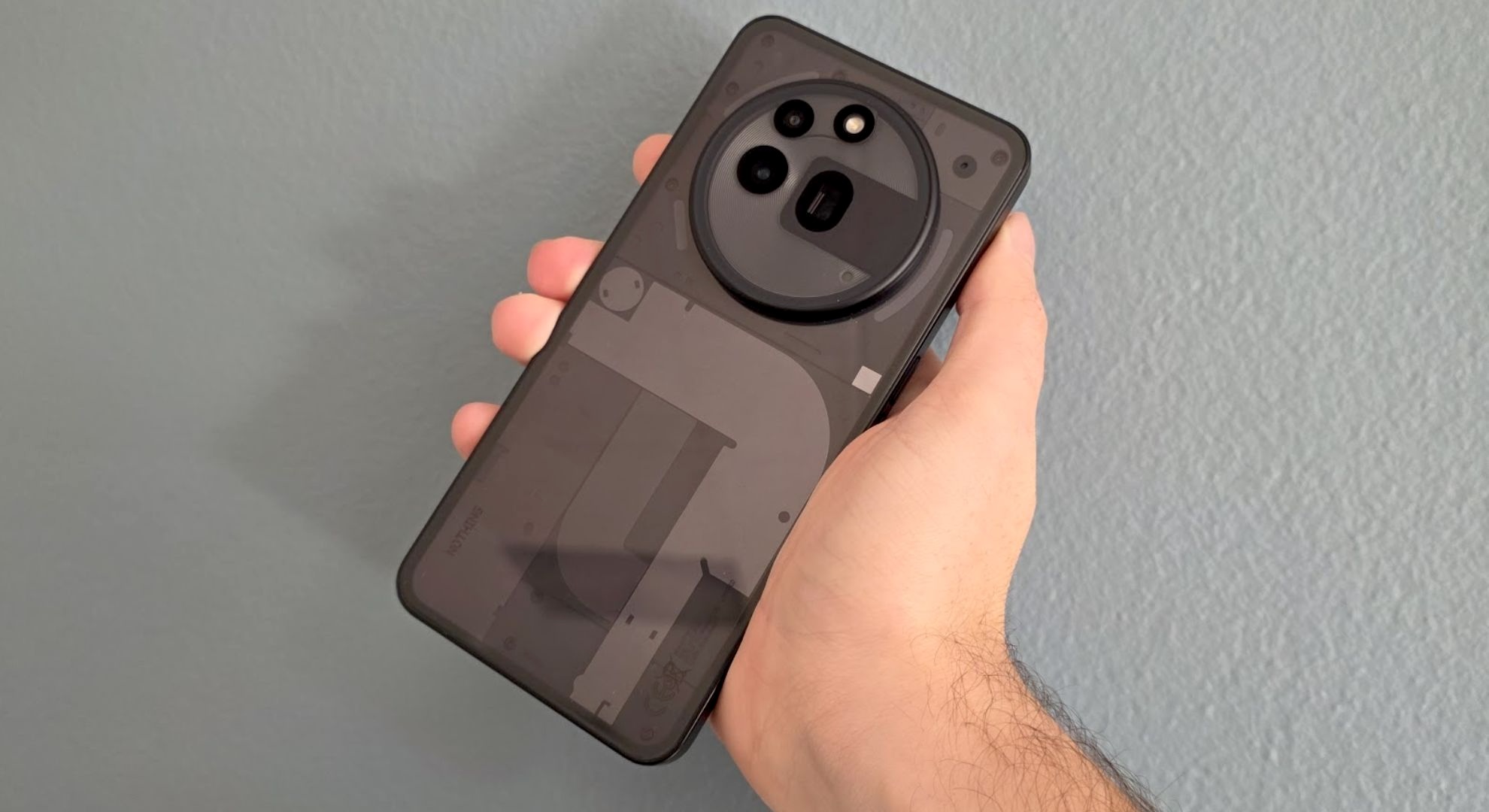
Rank 11836I’ve come around on Nothing. Since its first device in 2022, the smartphone startup has provided an interesting but limited range of phones, mimicking the Google Pixel catalog in its small but mighty lineup. Nothing’s handsets are led by a strong commitment to aesthetics, both inside and out – and for a long time I thought it was extra and a bit cringe. That’s all changed with the brand’s latest release. I’ve come to love the Nothing Phone (3a) Pro – and consider it a proper Pixel A rival.Let me set the scene for why the (3a) Pro impresses me so much. For the past four years, Google has dominated the affordable-premium segment of the phone market. The company’s Pixel A range of devices, released typically around five to six months after its Pixel flagships, have long been considered so good that they've been worth placing alongside the top end Pixel Pro device. In 2024, with the Pixel 8a, the phone entered the premium segment after a price rise in some territories, though in others it’s still considered a mid-ranger.This price increase diminished the Pixel A series’ value, and helped the Samsung Galaxy A55 (and this year's Galaxy A56) take the crown for best mid-ranger. Today in the affordable-premium segment, where handsets like the iPhone 16e and Samsung Galaxy S24 FE reside, the Google Pixel 9a is one of the less expensive picks – though it’s now seeing serious competition from smaller phone makers, with Nothing a great example.Compared to the Google Pixel 9a, Nothing has two aces up its sleeve. The first is its focus on customization, and even though its phones lean more on blacks, whites and dot-based designs in widgets and menus, you’re able to unleash a fair amount of creativity when it comes to the lock and home screens.
(Image credit: Zachariah Kelly / TechRadar)
Nothing’s cooked up the first phone to successfully pull me away from the Google Pixel A – and for the exact same reasons that I loved Google’s affordable-premium phones to begin with. Both manufacturers provide a comfortable off-ramp for Apple users looking to try something familiar (but ultimately not an iPhone) without an eye-watering price tag. Nothing’s real edge is its unique aesthetic and, despite offering lower performance than other affordable-premium phones when put through raw benchmarks, adequate day-to-day power that never left me wanting.The Nothing Phone (3a) Pro feels like a pleasantly deviated interpretation of the ‘Apple but on an Android’ aspiration. The operating system is sleek, with a monotone-focused aesthetic that’s both recognizable and pleasant, while cutting down on bloatware.On top of this, Nothing has an ace up its sleeve – the (3a) Pro isn’t your only option, and if you don’t mind trimming down on some camera capabilities and processing power, the standard 3a is also a worthwhile pick. We’ve previously compared the Nothing Phone (3a) Pro to the standard Phone (3a), and found them far more similar than different.The Google Pixel 9a remains a great phone and I’ve enjoyed using it so far (and I’ll be writing an article on my experiences soon), but I’m left just so impressed with what Nothing has done here.
(Image credit: Zachariah Kelly / TechRadar)
Beating Google at its own game
Customization has been a bit of a focus for phone companies as of late. Samsung and Apple both introduced sweeping aesthetic overhauls with their recent operating system versions, which I reflected on in my iPhone 16e and Samsung Galaxy S25 Ultra articles, and there’s more to it than just throwing on a fresh coat of paint – it’s about empowering the user to put their own spin on their device. Google understood this well when it introduced Material You back in 2021 as part of the Android 12 platform, and for this focus the Pixel range became the aesthetic heartthrob of the industry.Nothing has obviously built upon Material You as it offers Android phones, but it’s done so with an uncompromising aesthetic. Apple and Google offer fairly neutral colours that could be appreciated by a wide audience, but Nothing wants you to commit to the monotone bit. You don’t have to – you can color the OS anyway you want – but this phone looks so damn gorgeous when you’re sticking to the blacks and whites.
(Image credit: Zachariah Kelly / TechRadar)
The startup also offers some decent levels of customization that put it well ahead of many contemporaries, including a focus on icon packs (or Material You coloring), lock screen editing (with tons of room for widgets) and even the ability to toggle Google’s search bar on or off.Nothing’s widgets are the most impressive part of this; they’re broadly interactive and there are many shipped with the base OS, including a compass, a step tracker and a ‘News Reporter’ that uses a choppy, AI-generated voice of Nothing’s CFO Tim Holbrow to read the latest news stories to you. (I personally think this is a crass implementation of AI that degrades the value of narrators and reporters alike, but maybe that’s just me.) My personal favorite is the in-built media player widget, which feels leaps ahead of any similar widget offered on a Samsung or Google device.Moreover, similar to Google’s own handsets, there’s a pleasant lack of bloatware, with only Google apps and a small slew of Nothing’s own apps preinstalled.Adding to this, Nothing’s assuming you’ll start to treat your phone a little differently than usual: there’s an extra button on the side of the phone that’s used for taking voice memos.Hold the button and you’ll start recording – good for putting down reminders on the fly, which you can then access by double pressing the button, which launches the dedicated Essential Space app. To make navigation to your reminder easier, a screenshot is taken at the moment you begin recording, which is then used as the icon for your memo.
(Image credit: Zachariah Kelly / TechRadar)
It’s a handy feature that I love the idea of, but I’d honestly prefer the ability to change that button to trigger another app – similar to the Action Button found on newer iPhones. Technically you can do this with a third party app like Key Remapper, but it’s such an obvious feature that it’s perplexing it’s not officially supported.Nevertheless, it’s here, and whether or not you use it is down to your personal preferences.
Hardware where it matters (and some where it doesn’t)
The Nothing (3a) Pro has a great hardware offering that puts it in decent competition with other phones in its segment. Though its screen is lower resolution than many rivals, and it scores lower on benchmark tests, its display is noticeably bigger than most rivals and it has a brilliant camera array that I’ve come to love.Originally I went into this article expecting the Phone (3a) Pro to blow the Pixel 9a out of the water in terms of processing power, but no, the Pixel 9a remains competitively robust at the lower-end of the affordable-premium price range. Google’s been improving its Tensor chip year-on-year, though it’s still a long way before it stands shoulder to shoulder with Samsung and Apple.
The Phone (3a) Pro really isn’t a phone for any intensive use – such as gaming, as indicated by the GPU-intensive 3D Mark test results. Despite this, Nothing has made meaningful strides in physical areas. The large screen speaks for itself – I barely notice the resolution difference, but I sure appreciate having more screen space. The UI is, as already discussed, very flexible, and despite lower benchmark scores and less impressive specs, this never translated to hangups in day-to-day use or unimpressive battery life.I also appreciate the photos the Nothing Phone (3a) Pro is able to capture. Close-up shots lack much of the macro detail that Google has gotten extremely good at snapping, but apart from that, these photos look brilliant, though with a bit more color injected into them than with a Pixel phone.
Image 1 of 6(Image credit: Zachariah Kelly / TechRadar)Image 2 of 6(Image credit: Zachariah kelly / TechRadar)Image 3 of 6(Image credit: Zachariah Kelly / TechRadar)Image 4 of 6(Image credit: Zachariah Kelly / TechRadar)Image 5 of 6(Image credit: Zachariah Kelly / TechRadar)Image 6 of 6(Image credit: Zachariah Kelly / TechRadar)
Here are some comparison photos from the Google Pixel 9a:
Image 1 of 6(Image credit: Zachariah Kelly / TechRadar)Image 2 of 6(Image credit: Zachariah Kelly / TechRadar)Image 3 of 6(Image credit: Zachariah Kelly / TechRadar)Image 4 of 6(Image credit: Zachariah Kelly / TechRadar)Image 5 of 6(Image credit: Zachariah Kelly / TechRadar)Image 6 of 6(Image credit: Zachariah Kelly / TechRadar)
I’m very impressed that Nothing has offered such a powerful array of cameras at this price point. This is normally Google’s bread and butter and while the Pixel range continues to lead on close-up detail, it’s cool to see Nothing pull off some great results.It’s not all rosey, though. Those impressive cameras are in large part thanks to a gigantic camera housing, which protrudes far and wide out of the back of the phone. I recommend purchasing a case to help minimize the bulge.Additionally, and how could I forget, the Phone (3a) Pro comes with Nothing’s signature Glyph system – a set of lights across the back that flash to note a text coming through, an alarm going off, or flash when music plays. It’s a cool but limited feature, and although it’s one of Nothing’s drawcards (and the lights can be useful when holding the phone up to dimly lit spaces, like when I’m looking at the insides of my computer), I just can’t get too excited about it. I honestly find it a little pointless. Sorry!
So should I buy the Nothing Phone (3a) Pro?
(Image credit: Zachariah Kelly / TechRadar)
Nothing’s cooking here – the Phone (3a) Pro is now my preferred affordable-premium smartphone, a category I denote as a cut below flagship handsets and sporting the same name with an affordability indicator (e, a, FE, etc). I recommend it to anybody considering the Pixel 9a, the iPhone 16e or the Samsung Galaxy S24 FE.That being said, these are all really good phones and each device has advantages in areas where others are lacking. I personally think that the unique styling of the Nothing (3a) Pro should be enough to draw you in, but it lacks the comfortable neutrality of Apple’s iOS or Google’s own version of Android.It’s certainly worth considering if you want to detox from the big three, and if you can nab it on sale, it’s all the better. (I’ve already spotted it on sale in Australia but I can’t speak for other markets).
You might also like...
Nothing Phone (3a) vs Nothing Phone (3a) Pro: more similar than differentGoogle Pixel 9a: five of the biggest upgradesBest cheap phones in Australia 2025: the top budget handsets you can buy
-

Picture from techcrunch.com
Rank 11837 -

Picture from ichef.bbci.co.uk
Rank 11838 -

Picture from ichef.bbci.co.uk
Rank 11839 -

Picture from ichef.bbci.co.uk
Rank 11840 -

Picture from ichef.bbci.co.uk
Rank 11841 -

Picture from ichef.bbci.co.uk
Rank 11842 -

Picture from ichef.bbci.co.uk
Rank 11843 -

Picture from ichef.bbci.co.uk
Rank 11844 -

Picture from ichef.bbci.co.uk
Rank 11845 -

Picture from ichef.bbci.co.uk
Rank 11846 -

Picture from cdn.mos.cms.futurecdn.net
Rank 11847The UK government’s recently announced ban on public sector ransomware payments has received mixed reactions from industry.With the aim of removing the financial incentives that fuel ransomware attacks and making public sector bodies and critical national infrastructure less attractive targets, the policy marks a significant step in the fight against cybercrime.But the introduction of this new policy has not come without criticism. While supporters acknowledge that ransom payments reward criminals and fund more crime, others warn that it could lead to negative consequences such as promoting a secondary black market or impacting ransomware reporting.Cybersecurity is a complex web with no straightforward solution. While it’s positive to see new ideas being explored, industry experts and policy makers must act with caution and consider all possible consequences before implementing measures to address security risks.
Loopholes in the ban
The legislation seeks to prohibit payments from public sector bodies, but organizations may seek out ways around the restrictions to enable the recovery of their services, minimize financial impact of an attack, or even ensure that their customers data is not leaked to the world.One potential loophole is the use of overseas bank accounts or third-party intermediaries to facilitate payments without direct involvement. If I were a firm with offices in the UK and Germany, what’s to stop me using my German entity to pay? Or using a third party that I pay back for ‘security services rendered’? Loopholes will be found that businesses can exploit, meaning the ransomware ban will lose its effectiveness and essentially create an uneven playing field for organizations.
The dilemma of payment
Ransomware already provides an ethical dilemma for CISOs. None want to pay, recognising it for promoting the continuing cycle of cyber attacks, however many are hesitant to sign a blanket non-payment policy, fearing that in extreme circumstances, they may need to break it to ensure the survival of their organization.This ban will amplify that dilemma for Chief Information Security Officers (CISOs) and business leaders.For organizations facing ransomware attacks, the reality is grim: pay the ransom and recover access to critical systems or refuse and risk prolonged service outages and uncontrolled data spills.Will the government step in to support businesses that suffer from prolonged disruptions? How about if they face a stark choice between payment and business survival? And what if an organization is responsible for providing life-saving or critical public services, does the government bear some responsibility in ensuring operational continuity?These are critical questions that remain unanswered.CISOs may be hesitant to sign a blanket non-payment policy, fearing that in extreme circumstances, they may need to break it to protect their organization. A rigid stance against payment may be ideal in theory, but in practice, businesses need flexibility to respond to complex and evolving cyber threats.
Impact on intelligence gathering
Another significant concern is the impact on information sharing. If businesses are legally stopped from making ransomware payments, they may choose to mislabel such attacks or avoid reporting ransomware incidents altogether to avoid scrutiny or potential penalties. This would enable them to have more flexibility in their response.This could have severe consequences for cybersecurity intelligence. Reduced reporting means a lack of visibility into attack patterns, techniques, and emerging threats – this could inadvertently benefit cybercriminals in the long run.Bypassing the ban does not come without risk, however. Secretly paying a ransom could drive the emergence of a secondary blackmail market, where attackers threaten to expose victims who choose to pay in secret.Organizations may find themselves not only negotiating with cybercriminals for data access but also facing extortion threats over the payment itself. This added layer of complexity could lead firms into worse financial situations, all in their attempts to restore their service in the most effective manner.
A roadmap forward
A rigid stance against payment may be ideal in theory, but in practice, businesses will demand flexibility to respond to complex and evolving cyber threats as they see fit – enabling them to manage the complex risks and issue that follow a cyber attack – such as service restoration and data privacy.It’s evident that we should strongly dissuade firms from paying ransomware demands, however a need for flexibility is what businesses really need. As such, perhaps the government could embrace a model that permits a controlled path for payment in exceptional circumstances.Firstly, mandatory reporting of ransomware attacks to a suitable authority should be enforced, regardless of whether a payment is made. This would ensure comprehensive tracking and analysis of ransomware incidents, contributing to a more robust understanding of the threat landscape.If a firm wished to pay a ransom, this could be permitted but only with the express approval of UK government or National Cyber Security Centre (NCSC). This would keep track of the payments and provide oversight on regular victims who would benefit from resilience improvements.Businesses should also be required to provide staff with proper training and education around cyber-attacks, ensuring they are ready to react appropriately if an attack occurs.
A measured response is needed
While the government's ban on ransomware payments aims to reduce the financial incentives behind cyberattacks, it also presents several critical issues. Payment dilemmas and impacts on intelligence gathering, for example, must be addressed.A collaborative effort between businesses and the government, with mandatory reporting, flexible payment options and required training, is needed. By providing the necessary tools, support and a clear protocol for reporting and response, organizations can better navigate the complexities of ransomware attacks.
We've rated the best antivirus software.
This article was produced as part of TechRadarPro's Expert Insights channel where we feature the best and brightest minds in the technology industry today. The views expressed here are those of the author and are not necessarily those of TechRadarPro or Future plc. If you are interested in contributing find out more here: https://www.techradar.com/news/submit-your-story-to-techradar-pro
-
Picture from o.aolcdn.com
Rank 11848Whether you're commuting, working in a bustling café or just trying to tune out the world, the best noise-canceling earbuds can help you focus on what matters — your music, podcasts or a bit of peace and quiet. With advanced noise reduction and features like active noise cancellation, these compact in-ear buds are designed to block out distractions and deliver immersive sound, even in the most noisy environments.Today’s top models offer everything from seamless Bluetooth connectivity and customizable ear tips to long-lasting batteries with a pocketable charging case — some even charge via USB-C and come with added perks like touch controls and water resistance. Whether you're a casual listener or a true audiophile, there’s a pair out there that fits your lifestyle and budget.
Table of contents
Best noise-cancelling earbuds for 2025
How to choose the best noise-canceling earbuds for you
How we test noise-canceling earbuds
Best noise-cancelling earbuds for 2025
How to choose the best noise-canceling earbuds for you
Design
Most true wireless earbuds these days have a “traditional” design that’s a round bud that fits in your ear canals. However, there are some variations on the formula in terms of shape, size and additional fitting elements. Some companies include fins or fit wings to help hold their in-ear earbuds in place while others opt for an over-the-ear hook on more sporty models. You’ll want to pay attention to these things to make sure they align with how you plan to use them. Also consider overall size and weight since those two factors can impact the fit. A less-than-ideal seal due to a weird fit will affect the performance of active noise-canceling earbuds.
Type of noise cancellation
Next, you’ll want to look at the type of ANC a set of earbuds offer. You’ll see terms like “hybrid active noise cancellation” or “hybrid adaptive active noise cancellation,” and there are key differences between the two. A hybrid ANC setup uses microphones on the inside and the outside of the device to detect ambient noise. By analyzing input from both mics, a hybrid system can combat more sounds than “regular” ANC, but it’s at a constant level that doesn’t change.
Adaptive ANC takes the hybrid configuration a step further by continuously adjusting the noise cancellation for changes in your environment and any leakage around the padding of the ear cups or ear tips. Adaptive ANC is also better at combating wind noise, which can really kill your vibe while using earbuds outdoors. For this top pick list of the best noise-canceling earbuds, I’m only considering products with hybrid ANC or adaptive ANC setups because those are the most effective at blocking noise in noisy environments.
Customization
You’ll also want to check to see if the ANC system on a prospective set of earbuds offers presets or adjustable levels of noise reduction. These can help you dial in the amount of ANC you need for various environments, but it can also help save battery life. Master & Dynamic, for example, has ANC presets that either provide maximum noise-blocking or prioritize energy efficiency. Other companies may include a slider in their companion apps that let you adjust the ANC level.
How we test noise-canceling earbuds
The primary way we test earbuds is to wear them as much as possible. I prefer to do this over a one-to-two-week period, but sometimes deadlines don’t allow it. During this time, I listen to a mix of music and podcasts, while also using the earbuds to take both voice and video calls.
Since battery life for ANC earbuds is typically 6-10 hours, I drain the battery with looping music and the volume set at a comfortable level (usually around 75 percent). When necessary, I’ll power the headphones off during a review without putting them back in the case. This simulates real-world use and keeps me from having to wear them for an entire day.
To test ANC performance specifically, I use the earbuds in a variety of environments, from noisy coffee shops to quiet home offices. When my schedule allows, I also use them during air travel, since plane noise is a massive distraction to both work and relaxation. Even if I’m not slated to hop on a flight, I simulate a constant roar with white noise machines, bathroom fans, vacuums and more. I also make note of how well earbuds block human voices, which are a key stumbling block for a lot of ANC setups.
I also do a thorough review of companion apps, testing each feature as I work through the software. Any holdovers from previous models are double-checked for improvements or regression. If the earbuds I’m testing are an updated version of a previous model, I’ll spend time getting reacquainted with the older set, and revisit the closest competition as well.This article originally appeared on Engadget at https://www.engadget.com/audio/headphones/best-noise-canceling-earbuds-150026857.html?src=rss
-

Picture from ichef.bbci.co.uk
Rank 11849 -

Picture from cdn.mos.cms.futurecdn.net
Rank 11850The digital and physical worlds are increasingly intertwined, amplifying both the complexity and stakes for cybersecurity and risk management leaders. On top of that geopolitical tensions are escalating and regulatory requirements are evolving, which means SRM leaders need to move their organization beyond reactive security models.Today, SRM leaders are integrating geopolitical awareness, cyber deterrence, and AI-driven security into their cybersecurity strategies, so they can swiftly counter threats and ensure operational continuity and resilience, protecting not just systems, but the trust and stability that fuel organizational success.
The growing influence of geopolitics on cybersecurity
Geopolitical instability is no longer a backdrop – it’s a direct driver of security decision-making. Gartner predicts that by 2029, geopolitics will be a significant consideration in security programs managed by global organizations. Three key forces drive this shift: regulatory fragmentation, increased cyber risks from third parties, and the growing importance of cyber resilience.Governments worldwide are enforcing stricter data sovereignty laws, compelling businesses to reassess cloud computing strategies and third-party relationships. Regulatory frameworks such as the EU’s Cyber Resilience Act and the US Cyber Incident Reporting for Critical Infrastructure Act illustrate how businesses need to now navigate increasingly stringent compliance mandates. Failure to comply can result in penalties, disruptions, and weakened market positioning.
Cyber deterrence: a proactive paradigm
Traditional cybersecurity strategies focus on detection and response, but this reactive model has limitations. Cyber deterrence is an underutilized strategy with transformative potential for mitigating cyber risk before attacks occur. Unlike conventional security measures, deterrence discourages attacks by increasing the perceived costs for adversaries, aligning with their motivations for profit and anonymity.Deterrence measures include automated domain takedowns, bug bounty programs, and deception technologies such as honeypots. These tactics disrupt adversaries’ ability to conduct reconnaissance, execute attacks, or operate within compromised environments. By 2027, over 75% of large enterprises deploying deterrence tactics will expand these measures, creating new benchmarks for operational resilience.Despite its potential, cyber deterrence remains underdeveloped in most organizations. Many businesses mistakenly conflate deterrence with active countermeasures, such as “hack back” strategies. However, effective deterrence does not require retaliation—it focuses on shaping adversary behavior by exploiting their motivations, including financial incentives, anonymity concerns, and operational costs.
The third-party cyber risk conundrum
One of the most overlooked risks in cybersecurity is the growing reliance on third-party vendors. Every supplier, cloud computing provider, and outsourced service introduces potential vulnerabilities, and many businesses lack full visibility into their extended attack surface. Traditional third-party cyber risk management (TPCRM) approaches – lengthy security questionnaires and periodic audits – are proving insufficient in today’s fast-moving threat landscape.Organizations need new ways to assess and monitor third-party risk in real time. Tools like generative AI (GenAI) are beginning to play a role in automating risk assessments, identifying anomalies, and flagging potential vulnerabilities before they can be exploited. But adoption remains slow, and many security teams are still struggling to allocate the resources needed to manage third-party threats effectively.
Building a resilient cybersecurity framework
The ability to anticipate, withstand, and recover from cyber disruptions determines whether an organization can maintain operations in an increasingly volatile world.Building resilience requires SRM leaders a shift in mindset to include:
Assess Geopolitical Risks: Analyze how global and regional dynamics impact both business operations and security programs and integrate into current planning.Adopt Cyber Deterrence Tactics: Leverage tools like automated deception and domain takedowns to proactively counter threats, dissuade attackers and limit their ability to operate.Strengthen Third-Party Risk Management: Focus on business continuity and compensating controls to mitigate vulnerabilities in extended ecosystems.Implement GenAI for Cybersecurity: Invest in AI capabilities to address resource constraints and enhance efficiency and precision in threat detection and response.Promote Crypto-Agility: Prepare for evolving cryptographic standards to ensure long-term data security in the face of advancing threats.
The path forward
The convergence of geopolitical risk, third-party vulnerabilities, and technological disruption presents a complex challenge—but also an opportunity. As cybersecurity evolves, SRM leaders that prioritize resilience, deterrence, and collaboration in their organization will be better positioned to navigate this dynamic landscape.
We rate the best endpoint protection software.
This article was produced as part of TechRadarPro's Expert Insights channel where we feature the best and brightest minds in the technology industry today. The views expressed here are those of the author and are not necessarily those of TechRadarPro or Future plc. If you are interested in contributing find out more here: https://www.techradar.com/news/submit-your-story-to-techradar-pro


