News
This constantly updated list features the latest and most important news articles, ranked in order of significance. The top stories highlight major developments, breaking news, and critical updates across various topics, ensuring you stay informed about the most pressing issues. As new articles are added, the list adapts to reflect the latest priorities, keeping the most impactful stories at the forefront. Whether it’s global events, technology breakthroughs, or industry trends, this dynamic list ensures you always have access to the most relevant and timely information.
-

Picture from ichef.bbci.co.uk
Rank 11651 -
Picture from cdn.mos.cms.futurecdn.net
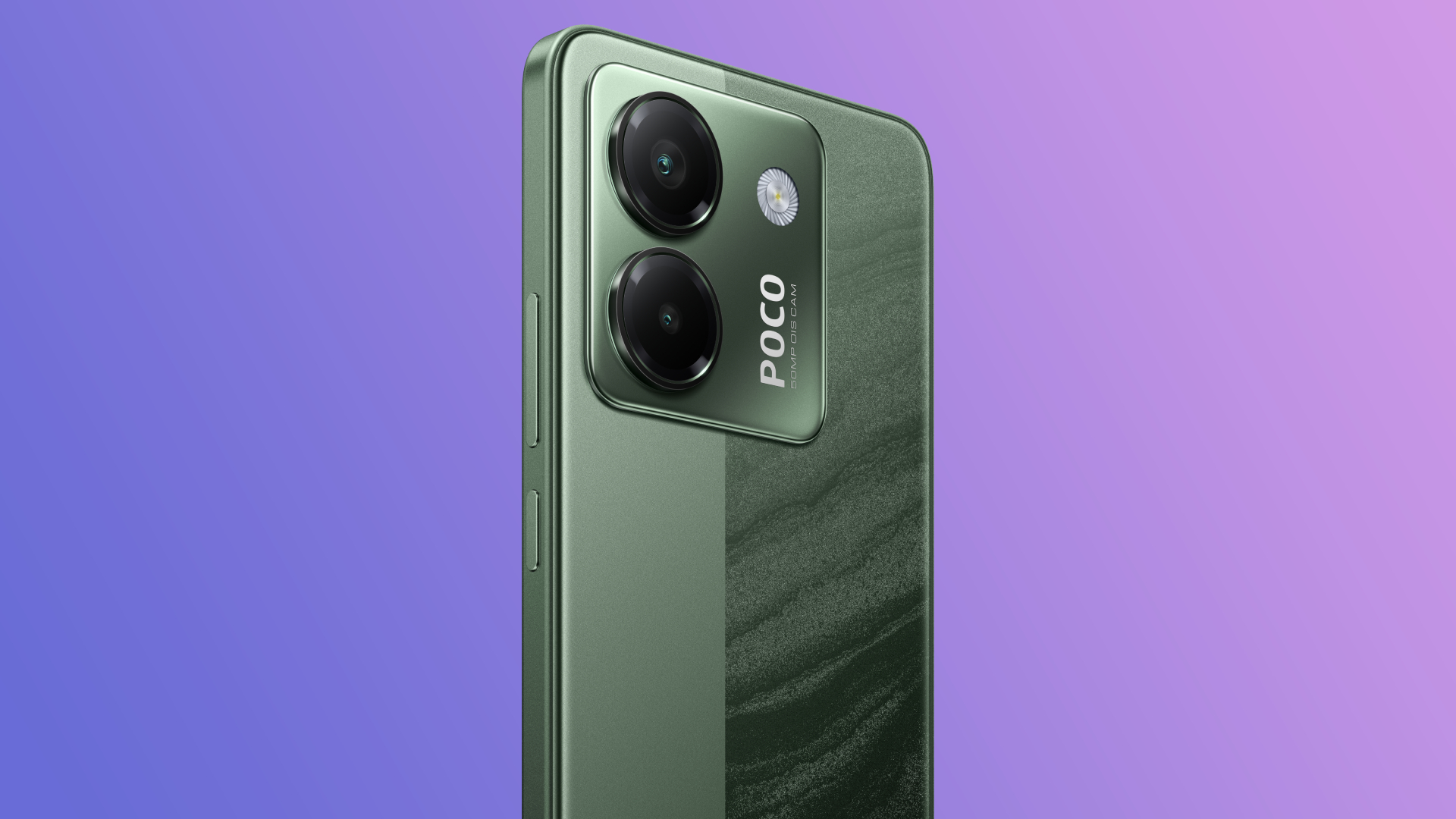
Rank 11652Earlier this week, Xiaomi launched the Poco M7 Pro 5G in the UK, the latest entry in the sub-brand’s line of affordable handsets, and a device that brings some neat features to the table for its low £199 price tag.For far less than even some of the best cheap phones, the M7 Pro 5G offers a 120Hz display, a 5,110mAh battery, and a 50MP Sony camera – nothing about what I’m about to say next suggests that this isn’t solid value for money.However, Xiaomi has insisted on labeling some of the Poco M7 Pro 5G’s features and components as “flagship” – particularly its IP64 dust and water resistance rating. With respect to Xiaomi, which makes some of the best phones around (even if they’re a pain to get your hands on), that description is fresh out of 2012.An IP64 rating is not, under any modern definition, flagship-grade for a phone. The most recent true flagships – like the OnePlus 13 – carry IP69 ratings, which promise resistance from powerful jets of heated water and total dust resistance.In fairness, an IP64-rated phone is still dust-sealed, but that standard only protects against splashes of water with some ingress allowed. That just doesn’t match up against the iPhone 16 Pro Max, Samsung Galaxy S25 Ultra, and Google Pixel 9 Pros of the world, all of which can take a dip in fresh water and emerge unscathed thanks to their IP68 ratings (though we'd still never recommend testing this claim for yourself!). Furthermore, press materials seen by TechRadar describe the 2x digital zoom function of the M7 Pro 5G's camera system as "flagship-level", and while flagships do utilize in-sensor cropping, the M7 Pro 5G is unlikely to keep up with its relatively smaller 1/1.95-inch sensor. For reference, the iPhone 16 sports a 1/1.56-inch sensor, while its Android rival, the Google Pixel 9, boasts a 1/1.31-inch sensor.And even if the M7 Pro 5G's 2x digital zoom does somehow match its more expensive rivals, this feature is not described as "flagship-level" on the phone's official web page. That makes me think Xiaomi is either confused about its own product or seeking to influence coverage with terms it won't use in public. Either way, that's an issue.In fact, the only aspect of the Poco M7 Pro 5G I’d call “flagship” quality, at least without having tested one myself, is its 5,110mAh battery – and yet Xiaomi doesn’t call it so.
The Oppo Reno 12 FS. Nice looking? You bet. A flagship camera phone? Not a chance. (Image credit: Future)
It's not just Xiaomi doing this, either. Oppo's UK website describes the Oppo Reno 12 FS camera system as a "flagship camera combo", and as my full Oppo Reno 12 FS review details, that's flat-out untrue.In fact, the Oppo Reno 12 FS 5G (which otherwise boasts great value for money and serviceable performance) sports a 50MP main camera, an 8MP ultrawide camera, and a 2MP macro camera. If the iPhone 17 Pro Max launches with a 2MP lens in tow, I'll happily give Oppo a retroactive pass for this, but until then, that's simply not flagship-grade hardware.
Smartphone semantics
What even is a flagship these days? There are two phones above the iPhone 16 (pictured) in Apple's mobile portfolio (Image credit: Future)
What we’re witnessing is a peculiar attempted transformation of language. Flagship was once a literal term, meaning the best phone a company has to offer, but, as I’ve previously discussed, the term has become more vague as companies like Apple and Samsung develop flagship lineups comprising several distinct but related models.What companies like Xiaomi are attempting to do is push the term one step further into the abstract; to change the meaning of the word “flagship” to one that simply connotes ideas of better performance and higher status, rather than a title given to certain devices by phone makers to reflect the expectations of consumers.In the plainest terms, these companies would like control of the “flagship” narrative to get you to think better of their mid-range and budget phones.That’s not necessarily as ominous as it sounds – modern tech marketing relies on imaginative storytelling that highlights the position of devices in our lives. Just look at the real-life stories that opened the September 2024 Apple Event. I’ve no problem with phone makers calling their devices essential, or innovative, or brilliant, because most of the time there’s a good bit of truth to these claims.However, when it comes to the term “flagship”, it’s important that brand messaging aligns with user expectations, so that customers aren’t misled. Flagship phones are typically big sellers and a big draw for users, so it’s crucial that customers who may not know too much about tech specs aren’t drawn to products that won’t live up to their needs.The new Poco M7 Pro 5G is a budget phone, through and through – and there’s no shame in that. As much as my magpie-coded brain loves a shiny new flagship, I recommend the Samsung Galaxy A36 to most people I know as they simply don’t care about the latest and greatest specs – I’m sure the Poco M7 Pro will find its own audience of savvy customers, too.But for the buyer who just wants the latest and greatest phone, and is willing to spend up to $1,200 to get that, the least phone makers can do is keep the term “flagship” to its current definition.
You might also like
An essential Google Messages group-chat feature finally looks set to launch soonThe iPhone 16 Pro is now less popular than the base iPhone 16, according to new report – and I’m not surprisedNew iPhone 17e leak suggests we'll get a new model every year – here's when to expect it and what we want to see
-
Picture from cdn.mos.cms.futurecdn.net
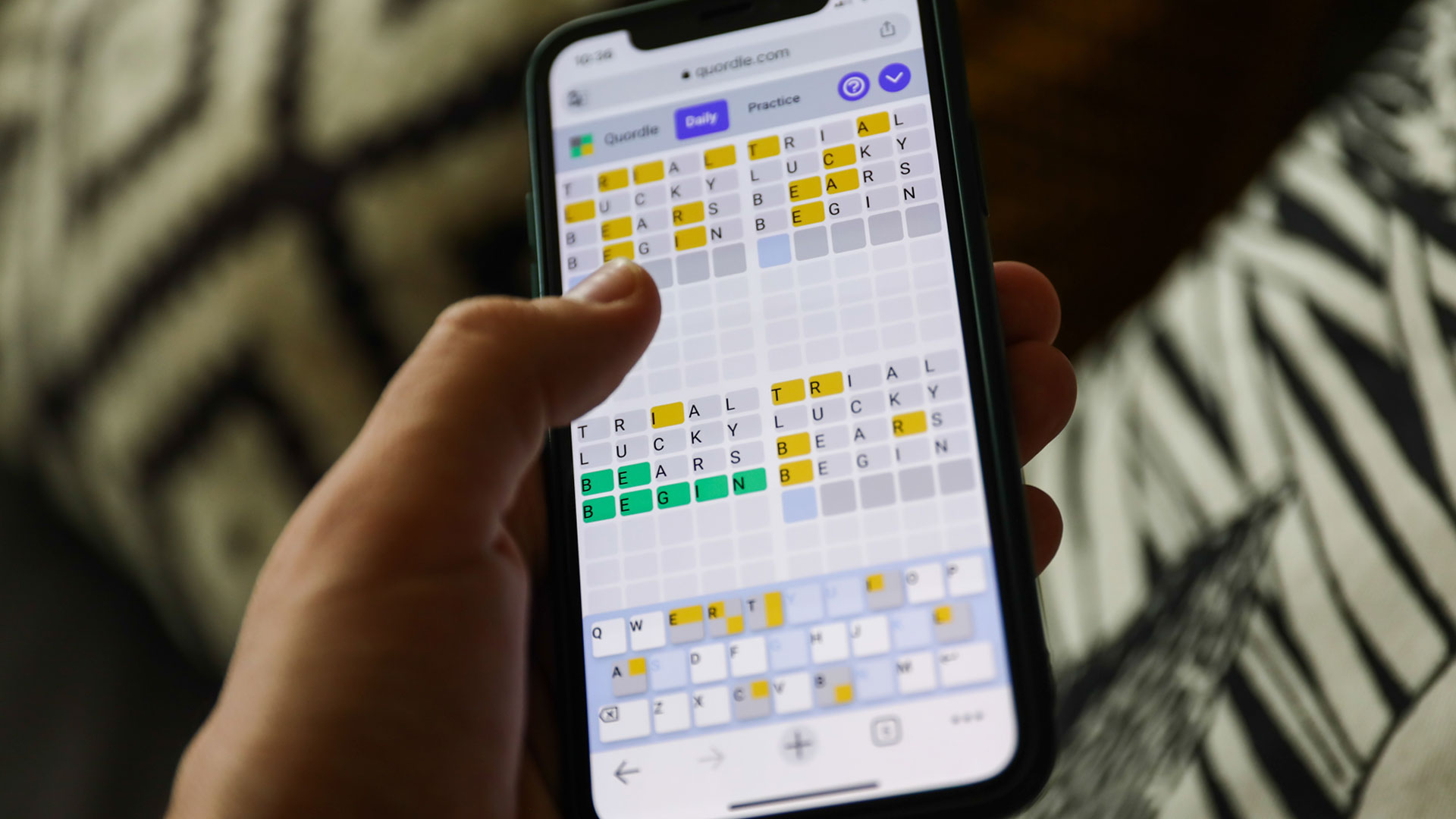
Rank 11653Looking for a different day?A new Quordle puzzle appears at midnight each day for your time zone – which means that some people are always playing 'today's game' while others are playing 'yesterday's'. If you're looking for Saturday's puzzle instead then click here: Quordle hints and answers for Saturday, April 26 (game #1188).
Quordle was one of the original Wordle alternatives and is still going strong now more than 1,100 games later. It offers a genuine challenge, though, so read on if you need some Quordle hints today – or scroll down further for the answers.Enjoy playing word games? You can also check out my NYT Connections today and NYT Strands today pages for hints and answers for those puzzles, while Marc's Wordle today column covers the original viral word game.SPOILER WARNING: Information about Quordle today is below, so don't read on if you don't want to know the answers.
Quordle today (game #1189) - hint #1 - Vowels
How many different vowels are in Quordle today?• The number of different vowels in Quordle today is 4*.
* Note that by vowel we mean the five standard vowels (A, E, I, O, U), not Y (which is sometimes counted as a vowel too).
Quordle today (game #1189) - hint #2 - repeated letters
Do any of today's Quordle answers contain repeated letters?• The number of Quordle answers containing a repeated letter today is 1.
Quordle today (game #1189) - hint #3 - uncommon letters
Do the letters Q, Z, X or J appear in Quordle today?• No. None of Q, Z, X or J appear among today's Quordle answers.
Quordle today (game #1189) - hint #4 - starting letters (1)
Do any of today's Quordle puzzles start with the same letter?• The number of today's Quordle answers starting with the same letter is 2.
If you just want to know the answers at this stage, simply scroll down. If you're not ready yet then here's one more clue to make things a lot easier:
Quordle today (game #1189) - hint #5 - starting letters (2)
What letters do today's Quordle answers start with?• P• Y• C• C
Right, the answers are below, so DO NOT SCROLL ANY FURTHER IF YOU DON'T WANT TO SEE THEM.
Quordle today (game #1189) - the answers
(Image credit: Merriam-Webster)
The answers to today's Quordle, game #1189, are…
PRIORYOUTHCREDOCHIDE
A head scratcher, but lengthy thinking time aside I managed to get through the run without any wrong guesses.My good fortune was using a start word that began with a C. Without that headstart I would have been in trouble.How did you do today? Let me know in the comments below.
Daily Sequence today (game #1189) - the answers
(Image credit: Merriam-Webster)
The answers to today's Quordle Daily Sequence, game #1189, are…
GAWKYABBEYSOUTHSTORY
Quordle answers: The past 20
Quordle #1188, Saturday, 26 April: LINGO, LOCUS, THROW, CLICKQuordle #1187, Friday, 25 April: SHALT, WRATH, MAMBO, HUMPHQuordle #1186, Thursday, 24 April: CHOKE, COLOR, FRAME, CAIRNQuordle #1185, Wednesday, 23 April: VALET, PUPAL, CREEP, DRIFTQuordle #1184, Tuesday, 22 April: POUTY, CHEST, BROOM, TEPEEQuordle #1183, Monday, 21 April: SHARD, PRINT, SUMAC, LEACHQuordle #1182, Sunday, 20 April: DINER, HORDE, SHONE, FUGUEQuordle #1181, Saturday, 19 April: GRADE, LAUGH, RAINY, EXULTQuordle #1180, Friday, 18 April: DEBUT, GLADE, BASTE, PESTOQuordle #1179, Thursday, 17 April: SPRAY, RAMEN, SHELF, COURTQuordle #1178, Wednesday 16 April: STUMP, GRAFT, CHORD, INPUTQuordle #1177, Tuesday 15 April: SLEET, MERIT, HARSH, FORAYQuordle #1176, Monday 14 April: DRAWL, CROOK, ACTOR, LANCEQuordle #1175, Sunday 13 April: SHALE, KINKY, SHORN, WHOOPQuordle #1174, Saturday 12 April: BLIND, OVOID, CACHE, THINGQuordle #1173, Friday 11 April: FOLLY, PITHY, SCOWL, CURLYQuordle #1172, Thursday 10 April: LEAST, SEWER, UNTIE, NOOSEQuordle #1171, Wednesday 9 April: LITHE, LEFTY, KNOLL, MULCHQuordle #1170, Tuesday 8 April: WIDTH, VISOR, MEDAL, BROOKQuordle #1169, Monday 7 April: BROTH, SHOUT, BRUTE, CABIN
-
Picture from cdn.mos.cms.futurecdn.net
Rank 11654Looking for a different day?A new NYT Connections puzzle appears at midnight each day for your time zone – which means that some people are always playing 'today's game' while others are playing 'yesterday's'. If you're looking for Saturday's puzzle instead then click here: NYT Connections hints and answers for Saturday, April 26 (game #685).
Good morning! Let's play Connections, the NYT's clever word game that challenges you to group answers in various categories. It can be tough, so read on if you need Connections hints.What should you do once you've finished? Why, play some more word games of course. I've also got daily Strands hints and answers and Quordle hints and answers articles if you need help for those too, while Marc's Wordle today page covers the original viral word game.SPOILER WARNING: Information about NYT Connections today is below, so don't read on if you don't want to know the answers.
NYT Connections today (game #686) - today's words
(Image credit: New York Times)
Today's NYT Connections words are…
MASSAGETIMESRUFFLEFISHPERCENTSHOCKMEATBALLGOLDFISHCOMBOLOCKEQUALSTHATCHCHEFMINUSTUFTTAKI
NYT Connections today (game #686) - hint #1 - group hints
What are some clues for today's NYT Connections groups?
YELLOW: Sums GREEN: Various quantities of something you get cutBLUE: Savoury bites PURPLE: From a cold European country
Need more clues?We're firmly in spoiler territory now, but read on if you want to know what the four theme answers are for today's NYT Connections puzzles…
NYT Connections today (game #686) - hint #2 - group answers
What are the answers for today's NYT Connections groups?
YELLOW: CALCULATOR BUTTONS GREEN: AMOUNTS OF HAIR BLUE: SALTY SNACK UNIT PURPLE: SWEDISH ____
Right, the answers are below, so DO NOT SCROLL ANY FURTHER IF YOU DON'T WANT TO SEE THEM.
NYT Connections today (game #686) - the answers
(Image credit: New York Times)
The answers to today's Connections, game #686, are…
YELLOW: CALCULATOR BUTTONS EQUALS, MINUS, PERCENT, TIMESGREEN: AMOUNTS OF HAIR LOCK, SHOCK, THATCH, TUFTBLUE: SALTY SNACK UNIT COMBO, GOLDFISH, RUFFLE, TAKIPURPLE: SWEDISH ____ CHEF, FISH, MASSAGE, MEATBALL
My rating: HardMy score: Fail
I regularly use a calculator, have copious amounts of hair on my head, love a salty snack, and regularly shop at Ikea, yet I found today’s puzzle utterly baffling.CALCULATOR BUTTONS I got straight away, but then came the collapse. First, I thought that there was a group of Victorian authors that I knew nothing about – so I linked LOCK, THATCH, TAKI and TUFT.I got the "one away!" alert, but still didn’t think about hair and instead persisted with my literature hunch and swapped THATCH for RUFFLE.After finally getting AMOUNTS OF HAIR I still faltered with just two groups to get – first thinking there was something about bowls. In my defense, cultural difference again thwarted me, as the majority of the products referenced as a SALTY SNACK UNIT, as well as SWEDISH FISH, are rare delicacies in the UK.How did you do today? Let me know in the comments below.
Yesterday's NYT Connections answers (Saturday, April 26, game #685)
YELLOW: TINT COLOR, HUE, SHADE, TONEGREEN: VALLEY DALE, DELL, GLEN, HOLLOWBLUE: BOBS DOLE, HOPE, MARLEY, ROSSPURPLE: COLOR ANAGRAMS DRE, GARY, GENRE, LUBE
What is NYT Connections?NYT Connections is one of several increasingly popular word games made by the New York Times. It challenges you to find groups of four items that share something in common, and each group has a different difficulty level: green is easy, yellow a little harder, blue often quite tough and purple usually very difficult.On the plus side, you don't technically need to solve the final one, as you'll be able to answer that one by a process of elimination. What's more, you can make up to four mistakes, which gives you a little bit of breathing room.It's a little more involved than something like Wordle, however, and there are plenty of opportunities for the game to trip you up with tricks. For instance, watch out for homophones and other word games that could disguise the answers.It's playable for free via the NYT Games site on desktop or mobile.
-
Picture from cdn.mos.cms.futurecdn.net
Rank 11655Looking for a different day?A new NYT Strands puzzle appears at midnight each day for your time zone – which means that some people are always playing 'today's game' while others are playing 'yesterday's'. If you're looking for Saturday's puzzle instead then click here: NYT Strands hints and answers for Saturday, April 26 (game #419).
Strands is the NYT's latest word game after the likes of Wordle, Spelling Bee and Connections – and it's great fun. It can be difficult, though, so read on for my Strands hints.Want more word-based fun? Then check out my NYT Connections today and Quordle today pages for hints and answers for those games, and Marc's Wordle today page for the original viral word game.SPOILER WARNING: Information about NYT Strands today is below, so don't read on if you don't want to know the answers.
NYT Strands today (game #420) - hint #1 - today's theme
What is the theme of today's NYT Strands?• Today's NYT Strands theme is… Sleep tight
NYT Strands today (game #420) - hint #2 - clue words
Play any of these words to unlock the in-game hints system.
MENTALTRAMTRUETIDENOTEBIND
NYT Strands today (game #420) - hint #3 - spangram letters
How many letters are in today's spangram?• Spangram has 7 letters
NYT Strands today (game #420) - hint #4 - spangram position
What are two sides of the board that today's spangram touches?First side: left, 5th rowLast side: right, 6th row
Right, the answers are below, so DO NOT SCROLL ANY FURTHER IF YOU DON'T WANT TO SEE THEM.
NYT Strands today (game #420) - the answers
(Image credit: New York Times)
The answers to today's Strands, game #420, are…
MASKEARPLUGSMELATONINMEDITATIONMOUTHGUARDSPANGRAM: BEDTIME
My rating: ModerateMy score: 1 hint
My search started off well after quickly getting MASK and EARPLUGS, but then took a devious turn.Even after getting a hint and the many letters of MELATONIN I struggled connecting the letters, which became the story of all the other words.You could argue that the theme and spangram are inaccurate and what we were actually looking for today were sleep aids for those among us who struggle to fall asleep without assistance.I count myself among a growing demographic trying desperately to improve their sleep quality. I actually got measured for my pillow, have a yearly app subscription just so I can listen to the same 10-minute MEDITATION every night, and have earplugs, mask, and aromatherapy spray all at hand should I struggle to reach the land of nod.How did you do today? Let me know in the comments below.
Yesterday's NYT Strands answers (Saturday, April 26, game #419)
POWDERBRONZERPRIMERCONCEALERFOUNDATIONSPANGRAM: MAKEUP EXAM
What is NYT Strands?Strands is the NYT's not-so-new-any-more word game, following Wordle and Connections. It's now a fully fledged member of the NYT's games stable that has been running for a year and which can be played on the NYT Games site on desktop or mobile.I've got a full guide to how to play NYT Strands, complete with tips for solving it, so check that out if you're struggling to beat it each day.
-

Picture from techcrunch.com
Rank 11656 -
Picture from ichef.bbci.co.uk
Rank 11657 -

Picture from cdn.mos.cms.futurecdn.net
Rank 11658Watching Netflix with captions on has long been a practice in my home, starting with my youngest, who, as a GenZ, explained how streaming with captions on enables the multi-tasking that is so much a part of their lives.Back when I first learned about this fast-growing habit, I assumed closed captions or subtitles were solely for people with hearing challenges. I knew my child didn't have any, and when I asked why they were watching Netflix with captions on, they looked at me like I had bananas for arms and told me, "Everyone does it."That hyperbole led to some research, discovery, and this post I wrote on Medium. For my daughter and their GenZ cohort, captions helped bridge the distracted divide between the phone in their hands and the best streaming content on their TV. I even spoke to mental health professionals who also noted this was becoming common practice.As I wrote then, my child tried to explain how captions were more than just an aid to understanding:“It helps me with my ADHD: I can focus on the words, I catch things I missed, and I never have to go back,” she replied. “And I can text while I watch.”I got it, but I don't think I fully understood until I turned on my own Netflix closed captions. There were two shows, in particular, that made me a convert.First, Call My Agent, a smart French comedy about a Paris-based talent firm. It ran four seasons, and we got hooked, even though we were reading the whole time.The second show was Peaky Blinders. Now, this show is in English, but the accents from Birmingham, England, were so thick that when we first tried watching, we gave up halfway through the first episode because we couldn't understand a thing. A few years later, we returned but with captions enabled. That changed everything, and we became huge fans.One thing, though, about Netflix subtitles has always bothered me: descriptions of sounds.
"Doorbell rings""People laughing""Sniffling" or "Softly crying""Door slams""Music lightly playing""Music swells""Indistinct chatter"
You get the idea. These audio cues are crucial for the hearing-impaired, but essentially unnecessary for those with full hearing, like me.Even for GenZers like mine, I don't think the descriptions of these audio-only moments enhanced their viewing experience and, perhaps, were a bit of a distraction.Netflix's decision to finally add an option for subtitles only is long overdue. The adjustment appears now as a new option under Audio: "English" subtitles, as opposed to "English (CC)".
(Image credit: Future)
It's a small change, I know, but I'm certain my family and I will be using it from now on. At least some of us.You see, while my youngest watches everything with captions, and my wife increasingly watches almost everything with captions, I still do it less so, and my son never does it and finds them distracting.If I'm being honest, though, I'm finding that captions are useful in more situations than just foreign language and accent-heavy productions. I can no longer quite pick up what people are saying when they're speaking softly, whispering, or, as is often the case, mumbling.Also, sound mixing often overplays sound effects and overwhelms the dialogue. In lieu of a better sound system, a clear caption is an effective solution. And now, without the extraneous text that tells me "loud explosion," this experience is about to get so much better.So, thanks, Netflix, for always supporting the hearing-impaired and for now giving us new captioning devotees a sound-effect-free option. I'll be using it a lot.
You might also like
Netflix just rolled out a great free update and you'll be able ...Best Netflix shows: 56 great TV series to watch in April 20257 new movies and TV shows to stream on Netflix, Prime ...
-

Picture from cdn.mos.cms.futurecdn.net
Rank 11659(Image credit: Adobe)Alexandru Costin is Vice President, Generative AI and Sensei at Adobe.
There was no getting away from Firefly at this year’s Adobe Max London. Already infused across the Creative Cloud suite, the AI image and video generator has been massively upgraded with new tools and features.Ahead of the events, we sat down with Alexandru Costin, Vice President, Generative AI and Sensei at Adobe, to explore what’s new with Firefly, why stories matter when using the best AI tools, and how professionals can use it to enhance creativity across the board.
What can users expect from AI at Adobe Max?
At Max, we have the next generation of our image model, two versions of it. We have a vector model, we have the video model. So, a lot of progress on the model from Adobe, commercially safe, high quality, amazing human rendering. A lot of control and a great style engine, et cetera. We are also introducing third-party model integrations.Our customers told us that they want to stay in our tools, in our workflows. They are still using other models for ideation purposes, or for different personalities. So, we’re announcing OpenAI's GPT image integration and Google's Imagen and Veo 2 in Firefly, and Flux integration in Firefly Boards.The third big announcement is Firefly Boards is a new capability in the Firefly web application. We look at it as an all-in-one platform for next generation creatives to ideate, create and produce production content. Firefly Boards is an infinite canvas that enables team collaboration, real-time collaboration, commenting, but also deep Gen AI features stepping in, into all of these first-party and third-party models, new capabilities for remixing images.
How easy is it to deliver something like that?
It’s not easy. We've been working on the project concept for like, a year. Actually, that underlying technology, we've been working on for many years, like real-time collaboration with deep integration, with storage, and innovation in Gen AI user experiences, remixing, auto-describing images to create the prompts for you. There's a lot of deep technology that went into it. It looks like magic, and is very easy [to use]. We hope it's so easy. Our goal is to build a complex layer. So for customers, it's like magic, and everything just works.
What’s your favorite new feature?
My favorite feature is integration between image, video, and the rest of the Adobe products. We're trying to build workflows where customers that have an intent in mind, and they want to paint the picture that's in their mind, can use these tools in a really connected way without having to jump through so many hoops to tell their story. Firefly Image 4 offers amazing photo realism, human rendering quality, prompt understanding. You iterate fast.With Image 4 Ultra, which is our premium model, you can render your image with additional details, and we can take them into the Firefly video model as a keyframe, and create a video from that whole image. Then you can take that video into Adobe Express and make it like an animated banner, add text, add fonts. In Creative Cloud, we have a lot of capabilities that exist already. We're bringing Gen AI inside those workflows, either in Firefly on the web, or directly as an API integration.But for me, I think the magic is having all of this accessible in an easy way. The Photoshop team is also working on an agentic interface. They call it a new Actions panel. You type in what you want. We have 1000 high-quality actions we've curated for you. There are all these tools in Photoshop that are sometimes hard to discover if you're not an expert, but we're gonna just bring them and apply them for you. I mean, you will learn along the way, but you don't need to know everything before you start. Not only we're helping you achieve your goal, we're also teaching you the ins and outs of Photoshop as we go through this.
That must be one of the biggest barriers to entry for a lot of users
It is. It's too powerful to some extent. It has so many controls, it might be intimidating, but with the new Actions panel, we want to take a big chunk of that entry barrier away.
(Image credit: Adobe // Future)
How important is it for you when it comes to lowering those barriers to entry?
Everybody will benefit from this technology in different ways. For creative professionals, it will basically remove some of the tedium, so they can focus on creativity. But with things like Firefly Boards, they will be able to work with teams and clients much better. The client can upload in boards some stylistic ideas, and then you can take it and integrate it very fast in your professional workload.For consumers, with people that want to spend seconds to create something, with Firefly, you just type in the prompt and we do it for you. It's a great capability.In the middle, there are the folks learning in their careers, aspiring creative professionals, next generation creatives. And for them, we want to give them both Gen AI capabilities, but also a bridge towards the existing pixel-perfect tools that we have at Adobe. Because we think a mix of those two worlds is the best mix that next generation creatives need to be armed with.
Where can further improvements be made in that area, making it more accessible?
For me, a big opportunity is better understanding of humans, like prompt understanding agentic, having a creative partner to bounce ideas off of. Another thing we're announcing is the [upcoming] Firefly mobile app. This is a companion app that can use many of the Firefly app capabilities, generate text, generate video, et cetera. But also, because it's on mobile, you have access to the camera, you have a microphone, there are many new opportunities to make these interactions easier. So, we're looking into that. We do think next generation creatives are a big target market for us because we want to give them the tools of the trade.
What’s the motivation behind these new additions in Firefly?
For us, customers are why we get up in the morning every day, they are telling us what they need, and they told us they want more quality, better humans, more control, better stylization. That's what's behind the image model updates. We just want to make them more usable in more workflows for actual production use-cases. Because our model is uniquely positioned to be safe for commercial use, we want customers to use it everywhere.For video, video is also growing, and many of our customer-base doesn't know how to use the video product. So, making video creation more accessible is another great accelerant for creativity. We want to offer a larger population of people the tools to tap into video and be able to start achieving their goals there. While, of course, inside products like Premiere Pro, we're continuing to integrate deeper, more advanced features, like a couple of weeks ago at NAB, we launched Generative Extend. It won one of the awards. Gen Extend is a 4K extension, enabling professional videographers to basically extend clips so they don't have to reshoot.What motivates us is helping our customers tell stories, better stories, more diverse stories, and be successful in their careers.
When everyone is using AI, how do artists and businesses differentiate themselves from rivals?
I think through human creativity and engineering, how do they differentiate today? They're all using Photoshop. They do find ways to differentiate because, in reality, Gen AI is a tool designed, at least from an Adobe perspective, to be of service to the creative community, and we want to give them a more powerful tool that should help them level-up their craft.They're describing it as going from the person editing to a creative director. All of our customers can become directors of these Gen AI tools to help them tell better stories, tell stories faster, et cetera. So, we think the differentiation will still be in the creativity of the human using the tool. And we're seeing so much innovation. We're seeing people using these technologies in ways we haven't even thought about, which is very exciting, always. Mixing them in novel ways. Because that's how you differentiate. And we do think there will always be many ways to express somebody's creativity.We think creativity comes in a variety of ways, and there are different tools creative people will use and mix together to tell better stories and change culture.
Explore the power of generative AI with Adobe Firefly Integrated into almost every Adobe app, Firefly is tailor-made for creatives at every level - from professionals to consumers. Want to see how Adobe's generative AI can help you iterate your designs faster? Try out Firefly's tools by clicking here.
You might also like
The 7 Adobe Express updates creators and marketers need to know aboutThe 5 biggest new Photoshop, Firefly and Premiere Pro tools that were announced at Adobe Max London 2025See how Adobe Firefly stands among the best AI image generators
-

Picture from techcrunch.com
Rank 11660 -

Picture from ichef.bbci.co.uk
Rank 11661 -
Picture from ichef.bbci.co.uk
Rank 11662 -
Picture from cdn.mos.cms.futurecdn.net
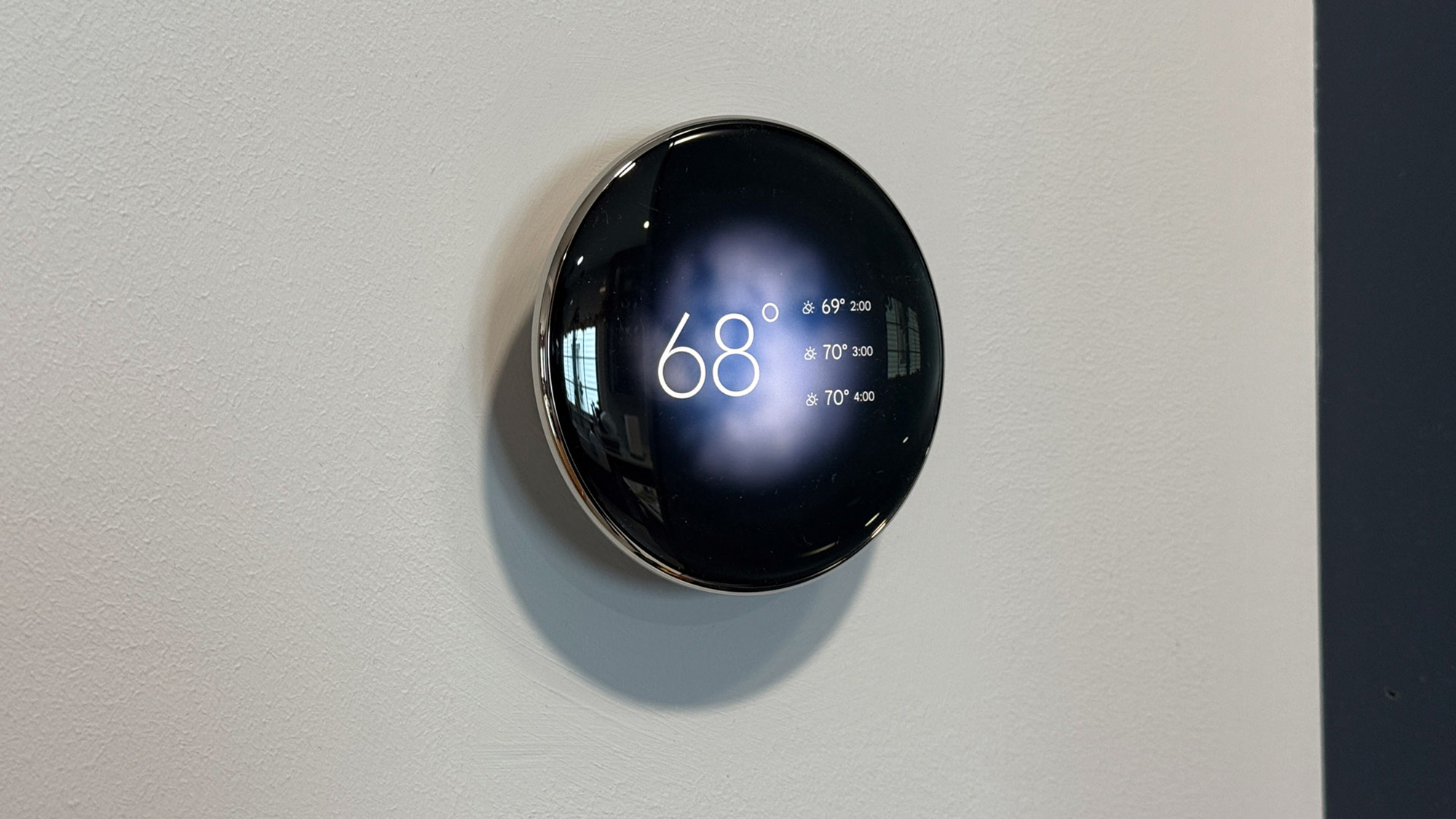
Rank 11663Support for older Nest thermostats is ending this yearYou can grab a big discount on a new modelNo new Nest thermostats will go on sale in Europe
There are a couple of pieces of Google Nest thermostat news to bring you this weekend: support is ending for the older 1st and 2nd-gen models, while Google is going to stop selling the thermostat in the EU completely.First, the end of support for the 1st-gen Nest thermostat (launched in 2011), and the 2nd-gen Nest thermostat (launched in 2012). Google says (via 9to5Google) that there will be no more software updates issued for these devices, from Saturday, October 25, 2025.At that point you'll no longer be able to control the thermostats from your phone either, and Home/Away modes will stop working too. You'll still be able to adjust modes, schedules, temperatures, and settings on the actual devices, however.To help soften the blow, Google is offering some upgrade discounts on the latest 4th-gen Nest thermostat for those who have older models: if you're in the US, you can get $130 off, which is almost half price.
No-go in Europe
The Nest Thermostat E (Image credit: Google)
The second bit of news here is that there will be no more new Nest thermostats sold in Europe going forward. The 3rd-gen model and the Nest Thermostat E, which launched in 2015 and 2017 respectively, are going to be all you can get hold of now."Heating systems in Europe are unique and have a variety of hardware and software requirements that make it challenging to build for the diverse set of homes," says the statement from Google.That means the shiny new model, launched last year and described as sporting "a stunning design infused with AI" in our 4th-gen Nest thermostat review, isn't going to be available in Europe.It's no surprise that consumers are wary of investing in smart home tech with discontinued devices and incompatible standards to deal with – even from the biggest companies in the business. It's an area where Google and others can do a lot better.
You might also like
Tado thermostat owners are hot and botheredThe best smart thermostats availableHow to build a zero-waste smart home
-

Picture from ichef.bbci.co.uk
Rank 11664 -
Picture from cdn.mos.cms.futurecdn.net
Rank 11665Windows 10 goes dark in 6 months, yet shockingly, many businesses haven't even got a plan to upgradeCanalys reveals over a third of SMBs have no clear plan to leave Windows 10 behindShockingly, 14% of SMBs don’t even know Windows 10 support is ending soonLack of upgrade plans could cost SMBs more when tariffs and demand spikes hit hard
Microsoft has repeatedly announced it will end support for Windows 10 on October 14, 2025 - however, a surprising number of small and medium-sized businesses (SMBs) are still unprepared.A poll conducted by Canalys revealed over a third (35%) of channel partners said their SMB customers are either unaware of the Windows 10 end-of-service (EoS) deadline or have no plans to upgrade their PCs.Of that 35%, 21% of SMB customers are aware of the impending Windows 10 EoS but have no upgrade plans, while 14% are completely unaware. Given the security and compliance risks of operating outdated systems after support ends, this lack of awareness and preparation is alarming.
What will this mean for SMBs and users?
On the other side of the spectrum, 30% of SMB customers are aware and currently evaluating upgrade options, while only 35% have actively planned to upgrade their systems.This means nearly two-thirds of SMBs remain passive or uncertain in their approach to the upcoming change. Unfortunately, many businesses do not treat EoS management as an ongoing responsibility, an outlook that urgently needs to shift.“For customers in these situations, the delay in planning means they are likely to face a higher cost environment when the time comes to refresh their PC fleets,” said Ishan Dutt, Principal Analyst at Canalys.The firm added global business PC shipments rose 9.4% year-on-year to reach 62.7 million units in Q1 2025, but despite this hardware growth, many businesses are still lagging behind in software preparedness.The end-of-service will leave millions of business laptops without updates or security patches. Dutt also warned that, as higher tariffs take effect, "subsequent quarters this year are likely to see a slowdown" as prices rise and demand softens.Businesses waiting much longer may face supply constraints just as endpoint security becomes more critical than ever.While Microsoft still has work to do in making Windows 11 more appealing, that doesn’t change the reality of Windows 10’s looming deadline - here is a six-step countdown to Windows 10 EoS and how to prepare for it.
You may also like
Here's a list of the best laptops for programming right nowMicrosoft really wants you to update to Windows 11 in 2025Western Digital plans to launch 40TB HDD next year using HAMR technology
-

Picture from techcrunch.com
Rank 11666 -
Picture from o.aolcdn.com
Rank 11667Etsy is selling Reverb, six years after it purchased the online marketplace for musical instruments. Reverb didn't say how much money is changing hands, but Etsy purchased the company for $275 million in 2019. In its announcement, Reverb said that the investors Creator Partners, which was founded by former SoundCloud CEO Kerry Trainor, and Servco, the owner of Fender Musical Instruments Corporation, have entered an agreement to buy the company. The marketplace will not be merging with either investor and will be "privately-held [and] independently operated" like it was before Etsy's acquisition.
Reverb CEO David Mandelbrot said the deal is expected to be completed in the coming weeks. He assured users that they can continue buying and selling on the platform without any disruption during the process. He also briefly talked about what the company is working on for its users, including preparing for the pilot of a new selling option that would allow people to get paid faster and to drop off their instruments locally without even needing to create a listing for them. This could help buyers who want to get their gear locally when available or those who don't want to pay extra on top for tariffs. Reverb is also working on a way to make it easier for find what a buyer is looking for and on a way for sellers to be able ship their instruments more safely.
This article originally appeared on Engadget at https://www.engadget.com/audio/etsy-is-selling-online-music-gear-marketplace-reverb-160002119.html?src=rss
-

Picture from ichef.bbci.co.uk
Rank 11668 -

Picture from ichef.bbci.co.uk
Rank 11669 -

Picture from techcrunch.com
Rank 11670 -

Picture from ichef.bbci.co.uk
Rank 11671 -

Picture from ichef.bbci.co.uk
Rank 11672 -

Picture from ichef.bbci.co.uk
Rank 11673 -

Picture from techcrunch.com
Rank 11674 -

Picture from ichef.bbci.co.uk
Rank 11675 -

Picture from ichef.bbci.co.uk
Rank 11676 -

Picture from cdn.mos.cms.futurecdn.net
Rank 11677Chinese researchers have developed super-fast non volatile flash memoryGraphene channel enables 400 picosecond write speed and persistent storage"PoX" device targets AI bottlenecks with low power, high speed performance
A research team in China has developed what claims is the fastest reported non-volatile semiconductor memory device to date, with a write speed of one bit every 400 picoseconds.The unfortunately named “PoX” (Phase-change Oxide), is a two-dimensional graphene-channel flash device developed at Fudan University in Shanghai.The team built the device using a Dirac graphene channel combined with a charge-trapping stack. It operates faster than the system-level access times typically associated with volatile memory types like SRAM and DRAM, which usually fall between 1 and 10 nanoseconds. A picosecond is one-thousandth of a nanosecond.
Paving the way for its future applications
Volatile memory like SRAM and DRAM offers high speed but loses data when power is removed. Non-volatile flash retains data without power but tends to operate at higher latencies, often in the tens of microseconds at the NAND level. This makes it less suited for low-latency workloads such as AI inference. The PoX device aims to bridge that gap by combining speed and persistent storage.The graphene-based device uses a two-dimensional hot-carrier injection mechanism. Its thin-body structure enhances horizontal electric fields, improving carrier acceleration and injection efficiency. At 5V, it achieved write speeds of 400ps and maintained performance over 5.5 million cycles. Long-term retention tests showed data stability over a simulated 10-year period.“By using AI algorithms to optimize process testing conditions, we have significantly advanced this innovation and paved the way for its future applications,” said Zhou Peng, lead researcher of the study."Our technology breakthrough is expected to not only reshape the global storage technology landscape, drive industrial upgrades, and foster new application scenarios, but also provide robust support for China to lead in relevant fields."Liu Chunsen, also involved in the research, said the team has created a fully functional chip and now aims to integrate it into existing devices.“The next step involves integrating it into existing smartphones and computers,” he said.“This way, when deploying local models, we will no longer encounter bottlenecks such as lagging and heating caused by existing storage technology.”Via Nature
You might also like
SOT-MRAM is the memory that could one day replace DRAM and NANDResearchers explore AI to augment inspiration and imagination to revolutionize scienceScientists inch closer to holy grail of memory, combing NAND and RAM
-

Picture from ichef.bbci.co.uk
Rank 11678 -

Picture from ichef.bbci.co.uk
Rank 11679 -

Picture from ichef.bbci.co.uk
Rank 11680 -

Picture from ichef.bbci.co.uk
Rank 11681 -
Picture from o.aolcdn.com
Rank 11682The hit co-op adventure game Split Fiction is already headed for Hollywood with Sydney Sweeney in a starring role, according to Variety. Along with the Euphoria actor, the film adaptation welcomed Wicked’s Jon M. Chu as the project’s director and screenwriters Rhett Reese and Paul Wernick, who worked on Deadpool & Wolverine. Sweeney will also reportedly be an executive producer for the Split Fiction movie. Split Fiction features two authors named Mio and Zoe who get trapped in fictional worlds they penned up. It’s still unknown which of the two Split Fiction protagonists Sweeney will portray.
Shortly after the video game’s release in March, Variety reported on a bidding war for a film adaptation of Split Fiction. Hazelight Studios, an indie video game developer out of Sweden, created the game that centers around split-screen combat and bounces between sci-fi and fantasy worlds. The game saw early success, selling two million copies in its first week, which may have led to the quick turnaround of a proposed Hollywood adaptation. It was picked up by Story Kitchen, a studio known for adaptations of franchises like Sonic the Hedgehog and Tomb Raider, but there’s no release window yet.
This article originally appeared on Engadget at https://www.engadget.com/gaming/split-fiction-movie-adaptation-lands-sydney-sweeney-as-star-180322064.html?src=rss
-

Picture from ichef.bbci.co.uk
Rank 11683 -

Picture from ichef.bbci.co.uk
Rank 11684 -

Picture from ichef.bbci.co.uk
Rank 11685 -

Picture from techcrunch.com
Rank 11686 -
Picture from o.aolcdn.com
Rank 11687Spoilers for “The Well.”
Sometimes, in fiction, you don’t need to say a Very Important Thing in a Very Important Way to make a good point, just ask how a thing would work if it played out in the world. This week’s episode of Doctor Who, “The Well,” does exactly that, and brilliantly.
Picking up straight after “Lux,” the Doctor and Belinda, still in their ‘50s outfits, are trying to get the TARDIS to work. Belinda helps with the controls, but the vessel still refuses to land on May 24, 2025, which panics the nurse even more. If the TARDIS isn’t broken, she assumes that the date or the Earth itself could be broken, and frets about her parents. The Doctor shares her concerns, but promises that she will be reunited with her family.
The Doctor persists with his plan to land in a few more spots with the Vindicator (the gadget he built last week) to orient the TARDIS. This time, it’s 500,000 years in the future, and Belinda asks if humanity even exists by now. He assures her it does, as humans spread to the stars and wormed themselves into every corner of the universe. The pair head to the TARDIS wardrobe to get into some appropriate clothes before heading out.
They step out onto the gantry of a spaceship where an advance party of marines are leaping into the void. With no choice but to join them, they land on the planet below, enabling the Doctor to take the Vindicator reading. But, alas, the planet’s heavy radiation means the ship (and by extension, the TARDIS) has to glide down slowly over the next five hours. So they tag along with the mission, the Psychic Paper enabling the Doctor and Belinda to insinuate themselves with the team.
The planet is inhospitable, occupied only by a small mining colony that has dug down into the world to extract its last remaining useful resources. The colony went silent a few days before and, before you can say “Oh, is this going to be an(other) Aliens riff?” one of the marines suggests it would have been wiser to “nuke the site from orbit.”
All of the colonists are dead, half from gunfire, half from injuries that look like they fell and broke every bone in their body. The mirrors are all smashed and the systems are offline, the records of what went on inaccessible. But there is one survivor, the colony’s chef, Aliss Bethick (Rose Ayling-Ellis) who, like the actress who portrays her, is deaf. Aliss has been waiting in the middle of a large cargo turntable (which reads on camera as a big circle) for days.
Aliss is isolated, both physically in the staging and because of her hearing loss, and while she can lipread, it’s still a barrier between her and the soldiers. The Doctor can communicate with Aliss in sign, and the soldiers all have their own captioning screens on their lapels. Much of the second act is taken up with the interrogation of Aliss as the marines work through the logistics of how to communicate with her. For instance, getting her attention by casting to another soldier’s screen in her eye-line to get her to turn around. Belinda enters the circle to treat Aliss’ injuries but keeps seeing something lurking behind her new patient.
It isn’t long before the Doctor learns that the desolate planet they stand on was once covered in diamonds. This is the planet Midnight from the series four episode of the same name when the Doctor, trapped in a shuttle, tries and ultimately fails to defeat a sinister entity that possessed one of the passengers. Like then, the Doctor’s pleas for calm fail. Two of the soldiers mutiny and attempt to lure the entity out and kill it. They do not survive.
It’s Belinda who works out and explains the rules: If you imagine the host — Aliss — at the center of a clock, then whoever stands directly behind her is attacked by the unseen monster. If you stand at six o’clock then you’re fine, but “you’ll die at midnight.” Quite literally, as whoever is in the entity’s way gets thrown around like a ragdoll — half the crew shooting each other to kill the entity, the other half getting minced by the alien.
The Doctor approaches Aliss to speak to the monster but since it’s time for the third act to start wrapping up, he just stares for a bit before working out the solution. In order to mine the diamonds the colonists would dump down mercury, using a pipe which is conveniently running behind Aliss’ head. Shooting the pipe will cause a river of mercury to cascade down, creating a mirror that should be enough to banish the monster.
They make their escape, but the Doctor can’t help but wait behind to see the monster, giving it a chance to latch onto Belinda. The captain of the marines shoots Belinda enough that the entity thinks she’s about to die and switches hosts, after which point they leap into the mineshaft. Belinda wakes up in the TARDIS in the Doctor’s care, ready for the next adventure. Meanwhile, the marines debrief their boss — Mrs. Flood! Who knows all about the Vindicator, too — before revealing the alien did make it on board their spaceship after all.
One of the threads in the episode is Belinda keeps discussing human terms and superstitions to shrugs from everyone around her. It’s something that’s got both her and The Doctor puzzled, as there seems to be something very wrong with all of reality.
You die at midnight...
James Pardon / BBC Studios / Disney / Bad Wolf
Showrunner Russell T. Davies was asked about bad faith criticisms that the show had somehow gone woke. “Someone always brings up matters of diversity and there are online warriors accusing us of diversity and wokeness and involving messaging and issues and I have no time for this,” he said. “What you might call ‘diversity’ I just call an open door,” he added, “it’s cold and it’s bracing and there’s a world in front of you! There’s a blue sky, there’s clouds and there’s noise, there’s birdsong, there’s people arguing.”
What’s notable about this is that Davies’ open-minded (and open-hearted) approach to making the show creates storytelling possibilities. For instance, the last time an episode of Doctor Who featured a deaf character (2015’s “Under The Lake”), she relied upon a colleague to interpret on her behalf. And her ability to lipread wound up being part of the solution to the episode’s problem — reducing her to little more than a plot mechanism.
Here, while Aliss’ deafness is a core part of the plot, it doesn’t feel as if she’s defined by that one facet. Effort has been made to flesh out her character, and it’s more a venue to explore how technology and communication intersect with someone with different accessibility needs. Especially as (co-writers) Sharma Angel-Walfall and Russell T. Davies made the effort to think through how this would work.
BBC Studios / Disney / Bad Wolf
Whenever I’m watching an episode of nü-nü-Who, in the back of my mind I’m mulling what the injection of Disney money changed. “Midnight,” the episode “The Well” is a sequel to, was produced as a “double banked” episode — splitting the leads to shoot two episodes at a time. “Midnight” was also intended as a cheap story, with the bulk of the script taking place in a single room. If we’re being honest, “The Well” could have worked just as well given the bulk of the action takes place in a handful of rooms.
That’s not to say the extra cash lavished upon this episode is wasted: “The Well” feels almost indulgent by Doctor Who standards for the sheer breadth and depth of its sets. I can’t help but recall the Aliens riff Strange New Worlds produced in its first season, which re-used the series’ standing sets for the wreck of the USS Peregrine. It sounds weird to say that Doctor Who is luxuriating in the fact it can afford to show a trashed bunkroom for all of a minute, but it is.
Perhaps part of the reason it does feel indulgent is that this is an episode relatively low on incident and high on character. Belinda gets a real showcase here, both asserting herself on the narrative at several points, but also being rebuked for doing so. She tries to take charge to help the injured Aliss but the medical kit is so advanced she’s not able to use it. She’s smart enough to work out the rules of the alien, but also it gets the better of her in the end.
Whereas the first two episodes this season felt overstuffed and rushed, the smaller story and focus on character lets everything breathe. That an accessibility tool is a key focus of the plot and used as a venue for storytelling and character development is marvelous.
Look, I’m as bored saying it as you are reading it, but once again I can’t help but point out the influence of Steven Moffat on this season. One of the inspirations for monsters like the Weeping Angels and the Silence was the idea of them being easy to turn into a schoolyard game. The unnamed entity here, with the mechanic that if you stand directly behind the host you will die, seems perfectly in that tradition.
But “The Well” also offers instances where Davies is in conversation with the rest of this season and his earlier work. In both “Midnight” and “The Well,” the Doctor is at risk of losing his grip on the situation because the threat of the unknown makes people paranoid and jumpy. A streak of deeply dark pessimism runs through all of this work and while it’s also on show here, there’s a little more hope than there was before.
It’s also interesting how Davies, who has always structured his seasons in a fairly rigid manner, seems to be deliberately repeating motifs and beats. The parallels between this season and the last feel almost like they’re trying to draw attention to themselves. “Space Babies” and “The Robot Revolution,” “The Devil’s Chord” and “Lux” and now the “Boom” paired with “The Well” feel like episodes vying for the same space in different realities. Not to mention the repetition of moments from episode to episode — like the TARDIS wardrobe sequence and the repeated hand injuries. If next week's "Lucky Day" is predominantly featured on Ruby Sunday without the Doctor and revolves around physical distance and / or the supernatural, then perhaps we might assume that this is more than coincidence.
Mrs. Flood Corner
I’ve always hated “The End… or is it?” fake-outs that often undermine the drama of whatever denouement they’re tacked on to. Sure, it can be effective if you want to cheapen the sacrifices your characters made to vanquish the villain, but often it comes across as hacky. Not to mention that people with poor media literacy will assume that it’s actually a teaser for a cliffhanger to be resolved the following week.
Here, eh, it’s essentially a way to shoehorn Mrs. Flood in as the soldiers' boss taking the debrief after the Doctor and Belinda depart. She knows about the Doctor’s use of the Vindicator, and has now seen it in action thanks to the soldier’s recording. But there’s no breaking the fourth wall, which means she’s operating here in the same manner as Susan Twist did last year. Which is, uh, interesting.This article originally appeared on Engadget at https://www.engadget.com/entertainment/tv-movies/doctor-who-the-well-review-signing-makes-you-feel-heard-200528202.html?src=rss
-
Picture from cdn.mos.cms.futurecdn.net
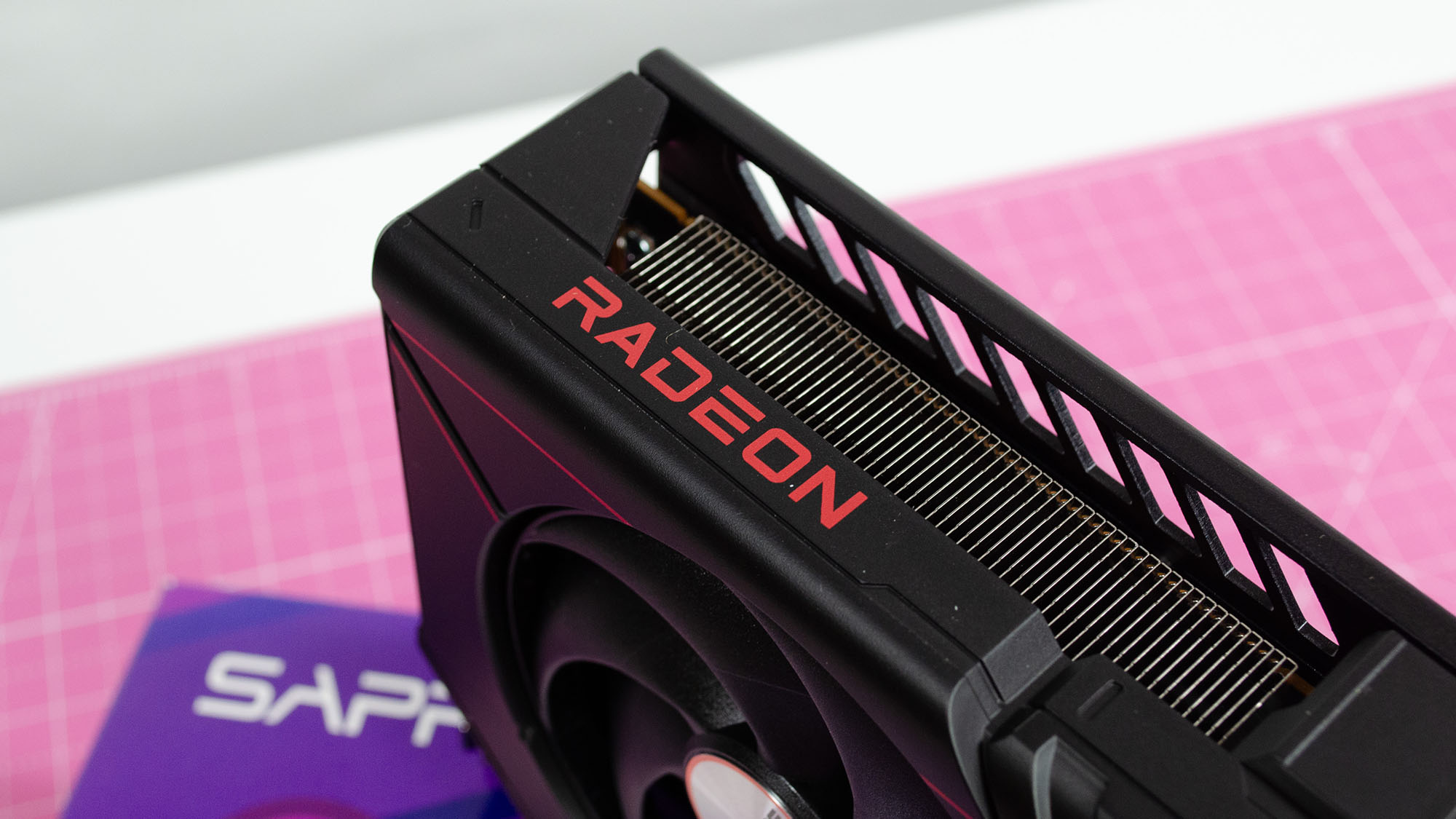
Rank 11688AMD may be prioritizing price over specs with the Radeon PRO W9000’s 32GB limitAMD Radeon Pro W9000 targets real-world professionals rather than AI-heavy data science workflowsWith a 356mm² die size, the Radeon W9000 could still punch hard in real-world tasks
AMD is set to expand its workstation GPU lineup with the imminent release of the new Radeon PRO W9000 series, built on the RDNA 4 architecture. This chip is aimed at professionals working in demanding fields such as video editing, 3D rendering, and AI development.A leak from Hoang Anh Phu claims the lineup will include a 32GB model based on the new Navi 48 XTW architecture.AMD is supposed to be chasing Nvidia, but the RTX PRO 6000 Blackwell boasts an enormous 96GB frame buffer and 24,064 CUDA cores. This is far beyond the 32GB configuration that AMD appears to be offering, suggesting the Radeon PRO W9000 may be targeting professionals who don’t require large datasets and instead value performance per dollar, along with efficiency and affordability.
Is AMD switching its approach?
As with all unconfirmed rumors, the details should be taken with a grain of salt - but if accurate, the leak suggests a shift in how AMD prioritizes performance relative to cost. The previous-generation Radeon PRO W7900 featured 48GB of memory, so the 32GB - likely GDDR6 - is a reduction.While the capacity is lower, the Navi 48 XTW die, measuring 356mm², is still expected to deliver performance improvements across a wide range of tasks.It is also likely to bring benefits to CAD workloads, CGI rendering, and real-time simulations, areas where the best laptops for video editing or Photoshop also show gains.The chip is expected to come in XL, XT, and XTX variants, each tuned for different professional needs. The XTW model is believed to feature hardware enhancements optimized for pro workflows, making it a strong option for users needing a GPU for production-grade tasks.As Phu, a known hardware leaker, noted, “It’s not as beefy as the last generation, but pricing remains key.”One remaining question is software support. RDNA 4 does not yet have full integration with AMD’s ROCm platform, which is critical for AI and machine learning developers.Although final specs and an official name are still under wraps, all signs point to a strategic reveal aligned with Computex 2025 and AMD’s “Advancing AI” event in June 2025.Via Toms Hardware
You may also like
Check out the best 3D modeling software for 3D printing and moreWe've rounded up the best portable monitors available nowA huge online fraud operation is hijacking WordPress sites
-
Picture from cdn.mos.cms.futurecdn.net
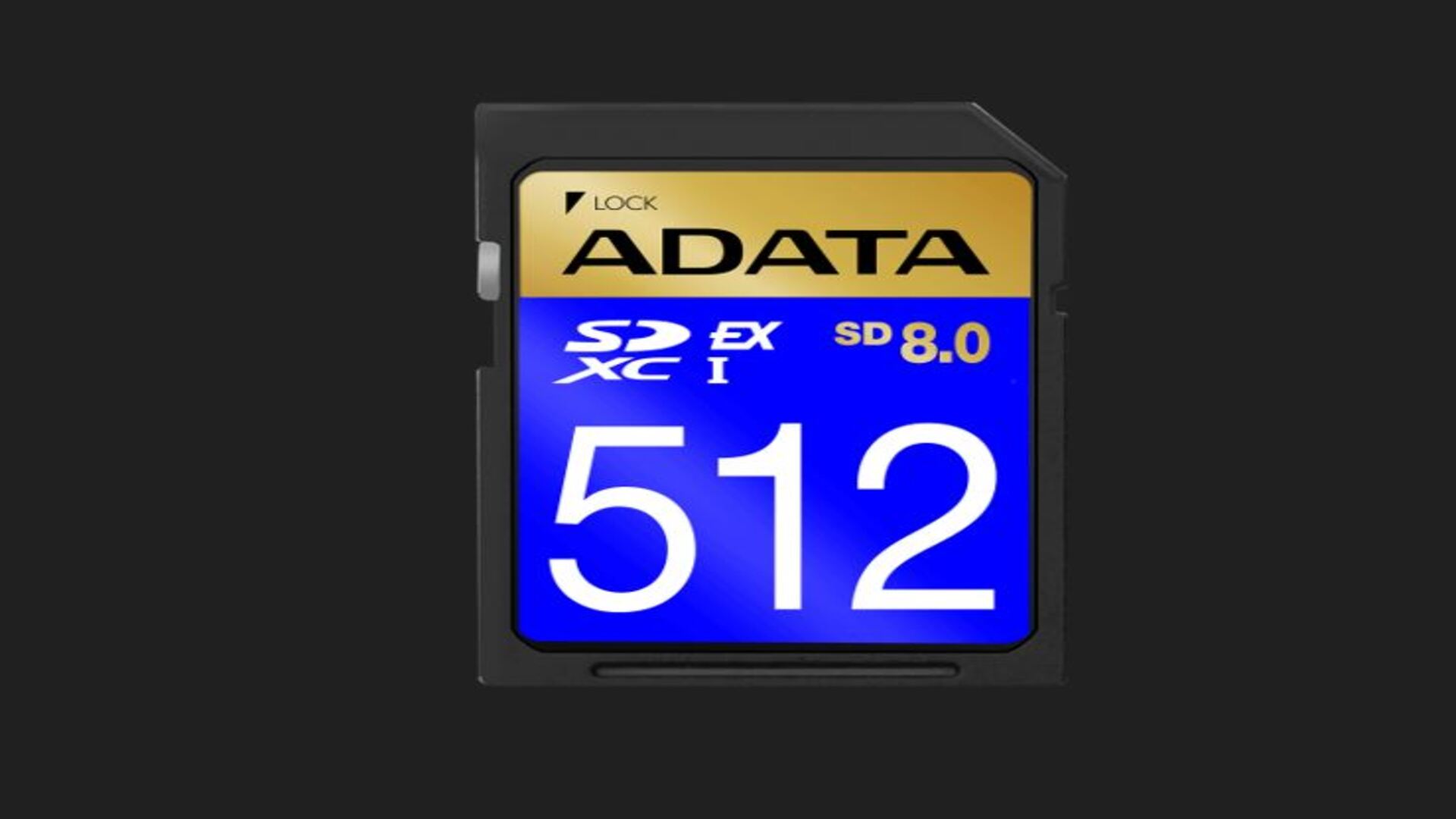
Rank 11689Adata Premier Extreme SD 8.0 Express memory card needs a special reader for full performance1,600MB/s speeds push this SD card beyond UHS and Express 7.0ECC error correction and durability features protect data in harsh conditions
Adata has introduced the world’s first SD 8.0 Express memory card, alongside a high-speed USB flash drive and a tool-free M.2 SSD enclosure, targeting mobile professionals and content creators who demand top-tier portable performance.The Premier Extreme SD 8.0 Express memory card features a PCIe Gen3 x2 interface and adopts the NVMe protocol. It offers 512GB of storage and delivers read speeds of up to 1,600MB/s and write speeds of up to 1,200MB/s.Those numbers aren’t just high for an SD card - they put it in direct competition with many of the best portable SSDs on the market. It also easily outpaces high-performance microSD cards.
Designed for 4K, RAW, multitasking
Adata says the card doubles the speed of the SD Express 7.0 standard and leaves UHS-I and UHS-II cards far behind.The Premier Extreme SD 8.0 Express card is designed for durability, offering resistance to shock, water, static, and extreme temperatures. It also features LDPC ECC error correction to safeguard data integrity.With support for the U3 and V30 video speed classes and a 512GB capacity, the card is aimed at creators who need speed and reliability in a compact form - particularly for 4K video, RAW photography, and mobile editing workflows.One key limitation is that the SD 8.0 Express format requires a compatible reader to unlock its full performance. Standard SD card readers won’t support its maximum throughput.In addition to the SD card, Adata also unveiled the UE720, a USB 3.2 Gen2 flash drive delivering read and write speeds of 550MB/s and 450MB/s, respectively. It is available in capacities up to 256GB and features a compact, mobile-friendly design.Rounding out the trio is the EC680 M.2 SSD enclosure, which offers tool-free installation and transfer rates of up to 1,050MB/s via a Type-C interface. It is compatible with Windows, macOS, Android, and modern gaming consoles.
You may also like
These are the largest SSDs and hard drives on the marketHere are the best cloud storage services from only $4.98/yr for 10TBWe've also compiled a list of the best portable monitors available
-

Picture from ichef.bbci.co.uk
Rank 11690 -

Picture from ichef.bbci.co.uk
Rank 11691 -

Picture from ichef.bbci.co.uk
Rank 11692 -

Picture from ichef.bbci.co.uk
Rank 11693 -

Picture from ichef.bbci.co.uk
Rank 11694 -

Picture from techcrunch.com
Rank 11695 -
Picture from o.aolcdn.com
Rank 11696The Curiosity Mars rover covers a lot of ground for a robot that only moves at a max speed of .1 mph. A photo snapped recently by NASA’s Mars Reconnaissance Orbiter provides a pretty cool visualization of what the rover has been up to so far this year, showing the tracks Curiosity left behind as it journeyed from its previous science target — an area called the Gediz Vallis channel — to its next destination. The rover itself is just a tiny speck at the front of the roughly 1,050-foot-long trail, and according to NASA, this snap “is believed to be the first orbital image of the rover mid-drive across the Red Planet.”
The image was captured on February 28 by the orbiter’s HiRISE (High-Resolution Imaging Science Experiment) camera, and shows Curiosity’s movement over 11 drives starting at the beginning of that month. While a few weeks might seem like a long time for tire tracks to stick around in the dirt, this is normal for Mars. The tracks are “[l]ikely to last for months before being erased by wind,” NASA says. Curiosity is expected to reach its next science destination, which is home to formations thought to have been created long ago by groundwater, in the coming weeks.
This article originally appeared on Engadget at https://www.engadget.com/science/space/nasas-mars-orbiter-snapped-this-image-of-curiosity-trucking-along-down-at-the-surface-211404950.html?src=rss
-

Picture from ichef.bbci.co.uk
Rank 11697 -

Picture from techcrunch.com
Rank 11698 -

Picture from ichef.bbci.co.uk
Rank 11699 -

Picture from ichef.bbci.co.uk
Rank 11700


