News
This constantly updated list features the latest and most important news articles, ranked in order of significance. The top stories highlight major developments, breaking news, and critical updates across various topics, ensuring you stay informed about the most pressing issues. As new articles are added, the list adapts to reflect the latest priorities, keeping the most impactful stories at the forefront. Whether it’s global events, technology breakthroughs, or industry trends, this dynamic list ensures you always have access to the most relevant and timely information.
-
Picture from o.aolcdn.com
Rank 11501While the Switch 2 has backwards compatibility, Nintendo is releasing upgraded versions of its old games with enhanced framerates and resolution, as well as extra content. It's also selling upgrades cheaper than full games, which you can get for titles you already own. The upgrades for The Legend of Zelda: Breath of the Wild and Tears of the Kingdom will set you back $10. Now, the company has started revealing more upgrade prices for old games, and it looks like the ones for Kirby and the Forgotten Land and Super Mario Party Jamboree will cost you twice as much at $20.
NintendoLife first posted about the upgrades' potential prices based on their eShop listings for Europe. The company has updated its US eShop since then to show that they're also being sold for $20 in the country. If you buy the upgrade for Kirby and the Forgotten Land, you're getting access to a new part of the game called Star-Crossed World, wherein you have to uncover the mystery surrounding the meteor that struck the world. Meanwhile Super Mario Party Jamboree comes with Jamboree TV, a game show hosted by Toad. The Switch 2 version of the title uses the console's Joy-Con 2 and microphone, and if you use its camera, you can also put your face into the action during mini-games.
Super Mario Party Jamboree for the Switch 2 will be available on July 24, while Kirby's Switch 2 edition will be available on August 28. Both games will set you back $80 if you buy the full Switch 2 version instead of upgrading an old copy. Nintendo has yet to release the prices for the Switch 2 editions of Pokémon Legends: Z-A and Metroid Prime 4: Beyond, which will be available later this year. This article originally appeared on Engadget at https://www.engadget.com/gaming/nintendo/nintendo-charges-20-for-mario-party-jamboree-and-kirby-switch-2-upgrades-140031152.html?src=rss
-

Picture from techcrunch.com
Rank 11502 -

Picture from techcrunch.com
Rank 11503 -

Picture from ichef.bbci.co.uk
Rank 11504 -

Picture from ichef.bbci.co.uk
Rank 11505 -

Picture from ichef.bbci.co.uk
Rank 11506 -

Picture from cdn.mos.cms.futurecdn.net
Rank 11507Why is it that so many organizations are still holding back from upgrading to Windows 11-compatible desktop devices when the benefits seem obvious?While any new system achieves slow uptake in the early months, Windows 11 still only stands at 38% (link) globally, despite having entered the market in 2021. It is likely that companies are postponing upgrades so they can extend the device lifespan for longer, hoping their devices can cope with the new operating system’s demands for more CPU power. But by following this course of inaction, they run some serious risks.Organizations need to see Windows 11 as less intimidating, troublesome and costly, taking a closer look at new device lifecycle management approaches that can help them achieve a seamless transition. The topic is becoming more urgent by the day as the October 2025 deadline looms when Microsoft will cease free security patching for Windows 10 and start charging for support. Many even predict a shortage of Windows 11 devices in the immediate run-up to the deadline.Admittedly, in a company with large numbers of devices, it is not just the cost of Windows 11 devices that is off-putting. There is the potential for disruption to business-as-usual, and the drain on the time and resources of IT teams. Working out how many Windows 11 devices are required, which new models are suitable and then negotiating the best deal, is all time-consuming. But it does not end there – each device must be provisioned and set up, which is a major undertaking in an organization with hundreds or thousands of employees.
Remember the security benefits of Windows 11
But it is worth remembering the immediate benefits of an upgrade to Windows 11 – especially in greater security. This is important because of the changing nature of threats and the growth of remote workforces, which offer more potential points of weakness. Windows 11 devices are more secure through the use of TPM 2.0 processors to provide a constantly-active authenticator, guarding against remote tampering or malware infection.The Secure Boot feature means start-up times are also faster to prevent rootkits and boot-time malware. Microsoft claims its out-of-the-box security features such as credential safeguards, malware shields and application protection have led to a 58% (link) fall in security incidents and that firmware attacks have fallen by more than a factor of three.Ignoring these security benefits is ill-advised for UK companies because it will put their Cyber Essentials certification at risk, with significant consequences for their reputations among potential partners and customers. In many public sector organizations, loss of certification is a serious compliance failure.
AI and streamlined efficiency in Windows 11
The efficiency gains triggered by a Windows 11 upgrade come from the use of AI-powered solutions and features. The central in-built tool is Microsoft Copilot, based on the GPT4 large language model. The benefits include search-acceleration and automated content drafting, with greater memory and processing power so that organizations can deploy more sophisticated business process automation and work collaboration platforms.Delaying adoption of Windows 11 is yet another mistake for maintaining competitiveness. Competing organizations that have made the move are likely to embed greater efficiencies, be more secure, and have more time for strategic work. Under-performing desktop devices also lead to dissatisfied and frustrated employees.Organizations must acknowledge that older operating systems use more energy and are slower. In the health sector, reliance on out-of-support devices is simply too dangerous, putting patient security and care delivery in jeopardy.
The digital transformation opportunity is here
Rather than fall behind, companies seeking digital transformation should step back and use the end of support for Windows 10 as the ideal opportunity to review how they can upgrade their IT infrastructure.To do this effectively, organizations in the public or private sectors alike need to rethink how they approach device lifecycle management. In doing so, it’s important to work out what each staff member in the business needs to be more productive in their role, which ensures optimal performance without unnecessary expenditure. Discovery tools will also inform organizations where they have legacy applications, probably custom-built, that need adaptation to work effectively with Windows 11.They’ll need to conduct technology audits, involve all relevant internal stakeholders and match device-provision to the organisation’s aims and resolution of pain-points, setting a timeline, if required, for quantifiable outcomes. This is something that can be helped by drawing on the objective expertise and skillsets of third-party providers, which also saves time for in-house staff while ensuring employees have the most current device they need.The requirement for Windows 11 upgrades is upon businesses now as a major opportunity to accelerate digital transformation. Instead of having to extend device lifespan beyond its optimal performance, organizations should acquire higher-performing technology as soon as they can. Windows 11 will make them more secure, more agile, competitive and ready for the future.
We've featured the best productivity tool.
This article was produced as part of TechRadarPro's Expert Insights channel where we feature the best and brightest minds in the technology industry today. The views expressed here are those of the author and are not necessarily those of TechRadarPro or Future plc. If you are interested in contributing find out more here: https://www.techradar.com/news/submit-your-story-to-techradar-pro
-
Picture from cdn.mos.cms.futurecdn.net
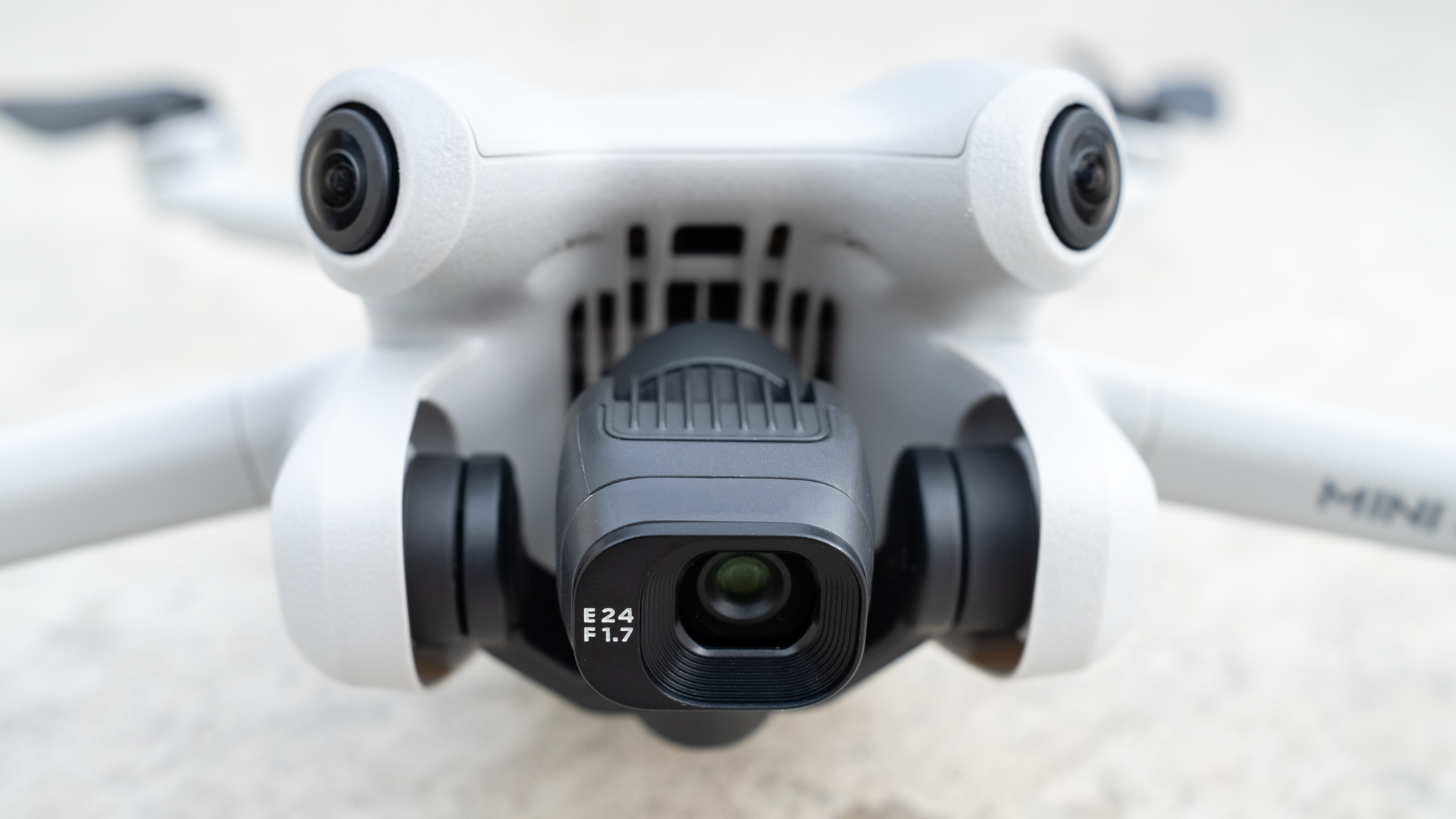
Rank 11508A new DJI Mini 5 drone seems to be in the worksOnline leaks suggest it could have LiDAR sensorsDJI appears to be testing the drone ahead of a summer launch
DJI isn’t one to rest on its laurels. The Mini 4 Pro might top the bill in our round-up of the best drones you can buy right now, but new images leaked online appear to show that the manufacturer is well underway with developing a successor.The images, shared on DroneXL, appear to show the DJI Mini 5 being tested on public streets in China. Included in an article written by Jasper Ellens, a reliable drone industry source, the grainy shots feature a quadcopter resembling the Mini 4 Pro, albeit with a larger front camera lens and what appears to be a pair of LiDAR sensors above.This backs up an earlier post from Ellens, shared on X in December 2024, which claims that the Mini 5 will feature LiDAR sensors and “stronger (vented) motors”.Front-facing LiDAR sensors would give the new model a more effective collision avoidance system. As we saw on the Air 3S last year, LiDAR is better able to navigate obstacles and terrain at night, compared to standard vision tech. Their presence on the Mini 5 would be a first for any sub-250g drone, assuming that the rumored model stays within the same weight class as previous versions.The pictured drone also has guards around its blades, although these could be in place as a safety measure during testing, rather than a permanent feature.While DJI hasn’t officially announced a release date for the Mini 5, the appearance of a test unit in public suggests that the company is in the later stages of development. Some sources anticipate that the new drone will break cover in summer 2025. A reveal around August or September would fit with DJI’s established launch cycles, marking two years since the DJI Mini 4 Pro hit the market.Other features remain the subject of much speculation. Some websites have reported that the DJI Mini 5 could feature a 1-inch sensor and a 50-minute flight time, both of which would be a significant step up from the 1/1.3-inch sensor and 34-minute flight time of the DJI Mini 4 Pro. That said, there’s little in the way of hard evidence to support these claims at present.
I have been extremely skeptical towards the release of a #DJIMINI5. I couldn't find any reason why they should update the Mini 4 without exceeding the 249 gram mark. But today I stand corrected. This summer we will see a new Mini with LiDAR and stronger (vented) motors. Cheers pic.twitter.com/v3kcSasJfODecember 10, 2024
LiDAR, LiDAR?
(Image credit: DroneXL)
The Mini 5 isn’t the only upcoming DJI drone rumored to be getting LiDAR capabilities. Recent intel also suggests that the Mavic 4 Pro will benefit from enhanced obstacle-avoidance sensors. This could indicate that DJI has managed to developed a more compact LiDAR module that can be more easily packaged into drones across its range.While its presence on a sub-250g would be a game-changer, whether LiDAR alone will warrant an upgrade for owners of the Mini 4 Pro remains to be seen. It would certainly be another feather in a well-strung bow, but LiDAR is of limited use to users who only fly their drones in open space on clear days.Of course, it’s not the only rumored upgrade for the DJI Mini 5. Stronger or more efficient motors could give the drone improved performance in all conditions, while enhanced flight times would take the series meaningfully forward where the Mini 4 Pro didn’t. A 1-inch sensor also points towards clearer low-light imaging.Taken together, these enhancements would make a stronger case for investing in the new model. If it really is in testing already, we shouldn’t have too long to wait for more concrete specs. If previous DJI drone development cycles are anything to go by, leaked info about the Mini 5 won’t be in short supply.
You might also like...
Camera rumors for 2025: new gear we're expecting soon from DJI, Sony, Canon and moreBest DJI drone: the finest flying cameras from its impressive rangeUpcoming DJI Mavic 4 Pro premium drone could deliver new camera skills and LiDAR
-
Picture from o.aolcdn.com
Rank 11509A VPN (virtual private network) can come in handy on a regular basis to keep you safe online, and you can save on one of our favorites right now. Our top pick for the best VPN, ProtonVPN, is on sale for just $86.16 for two years of access. That's a 64-percent discount, and it comes out to about $3.59 per month for the whole, two-year period.
This deal gives you access to ProtonVPN Plus, which lets you connect up to 10 devices simultaneously — that should cover your smartphone, tablet, laptop, smart TV and anything else you'd want to protect with VPN coverage. Proton also has more than 8,600 servers to choose from across 110 countries, so you shouldn't have any problem finding one that best suits your preferences.
ProtonVPN is our pick for the best VPN overall due to a blend of its security, usability and privacy. ProtonVPN has a no-logs policy. That means it doesn't keep any records of information that passes through its network. In other words, it doesn't track your internet activity while you're using it, helping to protect you and your anonymity.
Other features of ProtonVPN Plus include ad-, malware- and tracker-blocking, as well as fast performance. In our testing, ProtonVPN had a minimal impact on connection speeds in our geoblock, streaming and gaming tests. ProtonVPN is also open source, meaning that anyone with enough knowhow can take a look under the hood and validate Proton's technical claims.
Follow @EngadgetDeals on X for the latest tech deals and buying advice.This article originally appeared on Engadget at https://www.engadget.com/deals/get-two-years-of-protonvpn-for-64-percent-off-152355179.html?src=rss
-

Picture from ichef.bbci.co.uk
Rank 11510 -

Picture from cdn.mos.cms.futurecdn.net
Rank 11511The business landscape is shifting, and speed is no longer a competitive advantage but a necessity for survival. Technology is advancing faster than ever pushing businesses to adapt quickly while remaining flexible to the evolving market demands.Transformation timelines that once spanned three to five years are a thing of the past, as market demands, and competitive pressures push businesses to deliver tangible results in under 12 months. To meet rising demands accelerating time to market, and boosting operational efficiency, organizations must rethink their transformation strategies.Generative AI is at the heart of this shift, raising the bar with an increased rate of adoption. Companies have already incorporated AI into their processes and according to McKinsey & Co, 92 % of companies plan to increase their AI investments further, in the next three years. Businesses embracing gen AI gain a powerful solution that enhances developer productivity, helps tech teams to adapt and enables them to deliver smarter, faster solutions that drive business impact like never before.
The end of long digital transformation cycles
Despite the market demands for quicker turnaround times, many businesses have long relied on legacy systems and siloed data, making outdated technology and processes a major roadblock to scalability and progress. The issue is that too often IT teams remain accustomed to traditional methods and struggle to adapt to change. These are some of the factors that lead to prolonged digital transformation cycles and hinder innovation.Another challenge is that, despite accelerating rates of AI adoption, 52% of projects fail to make it to production, with the average prototype to production time taking eight months, according to Gartner. The lengthy production timelines stall progress, making it difficult for businesses to adapt, innovate, and stay competitive in a fast-moving market.Whatever the reason may be, businesses can no longer afford slow progress – they must embrace change and look for ways to innovate faster to maintain competitive edge. In the face of shrinking timelines, AI has emerged as the accelerant that businesses need - to meet the demand for both speed and efficiency.
AI: The catalyst for business transformation
In the past year, the AI hype has quickly shifted from a theoretical concept to a real-world solution which is transforming how software is built and delivered. A collaborative report from OutSystems and KPMG shows that 93% of executives are planning to boost AI investments. Generative AI unlocks unprecedented capabilities, streamlining software development through automated code generation, rapid prototyping and code translation from one programming language to another.As businesses embrace these advancements, the role of generative AI extends beyond efficiency, and it becomes a driving force for digital transformation.The use of generative AI in software development can help businesses accelerate digital transformation by drastically reducing the development time and costs. This shift not only redefines traditional standards but also acts as a catalyst for whole industries to adapt their systems - or risk being left behind.Combining generative AI with low-code can significantly enhance software development efficiency. Low-code simplifies complex tasks, enabling IT teams to quickly customize, iterate and deploy generative AI solutions. This powerful pairing empowers businesses to build and deploy generative AI-driven applications in record time and with improved workflows—compressing timelines from years to months and delivering tangible business value faster than ever before.As companies navigate this transformation, they must also consider whether to build or buy software to maximize efficiency. This need to build software faster is also shaping how businesses integrate generative AI force alongside human expertise. This collaboration not only speeds up development but also ensures that companies can stay competitive in a rapidly evolving market.
The need for guardrails
While AI adoption opens new opportunities, it also comes with its own challenges. With the drive for faster software development cycles, there is a risk of technical debt and orphaned code if not properly managed and governed. Without a well-structured governing framework and guidelines, AI-generated code can quickly accumulate technical debt, making it difficult to scale and maintain. Growing technical debt could ultimately hinder businesses’ from staying competitive.The implementation of generative AI can also bring some serious security concerns. Many generative AI models are trained on datasets which sometimes contain sensitive information, posing potential risks of privacy breaches. Additionally, generative AI may not always account for the latest vulnerabilities leaving systems open to hackers and cyberthreats. This is why it is vital that businesses establish clear AI governance and compliance measures to ensure ethical and secure implantation. This includes safeguarding sensitive information and ensuring transparency.
The new benchmark for success
Today, digital transformation success is measured by key business outcomes such as speed to market, customer satisfaction and cost efficiency. Businesses need generative AI tools to build applications in minutes, but just as crucial are the guardrails that ensure these apps maintain quality, security or governance.The use of AI-powered low-code platforms is allowing businesses to achieve their goals and deliver these benchmarks. Digital transformation is no longer a lengthy process – generative AI has expanded the possibilities for efficiency of innovation. In a world where speed measures success, businesses that succeed will be those who can transform at the pace of generative AI.
We've featured the best productivity tool.
This article was produced as part of TechRadarPro's Expert Insights channel where we feature the best and brightest minds in the technology industry today. The views expressed here are those of the author and are not necessarily those of TechRadarPro or Future plc. If you are interested in contributing find out more here: https://www.techradar.com/news/submit-your-story-to-techradar-pro
-

Picture from cdn.mos.cms.futurecdn.net
Rank 11512A critical-severity security flaw was found in Commvault Command CenterIt allows threat actors to run arbitrary code remotely and without authenticationVulnerability could lead to complete compromise
Cybersecurity researchers from watchTowr recently discovered a critical-severity flaw in Commvault Command Center that could allow threat actors to run arbitrary code remotely and without authentication.Commvault Command Center is a web-based interface that provides centralized management for data protection, backup, recovery, and compliance across hybrid environments, used by thousands of companies worldwide across industries like healthcare, finance, government, and manufacturing.The vulnerability is tracked as CVE-2025-34028, and has a severity score of 9.0/10 (critical).
Get Keeper Personal for just $1.67/month, Keeper Family for just $3.54/month, and Keeper Business for just $7/monthKeeper is a cybersecurity platform primarily known for its password manager and digital vault, designed to help individuals, families, and businesses securely store and manage passwords, sensitive files, and other private data. It uses zero-knowledge encryption and offers features like two-factor authentication, dark web monitoring, secure file storage, and breach alerts to protect against cyber threats.Preferred partner (What does this mean?)View Deal
Second increase
“A critical security vulnerability has been identified in the Command Center installation, allowing remote attackers to execute arbitrary code without authentication,” the security advisory said.“This vulnerability could lead to a complete compromise of the Command Center environment. Fortunately, other installations within the same system are not affected by this vulnerability.”Since this flaw allows remote attackers to execute arbitrary code without authentication, a threat actor could exploit it to gain unauthorized access to, for example, a government agency's backup system.Once inside, they could manipulate or delete sensitive data, disrupt operations, or install malware to maintain control.This could lead to data breaches, operational downtime, and loss of public trust. Ultimately, if classified information ends up being exposed, it could turn into a national security issue.Multiple versions are affected by the vulnerability: 11.38 Innovation Release, from versions 11.38.0 through 11.38.19. Users looking to mitigate the flaw should go for versions 11.38.20 and 11.38.25.So far, there is no evidence of abuse in the wild, and there is no proof-of-concept (PoC) just yet. However, most threat actors aren’t looking for zero-day vulnerabilities, but are rather waiting for security researchers to find and patch a flaw.They are betting that many users won’t patch their endpoints on time, remaining vulnerable and thus easily exploitable.Via The Hacker News
You might also like
Microsoft will now pay you even more to find security bugs in CopilotTake a look at our guide to the best authenticator appWe've rounded up the best password managers
-

Picture from techcrunch.com
Rank 11513 -

Picture from techcrunch.com
Rank 11514 -

Picture from ichef.bbci.co.uk
Rank 11515 -
Picture from o.aolcdn.com
Rank 11516Beleaguered chipmaker Intel has confirmed plans to restructure in a shift that will involve an unspecified number of layoffs. It was reported this week that the company could lay off around 20 percent of staff (it had 108,900 employees at the end of last year). In a memo, new CEO Lip-Bu Tan declined to detail the extent of the downsizing, which is largely aimed at reducing "unnecessary bureaucracy" and layers of middle management.
"I’m a big believer in the philosophy that the best leaders get the most done with the fewest people. We will embrace this mindset across the company, which will include empowering our top talent to make decisions and take greater ownership of key priorities," Tan wrote. "There is no way around the fact that these critical changes will reduce the size of our workforce. As I said when I joined, we need to make some very hard decisions to put our company on a solid footing for the future. This will begin in Q2 and we will move as quickly as possible over the next several months."
Intel has been downsizing significantly over the last few years. Just last August, the company said it would cut more than 15,000 jobs to reduce costs. Intel has been struggling with slowing sales — it didn't act quickly enough to keep up with the industry's shift toward artificial intelligence.
Unsurprisingly, AI will be a focus for Intel going forward. "My focus will be ensuring that our team builds products that are highly competitive and meet the needs of our customer as we enter a new era of computing, defined by AI agents and reasoning models," Tan said in a call with investors on Thursday. "To achieve this, we are taking a holistic approach to redefine our portfolio to optimize our products for new and emerging AI workloads. We are making necessary adjustments to our product roadmap, so that we are positioned to make the best-in-class products while staying laser focused on execution and ensuring on time delivery."
Tan is aiming to speed things up by turning Intel into a company that's focused on engineering. "Many of the changes we will be driving are designed to make engineers more productive by removing burdensome workflows and processes that slow down the pace of innovation," he wrote. The company is planning to reduce costs elsewhere in order to "make necessary investments in our engineering talent and technology roadmaps." It's hoping to lower its operating expenses by $1.5 billion over the next two years.
Efficiencies are the name of the game here. Tan wants managers to get rid of unnecessary meetings and reduce the number of people who attend meetings as "too much valuable time is being wasted." Intel is also expanding its return-to-office mandate by requiring workers to be on site four days a week (up from three) starting in September.
Tan certainly has lofty goals as he looks to turn around Intel's fortunes. "I’m talking about the opportunity to fundamentally reinvent an industry icon. To pull off a comeback that will be studied in business schools for generations to come. To create new technologies and deploy them at scale to change the world for the better," he wrote. "Intel was once widely seen as the world’s most innovative company. There’s no reason we can’t get back there, so long as we drive the changes needed to improve."This article originally appeared on Engadget at https://www.engadget.com/big-tech/intel-confirms-layoffs-as-it-tries-to-make-engineers-more-productive-143825752.html?src=rss
-

Picture from ichef.bbci.co.uk
Rank 11517 -
Picture from cdn.mos.cms.futurecdn.net
Rank 11518You can buy a lot of cool tech with $300/£250. A pair of AirPods Pro 2, with change to spare, for example. Or two-thirds of a Nintendo Switch 2 pre-order. Or about 50 games in the next Steam sale. Or you could save it and put it towards an OLED TV.Either way, we're sure you'd find something exciting to spend it on – and that sum could be yours if you simply tell us what you think of TechRadar.Seriously, that's it – just click the link below, answer a few brief questions, and you'll get the chance to put your name into the pot for a chance to win a $300 / £250 Amazon voucher. The whole thing will only take a few minutes – but it could lead to many hours of tech joy.Click here to take the TechRadar surveyThe survey closes on Wednesday, April 30, and the optional prize draw is entered by submitting your email address once you've completed it. You must be a resident of the US or UK and at least 18 years old to be eligible to win (with some exceptions listed on the survey page). More terms and conditions here.If you're not eligible for the prize draw, we still want to know what you think, and you're welcome to fill out the survey. Good luck!
-
Picture from o.aolcdn.com
Rank 11519If you’ve performed a Google search lately, you’ve undoubtedly come across an AI Overview in your search results. This tool, powered by Google’s Gemini, tries to save you some clicks by aggregating information from the links populated in your search results and succinctly delivering what it believes to be the information you’re looking for. The accuracy of these overviews, however, often leaves a lot to be desired, and the tool has been plagued with hallucinations since its launch (with varying degrees of hilarity).
Now Google is bringing the tool to YouTube, testing a video version of AI overviews for a small number of YouTube Premium members in the US across limited English search queries. While Google search results show LLM-generated text summaries, YouTube’s AI overviews will function as something of a highlight reel for certain videos.
In a post on YouTube Community forums, Google said that, "This new feature will use AI to highlight clips from videos that will be most helpful for your search query…This is most likely to show when you search for more information about products you’re shopping for (such as 'best noise cancelling headphones'), or when you search for more information about locations or things to do in those locations (such as 'museums to visit in San Francisco')."
This raises some questions about the revenue model for creators on YouTube and how AI-generated clip reels would affect their incomes. A major concern with AI overview in search is Google’s own summary absorbing traffic that would otherwise have gone to the publications shown in the search results. Bringing these tools to YouTube is likely to raise the same concerns for video content creators.
Google will be collecting feedback on these overviews from Premium members, who can vote with a thumbs up or thumbs down on the AI-generated highlight clips. Google hasn’t said how long this pilot will run for, or whether Google intends to expand YouTube’s AI overview to anyone beyond Premium subscribers.This article originally appeared on Engadget at https://www.engadget.com/ai/youtube-is-testing-its-own-version-of-ai-overviews-145353147.html?src=rss
-

Picture from ichef.bbci.co.uk
Rank 11520 -

Picture from cdn.mos.cms.futurecdn.net
Rank 11521Microsoft has upped the ante in its bug bounty programPayouts can now be as high as $30,000In some cases, the payout can even be higher
Microsoft is revealed it is now prepared to pay up to $30,000 in bounty to people who discover AI vulnerabilities in its Dynamics 365 and Power Platinum.The company recently updated its bounty program with the new information."We invite individuals or organizations to identify security vulnerabilities in targeted Dynamics 365 and Power Platform applications and share them with our team. Qualified submissions are eligible for bounty rewards of $500 to $30,000 USD," the company said.
Get Keeper Personal for just $1.67/month, Keeper Family for just $3.54/month, and Keeper Business for just $7/monthKeeper is a cybersecurity platform primarily known for its password manager and digital vault, designed to help individuals, families, and businesses securely store and manage passwords, sensitive files, and other private data. It uses zero-knowledge encryption and offers features like two-factor authentication, dark web monitoring, secure file storage, and breach alerts to protect against cyber threats.Preferred partner (What does this mean?)View Deal
Second increase
Microsoft is willing to shell out for inference manipulation flaws, model manipulation, and inferential information disclosure. The vulnerabilities need to be either important or critical in their severity."To be eligible for AI Bounty Awards, such vulnerability must be Critical or Important severity as defined in the Microsoft Vulnerability Severity Classification for AI Systems and reproducible on a product or service listed in the In Scope Services and Products."Dynamics 365 is a cloud-based suite of integrated business applications that combines CRM and ERP capabilities, while Power Platform is a low-code development suite that enables users to analyze data, build apps, automate workflows, and create chatbots using Power BI, Power Apps, Power Automate, and Power Virtual Agents.If $30,000 doesn’t seem like a lot of money for such vulnerabilities, it’s perhaps worth mentioning that Microsoft is also willing to pay more, depending on the impact and the severity of the reported vulnerabilities, as well as the quality of the submission.This is the second time in 2025 Microsoft has been increasing bounty rewards.In mid-February 2025, the company announced it was ‘enhancing security and incentivizing innovation’ by updating its Copilot (AI) bug bounty program and raising the reward to $5,000.Bug bounties are used by software firms in collaboration with security researchers to root out vulnerabilities that could otherwise be exploited by threat actors - and Microsoft even runs its own Black-hat like event with up to $4 million in potential awards for cloud and AI flaws.Via BleepingComputer
You might also like
Microsoft will now pay you even more to find security bugs in CopilotTake a look at our guide to the best authenticator appWe've rounded up the best password managers
-
Picture from o.aolcdn.com
Rank 11522If you're looking for a VPN to use on your next trip, or even just at home while you're streaming or gaming, ExpressVPN is one of our favorites and you can subscribe at a discount right now. ExpressVPN is offering a two-year plan plus an extra four free months for a total of $140. That's 61 percent off the typical price, and it comes out to $5 per month.
Even though you have to pay the $140 upfront, it's a solid deal — especially considering having access to a good VPN service into late 2027 sounds pretty dang nice. ExpressVPN earned a top spot on our best VPN list thanks to its speedy connections, Network Lock kill-switch feature and its support on a variety of devices including smart TVs and game consoles.
It works on a variety of devices, so this isn’t just for the living room desktop. ExpressVPN integrates with mobile gadgets, smart TVs and game consoles, among other items. It’s really the best solution for gamers who travel a lot. It also comes with an in-house password manager, which would eliminate the need for a standalone subscription.
Truly the only real downside of this service is the price. The regular cost is $13 per month, which is mighty steep. This sale alleviates this concern, at least for 28 months. Spending $5 per month for a VPN of this caliber is something of a no-brainer.
Follow @EngadgetDeals on X for the latest tech deals and buying advice.This article originally appeared on Engadget at https://www.engadget.com/deals/expressvpn-two-year-subscriptions-are-on-sale-for-61-percent-off-150758779.html?src=rss
-

Picture from ichef.bbci.co.uk
Rank 11523 -

Picture from ichef.bbci.co.uk
Rank 11524 -

Picture from ichef.bbci.co.uk
Rank 11525 -

Picture from ichef.bbci.co.uk
Rank 11526 -

Picture from cdn.mos.cms.futurecdn.net
Rank 11527A new Philips Hue Smart Button is likely to launch in the coming monthsTesting documents suggest it'll have a similar design to the original buttonThe button might work with the forthcoming Philips Hue AI assistant
It looks like Signify – the company behind Philips Hue – is preparing to launch a new smart button to let you control your lights with a tap from anywhere in your house.The news comes from Fabian of Hueblog.com, who spotted a listing for a new device from Signify on the website of the Federal Communications Commission (FCC). All devices capable of sending radio signals have to be registered with the FCC before they can be sold in the US, so it's often a good source of early info on products that'll be hitting the shelves soon.Although there are no photos, we can glean several details from the FCC filing. The product is classified as a 'digital transmission system', and supporting documents (including the location of its FCC approval label and its testing report) reveal that it will be a small, circular device using Zigbee technology, with specifications very similar to the original Hue Smart Button."There will be no functional differences to the previous model and the form factor will basically remain the same," concludes Fabian. "However, the second-generation Hue Smart Button will be slightly larger and more angular, and the overall design will be a little more sophisticated."
What to expect
We're big fans of the original Philips Hue Smart Button here at TechRadar. When he reviewed it back in 2023, our reviewer Alistair Charlton appreciated how easy it is to install using either its wall-mounting plate or small adhesive disc. Whichever one you choose, the button itself just snaps into place magnetically, and can be removed and used as a remote whenever you like.The Smart Button can perform two functions of your choice – one when it's pressed once, and another when it's pressed and held. It's much simpler than the Philips Hue Tap Dial Switch, which works as a dimmer with four programmable buttons in the center, but the Smart Button is a convenient and affordable way to operate your smart lights without using voice commands or an app.What interests me is the timing. We know that Signify will soon be introducing an AI assistant for Philips Hue lights, which will use generative AI to create custom lighting schemes. It will be interesting to see whether we can use this assistant to program the button, or tap the button to cycle through AI-generated scene options.Hopefully it will come in black as well. The Tap Dial Switch is available in a choice of colors, and a darker option would make the tiny button an even more discreet way to operate your lights.
You might also like
I have Philips Hue lights everywhere in my home, and this is what I want to see from its AI assistantYour Philips Hue Play HDMI Sync Box is getting a big software update, and it's good news for gamersGot Philips Hue lights? A free app update delivers these 3 improvements
-

Picture from cdn.mos.cms.futurecdn.net
Rank 11528Nvidia's RTX 5060 is set to launch May 19 at $299 according to VideoCardzIt will use 8GB of VRAM and is expected to be the lowest-tier RTX 5000 series GPU despite the RTX 5050 rumorsInflation could drastically affect the GPU's potential success
Nvidia is on the verge of completing its RTX 5000 desktop GPU series launch, with the RTX 5060 on the horizon after its Ti counterpart launched earlier in April - and it's good news for budget gamers... well, sort of.According to VideoCardz, the RTX 5060 is set to launch on May 19 at $299 (around £220 / AU$470), at the same price as its predecessor, the RTX 4060. It will utilize 8GB of VRAM, but is anticipated to take a decent performance leap over the last-gen card, using GDDR7 VRAM instead of GDDR6.Its older brother, the RTX 5060 Ti, has both 8GB and 16GB models with the latter being an easy choice for most PC-builders in terms of gaming performance: 8GB of VRAM is much less desirable for running modern games, as plenty of triple-A titles require more VRAM. While VRAM isn't always the quintessential element when it comes to performance, it becomes a bigger factor for lower-end GPUs.This may be one reason that sways potential consumers from buying the RTX 5060, but its price could be the main reason why. The rumored $299 launch price is certainly appealing for a budget GPU, but the trend of the GPU market suggests partner cards sold by retailers will likely cost more.Just like the 5060 Ti (and the RTX 5070 Ti), if the RTX 5060 doesn't have a Founders Edition option, then consumers will yet again be left at the hands of retailers with third-party cards - and if you've kept a close eye on GPU prices lately, that's not good at all.
(Image credit: Nvidia)
If prices are inflated for partner cards, then just forget about it...
It's bad enough that GPUs like the RTX 5070 Ti or the RTX 5080 have inflated pricing across multiple retailers, but at the very least, these are powerful cards capable of 4K gaming. The RTX 5060, unsurprisingly, isn't a powerhouse GPU: it's expected to be Nvidia's lowest-tier GPU if the RTX 5050 rumors aren't legitimate (at least for the desktop PC space, anyway), so it has no business costing more than the purported $299.However, the state of the GPU market gives us a clear answer: third-party RTX 5060 cards will more than likely cost more than $299, and I think that will instantly destroy anything good it could potentially have going for it. Gamers are already unwilling to pay more for more powerful hardware, so I'd find it hard to imagine budget gamers will accept any price inflation with this GPU.Let's not forget that it's only got 8GB of VRAM, which I must stress again is no longer acceptable for gaming in 2025. Games are becoming more demanding, and we're continuously getting PC ports that are poorly optimized, so it's safe to say 8GB won't cut it anymore.The only hope I do have for the RTX 5060 is that there actually is a Founders Edition model, and that there's a good level of availability (particularly since rumors hint that Nvidia is bolstering stock). If not, it's hard to see where it will succeed...
You may also like...
Heads up Nvidia fans: multiple RTX 5000 series GPUs are available at retail price on Overclockers UKDisappointed about those rumors that AMD’s RX 9070 GRE graphics card won’t appear until late 2025? We’ve got some good news for youNvidia GeForce RTX 5090 review: the supercar of graphics cards
-

Picture from cdn.mos.cms.futurecdn.net
Rank 11529Motorola has revealed the Moto Watch Fit – a new Android fitness trackerIt looks a lot like the Apple Watch, but with up to 16 days of battery lifeWe got some hands-on time with the watch; here are our initial thoughts
Motorola has revealed its newest smartwatch, the Moto Watch Fit. Sporting a squircle design similar to the Apple Watch, the Moto Watch Fit is a slim, lightweight fitness tracker that works with all Android phones, with a large 1.9-inch AMOLED screen (topped with tough Gorilla glass).However, unlike the Apple Watch, it can reportedly run for up to 16 days on a single charge – more than 20 times the battery life of your standard Apple Watch Series 10.While the best Apple Watch, the Apple Watch Ultra 2, tops out at 36 hours of battery life, most Apple Watches only last for 18 hours. This is largely due to the watch running the power-hungry watchOS operating system. They also pack goodies the Watch Fit doesn't, such as a speaker and microphone for taking calls and playing alarm sounds.We don't yet know whether the Moto Watch Fit will run Wear OS 5 like a true Android smartwatch, but from this first look, I doubt it. I imagine it will be a low-power alternative more like the best fitness trackers, which tend to last about a week. Sixteen days is more like Garmin watch territory; a very impressive achievement.While it looks similar to an Apple Watch, there are a few other differences aside from the missing speaker and mic. For one thing, there is no digital crown, as Motorola has opted to include a tactile side button instead, like a Fitbit Versa model.The watch does have onboard GPS for tracking workouts such as running, walking and cycling. There's 5ATM water resistance for swims, and an aluminum frame with a plastic back to save on weight (it's only 25g). Its price and release date are unknown, but based on the specs, we imagine it'll be around the price of an Apple Watch SE 2.
Hands-on thoughts
(Image credit: Philip Berne / Future)
Our US mobile editor Philip Berne got some brief hands-on time with the Moto Watch Fit. He said the following:"The Motorola Moto Watch Fit was a surprise launch alongside the latest Motorola Razr phones, and it seems decidedly more focused on fitness tracking than smartwatch features."It looks and feels like a slimmer Apple Watch, with its squircle shape and square display, and the interchangeable watch bands even look suspiciously like Apple's watch band design. I was surprised that the Moto Watch Fit lacks speakers, so it won't be able to play alarm sounds."Still, it lays nice and flat on my arm, it feels very lightweight, and it's durable enough to keep up with any activity you'd throw at a normal smartwatch, including 5ATM of water resistance. Motorola is claiming the Moto Watch Fit will deliver 16 days of battery life, so maybe cutting all those features will have a real benefit for fitness fans."
You might also like...
Garmin just accidentally leaked its next Forerunner, but it's not the one we were expectingOne of the best budget Fitbit alts is getting an upgradeI wish I was a better runner so I could use more of the features on my Garmin watch
-

Picture from ichef.bbci.co.uk
Rank 11530 -

Picture from ichef.bbci.co.uk
Rank 11531 -

Picture from techcrunch.com
Rank 11532 -

Picture from cdn.mos.cms.futurecdn.net
Rank 11533A security oversight in Linux allows rootkits to bypass enterprise security solutions and run stealthilyIt was found in the io_uring Kernel interfaceResearchers built a PoC, now available on GitHub
Cybersecurity researchers from ARMO recently discovered a security oversight in Linux which allows rootkits to bypass enterprise security solutions and run stealthily on affected endpoints.The oversight happens because the ‘io_uring’ Kernel interface is being ignored by security monitoring tools. Built as a faster, more efficient way for Linux systems to talk to storage devices, io_uring helps modern computers handle lots of information without getting bogged down. It was introduced back in 2019, with the release of Linux 5.1.Apparently, most security tools look for shady syscalls and hooking white completely ignoring anything involving io_uring. Since the interface supports numerous operations through 61 ops types, it creates a dangerous blindspot that can be exploited for malicious purposes. Among other things, the supported operations include read/writes, creating and accepting network connections, modifying file permissions, and more.According to BleepingComputer, the risk is so great that Google turned it off by default both in Android and ChromeOS, which use the Linux kernel.
Get Keeper Personal for just $1.67/month, Keeper Family for just $3.54/month, and Keeper Business for just $7/monthKeeper is a cybersecurity platform primarily known for its password manager and digital vault, designed to help individuals, families, and businesses securely store and manage passwords, sensitive files, and other private data. It uses zero-knowledge encryption and offers features like two-factor authentication, dark web monitoring, secure file storage, and breach alerts to protect against cyber threats.Preferred partner (What does this mean?)View Deal
Second increase
To demonstrate the flaw, ARMO built a proof-of-concept (PoC) rootkit called “Curing”. It can pull instructions from a remote server and run arbitrary commands without triggering syscall hooks. They then tested it against popular runtime security tools, and determined that most of them couldn’t detect it.The researchers claim Falco was completely oblivious to Curing, while Tetragon couldn’t flag it under default configurations. However, the latter’s devs told the researchers they don’t consider the platform vulnerable since monitoring can be enabled to detect the rootkit."We reported this to the Tetragon team and their response was that from their perspective Tetragon is not "vulnerable" as they provide the flexibility to hook basically anywhere," they said. "They pointed out a good blog post they wrote about the subject."ARMO also said they tested the tool against unnamed commercial programs and confirmed that io_uring-abusing malware was not being detected. Curing is now available for free on GitHub.Via BleepingComputer
You might also like
Microsoft will now pay you even more to find security bugs in CopilotTake a look at our guide to the best authenticator appWe've rounded up the best password managers
-

Picture from ichef.bbci.co.uk
Rank 11534 -

Picture from ichef.bbci.co.uk
Rank 11535 -
Picture from o.aolcdn.com
Rank 11536Almost a year since Microsoft announced its controversial Recall feature, and after several delays, the company has finally started bringing it to Copilot+ AI PCs today. The launch comes just a few weeks after Microsoft started testing Recall broadly with Windows Insiders. There are also a few other AI-powered features coming along with this release, including an improved Windows Search and Click to Do, which lets you quickly use AI features from within your existing apps. As usual, the release won't immediately roll out to all Copilot+ PCs, instead Microsoft is gradually releasing it over the next month (and likely monitoring potential issues along the way).
Recall was one of the biggest announcements at Microsoft's Copilot+ debut last May, but almost immediately, it came under fire for some glaring privacy issues. At a basic level, Recall constantly records what you're doing on your PC via screenshots, and it uses AI to search them for specific words and images. The idea is that you'll never forget where you put a document you were working on weeks ago, or which random website you've lost track of. Security and privacy advocates were initially concerned that Recall was automatically enabled on Copilot+ PCs and that it wasn't storing its database of screenshots securely. That led to an immediate delay for Recall that lasted for several months.
In November, Microsoft finally revealed how it will make the feature even more secure. Its snapshots and related data will be stored in VBS enclaves, which the company describes as "software-based trusted execution environment (TEE) inside a host application." Additionally, you'll have to turn Recall on manually when you set up a Copilot+ machine, it will rely on Windows Hello biometric security to make any settings changes, and it can be completely uninstalled if you want to be rid of it entirely.
While it's heartening to see Microsoft take security more seriously after all of Recall's initial criticism, it's still worrying that it took widespread condemnation for any of it to happen. The company's rush to deliver a shiny new AI feature to sell Copilot+ PCs, and snub the likes of Google and Apple, ultimately got in the way of delivering the best product for consumers. It'll be hard to trust Recall, or really any of Microsoft's AI-enabled Copilot features, because of its initial blunder.
Less controversial is the improved Windows Search, which will let you find documents and images in your own words. That means you shouldn't have to worry about remembering specific file names or other minutia to find what you need. Like all of the Copilot+ features, including Recall, the improved search runs locally using the neural processing units (NPU) in AI PCs. There's nothing being sent to the cloud.
I'm personally the least excited about Click to Do, but there may be an audience for people who want easy access to Microsoft's AI tools. You'll be able to highlight text and quickly have it summarized or rewritten by Copilot, without dumping it into the Copilot app specifically. You can enable the feature by pressing the Windows key and clicking on your screen, swiping right on a touchscreen or hitting the Click to Do icon as it pops up throughout Windows (you'll see it in places like the Start menu and Snipping Tool).
Microsoft says Click to Do actions for images are available on all Copilot+ PCs with the new Windows 11 April update, and text actions will be available on Snapdragon systems today, and eventually on Intel and AMD AI PCs.
I've briefly used all of these features on a Surface Pro Copilot+ machine using the latest Windows 11 Insider build, but I've been waiting to test their official release before making any final judgements. I can say that Recall mostly works as advertised — it was easily able to bring up a document I was viewing a week later, and it quickly found a few websites I was viewing — but it also didn't add much to my Windows experience. At this point I religiously save websites I need to revisit via Pocket, and I'm well-versed enough in Windows to know where I've put my files. Recall isn't really made for me, though, it's for less experienced users who just want to find their stuff.
Even power users will like the improved Windows search, though, but that's only because the platform's search has always been notoriously awful. And while I'm not a huge proponent of AI text summarization, but Click to Do did a decent job of summarizing a few long articles.This article originally appeared on Engadget at https://www.engadget.com/computing/microsofts-recall-and-improved-windows-search-start-rolling-out-to-copilot-ai-pcs-today-170014913.html?src=rss
-

Picture from techcrunch.com
Rank 11537 -

Picture from ichef.bbci.co.uk
Rank 11538 -

Picture from cdn.mos.cms.futurecdn.net
Rank 11539Frederick Health Medical Group was struck with ransomware in late January 2025It concluded its investigation and says almost a million people lost sensitive dataThe data includes names, SSNs, health insurance information, and more
We now know how many people are affected by a recent ransomware attack on Frederick Health Medical Group - almost a million.The healthcare provider reported the new figures to the US Department of Health and Human Services (HHS), noting how on January 27, 2025, it experienced a “ransomware event” on its IT systems.The information taken varies from person to person, Frederick Health Medical Group added, and while in the notice it does not discuss the number of affected individuals, it did share a figure with the US HHS - 934,326 individuals.
Get Keeper Personal for just $1.67/month, Keeper Family for just $3.54/month, and Keeper Business for just $7/monthKeeper is a cybersecurity platform primarily known for its password manager and digital vault, designed to help individuals, families, and businesses securely store and manage passwords, sensitive files, and other private data. It uses zero-knowledge encryption and offers features like two-factor authentication, dark web monitoring, secure file storage, and breach alerts to protect against cyber threats.Preferred partner (What does this mean?)View Deal
Second increase
The subsequent investigation determined that the threat actors managed to steal certain files from a file share server.These files included patient names, addresses, dates of birth, Social Security numbers, driver’s license numbers, medical record numbers, health insurance information, and/or clinical information related to patient care.So far, no threat actors have assumed responsibility for the attack, and the data has not yet surfaced on the dark web, possibly suggesting Frederick Health actually paid the ransom demand.The organization has roughly 4,000 employees and more than 25 locations. To mitigate the risk of the attack, it also offered all affected individuals free credit monitoring and identity theft protection services through IDX.Healthcare organizations are a prime target for ransomware operators, given the sensitivity of the data they operate with. In April 2025 alone, we've had stories of a cybersecurity CEO who tried to install malware on hospital computers, attacks on Yale Health and DaVita, and the data leak at Logezy.Furthermore, Blue Shield of California also recently disclosed a data breach that exposed sensitive data of 4.7 million members.Via BleepingComputer
You might also like
United Healthcare data breach may have affected 190 million AmericansTake a look at our guide to the best authenticator appWe've rounded up the best password managers
-

Picture from techcrunch.com
Rank 11540 -

Picture from ichef.bbci.co.uk
Rank 11541 -

Picture from ichef.bbci.co.uk
Rank 11542 -

Picture from cdn.mos.cms.futurecdn.net
Rank 11543North Korean hackers are using GenAI to hold jobs in western firmsNew research from Okta reveals AI written CVs and messagesThis is an escalation from an existing fake interview campaign
New research from Okta has revealed that hackers from the Democratic People’s Republic of Korea (DPRK), are using generative AI in its malicious interview campaign - a series of tactics that involve gaining employment in remote technical roles in western firms, usually in industries with sensitive security data like defense, aerospace, or engineering.This isn’t the first time North Korean fake job hackers have gone the extra mile with their campaigns, but the new research has found that GenAI is playing an integral role in the employment schemes.The AI models are used to “create compelling personas at numerous stages of the job application and interview process” and then, once hired, GenAI is again used to assist in maintaining multiple roles, all earning revenue for the state.
Get Keeper Personal for just $1.67/month, Keeper Family for just $3.54/month, and Keeper Business for just $7/month. Keeper generates and stores strong passwords so you never have to remember them again. Don’t let one weak password leave you exposed.Preferred partner (What does this mean?)View Deal
Malicious interview
AI was used by these hackers in a number of ways, including generating CVs and cover letters, conducting mock interviews via chat and webcam, translating, translating, and summarising messages, as well as managing communications for multiple jobs from different accounts and services.To assist, the hackers have a sophisticated network of ‘facilitators’ that provide in-country support, technical infrastructure, and “legitimate business cover” - helping the North Koreans with domestic addresses, legitimate documents, and support during the recruitment process.The campaign is growing ever more sophisticated, especially given that hackers are now using both sides of the job seeking process, targeting job seekers with fake interviews, in which they deliver malware and infostealers.These elaborate schemes often start on legitimate platforms like LinkedIn or Upwork - with the attackers reaching out to victims to discuss potential opportunities. Anyone on the job hunt or in the hiring process should be extra vigilant about who they are speaking to, and should be careful not to download any unfamiliar software.
You might also like
Take a look at our picks for the best malware removal software aroundCheck out our choice for best antivirus softwareOne of the most powerful ransomware hacks around has been cracked using some serious GPU power
-
Picture from cdn.mos.cms.futurecdn.net
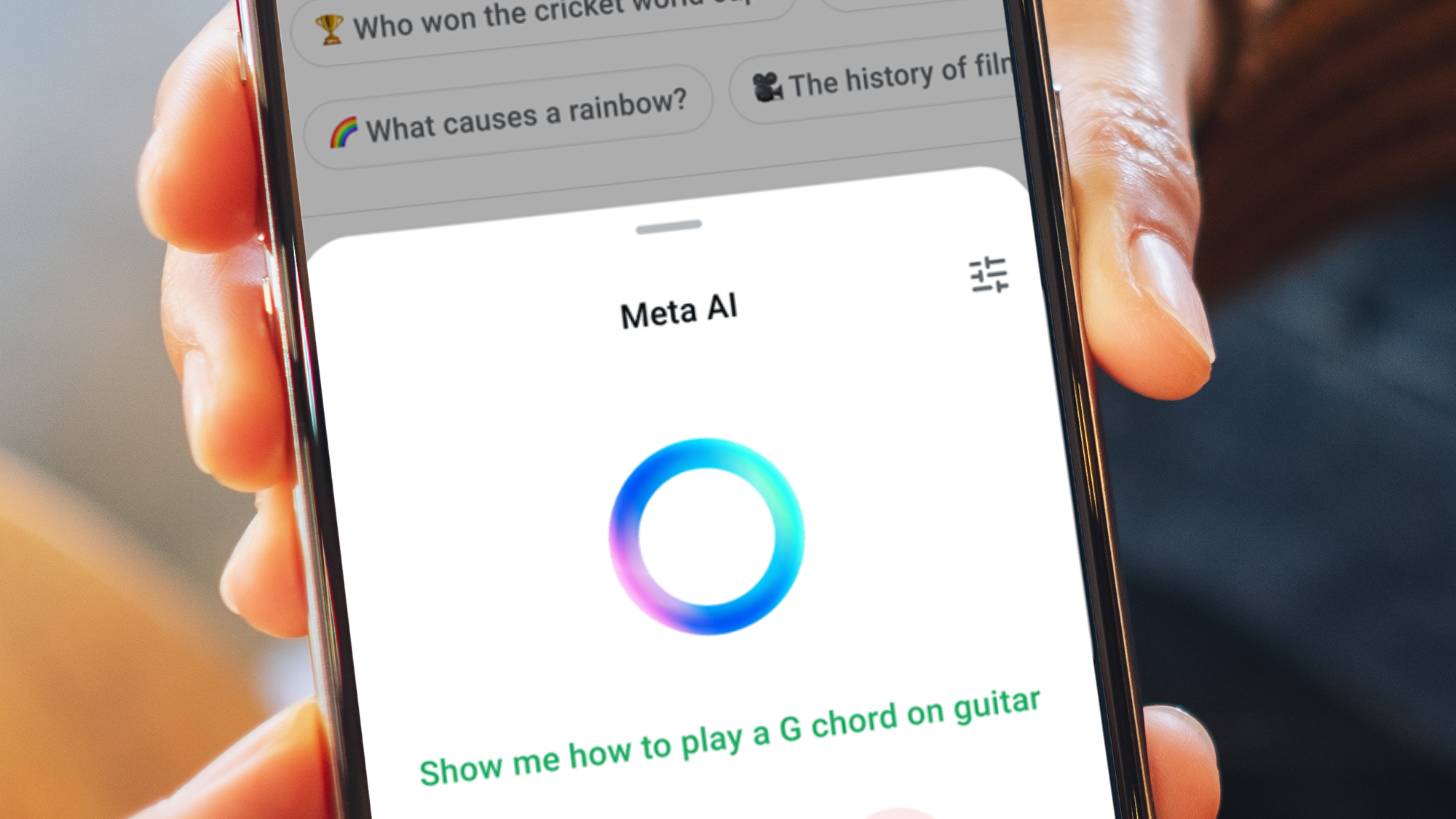
Rank 11544WhatsApp has commented on its controversial new Meta AI assistantThe messaging app says it's a "good thing" despite a mixed receptionWhatsApp has separately rolled out a new 'Advanced Chat Privacy' tool
WhatsApp has defended the wider rollout of its Meta AI assistant inside the popular messaging app, despite some significant pushback from users.Earlier this month, Meta rolled out the AI assistant – represented by a blue ring in the bottom-right corner of your WhatsApp chats – across several new countries in the EU, the UK, and Australia.Because WhatsApp is very popular in those regions – more so than the likes of Apple's iMessage – there was a vocal backlash to its arrival on platforms like Reddit, particularly as it isn't possible to turn the feature off. But WhatsApp has now commented on those concerns for the first time.In a statement to the BBC, WhatsApp said: "We think giving people these options is a good thing and we're always listening to feedback from our users". It added that it considers the feature to be similar to other permanent features in the app, like 'channels'.Although the Meta AI circle hovers permanently in your chats section, it doesn't actually have access to your chats. Meta's Help pages state that "your personal messages with friends and family are off limits", while the Meta AI chat window states that "it can only read messages people share with it".Still, some privacy concerns remain, so this week WhatsApp introduced a new feature called "Advanced Chat Privacy" to help soothe any remaining concerns.
A privacy peace offering
(Image credit: WhatsApp)
While it isn't possible to turn off Meta AI in WhatsApp (it's also now integrated into the app's search bar), you will soon be able to use "Advanced Chat Privacy" to prevent others from using your chats in other AI apps.The new setting, which is "rolling out to everyone on the latest version of WhatsApp", is designed to stop people from taking anything you share in WhatsApp outside of chats and groups. When it's turned on, your friends and contacts are blocked from "exporting chats, auto-downloading media to their phone, and using messages for AI features".We haven't yet seen the feature in action, but you'll be able to turn it on by tapping on a chat name, then tapping the new "Advanced Chat Privacy" option. WhatsApp says this is also just the first version of the feature, with more protections en route to help you avoid a personal Signalgate fiasco.That's likely to be a more popular move than baking Meta AI in WhatsApp, although a recent poll on the TechRadar WhatsApp channel shows the latter hasn't been universally condemned.While the biggest chunk of our poll respondents (42%) said they would "never" use the Meta AI assistant in WhatsApp, a significant number (41%) said they would "maybe, sometimes" tap the blue ring, while 17% said they planned to use Meta's ChatGPT equivalent "regularly". Perhaps, like the prison walls in The Shawshank Redemption, we'll one day grow to depend on it.
You might also like
From novelty to nuisance: The AI revolution no one wanted is sweeping all before itWhatsApp has just dropped these 9 new features – including 2 that I'm not happy aboutWhatsApp patches worrying vulnerability which allowed hackers to share .exe files as images
-

Picture from ichef.bbci.co.uk
Rank 11545 -
Picture from o.aolcdn.com
Rank 11546Google has announced that it will no longer be bringing new Nest Thermostats to Europe due to the "unique" requirements of heating systems in the region. The company launched its redesigned fourth-generation Nest Learning Thermostat in 2024.
"Heating systems in Europe are unique and have a variety of hardware and software requirements that make it challenging to build for the diverse set of homes," Google says. "Therefore moving forward we’ll no longer launch new Nest thermostats in Europe." The third-generation Nest Learning Thermostat and the Nest Thermostat E will continue to function, receive security updates and be sold while supplies last. If you're in the market for a new thermostat that works with Google Home, though, you'll have to turn to a third-party option.
Besides leaving behind a whole continent's worth of customers, Google announced that it's also ending software support for a few older Nest devices. The first and second generation Nest Learning Thermostats, along with the second generation model released in Europe, will no longer receive software updates or connect to the Google Home app starting October 25, 2025. Google says any routines you've programmed will still work and you can manually adjust the temperature on the Nest Thermostat themselves, they'll just otherwise become a bit less "smart" after October.
As a consolation, Google is offering $130 off a new fourth-generation Nest Thermostat to affected customers in the US, $160 off for customers in Canada, and 50 percent off a Tado Smart Thermostat X for European customers.
All three thermostat models Google is dropping are over a decade old, so on one hand, the decision makes sense. On the other hand, most people don't purchase a thermostat and expect it to have an expiration date. That's one of a few reasons to be skeptical of Google's continued commitment to its Nest products. It's nice that there's a snazzy new Nest Thermostat, but there's been little indication the company will ever make a new Nest Hub or Nest Audio, beyond plans to incorporate Gemini.This article originally appeared on Engadget at https://www.engadget.com/home/smart-home/google-wont-bring-new-nest-thermostats-to-europe-181136806.html?src=rss
-
Picture from o.aolcdn.com
Rank 11547Boox, a company that makes E Ink gear ranging from palm-sized devices to desktop monitors, has a new pair of ereaders. The Go 7 and Go Color 7 (Gen II) combine a Kindle Oasis-like form factor with Android 13. For the first time in this lineup, they support handwriting, courtesy of a $46 stylus. And since the E Ink tablets ship with the Play Store, you can use any ebook storefront you like.
The Boox Go Color 7 (Gen II) uses E Ink Kaleido 3 tech, also found in the Kobo Libra Colour and Kindle Colorsoft. (However, Amazon modified the latter with a custom display stack.) Like those competitors, the Go Color 7 shows color content at 150 ppi and black and white at 300 ppi.
Meanwhile, the Go 7 has a monochrome Carta 1300 Monochrome display that shows content at 300 ppi.
Boox
Both devices have an asymmetrical form factor with physical page turn buttons on one side. They're the latest design inspired by the Kindle Oasis, which Amazon discontinued last year. Variations of this form are also found in the Kobo Libra, Sage and Elipsa lines. If you've never tried one of these offshoots, they're made for maximum one-handed ease.
One advantage Boox's readers have over competitors is that, since they run Android and include the Play Store, you can install whatever reading app you like. Ditto for note-taking apps, browsers, mail clients, social apps or anything else you want. (But don't expect anything with video to be usable on E Ink screens.)
The Go 7 and Go Color 7 each have 4GB of RAM, 64GB of internal storage and microSD support. Each device weighs 195g (6.9oz).
Boox
Although both Go 7 readers support pen input for note-taking, highlights and markups, you'll have to spend more to enjoy that. That's because, alongside the devices, Boox is launching a $46 InkSense stylus with 4,096 pressure levels of sensitivity. The pen, which looks a bit like a gray Apple Pencil, has a multifunction button on the side and recharges via USB-C.
You can preorder the $250 monochrome Go 7 from Boox's website today. The company expects it to ship around May 7. Meanwhile, the $280 Go Color 7 is listed as "coming soon."
This article originally appeared on Engadget at https://www.engadget.com/mobile/tablets/booxs-new-go-7-e-ink-tablets-support-handwriting-with-a-46-stylus-182026839.html?src=rss
-

Picture from ichef.bbci.co.uk
Rank 11548 -
Picture from cdn.mos.cms.futurecdn.net
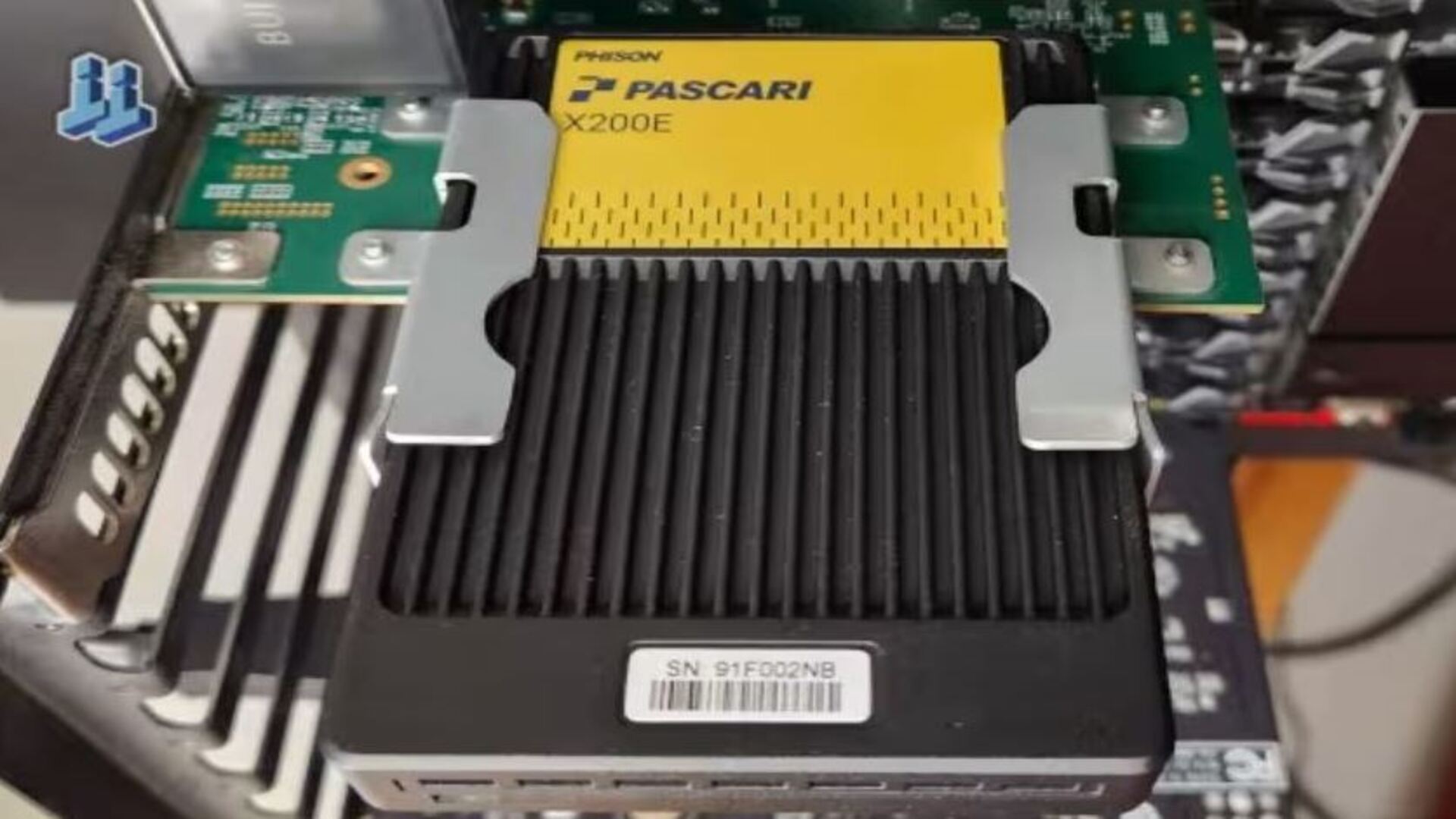
Rank 11549Phison Pascari X200E sets a new benchmark with PCIe Gen5 and extreme throughputX200E becomes the first flash SSD to break the one million IOPS milestoneBuilt for AI, not gaming, X200E dominates data center workloads effortlessly
Phison has set a new benchmark in enterprise storage performance with its Pascari X200E 6.4TB SSD, breaking records in sequential read speed, well beyond what even the fastest external hard drives can deliver.TweakTown lab tests found the drive achieved a sequential throughput of 15,025MB/s, the highest ever recorded. In the 8K 70/30 test, which simulates database traffic, the X200E also became the first flash-based SSD to surpass 1 million IOPS.The X200E is part of Phison’s Pascari Performance X-Series, designed specifically for extreme write intensity in data-heavy environments. It ships in U.2 and E3.S form factors, with capacity options ranging from 1.6TB to 30.72TB.
Enterprise DNA means enterprise demands
Built around the 16-channel Phison PS5302-X2-66 controller and equipped with Hynix 176-layer eTLC NAND, the X200E runs on a PCIe Gen5 x4 interface. Most desktop PCs support M.2 SSDs rather than the enterprise-grade U.2 interface, making them physically and technically incompatible with the X200E.Even with an adapter, most consumer motherboards lack the queue depth and thermal management required to take full advantage of the hard drive's capabilities. Given these requirements, the X200E isn’t designed for typical users, it’s built for data centers, not desktops or gaming rigs.Phison rates the X200E at up to 14,800MB/s sequential read and 8,700MB/s sequential write performance. In addition to raw speed, the drive excels in mixed workload scenarios, delivering up to 3.2 million IOPS with consistent performance across multiple queue depths, further underscoring its enterprise focus.The X200E is engineered to support modern AI workloads and hyperscale data center operations, which often demand performance beyond the traditional queue depth of 32 used in legacy SSD benchmarks. Test results show the drive maintains steady-state performance even under random workloads with queue depths as high as 4096.As AI models continue to generate massive volumes of reads and writes across complex workflows, SSDs like the X200E will help power everything from video delivery platforms to real-time analytics pipelines.
You may also like
These are the fastest SSDs you buy right nowTake a look at some of the best external hard drivesPalantir to develop “ImmigrationOS” for ICE to speed up deportations
-
Picture from o.aolcdn.com
Rank 11550The Legend of Ochi feels like a film that shouldn't exist today. It's an original story, not an adaptation of an already popular book or comic. It's filled with complex puppetry and practical effects, something many films avoid because CG is simply easier to deal with. And it evokes some of the scarier children's films of the '80s and '90s, like the nightmare-inducing adaptation of Roald Dahl's The Witches.
According to Isaiah Saxon, the film's writer and director, it was a struggle to get The Legend of Ochi made. "The attempt to make the film took longer than the making of the film," he said in an interview on the Engadget Podcast. " I think it's extremely hard to reach kids with your first film because kids are kind of behind this kind of corporatized IP world now. But I really wanted to reach kids with my first film and, and so that's why it took so long."
Whenever he received a bit of funding for the film, Saxon says he used it to prototype creatures with London's John Nolan Studios, which has built animatronics for films like Jurassic World Dominion, as well as scouted locations in Romania. "And so, through the three-and-a-half years of this work before I got a green light [to make the film], I had then accrued this visual package that was kind of undeniable," he said. "That's when A24 finally just said, okay we're gonna be bold and risky and this isn't what anyone normally does, but we're gonna believe in you here."
The result is a film that feels incredibly personal and distinct. It centers on a young girl, Yuri (Helena Zengel), who is growing up in a tiny village on the island of Carpathia. There the people fear the Ochi, mysterious primates who live in the forests and attack farm animals. Her father Maxim (Willem Dafoe in another unhinged A24 film performance) is a conservative, overly-macho man who leads a band of boys to hunt Ochi. Oh yeah, and he occasionally wears Viking armor.
A24
The film begins with the Ochi, who from afar look like menacing monkeys. Yuri was raised to fear them, but after encountering one young Ochi, she begins to reject everything her father taught her. It also helps that the creature looks adorable, with large eyes and protruding ears, it's a bit like The Mandalorian's Grogu (AKA Baby Yoda), but with fur. The infant Ochi is also a complex puppet created by John Nolan Studios, and it looks uncanny at first, since these days we expect it to be computer generated. But it's clearly a physical object, with actual facial movements that Yuri can react to.
"Puppetry is such an ancient art form," Saxon said, when I asked why he pushed to make the Ochi a puppet and not a purely CG creature. "We've been making shadows on the cave wall for thousands of years, and our brain as we watch the human hand give life to a character is just fully accepting of it."
"And then there's also the charm of the failure space of puppetry. Even when you're not doing it just right, it feels alive. And especially for this baby primate, we found immediately as we were testing the puppet, that the little imperfections that came through rod puppeteering were actually exactly the way that a little baby monkey would be just discovering how to move their own body."
A24
Creating a believable puppet is just one problem though, another is orchestrating it effectively on a movie set. "[John Nolan Studios] pushed the limits of what you could do at a really small scale with animatronics," Saxon said. "We were able to prototype for years to build these creatures. And then on set, we have extensively rehearsed every single scene with all these puppeteers. There's five on the body led by Rob Tygner, who's doing the head, and he's kind of calling out the internal monologue of the animal — all its thinking, all its vocalization — so that everyone can sync."
Another two people control the puppet's face while staring at monitors, so there's a challenge to making them all work as one entity, Saxon says. The film's sets are also built to hold all of the people who control the Ochi puppet, and who often need to be hidden from view. And then there are the suit performers. "We have small people in ape suits with hand extensions with heavy animatronic heads that they can barely see out of. They're hot and they're out in the Carpathian wilderness in the mountains of Transylvania," Saxon said.
After seeing what he accomplished with The Legend of Ochi, it's not hard to see Disney tapping Saxon for something in the Marvel universe, like it has with so many independent filmmakers. But that likely won't happen. "I've already said no," Saxon remarked in regards to making a Marvel film, and he also has no desire to make anything based on an existing IP.
Saxon isn't entirely against using digital tools, despite his obvious love for puppetry. The Legend of Ochi still uses CG for distant shots of the Ochi, and for creating virtual sets. "I've also, over the years, learned CG and I've made purely animated 3D films. And I know the software myself and I know that it's a bespoke craft art that is tedious and full of love and attention to detail."
"It doesn't get the respect it deserves," he added. "And that's partly because there's been a kind of corporatization and overuse of CG a lot.” Saxon says he was well aware a CG character couldn’t carry the film, but he also knew that it was the best way to create a 3D river that didn’t exist in Romania. (It’s also reminiscent of the music video he directed for Bjork’s “Wanderlust.”)
"You have to look at each opportunity and come to the technique organically for the task. You can't have philosophies about this."
This article originally appeared on Engadget at https://www.engadget.com/entertainment/tv-movies/it-feels-alive-the-legend-of-ochi-director-on-the-power-of-puppets-183043579.html?src=rss


