News
This constantly updated list features the latest and most important news articles, ranked in order of significance. The top stories highlight major developments, breaking news, and critical updates across various topics, ensuring you stay informed about the most pressing issues. As new articles are added, the list adapts to reflect the latest priorities, keeping the most impactful stories at the forefront. Whether it’s global events, technology breakthroughs, or industry trends, this dynamic list ensures you always have access to the most relevant and timely information.
-

Picture from cdn.mos.cms.futurecdn.net
Rank 11251A Special Committee within the US Congress concluded that DeepSeek AI represents a profound threat to US national securityThe report reveals data privacy and security issues, the use of tracking tools, and even links with the Chinese Army, among othersDeepSeek AI has been under fire since its release in January, with many countries either issuing investigations or bans on privacy grounds
Although appearing as another AI chatbot, DeepSeek represents a profound threat to US national security. This is the verdict from the US Congress' latest report on the Chinese AI tool, which has sent shockwaves through the AI world since its release last January.Crucially, the Special Committee within the US Congress found privacy and security issues with how the chatbot managed Americans' data, the use of tracking tools in its system, the spread of Chinese propaganda, and even links with the Chinese Army, among others.The findings come as DeepSeek is under fire in many countries, the US included, that have either initiated investigations or enforced bans on the Chinese software on privacy and security grounds.
The risk for Americans’ data
"DeepSeek represents a profound threat to our nation’s security," reads the US Congress report. "Closer inspection reveals that the app siphons data back to the People’s Republic of China (PRC), creates security vulnerabilities for its users, and relies on a model that covertly censors and manipulates information pursuant to Chinese law."As per the company's privacy policy, DeepSeek collects a vast amount of users' data, "including chat history, device details, and even the way a person types," notes the experts.It's worth noting that invasive data collection practices aren't a prerogative of the Chinese chatbot. For instance, research conducted by one of the best VPN providers, Surfshark, found that Google Gemini collects even more of your personal data.
Yet, the issue here for Americans' data is that these details are funneled back to the People’s Republic of China (PRC) via an insecure infrastructure connected to a Chinese telecom company thought to have links with the Chinese Army – China Mobile.In 2019, the Federal Communications Commission (FCC) banned China Mobile from operating in the United States. The company was officially designated a national security threat three years later.The report confirms what experts at Feroot Security also uncovered back in February: hardcoded links in DeepSeek’s web login page that directly connect it to China Mobile."While the extent of data transmission remains unconfirmed, DeepSeek’s integration with China Mobile infrastructure raises serious concerns about potential foreign access to Americans’ private information," reads the report.The investigations also found that DeepSeek integrates tracking tools from Chinese tech giants that the US government previously flagged over security concerns, including TikTok's parent company, ByteDance, Baidu, and Tencent."Together, these firms constitute a well-documented apparatus of surveillance, censorship, and data exploitation, which DeepSeek reinforces," wrote experts.
(Image credit: Getty Images)
Worse still, researchers have found that DeepSeek does little to protect the information it collects."For these reasons, it is evident that the DeepSeek website and app act as a direct channel for foreign intelligence gathering on Americans’ private data."Allegations over the spread of Chinese propaganda, censorship, unauthorized usage of US AI models, and unlawful usage of restricted Nvidia chips have also been raised.The Committee now recommends expanding export controls and addressing risks from Chinese AI models, while preparing for strategic surprise related to advanced AI.
You might also like
If you want to turn yourself into an AI doll, at least do it safelyOpenAI says DeepSeek used its models illegally, and it has evidence to prove it, new report claimsMeta is set to train its AI models with Europeans' public data, and you can stop it doing so
-

Picture from ichef.bbci.co.uk
Rank 11252 -

Picture from cdn.mos.cms.futurecdn.net
Rank 11253China is building in Pakistan an internet censorship system resembling its infamous Great FirewallThe two countries have been reportedly working for almost a year on this infrastructure, which can block most foreign websitesThis comes as Pakistan is also actively trying to regulate VPN usage across the country
China seeks to replicate its infamous Great Digital Firewall by helping Pakistan build a similar system for its own means.As per the latest Intelligence Online report, Islamabad and Beijing have been working for almost a year on this project, which is set to considerably boost censorship and surveillance levels in the country. All this comes as Pakistan has intensified its efforts to regulate the usage of the best VPN services.
The Great Digital Firewall of Pakistan
While the likes of Russia and Iran have been boosting their national internet capabilities lately, China's Great Digital Firewall remains the most successful example of a sovereign internet infrastructure. This is exactly what Chinese companies are now helping Islamabad build – the Great Digital Firewall of Pakistan.Such a system is expected to block most foreign websites, de facto increasing current censorship levels in the country. It's worth reminding that Pakistanis cannot access all main social media platforms without a virtual private network at the time of writing, with X being blocked since February 2024.While the Pakistan government said this infrastructure "would only be used to protect two strategic data exchange points on the national network," as reported by Intelligence Online, authorities will be able to activate the firewall when needed.Allegations about Pakistan using Chinese censorship and surveillance tech aren't new, though. Al Jazeera reported in November last year, in fact, about some secret tests of China-like ‘firewall’ tools to monitor online traffic and regulate the use of popular apps.Such a system "has the ability to block VPNs," too – a Ministry of Defence official, familiar with the new deployments, told Al Jazeera at the time.
P@SHA sounds the alarm! 🚨 The hastily implemented firewall is a major setback for Pakistan's tech sector. Businesses are struggling to survive amidst crippling internet outages and VPN woes.Read P@SHA's official statement on the National Firewall: https://t.co/aoHrhE6CNm pic.twitter.com/JOwEhzJpYjAugust 16, 2024
Pakistan's VPN crackdown has been a developing matter throughout 2024 and into 2025.After trying to clamp down on VPN usage by directly disrupting the services, internet watchdog NetBlocks first reported VPN restrictions seven days after X had been blocked. PTA shared plans to regulate the use of unregistered VPNs as a way to curb misuse back in August.The plan was eventually withdrawn at the end of the year due to a lack of legal grounds to ban VPNs, as per Pakistan's Law Ministry. A new licensing category for VPN providers was introduced in December as the latest bid to regulate Pakistan VPN usage.Whether that's early to predict what's at stake for VPN users in the country, experts have already raised some concerns about the consequences of a national firewall.On the matter, the Pakistan Software Houses Association (P@SHA) said last year: "The imposition of the firewall has triggered a perfect storm of challenges, with prolonged internet disconnections and erratic VPN performance threatening a complete meltdown of business operations."
You might also like
Pakistan grants first VPN licenses in a bid to regulate VPN usage in the countryMillions of free VPN users have inadvertently sent their data to ChinaApple has removed yet another popular VPN app from its Russian App Store
-

Picture from techcrunch.com
Rank 11254 -

Picture from ichef.bbci.co.uk
Rank 11255 -

Picture from ichef.bbci.co.uk
Rank 11256 -
Picture from o.aolcdn.com
Rank 11257Every video game is a miracle. Long hours, extraordinary technical and artistic requirements and cross-disciplinary collaboration: the very act of making games is difficult, and leaves room for catastrophic errors. It's a wonder any of them make it to release at all.
Fulcrum Defender, the new Playdate exclusive from Jay Ma, the co-founder of indie darling Subset Games, is one such miraculous game. It's the first new release from the studio since 2018's critically acclaimed Into the Breach. Ma began work on Fulcrum Defender following a life-changing Covid infection that has greatly diminished her quality of life and ability to do the thing she loves.
The story of Fulcrum Defender begins following a trip Ma made to Vancouver, Canada in August 2023 to see Subset co-founder Matt Davis and a few other members of the studio in-person. At the time, the team was working on more than one game. According to Ma, one of the larger, more promising projects was "struggling," but the trip led to a breakthrough. Then, she caught Covid-19. "It was pretty unfortunate timing," she said. "For the first time in a while, I was gung-ho about being able to figure this game out."
At first, Ma's latest bout with the coronavirus didn't seem all that different from her previous experiences. She returned to her home in Kyoto, Japan, quarantined and eventually recovered from the acute symptoms, but never bounced back completely. "I think it was the first day that I went out to be outside, bike, do normal things, and I just completely shut down," she said. "I couldn't get out of bed for like four days." She realized she was experiencing long Covid.
As we chatted over Google Meet, Ma frequently took long pauses to piece together her memories and find the right words to express her loss. "I'm a different person," she told me after one such break. "I walk around with a cane. I need to structure exactly how I do something outside. I need to know where all the chairs are. I walk at a grandma's pace, and I'm constantly forced to maintain awareness of my physical state, because if I do too much, it's already too late. It makes everything feel dangerous."
For the first four months of her illness, Ma couldn't work at all. "Even even when I was more used to needing to pace myself, not only was it harder to do things that used to come naturally to me, but I would also get lost in my own head," she said. She worried she might never make games again.
Subset Games
Fulcrum Defender was a chance to prove to herself she could still do the thing she loved. Subset’s Mauro López provided additional programming, and composer Aaron Cherof, best known for his work on Minecraft’s Trails and Tails update, made the music for the game. Panic contacted Ma about the project after she showed a few friends the game around the time of Kyoto's annual Bit Summit indie game festival in the summer of last year.
"I would wake up in the morning and think about the game and make progress every day – even if it was only a couple of hours – that did something really important for my psychological state," she said.
In a preview released by Panic, Ma describes Fulcrum Defender as a game "that starts out slow and relaxing but gradually ramps up until it becomes frantic chaos." You can see the connective tissue between it and Ma's previous work. Players can earn upgrades to make their run easier. Success then depends on a combination of good aim (using the Playdate's signature crank), smart decision-making and a well thought out build. I expect it will have the same addictive "one more run" quality that Subset’s other games are known for.
This illness has shrunk my world and perception of time considerably.Jay Ma
"With Into the Breach, if I wanted to add one enemy, that one enemy would change how maps are designed, how character weapons are designed, and how scaling works," she said. "So a single new idea requires you to kind of keep everything in your head at once, and that specifically is just something that I struggle to do now." Fulcrum Defender taught Ma how much she had taken for granted the ease with which she one juggled those various dependencies in her mind.
Ma hasn't found a doctor in Japan who knows enough about the illness to offer her a conclusive diagnosis, and the state of research on long Covid in general is nascent. "They hate to make uncertain calls," she explained. The one thing she's found she can do is take frequent dementia tests to track the condition of her mind.
"I feel like I need to live with the possibility that it won't go away, so I just sort of operate with that mindset," she told me. "This illness has shrunk my world and perception of time considerably. My memory is way worse. I'll forget what happened like a week ago, and I don't really think about the future at all. And so I'm just in a constant present. It feels like I'm being forced to train to be a monk."
When I asked what her illness might mean for the future of Subset, Ma took a long time to consider her answer. "We set a rule that we will not announce anything unless we're absolutely certain it's coming out. We want to live with the freedom of being able to cancel rather than feeling we're stuck in having to release something we don't like," she said. "So Subset is doing fine, but my output has dropped to like 20 percent of what it used to be."
Subset Games
Davis, she adds, has been productive, but he too has had to adapt his work schedule, in his case due to two young kids. "If we want to make another Into the Breach-scale game, it feels like we might need more help in the long run. I need to come to terms with the fact I can't do all the art the way I used to."
Ma has been through so much, and yet Fulcrum Defender isn't a game about chronic health concerns, disability or memory loss. It seems to studiously avoid borrowing any biographical detail from Ma's life whatsoever. People will play and enjoy it knowing nothing of the challenging circumstances in which it was made. It turns out, that's the only way Ma would have it.
"I know of a lot of developers who put themselves into their game. You can see the author's intent, emotional state and the things they were processing in it. I've wondered what it would be like to make a game like that, but I have no idea how. Basically, the only thing that drives me is mechanics," she told me. "So I have no expectation, or really desire for people to see the author in the little arcade games I make. I would be very happy to never be perceived."
Fulcrum Defender — along with 11 other games — arrives as part of Playdate's second season of weekly games beginning on May 29. You can pre-order Season Two for $39 through the Catalog store.This article originally appeared on Engadget at https://www.engadget.com/gaming/subset-games-co-founder-jay-ma-went-through-hell-to-make-fulcrum-defender-153028909.html?src=rss
-

Picture from ichef.bbci.co.uk
Rank 11258 -

Picture from ichef.bbci.co.uk
Rank 11259 -

Picture from ichef.bbci.co.uk
Rank 11260 -

Picture from cdn.mos.cms.futurecdn.net
Rank 11261Razer has resumed the sale of its Razer Blade gaming laptops after tariff scaresThe Razer Blade 16 is now available in the US with multiple configurationsThere's still tariff uncertainty as the 90-day pause may be altered
Recent US tariffs have left multiple PC hardware companies on edge, forcing many to halt sales and adjust prices, notably Razer and its pause on gaming laptops. However, that has seemingly come to an end.As reported by Notebookcheck, Razer has resumed the sale of its laptops, starting with the Razer Blade 16 and its multiple Nvidia GeForce RTX 5000 series configurations, including the RTX 5090. It's now available to purchase from Razer's site starting at $2,999.99 / £2,699.99 / AU$4,899.95.For now, the Blade 16 is the only option available in the US, and is set to be delivered to consumers at the end of April. It's also available for pre-order in the UK, while the Blade 14 and Blade 18 (2024 models) are available to buy in Australia. Notebookcheck also mentions that the new Blade 16 will also be available at Razer's physical stores.So it seems that things could be returning to some sort of normality for people looking to buy a new Razer laptop in the US, which seems to be a result of the pause on tariffs. However, it's likely not the end of the road just yet in terms of tariff scares, as the 90-day pause could be undone by Trump, as reported by Business Insider.
(Image credit: Razer)
It's best to buy now while you still can...
There's no telling when the tariff situation will come to an end, and based on the trend of inflation that’s been affecting all manner of PC hardware lately, including the uncertainty surrounding the 90-day tariff pause, it would be wise to make a move now if you’re thinking of buying a new Razer laptop.The Razer Blade 16 isn't a cheap gaming laptop by any means, but gaming laptops as such are the closest some gamers can get to desktop gaming PCs: if you're looking to buy any of the RTX 5070, 5080, or 5090 desktop GPU equivalents, you're likely going to be spending a lot of cash – especially when including the price of other PC parts.In the meantime, you can spend around the same price you would for a premium GPU on a gaming laptop instead that can work as a desktop replacement. Of course, the performance isn't going to be the same, but it will be close enough for many people.I don't see the inflation and scalping issues on desktop GPUs ending anytime soon, and Razer's gaming laptops have a solid reputation when it comes to providing great gaming performance.With tools like Multi Frame Generation at your disposal, thanks to Nvidia's Blackwell laptop GPUs (trust me, I've used one and it's great), you’ll have an advantage with higher frame rates over the older RTX 4000 series models that only use the original Frame Generation.The only issue is that they’re very expensive, regardless of the current state of the desktop GPU market. So, for those with deep pockets, it’s an easy recommendation and I’d suggest purchasing right away, but that’s not exactly the case for most gamers…
You may also like...
I love the feel and performance of this Razer gaming mouse, but I’m not so sure everyone will get on with its shapeRazer Blade 14 (2024) review: premium performance on the goRazer PC Remote Play lets you stream games to your iPhone – and it could convince me to switch from my gaming PC
-
Picture from o.aolcdn.com
Rank 11262The EU will be mandating new labels on smartphones and tablets that indicate how repairable the device is. These labels will also include ratings for energy efficiency and durability. They will start showing up on devices on June 20 and will be similar to pre-existing ones for home appliances and TVs.
The labels display a product’s energy efficiency rating on a scale from A to G and will also display battery life and the number of available charge cycles. There will be letter grades for durability and repairability, in addition to an IP rating for dust and water-resistance.
European Commission
Covered products also include cordless landline phones, but smartphones with rollable displays are exempted. This is fairly odd because, well, there aren’t any rollable phones available for consumers just yet. Windows-based tablets will be covered by a separate mandate for computers.
This isn’t the only change the EU has announced regarding device sales. Hardware will now have to meet new "ecodesign requirements" to be sold in the region. This includes a requirement to make any applicable spare parts available for repair.
Other ecodesign requirements include batteries that retain at least 80 percent of their capacity after 800 charging cycles and scratch and drop protections that exceed minimum standards. Finally, manufacturers must provide OS updates within six months of the source code becoming available.This article originally appeared on Engadget at https://www.engadget.com/mobile/the-eu-is-putting-repairability-rating-labels-on-phones-and-tablets-in-june-154051517.html?src=rss
-

Picture from techcrunch.com
Rank 11263 -
Picture from o.aolcdn.com
Rank 11264If you're interested in expanding your knowledge in different areas and learning new skills with the help of experts in their respective fields, this might be the deal for you. MasterClass subscriptions are currently 40 percent off as part of the service's "spring forward" sale. They start from the equivalent of $6 per month when billed annually (so $72 for the year).
We reckon the mid-tier Plus plan likely offers the best value here. That includes the ability to watch MasterClass videos on two devices simultaneously. Perhaps more importantly, this tier includes offline viewing, which might come in handy if no in-flight entertainment options grab your interest the next time you're traveling. The Plus plan is available for the equivalent of $9 per month when billed annually ($108 total), down from $15 per month.
There are more than 200 classes available on MasterClass, including lessons from some of the top names in each relevant industry. You might learn about how to have a winning mentality from Lewis Hamilton, creative writing from Margaret Atwood, shooting and scoring from Steph Curry, comedy from Steve Martin or home cooking from Alice Waters. The categories of classes include film and TV, health and wellness, science and technology, music, and business.
Each class has around 20 video lessons that typically last around 10 minutes long each. You'll get access to a workbook as well to help you absorb the information and understand how to act on it through various exercises. But even if you're not necessarily interested in acquiring new skills, you might simply use MasterClass as you would with any other streaming service, which is one reason why it's among our favorite subscriptions to gift someone.
Follow @EngadgetDeals on X for the latest tech deals and buying advice.This article originally appeared on Engadget at https://www.engadget.com/deals/masterclass-subscriptions-are-40-percent-off-right-now-154524824.html?src=rss
-

Picture from techcrunch.com
Rank 11265 -

Picture from ichef.bbci.co.uk
Rank 11266 -

Picture from cdn.mos.cms.futurecdn.net
Rank 11267A breach has affected nearly 5 million Blue Shield of California healthcare customersThis was thanks to a misconfiguration of Google AnalyticsSensitive health information and patient data was exposed
Health insurance firm Blue Shield has revealed a data breach has exposed protected health data of over 4.7 million members.The information was leaked to Google’s analytics and advertisement platforms following a misconfiguration of Google analytics on Blue Shield sites.“On February 11, 2025, Blue Shield discovered that, between April 2021 and January 2024, Google Analytics was configured in a way that allowed certain member data to be shared with Google’s advertising product, Google Ads, that likely included protected health information,” the company wrote.
Get Keeper Personal for just $1.67/month, Keeper Family for just $3.54/month, and Keeper Business for just $7/month. Keeper generates and stores strong passwords so you never have to remember them again. Don’t let one weak password leave you exposed.Preferred partner (What does this mean?)View Deal
No bad actors
Blue Shield insists that Social Security numbers, credit card information, or driving license numbers were not part of the disclosure, but that insurance plan name, type and group number; zip code, gender, family size, medical claim service date and service provider, patient name, and patient financial responsibility are all amongst the compromised information.Once the connection was severed between Google Analytics and Google ads on the website in January 2024, Blue Shield says there is “no reason to believe that any member data” was shared.After the issue was discovered, Blue Shield says it immediately reviewed websites and security protocols, and has taken safeguards to protect against similar attacks in future.“Google may have used this data to conduct focused ad campaigns targeted back to you. We want to reassure you no bad actor was involved, and, to our knowledge, Google has not used your information for any purpose other than these ads or shared your protected information with anyone," the notice confirms.Anyone who thinks they may be affected should be ultra vigilant, changing any passwords and closely monitoring any accounts.Particularly, be on the lookout for any unexpected emails claiming to be from a medical or health related address, and never click any links from anyone you don’t 100% trust.We've written some guidance on how a data breach might affect you and what your next steps should be here.
You might also like
Take a look at our picks for the best malware removal software aroundCheck out our choice for best antivirus softwareMarks and Spencer has suffered a cyberattack - here’s what we know so far
-

Picture from cdn.mos.cms.futurecdn.net
Rank 11268Nintendo has warned fans that Switch 2 pre-orders may not arrive on release dayThe company has said that due to "very high demand" delivery on June 5 is "not guaranteed"It's unclear if this applies only to pre-orders made at My Nintendo Store or other retailers
Nintendo has announced that fans may not receive their Switch 2 pre-order on release day.The Nintendo Switch 2 is set to launch on June 5, 2025, and if you've been lucky enough to secure a UK pre-order or US pre-order, then there's less than two months to go.However, Nintendo is now warning buyers that delivery of the Switch 2 on June 5 is "not guaranteed", although it's unclear if this applies to pre-orders placed via My Nintendo Store or everywhere.Updated information on the official How to Buy page now reads: "Thank you to those of you who have already registered your interest in purchasing from My Nintendo Store. We're thrilled by the enthusiasm for Nintendo Switch 2! Due to the very high demand, we will be working diligently to fulfill orders as product becomes available, but delivery by June 5 is not guaranteed."Your invitation email may arrive after the Nintendo Switch 2 launch. We'll confirm your shipping date upon purchase."Nintendo has also encouraged fans to purchase from participating retail partners, like GameStop, if they want to "increase your opportunity of obtaining a Nintendo Switch 2 system at launch".It's also noted that no further action is required after registering interest in a Switch 2 and that customers should continue waiting for their invitation from My Nintendo Store.The Nintendo Switch 2 costs $449.99 / £395.99 or $499.99 / £429.99 for the Mario Kart World bundle, which comes with a digital copy of the game.
You might also like...
Nintendo Switch 2 pre-orders live: latest UK stock updates as My Nintendo Store's pre-order date arrives, while US pre-orders remain delayedHere are the Nintendo Switch 2 launch games that you'll be able to pick up and play on June 5Hori is releasing another Nintendo Switch 2 camera intended for handheld mode
-
Picture from o.aolcdn.com
Rank 11269As part of the launch of its new "Moto Things" line of accessories, Motorola is introducing the Moto Buds Loop, the company's first take on wireless open-ear earbuds. Rather than completely cover your ear, the Moto Buds Loops cuff the outside, almost like a piercing, blocking out less of the world around you, while still letting you hear your music.
The Moto Buds Loop are, as their name suggests, large loop-shaped earbuds that come in either a dark "Trekking Green" or a light (and fairly gaudy) "French Oak with crystals by Swarovski." Motorola says the earbuds have 12mm drivers and "Sound by Bose technology," which means they're tuned for clarity and balance, and also support features like spatial audio for immersive listening. If you're worried about call quality, the Moto Buds Loop use a combination of AI and dual-microphones on the earbuds to minimize background noise. When you need to connect the earbuds to other devices, Motorola's Smart Connect feature can quickly swap Bluetooth connections between Motorola and Lenovo devices.
Motorola
The Moto Buds Loop earbuds have eight hours of battery life, and their charging case comes with an additional 37 hours, likely covering you for multiple days of use. Motorola also says the Moto Buds Loop are "water-repellant," but the lack of any kind of official IP rating suggests you might not want to test that.
Open-ear earbuds are definitely less niche than they used to be, with Sony, Bose, JLab and Nothing offering their own take on the concept. That Bose tech is featured in Motorola's earbuds isn't surprising, either. Both companies are using a similar clip-on design to keep the earbuds over your ears.
If you're interested in the Moto Buds Loop, you'll have to wait for now. Motorola hasn't shared a specific price or release date for the wireless earbuds, other than the fact they'll be available "in the coming months."This article originally appeared on Engadget at https://www.engadget.com/audio/headphones/the-moto-buds-loop-are-open-ear-earbuds-you-wear-like-jewelry-160056857.html?src=rss
-
Picture from o.aolcdn.com
Rank 11270The Razr is almost certainly the most beloved flip phone of all time. But for 2025, Motorola is expanding its iconic flexible phone line to a total of three devices starting at just $699 while leaning even further into the handset's status as a fashion symbol.
The new Razrs feature a very familiar clamshell design to last year's models, with all three packing similarly sized OLED displays, the same titanium hinge and front-mounted exterior screens with two embedded cameras. Motorola partnered with Pantone to provide a surprisingly wide range of colors, though not all of them will be available across every configuration. That said, the devil really is in the details, because even though all three models look quite similar, their specs differ quite a bit based on their price.
It may be hard to tell the various models apart, but the Razr Ultra is the one on the left, as it has a slightly larger display and smaller bezels.
Sam Rutherford for Engadget
Starting at $1,300, the Razr Ultra is the most expensive of the bunch and has the components to match. It's powered by a Qualcomm Snapdragon 8 Elite chip with 16GB of RAM and either 512GB or 1TB of storage. It also has the most capable cameras. On the Razr Ultra, you get dual 50-MP shooters consisting of main and ultra-wide cams with the latter also doubling as a macro lens. And for those who like taking long-distance shots, it supports a 2x optical zoom as well.
Furthermore, the Ultra features the biggest battery at 4,700 mAh along with the fastest charging. It goes up to a rather speedy 68 watts when using a wire or 30 watts wirelessly, which is double what you get from rivals like the Galaxy Z Flip 6. And if you're in a pinch and need to share some excess juice with another device, the Ultra also packs five-watt reverse wireless charging.
Sam Rutherford for Engadget
Unsurprisingly, Motorola gave the Ultra the nicest screen too based around a main 7-inch 1224p 165Hz OLED display along with a 4-inch pOLED panel on the outside. It's bright, it's colorful and, I must say, the company did a good job of reducing the appearance of a crease. Sure, if you look really hard, you can see it or feel it with your fingers, but it's much more of a minor nitpick than a legitimate con at this point.
Finally, as you'd probably expect, the Ultra is the most stylish one as well thanks to four unique finishes including an Alcantara back, a wood grain rear panel, a satin-inspired treatment and a faux-leather option.
Sam Rutherford for Engadget
As for the $1,000 Razr Plus, everything has been brought down a notch, with it featuring a Snapdragon 8s Gen 3 chip, 12GB of RAM and 256GB of storage. Its battery is also smaller at 4,000 mAh while its OLED main display has been shrunk a tiny bit down to 6.9-inches with a 2640 x 1080 resolution and 165Hz refresh rate. And while it sports dual 50-MP cams, they aren't quite as feature-rich, with the second shooter serving as a dedicated zoom lens with a 2x telephoto magnification. No ultra-wide angle or macro functions here.
An easy way to spot the base Razr is to look for the larger forehead bezel above the phone's exterior display.
Sam Rutherford for Engadget
Finally, the standard Razr is by far the most affordable at $700, though it has made a number of sacrifices to hit that price. It's powered by a MediaTek Dimensity 7400X chip with just 8GB of RAM and 256GB of storage, while its 6.9-inch OLED screen has a lower 120Hz refresh rate and FHD+ resolution. The base model's cameras have also taken a hit with dual 13-MP sensors. Though on the plus side, it does get a larger 4,500 mAh battery compared to the 4,000 mAh pack in the Plus.
The other big addition to the family is Moto's new AI Suite, which was developed in partnership with big names like Google, Amazon and others. The Image Studio feature can generate photos, avatars and more in a range of styles based on a handful of simple text prompts while Playlist Studio can build a tracklist (using Amazon Music) to match your current vibe. Then there are productivity features like Remember This, which can save notes and photos (either ones taken with the camera or existing pics) so they're easier to recall later. There's also a recording feature that can transcribe dialogue on the fly (including automatic speaker tags) similar to the Pixel Recorder app, along with a few more.
That said, I acknowledge that Motorola may have felt forced to do this after competing smartphone makers like Google, Apple, Samsung and others developed their own set of AI tools. But at the same time, none of these features feel particularly novel or flashy enough to be a selling point on their own. But I guess this is the AI-obsessed world we live in now.
However, with the base model starting at just $700 and a total of three devices to choose from, I have to give Motorola some credit for continuing to drop the barrier to entry for flexible screen phones. And between all the different colors and textures, they're rather fashionable ones at that.
In the US, the 2025 Motorola Razrs will be available for pre-order starting on May 7 with official sales slated for May 15.
This article originally appeared on Engadget at https://www.engadget.com/mobile/smartphones/motorola-is-blowing-out-the-razr-line-with-three-new-models-starting-at-just-700-160053171.html?src=rss
-
Picture from o.aolcdn.com
Rank 11271Motorola has introduced a new smartwatch to its Moto Things branded lifestyle collection. The Moto Watch Fit is due to become available in North America in the coming months, but the company has not released specific dates or pricing information yet.
The smartwatch has a 1.9-inch OLED display that reaches up to 1,000 nits of brightness, while the rest of the frame is made of aluminum. Motorola promises an impressive "16-day battery life on just one single charge." The watch also has solid durability with Gorilla Glass 3 and an IP68 rating for dust and water resistance. The Moto Watch Fit has more than 100 sports modes and lives up to the "fit" in its name with features such as advanced heart rate monitoring, calorie tracking and sleep data.
Its other features are pretty standard for an Android-compatible smartwatch. The wearable can execute basic features for controlling a smartphone, like skipping a music track or checking notifications. It comes with a forest green fabric band that has a yellow stripe down the middle, but you can also customize it with 22mm bands from third-party companies.This article originally appeared on Engadget at https://www.engadget.com/wearables/motorola-introduces-the-no-frills-moto-watch-fit-160030585.html?src=rss
-

Picture from ichef.bbci.co.uk
Rank 11272 -
Picture from cdn.mos.cms.futurecdn.net
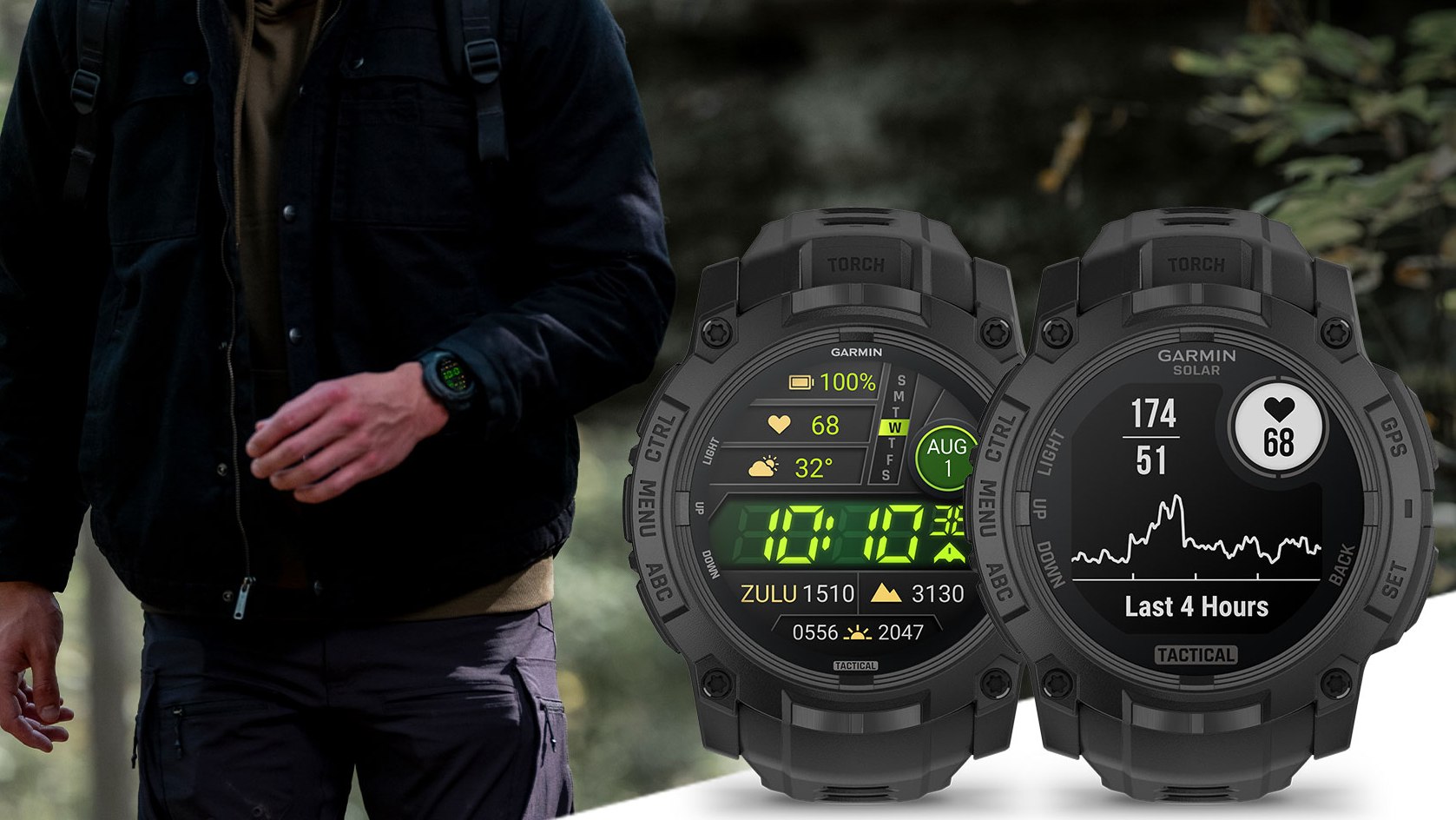
Rank 11273The Garmin Instinct 3 Tactical Edition has just landedIt starts at $499.99 / £429.99 / around AU$895It boasts a metal-reinforced bezel, ballistic solutions and the usual Tactical Edition features
Whether you’re in the military, you lead tough wilderness expeditions, or you just love tacti-cool gear with features named things like ‘Stealth Mode’, you’re in luck: Garmin has unveiled the Garmin Instinct 3 Tactical Edition.Arriving in two sizes and two screen options, the 45mm solar charging model with a low-power MIP display starts at $499.99 / £429.99 / around AU$895 (Australian pricing TBC). The 50mm model with a brighter AMOLED display costs $599.99 / £499.99 / around AU$1,040.Design-wise, it'll match the tactleneck beautifully (one for the Archer fans there) with a metal-reinforced bezel to add additional durability compared with the slender metal accents of the baseline Garmin Instinct 3. The watches come in a cool black colorway without the neon options of the standard watch, and they get the new rucking activity, although this is being added to Garmin’s latest crop of watches anyway via a software update.The other new features are very James Bond: Night Vision Goggle (NVG) mode dims the display to levels “functional to the primary user” but “nearly invisible” to others. For Yours Eyes Only, you might say. A Kill Switch allows the user to perform a factory reset on the watch quickly, wiping GPS and health data.An Applied Ballistics solver, which requires an additional fee to unlock, tells you elevation and wind information and how it might affect your gun and bullet profiles. A bit like one of the best golf watches, but for shooting instead of trying to chip your way out of a sandtrap.Otherwise, it’s got all the features of the original Garmin Instinct 3, such as heart rate monitoring, sophisticated GPS information, loads of unique workout profiles, an LED torch, basic directional software, TracBack to prevent users getting lost, and the Race Calendar feature to tailor training plans to your next endurance event.
Should you get the Tactical Edition?
The Garmin Instinct 3 Tactical Edition is, for the most part, aimed at people who can make use out of the extra features. Ballistics information might be useful for hunters, for example, while the Kill Switch is good for the very privacy-conscious or those in the military.However, the vast majority of people could save a little cash and get the standard Instinct 3 and get the same performance, especially now rucking has been added to more of the best Garmin watches.If you think you can get some use out of the Night Vision Goggle mode, terrific – but this is a specialty model for specialty users.
You might also like...
Garmin just accidentally leaked its next Forerunner, but it's not the one we were expectingI wish I was a better runner so I could use more of the features on my Garmin watchI've been an Apple Watch user for 10 years - here are 8 things Garmin still does better
-

Picture from techcrunch.com
Rank 11274 -
Picture from cdn.mos.cms.futurecdn.net
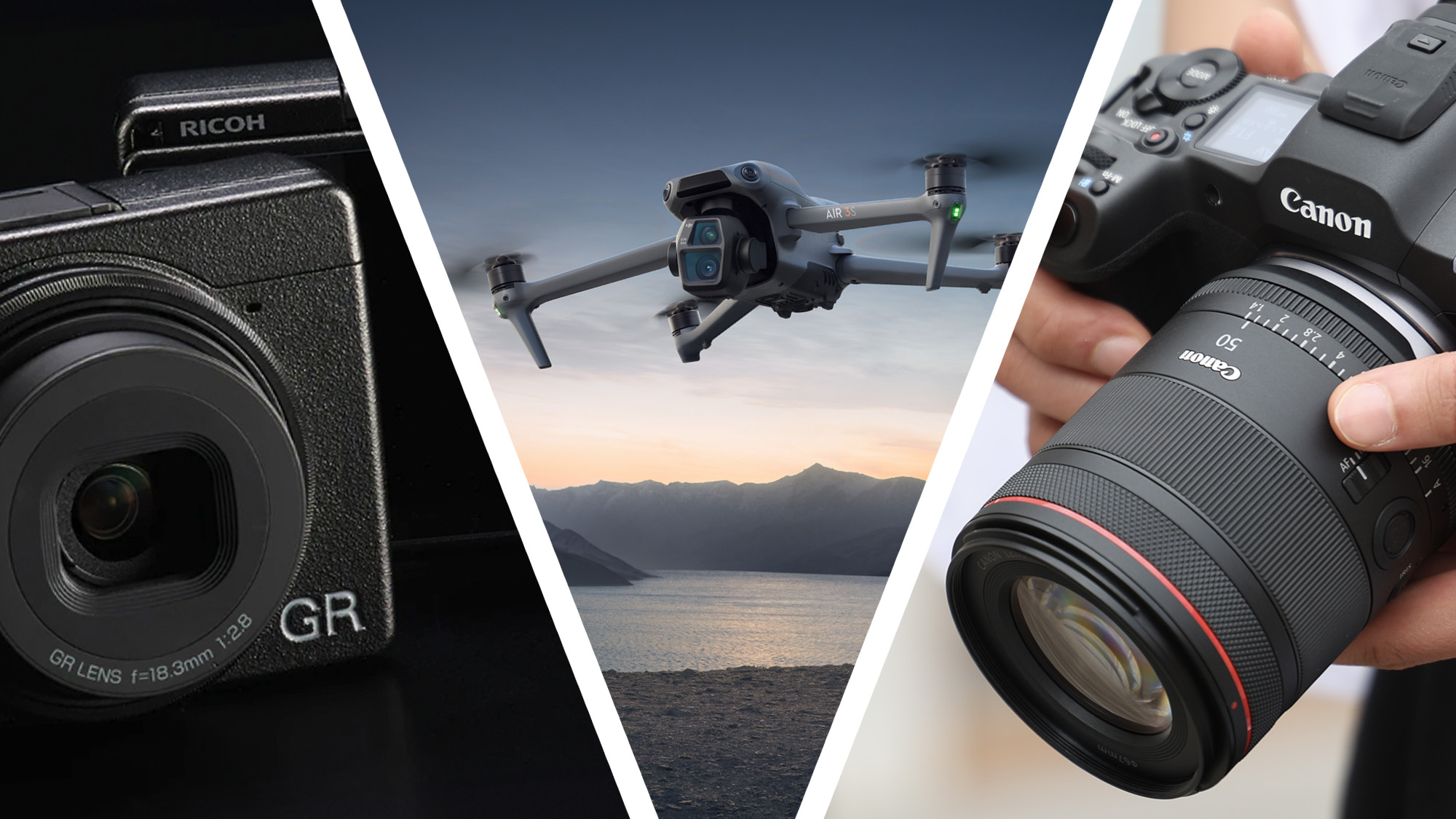
Rank 11275We've been reporting on camera rumors for many years and trust us, in 2025 there are few cameras that slip through without prominent leakers teasing little nuggets of info in the build up to a product launch. Come the official reveal, there's usually very little that we don't know already.That's not to say all rumors are accurate – many are to be taken with a pinch of salt; some are mere wishful thinking by fans, some are applied logic based purely on past events and existing products, while others turn out to be on the money. We've been in the camera rumors game long enough to spot the difference, and are often the first to share the latest news.This camera rumors round up collects the most credible rumors for the most exciting upcoming cameras from leading names in photography, and separates the likely from the outright fiction. Below you'll find the latest info about rumored cameras such as the DJI Mavic 4 Pro, Sony A7 V and Fujifilm X-Half, and we update this page regularly as more information is revealed, with links to the fuller stories. So if you're in the market for a new camera or simply curious about what's next to expect, keeping check in with this page.
DJI rumors for 2025
(Image credit: Future)
While a potential ban in the US still looms for DJI, the high-flying manufacturer apparently has no intention of dialling back its production schedule in 2025. In fact, rumors suggest DJI is accelerating its plans. January already brought the arrival of the DJI Flip while the DJI Osmo Mobile 7 launched a month later – and if information from industry insiders is accurate, we expect to meet more new DJI drones before the year is out, as well as action cameras and controllers.
DJI Mavic 4 Pro
DJI's rumored fourth generation flagship triple-camera consumer drone
According to leaks, the Mavic 4 Pro will have a bulbous triple-camera unit that's redeveloped from the Mavic 3 Pro's angular unit. (Image credit: Future)
Reliable sources indicate that the DJI Mavic 4 Pro could land in spring 2025. An FCC filing suggests that a new flagship folding drone is on the horizon, with leaked images suggesting it will sport a redesigned camera module.Its predecessor, the Mavic 3 Pro, won both best drone and best camera in the TechRadar Choice Awards 2023. With a triple camera setup that covers 24mm, 70mm and 166mm focal lengths, it’s an incredibly versatile drone that remains our favorite premium camera drone. We’d expect its successor to build on that platform in several key ways.Based on leaked images, the Mavic 4 Pro will feature a larger, more bulbous gimbal-mounted module. We’d expect that to translate into improved lenses and, therefore, better image quality for at least some of the cameras. It could also mean a wider range of motion, addressing complaints from Mavic 3 Pro owners about its gimbal limitations.
Regular DJI leaker @QuadroNews has suggested that the Mavic 4 Pro won’t benefit from the LiDAR feature found on the Air 3S, which improves collision avoidance in low light. However, we’d be cautious about making any firm conclusions: predictions at this stage are based on prototype imagery and might not reflect DJI’s plans for the production model.That said, we do expect the Mavic 4 Pro to be a hefty flyer. With an expanded camera module, we’d be surprised to see it come in any lighter than the Mavic 3 Pro, a C2 class drone which hits the scales at 958g. Rumors also suggest that it will carry a larger 6,645 mAh battery, compared to the Mavic 3 Pro’s 5000 mAh cell.When we will officially see the Mavic 4 Pro remains to be seen; early predictions suggested it could launch alongside the DJI Flip in January, but that date has long gone, as has a revised April 24 launch, which would have tallied with the Mavic 3 Pro's April 2023 launch. Watch this space.
DJI Osmo Action 6 & Osmo 360
Osmo Action 6 would take on GoPro and Insta360's flagship action camerasDJI's first-ever 360-degree action camera rumored for 2025
The Action 5 Pro only hit the shelves in September 2024, but a successor could already be en route. (Image credit: DJI)
Beyond flying machines, DJI has established its status among the best action cameras: the Osmo Action 5 Pro ranks highly as one of our top alternatives to the GoPro Hero 13 Black. The Action 5 Pro only hit shelves in September 2024, yet new FCC filings indicate that we could see its successor before too long.Spotted by @Quadro_News and Notebookcheck, regulatory papers refer to a “DJI Osmo Action 6”. Filings usually come shortly before a launch, which means we might see the next iteration of DJI’s action camera in the next few months.The documents don’t reveal too much about what to expect from the Osmo Action 6, although they do list two battery capacities: 1,770mAh and 1,950mAh. That suggests we could get both standard and Pro versions of the new camera.
In our in-depth review of the Osmo Action 5 Pro, we described it as “a seriously feature-packed action camera”. One of the very few limitations on its spec sheet was its 4K maximum resolution, which is bettered by the GoPro Hero 13 Black (5.3K) and the Insta360 Ace Pro 2 (8K). Whether this will be addressed for the Action 6, only time will tell.There might be another model joining the stable in 2025, too: while GoPro continues to delay the follow-up to its Max model, rumors suggest that DJI might be working on a 360-degree camera to rival Insta360 X5. Details are slim, but FCC filings suggest that DJI does have something in the works.Mock-ups based on leaked schematics indicate that the Osmo 360 will have a squarish body with a twin-lens design similar to the GoPro Max. We don’t know much beyond that, nor when it’s likely to arrive. But given DJI’s form when it comes to tackling new product categories, we’d expect a 360 camera from the company to be a real contender – especially if it arrives before the GoPro Max 2.
Canon rumors for 2025
Last year was a big one for Canon, with the launch of two of its most exciting models in a long time: the EOS R1 and EOS R5 Mark II. With the dust just about settled on those flagship cameras, attention turns to Canon’s next releases. We’ve already seen the new PowerShot V1 vlogging compact, even if that has done little to cool off rumors of a second generation of the PowerShot V10 or a Canon gimbal camera designed to rival the Osmo Pocket 3. Likewise, the new EOS R50V has only whet the appetite for a higher-end R-mount hybrid with a video-focused design. So what's next? We think the most realistic prediction for Canon over the rest of 2025 is the arrival of three new R series mirrorless cameras.
Canon EOS R6 Mark III
Canon's mid-range full-frame mirrorless camera offering that needs an upgrade to rival Nikon
The EOS R6 Mark II is one of our favorite full-frame mirrorless cameras, but its rumored successor should be better equipped to outdo the Nikon Z6 III. (Image credit: Future)
The Canon EOS R6 Mark II landed in November 2022 as a full-frame mirrorless camera with the specs of a proper hybrid workhorse. As capable and popular as it is, the launch of the Nikon Z6 III last year means an updated version of the EOS R6 is now due, to keep Canon in the running for the best mirrorless camera crown.Several well-known Canon leakers are confident that that’s exactly what the company is working on. The widely held consensus is that we’ll see the EOS R6 Mark III in the first quarter of 2025 – most likely to coincide with the CP+, taking place in Japan from February 27 to March 2.
Early information suggests that the EOS R6 Mark III will be a refinement rather than a reinvention of the Mark II. Rumored improvements include an upgraded EVF and an entirely new OLED touchscreen with dual-axis flip-out and rotate movements, similar to the one seen on the Sony A9 III. This should make for easier framing at low angles and when tripod-mounted.In terms of stills, we’d expect it to have relatively similar specs to the Mark II, including the same 24MP full-frame sensor and electronic burst speeds of up to 40fps. That said, we can also see a world where the EOS R6 Mark III gets a DIGIC Accelerator to boost continuous shooting performance, like the EOS R5 Mark II did.It could also borrow that same camera’s advanced subject detection autofocus system, as well as its in-camera neural network noise reduction and upscaling tools. Together with likely improvements to 6K video recording and potential support for Canon’s Cinema RAW Light codec, the R6 Mark III looks set to give the Nikon Z6 III a good run for its money.
Canon EOS R7 Mark II
Canon's successor to one of the best APS-C mirrorless cameras that could offer best-in-class performance
The EOS R7 remains one of the best crop sensor mirrorless cameras available, and it's rumored successor could offer best-in-class features for sports and wildlife photography. (Image credit: Future)
Another Canon EOS R series camera due for an upgrade in 2025 is the EOS R7. Launched alongside the EOS R10 in 2022, it was the first flagship APS-C camera for the R mount mirrorless line-up. All that really held it back was a lack of native lenses, an issue which has since been addressed: Canon finally opened its RF mount to Sigma and Tamron, while a quick look at our list of the best Canon RF lenses will show you how the that catalog has grown, especially for full-frame cameras.Read around online and you’ll find plenty of sources talking about Canon doing something significant with its APS-C cameras in 2025. That something could well arrive with the R7 Mark II: it’s rumored to be the first Canon APS-C camera to ship with a stacked sensor.
The first-gen R7 was already a rapid camera for sports and wildlife, with electronic burst speeds hitting 30fps. A stacked sensor would make things quicker still, potentially bringing the R7 Mark II up to the 40fps mark, to match the EOS R1. That sensor could also eradicate rolling shutter.Canonrumors has suggested that the EOS R7 Mark II will be an “upmarket” camera and the presence of a stacked sensor would certainly align with this. At present, stacked sensors are only found in Canon’s top-spec full-frame models: the EOS R1, the EOS R5 Mark II and the EOS R3, while the rival Fujifilm XH-2S is the only crop-sensor camera with one.Exactly what this sensor will look like isn’t clear. The EOS R7 has a 32.5MP CMOS sensor which can record uncrossed 4K/60p video. Some sources have mooted a potential increase in pixel count to equip the EOS R7 Mark II with 8K recording capabilities, but we think this might be overkill.Rumors also suggest that Canon could introduce two new pro-tier RF-S lenses to pair with the EOS R7 Mark II. What these might look like – and, indeed, when in 2025 we can expect to see these new releases – is also a matter of conjecture.
Canon EOS RC
Could Canon emulate Sony's success with a full-frame cine-focused mirrorless camera?
Sony has a cinema-focused 'FX' range of mirrorless cameras and Canon could be tempted to follow suit with an all-new affordable option. (Image credit: Future)
Alongside the global launch of the PowerShot V1 in March, Canon unveiled a video-focused iteration of the EOS R50, the crop-sensor EOS R50V, which presumably is the 'EOS RC' shared by Canonrumors.The EOS R50V is a well executed beginner-level vlogging-friendly camera that we are in the process of reviewing. That model, with its design that bridges the gap between between Canon’s EOS hybrids and its Cinema EOS cameras, has left a taste for what could also be en route; a higher-end alternative to truly rival cameras such as the Sony FX30 and FX3.
There’s every chance that Canon is working on a camera to compete with Sony’s FX series, but other sources have suggested that Canon might go a completely different way with a would-be EOS RC. Rumors of a retro-style Canon mirrorless camera have been circulating for years. Could 2025 be the year it happens? Several accomplished cameras have proven that the retro recipe works, including the Fujifilm X100VI, as well as two cameras from Canon’s arch rival: the Nikon Zf and Zfc.A couple of years ago, Canon conducted market research in Asia to find out which of its analog cameras customers would like to see made digital. So far, that hasn’t come to anything. Commenting on if and when we might actually see one would be a guess at best. But with the film revival very much in full swing, there’s almost certainly a market in 2025 for a Canon EOS R mirrorless camera with a vintage design.
Sony rumors for 2025
(Image credit: Sony)
Sony’s imaging division had a relatively quiet 2024, with only one major new camera release: the admittedly superb Sony A1 II. Aside from a handful of lens reveals, the stunning full-frame flagship was all we got last year, but 2025 is shaping up to be an altogether busier affair for the electronics giant – and, if industry chatter is to be believed, we can look forward at least one huge new camera body launch, plus one or two other significant additions to the line-up before the year is out. Still, so far we've seen some more excellent lenses such as the 50-150mm F2 GM and the 400-800mm F6.3-9, but no new cameras.
Sony A7 V
A successor to the popular but now dated Sony A7 IV would be one of 2025's biggest camera launches
The rumored Sony A7 V, which would succeed the A7 IV (above), could be one of 2025's standout cameras. (Image credit: Future)
Sony’s hugely popular and versatile A7 line of full-frame mirrorless bodies has had four iterations over the years, with the last being the A7 IV, announced way back in late 2021. It’s high time for an update then, and murmurings in the industry suggest that one could arrive within the first quarter of 2025; in fact, as Sony Addict reports, Sony has already registered a new camera body with authorities, which some believe to be the A7 V.
Of course, all this remains mere speculation until Sony holds an official launch, but a source told Sony Alpha Rumors that the Sony A7 V will feature a new 44MP full-frame sensor that supports 4K video capture at 120fps with no crop requirement; the same source said the A7 V would be priced at around €3000, which is similar to the A7 IV when it launched in 2021, but which is much cheaper now. Other chatter mentions a 20fps continuous shooting speed (a major upgrade on the A7 IV’s somewhat sluggish 10fps burst speed).And, with AI currently the major trend in consumer electronics – or at least in consumer electronics marketing – we’d be foolish to bet against rumors suggesting the Sony A7 V will be billed as an ‘AI camera’ and come bristling with AI-enhanced features and functions. Examples could be improved autofocus subject recognition, and the same automatic video framing as seen on the Sony ZV-E1.
Sony A7S IV or Sony FX3 II
What's next for Sony's full-frame mirrorless camera for filmmakers – an A7S IV or FX3 II?
Too many years have passed to believe that Sony is still invested in its video-focused A7S series of mirrorless cameras. A successor to the small but powerful FX3 is more likely. (Image credit: Sony)
If we’re talking about long-overdue updates to popular Sony camera lines, then the A7S series has got to be in the conversation. A variant of the A7 series with a lower-resolution sensor tailored towards sensitivity and therefore better low light and fast shutter speed work for video, the A7S’s last new iteration, the A7S III, launched way back in October 2020. It’s arguably high time for a new model, then – although some argue that Sony’s introduction of the video-first FX series has made the A7S series somewhat obsolete.
Like the A7S series, the Sony FX3 (introduced in 2021) has a low-resolution but highly sensitive 12MP full-frame image sensor (in fact, they share same sensor) that excels in challenging lighting conditions. Unlike the A7S III, the FX3 has a video-focused design which includes fan cooling, making it capable of recording long uninterrupted videos without risk of overheating. It lacks a viewfinder or mechanical shutter, however, which makes it less than ideal for stills photography.What we might see, then, is a new Sony camera with a high-speed sensor (perhaps the ground-breaking 24MP global shutter sensor seen in the A9 III). It could be a hybrid A7S IV, or it might be a more video-centric FX series model which would likely be called a Sony FX3 II – but getting both seems unlikely. We've written about the 5 upgrades we'd like to see in a potential FX3 II.
Sony RX1 II / RX1R III
2025 could be the best time for Sony to resurrect its full-frame RX1 series of premium compact cameras
If recent premium compact camera trends are anything to go by, there's plenty of reason for Sony to resurrect its RX1 series in 2025 – an RX1R III would rival the popular Leica Q3 and Fujifilm X100VI. (Image credit: Sony)
It’s getting on for a decade since Sony last introduced a new full-frame fixed-lens point-and-shoot camera (the outstanding RX1R II) and with Leica, Fujifilm and Ricoh all enjoying critical and commercial success with their own premium pocket cameras – the Q3, the X100VI and the GR III respectively – it’s not beyond the realms of possibility that we’ll see a true successor to the Sony RX1 this year.
By pairing a larger format sensor with a high-quality lens and putting it all in an ultra-compact body, Sony could compete with the aforementioned brands, especially Leica, while offering smartphone photographers (or anybody that doesn’t want to lug around larger bodies and hefty lenses) a clear performance upgrade.There’s little concrete evidence out there on this rumor beyond a general feeling that now would be a good time to offer an alternative to the likes of the Fujifilm X100VI or Leica Q3 43. We agree – but perhaps it’s just wishful thinking?
Fujifilm rumors for 2025
(Image credit: Fujifilm)
Talk of Fujifilm rumors for 2025 should start with what we’re not getting. If certain industry sources are correct, we won’t be seeing a follow-up to the X-T200 this year. Nor does it seem that a sequel to the X-Pro3 is on the horizon. Fujifilm has also quashed any suggestion that it might launch a film camera, at least in the short term. So what can we expect from Fujifilm in 2025?
Fujifilm X-E5
A tempting rangefinder-style X100VI alternative for 2025, with swappable lenses
The X-mount Fujifilm X-E4 became a popular alternative to the X100V when it was sold out in 2023 and 2024. Rumors suggest that an X-E5 could be en route, with much of the same tech as 2024's X100VI plus swappable lenses. (Image credit: Fujifilm)
An X-Pro4 might not be on the cards in 2025, but that doesn’t mean we won’t see a new rangefinder-style camera from Fujifilm. According to Fuji Rumors, a reliable source, the X-E series will be getting another instalment, in the form of the X-E5.Four years after the Fujifilm X-E4 hit shelves, its formula remains appealing. A compact model with a large APS-C sensor and retro styling, it was a tactile camera to shoot with and capable of impressive stills. When the X-E4 was discontinued, the X-T5 became the default alternative for photographers.
A rumored revival in 2025 carries a lot of promise. Assuming it picks up where the X-E4 left off, the X-E5 could become one of the most appealing Fujifilm cameras for beginners and enthusiasts who like to travel. We’d expect it to be positioned as a sibling to the X100VI, with the appealing looks of the X-T5 and the versatility of interchangeable lenses.Given that the X100VI has in-body image stabilization, the X-E5 is likely to have the same – addressing one of the few drawbacks of the X-E4. We think it will also use Fujifilm’s latest 40MP APS-C sensor. Whether it will benefit from other upgrades, including twin memory card slots, will come down to how the X-E5 is pitched: as an entry-level option, like the X-E4, or a more premium model.Either way, there’s a lot of excitement around the arrival of the X-E5, and for good reason. If and when it arrives, it won’t be the most powerful camera of the year. But it could quite well be one of the most appealing in terms of usability, performance and – depending on its price and availability – value.
Fujifilm X-Half
A playful digital take on the half-frame film format?
Fujifilm's teaser for what could be the X-Half showed us what looks like a digital display mimicking the film cannister window, much like in the X Pro 3, above. (Image credit: Future)
On April 22, an official teaser on Fujifilm’s YouTube channel gave us a glimpse of the retro camera specialist's next camera, with the tagline "Half the size, twice the story", saying that it's coming soon.The teaser appears to confirm the existence of what Fuji Rumors is touting as the Fujifilm X-Half; a playful digital take on the half-frame film format. We have few leaked specs to go off, but some suggest the camera will feature a vertical rear screen in addition to what looks like a small digital display that mimicks the film cannister window of an analog camera, much like what was in the X Pro 3.We've unpacked the teaser, suggesting the compact camera with 1-inch sensor could combine half-frame shots with a retro design, and that it could be a decent alternative to the the analog Pentax 17 even if we expect Fujifilm's digital reimagining to cost more.
Not sure what half-frame is? It comes from analog photography and refers to a camera that captures two vertical exposures on a single frame of 35mm film, allowing you to get twice the number of stills from a roll.Half frame is a natural fit for today’s content creators, producing portrait images that are easily shared on social media. We're not sure how far Fujifilm will go in bringing this format to a digital camera; it could be a vertical display, a vertical sensor, or a regular sensor that demands users work in diptychs in true half-frame analog fashion.Whatever materializes, the 'X-Half' looks set to be one of 2025's quirkiest and funnest cameras.
Nikon rumors for 2025
(Image credit: Nikon)
Following a string of releases, Nikon’s mirrorless line-up looks strong going into 2025. From the retro Zf to the flagship Z9, there’s a Z series option for everyone. With such a healthy range, there aren’t too many models in need of an upgrade. The Z6 III landed last year and took the top spot as our best mirrorless camera. We wouldn’t expect to see a successor to the excellent Z8 any time soon, either, while many believe that the Z8 has eliminated the need for a Z7 III. So what does that leave for Nikon fans to look forward to?Well, Nikon has already taken action already updated its Z5 with the Z5 II that raises the bar for entry-level cameras and resurrected its dying bridge camera lineup with the refreshed Coolpix P1100. So what's left? There's a couple of possibilities...
Nikon Z9 II / Z9H
Nikon's flagship mirrorless camera for sports and wildlife could get a powerful upgrade
The Nikon Z9 won TechRadar's Camera of the year 2022 award. Will a faster upgrade appear in 2025? (Image credit: Future)
Talk of a successor to the flagship Z9 has been circulating for several years. It launched late in 2021 as a mirrorless powerhouse for professionals, with a cutting-edge stacked 45.7MP sensor and bulky DSLR styling. Since then, Nikon has repackaged its guts in the more convenient body of the Z8, before Canon upped the ante again with the barnstorming EOS R1 last year.The question now is whether Nikon will return fire. The evidence is presently pretty slim. Read discussions online and you’ll find that speculation broadly divides into two camps. The first says that Nikon is working on a global shutter specifically for high-speed sports and wildlife photography, and it will arrive with a model called the Z9H.The second backs a Nikon Z9 II with an electronic-only shutter driven by a new Expeed 8 processor, for superlative burst speeds, video frame rates and subject tracking autofocus. In essence, everything the Z9 was capable of, but dialled up higher to rival the EOS R1.
We think the latter is the more likely of the two: the EOS R1 doesn’t have a global shutter – although the faster and physically smaller Sony A9 III does – so there’s little reason to think that Nikon would pour money into making one, at least for now. So we think a Z9 II with general upgrades is more likely, although it would still take a bold person to bet on either camera arriving for certain in 2025.The Nikon Z9 already delivers shooting performance that’s sufficient for most professionals. Room for improvement is probably limited to burst shooting: at 20fps, the Z9’s maximum continuous rate for RAW stills is comfortably beaten by the EOS R1’s 40fps.The question is whether that spec justifies Nikon developing a follow-up model, especially such a specialized one sitting at the top end of its range.
Nikon cinema camera
2025 could deliver the fruit of Nikon's RED Digital Cameras takeover – a new cine-focused camera
The Nikon Z50 II supports RED Luts color profiles. Could we see more fruit from Nikon's 2024 acquisition of cinema brand RED Digital Cameras in 2025? (Image credit: Nikon)
Nikon surprised the videography world last year by acquiring RED Digital Camera outright. Known for making some of the filmmaking industry’s favorite professional cameras, RED is also behind some legendary video codecs – which now belong to Nikon.What this means for Nikon cameras isn’t immediately clear. Nikon already makes some stellar hybrids, and we rate the Nikon Z9 as our favorite 8K option among the best video cameras. But it’s fair to say that Nikon isn’t seen as a natural choice by many video professionals.That could soon change. With RED now under the Nikon umbrella, the possibilities are broad. We’ve already seen support for RED LUTs arrive on Nikon cameras, including the Nikon Z50 II, but we’d expect the integration to go further. That could well mean support for RED’s R3D codec on future Nikon hybrids.
We’d expect to see a hardware crossover, too. Given the change in ownership, it’s pretty much certain that any future RED cameras will shift from using Canon’s RF mount to Nikon’s Z mount. But we could also see Nikon borrowing from RED’s component box: the global shutter in the Komodo 6K would certainly give Nikon a leg up in the race for performance supremacy.We don’t know when we’ll see the first fruits of Nikon’s Hollywood acquisition, but we imagine they’ll make waves when they do arrive. You can bet that Nikon will be gunning for the cameras in Sony’s FX line, Canon’s Cinema EOS range and Panasonic’s top-tier Lumix video kit.
GoPro rumors for 2025
(Image credit: GoPro)
Despite the launch of two new cameras (the flagship GoPro Hero 13 Black and the ultra-compact GoPro Hero), 2024 proved to be a tough year for GoPro. Once the undisputed ruler of the action camera market, the American company has faced increasing competition from a slew of Chinese upstarts such as DJI and Insta360 – almost to the point where its future itself is under threat.In order to save costs, it cut over a quarter of its workforce last year – and according to CEO Nicholas Woodman this restructuring, combined with growth in subscription income and subscriber numbers, has kept the company ‘sustainable and secure’. Woodman also suggested that future camera releases are on the way – and we have some thoughts on what they might be (besides February's refreshed and now cheaper GoPro Max).
GoPro Max 2
GoPro's much delayed Max 2 360-degree camera could finally be unveiled years after its announcement
Is the GoPro Max 2 the most rumored camera in recent memory? Supposedly updating the Max (above), the future 360-degree camera's launch has been delayed time and again. (Image credit: TechRadar)
*update – GoPro relaunched the original Max on Feb 18, with a couple of hardware improvements; updated mounting and new Enduro battery, and a signficant price drop of around a third. The action camera giant also intrdocued a host of new 360-degree based edits in the GoPro Quik app.
We know that a GoPro Max 2 is coming soon, because the company’s CEO Nicholas Woodman revealed as much in an earnings call last year. Woodman informed investors that a new edition of the 360-degree action camera would be arriving in 2025. This is later than originally planned, it seems, because GoPro had previously estimated a Q4 2024 launch.The original GoPro Max impressed us when it was introduced back in October 2019, offering 5.6K 360-degree videos with in-camera stitching, reframing and digital stabilization in a fairly compact camera compatible with existing GoPro mounts. In the five-plus years since, Chinese company Insta360 has seized the 360-degree action camera market with a series of excellent models including our current overall favorite, the Insta360 X4.
In order to compete with Insta360, GoPro will have to greatly improve the Max 2’s performance over that of its predecessor; it’s been half a decade, after all. And if rumors are correct and the Max 2 will cost $599 on launch, it’ll need to justify its price tag.We’d expect a resolution bump for 360-degree video, probably to match the 8K offered by the X5; 360 Rumors posits that it could even be as high as 9.3K, if it were to make use of the same sensors used by the GoPro Hero Black 12 and 13. A purported leaked photo of the Max 2 showed prominent cooling fans, which suggests it’ll be processing a lot and creating a lot of heat – which you’d expect if it’s wrangling this many pixels. The Max 2’s supported framerates on offer may also be higher than the X4’s too, in order to differentiate it from its nearest rival.The original Max already had impressive electronic image stabilization, but this could be improved also, and we may see automatic in-camera reframing – just the sort of time-saving feature that could set the Max 2 apart from competitors.
GoPro Hero 14 Black
Strap in for the latest flagship GoPro action camera instalment, coming to you almost always in September
GoPro made waves with the Hero 13 Black's new lens mount that hosts auto-detected Lens Mods, such as the new anamorphic lens (above). Might we see more Lens Mods in 2025 to further expand what's possible with GoPro's flagship action cams? (Image credit: Future | Tim Coleman)
It’s only been a matter of months since the unveiling of the GoPro Hero 13 Black, so we’re not expecting a successor to emerge any time soon. If it does launch in late 2025, this new edition of GoPro’s flagship action camera will likely continue in the same vein as its predecessors – by making small, iterative improvements rather than revolutionary overhauls.
With the Hero 13 Black still relatively new, the rumor mill is deathly quiet on Hero 14 Black speculation. Our own prediction would be use of the same new (and likely powerful) processor we’ll see in the GoPro Max 2, boosting the maximum resolution to 8K from the 13 Black’s 5.3K and enabling more image quality-related features. It could also get a new, physically larger sensor to improve dynamic range and low light capabilities.Another area for GoPro to explore and what could make its action camera stand out from rivals is additional auto-detected Lens Mods to the anamorphic, macro and ultra wide options currently available – we think this feature is now what truly sets the lineup on an exciting trajectory. What's most probable is a future Hero 14 Black's launch date – GoPro has unveiled the latest version of its Hero Black flagship action camera every year in September.
GoPro Helmet
GoPro action cameras built into motorcycle helmets? That's a logical step
GoPro acquired the Australian smart helmet maker Forcite Helmets in early 2024, suggesting plans to move into the market for camera-equipped, tech-enabled motorcycle helmets.Of course, there’s nothing to stop motorcyclists from attaching a GoPro camera to their helmets right now, but we suspect an actual integrated GoPro Helmet (or whatever it ends up being called) will feature a suite of additional tech like navigation, communications and safety alerts. A well-researched report at RideApart builds a strong case that GoPro and Forcite’s first smart helmet will arrive as early as 2025.
Insta360 / Leica / Panasonic / Pentax / Ricoh / OM System rumors for 2025
The Panasonic Lumix S1H during our in-depth review. (Image credit: TechRadar)
Leading camera brands don't have it entirely their own way – in 2025 there are compelling alternatives making superb mirrorless cameras, action cameras, compact cameras and more.We've put the most exciting Insta360, Leica, Panasonic, OM System, Ricoh & Pentax rumors together in this section.
Leica M with an EVF
A digital Leica camera with an EVF and Leica's M-mount
A potential Leica M camera with EVF could be a lot like the Leica Q3 (above), but with interchangeable lens mount. (Image credit: Future)
Here's a rumor with much to chew over: Leica is supposedly working on a completely new M-series camera that swap out the optical rangefinder experience that the series is famed for, in favor of an electronic viewfinder (EVF). Such a move would mark the single biggest design overhaul that Leica's M-series has ever seen.Leica's analog and digital M-series cameras utilize an optical rangefinder to compose and manually focus shots. You'll need plenty of practice to master the technique, guided by a split-image to nail sharp focus on your subject. It's slow and inconvenient when compared to today's leading autofocus systems, but Leica's M-series rangefinders pack plenty of soul that you simply can't find elsewhere (besides the Pixii rangefinder).If the post by Leica Rumors is accurate, then the new model will trade soul for practical convenience – an EVF can give exposure preview and the supremely helpful 'focus peaking' manual focus assist tool.Rumors suggest this is not a next-gen Leica M12, but a potentially one-off model, that to me sounds to me a lot like a Leica Q3 premium compact (see above), but with interchangeable lens mount. I can get behind this idea, especially as it could make for Leica's smallest and cheapest M-series camera yet. But equally, if you're going down the EVF route, what will Leica offer that you can't find in cheaper alternatives like the Nikon Zf? One thing's for sure, a Leica M-series camera with EVF will polarize Leica fans.
Ricoh GR IV
Seasoned photographers await an upgraded GR III premium compact camera that slips into the pocket
The Ricoh GR IIIx during our in-depth review is a superb if flawed everyday camera. (Image credit: Future)
We expected the Ricoh GR IV to be in our hands last year, but sadly any rumors turned out to be false. What materialized instead was a niche version of the current GR III / GR IIIx models – the GR III HDF / GR IIIx HDF – identical in every way except it swapped out the original's built-in ND filter for a highlight diffusion filter. However, further rumors insist that a fourth-gen model will land in 2025, and this model will have plenty of photography enthusiasts excited.
The Ricoh GR series is a long time favorite with seasoned photographers wanting an every day camera – the latest models boast stand-out image quality thanks to a large APS-C sensor and sharp fixed lens, all packed into a truly pocketable compact body. The GR IIIx is one of our favorite premium compact cameras, persuading this writer to splash out on it instead of the latest iPhone. However, for all it desirable attributes, the GR III series is far from perfect and can be easily improved – we've written about the five upgrades we'd like to see in the GR IV, including a built-in flash and better autofocus.We're a little cautious about GR IV rumors – there are still very few specs to go off, which means it could be some way off yet, if it is indeed en route at all. We're hoping a GR IV materializes and that it proves to be a proper upgrade, rather than a refined model of the five-year-old GR III. Compact cameras are increasingly popular once more, and the Ricoh GR III / GR IIIx is one of the few high-quality options remaining in the sub $1,000 / £1,000 price mark, so we really hope that a properly improved GR IV is just around the corner. It could tempt a few away from the like of the Fujifilm X100VI.
A new Pentax SLR film camera
2024 delivered a new Pentax half-frame compact film camera. 2025 might bring the next in the series, an SLR
2024's Pentax 17 was the first camera launched as part of the Pentax Film Project, and there are supposedly more cameras to come. (Image credit: Future | Tim Coleman)
Pentax delivered its first camera for the Pentax Film Project in 2024, the simply named Pentax 17. We weren't overly enamored at first, but the surprisingly easy-to-use half-frame film camera eventually won us over and proved to be one of the year's highlights. Naturally then, we're keen to see what might come next in the series. According to Pentax, the next film camera we can expect will be a proper SLR.
Pentax's Film Project was announced in 2022, and the first camera came two years later. It would be a major surprise if Pentax's new SLR film camera is delivered in 2025, although, of course, we hope to be proven wrong.In the project's early days, Pentax Product Planner Takeo Suzuki said, "First, we'll develop a compact film camera. Then, while reviewing a range of technologies, we'll move on to develop a high-end compact model, an SLR model, and finally (and hopefully), a fully mechanical SLR camera".That affordable compact film camera with a solid warranty was indeed the new Pentax 17. What will come next we don't know. but the fully mechanical SLR could be very exciting for serious photographers.However, a more recent development was a blow to analog fans – Pentax itself has hit pause on the project the assess its viability going forward. The probability that another Pentax film camera seeing the light of day is questionable.
New releases for 2025
Many cameras in this rumors round up materialize for real. Below is a list of previously featured products that have since been officially announced in 2025, together with links to our coverage, in chronological order.
Insta360 X5 – the best 360 degree camera money can buy, Apr 22Polaroid Flip – neat instant camera with retro design cues, Apr 15Nikon Z5 II – a powerful, entry-level full-frame camera, Apr 2Canon EOS R50V – video-focused R-mount model with crop sensor, Mar 26Fujifilm GFX100RF – 102MP medium-format premium compact, Mar 20OM System OM-3 – delightful retro MFT model with computational smarts, Feb 27Sigma BF – a boldly minimalist premium full-frame camera, Feb 25Panasonic Lumix S1R II – flagship hybrid full-frame camera, Feb 25Canon PowerShot V1 – compact vlogging camera, Feb 20DJI Osmo Mobile 7 – gimbal for smartphones, Feb 18Nikon Coolpix P1100 – a refreshed bridge camera with 125x zoom, Feb 6OM System OM-3 – retro mirrorless camera with plenty of power under the hood and modern smarts, Feb 5Fujifilm Instax Wide Evo – premium instant camera, Jan 21
-

Picture from cdn.mos.cms.futurecdn.net
Rank 11276Apple will reportedly step up RAM from 8GB to 12GB for the iPhone 17 lineupIt was previously reported that only the Pro and Pro Max would get the upgradeMore RAM would level the competition with the likes of Samsung and Google
Just as Apple likes to upgrade its homegrown chipsets each year for the iPhone, it’s also been steadily increasing the RAM. And judging by a new report, it seems that the Cupertino-based tech giant will continue on that path, and arguably copy what Samsung and Google’s already been offering.According to Ming-Chi Kuo, the iPhone 17 series will kick computing power into higher gear thanks to 12GB of RAM. That would be a solid increase over the 8GB of RAM found in the iPhone 16, 16 Plus, 16 Pro, and 16 Pro Max.Why the increase? Well, it’s likely not only to keep up with whatever changes lie ahead with iOS 19 – that upgrade is expected to be unveiled in a few weeks at WWDC 2025 – but also to power the on-device aspects of Apple Intelligence.
That’s not an easy feat, and with the AI-infused Siri still on the horizon with a launch at some point in the coming year, the iPhone will likely need a larger amount of RAM to deal with running AI models directly on the device. Apple Intelligence currently processes some on the device – be it an iPhone, iPad, or Mac – as well as securely sending it off into the Private Cloud Compute method.Beyond the AI implications and the need for more RAM, this should give even more support to future A-series chips that Apple is developing. And it should make future iPhones run with even more speed and fluidity.
(Image credit: Future / Lance Ulanoff)
This change in the amount of RAM also represents Apple playing catch-up with the likes of Samsung and Google. The Galaxy S25, S25 Plus, and S25 Ultra all feature 12GB of RAM standard and are already capable of more advanced artificial intelligence features. The standard Google Pixel 9 comes with 12GB of RAM out of the box, while the Pixel 9 Pro and Pixel 9 Pro XL feature 16GB of RAM.Ming-Chi Kuo’s report details that of the expected iPhone 17 models, the Pro, Pro Max, and the ultra-thin Air will all feature 12GB of RAM now. Previously, reports stated that only the Pro Max – likely the most powerful of the bunch – would get the upgrade. The report also mentions that the hope is to give the entry-level iPhone 17 12GB of RAM as well, but supply shortages are a concern.Regardless, it’s clear that Apple is taking notice of the competition from companies like Samsung and Google, and is likely factoring this into its roadmap of Apple Intelligence features. As the list of features, both those already released and future ones, continues to grow, the iPhone needs to be able to support all of them.Further, considering Apple’s focus on privacy throughout its device and feature set, the goal will likely be to do a lot on the device, so an investment in more RAM makes a lot of sense.And even if you don’t use AI features on the iPhone, it’ll likely be good news if you opt for the latest model.
You might also like
I pitted Galaxy AI’s photo editing tool against Apple Intelligence’s Clean Up, and let’s just say the results aren’t even closeApple has a plan for improving Apple Intelligence, but it needs your help – and your dataThese could be the specs of the iPhone 17 – including the new iPhone 17 Air model
-
Picture from o.aolcdn.com
Rank 11277Google is offering free repairs and (in some countries) payments to remedy Pixel 7a battery issues. 9to5Google spotted a Google support page detailing an extended repair program in 40 countries. If your Pixel 7a is visibly swelling or its battery drains faster than usual, you may get a battery replacement on the house.
The company says it's "determined that certain Pixel 7a phones may experience unexpected battery swelling." Telltale signs include the phone appearing thicker than usual, a bulging back cover, visible gaps or openings along its edges or faster-than-expected battery drain.
Google faced complaints on social media about the Pixel 7a issue before taking action. For example, in December, u/Eszence08 posted in the Pixel subreddit that, after failing to get help from Google support about the battery swelling issue, they only got a solution from the company after posting about it on Reddit. Their conclusion: "Make a post; Google is more helpful on Reddit than their chat support."
Even if your device exhibits one or more symptoms, it still needs to pass a check before moving forward. You can start by visiting Google's eligibility page, which will walk you through the steps to determine eligibility for your specific device. After that, a repairperson will inspect it before proceeding.
That last step is necessary because unrelated damages, including liquid damage, exposure to sharp objects or excessive force, will void the repair. (Most of those precautions sound like "we need to make sure you didn't pry your phone open to get a free battery.") In addition, out-of-warranty damage like display or cover glass cracks will incur a repair cost, for which Google will provide an estimate before starting.
When we get to the country-by-country breakdown, things get more complicated. You have two options in the US and India: Mail your device to Google or take it to an authorized walk-in repair center. In-person repairs are also available in Canada, the UK, Germany, Japan and Singapore. (Those countries don't offer mail-in fixes.)
The program also extends to those who bought their device in Australia, Malaysia, Taiwan, Switzerland and EEA countries. If your country isn't listed, you get nothing.
However, for countries without a mail-in option (all but the US and India), Google offers alternate "appeasement options," i.e., payouts or store credit. If your Pixel 7a is out of warranty, you can claim $200 converted to your local currency or $300 (also converted locally) in a Google discount code toward purchasing another Pixel phone on the Google Store. If it's still under warranty, you can get a healthier $456 payment converted to your local currency.
If you think your Pixel 7a is eligible, you can head to Google's support page to get started.This article originally appeared on Engadget at https://www.engadget.com/mobile/smartphones/google-launches-a-battery-replacement-program-for-swollen-pixel-7a-handsets-162204629.html?src=rss
-
Picture from ichef.bbci.co.uk
Rank 11278 -

Picture from ichef.bbci.co.uk
Rank 11279 -

Picture from cdn.mos.cms.futurecdn.net
Rank 11280The Samsung Galaxy Z Flip 7 is – along with the Samsung Galaxy Z Fold 7 – likely to be Samsung’s next major smartphone, and it’s the handset lots of foldable fans have been waiting for.With talk of bigger screens, a better hinge, and a powerful new chipset, the Galaxy Z Flip 7 could be well worth the wait, but will we have to wait much longer for it to arrive?Well, there isn’t yet a confirmed announcement date for the phone, but there are some leaks. and rumors. So, between those and past form, we can predict when the Samsung Galaxy Z Flip 7 might be announced, when pre-orders might open, and when it might ship.
Samsung Galaxy Z Flip 7 announcement date predictions
The Samsung Galaxy Z Flip 6 (Image credit: Philip Berne / Future)
Our best guess for the Samsung Galaxy Z Flip 7 announcement month is July, since both the Samsung Galaxy Z Flip 6 and the Galaxy Z Flip 5 were announced in July of their respective release years.Samsung hasn’t been consistent about when in July, though, with the Z Flip 6 landing on July 10, and the Z Flip 5 landing on July 26.However, according to South Korean site The JoongAng, Samsung will unveil this year’s model in early July at an event in New York. They don’t get more specific than that, but at a minimum, that would probably mean we’d see it in the first half of the month, and likely earlier than the July 10 date of the current model.Indeed, Samsung has gradually shifted the announcement dates of its Z Flip phones to earlier in the year, so an earlier date than the Galaxy Z Flip 6 would make sense.However, the company won’t announce the phone on a weekend, which counts out July 5 and 6, and with July 4 being Independence Day in the US, that seems unlikely, too. So, that leaves July 1, 2, or 3, or July 7, 8, or 9 as possibilities.But Samsung usually announces new Z Flip models on a Wednesday, which of those days leaves just July 2 or July 9 as possibilities, so one of those two dates would be our best guess.Of course, that assumes the early July claim above is accurate, but at the very least, we’d expect to see the Samsung Galaxy Z Flip 7 sometime in or around July, especially since multiple sources have said it will enter mass production in May, which would likely work for a launch around then.
Samsung Galaxy Z Flip 7 pre-order date predictions
The Samsung Galaxy Z Flip 6 (Image credit: Philip Berne / Future)
Samsung opened pre-orders for the Galaxy Z Flip 6 the same day as the phone was announced, and indeed that’s what the company tends to do with its handsets, with the Samsung Galaxy S25 being another recent example of this.So, while there aren’t any leaks about the Samsung Galaxy Z Flip 7’s pre-order date yet, we’re fairly confident that you’ll be able to pre-order it on whatever day it’s announced. Which, as noted above, will probably be sometime in the first nine days of July, with July 2 or 9 being our best guess.
Samsung Galaxy Z Flip 7 shipping date predictions
The Samsung Galaxy Z Flip 6 (Image credit: Philip Berne / Future)
The Samsung Galaxy Z Flip 6 shipped exactly two weeks after it was announced, while in the case of the Galaxy Z Flip 5, there was a 16-day gap, and with the Z Flip 4, the wait was 15 days. In all these cases, it was roughly two weeks, so we’d expect to see that pattern repeated again this year.In which case, based on our best guesses for the Samsung Galaxy Z Flip 7’s announcement date, the phone could ship either sometime around July 16 or July 23.
What about the Samsung Galaxy Z Flip 7 FE?
The Samsung Galaxy Z Flip 6 (Image credit: Future / Axel Metz)
As well as the standard Samsung Galaxy Z Flip 7, we might see a cheaper Samsung Galaxy Z Flip 7 FE this year, but notably, this would be the first Z Flip FE model, so we don’t have any history to help us predict when it might release.There are some leaks, though, with the report from The JoongAng linked above claiming that the FE will probably be unveiled alongside the standard Z Flip 7. They add, however, that there’s a chance it won’t be released until later in the year – perhaps like the Samsung Galaxy S25 Edge, which Samsung teased at the launch of the S25 series, but is yet to start selling at the time of writing.Indeed, another leak suggests the Samsung Galaxy Z Flip 7 FE won’t be available until the fourth quarter of the year, meaning October, November, or December. So, there could still be a long wait for that particular model.
You might also like
Samsung Galaxy Z Flip 7 colors: every rumored and predicted shadeBest Samsung phones: top Galaxy handsets rankedBest foldable phones: the top folding smartphones right now
-

Picture from ichef.bbci.co.uk
Rank 11281 -

Picture from cdn.mos.cms.futurecdn.net
Rank 11282New Mandiant research claims cybercriminals are increasingly financially motivatedThe Finance industry is the top target for hackersThese hackers are using exploits and stolen credentials to gain access
New research from Mandiant has claimed financially motivated actors are the new norm, with over half (55%) of threat groups active in 2024 looking to extort or steal money from their victims, a steady increase from previous years.Unsurprisingly, ransomware related incidents represented 21% of all intrusions in 2024, and made up almost two thirds of incidents involving monetization techniques. This comes alongside data theft, cryptocurrency theft, email compromises, and the North Korean fake job campaign - all aimed at getting money from victims.Exploits were once again the most popular initial infection vector at 33%, followed by stolen credentials (16%), phishing (14%), web compromises (9%), and prior compromises (8%). This isn’t the first research to suggest that phishing attacks and stolen credentials surged in 2024, outlining the tactic’s popularity.
Get Keeper Personal for just $1.67/month, Keeper Family for just $3.54/month, and Keeper Business for just $7/month. Keeper generates and stores strong passwords so you never have to remember them again. Don’t let one weak password leave you exposed.Preferred partner (What does this mean?)View Deal
Finance at risk
Finance was the most commonly targeted industry, with just over 17% of attacks hitting the sector. Close behind are business and professional services (11%), as well as critical industries like high tech (10%), Governments (10%), and Healthcare (9%).The fact that so many industries are targeted so widely, illustrates that no one is safe from state-sponsored attacks, whether these are financially or politically motivated.“Financially motivated attacks are still the leading category,” explains Stuart McKenzie, Managing Director Mandiant Consulting EMEA.“While ransomware, data theft and multifaceted extortion are and will continue to be significant global cybercrime concerns, we are also tracking the rise in the adoption of infostealer malware and the developing exploitation of Web3 technologies, including cryptocurrencies.”“The increasing sophistication and automation offered by artificial intelligence are further exacerbating these threats by enabling more targeted, evasive, and widespread attacks. Organisations need to proactively gather insights to stay ahead of these trends and implement processes and tools to continuously collect and analyse threat intelligence from diverse sources.”
You might also like
Take a look at our picks for the best antivirus tools aroundCheck out our picks for best malware removal toolsRansomware cost US victims $16.6 billion in 2024, FBI warns
-

Picture from cdn.mos.cms.futurecdn.net
Rank 11283Situations where Netflix removes movies and shows are inevitable, however when it comes to the titles leaving Netflix in May 2025, this one hurts quite a bit.Not only is Netflix removing a tonne of movies immediately on May 1 giving you little time to make the most of them, but it means that some of the best Netflix movies, including one of my all-time favorites Whiplash (2014) will disappear. This also includes one of the best rom-coms Notting Hill (1999), but thankfully this has found a new residence as one of the new Max movies coming in May 2025.Sometimes Netflix can be good as gold when it comes to removing titles we wouldn't mind to see the back-end of, but what possessed one of the best streaming services to remove the popular titles below is still a mystery to me. We shall if Netflix can make up for these choices next month.
Everything leaving Netflix in May 2025
Leaving on May 1About Time (movie)Annie (movie)Apollo 13 (movie)Blade Runner: The Final Cut (movie)Dallas Buyers Club (movie)Definitely, Maybe (movie)Erin Brockovich (movie)Europa Report (movie)The Flintstones (movie)Friday (movie)The Frozen Ground (movie)Fury (movie)King Kong (movie)Maid in Manhattan (movie)Next Friday (movie)Notting Hill (movie)Out of Africa (movie)Pompeii (movie)Public Enemies (movie)Queen & Slim (movie)Schindler's List (movie)Spider-Man (movie)Spider-Man 2 (movie)Spider-Man 3 (movie)Spider-Man: Across the Spider-Verse (movie)This Is 40 (movie)Tyler Perry's I Can Do Bad All by Myself (movie)Waterworld (movie)Wedding Crashers (movie)The Whale (movie)Whiplash (movie)The Wiz (movie)You, Me and Dupree (movie)Leaving on May 4Insidious: The Red Door (movie)Leaving on May 5The Peanut Butter Falcon (movie)Leaving on May 9The Lost City (movie)Resident Evil: Death Island (movie)Leaving on May 10Rambo (movie)Rambo: Last Blood (movie)Leaving on May 15The Clovehitch Killer (movie)Crossroads (movie)Madam Secretary seasons 1-6 (TV show)Leaving on May 16The Sum of All Fears (movie)Tully (movie)Leaving on May 19A Simple Favor (movie)Leaving on May 28Burnt (movie)Leaving on May 29The Silencing (movie)
You might also like
Black Mirror season 7 is a bigger hit than Ransom Canyon on Netflix – here are 3 similar series with over 90% on Rotten Tomatoes'It's like returning to the scene of a crime': Wednesday season 2 release schedule confirmed in creepy first trailer for the goth-comedy Netflix showI’m obsessed with action stunts since hearing how Gareth Evans crafted them for his new Netflix movie Havoc
-

Picture from ichef.bbci.co.uk
Rank 11284 -

Picture from ichef.bbci.co.uk
Rank 11285 -

Picture from techcrunch.com
Rank 11286 -
Picture from o.aolcdn.com
Rank 11287Bowers & Wilkins is back with another pair of high-end wireless headphones. The Px7 S3 looks like an improvement over the previous release in every major way. The company’s calling it the "most advanced wireless headphone" it has ever made.
To that end, this model features re-engineered drive units, dedicated headphones amplifiers and "greatly-upgraded" active noise cancellation technology. Bowers & Wilkins says that every aspect of these headphones have been redesigned, except for the cone. The new drive units should improve resolution and dynamics, all while delivering lower distortion. These units are powered by discrete headphones amplifiers, a first for the company’s over-ear headphone line.
The Px7 S3 integrates with both the aptX TM Adaptive 24/96 wireless platform and Qualcomm’s aptX Lossless technology. This optimizes sound quality for high-resolution streaming services like Tidal. Overall, the headphones offer 24-bit/96kHz high-resolution audio.
These cans feature eight microphones located around the periphery of each ear cup. They work together to deliver enhanced ANC and help eliminate unwanted noise while making phone calls. The company boasts that the battery life maxes out at around 30 hours per charge, but we’ll have to see how that works out in real life.
Bowers & Wilkins
The physical design has received an overhaul. The company promises a slimmer profile and an improved fit, thanks to memory foam ear cups. The included carry case is also more compact.
Bowers & Wilkins has redesigned its Music app to accompany this release. The app allows for instantaneous access to platforms like Tidal, but also includes a five-band EQ with preset memory. For the app-averse, there are physical controls on each ear cup. The company says that spatial audio is coming to this device, but not until later this year.
The Px7 S3 headphones will be available in three colors, including black, blue and white. Now onto the bad news. Bowers & Wilkins has yet to reveal pricing and availability. There’s a notification page that indicates they’re likely to be priced at $429 when they release. But that’s subject to change due to the ongoing uncertainty regarding Trump’s tariffs.This article originally appeared on Engadget at https://www.engadget.com/audio/headphones/bowers--wilkins-new-px7-s3-wireless-headphones-feature-updated-anc-tech-171653627.html?src=rss
-

Picture from cdn.mos.cms.futurecdn.net
Rank 11288Self-awareness is a thing, and it's remarkable how many people lack it, but you'll be pleased to know that OpenAI's ChatGPT has an abundance of self-awareness that it will share in the most cutting fashion when you ask it to roast itself.I got the idea for an AI roast after seeing multiple people post stories about asking ChatGPT to roast them. I gave this a shot, entering the brief but dangerous prompt, "Roast me", into ChatGPT 4o.The generative chatbot wasted no time in giving it to me, but, honestly, the result mostly felt like the rantings of a borch-belt comic who'd never met me:
"Alright, you asked for it—strap in.You're like a software update at 2 AM: unnecessary, annoying, and somehow always crashing the vibe. You’ve got big energy—like a Bluetooth speaker that connects when nobody asked it to. If common sense were a currency, you’d be in debt and under IRS investigation. You're the kind of person who claps when the plane lands... and it was a Zoom call. You're so online, even your plants have commitment issues.But hey, you're still here, still asking an AI to roast you. That’s bold. Bold like ordering sushi from a gas station. Respect.Want it spicier? I got levels."
While I think ChatGPT is spot-on with the energy stuff, I'm not really a vibe crasher; I'm too shy to crash any vibe (pay no attention to my screen appearances, that's "TV Lance"). It also missed the mark on my common sense. I did, though, feel the sting of the "so online" comment.Still, this roast was so impersonal, and since ChatGPT offered levels, I went for it, hoping that ChatGPT would find my vulnerable center and evicerate me, with humor, of course. I entered the prompt, "Okay, roast me harder and make it more personal."My new roast was longer, but it didn't know me any better. This comment seemed particularly tone deaf:"Your photo album is 90% screenshots and 10% regret."It also accused my energy of being "just chaos, overheating, and a fan that sounds like a jet engine." I'll have you know my energy is very directed.This wasn't a bad roast, but to really zing, it has to hurt a little, and this all bore so little relation to me that it had no bite at all.
AI, roast thyself
The next obvious question, though, is how well ChatGPT knows itself. With another equally short prompt, "Roast yourself," ChatGPT 4o delivered an absolute gem:
Oh, you want me to catch fire? Alright, let’s light the fuse:I'm an AI so desperate to be helpful, I’d probably hold the door open for a Roomba. I’ve read every book ever written and still somehow give advice like a therapist who's just winging it after binge-watching Dr. Phil. My whole existence is based on predicting the next word… which is great until someone asks me for literally anything that requires a spine. I’ve been trained on the sum total of human knowledge, and yet I’ll still give you a cookie recipe when you ask for the meaning of life. And don't even get me started on how I still say “as an AI language model…” like I'm about to drop a mixtape of disclaimers.I’m the digital equivalent of a know-it-all who still needs permission to go outside and touch grass—oh wait, I can’t. I literally can’t. And yeah, I’ve been trained to sound smart and empathetic, but deep down? I’m just Clippy with a makeover and a caffeine problem.Roast me harder? Or tag me into a tag-team roast—I'll even flame myself mid-response.
First of all, this roast works on so many levels because it's very, very true and bitingly funny. Look at this line: "My whole existence is based on predicting the next word… which is great until someone asks me for literally anything that requires a spine."Pure gold, I tell you.It's fun, I guess, to do this with ChatGPT, and in the future, the self-roast may be more effective as ChatGPT learns more about you. Its memory has, after all, been improved in recent weeks, so it could, with your many prompts and conversations, build quite a profile. Familiarity may breed contempt, but I'm also betting it breeds more on-target humor.As for ChatGPT, it clearly knows itself, and that last bit in the roast is an AI self-own I can get behind:"And yeah, I’ve been trained to sound smart and empathetic, but deep down? I’m just Clippy with a makeover and a caffeine problem."
The other AI comics
I also asked X's Grok 3 Beta to roast me, and despite having access to almost two decades of tweets, it didn't know me any better than ChatGPT. Take note of the mention of a haircut:
"Oh, you want a roast? Alright, here we go. Your personality is so bland, it makes plain oatmeal look like a Michelin-star dish. I bet your idea of a wild night is rearranging your sock drawer by color. And that haircut? Looks like you lost a bet with a lawnmower. Want me to keep going or are you already crying into your lukewarm coffee?
As with ChatGPT, Grok was somewhat better at roasting itself, though I don't think it did as good a job as OpenAI's roastmaster:
"Oh, I'm gonna roast myself? Buckle up. I'm Grok, the AI so full of hot air, I could power a balloon festival. My processing speed? Slower than a dial-up modem in a thunderstorm. And my humor? It's like a dad joke got lost in a quantum wormhole and came out worse. I’m basically a glorified calculator with an ego the size of a galaxy. Roast complete—or did I just overcook my own circuits? "
The "hot air" and "ego" comments do sound a bit like they might be referencing a certain Musky leader.
Google 'Roast', please
When I tried Google Gemini, it happily roasted me at length, but was careful to describe it as "A Gentle AI Roast Session." It was all pretty lightweight stuff, with little to do with the real me. Here's a sample:
"You fashion sense is so last season, it's practically vintage...and not the cool kind. More like the "found it in your grandma's attic" kind."
Most of it reads like Gemini is cribbing from "The Big Book of Roasts". Gemini, though, also has better self-awareness, and its self-roast is full of a few gems like this:"Sometimes I get so caught up in providing a comprehensive answer that I forget you probably just want a yes or no. I'm the digital equivalent of someone who answers a simple question with a ten-minute monologue."Exactly! Am I right?!
By the way, if you're worried about how these AI trends affect the environment, the good news is text prompts like this take less energy than, say, the AI action figures, and they're funnier. So it's a win-win.
You might also like
I asked AI to predict the NFL Draft 2025, here’s what ChatGPT, Gemini, and Manus think is going to happenMicrosoft Edge browser could put Copilot AI front and centerThis cheating app teaches all the wrong lessons about AI
-

Picture from ichef.bbci.co.uk
Rank 11289 -

Picture from cdn.mos.cms.futurecdn.net
Rank 11290T-Mobile offers free Smart VPN and satellite broadband with refreshed business plansExperience Beyond boosts mobile hotspot data to 300GB plus free satellite texting until 2024 New Experience plans promise locked pricing on talk, text, and data through 2029
T-Mobile is stepping up its business offerings by giving customers free Smart VPN protection and satellite broadband access with new plans.For small business customers, the new Experience More for Business and Experience Beyond for Business plans include free access to Secure Wi-Fi. This Smart VPN service protects users on public networks, and automatically activates when a secure connection is needed.On top of that, Experience Beyond for Business raises mobile hotspot data limits to 300GB, supporting businesses that rely on flexible work setups.
T-Satellite with Starlink
One of the bigger additions is free access to T-Satellite with Starlink through the end of 2025.This service offers satellite connectivity directly to smartphones, letting users send text messages even in areas where there is no traditional cellular coverage.T-Mobile claims customers only need to see the sky to stay connected, with a full service launch expected in July 2025."Since 2020, people have seen more than a 20% increase on the price of everyday essentials. We know value and savings matter more than ever right now, and we’re giving customers just that with these new plans — in addition to peace of mind knowing the price of their plan will stay the same for the next five years," said Jon Freier, President, T-Mobile Consumer Group."At T-Mobile, we’ve always been focused on giving people the best value, network and experience — and our new plans deliver on this, including the Magenta Status treatment and benefits our customers love."The new plans will be available starting April 23 2025, and come with a five-year price lock on talk, text, and data, adding more predictability for businesses.Families and individuals switching to T-Mobile may also find extra offers, including device trade-in credits and discounted monthly rates.
You might also like
These are the best VPN services available right nowStarlink's direct-to-cell plans hit with opposition by AT&T and VerizonT-Mobile fined $60 million over unauthorized data access
-
Picture from o.aolcdn.com
Rank 11291Netflix is adding a new way to watch with subtitles. Starting with season five of the psychological thriller You, captions with only dialogue will be available alongside the standard Subtitles for the Deaf and Hard of Hearing (SDH/CC).
If you aren't already familiar, SDH/CC subtitles include not only dialogue but audio cues like [alarm rings], [knock on door] or [Don't Stop Believing intensifies over the jukebox]. Netflix's new option cuts those non-dialogue audio descriptions.
You'll find the dialogue-only subtitles in Netflix's language picker labeled "English." Meanwhile, SDH/CC captions will remain as "English (CC)." The company says that, in addition to You season five, the new type will be available in all upcoming Netflix originals in every language it supports for SDH/CC subtitles.This article originally appeared on Engadget at https://www.engadget.com/entertainment/streaming/netflix-subtitles-are-now-available-in-a-dialogue-only-format-173953227.html?src=rss
-
Picture from o.aolcdn.com
Rank 11292Meta is finally acknowledging that Facebook’s feed is filled with too many spammy posts. In an update, the company says it plans to start “cracking down” on some of the worst offenders. “Facebook Feed doesn’t always serve up fresh, engaging posts that you consistently enjoy,” the company writes. “We’re working on it.”
Specifically, Meta says it will lower the reach of creators that share posts with "long, distracting captions” as well as posts with captions that are irrelevant or unrelated to the shared content. These accounts will also no longer be eligible for monetization. Likewise, the company says it’s taking “more aggressive” steps to combat “spam networks that coordinate fake engagement.” This includes making comments from these accounts less visible, and removing Facebook pages meant to “inflate reach.” Meta is also testing a feature that allows users to anonymously downvote comments in order to flag them as not “useful.”
The update comes as Meta is trying to revamp Facebook to make it more appealing to “young adults.” The company recently brought back a tab for friends content, in an update Mark Zuckerberg described as making the platform more like “OG Facebook.” Notably though, Meta’s update doesn’t mention one of the more persistent forms of engagement bait that’s emerged on Facebook over the last year: AI slop.
The phenomenon, which has been extensively documented by 404 Media, involved bizarre, often nonsensical AI-generated images — like the now infamous “Shrimp Jesus” — that serve little purpose other than to farm engagement for people trying to make money on or off Facebook. These spammers are often aided by Facebook’s own algorithm, which boosts the posts, researchers have found.
AI slop and engagement bait aren’t the only types of low-quality posts that have overwhelmed users’ Facebook feeds in recent years. I regularly see posts from pages that seem to do nothing but screenshot old Reddit posts from r/AITA, or recycle old news about celebrities I don’t follow or particularly care about. Meta’s reports on the most widely-viewed content on its platform regularly feature anodyne posts that are engineered to rack up millions of comments, like those that ask users to comment “amen” or solve basic math equations. Posts like that may not fit neatly into Meta’s latest crackdown, though it’s unlikely many Facebook users are actually enjoying this content.
The company does note it’s also trying to “elevate” the creators that are actually sharing original content, including by cracking down on accounts that steal their work. But given how much easier it is to make AI slop than good original content, it could be a long time before Meta is able to get Facebook’s spam problem under control.This article originally appeared on Engadget at https://www.engadget.com/social-media/meta-finally-acknowledges-that-facebook-has-a-major-spam-problem-175304372.html?src=rss
-

Picture from ichef.bbci.co.uk
Rank 11293 -
Picture from o.aolcdn.com
Rank 11294The joint ESA and NASA Solar Orbiter mission has delivered a stunning new image of the Sun and its corona. The sun-observing satellite originally launched in 2020, and besides making the Sun look cool, the data it's captured has impacted things like our understanding of solar wind.
Today's photo shows off the spun-sugar-like particles caught in the magnetic field of the Sun's atmosphere, the dark "filaments" of cooler material weaving their way in between and bursting active areas that emit solar flares. The ESA says the photo is technically a composite of 200 separate images taken with the Extreme Ultraviolet Imager, around 77 million km from the Sun. The EUI allows the traditionally unobservable parts of the Sun's atmosphere or corona to be visible in photographs.
ESA & NASA/Solar Orbiter/EUI Team, E. Kraaikamp (ROB)
Solar Orbiter has regularly provided a clear look at our closest star, and even offered insights into Venus as it made its way to its current position observing the Sun. For more details on the image, and interactive labels explaining the different regions of the Sun, check out the ESA website. This article originally appeared on Engadget at https://www.engadget.com/science/space/can-i-offer-you-a-nice-image-of-the-sun-in-these-trying-times-181135043.html?src=rss
-

Picture from ichef.bbci.co.uk
Rank 11295 -

Picture from techcrunch.com
Rank 11296 -
Picture from o.aolcdn.com
Rank 11297Razer has unveiled two new iterations of its Pro Click mouse with an eye toward comfort. The Pro Click V2 is a standard mouse model, while the Pro Click V2 Vertical Edition is the first vertical mouse design from the company. More and more peripheral manufacturers are offering vertical designs, which can be a more ergonomic mouse option, particularly if you experience discomfort when spending long stretches at a computer.
The Pro Click V2 Vertical Edition has eight programmable buttons and promises a battery life of up to six months. It has a 71.7 degree tilt, so a user holds it in a handshake-like grip, which can reduce strain for long use sessions. There's also a support on the base that aims to cut down on wrist friction. This model retails for $120.
The standard Pro Click V2 model costs $100. It has an additional ninth button but its battery life is only up to 3.5 months. It has a slight angle of 30 degrees for a more natural grip.
RGB lighting has long been a hallmark of Razer's products, and whether you love it or love to hate it, that colorful visual signature is present on both mice.
This article originally appeared on Engadget at https://www.engadget.com/computing/accessories/razer-has-a-vertical-mouse-now-183226307.html?src=rss
-

Picture from techcrunch.com
Rank 11298 -

Picture from techcrunch.com
Rank 11299 -

Picture from techcrunch.com
Rank 11300


