News
This constantly updated list features the latest and most important news articles, ranked in order of significance. The top stories highlight major developments, breaking news, and critical updates across various topics, ensuring you stay informed about the most pressing issues. As new articles are added, the list adapts to reflect the latest priorities, keeping the most impactful stories at the forefront. Whether it’s global events, technology breakthroughs, or industry trends, this dynamic list ensures you always have access to the most relevant and timely information.
-

Picture from techcrunch.com
Rank 10251 -

Picture from ichef.bbci.co.uk
Rank 10252 -

Picture from ichef.bbci.co.uk
Rank 10253 -

Picture from ichef.bbci.co.uk
Rank 10254 -

Picture from ichef.bbci.co.uk
Rank 10255 -
Picture from ichef.bbci.co.uk
Rank 10256 -

Picture from ichef.bbci.co.uk
Rank 10257 -
Picture from cdn.mos.cms.futurecdn.net
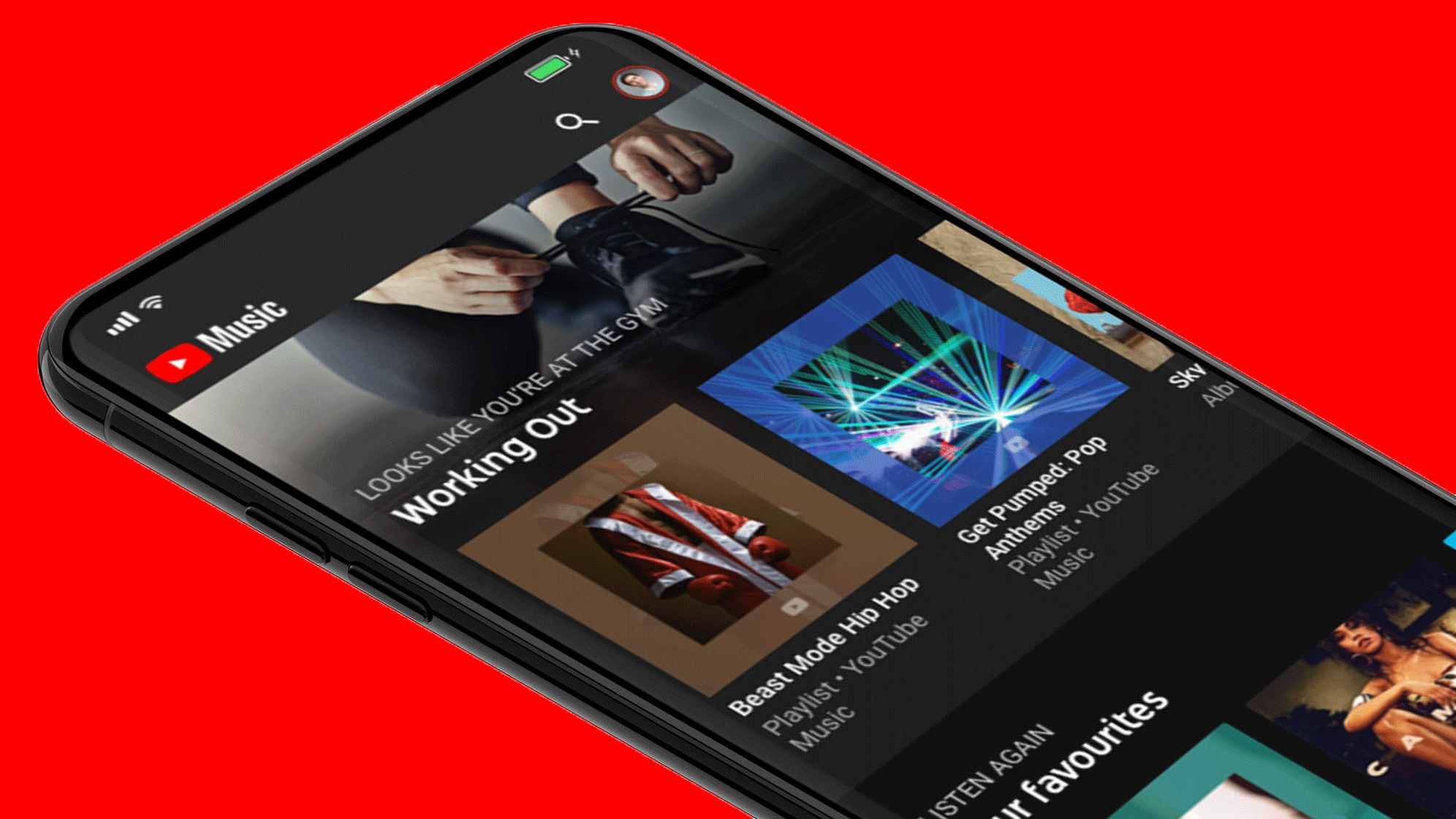
Rank 10258A 'consistent volume' setting is spotted in YouTube MusicIt should prevent tracks being wildly different in their volume levelsNot everyone is getting the feature right away
Having a track come crashing in at an unexpectedly high volume level – or being much quieter than what's come before – isn't a great listening experience, and it's something YouTube Music is aiming to prevent with its latest feature update.As spotted by the team at 9to5Google, a new option called 'consistent volume' is now making its way to the YouTube Music apps for Android and iOS. The idea is, all your tracks, no matter where you've got them from, will use a similar volume range.Loud songs will still be loud and quiet songs will still be quiet of course, but it should help with tracks that have been recorded or converted at noticeably different volume levels, so your ears know more or less what to expect.The feature follows on from the 'stable volume' feature that's been available across different YouTube apps for some time. It's also something you can find inside Spotify's range of apps, where it's called 'audio normalization'.
Slowly appearing
It seems that the consistent volume feature is being rolled out quite slowly, or perhaps just being tested with a limited group of people for now. The 9to5Google team has seen it on some of their phones, but it hasn't shown up for the Android Authority team.If you don't have it yet, you'll just have to be patient. To check if you've got it, open up the YouTube Music app for Android or iOS, then tap your profile picture (top right) and Settings, then choose Playback (Android) or Playback and restrictions (iOS).Here in the UK I can't see it on either my Android phone or my iPhone, so don't be surprised if it hasn't shown up yet for you. According to 9to5Google, you need version 8.15 of the YouTube Music app, so check to see if any updates are pending.It's certainly a feature that YouTube Music users have been wanting, with Reddit threads going back years on the topic. As yet there's not been any official announcement about this from Google, but we'll let you know if one appears.
You might also like
Our review of YouTube Music and how it compares to SpotifyMove Apple Music playlists to YouTube Music with just a few tapsYouTube Music's AI radio officially gets a name
-

Picture from ichef.bbci.co.uk
Rank 10259 -
Picture from ichef.bbci.co.uk
Rank 10260 -

Picture from techcrunch.com
Rank 10261 -

Picture from ichef.bbci.co.uk
Rank 10262 -

Picture from ichef.bbci.co.uk
Rank 10263 -

Picture from techcrunch.com
Rank 10264 -
Picture from cdn.mos.cms.futurecdn.net
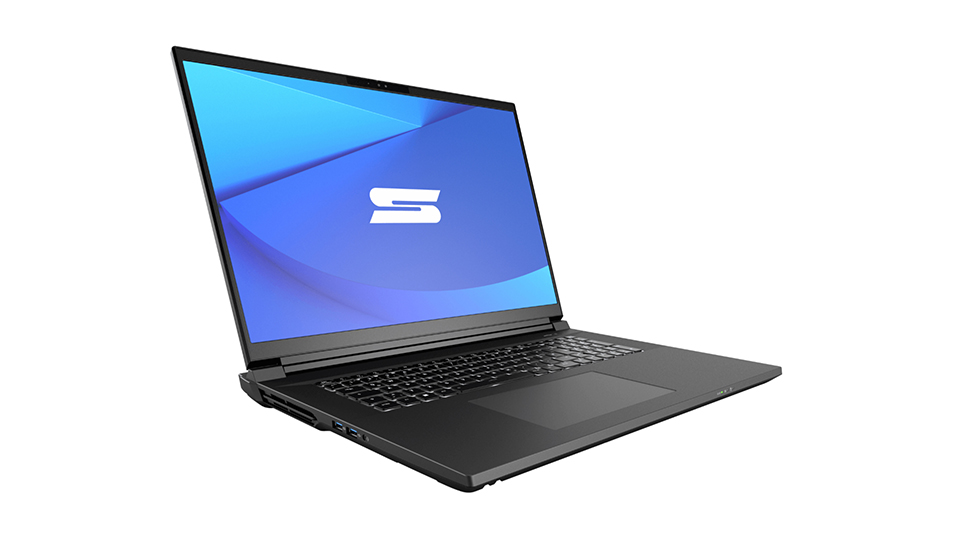
Rank 1026518-inch Schenker laptop is powered by an Intel Core Ultra 9 275HX CPU It offers a choice Nvidia RTX GPUs and up to 256GB of RAM and 32TB of storageAdvanced cooling system keeps it quiet and there’s a choice of performance profiles
If you’re in the market for a high-performance mobile workstation with impressive performance, high capacity storage, and advanced thermal management, then this 18-inch laptop from German hardware manufacturer Schenker should be right up your strasse.The Schenker Key 18 Pro (E25), Schenker’s first 18-inch laptop in nearly 14 years, is powered by an Intel Core Ultra 9 275HX CPU and a choice of three top-tier Nvidia GeForce RTX graphics cards, including the RTX 5090, RTX 5080, and RTX 5070 Ti.The Key 18 Pro supports up to 256GB of RAM and offers four M.2 SSD slots, one of which uses PCIe 5.0, for up to 32TB SSD storage. The system supports RAID 1 configurations and comes with thermal pads for both occupied and spare storage slots.
Keeping cool
The laptop’s cooling setup includes a composite heat pipe system with two fans, four exhaust vents, and thermal pads made of Honeywell PTM7950. These contribute to a quieter operation compared to the new laptop’s predecessor, the KEY 17 Pro (M24). Buyers can choose from three performance profiles that balance speed and acoustics through software or a hotkey shortcut.There are two 18-inch display options available, a 1600p 240Hz model and a 4K 200Hz variant, both with full DCI-P3 coverage, 500 nits brightness, and G-SYNC support. Display switching between integrated and discrete graphics is handled via Advanced Optimus or a manual MUX switch.Connectivity includes two Thunderbolt 5 ports, two 2.5 Gigabit Ethernet ports, HDMI 2.1, and Wi-Fi 7. A redesigned 330W power supply now uses a standard 5.5mm barrel connector. The laptop also includes a 5 MP webcam with privacy shutter and a sound system with a subwoofer.With a footprint of 402 x 320 x 29.5mm and a weight of 3.95kg, the device fits into the larger end of portable workstations, but it’s well within an acceptable range for mobile professionals.Prices at Bestware.com start at €3,199 (including 19% VAT). A full-spec model costs around €8,614 (with VAT), which is considerably lower than Eurocom's similarly specced Raptor X18 laptop.
You might also like
These are the best business laptops you can buy right nowAnd these are best laptops for gaming and workEurocom's Raptor X18 laptop may have inadvertently broken a few world records
-

Picture from ichef.bbci.co.uk
Rank 10266 -

Picture from ichef.bbci.co.uk
Rank 10267 -

Picture from ichef.bbci.co.uk
Rank 10268 -
Picture from o.aolcdn.com
Rank 10269A NASA spacecraft will make a close approach to an asteroid in the main belt on Sunday afternoon, in the second of several asteroid flybys planned for its 12-year mission to study remnants of the early solar system. The Lucy spacecraft will be 596 miles (960 km) from asteroid Donaldjohanson — named after the paleoanthropologist who discovered the “Lucy” hominin fossil — at the closest point of its pass, which will occur at 1:51PM ET. Lucy will use three instruments to capture detailed observations as the object gets closer, rotating with the asteroid over a few hours to get the full picture. It will stop tracking just before the asteroid is nearest, when it’ll have to shield its instruments due to the position of the sun to prevent damaging them.
The spacecraft previously visited a small asteroid called Dinkinesh in 2023, and its observations revealed that the asteroid is orbited by what’s known as a contact binary, or a peanut-shaped double moon “made of two smaller objects touching each other,” NASA explained at the time. After Donaldjohanson, Lucy will move on to its main targets, a handful of “Trojan” asteroids orbiting the sun in the same path as Jupiter. It’s expected to reach the first of those objects in 2027.
“Every asteroid has a different story to tell, and these stories weave together to paint the history of our solar system,” Tom Statler, Lucy mission program scientist, said in a press release. “The fact that each new asteroid we visit knocks our socks off means we’re only beginning to understand the depth and richness of that history. Telescopic observations are hinting that Donaldjohanson is going to have an interesting story, and I’m fully expecting to be surprised — again.”This article originally appeared on Engadget at https://www.engadget.com/science/space/nasas-lucy-spacecraft-is-about-to-have-its-second-close-encounter-with-an-asteroid-180735995.html?src=rss
-

Picture from ichef.bbci.co.uk
Rank 10270 -

Picture from ichef.bbci.co.uk
Rank 10271 -

Picture from techcrunch.com
Rank 10272 -
Rank 10273
-

Picture from ichef.bbci.co.uk
Rank 10274 -
Picture from ichef.bbci.co.uk
Rank 10275 -
Picture from o.aolcdn.com
Rank 10276Spoilers for “Lux.”
It’s an interesting time to be a long-running science fantasy media property in the streaming TV age. Star Trek is in the grip of an existential crisis as it (wrongly) fears it’s too old-aged to be relevant. Star Wars became a battlefield in the culture war and, to duck all future bad faith criticism, gave us The Rise of Skywalker. And then there’s Doctor Who, which is somehow managing to plough a 62-year furrow and still fill it with original ideas. Don’t believe me? This week the Doctor and Belinda go up against a sentient cartoon holding the patrons of a 1950s cinema hostage.
James Pardon / BBC Studios / Disney / Bad Wolf
It’s 1952 in a sparsely populated cinema as the audience watches a breathless newsreel on the power of the atomic bomb. The projectionist flips over to a Merrie Melodies-style cartoon of Mr. Ring-A-Ding (voiced by Alan Cumming), an old-timey song-and-dance character. Just then, a beam of moonlight shines through the window, reflecting off a teaspoon and strikes the screen. Mr. Ring-A-Ding comes to life, talking directly to the scoffing audience before emerging into the theater to the sound of screams.
Meanwhile, the Doctor and Belinda are in the TARDIS trying to work out why it’s refusing to land on May 24, 2025. Belinda asks why he doesn’t just take the ship back to his home planet for a fix, but she doesn’t get a satisfactory answer. Instead, the Doctor has built a gadget that will help pull the TARDIS back to the present day, it just needs to land in a few other places first. The pair wind up in Miami in 1952 and while the Doctor initially insists Belinda stay indoors, she’s eager to see what it’s like.
They step out into the night (slash early morning) of 1952 Miami, outside the cinema from the pre-credits, albeit three months after Mr. Ring-A-Ding came to life. Since then, the theater has been locked shut, with the 15 patrons in the audience going missing; the projectionist, Reginald Pye, has stayed behind to act as caretaker, playing films to an empty room.
They visit the diner across the street and meet the mother of one of the missing patrons, Mrs. Lowenstein, who fills in the backstory. They head into the cinema and Mr. Ring-A-Ding makes it clear he’s about to trap them in film before a Mr. Ring-A-Ding short stays playing on the screen. While he’s distracted, the Doctor and Belinda hot-foot it to the projection room where they meet Pye, who has been looking after the cinema patrons, all of whom have been trapped in a strip of film.
Pye has been keeping Mr. Ring-a-Ding alive and appeased by playing movies for him every night. But the sinister cartoon has also given Pye something in return: He has a film of his late wife who Mr. Ring-A-Ding can bring back as a “real” person, at least for a few moments each night. Following on the theme of coercion from last week, the carrot is also a stick, since Mr. Ring-A-Ding also threatens to destroy that film if Pye steps out of line.
Naturally, Mr. Ring-A-Ding isn’t just a beloved old-timey cartoon character but a god, one of the same pantheon as the Toymaker, Maestro and Sutekh. His real identity is Lux Imperator, or Lord of Light, and he's determined to consume all the light he can, including the most delicious (potential) meal of all — the atom bomb he’s been learning about in the newsreels. To prevent the Doctor and Belinda frustrating his plans, he manages to trap them in a cartoon.
The Doctor and Belinda are turned into two-dimensional drawings, with two-dimensional minds and characterizations. In their panic, they confess their anxieties, including the Doctor’s worries he can’t get Belinda home. As they do so, they acquire physical depth until they return to their normal selves, and then break (okay, knocking over) the fourth wall into… someone’s living room.
The Doctor and Belinda are greeted by a trio of Doctor Who fans watching the episode who are shocked and delighted to meet their heroes. The fans, Hassan Chowdry (Samir Arrian), Lizzie Abel (Bronté Barbé) and Robyn Gossage (Steph Lacey) explain, uh, Doctor Who to the Doctor. The season’s subconscious theme of Steven Moffat envy continues, with the trio saying their favorite episode is “Blink.” Robyn also points out that the end of the episode is pretty obvious given that celluloid is highly explosive. There’s even time for the fans to be called annoying — a facet they (like all “good” Doctor Who fans) will admit to with a heavy dose of self-awareness.
The trio ready to kick the Doctor out as the episode hits the 30-minute mark, which means it’s time for the third act. But they’re also sad, realizing that they’re the fictitious ones, not the Doctor and Belinda, as they don’t have surnames. They know the characters that don’t have surnames are unimportant, incidental figures in the story that will die when the time travelers crawl back through the screen. (Aside: They do in the closing credits, something that Davies’ alluded to in his most recent column for Doctor Who Magazine talking about the realities of giving one-shot characters names for the credits.)
The Doctor and Belinda return to the cinema, where the previously kind Mrs. Lowenstein has hauled a police officer in to arrest the pair for trespassing in a whites-only cinema. The Doctor fairly instantly calls BS, especially since the police officer is wearing a New York-style uniform: They’re still in the film, and when they break out, the Doctor and Belinda meet Lux / Mr. Ring-A-Ding once again. Lux magically summons up long lengths of filmstrips that act like ropes, wrapping them around his wrists and raising him up high. He turns on the projector which draws the Doctor’s regeneration out as light, projected onto Mr. Ring. A Ding.
Belinda, meanwhile, heads off to a storage cupboard, pulls out lots of film and throws it on the floor. But Reginald the projectionist won’t give her the matches she needs to start the fire until, uh, the ghost of his wife, briefly returning as a solid person, hands him the matches. Belinda then blows a hole in the roof of the cinema big enough to expose Mr. Ring-A-Ding to sunlight, which causes him to exponentially grow until he’s not just bigger than the planet but bigger than the universe itself. Or something.
In the daylight of Miami, Belinda asks the Doctor how exactly Lux / Mr. Ring-A-Ding was destroyed. “We’re 60 percent water and we can still drown,” he explains as the formerly trapped patrons of the cinema emerge from their three month imprisonment. The Doctor and Belinda have bonded over their shared worries, and Belinda is a lot more comfortable with her slightly longer route home. As they head into the TARDIS, Mrs. Flood greets the crowd and tells them if they want to see a really exciting sight, they should watch the ship disappear. Sadly, she adds, it’s a “limited run,” which will end on May 24th.
BBC Studios / Disney / Bad Wolf
Eight disconnected thoughts about “Lux.”
Density
Like “The Robot Revolution” before it, “Lux” is packed full of concepts and themes that could easily be the sole subject of a story. This thematic density has always been a part of Doctor Who — a show that has often worn its deep political and literary ambitions on its sleeve — but it can be both a blessing and a curse.
Just think about the sheer number of ideas this one episode is playing with, touching upon:
How time travel as a plot device can be implicated by race.
How media habits and consumption have changed in the last century.
How human nature hasn’t changed in the last century.
How awful it is to be held hostage by your own desire.
What it would be like if a fictional character discovered they were fictional.
That’s a hell of a lot of stuff to get through in 45 minutes, even if you’re not going to explore any of them. Though it may be a thrilling high-wire act Davies is pulling off, the result doesn’t have anything weighty to say. Not that I expect or need every episode to be About Something In A Very Special Way, but these themes aren’t meant to be just window dressing.
Ironically, and to contradict what I just wrote, I found “Lux” to be far more enjoyable than “The Robot Revolution.” Free of the burden of having to introduce Belinda and lay down the shape of this year’s overarching storyline, the episode is able to focus on just being itself. Everything here joins up in a more satisfying way, and the emotional beats, while rushed, at least make sense.
Rhyming history
As soon as Ncuti Gatwa was held aloft by moving filmstrips, I realized how closely the scene mirrored the conclusion of “The Devil’s Chord.” I’m not surprised, given both episodes feature the Doctor fighting a member of the Pantheon’s roster of rogue gods. After all, our heroes turn up in what is ostensibly the past of our living memory (‘60s last year, ‘50s here) to battle a god using pop culture as a vehicle (music then, cinema now). For the filmstrips here, Maestro dragged the Doctor and Ruby around Abbey Road with ribbons of music notation.
Soft Elbows
In the few times Doctor Who has acknowledged its fanbase, it’s with a loving elbow to their ribcages. It helps that the series is so tied to the UK’s cultural DNA that everyone is a fan, even if they’re not a fan. Perhaps more importantly, Davies, Moffat and Chibnall were all prominent fans before they had TV careers. All of us are capable of conceding we are (or can be) bloody annoying at times and insufferably smug at others.
One thing did occur to me: All three times Doctor Who has acknowledged its fanbase — Whizzkid in “Greatest Show", the members of LINDA in “Love and Monsters” and here — the themes are the same. Doctor Who fans are always kind-hearted, a little bit annoying and they get taken advantage of by a bad faith figure (Captain Cook, Victor Kennedy and Lux). Isn’t that interesting?
Importance
A key trait of Ncuti Gatwa’s Doctor is his compassion, even going so far as to kiss a Roomba to apologize for turning it off. When Hassan, Lizzie and Robyn say they're "not important" as surname-less side characters, it irked me that the Doctor didn't push back.
Production
Much like last week’s episode, “Lux” is wonderfully well-made with every quarter of the production team operating at their peak. Mr Ring–A-Ding is a triumph, capturing the rubber hose style of animation from that era utterly perfectly. The 2D version is great, and the 3D edition he tries to evolve into at the conclusion is the right sort of horrifying.
Belinda
After “The Robot Revolution,” plenty of fans online suggested Belinda knew a little more than she was meant to. Specifically, she knew the name of the TARDIS despite the Doctor calling it his spaceship earlier in the episode. At the start of “Lux,” Belinda says the Doctor is a Time Lord so his people should be able to fix the malfunctioning TARDIS.
I can see why fans, trained on mystery box shows, would be intent on mining lines of dialog in this fashion. But I think they’re chasing shadows: Davies has never been that sort of writer and probably isn’t going to start seeding his dialog with hints that subtle now. The way I read it, the Doctor has probably gotten used to giving new friends an (off-screen) introduction of the basics.
You could easily imagine a cut-for-necessity scene where the Doctor rattles off the whole “time lord with their own time and space machine” spiel. And you’d expect them not to race toward the more trauma-dump-y elements of their biography, like being the last of them still alive. Belinda was also surprised to see the TARDIS land in 1950s Miami, even after seeing it in space last week. Given the theme of the episode was Belinda slowly embracing her time with the Doctor it makes more sense.
That said, it’s interesting that Davies’ specifically focused on the surnames of minor characters for his column in this month’s Doctor Who Magazine. Naturally, he was wrapping a tease for a future episode inside an anecdote about having to clear even minor character surnames with the show’s legal department. And when the Doctor meets the fans, Robyn points out she knows how the episode ends because she read the leak about it online. I should admit, too, that I read the fairly detailed leak about this episode that included the reveal of this fourth-wall-destroying scene. I would never suggest Davies is playing four-dimensional chess with the audience, but if the detailed leak of this episode came from the production office as a further tweak of the metafiction then, bravo.
Queer representation
The awning outside the cinema is advertising a Rock Hudson movie, and Belinda comments that she learned about the late actor on a HIV training course. He was one of the first people in the public eye to pass away from AIDS, causing a shift in public attitudes. Before Hudson’s death, the US had refused to sanction additional funds to support research into combatting the disease.
Doctor Who has shied away from directly addressing plenty of social issues during its long run, or even allegorically. Despite the vast number of queer people who were involved in its creation and production, such topics were treated as taboo. That the show can now make such a direct reference to Hudson feels refreshing, especially if it prompts some folks to read up on the issue.
The politics of race
There are better qualified writers who can discuss the issues around race and racism that the episode features. “Lux” is set in 1952, two years before Brown v. Board of Education, in a Miami that is segregated. It’s not the first episode of Doctor Who to deal with this, nor the first of Ncuti Gatwa’s tenure that has intentionally highlighted that the Doctor is played by an actor of color.
I suspect that one moment in particular will provoke discussion: When Belinda is outraged to learn the diner is segregated. The Doctor shuts down her objections, saying that he has toppled worlds, and has sometimes lived in worlds and let them “topple themselves.” For the latter, his approach is to “shut up and shine,” suggesting he sits on the respectability politics-end of the spectrum.
It’s perhaps here that we see the limits of what stories Doctor Who can tell given these events took place in our own recent history. The lead character can topple other worlds in any era, but given we’re all aware of human history, can’t act to rid the world of this injustice. Which affirms the theory that the show is fundamentally conservative in nature since one of the Doctor’s main driving forces is to protect the course of history as it presently is.
Mrs. Flood corner
Now we know Mrs. Flood can appear wherever the TARDIS is, so it’s likely she’ll be popping up in every episode, just like Susan Twist did last year. Here, she simply repeated her ominous threat that the Doctor’s time is running out, which is due to happen on May 24th. May 24th is when this season’s seventh and penultimate episode will air.This article originally appeared on Engadget at https://www.engadget.com/entertainment/tv-movies/doctor-who-lux-review-hope-can-change-the-world-190033447.html?src=rss
-
Picture from cdn.mos.cms.futurecdn.net
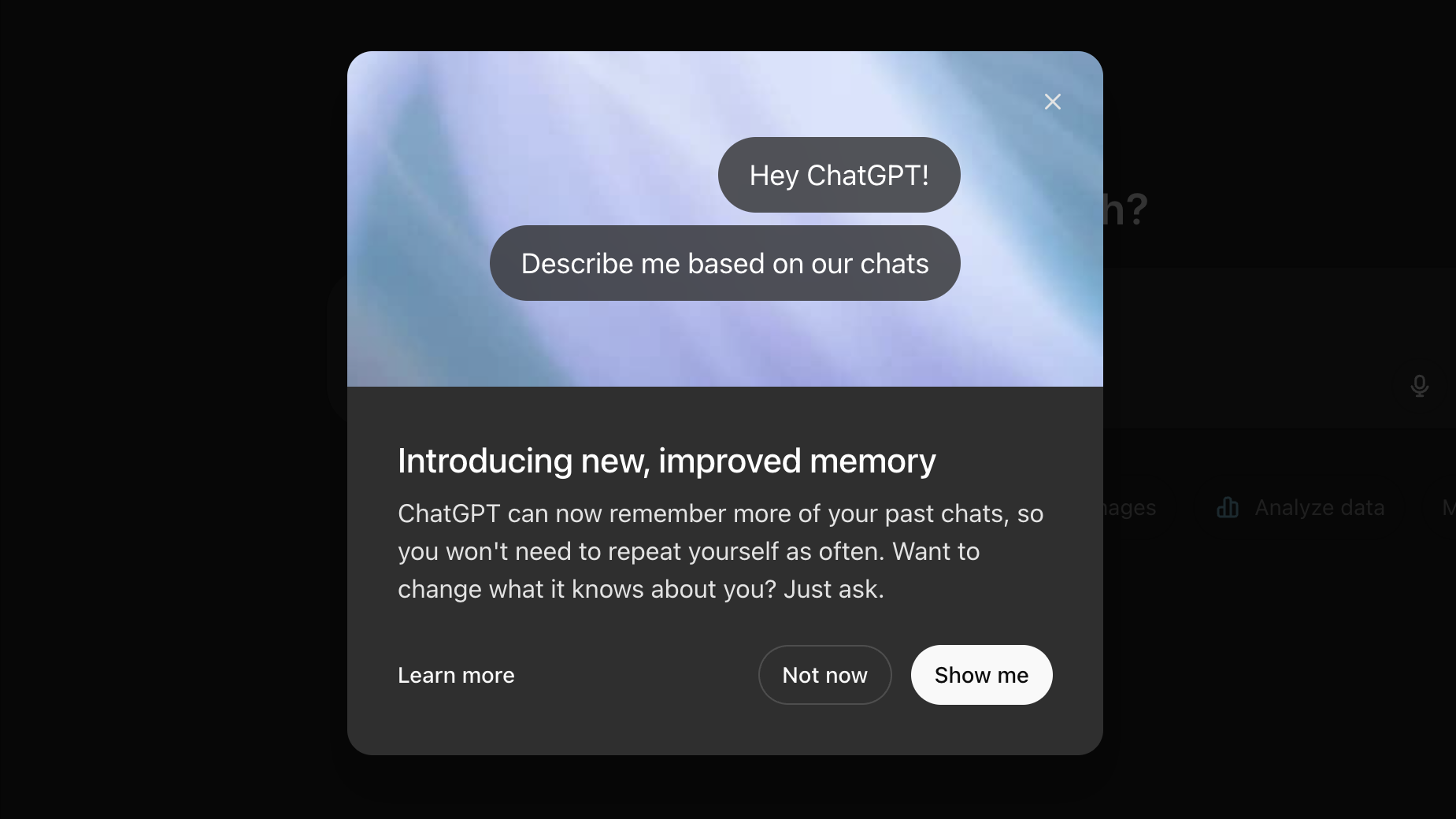
Rank 10277ChatGPT’s memory used to be simple. You told it what to remember, and it listened.Since 2024, ChatGPT has had a memory feature that lets users store helpful context. From your tone of voice and writing style to your goals, interests, and ongoing projects. You could go into settings to view, update, or delete these memories. Occasionally, it would note something important on its own. But largely, it remembered what you asked it to. Now, that’s changing.OpenAI, the company behind ChatGPT, is rolling out a major upgrade to its memory. Beyond the handful of facts you manually saved, ChatGPT will now draw from all of your past conversations to inform future responses by itself.According to OpenAI, memory now works in two ways: “saved memories,” added directly by the user, and insights from “chat history,” which are the ones that ChatGPT will gather automatically.This feature, called long-term or persistent memory, is rolling out to ChatGPT Plus and Pro users. However, at the time of writing, it’s not available in the UK, EU, Iceland, Liechtenstein, Norway, or Switzerland due to regional regulations.The idea here is simple: the more ChatGPT remembers, the more helpful it becomes. It’s a big leap for personalization. But it’s also a good moment to pause and ask what we might be giving up in return.
A memory that gets personal
(Image credit: Shutterstock)
It’s easy to see the appeal here. A more personalized experience from ChatGPT means you explain yourself less and get more relevant answers. It’s helpful, efficient, and familiar.“Personalization has always been about memory,” says Rohan Sarin, Product Manager at Speechmatics, an AI speech tech company. “Knowing someone for longer means you don’t need to explain everything to them anymore.”He gives an example: ask ChatGPT to recommend a pizza place, and it might gently steer you toward something more aligned with your fitness goals – a subtle nudge based on what it knows about you. It's not just following instructions, it’s reading between the lines.“That’s how we get close to someone,” Sarin says. “It’s also how we trust them.” That emotional resonance is what makes these tools feel so useful – maybe even comforting. But it also raises the risk of emotional dependence. Which, arguably, is the whole point.“From a product perspective, storage has always been about stickiness,” Sarin tells me. “It keeps users coming back. With each interaction, the switching cost increases.”OpenAI doesn’t hide this. The company's CEO,. Sam Altman, tweeted that memory enables “AI systems that get to know you over your life, and become extremely useful and personalized.”That usefulness is clear. But so is the risk of depending on them not just to help us, but to know us.
Does it remember like we do?
(Image credit: Getty Images)
A challenge with long-term memory in AI is its inability to understand context in the same way humans do.We instinctively compartmentalize, separating what’s private from what’s professional, what’s important from what’s fleeting. ChatGPT may struggle with that sort of context switching.Sarin points out that because people use ChatGPT for so many different things, those lines may blur. “IRL, we rely on non-verbal cues to prioritize. AI doesn’t have those. So memory without context could bring up uncomfortable triggers.”He gives the example of ChatGPT referencing magic and fantasy in every story or creative suggestion just because you mentioned liking Harry Potter once. Will it draw from past memories even if they're no longer relevant? “Our ability to forget is part of how we grow,” he says. “If AI only reflects who we were, it might limit who we become.”Without a way to rank, the model may surface things that feel random, outdated, or even inappropriate for the moment.
Bringing AI memory into the workplace
Persistent memory could be hugely useful for work. Julian Wiffen, Chief of AI and Data Science at Matillion, a data integration platform with AI built in, sees strong use cases: “It could improve continuity for long-term projects, reduce repeated prompts, and offer a more tailored assistant experience," he says.But he’s also wary. “In practice, there are serious nuances that users, and especially companies, need to consider.” His biggest concerns here are privacy, control, and data security.“I often experiment or think out loud in prompts. I wouldn’t want that retained – or worse, surfaced again in another context,” Wiffen says. He also flags risks in technical environments, where fragments of code or sensitive data might carry over between projects, raising IP or compliance concerns. “These issues are magnified in regulated industries or collaborative settings.”
Whose memory is it anyway?
OpenAI stresses that users can still manage memory – delete individual memories that aren't relevant anymore, turn it off entirely, or use the new “Temporary Chat” button. This now appears at the top of the chat screen for conversations that are not informed by past memories and won't be used to build new ones either.However, Wiffen says that might not be enough. “What worries me is the lack of fine-grained control and transparency,” he says. “It's often unclear what the model remembers, how long it retains information, and whether it can be truly forgotten.”He’s also concerned about compliance with data protection laws, like GDPR: “Even well-meaning memory features could accidentally retain sensitive personal data or internal information from projects. And from a security standpoint, persistent memory expands the attack surface.” This is likely why the new update hasn't rolled out globally yet.What’s the answer? “We need clearer guardrails, more transparent memory indicators, and the ability to fully control what’s remembered and what’s not," Wiffen explains.
Not all AI remembers the same
(Image credit: OpenAI & Google & Microsoft)
Other AI tools are taking different approaches to memory. For example, AI assistant Claude doesn’t store persistent memory outside your current conversation. That means fewer personalization features, but more control and privacy.Perplexity, an AI search engine, doesn’t focus on memory at all – it retrieves real-time web information instead. Whereas Replika, AI designed for emotional companionship, goes the other way, storing long-term emotional context to deepen relationships with users.So, each system handles memory differently based on its goals. And the more they know about us, the better they fulfill those goals – whether that’s helping us write, connect, search, or feel understood.The question isn’t whether memory is useful; I think it clearly is. The question is whether we want AI to become this good at fulfilling these roles.It’s easy to say yes because these tools are designed to be helpful, efficient, even indispensable. But that usefulness isn’t neutral, it’s intentional. These systems are built by companies that benefit when we rely on them more.You wouldn’t willingly give up a second brain that remembers everything about you, possibly better than you do. And that’s the point. That’s what the companies behind your favorite AI tools are counting on.
You might also like
Can you use ChatGPT to create a dream life? Why you should think before trying this viral TikTok trendI've become a ChatGPT expert by levelling up my AI prompts – here are my 8 top tips for successAre you polite to ChatGPT? Here’s where you rank among AI chatbot users
-

Picture from ichef.bbci.co.uk
Rank 10278 -
Picture from cdn.mos.cms.futurecdn.net
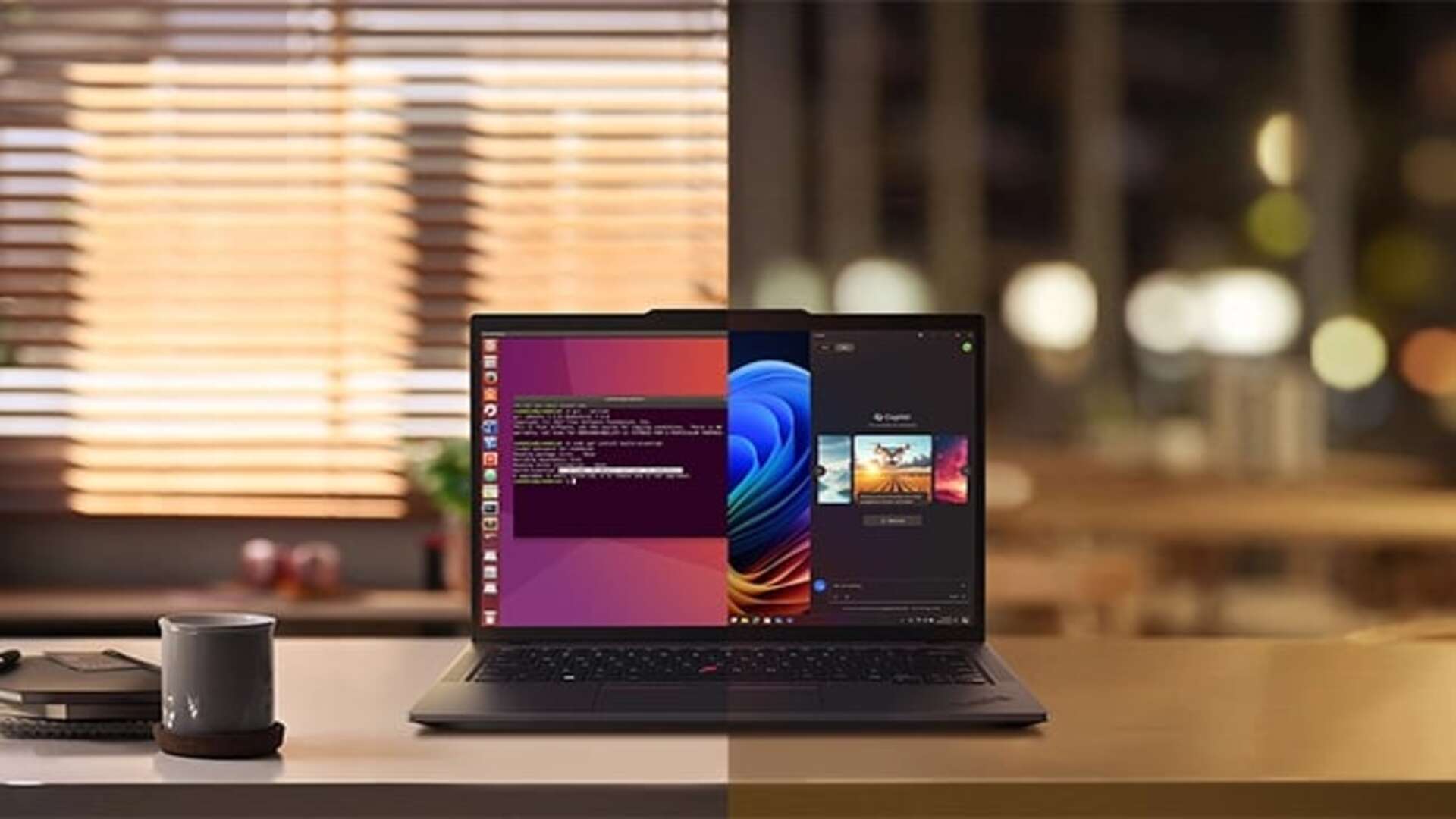
Rank 10279Lenovo’s ThinkPad P14s Gen 6 supports up to 96GB DDR5 RAM, but only with Krackan Point CPU modelsRapid Charge delivers 80% power in 60 minutes using a 65W USB-C adapterHowever its battery may struggle under heavy performance loads
Lenovo has announced its most powerful AMD laptop yet: the ThinkPad P14s Gen 6, which is set to launch with the 12-core AMD Ryzen AI 9 HX Pro 370, making it the company's first AMD-powered model to break past the eight-core ceiling.Aimed at creative professionals and mobile users who need both AI processing and core-heavy performance, the ThinkPad P14s Gen 6 supports up to 96GB of DDR5-5600 RAM - but only in configurations using the Krackan Point CPUs, namely the Ryzen AI 5 Pro 340 and Ryzen AI 7 Pro 350.That means the 12-core Strix Point model may be capped at 64GB of soldered memory. While it's a limitation, it still offers enough for demanding workloads like 3D rendering or Photoshop, making it a strong candidate for users searching for the best laptop for photo editing.
Poor choice of battery
While the processing capacity could place it among the best workstation contenders in terms of raw power, there’s a drawback: the model’s battery may struggle to match the chip’s power demands.Weighing 1.39 kg (3.06 lbs) and measuring 10.9–16.3 mm thick, the device uses either a 57Whr or 52.5Whr battery, depending on the CPU.Although both batteries are larger than the weedy 39.3Whr battery on the previous ThinkPad P14s Gen 5, they may still struggle under the load of the new, more powerful processors. However, the laptop supports Rapid Charge with a 65W adapter, capable of reaching 80% battery in 60 minutes.This lightweight mobile workstation, currently listed on Lenovo Malaysia’s website, features a 14-inch 2.8K OLED panel with 100% DCI-P3 coverage and an anti-glare coating.It includes TÜV certifications for Eyesafe and Low Blue Light, a touchscreen, integrated PrivacyGuard, and will be available in different IPS variants offering up to 500-nit brightness.Graphics are handled by an integrated AMD Radeon 890M, built on RDNA 3.5 architecture, delivering up to 32 TOPS and supported by AMD’s PRO Graphics Driver.For connectivity, the device offers WiFi 7, Bluetooth 5.3, optional 5G or CAT16 WWAN with eSIM, and optional NFC.Physical ports include two USB-C (Thunderbolt 4) ports, two USB-A (5 Gbps) ports, HDMI 2.1, RJ45 Ethernet, a headphone/mic combo jack, and optional Nano SIM and smart card readers.Price and availability remain unclear, as the listing simply states “available soon.” Given that the T14 Gen 6 AMD models are unlikely to ship before May or June 2025, the P14s variant likely won’t hit shelves before summer either.
You may also like
These are the best laptops for engineering studentsTake a look at the best office chairs available nowNotion launches AI-powered email app
-

Picture from ichef.bbci.co.uk
Rank 10280 -

Picture from ichef.bbci.co.uk
Rank 10281 -

Picture from techcrunch.com
Rank 10282 -
Picture from cdn.mos.cms.futurecdn.net
Rank 10283Americans admit to hoarding digital files with 77% saying they have too much dataManaging their files leaves a third of people feeling overwhelmed and anxiousYounger generations are projected to spend $40,000 on cloud storage across their lifetime
Americans are facing a growing digital clutter problem, according to a recent survey by Compass Datacenters, which found over three-quarters (77%) of people admitted - unsurprisingly - to having more digital files than they need.Conducted between January 21 and February 5, 2025, the poll of 1,000 people revealed digital hoarding is not only out of control, but many are unsure how to even begin managing it.One-third of respondents said managing their digital files made them feel overwhelmed, anxious, or stressed. A mere 10% reported feeling confident when it comes to deleting unnecessary files. Although they recognized that excess data can slow devices, drain batteries, and make it harder to find important information, they were not ready to hit the delete key and take action.
A costly habit
Digital clutter is not just a minor inconvenience - it can be a costly one too, as storage prices are climbing. The survey found that younger generations, in particular, are paying to store files rather than deleting them.The survey authors note, “Accounting for a 3% inflation rate, assuming a 25-year-old pays $20/month for data storage until the age of 85, they will spend $40,000 over their lifetime on digital storage.”Compass Datacenters partnered with expert digital minimalist Kath Younger to inspire and assist people in cleaning out their digital closet.You can view the tips and tricks they came up with at Delete Digital Dust Bunnies.
How to declutter your data
(Image credit: Paul Tessier / Shutterstock)
Digital decluttering does not have to be a huge project. Taking small, regular steps can protect devices, save money, and reduce stress.The first place to start is by cleaning out your photo library. Delete blurry shots, duplicates, and old screenshots you no longer need. Aim to do this monthly rather than waiting for years to pass.Next, sort through your apps. Check what you have and what you actually use. If you have apps you haven't opened in months, get rid of them. You can always reinstall any you need.Review your downloads folder and email inbox. Old receipts, newsletters, and random files add up fast. Focus on emails with attachments to free up the most storage space.Consider setting up a simple backup system with an external hard drive instead of paying for cloud storage. HDDs and SSDs with 4TB of storage are available for a one-time purchase price that is far less than you would pay for years of cloud fees.Schedule a “digital spring cleaning” day a couple of times a year. Treat it like cleaning out a closet - a little annoying at first, but rewarding once done.By being more mindful of the digital clutter you create and keep, it becomes easier to manage over time. Taking action today can save you from bigger hassles down the road.
You might also like
These are the best external hard drives for your filesAnd these are the best portable SSDs you can buy right nowDropbox unveils a host of new AI features aimed at tidying up your cluttered files
-

Picture from ichef.bbci.co.uk
Rank 10284 -

Picture from ichef.bbci.co.uk
Rank 10285 -

Picture from ichef.bbci.co.uk
Rank 10286 -
Picture from o.aolcdn.com
Rank 10287Beijing held what’s being called the world’s first half-marathon for robots, allowing bipedal bots to compete alongside human runners, and as one might expect, ridiculousness ensued. The robots, which had human operators running with them, for the most part struggled to make it through the course at all, let alone complete the full 13 miles within the four-hour cutoff time. “One fell at the starting line,” Bloomberg reports. “Another’s head fell off and rolled on the ground. And one collapsed and broke into pieces.” They may not be gold medalists just yet, but the videos sure are entertaining.
The humanoid robot half-marathon in Beijing just started! pic.twitter.com/8vr2nXQwuR— The Humanoid Hub (@TheHumanoidHub) April 19, 2025
According to Bloomberg, 21 robots participated in the race, but the winner — X Humanoid’s five-foot-ten Tiangong Ultra — was one of only four to make it all the way to the end in the allotted time. And at two hours and 40 minutes, its finishing time was more than double that of the winning human runners.
The teams were allowed to do battery swaps (Tiangong Ultra reportedly finished on its third battery) and even switch out their robots mid-race for substitutes, though doing that came with time penalties. Along with Tiangong Ultra, which ran at around five miles per hour, the robot runners included Noetix Robotics’ N2, a Gundam-inspired robot, a “female-looking” bot called Huan Huan, and the 30-inch-tall Little Giant robot made by local college students, Bloomberg reports. Many of them were wearing human running shoes.This article originally appeared on Engadget at https://www.engadget.com/ai/a-bunch-of-robots-ran-a-half-marathon-alongside-humans-and-it-was-incredibly-goofy-215134524.html?src=rss
-
Picture from ichef.bbci.co.uk
Rank 10288 -

Picture from cdn.mos.cms.futurecdn.net
Rank 10289I’ve heard the term ‘console-quality graphics' touted around a fair bit for first-person shooter or action adventure mobile games. But few have really delivered on the promise of such visual wizardry, even when looking back at last-generation consoles – at least not until now.With the iPhone 15 Pro, Apple’s A17 Pro chip brought the ability to run actual console games like Death Stranding, albeit with slightly choppy performance and at a low resolution. But we’re still taking a proper AAA, full-fat console game running on a slim device that you can slip into your pocket.The iPhone 16 Pro then upped the game - literally - with the A18 Pro chip, which promised a gaming performance boost.
Taking aim
(Image credit: Future)
I recently had the chance to try out the iOS version of Sniper Elite 4 on such a chip with my iPhone 16 Pro Max.If you’re not already familiar, the Sniper Elite games are third-person tactical shooters set in WW2. Players are tasked with taking out targets using stealth and ranged shots on large open world maps. The game became renowned for its gory kills, where a bullet’s trajectory is shown in slow motion, complete with an X-Ray look at how it entered a Nazi soldier's body, splitting bones, sinew, and guts in glorious detail.Released back in 2017 for the PlayStation 4, Xbox One and PC, Sniper Elite 4 wasn’t exactly cutting-edge but it was still a great-looking game. I played it a few years ago on an Xbox One X, after it had been enhanced for that powered-up console, and had a fantastic time, especially in the co-op mode with a friend.Coming back all these years later, I was curious how it would hold up on a modern smartphone.Going in, I’ll be honest and admit my hopes weren’t too high… though they weren’t exactly low either given the performance that Apple claims its in-house chip can achieve – especially when we’re talking about running a somewhat old game rather than the likes of Cyberpunk 2077.And so with the help of a Backbone One Gen 2 mobile controller, I dived into Sniper Elite 4.
Sniper treat, but not quite elite
(Image credit: Future)
Straight off the bat (or should that be rifle butt) I’m surprised at how good the game looks on iOS; sunlight pierces the puffy clouds realistically, buildings are suitably detailed, and the realistic character models are miles from the low-poly plastic soldiers I was expecting. It’s not flawless, though as some of the foliage looks a little flat and, running at a 720p resolution, there’s no shortage of jagged edges.There are other caveats too. First off, the frame rate caps out at around 30 frames per second – that’s ok on paper, but in a game that rewards smooth pinpoint accuracy, it’s not exactly ideal. Add in some dips and the experience can be a little ropey when the action picks up.The second issue is the built-in touchscreen controls are asking a bit much of a modest 6.7 inch display. Maybe people who are adept at Call of Duty Warzone Mobile will have a different experience, but my recommendation would be to play with one of the best mobile controllers instead.
(Image credit: Future)
Yet the experience impressed me on the whole. It’s like playing something on my Steam Deck; the game still looks perfectly pleasant, despite clear compromises in detail and sharpness. As such, I could see myself ploughing a decent amount of time into Sniper Elite 4 to pass the time on a tedious journey or when sitting out in the sun.It’s also promising in another way: iOS could become the home of proper console-quality gaming on smartphones. When the currently rumoured but almost inevitable iPhone 17 comes around, I expect Apple to equip it with a new and improved chip.While AI performance will likely be the focus thanks to its current Apple Intelligence push, I’m hoping to see a generational boost in gaming power too.If that happens, it could open up the door for even more demanding console games to come to iOS.
You might also like
5 things we still don’t know about the Nintendo Switch 2I’ve played Doom: The Dark Ages for three hours: here are 3 things I loved, and 1 that I didn’tNintendo Switch 2 vs Nintendo Switch: comparing price, specs, design, features and more
-

Picture from ichef.bbci.co.uk
Rank 10290 -

Picture from ichef.bbci.co.uk
Rank 10291 -

Picture from ichef.bbci.co.uk
Rank 10292 -

Picture from ichef.bbci.co.uk
Rank 10293 -

Picture from ichef.bbci.co.uk
Rank 10294 -

Picture from ichef.bbci.co.uk
Rank 10295 -

Picture from ichef.bbci.co.uk
Rank 10296 -

Picture from ichef.bbci.co.uk
Rank 10297 -

Picture from ichef.bbci.co.uk
Rank 10298 -

Picture from ichef.bbci.co.uk
Rank 10299 -

Picture from ichef.bbci.co.uk
Rank 10300


